


 Claim Ownership
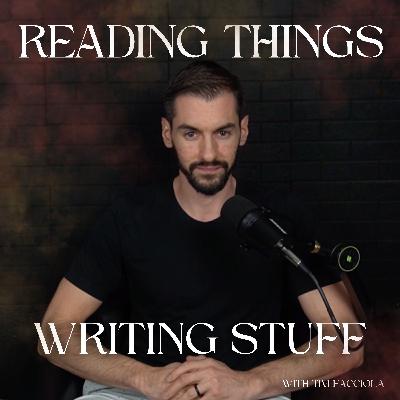
Reading Things and Writing Stuff : Fantasy Writing, Worldbuilding & The Art of Storycraft
Subscribed: 0Played: 1
Subscribe

© Tim Facciola
Description
Join Tim Facciola every week as he cracks open the craft behind the sci-fi and fantasy stories we can’t stop obsessing over. From worldbuilding and magic systems to character arcs, lore, pacing, and plot architecture, Reading Things and Writing Stuff is your gateway into how legendary tales are made.
Tim — award-winning author of the Eventual Realm series — blends deep craft insight with an accessible, imaginative approach, helping you sharpen your writing, expand your worlds, and forge stories that feel truly epic.
Whether you’re building your first realm or leveling up your storytelling game
Tim — award-winning author of the Eventual Realm series — blends deep craft insight with an accessible, imaginative approach, helping you sharpen your writing, expand your worlds, and forge stories that feel truly epic.
Whether you’re building your first realm or leveling up your storytelling game
9 Episodes
Reverse
In this episode…I dive into one of the most powerful—and most overlooked—tools in storytelling: moral reasoning. Specifically, how understanding why characters make decisions—not whether those decisions are “right” or “wrong”—can be the difference between a story that feels inevitable and one that feels contrived.I start with a frustration I know many readers share: when a character suddenly makes a decision that doesn’t align with how we understand them. The infamous 90-degree turn off a narrative cliff. To unpack why that happens—and how to prevent it—I explore Lawrence Kohlberg’s stages of moral development and how they apply directly to character psychology, internal arcs, theme, and reader trust.We break down the six levels of moral reasoning across the three stages—pre-conventional, conventional, and post-conventional—and clarify a crucial distinction: moral reasoning is not morality. This isn’t about what’s good or evil. It’s about what a character considers when making a choice.Using examples from Les Misérables, John Q, Game of Thrones, Avatar: The Last Airbender, The Greatcoats, noir crime dramas, and my own work in Eventual Realm, I show how different levels of moral reasoning create organic conflict, believable transformations, and meaningful thematic payoff. We explore why some characters are tragic, others cautionary, and why highly principled characters often clash violently with rigid systems.I also dig into the rules of moral development—why characters can only grow one step at a time, why sudden jumps feel false, how regression works (and when it doesn’t), and why readers often struggle to understand characters whose moral reasoning is more than two “rungs” away from their own.By the end, you’ll see how moral reasoning underpins character consistency, internal arc, thematic resonance, relationship dynamics, worldbuilding, and even marketing. When you understand how characters think, everything starts to make sense.If you’ve ever thought “I’m not buying this” while reading—or worried readers might think that about your own work—this episode is for you.Why character decisions break reader trustMoral reasoning vs. morality (and why conflating them kills stories)Kohlberg’s six levels of moral developmentPre-conventional, conventional, and post-conventional thinkingSelf-centered vs. socially driven vs. principle-driven charactersWhy most societies (and stories) rely on foursFives, sixes, martyrs, and system-challengersTragedy vs. cautionary talesHow moral reasoning drives internal arc and themeWhy growth must be gradual—and earnedRegression arcs and jaded heroesConflict between characters at different moral levelsReader empathy, representation, and imprintingThe “4.5” moral reasoner and sociopathic law-as-selfHow moral reasoning affects worldbuilding and marketingLes Misérables — Victor HugoJohn QGame of Thrones — George R.R. MartinThe Greatcoats — Sebastien de CastellAvatar: The Last AirbenderClassic noir detective fictionEventual Realm — Tim FasaInstagram: @timfacciola_theauthorApply to work with me:https://docs.google.com/forms/d/e/1FAIpQLSejci7iaHU3--TT8TOo82boYj7OsUIap3FscyQ4Qc2f8Z0EkQ/viewformRead A Vengeful Realm:https://www.amazon.com/dp/B0CK143ZK2Everything else:https://linktr.ee/timfacciolaWhat We Cover:Books, Films & Series Mentioned:Connect with Tim:
In this episode…I’m diving into one of my favorite—and most misunderstood—elements of storytelling: the secondary cast. Not background noise. Not disposable side characters. But the characters who matter, shape the story, and create emotional weight long after the page is turned.We start by defining what a secondary cast actually is, moving beyond surface-level archetypes like “mentor” or “sidekick” and into deeper role functions that serve the story. From logical, emotional, and support allies on the protagonist’s side, to opposition, diversion, and buffer characters across the axis of antagonism, we explore how meaningful casts are built—and why not every story needs all of them.Using examples from Red Rising, Sun Eater, The Licanius Trilogy, The Will of the Many, Nevernight, Ashes of the Sun, Avatar: The Last Airbender, Star Wars, Harry Potter, and more, I break down what makes secondary casts memorable… and why some fall flat. We talk five-man bands, unreliable buffers, reluctant allies, and why killing a character only works if the reader actually cares.I also pull from my own work—including Eventual Realm—to show how role functions are relative, perspective-driven, and constantly shifting. Characters can be allies in one system, adversaries in another, and buffers in between—and that web of relationships is where stories gain depth, tension, and meaning.Whether you love sprawling epic casts or tightly focused narratives like Finding Nemo, this episode will help you understand when secondary characters elevate a story—and when they just take up air.If your cast feels flat, forgettable, or interchangeable… this episode is for you.What We Cover:What a secondary cast really is (and what it isn’t)Role functions vs. archetypesLogical, emotional, and support alliesThe five-man band and character differentiationOpposition and diversion charactersBuffer characters: benevolent, reluctant, unreliable, and unempoweredWhy secondary characters must do somethingWhen large casts help—and when they hurtGenre expectations and audience focusWhy character deaths only work if they matterPerspective, relativity, and shifting rolesHow secondary casts reinforce theme and catharsisBooks, Shows & Series Mentioned:Red Rising — Pierce BrownSun Eater: Empire of Silence — Christopher RuocchioThe Licanius Trilogy — James IslingtonThe Will of the Many — James IslingtonNevernight Chronicle — Jay KristoffAshes of the Sun — Django WexlerThe Lord of the Rings — J.R.R. TolkienStar Wars: A New HopeHarry Potter and the Sorcerer’s Stone — J.K. RowlingAvatar: The Last AirbenderFinding NemoEventual Realm — Tim FasaConnect with Tim:Instagram:@timfacciola_theauthorApply to work with me:https://docs.google.com/forms/d/e/1FAIpQLSejci7iaHU3--TT8TOo82boYj7OsUIap3FscyQ4Qc2f8Z0EkQ/viewformRead A Vengeful Realm:https://www.amazon.com/dp/B0CK143ZK2Everything else:https://linktr.ee/timfacciola
In this episode…I’m breaking down the second of the two essential role functions in storytelling: the antagonistic system. Not just “the villain,” but the full network of forces—characters, institutions, beliefs, and power structures—that push back against your protagonist and create meaningful conflict.We explore why strong antagonism is genre-dependent, how stakes scale from cozy to epic, and why the antagonist doesn’t always have to be a mustache-twirling bad guy. From distant, godlike forces to intimate opposition within the protagonist’s own allies, antagonism works best when it’s layered, interconnected, and felt everywhere—even when it’s not on the page.Using examples from Mistborn, The Lord of the Rings, Red Rising, A Song of Ice and Fire, and The Fifth Season, we examine how antagonistic systems uphold the status quo, how diversion and opposition characters deepen tension, and why allies-turned-enemies create some of the most powerful moments in fiction. We also talk about harmonious stories, mystery-driven antagonism, and how role functions shift depending on perspective—because everyone is the hero of their own story.Finally, I pull back the curtain on my own work, including Eventual Realm, Goran, and Boone Blessed, to show how nested systems of conflict—political, religious, social, and divine—create pressure, theme, and momentum across an entire series.If your story feels “safe,” low-stakes, or like your protagonist doesn’t have enough to push against—this episode is for you.What an antagonistic system really is (and why it’s more than a villain)The axis of antagonism and how power imbalances raise stakesGenre expectations: cozy vs. epic vs. dark fantasyMain antagonists vs. diversion and opposition charactersConflict from within the protagonist’s own alliesAllies becoming enemies—and why it works so wellHarmonious stories and non-villain antagonistsAntagonism through perspective and moral conflictHidden antagonists in mystery-driven narrativesHow layered systems reinforce theme and meaningWhy weak antagonism leads to weak storiesMistborn: The Final Empire — Brandon SandersonThe Lord of the Rings — J.R.R. TolkienRed Rising — Pierce BrownA Song of Ice and Fire — George R.R. MartinThe Fifth Season — N.K. JemisinGoran — Tim FasaEventual Realm — Tim FasaInstagram:@timfacciola_theauthorApply to work with me:https://docs.google.com/forms/d/e/1FAIpQLSejci7iaHU3--TT8TOo82boYj7OsUIap3FscyQ4Qc2f8Z0EkQ/viewformRead A Vengeful Realm:https://www.amazon.com/dp/B0CK143ZK2Everything else:https://linktr.ee/timfacciolaWhat We Cover:Books, Shows & Series Mentioned:Connect with Tim:
In this episode…I dive deep into one of the most essential—and most misunderstood—elements of storytelling: the protagonist. Specifically, what a character must do to carry a story, earn reader trust, and deliver a hero moment that actually lands.This episode breaks down the three critical role functions every protagonist must fulfill: challenger, driver, and hero. I explore why character is the vessel through which readers experience worldbuilding, plot, and theme—and why a weak system or unclear purpose leads to passive characters with no agency.Using examples from Red Rising, The Rage of Dragons, A Game of Thrones, and The Stormlight Archive, I examine different story types—emboldening, gritty, tragic, and harmonious—and how each one sets distinct expectations for win–loss dynamics and reader trust. We also explore antagonistic systems (not just villains), story questions, pre-stories, and why breaking reader trust is far easier than earning it.If you’ve ever been told your character is “likable but boring,” this episode explains exactly why—and how to fix it.The three role functions every protagonist must fulfillWhy stories need an antagonistic system, not just an antagonistHow worldbuilding establishes a status quo worth challengingCharacter as the vessel: why readers imprint on characters faster than worldsThe importance of agency and why passive protagonists kill momentumHow purpose and the inciting incident drive story forwardUnderstanding the story question and why it’s usually a yes/no answerReader trust: how it’s built, reinforced, and instantly betrayedThe difference between subverting expectations and breaking trustEmboldening stories vs. tragic stories vs. gritty revenge storiesWhy tragic heroes always receive warningsHow win–loss dynamics define story “vibe” and emotional payoffCharacters who create their own problems—and what that signals to readersMultiple protagonists and how each must still fulfill all three rolesPrimary vs. secondary protagonists and how much readers will forgiveHarmonious storytelling and protagonists with opposing but valid goalsWhy change—of character or system—is the engine of meaningful storyHow plot, character, and worldbuilding must work interconnectedlyRed Rising by Pierce BrownThe Rage of Dragons by Evan WinterA Game of Thrones by George R.R. MartinThe Way of Kings (The Stormlight Archive) by Brandon SandersonA Vengeful Realm (Series) by Tim FacciolaInstagram: @timfacciola_theauthorhttps://www.instagram.com/timfacciola_theauthor/Apply Here:https://docs.google.com/forms/d/e/1FAIpQLSejci7iaHU3--TT8TOo82boYj7OsUIap3FscyQ4Qc2f8Z0EkQ/viewform?pli=1Read Now:https://www.amazon.com/dp/B0CK143ZK2?th=1&psc=1&geniuslink=true&ascsubtag=srctok-fa8927c1bf89b8e9&btn_ref=srctok-fa8927c1bf89b8e9Everything Else:https://linktr.ee/timfacciolaWhat We Cover:Books Mentioned:Connect with Tim:
In this episode…I’m diving into one of the most important—and most overlooked—parts of worldbuilding: social structure. I know, it sounds boring. But the truth is, social systems are the glue that makes a story feel real. When everything fits together—values, power, family, government, belief—worlds stop feeling like a list of ideas and start feeling lived in.This chapter builds on everything we’ve talked about so far: magic systems, religion, myth, values, geography, climate, and Maslow’s hierarchy of needs. Once those foundations are in place, social structures are where the interconnectivity really starts to show. We look at how governments are formed, how family units function, and how both reflect (and reinforce) a culture’s values.I break down why cohesiveness matters more than complexity, and how layered social systems naturally create conflict, theme, and reader investment. We explore powerful examples from The Fifth Season, Red Rising, and A Song of Ice and Fire—stories where social hierarchies don’t just exist, but actively shape identity, loyalty, fear, and power.We also talk about factions, fandoms, and why readers want something to belong to. From Hogwarts houses to color-based castes to knightly orders, if you build meaningful social divisions, readers will come—and they’ll stay. When social structures align with the world’s values and systems, stories resonate longer, spark conversation, and invite readers back again and again.If you want your world to feel cohesive instead of cobbled together—this episode is for you.What We Cover:Why social structure can make or break your storyHow social systems emerge from values, magic, religion, and geographyGovernment, family units, and hierarchy—and why they must alignCohesiveness vs. complexity in worldbuildingHow fear, power, and control shape societiesWhy readers crave factions, houses, and identityThe difference between “having ideas” and building a living worldHow layered systems reinforce theme and meaningWhy believable worlds create stronger fandomsHow social structures turn readers into advocates for your storyBooks, Shows & Series Mentioned:The Fifth Season — N.K. JemisinRed Rising — Pierce BrownA Song of Ice and Fire — George R.R. MartinHarry Potter — J.K. RowlingStormlight Archive — Brandon SandersonConnect with Tim:Instagram:@timfacciola_theauthorApply to work with me:https://docs.google.com/forms/d/e/1FAIpQLSejci7iaHU3--TT8TOo82boYj7OsUIap3FscyQ4Qc2f8Z0EkQ/viewformRead A Vengeful Realm:https://www.amazon.com/dp/B0CK143ZK2Everything else:https://linktr.ee/timfacciola
In this episode…I’m diving into one of my absolute favorite parts of storytelling—magic systems. Hard magic, soft magic, hand-wavy mysticism, rule-heavy power structures… all of it. I talk about why I love magic and tech so much, how they shape the stories we tell, and how they can become some of the most memorable parts of a book.We walk through what actually separates a hard system from a soft one, why the difference matters, and how both approaches come with huge strengths (and a few pitfalls). I also get into the way magic and technology can mirror each other, why limitations matter more than abilities, and how magic should always serve the story—not the other way around.I share examples from series like Avatar: The Last Airbender, Mistborn, The Greatcoats, A Song of Ice and Fire, and more, plus a look at how the magic works in The Eventual Realm—where everything revolves around balance, cost, and the consequences of power.If you love building worlds, designing systems, or just nerding out about how magic shapes everything, you’re going to enjoy this one.What actually defines a hard vs. soft magic systemWhy magic exists on a spectrum—not two separate boxesHow rules and limits make magic feel believableWhy soft magic can carry big emotional and thematic weightHow Avatar: The Last Airbender uses bending to reinforce the theme of balanceWhy Mistborn and Stormlight are great examples of “toolbox” magicHow GRRM’s soft, mysterious magic works because the story is about politicsFinding the right level of complexity for your audienceHow magic changes a world—from daily life to economics to warfareWhy every ability should come with a costHow tech often functions as magic with different clothesWhen “simple” magic systems are actually the strongest choiceBehind the scenes of The Eventual Realm:Magic derived from the godsElemental abilities balanced through physical consequencesShadow, light, blood, and healing magic—and their mental/emotional costsWhy balance is at the center of the entire systemHow to make your magic support your story’s heart and themesWhy writing for yourself first leads to more authentic worldsUnderstanding market trends without letting them dictate your storyTraitor’s Blade / The Greatcoats — Sebastien de CastellAshes of the Sun — Django WexlerMistborn, Stormlight Archive, Warbreaker — Brandon SandersonAvatar: The Last AirbenderThe Kingkiller Chronicle — Patrick RothfussA Song of Ice and Fire — George R.R. MartinStar WarsThe Eventual Realm — Tim FacciolaInstagram:@timfacciola_theauthorApply to work with me:https://docs.google.com/forms/d/e/1FAIpQLSejci7iaHU3--TT8TOo82boYj7OsUIap3FscyQ4Qc2f8Z0EkQ/viewformRead A Vengeful Realm:https://www.amazon.com/dp/B0CK143ZK2Everything else:https://linktr.ee/timfacciolaWhat We Cover:Books, Shows & Series Mentioned:Connect with Tim:
In this episode…I dive deep into one of my absolute favorite elements of storytelling: how religion, myth, and legend shape a fantasy world’s values, conflicts, and characters. When authors treat belief systems as living, evolving, culture-shaping forces—not uniform, unquestioned monoliths—their worlds instantly feel more grounded, nuanced, and emotionally resonant.I explore why meaningful worldbuilding isn’t about inventing a “cool religion,” but about understanding how belief drives behavior, how myths live on even after the gods fade, and how faith can be a source of purpose, community, division, or even weaponization. From saints who embody singular virtues, to gods who walk the earth, to prophecies that fracture entire cultures, I break down what makes fictional religions feel real and why they matter so much to immersive storytelling.You’ll hear examples from series like The Greatcoats, Hall of Smoke, A Song of Ice and Fire, and The Demon Cycle, plus a behind-the-scenes look at how religion, prophecy, and factional conflict shape the world of A Vengeful Realm.Why fully uniform, unquestioned religions make worlds feel flatHow belief systems reflect a society’s values—and shape every part of lifeUsing myths and legends to make a world feel lived-in and historicalHow faith, trust, and dogma differ—and why those differences matterBuilding religious conflict: factions within factions, denominations, and schismsThe power of “quibbles”: prophecies that mislead through ambiguityWhy characters with different interpretations of the same prophecy create rich tensionHow religion can be weaponized for power, control, or cultural dominanceHow fictional faith allows readers to explore sensitive themes without shutting downWorld-specific swearing and why it works best when rooted in culture and beliefThe role of myth in shaping values across generationsWhy characters should engage with belief—whether they accept or reject itHow I built religion, prophecy, colonization, and zealotry into A Vengeful RealmExploring characters freed from their inherited beliefs (like Zephyrus)Why intentional, layered value systems make worlds feel real“Take what serves your story, leave what doesn’t”: building with purpose, not excessTraitor’s Blade / The Greatcoats Quartet by Sebastien de CastellHall of Smoke (Series) by H.M. LongA Song of Ice and Fire by George R.R. MartinThe Demon Cycle by Peter V. BrettSon of the Black Sword by Larry Correia (briefly referenced)A Vengeful Realm (Series) by Tim FacciolaInstagram: @timfacciola_theauthorhttps://www.instagram.com/timfacciola_theauthor/Apply here:https://docs.google.com/forms/d/e/1FAIpQLSejci7iaHU3--TT8TOo82boYj7OsUIap3FscyQ4Qc2f8Z0EkQ/viewform?pli=1Read Now:https://www.amazon.com/dp/B0CK143ZK2?th=1&psc=1&geniuslink=true&ascsubtag=srctok-fa8927c1bf89b8e9&btn_ref=srctok-fa8927c1bf89b8e9Everything Else:https://linktr.ee/timfacciolaWhat We Cover:Books Mentioned:Connect with Tim:
In this episode, I break down how even small, intentional choices about geography and climate can make your sci-fi and fantasy worlds feel more grounded, immersive, and emotionally resonant. Whether your setting spans continents or takes place in a single city, the physical environment shapes culture, tone, and character psychology — even when it's not a major plot driver. I explore how subtle climate cues, consistent geography, and environmental logic create realism that lets your magical or speculative elements shine.You’ll hear examples ranging from minimalist settings to expansive epics, including how everyday weather patterns shaped A Vengeful Realm, and why climate-driven tension in stories like The Fifth Season, Mistborn, and A Song of Ice and Fire becomes unforgettable.Why even “low-climate” stories benefit from environmental consistencyHow small geographic details make a world feel lived inUsing climate to set tone, reinforce theme, or foreshadow changeHow oppressive or unusual environments shape culture, psychology, and mythWhat The Fifth Season teaches us about climate as conflictHow Mistborn uses environmental oppression as atmospheric storytellingWhy Game of Thrones is proof that grounded, familiar geography still transforms character and cultureCreative spins on geography (like tidally locked worlds) and how they generate story potentialWhen to keep worldbuilding simple — and when to lean inHow I used nightly rains and divine influence to shape atmosphere in A Vengeful RealmHow to make your world itself feel like a character“Take what serves your story, leave what doesn’t”: building intentionally, not exhaustivelyThe Fifth Season by N.K. JemisinMistborn: The Final Empire by Brandon SandersonA Game of Thrones (A Song of Ice and Fire) by George R.R. MartinThe Ring Dweller Series by Brady HunsakerA Vengeful Realm (Series) by Tim FacciolaInstagram: @timfacciola_theauthorhttps://www.instagram.com/timfacciola_theauthor/Apply here:https://docs.google.com/forms/d/e/1FAIpQLSejci7iaHU3--TT8TOo82boYj7OsUIap3FscyQ4Qc2f8Z0EkQ/viewform?pli=1Read Now:https://www.amazon.com/dp/B0CK143ZK2?th=1&psc=1&geniuslink=true&ascsubtag=srctok-fa8927c1bf89b8e9&btn_ref=srctok-fa8927c1bf89b8e9https://linktr.ee/timfacciolaWhat We Cover:Books Mentioned:Connect with Tim:Are you a writer looking for support and community?A Vengeful Realm (3-Book Series)Everything Else:
In this episode, I break down how applying Maslow’s Hierarchy of Needs to entire societies can make your sci-fi and fantasy worlds feel more authentic, cohesive, and full of natural conflict. I share how a world’s priorities shape culture, character motivation, and the pressure your protagonist pushes against — with clear examples from across the genre.What We Cover:How Maslow’s Hierarchy applies to worldbuildingWhy societal priorities create believable culturesHow world needs generate organic conflict and stakesUsing world structure to shape your protagonist’s journeyHow to layer world, plot, character, and theme togetherPractical examples pulled from well-known SFF storiesHow I used this framework in Ghosts of RheyniaBooks Mentioned:Red Rising by Pierce BrownThe Will of the Many by James IslingtonThe Black Coast by Mike BrooksGhosts of Rheynia by Tim FacciolaConnect with Tim:@timfacciola_theauthor | https://www.instagram.com/timfacciola_theauthor/Are you a writer looking for support and community?Apply here: https://docs.google.com/forms/d/e/1FAIpQLSejci7iaHU3--TT8TOo82boYj7OsUIap3FscyQ4Qc2f8Z0EkQ/viewform?pli=1A Vengeful Realm (3 book series): Read Now | https://www.amazon.com/dp/B0CK143ZK2?th=1&psc=1&geniuslink=true&ascsubtag=srctok-fa8927c1bf89b8e9&btn_ref=srctok-fa8927c1bf89b8e9 Everything Else: https://linktr.ee/timfacciola?utm_source=ig&utm_medium=social&utm_content=link_in_bio&fbclid=PAZXh0bgNhZW0CMTEAc3J0YwZhcHBfaWQMMjU2MjgxMDQwNTU4AAGn5saA9vSXWR3ZaWwp36EW6k8ODpvh7kXn0OFZG31laVfcLaRo0Yp5iXsQ7yM_aem_lLgKK_B-FaNQdH082Jj0sA&brid=7zdxVY9uZQo2BQ5KMAvcgQ
Comments


Download from Google Play

Download from App Store
 United States