


 Claim Ownership
Provider's Edge | Peak Performance Guide for Healthcare Entrepreneurs
Subscribed: 1Played: 0
Subscribe

© Podgo
Description
The healthcare industry is in a state of flux, with new technologies, regulations, and challenges emerging all the time. Healthcare entrepreneurs and startup founders face an uphill battle, competing with established players in the industry while striving to make a positive impact. The Provider's Edge is a podcast that recognizes these challenges and aims to provide a roadmap for success. Sabrina Runbeck, the host of Provider's Edge podcast, has first-hand experience with the challenges facing healthcare entrepreneurs. As a Cardiothoracic Surgery Physician Associate with more than 12 years of experience in public health and neuroscience, she has seen the toll that burnout and other obstacles can take on healthcare professionals. After overcoming burnout herself, Sabrina took a career pivot, leveraging public speaking to share her true mission. Sabrina believes that changemakers in healthcare do not burn out because they want to do less. They want to do more of what they love and be seen and appreciated. She is passionate about helping healthcare entrepreneurs and startup founders break free from the traditional healthcare model and creates a business that not only generates income but also has a positive social impact. In each episode of Provider's Edge, Sabrina and her guests provide valuable insights and actionable tips to help healthcare entrepreneurs and startup founders overcome the common obstacles that they face. They provide guidance on improving operational efficiency, reducing provider fatigue, increasing access to meet patient expectations, and introducing the next generation of healthcare innovators who are truly making a difference. Sabrina and her guests are experts in their field and have a wealth of knowledge to share. They provide real-world examples and practical advice that you can implement right away to transform your business. The Provider's Edge podcast is the perfect podcast for healthcare entrepreneurs and startup founders who want to make a difference in the world. As a healthcare business owner, you can have it all - an efficient team, clients who feel well cared for, and reclaim an extra day per week. Sabrina and her guests will guide you through the process of rewriting the rules for your business so you can have more time off, a great team, and more income. They will help you break down the barriers that are holding you back and show you how to take control of your business, your life, and your future. In addition to the podcast, Sabrina runs a monthly event called "Healthcare Disruptors Think Tank," which is a collaborative networking event that brings together healthcare entrepreneurs and startup founders to share ideas and insights. Sabrina believes that collaboration is key to success in the healthcare industry, and she is passionate about building relationships and sharing knowledge. Podcast speaking has become one of the most effective ways for healthcare entrepreneurs to scale their businesses in today's world. The Provider's Edge podcast provides a platform for entrepreneurs to share their expertise, build credibility, and connect with a wider audience. Sabrina understands the importance of leveraging podcast speaking to scale your business, and she encourages healthcare entrepreneurs and startup founders to embrace this platform. The Provider's Edge is the perfect podcast for healthcare entrepreneurs and startup founders who want to make a difference in the world. Join Sabrina and her guests to discuss the smartest strategies for scaling your business and creating a positive social impact in the healthcare industry. Start listening today and take your healthcare business to the next level! For more information about the podcast or Sabrina Runbeck visit SabrinaRunbeck.com
279 Episodes
Reverse

If you’ve ever thought, “I need to be more ready before I pitch,” this episode is your wake-up call. In this live panel from the Venture Vitality Roundtable, you’ll hear from four powerhouse women who are reshaping startup capital—from DFX funding strategies to investor readiness, go-to-market scaling, and how to avoid founder burnout.We’re talking real traction, real funding conversations, and the new rules of storytelling that convert. This isn’t just another panel—this is a masterclass in becoming 100% compelling, even when you’re not “fully ready.”Learn (What You’ll Take Away)✅ The 5 ecosystem layers every founder must optimize to scale sustainably✅ How the bar for investor readiness has shifted in today’s venture climate✅ What investors actually want to hear in early-stage pitches✅ Why female founders should stop over-explaining and start boldly asking✅ How to pitch for capital without burning out or sacrificing clarityAs women in HealthTech and BioTech, we often hold ourselves back, thinking we need to be perfect before we’re persuasive. But readiness isn’t about checking every box—it’s about showing up with conviction, clarity, and confidence. This conversation will remind you that you are your company’s most valuable asset—and that being compelling is a strategy, not a personality trait.Timestamps:00:03:10 - Alice Liao on scaling from zero to exit and the realities of building globally 00:04:15 - Jennifer Jeronimo on Gaingel’s mission for accessible and diverse venture capital 00:07:32 - Archita Fritz on preparing founders for private equity exits and sustainable growth 00:09:43 - Sabrina joins the panel: shifting from chasing funding to attracting the right capital 00:14:41 - How investor readiness has evolved in the current venture landscape 00:17:36 - The new pre-revenue signals investors look for 00:21:30 - Common fundraising myths that hold women back 00:26:34 - Final reflections and episode wrap-up🎧 Related Episodes You’ll Love📍 Ep 171 – Why Founders Fail When They Ignore This with Monica McKitterick📍 Ep 170 – From Implementation to Optimization: Never Lose a Client Again Ep 170 with Sandra Johnson📍 Ep 169 – How AgeTech Startups Win Hospital Trust With Wound-Care Pilots Ep 169 with Amy Cassata✅Here are 3 ways we can support you right now:🎤 Be a Featured Guest on the Provider’s Edge Have traction and a story to share? Apply to join us on the show: PulsePointPath.com/Call-Sabrina📊 Ready to turn your pitch into a magnet? Send us your draft, let me rewrite it for you 👉 PitchToYes.com🎯 Get You In Front of InvestorsWe match you with the most aligned investors and decision-makers who care about your niche already. Apply at CapitalEngine.vc Hosted by Simplecast, an AdsWizz company. See pcm.adswizz.com for information about our collection and use of personal data for advertising.
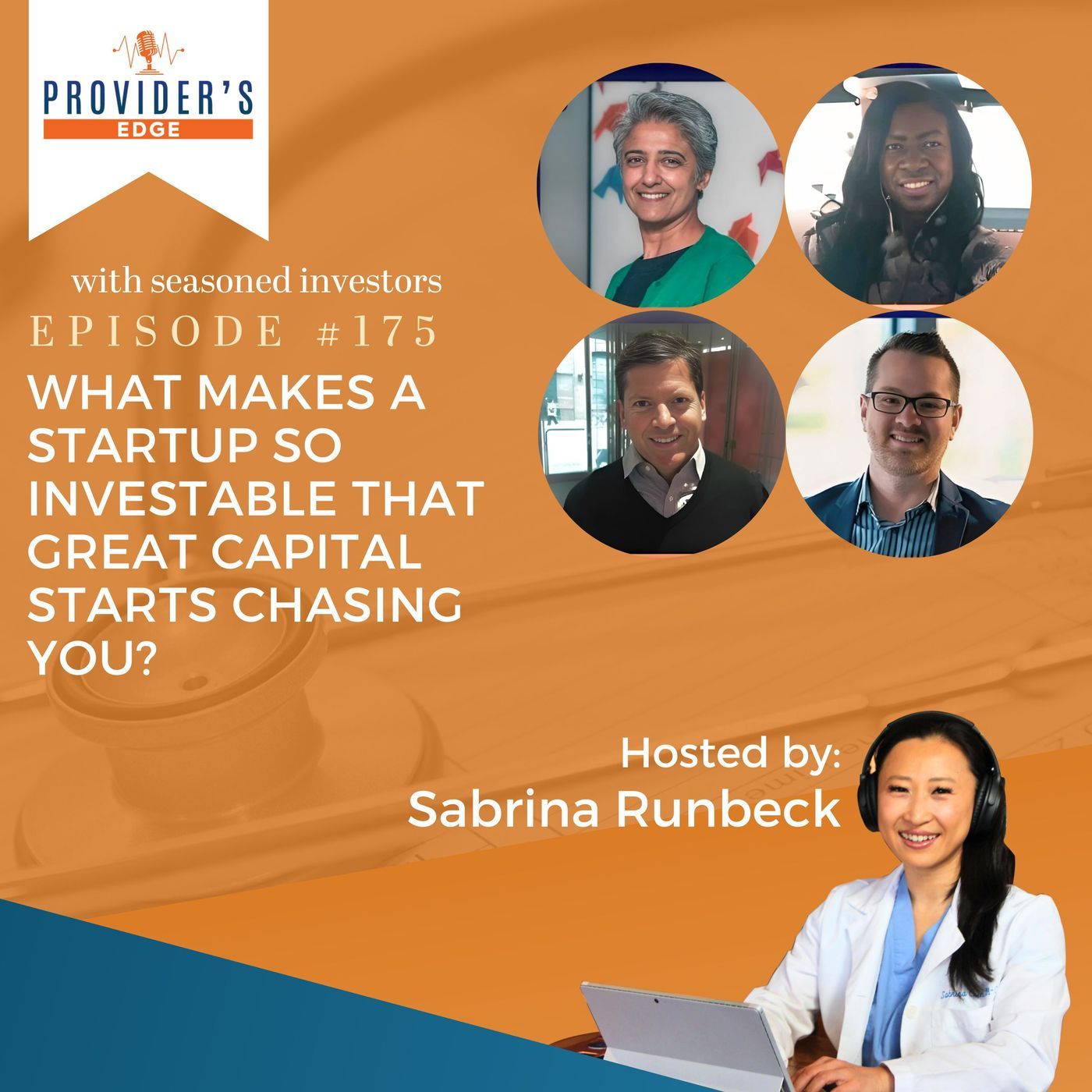
Tired of cold-pitching investors who don’t get what you’re building?What if capital started chasing you?In this episode, I sat down with a panel of seasoned investors during our Venture Vitality Roundtable to unpack what truly makes a startup irresistible to aligned capital.We’re talking beyond pitch decks—this is about market readiness, community-first traction, and the kind of 2-minute pitch that gets shared in closed-door investor chats.This is the mindset shift every Seed to Series B founder needs to hear.🔑 What You’ll Learn:Why product-market fit is overrated (and what to chase instead)How to become fundraising fluent so you stop wasting timeWhat investors actually want to hear in your pitchThe secret to getting great capital to chase youWhy problem validation is the real unlock for early tractionHow to build a pre-launch community that sells for you later💬 Let’s Discuss:What’s the last market validation conversation you had—before building anything?Can you pitch your company in 2 minutes with no slides?Timestamps:00:00:00 - Why some startups attract capital instead of chasing it 00:02:11 - The hidden struggles of raising money (Marie’s perspective) 00:03:57 - Training founders to be fundraising fluent (Kurt’s insights) 00:06:01 - Alternative capital sources + accelerator/venture studio models 00:07:23 - Market readiness beats product-market fit 00:09:58 - The 100 Customer Challenge: Validating the problem first 00:11:52 - Why a 2-minute video pitch beats any deck 00:13:07 - Build community before building your product 00:17:05 - Healthcare pilots and clinical trials as proof of traction 00:21:32 - Five core lessons to make your startup truly investable🎧 Related Episodes You’ll LoveEp 174 – Who Are the Founders That Win Investor Trust Fast?Ep 169 – How AgeTech Startups Win Hospital Trust With Wound-Care PilotsEp 168 – What Turns a Good HealthTech Pitch Into a ‘Yes’ for Women Founders✅Here are 3 ways we can support you right now:🎤 Be a Featured Guest on the Provider’s Edge Have traction and a story to share? Apply to join us on the show: PulsePointPath.com/Call-Sabrina📊 Ready to turn your pitch into a magnet? Send us your draft, let me rewrite it for you 👉 PitchToYes.com🎯 Get You In Front of InvestorsWe match you with the most aligned investors and decision-makers who care about your niche already. Apply at CapitalEngine.vc Hosted by Simplecast, an AdsWizz company. See pcm.adswizz.com for information about our collection and use of personal data for advertising.
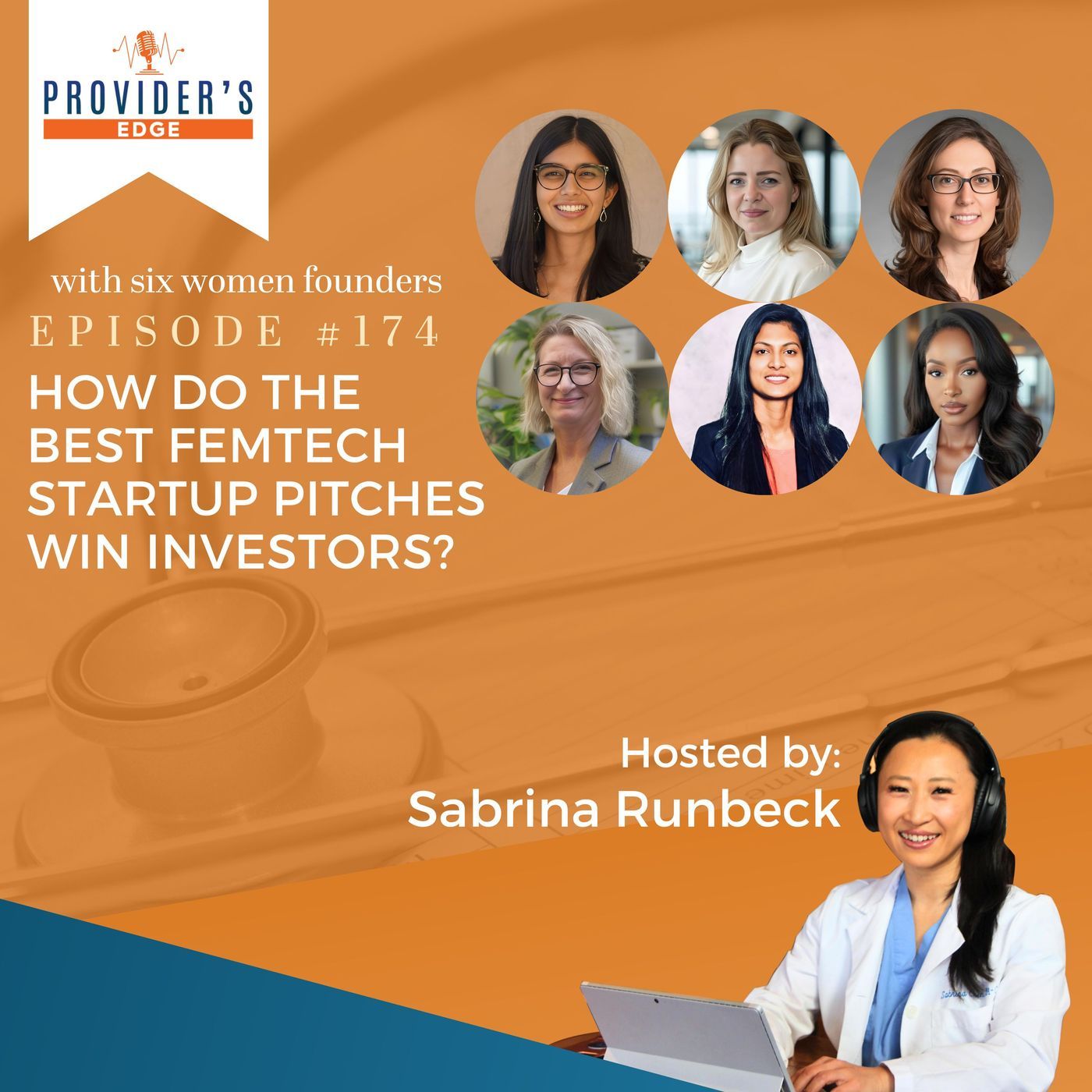
What happens when six bold women founders get two minutes to pitch life-changing health innovations… and three minutes to prove they’re investor-ready?You get this episode. Real traction. Real questions. Real feedback.And the blueprint for turning your pitch into a strategic partnership.From point-of-care diagnostics to digital therapeutics for fibroids, non-hormonal contraception, and military-grade triage tech—each founder had just two minutes to make their case and three minutes to defend it.Here’s what you’ll walk away with:🔑How to communicate your FDA and reimbursement strategy in 30 seconds or less🔑Why NIH-backed data and patient voice interviews are pitch power tools🔑What separates “cool tech” from “capital-efficient” models investors will back🔑How to position your solution as a platform, not a product🔑Why B2B2C models in women’s health are gaining real ground🔑What to include (and cut) when you only have 2 minutes to shineTimestamps:00:02:42 – Live Pitch Tank: Six Women Founders Take the Stage00:03:46 – Nancy (AmplifiDX): 15-Minute Women’s Health Diagnostics00:09:23 – Tanu (FlowCare): Fixing Period Product Access in Public Spaces00:14:52 – Natasha (Myocurrent): Tackling Fibroids with Digital Therapeutics00:21:01 – Mehek (Manglovo): Reinventing Birth Control with a Weekly, Hormone-Free Pill00:26:45 – Jessica (Omedus): Saving Lives with Smarter Triage Tech00:32:53 – Goli (Cosm Medical): Personalized Solutions for Pelvic Health43:30 – And the Winners Are…44:07 – Investor Secrets: Five Lessons for a Standout Pitch🎧 Related Episodes You’ll Love📍 Ep 171 – Why Founders Fail When They Ignore This with Monica McKitterick📍 Ep 170 – From Implementation to Optimization: Never Lose a Client Again Ep 170 with Sandra Johnson📍 Ep 169 – How AgeTech Startups Win Hospital Trust With Wound-Care Pilots Ep 169 with Amy Cassata✅Here are 3 ways we can support you right now:🎤 Be a Featured Guest on the Provider’s Edge Have traction and a story to share? Apply to join us on the show: PulsePointPath.com/Call-Sabrina📊 Ready to turn your pitch into a magnet? Send us your draft, let me rewrite it for you 👉 PitchToYes.com🎯 Get You In Front of InvestorsWe match you with the most aligned investors and decision-makers who care about your niche already. Apply at CapitalEngine.vc Hosted by Simplecast, an AdsWizz company. See pcm.adswizz.com for information about our collection and use of personal data for advertising.
Why do some founders raise with ease—while others, equally talented, get ghosted?In this episode, we reverse the roles: three HealthTech investors answer real questions from early-stage founders on what makes them say “yes.”If you’ve ever poured your heart into a pitch only to hear crickets, this conversation will make you feel seen—and help you shift from being overlooked to oversubscribed.Tune in to hear what Naomi Goez, Jasper, and Veda say are the green flags they look for, the red flags they avoid, and what turns a promising founder into a confident “yes.”The way you show up, communicate, and align your mission with momentum might be the single most fundable thing you do this quarter.💡 What You’ll Learn:🎯What specific traits make investors instantly lean in🎯Why fast follow-up and Loom videos might close your next round🎯How investor diligence actually works from their side of the table🎯What red flags will quietly kill a deal (even if your product is great)🎯Why building for women’s health is no longer niche—it’s a movement🎯How founders can turn passion into long-term performance
Timestamps:00:03:04 - Meet the investor panel: Naomi, Jasper, Veda00:07:32 - Capital Engine: Preparing founders for the right rooms00:08:16 - Beyond the pitch: What investors really look for00:09:59 - Red flags that stop investors in their tracks00:13:22 - How investors support founders beyond capital00:15:26 - Key green flags: Urgency, consistency, passion00:24:30 - Four must-know investor questions🎧 Related Episodes You’ll Love
📍 Ep 171 – Why Founders Fail When They Ignore This with Monica McKitterick📍 Ep 170 – From Implementation to Optimization: Never Lose a Client Again Ep 170 with Sandra Johnson📍 Ep 169 – How AgeTech Startups Win Hospital Trust With Wound-Care Pilots Ep 169 with Amy Cassata✅Here are 3 ways we can support you right now:🎤 Be a Featured Guest on the Provider’s Edge
Have traction and a story to share? Apply to join us on the show: PulsePointPath.com/Call-Sabrina 📊 Ready to turn your pitch into a magnet? Send us your draft, let me rewrite it for you 👉 PitchToYes.com🎯 Get You In Front of Investors
We match you with the most aligned investors and decision-makers who care about your niche already. Apply at CapitalEngine.vc Hosted by Simplecast, an AdsWizz company. See pcm.adswizz.com for information about our collection and use of personal data for advertising.
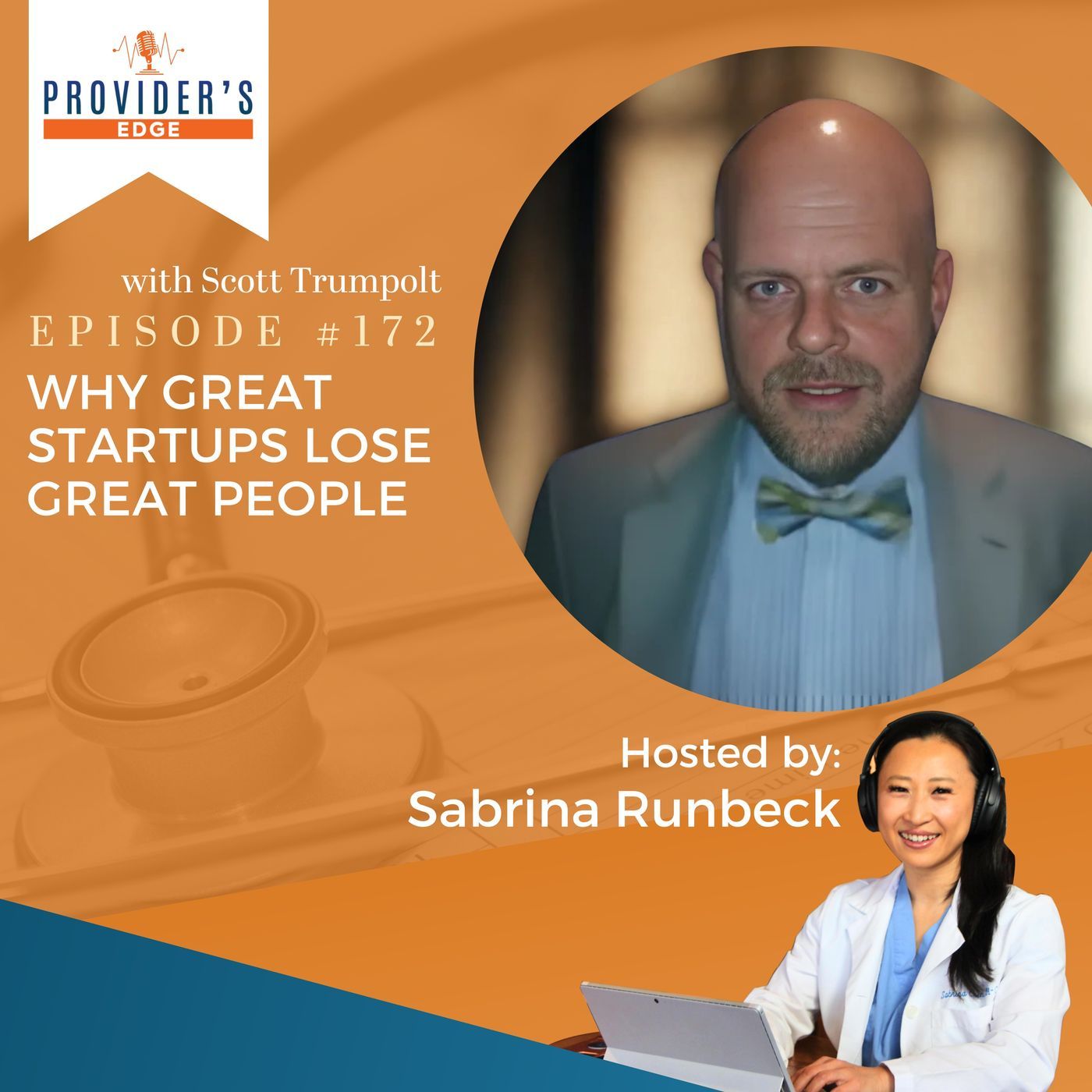
When you’re building a healthcare startup, there’s one resource you can’t afford to waste—your people. Too often, founders lose top talent because they rely on quick fixes instead of designing compensation and incentives that keep employees engaged for the long haul.In this episode, I sat down with Scott Trumpolt, a compensation consultant with 30+ years of HR experience, including 12 years advising startups and healthcare companies. We explore how founders can balance equity vs. pay, stay transparent with teams, and build incentive structures that attract talent, retain high performers, and strengthen investor confidence, all while making people feel valued and aligned with the mission.In this episode, you’ll learn:🔑 How compensation and engagement together drive retention🔑 Ways early-stage founders can balance equity, cash, and variable pay🔑 Why transparency builds trust and loyalty inside small teams🔑 How tying incentives to milestones strengthens investor confidenceTimestamps: 00:00:00 – Why talent needs more than pay to stay 00:01:47 – Why retention matters in early-stage startups 00:03:16 – Scott’s 30-year journey in HR and consulting 00:05:58 – Appreciation as a retention factor 00:08:52 – Equity, variable pay, and survival mode 00:12:25 – Capital Engine: investor readiness support 00:16:51 – Hiring for today’s needs vs. future scalability 00:19:59 – Candidate frustrations: ghosting and misfit hiring 00:23:05 – Keeping people engaged during slow growth phases 00:25:23 – Career architecture as a hiring tool 00:29:51 – Using long-term incentives for senior leaders 00:33:15 – Sabrina’s closing call: apply lessons to your team 00:34:32 – Six key learning points from today’s episode🎧 Related Episodes You’ll Love✅Here are 3 ways we can support you right now:🎤 Be a Featured Guest on the Provider’s Edge Have traction and a story to share? Apply to join us on the show: PulsePointPath.com/Call-Sabrina📊 Ready to turn your pitch into a magnet? Send us your draft, let me rewrite it for you 👉 PitchToYes.com🎯 Get You In Front of InvestorsWe match you with the most aligned investors and decision-makers who care about your niche already. Apply at CapitalEngine.vc Hosted by Simplecast, an AdsWizz company. See pcm.adswizz.com for information about our collection and use of personal data for advertising.

Burnout isn’t just a clinical issue—it’s a leadership one. And most clinicians-turned-founders are burning the candle at both ends while trying to serve, scale, and stay sane. Monica McKitterick, PA-C, did it differently.When she stopped leading from adrenaline and started building from alignment, everything shifted—her visibility, her support system, and her ability to scale without chaos.“You’re doing too much” wasn’t an insult—it was a wake-up call. Monica shares what happened when she created space for actual relief… and why more clinicians need to stop hiding behind their grind.Listen in to learn how Monica built a sustainable, multi-site practice while helping NPs and PAs claim their space in the DPC world.Less hustle, more intention. Greater reach, deeper fulfillment. Learn what happens when you lead with your nervous system—not just your ambition.What You'll Learn:💠Why leading from nervous system regulation creates scalable clarity💠The #1 mindset shift Monica teaches clinicians who want to become founders💠How to build visibility and trust—even if you’re terrible on camera💠The hidden power of answering questions in Facebook groups💠What it really takes to grow past $3M (hint: it’s not patient care)💠How to know if entrepreneurship is right for youTimestamps:00:00:00 - Silent signals of burnout and why alignment matters00:00:59 - Introducing guest Monica McKitterick, NP and DPC founder00:02:57 - Monica’s story: from NP to direct primary care pioneer00:05:27 - Burnout and the realization that scaling isn’t everything00:07:26 - Sabrina on ecosystems: family, mentors, partners, community00:11:18 - Giving back through boards and community service00:14:05 - Key lessons from Monica’s book: entrepreneurship readiness00:17:09 - Marketing, sales, and operations before $3M in revenue00:19:54 - Redefining worth beyond revenue and patient numbers00:24:22 - Staying open to the future and embracing change00:24:40 - Encouragement for aspiring clinician-founders00:27:48 - Monica’s journey: from provider to community leader00:28:44 - The power of visibility and selling yourself as a founder00:29:42 - Episode summary and five key learning points00:30:41 - The hidden costs of doing it all yourself🎧 Related Episodes You’ll Love✅Here are 3 ways we can support you right now:🎤 Be a Featured Guest on the Provider’s Edge Have traction and a story to share? Apply to join us on the show: PulsePointPath.com/Call-Sabrina📊 Ready to turn your pitch into a magnet? Send us your draft, let me rewrite it for you 👉 PitchToYes.com🎯 Get You In Front of InvestorsWe match you with the most aligned investors and decision-makers who care about your niche already. Apply at PulsePointPath.com/Pitch-Application Hosted by Simplecast, an AdsWizz company. See pcm.adswizz.com for information about our collection and use of personal data for advertising.
𝒀𝒐𝒖 𝒘𝒐𝒓𝒌 𝒉𝒂𝒓𝒅 𝒕𝒐 𝒘𝒊𝒏 𝒂 𝒄𝒍𝒊𝒆𝒏𝒕. But what happens after the go-live? Too many health tech companies lose momentum right when they should be deepening trust and adoption.In this episode, I sit down with Sandra Johnson, SVP of Client Services at CliniComp, to talk about how their “system as a service” model keeps clinicians front and center, embeds users in every stage of product creation, and delivers interoperability that makes life easier for care teams—not harder.Whether you’re an early-stage founder or scaling your solution, this conversation will help you see why optimization is your real retention strategy.What you’ll learn in this episode:🔶 How to turn “go-live” into the start of a stronger client relationship🔶Why embedding end users early ensures adoption🔶The role of interoperability in creating a 360° patient view🔶How automation gives clinicians back their most valuable asset—time🔶The strategic advantage of ongoing optimization for scaling startupsEpisode Timestamp:00:00:01 – Go live is just the beginning, not the end00:01:48 – Introducing guest Sandra Johnson from CliniComp00:03:05 – Sandra’s career journey in healthcare IT00:05:44 – CliniComp’s unique “system as a service” model00:09:15 – Collaborative partnership approach for long-term support00:12:21 – Use cases across inpatient, outpatient, and long-term care00:14:55 – Scalable platform, interoperability, and AI in EHR00:17:10 – Expanding to global customers with full end-to-end solutions00:20:49 – Summary of Sandra’s key insights00:21:24 – Key Point #1: Customer retention starts at go live00:22:03 – Key Point #2: Clinicians must lead product development00:22:49 – Key Point #3: Interoperability as a growth lever00:22:58 – Key Point #4: Workflow automation equals more patient time00:23:26 – Key Point #5: Adaptability and scalability for all organizations00:23:53 – Key Point #6: Awareness as a strategic barrierContact Sandra Johnson, SVP of Client Services at CliniComp at: 🎧 Related Episodes You’ll Love📍 Ep 151- Tech Equity Is the Missing Link in Health Equity – How inclusive tech design drives adoption and improves outcomes.📍 Ep 121- Navigating Capital Fundraising in Health Tech: Lessons from the Field – Strategies to position scalable platforms for investment.📍 Ep 114- Nurse Entrepreneur: A Founder’s Perspective with Susan Davis – Frontline-led innovation and adoption insights that parallel CliniComp’s clinician-first approach.✅ Want to Keep Growing Without Losing Clients?Here are 3 ways we can help you today:🎤 Be a Featured Guest on the Provider’s Edge Have traction and a story to share? Apply to join us on the show: PulsePointPath.com/Call-Sabrina 📊 Make Your Pitch Investor-Ready Send us your draft and let me rewrite it so it becomes a funding magnet 👉 PitchToYes.com 🚀 Get in Front of Investors Who Already Want What You’ve Built Apply for a contestant spot at PulsePointPath.com/Pitch-Application and pitch to active investors and decision-makers in your niche. Hosted by Simplecast, an AdsWizz company. See pcm.adswizz.com for information about our collection and use of personal data for advertising.

What if a single piece of technology could improve patient healing rates by 35%—without adding extra work for clinicians?That’s exactly what Swift Medical is proving with their AI-powered wound care platform. With over 30 million wound assessments and 40+ peer-reviewed studies, their solution integrates directly into existing EHR workflows, predicts complications before they happen, and enables providers to deliver faster, safer care.In this episode, we uncover how founder partnerships, evidence-based AI, and seamless integration are transforming wound care from a hidden problem into a proactive part of recovery.In this episode, you’ll learn: 🔑 Why wound care is one of healthcare’s most overlooked challenges 🔑 How AI is predicting complications before they escalate 🔑 The importance of interoperability in healthcare tech adoption 🔑 Why trust—not features—drives clinical adoption 🔑 How partnership accelerates market penetration for healthtech startupsTimestamps:00:00:00 – Introduction: Why tech approval is more than just tech.00:03:20 – Wounds as a critical yet overlooked issue.00:05:43 – How wound care evolved over 25 years.00:08:55 – Educating patients and providers with tech.00:13:03 – Spotlighting healthcare domains.00:17:57 – Evidence-based AI and clinical trust.00:21:54 – Learning from 10 years of trial and error.00:25:01 – Value-based care and patient outcomes.00:28:00 – Navigating value-based ecosystems.00:30:10 – Data capture challenges across systems.00:31:59 – Wound care as an underestimated challenge.00:32:54 – Six key points recap.🎧 Related Episodes You’ll LoveEp 116 — Navigating the Shift: Optimizing Business Models for Scalable HealthTech GrowthEp 117 — The Conference Chessboard: Winning Moves for HealthTech Networking and DealsEp 118 — The Hidden Cost of DIY: Why Top HealthTech CEOs Choose Strategic Partnerships✅Here are 3 ways we can support you right now:🎤 Be a Featured Guest on the Provider’s Edge Have traction and a story to share? Apply to join us on the show: PulsePointPath.com/Call-Sabrina📊 Ready to turn your pitch into a magnet? Send us your draft, let me rewrite it for you 👉 PitchToYes.com🎯 Get You In Front of InvestorsWe match you with the most aligned investors and decision-makers who care about your niche already. Apply at PulsePointPath.com/Pitch-Application Hosted by Simplecast, an AdsWizz company. See pcm.adswizz.com for information about our collection and use of personal data for advertising.
You have under 2 minutes to win an investor’s attention.Most VCs decide in the first 30–90 seconds whether to keep listening.If you’re a women-led healthtech founder, that window is your make-or-break moment—and your science-heavy pitch could be costing you the “yes” you deserve.In our latest guide, you’ll learn how to transform complex, data-driven solutions into investor-ready pitches that get remembered and funded.You’ll learn:💡How to start your pitch so investors lean in, not check out💡A proven method to explain complex clinical innovation without “dumbing it down”💡The storytelling formula that pairs emotion with hard proof💡Deck design and delivery moves that keep attention past the 90-second drop-off💡How to navigate and reframe the “too niche” bias women-led healthtech founders facePlus: Real coaching and actionable examples you can use right now.Episode Timeline: 00:02:09 - Jolly from Altheia pitches misdiagnosis solution 00:04:29 - Feedback on competitive analysis placement and timing 00:05:25 - The importance of continuous script improvement and practice 00:08:28 - Pacing and word count for pitch competitions 00:09:15 - The power of structured scripts vs. off-the-cuff pitching 00:10:03 - Nancy from AmplifiDx pitches STI diagnostic solution 00:11:54 - Always practice before any investor meeting 00:12:38 - Understanding buyer personas and persuasion factors 00:16:07 - Breaking down Nancy's pitch across five persuasion points 00:19:43 - Making your call-to-action direct, not passive 00:22:44 - Key takeaways: emotional connection and human elements 00:24:09 - Value proposition clarification insights 📣 Get In the Spotlight Are you a founder with a proven solution and paying users? Apply to pitch your startup in front of investors and decision-makers on HealthTechShowdown.com. Submit a short, under 200-word, explanation of your solution and why it belongs in front of the people who matter most.—------------------------------------------------Resources MentionedReady to turn your pitch into a magnet? Let me write it for you. 👉 PulsePointPath.com/Pitch-WorkshopImpact Quotient Quiz: Think you’re building momentum in healthcare? Find out if your leadership is actually scalable and fundable: ImpactQuotientQuiz.comNeed executive clarity now? Let’s create your growth blueprint in under 5 hours. 👉 PulsePointPath.com/Call Hosted by Simplecast, an AdsWizz company. See pcm.adswizz.com for information about our collection and use of personal data for advertising.

What if building your HealthTech solution was only half the battle, because the real game is connecting humans and data across an entire ecosystem?That’s the challenge Eugene Pozdnikov, CEO of CYBX, is tackling head-on. In this episode, we unpack how to move beyond single-point care and build ecosystems that serve patients, families, physicians, and long-term care teams—without losing fidelity or security in the data stream.From Slack-style collaboration for clinicians to CRM-driven engagement for caregivers, we dive into how CYBX is creating a shared operating layer that respects privacy, scales communication, and keeps families in the loop.Because better care coordination isn’t about adding more tools. It’s about designing the digital scaffolding that holds the system—and the people—together.🎙️ In this episode, you’ll learn:🔑 Why CRM tools may outpace EHRs in patient coordination
🔑 How to create shared visibility across caregivers, families, and care teams
🔑 What happens when aging populations fall through disconnected systems
🔑 Why healthcare needs “Slack-style” team environments built for clinical realities
🔑 The hidden power of engagement scores and automation in patient follow-ups
🔑 How CYBX is bridging gaps in real-time between facilities, EHRs, and family stakeholdersEpisode Timeline: 00:03:11 – Eugene’s Background and Path into Healthcare Technology00:06:38 – Real-World Use Cases in Data Integration and Care Coordination00:09:22 – Transitional Care Challenges and EHR Fragmentation00:15:24 – Digital Portals, Ecosystems, and the Role of CRMs in Healthcare00:17:53 – The Future: Converging CRM, RPM, and Secure Messaging00:19:57 – Why Foundational Data Management Comes First00:22:09 – Beta Testing CYBX’s HIPAA-Secure Slack-Style Tool00:24:54 – Scaling Use Cases: Scheduling, Data Lakes, and AI Potential00:29:50 – Lab Integration Problems Between Epic and PointClickCare00:31:21 – Eugene’s Three Magic Wand Wishes for Healthcare00:39:46 – Final Takeaways: Six Lessons from the Conversation📣 Get In the SpotlightAre you a founder with a proven solution and paying users?Apply to pitch your startup in front of investors and decision-makers on HealthTechShowdown.com.Submit a short, under 200-word, explanation of your solution and why it belongs in front of the people who matter most.Resources MentionedReady to turn your pitch into a magnet? Let me write it for you. 👉 PulsePointPath.com/Pitch-WorkshopImpact Quotient Quiz: Think you’re building momentum in healthcare? Find out if your leadership is actually scalable and fundable: ImpactQuotientQuiz.comNeed executive clarity now? Let’s create your growth blueprint in under 5 hours. 👉 PulsePointPath.com/Call Hosted by Simplecast, an AdsWizz company. See pcm.adswizz.com for information about our collection and use of personal data for advertising.
When your frontline workers are burnt out, and your admin team is buried in spreadsheets… it’s not a staffing issue. It’s a system issue.In this episode of Provider’s Edge, I sat down with Adam Lewis, co-founder and CEO of Apploi, to unpack why long-term care organizations can’t solve workforce burnout by hiring alone—and what it actually takes to retain the people doing the hardest jobs in healthcare.We dive into why staff recognition isn't a bonus—it’s a lifeline. We explore how smarter onboarding, career-pathing, and scheduling systems don’t just boost morale, but reduce turnover and elevate care quality.Let’s talk about real retention—where culture meets automation, and recognition becomes strategy.🧠 If you care about reducing turnover, building career ladders, and leading without the burnout, this one’s for you.6 Key Points You’ll Learn:🔑 Why burnout is not just a worker problem—it’s a leadership systems problem🔑 How automating onboarding and scheduling can cut error rates and save hours weekly🔑 What it means to build career pathways for CNAs and why it’s crucial to long-term care🔑 How recognizing your team boosts engagement—and retention🔑 Why job descriptions must evolve to reflect growth, not just responsibilities🔑 What high-trust, high-recognition cultures actually look like in healthcareEpisode Timeline: 00:04:09 – Adam’s journey into healthcare staffing tech00:05:25 – The cost of inefficient hiring and turnover00:08:18 – Streamlining recruitment for overwhelmed admins00:11:01 – How Apploi handles recruiting, onboarding, and scheduling00:19:31 – Designing onboarding to drive clarity and retention00:22:08 – Hiring aligned with values and intrinsic motivation00:29:11 – Scaling with people-first leadership00:34:07 – Apploi’s AI focus for smarter hiring00:35:18 – Adam’s three wishes for healthcare and his team00:40:39 – 6 key takeaways on hiring, retention, and culture📣 Get In the SpotlightAre you a founder with a proven solution and paying users?Apply to pitch your startup in front of investors and decision-makers on HealthTechShowdown.com.Submit a short, under 200-word, explanation of your solution and why it belongs in front of the people who matter most.Resources MentionedReady to turn your pitch into a magnet? Let me write it for you. 👉 PulsePointPath.com/Pitch-WorkshopImpact Quotient Quiz: Think you’re building momentum in healthcare? Find out if your leadership is actually scalable and fundable: ImpactQuotientQuiz.comNeed executive clarity now? Let’s create your growth blueprint in under 5 hours. 👉 PulsePointPath.com/Call Hosted by Simplecast, an AdsWizz company. See pcm.adswizz.com for information about our collection and use of personal data for advertising.

In this episode, I sat down with Phil Beckett to unpack the true complexity of making health data work. From mismatched baby names and identity errors to AI-powered community simulations, we explored why data usability—not just availability—is key to lasting change. We talked about aligning economic models with upstream care, empowering patients with understandable records, and the multidimensional nature of medicine that includes not just physical health, but emotional, psychological, and even spiritual wellness.💡 Topics We Covered:🔹Why interoperability is a human, not just technical, challenge🔹How Texas is tackling patient matching and regional data sharing🔹The danger of grant-only innovation without sustainability🔹What “SimCity for healthcare” could do for public health planning🔹The five dimensions of modern medicine: physical, mental, spiritual, behavioral, and social🔹Resilience as a cultural and business model in healthtechEpisode Timeline: 00:01:36 – Why and How Healthcare Data Sharing Is Still Broken00:07:19 – Phil’s Unusual Journey: From Dairy Farm to Digital Health00:10:13 – From Reactive Medicine to Coordinated, Proactive Care00:12:14 – How Texas Is Tackling Interoperability Without State Funding00:17:43 – Phil’s Vision: A SimCity Model for Community Health00:19:38 – Longevity, Food as Medicine, and Whole-Person Wellness00:23:00 – Making Innovation Sustainable, Not Just Flashy00:30:21 – Funding Cuts, Medicaid, and Smart Cost Reduction00:34:16 – Phil’s Three Wishes for Healthcare Transformation00:38:09 – How to Collaborate with the Texas Health Services Authority00:40:05 – Final Thoughts and 6 Points Discussed📣 Get In the SpotlightAre you a founder with a proven solution and paying users?Apply to pitch your startup in front of investors and decision-makers on HealthTechShowdown.com.Submit a short, under 200-word, explanation of your solution and why it belongs in front of the people who matter most.Resources MentionedReady to turn your pitch into a magnet? Let me write it for you. 👉 PulsePointPath.com/Pitch-WorkshopImpact Quotient Quiz: Think you’re building momentum in healthcare? Find out if your leadership is actually scalable and fundable: ImpactQuotientQuiz.comNeed executive clarity now? Let’s create your growth blueprint in under 5 hours. 👉 PulsePointPath.com/Call Hosted by Simplecast, an AdsWizz company. See pcm.adswizz.com for information about our collection and use of personal data for advertising.
You’re doing all the things.Running from call to call, showing up at every pitch, every investor dinner, every headline tech week.It feels like momentum—but is it?In this episode, we unravel one of the most dangerous illusions in startup culture: mistaking chaos for progress.🧠 WHAT YOU’LL LEARN IN THIS EPISODE:1️⃣ Why “chronic busyness” is the new burnout badgeFounders are over-scheduling and chasing every shiny opportunity—not realizing it’s often a trauma pattern, not a growth strategy.2️⃣The nervous system sabotage Logic says yes, but your body says “not yet.” Learn how to recognize when founders appear ready but stall due to internal misalignment.3️⃣The real reason founders delay getting help It’s not because they’re too busy—it’s because they don’t want others to see the mess they’re hiding. Learn how fear of judgment fuels isolation.4️⃣Emergency addiction is killing your culture Discover how even high-functioning teams unknowingly build environments that thrive on urgency and drama—and how to reverse the cycle.5️⃣Design your personal and business ecosystems for sustainable growth Without strong support structures in your wellness, family, mentors, and partnerships, your business success will eventually collapse on itself.6️⃣The mindset shift from ‘fix it myself’ to aligned collaboration Your project doesn’t need a hero—it needs a container. Learn how to stop over-functioning and start scaling with true support.Episode Timeline:00:00:00 - Real momentum begins when you stop mistaking chaos for progress.00:01:55 - Chronic busyness as a protective mechanism.00:04:20 - The lie of high-functioning dysfunction and burnout.00:08:40 - Self-compassion and intentional slowdown as leaders.00:12:55 - Meeting founders where they are with aligned support.00:15:45 - Creating a safe, accountable container for vision.00:18:04 - The emergency addiction mindset.00:23:50 - Emotional self-management reduces “emergencies.”00:28:37 - Designing cultures that allow time for deep work.00:30:29 - When fast movement becomes unproductive chaos.00:31:41 - Recap: 6 key founder mindset traps and insights.00:34:19 - Closing message and feedback invitation.🚀 Get Matched!If you're a HealthTech founder with customers and early traction, HealthTech Showdown is your fast track to strategic capital and curated exposure.This isn’t random networking. It’s a matchmaking platform connecting you with investors already backing companies like yours. We don’t just put you on stage, we help you perfect a pitch that converts, build on-camera confidence, and line up the decision-makers who are primed to say “yes.”Apply now at PulsePointPath.com/Contestant — only 4 founder spots per round.🔁 RELATED RESOURCES:👉 Apply to be on the Provider’s Edge Podcast – Are you a post-Series A health tech founder ready to scale? Apply here TheProvidersEdge.com👉 Take the Impact Quotient Quiz – Find out if your team, product, and systems are aligned for scalable success: ImpactQuotientQuiz.com👉 Ready to turn your pitch into a magnet? Let me write it for you. PulsePointPath.com/Pitch-Workshop👉 Need executive clarity now? Let’s create your growth blueprint in under 5 hours. http://PulsePointPath.com/Call Hosted by Simplecast, an AdsWizz company. See pcm.adswizz.com for information about our collection and use of personal data for advertising.

In this episode, I sat down with Dr. Ronn Berrol to unpack how a single hospital pilot became a 21-site success story—not by replacing Epic, but by solving the one thing it couldn’t do well: surfacing the right data, at the right time, for the right patients. We dove deep into how high-risk patients can be flagged before they escalate into crisis, and how real-time data sharing across emergency departments can dramatically reduce admissions and improve flow. And the secret ingredient? A clinician champion who didn't wait for a committee to say yes—he created momentum from the floor up.1.Don’t Confuse Your EHR with Strategic Insight Tools Dr. Ronn shared how even the best EMRs like Epic can bury clinicians in data. What made a difference wasn’t more information—but surfacing the right information at the right time for high-risk patients.2.Champions Create Change, Not Systems Alone Technology alone didn’t earn trust. It was the clinicians—like Ronn—who piloted it, saw value, and advocated upward that drove full-scale adoption across 21 hospitals.3.Pilot First, Scale Fast—But Only When It Works Many hospitals hesitate to adopt new solutions unless a clear ROI is shown early. That’s why the original pilot funded by a hospital foundation was a turning point.4.Care Coordination Starts Before the Crisis With tools that flag social risks, housing instability, or medication lapses—this platform helped avoid ER boarding by addressing patients’ needs before they spiraled.5.Modern Innovation Means Cross-Hospital Collaboration Emergency departments often operate in silos. But the real breakthrough came from sharing real-time patient data across unaffiliated EDs.6.You Don’t Need to Solve Everything—Just What Others Miss What made this solution a win wasn’t trying to replace Epic—it filled the critical gap Epic couldn’t: surfacing actionable insights, fast.Have you ever been the “first yes” that helped an innovation take off in your org?Episode Timeline: 00:01:56 - How piloting EDO began through visibility gaps in local EDs.00:03:51 - Clinical inefficiencies and the importance of care pathways.00:05:50 - Workflow improvements reduced boarding and increased capacity.00:07:53 - How a charitable foundation funded the pilot despite cost concerns.00:09:37 - Dr. Ron contrasts EDO vs Epic and explains its push-not-pull advantage.00:11:17 - EDO pushes key info in 30-45 seconds vs long EHR chart reviews.00:13:42 - How EDO helps solve new CMS and system-wide goals.00:17:26 - Dr. Ron expands on how lack of access causes overreliance on EDs.00:21:48 - Key takeaway #1: EHR ≠ strategic insight tool.00:22:17 - Key takeaway #2: Clinician champions drive change.00:22:31 - Key takeaway #3: Pilot first, scale fast.00:22:47 - Key takeaway #4: Coordinate care before crisis.00:23:13 - Key takeaway #5: Share data across hospitals.00:23:30 - Key takeaway #6: Fill the gap, don’t replace the system.📣 Get In the SpotlightAre you a founder with a proven solution and paying users?Apply to pitch your startup in front of investors and decision-makers on HealthTechShowdown.com.Submit a short, under 200-word, explanation of your solution and why it belongs in front of the people who matter most.—------------------------------------------------Resources MentionedReady to turn your pitch into a magnet? Let me write it for you. 👉 PulsePointPath.com/Pitch-WorkshopImpact Quotient Quiz: Think you’re building momentum in healthcare? Find out if your leadership is actually scalable and fundable: ImpactQuotientQuiz.comNeed executive clarity now? Let’s create your growth blueprint in under 5 hours. 👉 PulsePointPath.com/Call Hosted by Simplecast, an AdsWizz company. See pcm.adswizz.com for information about our collection and use of personal data for advertising.
We keep saying we want value-based care. But why do most models still fall short?In this episode, I sat down with Hamad Husainy, a clinician-turned-HealthTech leader at PointClickCare, to explore the hidden reasons value-based systems collapse—and what it actually takes to build one that works.We unpacked why data timing, team collaboration, and cultural transformation—not just more tech—are essential to seamless care. Hamad brought real stories from the field and shared where most leaders miss the mark when scaling their care ecosystems.The question isn’t: do you have the data? It’s: are you using it at the right time, in the right hands, to prevent the wrong outcomes?If you’ve ever felt like your solution should drive better results but doesn't get traction, this is your inside look at what investors, payers, and care leaders want next.🔑 In this episode, you’ll learn:🔹Why data delivery timing trumps data volume🔹The ROI of interdisciplinary team workflows🔹The cultural shifts needed to unlock true collaboration🔹How to align payers and providers using shared data language🔹The 4 stages of care evolution—and where we’re heading nextEpisode Timeline: [00:01:56] - Hamad Husainy: From Clinician to Health Tech Leader at PointClickCare[00:03:21] - Integrating Data for Better, Timely Care Decisions[00:04:55] - Breaking Down Silos Across the Care Continuum[00:07:22] - Culture Shift: Redefining Roles and True Team Collaboration[00:12:04] - AI, Analytics, and Measuring ROI in Care Delivery[00:14:31] - Aligning Providers, Payers, and ACOs[00:15:54] - Hamad’s Three Wishes for Healthcare Transformation[00:21:11] - Six Takeaways for Making Value-Based Care Work📣 Get In the SpotlightAre you a founder with a proven solution and paying users?Apply to pitch your startup in front of investors and decision-makers on HealthTechShowdown.com.Submit a short, under 200-word, explanation of your solution and why it belongs in front of the people who matter most.Resources MentionedHealthTech Showdown (HealthTechShowdown.com): We will find the ideal investors and enterprise leaders for you to pitch to on our virtual gameshow-style event.Impact Quotient Quiz (ImpactQuotientQuiz.com): Think you’re building momentum in healthcare? Find out if your leadership is actually scalable and fundable. Hosted by Simplecast, an AdsWizz company. See pcm.adswizz.com for information about our collection and use of personal data for advertising.
Ever handed off a patient with a thick discharge packet… only to get a call two days later that they’re back in the ER? That’s not just a clinical failure—it’s a system breakdown.In this episode, I sat down with Brian Drozdowicz from PointClickCare to talk about building tools that actually improve care transitions. Not just more data—but smarter data, delivered at the right time, to the right people.Whether you’re building the next big HealthTech platform or navigating value-based contracts, you’ve felt the friction. Data overload. Poor interoperability. Tools that no one actually uses. This conversation is your blueprint for bridging the gaps.Brian shares how PCC’s “PacMan” tool is powering better visibility across care settings—and how AI could finally summarize those 30-page discharge reports into meaningful next steps.If you’re building tools in care coordination, transitions, or VBC, listen in for how to align your product with real clinical flow—and avoid becoming another tool that gets ignored. What You’ll Learn:🔑 Why real interoperability is about usable data—not just access🔑 How PointClickCare’s PacMan tool connects ACOs, hospitals, SNFs, and payers🔑 How AI can streamline discharge planning to boost outcomes and efficiency🔑 Where the biggest founder opportunities are in value-based care🔑 What’s needed for faster adoption of AI and value-based care at scaleEpisode Timeline: [00:01:33] - What is PointClickCare[00:03:59] - PAC Man: Connecting Hospitals, ACOs, and SNFs[00:08:56] - Fixing Discharge and Follow-Up Gaps[00:10:44] - From Data Overload to Actionable Insights[00:14:02] - EHR Interoperability in Action[00:17:05] - Brian’s Three Magic Wand Wishes[00:20:55] - Episode Recap and Key Takeaways📣 Get In the SpotlightAre you a founder with a proven solution and paying users?Apply to pitch your startup in front of investors and decision-makers on HealthTechShowdown.com.Submit a short, under 200-word, explanation of your solution and why it belongs in front of the people who matter most.Resources MentionedHealthTech Showdown (HealthTechShowdown.com): We will find the ideal investors and enterprise leaders for you to pitch to on our virtual gameshow-style event.Impact Quotient Quiz (ImpactQuotientQuiz.com): Think you’re building momentum in healthcare? Find out if your leadership is actually scalable and fundable. Hosted by Simplecast, an AdsWizz company. See pcm.adswizz.com for information about our collection and use of personal data for advertising.

You'd think a founder who's already exited TWO companies, has partnerships with global giants like Siemens, and technology tracking 10 MILLION medical samples would have investors lined up around the block.You'd be wrong.In today's episode, I break down exactly what went wrong in Javier Cuello's pitch for H+Trace—his medical traceability platform that's solving a $500M problem in healthcare.His hook? Brilliant. "Every day in the U.S., the equivalent of a jumbo jet crashes from preventable medical errors."His credibility? Unquestionable.His results? Radio silence from investors.Here's the thing: Having the right ingredients doesn't guarantee the right recipe. Even the most accomplished founders can miss the mark when it comes to communicating their value.I walk you through the exact 2-minute framework that transforms technical brilliance into investor magnetism—and reveal the specific mistakes that cost Javier the attention his breakthrough solution deserves.This isn't just another pitch critique. It's a masterclass in why the best product doesn't always win, but the best COMMUNICATED product does.Listen now on Provider's Edge (link in bio) 👆What You'll Learn:The exact 6-part framework for structuring any healthcare pitch (2-minute to 20-minute versions)Why leading with credentials kills investor interest—and what to lead with insteadThe "Why Now" factor that 90% of healthcare founders miss completelyHow to transform technical complexity into emotional connectionThe specific time allocation that forces clarity: 15 seconds hook, 30 seconds problem/solution, etc.Why "pattern interrupt" hooks outperform feature lists every timeThe 3 pillars of trust every investor seeks before writing a checkReal-time pitch rewriting techniques from our live workshopEpisode Timeline: 00:01:15 - Why great products fail to land with investors 00:03:28 - Javier’s pitch: the problem, solution, traction, and ask 00:05:38 - Immediate reactions and live feedback 00:07:03 - What worked and what’s missing in Javier’s pitch 00:14:19 - Score breakdown and opportunities to improve 00:18:09 - Takeaways: how to shift from info-dump to investor clarity 📣 Get In the SpotlightAre you a founder with a proven solution and paying users?Apply to pitch your startup in front of investors and decision-makers on HealthTechShowdown.com.Submit a short, under 200-word, explanation of your solution and why it belongs in front of the people who matter most.We will find the ideal investors and enterprise leaders for you to pitch to on our virtual gameshow-style event.Resources MentionedPitch Perfect Workshop (PulsePointPath.com/Pitch-Workshop): We will find the ideal investors and enterprise leaders for you to pitch to on our virtual gameshow-style event.Impact Quotient Quiz (ImpactQuotientQuiz.com): Think you’re building momentum in healthcare? Find out if your leadership is actually scalable and fundable. Hosted by Simplecast, an AdsWizz company. See pcm.adswizz.com for information about our collection and use of personal data for advertising.
Everyone’s excited during the demo. No one’s using it six months later.Most HealthTech founders don’t realize the real problem isn’t adoption.It’s overbuilding before your frontline champions are even heard.This week, I sat down with Jonathan McCoy, founder of vCare, and Rachel West, a nurse and clinical collaborator, to discuss how they co-created a robot assistant—CC—that’s transforming the day-to-day lives of nurses in long-term care.When tech becomes indispensable, you know you’ve nailed product-market fit.What You'll Learn🔑Why 50% of nurses leave in 2 years—and how that’s a tech problem 🔑What “point of care robotics” really looks like in action 🔑How to avoid the pilot graveyard most startups fall into 🔑The ROI mindset behind reducing workflow friction 🔑How vCare is securing partnerships with facilities serving 10,000+ residentsEpisode Timeline[00:01:36] – Jonathan’s Journey to Founding vCare and Building CC[00:04:00] – How CC Eases Nurse Workload and Improves Patient Care[00:07:17] – Beyond Documentation: CC’s Telepresence and Therapy Use[00:11:32] – Measuring Impact: Time Savings and Adoption Strategy[00:16:55] – Why CC Works Across Long-Term, Hospital, and Rural Care[00:22:28] – Scaling Vision: 2025 Expansion and Pilot Programs[00:29:27] – Magic Wand Wishes: Jonathan’s 3 Bold Dreams for vCare[00:37:36] – 5 Key Takeaways from the Episode📣 Get In the SpotlightAre you a founder with a proven solution and paying users?Apply to pitch your startup in front of investors and decision-makers on HealthTechShowdown.com.Submit a short, under 200-word, explanation of your solution and why it belongs in front of the people who matter most.—------------------------------------------------Resources MentionedHealthTech Showdown (HealthTechShowdown.com): We will find the ideal investors and enterprise leaders for you to pitch to on our virtual gameshow-style event.Impact Quotient Quiz (ImpactQuotientQuiz.com): Think you’re building momentum in healthcare? Find out if your leadership is actually scalable and fundable. Hosted by Simplecast, an AdsWizz company. See pcm.adswizz.com for information about our collection and use of personal data for advertising.

What if the biggest blocker to your product’s success isn’t the tech—but the fear-filled culture it’s stepping into?That’s exactly what Varsha Chaugai discovered while building Evoke Health, a platform designed to digitize and streamline communication between long-term care facilities and families. Despite building the platform in just five months, the real challenge wasn’t technical—it was cultural.In this episode, we uncover how founders can navigate the invisible resistance of guilt, shame, and outdated manual systems that dominate long-term care. You’ll learn why transparency is often misunderstood as a threat, and how shifting the narrative to collaboration creates space for innovation to thrive.Because sometimes, the hardest code to rewrite is the one in people’s minds.In this episode, you’ll learn:🔑Why long-term care is decades behind in communication tech—and what it costs🔑How fear of being punished stifles transparency and adoption🔑The surprising activation rate that beat out acute and primary care sectors🔑What made 70% of families onboard within a week of rollout🔑How Varsha’s team reframed transparency as a trust builder, not a liability🔑Why culture change must be a deliberate part of your GTM strategyEpisode Timeline: 00:00:00 - Fear-driven culture is silently killing adoption in long-term care00:01:05 - Varsha Chougai from Evoke Health00:03:14 - Guilt, regulations, and manual communication in LTC00:06:26 - Patient portals as collaborative care tools00:08:41 - Shifting culture, not just selling software00:12:19 - Future vision for predictive and educational tools00:15:58 - Fear of punishment in long-term care00:18:41 - Balancing openness with over-information00:22:44 - How have you dealt with product resistance?00:25:58 - What’s next for Evoke Health’s platform00:28:03 - Breaking silos and achieving interoperability00:30:26 - Varsha’s 3 magic wishes for the company00:34:00 - Collaboration and belief create industry change00:36:43 - Key takeaway: transparency builds trust00:38:27 - Leadership drives successful rollout00:38:54 - Culture change must be intentional📣 Get In the SpotlightAre you a founder with a proven solution and paying users?Apply to pitch your startup in front of investors and decision-makers on HealthTechShowdown.com.Submit a short, under 200-word, explanation of your solution and why it belongs in front of the people who matter most.—------------------------------------------------Resources MentionedHealthTech Showdown (HealthTechShowdown.com): We will find the ideal investors and enterprise leaders for you to pitch to on our virtual gameshow-style event.Impact Quotient Quiz (ImpactQuotientQuiz.com): Think you’re building momentum in healthcare? Find out if your leadership is actually scalable and fundable. Hosted by Simplecast, an AdsWizz company. See pcm.adswizz.com for information about our collection and use of personal data for advertising.
Most HealthTech founders collect loads of patient data…But let’s be honest: dashboards don’t change care plans—decisions do.I sat down with Karen Josswick to uncover how HealthTech companies can stop spinning in data loops and start building real post-acute care value.We talked workflow integration, remote care planning, and how to activate the right team talents inside your org and your buyers' orgs.If you're serious about delivering outcomes that healthcare systems value, this episode is your blueprint.🔑 What You'll Learn:▶️Why remote care is the biggest untapped opportunity in post-acute care▶️What founders misunderstand about data strategy and workflow▶️How to spot and activate change champions inside provider orgs▶️A breakdown of visionary vs. strategist vs. operator roles—and how it affects your implementation success▶️Why founders must shift from “dashboard thinking” to “workflow mapping”Episode Timeline: [00:00:00] - Why data activation matters more than collection[00:01:04] - Karen Joswick and PointClickCare Summit background[00:03:44] - Technology’s role in enabling care workflow improvements[00:05:51] - Building networks with high-quality provider partners[00:09:10] - Turning integration into a repeatable care standard[00:12:17] - Innovators vs. strategists vs. implementers: know your team[00:16:04] - Diversity of experience builds better solutions[00:20:11] - Audience call-to-action: identify your blind spots[00:22:12] - Six learning points founders must internalize📣 Get In the SpotlightAre you a founder with a proven solution and paying users?Apply to pitch your startup in front of investors and decision-makers on HealthTechShowdown.com.Submit a short, under 200-word, explanation of your solution and why it belongs in front of the people who matter most.Resources MentionedHealthTech Showdown (HealthTechShowdown.com): We will find the ideal investors and enterprise leaders for you to pitch to on our virtual gameshow-style event.Impact Quotient Quiz (ImpactQuotientQuiz.com): Think you’re building momentum in healthcare? Find out if your leadership is actually scalable and fundable. Hosted by Simplecast, an AdsWizz company. See pcm.adswizz.com for information about our collection and use of personal data for advertising.

Comments

Download from Google Play

Download from App Store
 United States