


 Claim Ownership
Secular Homeschool Revolution
Subscribed: 11Played: 75
Subscribe

© Ashley
Description
Welcome to the "Secular Homeschool Revolution" podcast, where we go on an exciting journey into the world of homeschooling from a progressive and secular mom's perspective. Join us as we explore the ins and outs of the homeschooling arena with over six years of hands-on experience and the delightful chaos of raising three wonderful kids.
72 Episodes
Reverse
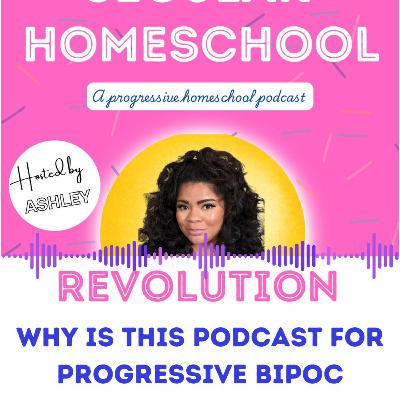
Most homeschooling spaces lean conservative, and that includes many BIPOC homeschooling communities. But what happens when you're a progressive homeschooler who doesn’t fit into the traditional mold? In this episode, we're unpacking why this podcast is intentionally for progressive Black and Brown homeschoolers, how Christian conservatism has shaped BIPOC homeschooling spaces, and why it’s crucial to create learning environments rooted in truth, justice, and liberation.
We’ll talk about the conservative stronghold in our own communities, the role of religion in pushing racism, misogyny, and homophobia, and the importance of carving out spaces where we don’t have to justify our values. Because not all skin folk are kin folk, and we don’t always fit—but that doesn’t mean we don’t belong.
Tune in and let’s build something different.
This Hispanic & Latin Heritage Month, we’re doing more than eating tacos...we’re teaching truth, survival, and resistance. Host Ashley dives into the history and complexity behind terms like Hispanic, Latino, and Latinx, exposes the contradictions in celebrated leaders like César Chávez, and centers immigrant voices often erased from U.S. history.
This episode shows why celebration is resistance. Plus, practical tips and homeschool activities for teaching your kids about the real, messy, brilliant history and culture of Hispanic and Latinx communities.
In this episode, I’m pushing back on the naysayers who think secular homeschooling is “hurting” public schools. We’re unpacking the real story behind public education from whitewashed curricula and book bans to the ways BIPOC families have been erased from the system. I’m asking the hard questions: Why is it radical to build something better for our kids, but not radical when policymakers keep failing them? Tune in for truth-telling, unapologetic commentary, and take up space and stay revolutionary.
I’ve got beef with homeschoolers putting their kids in uniforms. Uniforms aren’t neutral...they’re conformity, culture erasure, and control. In this episode, I dig into their roots in the Industrial Revolution, their violent use in Indian boarding schools, and how they’re still disproportionately enforced on Black and Brown kids today. Homeschooling should be about liberation, not replication.
I’m breaking the myth that homeschooling means doing five days of school at home. In this episode, I share how my family thrives on a three-day academic schedule, co-op on Wednesdays, and real-world learning on Fridays.
In this episode, I am sharing how we make a 3-day homeschool schedule work for my family.
What does decolonized literacy actually look like in a secular homeschool beyond book lists, reading levels, and grammar worksheets?
In this episode of Secular Homeschool Revolution, host Ashley breaks down how dominant literacy practices often prioritize polish, compliance, and respectability over meaning and voice, and why even progressive homeschoolers can unintentionally recreate harm at home.
We explore what literacy looks like when it’s rooted in relationship, culture, and truth-telling rather than performance. From audiobooks and graphic novels to oral storytelling, messy writing, and real-world communication, this episode reframes reading and writing in ways that honor children’s voices without abandoning skill-building.
You’ll hear:
Why decolonized literacy is a practice, not a curriculum
How dominant literacy mirrors respectability politics (and etiquette culture)
What actually counts as reading and writing
How to support literacy without recreating school at home
What decolonized literacy is not and where structure still matters
This episode is especially helpful for new homeschoolers, progressive families, and anyone questioning grade-level pressure, academic performativity, or “doing homeschool right.”
Think you need to be a walking encyclopedia to homeschool your kids? Think again. In this episode of Secular Homeschool Revolution, Ashley busts the myth that homeschool parents have to teach every subject themselves. (Spoiler: You don’t have to touch algebra or frogs unless you want to.)
We’re talking real options: co-ops, community mentors, YouTube rabbit holes, tutors, and leaning into the brilliance of your village. Ashley breaks down how her family handles core subjects like reading, writing, and math without becoming the full-time teacher, and how community knowledge is not just valid, but revolutionary.
In this episode, Ashley breaks down the five things she’d never do as a diverse, decolonized homeschooler...from dodging hard truths to centering Eurocentric success. This isn’t your typical homeschool talk...it's truth-telling, liberatory, and unapologetically revolutionary.
Ashley breaks down the five things you need to do BEFORE you start homeschooling. If you’re progressive, secular, and want to center justice, identity, and JOY in your homeschool, this episode is for YOU!
Resources Mentioned:
Raising Free People by Akilah S. Richards
Woke Homeschooling (by Delina Pryce McPhaull)
The Black Home Educators Network
Fare of the Free Child Podcast
The Conscious Kid
Native Knowledge 360°
Learning for Justice
Deschooling for Parents of Color (Jéhan Sattaur)
Is Homeschooling Affordable? Real Talk on Money, Access & Making It Work
Is homeschooling just for the wealthy? Ashley breaks it down...sharing how real families make it work with creativity, community, and zero shame. From $10 rec center basketball to free curriculum swaps, this episode is for anyone building a homeschool life on a budget. We also check privilege and talk about why support matters just as much as money.
Follow @secularhomeschoolrevolution for more on IG
In this episode of the "Secular Homeschool Revolution," host Ashley tackles the idea of indoctrination in progressive homeschooling. She argues that all education passes on values. Progressive homeschoolers, she says, intentionally "indoctrinate" their kids with empathy, critical thinking, a love for justice, and a desire for truth. This contrasts with traditional systems that can promote ignorance and bias.
esources for the Revolution:
Podcasts:
Secular Homeschooling with Blair & Amy: Focuses on secular academics, decolonizing curriculum, and critical thinking.
Honey! I'm Homeschooling the Kids: Covers child-led learning and progressive approaches.
Documentaries:
"Teach Us All" (Netflix): Explores educational inequality in the U.S.
"Becoming You" (Apple TV+): A series on child development globally.
"Whose Children Are They?": Useful for understanding conservative homeschooling views and for critical discussion.
"Crip Camp: A Disability Revolution" (Netflix): A powerful film about social justice and disability rights.
Books:
"Pedagogy of the Oppressed" by Paulo Freire: A core text on liberatory education and critical thinking.
"Teaching Community: A Pedagogy of Hope" by bell hooks: Discusses education as a path to freedom and the importance of community in learning.
"A Young People's History of the United States" by Howard Zinn (adapted by Rebecca Stefoff): An alternative to traditional American history, highlighting marginalized voices.
"Stamped: Racism, Antiracism, and You" by Jason Reynolds and Ibram X. Kendi: An accessible look at racism and antiracism for young adults.
"The Conscious Parent" by Shefali Tsabary: Promotes a mindful and respectful parenting style aligned with progressive education.
In this episode of Secular Homeschool Revolution, host Ashley gets real about the difference between performative parenting and actual growth when it comes to gender and pronouns.
Let’s be honest..most of us didn’t grow up with this language. So yes, there will be mistakes. But guess what? That’s not the end of the world. What matters is how we handle them.
Ashley breaks down what toxic apologies sound like, how to model real accountability, and how to weave pronoun respect into your homeschool in natural, everyday ways. And if you’re still learning (and you should be), there’s a full list of books, Instagram follows, and resources to support both you and your kids.
This isn’t about being perfect.
It’s about showing up...with intention, curiosity, and respect.
🧠 Mentioned Resources Include:
They She He Me
What Are Your Words?
My Rainbow
@thegenderdoula, @queerkidstuff, @radicalcounselor
Genderspectrum.org & more
🎧 Listen now and start raising kids who respect identity like it’s second nature.
In this Pride Month episode, Ashley breaks down what it means to raise intentional LGBTQIA+ allies in a progressive, BIPOC-centered homeschool. From reading queer-affirming picture books with 4-year-old Langston to deep accountability convos with 12-year-old Parker, this episode is all about centering queer joy, amplifying marginalized voices, and raising kids who show up with love and courage — not just in June, but always.
✨ Glitter, books, and justice — this is how we raise the revolution. Happy Pride, fam!
📚 Books Featured
Ages 3–6:
They, She, He, Me: Free to Be! – Maya & Matthew
Harriet Gets Carried Away – Jessie Sima
Marley’s Pride – Joelle Retener & DeAnn Wiley
Ages 7–10:
When Aidan Became a Brother – Kyle Lukoff
My Rainbow – Trinity & DeShanna Neal
Ho’onani: Hula Warrior – Heather Gale
Ages 10+:
Too Bright to See – Kyle Lukoff
The Moon Within – Aida Salazar
Snapdragon – Kat Leyh
Cringe moments, friend drama, weird YouTube crushes—we see it all up close as homeschool parents. In this episode, I talk about the beauty in staying present through the messy parts, letting natural consequences teach, and choosing connection over control. It's awkward, it's real, and it's part of raising whole humans
In this episode of Secular Homeschool Revolution, Ashley dives into why teaching about immigration is a must in any justice-centered homeschool. Immigration isn’t just politics—it’s personal. It’s about real people, real stories, and the way families navigate new beginnings, loss, identity, and hope. Ashley breaks down how teaching immigration helps kids grow in empathy, critical thinking, and historical awareness—and why it matters especially in secular, progressive spaces.
She also shares a fantastic free resource from the Immigration History Research Center—a 3-part lesson plan that explores:
What immigration is
The experiences of refugees and asylum seekers
How youth immigrants shape and understand their identities
Plus, Ashley gives a list of powerful middle grade and elementary books that help bring these lessons to life through storytelling—including Front Desk, Esperanza Rising, Efrén Divided, and Dreamers.
Whether you’re looking to expand your curriculum or just want to have deeper conversations at home, this episode is full of heart, resources, and real talk about raising compassionate kids who care about the world.
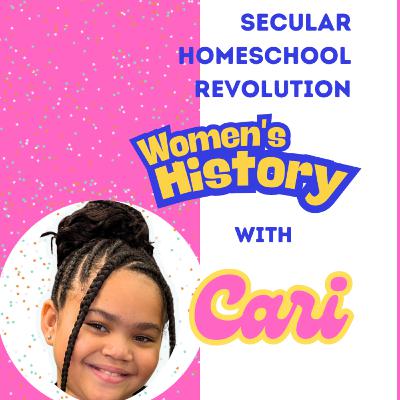
In this episode of Secular Homeschool Revolution, 8-year-old host Cari takes us on a wild ride through the history of women’s voting rights and financial independence—with plenty of sass along the way! 💥
Did you know women weren’t legally allowed to vote in the U.S. until 1920? And that some women—especially Black, Indigenous, and other women of color—were still blocked from voting for decades? 😡 Oh, and get this—women couldn’t even open their own bank accounts until 1974. EXCUSE ME?!
Cari breaks it all down, spilling the tea on the suffrage movement (including its messy side) and why voting rights STILL matter today. And if you’re up for a deep dive, check out The Vote (PBS American Experience)—it’s a great documentary for learning the real history.
In this special episode of Secular Homeschool Revolution, our youngest guest host, 8 year old Cari, takes the mic to talk about why Stonewall matters during Women’s History Month! Cari shares the story of Marsha P. Johnson and Sylvia Rivera...two incredible trans women of color who helped start a revolution for LGBTQ+ rights. With curiosity and heart, she explores why their fight for equality is part of women’s history and why we should all remember their contributions.
Tune in for a short but powerful episode as Cari reminds us that history is about everyone.
Episode Title: "Short History Facts with Cari: Kamala Harris"
In this special episode of Secular Homeschool Revolution, we’re handing the mic to guest host Cari! She’s diving into a quick history lesson on Kamala Harris, sharing interesting facts about her career, accomplishments, and controversies. From her role as the first woman and first Black and South Asian Vice President to her past as a prosecutor, Cari breaks it all down in a way that’s easy to understand. Tune in for a short and engaging history moment straight from a homeschooler.
This Women's History Month, we're happy to welcome guest Cari a very special 8-year-old homeschooler who is passionate about women's history. Her debut episode focuses on the legacy that's, Rita Moreno.
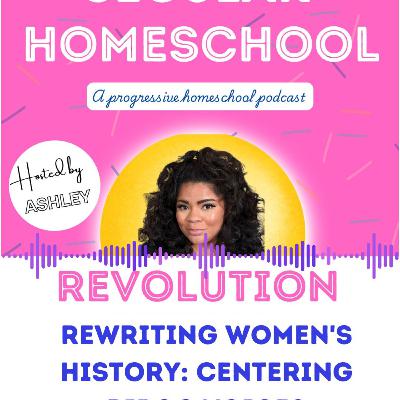
This Women's History Month, we're doing more than just adding names to a list. We're dismantling the traditional narrative and centering the powerful stories of BIPOC women. Join host Ashley as we dive deep into why it's crucial to rewrite history, moving beyond the often-told stories of white women to highlight the resilience, leadership, and groundbreaking contributions of Black, Indigenous, Latina, Asian, and other women of color. We explore the importance of intersectionality, the need for diverse role models, and how to actively integrate these vital stories into your homeschool journey and beyond. We'll discuss how the erasure of BIPOC women's history creates a distorted view of the past, and how we can use this month to correct those inaccuracies. We’ll look at real life examples of women like Fannie Lou Hamer, Yuri Kochiyama, and many others. We'll also provide practical tips and resources for homeschooling families looking to create a more inclusive and truthful historical education. Let’s make Women’s History Month a catalyst for change, ensuring that every child sees themselves reflected in the stories we tell.
Resources Mentioned:
U.S. Census Bureau: (For demographic data on women of color)
Catalyst.org: (For data on women of color in the workforce and population statistics)
National Women's History Museum: (For resources and information on women's history)
"She's Beautiful When She's Angry" (Documentary): (Explores the Black Liberation Women's Movement and the Lesbian Liberation Movement)
"Eyes on the Prize" (Documentary Series): (Provides extensive coverage of the Civil Rights Movement, including the contributions of women)
"Ella Baker and the Black Freedom Movement: A Radical Democratic Vision" by Barbara Ransby (Book): (Biography of Ella Baker)
"Freedom on My Mind" (Documentary): (Includes the work of Fannie Lou Hamer)
The National Museum of African American History and Culture website: (Offers information and resources on Black history)

Comments

Download from Google Play

Download from App Store
 United States