


 Claim Ownership
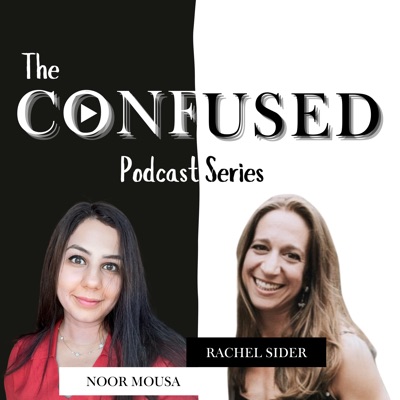
The Confused Podcast Series
Subscribed: 0Played: 2
Subscribe

© 2025 Noor Mousa & Rachel Sider
Description
This is the Confused Podcast Series, which features Confused About Syria, Confused About Yemen, and Confused Iraqi podcasts. The series aims to make complex conflict contexts more human, accessible, and honest.
If you’re looking for quick answers about the Middle East and conflict, this may not be the podcast series for you. But If you’re looking to slow down, listen, and sit with complexity, then welcome :)
c358521e5d52ebbb92bde880aafca44335cd82b3
7 Episodes
Reverse
Yemen is often in the news for its conflict, but for centuries it was known as Arabia Felix – the "Happy Land." In this season premiere of Confused About Yemen, hosts Noor Mousa and Rachel Sider take you behind the headlines to share an aid worker’s perspective on life in this complex country.From growing up hearing stories of Yemen’s greenery and poetry to navigating the realities of a protracted humanitarian crisis, Noor shares her experience living in Aden. Together, Noor and Rachel unpack the history of the North-South divide, the politicization of aid, and the surprising ways life continues despite the war; from ballroom-style dancing to the daily ritual of chewing Qat.Episode Notes: Resources and Recommendations🎬 Featured FilmTitle: 10 Days Before the WeddingDirector: Amr GamalYear: 2018Why watch? It captures the resilience of a couple trying to get married in Aden amidst the conflict, showcasing the humor and life that persists despite the war.📚 Suggested ReadingFor the History Buff: Arabia Felix from the Time of the Queen of Sheba by Jean-Francois Breton.Context: We discussed how Yemen was historically known as "Arabia Felix" (The Happy Land).For the Coffee Lover: The Monk of Mokha by Dave Eggers.Context: A true story about reviving the ancient art of Yemeni coffee – perfect for those interested in the "Coffee vs. Qat" economy we debated.Classic Literature: The Hostage by Zaid Mutee' Dammaj.➡️Follow on InstagramFor Street Photography: @nas_aden (Nas Aden / People of Aden)Bio: "People of Aden" – A community platform documenting daily life, faces, and stories from the streets of Aden.For Visual History: @YemenUsedToBeBio: An art initiative that aims to alter stereotypes held about Yemen by documenting its past.For Food & Recipes: @ShebaYemeniFood (Katherine Abu Hadal)For Art & Culture: @AlMadaniyaMagazineBio: A platform highlighting Yemeni art, culture, and civil society initiatives.🎧 Other Podcasts We RecommendYemenis In Exile: Giving space to Diaspora Yemenis to share their personal struggles and stories.Enab Podcast: Covering various disciplines from entrepreneurship to design in the region.
Women in Yemen have long held communities together amidst conflict, displacement, economic collapse, and inter-generational trauma. Yet, their stories are often sidelined or simplified in global narratives. In this episode of Confused About Yemen, hosts Noor Mousa and Rachel Sider explore the layered, intimate realities of womanhood in Yemen today.Drawing on lived experience, fieldwork, and conversations with Yemeni activists and creators, they trace how women navigate war, patriarchy, shifting social norms, and the expectations placed on them both inside and outside the home. From the quiet power of community networks to the courage of women leading local peace efforts, this episode highlights the forms of resilience and resistance that rarely make headlines.Episode Notes: Resources & RecommendationsFilms by Yemeni Women:I Am Nojoom, Age 10 and Divorced — by Khadija al-Salami, Yemen’s first female filmmaker; a powerful reflection on child marriage and agency.Karama Has No Walls — by Sara Ishaq, an Oscar-nominated documentary capturing women’s role during Yemen’s 2011 revolution.Just Another Memory — by Mariam Al-Dhubhani, an intimate portrayal of loss and resilience in Aden.Writers & Poets: Bushra Al-Maktari (Behind the Sun, 2013) — documenting the hidden suffering of civilians and women in wartime Yemen.Nabilah Al-Zubair (It’s My Body, 2000) — an early feminist novel centred on bodily autonomy.Ebtissam Al-Mutawakkil and Fatima Al-Ashabi — leading contemporary Yemeni poets exploring identity and womanhood.Artists & Photographers:Shaima Al-Tamimi — exploring migration, identity, and intergenerational memory.Thana Faroq — documentary photographer chronicling women’s resilience amid displacement.Amna Al-Nasiri — painter blending Yemeni heritage with feminist themes.Arwa Othman — cultural advocate, researcher, and photographer preserving Yemen’s folk traditions.Organizations & Cultural Platforms:Al Yamaniyah – A women’s platform highlighting gender, art, and advocacy: https://www.instagram.com/al.yamaniah/Romooz Foundation – Supporting emerging Yemeni artists and writers, including women creators: https://www.instagram.com/romoozfoundation/Basement Cultural Foundation – Promoting human rights through art, with strong female leadership: https://www.instagram.com/albasement/?hl=en Further Listening (Arabic):If you understand Arabic, you may find this series valuable: a collection of podcasts created by Yemeni women for the Voices for Sustainable Freedom (VFSF) initiative.Listen here: https://soundcloud.com/ahj-vfsf/tracks Arabic Words Explained:Bukhoor / بخور – Incense burned in homes as a cultural and hospitality tradition.Hijab / حجاب – A headscarf worn by many Muslim women.Qat / قات – A mild stimulant leaf commonly chewed in Yemen.
In this final episode of Confused About Yemen, Noor Mousa and Rachel Sider look ahead: what kind of future is being imagined for Yemen, and by whom? Is it one country, two, or a more messy reality that doesn’t fit any of the imposed formulas?From stalled peace talks to quiet deals between armed actors, Noor and Rachel unpack how questions of power, legitimacy, and international involvement shape Yemen’s options, while most Yemenis remain focused on something far simpler: returning home, finding work, accessing services, and living with dignity. They explore why so many people feel shut out of peace processes happening in their name, how long-term displacement and economic collapse affect prospects for peace, and why trust in local elites and international actors is weak.Despite stagnated diplomacy, the episode also holds space for reasons to hope, including a young population, a strong diaspora, and deep cultural, social, and economic foundations that could support recovery if a lasting political settlement ever takes shape. This is a conversation about Yemen’s future, told from the perspective of those who have watched the same humanitarian warnings repeat for years and believe the country deserves more than protracted limbo.Episode Notes: Resources & RecommendationsBooks to Go Deeper on Power, Peace, & Yemen’s Future:“Destroying Yemen: What Chaos in Arabia Tells Us About the World” – Isa Blumi.A critical look at how regional and international interests have shaped Yemen’s fragmentation and current crisis.“Yemen in Crisis: Devastating Conflict, Fragile Hope” – Helen Lackner.A grounded overview of Yemen’s modern political history, the war, and the social and economic factors that will shape any future settlement.“Yemen: Poverty & Conflict” – Eleanor O’Gorman (or another short policy-oriented text) A concise exploration of how conflict, governance, and livelihoods intersect — useful for understanding why humanitarian and economic questions are central to Yemen’s future.How to Follow Yemen’s Peace Process in Real Time:If you want to keep an eye on Yemen beyond headlines, here are some practical ways to track developments:UN Special Envoy for Yemen: Follow official statements, briefings, and press releases from the UN Special Envoy’s office (OSESGY) for updates on talks, ceasefires, and negotiation tracks.Independent Analysis & Policy: Sana’a Center for Strategic Studies: regular situation reports, analysis on negotiations, and pieces by Yemeni researchers.Yemen Data Project / ACLED: Data on conflict events, which can help you see whether violence is actually decreasing on the ground.
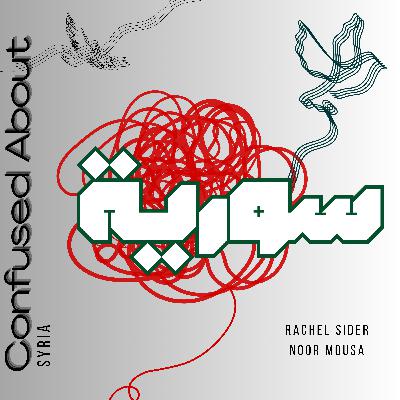
Before headlines, before labels, and before 2011, there was a country steeped in culture, memory, and humanity.In this first episode of Confused About Syria, we leave behind the all-too-common conflict framing to talk about Syria as a place of beauty and diversity – its people, landscapes, identities, and daily life – and consider why understanding this is crucial to making sense of everything that played out in recent years.Drawing on personal experiences, lived encounters, and years of working across the region, we reflect on first impressions of Syria, reconcile reality with outside narratives, and recall how fear, repression, beauty, humour, and survival have long coexisted. We talk about Syria’s social fabric and regional connectedness and the dangers of reducing people to simplified labels in moments of crisis.This episode is an invitation to slow down, unpack assumptions, and engage with Syrian society prior to the contemporary conflict, the full understanding of which cannot be understood without such a foundation.🎧 In this episode:Syria beyond war-time headlinesCulture, identity, and diversityGeography and regional connectionsHow fear and choice shape everyday lifeWhy labels fail people living through conflictThis is the first of a five-episode series.Next episode: how 2011 unfolded and why it didn’t start in a vacuum.Further readings & resources:Khaled Khalifa, No Knives in the Kitchens of This CityAkram Fouad Khater, The Syrian People: A HistoryAlia Malek, The Home That Was Our Country: A Memoir of Syria Martha Neff Kessler, Syria: Fragile Mosaic of PowerJordi Tejel, Syria’s Kurds: History, Politics and Society
In Episode 2, we trace how Syria’s 2011 uprising moved from broadly inclusive, peaceful protests rooted in demands for dignity, economic opportunity, and basic freedoms into a prolonged and devastating civil conflict. The conversation also looks at displacement across the region including in Jordan, Lebanon, Turkey, and Iraq and how host country policies and approaches shaped refugee experiences. Throughout the episode, we draw explicit lessons from Iraq as a cautionary tale about the dangers and long-term damage of sectarian narratives.Suggested Reading:Wendy Pearlman (2017), We Crossed a Bridge and It Trembled: Voices from SyriaRobin Yassin-Kassab & Leila al-Shami (2016), Burning Country: Syrians in Revolution and WarChristopher Phillips (2016), The Battle for Syria: International Rivalry in the New Middle EastKelley et al. (2015), “Climate change in the Fertile Crescent and implications of the recent Syrian drought”World Bank (2015), The Welfare of Syrian Refugees: Evidence from Jordan and LebanonFanar Haddad (2011), Sectarianism in Iraq: Antagonistic Visions of UnityNikolaos van Dam (2017), Destroying a Nation: The Civil War in Syria
In this episode, Noor Mousa and Rachel Sider discuss the events surrounding December 8, 2024 in Syria and the internal and external pressures that triggered the collapse of the Assad government. They examine Syrians’ diverse reactions, the psychological toll of war on civilians and aid workers, and the damage wrought by rumors and misinformation. The conversation underscores the need for trust, inclusion, and lessons learned from Iraq as Syria faces an uncertain future.Noor offers an insider’s view of the chaotic days leading up to Bashar al-Assad’s flight and recounts the reactions of neighbors, colleagues, and ordinary Syrians. This moment matters because ignoring its nuances means ignoring the deep divisions, persistent fears, and human stories at the heart of Syria’s ongoing transition.The episode offers crucial insight for anyone who wants to understand current complexities and fragilities, how we got here, and the urgent need for inclusive, participatory processes in the years ahead.Dive into the raw realities of Syria’s turning point - an episode that challenges assumptions, sparks reflection, and highlights why active engagement is essential to rebuilding trust and unity in Syria’s current chapter.Keywords: Syria, conflict, humanitarian aid, Bashar al-Assad, Hayat Tahrir al-Sham, December 8, 2024, Syrian society, international response, trust, misinformationRecommended read: The Syria Campaign - Deadly Disinformation / Silencing Effect hubTIMEP - “Truth in Transition: Disinformation in Post-Assad Syria” (Jan 30, 2025)Reuters | Israel says it destroyed most of Syria’s strategic weapons stockpiles; details + rationale (Dec 10, 2024)
Content Note: This episode discusses identity-based violence, killings, and hate speech.Episode SummaryIn Episode 4, Noor and Rachel reflect on all that Syria has experienced in the weeks, months, and year-plus since the fall of the Assad government on December 8, 2024. The conversation reckons with two simultaneous truths for many Syrians in public life and online: the sense of possibility and the intense fragility of this transitional period. This is evident in how people move about the country, begin to rebuild, manage difference, and access basic services.The conversation considers efforts to support healing, forgiveness and transitional justice, including the urgency, importance and scale of the challenge. The co-hosts discuss the trust deficit charaterising Syria which affects civil society cooperation, governance reforms and humanitarian aid delivery today and requires long-term support.Suggested Readings:Harmoon Center (PDF, 2025) — Syria’s National Dialogue Conference analysis: https://www.harmoon.org/wp-content/uploads/2025/03/Syrian-National-Dialogue-Conference.pdf OHCHR (5 Dec 2025) — One year after regime change (violations + hate speech): https://www.ohchr.org/en/press-briefing-notes/2025/12/syria-one-year-regime-change-more-should-be-done-stop-violations ICTJ (22 May 2025) — Welcomes Transitional Justice & Missing Persons Commissions: https://www.ictj.org/latest-news/ictj-welcomes-establishment-syria%E2%80%99s-new-national-commissions-transitional-justice-and Syrians for Truth and Justice (26 May 2025) — Hate speech role in March 2025 violence: https://stj-sy.org/en/syria-the-role-of-hate-speech-in-the-massacres-that-took-place-in-the-coastal-region-in-march-2025/ Syria Direct (19 Dec 2025) — Suwayda one year after Assad’s fall: https://syriadirect.org/suwayda-stands-at-a-crossroads-one-year-after-assads-fall/ International Crisis Group (28 Mar 2025) — “The New Syria: Halting a Dangerous Drift”: https://www.crisisgroup.org/brf/middle-east-north-africa/east-mediterranean-mena/syria/b95-new-syria-halting-dangerous-drift ODI HPN (10 Sep 2025) — Humanitarian reform + hub consolidation: https://odihpn.org/en/publication/when-reform-forgets-the-cost-of-humanitarian-amnesia-in-syria/ Follow / Connect:Instagram: https://www.instagram.com/confused_podcasts/
Comments


Download from Google Play

Download from App Store
 United States