


 Claim Ownership
sleepyphilosophyradio
Subscribed: 1Played: 4
Subscribe

© SleepyPhilo
Description
Long-form philosophy content for late-night listening and deep focus. We cover the big thinkers - from the Stoics and Aristotle to Camus, Nietzsche, and Dostoevsky - explained in a calm, steady voice that keeps things interesting without being overstimulating. If you want something substantial to think about during quiet hours, or just appreciate philosophy delivered at a relaxed pace, this is for you.
22 Episodes
Reverse
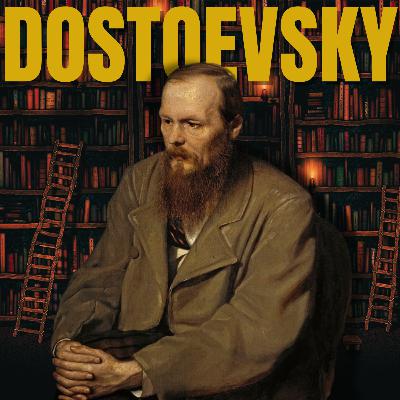
What does it mean that hell is not punishment from God but the inability to love? That sin is not a crime but a sickness? That salvation is not a transaction but a transformation of the whole person?These are the questions buried inside Dostoevsky's greatest novels. This episode traces them to their source: the Church Fathers, Isaac the Syrian, Maximus the Confessor, and Gregory of Nyssa. A vision of human nature so different from the Western tradition that it reframes everything Dostoevsky ever wrote.A companion to our earlier Dostoevsky episode.Chapters:(00:00) Hell Is the Inability to Love(00:32:39) Kenosis and the Vulnerability of God(01:04:13) Theosis, Prelest, and the Two Paths of Becoming(01:36:08) Sobornost, the Gaze of the Other, and Communal Salvation(02:09:03) Apophatic Theology, Holy Mystery, and the Faith That Does Not KnowSuggested Reading:The Brothers Karamazov by Dostoevsky: https://amzn.to/3OEBOW7The Idiot by Dostoevsky: https://amzn.to/4l4KO2FThe Orthodox Way by Kallistos Ware: https://amzn.to/3NdwYP6Dostoevsky: Language, Faith, and Fiction by Rowan Williams: https://amzn.to/4rKK2ufThe Mystical Theology of the Eastern Church by Vladimir Lossky: https://amzn.to/4ldiawCThe Philokalia Vol. 2: https://amzn.to/3N4b28VDostoevsky: An Interpretation by Berdyaev: https://amzn.to/4b4SXQjFollow Sleepy Philosophy Radio on Spotify for new episodes!
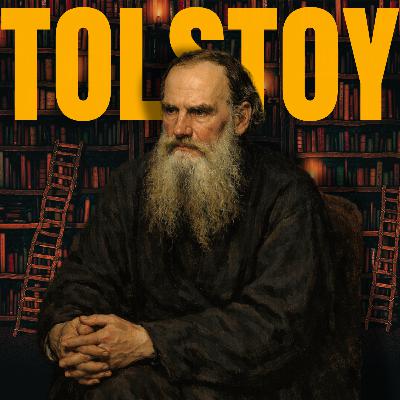
On September 9, 1828, Leo Tolstoy was born on a vast Russian estate called Yasnaya Polyana, a place of quiet and privilege that would shape everything he became and everything he later sought to destroy. He wrote two of the greatest novels in any language. War and Peace showed that history is not made by Napoleon or any single leader, but by the countless small decisions of ordinary people. Anna Karenina asked whether passion alone could ever be enough to carry a life, and answered, quietly, that it could not.But his novels were only the beginning. In his fifties, the foundations of meaning collapsed beneath him entirely. He could not eat, could not sleep, could not see any reason to continue living. Philosophy failed him. Science failed him. And so he turned, for the first time with genuine seriousness, to the Gospels, and found there something no institution had ever taught him. A way of living. Not a theology. A practice. Nonresistance to evil. Love without exception. Simplicity. Labor. These teachings cost him his marriage, his comfort, and his standing in the Orthodox Church, which formally excommunicated him in 1901. They inspired Gandhi, who called Tolstoy one of his greatest teachers, and Martin Luther King Jr., who built the moral foundation of the civil rights movement on the same tradition Tolstoy began.Please listen only in safe, restful contexts.CHAPTERS(00:00) The Young Count and the World He Was Born Into(16:54) War and Peace, History, Freedom, and the Illusion of Great Men(31:36) Pierre Bezukhov and Prince Andrei, Two Searches for Meaning(46:56) Anna Karenina and Levin, Love, Faith, and the Question of How to Live(59:49) The Great Crisis, When the World Collapsed(1:14:00) The Gospel in the Words of Jesus and the Rejection of the Church(1:28:35) Nonviolence and the Moral Logic of Refusing to Kill(1:44:07) The Death of Ivan Ilyich, How We Avoid Living(1:57:51) Christian Anarchism, Simplicity, Labor, and the Rejection of Society(2:13:06) Legacy, From Yasnaya Polyana to the WorldSupport the channel: https://creators.spotify.com/pod/profile/sleepyphilo/subscribe
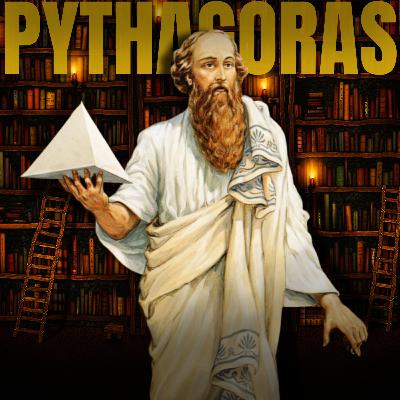
Around 600 BCE, on the island of Samos, a man declared something that sounded almost absurd: that everything in the universe, every object, every force, every living creature, is ultimately a number. Not described by number. Not measured by number. But number itself.This three-hour exploration follows Pythagoras from his mysterious origins on Samos through his travels to Egypt and Babylon, the secret community he founded in southern Italy, and the mathematical discoveries that would reshape how humanity understands reality. We examine the sacred tetractys, the theorem that bears his name, the discovery that musical harmony is built from simple ratios, and the doctrine that the cosmos itself produces an inaudible symphony.We trace the belief that the soul travels through countless bodies across lifetimes, the persecution that burned his school to the ground, and the ideas that survived to shape Plato, medieval cosmology, and modern science.Pythagoras left almost no writings. What remains was assembled centuries after his death, layered with legend and myth. But beneath that mystery sits a radical idea: that reality has a structure, that structure is mathematical, and that human beings can learn to read it.Please listen only in safe, restful contexts.Chapters(00:00:00)Pythagoras of Samos and the Birth of Mathematical Philosophy(00:18:30)The Pythagorean Way of Life and the Sacred Community(00:43:06)All Is Number, The Fundamental Principle of Reality(01:01:22)The Tetractys and Sacred Geometry(01:19:05)Mathematical Discoveries and the Birth of Proof(01:36:27)Musical Harmony and Mathematical Proportion(01:52:02)The Music of the Spheres and Cosmic Order(02:09:01)The Soul, Metempsychosis, and the Kinship of All Life(02:25:47)Ethics, Politics, and the Pythagorean Persecution(02:41:47)The Legacy of Pythagoreanism in Western ThoughtSupport the channel: https://creators.spotify.com/pod/profile/sleepyphilo/subscribe
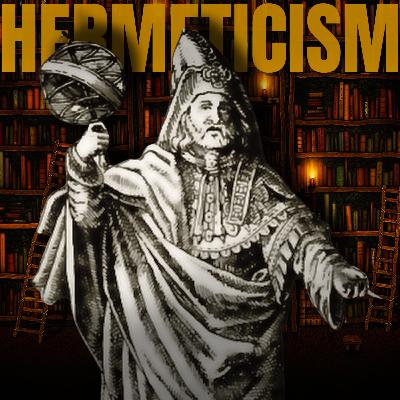
In ancient Egypt, a figure known as Hermes Trismegistus, the Thrice Greatest, was said to hold the deepest secrets of the cosmos. The Greeks merged their god Hermes with the Egyptian god Thoth, and from that union a philosophy was born, one that would quietly shape Western thought for two thousand years.This exploration traces the complete story of Hermeticism, from its origins in Hellenistic Alexandria through the Corpus Hermeticum and the Emerald Tablet, through the Renaissance revival that captivated Ficino, Bruno, and Newton, and into its lasting legacy in Western esotericism and philosophy. We examine the principle of correspondence, the path of gnosis, the soul's descent into matter and its ascent back to the divine, and the vision of a cosmos where everything connects to everything else through hidden chains of meaning.Hermeticism was never just one tradition. It was a conversation, spanning continents and centuries, about what the universe is made of, what we truly are, and whether we can remember what we have forgotten.Please listen only in safe, restful contexts.CHAPTERS(00:00:00) Hermes Trismegistus and the Origins of Ancient Wisdom(00:25:16) The Corpus Hermeticum and the Divine Mind(00:56:13) The Emerald Tablet and the Principle of Correspondence(01:24:39) The Seven Hermetic Principles(01:48:35) Cosmology, Creation, and the Structure of Reality(02:09:41) The Human Soul and the Path to Gnosis(02:31:15) Ethics, Virtue, and Spiritual Transformation(02:49:50) Hermeticism in Late Antiquity, Philosophy and Religion(03:10:23) The Renaissance Revival and the Hermetic Tradition(03:29:39) The Legacy of Hermeticism in Western ThoughtSupport the channel: https://creators.spotify.com/pod/profile/sleepyphilo/subscribe
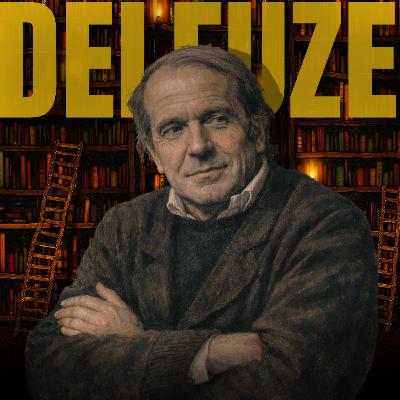
Gilles Deleuze reimagined what philosophy could do. Where most philosophers tried to represent the world, Deleuze wanted to create something entirely new — concepts that make thought move differently. The rhizome. The body without organs. Deterritorialization. Becoming. These are not descriptions of how things are. They are tools for thinking in ways that escape identity, hierarchy, and transcendence.In this episode of Sleepy Philosophy Radio we trace Deleuze's entire philosophical project. How he transformed the way a generation read Nietzsche, Bergson, and Spinoza. How his collaboration with Félix Guattari produced two of the most provocative books of the twentieth century. How he built a philosophy of cinema that changed how we understand film. And how everything points toward a single horizon — immanence. A world with no outside, no transcendent ground, no final explanation.Deleuze is difficult. This guide does not pretend otherwise. But beneath the difficulty lies one of the most ambitious philosophical visions of the last century.Support Sleepy Philosophy Radio and get early access to new episodes:https://creators.spotify.com/pod/profile/sleepyphilo/subscribePlease listen only in safe, restful contexts.CHAPTERS0:00:00 An Encounter with Thought0:17:54 A Life Without Incidents0:33:34 Reading as Creation0:53:29 Nietzsche and the Image of Thought1:08:01 Difference and Repetition1:23:17 The Virtual and the Actual1:39:50 Logic of Sense1:57:02 Meeting Guattari2:10:33 Anti-Oedipus2:28:32 Capitalism and Schizophrenia2:43:22 A Thousand Plateaus2:59:45 What Is a Body?3:13:43 Cinema3:32:01 What Is Philosophy?3:46:06 The Plane of Immanence
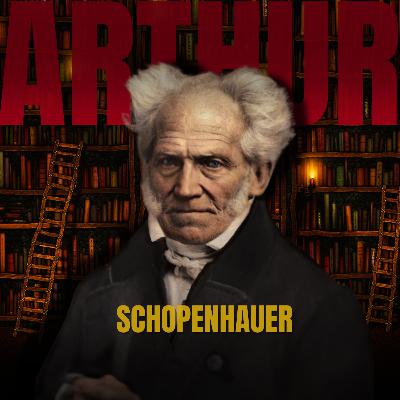
Arthur Schopenhauer believed that the capacity to be alone was the truest mark of intellectual and spiritual development. For him, solitude was not merely the absence of others but the presence of oneself. Only those who had cultivated a rich inner life could truly bear their own company.This three-hour exploration examines Schopenhauer's philosophy of solitude from the ground up. We trace his life from the merchant's son in Danzig, through his father's death, his failed academic career, and his decades as a solitary hermit in Frankfurt. Then we enter his philosophy: the blind Will that drives all existence, the pendulum of pain and boredom, and why most people cannot bear to be alone with themselves. Finally we examine his answers, art, contemplation, the denial of the Will, and the practical wisdom he offered those who chose to remain in the world.Schopenhauer was a pessimist. He did not believe life was good. But he found ways to make it bearable. His philosophy offers not comfort but clarity. For those who have already seen through the cheerful lies, clarity may be the only honest comfort left.CHAPTERS00:00:00 The Room00:07:25 The Merchant's Son00:15:44 The Failed Professor00:24:29 The Hermit of Frankfurt00:34:38 The World as Will00:42:33 The Pendulum of Pain00:51:41 Other People01:00:38 Boredom and the Inner Void01:09:48 Art as Escape01:18:41 Contemplation and the Pure Subject01:28:06 The Denial of the Will01:38:18 Practical Wisdom01:49:06 The Rewards of Solitude01:58:50 The Dangers of Solitude02:08:53 A Life Worth Living AloneSupport Sleepy Philosophy Radio and get early access to new episodes:https://creators.spotify.com/pod/profile/sleepyphilo/subscribePlease listen only in safe, restful contexts.

When someone prays and hears nothing back, when a sincere seeker finds only silence, what does that tell us about whether God exists? Divine hiddenness is one of philosophy's most emotionally charged problems. If a loving God exists and wants relationship with us, why doesn't he make himself known to those who genuinely seek him?This exploration traces the problem through scripture, mysticism, and contemporary philosophy. We start with the raw experience: the hospital room where prayers go unanswered, the missionary who loses faith, the philosopher who cannot believe despite wanting to. Then through Job crying out from the ash heap, the psalms of lament, Isaiah's testimony that God hides himself.The mystics knew this territory. John of the Cross described the dark night of the soul. Mother Teresa lived it for fifty years, documented in her private letters published after her death. A saint who felt nothing, heard nothing, questioned whether God even existed, and yet continued.Contemporary philosophy has given the problem rigorous form. J.L. Schellenberg's argument from reasonable nonbelief claims that a perfectly loving God would ensure anyone capable of relationship and not resistant to it would be able to believe. But nonresistant nonbelievers exist. People who seek God sincerely and find nothing. Therefore, Schellenberg argues, no perfectly loving God exists.We examine the major responses: the free will defense, the soul-making defense, and alternative conceptions of divine-human relationship. We explore how hiddenness relates to the problem of evil, and whether the argument succeeds as proof of atheism.The question remains unanswered but illuminated. Why the silence? Why do millions pray and hear nothing? Believers and nonbelievers both, each carrying the weight of divine absence or trusting in presence they cannot feel.Please listen only in safe, restful contexts.(00:00) The Silence(00:08:04) What Is Divine Hiddenness?(00:16:20) The Biblical Witness(00:24:45) The Dark Night(00:34:33) Mother Teresa's Letters(00:44:07) Schellenberg's Argument(00:52:29) Who Are the Nonresistant Nonbelievers?(01:00:57) The Free Will Defense(01:11:04) The Soul-Making Defense(01:21:54) The Relationship Response(01:30:15) The Problem Deepened(01:40:19) Hiddenness and Evil(01:51:55) Atheism and the Argument(02:02:07) Living with Hiddenness(02:11:44) The Question That RemainsSupport the channel: https://creators.spotify.com/pod/profile/sleepyphilo/subscribe
Nothing matters. These two words have haunted Western philosophy since the nineteenth century. This episode traces the complete history of existential nihilism from Schopenhauer's suffocating pessimism through Dostoevsky's Grand Inquisitor, Nietzsche's death of God, and the existentialist responses of Heidegger, Sartre, and Camus. We conclude with Viktor Frankl's will to meaning and the question as it remains today.Philosophy for the long night. Please listen only in safe, restful contexts.Chapters00:00:00 Nothing Matters00:10:28 What Is Nihilism?00:21:04 The Cracks in Certainty00:31:42 Schopenhauer's Pessimism00:40:50 The Russian Nihilists00:46:45 Dostoevsky's Challenge00:58:48 Nietzsche and the Death of God01:08:35 The Abyss and Beyond01:18:13 Heidegger and the Nothing01:25:42 Sartre and Radical Freedom01:34:32 Camus and the Absurd01:42:15 Meursault and Sisyphus01:49:29 Frankl and the Will to Meaning01:57:09 The View from Nowhere02:05:44 The Question That RemainsWorks Referenced: Nietzsche, Dostoevsky, Camus, Sartre, Heidegger, Schopenhauer, Frankl, Nagel

In 1095, the most famous scholar in the Islamic world could not speak. Al-Ghazali had mastered theology, law, and philosophy, yet standing before thousands in Baghdad, his tongue failed and his body refused food. This three-hour exploration follows his extraordinary journey from orphan in Persia to the heights of medieval intellectual life, through complete psychological collapse, to eleven years wandering as a seeker through Damascus, Jerusalem, and Mecca.We examine his devastating critique of the philosophers, his analysis of pride, envy, and the diseases that corrupt the human heart, and his transformation of Islamic spirituality through The Revival of the Religious Sciences. His arguments about reason and certainty anticipated David Hume by six centuries and influenced thinkers from Maimonides to Thomas Aquinas.Please listen only in safe, restful contexts.(00:00) The Scholar Who Could Not Speak(10:51) The World of Medieval Islam(22:18) From Orphan to the Most Famous Scholar in Baghdad(34:26) The Incoherence of the Philosophers(52:17) The Crisis: When Certainty Collapsed(1:05:57) The Departure: Walking Away from Everything(1:16:47) The Wandering Years: Damascus, Jerusalem, Mecca(1:28:10) The Revival of the Religious Sciences(1:44:21) The Diseases of the Heart(1:56:35) The Path to Certainty: Beyond Reason to Experience(2:07:45) The Return and the Final Years(2:16:08) Legacy: From Baghdad to the Modern World(2:26:59) The Heart That Sought and FoundMusic: "Anguish" by Kevin MacLeod (incompetech.com)Licensed under Creative Commons: By Attribution 4.0https://creativecommons.org/licenses/by/4.0/
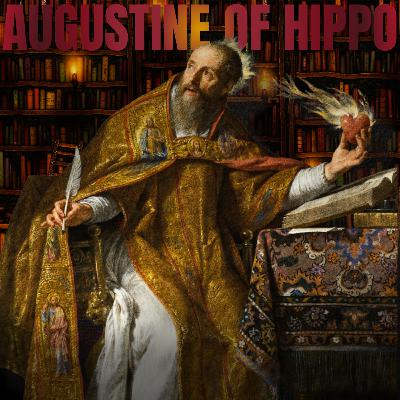
Why do we do what we know is wrong? Why does nothing ever satisfy us? Augustine of Hippo asked these questions sixteen centuries ago. We are still trying to answer them.This is the complete philosophy of the thinker who shaped Western thought more than almost any figure after Saint Paul. From his African childhood to the streets of Carthage, from nine years with the Manichaeans to the garden in Milan where everything changed.We explore his revolutionary ideas: evil as the absence of good, the will divided against itself, time existing only in the mind, memory as a palace larger than the world, and two cities built on two loves that have been at war since the beginning of history.Augustine was brilliant, passionate, and sometimes wrong. But his questions remain our questions, and his restless heart still speaks to ours.Chapters0:00:00 You Have Made Us for Yourself0:08:41 Thagaste and the World of Roman Africa0:16:34 Monica and Patricius, The Mother and the Father0:25:32 Carthage, Pleasure, Ambition, and the Unnamed Woman0:34:48 The Theft of the Pears, Why We Do Wrong0:41:45 The Manichaeans, Light, Darkness, and the Problem of Evil0:49:52 The Hortensius and the Love of Wisdom0:56:42 Milan, Ambrose, the Platonists, and the Crisis1:04:59 The Garden, Tolle Lege1:11:54 Baptism, Monica's Death, and the Return to Africa1:20:11 The Confessions, The Invention of the Self1:27:38 The Problem of Evil, Where Does It Come From?1:34:52 Evil as Privation, The Absence of Good1:41:23 Free Will and the Bondage of the Will1:48:23 Pelagius and the Controversy Over Grace1:54:12 Original Sin, The Inheritance of Adam2:00:36 Predestination, The Terrible Logic2:06:53 What Is Time?2:13:10 Memory, The Vast Palace Within2:18:40 The Sack of Rome and the Two Cities2:24:56 The City of God and the City of Man2:30:39 The Bishop of Hippo, Donatists, Coercion, and the Last Years2:37:07 The Restless Heart That Shaped the WestMusic: "Anguish" by Kevin MacLeod (incompetech.com)Licensed under Creative Commons: By Attribution 4.0https://creativecommons.org/licenses/by/4.0/
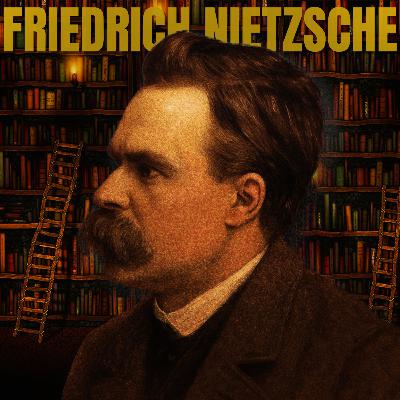
God is dead. But Friedrich Nietzsche did not proclaim this as triumph. He diagnosed it as catastrophe. For two thousand years, Western civilization rested on a foundation that has now collapsed: the God who guaranteed meaning, grounded morality, and promised redemption no longer commands belief. Nietzsche foresaw that the twentieth century would become an age of nihilism, when the highest values devalue themselves and nothing seems to matter anymore.This complete 3-hour exploration traces Nietzsche's life and philosophy from beginning to end. Born the son of a Lutheran pastor in 1844, Nietzsche became one of the most influential and misunderstood philosophers in history. We follow his journey through profound loneliness, chronic illness, brilliant insights, and tragic collapse, examining the masterworks that emerged from his suffering: The Birth of Tragedy, Thus Spoke Zarathustra, Beyond Good and Evil, and On the Genealogy of Morals.Core concepts explored:The death of God and the crisis of meaning | Will to power as life's fundamental drive | Eternal recurrence as the ultimate test of life-affirmation | The Übermensch and the last man | Amor fati: loving one's fate | Master morality versus slave morality | Ressentiment and the revaluation of values | The Dionysian and Apollinian in Greek tragedyKey relationships and influences:Richard Wagner, Lou Salomé, Arthur Schopenhauer, and the biographical forces that shaped his thinking.Addressing the misreadings:We directly confront the Nazi appropriation of Nietzsche's work and his sister Elisabeth's distortions. Nietzsche explicitly opposed nationalism and anti-Semitism throughout his life. His actual philosophy offers profound insights into creating meaning after traditional foundations collapse, saying yes to life despite suffering, and living without cosmic justification.Influence and legacy:Nietzsche's ideas shaped Sigmund Freud, Martin Heidegger, existentialism, Michel Foucault, Gilles Deleuze, and contemporary philosophy. The questions he posed about nihilism, values, and human flourishing remain urgently relevant today.CHAPTERS:00:00:00 God Is Dead and We Have Killed Him00:09:18 Röcken and the Shadow of the Father00:18:57 Schulpforta, Philology, and the Discovery of Schopenhauer00:29:26 Wagner: The Surrogate Father and the Total Artwork00:38:52 The Birth of Tragedy: Dionysus Against Socrates00:48:06 The Break with Wagner: Parsifal and the Wound00:56:48 The Free Spirit: Human, All Too Human01:07:12 The Wanderer and His Shadow: A Decade of Solitude01:17:54 Lou Salomé: The Love That Failed01:27:19 Thus Spoke Zarathustra: The Book for Everyone and No One01:39:34 Camel, Lion, Child: The Metamorphoses of the Spirit01:49:13 The Übermensch and the Last Man02:00:17 Eternal Recurrence: The Greatest Weight02:11:01 Beyond Good and Evil: Master and Slave02:20:20 The Genealogy of Morals: Guilt, Conscience, and the Ascetic Ideal02:32:05 Ressentiment and the Revaluation of Values02:41:15 Amor Fati: Loving One's Fate02:50:42 The Final Year: Twilight, Antichrist, Ecce Homo03:01:06 The Collapse in Turin03:11:20 Elisabeth and the Nietzsche Archive03:21:54 Misreadings: The Nazi Appropriation and Its Refutation03:32:02 Why Nietzsche Still MattersSources:Based on authoritative translations by Walter Kaufmann and R.J. Hollingdale, and drawing on biographical works by Julian Young, Sue Prideaux, Rüdiger Safranski, and Curtis Cate, along with scholarly interpretations by Brian Leiter, Alexander Nehamas, and Maudemarie Clark.Music: "Anguish" by Kevin MacLeod (incompetech.com)Licensed under Creative Commons: By Attribution 4.0https://creativecommons.org/licenses/by/4.0/
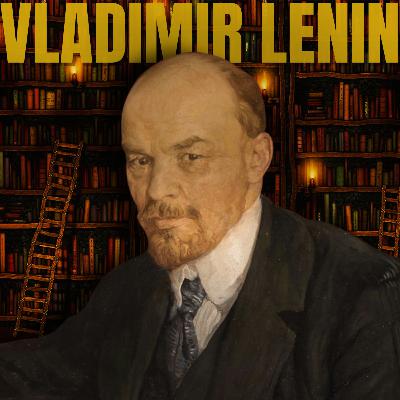
This episode examines the question that defined Lenin’s entire project: What is to be done? It was not merely an organizational question but a philosophical challenge that separated Lenin from every other socialist of his generation and transformed Marxism from a theory of historical development into a theory of revolutionary action.Listen as we trace Lenin’s intellectual evolution from his provincial childhood in Simbirsk through the execution of his brother in 1887, his radicalization and years in exile, and his emergence as the twentieth century’s most consequential political thinker. We explore his major works including What Is to Be Done, Imperialism: The Highest Stage of Capitalism, and State and Revolution, examining concepts like the vanguard party, democratic centralism, revolutionary consciousness, and the dictatorship of the proletariat.The episode covers the dramatic events of 1917, the Civil War, the implementation of War Communism and the Red Terror, the strategic retreat to the New Economic Policy, Lenin’s final struggle against bureaucracy and Stalin’s rising power, and the contested legacy that continues to shape political debates today. This is intellectual history presented with scholarly fairness, acknowledging both Lenin’s ideas as he understood them and their profound historical consequences.CHAPTERS:(0:00:00) What Is to Be Done?(0:12:55) Simbirsk and the Making of a Revolutionary(0:22:23) The Execution of Alexander Ulyanov(0:30:17) Becoming a Marxist: Exile, Study, Organization(0:40:17) The Vanguard Party: Consciousness from Outside(0:51:02) Bolsheviks and Mensheviks: The 1903 Split(1:02:16) Imperialism: The Highest Stage of Capitalism(1:11:28) The State as Instrument of Class Rule(1:21:46) 1917: From February to October(1:32:15) The Seizure of Power(1:40:58) Civil War, Terror, and Survival(1:50:42) The New Economic Policy: One Step Back(1:57:26) The Testament and the Final Struggle(2:06:56) Death and the Lenin Cult(2:15:10) The Most Consequential ThinkerMusic: "Anguish" by Kevin MacLeod (incompetech.com)Licensed under Creative Commons: By Attribution 4.0https://creativecommons.org/licenses/by/4.0/
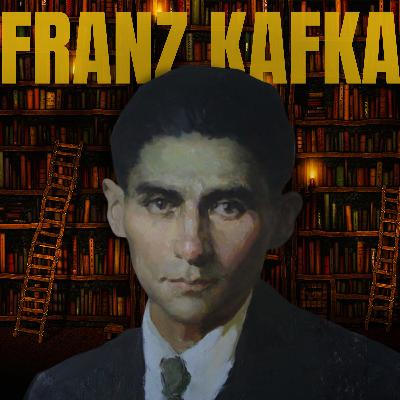
What if we slept a little more and forgot all this nonsense? Gregor Samsa asked, waking transformed into something monstrous. But for Kafka, there is no escape from consciousness arriving to find everything already changed. This three-hour audio journey explores Franz Kafka's complete life and philosophy through calm, scholarly narration designed for sleep, study, or contemplative listening.Born in Prague in 1883, Kafka lived in the shadow of his dominating father Hermann, wrote through exhausted nights at his insurance job, and died of tuberculosis at forty. Through The Metamorphosis, The Trial, and The Castle, he articulated guilt without crime, transformation without cause, and authority that cannot be reached. We trace his biographical arc from the three circles of Prague (Czech, German, Jewish), through his impossible relationships with Felice and Milena, to Max Brod's fateful refusal to burn the manuscripts Kafka wanted destroyed.Examining themes of waking into strangeness, courts that cannot be found, castles that cannot be reached, and the body that fails and hungers, we discover why "Kafkaesque" entered our language and why his vision shaped Camus, Borges, Beckett, and contemporary literature.Perfect for deep rest, long commutes, focused work sessions, or extended contemplation. Listen only in safe, restful contexts.CHAPTERS:0:00:00 Waking Into Strangeness0:05:55 Prague and the Three Circles0:13:52 The Father: Hermann Kafka's Shadow0:22:53 Childhood, School, and the Weight of Belonging0:29:53 Max Brod and the Discovery of a Voice0:37:59 Law, Insurance, and the Daylight Life0:46:56 Writing at Night: The Impossible Schedule0:55:10 The Breakthrough: September 19121:03:06 Felice Bauer and the Literature of Engagement1:10:55 The Metamorphosis: Waking as Vermin1:19:59 The Trial: Arrest Without Charge1:29:13 Guilt Without Crime: The Court That Cannot Be Found1:36:45 The Castle: The Land Surveyor Who Never Arrives1:47:03 The Inaccessible: Authority, Law, and the Unreachable1:56:36 The Body: Hunger, Illness, and Inscription2:08:12 The Letter to His Father: Eighty Pages Unsent2:18:42 Tuberculosis and the Sanatoria Years2:27:21 Milena: The Letters and the Impossible Love2:35:23 Dora and the Final Year2:42:22 The Instruction to Burn: Kafka's Last Wish2:51:14 Max Brod's Refusal and the Posthumous Fate3:00:28 Kafkaesque: A Word Enters the Language3:09:11 Why Kafka Still MattersMusic: "Anguish" by Kevin MacLeod (incompetech.com)Licensed under Creative Commons: By Attribution 4.0https://creativecommons.org/licenses/by/4.0/
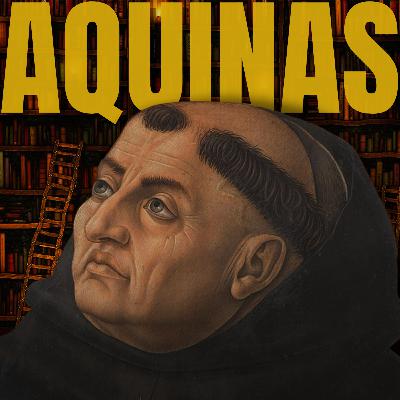
In December 1273, Thomas Aquinas had a mystical experience so profound that he stopped writing entirely. When urged to finish his masterwork, the Summa Theologica, he refused: "All that I have written seems like straw compared to what I have seen." Three months later, he was dead at forty-nine, leaving one of history's most ambitious intellectual projects incomplete.This is the story of the Dumb Ox, a massive, silent student whose classmates mocked him until his teacher prophesied that his bellowing would fill the whole world. Eight centuries later, that prophecy continues to unfold. Thomas Aquinas remains perhaps the most influential Christian philosopher in Western history, the architect of a synthesis between Aristotelian reason and biblical faith that shaped Catholic thought, natural law theory, and debates about God's existence that persist into our secular age.Born into Italian nobility around 1225, Aquinas defied his family's violent opposition to join the Dominican order. They kidnapped and imprisoned him for over a year, but he refused to break. He studied under Albertus Magnus in Cologne, taught at the University of Paris during its most intellectually turbulent period, and constructed a philosophical system of breathtaking scope and coherence.This three-hour exploration traces Aquinas's journey from his childhood at Roccasecca through the mystical vision that ended his writing. We examine his Five Ways of proving God's existence through reason alone, his metaphysics of being and essence, his understanding of divine simplicity and how we can speak about God through analogy, his ethics grounded in natural law and virtue, his doctrine of grace, and his vision of perfect happiness as the beatific vision.From his condemnation in 1277 to his canonization in 1323, from medieval scholasticism to twentieth-century Thomistic revival, Aquinas's influence pervades Western thought. His questions remain our questions: Can faith and reason coexist? What is the foundation of morality? What does it mean to live a good human life?CHAPTERS:(00:00:00) The Dumb Ox Who Filled the World with His Bellowing(00:05:50) Roccasecca, Monte Cassino, and a Noble Family's Ambitions(00:13:22) Naples, Aristotle, and the Call to the Dominicans(00:21:12) Kidnapping, Imprisonment, and the Test of Vocation(00:26:19) Albertus Magnus and the Recovery of Aristotle(00:33:33) Paris, the University, and the Battle of Ideas(00:41:39) The Structure of the Summa: A Cathedral in Words(00:48:24) Being and Existence: The Heart of Thomistic Metaphysics(00:56:47) The Five Ways: Proving God's Existence by Reason(01:07:04) Divine Simplicity: What God Is and Is Not(01:15:40) How We Speak of God: Analogy and the Limits of Language(01:22:57) Creation: From Nothing, by Love, in Freedom(01:31:01) The Human Soul: Neither Ghost nor Machine(01:40:40) The Will, Freedom, and the Passions(01:47:44) Happiness: The Ultimate End of Human Life(01:53:31) Natural Law: The Eternal Law Written in Reason(02:00:28) Virtue: The Path to Human Flourishing(02:07:53) Grace: What Nature Cannot Achieve Alone(02:15:45) The Straw and the Vision: Aquinas's Final Mystery(02:23:44) Legacy: From Condemnation to Doctor of the ChurchPart of Sleepy Philosophy Radio exploring the lives and ideas of history's greatest thinkers.Music: "Anguish" by Kevin MacLeod (incompetech.com)Licensed under Creative Commons: By Attribution 4.0https://creativecommons.org/licenses/by/4.0/
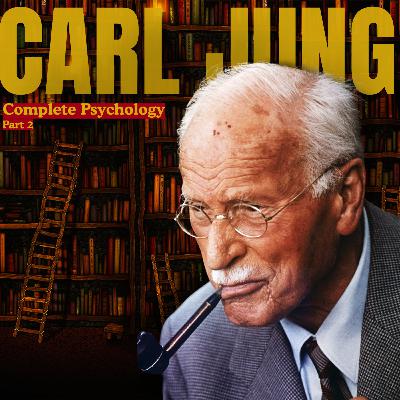
This is part two of our exploration of Carl Gustav Jung's life and psychology. We continue with his method of active imagination, a technique for directly engaging the unconscious through waking fantasy and dialogue with inner figures. We examine his theory of psychological types, including introversion, extraversion, and the four functions of consciousness.We follow the individuation process from shadow work through the integration of anima and animus to the realization of the Self, understanding this journey as the psychological equivalent of the hero's quest. We explore synchronicity, his concept of meaningful coincidence operating beyond ordinary causality, and his approach to religion as psychological experience rather than metaphysical doctrine. We examine his deep engagement with alchemy as a symbolic projection of inner transformation.We also address the shadows in Jung's own legacy: his controversial statements during the Nazi period, his essentialist views on gender, and the debates that continue to surround his work. We close with his enduring influence on therapy, culture, and the search for meaning.Please listen only in safe, restful contexts.CHAPTERS:0:00:00 Chapter 14: Amplification and the Language of Symbols0:16:06 Chapter 15: Active Imagination: Dialogue with the Depths0:29:33 Chapter 16: Psychological Types: Introversion, Extraversion, Functions0:50:00 Chapter 17: Individuation: The Journey to Wholeness1:06:00 Chapter 18: The Hero's Journey as Individuation Myth1:19:59 Chapter 19: Midlife and the Second Half of Life1:32:56 Chapter 20: Synchronicity: Meaningful Coincidence1:45:49 Chapter 21: Religion as Psychological Experience1:59:02 Chapter 22: Answer to Job: Confronting the Dark God2:11:23 Chapter 23: Alchemy: The Projection of the Individuation Process2:24:50 Chapter 24: Symbols of Transformation2:36:29 Chapter 25: Ethics, Responsibility, and the Problem of Evil2:48:20 Chapter 26: Jung's Controversial Legacy and the Nazi Period2:59:31 Chapter 27: Influence on Therapy, Culture, and Spirituality3:13:48 Chapter 28: Closing Synthesis: The Undiscovered Self
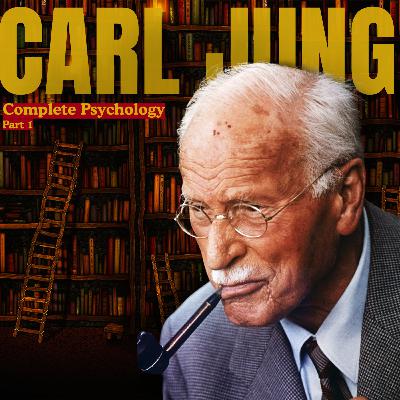
This is part one of a comprehensive exploration of Carl Gustav Jung's life and psychology. We begin with his haunted childhood in a Swiss parsonage, his psychiatric training at the Burghölzli hospital, and his intense collaboration and eventual break with Sigmund Freud. We follow his descent into the unconscious during the Red Book period, where he nearly lost himself to the visions that would shape his life's work.From there, we explore the architecture of his psychology: the ego, persona, and shadow; the personal unconscious and its complexes; the collective unconscious and archetypes; the anima and animus as inner guides; and the Self as the center of the total personality. We examine how Jung understood dreams as meaningful communications rather than disguises, and how he developed methods for interpreting their symbolic language.Part two continues next week with active imagination, psychological types, the individuation process, synchronicity, religion, alchemy, and Jung's controversial legacy.Please listen only in safe, restful contexts.
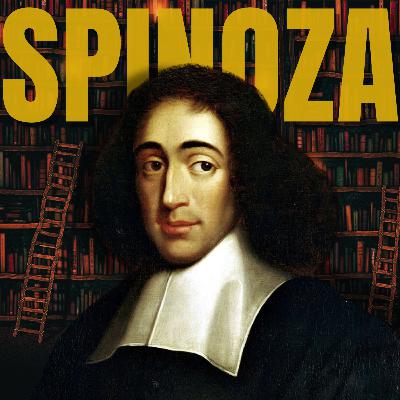
Deus sive Natura. God or Nature. Baruch Spinoza's revolutionary equation that shattered the distinction between Creator and creation made him the most dangerous philosopher of the seventeenth century. This three-hour exploration traces his journey from Amsterdam's Portuguese-Jewish community through excommunication, solitary lens grinding, and the development of a philosophical system that would influence Einstein, the Romantics, and contemporary thought.Discover the geometric arguments of the Ethics: substance monism that declares only one infinite reality exists, mind-body parallelism that dissolves Cartesian dualism, the doctrine of conatus as the striving at the heart of all existence, and the path from human bondage through understanding to blessedness. Spinoza offers freedom through comprehending necessity, ethics grounded in nature rather than divine command, and the intellectual love of God that requires no supernatural belief.For night listening, contemplation, study, or deep rest.CHAPTERS:00:00:00 Chapter 1: God or Nature: The Most Dangerous Idea00:10:47 Chapter 2: Amsterdam and the Portuguese Jewish World00:24:44 Chapter 3: Education, Doubt, and the Path to Excommunication00:41:18 Chapter 4: The Cherem: Cursed and Cut Off00:52:10 Chapter 5: The Lens Grinder and the Philosophical Life01:08:56 Chapter 6: The Geometric Method: Why Demonstrate Ethics Like Mathematics01:20:51 Chapter 7: One Substance: The Foundation of Everything01:34:28 Chapter 8: God as Nature: Infinite Attributes and Eternal Necessity01:50:32 Chapter 9: Farewell to Miracles, Providence, and Final Causes02:05:49 Chapter 10: Mind and Body: Parallelism and the Rejection of Dualism02:20:07 Chapter 11: Three Kinds of Knowledge: Imagination, Reason, Intuition02:34:38 Chapter 12: Conatus: The Striving at the Heart of All Things02:46:56 Chapter 13: Joy, Sadness, and the Architecture of the Emotions
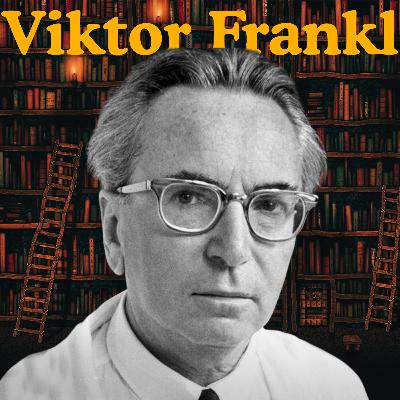
Man's Search for Meaning | Viktor Frankl's Complete PhilosophyIn the autumn of 1942, Viktor Frankl stood in the barracks of Auschwitz and witnessed something extraordinary: prisoners giving away their last pieces of bread to help others. In that moment, he understood that everything can be taken from a human being except one thing—the freedom to choose one's attitude toward any circumstance.This comprehensive exploration takes you through Frankl's entire life and philosophy: his childhood in Vienna, his training under Freud and Adler, his fateful choice to stay with his family rather than escape to America, his survival through four concentration camps, and the nine days in 1946 when he dictated Man's Search for Meaning, one of the most influential books of the 20th century.We examine the core principles of logotherapy: the will to meaning as humanity's primary drive, the three pathways to meaning (creative, experiential, and attitudinal values), and the techniques of paradoxical intention and dereflection. We explore how Frankl's insights apply to modern life, addressing the contemporary meaning crisis, mental health challenges, and the universal search for purpose.Whether you're seeking philosophical depth for bedtime listening, studying existential psychology, or exploring the question of what makes life worth living, this gentle narrative offers both intellectual substance and quiet contemplation. No meditation cues, no self-help shortcuts—just the profound wisdom of a psychiatrist who discovered that having a "why" to live makes any "how" bearable.What We Explore:Frankl's childhood in Vienna • Training under Freud and Adler • The Third Viennese School • The choice to stay with family • Survival in four concentration camps • The psychology of the camps • Who survived and why • The last piece of bread • The inner life in extremity • Liberation and devastating loss • The nine days in 1946 • Man's Search for Meaning • The will to meaning • Logotherapy in practice • Pathways to meaning • Love, suffering, and tragic optimism • Frankl's enduring legacy • Finding your meaning todayChapters:0:00 - Everything Can Be Taken10:35 - A Boy in Vienna20:20 - The Third Viennese School30:29 - The Choice That Defined a Life40:38 - Arrival in Hell50:48 - The Manuscript in the Coat1:00:58 - The Psychology of the Camps1:12:00 - Who Survived and Why1:22:00 - The Last Piece of Bread1:32:00 - The Inner Life in Extremity1:43:00 - Liberation and Loss1:55:00 - Nine Days in 19462:06:00 - Man's Search for Meaning2:18:00 - The Will to Meaning2:25:02 - Logotherapy in Practice - Pathways, Techniques, and Modern Emptiness2:29:53 - Love, Suffering, and Tragic Optimism - Logotherapy's Core Applications2:33:23 - Frankl's Enduring Legacy - Freedom, Relevance, and Living with Meaning Today2:38:45 - He Who Has a Why - Finding Your Meaning
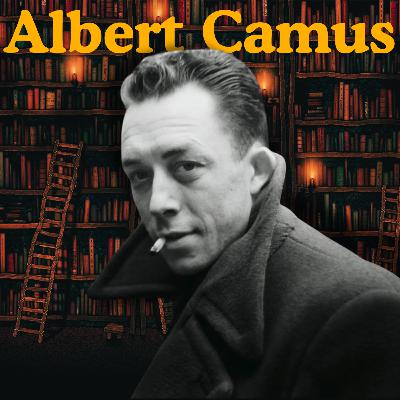
The Myth of Sisyphus: Albert Camus and the Philosophy of the AbsurdImagine a man condemned to push a boulder up a mountain for all eternity. The gods designed this as the cruelest punishment imaginable—utterly meaningless labor without end, without purpose, without hope of completion. But what if this man is happy?This question opens Albert Camus's philosophy of the Absurd, the confrontation between our human need for meaning and the universe's profound silence. Over four hours, we explore Camus's life in sun-drenched Algeria, his novels The Stranger and The Plague, his philosophical essays, and his break with Sartre. We distinguish absurdism from nihilism and existentialism, examine why Camus thought accepting meaninglessness might liberate us, and discover why Sisyphus, fully aware his labor is futile, might be the happiest man in all mythology.Absurdism is NOT nihilism. Nihilism says life is meaningless, therefore despair. Absurdism says life is meaningless, and we can live fully anyway. It's NOT existentialism either. Existentialists claim we create our own meaning through choice. Camus argues we cannot create ultimate meaning, but we can rebel and live intensely regardless.This is philosophy for rest and deep listening, a strangely hopeful meditation on living without cosmic justification. Perfect for studying, unwinding, or late-night contemplation.What We Explore:The absurd and the suicide question • Camus's life in Algeria • Philosophical suicide vs physical suicide • Revolt, freedom, and passion • The Myth of Sisyphus explained • Absurd creation and the artist • The Stranger: Meursault's indifference • The Plague: solidarity without hope • Dr. Rieux and doing the work • The Rebel and the limits of revolt • Why revolution becomes tyranny • The break with Sartre • Absurdism vs nihilism vs existentialism • Living absurdly in practice • Contemporary absurdism and the meaning crisis • The absurd happinessChapters:Chapters:00:00 - The Happiest Man in Hell11:02 - What Is the Absurd?21:58 - A Life in the Sun - Camus's Algeria38:47 - The Suicide Question50:13 - Philosophical Suicide and the Leap of Faith1:02:14 - Physical Suicide - Giving the Absurd Its Victory1:14:11 - The Three Consequences - Revolt, Freedom, Passion1:25:28 - The Myth of Sisyphus Explained1:35:35 - Absurd Creation - The Artist and the Conqueror1:47:26 - The Stranger - Meursault's Murder1:55:37 - The Trial - When Society Demands Meaning2:02:37 - The Gentle Indifference of the World2:11:07 - The Plague - Solidarity Without Hope2:24:15 - Dr. Rieux and Doing the Day's Work2:35:25 - The Rebel - From Absurd to Revolt2:45:10 - Why Revolution Becomes Tyranny2:55:10 - The Break with Sartre3:08:54 - Absurdism vs. Nihilism vs. Existentialism3:22:34 - Living Absurdly - Practical Absurdism3:35:56 - Contemporary Absurdism and the Meaning Crisis3:48:10 - The Absurd Happiness4:06:47 - We Must Imagine Sisyphus Happy
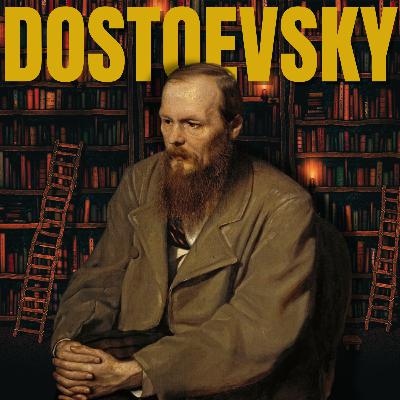
A Deep Dive into the Mind of Fyodor DostoevskyA long, gentle exploration of the Russian novelist who understood human nature better than almost anyone. Designed for late-night listening, studying, or just letting your mind wander through some of the most profound questions ever asked.We start with his brutal years in Siberian prison, move through his masterpieces like Crime and Punishment and The Brothers Karamazov, and explore why his ideas about freedom, guilt, and redemption still matter today.No background noise, no music—just a steady, calm exploration of what it means to be human. Perfect for insomnia, studying philosophy, or anyone who's ever wondered why we do the things we do even when we know better.What We Explore:Early life and Siberian exile • Polyphony and dialogism • The Underground Man's revolt against reason • Rational egoism and the Crystal Palace • Crime and Punishment: transgression and conscience • Sonya and redemption • The Idiot: Prince Myshkin and the failure of innocence • Demons: ideology and revolutionary violence • Stavrogin and nihilism • The Brothers Karamazov: faith, doubt, and suffering • Ivan's rebellion and the Grand Inquisitor • Zosima's active love • The problem of theodicy • Double consciousness and the divided self • Freedom, shame, and responsibility • Dostoevsky's influence on existentialismChapters:00:00 - Early Life, Siberia, and Return to St. Petersburg18:39 - Polyphony and Dialogism in Dostoevsky's Art28:35 - The Underground Man and the Revolt Against Reason38:22 - Rational Egoism and the Crystal Palace46:31 - The Right to Desire and the Limits of Arithmetic54:57 - Crime and Punishment—The Logic of Transgression1:02:02 - Raskolnikov's Conscience and the Problem of Confession1:09:13 - Sonya and the Meaning of Redemption1:15:39 - The Idiot—Prince Myshkin and the Ideal of Goodness1:22:16 - Beauty, Vulnerability, and the Failure of Innocence1:29:21 - Demons—Ideology and Revolutionary Violence1:36:17 - Shigalyov's System and the Logic of Absolutism1:43:30 - Stavrogin and the Emptiness of Nihilism1:50:29 - The Brothers Karamazov—Faith, Doubt, and the Human Condition1:56:20 - Ivan Karamazov's Rebellion Against Creation2:03:37 - The Grand Inquisitor and the Problem of Freedom2:10:03 - Zosima's Teaching and the Path of Active Love2:16:18 - The Question of Theodicy and the Meaning of Suffering2:22:24 - Dmitri, Smerdyakov, and the Web of Responsibility2:29:35 - Double Consciousness and the Divided Self2:35:33 - Shame, Pride, and the Theater of Confession2:41:31 - Freedom, Personhood, and Ethical Irreducibility2:47:56 - Religion as Risk—Faith Beyond Miracle and Mystery2:53:51 - Compassion, Solidarity, and Responsibility for All3:00:01 - Dostoevsky's Psychology and the Birth of Existentialism3:06:00 - Influence and Legacy in Philosophy and Literature3:12:13 - Closing Synthesis—Life as Question, Not Solution

Comments

Download from Google Play

Download from App Store
 United States