


 Claim Ownership
Modern Capital: The Private Markets Podcast
Subscribed: 1Played: 5
Subscribe
© @2025 Private Markets Intelligence Group
Description
Conversations with leaders building the infrastructure of private markets.
9 Episodes
Reverse

Not many people can say they sold a product to Barry Diller that changed how an entire generation meets.Amar Varma can.In the early 2010s, his mobile incubator Hatch Labs ran ten ideas through a corporate skunkworks inside IAC. Nine went nowhere. The tenth became Tinder.You know the rest.Now he's five exits deep and building Mantle, working on a problem that's less culturally famous but more consequential for anyone managing private markets capital at scale.Public markets work because everything reconciles. CUSIP codes. DTCC clearing. Buyers and sellers matched every day. Bloomberg exists because that foundation does.Private markets have cap tables updated by hand at 9pm on closing night. LPs logging into fifteen portals with fifteen 2FA codes. Subscription agreements tucked in a drawer. No identifier that follows a security from issuance to LP portfolio. No reconciliation layer. The market is $30 trillion and growing. A 2025 executive order just opened $12 trillion in retirement assets to alternatives. The infrastructure problem doesn't get smaller from here.In this episode, Amar and Marc cover:The Bloomberg-DTCC parallel: why public markets work and what private markets needs to build firstUSB plug fests: what standards-building in Silicon Valley in the 90s teaches about private markets todayWhy the cap table is the birth certificate and how connecting it to the LP portfolio changes everythingThe August 2025 executive order on alternatives and why it accelerates the infrastructure problem before it solves itWhat five exits actually teaches you about getting lucky"Nobody gets tired when they're doing the thing. They get tired when they're not successful."The infrastructure moment for private markets is here. Varma has spent thirty years showing up before anyone else knew there was a problem.This one is worth your time.
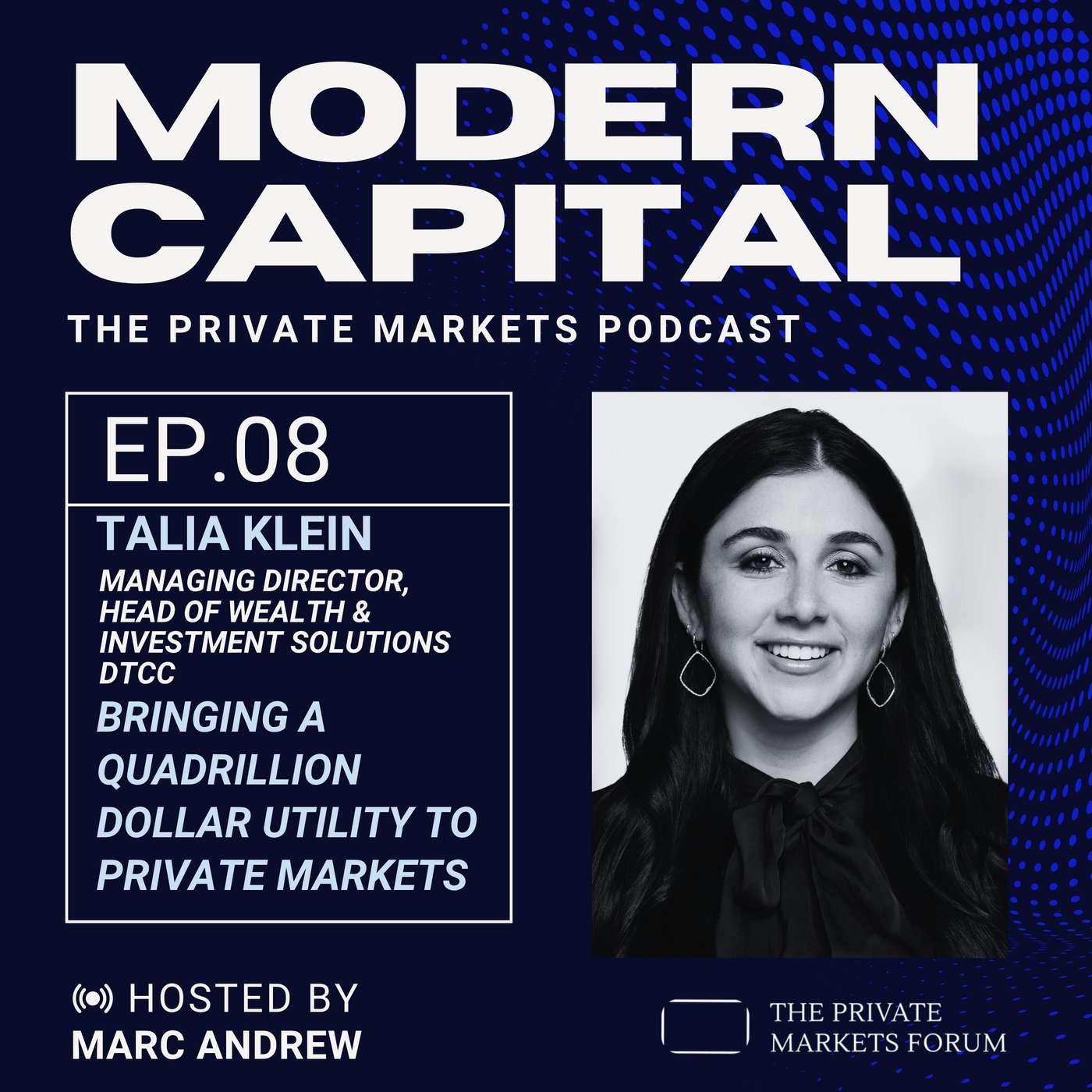
Every time you allocate money into your 401(k), DTCC processes it. Every equity trade in the United States - over 99% of them - clears and settles through DTCC. Last year alone, it processed $4 quadrillion in activity. A million billions. Invisibly, at a cost of cents per transaction.Private markets have no equivalent. Yet.Private shares settle at T+90. Public markets just moved to T+1. Subscription documents still get stamped manually. Retail allocations to alternatives sit at 3% (institutions are at 20%), and if that gap closes even halfway, it adds $10 trillion in new capital that today's infrastructure cannot handle.That's the problem Talia Klein woke up to on day one as Head of Wealth and Investment Solutions at DTCC.She's built financial infrastructure at every major inflection point of the last fifteen years. Collateral eligibility systems at J.P. Morgan after the financial crisis - earning a patent in the process. Institutional blockchain at Digital Asset Holdings before most people knew what it was. Crypto custody at BNY, built from scratch, in five years. She has a habit of showing up early to the infrastructure problems that later turn out to matter most.In this episode of the Modern Capital Podcast, Talia and Marc cover:The 1960s paperwork crisis that shut the NYSE on Wednesday afternoons - and why the digital version is already forming in private marketsWhy DTCC's FundServe playbook is the exact template private markets needs - and why it won't be a straight copy.The three-sided market problem: why private shares can't just be mapped to public equitiesT+90 vs. T+1: who closes that gap, and howWhy the standards problem isn't technical - it's about convening 100 institutions and making it worth their whileWhere DTCC is placing its bets across private funds, private shares and private credit"There's gotta be a better way." That phrase built DTCC in 1986. Talia thinks private markets is about to say it out loud - and that the organization that solved it for public markets is the right one to solve it again.The infrastructure moment for private markets isn't coming. It's here.
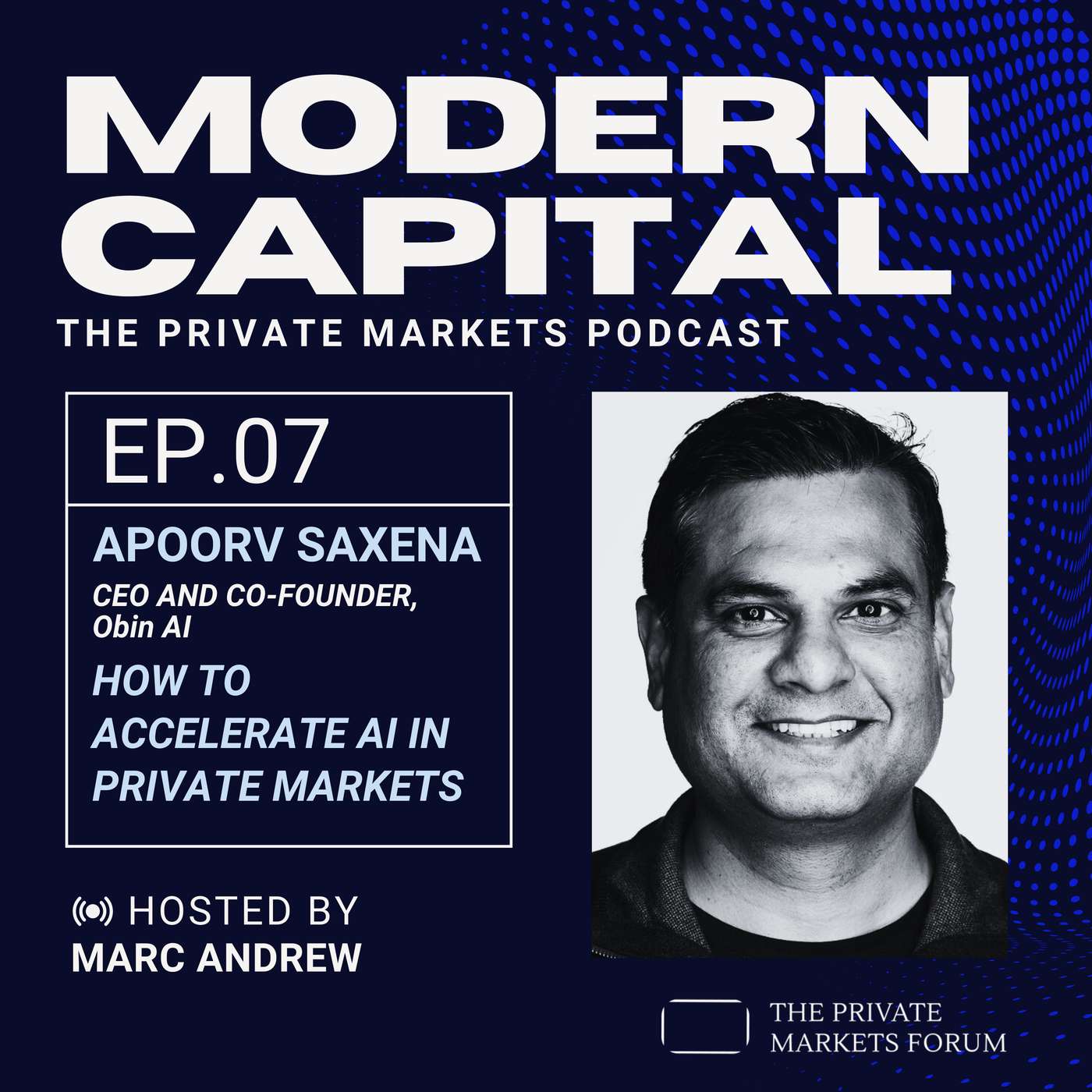
Apoorv Saxena built AI at Google under Fei-Fei Li, at JPMorgan under Jamie Dimon, and led AI implementation across the portfolio at Silver Lake. Each one taught him something different about where the technology actually breaks.Now he's building Obin AI - which just came out of stealth backed by Motive Partners with Fei-Fei Li as advisor - to deliver AI agents that operate at 99% accuracy inside financial institutions, fully auditable, replacing core workflows end-to-end.In this podcast, we talk about why most firms spreading AI across 50 use cases are destroying value, what Dimon's three-hour first-principles interrogation revealed, and why the winners in financial AI won't be the fastest movers... They'll be the ones who build the right foundations first.
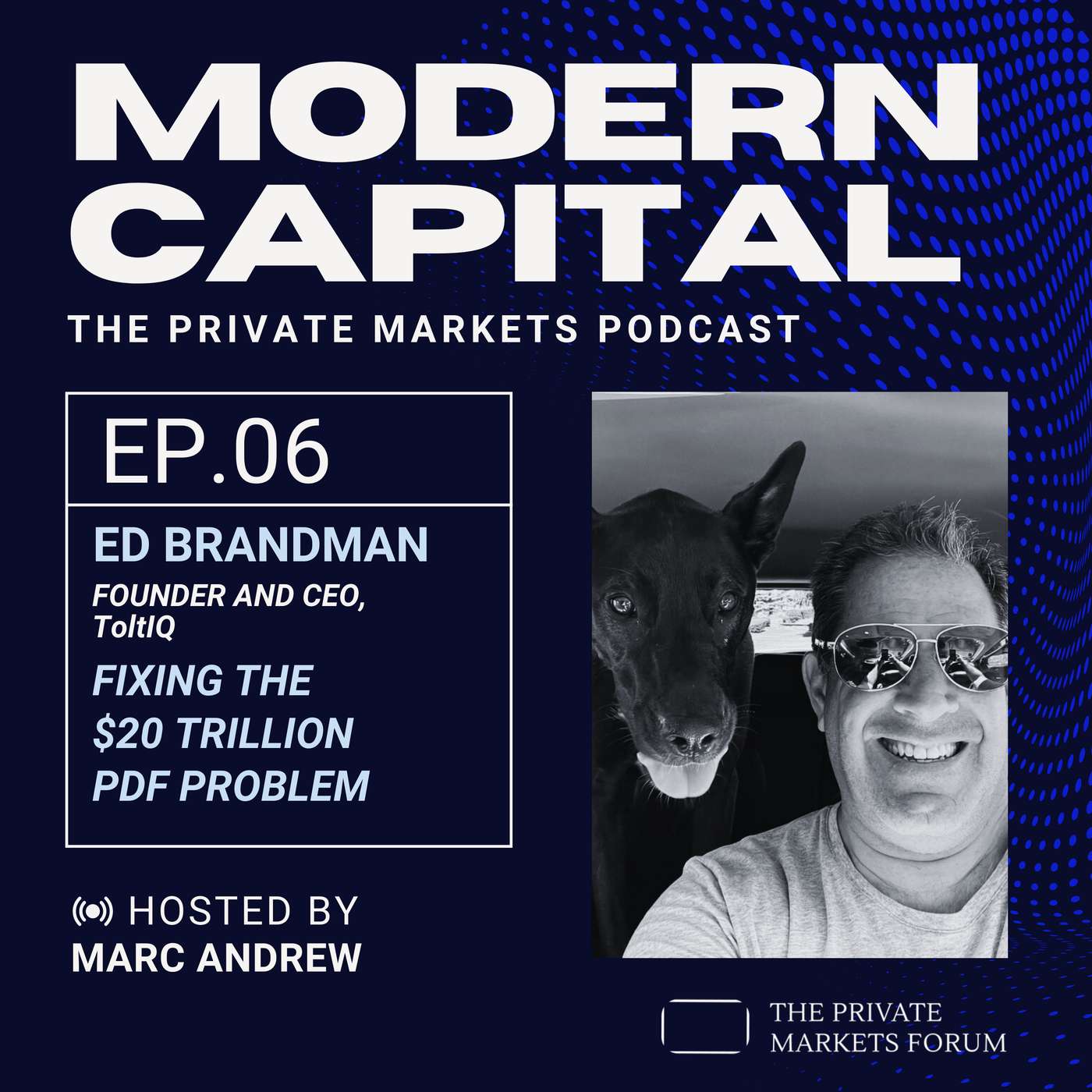
In the early 1990s, Ed Brandman was at JP Morgan helping build FIX, the protocol that automated order flow between Wall Street's biggest buy-side and sell-side firms. It took years, regulatory pressure and a handful of 800-pound gorilla institutions to force the change. But it happened. And it reshaped public markets forever.He thinks private markets are heading to the same inflection point."You think about all the information that LPs want to get their hands on related to portfolio reporting every quarter end... that today, still for the most part, comes via PDFs."In 2026. PDFs.That's the problem Ed came out of retirement to solve. After 11 years as CIO at KKR - where he grew the tech team from 5 people to 140 - he founded ToltIQ, an AI-native due diligence platform built specifically for the complexity of private markets deal workflows.In this episode of the Modern Capital Podcast, Ed and Marc cover:Why due diligence hasn't changed since the days of boxes of documents - and why AI can finally fix itThe FIX protocol parallel: what private markets needs to do to scale to $30T+How ToltIQ is applying AI to VDRs, credit agreements and expert network callsWhy waiting 6-9 months on AI adoption is already a competitive disadvantageThe new ToltIQ + DealEngine partnership, and what it signals about where the market is going"There's really not upside to delaying it. And if anything, you put yourself at a competitive disadvantage."Ed is one of the most thoughtful voices in private markets technology - and one of the most generous with his thinking. This one is worth your time.

Tens of millions of trades are coming to private markets in the near term. In this episode, Andrew Tarver lays out math that should get everyone interested in scaling private markets very focused indeed:Tarver is one of private markets' most important builders. He's co-founded a unicorn, dozen other companies, ran Capco UK as CEO at 35, and now helps lead private markets strategy across Motive Partners' portfolio - including InvestCloud, which runs $4 trillion in managed accounts.Here's the problem:The industry is staring down a whole new version of the Paperwork Crisis with even a 7-8% model portfolio shift (it'll likely be higher). That's hundreds of billions in new allocations. And it's not just the initial orders. After a big public markets move, model portfolios automatically rebalance. Markets drop 15%, you're suddenly over-allocated to privates, and the system triggers a wave of redemptions to get back in line. Every quarter, every drift correction, every strat change generates more orders. At $10K-$20K ticket sizes, that's tens of millions of orders. Per year.Today's infrastructure handles about 1,000 orders per operational FTE annually. The industry's current NIGO (failed trade) rate sits at 8%.Do the math:At current staffing ratios, scaling this requires 48,000 new operational staffAt $200K–$300K per head, someone needs to find $10 billion to pay themAnd that's just one platform — before RIAs, 401(k)s, or fintechs like Robinhood and Revolut enterTarver's analogy is perfect: private markets today are where payments were 15 years ago: paper slips, manual processing, three copies of everything. The industry needs to go from imprinter to tap-to-pay.His answer: digital standards, rules-based infrastructure, and accountability at every node... the same playbook he ran at Goldman, UBS, and Merrill's for two decades."We are no longer in the Wild West."This is the most important infrastructure conversation in private markets right now.Congratulations to Tarver and the entire Motive team - including Rob Heyvaert - for leading this charge. Huge episode. Listen to the full thing!

Alex Robinson has spent a decade building the infrastructure private markets never had. Juniper Square now serves 2,500 GPs, supports trillions in capital, and has 700,000 LPs on its platform - likely the largest direct-to-private-markets LP network anywhere.In this conversation, Alex maps where private markets infrastructure is headed over the next 10-15 years. He shares his vision for what "done" looks like: factor ETFs, a FICO score for managers, near-zero trading costs, and diversified private markets baskets in your 401(k). We also dig into the origin story (a FedEx truck and a two-inch stack of paperwork), why standards-by-committee always fail, and how Juniper Square reached dozens of customers before it ever launched publicly.Key TopicsThe FedEx moment that launched Juniper SquareWhy private markets technology was overlooked for decadesWhat "next-gen fund administration" actually meansThe two tsunamis hitting private markets: AI and retailWhy standards will emerge from scale, not committeesAlex's end-state vision for private markets maturityThe coming flourishing of niche managersHow Alex uses AI personally (and which models for what)Time management with three kids and a billion-dollar startup
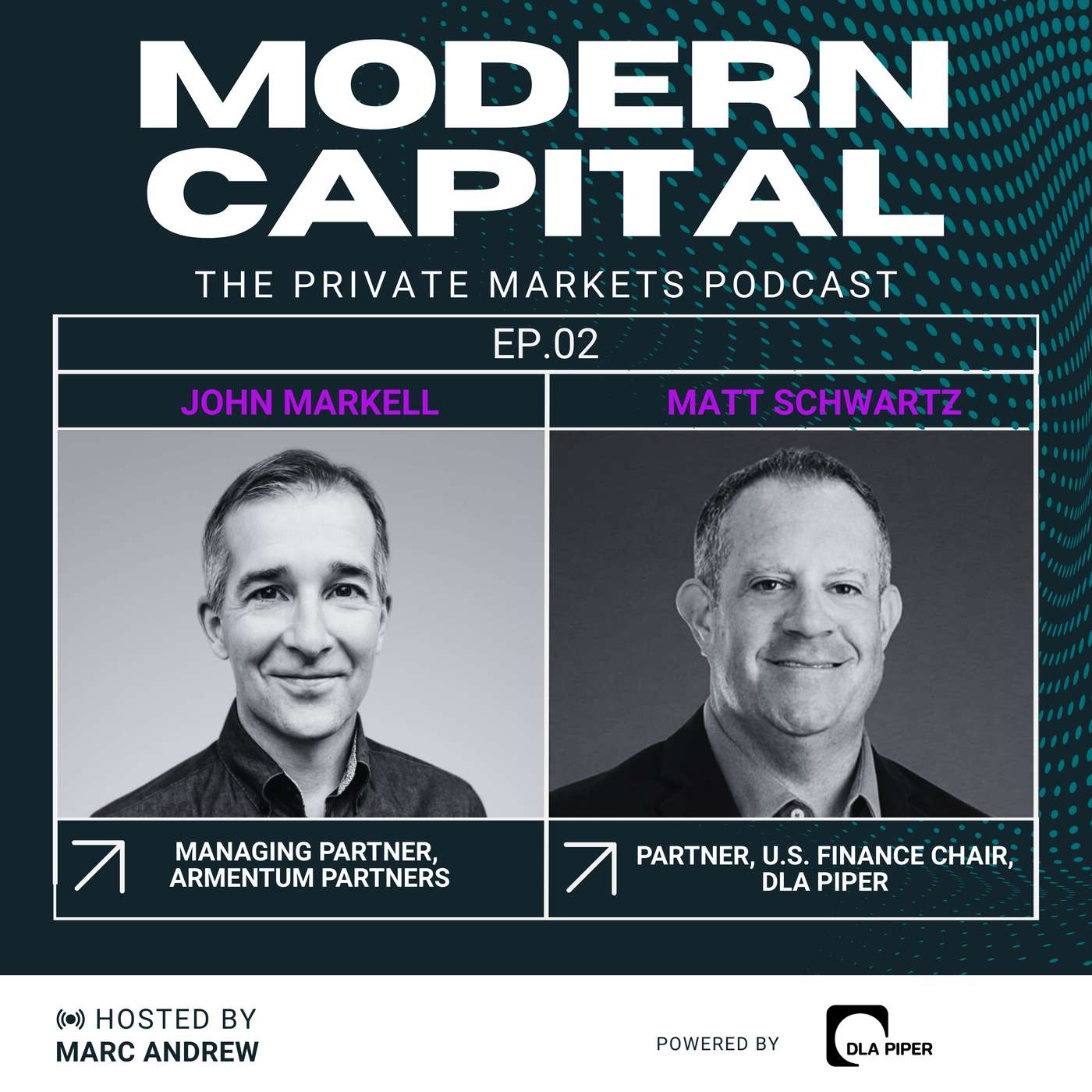
350+ lenders now finance cash-flow negative businesses. Five years ago, maybe a handful would.This shift is creating new opportunities - and new risks - that most founders and fund managers don't fully understand.John Markell of Armentum Partners and Matt Schwartz, Head of U.S. Finance at DLA Piper, join me to unpack growth credit: the segment of private credit quietly reshaping how technology companies scale.We cover:What growth credit actually is - and why it's different from the private credit you read about in the papersThe gap between bank capital (under 10% risk) and equity risk (north of 20%) - and who's filling itHow SVB's collapse changed underwriting, covenant packages, and deal sizesWhy enterprise software lending is "way, way, way saturated" - and where the white space isWhat founders get wrong when pitching lenders vs. equity investorsThe three things every founder should know before taking on debtWhy some funds net 19% to LPs while others struggle to clear 12%Whether you're a founder considering debt or a fund manager looking for origination opportunities, this conversation will change how you think about the gap between bank capital and equity risk.Follow Modern Capital on your podcast player of choice.

Introducing: Modern Capital, The Private Markets Podcast. Conversations with the leaders building the infrastructure of modern private markets.

What happens when the man who engineered the clearing system for the euro at age 25 turns his full attention on private markets?Rob Heyvaert has spent three decades building the plumbing of finance: founding companies acquired by IBM and FIS, scaling Capco to 7,000 people across 21 offices, and now orchestrating a portfolio at Motive Partners that includes InvestCloud, FNZ, Daphne, CAIS, and others shaping how capital flows.In this inaugural episode of Modern Capital, Rob makes a striking claim: private markets are approaching their "Bezos moment" - the point where customer obsession finally becomes possible, and necessary.What you'll learn:The infrastructure gap: Financial services has spent decades building siloed systems that barely communicate. Rob explains why private markets now offer a rare opportunity to rebuild from first principles—and why legacy systems are the real barrier to customer delight.Why 60/40 portfolios are a historical accident. Institutional investors have 40% allocations to private markets. Retail investors have 2%. Rob argues this isn't about risk... it's about infrastructure that was never built to serve the individual investor.The volume problem that will determine winners. If model portfolios move to even 5% private market allocations, transaction volumes will increase 80-100x. Most providers aren't remotely prepared. Rob explains who will be.What your children's wealth management looks like. Will they use a "super app" that knows everything about them? Or will they still rely on Johnny the wealth advisor - who might be human, might be AI, might be something in between? Rob offers a surprisingly nuanced view.
Comments

Download from Google Play

Download from App Store
 United States