


 Claim Ownership
Talking Foreign Policy
Subscribed: 24Played: 35
Subscribe

© 2022
Description
Launched in 2012, "Talking Foreign Policy" is a one-hour radio program, hosted by CWRU School of Law Dean Michael Scharf, in which experts discuss the salient foreign policy issues of the day.
18 Episodes
Reverse
March 24, 2026 Talking Foreign Policy - Board of Peace and its prospects for success and potential risks
January 20, 2026 Talking Foreign Policy - Age of Atrocity: A Fire-Side Chat with Ambassador Beth Van Schaack Case Western Reserve University School of Law
Talking Foreign Policy - U.S. Attacks on Venezuelan and Colombian Narco Vessels December 1, 2025 Case Western Reserve University School of Law
Every so often there is a tectonic shift in American foreign policy -- a fundamental turning point marked by new ways of approaching the world. The post-World War II era of institution-building, the Cold War period of competition and militarization, and the 9/11 global war on terrorism are examples. Has the return of President Trump ushered in one of these historic turning points? What are the radical foreign policy changes he has pursued so far? Are they likely to be temporary or enduring? And what are the consequences for the United States and the world community? In this broadcast of "Talking Foreign Policy," host Michael Scharf has assembled a group of leading international law and policy experts to answer these questions
In its war with Ukraine, Russia has targeted the environment as its most insidious means of warfare. It has blown up dams, flooded coal mines, burned down national forests, and even targeted the black sea dolphins that inhabit the waters off Ukraine's coast. With an effort to obtain a peace agreement now underway, will the perpetrators of these attacks be brought to justice? Where will they be tried? And what law will apply?
Talking Foreign Policy - Is Taiwan at Risk? Dec. 2, 2024
Conventional wisdom says that foreign policy doesn't matter in U.S. Presidential elections. Quote "It's the economy, stupid," was long thought to be political gospel. But this election might be different. According to polls, a divided America cares deeply about the conflicts in Ukraine and the Middle East, about the influx of migrants from south of the border, about the looming trade war with China, and about the escalating climate crisis. With the election just two months away, "Talking Foreign Policy" takes a look at where the Presidential Candidates and the electorate stand on the major foreign policy challenges facing the United States.
This August, the world will celebrate the 75th anniversary of the Geneva Conventions on the Law of War. These seminal treaties were negotiated following the horrors of the Second World War. Their object was to lay down rules to limit the savagery of armed conflict. Every country in the world has signed them, making the Geneva Conventions the most ratified of all treaties. But are the 75-year-old Geneva Conventions sufficient in a world where the technology portrayed in the Terminator, the Matrix and Star Wars is quickly becoming science fact. Do we need to update the Geneva Conventions to add rules about autonomous weapons, cyber warfare, space warfare, and combating modern-day terrorists? I'm Michael Scharf, Dean of Case Western Reserve University School of Law. In this broadcast of "Talking Foreign Policy," I've assembled a group of military, diplomatic and legal experts who will address these questions. … Right after the news.

Two years ago, on February 24, 2022, Russia launched a massive invasion of neighboring Ukraine. The International community responded with military aid and sanctions. The U.N. expelled Russia from the Human Rights Council and the International Criminal Court issued an arrest warrant for Russian President Vladimir Putin. Russia failed to capture Ukraine's largest cities or topple Ukraine's government. The fighting has ground to a bloody stalemate with hundreds of thousands of casualties on both sides. Now, the U.S. Congress appears poised to cut off aid to Ukraine and Russia is raising the prospects of peace negotiations.
September was the hottest month in recorded history. Last summer, smoke from Canadian forest fires blanketed the United States. Maui ignited. Libya was deluged by flooding of biblical dimensions. Sea levels rose as glaciers and ice sheets melted at an accelerating rate. The world's great rivers and lakes are drying up, while climate migrants are pouring across borders. Is it too late to stop climate change? What can the international community do to respond to this existential global crisis? I'm Michael Scharf and in the next broadcast of Talking Foreign Policy, our expert panelists will seek to answer that question.

May 30, 2023 Two-months ago, the International Criminal Court issued an arrest warrant for Russian President Vladimir Putin. He's been charged with orchestrating the abduction of thousands of Ukrainian children and transferring them to Russia for adoption. It's the first time a major world leader has been indicted by the International Criminal Court. How will this affect the course of world events? I'm Michael Scharf and in the next broadcast of Talking Foreign Policy, our expert panelists will seek to answer that question.
February 21, 2023 Case Western Reserve University School of Law Since the U.S. withdrawal from Afghanistan in August 2021, the situation there has gone from bad to worse. Today, 20 million Afghans are starving and millions are internally displaced. The Taliban is back in power. They are once again providing sanctuary to terrorist groups that threaten the United States. They have decreed that Afghan girls shall not have access to education above the sixth grade. In a recent report to Congress, John Sopko, the US Special Inspector General for Afghanistan, wrote: "Unless the U.S. government understands and accounts for what went wrong, why it went wrong, and how it went wrong, it will likely repeat the same mistakes in the next conflict." In the February 21 broadcast of Talking Foreign Policy, host Michael Scharf, Co-Dean of CWRU School of Law, has assembled a group of experts, including Inspector General Sopko, who will seek to answer those questions.
January 23, 2020 Case Western Reserve University School of Law
October 24, 2022 Case Western Reserve University School of Law
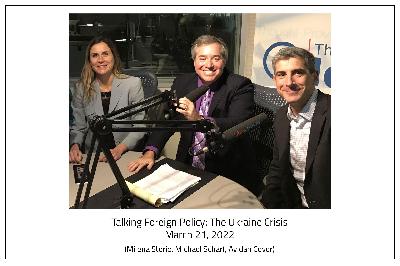
March 21, 2022 Case Western Reserve University School of Law
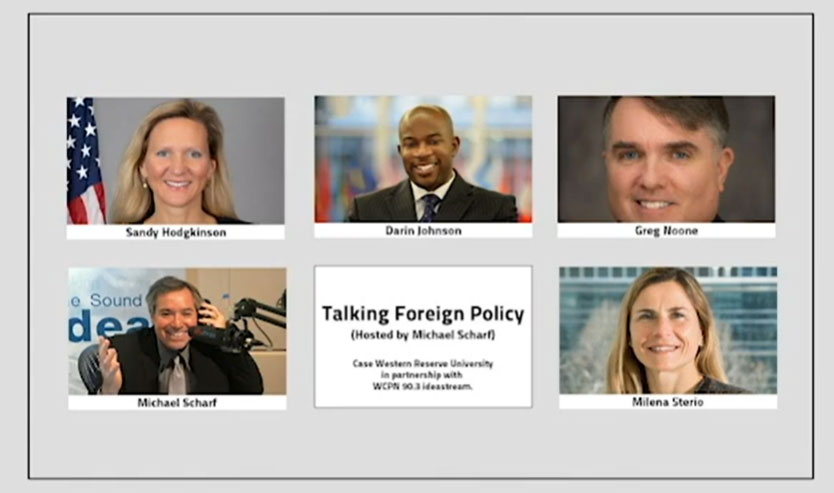
Sept. 28, 2021 Case Western Reserve University School of Law
Comments


Download from Google Play

Download from App Store
 United States