


 Claim Ownership
 The Water We Swim In
The Water We Swim InSubscribed: 1Played: 7
Subscribe

© The Water We Swim In
Description
This project is a refuge for survivors of sexual abuse — a space of ritual, remembrance, and healing. May this be a sanctuary where the personal becomes universal, and every voice helps to reclaim life beyond trauma.
thewaterweswimin.substack.com
thewaterweswimin.substack.com
6 Episodes
Reverse
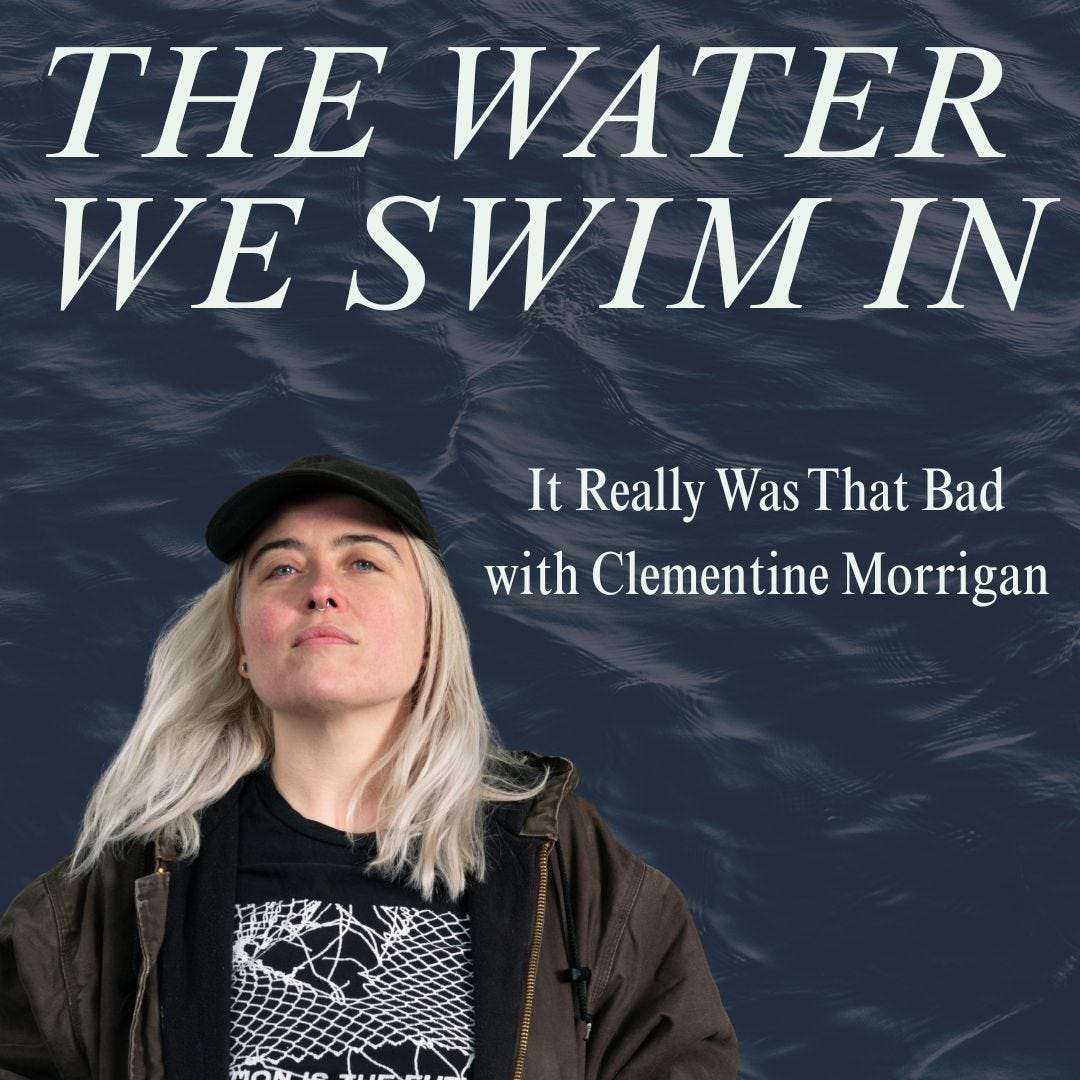
Gentle disclaimer: the nature of this podcast is conversations about edgy stuff. This episode contains mentions of self-injury. Listen from a grounded, regulated place.In this episode, we are joined by writer and activist Clementine Morrigan for a thoughtful conversation on how early relational harm shapes identity, attachment, and survival strategies. Together, we explore how family systems organize around silence and blame, how chronic invalidation impacts the nervous system, and why many people struggle to recognize their experiences as harmful. Clementine offers insight into dissociation, truth-telling, and the long, nonlinear work of recovery, inviting listeners to consider healing as a process rooted in context, relationship, and embodied self-trust.👉 Topics Covered▪️Scapegoat dynamics & cancel culture▪️Clementine’s abuse history & family system▪️Structural dissociation▪️Neglect, attachment trauma, and mothers’ roles▪️How to notice and intervene around children▪️Attachment patterns in adult relationships▪️CSA as the #1 political issue▪️Spirituality, underworld journeys, and healing👉 Learn more about Clementine Morrigan: Long-form writingBuy her book F*cking MagicListen to her pod: F*cking Canceled Follow her InstagramThe End of Scapegoating and the Beginning of Wholeness as the Ground by DaranandaFollow The Water We Swim In on InstagramFollow Ashley Waverley on Instagram, or learn more about her work here.Follow Samara Valentina on Instagram or learn more about her work here. This is a public episode. If you would like to discuss this with other subscribers or get access to bonus episodes, visit thewaterweswimin.substack.com
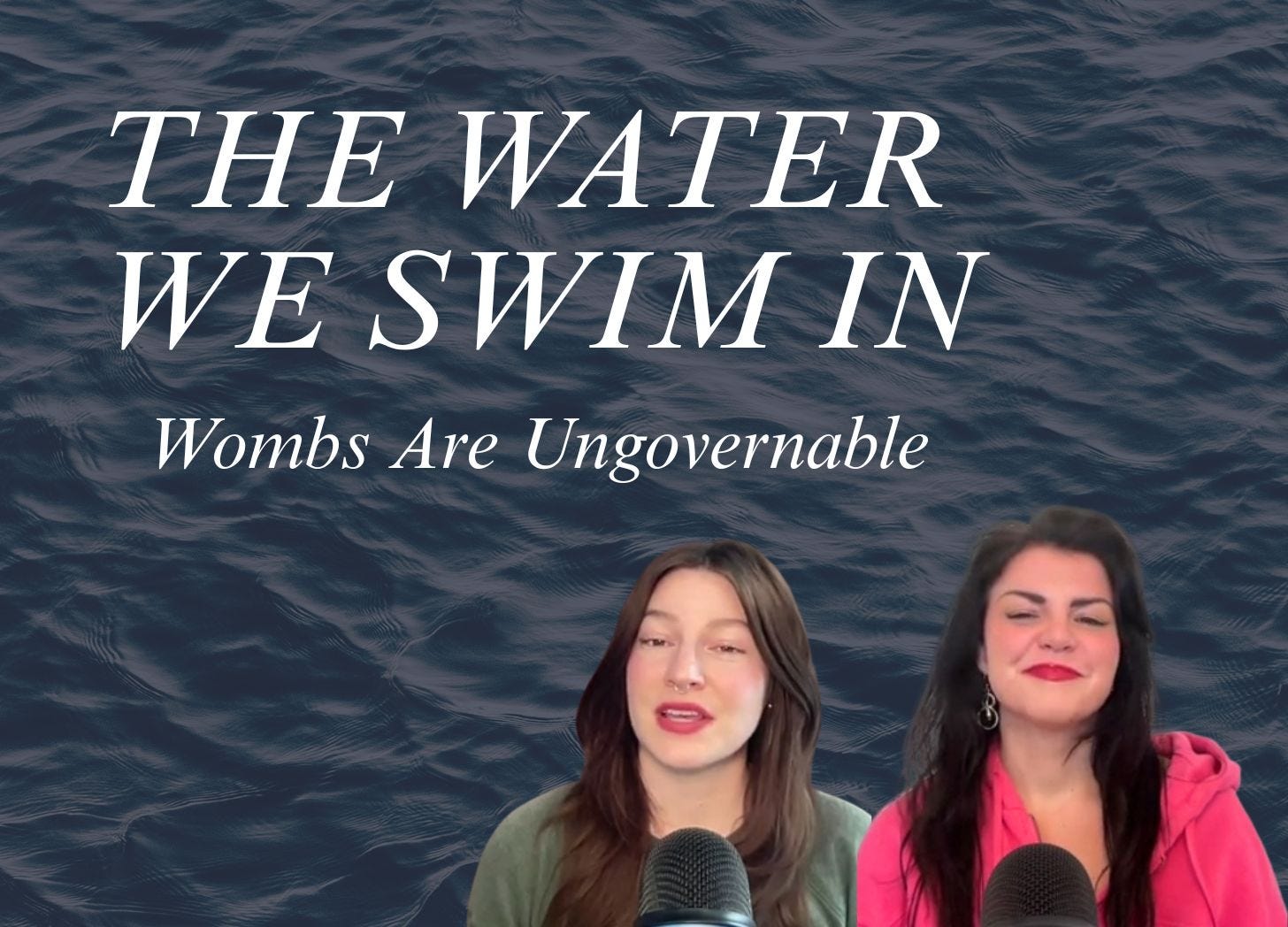
A spacious, survivor-centered conversation about birth control, fertility, and bodily sovereignty. Through personal stories, ancestral context, and lived experience, we explore how hormonal birth control and medicalized pregnancy prevention can reinforce dissociation, freeze, and the outsourcing of safety for many survivors of se ual trauma. Rather than offering prescriptions or medical advice, this episode reframes the conversation entirely. What becomes possible when fertility is approached through agency, intimacy, choice, and relationship with the body, the womb, and the cycles themselves?Gentle disclaimer: the nature of this podcast is conversations about edgy stuff. Listen from a grounded, regulated place.Topics Covered in This EpisodeHow dominant birth control narratives shape fear, control, and disembodimentPersonal birth control journeys, including the pill, condoms, ab rtion, and IUDsThe emotional and somatic impact of gynecological care on survivorsOutsourcing safety vs cultivating embodied agency and self-trustFertility awareness and cycle tracking as a relational practice, not a rule setFree bleeding, reclaiming menstrual blood, and repairing shame around menstruationThe role of trauma, dissociation, and freeze in fertility decisionsAncestral loss of herbal and cycle wisdom and its impact on women’s autonomyPlant allies and non-hormonal approaches to pregnancy preventionIntent, ritual, and conscious choice in se ual intimacyInviting men into cycle awareness, responsibility, and relational intimacyWhen celibacy can be a reparative and empowering choiceReframing fertility not as a problem to manage, but as power to stewardResources mentioned in this episode:🌿 Learn more about Lauren and her education on fertility tracking and natural birth control🩸Learn more about Chaya and her womb work🌺 Our favorite natural birth control cream: Wise Women's Choice🌙 Our favorite period underwear: Wild Moon📖 Taking Charge of Your Fertility: The Definitive Guide to Natural Birth Control, Pregnancy Achievement, and Reproductive Health by Toni Weschler🧶 Birth control tapestry by Alexandria Masse🌊 Follow The Water We Swim In on Instagram❤️🔥 Follow Ashley Waverley on Instagram, or learn more about her work here.👁️ Follow Samara Valentina on Instagram or learn more about her work here. This is a public episode. If you would like to discuss this with other subscribers or get access to bonus episodes, visit thewaterweswimin.substack.com
Gentle disclaimer: the nature of this podcast is conversations about edgy stuff. Listen from a grounded, regulated place.In this episode, we explore how se ual tra uma can shape desire, intimacy, and relational patterns in ways that often go unseen. Rather than prescribing what sexuality should look like, this conversation centers on discernment—how to tell the difference between true choice and patterns formed around survival, conditioning, and early relational confusion.Through personal storytelling and nervous‑system‑informed reflection, we examine reenactment, agency, and the ways intensity is often mistaken for intimacy. Topics Covered-Trauma and the nervous system-Reenactment vs. conscious choice-Intensity, intimacy, and attachment-Trauma bonding and relational patterns-Agency, boundaries, and embodimentRead Ashley's writing on celibacy. Follow The Water We Swim In on InstagramFollow Ashley Waverley on Instagram, or learn more about her work here.Follow Samara Valentina on Instagram or learn more about her work here. This is a public episode. If you would like to discuss this with other subscribers or get access to bonus episodes, visit thewaterweswimin.substack.com
Gentle disclaimer: the nature of this podcast is conversations about edgy stuff. Listen from a grounded, regulated place.(The audio on this episode is admittedly subpar, but we are rolling with it! Please bear with us. Upgraded audio coming next week!)A slow, honest conversation about the relationship between trauma, the body, and food. Ashley and Samara share parts of their own lived experience, and name what so often goes unspoken: how control, restriction, and disconnection can become ways the body tries to stay safe. Rather than treating these patterns as problems to fix, the conversation stays with what they protected, what they cost, and why they make sense.There’s no prescription, no diagnosis, and no promise of transformation by the end. Instead, the focus is on listening, on learning how to be in relationship with the body again after it’s felt unsafe to inhabit, and on letting go of shame without rushing toward solutions. It’s an episode for anyone who has ever felt at odds with their body or their relationship with food and is curious about what becomes possible when that struggle is met with honesty and care.Why This Episode Is Different• It’s led by lived experience, not theory or diagnosis• There’s no moralizing food, bodies, or coping strategies• Control is named as intelligence, not pathology• Trauma is discussed through the body, not just the story• Shame is addressed without using fear or urgency• There’s no “fix,” program, or promise at the end• Complexity is allowed: gratitude for survival strategies and readiness to let them go• The conversation moves at a nervous-system pace, not a productivity one• Listening is treated as an act of healing, not complianceJoin us for a monthly Survivors CircleFollow The Water We Swim In on InstagramFollow Ashley Waverley on Instagram, or learn more about her work here.Follow Samara Valentina on Instagram or learn more about her work here. This is a public episode. If you would like to discuss this with other subscribers or get access to bonus episodes, visit thewaterweswimin.substack.com
Gentle disclaimer: the nature of this podcast is conversations about edgy stuff. Listen from a grounded, regulated place.Ashley and Samara talk honestly about alcohol as a survival strategy after trauma. Not from a place of pathology or labels, but from lived experience. We explore what drinking gave us when our nervous systems were overwhelmed, what it protected us from feeling, and the moment when that protection began to cost more than it offered.This is a conversation about dissociation, regulation, and choice. About why you don’t have to identify as an alcoholic to question your relationship with alcohol, and how listening to the body can open a different way forward. It’s for anyone who has ever used something to survive and is now wondering what comes next.In this episode, we talk about:• Alcohol as a nervous system regulator, not a moral failure• Why many survivors don’t resonate with the label “alcoholic” and still choose to stop drinking• How dissociation can feel like relief, spaciousness, or even creativity• The ways alcohol can amplify ancestral and inherited patterns• What happens when a coping strategy stops protecting us• Listening to the body’s signals instead of overriding them• Choosing sobriety or moderation without hitting rock bottom• Grief for what alcohol once provided and gratitude for its role• Finding regulation, presence, and connection without numbingFollow The Water We Swim In on InstagramFollow Ashley Waverley on Instagram, or learn more about her work here.Follow Samara Valentina on Instagram or learn more about her work here. This is a public episode. If you would like to discuss this with other subscribers or get access to bonus episodes, visit thewaterweswimin.substack.com
Untangling the narratives that keep harm in the shadows, and calling in a more honest conversation.Gentle disclaimer: the nature of this podcast is conversations about edgy stuff. Listen from a grounded, regulated place.A mini conversation exploring the “misses” in public discourse and media coverage of the Epstein case, and the collective defenses that keep us from facing how widespread this harm truly is. We offer a different lens grounded in compassion, nuance, and personal responsibility, inviting you into a deeper understanding of the human, spiritual, and systemic layers beneath these stories.Follow The Water We Swim In on InstagramFollow Ashley Waverley on Instagram, or learn more about her work here.Follow Samara Valentina on Instagram or learn more about her work here.Send us an email: thewaterweswimin@gmail.com This is a public episode. If you would like to discuss this with other subscribers or get access to bonus episodes, visit thewaterweswimin.substack.com
Comments

Download from Google Play

Download from App Store
 United States