


 Claim Ownership
scientifica sessions.
Subscribed: 0Played: 0
Subscribe

© 2025 Tabari Baker
Description
Hosted by Tabari Baker, CEO of kronos scientifica, scientifica sessions features unscripted conversations with the executives, innovators, and visionaries shaping the future of biotech, medtech, pharma, and healthtech.
Each episode dives into the realities of leadership in a rapidly evolving industry: scaling medical affairs and commercial teams, building investor confidence, navigating regulatory shifts, unlocking digital health and AI, and driving commercialization strategies that matter. Guests share candid stories from the boardroom to the clinic—what worked, what didn't, and what's next.
If you're a CEO, CMO, commercial leader, investor, or startup founder, scientifica sessions gives you insider access to the lessons, strategies, and perspectives that don't show up in press releases or pitch decks.
Each episode dives into the realities of leadership in a rapidly evolving industry: scaling medical affairs and commercial teams, building investor confidence, navigating regulatory shifts, unlocking digital health and AI, and driving commercialization strategies that matter. Guests share candid stories from the boardroom to the clinic—what worked, what didn't, and what's next.
If you're a CEO, CMO, commercial leader, investor, or startup founder, scientifica sessions gives you insider access to the lessons, strategies, and perspectives that don't show up in press releases or pitch decks.
8 Episodes
Reverse
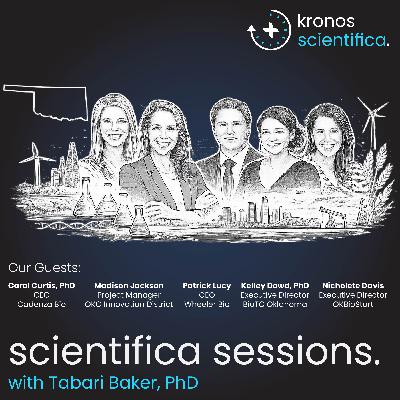
Episode DescriptionWhat if the next great American life sciences hub isn’t on the coasts—but in the heartland?In this episode of scientifica sessions, we look beyond the usual biotech strongholds to explore Oklahoma’s emergence as a new life sciences contender. While Boston and San Francisco dominate the narrative, Oklahoma is quietly building a different model—one that blends energy-sector expertise, agricultural biotechnology, and targeted infrastructure investment to create a distinct innovation advantage.Host Tabari Baker is joined by Oklahoma life sciences leaders:Carol Curtis, PhDNicholete DavisKelley Dowd, PhDMadison JacksonPatrick LucyTogether, they unpack what it really takes to build a life sciences ecosystem from the ground up. This isn’t a generic “emerging hub” story—it’s a candid look at convergent innovation, where energy capital fuels therapeutic development, and regional strengths shape a new path forward.In this episode, you’ll learn:Why Oklahoma’s “late start” may actually be a competitive advantage.How energy-industry capital and operational discipline are being repurposed for biotech.The infrastructure gaps that could accelerate—or constrain—ecosystem growth.What funding models are emerging before traditional venture capital arrives.How Oklahoma is addressing talent development without an established biotech workforce.The unique role of Native American healthcare systems in advancing innovation.Key segments include:The Anatomy of a Hub: Foundational assets and authentic differentiators.Capital and Commercialization: Creative funding approaches and early success stories.Infrastructure and Place: Lab space, cost structure, and quality-of-life advantages.Talent Flywheels: Workforce pipelines and entrepreneurial culture building.Whether you’re an entrepreneur deciding where to launch, an investor searching for untapped opportunity, or a life sciences leader tracking how innovation geography is shifting, this episode offers actionable insight into one of biotechnology’s most compelling frontier markets.Connect with the guests🔗 LinkedIn: Kelley Dowd, Nicholete Davis, Patrick Lucy, Carol Curtis, Madison Jackson📩 Connect with the show: podcast@kronosscientifica.comProduced by Thread and Tensor.
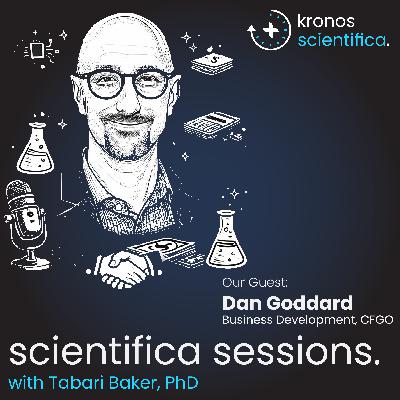
Episode DescriptionIn this episode of scientifica sessions, host Tabari Baker (Founder & CEO, kronos scientifica) sits down with Dan Goddard, Business Development Lead at CFGO, to explore one of the most critical—and misunderstood—journeys in life sciences: moving a company from concept to capital.Early-stage biotech lives at the intersection of breakthrough science, disciplined execution, and financial reality. When those elements align, companies build durable foundations that survive pivots, funding cycles, and market downturns. When they don’t, even exceptional science can stall. This conversation breaks down why that gap exists—and how founders can close it.Dan brings decades of experience across early-stage biotech, venture-backed scaling companies, finance, planning, and investor readiness. Together, Dan and Tabari unpack what investors are actually looking for, why planning matters even when it’s guaranteed to change, and how discipline—not hype—drives long-term success.In this episode, you’ll hear insights on:Why great science is necessary—but not sufficient—for fundraising.How to plan effectively when you know the plan will be wrong.Common budgeting mistakes founders make (and why being “under budget” can be a red flag).The importance of milestones, burn rate, and timing in a constrained funding environment.Why fractional expertise (finance, legal, regulatory) is essential for early-stage companies.Platform vs. asset strategies—and how AI is reshaping both.Lessons from prior biotech downturns and why contractions often produce the strongest companies.How founders should rethink fundraising as a partnership, not a transaction.The conversation also dives into the human side of company building: decision fatigue, leadership vulnerability, early hiring challenges, and knowing when to ask for help. Dan shares hard-won lessons from working with dozens of companies—and why honest dialogue with investors often unlocks more value than a perfect pitch deck.The episode closes with a powerful takeaway for founders navigating investor conversations:If you want advice, ask for money. If you want money, ask for advice.If you’re building, advising, or investing in early-stage biotech—and trying to understand what it really takes to turn innovation into impact—this episode is your playbook.If You Liked This Episode…Share it with your team and subscribe to scientifica sessions for unfiltered conversations with the leaders shaping biotech, pharma, and medtech.Connect with Dan Goddard🔗 LinkedIn: Dan Goddard📩 Connect with the show: podcast@kronosscientifica.com
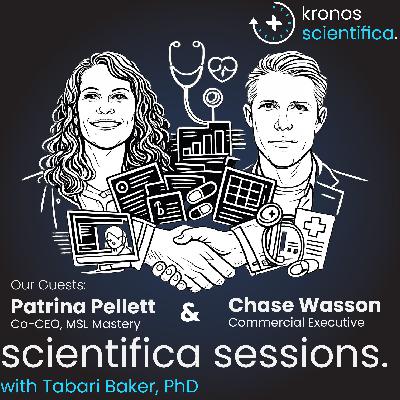
Episode DescriptionIn this episode of scientifica sessions, host Tabari Baker (Founder & CEO, kronos scientifica) tackles one of the most persistent—and consequential—tensions in life sciences: the complicated relationship between Medical Affairs and Commercial. Too often it’s a “love–hate” dynamic fueled by shared stakeholders, unclear roles, conflicting metrics, and leadership misalignment. When it works, the field moves in lockstep. When it doesn’t, everyone feels it—especially HCPs.Tabari is joined by two guests who live this challenge from different angles:Patrina Pellett, Co-CEO of MSL Mastery, who trains Medical Affairs teams on field excellence, communication, and cross-functional collaboration.Chase Wasson, a commercial executive with ~17 years across pharma, diagnostics, and medtech, who has seen collaboration drive real wins—and watched it break down when strategy and process aren’t aligned.Together, they unpack the real root causes behind friction: “owning” the HCP relationship (and the turf wars it creates), the lack of role clarity during onboarding, and how leadership mindset trickles down into day-to-day behavior.Chase argues that when strategy is aligned from the top, process follows—making ownership conflicts far easier to resolve. Patrina adds a powerful insight: collaboration failures often mirror how leaders talk about (and model) cross-functional partnership.The conversation gets practical fast. You’ll hear actionable frameworks and behaviors that reduce conflict and build trust, including:How to create clarity on “who does what” without diminishing either functionWhy empathy matters—and how simply understanding your partner’s metrics changes everythingHow Medical can avoid being perceived as the “no police” by shifting language from “No” to “How do we get to a shared solution?”Why MSLs need stronger “soft skills” training (and why commercial teams often have an advantage here)The underrated power of follow-up—and how missing it quietly erodes credibility and internal trustHow commercial partners can better “position” MSLs with customers by introducing their expertise clearly and confidentlyThey also touch on the evolving landscape and why changing rules only increases the need for tighter alignment across Medical, Commercial, and Marketing.If you’ve ever said “that’s my KOL,” felt steamrolled by another function, or struggled to coordinate around the same HCPs—this episode is your playbook. If You Liked This Episode…If this discussion resonated with you, share it with your organization—and subscribe to scientifica sessions. We deliver unfiltered conversations with the innovators pushing biotech, pharma, and medtech forward.Connect with Patrina and Chase📧 patrina@mslmastery.com📧 chase.wasson@gmail.com🔗 LinkedIn: Patrina Pellet, PhD & Chase Wasson📩 Connect with the show: podcast@kronosscientifica.comMusic Credits0:07:06 - Transliminal00:15:46 - Crystalize00:35:21 - Panic at the FriscoEpisode recorded on October 14, 2025. All information shared is current as of the recording date.
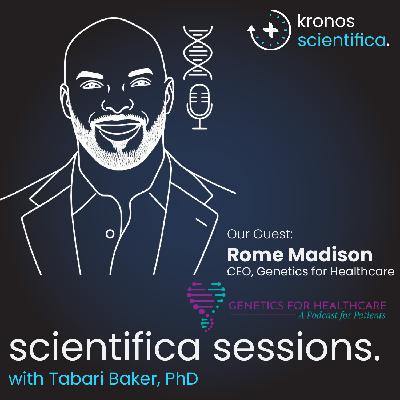
Episode DescriptionIn this episode of scientifica sessions, we sit down with Rome Madison—founder of the Genetics for Healthcare podcast and a leading voice in genomic sales enablement and clinician education. With more than two decades of experience helping life-science organizations adopt precision medicine, Rome focuses on translating complex genomic science into practical, real-world clinical action.He shares how a family health crisis sparked his career at the dawn of the post–Human Genome Project era. We trace the evolution of precision medicine—from early fresh-tissue assays to comprehensive genomic profiling to today’s world of real-world data and AI-supported decision making. Across each phase, one theme remains constant: education—not technology—is the bottleneck to adoption.We explore why clinicians, payers, and patients still struggle to navigate genomic information, and why medical affairs must serve as the connective tissue between emerging science, commercial priorities, and patient access. Rome also recounts how medical affairs helped challenge restrictive BRCA testing guidelines, expanding access for millions and highlighting what it will take to accelerate similar changes moving forward.Finally, we look ahead to a healthcare landscape defined by integrated genomic, clinical, wearable, and claims data—one where empowered patients increasingly shape their own care.What We CoveredThe Evolution of Precision Medicine• From early assays to comprehensive genomic profiling• How tumor complexity reshaped oncology workflows• What AI and real-world data add to decision makingEducation as the Core Barrier• Why genomic literacy remains low• How payer confusion limits testing• The widening gap between community and academic careThe Role of Medical Affairs (MA)• How scientific exchange accelerates adoption• Why MA is essential for explaining clinical utility• How updated BRCA guidelines expanded equitable accessIndustry Enablement Challenges• Why sales teams struggle with genomic complexity• The need for aligned scientific and commercial messaging• How MA + sales partnerships build clinician trustThe Future of Personalized Care• Integrated genomic, wearable, and EMR data• AI-driven tools at the point of care• The rise of informed, empowered patientsIf you want to understand what’s holding precision medicine back—and what it will take to finally unlock its full potential—this is a conversation you don’t want to miss.If You Liked This Episode…If this discussion raised new questions about how your teams educate clinicians, enable sales, or expand access to genomic testing, share it with your organization—and subscribe to scientifica sessions. We deliver unfiltered conversations with the innovators pushing biotech, pharma, and medtech forward.Connect with Rome📧 romemadison@gmail.com🌐 geneticsforhealthcare.com🔗 LinkedIn: Rome Madison📩 Connect with the show: podcast@kronosscientifica.comMusic Credits00:10:48 — Micronova00:19:20 — Slider00:31:42 — Sepulveda Pass00:46:25 — TransliminalEpisode recorded July 16, 2025. All information current as of recording.
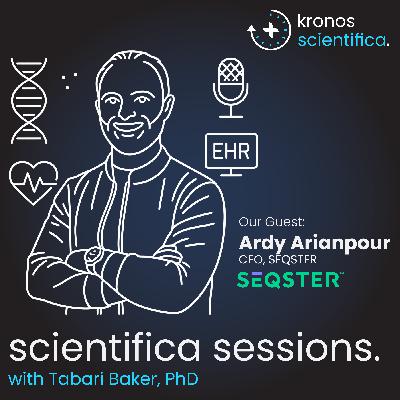
Episode DescriptionIn this episode of scientifica sessions, we take an unfiltered look at the complex relationship between innovation, privacy, and power in healthcare data with Ardy Arianpour, CEO and Co-Founder of SEQSTER.The life sciences industry is overflowing with data—EHRs, genomic profiles, claims data, wearables, and AI-driven predictions—but more data doesn't always mean better decisions. Together with host Tabari Baker, Ardy explores what happens when the pursuit of precision meets the realities of fragmentation, bias, and inequity.They unpack the hidden challenges behind the data revolution: the illusion of completeness in large datasets, the ethical tension between personalization and surveillance, and the growing misalignment between global privacy frameworks and real-world innovation. From AI model bias to the regulatory maze that stifles collaboration, this conversation challenges industry leaders to rethink how data is collected, governed, and used responsibly across research and patient engagement.Whether you're leading Medical Affairs, building digital health infrastructure, or shaping data strategy in biotech or pharma, this episode offers a grounded perspective on how to move toward a transparent, patient-centric data economy—one that values trust as much as technology.What We CoveredData Abundance, Insight ScarcityThe Ethics of Data OwnershipThe Regulatory MazeToward a Responsible Data FutureGuest BioArdy Arianpour is the CEO and Co-Founder of SEQSTER, the pioneering health-tech company putting patients at the center of their health data. A visionary executive with more than 20 years of experience in life sciences, pharma, and digital health, Ardy has dedicated his career to breaking barriers in how health data is accessed, shared, and used to improve outcomes.He has been recognized as a PharmaVoice 100 Inspiring Leader (2023 & 2024), a Top 40 Healthcare Transformer, and one of Insights Success' Top 10 Pioneers Redefining Healthcare. Ardy serves as Faculty at NextMed.Health, Judge for the Top Tech Awards, and an Advisor to UCSD's Digital Health Board, Inside Precision Medicine, and the Fleet Science Center.Connect with Ardy📧 ardy@seqster.com🌐 seqster.com🔗 LinkedIn: Ardy ArianpourIf You Liked This Episode…If this conversation made you rethink how your organization handles data, governance, and trust, share it with your team—and subscribe to Scientifica Sessions. We bring you unscripted conversations with the people defining the future of biotech, pharma, and medtech.📩 Connect with the show at podcast@kronosscientifica.com. At scientifica sessions, we love our music! Here's are the original tracks used:1. 00:08:32 - Where Are We Going?2. 00:15:15 - Bring the Hustle3. 00:20:45 - Crystalize4. 00:29:45 - Soyuz Space Guitar5. 00:39:10 - Lore Episode recorded on October 22, 2025. All information shared is current as of the recording date.
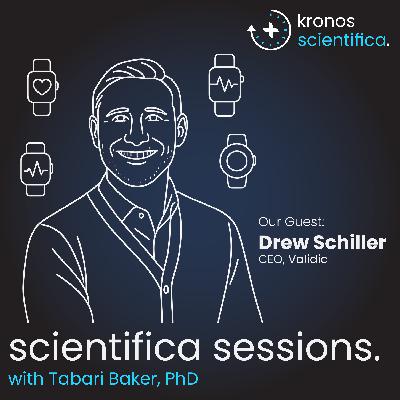
Episode DescriptionIn this episode of scientifica sessions, we dive into the rapidly evolving world of real-world evidence (RWE) and patient-generated health data (PGHD) with Drew Schiller, Co-Founder and CEO of Validic. As life sciences companies increasingly look beyond traditional clinical trials, Drew shares how data from wearables, remote monitoring devices, and connected health platforms can be used—even by resource-constrained startups—to support medical strategy, evidence generation, and value-based care.The conversation explores how early-stage biotechs and emerging life sciences companies can responsibly harness patient-generated data without massive infrastructure investment or regulatory missteps. Drew offers practical guidance on where PGHD fits within the broader evidence ecosystem, how Medical Affairs and clinical teams can use it effectively, and what leaders need to understand as the line between wellness tools and regulated medical devices continues to blur.Tabari and Drew also discuss the evolving regulatory environment, including the FDA’s recent action related to WHOOP’s Blood Pressure Insights feature, and what it signals for companies integrating wearable and remote monitoring data. The episode highlights how to balance innovation with compliance—and why getting this right is essential for long-term credibility and scalability.Whether you’re building a lean startup or operating at commercial scale, this episode provides concrete strategies for leveraging real-world data to improve patient outcomes, strengthen value narratives, and support modern, value-based care models.What We CoveredRWE & PGHD FoundationsDefining real-world evidence for resource-limited companiesWhere patient-generated data fits in the evidence landscapeCommon misconceptions about collecting and using real-world dataPractical Life Sciences Use CasesThe most accessible PGHD sources for lean teamsUsing RWE to inform medical and clinical strategyOpportunities for personalization and continuous insight generationBalancing privacy, interoperability, and evidence qualityPGHD, Pharma Strategy & Value-Based CareHow patient-generated data supports value-based care modelsThe shift from volume to value—and its impact on evidence strategyReal-world examples of remote monitoring in actionWhy Medical Affairs and Commercial teams should prioritize PGHDRegulatory ConsiderationsLessons from the FDA’s WHOOP actionNavigating the boundary between wellness tools and medical devicesStaying compliant while leveraging continuous data streamsThe future of life sciences–digital health partnershipsStrategic Guidance for LeadersConsiderations for CMOs and VPs of Medical AffairsThe role of PGHD in value dossiers and HEOR submissionsPlatform decisions for startups versus larger organizationsIf this conversation sparked new ideas, subscribe to scientifica sessions for unfiltered conversations with the leaders shaping what’s next in biotech, medtech, and pharma.Contact the show: podcast@kronosscientifica.comOriginal music featured in this episode:Whirl · A Night in November · Night Walk · Rico Clave · Bubble Trouble · UP! · A Different CatEpisode recorded July 21, 2025. All information is current as of the recording date.
In this inaugural episode, host Tabari Baker, Founder & CEO of kronos scientifica, introduces Scientifica Sessions—a new podcast at the intersection of science, strategy, and commercialization. With over 15 years of leadership experience in medical affairs, clinical development, and biotech commercialization, Tabari has worked with companies navigating late-stage trials, preparing for launch, and building medical organizations ready for global growth. He's seen firsthand that great science alone isn't enough—it takes evidence, strategy, and authentic engagement to bring innovation from concept to clinic. This episode sets the stage for what's to come: candid conversations with scientists, biotech founders, investors, patient advocates, and industry leaders who are shaping the future of medicine. Expect clear insights, practical lessons, and stories that go beyond the headlines. Whether you're an executive, a founder, or simply curious about how science becomes solutions, this is your invitation to join the conversation. Subscribe now to hear future episodes of scientifica sessions, and discover what it really takes to turn ideas into impact. Like what you heard? Check out our producers, Thread and Tensor.
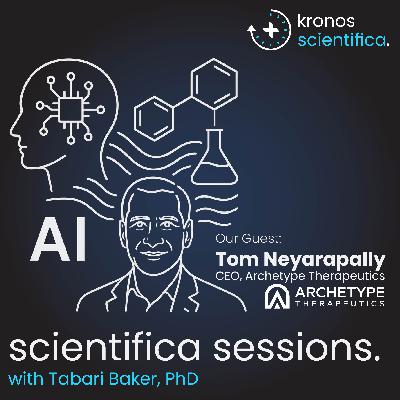
Episode Description What if you could screen billions of potential therapies—virtually—in the time it takes to brew your morning coffee? In this episode of scientifica sessions, host Tabari Baker sits down with Tom Neyarapally, CEO and co-founder of Archetype Therapeutics, to explore how AI-native biotech is redefining what's possible in early-stage drug discovery. With a background that spans law, business, and executive leadership at companies like Sema4, Tom offers a rare vantage point on how data, machine learning, and strategic insight converge to accelerate breakthroughs in oncology and beyond. Tom breaks down the science behind generative chemogenomics, a novel platform that Archetype uses to computationally model and prioritize billions of molecules against real-world patient data. He shares how this approach is opening new doors for underserved populations—starting with patients facing non-small cell lung cancer—and gives an insider's look at the challenges of validating AI-driven assets in a tightly regulated environment. From AI-driven virtual screens to pragmatic lessons on leading AI-first biotech startups, this episode is a masterclass for executives navigating the future of translational science. If you're in biotech, pharma, or diagnostics—and responsible for building what's next—this conversation will leave you rethinking how you approach discovery, evidence, and leadership. What We Covered Understanding Generative Chemogenomics Explaining generative chemogenomics in accessible terms and how it differs from traditional drug discovery methods The role of clinicogenomic data integration in enhancing virtual screening predictive power How regulatory and payer stakeholders are responding to generative AI outputs as evidence in early development Sharper Early-Stage Discovery in Practice Deep dive into Archetype's recent lung cancer program and how virtual screening translates to actionable candidate molecules Validation strategies for AI-generated molecules before advancing to in vitro or animal models Advantages and risks of AI-driven discovery models versus classic high-throughput screening approaches AI Leadership & Strategic Integration Essential capabilities biotech executives need to enable AI integration in drug pipelines Aligning AI outputs with Medical Affairs, Real-World Evidence, and clinical leadership strategies Medical Affairs' evolving role in educating stakeholders about AI-generated therapeutics legitimacy The future landscape of AI-driven R&D and commercialization across pharma Leadership Insights & Founding Journey Leadership lessons from scaling teams at Sema4 and Archetype in high-growth bio-AI environments Practical cultural and organizational advice for senior leaders building AI-first biotech startups Future Roadmap & Vision Next-generation developments in generative chemogenomics Strategic outlook for AI-native drug discovery becoming industry standard Guest Bio Tom Neyarapally is the CEO and Co-Founder of Archetype Therapeutics, an AI-native company pioneering the use of generative chemogenomics in patient data-driven drug R&D in cancer and other diseases. Previously, Tom was CCO and founding team member at Sema4, a patient-centered health intelligence and genetic testing company that went public in 2021. He was also a member of the founding team and EVP, Corporate Development at the causal AI drug discovery company Aitia. After graduate school, Tom served as a corporate and IP lawyer at Chadbourne Parke LLP and Frommer Lawrence & Haug LLP. He started his career after college as an analyst focused on pharmaceuticals at the management consulting firm Arthur D. Little. Tom earned a B.S. in chemical engineering (Honors Scholar/cum laude) from the University of Connecticut and a J.D. and M.B.A. from Cornell University. His unique combination of technical, legal, and business expertise provides him with a distinctive perspective on navigating the intersection of AI innovation and pharmaceutical development in highly regulated environments. Connect with Tom: Website: archetypetx.com Email: tom@archetypetx.com LinkedIn: Tom Neyarapally If this conversation sparked new ideas or made you rethink how you align discovery with downstream strategy, subscribe to scientifica sessions. We bring you the leaders shaping what's next in biotech, medtech, and pharma. Connect with us at podcast@kronosscientifica.com. Episode recorded on July 25, 2025. scientifica sessions is produced by kronos scientifica, exploring the intersection of innovation, evidence, and strategy in life sciences. At scientifica sessions, we love our music! Here's are the original tracks used: Opening - scientifica sessions Theme 00:07:28 - Drift 00:19:44 - Breathe 00:45:54 - The Turning Closing - scientifica sessions Theme Like what you heard? Check out our producers, Thread and Tensor.
Comments


Download from Google Play

Download from App Store
 United States