


 Claim Ownership
The Dr. Rod Berger Channel - Stories That Meet The Moment
Subscribed: 2Played: 37
Subscribe

© The Dr. Rod Berger Channel
Description
The Dr. Rod Berger Channel pulls together global stories from around the world through several engaging shows. Dr. Rod Berger explores deep into the minds of those on the frontiers of our society. Uncovering the 'why' behind acclaimed contributors forging their path through life and those new souls just stepping beyond the crowd.
Investigating the source of inspiration that drove those who have gone before us, HeadRoom with Dr. Rod Berger, The Narrative Edge, and The Dr. Rod Berger Show, hope to inspire the 'next' in us. Join Dr. Rod and uncover the stories seldom told, adding richness to the narratives within our own lives.
Investigating the source of inspiration that drove those who have gone before us, HeadRoom with Dr. Rod Berger, The Narrative Edge, and The Dr. Rod Berger Show, hope to inspire the 'next' in us. Join Dr. Rod and uncover the stories seldom told, adding richness to the narratives within our own lives.
132 Episodes
Reverse
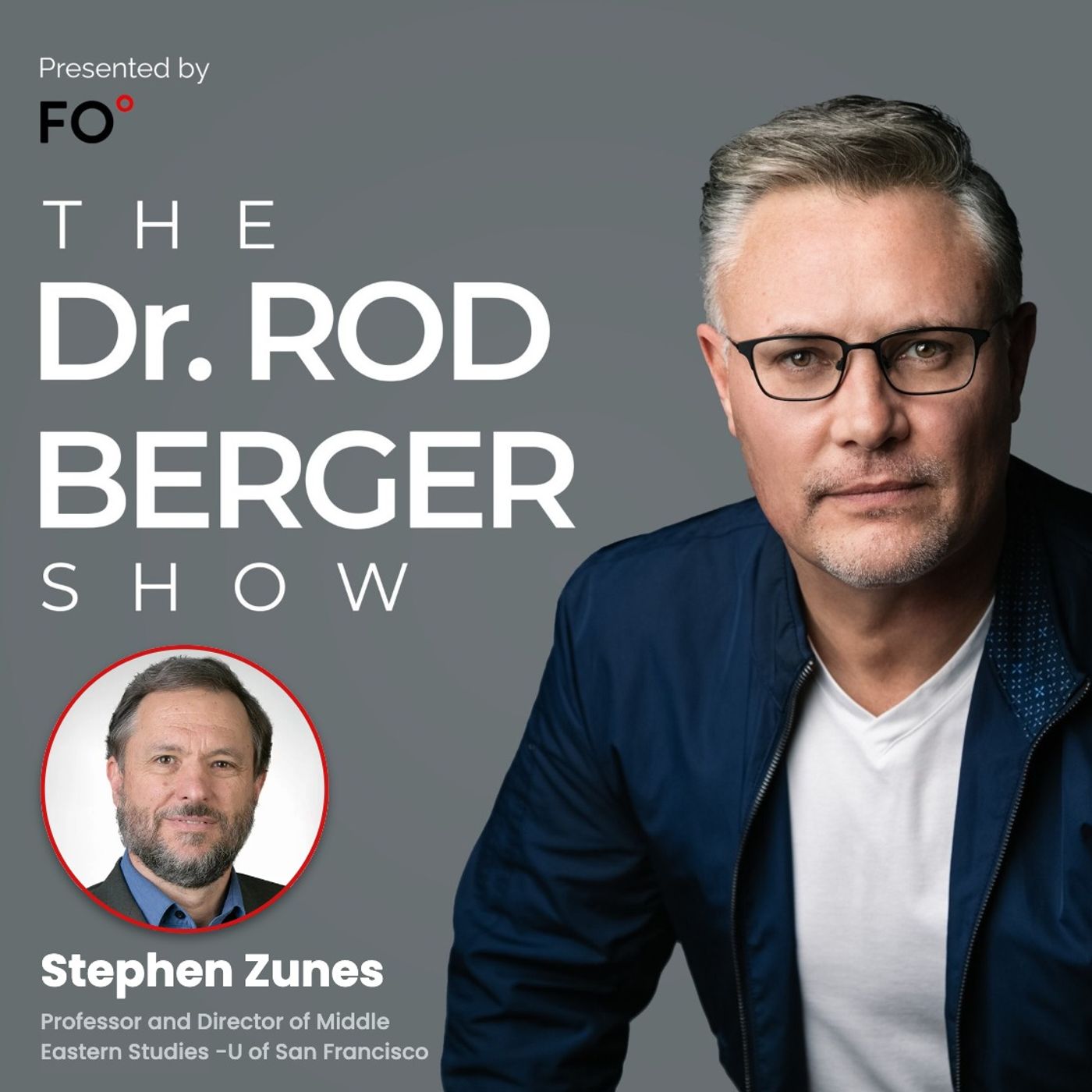
Dr. Rod Berger talks with Dr. Stephen Zunes on activism, civil resistance, and Western Sahara storylines. This conversation explores how Dr. Stephen Zunes’ upbringing in a Christian pacifist, politically engaged household shaped his lifelong focus on human rights, international law, and nonviolent resistance. Host Dr. Rod Berger, editor at large at Fair Observer, and Zunes also discuss Western Sahara, Israel-Palestine, democracy, polarization, and why Zunes still believes large-scale civic action can change history.GuestDr. Stephen Zunes — Professor of politics and director of Middle Eastern Studies at the University of San Francisco, speaking about his background, scholarship, activism, and views on civil resistanceKey topicsIn this episode: Zunes traces his worldview to a Christian pacifist household shaped by civil rights activism, anti-Vietnam War protests, environmental concern, and early Palestinian solidarity.We discuss: How his parents’ backgrounds—one from a Greek immigrant line and one from a conservative Southern family—led to an unusual but deeply consistent social justice ethic.Zunes shares: How growing up in Chapel Hill and reading the newspaper as a child helped make political curiosity and international affairs feel natural.In this episode: His decision to move from organizing into academia came from realizing he was better as an intellectual than a movement organizer.We discuss: Why Western Sahara became a central focus for him as a test case for international law, self-determination, and opposition to territorial conquest.Zunes shares: His view that Western Sahara and Palestine are two important examples of foreign belligerent occupation that are often treated very differently in public discourse.We discuss: How he sees support for Western Sahara as potentially strengthening the pro-Palestinian movement by centering international law rather than sectarian argument.Zunes shares: His experience debating John Bolton at the Oxford Union on whether military force is an effective way to promote democracy, and why he argues that civil society and nonviolent action are usually more effective.We discuss: Why the United States and Britain should examine their own support for authoritarian regimes before advocating military intervention abroad.Zunes shares: His optimism rooted in historical examples, including civil rights, Vietnam, South Africa, and East Timor, where sustained pressure changed policy.We discuss: The role of polarization, which he sees as dangerous but also potentially transformative, depending on how people shape it.Zunes shares: Why he remains hopeful about younger generations, whom he sees as more open to socialism, social democracy, and critiques of militarism.Timestamps02:16 — Rod introduces the show and Stephen Zunes03:37 — Zunes’ academic background and family roots04:20 — A Christian pacifist household shaped by civil rights and anti-war politics07:16 — Parents’ unusual pro-Palestinian stance in the Deep South08:53 — Learning politics at the dinner table and from newspapers11:26 — Chapel Hill, Oberlin, and becoming a political science scholar13:35 — Why Western Sahara became a defining issue14:34 — Civil rights, Namibia, East Timor, and the logic of solidarity15:31 — Why Western Sahara matters for international law16:55 — Comparing Western Sahara, Palestine, and U.S. double standards19:17 — Why obscurity made Western Sahara a compelling cause21:47 — Activism, voice, and how scholarship enters public debate22:30 — The Oxford debate with John Bolton24:44 — Why civil society beats foreign military intervention26:33 — Why cynicism is hard to avoid in a militarized world28:15 — Movements that changed history from Vietnam to South Africa30:40 — Why these perspectives are becoming more mainstream31:25 — Concern about U.S. civic fragility and democratic decline33:25 — Why authoritarian systems can also produce skepticism and resistance35:20 — Polarization as a force that can produce reform or reaction39:07 — Grassroots voter mobilization and the importance of turnout40:12 — Final reflection on whether nonviolent struggle still wins41:20 — Why Zunes remains optimistic about the long term43:13 — Younger generations, social democracy, and anti-militarism44:10 — Closing thoughts on the value of debate and informed disagreementTOP INSIGHTSUniversal principles are stronger than issue-by-issue loyaltyJudge every occupation, annexation, or intervention by the same standard: international law. A consistent, principle-based approach is harder to dismiss as selective outrage and creates stronger coalitions across conflicts.Overlooked issues can offer meaningful opportunities for advocacyWestern Sahara’s relative obscurity allowed focused expertise and advocacy to develop. Importance is not always reflected by the amount of public attention an issue receives.Nonviolent movements create sustainable political changeCivil resistance is not merely symbolic. Organized citizens, durable networks, and sustained pressure can produce legitimacy and lasting policy change more effectively than military intervention.Polarization can lead to authoritarianism or reformPolarization is not inherently destructive. Its consequences depend on how social energy is organized and whether democratic institutions can channel conflict toward constructive change.Democracy depends on local participationDemocratic decline often begins with disengagement from local institutions such as school boards, city councils, and community organizations. Participation is a form of democratic maintenance.Historical memory can produce realistic hopeOptimism does not have to mean ignoring present challenges. Past movements—including civil rights, anti-war, anti-apartheid, and labor movements—show that organized pressure can change systems that once appeared permanent.Younger generations are questioning inherited political assumptionsYounger people are increasingly willing to challenge conventional ideas about capitalism, militarism, socialism, and foreign policy. Their skepticism may represent a broader shift in political expectations.
Dr. Rod Berger is a keynote speaker, moderator, producer, author, and expert in strategic storytelling. Berger’s book, The Narrative Edge: Authentic Storytelling That Meets The Moment (Wiley), hits bookstores in late 2025. He draws on more than 4,000 interviews conducted worldwide for Forbes, Entrepreneur Magazine, and Fair Observer, including a cover story about former Virgin Entertainment co-founder Jason Felts, for Los Angeles Magazine, as well as various podcasts. He has captured the narratives of investors, CEOs, renowned entrepreneurs, bestselling authors, scholars, and cultural icons such as NBA legends Magic Johnson and Charles Barkley, as well as United Nations officials and Van Halen’s Sammy Hagar, while also exploring the behind-the-scenes world of Formula 1.Berger has met with the Crown Princess of Sweden, Pope Francis, United Nations officials, and NGO leaders, covering stories of water insecurity with WaterAid, the intergenerational refugee crisis faced by displaced Sudanese in Uganda, and the impacts of child marriage in Western Africa with the Le Korsa Foundation.Berger served as a guest lecturer at Vanderbilt University’s Owen Graduate School of Management for nearly two decades, focusing on the power of storytelling in business.He has partnered with The Jim Henson Company to create a television show, The Ultimate GOAT, that combines his passion for distant lands and storytelling with culture, sports, and puppetry for family programming.Berger conducts moderated keynote events that blend storytelling with live, on-stage narratives featuring cultural icons such as Opal Lee, the recipient of the Presidential Medal of Freedom, a Nobel Peace Prize nominee, and recognized as the “Grandmother” of Juneteenth. In 2023, Berger received the inaugural Pangea International Literacy Prize and delivered his TEDx Talk, “Story is Our Currency.” He lives in Franklin, Tennessee, with his wife and two children. Hosted by Simplecast, an AdsWizz company. See pcm.adswizz.com for information about our collection and use of personal data for advertising.

Sometimes the most important leadership shift starts with changing the song in your own head.
Live from CultureCon 2026, Dr. Rod Berger sits down with Claude Silver, Chief Heart Officer at VaynerX, USA Today bestselling author of “Be Yourself at Work”, and a pioneer of people-first leadership. Claude shares how a 93-day Outward Bound experience helped her find her voice, challenge the limiting beliefs she carried for years, and ultimately recognize the kind of leader she was meant to become.
From building a culture rooted in empathy to taking accountability for how we show up, Claude explores why great leadership requires both heart and ownership. She also opens up about the trust that changed her career, the importance of knowing when you are not at your best, and why people should never have to shrink themselves to succeed at work.
Additional Resources:
Connect with Claude on LinkedIn
Get Claude’s book “Be Yourself at Work”
Learn more about Claude’s work
Connect with Rod on LinkedIn
Connect with Zach on LinkedIn
Connect with Nick on LinkedIn
Subscribe to CultureCon’s YouTube channel!
Follow PeopleForward Network on LinkedIn
Learn more about PeopleForward Network
Learn more about CultureCon
Key Takeaways:
Change the story playing inside your own head.
Empathy and accountability can exist at the same time.
Great leaders coach people instead of rescuing them.
Stop shrinking yourself to fit the workplace.
Trust gives people permission to stand in their strengths.
Dr. Rod Berger is a keynote speaker, moderator, producer, author, and expert in strategic storytelling. Berger’s book, The Narrative Edge: Authentic Storytelling That Meets The Moment (Wiley), hits bookstores in late 2025. He draws on more than 4,000 interviews conducted worldwide for Forbes, Entrepreneur Magazine, and Fair Observer, including a cover story about former Virgin Entertainment co-founder Jason Felts, for Los Angeles Magazine, as well as various podcasts. He has captured the narratives of investors, CEOs, renowned entrepreneurs, bestselling authors, scholars, and cultural icons such as NBA legends Magic Johnson and Charles Barkley, as well as United Nations officials and Van Halen’s Sammy Hagar, while also exploring the behind-the-scenes world of Formula 1.Berger has met with the Crown Princess of Sweden, Pope Francis, United Nations officials, and NGO leaders, covering stories of water insecurity with WaterAid, the intergenerational refugee crisis faced by displaced Sudanese in Uganda, and the impacts of child marriage in Western Africa with the Le Korsa Foundation.Berger served as a guest lecturer at Vanderbilt University’s Owen Graduate School of Management for nearly two decades, focusing on the power of storytelling in business.He has partnered with The Jim Henson Company to create a television show, The Ultimate GOAT, that combines his passion for distant lands and storytelling with culture, sports, and puppetry for family programming.Berger conducts moderated keynote events that blend storytelling with live, on-stage narratives featuring cultural icons such as Opal Lee, the recipient of the Presidential Medal of Freedom, a Nobel Peace Prize nominee, and recognized as the “Grandmother” of Juneteenth. In 2023, Berger received the inaugural Pangea International Literacy Prize and delivered his TEDx Talk, “Story is Our Currency.” He lives in Franklin, Tennessee, with his wife and two children. Hosted by Simplecast, an AdsWizz company. See pcm.adswizz.com for information about our collection and use of personal data for advertising.
Show Notes
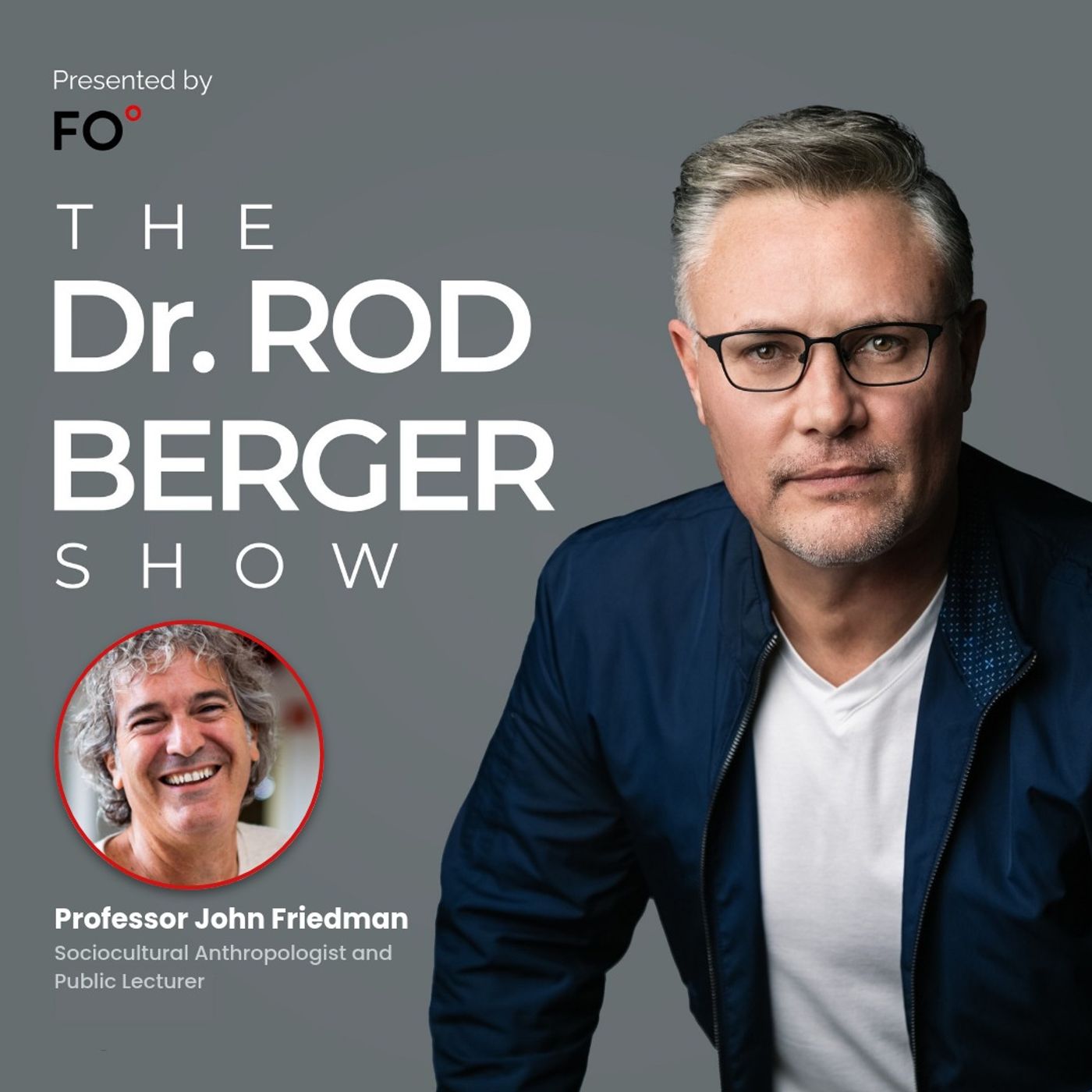
In this episode of the Dr. Rod Berger Show, presented by Fair Observer, Rod sits down with sociocultural anthropologist Professor John Friedman to discuss his sudden dismissal from a university position, the broader crisis facing higher education, and why the humanities still matter more than ever. John shares the story of being let go during a shocking campus purge, what it felt like to lose a long-built academic home, and why he refused to return to the same classroom without first acknowledging the harm done. From there, the conversation expands into a wider examination of institutional priorities, neoliberal management, the rise of AI and engineering over the humanities, and the future of critical thinking in education. Rod and John also explore:
Why higher education is becoming more transactional
How universities are reshaping themselves around market demand
The danger of losing humanities and social sciences
Why education should be about liberation, not just workforce preparation
The impact of social media and algorithms on individuality and community
How anthropology helps us understand the many ways of being human
John also reflects on his move into social media, the role of public anthropology, and why people need more exposure to disciplines that challenge how they think about the world.
Key Topics
Being fired from a university classroom
The collapse of humanities programs
The purpose of education
Critical thinking and civic responsibility
Individualism vs. collective society
The future of universities and teaching
Public anthropology and cultural understanding
Notable Quotes
“Ask big questions in small places.”
“The cutting out of the humanities and the social sciences is essentially an attack on critical thinking.”
“Education should be a form of liberation.”
“There are many different ways to live in the world.”
Guest
Professor John Friedman
Sociocultural anthropologist, public lecturer, and advocate for humanistic inquiry
Connect with John Friedman
Find him on TikTok, Instagram, and YouTube as: @ProfessorJohnT.Friedman
About the Dr. Rod Berger Show
The Dr. Rod Berger Show explores timely ideas, culture, education, leadership, and the human stories shaping our world.
Dr. Rod Berger is a keynote speaker, moderator, producer, author, and expert in strategic storytelling. Berger’s book, The Narrative Edge: Authentic Storytelling That Meets The Moment (Wiley), hits bookstores in late 2025. He draws on more than 4,000 interviews conducted worldwide for Forbes, Entrepreneur Magazine, and Fair Observer, including a cover story about former Virgin Entertainment co-founder Jason Felts, for Los Angeles Magazine, as well as various podcasts. He has captured the narratives of investors, CEOs, renowned entrepreneurs, bestselling authors, scholars, and cultural icons such as NBA legends Magic Johnson and Charles Barkley, as well as United Nations officials and Van Halen’s Sammy Hagar, while also exploring the behind-the-scenes world of Formula 1.Berger has met with the Crown Princess of Sweden, Pope Francis, United Nations officials, and NGO leaders, covering stories of water insecurity with WaterAid, the intergenerational refugee crisis faced by displaced Sudanese in Uganda, and the impacts of child marriage in Western Africa with the Le Korsa Foundation.Berger served as a guest lecturer at Vanderbilt University’s Owen Graduate School of Management for nearly two decades, focusing on the power of storytelling in business.He has partnered with The Jim Henson Company to create a television show, The Ultimate GOAT, that combines his passion for distant lands and storytelling with culture, sports, and puppetry for family programming.Berger conducts moderated keynote events that blend storytelling with live, on-stage narratives featuring cultural icons such as Opal Lee, the recipient of the Presidential Medal of Freedom, a Nobel Peace Prize nominee, and recognized as the “Grandmother” of Juneteenth. In 2023, Berger received the inaugural Pangea International Literacy Prize and delivered his TEDx Talk, “Story is Our Currency.” He lives in Franklin, Tennessee, with his wife and two children. Hosted by Simplecast, an AdsWizz company. See pcm.adswizz.com for information about our collection and use of personal data for advertising.

The Dr. Rod Berger Show is presented by Fair Observer.
Understanding one's family history can provide deep insights into personal identity. The impact of historical events on family dynamics is profound. Symbolic objects, like watches, can carry significant emotional weight across generations. The stories of those who lived through wartime are invaluable and unique. Generational trauma can shape perspectives and experiences in profound ways. The importance of storytelling in preserving family legacies. Modern society often lacks the context of historical struggles. Rapid news cycles can hinder our ability to process information meaningfully. Personal connections to history can foster empathy and understanding. Martin's mother was a significant influence on his advocacy. Apartheid felt normal to those living under it. Education played a crucial role in challenging injustice. Activism in university led to significant changes. Moving to London brought a sense of freedom. Dangerous environments can be intoxicating for journalists. The responsibility of storytelling is paramount. Modern slavery still exists in Africa today. Personal experiences shape one's perspective on injustice. Advocacy for marginalized voices is essential.
Summary
In this conversation, Rod Berger and Martin Plaut navigate technical difficulties before delving into Plaut's rich family history, with a particular focus on his father's experiences as a refugee from Nazi Germany. They explore the significance of family legacies, the emotional weight of symbolic objects, and the contrasting experiences of past generations with the present day. The discussion highlights the importance of storytelling in understanding personal and collective histories, as well as the challenges of processing information in a fast-paced world. In this conversation, Martin Plaut shares his journey from growing up in apartheid South Africa to becoming a journalist and advocate for social justice. He reflects on the profound influence of his family, particularly his mother, on his values and his commitment to fighting injustice. The discussion delves into the normalization of apartheid, the role of education and activism in challenging systemic oppression, and the transition to journalism as a means of storytelling. Plaut emphasizes the importance of representing marginalized voices and highlights the ongoing issue of modern slavery in Africa, urging listeners to recognize and address these injustices.
Dr. Rod Berger is a keynote speaker, moderator, producer, author, and expert in strategic storytelling. Berger’s book, The Narrative Edge: Authentic Storytelling That Meets The Moment (Wiley), hits bookstores in late 2025. He draws on more than 4,000 interviews conducted worldwide for Forbes, Entrepreneur Magazine, and Fair Observer, including a cover story about former Virgin Entertainment co-founder Jason Felts, for Los Angeles Magazine, as well as various podcasts. He has captured the narratives of investors, CEOs, renowned entrepreneurs, bestselling authors, scholars, and cultural icons such as NBA legends Magic Johnson and Charles Barkley, as well as United Nations officials and Van Halen’s Sammy Hagar, while also exploring the behind-the-scenes world of Formula 1.Berger has met with the Crown Princess of Sweden, Pope Francis, United Nations officials, and NGO leaders, covering stories of water insecurity with WaterAid, the intergenerational refugee crisis faced by displaced Sudanese in Uganda, and the impacts of child marriage in Western Africa with the Le Korsa Foundation.Berger served as a guest lecturer at Vanderbilt University’s Owen Graduate School of Management for nearly two decades, focusing on the power of storytelling in business.He has partnered with The Jim Henson Company to create a television show, The Ultimate GOAT, that combines his passion for distant lands and storytelling with culture, sports, and puppetry for family programming.Berger conducts moderated keynote events that blend storytelling with live, on-stage narratives featuring cultural icons such as Opal Lee, the recipient of the Presidential Medal of Freedom, a Nobel Peace Prize nominee, and recognized as the “Grandmother” of Juneteenth. In 2023, Berger received the inaugural Pangea International Literacy Prize and delivered his TEDx Talk, “Story is Our Currency.” He lives in Franklin, Tennessee, with his wife and two children. Hosted by Simplecast, an AdsWizz company. See pcm.adswizz.com for information about our collection and use of personal data for advertising.
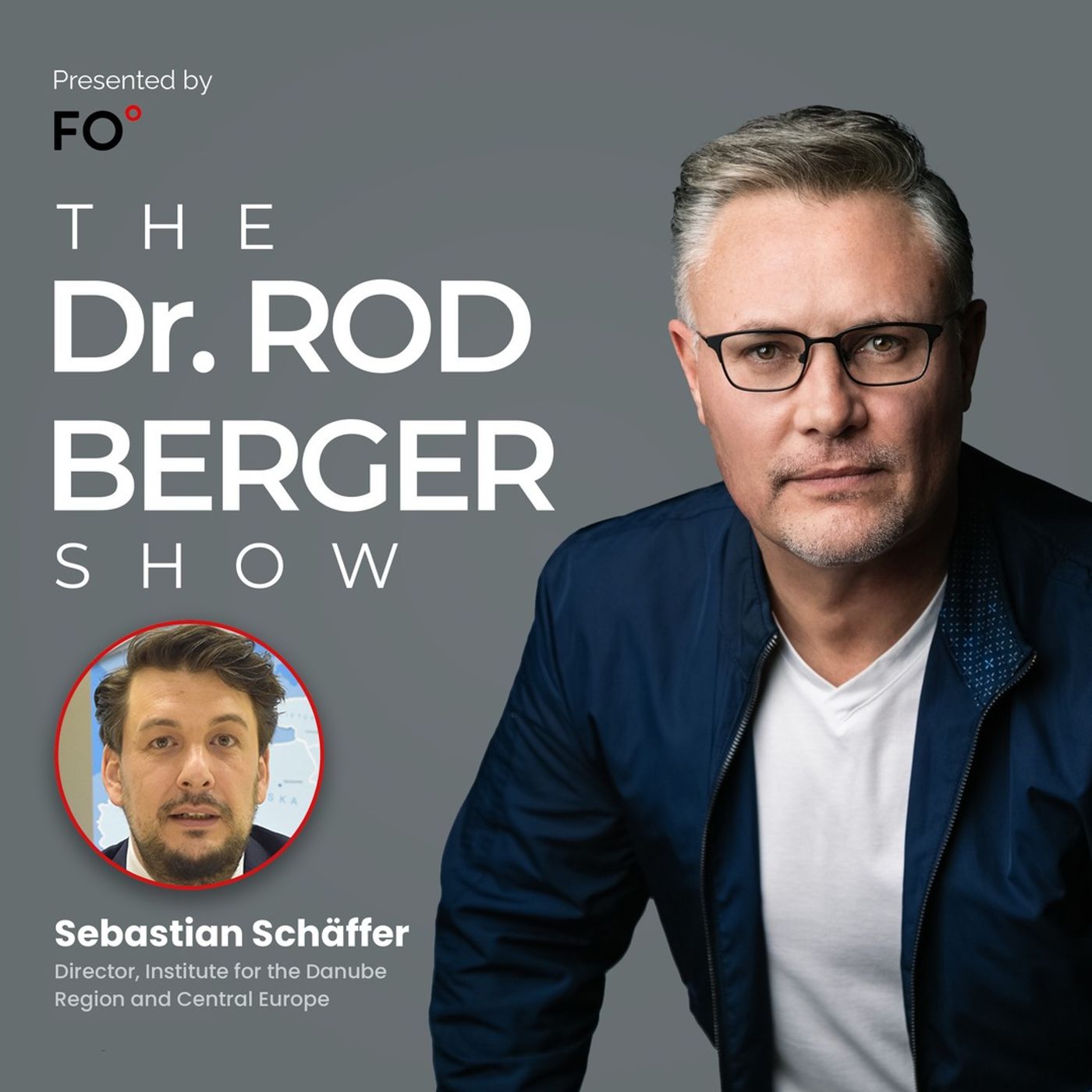
Dr. Rod Berger sits down with Sebastian Schäffer, who wrote a book with his mentor arguing that the Balkans belong in Europe. Not eventually. Immediately. The mentor, former Austrian Vice-Chancellor Erhard Busek, died in March 2022, weeks after Russian tanks crossed into Ukraine and the argument the two of them had spent years making became the most urgent question on the continent. Schäffer is still making it.
Born in Munich, he gave his career to somebody else's neighborhood. He directs the Institute for the Danube Region and Central Europe in Vienna, a think tank founded in 1953 and older than most of the European Union, and serves as Secretary General of the Danube Rectors' Conference, a network of more than sixty universities across the region. He founded SSC Europe in 2011 to run simulations and strategic foresight, which is also how he thinks: run the scenario forward, then ask what happens next.
His own contribution to the field is a reversal. The Dilemma of Simultaneity described how post-Soviet states had to build democracy, markets, and nations all at once. Schäffer turned the mirror around and pointed it at Brussels, which now has to reform enlargement, reform itself, and become a real geopolitical power at the same time and under fire. In a July 2025 essay for Fair Observer, he wrote about an editor who asked him to stop using the word "disinformation" because it sounded too political. He refused, and called that kind of softening death by a thousand footnotes.
What we get into:
Why a man born in Munich built his life around the countries still waiting at Europe's door
What "immediately" costs a person who has been saying it for fifteen years while institutions say "eventually"
Why he treats a single word as worth fighting an editor over, and what he thinks gets lost when we let language go quiet
Dr. Rod Berger is a keynote speaker, moderator, producer, author, and expert in strategic storytelling. Berger’s book, The Narrative Edge: Authentic Storytelling That Meets The Moment (Wiley), hits bookstores in late 2025. He draws on more than 4,000 interviews conducted worldwide for Forbes, Entrepreneur Magazine, and Fair Observer, including a cover story about former Virgin Entertainment co-founder Jason Felts, for Los Angeles Magazine, as well as various podcasts. He has captured the narratives of investors, CEOs, renowned entrepreneurs, bestselling authors, scholars, and cultural icons such as NBA legends Magic Johnson and Charles Barkley, as well as United Nations officials and Van Halen’s Sammy Hagar, while also exploring the behind-the-scenes world of Formula 1.Berger has met with the Crown Princess of Sweden, Pope Francis, United Nations officials, and NGO leaders, covering stories of water insecurity with WaterAid, the intergenerational refugee crisis faced by displaced Sudanese in Uganda, and the impacts of child marriage in Western Africa with the Le Korsa Foundation.Berger served as a guest lecturer at Vanderbilt University’s Owen Graduate School of Management for nearly two decades, focusing on the power of storytelling in business.He has partnered with The Jim Henson Company to create a television show, The Ultimate GOAT, that combines his passion for distant lands and storytelling with culture, sports, and puppetry for family programming.Berger conducts moderated keynote events that blend storytelling with live, on-stage narratives featuring cultural icons such as Opal Lee, the recipient of the Presidential Medal of Freedom, a Nobel Peace Prize nominee, and recognized as the “Grandmother” of Juneteenth. In 2023, Berger received the inaugural Pangea International Literacy Prize and delivered his TEDx Talk, “Story is Our Currency.” He lives in Franklin, Tennessee, with his wife and two children. Hosted by Simplecast, an AdsWizz company. See pcm.adswizz.com for information about our collection and use of personal data for advertising.

Comments

Download from Google Play

Download from App Store
 United States