DiscoverHealth Coaching and Beyond
Health Coaching and Beyond
Claim Ownership

Health Coaching and Beyond

Author: Ollie and Tim

Subscribed: 1Played: 16
Share

Description

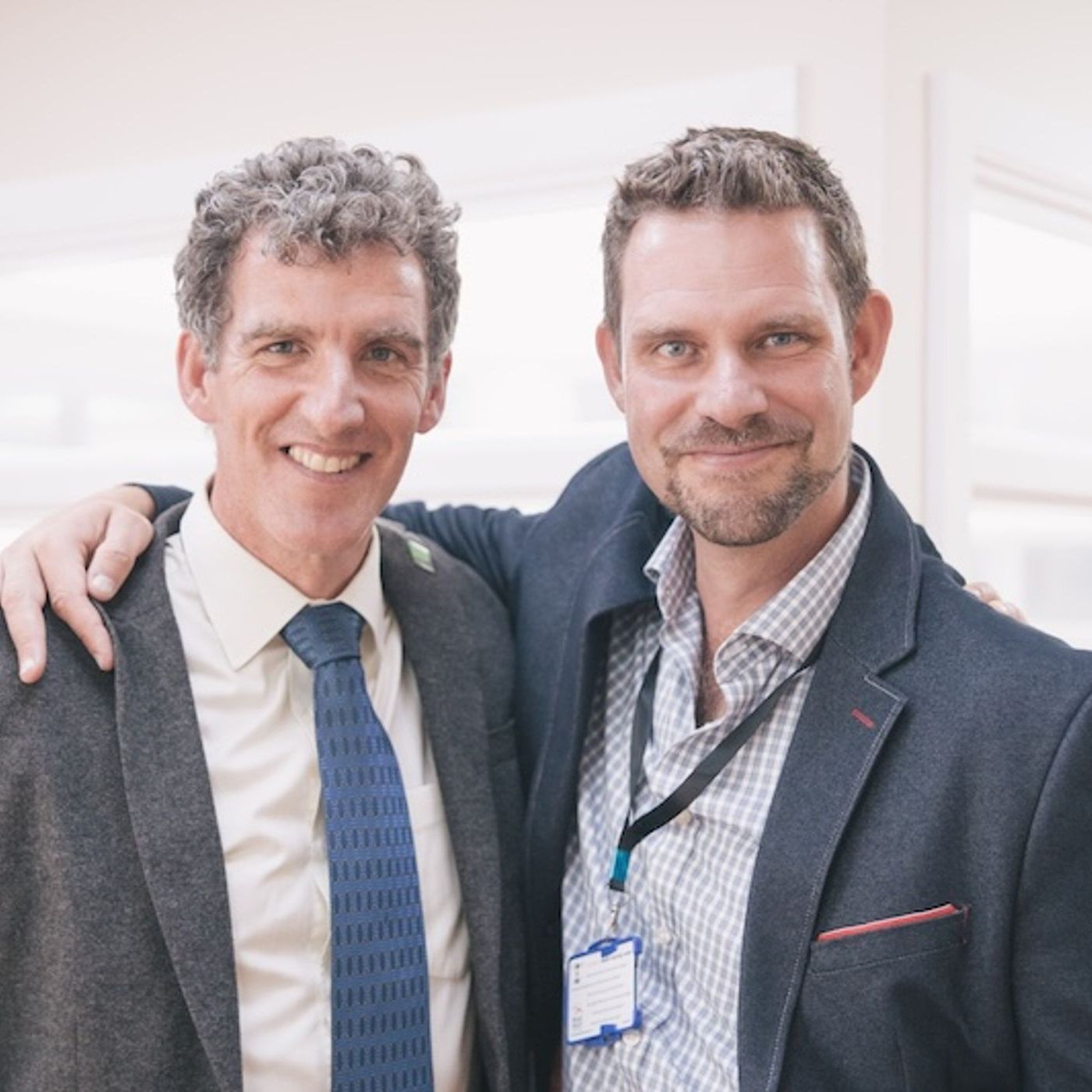
This podcast champions the belief that Health Coaching can change the world for the better! Your hosts Drs Ollie Hart and Tim Williams, are UK Family Doctors (GPs), who learnt to health coach with their patients over 40 years + combined experience. They found it so successful for their patients and themselves, they set up a company to teach others the skills....www.peakhealthcoaching.com Now they bring their enthusiasm for the topic to the airwaves, to encourage and promote the growth of health coaching in the NHS, in businesses, and any where that people matter.

They will chat about current affairs related to person centred care, and topics related to health coaching. Some episodes involve carefully selected guests, others conversation between the 2 of them. They aim to inspire your confidence and knowledge to embrace health coaching and all the benefits and joy it can bring.

18 Episodes
Reverse
Summary In this episode, Ollie is joined by Joanne Smith, a nurse, health visitor and chronic pain and symptoms recovery coach, to explore her personal and professional journey through chronic pain and mindbody recovery.Joanne shares how her symptoms began after a car accident in 2008 and gradually expanded over the years into persistent pain across different parts of her body. Despite doing everything she was advised - physiotherapy, pain services, medication and exercise - she remained stuck in a cycle of managing symptoms rather than moving towards recovery.A turning point came during coaching training in 2018, when a simple exercise helped Joanne recognise just how much her own thinking was shaping her experience. That moment opened the door to a very different understanding of pain and symptoms, one that eventually led her to mindbody work, journaling, somatic practices and the gradual realisation that recovery might be possible.The conversation explores the complexity of this field with care and nuance. Joanne and Ollie discuss the importance of ruling out physical causes, while also recognising that symptoms can be real, intense and life-limiting even when they are being driven by the brain rather than structural damage. Joanne reflects on the role of buried emotions, perfectionism, fear, and self-pressure in her own story, and describes how self-compassion became a crucial part of her healing.Together, they consider how healthcare may be starting to shift, from simply helping people live with chronic symptoms, towards offering a wider understanding of why those symptoms persist and what recovery can involve. Throughout, Joanne’s story offers both hope and realism: recovery was not instant, but curiosity, emotional awareness and a gentler relationship with herself changed what felt possible.TakeawaysChronic pain and symptoms can remain real and severe even when structural damage is not driving them.Many people are told to manage or accept long-term symptoms without being offered other explanations.A shift in understanding can become a powerful turning point in recovery.Thought patterns, self-talk and emotional suppression can play a significant role in chronic symptoms.Ruling out physical causes is an important part of a safe mindbody approach.Journaling, somatic tracking and emotional awareness can help people notice links between symptoms and inner experience.Pain that is brain-driven is not imagined or “all in the mind” - it is real pain with a different root cause.Fear and avoidance can reinforce symptoms, even when they feel like sensible self-protection.Recovery often involves reducing fear, building curiosity and retraining the brain’s expectations.Self-compassion can be just as important as determination.People do not need to be mentally unwell for emotions and stress to affect the body.Healthcare may need a broader toolkit that includes both physical and mindbody approaches.
SummaryIn this episode, Ollie and Tim come back together to reflect on two big themes shaping health and wellbeing right now: the evolving understanding of persistent pain, and the growing impact of social prescribing.Tim shares insights from the Live Well With Pain Conference, where there was a strong sense that the field is shifting. Conversations are moving beyond helping people simply “live with” pain, towards a more hopeful perspective that, for some, recovery may be possible. The discussion highlights how health coaching fits naturally into this space. Rather than positioning clinicians as the “experts with answers,” there is a move towards walking alongside people, helping them make sense of their experience and supporting them to rediscover their own capacity for change.The second half of the episode turns to social prescribing, following National Social Prescribing Day. Ollie and Tim reflect on how far this movement has come, with thousands of link workers now connecting people to community-based support. They explore why health cannot be separated from the realities of people’s lives, and how factors like isolation, housing, finances and connection often sit at the heart of wellbeing.Throughout the conversation, a common thread emerges: starting with what matters to the person. Whether in pain management or social prescribing, the most effective interventions begin with listening, not solutions. The episode makes a compelling case that these approaches are not “nice extras,” but essential components of modern healthcare.TakeawaysThere is a growing shift in how persistent pain is understood, with increasing optimism around recovery for some people.Understanding a person’s story is central to both accurate assessment and meaningful support.Health coaching helps people build confidence, skills and hope, rather than relying solely on expert advice.Clinicians do not need all the answers - asking the right questions can be just as powerful.Social prescribing recognises that health is shaped by social, emotional and environmental factors.Small, meaningful conversations can have a significant impact on long-term health and wellbeing.Stronger collaboration between clinicians, health coaches and link workers improves care.These approaches are not a replacement for medical care, but an essential part of making it work.Investing in community-based support enables more personalised and sustainable health outcomes.Health systems are most effective when they address health, social context and self-management together.
SummaryIn this episode, Tim is joined by GP and senior NHS leader Dr Iolanthe Fowler to explore the simple but powerful question: what matters to you?Drawing on her experience across general practice, community services and hospital leadership, Iolanthe reflects on how person-centred care can be embedded in busy healthcare settings without losing sight of the human being in front of you. The conversation explores why good care does not begin only with diagnosis, treatment plans or organisational pathways, but with understanding what matters most to the patient, colleague or team member in that moment.Tim and Iolanthe discuss how coaching has influenced the way they both work and how coaching-informed conversations can help people think more clearly, feel more heard and make decisions that are realistic for their lives. Iolanthe shares how these ideas have shaped practical changes within Sheffield Teaching Hospitals, from coaching programmes for staff to What Matters to You? appraisals and community-based services that start with the person’s agenda rather than the system’s.The episode also looks at the wider cultural shift needed to make this approach stick. They reflect on the tension between highly pressurised healthcare environments and the need for compassionate, personalised care, arguing that asking better questions is not an added extra but a more effective way of working. TakeawaysWhat matters to you? is a simple question that can change the direction of a conversation.Person-centred care begins with listening, not just diagnosis or advice.Coaching skills can help patients and colleagues think more clearly and feel more heard.Shared decision-making works best when the person’s agenda is understood first.Compassionate conversations can improve both patient experience and staff wellbeing.This approach is not about replacing clinical expertise, but making it more effective.Better conversations can reduce frustration, complaints and non-value-adding care.Healthcare staff often find this way of working more meaningful and energising.Embedding personalised care requires culture change, not just one-off training.Trust, autonomy and compassionate leadership are essential to making change stick.Small practical shifts, such as changing the way appraisals are approached, can have a wider organisational impact.Health systems work better when they are designed around what matters to people.
Summary In this episode, Ollie and Tim explore what health coaching might offer in workplace settings, and why healthier working lives may depend on more than reactive support alone.Drawing on Tim’s recent conversations at this year’s Health & Wellbeing at Work Show, the pair reflect on how unfamiliar health coaching still is in many organisations, despite growing interest once people understand what it actually involves. The discussion looks at the gap between traditional workplace support, which often centres on crisis response or expert-led information, and a more proactive approach that helps people think more clearly about their own health and wellbeing before problems escalate.Ollie and Tim consider how much current workplace wellbeing provision is built around signposting, webinars and specialist input. While all of these can be valuable, they argue that information on its own rarely leads to lasting change. Instead, real progress often comes when people feel able to reflect on what matters to them, build confidence, and take ownership of their health in ways that feel realistic and personal.The episode also explores the role of line managers, peer relationships and leadership culture in shaping health at work. They discuss how trust, vulnerability and psychologically safe conversations can influence not just individual wellbeing, but the tone of a whole team or organisation.Throughout, the conversation returns to a core Peak Health theme: that health is not created only in clinics or at moments of crisis. It is shaped day to day, by people’s sense of self-worth, agency, relationships and environment. In that sense, the workplace is not just somewhere health problems show up, but somewhere health can actively be supported, strengthened and protected.These ideas also connect to a major theme of this year’s Peak Health Coaching Conference, Health Coaching for Healthy Working Lives, where the focus will be on how organisations can move beyond reactive wellbeing support and create cultures where people are supported to stay well, think well and thrive at work.TakeawaysWorkplace wellbeing often focuses more on reacting to ill health than preventing it.Health coaching offers a more proactive and personalised way to support employee wellbeing.Many organisations are still unfamiliar with what health coaching is in practice.Information alone rarely changes behaviour, especially when people are already overwhelmed.Confidence, agency and self-worth are key foundations for healthier behaviour.One-off webinars and expert talks can help, but they are rarely enough on their own.Line managers can have a major influence on whether wellbeing conversations feel safe and supportive.Peer-to-peer conversations may also play an important role in workplace culture.Leadership vulnerability can build trust and encourage openness across teams.Helping people feel valued and heard is closely linked to health and wellbeing.The workplace can be a powerful setting for prevention, not just crisis response.Healthier working lives benefit individuals, teams and organisations alike.These themes will be explored further at this year’s Peak Health conference, Health Coaching for Healthy Working Lives.The conference will bring together people interested in healthier workplaces.
Summary In this episode, Ollie is joined by GP, lifestyle medicine doctor and health coach Dr Hussain Al-Zabadi to explore how behaviour change really happens in healthcare.Hussain shares his personal journey into lifestyle medicine, reflecting on how his own health challenges forced him to rethink the way he was living and working. What followed was a gradual shift in perspective – from focusing purely on medical knowledge and clinical targets, to understanding the deeper drivers of health: environment, community, relationships and personal motivation.The conversation explores the limitations of traditional healthcare approaches that rely on advice-giving and information alone. Hussain explains how discovering health coaching transformed the way he works with patients, helping him move from “telling people what to do” towards creating space for patients to explore their own motivations, priorities and barriers to change.They discuss the realities of working within the time pressures of primary care, and how coaching skills can still be applied in short consultations by planting seeds and helping patients reflect on what matters most to them. Hussain also highlights the power of group consultations and peer support, where patients often gain confidence and momentum from learning alongside others.The episode closes with a broader reflection on the NHS ambition to shift from a sickness model to prevention. Hussain offers a candid perspective on why this transition is difficult in practice, arguing that meaningful prevention will require better training, stronger collaboration between roles in primary care, and a deeper understanding that health is created largely outside the consultation room.Takeaways Health behaviour change rarely happens through information alone.Community, relationships and environment strongly shape health outcomes.Lifestyle medicine focuses on the root causes of illness, not just clinical targets.Health coaching helps patients develop autonomy, confidence and ownership.Creating the right conditions for change is more effective than prescribing solutions.Patients often know what they “should” do but struggle to implement it.Coaching skills can be applied even in short consultations by planting small seeds.Group consultations allow deeper conversations and peer-to-peer support.Many valuable community services remain underused because healthcare teams don’t know they exist.A shift towards prevention will require new skills, better collaboration and system change.Health is largely created outside the consultation room.
Summary In this episode, Ollie is joined by Tom Williams - one of the driving forces behind parkrun’s growth from just a handful of events, to a global movement spanning thousands of locations. Together they explore the simple but powerful formula at the heart of parkrun’s success: being outdoors, being active and being social - and why that combination speaks to something deeply human.Tom reflects on the importance of simplicity, consistency and bold vision in scaling ideas that genuinely improve lives. The conversation then moves to his new venture, Participate World, where he and co-founder Chris Lomax are championing community sport as both a grassroots health intervention and a powerful tool for global good. From supporting emerging community sport leaders to contributing to the UK’s sport diplomacy strategy, Tom makes the case that community sport is one of the country’s most undervalued strengths, and one with extraordinary potential.TakeawaysHuman beings have an innate need to be outdoors, active and social.parkrun succeeded because it combined simplicity and consistency.Clear frameworks, with non-negotiable principles, enable scale.People often come for fitness but stay for community and purpose.Volunteering can have as much impact on wellbeing as participation.Mission matters - and should guide everyday decision-making.Community sport extends far beyond traditional competitive pathways.Supporting leaders to believe in their ideas is crucial for sustainable impact.Sport can act as a form of diplomacy and a force for global good.Community sport may be one of the UK’s most undervalued exports.
SummaryIn this episode, Ollie and Tim turn their attention to men’s health, prompted by the recent NHS Men’s Health Strategy and commentary from Professor Paul Galdas. They explore why men, despite often appearing privileged, experience poorer health outcomes, lower life expectancy and higher rates of suicide - and why many remain reluctant to seek help.The conversation examines both structural and psychological barriers to accessing care, from deprivation and service design, to stigma and emotional literacy. Ollie and Tim reflect on the importance of community, belonging and purpose in supporting men’s wellbeing. Throughout, they consider the role health coaching can play in building confidence, autonomy and agency, helping men engage with their health in ways that feel safe, practical and meaningful.Takeaways Men have lower healthy life expectancy and higher suicide rates.System design and deprivation play a major role in health outcomes.Psychological safety is as important as physical access to services.Behaviour change requires confidence, capability and opportunity.Health coaching builds autonomy and reduces feelings of blame.Community settings can be powerful drivers of engagement.Peer-to-peer and community-based approaches may improve retention.Emotional literacy and vulnerability are important leadership qualities.Addressing adverse childhood experiences is key to breaking cycles of harm.Men’s health is not just an individual issue, it is relational and societal.Resources mentionedThe King’s Fund blog: England’s first men’s health strategyhttps://www.kingsfund.org.uk/insight-and-analysis/blogs/englands-first-mens-health-strategy
SummaryIn this episode, Ollie is joined by Darcy Parry, one of the earliest champions of the Care Coordinator role, to explore why this relatively new position is becoming so vital within the NHS. Drawing on five years in post, Darcy explains how the role supports some of the most vulnerable people in the system - those who may previously have struggled in silence or slipped through the gaps. Together, they unpack how care coordinators differ from health coaches, social prescribing link workers and care navigators, and why health coaching skills sit at the heart of truly personalised, compassionate care. The conversation highlights how this role represents a meaningful shift towards enabling autonomy, restoring dignity and addressing inequalities across the system.TakeawaysThe Care Coordinator role is a relatively new and evolving position within the NHS.Care coordinators often support the most vulnerable patients who may previously have been overlooked.The role helps reduce pressure on other parts of the system by providing consistent, relational support.Care coordinators are distinct from health coaches, social prescribing link workers and care navigators, but share core skills.Health coaching skills are foundational across personalised care roles.Continuity and relationship-building are central to effective coordination.The role plays an important part in addressing health inequalities.Supporting autonomy and self-worth is as important as managing clinical needs.The emergence of care coordinators signals a broader cultural shift towards compassionate, personalised care.The Peak Health Care coordinator conference and the importance of shared learning spaces to help strengthen and legitimise this growing workforce.
SummaryIn this episode, Ollie and Tim explore the rapidly emerging field of mind–body medicine. They explore what it means to integrate the mind–body connection into mainstream healthcare, as a growing evidence base shows how thoughts, emotions, beliefs and the nervous system can generate very real physical symptoms. Using examples from chronic pain and other persistent symptoms, they reflect on how clinicians are beginning to move away from simply labelling experiences as “medically unexplained” and instead offer more constructive, compassionate explanations. They explore how ruling out serious causes remains essential, but how recognising neuroplastic patterns can open up new possibilities for care. The conversation weaves through themes of safety, fear, emotional experience and the power of trusted relationships - considering how hope can be grounded in evidence rather than wishful thinking. Along the way, they touch on emerging research and therapeutic approaches, reflecting on what this shift might mean for health professionals, coaches and patients alike.TakeawaysMind–body medicine recognises that emotions, thoughts and beliefs can drive physical symptoms.The divide between “mental health” and “physical health” can be useful for organising care, but it often misses how closely connected the two really are.Many symptoms historically labelled “medically unexplained” may be better understood as neuroplastic symptoms, explainable patterns shaped by the nervous system.Good practice starts with ruling out serious physical causes, before ruling in a mind–body formulation.Fear and threat responses can amplify symptoms; helping someone feel safe is often a key part of recovery.Chronic pain can be maintained by common loops and eased through curiosity, observation and safety.Emotional awareness and expression may matter, especially around suppressed emotions like anger - but this needs careful, skilled practice and appropriate training.Relationships are therapeutic: trust with a practitioner and hope-building peer support can be central to progress, especially when ideas feel “left field.”The placebo and nocebo effects highlight how belief and expectation shape symptoms - and why framing, reassurance and meaning-making matter in care.Health coaching may be well-placed to support this work because it brings time, rapport, safety and collaboration, but must stay within scope and be backed by proper training.The aim isn’t to blame or dismiss symptoms, it’s to widen the map of what’s happening, expand treatment options, and replace “learn to live with it” with realistic, evidence-based hope.
SummaryIn this episode, Ollie is joined by Dr Caroline Hart - academic, coach and director at Peak Health Coaching - for a conversation about aspirations, human development and what it really takes for people to live well. Drawing on Caroline’s research and Amartya Sen’s capability approach, they explore the idea that having a goal isn’t enough: people also need the freedom to imagine a future they value, the safety to voice it, and the real-world conditions to pursue it. The conversation connects these insights to the What Matters to You movement, personalised care and the role of health coaching in helping people feel seen, supported and empowered. They also reflect on the wider systems that shape agency - from workplaces and families to communities and policy - and why sustainable change depends on more than individual effort alone.TakeawaysAspirations are future-focused and shaped by what people value most.Not everyone has the same freedom to imagine a different future.Creating psychological safety helps people explore what matters.Voicing an aspiration can feel vulnerable and is a crucial step.People often “partially voice” what they want when it feels risky to name it.Health coaching can support freedom to aspire, voice and realise change.Capability is about real opportunity, not theoretical choice.Communities, peers and environments strongly influence wellbeing outcomes.Personalised care needs both individual agency and system support.Progress depends on collective action, without letting policymakers “off the hook”.Further reading and research linksThe following articles are referenced in this episode and explore the research underpinning the discussion:Hart, C. S. (2016). How Do Aspirations Matter?Journal of Human Development and Capabilities, 17(3), 324–341.https://www.tandfonline.com/doi/full/10.1080/19452829.2016.1199540Hart, C. S. (2024). Nurturing the Capabilities to Aspire, Voice and Realise Aspirations: A Theoretical Analysis of the Transformative Potential of the National Health Service in EnglandFree e-print access:https://www.tandfonline.com/eprint/4HMYMQMWP46SYVZMBVJG/full?target=10.1080/19452829.2024.2409778Journal link:https://www.tandfonline.com/doi/full/10.1080/19452829.2024.2409778
SummaryIn this episode, Ollie and Tim explore the growing role of artificial intelligence in health coaching and wider healthcare settings. They reflect on where AI is already being used, the pressures driving its adoption and the opportunities it presents for reflection, learning and support. The conversation examines the balance between efficiency and human connection, the risks of over-reliance on technology and the importance of using AI thoughtfully rather than as a replacement for relational work. Throughout, they return to a central question: how can AI be used to support growth without eroding the core values that make health coaching effective?TakeawaysAI is already influencing health coaching and healthcare practice.Used well, AI can support reflection, structure and thinking space.Health coaching remains a deeply human, relational practice.Efficiency should not come at the cost of presence and connection.AI cannot replace lived experience, empathy or trust.Thoughtful use of AI requires clear boundaries and intention.Consistency and accessibility can be helpful for some individuals.Over-reliance on technology risks narrowing human agency.Ethical use of AI must prioritise wellbeing, not convenience.The future of health coaching depends on keeping people at the centre.Yj6gsHfJUaBiAvMFC0r2
SummaryIn this conversation, Ollie and Chris Ham discuss the evolving landscape of health coaching and the NHS, reflecting on the impact of the Drug-Free Doctor program and the importance of patient agency in health outcomes. They explore the challenges faced by the NHS post-pandemic, innovative community health practices, and the vital role of health coaching in personalized care. The discussion also touches on the need for a shift towards prevention, the influence of misinformation in health, and the importance of engagement in healthcare. Chris emphasises the need for optimism and hope in leadership as they navigate these challenges together.TakeawaysHealth coaching is essential for personalised care.Patient agency plays a crucial role in health outcomes.The NHS faces significant challenges post-pandemic.Community health practices can innovate care delivery.Health coaching skills are vital for healthcare professionals.Misinformation in health can hinder patient progress.Engagement in health care can reduce demand on services.Global health systems provide valuable lessons for the NHS.A shift towards prevention is necessary for sustainable health care.Optimism and hope are essential for effective leadership.Chapters00:00 Introduction to Chris Ham's Background05:41 Current State of the NHS and Future Ambitions07:14 The Fourth Shift: Empowering Patients10:32 Shared Responsibility in Healthcare12:39 The Role of Policy in Healthcare Innovation16:56 Learning from Global Healthcare Models20:29 Shifting from Medical Model to Empowerment21:48 Addressing Short-Term Challenges in the NHS29:39 Advice for Health Coaches and Care Coordinators
Summary In this episode, Tim and Ollie engage in a lively discussion about a recent Channel 4 program that highlights the effectiveness of non-drug approaches to managing chronic pain, metabolic health, and mental health. They reflect on the importance of health coaching in empowering individuals to take control of their health, emphasizing that personal stories and lived experiences can inspire significant changes. The conversation also touches on the need for a shift in the healthcare model, moving away from traditional biomedical approaches towards more holistic, patient-centered care that recognizes the role of lifestyle and self-management in health outcomes. Tim and Ollie express admiration for Dr. Rangan Chatterjee, the host of the program, who advocates for a more integrated approach to health that includes lifestyle changes and self-care. They discuss the challenges faced by patients in adopting these changes, particularly in the context of social barriers and the need for personalized support. The episode concludes with a call to action for healthcare professionals to embrace these new paradigms and for listeners to consider their own health journeys, reinforcing the message that change is possible with the right support and mindset. Takeaways 'The way that you are working and the things that you've been doing, that's absolutely on the money.''It's the stuff people do for themselves that really matters.''It's almost unethical now for us not to become the mainstream.''What we don't want is people feeling guilty that they're not recovering.''This is not rocket science.''We need to be focused on giving the right support.''It's about time we turned up the volume.''This is a social movement that's gathering momentum.' Chapters 00:00 Introduction and Overview of The Drug Free Doctor04:03 Empowerment Through Self-Management06:37 The Role of Storytelling in Health Transformation09:27 Challenges in Patient Recovery11:58 The Importance of Support Systems14:52 Non-Medical Interventions for Health17:42 The Role of Health Coaching20:14 Peer Support and Community Engagement23:09 Personalization in Health Care25:43 The Future of Health Care and Hope30:24 lifestyle-intro-high-short.wav
Keywordspain management, chronic pain, health coaching, adverse childhood experiences, pain-free mindset, healthcare system, patient empowerment, neuroscience of pain, emotional trauma, pain recoverySummaryIn this enlightening conversation, Deepak Ravindran and Lee Vaughan share their journeys in pain management, emphasizing the importance of understanding chronic pain through a compassionate and patient-centered approach. They discuss the intersection of pain with emotional trauma, the role of adverse childhood experiences (ACEs), and the evolving landscape of pain management that includes health coaching. The discussion highlights the need for healthcare professionals to listen more deeply to patients' stories and the potential for recovery through innovative pain management strategies.TakeawaysDeepak Ravindran is a consultant in pain medicine and lifestyle medicine.Lee Vaughan has over 30 years of lived experience with chronic pain.Pain management requires a compassionate, patient-centered approach.Adverse childhood experiences (ACEs) can significantly impact chronic pain.The concept of a pain-free MINDSET involves understanding the neuroscience of pain.Health coaching provides the time and space for patients to explore their pain.Listening to patients' stories is crucial for effective pain management.Pain is not always an accurate indicator of damage.Chronic pain can be influenced by emotional trauma and psychological factors.Recovery from pain is possible with the right support and strategies.Sound bites"The body can do its own repair.""We are experts within ourselves.""Hurt does not equal harm."Chapters00:00 Introduction to Pain Management Experts02:18 Deepak's Journey into Pain Management07:39 Lee's Personal Experience with Chronic Pain11:22 Understanding Adverse Childhood Experiences (ACEs)15:24 The Concept of a Pain-Free Mindset21:41 Hope in Pain Management24:33 Navigating the Healthcare System28:04 Transformative Pain Management Programs36:12 The Role of Health Coaching51:07 Challenging Beliefs About Pain55:39 Experiments for Pain Awareness
SummaryIn this conversation, Ollie and Tim discuss the importance of self-compassion during the busy Christmas season. They explore the pressures associated with the holiday, the significance of gratitude, and the need to break away from traditional expectations. The discussion emphasizes the value of listening to others and oneself, as well as the importance of self-care during this hectic time. Chapters00:00 The Christmas Spirit and Self-Compassion05:35 Practicing Gratitude and Reflection11:13 Breaking Traditions and Embracing Change16:44 Challenging Limiting Beliefs22:10 The Gift of Listening and Self-Care TakeawaysSelf-compassion is essential during the busy holiday season.Practicing gratitude can enhance mental health and well-being.Reflecting on positive moments from the year can foster appreciation.Breaking away from traditional holiday expectations can reduce stress.Listening deeply to others can be a meaningful gift during Christmas.Planning ahead can help manage holiday indulgences mindfully.Challenging limiting beliefs can lead to a more enjoyable holiday experience.Taking time for oneself is crucial amidst holiday obligations.Creating new traditions can bring joy and reduce pressure.Self-care should not be overlooked during the festive season. 
In our first interview, we are delighted to welcome Harvard and Oxford trained Public Health Expert and Transformative Wellbeing Coach, Dr Behrooz Behbod.He generously shares his personal experience of burnout, and how rediscovering coaching reignited his career and love of his work. We go on to explore a range of topics from the mind as a catalyst, to the role of health coaching in Public Health and our shared views about the beliefs that sit at the heart of health coaching.Behrooz combines his NHS work with a his own business 'The Entrepreneur’s Doctor', coaching entrepreneurs in the health sector.......and beyond!https://www.entrepreneurs.doctor/He frequently writes on Linkedin (including a piece with Ollie) https://www.linkedin.com/pulse/health-coaching-public-catalyst-change-dr-behrooz-behbod-jbnse/?trackingId=gQOJk1XVI1VRRZClvfrgpA%3D%3Dand the piece on leadership discussed in the conversationhttps://www.linkedin.com/feed/update/urn:li:activity:7403688403457843200/00:00 Introduction to Dr. Behrooz Behbod02:12 The Journey of a Health Coach04:43 Understanding Burnout and Its Impact07:18 The Role of Health Coaching in Wellbeing09:57 Health Coaching's Place in the Healthcare Sector12:10 The Mind as a Catalyst for Change14:42 Integrating Coaching into Public Health17:25 Transformative Coaching and Patientpreneurs20:11 Understanding Entrepreneurial Mindsets in Healthcare21:58 The Disconnect in Coaching Perceptions24:22 The Role of Beliefs in Coaching27:47 Essence of Effective Coaching32:42 Misconceptions About Coaching34:01 Advice for Aspiring Coaches 
We are graduating to a fully listed podcast, having road tested 15 episodes on Youtube. In this episode Ollie and Tim recap their journey to being GPs who learnt to health coach. Then on to setting up Peak Health Coaching to roll out the training and implementation of Health Coaching in the NHS and beyond......00:00 The Origins of Health CoachingHow we discovered the value of health coaching and applied on our work as GPs02:48 Realizations in Pain ManagementConnecting in the pain clinic.....where we first saw the impact of health coaching05:50 The Journey into CoachingHow each of us expanded our knowledge09:00 Patient Activation and Personalized CareThe importance of tailoring to where people are starting from, in terms of their Skills, Knowledge and confidence.12:08 Building Skills for Self-Care14:49 The Role of Health Coaching in Outcomes18:07 Scaling Health Coaching21:00 Integrating Health, Social, and Self-CareThese 3 dimensions sit at the root of sustainable and effective health and wellbeing support.23:54 Future Directions in Health Coaching26:53 The Importance of Workplace HealthHow health coaching can be applied in the work setting, a new option to explore?29:50 Reflections on Identity and ImpactTim reflects on life after practicing as a GP.
Launching Episode 1

Launching Episode 1

2025-12-0237:17

We are graduating to a fully listed podcast, having road tested 15 episodes on Youtube. In this episode Ollie and Tim recap their journey to being GPs who learnt to health coach. Then on to setting up Peak Health Coaching to roll out the training and implementation of Health Coaching in the NHS and beyond......
Comments