


 Claim Ownership
Sales 101: The B2B Sales Classroom
Subscribed: 1Played: 0
Subscribe

© Copyright 2026 Donald C. Kelly & Dr. Bj Allen
Description
Sales 101: The B2B Sales Classroom helps college professors teach sales with confidence by bringing the latest insights from industry leaders, students, and educators. Hosted by Donald C. Kelly and Dr. B.J. Allen, co-authors of Professional Selling and Advanced Selling published by Stukent and used in over 90 universities, the show delivers ready-to-use assignments, strategies, and real-world examples to assist professors as they equip the next generation of sales professionals.
19 Episodes
Reverse
show notes
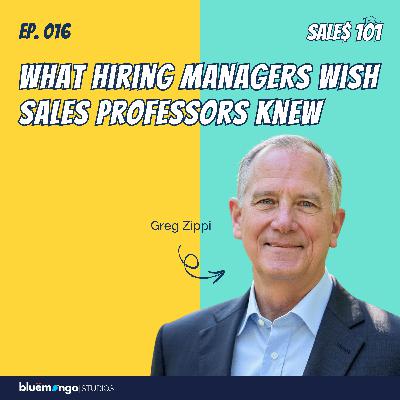
Are we preparing students for what hiring managers actually look for today? Traditional approaches can set graduates up for unnecessary hurdles when classroom learning isn’t connected to real-world expectations. Joining us in this episode is Professor Greg Zippi, who shares his journey into sales education and why he built his curriculum on research-based methods to better prepare students for today’s workforce.Meet Professor Greg ZippiGreg Zippi is a veteran sales and marketing leader with over 30 years of experience building and scaling B2B software companies.He was an early employee at Oracle and later helped grow Omniture, which Adobe acquired in 2008 to form the foundation of its Experience Cloud.After retiring from full-time operating roles, Greg transitioned into teaching and now serves as an adjunct professor at Brigham Young University, where he has taught Advanced Professional B2B Selling for six years.His work focuses on data-driven, research-backed sales principles that prepare students for real-world success.Building a Research-Based CurriculumDr. BJ Allen and Professor Zippi found that students benefit most when taught using SPIN Selling and Challenger frameworks instead of traditional textbooks.Professor Zippi explains that these frameworks were chosen for their strong research foundation and their evolution alongside modern sales practices.Together, we discuss the importance of teaching both theory and practical application, giving students the skills they need to succeed in real-world sales roles.Centering the Buyer’s JourneyProfessor Zippi explores how to move from a seller-focused approach to a buyer-centered sales process.He explains why understanding each phase of the buyer’s journey helps build trust and close deals.To strengthen student skills in each phase, he suggests letting them do role-playing exercises with real products. This way they can get hands-on experience before leaving the classrooms.Differentiation & Competitive PositioningProfessor Zippi shares data that 79% of buyers can’t tell the difference between anyone they spoke to during their sales process.How can new sellers position themselves as the prime choice among everyone else, especially when competitors are involved? Professor Zippi shares techniques for framing them as the go-to seller without bashing anyone.He also shares how he likes to do a “mentor” assignment in his classroom. Students practice analyzing strengths, vulnerabilities, and differentiation of a product along with a seasoned professional. This provides students with hands-on experience in competitive positioning.“We spend a lot of time figuring out how to differentiate ourselves. I wanted to make sure the students understood how to take that off the table and how to avoid being seen as the same as everybody else out there. That’s really important.”- Professor Greg ZippiResourcesContact Professor Zippi by email gregzippi@byu.edu and about questions on this episode or to discuss sales teaching further.
One of the biggest worries students face is whether they will be able to get a job after graduation. How can you help ease their concerns? In this episode, we share how professors can teach their students to sell themselves and land jobs more effectively on LinkedIn.Crafting a Standout LinkedIn ProfileBranding matters more than ever. When recruiters visit LinkedIn profiles, they want to see a consistent message that tells a clear story.They don’t just want to see that someone graduated from the University of South Florida.Recruiters want to understand your passion, the position you’re seeking, and your relevant achievements.Communicating Passion & ValueCrafting a story isn’t as hard as students may think. They just need to think of their LinkedIn profile as a personal website. Even without professional experience, students can differentiate themselves by highlighting the details of their unique experiences. BJ goes into detail on how to tailor each LinkedIn profile section into a one-minute elevator pitch that lets recruiters clearly see their interest and passion for sales.Building Presence & Network ConsistentlyEveryone thinks you have to be a big influencer to get attention on LinkedIn, but that’s far from the truth. What matters more when building a presence is consistency.Trying to provide a class assignment is one that helps students intentionally build their presence on the platform. Have them connect with ten new people weekly to secure an informational interview.Creative Cadence & Prospecting TechniquesBeing creative is a part of being a seller. In our course, we develop different ways students can uniquely reach out to prospects. For example, we offer a simulation that reinforces some of the advice shared in this episode. One of the best ways to stand out to prospects is by sending a voice or video message to grab their attention and encourage a response.“I tell my students to build your sales cadence by using LinkedIn for voice messages. LinkedIn has the option to do a voice message and a lot of people find them annoying, but they work because they're different. If you want to stand out, you have to TRY to stand out.” - Dr. BJ AllenResourcesIf you would like to view our sales course, go to thesalesevangelist.com/linkedin.

You want to teach a specific sales theory in your classroom but aren’t sure how students can apply it in the real world? Joining me in this episode is Pramit Banerjee, a Missouri Western State University sales professor, to share how he builds his sales curriculum to give students the hands-on experience they need. Oh, and sorry, BJ missed this episode. He was in Florida for a sales competition!Meet Pramit BanerjeeThirty years ago, working in sales wasn’t even on Banerjee’s radar. From a young age, he was told his only career options were doctor, engineer, or failure. Because medicine was so competitive, Banerjee decided to earn an MBA and start a career in marketing. After graduating, he landed a sales manager position at Nokia and struggled to understand sales at first. Through trial and error, he eventually got the hang of it and became a sales educator at Missouri Western State University.Making Sales Real in the ClassroomIf you struggle with making theoretical concepts feel real for your students, Banerjee suggests sharing personal stories from your time in the field. Students can’t learn everything from textbooks and won’t experience real sales until they start their first sales roles. Your workplace experience can give them valuable knowledge before they get there.Banerjee also recommends that professors form industry partnerships. Local companies can offer mini-mentorships to give students firsthand exposure to sales careers.Most students struggle with role plays and would rather avoid them. Of course, there’s no way around it. Banerjee shares how he keeps role plays fun and engaging so students can get the experience they need.The last creative way Banerjee makes sales real in the classroom is by using AI-driven role plays. Students scan QR codes to start role plays with AI acting as supportive or challenging prospects. The AI adjusts difficulty to each student’s skill level, creating a realistic, tech-forward learning environment.Student Reactions & Teaching ImpactBanerjee’s students love the interactive nature of his classes, which keeps them engaged and involved in the learning process. Relating real-world experiences to classroom lessons helps students see the relevance of what they’re learning. The AI-driven exercises, while challenging at first, complement hands-on role plays and enhance the experiential learning experience.“Know your own strengths and be your own self. We all have different strengths. Try to find out what you are good at.” - Pramit BanerjeeResourcesChat with Pramit Banerjee about this episode or sales education through email, pbanerjee@missouriwestern.edu.
You can’t go into sales with just any mindset. If your students’ mindset is to join the industry only for the money, they may not make it very far. How can professors help students develop the right sales mindset before their first role? Dr. BJ Allen and I are going to tell you how in this episode.Fixed vs. Growth Mindset: Why It MattersBJ opens by pointing out that sales is tough. Students and new professionals often struggle with motivation, rejection, and the day to day grind of selling. We talk through Carol Dweck’s concept of fixed versus growth mindset and why developing a growth mindset makes such a big difference in sales and in life beyond the classroom. Students regularly tell us that learning how to recognize and shift their mindset is one of the most valuable takeaways from their courses.Motivating Students: Discovering Their “Why”We also dig into the importance of helping students uncover their personal “why.” That deeper motivation is what keeps them going when sales gets hard. Whether it is supporting family, traveling, or genuinely helping customers, having a clear reason behind the work fuels long term persistence and confidence.Learn, Implement, FeedbackThroughout the episode, we share a simple and practical approach: learn, implement, ask for feedback, and repeat. This cycle reinforces continuous improvement and resilience while encouraging students and educators to see mistakes as part of the learning process.“Teach students not just what salespeople do, but how successful salespeople think. It’ll benefit them, whether they stay in sales or not.” - BJ Allen

AI has made many changes within the sales industry, including the SDR role. Those in the role will need to focus more on personalization over sequences, but how? Joining us for this episode is Kristie Jones, author and sales professional, to answer that question. She also shares how forward thinking sales education is adapting to keep up with tech savvy and highly informed buyers.From Process to PersonalizationWe open the conversation by talking about the decreasing importance of templated outreach and rigid sales sequences. Kristie explains why deep personalization and customization are becoming essential in every buyer interaction. Today’s buyers gather so much information on their own that generic messaging simply does not work the way it once did.The Buyer’s Journey Has ChangedWe also discuss how buyers now expect to self educate before ever speaking with a sales rep. They download content, attend webinars, and even use AI tools to research solutions. Because of this shift, companies must lead with transparency, and the roles of SDRs and BDRs look very different than they did just a few years ago.Redefining the SDR and BDR RoleWe explore how entry level sales roles are evolving. It is no longer just about dialing and sending emails. These professionals now need strong critical thinking skills, the ability to interpret intent signals, and the confidence to step into conversations that are already well underway.Kristie shares why she sees a move toward a junior AE model and emphasizes creativity and value driven engagement.The New Sales CurriculumWe also talk about what this means for sales educators. Kristie encourages professors to shift classroom activities away from memorizing scripts and toward understanding use cases, creating value, and developing soft skills. Trust building, objection handling, industry knowledge, and strong alignment between marketing and sales are more important than ever.Practical Classroom ApplicationsTo make this practical, Kristie suggests using real world scenarios in the classroom. She recommends challenging students to analyze buyer behavior and craft personalized, high value outreach strategies that reflect how modern sales actually works.“Buyers are so much further along that you cannot rely on email templates or generic voicemails. So the question becomes, how do you use the information you have to reach out in a way that is customized, gets their attention, and makes them say yes?” - Kristie JonesResourcesFind Kristie Jones on LinkedIn or visit kristiekjones.com.
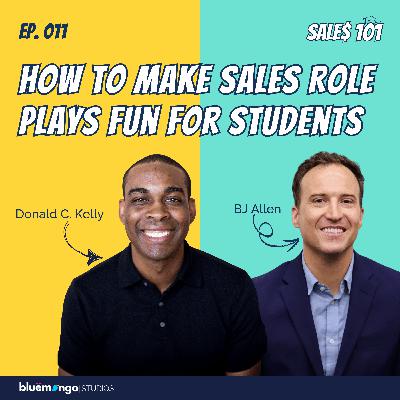
No one likes role playing, but it is a necessary part of becoming a successful seller. The good news is there are ways to make it more fun and engaging for students. In this episode, BJ Allen and I share practical tactics to help students get more comfortable with role playing and show professors how to turn it into a meaningful learning experience.Why Role Plays MatterEven though students may resist role plays at first, they often become one of the most valuable parts of the course. Based on student feedback, BJ and I have seen role plays rank highly in evaluations.Introducing them early, sometimes as soon as the second day of class, helps lower anxiety and build confidence over time. Role plays give students a chance to apply what they are learning right away, helping them move from theory to real conversations.Effective Strategies for Role PlaysHere’s how we design and run role plays in class:Teach, Demonstrate, Practice: We follow a simple approach. First, we teach the concept. Then we demonstrate what it looks like in action. Finally, we give students time to practice so they can build comfort through repetition.Start Simple: We keep scenarios familiar and relatable, such as selling well-known products in a B2B setting. This helps students focus on the skill instead of getting stuck on the scenario.Clear Structure: Students know exactly where the conversation starts and ends. Each role play has clear steps and a set time limit so expectations are clear.Feedback That Evolves: Early in the semester, the focus is simply on practice. As students gain confidence, we introduce more specific feedback using clear criteria so they can continue improving.Tips for Professors: Start Small and Improve Over TimeIf you are new to using role plays in the classroom, the advice BJ and I share is simple. Just start. Your first few role plays do not need to be perfect, and it is normal for both you and your students to feel uncomfortable at the beginning. That discomfort fades as everyone gets more reps and confidence grows.As you continue using role plays, you will naturally see what works and what does not. Each class gives you an opportunity to adjust your approach and improve how you structure the exercise.Keep things simple and give both yourself and your students room to learn. With a clear structure, limited scope, and supportive feedback, role plays become less awkward and more valuable over time. By the end of the semester, students consistently say they appreciate the experience and the confidence it builds.“Let the students give feedback, but give them very specific points to focus on.” — BJ Allen“Giving them clear criteria for how they’ll be evaluated helps fine-tune the role play. I’ve seen it be very effective.” — Donald Kelly
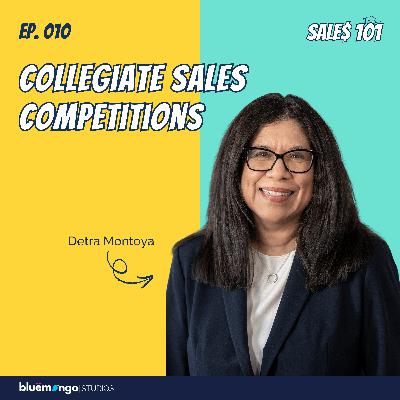
After our last conversation on sales competitions, we decided to invite someone who is often behind the scenes of them. In this episode, Detra Montya, a sales professor at Arizona State University, joins us to share what it really takes to pull sales competitions together. She also offers coaching tips for professors on helping students work through challenges, along with useful tools to prepare for the rivalry.How the Competition Got StartedWe asked Detra how the Arizona Collegiate Sales Competition began, and it all started with a simple conversation over coffee between three universities. What began with about 25 students has grown into a competition with 15 schools and more than a decade of impact.Why Sales Competitions MatterWe talked about why sales competitions are so valuable for students. They give students real world experience, exposure to recruiters and different markets, and the confidence that comes from practicing their skills under pressure. Detra and BJ Allen shared how these competitions often lead to internships, full time roles, and lasting relationships.What It Takes to Run a CompetitionDetra pulled back the curtain on what goes into organizing a sales competition. From securing sponsors and managing logistics to handling last minute challenges, she emphasized the importance of teamwork and adaptability.Coaching Students to PerformFor professors and coaches, Detra shared practical strategies that work. She talked about being intentional with student selection, running timed practice sessions, using tools like Second Nature AI, and focusing on closing skills, cultural awareness, and time management.Adjusting to Each EnvironmentDetra reminded us that success depends on more than knowing the sales process.Understanding the industry, judging style, and competition culture is key, and preparation should always reflect that.“When you do a role play in Spanish, you have to think about the culture. Building relationships and connections matter, especially when judges or buyers are Spanish speaking.” - Detra MontoyaResourcesConnect with Detra Montoya on LinkedIn or via her email: detra.montoya@asu.edu to learn more and exchange best practices.Put these ideas into practice by using tools like Second Nature AI and Matrix to prepare for your next sales competition.
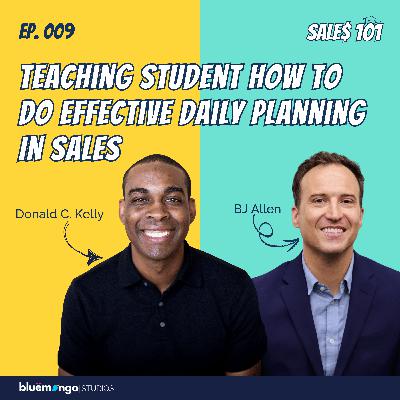
Did you know that sales reps spend 60% of their day on tasks that don’t directly generate revenue? Much of this time is eaten up by planning and other non-sales activities. In this episode, BJ and I discuss how sales professors can teach students to plan their day effectively. This helps them stay productive and focus on the activities that drive results.Why Planning Matters· In sales, everyone talks about closing techniques and prospecting hacks, but I want to shine a light on a less glamorous but crucial skill: planning. · Learning how to manage your time effectively is one of the most important foundations for early sales success, and it can make a real difference in how students perform once they hit the field.Student Insights: Planning’s Real-World Impact· Over the years, I’ve been surprised by how much students value planning exercises.· Many of them tell me that these lessons have had more impact than trendy topics like LinkedIn prospecting. · BJ and I have seen students consistently rank planning skills as the most transformative lesson, both for their careers and their personal productivity.Teaching Time Management: From Principles to Practice· We break down how to embed planning into a sales curriculum in a practical way:o Principles First: Students learn the difference between activity and productivity. We use exercises and psychological studies to bust multitasking myths and show the power of focused work.o Time Blocking and Color Coding: Techniques like batching similar tasks and visually organizing a calendar help students understand where their time really goes.o Weekly and Daily Planning: We walk students through breaking weekly targets into actionable daily routines, ensuring prospecting and customer-facing work happens consistently rather than by chance.Making Planning Measurable· We also emphasize the importance of metrics. Tracking calls, outreach efforts, and alignment with KPIs turns planning into a measurable skill. · This approach moves students and new sellers from just staying busy to actually being productive and results-driven."Good salespeople know how to use their time effectively...People who can kind of plan their day and do more revenue generating activities are the ones that succeed." - BJ Allen"Focus on the activity and the results will come as a natural byproduct. But if you don’t plan at a day-to-day level, you might say, ‘I did some prospecting this week,’ but how much time did you really spend on it?" - Donald Kelly

Most sellers are seen as untrustworthy because of their methods, but those are not professional sellers. Real sellers are problem solvers. How can professors get their students to see them this way? Our guest, George Denman, a sales leader and educator, is here to tell us how he does it. He also shares sales closing techniques and other tips professors can use to help their students prepare for the real world.Breaking Down Sales StereotypesToo often, people think of sales as pushy, manipulative, or just plain sleazy. George shares how those same misconceptions shaped his early view of sales, including opinions from people close to him. He explains why real sales success looks very different, with a strong focus on listening, authenticity, and solving problems instead of forcing a pitch.Bringing the Real World Into the ClassroomGeorge walks us through how he brings real industry experience into his teaching. He uses role plays, guest speakers, and real client scenarios to help students see the human side of sales. We talk about how techniques like his “spin” approach shift the focus away from closing deals and toward uncovering needs and creating real solutions.Preparing Students for What Comes NextWe also dig into the challenge of moving from corporate sales into academia. George shares what surprised him most, including slower feedback and the work it takes to turn experience into effective lessons. His advice is simple and practical: do not reinvent the wheel. Start with a solid curriculum, then adapt it over time. At the end of the day, his goal is the same as ours, to prepare students with real world skills they can use long after the classroom.“The goal is to prepare students for real life. You can share your successes and failures, but students have to close the deal themselves. Your job is to get them ready for the real world.” - George DenmanResourcesReach out to George Denman at his Miami email: denomang@miamioh.edu
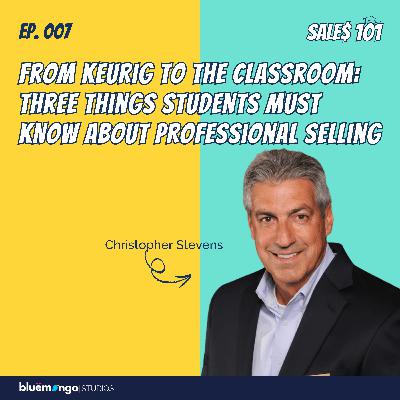
What’s the difference between sellers making millions and those who struggle to close a deal? Keurig founder Christopher Stevens says it’s not about being the best. It’s about getting things done. In this episode, he shares lessons professors can pass along to students, proving that big results can come from anywhere.Meet Christopher StevensChris is currently an Associate Professor at the University of Notre Dame, where he returned to teach after a long and successful business career that began in sales at Procter & Gamble. He went on to lead an Anheuser-Busch distributorship and later ran a large spirits, wine, and beer company. In 1996, he joined two entrepreneurs to help launch what would become Keurig, where he led sales, marketing, and corporate responsibility as the company grew from a fad into a phenomenon. Today, Chris continues to shape future leaders at Notre Dame while also serving as an active angel investor supporting startups focused on doing good alongside making a profit.The Reality of SellingSelling isn’t what you think it is. You have to see it beyond the transaction to understand the true meaning of selling.Chris reminds us that nothing happens in business until someone sells something, and most startups fail because they do not sell enough.He challenges students to rethink rejection, explaining that real selling often starts at the first no and becomes an opportunity to earn trust and solve real problems.Being Human Builds RelationshipsDeep human connection is at the heart of successful sales. Chris shares several stories from his classes, such as assigning handwritten thank-you notes and service projects.These experiences help students look beyond themselves and foster genuine relationships.Through service and storytelling, students learn that success in sales comes from empathy, connection, and real understanding of others’ needs.Advice on Designing a Sales CurriculumChris shares how he doesn’t understand how students manage it today with AI and social media constantly in their face. He says it’s important for professors to recognize just how overwhelmed students are and recommends integrating motivational content like TED Talks.Chris also stresses the value of finding mentors and partners and encourages educators to help students discover their “why.”“There are three kinds of people: those who make things happen, those who watch, and those who wonder what happened. To make things happen, follow Winston Churchill’s advice: don’t do your best, do what it takes to get the job done.” - Christopher StevensResourcesChristopher Stevens contact: email - csteven6@nd.edu, number - 617-510-5028Books: Five: Where Do You Want to Be in Five Years?, Winner’s DreamTED Talks: Susan Cain – The Power of Introverts, Simon Sinek – The Golden Circle, Admiral William McRaven – University of Texas Commencement Address, Admiral McRaven - Make Your Bed

We’ve both been looking into our crystal balls to see what 2026 sales predictions look like from both the industry side and the education side. In this episode, we’re sharing 2026 trends that will help sales professors feel confident they’re teaching their students the latest sales techniques.1. Growth in Sales EducationEvery semester, BJ is seeing more and more students in his classroom. He also shares a statistic from the Sales Education Foundation that shows 50% of sales programs have been started in the last 20 years. BJ is projecting even more students will enroll in these programs as demand grows in tech and as more students show interest in sales careers.2. Increased Use of AI AgentsNo, AI is not taking our jobs. However, there are tasks that have become a nuisance for sales professionals. Email, research, follow-ups… why do it yourself when technology can handle it for you? Donald is seeing real growth in the use of AI agents for these types of tasks. However, BJ does point out there’s one task AI agents will never be able to replace.3. Continued Growth and the Need for Humanization in Sales OutreachBuyers are becoming more resistant to traditional sales techniques. Donald is seeing firsthand how much distrust exists with buyers right now and why personalization matters more than ever. If we teach sales students this in college, they’ll be much better prepared for what the industry actually looks like.We’re seeing more students enroll in sales programs, along with more intersection between AI and human skills. Donald is also seeing a heightened demand for ROI, as buyers want clear value and proof of their investments. If sellers can build real connections while showing ROI early, the sky is the limit.“I feel like LinkedIn comments are critical and honestly better than messages. There should be more salespeople commenting on posts. People want that real connection. And yeah, you can use AI to do some commenting, but you can usually tell the difference between an AI comment and a human one.” — Donald Kelly“It’s about developing organic relationships. This goes back to what I was saying earlier, the split between those menial tasks AI can handle. Great, let AI do that. But the students and salespeople who can build real, organic relationships are the ones who continue to do really well.” — BJ Allen

One of the best ways to get your students excited about the industry is by taking them to sales competitions. BJ can tell you how his students’ faces light up every time he takes them to one. In this episode, he shares the full breakdown of sales competitions so you can get just as excited about the profession.Why Sales Competitions?· We believe sales competitions do more than just test student skills. They help elevate a program’s credibility and act as a strong branding tool for schools. · BJ Allen shares how participating in both local and national competitions opens the door to more networking and recruiting opportunities. These events also give programs a way to compare their curriculum with other top schools and identify what is working well and what could be improved.How to Get Started· You do not need prior experience to get started. Just take those first steps, that’s what really matters. We talk about starting with an internal competition or using it as a class exercise before expanding into regional or national events. · Funding can often come from department chairs or local business sponsors. Try using the Sales Education Foundation as a helpful resource for finding both regional and national competitions.Prepping Your Students· Preparation plays a big role in student success. BJ emphasizes the importance of role play, repetition, and selecting students who truly understand the sales process. · Watching students practice and offering feedback through peer-to-peer role play helps sharpen coaching and build confidence heading into competitions.“Just like anything, you just have to start. You don’t have to know everything or have it all in place. Start with an internal competition to get a feel for it, see what works, and then find a nearby competition that is affordable. Ask your department chair for some support. You can probably find a sales executive who loves competitions and just ask them to sponsor a couple thousand dollars to help. The key is to just start somewhere.”- BJ AllenResourcesConnect with BJ Allen on LinkedIn for more competition insights or curriculum guidance. You can also reach out to him by email: bj_allen@byu.edu.

Sales success doesn’t start with scripts or closing techniques, it starts with mastering the fundamentals. In this episode of Sales 101, we sit down with Barry Erickson, a seasoned sales leader who breaks down what truly matters when building strong sales habits, authentic client relationships, and long-term success. Barry shares practical insights drawn from real-world experience and explains why going back to basics is often the fastest way forward.Meet Barry EricksonBarry Erickson is a respected sales leader and mentor with decades of experience developing sales professionals and high-performing teams. Known for his straightforward, people-first approach, Barry focuses on building trust, mastering fundamentals, and creating repeatable sales processes that drive consistent results. His philosophy emphasizes preparation, curiosity, and meaningful client conversations.Why Sales Fundamentals Still Matter (00:01:45 – 00:03:30)Barry explains why strong fundamentals remain the foundation of every successful sales career and how skipping the basics often leads to burnout, inconsistency, and stalled growth.Understanding the Buyer Before Selling (00:03:31 – 00:06:20)He shares why listening, asking better questions, and understanding client needs should always come before pitching solutions.Building Trust Through Authentic Conversations (00:06:21 – 00:09:10)Barry discusses how trust is built through honesty, preparation, and consistency not pressure tactics or quick closes.The Role of Preparation in Sales Success (00:09:11 – 00:12:05)Preparation is a recurring theme as Barry outlines how research, intention, and clarity help sales professionals show up confidently and professionally.Handling Rejection and Staying Consistent (00:12:06 – 00:15:00)Barry shares how to reframe rejection, stay emotionally resilient, and maintain momentum even during challenging seasons.Developing Daily Sales Habits That Compound Over Time (00:15:01 – 00:18:20)Small, consistent actions lead to long-term success. Barry highlights the daily habits that separate average performers from top producers.Advice for New and Emerging Sales Professionals (00:18:21 – 00:21:40)From mindset to discipline, Barry offers practical guidance for those early in their sales careers and reminders that growth takes time.Key Lesson: Master the Basics and Trust the Process (00:21:41 – 00:23:30)Barry reinforces that sales excellence isn’t about shortcuts it’s about repetition, refinement, and staying committed to the fundamentals.“Sales isn’t about convincing someone it’s about understanding them well enough to help them make the right decision.” – Barry EricksonResourcesConnect with Barry Erickson on LinkedIn to learn more about his sales philosophy and leadership insights.
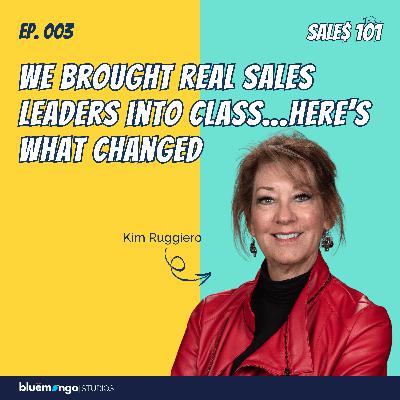
I’m sure you’ve realized by now that the real sales world and classroom sales are nowhere near the same. So, how can you help your students bridge that gap and prepare them to succeed in the field? To help answer this, we invited Kim Ruggiero, sales professor at Arizona State University (ASU). She’s here to share insights on transforming sales education and better equipping your students for the real world.Meet Kim Ruggiero· Kim Ruggiero is a trailblazer in sales education with over four decades of experience at industry leaders like AT&T and Verizon.· After a successful corporate career, she brought her expertise to academia and launched Arizona State University’s first professional sales class nearly 18 years ago.· Known for her dynamic, student-focused teaching style, Kim emphasizes confidence, creative outreach, and practical skills while encouraging students to engage with industry professionals and build valuable connections.Building a Practical Sales Curriculum (00:02:23 - 00:03:40)· Kim highlights the importance of bringing real-world experience into the classroom, creating a course that students consistently value for its practical approach.Overcoming Self-Doubt and Building Confidence (00:03:41 - 00:05:35)· She addresses common “sales reluctance” and structures her teams so students gain confidence early by reaching out to senior executives for interviews.The Team Interview Project (00:05:35 - 00:07:12)· Students work in groups to secure and interview senior sales leaders, while Kim guides them to ask creative, meaningful questions that go beyond the basics.Breaking Sales Stereotypes and Facing Challenges (00:07:15 - 00:10:00)· She discusses how these projects shift students’ perceptions of sales and helps them overcome confidence and outreach anxiety to be ready for real-world selling.Success Stories: Unique Interview Wins (00:10:07 - 00:12:56)· Kim shares standout student achievements, including interviews and live performances with executives at major companies, some leading directly to job offers.The Power of Creative Outreach (00:12:56 - 00:15:12)· She emphasizes research, personalization, and preparation, showing how thoughtful outreach leads to stronger connections and real opportunities.Research Techniques for Reaching Executives (00:15:13 - 00:17:24)· Kim explains how students can use LinkedIn, company resources, and in-depth questions to go beyond information easily found online.Involving Industry Leaders in the Classroom (00:17:26 - 00:22:12)· She highlights the value of advisory boards and guest speakers in providing mentorship, networking, and job opportunities for students.Preparing Students for Real-World Sales Careers (00:22:13 - 00:26:02)· Kim shares examples of how her outcomes-focused approach results in career opportunities and executive-level connections for students.Key Lesson: Don’t Be Afraid to Aim Higher (00:24:02 - 00:26:07)· She recounts a student’s interaction with a sales VP who encouraged them to reach out directly to the CEO, reinforcing the importance of aiming higher in professional ambitions.“If you’re not prepared to have a proper conversation with a client, you’re doing both yourself and your customer a disservice.” – Kim RuggieroResourcesReach out to Kim Ruggiero on LinkedIn, or send her an email at kim.ruggiero@asu.edu.

In this episode, we delve into how educators can actively prepare students for real-world sales challenges, moving beyond rote memorization and final exams. Rich Kuzmeski shares invaluable insights into experiential learning strategies that facilitate student success, enhancing both confidence and competency in the field of sales.Creating Engaging Role Plays for Practical Learning● Role plays designed to mirror real-life scenarios empower students to create their own scripts, fostering ownership and individual learning. ● Students research various industries thoroughly, refining their understanding and relevant questioning techniques necessary for success in sales. ● Structured role plays focus on the discovery call process, allowing students to practice asking impactful questions rather than simply pitching a product. The Importance of Listening and Discovery in Sales● Students often struggle with the fear of silence during sales calls, making it crucial to build their comfort with open-ended questioning and attentive listening. ● Emphasizing a 70/30 listening-to-talking ratio teaches students that effective selling is rooted in understanding customer needs rather than just presenting. ● By structuring prompts to encourage follow-up questions, students learn to drive conversations deeper, uncovering critical insights necessary for making meaningful connections. Extending Learning Beyond the Classroom● Participation in internal and external sales competitions provides students with hands-on experiences that translate classroom knowledge into actionable skills in real-world situations. ● Establishing connections with industry representatives and creating opportunities for networking prepares students for internships and jobs after graduation. ● Achievements in competitions bolster student resumes while enhancing the overall credibility of the sales program, attracting more prospective students and professionals to engage. Homework Challenge or Action Steps● Challenge students to design their own sales role play based on a chosen industry, incorporating both questions and anticipated answers to practice smooth dialogue. ● Encourage educators to implement experiential learning techniques, such as guest speakers and live events, to enrich the educational experience beyond textbooks. "Be honest. It's way easier to remember the truth than it is to remember what you may or may not have made up." ● Rich Kuzmeki.Resources● Oklahoma State University Sales Center(https://business.okstate.edu/sales) ● Sales Competitions Overview(https://business.okstate.edu/sales/competitions) Subscribe to our newsletter - https://open.substack.com/pub/sales101b2bsalesclassroom/p/teaching-professional-selling-for?r=9thf3&utm_campaign=post&utm_medium=web&showWelcomeOnShare=falseCreditsProduced by bluëmango | STUDIOS Music by SoundStripe. Thanks for tuning in!
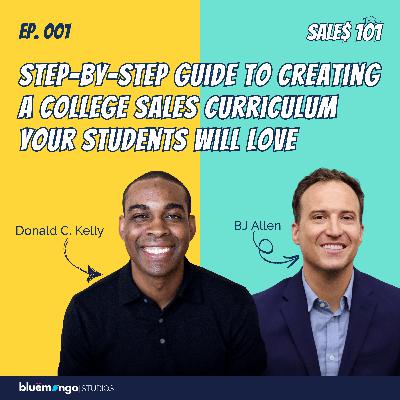
Have you ever tried to create a courseware for a sales class and just felt like you had no clue what to do? Today, we’re going to share some of the mistakes that we made and how you can avoid them.The Horrors of Starting a Sales Curriculum· Sales leaders and professors are always stuck with one question when building their first curriculum: Where do you even start?· How do you find that perfect balance between a traditional classroom or university learning style and sales, which is such an applied discipline?· We both share our stories about developing our first sales curriculum for our college students. · Our experience also helped us notice the mistakes other sales professors were making.· The common course development mistakes we saw were: trying to cover too much content, creating too many unstructured assignments, and lacking an efficient grading system.Four Steps to Building a Sales Curriculum· Make sure you have a pen and paper ready. We go into the details of each of these steps and the resources that will help you build your sales curriculum.1. Define Your Course’s Focus: You need to know what job role you’re preparing your students for. Are you teaching future entry-level sellers, Business Development Representatives (BDRs), Sales Development Representatives (SDRs), account managers, or something else? · Narrowing this down will help you know what personal experiences you should share and what your core course subjects should be.2. Choose Your Sales Process: Is there a specific process, methodology, or widely recognized industry resource that you use to structure your course? A logical progression is essential. · Sales is a highly applied discipline, and most students taking an intro class don’t even know what professional selling really is. Throwing every possible approach or concept at them at once actually does more harm than good. · Instead, picking a foundation—whether it’s a sales method like Challenger, SPIN, Sandler, or a structured process laid out in a well-regarded textbook—helps you guide students step by step. Each week or module builds on the last, creating continuity and a “map” students can follow.3. Integrate Learning into the Real World: Consider how to bring the realities of sales into the classroom. · Figure out what tools, scenarios, or voices you’re going to use to teach your students. For example, we created a simulation to go along with our textbook, designed assignments on how to use specific tools such as Apollo, and invited industry experts to share their knowledge with our students.4. Make Grading Efficient for You: Design your grading and assignments so your students will know what’s expected. But also tailor it to how you can save time.· Do this by using clear rubrics, integrating assignments, getting help from TAs, and leveraging automation when you can."You can't teach everything in one classroom." - BJ Allen.“It’s tough being able to take 15 - 20 years of experience and give it all to a student. It’s not wise to teach them everything at once, as they won’t be able to absorb it all. They just need enough to get to the next step.” - Donald Kelly.Resources· Get your copy of Fanatical Prospecting by Jeb Blount.· Connect with Donald Kelly and BJ Allen on LinkedIn. Be sure to reach out for feedback or help with your own curriculum.· Visit the show’s Substack for additional resources and downloads.
Join our Substack - https://open.substack.com/pub/sales101b2bsalesclassroom/p/teaching-professional-selling-for?r=9thf3&utm_campaign=post&utm_medium=web&showWelcomeOnShare=false

Welcome to the B2B classroom, students! Our sales podcast is designed to be a resource for college sales students and professionals. We, your co-hosts Donald Kelly and BJ Allen, interview industry experts to get their insights on the current trends in the B2B world.Introducing Ourselves: Donald Kelly and BJ AllenBefore we discuss why we started this podcast, we wanted to introduce ourselves to you and share our story.We teach sales at the college level, co-authored a sales textbook, and designed a simulation that goes along with it. But our friendship goes back years before this; we met at a church mission, and 20-plus years later, we are still making memories together.About the Podcast: Sales 101After teaching hundreds of students and developing numerous partnerships, we're bringing the knowledge of both the classroom and the industry to the sales world.With so much information available, many professors struggle to share their knowledge effectively, and students are often unsure which methods are best to use. We aim to show professors how to build a curriculum from their own expertise—or from others'—and empower students to adopt these proven strategies.The podcast topics include our discussion on one of the most popular topics in the industry: AI in sales. Our past students will come on to share their stories and tell you what they wish they'd known. We will also host industry experts like Mark Hunter and Christy Jones, who will share their real-world experiences.“Our purpose is to become a resource for you.” - Donald Kelly. “We’re both passionate about helping the next rising generation of sellers.” - BJ Allen. Resourceswww.https://sales101podcast.com/Subscribe to our newsletter - https://open.substack.com/pub/sales101b2bsalesclassroom/p/teaching-professional-selling-for?r=9thf3&utm_campaign=post&utm_medium=web&showWelcomeOnShare=falseCredits Audio by SoundStripe.
Comments

Download from Google Play

Download from App Store
 United States