


 Claim Ownership
Deeptech Decoded: Frontier Builders | AI | Product Taste
Subscribed: 1Played: 0
Subscribe

© Nihal Kurth
Description
Kitchen-table conversations with builders at the deep-tech AI frontier.
No script. No filters. The reasoning behind the moves: what's working, what's not and why conviction beats consensus.
For those building what doesn’t have a manual.
Deep-dives → https://deeptechdecoded.substack.com/
No script. No filters. The reasoning behind the moves: what's working, what's not and why conviction beats consensus.
For those building what doesn’t have a manual.
Deep-dives → https://deeptechdecoded.substack.com/
6 Episodes
Reverse
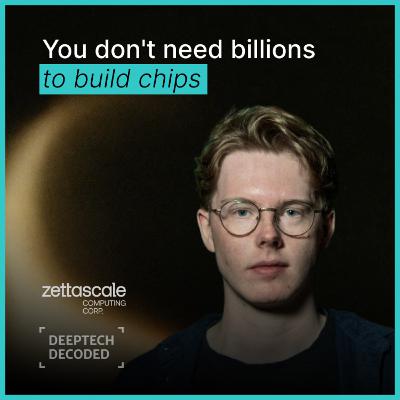
The entire AI industry runs on hardware that the people using it don't actually like. Why? Elias Almqvist believes the answer is Inertia and the window to displace it is opening faster than most realize.In this Deeptech Decoded Live AMA, we sit down with Elias Almqvist, founder and CEO of ZettaScale AI (YC S24), to discuss the hardware layer the AI boom is quietly outgrowing. Elias makes the provocative case that AI is not a bubble—but LLMs are, and that betting the future of intelligence on Transformer models alone is a failure of imagination.In this episode, we cover:- The 27.6x Efficiency Leap: Why reconfigurable XPUs are the end-game for data center energy costs.- The CUDA "Psyop": Why NVIDIA’s dominance is more about psychological lock-in than a technical moat.- Hardware Bias: How our current chips are dictating which AI models get built and why that limits science.- The Founder Journey: From dropping out in Sweden to meeting his co-founder Prithvi at first sight, and why building at the frontier is the only thing worth doing.Timestamps:0:00 - 0:23 Elias introduces himself: self-taught dropout from Sweden 1:49 Why Silicon Valley is the only place to build deep tech 2:51 The "Jante Law" effect: why Swedish founders are so resilient5:31 How Elias fell in love with chips and computing7:21 What is ZettaScale and the big picture vision9:16 "AI is not a bubble, LLMs are"11:01 Hardware-software co-design and why CUDA isn't a real moat16:49 The 10-year vision: architecture-agnostic AI computing19:25 Go-to-market: why great software matters more than great hardware22:50 Co-building the product with early frontier researchers26:11 How ZettaScale actually works under the hood30:45 What is intelligence?33:11 Team structure: five and a half people, no roles, full stack35:11 Setting goals on an exponential curve37:16 Manufacturing partnerships and navigating suppliers as a startup40:49 Why Elias cares: building a future for the people he loves43:19 Near-death moments and dealing with startup suffering47:07 Meeting co-founder Prithvi: "co-founders at first sight"49:08 Audience Q&A begins51:14 How YC shaped the journey54:05 Advice for making Europe more founder-friendly56:01 What triggered the decision to drop out58:30 Integrating into the Nvidia ecosystem without disruption1:00:48 If we had a time machine: AI's missed forks1:04:30 What would cause ZettaScale to fail?
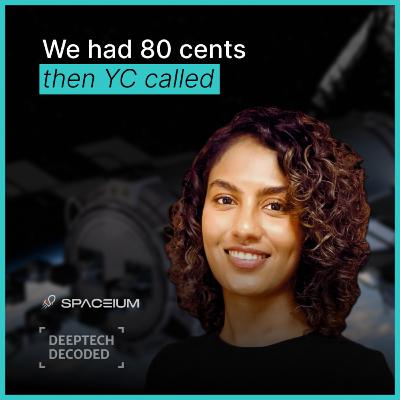
Ashi Dissanayake is building Spaceium — in-space refueling stations that will enable satellites to travel further, carry more payload, and extend their missions. From building hardware in a laundry room with 80 cents left to getting into YC on their fourth attempt, Ashi shares the raw journey of tackling critical space infrastructure. We cover:- Why perfectly good spacecraft become space junk- The vision for “Shell stations” in orbit- Going from eviction notices to YC acceptance- Why you can’t teach obsession (but you can teach skills)- Building their first mission in 5 months with 2 people- The hidden assumption about satellite refueling (they don’t)- Why moon missions are signing up for space refuelingTimestamps:0:00 - Introduction and discussion on infinity. 1:20 - Interplanetary missions and Spaceium’s role. 3:16 - Vision for Spaceium’s refueling stations. 5:08 - Collaboration in the space industry. 7:14 - Spaceium’s progress and challenges. 9:40 - Building service stations in space. 11:22 - Fuel problem in space. 14:09 - Importance of refueling. 17:27 - Potential challenges with space traffic. 20:17 - Why refueling matters. 22:09 - Refueling for moon and Mars missions. 24:17 - Comparison of space travel with and without Spaceium. 28:08 - Early struggles and determination. 30:03 - Turning point with YC investment. 35:29 - Building the right team. 39:24 - Co-founders’ dynamic. 42:02 - Facing skepticism and hidden assumptions. 45:26 - Giving back and inspiring others. 49:08 - What makes Spaceium special. 54:44 - Building something impactful. 56:02 - Family support and key takeaways. 58:15 - Motivation and overcoming doubts. #DeeptechDecoded #SpaceTech #YCombinator #Founders #SpaceInfrastructure #HardwareTech
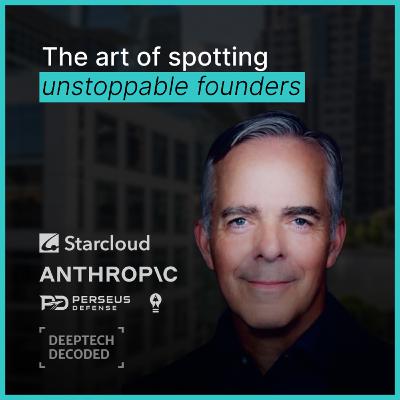
Even if Y Combinator never existed, Matthew Sutton would still be backing the top builders. Most investors wait for traction. Matthew Sutton backs builders before there’s proof, sometimes before there’s even a category. He is the first check writer you want to have on your side.Operating at the intersection of Harvard Ventures and the YC ecosystems, Matthew has backed AI, quantum, and defense tech founders at the moment where conviction matters more than metrics.In this episode of Deeptech Decoded, we talk about what it really takes to back deep tech when spreadsheets are useless, categories don’t exist yet, and most ideas look wrong at the beginning. Most importantly, his investment thesis and founder-centric approach.He breaks down:◽️ How he evaluates AI, quantum, and defense founders without being technical yourself◽️ The CURSOR LESSON: why he passed on a $100M+ company and what founder evolution teaches.◽️ The 3 CRITERIA for backing pre-revenue deeptech:◽️ Why the best deep tech companies often look irrational early on◽️ The difference between hype, narrative, and real conviction◽️ AI bubble reality check: using communities and open source to validate vs. hype◽️ What Harvard and YC teach — and don’t teach — about failure Timestamps:00:00 – Introduction: Judgment before proof04:13 – From Wall Street to backing deeptech builders07:08 – First entrepreneurial ventures at age 12-1309:27 – Cambridge vs Silicon Valley: The per capita talent thesis11:37 – Why California wins at commercialization15:16 – Where real startups are built: Dorm rooms and iteration24:24 – Evaluating AI and quantum founders without being technical28:03 – SimpleBet: AI sports betting meets regulatory change31:37 – The Cursor miss: Passing on a $100M+ AI company and the lesson38:27 – Filtering deal flow: Spotting technical founders with conviction41:14 – Quantum investing before traction: The Segaldry story45:02 – Finding founders outside the Bay Area echo chamber51:21 – Defense tech's golden age: Golden Dome to rapid innovation55:59 – Moving fast in defense: Small bets in sensitive sectors58:25 – Leadership styles: Future creators vs past learners1:02:35 – AI bubble navigation: Discord communities as validation1:05:34 – Avoiding echo chambers: Stress testing investment thesis1:11:16 – Operational discipline without killing innovation1:16:10 – Founder suffering: Why resilience matters in deeptech1:25:18 – Teaching failure at Harvard: The straight-A paradox1:29:04 – What doesn't scare him about AI's future1:32:30 – Desert island question: Three startup essentials1:34:16 – Closing thoughtsFollow Matthew:...Follow us on:About Deeptech DecodedDeeptech Decoded is a podcast and newsletter for builders and backers working at the frontier of technology—from AI and quantum to defense, space, and infrastructure. We focus on product judgment, conviction, and what it really takes to build what doesn't exist yet.
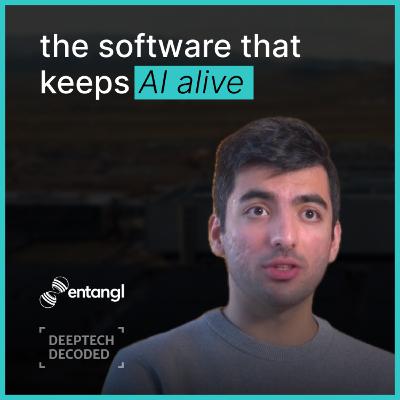
65% of data-center outages are caused by human error, sometimes as simple as flipping the wrong switch.Shapol M., founder & CEO of Entangl (YC S24), went from building reusable rockets in the UK to preventing catastrophic failures in the infrastructure powering AGI.In this Deeptech Decoded conversation, we dive into:- Why data-center downtime causes mass chaos (remember when even Eight Sleep went dark?)- How Entangl helps engineers avoid million-dollar mistakes on-site- The pivot from aerospace to critical AI infrastructure- Why today’s AI build-out is bigger than the Manhattan Project- What it takes to earn customer trust so deep they bring you to their next companyIf AI is the future, this is the system that keeps that future online.
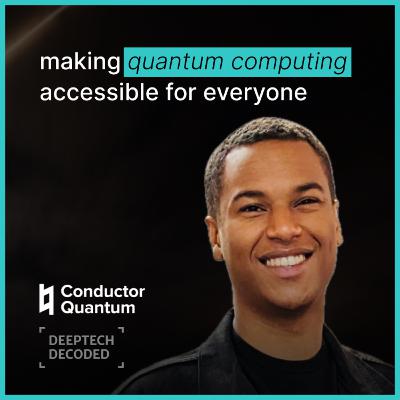
Quantum computing is about to leave the lab and land on your laptop.In this episode of Deeptech Decoded, Nihal Kurth sits down with Brandon Severin, CEO & Co-Founder of Conductor Quantum (Y Combinator) — the startup using AI to automate quantum chip design 1,000× faster, cutting setup time from 27 years to just 2 minutes.Together, they unpack how AI and automation are scaling qubits like semiconductors and why the next leap in quantum won’t come from colder labs but smarter code.Later, Cameron Farrar-Frank joins to lead a live AMA with the audience, diving deeper into the most thought-provoking questions from founders and researchers.They break down: • Why quantum computing’s PR problem is holding the field back • The shift from cold labs to software-defined systems • How AI is scaling quantum architectures 1,000× faster • Y Combinator’s influence on speed, focus, and iteration • Why Brandon calls this his life’s work — and what’s next for quantum hardware“If quantum is going to scale, it can’t depend on PhDs tuning each qubit. It has to be software-defined.”Big Idea:The startup bringing quantum computing to your desk — turning deep-tech research into real-world infrastructure.Read next:Story of Brandon Severin and Joel Pendleton → https://deeptechdecoded.substack.com/p/yc-funds-quantum-computing-you-canSubscribe for noise-canceling insights from the deep-tech frontier:https://deeptechdecoded.substack.comFollow Deeptech DecodedLinkedIn → linkedin.com/company/deeptechdecodedYouTube → youtube.com/@deeptechdecodedaiInstagram → instagram.com/deeptechdecodedTikTok → tiktok.com/@deeptechdecodedSpotify → https://podcast.sptfy.com/QbkB
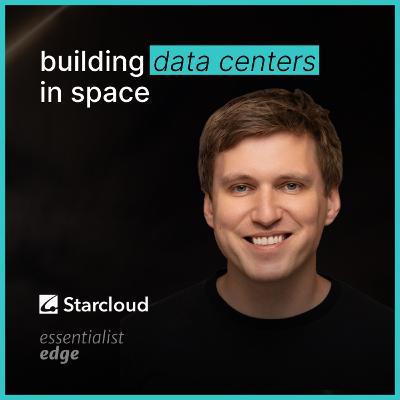
Join us for an in-depth AMA and podcast conversation with Philip Johnston, Co-founder & CEO of Starcloud, the world’s first orbital data center company. 🚀We cover:1. Why orbital infrastructure is the next leap in AI compute2. Starcloud’s plan to launch megawatt-scale compute into orbit by 20273. The challenges of energy, cooling, and scalability in space4. Lessons from building at the frontier of deep tech, aerospace, and AIThis wide-ranging discussion blends technical insight, founder perspective, and long-term vision. Perfect for anyone curious about the future of AI infrastructure, space technology, and frontier startups.📌 Topics include: orbital data centers, AI compute demand, space infrastructure, scaling deep-tech startups.00:00 Intro 01:13 What Starcloud is building02:19 5 GW vision; module approach03:03 Architecture: central spine + modules03:27 Solar arrays and radiators03:58 Demo sat (H100s), Nov target04:21 Roadmap to 40 MW modules05:29 Modularity and self‑sufficiency06:06 Cooling and racks08:05 Top risks and objections11:20 Mission life & end‑of‑life13:16 Disposal options14:09 Maintenance strategy17:40 Backhaul plan18:22 Iteration and capex19:32 Launch cadence; Sat‑2 service20:31 Costs/runway overview22:12 Early customers (DoD/USG)23:37 Differentiation (H100s)25:01 EO data bottleneck25:44 Space‑to‑space optical26:08 On‑orbit inference example26:49 Latency: hours → seconds27:09 Contrarian view (waste heat)29:01 Q&A31:48 Debris strategy35:16 LEO capacity; Lagrange points38:23 Scale refs; mass & launches41:20 Launch economics context42:23 Misconceptions (cooling, latency)47:19 CAPEX per module50:57 Closing advice51:39 Wrap
Comments


Download from Google Play

Download from App Store
 United States