


 Claim Ownership
The Farmers Weekly Podcast
Subscribed: 328Played: 22,234
Subscribe

2026 © The Farmers Weekly Podcast
Description
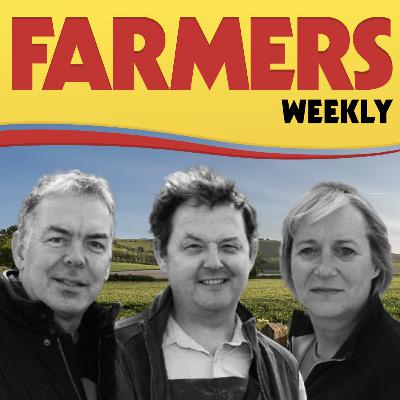
The inside track on the biggest stories affecting UK agriculture - with Johann Tasker, Louise Impey and Hugh Broom. Every Friday.
153 Episodes
Reverse
Can closer ties with Europe deliver a boost for British farming – and what might growers lose in return? In this episode of the Farmers Weekly Podcast, we examine the UK–EU sanitary and phytosanitary (SPS) agreement, designed to ease trade in food, animals and plants. We hear from Defra secretary Dame Angela Eagle and discuss the implications for exports, border checks and access to crop protection products. At the CLA Rural Business Conference, new research exposes a gap between the public’s affection for the countryside and its understanding of the businesses that keep it working. More in Common’s Alex Newton and CLA president Gavin Lane explain why rural Britain needs investment, jobs and opportunities for young people. Plus, Louise Impey visits two arable businesses tackling tight margins through collaboration, changing rotations and diversified income. Andrew Ramply, Joe Hicken and Julian Gold share their approaches to costs, environmental schemes and biodiversity net gain. We also catch up on autumn planting intentions, conservation land purchases and the week’s commodity markets. Edited, produced and hosted by Johann Tasker with Louise Impey and Hugh Broom. Chapters 00:00 – Coming up: Trade, the rural economy and farm profitability00:58 – UK–EU farming deal: Angela Eagle sets out the benefits03:49 – Dynamic alignment and concerns over crop protection products08:51 – Livestock exports and the wider trade debate15:17 – A working countryside: What does the public understand?16:07 – Alex Newton: Trust, food security and rural opportunities18:53 – Gavin Lane: Making the case for rural business19:47 – Farm visits, public engagement and the rural economy28:34 – Your feedback: Autumn planting intentions and regional differences30:58 – Conservation land purchases: Farming alongside nature33:26 – Farmers Club Monday Evening Lecture: Who pays for environmental delivery?34:35 – Markets: Livestock, grain, oilseeds and diesel36:21 – Farm visits: How two arable businesses are adapting36:49 – Andrew Ramply and Joe Hicken: Collaboration, crops and costs40:21 – Julian Gold: SFI, biodiversity net gain and spreading overheads43:28 – Lessons from the farms and the importance of diversified income48:15 – Final thoughts and sign-off Guests and contributors Defra secretary Angela Eagle – the UK–EU SPS agreement and its implications for farming. Alex Newton, deputy director, More in Common – public perceptions of the countryside. Gavin Lane, CLA president – rural enterprise, investment and opportunities for young people. Andrew Ramply, G.T. Ramply & Son – joint ventures, efficiency and additional income streams. Joe Hicken, farm manager, G.T. Ramply & Son – rotations, input costs and gross margins. Julian Gold, farm manager, Hendred Estate, Oxfordshire — environmental schemes, biodiversity net gain and managing overheads. Useful links UK–EU SPS agreement: What is changing SPS agreement: Preparing your business CLA: Public attitudes to the countryside AHDB Early Bird Survey planting intentions for harvest 2027 Huntingdonshire Monitor Farm (G.T. Ramply & Son) Wantage Monitor Farm revisited (Hendred Estate) Farmers Club Monday Evening Lecture – Joe Stanley Woodland Trust: Nannau Estate appeal – proposed purchase discussed in the episode. Get in touch To get in touch with the Farmers Weekly Podcast: - Contact or follow Johann: linkedin.com/in/johanntasker/ Contact or follow Louise: linkedin.com/in/louise-impey-95470b20b/ Contact or follow Hugh: linkedin.com/in/hugh-broom-9b11906a/ For Farmers Weekly, visit fwi.co.uk or follow linkedin.com/company/farmers-weekly To contact, sponsor or advertise on the Farmers Weekly Podcast, email [email protected]. In the UK, you can also text the word FARM followed by your message to 88 44 0. See omnystudio.com/listener for privacy information.
Oilseed rape plantings are up 28% – but why hasn’t more winter wheat gone into the ground? We examine the latest AHDB planting survey, what’s driving the oilseed rape revival and why growers are cutting back on spring crops and pulses. With up to £8m available for projects to improve water resilience, we find out how farmers can get involved in Ofwat’s Agri-Water Cross-Sector Challenge. The government is scrapping the first come, first served approach to the Sustainable Farming Incentive. What could a fairer system look like? We also discuss carbon farming, the row over a major solar development near Oxford and this week’s commodity markets. And finally, we visit a Norfolk project bringing farmers and deer managers together to tackle the damage caused by growing wild deer populations. Hosted by Johann Tasker, with arable specialist Louise Impey and livestock farmer Hugh Broom. Chapters 00:20 What’s coming up00:50 Autumn drilling: AHDB’s planting survey06:20 What the figures mean for growers14:00 The £8m Agri-Water Cross-Sector Challenge18:40 Water storage, efficiency and farm resilience26:02 SFI: an end to first come, first served29:40 Carbon farming and conference season32:15 Solar farms, land use and farm returns37:33 This week’s commodity markets40:07 Managing Norfolk’s wild deer44:24 Deer damage and the case for coordinated management50:14 Wrap-up Useful links Ofwat’s Agri-Water Cross-Sector Challenge Norfolk Deer Strategy – Norfolk FWAG Get in touch How much wheat have you drilled this autumn? Email [email protected]. To get in touch with the Farmers Weekly Podcast: - Contact or follow Johann: linkedin.com/in/johanntasker/ Contact or follow Louise: linkedin.com/in/louise-impey-95470b20b/ Contact or follow Hugh: linkedin.com/in/hugh-broom-9b11906a/ For Farmers Weekly, visit fwi.co.uk or follow linkedin.com/company/farmers-weekly To contact, sponsor or advertise on the Farmers Weekly Podcast, email [email protected]. In the UK, you can also text the word FARM followed by your message to 88 44 0. See omnystudio.com/listener for privacy information.
Will closer links with Europe bring fresh opportunities for British growers and livestock producers – or new restrictions on UK farming? This week, we examine the proposed UK–EU deal to ease checks on food and agricultural trade. NFU president Tom Bradshaw explains why farming is the testbed for the wider relationship, while we consider the implications for precision breeding, crop protection and market access. Should the Sustainable Farming Incentive be scrapped and rebuilt – or simply funded properly? Lord Curry calls for a fresh approach to environmental stewardship, and we debate whether reform or greater investment offers the best way forward. We also discuss the government’s renewed bovine TB strategy, why farmers need a voice on new water councils, and the latest livestock, grain and fuel prices. And finally, Bishop of Norwich Graham Usher pledges to champion farmers in the House of Lords, as we consider long-term environmental funding and better access to rural healthcare. This episode of the Farmers Weekly Podcast is hosted by Johann Tasker, with Louise Impey and Hugh Broom. Edited and produced by Johann Tasker. Chapters 01:05 UK–EU farm trade deal: Tom Bradshaw’s priorities03:48 REAP conference: precision breeding, pesticides and market access07:14 Closer EU links: opportunities and trade-offs for farmers16:55 SFI: start again or fund it properly?26:54 Bovine TB: testing, vaccination and delivering the strategy30:07 Water councils: why farming needs a seat at the table33:30 Markets: livestock, grain, oilseeds and diesel35:56 Bishop of Norwich pledges to champion farmers38:43 Rural health, access to care and farm safety Guests Tom Bradshaw – NFU president Jack Smith – farmer and REAP conference contributor Belinda Clarke – director, Agri-TechE Mark Buckingham – Bayer Crop Science Lord Curry – contributor to the debate on the future of farm support Graham Usher – Bishop of Norwich Useful links Sustainable Farming Incentive: official guidance TB Hub: bovine TB information for farmers Agri-TechE: agricultural innovation and the team behind REAP Bishop of Norwich: Graham Usher To get in touch with the Farmers Weekly Podcast: - Contact or follow Johann: linkedin.com/in/johanntasker/ Contact or follow Louise: linkedin.com/in/louise-impey-95470b20b/ Contact or follow Hugh: linkedin.com/in/hugh-broom-9b11906a/ For Farmers Weekly, visit fwi.co.uk or follow linkedin.com/company/farmers-weekly To contact, sponsor or advertise on the Farmers Weekly Podcast, email [email protected]. In the UK, you can also text the word FARM followed by your message to 88 44 0. See omnystudio.com/listener for privacy information.

Artificial intelligence can diagnose crop symptoms, interrogate huge amounts of data and even devise a fungicide programme. But can it really replace an experienced agronomist? In this episode, Johann Tasker investigates what AI could mean for crop management. He travels from a Bedfordshire wheat field to the banks of the Thames, an agronomy office in Essex, farm trials in East Anglia and to Cambridge University. Arable grower Andrew Robinson is already putting AI to the test by allowing it to devise a fungicide programme for his winter wheat. Machine-learning specialist Freddie Alan Stevens explains why general-purpose chatbots can give convincing but wrong answers – and why specialist agricultural AI could be much more powerful. Independent agronomist Alex Hall considers where human judgement still matters – and how AI could help human agronomists do a better job. And Agrii’s Jonathan Trotter and Sam Fordham reveal what happened when they put technology head-to-head with conventional farm decision-making. Finally, former Mineral chief executive Dr Elliott Grant looks ahead to agentic AI – systems capable of investigating problems, using specialist tools and potentially taking action themselves. Chapters 00:00 – Can AI manage a wheat crop?Andrew Robinson explains why he handed the fungicide programme for half a hectare of winter wheat to AI – and why the resulting crop caught his attention. 03:01 – Putting ChatGPT to the agronomy testCan a chatbot diagnose yellowing wheat? Johann Tasker tests what ChatGPT can – and cannot – do when faced with a real-world crop problem. 05:58 – What is AI actually doing?Machine-learning specialist Freddie Alan Stevens explains how large language models work, why they hallucinate and the risks of relying on confident-sounding answers. 09:30 – Why specialist agricultural AI mattersFrom wheat counting and disease recognition to slug prediction and satellite interpretation, could purpose-built models prove more useful than general-purpose chatbots? 12:36 – What does an agronomist bring?Ceres Rural partner and independent agronomist Alex Hall discusses experience, judgement, risk and the importance of understanding an individual farm business. 16:18 – Can AI give agronomists more experience?A farmer gets only one harvest each year. Could machines learn from thousands – and help advisers draw on far more information than any individual could absorb? 19:27 – Man versus machineAgrii’s Jonathan Trotter and Sam Fordham reveal the results of a field experiment comparing technology with conventional decision-making. 22:47 – The connected farmHow sensors, drones, satellites, weather information, research data and AI could increasingly work together to support farm decisions. 24:42 – Bias, trust and ground-truthing AIWho built the system? What was it trained on? And could commercial interests influence its recommendations? Jonathan Trotter explains what growers must check. 27:45 – The next leap: agentic AIAt Cambridge University’s Whittle Laboratory, Dr Elliott Grant explains the arrival of AI agents capable of reasoning, using specialist tools and carrying out tasks autonomously. 31:36 – What happens to the agronomist?As routine knowledge becomes easier for machines to reproduce, specialist expertise, proprietary knowledge and an understanding of individual farms could become increasingly valuable. 34:13 – Back to the AI wheat trialAndrew Robinson reveals how Microsoft Copilot devised its fungicide strategy – including finding the wrong weather forecast – and why the AI programme cost more than his farm standard. 37:11 – Asking AI the right questionCleanest crop, highest yield, best margin, lowest environmental impact or least risk? The answer an AI produces depends heavily on the objective it is given. 38:30 – Farmer, agronomist and AIWhat have the experiments and interviews taught us? Johann brings together the evidence before asking ChatGPT the original question one final time. This episode is brought to you by LG Seeds UK – providing innovative, reliable seed solutions to farmers in a changing world. Special Guests: Andrew Robinson – farms director, Heathcote Farms. Andrew is trialling an AI-generated winter wheat fungicide programme alongside the farm’s conventional approach. ChatGPT – the general-purpose AI assistant tested throughout the episode. Freddie Allen-Stevens – machine-learning and AI specialist at Insight ML, with experience developing agricultural applications including crop counting and slug-risk prediction. Alex Hall – partner and independent agronomist at Ceres Rural in Saffron Walden. Ceres provides independent crop-management and agronomy advice. Jonathan Trotter – part of Agrii’s research and agricultural technology work, exploring how digital technologies and agronomy can be combined in practical crop management. Sam Fordham – works in Agrii’s digital agriculture operation, including its Contour platform and the integration of farm, crop, weather and remote-sensing data. Dr Elliott Grant – technology and agriculture entrepreneur who led agricultural AI work at Google X and later became chief executive of Mineral. His work has focused on the intersection of AI, technology and agriculture. Useful links ChatGPT – the general puropose large language model from OpenAI. Agrii digital farming and precision agriculture – including information about Agrii’s RHIZA and Contour digital agronomy services. Insight LM – machine learning consultancy services to help businesses leverage data-driven insights. Ceres Rural – information about Ceres Rural’s independent agronomy and crop-management services. Dr Elliott Grant – background on Elliott’s work in agricultural technology and AI, including his work at Cambridge University's Whittle Laboratory. This episode of Farm Insight was written, edited, produced, sound-designed and hosted by Johann Tasker for Farmers Weekly. To get in touch with Johann: linkedin.com/in/johanntasker/ For Farmers Weekly, visit fwi.co.uk or follow linkedin.com/company/farmers-weekly For sponsor or advertising opportunities, email [email protected]. In the UK, you can also text the word FARM followed by your message to 88 44 0. See omnystudio.com/listener for privacy information.
Will a new carbon tax push up fertiliser prices? Has the farming industry successfully regulated its own pesticide use? And could English olive oil become the next big farming opportunity? In this episode of the Farmers Weekly Podcast, we examine the government’s latest proposals for a carbon tax on imported fertiliser – and what they could mean for farm businesses when the new rules take effect in January 2027. New figures suggest the Carbon Border Adjustment Mechanism (CBAM) could initially cost considerably less than feared. But with fertiliser prices already rising, growers remain concerned about the longer-term implications. We speak to Harriet Trewin of the Agricultural Industries Confederation about the likely impact on ammonium nitrate prices and what farmers should do ahead of the changes. We also visit Parliament to celebrate the 25th anniversary of the Voluntary Initiative, the industry-led scheme promoting responsible pesticide use. Voluntary Initiative chairman David Bell explains why good stewardship is increasingly important as farmers face the loss of key crop protection products. Liberal Democrat MP Wendy Chamberlain discusses the importance of industry self-regulation and the need for government support. Meanwhile, in Lincolnshire, farmer David Hoyles is bringing a taste of the Mediterranean to the Fens with what is believed to be Britain’s first commercial olive harvest. After investing £1 million and planting 18,000 olive trees, he is producing premium English olive oil. We visit his farm near Spalding to discover how the venture is progressing. Plus, our latest autumn drilling update with Bayer Crop Science examines the balance between delayed drilling, grassweed control and crop establishment. We also bring you the latest UK livestock and arable commodity prices, discuss farmland bird populations and preview Farmers Weekly Live, taking place at Stoneleigh Park in July 2027. This episode of the Farmers Weekly Podcast is hosted by Johann Tasker, with Farmers Weekly deputy editor Abi Kay and Hugh Broom. Edited and produced by Johann Tasker. This episode is brought to you by Bayer Crop Science – weeding out uncertainty. Chapters 00:00 – Introduction and this week’s headlines00:56 – Fertiliser carbon tax: What will CBAM cost farmers?01:28 – Harriet Truan, AIC: Latest estimates and fertiliser price implications05:14 – Analysis: Carbon taxes, farm margins and global competition10:34 – Autumn Drilling Update: Grassweed control with Bayer Crop Science13:08 – The Voluntary Initiative celebrates 25 years13:38 – David Bell: Responsible pesticide use and protecting active ingredients17:21 – Wendy Chamberlain MP: Why industry self-regulation matters19:37 – Analysis: Has the Voluntary Initiative been successful?26:11 – Farmers Weekly Live: Plans for July 202728:40 – On the farm: Rainfall, cover crops and farmland bird populations31:05 – Commodity markets: Latest livestock, grain and fuel prices32:38 – Britain’s first commercial olive harvest gets underway33:15 – David Hoyles: Growing olives and producing premium English olive oil36:19 – Analysis: Could olive growing take off across Britain?40:39 – Closing thoughts and next week’s podcast Guests Harriet Trewin – Agricultural Industries Confederation (AIC).David Bell – Chairman of the Voluntary Initiative and Scottish farmer.Wendy Chamberlain MP – Liberal Democrat MP for North East Fife.David Hoyles – Lincolnshire farmer and founder of the English Olive Company. Useful links Agricultural Industries Confederation (AIC)UK Carbon Border Adjustment Mechanism (CBAM)The Voluntary InitiativeFarmers Weekly LiveEnglish Olive CompanyNational Register of Sprayer Operators (NRoSO) To get in touch with the Farmers Weekly Podcast: - Contact or follow Johann: linkedin.com/in/johanntasker/ Contact or follow Abi: linkedin.com/in/abi-kay-38927130 Contact or follow Hugh: linkedin.com/in/hugh-broom-9b11906a/ For Farmers Weekly, visit fwi.co.uk or follow linkedin.com/company/farmers-weekly To contact, sponsor or advertise on the Farmers Weekly Podcast, email [email protected]. In the UK, you can also text the word FARM followed by your message to 88 44 0. See omnystudio.com/listener for privacy information.

Comments

Download from Google Play

Download from App Store
 United States