


 Claim Ownership
The Timeless Investor Show
Subscribed: 1Played: 33
Subscribe

© Arie van Gemeren
Description
The Timeless Investor Show explores how serious thinkers build wealth, resilience, and lasting success across generations.
Hosted by Arie van Gemeren, CFA - The Timeless Investor Show connects history, philosophy, and real-world investing lessons into practical frameworks for today's investors, with a core focus on real estate investing.
We study empires, cycles, currencies, and capital stewardship - and translate timeless principles into real-world action.
Think well. Act wisely. Build something timeless.
46 Episodes
Reverse
The same asset class returned +13% annually during 1970s stagflation—and lost 25% in 2022.Same country. Same interest rate risk. Same inflation dynamics. Completely opposite outcomes.Why? Because most investors optimize for one environment and get destroyed when the regime shifts.In this episode, I break down:→ The 4 macro regimes that actually drive investment returns→ How to identify which regime you're operating in→ What works (and what gets destroyed) in each environment→ Where I think we are right now—and what's coming nextTimestamps:0:00 - The 1970s vs 2022 Paradox2:18 - Why Investors Get Destroyed4:40 - The Four Regimes Framework5:25 - Regime 1: Goldilocks (2010-2019)8:00 - Regime 2: Stagflation (1973-1982, 2022-2024)14:00 - Regime 3: Deflationary Bust (2008-2011)20:00 - Regime 4: Financial Repression (1946-1951, 2020-2021?)27:30 - Where Are We Now?30:00 - How to Position Across Regimes📄 Full article with additional data: https://thetimelessinvestor.substack.com/p/the-2026-real-estate-macro-playbook?r=d424hThe second owners always win. The question is whether you're positioned to be one of them.—📩 Newsletter: https://thetimelessinvestor.substack.com💼 LinkedIn: https://linkedin.com/in/arievangemeren🐦 X/Twitter: https://x.com/TimelessArie
On January 2nd, 1672, two bankers woke up to the same news: the King of England had just frozen £1.3 million in debt payments. Sovereign default.Both men had lent to the Crown. Both had survived civil war, plague, and the Great Fire. One would build a dynasty lasting 250 years. The other would die bankrupt, in exile, in Holland.What was the difference?In this episode, I tell the story of Edward Backwell and Francis Child — two goldsmith-bankers operating on the same London streets, facing the same crisis, with completely opposite outcomes.Backwell was the giant. He was called "the principal founder of the banking system in England." The kingdom itself was said to depend on him. He had lent a quarter of England's annual income to one borrower: the King.Child was smaller. Quieter. His diversified approach looked like timidity — until the day it looked like survival.This episode covers:- How King Charles I's 1640 theft accidentally invented modern banking- Why goldsmith vaults weren't actually safer than the Royal Mint- The birth of fractional reserve banking as a security innovation- Edward Backwell's rise from yeoman's son to England's most powerful financier- The fatal bet: 22% of all sovereign lending concentrated in one man- The Stop of the Exchequer and the first major bank run in history- Francis Child's paranoid strategy — and why it built a 250-year dynasty- The surprising family connection that united the ruined and the survivors- Why I named my firm Lombard Equities after this storyThe pattern Backwell fell into — concentrating in what seemed like the safest possible borrower — has destroyed the greatest financiers in history, from the Bardi and Peruzzi in 1345 to operators in our own era.The lessons haven't changed. Neither has human nature.—📚 Read the full article on Substack: thetimelessinvestor.substack.com💼 Connect on LinkedIn: linkedin.com/in/arievangemeren🎥 Watch on YouTube: https://youtu.be/g_YTV3JbcxQ
What can a 14th-century financial ruin teach a 21st-century fund manager?In this episode, we take a deep dive into the 1345 collapse of the Bardi and Peruzzi banking houses—the dominant financial titans of the medieval world. When King Edward III defaulted on a massive debt to fund the 100 Years' War, he triggered a contagion that reshaped the global economy.We explore why these sophisticated families fell into the "sunk cost" trap and why their failure to manage concentration risk is a pattern we see repeating in today's markets.In this episode, you’ll learn:The Mechanics of the Fall: How 1.5 million gold florins brought down an empire.Sovereign Risk: The danger of lending to "the ultimate power."The Medici Pivot: The structural legal innovation that allowed the next generation of bankers to survive systemic shocks.Modern Application: Why these 600-year-old lessons are vital for real estate and private equity firewalls in 2026.Building something timeless requires understanding the structural errors of the past. Join us as we break down the history of risk.
Warren Buffett once said he'd rather own farmland than gold.But gold has outperformed Berkshire Hathaway since 1998. And central banks around the world are quietly accumulating more of it than at any point in modern history.Why?In this episode, I sit down with Mario Innecco - host of Maneco64, one of YouTube's leading channels on precious metals with over 166,000 subscribers - to unpack what's really driving gold's historic rise.We cover:• The real inflation tax that central banks don't advertise• Gold's 10% annual returns since 2000 - and why it's accelerating• The Nixon shock of 1971 and its ongoing consequences• How World War I killed the classical gold standard• The petrodollar system: what it is, why it's cracking, and what Venezuela and Iran have to do with it• China's naval vulnerability and the geopolitics of oil• Bitcoin vs. gold: competitors or cousins?Whether you own gold, are skeptical of it, or just want to understand the monetary system we're living through, this episode will give you a framework most investors never consider.Books mentioned: The Bitcoin Standard, The Creature from Jekyll Island, The Prize, What Has Government Done to Our Money, Fiat Money Inflation in France, Tower of BaselFollow us on YouTube: https://www.youtube.com/@TheTimelessInvestorFollow me on LinkedIn: https://www.linkedin.com/in/arievangemeren/And on X: https://x.com/TimelessArieConnect with Mario: YouTube.com/Maneco64—Think well. Act wisely. Build something satisfying, impactful, and timeless.
In this episode of the Timeless Investor Show, host Ari van Gemeren breaks down the historical collapse of the Savings and Loan (S&L) industry and why it serves as a critical blueprint for the current real estate landscape.Discover how the "3-6-3 rule" failed, the massive impact of Paul Volcker’s interest rate hikes, and how the Resolution Trust Corporation (RTC) created the largest "forced liquidation" in U.S. history. We analyze how legendary investors like Sam Zell and Barry Sternlicht built empires from these distressed assets and explore the startling parallels to the $1.5 trillion in commercial debt maturing between 2025 and 2027. If you want to understand the "extend and pretend" cycle and how to position yourself for the next great wealth transfer, this deep dive is for you.
Harry Helmsley started as a $12/week office boy in 1925. By the 1970s, he owned more real estate than anyone in America—the Empire State Building, 60+ office buildings, 30+ hotels, over $5 billion in assets.His strategy? Buy quality buildings in quality locations. Never sell. Just compound.No flipping. No syndicate exits. No IRR optimization. Just 40+ years of patient accumulation.In this episode, we break down:→ How Helmsley learned operations before ownership (and why it matters)→ The "refinance, don't sell" approach that avoided capital gains for decades→ Why transaction costs destroy more wealth than most investors realize→ The crown jewel acquisitions: Empire State Building, Helmsley Building, the hotel empire→ What happened when it almost all fell apart (and the lesson in who you marry)The greatest real estate fortunes weren't built by flipping. They were built by holding.—Subscribe to The Timeless Investor newsletter: https://thetimelessinvestor.substack.comInterested in investing with us? https://investors.appfolioim.com/lombardequities/investor/contact-us (accredited investors only)—00:00 - Introduction: $5 Billion Empire from Nothing02:15 - The Office Boy Years (1925-1935)05:30 - Buying the Brokerage with Sweat Equity08:45 - The Accumulation Strategy: Buy, Hold, Never Sell12:20 - Why Refinancing Beats Selling (The Math)16:00 - The Crown Jewels: Empire State Building & Beyond19:30 - The Fall: Leona and the Collapse22:00 - Timeless Lessons for Modern Investors#realestateinvesting #wealthbuilding #harryhelmsely #empirestatebuilding #buyandhold #passiveincome #realestate #investing #financialhistory
A SPECIAL REPORT:Last December, I published a 23-page report predicting what would happen in 2025 — treasury yields, inflation, GDP, housing supply. Today, I'm grading myself in public.Predicted 10Y Treasury: 4.1% → Actual: 4.11%Predicted Seattle Permits: -36% → Actual: -50%Predicted Inflation: 2.5% → Actual: 2.7%Most predictions were directionally right. Some were wrong. And 2025 threw curveballs nobody saw coming — $40B in wildfire losses by Week 2, a 43-day government shutdown, and a GDP path that broke every model.This video covers:→ The Six Forces scorecard (with grades)→ Black swan events that blindsided everyone→ The behavioral finance of 2025 (anchoring, recency bias, narrative fallacy)→ What I'm watching for 202600:00 - What I Predicted02:30 - The Six Forces Scorecard12:00 - What Nobody Saw Coming18:00 - Behavioral Finance Audit26:00 - The Denver Deal I Didn't Do30:00 - 2026 Watchlist🔔 Subscribe for the 2026 Outlook Report (dropping January)📩 Join The Timeless Investor Newsletter:https://lombardequities.substack.com📈 Accredited Investors — Work With Us:https://lombardequities.com#realestateinvesting #2025predictions #marketoutlook #multifamily
Notre-Dame Cathedral took 182 years to build. Your iPhone is designed to die in two.The men who laid those first stones knew they would never see the finished building. They planted trees they would never sit under. They built something timeless.We don't do that anymore. What changed?One concept explains it all: Time Preference — the degree to which you discount the future relative to the present. It's the single most important idea I've encountered in my study of wealth across civilizations, and almost nobody talks about it.In this episode, I break down:What time preference is and why it shapes the fate of nationsHow hard money created the Eiffel Tower, the Brooklyn Bridge, and dynastic fortunesWhat happened on August 15, 1971 — and why everything changedRome vs. Byzantium: same empire, different money, 500 years vs. 1,000 yearsHow Spain's silver fortune destroyed them from the insideWhy your buildings, products, relationships, and attention span have all degradedWhy low time preference is now a superpower in a world optimized for immediacy8 practical ways to build low time preference into your life and investmentsThe cathedral builders knew something we've forgotten: patience isn't passive. It's the most aggressive long-term strategy there is.What are you building that will exist in 100 years?—Subscribe to The Timeless Investor newsletter: https://thetimelessinvestor.substack.comLearn more about Lombard Equities Group: https://www.lombardequities.com
1837. Banks collapse. Real estate craters 80%. Most investors are wiped out.One 74-year-old immigrant is buying.John Jacob Astor arrived in America with $25 and seven flutes. He scraped fur pelts in a Lower Manhattan shop. He tried — and failed — to colonize the entire West Coast, losing ships, men, and millions when his vessel exploded off Vancouver Island.Then he pivoted to real estate and became the wealthiest American in history.By his death, Astor owned roughly 1% of America's entire GDP — the equivalent of $276 billion today. Senator Tallmadge remarked: "One in every hundred dollars in this country ends up in J. Astor's hands."In this episode, we trace the full arc: the cutthroat fur trade, the global China triangle, the catastrophic Tonquin massacre, the audacious Astoria gambit, and the real estate strategy that turned crisis into dynasty.The lessons? Know when to pivot. Maintain liquidity. Follow infrastructure. And when the panic comes — be the buyer, not the seller.First owners get destroyed. Second owners build dynasties.Which one are you going to be?
In 1595, a desperate Sultan auctioned off the right to collect taxes. The buyer—a merchant from Thessaloniki—didn't care if the province starved. His contract was only 3 years.This system, called Iltizam (tax farming), would hollow out one of history's most powerful empires over 300 years. By 1800, it represented 80% of Ottoman revenue—up from 36% a century earlier.But the Ottomans weren't unique.This episode reveals the 5-phase pattern that destroyed Rome, bankrupted Spain, ended British hegemony, and collapsed the Ottoman Empire:→ Building → Success → The Pivot → Decay → CollapseThe through-line? Societies that stop building and start extracting have begun to die.Today, we examine America through this lens: manufacturing down from 28% to 11% of GDP, financial services up from 3% to over 20%, private equity strip-mining companies like Ottoman tax farmers stripped provinces.Plus: A framework for investors and citizens navigating extraction economies—including why "being a second owner" may be the smartest play in a system built for liquidation.
October 1347. Twelve ships dock in Sicily. Most of the sailors are already dead.Within three years, half of Europe would be gone. But from that catastrophe came everything: capitalism, individual rights, the printing press, the age of exploration, the scientific revolution, the enlightenment—the very idea that tomorrow can be better than yesterday.You and I are living in a world the plague created. We just don't know it.This is Episode 1 of "How Plagues Transform Humanity"—a new series exploring how pandemics shaped the modern world.TIMESTAMPS:0:00 - The Ships Arrive2:15 - The World That Was Stuck5:30 - Death Arrives9:45 - Feudalism Collapses12:30 - The Church Cracks14:20 - Innovation at Gunpoint18:00 - Why Europe and Not China?21:30 - The World It MadeCOMING NEXT:Episode 2: The Antonine Plague - How Disease Broke RomeEpisode 3: The Spanish Flu - 50 Million Dead and the Roaring TwentiesEpisode 4: COVID and the Brave New WorldCONNECT:📩 Newsletter: https://thetimelessinvestor.substack.com💼 LinkedIn: https://linkedin.com/in/arievangemerenSOURCES:Paul Schmelzing, "Eight Centuries of Global Real Rates" (Bank of England, 2020)Robert Allen, "The Great Divergence" David Herlihy, "The Black Death and the Transformation of the West"#BlackDeath #History #Economics #Capitalism #MedievalHistory
November 8th, 1890. The head of the most powerful merchant bank on earth walks into the Bank of England to confess: in 72 hours, his bank will be bankrupt—and it might take the British Empire down with it.Barings Brothers financed the Louisiana Purchase. They were called "the sixth great power of Europe." And they had just bet everything on Argentina—the AI boom of its era—and lost.The Bank of England had one weekend to prevent global financial collapse. Their entire gold reserve barely covered what Barings owed. If markets panicked, Britain would be forced off the gold standard. Sterling would collapse. The world economy would implode.This is the story of the first modern bailout, the birth of "too big to fail," and the playbook the Fed would use 118 years later in 2008.But here's the kicker: this same bank—survivor of the 1890 crisis—collapsed again in 1995. One rogue trader. One earthquake. Sold for £1. Same disease, different century.In this episode:→ How the yield chase destroyed Britain's mightiest bank→ Why currency mismatch is a silent killer→ The Rothschilds' second owner playbook→ What 1890 teaches us about the next crisisRead more at The Timeless Investor on Substack. Invest alongside us at lombardequities.com.Think well. Act wisely. Build something timeless.

Send us a textIn 1989, the land under Tokyo's Imperial Palace was worth more than all of California. Tokyo's real estate exceeded the entire United States in value. The Nikkei hit 38,957 — and didn't reach that level again until February 2024.This isn't ancient history. It's a warning.In this episode, I break down the Japanese real estate bubble — the most spectacular property mania in modern history — and why the playbook Japan invented after the crash is running in U.S. commercial real estate right now.Syndicators making capital calls instead of handing back keys. Lenders restructuring instead of foreclosing. Everyone waiting for rate cuts to bail them out. This is "extend and pretend" — and we know how it ends.But there's something bigger happening. Japan just ended 8 years of negative interest rates. The carry trade — trillions of dollars borrowed in cheap yen and deployed globally — is unwinding. This has massive implications for capital flows, real estate, and your portfolio.We cover:→ How the Plaza Accord planted the seeds of Japan's bubble→ The psychology of mania: why smart people believed absurd valuations→ The crash: 70% declines that still haven't recovered 35 years later→ "Extend and Pretend" — Japan's invention, America's current strategy→ Why Japan's rate hikes in 2024-2025 matter for global investors→ Five timeless lessons every real estate investor needs to knowWednesday's episode dives deep into the carry trade. Stay tuned.Subscribe to the Timeless Investor Newsletter for our long-form content. Follow the Timeless Investor Show if you want to hear more of our podcast content. Get your own copy of Timeless Wealth: Real Estate Through the Ages. If you want to learn about new investment opportunities through Lombard Equities Group (accredited investors only), please reach out here. Think Well. Act Wisely. Build Something Timeless.
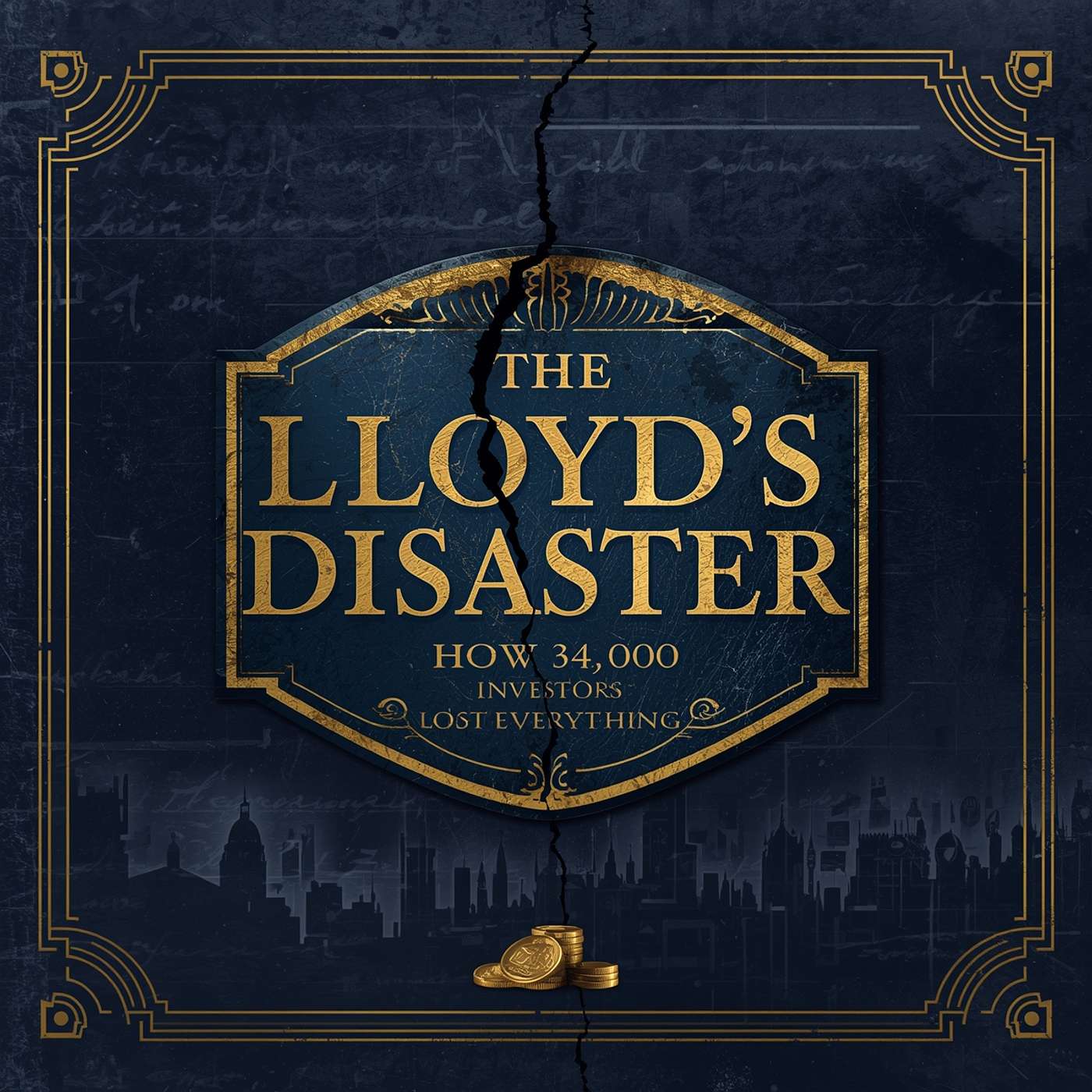
Send us a textIn 1993, thousands of investors around the world opened letters from Lloyd’s of London demanding sums that didn’t seem real. £300,000. £1 million. £3 million. Not money they invested — money they owed.Doctors, farmers, aristocrats, retirees… entire families financially erased overnight.In this episode of The Timeless Investor Show, I break down one of the greatest financial catastrophes in modern history — the Lloyd’s Disaster — where 34,000 individuals were ruined by a perfect storm of hidden liabilities, insider knowledge, and a 300-year-old system that finally buckled under its own complexity.You’ll learn:How the Lloyd’s underwriting system really workedWhy insiders saw the asbestos time bomb coming decades in advanceThe LMX Spiral: the financial snake eating its own tailHow social proof and exclusivity trapped thousands of wealthy investorsWhy this same pattern is unfolding again today in real estate, private credit, and alternative investmentsHow to protect yourself from hidden tail risk and complexity trapsThis isn’t just a historical breakdown. It’s a blueprint for avoiding the next great financial wipeout.If you invest in real estate, private credit, insurance, syndications, funds, or any alternative assets — this story is essential.Think well. Act wisely. Build something timeless.- Arie van Gemeren, CFASubscribe to the Timeless Investor Newsletter for our long-form content. Follow the Timeless Investor Show if you want to hear more of our podcast content. Get your own copy of Timeless Wealth: Real Estate Through the Ages. If you want to learn about new investment opportunities through Lombard Equities Group (accredited investors only), please reach out here. Think Well. Act Wisely. Build Something Timeless.

Send us a textIn 2005, Sean Dempsey tried to buy a tiny video startup on behalf of Google. The founders laughed him off.Eighteen months later, Google paid $1.65 billion for that same company… and the entire industry mocked the decision. Analysts called it reckless. Wall Street rolled its eyes.Today, that acquisition is worth over $300 billion.In this episode, Sean — now co-founder of Merus Capital and an investor in multiple unicorns — breaks down the real story behind the YouTube deal and the deeper lessons it reveals for founders and investors:We get into:Why the best investors change their minds faster than everyone elseHow to update your beliefs when the data shiftsPattern recognition vs. predictionWhy humility compounds longer than “genius”The mental models that separate long-term winners from one-cycle blowupsLessons Sean carried into building Merus Capital and delivering 4.2x+ fund multiplesIf you care about decision-making, inflection points, and developing an investor’s mindset, this conversation is a masterclass.👉 Watch the full interview on YouTube here 👉 Follow for more conversations on real estate, investing, and building enduring wealthSubscribe to the Timeless Investor Newsletter for our long-form content. Follow the Timeless Investor Show if you want to hear more of our podcast content. Get your own copy of Timeless Wealth: Real Estate Through the Ages. If you want to learn about new investment opportunities through Lombard Equities Group (accredited investors only), please reach out here. Think Well. Act Wisely. Build Something Timeless.
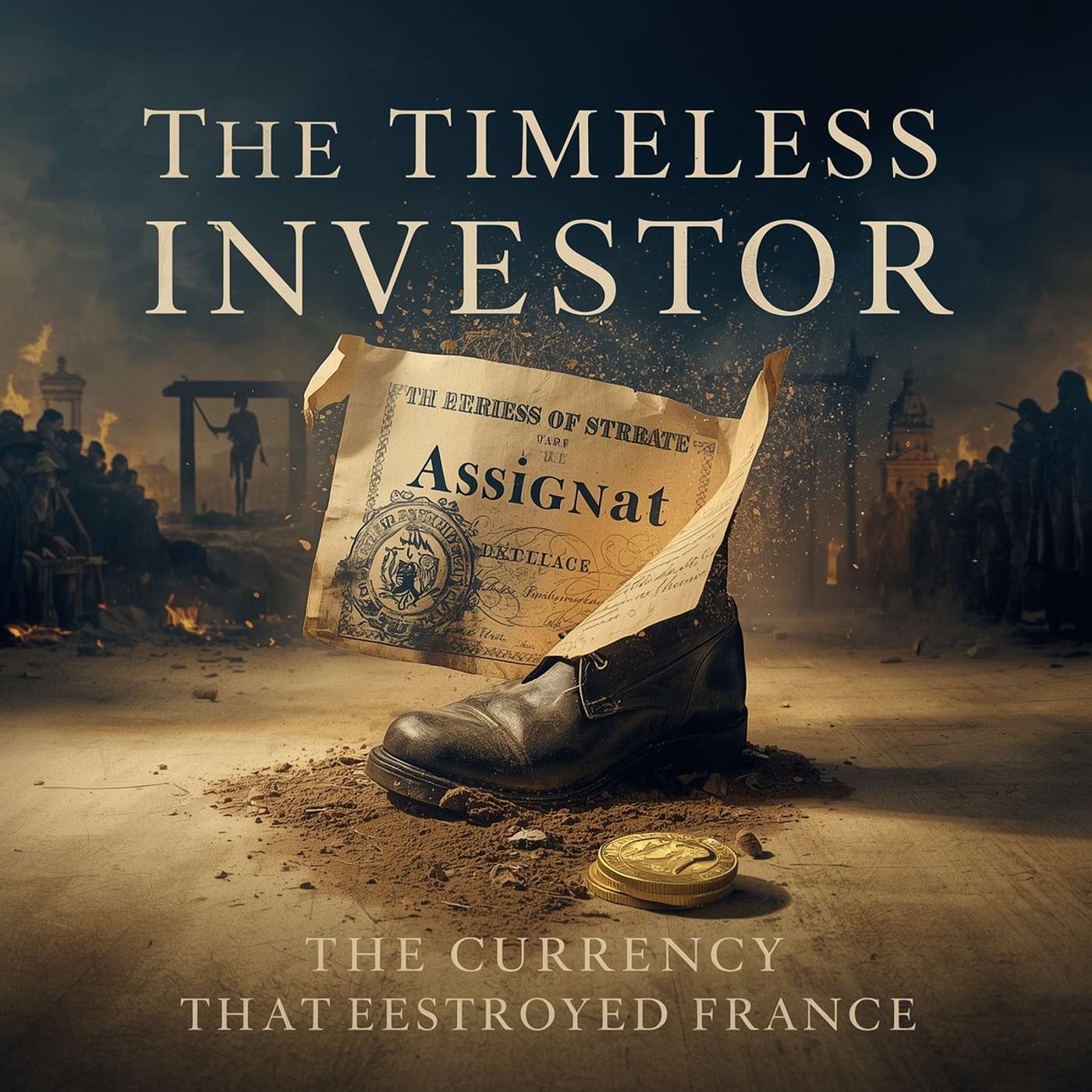
Send us a textIn 1790, revolutionary France thought it had solved its financial crisis by printing a new kind of paper money — the Assignat — backed by confiscated church land.Within five years, it destroyed the French economy, vaporized the middle class, and set the stage for dictatorship.In this episode, Arie Van Gemeren breaks down the world’s first great fiat collapse — how the Assignat began as “secured money” and ended as worthless paper — and what it teaches investors about modern inflation, asset bubbles, and political denial.You’ll learn:• How the Assignat was backed by land — and why that didn’t save it• The psychology of inflation and why every regime thinks “this time is different”• Why all fiat systems eventually converge toward debasement• How to position yourself in real assets before the next currency resetHistory doesn’t repeat — it just changes costume. The Assignat collapse is the blueprint for every modern inflation crisis.🔔 Subscribe to The Timeless Investor Show for weekly deep dives into history, money, and the timeless principles of wealth.#TheTimelessInvestor #Assignat #FrenchRevolution #Inflation #FiatMoney #HistoryOfMoney #ArieVanGemeren #RealAssets #WealthPreservation #InvestingSubscribe to the Timeless Investor Newsletter for our long-form content. Follow the Timeless Investor Show if you want to hear more of our podcast content. Get your own copy of Timeless Wealth: Real Estate Through the Ages. If you want to learn about new investment opportunities through Lombard Equities Group (accredited investors only), please reach out here. Think Well. Act Wisely. Build Something Timeless.
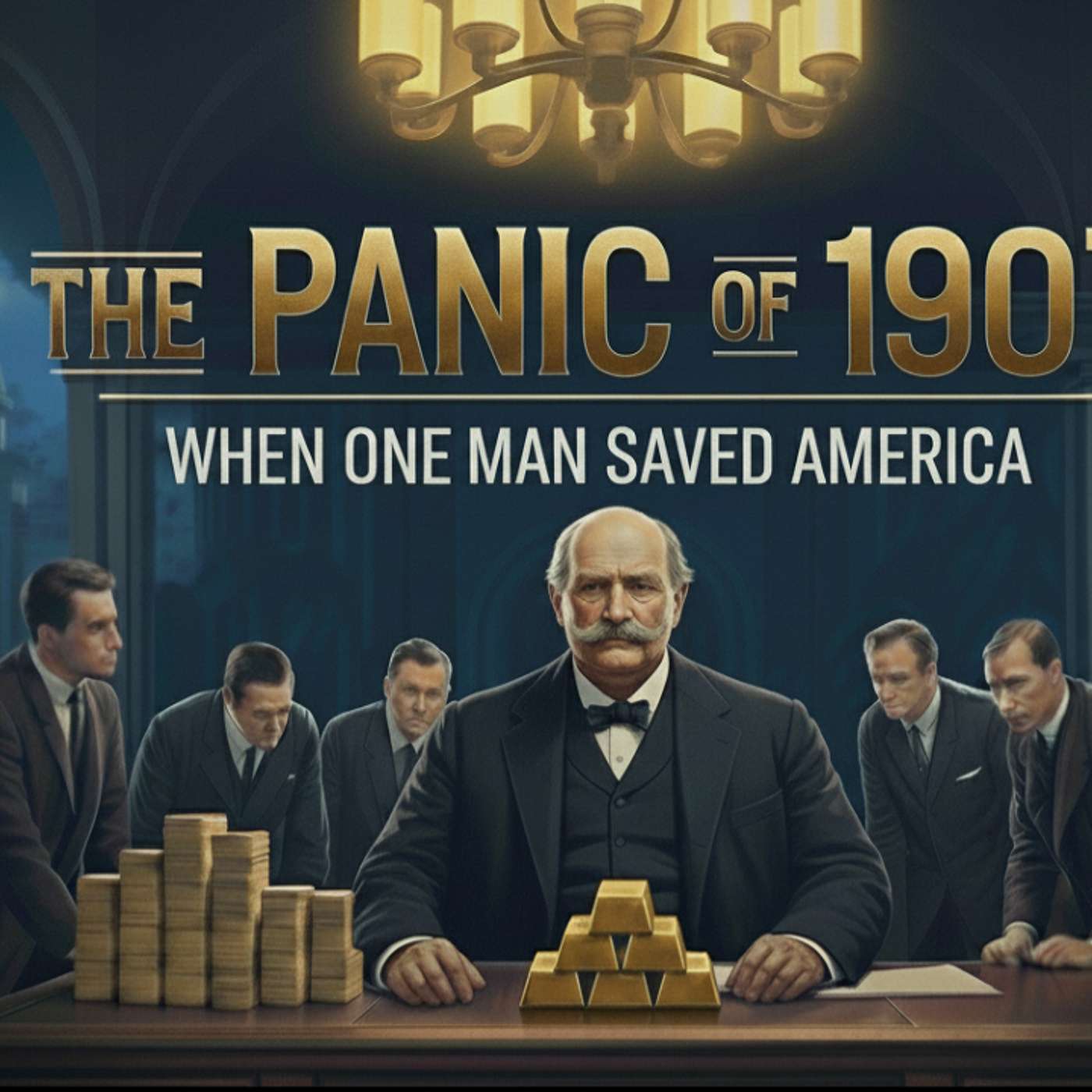
Send us a textIn October 1907, the U.S. banking system imploded overnight. Knickerbocker Trust collapsed, panic spread through New York, and the entire American economy teetered on the edge of destruction.Only one man could stop it—J.P. Morgan, a private citizen wealthier than the U.S. Treasury. For three weeks, Morgan personally decided which banks lived and which died, locking financiers in his library until they agreed to save the system.From the ashes of that crisis came something even more powerful: the Federal Reserve. Conceived in secret on Jekyll Island by seven men representing one quarter of the world’s wealth, the Fed was designed to stabilize the system—but it also concentrated control over money like never before.In this episode, Arie Van Gemeren explores:How the Panic of 1907 exposed the fragility of the U.S. financial systemThe secret Jekyll Island meeting that created the Federal ReserveHow crises always consolidate power—and how investors can use that pattern to their advantageTimeless lessons on liquidity, leverage, and positioning for the next downturnThis is The Timeless Investor Show—where history, finance, and timeless wisdom converge.Subscribe to the Timeless Investor Newsletter for our long-form content. Follow the Timeless Investor Show if you want to hear more of our podcast content. Get your own copy of Timeless Wealth: Real Estate Through the Ages. If you want to learn about new investment opportunities through Lombard Equities Group (accredited investors only), please reach out here. Think Well. Act Wisely. Build Something Timeless.
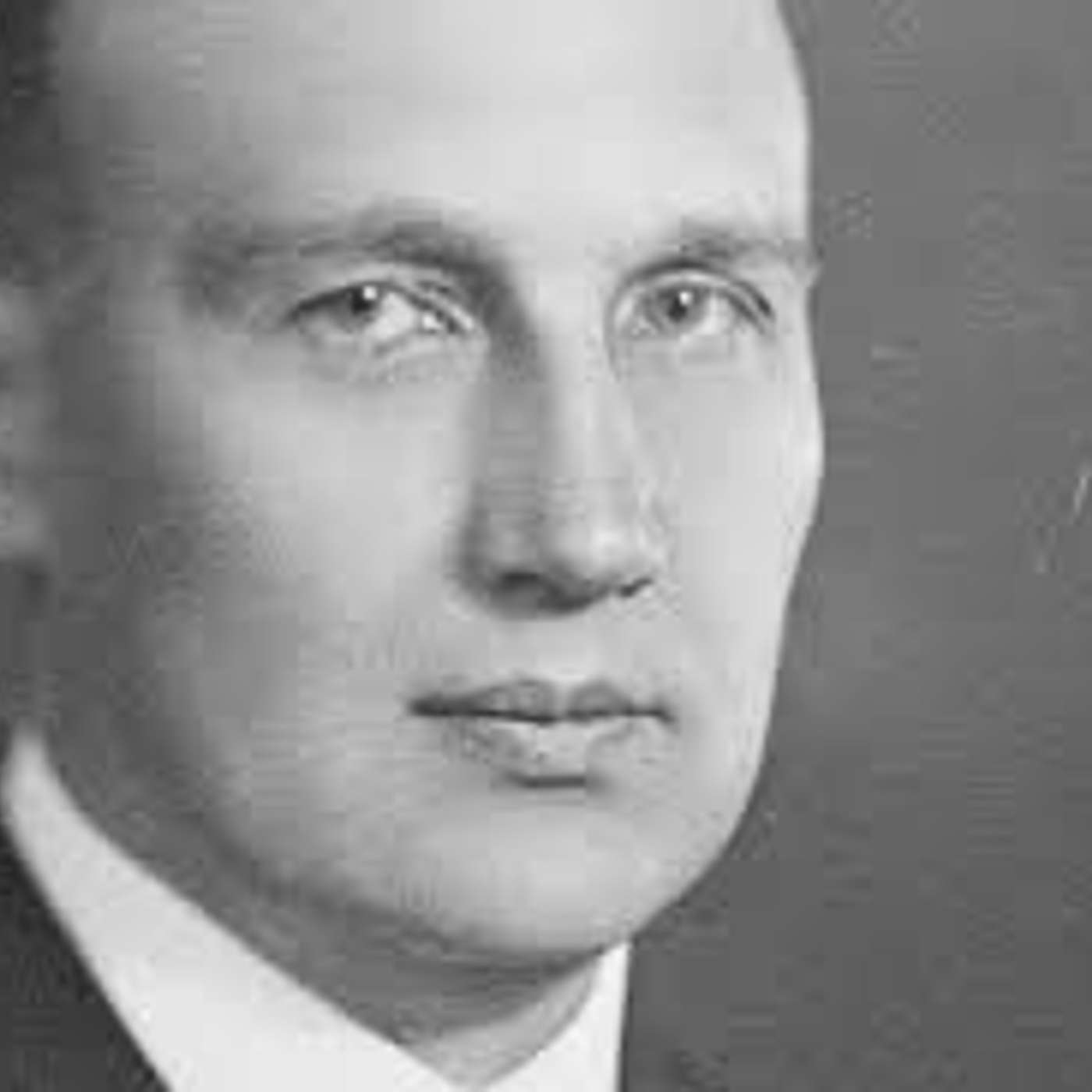
Send us a textIn 1932, the world’s richest man pulled the trigger that ended an empire. Ivar Kruger, known as The Match King, controlled ¾ of the world’s match production, financed governments across Europe, and was hailed as the “savior of Europe.” But behind the empire was one of the greatest financial frauds in history—$6 billion (2024 value) in forged bonds, fake subsidiaries, and Ponzi-style leverage.In this episode of The Timeless Investor Show, host Arie Van Gemeren, real-estate fund manager and financial historian, unpacks how Kruger’s empire rose and collapsed—and why his methods still echo today in FTX, Theranos, WeWork, and Madoff.You’ll learn:How complexity hides deception and why simplicity is a safeguard.Why charisma and opacity are a deadly mix for investors.How leverage magnifies fraud and turns lies into catastrophe.The timeless red flags that can protect your portfolio.📚 Inspired by true history, this is part of the Timeless Greed series—stories of financial fraud, manipulation, and the recurring patterns that shape markets and human behavior.🔗 Subscribe to the newsletter → https://thetimelessinvestor.substack.com 🎧 More episodes → The Timeless Investor Show on Spotify, Apple Podcasts & YouTube 💬 Follow Arie on LinkedIn → https://linkedin.com/in/arievangemeren#IvarKruger #FinancialHistory #Fraud #PonziScheme #TimelessInvestor #InvestingLessons #FinancePodcast #EconomicHistory #WeWork #FTX #Theranos #Madoff #GreatDepressionSubscribe to the Timeless Investor Newsletter for our long-form content. Follow the Timeless Investor Show if you want to hear more of our podcast content. Get your own copy of Timeless Wealth: Real Estate Through the Ages. If you want to learn about new investment opportunities through Lombard Equities Group (accredited investors only), please reach out here. Think Well. Act Wisely. Build Something Timeless.
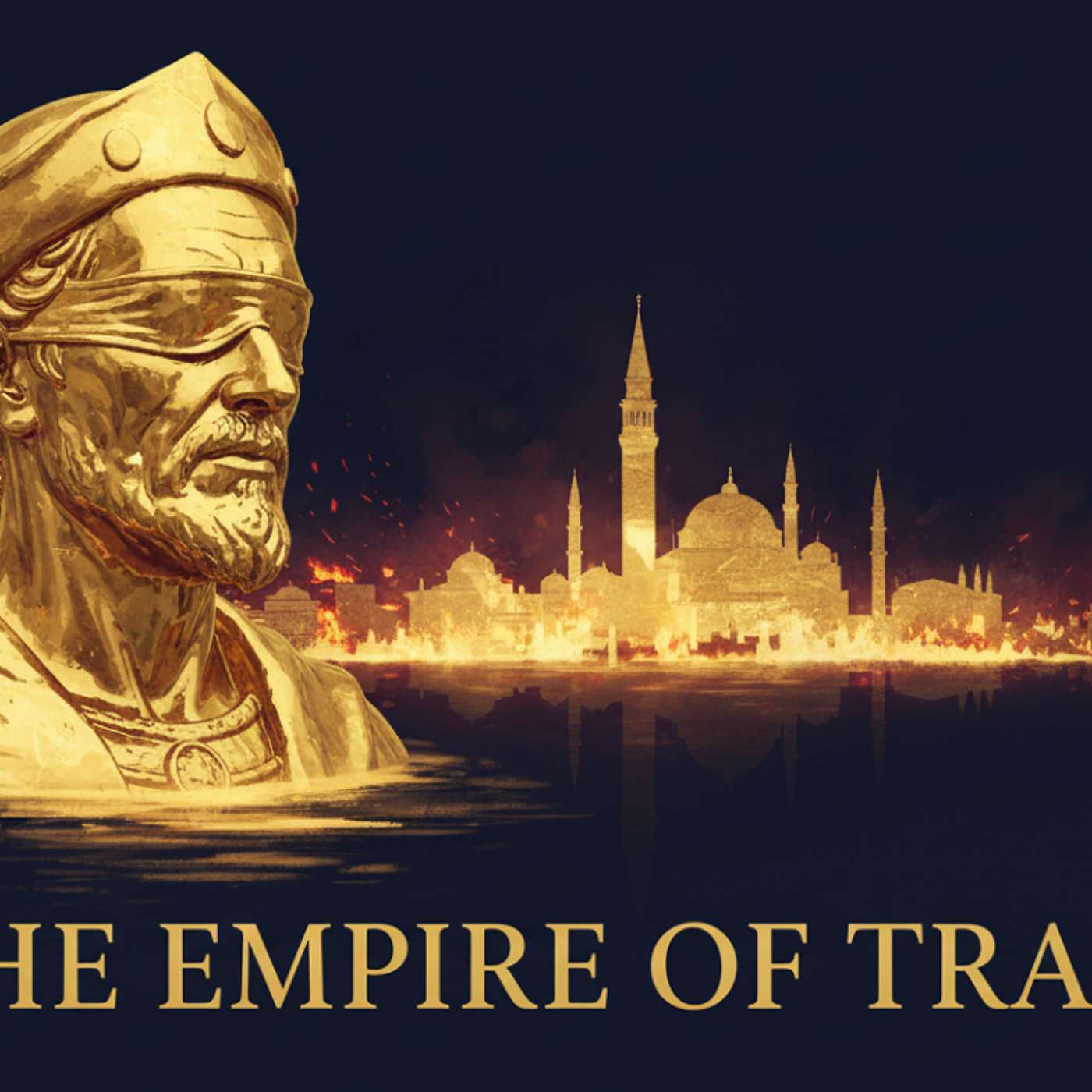
Send us a textApril 12th, 1204 AD. A 97-year-old blind man led the assault on Constantinople—the richest city on earth—and walked away with three-eighths of an empire. His name was Enrico Dandolo, Doge of Venice. And what happened next changed the course of Western history.This is the story of how Venice—built on mud, wooden stakes, and 118 swampy islands—became the wealthiest trading empire in medieval history. How they lasted over 1,000 years as an independent republic. How they controlled Mediterranean trade for 600+ years. And how they invented mass production six centuries before Henry Ford.Venice didn't conquer territory. They conquered trade routes. They didn't build armies. They built the Venetian Arsenal—the world's first factory—which could produce a fully equipped warship in a single day. When King Henry III of France visited in 1574, Arsenal workers built an entire combat-ready warship during his lunch just to flex.But Venice's real genius was understanding that wealth isn't built on land—it's built on controlling what flows across it. Infrastructure. Capital. Network effects. Financial innovation. Information advantage.In this episode, we explore:How Venice's geographic weakness became their strategic strengthThe Venetian Arsenal's assembly line production (1104 AD)Why vertical integration created an unbeatable cost advantageThe 1204 Sack of Constantinople and strategic infrastructure acquisitionHow Vasco da Gama's 1498 voyage destroyed Venice's monopoly overnight8 investing lessons for building wealth that lastsIf you're a real estate investor, business builder, or anyone thinking long-term about wealth creation, Venice offers a masterclass in competitive advantage, infrastructure control, and what happens when your moat disappears.Subscribe to The Timeless Investor for weekly deep dives into the builders, empires, and timeless principles that create lasting wealth.Subscribe to the Timeless Investor Newsletter for our long-form content. Follow the Timeless Investor Show if you want to hear more of our podcast content. Get your own copy of Timeless Wealth: Real Estate Through the Ages. If you want to learn about new investment opportunities through Lombard Equities Group (accredited investors only), please reach out here. Think Well. Act Wisely. Build Something Timeless.
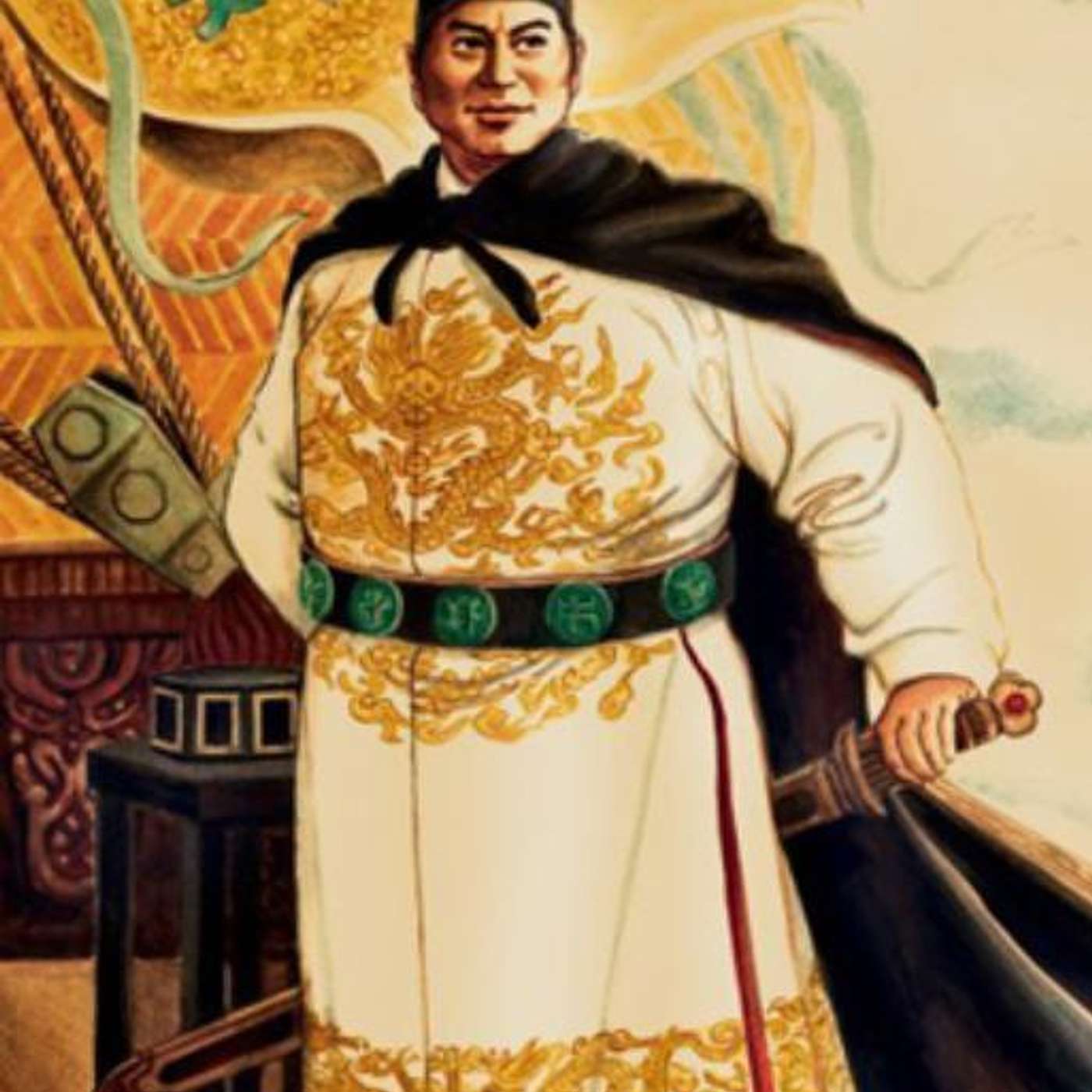
Send us a textWhat if China had a 100-year head start on European colonial dominance—and threw it away?In 1405, nearly a century before Columbus, Chinese Admiral Zheng He commanded 317 ships and 27,800 men. His fleet was the largest in human history. His flagship was five times bigger than the Santa Maria. He reached East Africa, mapped the Indian Ocean, and built trade networks across three continents.Then, within years of his death, bureaucrats burned the maps, dismantled the ships, and made it illegal to build ocean-going vessels. Europeans who came later weren't discovering new routes—they were following maps China had abandoned.This is the story of Zheng He: a slave who rose to command the greatest fleet in history, built infrastructure that should have lasted centuries, and watched it all get destroyed by the very people he served.In this episode, we explore six timeless investing lessons from Zheng He's treasure fleet:First-mover advantage compounds (but only if you maintain it)Scale changes the nature of negotiationsTrade beats conquest—better economics, sustainable relationshipsInformation asymmetry is alphaSystems outlast individuals (if you let them)Political risk can destroy everything you buildWhether you're a real estate investor, private equity professional, or building generational wealth, Zheng He's story reveals what separates wealth that compounds from wealth that dissipates.This is part of our Builders Series—exploring great builders of past and present to make ourselves better investors and more understanding of timeless principles.Subscribe to the Timeless Investor Newsletter for our long-form content. Follow the Timeless Investor Show if you want to hear more of our podcast content. Get your own copy of Timeless Wealth: Real Estate Through the Ages. If you want to learn about new investment opportunities through Lombard Equities Group (accredited investors only), please reach out here. Think Well. Act Wisely. Build Something Timeless.

Comments

Download from Google Play

Download from App Store
 United States