


 Claim Ownership
Mercantile Radio
Subscribed: 2Played: 15
Subscribe

© Mercantile Rowing Club
Description
Mercantile Radio features stories, insights and voices from the heart of Rowing, hosted by Olympic Gold Medallist Drew Ginn OAM. Proudly supported by 776BC.
25 Episodes
Reverse
Switching On: David “Chipper” Colvin on Average Speed, Elite Focus, and the '92 EightChipper’s journey spans decades of elite rowing history, from steering the Oarsome Foursome through their legendary 1990 unbeaten domestic season to the Barcelona Olympics and a hard-fought bronze at the 1997 World Championships.Chipper shares rare insights into the "switch on, switch off" mentality of Australia’s greatest rowers, the technical evolution from being a "tactile" coxswain to an "observational" coach.Who is David “Chipper” Colvin?David "Chipper" Colvin’s rowing journey began in 1976 at Melbourne Grammar School, where he achieved early success winning the 1979 Second VIII at the Head of the River. His transition to club rowing at Banks RC proved pivotal; by Year 11, he was already steering the Men’s Senior Eight. It was here that his formal "education" in the sport accelerated under the guidance of coach Chris Dane and elite oarsmen like Jim Lowe. This elite mentorship paved the way for his 1985 debut as the Victorian King’s Cup coxswain, a role that established him as a premier figure in Australian rowing. Moving to Mercantile Rowing Club in 1988-a move that defined the rest of his career-before retiring from competitive coxing after the 2000 King’s Cup.Post-retirement, Chipper seamlessly transitioned into leadership, serving a transformative four-year tenure as Club Captain at Mercantile. His evolution from a schoolboy coxswain to a central pillar of Mercantile's administration and coaching staff highlights a lifelong dedication to Mercantile’s traditions and the technical mastery of the sport.Why is this conversation important? David “Chipper” Colvin has experienced decades in Rowing. He talks through”The 1990 World Championships & The Oarsome FoursomeThe Unbeaten Run: Coxing the four through a flawless domestic season. Czech Republic: A tale of two days. Day one saw a dead flat course record at rate 32; day two brought rolling surf—the coxed four's natural element.The 'Crab' and the Choice: Chipper’s reflections on Nick Green’s famous crab and the transition from coxed to straight four.Athlete Psychology: Memories of James Tomkins and Mike McKay—their unique ability to be totally relaxed on land but intensely focused the moment they hit the water.The Road to Barcelona 1992The Dream Realised: After missing the 1986 gold-winning eight, Chipper coxed the 1992 Olympic eight (featuring Rob Scott and Bo Hanson).The Ballarat Grind: Training with Sam Patten’s group and the "fastest-ever" recorded 500m sprints where the eight outpaced the fours.Radio Silence: Coach Brian Richardsons’ use of shore-to-boat radio, leaving Chipper as the sole voice the crew heard during the heat of battle.1997 World Championships: The Underdog BronzeHarold Jahrling’s Philosophy: Working under a senior Olympic coxswain known for gruelling 20km rows and "tank empty" sessions that dropped rates to 10 before climbing back to 40+.The Strategy: How the 1997 eight used superior average speed (1:22 splits) to methodically pick off rivals in a final where the early leaders finished last.Coaching & Technical PhilosophyMentors: Drawing from the commanding presence of Noel "Donno” Donaldson, the creative freedom of Brian Richardson, and the eloquence of Chris Dane.The Transition: Moving from the direct tactile feedback of the coxswain's seat to the remote observation of the coach’s bike.The "Foot Stretcher" Secret: Why subtle rigging tweaks often unlock more speed than major technical overhauls.Communication: Why the same message needs three different deliveries to reach different athletes.This podcast is for athletes, coxswains, coaches, rowing historians and those who are passionate about Rowing. Join us to listen to “Chippers” journey through rowing thus far.Sponsored by 776BCHosted by Drew GinnGuest David Colvin OLYProduced by Nicholas Finster
Reg Crawford- The Architecture of Trust: War Zones, Collingwood, and 200km RowsIn this episode, Drew Ginn OAM OLY sits down with his long-time collaborator and friend, Reg Crawford. From the high-stakes environments of SAS operations to the high-performance culture of the Collingwood Football Club and the grueling world of elite rowing, Reg provides a no-nonsense masterclass on leadership under pressure.Who is Reg Crawford?Reg Crawford is a distinguished leader, storyteller, and high-performance consultant whose career spans the world’s most volatile war zones and elite sporting arenas. A former SAS Lieutenant Colonel, Reg’s military tenure is marked by extraordinary service, including being awarded the United States Bronze Star Medal for leadership during the Iraq War and serving as the first Australian on the ground following the Rwandan genocide.In the professional sporting world, Reg is renowned for his "no-nonsense" approach to culture, notably spearheading a high-performance review for the Collingwood Football Club that underpinned a premiership-winning strategy. Today, he leverages his unique background to coach executives and athletes alike, challenging them to find growth in adversity and build radical accountability within their teams.Why is this Conversation Important?This conversation peels back the layers of team culture to reveal what actually builds trust, resilience, and accountability when the stakes are at their highest.The Path Less Travelled: Reg discusses his transition from the world of banking and personal struggles to the elite ranks of the SAS, driven by a curiosity-first mindset.The SAS Crucible: Insights into Special Forces selection, focusing on the critical shift from individual ego to collective responsibility ("me" to "we") and decision-making in extreme conditions.Sport vs. Service: A contrast between the financial incentives of the AFL and the raw, purpose-driven sacrifice found in elite rowing.The "Farm Camp" Experiment: A deep dive into the infamous 200km training camp for VIS rowers Karsten Forsterling, Will Lockwood, Alice McNamara, and Sarah Tait; featuring an overnight surprise ergo challenge that served as the ultimate test of leadership under exhaustion.Building Bulletproof Trust: Why direct, sometimes uncomfortable feedback is the bedrock of elite teams, and how to navigate the cycle of building and rebuilding confidence within a group.Preparation vs. Programming: The art of anticipating problems and practicing solutions, rather than blindly following a set instruction manual.Reflections on Glory: A look back at the "invisible village" behind the medals from Sydney 2000 to Beijing 2008.Notable TakeawaysEmbrace Discomfort: Growth lives outside the comfort zone. Whether you are an athlete, a soldier, or a leader, stepping into the unknown is mandatory for progress.Accountability: True performance requires being accountable not just to your coach, but to your peers.Stay Curious: Reg’s career trajectory proves that a relentless curiosity can lead you from the lowest points to the highest levels of achievement.This episode is essential listening for coaches, athletes, business leaders, and anyone looking to cultivate a sharper, more resilient approach to their own "real-world" pressure.Sponsored by 776BCHosted by Drew Ginn OAM OLYGuest Reg CrawfordProduced by Nicholas Finster
Episode 23 The Mechanics of Dominance with New Zealand Legend Eric Murray CNZM In this episode, Drew Ginn OAM OLY sits down with New Zealand rowing royalty, Eric Murray CNZM. We dive deep into the journey of the "Kiwi Pair," the transition from the disappointment of the 2008 Beijing Olympics to their legendary undefeated streak, and the raw, technical physics of how they moved a boat faster than anyone in history.Who is Eric Murray? Eric Murray (2x Olympic Gold Medallist, 8x World Champion)Teaming up in 2009, Eric Murray and Hamish Bond formed the most dominant partnership in rowing history, remaining unbeaten for 69 consecutive races over eight years. A two-time Olympic gold medallist and eight-time World Champion, Murray transitioned from a rugby background to become a technical powerhouse, famously setting a world record time of 6:08.50 at the 2012 London Olympics. Despite a disappointing seventh-place finish in the coxless four at the 2008 Beijing Games, Murray found a perfect, though personality-clashing, synergy with Bond that resulted in six successive world titles and the prestigious Thomas Keller Medal. Eric Murray is a two-time Olympic champion, having won gold in the coxless pair with Hamish Bond at London in 2012 and Rio de Janeiro in 2016.Why is this conversation important?The Bow Seat Recognition: Eric discusses the unsung hero of the rowing crew—the bow seat—and how they can "make or break" a pair’s synergy.The 2008 Catalyst: A raw look at the frustration of the Beijing Olympics and how the "B Final" experience became the fuel for a decade of dominance.The Dick Tonks Philosophy: Eric shares what it was like training under the legendary, albeit silent and grueling, coach Dick Tonks.The Physics of Speed: A masterclass in technical rowing, covering:- Power Discrepancy: Managing the 10kg weight difference and leverage between him and Hamish.- The Force Curve: Why holding onto the finish too long is wasted energy.- Even Splitting: The strategy of "negative splitting" races to maintain momentum while others "die" by the 1000m mark.Iconic Rivalries: The high-stakes battles with the British pair (Pete Reed and Andy Triggs Hodge) and how that rivalry pushed them to the 6:08 world record in London.Memory Lane: Eric recounts the "meme-worthy" moment Hamish caught a crab at Lake Karapiro and the 30cm victory that solidified their momentum.Eric explains that their success wasn't about looking "pretty" at low rates; it was about efficiency and the "symphony" of their power application.You can quote us on that"You’ve got a limited amount of energy... why are you holding on to the blade? Noise is wasted. Wash is wasted. Let the physics do its job.""I didn't want to feel like death at 600 meters.""The GPS don't lie. I don't think anyone in the world could do that pace."Enjoy this episode of Mercantile Radio highlitght an iconic story and the mechanics of the Kiwi Pair’s successSponsored by 776BCHosted by Drew Ginn OAM OLYGuest Eric MurrayProduced by Nicholas Finster
High Performance Isn’t Loud - It’s Harmonic: Lessons from Nick Green and the Oarsome Foursome.Who is Nick Green OAM OLY?Nick Green OAM OLY was a member of the "Oarsome Foursome" from 1990 to 1996. The ‘Oarsome foursome” was one of the most dominant crews in history, having won almost every major international race between 1990 and 1996.His success extended to the World Championships, where he secured four gold medals between 1990 and 1998. Beyond his athletic achievements, Green has been a significant figure in sports administration, serving as the Chief Executive of Cycling Australia since 2014.Why is this conversation important?1. The Anatomy of Pressure: The "Nervous Twitch"Nick reveals for the first time that the 1996 Atlanta campaign was so mentally taxing he developed a nervous twitch in his eye.The Weight of Legacy: Going "back-to-back" isn't just a physical feat; it’s an emotional and mental marathon.The "Oscillation" Effect: Nick describes the crew as being at "8,000 revs"—perfectly balanced on the edge of a cliff where they could either break or "fly."Internal Validation: Despite their history, the narrowing gap between them and the competition created a high-stress environment where they had to find their form at the absolute last second.2. Selection Stress & The "Trust" FactorA fascinating look at the 1996 selection process, which Nick admits almost broke the crew's spirit before it solidified it.Tall Poppy Syndrome: Nick felt the selectors were trying to "break them up" to see if the successful combination was actually the fastest.Internal Doubt: The constant re-testing caused crewmates to question if they really were the right four.The Resolution: Winning the final selection trials individually (but in different boats) proved their integrity. It taught Nick a strong lesson: Never question the integrity of a teammate who performs under pressure.3. The "Mud Crab" and the Humble BeginningsNick’s journey wasn't an immediate ascent to greatness. This section provides a great "underdog" narrative for the audience.The Loser's Final: At Xavier College, Nick’s crew finished second to last.The Melbourne Uni "Recruitment": A funny realization that he wasn't "special" when he showed up to find 60 other guys with the same recruitment letter.The Birth of "MC" (Mud Crab): His first senior international race ended in disaster catching a "massive crab," breaking the rigger, and landing in the coxswain's lap while they were leading the race.4. Technical Mastery: "Easy Speed" vs. "Hard Miles"The "Oarsome Foursome" had a distinct technical identity that set them apart from the more "brute force" international crews.Finesse over Horsepower: Nick and Drew were relatively light (84-88kg) compared to their rivals. They relied on "Smart Speed" rather than "Hard Speed."The Harmonic Rhythm: Nick describes floating into the front turn with "eternity" to place the blade finding harmony where the boat moves fast without feeling like they are "doing much."The Feedback Loop: The synergy between what the athletes felt and what coach Noel Donaldson saw created a superior training model.5. Coaching and LeadershipThe role of Noel Donaldson is pivotal a coach who had never actually rowed a boat but mastered the art of human management.Managing Personalities: Dono’s genius lay in handling the 20% of the time when things went wrong under high pressure.The Identity Crisis: Nick admits to having a "crisis" when moved to the 3-seat. Dono’s leadership was about the "tap on the shoulder", giving an athlete the confidence to believe they belong on the world stage.The Varese Training Block: A masterclass in "re-evaluation." After a crushing defeat in Amsterdam, the crew isolated themselves to get their heads and technique back in shape, proving that sometimes you have to step away from the noise to find your speed again.Sponsored by 776BCHosted by Drew GinnGuest Nick Green OAM OLYProduced by Nicholas Finster
A conversation with GB Strength and Conditioning specialist Alex WolfWho is Alex Wolf?Former Head of Strength and Conditioning for English Institute of Sport and consultant to various Rowing National Teams.Why is this conversation important?Rethinking Rowing Techniques -Knee vs. Hip Dominance in RowingTraditional belief sees rowing as hip-driven—Alex argues it's predominantly knee-dominant.Importance of ankle dorsiflexion and hip internal rotation for effective force production.The Role of GlutesCommon misconception about glute activation at the catch phase.Glutes stabilise rather than produce significant force during early stroke phases.Coaching Insights and PhilosophySuccessful coaches define performance clearly, aligning support services accordingly.Importance of coaching based on principles over methods for adaptability.Performance Support EvolutionShift from traditional strength training to more targeted adaptations based on specific needs:Use of leg presses and trunk-specific exercises over traditional barbell lifts.Emphasis on isometric holds and partner-resisted exercises to maximize muscle contraction without equipment overloads.Future Innovations in RowingPhysiological Advances:Explore high-intensity interval training adapted from cycling/athletics models.Technological Innovations:Encourage changes in boat design or materials similar to advancements seen in Formula One or athletics footwear.Entertainment Factor:Enhance spectator engagement by pushing boundaries like sub-six-minute pairs races akin to breaking two-hour marathon barriers.Takeaways for Coaches & PractitionersDefine what a successful performance looks like before integrating support services like S&C or nutrition into programs.Maintain curiosity; be open-minded toward new ideas even if they aren't immediately adopted ("Be curious, not judgmental").Recognise that suggestions are part of a creative process—contribute continually without fear of rejection.This conversation is great for rowers, coaches, rowing enthusiasts and parents of rowers. Sponsored by 776BCHosted by Drew GinnGuest Alex WolfProduced by Nicholas Finster
Insights from Hayley Verbunt, Australian National Team CoxswainEver wondered what it takes to guide a crew to victory from the coxswain seat? Hayley Verbunt, a national team athlete, recently shared her fascinating journey and expertise on Mercantile Radio, offering a rare glimpse into the art and science of coxing at the highest level. Who is Hayley Verbunt?From her early days at Firbank Grammar School to representing Australia on the world stage, Hayley’s story is one of passion, perseverance, and precision. She described the critical moments before a race—the countdown, the narrowing focus, and the calls that unite a crew in perfect harmony. Her approach blends technical mastery with emotional in diligence, ensuring every stroke is purposeful and every move is strategic. Why does this conversation matter?Hayley shares her philosophy on race planning: a balance of structure and adaptability. The first strokes are a “set play,” rehearsed to perfection, while the middle thousand meters demand responsiveness to the race dynamics.Her ability to inspire and lead, coupled with her relentless pursuit of improvement, has been pivotal in her success. What truly stood out was her advice for aspiring coxswains: Be a student of the sport - knowledge is power. Seek feedback - from coaches, peers, and teammates.Lead by example - confidence and commitment inspire trust. Hayley’s journey reminds us that success in rowing - or any field - requires dedication, curiosity, and the courage to embrace challenges. As she looks ahead to the LA Olympics, her mindset is clear: innovation, evidence-based training, and a relentless drive to find that extra edge. Let’s celebrate the passion and precision that make rowing such a unique and inspiring sport.What’s your favourite insight from Hayley’s story? Share your thoughts below!Sponsored by 776BCHosted by Drew GinnGuest Hayley VerbuntProduced by Nicholas Finster
Behind the Scenes of Rowing Excellence: A Conversation with Andrew Guerin OAMWhat does it take to transform a team, manage coaches, and create an environment where athletes can thrive? In this episode of Mercantile Radio, Drew Ginn had the privilege of sitting down with Andrew (Andy) Guerin OAM, a man whose journey through rowing is as rich in history as it is in lessons for leadership and teamwork.From navigating the financial challenges of Rowing Australia in the mid-90s to being part of the team that orchestrating the logistics behind the Australian rowing team’s stellar performance at the 1996 Atlanta Olympics, Andy shared invaluable insights into the art of team management.Why does this conversation matter?Andrew has undertaken successfully most aspects of the sport from elite to masters rowing, administration at club, State and National levels, umpiring at all levels including 30 years as an international umpire, team manager at all levels including two Olympic Games and World Championships, trustee of club and national rowing funds, rowing photographer and rowing historian. He one of the few people to be life member of his club, and also his state and national association.His philosophy? Let the coaches focus on the athletes while he ensured the coaches had everything they needed to succeed. The result? A seamless operation that allowed the athletes to focus solely on their performance.One standout story was the team’s innovative approach to the 1996 Games. By securing off-site accommodations near the rowing venue, organising private transport, and even the introduction of cutting-edge ice vests for the athletes, Andy in his role as team manager recalls details about how key leaders and coaches worked to optimise logistics and support for team success. Of course, this ingenuity didn’t go unnoticed by rival teams, sparking a mix of admiration and frustration. But as Andy put it, “It was all about making sure the crews had everything they needed and were masters of their own destiny.”Beyond the logistics, Andy reflected on the evolution of rowing, the importance of club culture, and the enduring bonds formed through the sport. His passion for rowing is infectious, and his dedication to fostering community and excellence is a testament to the power of sport to shape lives.Whether you are a rower, coach, or simply someone who appreciates the behind-the-scenes of high-performance teams, this episode is a must listen. Andy’s stories remind us that success is built on collaboration, innovation, and a relentless focus on the details.Tune in to hear the full conversation and gain a deeper appreciation for the people and decisions that drive rowing forward. Let’s celebrate the history, the lessons, and the future of this incredible sport.Sponsored by 776BCHosted by Drew GinnGuest Andrew Guerin OAMProduced by Nicholas Finster
Inside the Mind of a National Team Athlete: Paige Barr's Journey to LA 2028What does it take to compete at the highest level in rowing while staying grounded and inspired? Paige Barr, a current member of the Australian Rowing Team, shared her journey, insights, and aspirations on the latest episode of Mercantile Radio. Who is Paige Barr?Paige Barr is a determined and talented sweep rower from Bairnsdale, Victoria, who continues to rise through the ranks of Australian rowing with grit, skill, and a trademark sense of humour. A two-time National Training Centre (NTC) scholar and Mercantile Rowing Club athlete, Paige made her Olympic debut in Paris 2024 in the stroke seat of the Australian Women’s Eight, which finished fourth, Australia’s best-ever result in the event at an Olympic Games.Paige first discovered rowing at Gippsland Grammar School in Sale, where she was named Captain of Boats. Guided by her first coach, Peter Campbell, she began rowing at the age of 15 and quickly found her stride in the sport. After school, she joined Mercantile and won her first national title in the Under 21 Women’s Coxless Four in 2021. That same year, she was selected to the U23 Australian Rowing Team and went on to claim a Bronze medal at the World Rowing U23 Championships in the coxless four.Paige has represented Australia in the Senior Rowing Team from 2022 to now, in the women’s sweep program with World Cup Gold, Olympic Representation in 2024 and World Championship Medals.Why does this conversation Matter?From her early days rowing on the Thompson River to representing Australia on the world stage, Paige’s story is one of resilience, growth, and finding joy in the process. She reflects on the importance of balancing intense training with moments of fun; whether it’s laughing with teammates in the gym or sharing snippets of her journey on social media to inspire the next generation of athletes. Enjoying the Process: Paige emphasises the value of finding joy in rowing, both on and off the water. For her, it’s about connecting with teammates, embracing the grind, and not taking things too seriously. Inspiring the Next Generation: Through her social media, Paige offers a glimpse into the life of an elite athlete, showing younger rowers that it’s not all about pre-race debriefs; it’s also about having fun and building camaraderie. Technical Growth: Paige is constantly refining her technique, focusing on staying loose, maintaining a strong finish, and making the boat run smoothly. The Power of Discipline: For Paige, discipline is the foundation of confidence. It’s about showing up, putting in the work, and trusting the process. As she looks ahead to LA, Paige is motivated to build on her experiences, including a fourth-place finish in Paris, and push her crew to new heights. With a focus on teamwork, adaptability, and a fresh coaching perspective, she’s ready to take on the challenge. Paige’s story is a testament to the power of passion, perseverance, and positivity. Whether you’re an athlete, a coach, or someone striving for excellence in your field, her journey is a reminder to enjoy the ride, trust the process, and always back yourself. Tune in to the full episode of Mercantile Radio to hear more about Paige’s journey, her training insights, and her vision for the future. Sponsored by 776BCHosted by Drew GinnGuest Paige Barr OLYProduced by Nicholas Finster
Cameron McKenzie-McHarg, CEO and Founder 776BC and Olympic Gold MedalistIn this episode of Mercantile Radio, Drew Ginn sits down with Cameron McKenzie-McHarg, Olympic rower and co-founder of 776 BC, for a wide-ranging, wonderfully honest and passionate conversation.Who is Cameron McKenzie-McHarg?Cameron McKenzie-McHarg is an Australian former rower and Australian rules footballer. He is a dual Olympian who won a rowing silver medal at the 2008 Summer Olympics. He represented Australia at twelve world championships. Why does this conversation matter?Founding 776BC the early days- Cameron unpacks the raw reality of starting 776 BC with zero apparel experience, the naivety required to begin, the scar tissue built along the way, and why intensity, doubt and vision are part of the deal.Translating the Athletic mindset to business- managing stakeholders and transmitting energy and visionThe conversation dives deep into Beijing 2008, the power of simplicity in crew culture, race plans and execution, and why knowing exactly what you’re trying to do on the first three strokes matters under Olympic pressure.Cameron reflects on lessons from Scotch College rowing, great coaches, learning fundamentals before cleverness, pacing, mental preparation, and how elite sport thinking translates directly into business and life.They cover erg tests, training philosophy, fitness post-career, favourite drills, iconic regattas, funny rowing moments, coffee rituals, and where 776 BC is heading as a global performance brand.This is one of those episodes that cuts through the noise—no fluff, just clarity, craft, and lived experience—and if you care about performance, teams, or building something meaningful, you’ll take something practical awaySponsored by 776BCHosted by Drew GinnGuest Cameron McKenzie-McHarg OLYProduced by Nicholas Finster
Paul Reedy From Olympic Medals to Coaching SuccessAn Olympic journey from 1984 in Los Angeles to 2012 London and 16 Rio the journey and insights are World Class. Drew Ginn and Paul Reedy dive deep into the world of rowing as an accomplished athlete and coach!In this episode of Mercantile Radio, we welcome back Paul Reedy to discuss his illustrious journey from Olympic rower to renowned coach. Listen as he shares captivating stories from his 1984 silver medal campaign and contrasts it with the 1988 Olympics.Discover the challenges faced in transitioning from athlete to coach and how innovation played a role in shaping his coaching philosophy.Who is Paul Reedy?Paul Reedy is a dual Olympian, an Olympic and Commonwealth Games silver medallist who competed over a seventeen-year period at the elite level. He was a fourteen-time Australian national champion across both sculling and sweep-oared boats and then coached six Australian crews to national championship titles.Paul has made a significant contribution to Rowing as an athlete and now as a coach.Why does this conversation matter?Pauls experience as a rower and coach provides insights for athletes, coaches and rowing enthusiasts.Key takeaways include:The nuances between sculling and sweep rowing techniques.Training and competing in the 1984 and 1988 Olympics and the expectations in performance after successInsights on fostering a winning mindset for athletes.The importance of experimentation and adaptation in trainingPaul recounted starting rowing thanks to encouragement during school years in rural Victoria then developing further at Melbourne Uni—eventually prioritising rowing enough even to pause studies temporarilyThe transition to coaching, his core philosophy became maximising hull run during recovery phase, particularly important when working with lighter/under powered athletes where every bit counts toward easy speed.Transition to coaching in the United Kingdom with London Rowing Club and Team GB.How a background as a Physiotherapist has assisted him in his rowing and coachingThis inspiring conversation that blends history, technique, and personal growth.Sponsored by 776BCHosted by Drew GinnGuest: Paul ReedyProduced by Nicholas Finster
Who is David, Gina and Rob Douglas?The conversation features three generations of the prominent Australian rowing family, the Douglas':David Douglas: Olympic Silver Medalist (Mexico, 1968).Gina Douglas: Olympic Finalist (Sydney, 2000 & Atlanta 1996), former U19 World Record Holder (Ergo).Rob Douglas: World Championship Rower (2001, 2002), Club and School Rower.The conversation reveals a unified, intentional strategy across the Douglas generations regarding how parents with high sporting pedigree nurture and support their children in the sport of rowing.Why Does This Conversation Matter? David, Gina and Rob share their unique experiences in striving to achieve their goals, across 5 decades. Each story provides an insight into how they navigated and learned to be agile. High-Altitude Strategy (1968): David provides a rare insight into the radical, specialised preparation needed for the Mexico 1968 Olympics, including five weeks of acclimatisation and the need to "start racing at 75% and gradually build through the whole race."Sydney Olympics 2000: Gina discusses the extraordinary and unique experience of the Sydney Olympics, feeling the support of the crowd and the power of the home-crowd advantage.Searching for a team environment: Gina explains how she was driven to learn the single scull not just for competition, but to gain technical confidence after years of feeling like the least experienced person in crew boats. It took until six weeks before the Sydney Games, following a tough conversation with coach Noel Donaldson ASM, to become truly independent. She was searching for the team environment, so she cut out the noise and became a sculler.David and Gina reflect on the evolution of the Mercantile Rowing Club, highlighting the strong social fabric and enduring camaraderie that defines the club across generations. Intergenerational Pressure & Support: Explores the difficult balance of being highly decorated Olympian parents (Gina and Rob are now parents of rowing children) who deliberately reserve coaching advice to allow their children to develop their own intrinsic motivation and relationship with the sport.How do you navigate being a parent of rowers? Both Gina and Rob admitted that stepping back from coaching their children was a conscious, difficult process. Rob revealed he initially wanted to be very involved to share his knowledge, but realised he overstepped early on. He openly states, "It took me three seasons to get to that point" of focusing solely on support.Sponsored by 776BCHosted by Drew GinnGuest David Douglas, Gina Peele (Douglas) OLY, Rob DouglasPublished by Nicholas Finster
Robyn Selby-Smith OLYIn this episode, we sit down with Robyn to explore her journey from being an elite rower focused solely on the Olympics and World Championships to rediscovering the vibrant community surrounding masters rowing. We delve into her reflections on a career highlight at the 2005World Championships in Gifu, where she won two gold medals amidst challenging conditions and fierce competition.Who is Robyn Selby-Smith?The highlights of Robyn's international rowing career were the 2005 World Championships where Robyn was in the winning 4- and 8+ and becoming an Olympian in 2012 in the W8. The lowlight was missing out on the Beijing Olympic eight after being in the eight which won the first World Cup in 2008 by six seconds. After being a reserve for the Beijing Olympic eight Robyn took a break from rowing.Leading into 2012, Robyn returned to rowing and played a vital role in the battle to allow a women's eight to represent Australia for the first time since Beijing. Robyn was selected in the Australian women's eight in 2012 which qualified for the Olympics at the final qualification regatta and finished 6th in London. Domestically, Robyn rowed in many successful Mercantile eights as well as Victorian eights. Retiring after London, Robyn returned to her career as a lawyer and has kept up her strong interest in the sport.Why does this conversation matter?Robyn shares her story of coming through rowing at Mercantile Rowing Club, Victoria and Rowing for Australia. Return to Rowing:●Insights on transitioning back into the sport after an elite career.●The vibrant community atmosphere at riverbanks during masters events.Memorable Career Moments:●Reflections on winning two gold medals at the 2005 World Championships.●Discussion on team dynamics and how past experiences shape current perspectives.The Art of Rowing:●Technical aspects that contributed to successful races.●Importance of maintaining rhythm and balance within a crew.Coaching Influence:●Impactful coaches throughout her journey; balancing innovation with consistency.Club Culture & Community Engagement:●Growth observed in club culture since early days; inclusive environment fostering new talent.●Encouragement for more participation across all age groups.This candid conversation shares Robyn’s learning through her experiences and learning more about herself.This conversation is for athletes, coaches and parents of rowers coming through the domestic programs, learning from Robyn's breadth of experience and priorities.Sponsored by 776BCHosted by Drew GinnGuest Robyn Selby-SmithPublished by Nicholas Finster

Join us as we dive into the inspiring journey of Josh Dunkley-Smith, a world-class rower and former teammate of Host Drew Ginn. Discover how he conquered the 2K ergo challenge and set his sights on breaking a world record with unwavering confidence.In this episode, Josh shares insights from his rowing career, including pivotal moments that shaped him as an athlete.Who is Josh Dunkley Smith?Josh Dunkley-Smith is an accomplished athlete and Olympic Medalist, achieving Silver in the Rowing Men’s Coxless Four at the London 2012 Olympic Games.Josh began his rowing career at Geelong College and joined Mercantile Rowing Club when he moved to Melbourne for tertiary studies before relocating to the Australian Institute of Sport in Canberra.Dunkley-Smith has competed at three World Championships, claiming Bronze in the Men’s 8 at the 2010 World Championships, and Bronze in the Men's Four at the 2011 World Championships. Josh triumphed alongside rowing great Drew Ginn in the Men’s Four at the London’s 2012 Olympic Games claiming Silver for Australia.Why Does This Conversation Matter?Josh reflects on his unique path within rowing, emphasising loyalty, confidence, and continuous improvement throughout his career despite retiring earlier than many peers might expect after reaching significant milestones such as setting a world record or winning multiple Olympic medalsThe World Record Attempt- Confidence before the second attempt at breaking the 2K ergo world record- Mindset leading up to the event; training routines and mental preparation. Reflections on Athletic Career- Transition from school rowing to club level at Mercantile Rowing Club.- Influence of family background in sports; inspiration drawn from Olympian mother.Experiences & Memories- First international campaigns and notable races during under 23s and senior levels.- Emotional insights into competing in major events like London 2012 Olympics—winning asilver medal against strong competition.Training Philosophy & Insights- Importance of incremental progress in achieving personal bests over time.- Emphasis on having a clear race plan that is consistently practiced.This conversation is for athletes, parents and coaches in gaining an insight into Josh’s journey to success. Sponsored by 776BCHosted by Drew Ginn OAM OLYGuest Josh Dunkley-Smith OLYPublished by Nicholas Finster
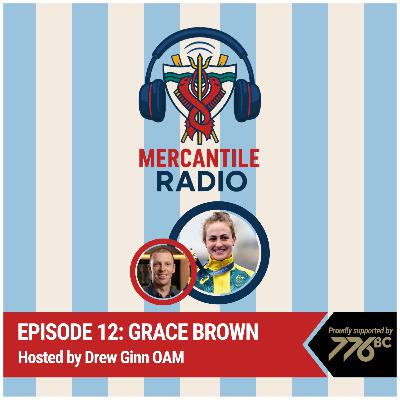
Who is Grace Brown?Grace Brown is an Australian elite professional cyclist, known primarily as a world-class Time Trial (TT) specialist.Her major achievements include:• 2024 Olympic Gold Medalist (Time Trial)• World Champion (Time Trial)Grace came to professional cycling relatively late, transitioning from middle-distance running, and is celebrated for her exceptional ability to manage sustained power output and mental strategy in solo efforts.Why does this conversation matter?This conversation is relevant to rowers and coaches because it explores the mental, technical, and strategic overlap between elite time-trial cycling and rowing.• Mastering Discomfort & Pacing: Grace details how her running background gave her the "ability to like understand discomfort and sit in discomfort," a crucial skill for rowers who must maintain peak effort for a long duration (6-20 minutes) without respite.• The Power of Self-Talk: She emphasizes the self-talk needed to overcome negative thoughts during the race ("I'm in the race, and I can win it")• Technical Focus under Duress: Grace maintains minimal vision (about one meter ahead) while traveling at speeds up to 65 km/h, relying on continuous technical cues (keeping the head low, using glutes/hamstrings) and her coach's radio calls for navigation. Requiring her to maintain her technique and core movement patterns even when physically exhausted.• Olympic Execution: Her discussion of the 2024 Olympic Gold in Paris highlights the importance of emotional control (staying relaxed to avoid crashing on wet roads) and sticking to a plan despite receiving positive time checks (going from 5 seconds up at 10k to 50 seconds up at 20k).This conversation is for athletes and coaches in gaining an insight into Grace’s journey and the parallels between cycling and rowing. Sponsored by 776BCHosted by Drew Ginn OAM OLYGuest Grace Brown OAM OLYPublished by Nicholas Finster
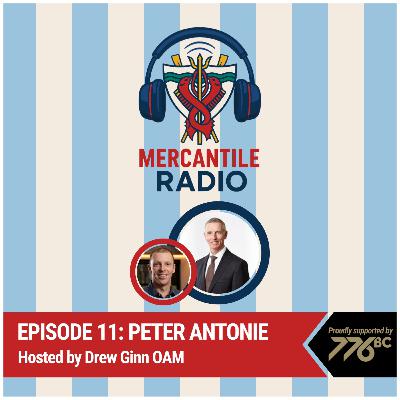
Who is Peter Antonie? Peter Antonie is celebrated as one of Australia’s most durable and versatile rowers, with a career spanning three decades including World Championship Medals as a lightweight and an Olympic Gold in Barcelona in the Men’s Heavy weight double scull. Peter Antonie has been described as the finest all-rounder in the history of Australian rowing. He is the only rower to have won all three major national titles – the Kings Cup for eights (as stroke), the President’s Cup for single sculls and the Penrith Cup for lightweight fours.Why Does This Conversation Matter? • The Mindset of a Champion: Peter reveals the dedication required at the elite level, including running every night and the drive to surround himself with better athletes.• Technical Evolution: Peter describes the shift from 1970s "brutally fast" lightweight training to the bigger volume/lower rate approach, and his personal technical changes to prioritise acceleration through the middle and finish of the stroke.• Strategic Race Planning: he a fascinating look into his deliberate, practiced, stroke-by-stroke race strategies for winning races, including the two one-hundredths of a second National Title and the "secret card" surge for the 1992 Olympic Gold.• The Power of Experimentation: Peter discusses Stephen Hawkins, Paul Reedy and his willingness to experiment with boat design, oars (even cutting slits in blades), and gear ratios to gain a technical advantage.• Signature Events are Vital: Stresses the importance of non-FISA/IOC "signature events" like the Melbourne Head and Golden Oar for fostering fun, competitive spirit, and developing the sport across all levels.This conversation is for athletes, parents and coaches in gaining an insight into Peters journey to success in lightweight and heavyweight rowing. Peter is a game changer in the sport of Rowing.Proudly Sponsored by 776BCHosted by Drew Ginn OAM OLYGuest Peter Antonie OAM OLYPublished by Nicholas Finster
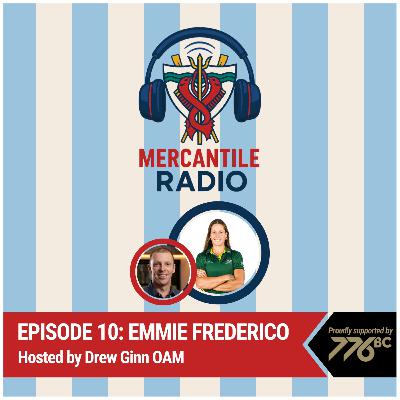
Who is Emmie Frederico?Emmie Frederico, a rower with deep family connection to Mercantile Rowing Club, has achieved success through hard work and a commitment to technical precision over raw power. Her journey, shaped significantly by a challenging yet rewarding transfer to Syracuse University in the US, highlighted the immense value of a supportive elite team environment. This progression led her to represent Australia at the Under 23 World Championships, where her crew's ability to bond through adversity proved critical to their fast, record-breaking performance on the Varese course.For Emmie, whose current focus is perfecting a "loose and connected" catch, rowing is a vehicle for personal growth, providing unique opportunities and life experiences like her aspiration to compete in the Boat Race.Why does this conversation matter?This conversation offers valuable insights for aspiring athletes and highlights key themes in the sport of rowing:The Power of Connection and Environment: Emmie emphasises her continued love for rowing comes from the squad environment; the energy of training in a squad and the strong bonds formed with teammates, especially when working through adversity.Technique as a Great Equaliser: Her experience shows that success in rowing is not solely dependent on size or raw power. She serves as a great example that effective technique and efficiency can allow an athlete to compete at the highest level.The Value of the Rowing Pathway: Her journey from a rowing family, through the school system at Firbank Grammar School, into the US at Syracuse University, and back into the Australian national system demonstrates how rowing can open up unique educational and global life experiences for dedicated athletes.This conversation is for athletes, parents and coaches in gaining an insight into Emmie’s journey from Firbank, Mercantile Rowing Club, Syracuse University to the Australian Rowing Team.Sponsored by 776BCHosted by Drew Ginn OAM OLYGuest Emmie FredericoPublished by Nicholas Finster
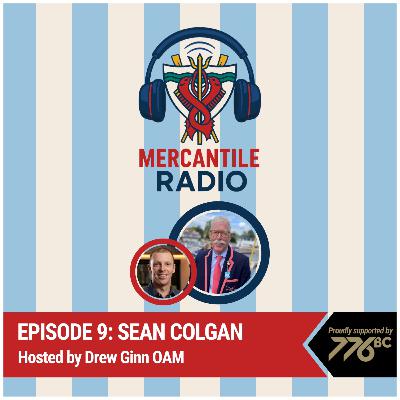
Sean Colgan – Colgan Foundation and Patron of MercantileIn this episode of Mercantile Radio, Drew sits down for breakfast with one of rowing’s great characters and most generous supporters, Sean Colgan. Recorded in a bustling Melbourne café on the eve of the Head of the Yarra, this conversation is rich with stories, humour, and deep insight into the global rowing community.Why does this conversation matter?Sean reflects on his long connection with Mercantile Rowing Club, his love of the Head of the Yarra, and last year’s dramatic injury that left him in hospital instead of in the stern of the Masters eight. He shares why, despite setbacks, rowing remains the ultimate sport for camaraderie, routine, resilience, and lifelong friendships.The episode dives into his far-reaching philanthropic work—supporting rowing programs across Australia, New Zealand, the United States, the UK and Ukraine. Sean discusses why developing athletes at the grassroots matters, how traditions like Henley keep rowing’s culture alive, and why volunteers are the backbone of every great club.Drew explores Sean’s own rowing journey: from high-school success through lightweight world championship medals to becoming a stroke of the U.S. Olympic coxed pair. Along the way come stories of training, coaches, university rowing, and the perspective that comes with 70 years of life on and off the water.This candid café conversation ranges from humorous banter with Drew Ginn to serious reflections on the future of world rowing, the power of the U.S. college system, and the value of keeping life balanced beyond sport.Please note; We would not want the truth to get in the way of a good story. Mercantile Rowing Club has a Defibrillator and first aid Kit to support our members of all ages.Sponsored by 776BCHosted by Drew Ginn OAM OLYGuest Sean ColganPublished by Nicholas Finster
Mark Fangen-Hall - Head Coach Oxford University Boat ClubIn this episode Drew Ginn OAM OLY talks to Mark Fangen-Hall Head Coach Oxford University Boat Club Head Coach. Mark talks through his experiences in Australia and delves into the mechanics and experiences at the Boat Race, 2025.Who is Mark Fangen-Hall?Mark Fangen-Hall is the Head Coach of Oxford University Boat Club, having previously worked with Eton College, Mercantile Rowing Club, Rowing Australia and Belfast Rowing Club.Why does this conversation matter?Mark shares his experiences through being the Head Coach at Mercantile Rowing Club from 2011. They talk through:The importance of getting the culture right and how Mercantile Rowing Club had this rightThe infamous Mercantile Rowing Club Breakfast on Saturdays Rowing on the Yarra River, Melbourne AustraliaBalancing Rowing and studies at Oxford University An insight into the Cambridge-Oxford Boat Race, preparation and rowing seasonThe insights into the 2025 Boat Race, hype, challenges, media The training program and technical approach at Oxford, what will athletes experience when they walk into the Boat ClubMark’s early days rowing at Leander Rowing ClubMark shares his journey in understanding his role as a coach, creating the right environment for athletes to thrive and how he learnt the essence of becoming a coach to support athletes.Mercantile Rowing Clubs shared purpose in providing athletes with an experience rowing at the Henley Rowing RegattaThis conversation is for coaches, athletes and parents in learning about differences in rowing in the UK and the journey to being a good coach and learning your purpose.Proudly Sponsored by 776BCHosted by Drew GinnGuest Mark Fangen-HallPublished by Nicholas Finster
Annie Anezakis from Melbourne to Princeton to OxfordWho is Annie Anezakis?Annie Anezakis was drawn to Rowing at St Catherine’s School through learning to row to becoming a National Champion. She was determined to forge a path through opportunities in the US and was fortunate to be offered a place at Princeton in the lightweight program. She then went on to study at Oxford University and racing The Oxford-Cambridge Boat Race and leading Oxford University Women’s Program as President of the Club.Why does this conversation matter?Annie’s journey shows young athletes at school, how a path through international experiences can look like. She has learned a lot from others around her and has forged a path through rowing and study to achieve her goal. She is now studying Medicine as a post graduate degree, having an undergraduate degree in Science and Pharmacy.They talk through:What Annie loved at school, teamwork, building a performance program and being guided by coachesTransition to the Club based program at Mercantile Rowing Club and being inspired by the athletes around her at the clubHer time at Princeton training and studying; training designed around universityWhat training looks like and technical differencesLearning, growth and challenges at Oxford University and loving every minute of itWhat it means to race in The Oxford- Cambridge Boat RaceThis conversation is important for athletes and parents in interested in Rowing opportunities overseas.Proudly supported by 776BCHosted by Drew GinnGuest Anne AnezakisPublished by Nicholas Finster
Who is Andrew Fooks?Andrew Fooks is the Director and Sports Physiotherapist at Renew Physiotherapy. Andrew has been a physio with the Australian Rowing team since 2012, Kookaburras Men’s Hockey Team since 2008 as well as the Victorian Institute of Sport from 2006.Andrew’s philosophy in treating athletes is to carefully understand the mechanics of the sport and gain greater speed for less effort. He seeks to improve the mechanics to make the athlete go faster and enjoys solving mechanical problems to assist athletes and coaches.Why does this conversation matter?Andrew Fooks has treated around 300 Australian Rowers, a few hundred school athletes in rowing and international athletes visiting Melbourne. He has a strong desire to educate athletes and coaches. In this conversation Drew and Andrew talk through the simple things to do in rowing to improve performance and advice for coaches. They talk through:Pain thresholds and when to seek medical attention, which pain is ok and what pain isn’t ok. School age rowers; loading and progression, fluctuation in load and consistency of trainingSimple things to do coming into the sportLoading and the percentage of increase in the loading in training programs to minimise injuryThe importance of recovery, sleep and nutrition as the easy things to support athletes in their readiness for the next dayWhen to seek medical supportThis conversation is important for athletes, coaches, parents and support crew in Rowing.Most common rowing injury – Low back injuryHow to avoid a lower back injury-Flexibility around your hips and pelvisFavourite rowing course- Bosbahn, AmsterdamFavourite international Event- Bosbahn International Regatta, Amsterdam (2014) & Paris OlympicsSponsored by 776BCHosted by Drew GinnGuest Andrew FooksPublished by Nicholas Productions

Comments

Download from Google Play

Download from App Store
 United States