


 Claim Ownership
 The Shadow Sessions
The Shadow SessionsSubscribed: 14Played: 46
Subscribe

© Hiba Balfaqih
Description
The Shadow Sessions is hosted by Hiba Balfaqih, an unconventional psychologist and trauma alchemist. We explore the stories that most people bury—particularly those tied to shame, trauma, and identity. Our goal is to shed light on the hidden corners of human experience, allowing listeners to hear stories that challenge societal norms and spark deep,introspective conversations.
11 Episodes
Reverse
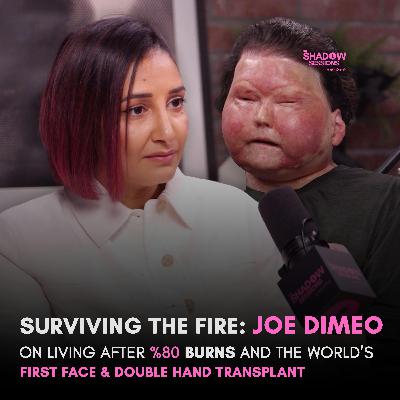
We live in a world obsessed with appearance. We chase beauty, filters, and familiarity — often tying confidence to what we see in the mirror. But what happens when the mirror no longer shows the face you remember?
In this episode of The Shadow Sessions, Hiba Balfaqih speaks with Joe DiMeo, who survived a catastrophic car accident at 20 years old and later became the first person in medical history to receive a full face and double hand transplant.
This conversation isn’t only about physical recovery. It’s about identity — how the mind adapts when the body changes, and what it means to rebuild a sense of self when everything familiar is gone.
Joe reflects on grief, acceptance, resilience, and learning to live in a body that no longer feels like the one you knew. Rather than focusing on tragedy, this episode explores psychological adjustment, body image, and the courage required to participate in life again.
This episode is about adaptation, meaning, and discovering that healing is not returning to who you were — but learning how to become someone new.
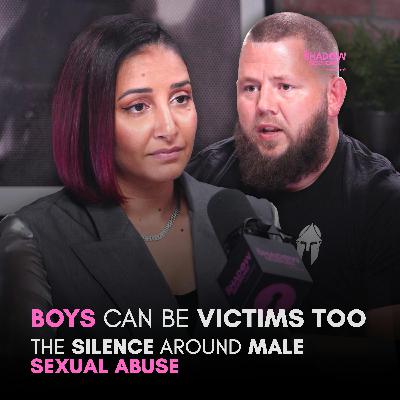
When we hear the word abuse, many people picture a girl. Culturally, harm is often associated with her fear and her silence. But what happens when the victim is a boy — and no one knows how to see it?
In this episode of The Shadow Sessions, Hiba Balfaqih speaks with Seth, a veteran, speaker, and advocate for male survivors who grew up in poverty surrounded by addiction, instability, and unspoken pain.
This conversation challenges the idea that abuse is gendered. For many boys, silence becomes survival. Shame replaces language, and years pass before anyone hears their story — if they ever do.
Rather than focusing on events, this episode explores the psychological aftermath: identity, trust, masculinity, and the difficulty of speaking about harm in a culture that rarely imagines boys as victims.
Today, Seth works to break that silence, helping other men confront what they were taught to bury and showing that healing begins the moment someone is finally believed.
This episode is about stigma, voice, and what becomes possible when the story a person carried alone is finally spoken.
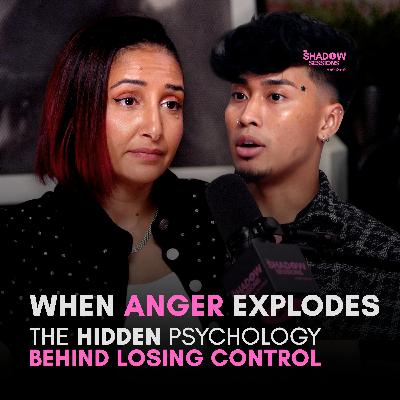
We all carry anger. Some swallow it. Some hide it behind success, silence, or survival. But what happens when it erupts? When pain becomes pressure, and pressure becomes action?
In this episode of The Shadow Sessions, Hiba Balfaqih speaks with Jonathan Mendez, whose life changed after a violent confrontation led to jail and forced him to confront himself for the first time.
This conversation isn’t about the incident. It’s about the why.
Jonathan reflects on shame, childhood experiences, and what happens when a person is never taught how to feel safely. When emotion has no language, it often finds expression through behavior.
This episode explores anger not as a character flaw, but as an unprocessed signal, how survival conditioning, emotional repression, and unresolved pain can shape reactions and decisions. It also examines accountability: what it means to face harm, take responsibility, and begin repair.
Today, Jonathan speaks openly about emotional regulation, self‑awareness, and learning to experience emotion without fighting it.
This episode is about anger, responsibility, and what healing requires after control has already been lost.
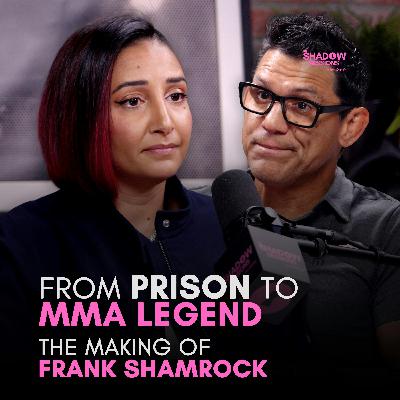
We’re taught to fight for what we want—to toughen up and push through. But what happens when fighting is all you’ve ever known? When childhood teaches you that pain is love, violence is normal, and power equals survival?
In this episode of The Shadow Sessions, Hiba Balfaqih speaks with Frank Shamrock, a world‑champion fighter whose strength was forged through abuse, abandonment, and incarceration. This conversation isn’t about winning titles—it’s about identity, conditioning, and who you become when no one teaches you who you are.
Frank reflects on how survival can harden into armor, and why real healing sometimes begins when you put your fists down and face what’s underneath.
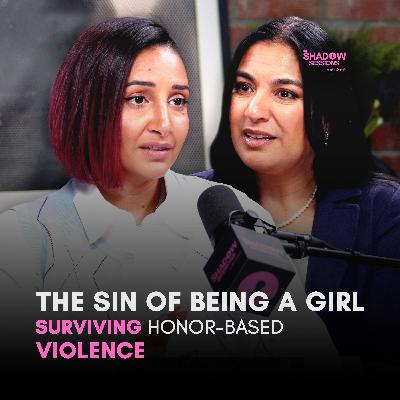
What if your biggest sin is being born a girl? What happens when violence is justified as tradition and silence is enforced as honor?
In this episode of The Shadow Sessions, Hiba Balfaqih speaks with Nina Aouilk, a survivor of honor‑based violence who grew up in a system where abuse was normalized, and truth was punished. This conversation examines cultural gaslighting, generational silence, and how gender‑based control shapes trauma and identity.
Rather than sensationalizing harm, this episode focuses on the psychological and systemic realities that allow violence to hide behind words like culture and family. Today, Nina is a global speaker, coach, and advocate working to expose these structures and support survivor healing.
This episode is about truth, resistance, and what becomes possible when silence is broken.

Not all shadows look like darkness. Some look like ambition. Some look like discipline, perseverance, and the pressure to hold everything together while quietly falling apart.
In this episode of The Shadow Sessions, Hiba Balfaqih speaks with Amber Duncan, who went from success as it’s culturally defined to total collapse. She filed for bankruptcy. She lost the money, the image, and the version of achievement the world told her to chase.
What followed wasn’t just a business rebuild.
It was an identity reckoning.
This conversation explores what collapse strips away—and what it reveals. How ambition can become armor. How success can disconnect us from ourselves. And how rebuilding after loss requires more than strategy; it requires confronting the patterns that led there in the first place.
Amber shares what bankruptcy taught her about worth, control, and resilience—and how rebuilding a multimillion‑dollar company became secondary to reclaiming trust in herself. Today, she helps others navigate financial collapse, career reinvention, and recovery through mentorship, financial education, and honest conversations about failure and survival.
This episode isn’t loud or performative. It’s about the quiet shadow of perseverance—and how sometimes, the deepest healing happens after everything you worked for falls apart.

We’re taught to imagine hackers as men in hoodies—isolated, brilliant, dangerous. But what if the real story isn’t about code or breaches at all? What if it’s about psychology?
In this episode of The Shadow Sessions, Hiba Balfaqih speaks with a man who infiltrated some of the most powerful systems in the world—impersonating CEOs, deceiving institutions, and accessing spaces he was never meant to enter. He had power, and he walked away before anyone could stop him.
But this conversation isn’t about technical exploits or data breaches.
It’s about identity.
It’s about the psychology of control, the shadow of the trickster, and what happens when someone becomes whoever the world needs them to be in order to feel safe, admired, or untouchable. Advertised as a threat, treated as a weapon, shaped by fear and projection—until the performance cracks and the truth emerges.
This episode explores how hacking can become a mirror for deeper human patterns: the need for mastery, the seduction of invisibility, and the cost of living behind masks. It asks uncomfortable questions about power, protection, deception, and the moment when control stops being safety and starts becoming self‑erasure.
This is an episode for anyone interested in psychology, identity formation, shadow integration, cybercrime as a behavioral phenomenon, and what happens when the role you play becomes the only place you know how to exist.
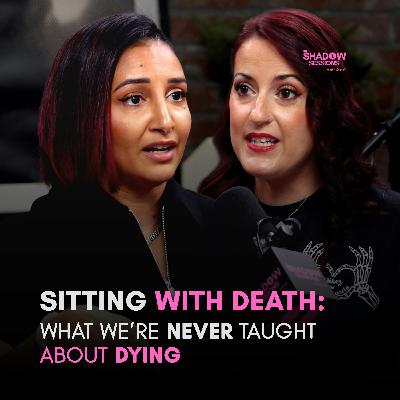
Not all shadows are dark. Some are quiet. Some are tender. Some ask us to slow down and sit with the one certainty we spend our lives trying to outrun.
In this episode of The Shadow Sessions, host Hiba Balfaqih speaks with Mikey, a death doula who supports people at the end of life—helping them die on their own terms, with dignity, presence, and meaning. After experiencing her own near-death moment, Mikey didn’t turn away from mortality. She moved closer to it.
This conversation explores how our culture avoids death by treating it as a distant event, when in reality it’s happening all the time. Friendships end. Identities fall away. Chapters close. And eventually, the people we love leave their bodies.
Mikey’s work invites a different relationship with dying—one rooted in softness rather than fear, choice rather than denial. She challenges the idea that death is a failure and reframes it as a rite of passage we were never taught how to prepare for.
This episode is about death, yes—but even more, it’s about how we live when we stop pretending we’re exempt from it. It’s for anyone curious about death doula work, end‑of‑life care, near‑death experiences, grief, meaning, and what becomes possible when we meet mortality with honesty instead of avoidance.
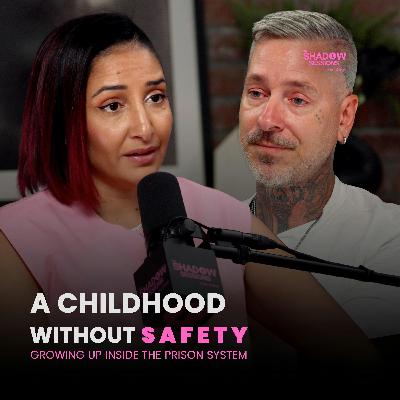
What happens when a child grows up without safety—and the system responds with punishment instead of protection?
In this episode of The Shadow Sessions, host Hiba Balfaqih sits down with Sonny Van Cleaveland, whose life was shaped by incarceration before it was shaped by care. By the age of seven, Sonny was already inside the justice system. By sixteen, he was placed in an adult prison that became one of the most violent facilities in Michigan within its first month.
This conversation exposes how early trauma, chronic threat, and institutional violence shape identity. Violence wasn’t defiance. It was adaptation. Survival became instinct. Harm became normalized. When a nervous system is raised in danger, morality doesn’t disappear—it gets overridden.
But this episode is not just about prison.
It’s about childhood trauma, moral injury, and how systems that claim to rehabilitate often reinforce the very behaviors they punish. It’s about how patterns form under pressure—and what it actually takes to interrupt them.
Sonny’s story challenges the idea that people are “born dangerous.” It asks harder questions about responsibility, conditioning, and what healing looks like when no one ever modeled safety to begin with.
This is an episode for anyone interested in trauma psychology, incarceration, nervous system survival responses, and the long-term impact of growing up without protection.
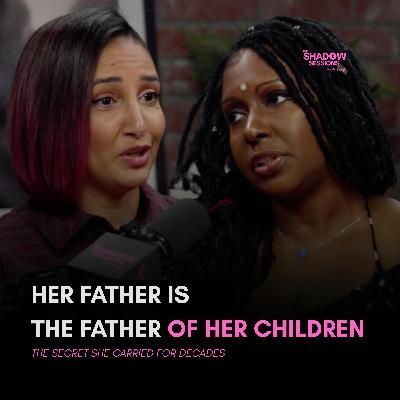
We teach kids to avoid strangers. To trust their gut. To believe home means safety. But what if home was the danger?
In this first episode of The Shadow Sessions, host Hiba Balfaqih sits down with Aziza Kibibi — a survivor whose story of incest, betrayal, and survival shatters the illusion of safety. Aziza was abused by her father, forced to carry and raise his children, and silenced by those meant to protect her. Today, she is a whistleblower, author, and advocate fighting to expose the systems that failed her and to change the laws that still protect abusers.
This conversation is not just about what happened — it’s about the courage it takes to speak, to heal, and to turn survival into advocacy.
The Shadow Sessions is a podcast for the stories we hide, the ones too painful, too early, or too private to ever make it to therapy. Hosted by psychologist and trauma alchemist Hiba Balfaqih, each episode sits with the truths people were never given permission to speak.
From survivors of abuse to those confronting their deepest shadows, these are raw, unfiltered conversations about what we carry and what it costs us.
Launching January 8 on all platforms, The Shadow Sessions is a space for anyone who’s ever felt unseen, unheard, or unsafe to tell their story. Because there is light in the shadow, if someone is willing to sit there with you.
Comments


Download from Google Play

Download from App Store
 United States