


Talking HealthTech
Subscribed: 142Played: 6,240
Subscribe

© Talking HealthTech
Description
Conversations with clinicians, vendors, policy makers and decision makers to promote innovation and collaboration for better healthcare enabled by technology.
Learn about digital health, medical devices, medtech, biotech, health informatics, life sciences, aged care, disability, commercialisation, startups and so much more.
Learn about digital health, medical devices, medtech, biotech, health informatics, life sciences, aged care, disability, commercialisation, startups and so much more.
616 Episodes
Reverse
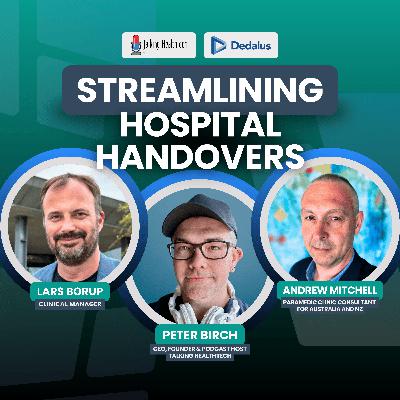
In this episode of Talking HealthTech, Peter Birch speaks with Lars Borup, Clinical Manager at Dedalus, and Andrew Mitchell, Paramedic Clinical Consultant for Australia and New Zealand, about the growing issue of ambulance ramping and the pressures facing paramedics and emergency departments.They discuss the human and operational impacts of patients waiting outside hospitals, and the complex factors driving congestion, from changing social structures to system bottlenecks.The conversation also explores digital solutions for streamlining patient handovers, including real-time data sharing, electronic patient care records, and coordinated care pathways.Drawing on both local experiences and international models from Europe, Lars and Andrew highlight how improved communication between pre-hospital care and hospitals can reduce delays and optimise patient flow.They also show how connecting with primary care providers supports better outcomes across the wider health system.This episode highlights how technology, workflow improvements, and integrated care can transform emergency services.Key Takeaways🔄 Growing demand in healthcare leads to complex ambulance ramping and bed block challenges in Australia and globally👨⚕️ Secondary triage and alternate care pathways are being developed to reduce hospital load📱 Real-time electronic patient care records enable hospitals to prepare more effectively for incoming patients🤝 Seamless communication and integrated data sharing between paramedics, hospitals, and primary care are critical for efficient transitions🚑 Structured digital tools support paramedics in decision-making and workflow, leading to improved patient safety and qualityTimestamps00:00 — Speaker introductions05:19 — Why not just add resources?07:47 — Is ramping just shifting the block?10:23 — Transition and handover points12:23 — Real-time electronic records in Denmark17:26 — Pre-arrival notification in Australia26:15 — Digital support tools for paramedics28:40 — Unified ED and ambulance workflow32:49 — Addressing ambulance ramping: Communication--------Want to keep the conversation going?The full article and extended show notes for this episode are available inside the THT+ Community here: View Full Article HereIn the THT+ Community, our members keep the discussion going, share perspectives, and unpack what this episode actually means in practice with other people working in healthtech.If you’re enjoying the show and want access to full articles, episode discussions, meetups, and member-only content, you can learn more about becoming a THT+ Solo Member here: talkinghealthtech.com/thtplusAnd if this episode was useful, leaving a review or sharing it with someone in the industry always helps.
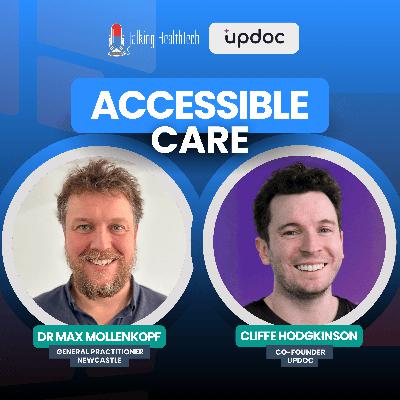
In this episode of Talking HealthTech, guest host and clinician Dr Max Mollenkopf is joined by Cliffe Hodgkinson, co-founder of Updoc, to explore the rapidly evolving world of telehealth and digital healthcare in Australia.The discussion dives deep into how Updoc is reshaping access to primary care, using technology to streamline patient intake, triage, and workflow management while maintaining robust clinical governance.The episode also examines the challenges and opportunities of building a digital health business, from recruiting and engaging clinicians with flexible work models to navigating economic pressures and policy changes.The conversation explores patient expectations in the digital age, the practical realities of delivering online consultations, and the ways digital platforms can complement traditional GP services.Cliffe and Max explore what drives patient adoption, how friction points in traditional clinics are being addressed, and what the future may hold for hybrid models of care that blend online and in-person consultations.Key Takeaways🩺 Updoc offers flexible, on-demand telehealth for routine and urgent care across Australia, focusing on accessibility for rural and time-poor patients.🔗 Incremental innovation and listening to user feedback drive continuous improvements in patient intake flows, data integration and care delivery.👨⚕️ Doctors are attracted by hyper-flexible work arrangements, supporting clinicians returning to work and those balancing multiple roles.⚖️ Updoc prioritises clinical governance, developing frameworks for patient safety, credentialing, and collaborating with Patients Australia on digital health standards.💡 Telehealth complements, but doesn’t replace, in-person care, offering new pathways for multimodal, hybrid healthcare delivery in Australia.Timestamps00:00 – Updoc introduction & mission00:05 – Updoc's formative experiences06:47 – Incremental innovation at UpDoc14:30 – Clinician engagement & workforce16:49 – Clinical governance approach22:02 – Accessibility focus: rural/time-poor29:30 – The future of telehealth vs. traditional care38:53 – Potential for hybrid & triage models44:03 – Patient impact story_________Want to keep the conversation going?The full article and extended show notes for this episode are available inside the THT+ Community here: View Full Article HereIn the THT+ Community, our members keep the discussion going, share perspectives, and unpack what this episode actually means in practice with other people working in healthtech.If you’re enjoying the show and want access to full articles, episode discussions, meetups, and member-only content, you can learn more about becoming a THT+ Solo Member here: talkinghealthtech.com/thtplus.And if this episode was useful, leaving a review or sharing it with someone in the industry always helps.

In this episode of Talking HealthTech, host Peter Birch speaks with Louise Shardey, CEO of Adeney Private Hospital, and William Hadden, Managing Director for Oneview ANZ.The conversation explores how a new private hospital in Melbourne is approaching digital transformation, patient-centred care, and compliance with national standards.It highlights how collaboration between hospitals, clinicians, and technology providers is shaping integrated and seamless patient experiences.Topics covered include the hospital’s “zero out-of-pocket” model, the use of real-time digital tools at the bedside, strategies for reducing waste and improving efficiency, and how technology can support both clinical workflows and compliance requirements.The discussion also examines how data, analytics, and continuous feedback are applied to inform clinical decisions, enhance patient journeys, and design systems and processes that align with patient needs while meeting regulatory standards.Key Takeaways🌱 Starting a private hospital from scratch enables reimagining processes, workflows, and patient engagement, focusing on reducing waste and improving integration.🤝 Collaboration between technology vendors and hospital teams is crucial to achieve seamless data integration, improve workflow, and keep the patient at the centre.📊 Compliance with Australian healthcare standards drives innovation by creating guardrails that help ensure safety, efficiency, and high-quality care without stifling creativity.💡 Digital solutions such as integrated bedside technology, digital rounding, and plans for a digital whiteboard aim to empower patients and staff, support compliance, and enhance patient autonomy and communication.🔗 Continuous evaluation and improvement of digital infrastructure supports scalable success and ensures that adopted technologies genuinely meet clinical and patient needs.Timestamps00:00 - Welcome and guest introductions01:05 - Adeney Private Hospital foundations03:21 - Oneview overview and partnership04:39 - Designing systems from scratch07:17 - Integrating tech at the bedside13:29 - Compliance, data capture, and patient involvement18:41 - The impact of technology on patient outcomes24:14 - Digital whiteboards, real-time evidence, and workflow32:49 - What’s next for Adeney and Oneview--------Want to keep the conversation going?The full article and extended show notes for this episode are available inside the THT+ Community here: View Full Article HereIn the THT+ Community, our members keep the discussion going, share perspectives, and unpack what this episode actually means in practice with other people working in healthtech.If you’re enjoying the show and want access to full articles, episode discussions, meetups, and member-only content, you can learn more about becoming a THT+ Solo Member here: talkinghealthtech.com/thtplus.And if this episode was useful, leaving a review or sharing it with someone in the industry always helps.
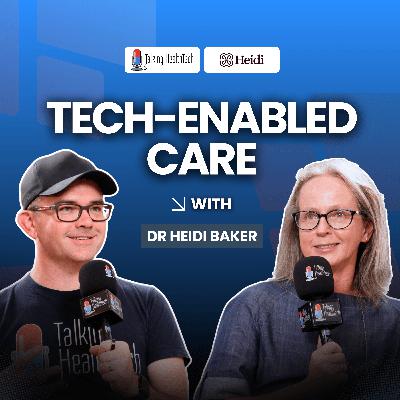
In this episode of Talking HealthTech, Peter Birch speaks with Dr Heidi Baker, an emergency specialist and paediatrician at Podhealth in New Zealand.The episode explores the intersection of clinical practice, digital health adoption, and technology-driven approaches to supporting neurodiversity and developmental paediatrics across New Zealand.Dr Heidi Baker shares her journey as a clinician and business owner, including her transition from emergency medicine to paediatrics and her experiences in setting up a tech-enabled health service.She also discusses her adoption of AI scribe solutions to improve clinical documentation and strengthen patient connections.The conversation dives into the challenges of balancing hands-on patient care with running a private practice, offering honest insights into delegation, workflow, and the emotional demands of generalist medicine.The episode also provides an in-depth look at how digital tools can transform the consultation room, allowing clinicians to spend more time engaging with patients and less on administrative tasks.Key Takeaways🌏 Combining emergency and paediatric care can broaden a clinician’s skillset and approach to teamwork.🧑💻 Setting up a digital health business requires clinicians to delegate non-clinical tasks, leverage tech platforms, and trust others with complementary skills.💡 AI scribe technology is enhancing patient-clinician interaction, reducing admin burden, and enabling better capture of non-verbal cues and clinical details.📝 Transparent communication and consent processes support the adoption of AI documentation tools in clinical practice.🔒 Trust, data control, and careful selection of tech vendors are essential for upholding patient confidentiality and clinician confidence in digital solutions.Timestamps00:02 – Dr Heidi Baker's background and roles00:49 – Paediatrics and neurodiversity focus01:13 – Skills from emergency medicine03:17 – Starting a business as a clinician04:13 – Choosing technology stack06:49 – Delegating and managing capacity07:48 – AI scribe adoption journey09:51 – Transition and patient communication11:47 – Benefits and workflow changes13:49 – Impact on patient care and non-verbal cues16:18 – Advice for clinicians starting with tech18:47 – Balancing tech trust and regulation--------Want to keep the conversation going?The full article and extended show notes for this episode are available inside the THT+ Community here: View Full Article HereIn the THT+ Community, our members keep the discussion going, share perspectives, and unpack what this episode actually means in practice with other people working in healthtech.If you’re enjoying the show and want access to full articles, episode discussions, meetups, and member-only content, you can learn more about becoming a THT+ Solo Member here: talkinghealthtech.com/thtplus.And if this episode was useful, leaving a review or sharing it with someone in the industry always helps.

In this episode of Talking HealthTech, Peter Birch speaks with Julie Hoare, VP and Regional General Manager for APAC, Angela Ryan, Lead Healthcare Executive for APAC, and Amita Malik, Senior Director and Health Sciences Product Manager at Oracle Health and Life Sciences.Together, they explore the evolution from Cerner to Oracle Health and the addition of Oracle Health Life Sciences, highlighting how these changes are shaping clinical trials, healthcare research, and patient care in Australia.The conversation examines the challenges facing clinical trials, including fragmented systems, slow recruitment, and complex regulatory processes, and how data and AI are being used to address these issues.The episode also covers the practical application of AI, the importance of trust and governance in digital tools, and the future direction of Oracle Health and Life Sciences in the region.Key Takeaways🧩 Fragmented healthcare and research data remain a barrier to efficient clinical trials and patient outcomes, highlighting the need for unified platforms.🤖 AI and analytics are being used to automate patient-trial matching, improve data quality, and accelerate research outcomes.📊 Leveraging existing EHR data can transform organisations from record-keepers to research-ready institutions, facilitating faster drug development.💡 Building trust in AI adoption is essential, emphasising the role of clinician validation and evidence-based implementation.🌏 Oracle Health is actively collaborating with industry and government to advance the safe, effective use of AI and unified data in health.Timestamps00:00 – Introductions & episode overview03:23 – Challenges in clinical trials in Australia07:54 – The evolution from Cerner to Oracle Health12:59 – AI’s role in healthcare data & trials18:06 – Clinical and practical use cases of AI19:56 – Building trust in AI and digital tools25:20 – AI Centre of Excellence and future directions---------Want to keep the conversation going?The full article and extended show notes for this episode are available inside the THT+ Community here: View Full Article HereIn the THT+ Community, our members keep the discussion going, share perspectives, and unpack what this episode actually means in practice with other people working in healthtech.If you’re enjoying the show and want access to full articles, episode discussions, meetups, and member-only content, you can learn more about becoming a THT+ Solo Member here: talkinghealthtech.com/thtplus.And if this episode was useful, leaving a review or sharing it with someone in the industry always helps.
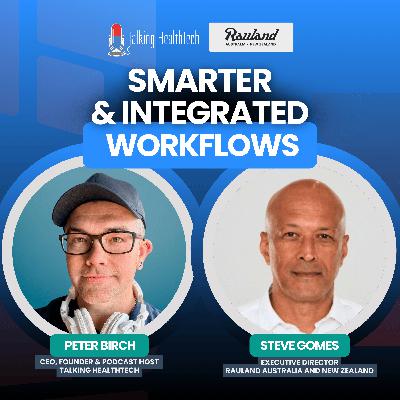
In this episode of Talking HealthTech, Peter Birch speaks with Steve Gomes, Executive Director at Rauland Australia and New Zealand.They discuss the evolution of Rauland’s concentric care platform and how it has been integrated into a variety of healthcare environments.The conversation explores critical communication, optimising clinical workflows, and strategies for implementing technology in both new and existing hospital facilities.Peter Birch and Steve Gomes also discuss data-driven approaches to enhancing patient outcomes and operational efficiency across hospitals and aged care.They dive into real-world examples of how Rauland’s concentric care platform reduces delays, improves patient flow, and supports staff, giving listeners an inside look at the practical impact of digital transformation in healthcare.This episode was recorded virtually, following up from a previous in-person interview at Rauland’s offices.Key Takeaways: 🩺 Integrating multiple systems for streamlined clinical workflows, reducing silos in hospital settings📱 Rauland’s Reach messaging solution manages mission-critical alerts and closes communication loops🏥 Technology adapts to existing hospital infrastructure to bring visibility and operational improvements📊 Data from digital journey boards helps reduce patient length of stay and optimise resource allocation🌏 Enterprise thinking supports consistency and scale across hospital networks, benefiting support and cybersecurityTimestamps: 00:00 – Introduction & context00:39 – Concentric care platform updates02:04 – Rauland’s platform overview03:10 – Mission-critical messaging06:21 – Clinical workflow and emergency department example08:25 – Deploying technology in established hospitals11:54 – Impact in rehab and aged care14:07 – Emergency department operations16:33 – Importance of uptime and reliability17:16 – Enterprise thinking across hospital networks19:01 – Economies of scale with deployment20:17 – Roadmap for Rauland in 202622:17 – Advice for hospital decision makers--------Want to keep the conversation going?The full article and extended show notes for this episode are available inside the THT+ Community here: View Full Article HereIn the THT+ Community, our members keep the discussion going, share perspectives, and unpack what this episode actually means in practice with other people working in healthtech.If you’re enjoying the show and want access to full articles, episode discussions, meetups, and member-only content, you can learn more about becoming a THT+ Solo Member here: talkinghealth.tech/thtplus.And if this episode was useful, leaving a review or sharing it with someone in the industry always helps.

In this episode of Talking HealthTech, Peter Birch speaks with Dr. Mina Baumgarten, Head of Business Process and Care Innovation at Vivantes, Dr Dennis Rausch, Chief Medical Officer at Dedalus, and Vinod Seetharaman, CMIO for ANZ at Dedalus.The conversation examines the challenges and strategies involved in large-scale digital health transformations, highlighting the long-standing partnership between Vivantes and Dedalus.It also explores the implementation of electronic medical records, the shift from traditional vendor relationships to collaborative transformation partnerships, and how lessons from Europe can inform Australia’s digital health journey.The discussion provides insights into interoperability, digital maturity, workflow optimisation, and the use of AI to support clinicians.It highlights real-world examples of successes and challenges, demonstrating approaches to building sustainable, adaptable, and effective digital health systems.Key Takeaways🚀 Digital transformation relies on strategic, collaborative partnerships rather than basic buyer-vendor relationships.🏥 Unifying multiple hospital sites under one digital system boosts scalability and efficiency.🧩 True interoperability requires integrating numerous IT platforms to support complex care environments.🤖 AI and automation are being used for clinical decision support, monitoring, and enhancing patient safety.📊 Rigorous evaluation of digital and AI solutions is essential, prioritising real-world demand, measurable benefits, and strategic alignment.Timestamps00:00 — Introduction01:17 — Vivantes health system overview04:40 — Dedalus' long-term partnership history09:06 — Key elements of digital infrastructure17:53 — Interoperability challenges in Australia20:48 — AI and automation use cases25:17 — Innovation implementation standards--------Want to keep the conversation going?The full article and extended show notes for this episode are available inside the THT+ Community here: View Full Article HereIn the THT+ Community, our members keep the discussion going, share perspectives, and unpack what this episode actually means in practice with other people working in healthtech.If you’re enjoying the show and want access to full articles, episode discussions, meetups, and member-only content, you can learn more about becoming a THT+ Solo Member here: talkinghealthtech.com/thtplus.And if this episode was useful, leaving a review or sharing it with someone in the industry always helps.
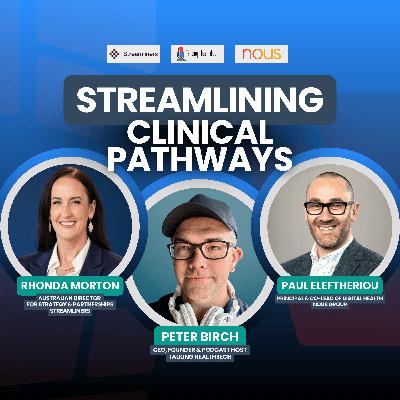
In this episode of Talking HealthTech, host Peter Birch speaks with Paul Eleftheriou, Principal and Co-Lead of Digital Health at Nous Group, and Rhonda Morton, Australian Director for Strategy and Partnerships at Streamliners, about the role of clinical pathways in modern healthcare.The conversation explores what clinical pathways are, why they are important, how they interact with technology like medical records, e-referrals, and AI tools, and how they can address inefficiencies and improve patient and clinician experiences across Australia.The discussion also dives into the challenges of translating evidence into practice, the impact of fragmentation in the health system, and the critical role of workforce engagement, leadership culture, and patient-centred design.The conversation provides practical insights into how clear, collaborative clinical pathways can reduce clinician burnout, promote health equity, and create a foundation for safe, smart digital innovation.It examines how evidence-based pathways interact with technology such as electronic medical records, e-referrals, and AI tools, and explores strategies to overcome system fragmentation while improving consistency, efficiency, and patient-centred care across healthcare settings.Key Takeaways✨ Clinical pathways standardise care, providing consistent, evidence-based guidance for clinicians and supporting a seamless patient journey across fragmented health systems.🤝 Integrating clinical pathways with digital tools improves communication, reduces inefficiencies, and helps prevent patients from falling through the cracks in a federated healthcare environment.📉 Pathways can address “hidden taxes” on the system, such as unnecessary tests and duplicated processes, unlocking both cost savings and safer care.👩⚕️ Effective pathways reduce clinician burnout by delivering point-of-care tools that streamline decision-making, and must be co-designed with both workforce and patient needs in mind.🤖 Solid foundational systems are needed before leveraging advanced technologies like AI, ensuring that any innovations support, rather than overwhelm, clinicians and patients.Timestamps00:00 — Introduction00:36 — What are clinical pathways?04:49 — Clinical pathways analogy: restaurants06:09 — Pathways as patient journeys07:42 — Digital’s role and “filling the cracks”12:09 — Inefficiencies and hidden taxes16:58 — Interoperability vs. care pathways24:12 — Clinician burnout and enabling workforce28:04 — AI, tech foundations, and implementation41:20 — Future directions for Streamliners--------Want to keep the conversation going?The full article and extended show notes for this episode are available inside the THT+ Community here: View Full ArticleIn the THT+ Community, our members keep the discussion going, share perspectives, and unpack what this episode actually means in practice with other people working in healthtech.If you’re enjoying the show and want access to full articles, episode discussions, meetups, and member-only content, you can learn more about becoming a THT+ Solo Member here: talkinghealthtech.com/thtplus.
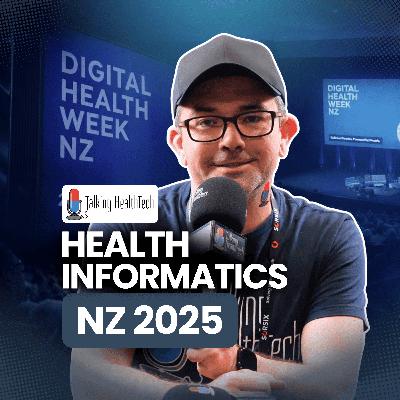
In this episode of Talking HealthTech, Peter Birch and Rebecca McBeth from HiNZ speak with Hon. Tracey Martin, Darren Douglass, Debbie Hughes, and Alex Kemp about digital health innovation and challenges in New Zealand.This episode explores the latest developments in digital health and aged care in New Zealand, recorded during Digital Health Week in Christchurch, hosted by Health Informatics New Zealand (HiNZ).The discussion covers the digital transformation roadmap for Health New Zealand, highlighting how technology, clinical leadership, and inclusive design are shaping the future of care.The episode examines the challenges and opportunities in residential aged care, including workforce pressures, funding reforms, and the practical use of AI and digital tools to support frontline staff.The evolving role of HiNZ within the health sector is explored, including efforts to foster cross-sector collaboration, drive innovation, and provide long-term governance.The conversation captures insights from industry leaders and practitioners, offering a comprehensive view of New Zealand’s approach to digital health transformation, grounded in practical, human-centred strategies.Key Takeaways✨ The future of aged residential care in NZ faces both political and practical challenges, with technology positioned to streamline processes and enable more human-centred care.🧠 Co-design and direct involvement of disabled people in digital health solutions is crucial; early engagement helps address accessibility and diversity in technological development.💼 Health New Zealand’s ten-year digital investment plan focuses on stabilising infrastructure, modernising platforms with AI and automation, and ultimately transforming clinical care and patient access.🤝 Building trust and breaking down silos in healthcare are priority strategies for HiNZ, fostering connection and collaboration across the health sector.👥 Leadership, change management, and digital upskilling initiatives are central to delivering sustainable transformation for NZ’s health workforce and systems.Timestamps00:00: Introduction00:43: Hon. Tracey Martin - Aged Care Association, NZ07:27: Darren Douglass - Acting Chief Information Technology Officer, Health NZ17:42: Debbie Hughes - Chief Executive, NZ Disability Support Network22:05: Alex Kemp - Director of Engagement/CEO, HiNZ--------Want to keep the conversation going?The full article and extended show notes for this episode are available inside the THT+ Community here: View Full ArticleIn the THT+ Community, our members keep the discussion going, share perspectives, and unpack what this episode actually means in practice with other people working in healthtech.If you’re enjoying the show and want access to full articles, episode discussions, meetups, and member-only content, you can learn more about becoming a THT+ Solo Member here: talkinghealthtech.com/thtplus.And if this episode was useful, leaving a review or sharing it with someone in the industry always helps.
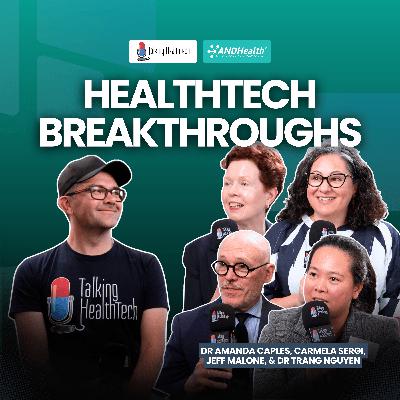
In this episode of Talking HealthTech, host Peter Birch speaks with Carmela Sergi, CEO of the Care Economy CRC, Amanda Caples, Victoria's Chief Scientist, Jeff Malone, CEO of the Aikenhead Centre for Medical Discovery (ACMD), and Trang Nguyen, CEO and Founder of SeeTreat, about the intersection of digital health, innovation, and commercialisation in Australia.The conversations explore how health technology is designed, implemented, and scaled in real care settings, with a focus on patient outcomes, workforce realities, and practical adoption.The episode includes in-depth discussion on the future of the care economy and how co-design and end-user involvement are driving more effective, compassionate, and practical solutions.The discussion also dives into the emerging role of quantum technology in healthcare, strategies for translating research into real-world products, and how cross-sector collaboration can accelerate home-grown innovation.This episode was recorded during the ANDHealth Unfiltered 2025 event in Melbourne, Australia, and features several discussions that highlight evolving trends and front-line experiences in Australian healthtech.Key Takeaways🧑🤝🧑 The Care Economy CRC focuses on integrating technology and data to uplift productivity and outcomes across aged care, disability care, early childhood education, and more, with a major emphasis on co-design and workforce involvement.🤝 Effective health innovation requires collaboration among government, academia, and industry, with models like ACMD and event conveners like ANDHealth driving partnerships.📉Technology uptake in healthcare faces barriers including workflow integration, clinician overload, and the risk of unintended consequences, making co-design with end users critical to success.🦠 Quantum technologies and advanced analytics are emerging as significant contributors to research, service delivery, and patient outcomes, with Victoria positioning itself as an ecosystem leader.💊 Translation from research to commercialisation is improving in Australia, but ongoing focus on ecosystem navigation, workforce engagement, and industry partnerships remains essential.Timestamps00:00 – Introduction00:28 – Carmela Sergi, CEO, Care Economy CRC08:34 – Amanda Caples, Victoria’s Chief Scientist16:34 – Jeff Malone, CEO, ACMD26:37 –Trang Nguyen, CEO & Founder, SeeTreat--------Want to keep the conversation going?The full article and extended show notes for this episode are available inside the THT+ Community here: View Full Article HereIn the THT+ Community, our members keep the discussion going, share perspectives, and unpack what this episode actually means in practice with others working in healthtech.If you’re enjoying the show and want access to full articles, episode discussions, meetups, and member-only content, you can learn more about becoming a THT+ Solo Member here: talkinghealthtech.com/thtplus.And if this episode was useful, leaving a review or sharing it with someone in the industry always helps.

In this episode of Talking HealthTech, Peter Birch speaks with Dr Paul Deffley and Nick White from Alcidion about their new handbook on improving patient flow within healthcare systems.The conversation explores why the handbook has been released now, its intended audience, and how its concepts can support leaders and clinicians in enhancing the movement of patients through hospitals.The discussion examines the current pressures facing hospitals, including rising patient demand, workforce challenges, and system inefficiencies, and considers why traditional approaches to patient flow are no longer sufficient.Lessons from other industries are explored, highlighting how principles such as systems thinking and Lean methodology can be adapted for healthcare.The episode emphasises the combination of real-time data, organisational culture, and continuous improvement as central to creating safer, more efficient, and patient-centred hospital systems.Key Takeaways✅ Patient flow is more than implementing digital solutions—real change requires cultural and behavioural transformation within health organisations✅ Real-time, system-wide visibility is critical for effective patient flow management and making data-driven decisions✅ Adopting approaches from other industries, like Lean principles, must be tailored to the unique clinical and operational environment of healthcare✅ Measuring a broad range of indicators beyond standard KPIs (e.g., length of stay, outliers, medically ready to discharge) provides better insights and guides improvement✅ Practical actions like shop floor engagement and prioritising system-wide visibility can drive immediate and meaningful changeTimestamps00:00 – Introduction00:47 – Who the handbook is for and its purpose01:33 – Why address patient flow now02:41 – The importance of system-wide visibility03:39 – Practical tools from the handbook05:29 – Comparing healthcare to other industries07:52 – Customising industry methods for clinical environments08:57 – Differentiating patient flow discussions from electronic patient records10:46 – The challenge of demonstrating return on investment in patient flow initiatives14:30 – Rethinking metrics for measuring success in patient flow17:27 – Actions health leaders can take today19:01 – Actionable advice for immediate implementation20:25 – How to access the handbook--------Want to keep the conversation going?The full article and extended show notes for this episode are available inside the THT+ Community here: View Full Article HereIn the THT+ Community, our members keep the discussion going, share perspectives, and unpack what this episode actually means in practice with other people working in healthtech.If you’re enjoying the show and want access to full articles, episode discussions, meetups, and member-only content, you can learn more about becoming a THT+ Solo Member here: talkinghealthtech.com/thtplus.And if this episode was useful, leaving a review or sharing it with someone in the industry always helps.
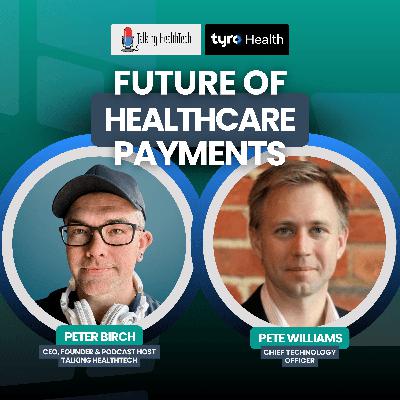
In this episode of Talking HealthTech, Peter Birch speaks with Pete Williams, CTO of Tyro Health.The episode explores the evolution of healthcare payments, including the transition from Medipass to Tyro Health and the latest trends in digital wallets.It also covers the practicalities of surcharging, regulatory changes, integrated payment solutions, and the potential impact of technologies like stablecoin and PayTo on medical payments for clinics and patients in Australia.Peter and Pete break down what these changes mean for clinics of all sizes, from day-to-day operations to long-term strategy.They discuss how seamless payment experiences can improve efficiency, reduce errors, and enhance patient satisfaction, while also highlighting the risks and challenges practices face in a fast-moving digital payments landscape.The conversation offers practical insights, real-world examples, and a forward-looking view of where healthcare payments are heading.Key Takeaways💳 The shift to digital wallets has reshaped payments in healthcare, with over 90% of card-present transactions now happening via Apple Pay, Google Pay, or similar options.🔁 Surcharging remains a significant consideration for clinics, with around 40% of medical businesses enabling it, though regulations may change.📲 Integration between payment systems and practice management platforms is now common, driving efficiency with over 70% of clinics automating their payment and reconciliation workflows.🪙 Emerging payment innovations such as programmable money and advanced bank-to-bank systems like PayTo have the potential to change how recurring and complex healthcare payments are managed.🏦 Less than 35% of overall healthcare payments are processed through Medicare, making integration with private insurers and funders increasingly critical for clinics.Timestamps00:00 – Introduction00:31 – Changes since Medipass and acquisition by Tyro Health01:32 – Payment technology experiences in healthcare02:46 – Growth of the Tyro Health team03:18 – Clinic perspective on payments04:36 – Impact of digital wallets05:39 – Clinic decisions and recent regulatory changes07:22 – Surcharging rules for debit vs credit cards08:04 – Balancing payment convenience for patients08:43 – Percentage impact of payment costs on clinic margins10:03 – Integrating payments with practice management systems10:52 – Automation and three-way matching in clinics12:29 – Approaches to optimising payments13:53 – Programmable money, stablecoin, and use cases15:46 – Payment innovation and health system challenges17:01 – Distributed autonomous organisations17:21 – PayTo, direct debit, and recurring payments20:37 – Integrating more funders and improving patient experience22:29 – Wrap up and resources--------Want to keep the conversation going?The full article and extended show notes for this episode are available inside the THT+ Community here: View Full Article HereIn the THT+ Community, our members keep the discussion going, share perspectives, and unpack what this episode actually means in practice with other people working in healthtech.If you’re enjoying the show and want access to full articles, episode discussions, meetups, and member-only content, you can learn more about becoming a THT+ Solo Member here: talkinghealthtech.com/thtplus.And if this episode was useful, leaving a review or sharing it with someone in the industry always helps.

In this episode of Talking HealthTech, Peter Birch speaks with Associate Professor Colman Taylor and Alasdair Godfrey from HTANALYSTS about the evolving landscape of health technology assessment in Australia.The conversation explores how regulatory change, patient engagement and real-world evidence are reshaping the way new technologies are assessed, funded and adopted.It also examines the challenges health tech companies face when bringing innovation to market in Australia and across international settings.They share practical insights into what these changes mean for innovators, clinicians and policy-makers navigating an increasingly complex system.This episode looks at how value is defined beyond the limits of clinical trials. It also highlights why patient experience and practical implementation are becoming increasingly important in decisions about health technology.Together, these insights offer a grounded and timely perspective on the forces shaping the future of Australian health technology.Key Takeaways🔍 The "valley of death" is a significant hurdle for Australian health tech innovators, where promising technologies struggle to secure funding and market access.💡 Health Technology Assessment (HTA) frameworks are adapting to consider new dimensions such as equity, patient-centred outcomes, and system impact, beyond traditional cost and clinical effectiveness.👥 Patient engagement is increasingly recognised as critical, with patients now actively involved in advisory boards and decision-making processes, offering perspectives beyond those of clinicians.📊 Real-world evidence is helping to fill gaps left by clinical trials, providing insight into system readiness, implementation feasibility, and outcomes for diverse populations.🌏 International policy changes, particularly from the US and UK, are influencing Australia’s HTA processes and impacting access to innovative therapies for patients.Timestamps00:00:00 – Introduction00:02:05 – Overview of HTANALYSTS and their purpose00:03:26 – The “valley of death”00:05:56 – Explaining Health Technology Assessment00:07:09 – Traditional metrics vs. evolving HTA frameworks00:08:33 – Government reviews in HTA00:10:46 – The role of patient engagement and inclusion in HTA00:12:29 – Application of patient engagement00:14:10 – Real-world evidence: its role and impact00:16:27 – Faster access, data barriers, and implementation challenges00:18:21 – Agility in assessment processes00:20:09 – Examples of flexibility in healthcare guidelines00:22:26 – What innovators can do now00:23:47 – MFN policy changes in the US00:26:07 – HTANALYSTS’ role as middlemen bridging stakeholders00:27:15 – Lessons about collaboration, evidence, and early alignment00:29:06 – Importance of implementation00:29:55 – Future directions--------Want to keep the conversation going?The full article and extended show notes for this episode are available inside the THT+ Community here: View Full Article HereIn the THT+ Community, our members keep the discussion going, share perspectives, and unpack what this episode actually means in practice with other people working in healthtech.If you’re enjoying the show and want access to full articles, episode discussions, meetups, and member-only content, you can learn more about becoming a THT+ Solo Member here: talkinghealthtech.com/thtplus.
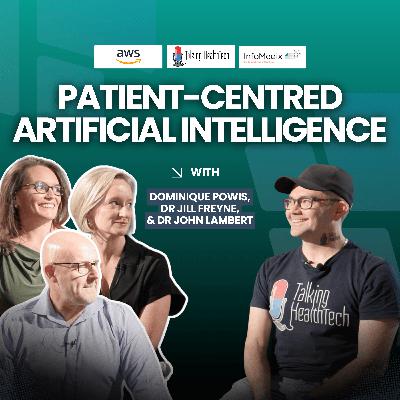
In this episode of Talking HealthTech, Peter Birch speaks with Dominique Powis, Chief Technology Officer at Infomedix, Dr John Lambert, Chief Clinical Information Officer for the Department of Health Tasmania, and Dr Jill Freyne, Health Industry Lead at Amazon Web Services.They discuss the practical applications of artificial intelligence in healthcare and explore its real-world operational impact.The conversation also includes insights from attendees during a live Q&A session, offering a unique opportunity to hear questions and challenges directly from healthcare professionals and technology leaders.The panel dives into real-world use cases of AI, including diagnostics, predictive analytics, improving patient outcomes, and boosting administrative efficiency.They also examine the critical importance of governance, privacy, and practical implementation when integrating AI into everyday clinical workflows.This episode was recorded live at AWS in Sydney, Australia, and is supported by Infomedix, providing an up-close look at how healthcare AI is being applied in local and global contexts.Key Takeaways ⭐ Clear problem definition, high-quality data, and context-specific solutions are crucial to successful AI applications in healthcare🤖 Predictive AI currently offers proven impact in areas such as diagnostics and early detection, while generative AI introduces unique challenges🧑⚕️ Human-centred design, usability, and workflow integration are critical to successful technology adoption and patient benefit🔒 Privacy, compliance, and ethical guardrails must evolve with technological advancements, particularly in data handling and patient confidentiality🌏 Sustainability, change management, and continuous improvement are essential considerations in deploying and scaling AI across the health ecosystemTimestamps 00:00 – Introduction & event overview02:00 – Panellist introductions & AI use cases06:35 – AI pattern recognition benefits08:39 – Sniff test for viable AI solutions10:23 – Administrative AI applications12:45 – Impact opportunities: patient & clinician14:28 – Administrative vs clinical AI focus15:35 – Evidence and business cases for ambient scribes20:06 – Guardrails and governance in AI22:35 – Change management for AI rollouts26:30 – Practical advice: North Star vs shiny distractions32:09 – Audience Q&A: patient privacy, data use37:39 – Use of AI in culturally diverse aged care settings44:06 – AI risks, safety, technical guardrails48:11 – Sustainability and long-term impact----------Want to keep the conversation going? The full article and extended show notes for this episode are available inside the THT+ Community here: View Full ArticleIn the THT+ Community, our members keep the discussion going, share perspectives, and unpack what this episode actually means in practice with other people working in healthtech.If you’re enjoying the show and want access to full articles, episode discussions, meetups, and member-only content, you can learn more about becoming a THT+ Solo Member here: talkinghealthtech.com/thtplus.And if this episode was useful, leaving a review or sharing it with someone in the industry always helps.

In this episode of Talking HealthTech, Peter Birch speaks with a panel of healthcare experts, including Stephanie Hodgson, physiotherapist, health project manager and industry PhD candidate at ConsultMed; Dr Shoma Dutt, paediatric gastroenterologist and senior staff specialist at the Children’s Hospital at Westmead; Dr Matthew Lam, GP and clinical advisor to ConsultMed at Riverstone Family Medical Practice; Charlie Winstanley, general manager of cardiovascular at Guy’s and St Thomas’s NHS Foundation Trust; and Dalia Croxton, senior project manager for digital health and business systems at Mater Group.The conversation dives into the evolving role of advice and guidance (A&G) models in shaping patient outcomes, clinician workflows, and healthcare access across Australia and the UK.The panel discusses practical benefits, such as reducing wait times, improving triage, and supporting GPs to manage complex cases more confidently.Gain insights into how digital referral pathways and emerging technologies like AI are changing the way specialists and primary care providers collaborate.This episode also highlights lessons learned, the importance of leadership and culture, and the challenges that remain in making A&G work effectively for both clinicians and patients.Key Takeaways👩⚕️ Advice and guidance (A&G) allows GPs and primary care providers to obtain timely specialist input without formal referrals, helping address outpatient waitlists and geographical inequities in access to care.🚀 Examples from paediatrics, mental health, endocrinology, and other specialties show A&G resolves a significant proportion of referrals, keeping patients managed in primary care or redirecting them to more suitable services.🌏 Both Australian and UK health systems are implementing A&G at scale, with New South Wales and Queensland adopting statewide models and the NHS seeing significant appointment diversion, reducing waiting times and improving resource use.🤝 Effective A&G relies on streamlined workflows, bi-directional communication between primary and specialist care, clear referral criteria, and support for GPs as central care coordinators.🤖 The future of A&G may include multidisciplinary expansion, integration with allied health, and advanced technology such as AI to improve efficiency and access for patients—while ensuring the focus remains on better outcomes and equity.Timestamps0:00 – Introduction1:18 – Stephanie Hodgson defines advice and guidance3:02 – Dr Shoma Dutt shares real-world impacts in paediatric gastroenterology 5:32 – Dr Matthew Lam describes case studies where A&G adds value and boosts equity9:54 – Stephanie Hodgson discusses the impact of data and equity 13:01 – Dr Shoma Dutt on developing a statewide referral criteria 16:43 – Charlie Winstanley talks about A&G adoption 23:11 – Panel consensus on key ingredients for scaling A&G: leadership, technology, education, making it frictionless for GPs, and measuring impact33:07 – Dalia Croxton on A&G transparency for patients35:20 – Charlie Winstanley and Stephanie Hodgson explore future directions40:21 – Dr Matthew Lam on keeping patient outcomes at the centre-------Want to keep the conversation going?The full article and extended show notes for this episode are available inside the THT+ Community here: View Full Article HereIn the THT+ Community, our members keep the discussion going, share perspectives, and unpack what this episode actually means in practice with other people working in healthtech.If you’re enjoying the show and want access to full articles, episode discussions, meetups, and member-only content, you can learn more about becoming a THT+ Solo Member here: talkinghealthtech.com/thtplus.And if this episode was useful, leaving a review or sharing it with someone in the industry always helps.

In this episode of Talking HealthTech, Peter Birch speaks with Nalaka Withanage, CEO and co-founder of Data Capture Experts, the organisation behind the Digital Health Platform DC2Vue.The discussion explores the fragmentation of data in healthcare and the importance of longitudinal care records.They also examine the evolving role of digital health platforms compared to traditional EHRs, along with the opportunities and challenges associated with artificial intelligence and data governance in healthcare innovation.Dive into the practical steps healthcare organisations can take to build strong data foundations, improve interoperability, and create workflows that truly support person-centred care.The conversation also goes beyond the hype around AI, examining how real value emerges only when technology is underpinned by complete, accurate, and context-rich data.Key Takeaways🗂️ Data fragmentation in healthcare is a core challenge, often caused by the use of multiple, siloed systems across various care settings.👩⚕️ Longitudinal care records provide a continuous, patient-centred view across different healthcare touchpoints, improving care coordination and outcomes.🔑 Foundational data quality and integration are essential for enabling advanced analytics, artificial intelligence adoption, and workflow optimisation.🔒 Privacy, consent management, and security, using principles like zero trust, must be embedded in digital health platforms to balance innovation with safety.🚀 To unlock the full value of AI in healthcare, organisations should focus on strong data foundations, process-oriented thinking, and workflow automation before layering in advanced technologies.Timestamps00:00:00 — Introduction00:01:25 — Why data fragmentation persists in healthcare00:02:54 — What is a longitudinal care record00:03:59 — Highlighting benefits of longitudinal health records00:05:08 — Differences between Digital Health platforms and traditional EHRs00:07:38 — The role of AI in digital health00:11:12 — Balancing innovation with privacy, security, and governance00:14:04 — Key advice for healthcare CIOs on leveraging data and AI00:15:14 — The roadmap for DC2 View and trends in virtual care and remote patient monitoring———Want to keep the conversation going?The full article and extended show notes for this episode are available inside the THT+ Community here: View Full Article HereIn the THT+ Community, our members keep the discussion going, share perspectives, and unpack what this episode actually means in practice with other people working in healthtech.If you’re enjoying the show and want access to full articles, episode discussions, meetups, and member-only content, you can learn more about becoming a THT+ Solo Member here: talkinghealthtech.com/thtplus.And if this episode was useful, leaving a review or sharing it with someone in the industry always helps.

In this episode of Talking HealthTech, Peter Birch speaks with Leon Young, CEO and Founder at Cogniss, and Dr Frank Iorfino, Associate Professor at the Brain and Mind Centre, University of Sydney.The discussion focuses on no-code health technology platforms, digital mental health solutions, and the challenges and opportunities in delivering predictive and preventative healthcare, particularly in youth mental health.The episode covers Cogniss' evolution, the role of digital and predictive tools in healthcare systems, and real-world applications in clinical research and practice.The conversation offers insights into how health professionals can use no-code platforms to build, refine, and scale digital solutions, the importance of personalisation in mental health care, and the ways predictive analytics can identify risks and support early intervention.It also examines the barriers to scaling innovation in health systems and how collaborative approaches are helping to bridge the gap between pilots and broader implementation.Practical examples of digital health tools in action are highlighted, from apps supporting youth mental health to predictive solutions for conditions such as sepsis and chronic illness.Key Takeaways✨ No-code technology enables health professionals and researchers to build, maintain, and scale digital health solutions more efficiently, reducing development costs and barriers to market entry.🤝 Effective prediction and early intervention in healthcare, particularly mental health, require accessible digital solutions that can personalise care, track outcomes, and help prevent illness escalation.📱 Real-world applications, such as using wearables and health data integration for predictive models, are being developed for youth mental health and chronic conditions like cancer and autoimmune diseases.🔗 The challenge of delivering digital therapeutics at scale stems from complex procurement, a lack of clear ownership in health systems, and the need for unified infrastructures that support solution interoperability and patient data control.🌏 Initiatives like Ripple aim to support priority populations and address gaps in digital health by building a catalogue of evidence-based solutions targeted to specific health challenges, such as women’s health and youth mental health.Timestamps & Main Topics00:00 Introduction01:08 Leon Young introduces himself and Cogniss02:57 Dr Frank Iorfino shares his experience in youth mental health and digital solutions04:08 Discussion on the importance of early intervention06:21 The vision for predictive tools08:28 Dr Frank Iorfino explains the Mind Your Mind app10:54 Researcher challenges and the value of no-code platforms13:01 Adapting no-code solutions beyond white-labelled apps14:09 Growing the platform through demand-driven development17:03 The need for infrastructure that can deploy multiple digital solutions19:49 Areas of highest potential for predictive healthcare technologies20:36 Examples of predictive health projects22:12 Dr Iorfino expands on why youth mental health is a pressing priority24:51 Barriers to scaling predictive and preventative healthcare solutions26:11 Developing a marketplace approach to better match innovations30:37 Closing remarks and how to connect with Cogniss----Want to keep the conversation going?The full article and extended show notes for this episode are available inside the THT+ Community here: View Full Article HereIn the THT+ Community, our members keep the discussion going, share perspectives, and unpack what this episode actually means in practice with other people working in healthtech.If you’re enjoying the show and want access to full articles, episode discussions, meetups, and member-only content, you can learn more about becoming a THT+ Solo Member here: talkinghealthtech.com/thtplus.And if this episode was useful, leaving a review or sharing it with someone in the industry always helps.
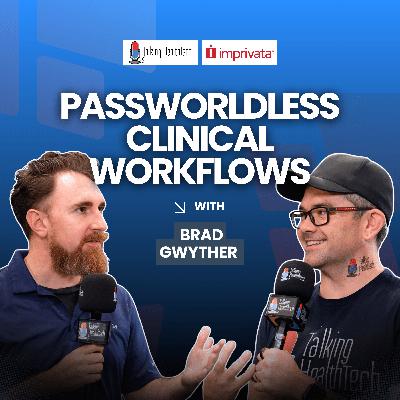
In this episode of Talking HealthTech, Peter Birch sits down with Brad Gwyther, Principal Consultant at Imprivata, to explore the evolving landscape of secure access and identity management in clinical settings. The conversation focuses on the New Zealand healthcare ecosystem while highlighting trends and challenges that resonate globally.Brad and Peter discuss the daily struggles clinicians face with password management, the risks of weak access controls, and the impact of inefficient authentication on both patient safety and clinical workflow.They also examine modern approaches to secure access, including passwordless authentication, biometric logins, single sign-on, and mobile device management.These solutions can streamline clinical workflows while maintaining rigorous security and meeting audit requirements.The discussion also delves into practical lessons for implementing authentication solutions across desktop and mobile environments, addressing the complexities of shared workstations, roving staff, and multiple applications.This episode was recorded live at the Imprivata booth during HiNZ Digital Healthcare Week in New Zealand, providing listeners with real-world examples of how hospitals are modernising access management to improve efficiency, accountability, and patient care.Key takeaways🔑 Password management and the shift towards passwordless authentication are key concerns in healthcare, due to multiple system access requirements🩺 Implementing secure, efficient authentication methods that can help clinicians provide better patient care without interruption🛡️ Security needs to be balanced with ease of access, tailored to different workflows and physical locations within healthcare facilities📱 Mobile device management and secure shared device usage are becoming increasingly important as clinical mobility grows🌏 The drive towards efficient, secure access is a global issue, with maturity and practices varying across organisations, but a common goal shared worldwideTimestamps00:00 – Introduction00:50 – Brad Gwyther explains his role at Imprivata01:25 – Needs of Imprivata’s customers in New Zealand02:52 – Balancing security and ease of use in clinical authentication04:01 – Passwordless authentication and ongoing challenges05:55 – Implementation process07:18 – Integrating clinical applications and systems08:36 – Mobile device management and traceability09:44 – Global challenges in secure access for healthcare11:15 – Innovations in authentication and aligning tech with clinical workflows___Want to keep the conversation going?The full article and extended show notes for this episode are available inside the THT+ Community here: View Full Article HereIn the THT+ Community, our members keep the discussion going, share perspectives, and unpack what this episode actually means in practice with other people working in healthtech.If you’re enjoying the show and want access to full articles, episode discussions, meetups, and member-only content, you can learn more about becoming a THT+ Solo Member here: talkinghealthtech.com/thtplus.And if this episode was useful, leaving a review or sharing it with someone in the industry always helps.
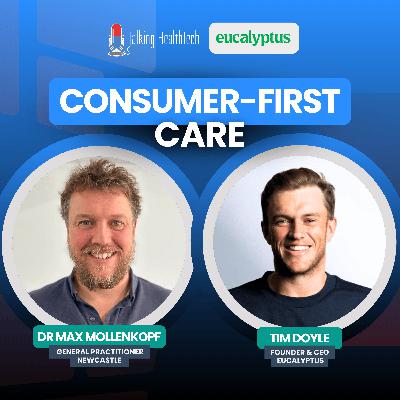
In this audio-only episode of Talking HealthTech, Dr Max Mollenkopf, a Newcastle GP and practice owner, speaks with Tim Doyle, founder and CEO of Eucalyptus, about the evolution and future of primary care in Australia.The discussion explores Eucalyptus’s digital health model, how it is changing patient experiences, supporting clinicians, and connecting with traditional general practice.The conversation covers key challenges facing healthcare today, including continuity of care, regulatory considerations, clinician engagement, and the shifting expectations of patients in a digital era.They share candid insights on scaling digital clinics, balancing technology with human connection, and the opportunities and limitations of hybrid care models.This episode offers practical perspectives on how digital and traditional care can work together, the evolving role of the GP, and what the next generation of Australian healthcare may look like.Key Takeaways🩺 The rise of digital-first clinics is changing how patients interact with primary care, focusing on convenience and continuity through technology.👩⚕️ Clinician independence and quality assurance, including pre-screening and audit systems, are central to responsible digital healthcare delivery.💡 Patient engagement is evolving, with increased demand for more data, self-ownership of health, and a desire for ongoing support beyond traditional appointments.💬 The lines between wellness, primary care, and marketplace health products are blurring, raising questions around clinician roles, value, and regulation.🔗 Integrating digital and in-person (hybrid) care paths is viewed as essential for the future, with attention to necessary safeguards, incentives, and patient consent.Timestamps00:00 — Introduction00:36 —Dr. Max Mollenkopf on panel experiences and challenging ideas02:02 —Tim Doyle explains Eucalyptus’s origins and vision06:11 — Addressing continuity, fragmentation, and care platforms13:29 — Access to health information and regulatory challenges17:33 — Business models, clinician obligations, and monetisation24:45 — Regulation, industrial standards, and cannabis clinics26:58 — Quality audits and the role of technology in large-scale care32:23 — Value in care, rebates, and consulting models37:00 — The intersection of wellness, screening, and preventative health42:38 — A hybrid model for future healthcareWant to keep the conversation going?The full article and extended show notes for this episode are available inside the THT+ Community here:View Full Article HereIn the THT+ Community, our members keep the discussion going, share perspectives, and unpack what this episode actually means in practice with other people working in healthtech.If you’re enjoying the show and want access to full articles, episode discussions, meetups, and member-only content, you can learn more about becoming a THT+ Solo Member here: talkinghealthtech.com/thtplus.And if this episode was useful, leaving a review or sharing it with someone in the industry always helps.
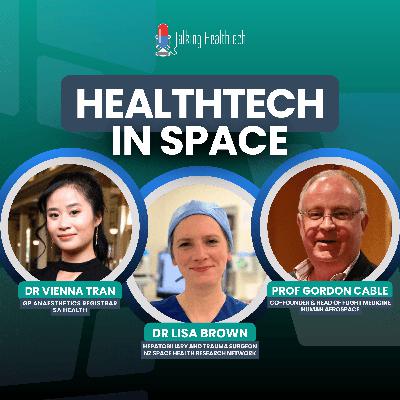
In this episode of Talking HealthTech, Peter Birch sits down with Dr Vienna Tran, Professor Gordon Cable, and Dr Lisa Brown to explore the fascinating intersection of healthcare and space.The discussion focuses on space medicine and how clinicians care for astronauts living in microgravity, exposed to radiation, and operating far from Earth’s hospitals.Learn about the unique challenges of human physiology in space, from fluid shifts and bone loss to immune changes and heightened cancer risks.The panel also examines how technologies developed for astronauts, including wearable health monitors, AI-driven diagnostics, telemedicine systems, and on-demand medical tools, are now being adapted for remote and resource-limited healthcare settings on Earth.The conversation highlights the parallels between rural healthcare in Australia and medicine in space, drawing on lessons from the Royal Flying Doctor Service and other innovative programs.It also explores the role of international collaboration, cross-disciplinary research, and microgravity studies in shaping the future of both space missions and terrestrial medicine.Key Takeaways🚀 Space medicine is likened to extreme remote healthcare, highlighting autonomy and resourcefulness.🧑🔬 Technologies originally developed for space, like telemedicine and imaging tools, now benefit rural healthcare in Australia.🌱 Innovations such as plant growth research and pharmaceuticals in microgravity have Earth applications, impacting food security and medicine shelf-life.🧠 Deep space missions require new psychological and physical support systems due to isolation and altered gravity.🩺 Collaborative research in Australia and New Zealand is advancing knowledge in areas like organ health, gallstone formation, and cancer associated with space environments.Timestamps00:00 – Introduction02:13 – Dr Vienna Tran22:25 – Professor Gordon Cable39:20 – Dr Lisa BrownWant to keep the conversation going?The full article and extended show notes for this episode are available inside the THT+ Community here:View the Full Article HereIn the THT+ Community, our members keep the discussion going, share perspectives, and unpack what this episode actually means in practice with other people working in healthtech.If you’re enjoying the show and want access to full articles, episode discussions, meetups, and member-only content, you can learn more about becoming a THT+ Solo Member here: talkinghealthtech.com/thtplus.And if this episode was useful, leaving a review or sharing it with someone in the industry always helps.

Comments

Download from Google Play

Download from App Store
 United States