


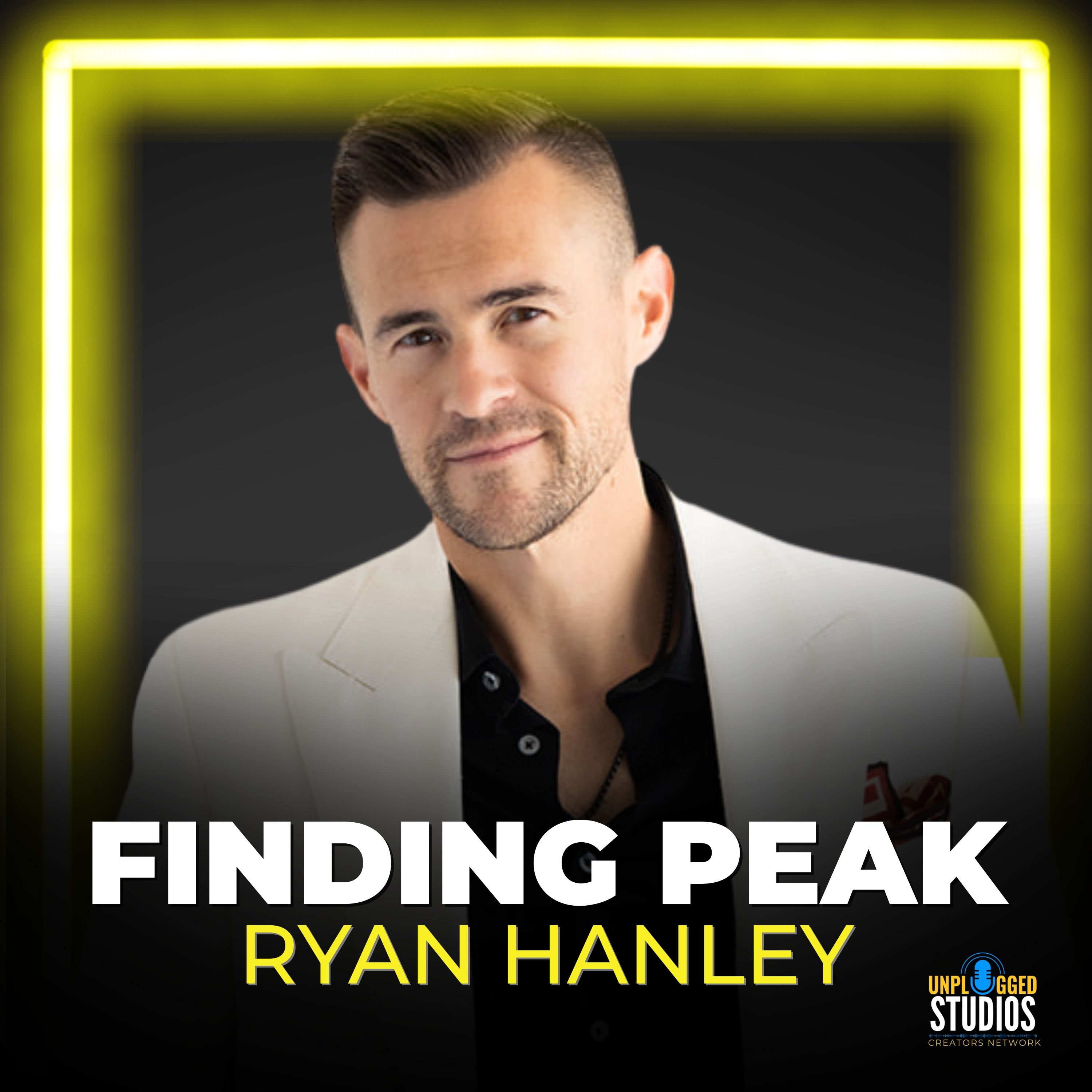
Finding Peak with Ryan Hanley
Subscribed: 24,218Played: 105,678
Subscribe


© 2026
Description
You've done the work and built the thing, but you're still stuck in "Almost." Ryan Hanley's weekly conversations with founders, athletes, authors, and operators who know how to ship the last 10%. Each episode names the trap and leaves you with the mindset, moves, and motivation to get it done. The path is simple. The work is not. Subscribe, then finish the thing.
462 Episodes
Reverse

A promise is not a path.The American Dream works when people can see a believable route from where they stand to somewhere better. That route does not build itself. It requires memory, opportunity, responsible ownership, and leaders willing to carry the burden that comes with authority.Get C.R.E.A.M., my weekly growth-marketing experiment, playbook, teardown, or take for people doing the work in the age of AI. With receipts: https://ryanhanley.com/subscribeDavid Rubenstein is the Co-Founder and Co-Chairman of The Carlyle Group and the Chairman, CEO, and principal owner of the Baltimore Orioles. He joins me for a conversation about the American Dream, historical memory, sports ownership, and what leaders owe the people who trust them.We begin with a real tension. Working families and small-business owners are operating the same lives on thinner margins. David argues that confidence in upward mobility is weakening. But diagnosis is not the destination. The useful question is what makes belief rational again.History is part of the answer. David explains why a country needs to remember its successes and failures, why he places copies of the Declaration of Independence in public spaces, and why forgetting the operating record makes it easier to repeat old mistakes.Then we move inside professional sports ownership and David's book, Inside the Owner's Box: Conversations on Power and Leadership in Sports. Sports franchises have become an investment class, but David's reason for buying the Orioles was rooted in Baltimore. He wanted the team to help revive and reconnect the city that raised him.That gives us the operator lesson. Owners set the standard, approve consequential capital, and carry the criticism. Experts who live and breathe the work make the day-to-day decisions. Ownership is not permission to play every position. It is responsibility for building the conditions where other people can win.The American Dream is not self-executing. It is built in the institutions we remember, the opportunities we create, the decisions we fund, and the people we trust.Get Easy Mode book resources and updates: https://ryanhanley.com/easy-modeConnect with David RubensteinWebsite: https://www.davidrubenstein.com/LinkedIn: https://www.linkedin.com/in/david-m-rubenstein/Inside the Owner's Box: https://www.simonandschuster.com/books/Inside-the-Owners-Box/David-M-Rubenstein/9781668022498X: https://x.com/DM_Rubenstein Hosted by Simplecast, an AdsWizz company. See pcm.adswizz.com for information about our collection and use of personal data for advertising.

I help founders & executives generating more than $10M in revenue find their Easy Mode. Start here: https://ryanhanley.com/subscribe
Watch this episode on YouTube: https://youtube.com/ryanmhanley
Pressure can produce a yes. It can also poison the relationship that comes after it.
Guffy Wright, author of Attach High: How Elite Advisors Remove Friction from High-Stakes Decisions, joins me to explain why strong value still loses when confusion, fear, or misalignment blocks the decision.
His V3 framework gives advisors and leaders a better sequence. Value creates clarity. Vulnerability creates safety. Validation creates direction. The point isn’t to corner someone into agreement. It’s to clear the path toward an honest decision.
We talk about “commission breath,” why trust alone can’t fix directional conflict, and why detaching from an outcome is not the same as caring less. Guffy calls detachment the highest form of professional empathy because it demands that you attach to the client’s best decision instead of your own payout.
The conversation moves beyond sales. I share the baseball lesson that taught me to stop pressing. Guffy explains his four years of stagnation, why high performers keep adding when subtraction is the better move, and how breath, gratitude, curiosity, and truth bring him back into alignment.
We close with the story behind Attach High. The title grew from grief after Guffy lost his father, mentor, and friend. The book carries that legacy forward as a practical guide for advisors, founders, leaders, and parents facing decisions with real weight.
This is the way.
Hanley.
Connect with Guffy Wright:
Website: https://guffywright.com/
LinkedIn: https://www.linkedin.com/in/guffy-wright-752679b/
Pre-order Attach High: https://www.amazon.com/Attach-High-Advisors-High-Stakes-Decisions-ebook/dp/B0HF629RD7/
Follow Ryan:
Website: https://ryanhanley.com
Instagram: https://instagram.com/ryan_hanley
Hosted by Simplecast, an AdsWizz company. See pcm.adswizz.com for information about our collection and use of personal data for advertising.
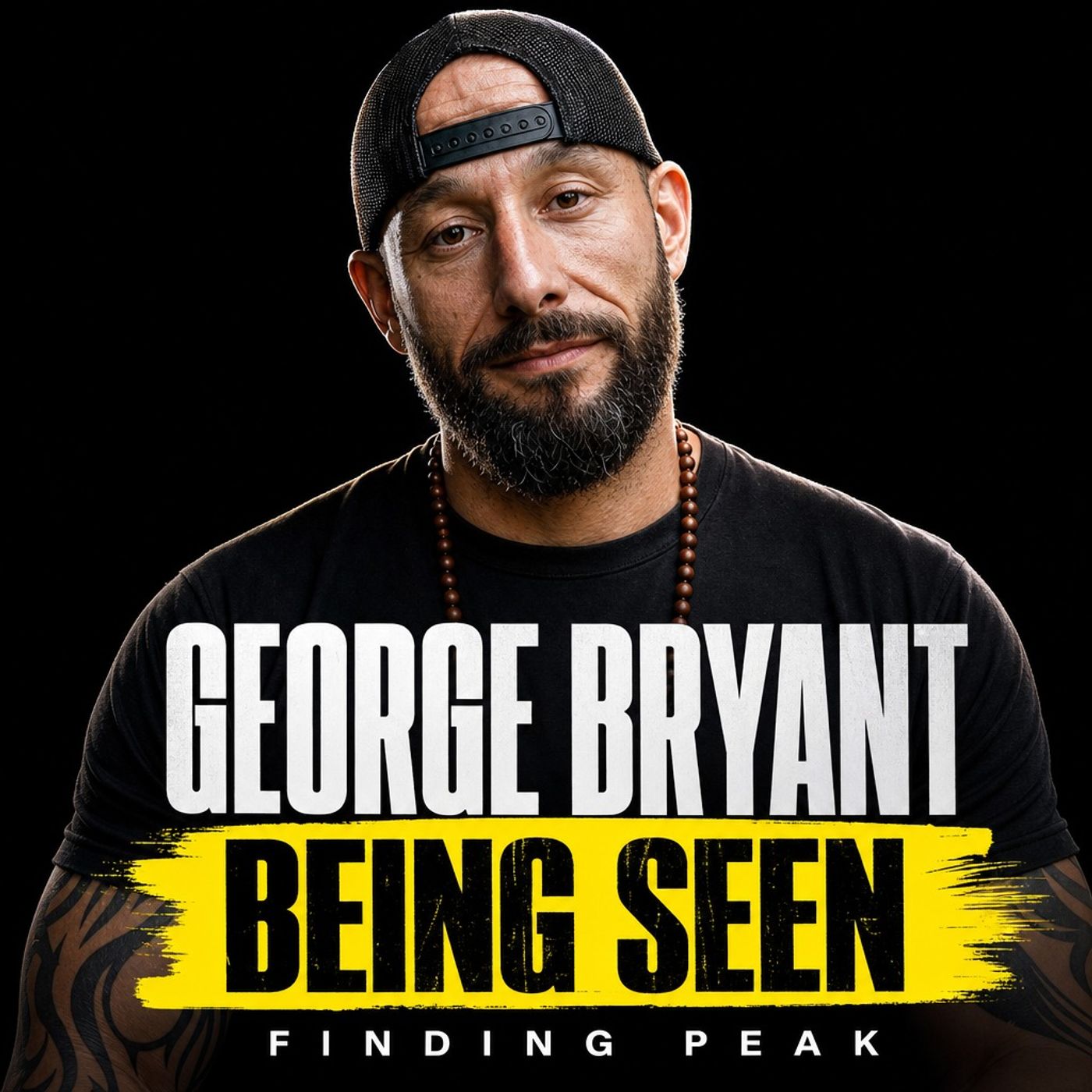
We will pick the disaster we already know how to live through. We will skip the win we have never survived.
George Bryant said that out loud and I felt it in my chest. He is a former Marine, a New York Times bestselling cookbook author, and the man behind Mind of George. He also spent years using a polished origin story as a moat. Enough pain to look open. Not enough truth to be seen.
---
I help founders & executives generating more than $10M in revenue find their Easy Mode. Start here: https://ryanhanley.com/subscribe
Watch this episode on YouTube: https://youtube.com/ryanmhanley
---
He grew up outside Boston in a house full of drugs, fists, and sexual abuse. He joined the Marines because home was worse than Parris Island. Honor graduate. Somalia at 21. Almost lost both legs. A year in a wheelchair. Opiates. A night in the barracks when he swallowed the whole bottle and did not want to wake up.
Then a food blog that became Civilized Caveman. An ebook he says did a million dollars in six days. A cookbook tour where he taught people to love themselves with food while he binged and purged before every keynote. Austin. Four thousand people. His ex-wife asked if he was going to walk on stage and lie to them again. The only sentence that would come out was, "I've been lying to all of you."
He later named the gap I keep seeing in high performers: authenticity is a story you can recite on 9,000 podcasts. Intimacy is letting someone close enough to help you. He found God in Costa Rica the hard way, wrote his purpose on a piece of paper, and gave the seven-figure company away because he was told to.
If you run a real company and still feel unseen, this is a map of the hiding places that look like strength. George's close is the whole episode in one move. Nobody will see you until you can look in the mirror without putting yourself on trial.
Connect with George Bryant:
Website: https://mindofgeorge.com/
Podcast: The Mind of George Show — https://mindofgeorge.com/podcast/
Instagram: https://instagram.com/itsgeorgebryant
Book: The Paleo Kitchen (Juli Bauer and George Bryant) — https://www.amazon.com/dp/1628600101?tag=findingpeak-20
Follow Ryan Hanley
Website: https://ryanhanley.com
Instagram: https://instagram.com/ryan_hanley
X: https://x.com/rhanley
This is the way.
Hanley. Hosted by Simplecast, an AdsWizz company. See pcm.adswizz.com for information about our collection and use of personal data for advertising.

I help founders & executives generating more than $10M in revenue find their Easy Mode. Start here: https://ryanhanley.com/subscribe
Watch this episode on YouTube: https://youtube.com/ryanmhanley
AI can make your company faster. It can also make your brand sound like everyone else. When competent output becomes cheap, human trust becomes expensive.
Tyler Cerny is an international, award-winning keynote speaker and keynote coach who helps people connect purpose, communication, and authority. We talk about why he is bullish on human connection while companies rush to automate the face, voice, and judgment out of their brands.
Tyler explains why successful businesses are built on successful human relationships, how the five senses shape memorable experiences, and why “do it, teach it, sell it” protects leaders from selling expertise they have not earned.
I make the case against AI avatars pretending to be human presence. If software writes the script and another tool delivers it through your face, the audience has no proof that you own the idea. That gap damages trust long before a customer needs help with a hard problem.
We also separate transactional companies from relational companies, break down Tyler’s three levels of communication, and show how adversity, values, and lived experience create a one-of-one message.
Tyler closes with the framework that ties the conversation together: purpose precedes design. Decide what the talk, business, relationship, or life is meant to do before you copy someone else’s structure.
Use AI to remove Workslop. Keep the human work human.
Connect with Tyler Cerny
Website: https://tylercerny.com/
LinkedIn: https://www.linkedin.com/in/tylercerny/
Instagram: https://www.instagram.com/tylerdcerny
YouTube: https://www.youtube.com/@tylercerny
Pre-order *The Life of Purpose*: https://tylercerny.com/book/
Follow Ryan Hanley
Website: https://ryanhanley.com
Instagram: https://instagram.com/ryan_hanley
This is the way.
Hanley. Hosted by Simplecast, an AdsWizz company. See pcm.adswizz.com for information about our collection and use of personal data for advertising.

I help founders & executives generating more than $10M in revenue find their Easy Mode. Start here: https://ryanhanley.com/subscribe
Watch this episode on YouTube: https://youtube.com/ryanmhanley
AI access is not the advantage anymore. Ryan Doser makes the case that the real marketing moat in 2026 is expertise, context, and distribution. The model matters, but the model is not the business.
Ryan brings a useful anti-hype posture to a category packed with fake automation demos and borrowed confidence. We talk about why frontier models can be overbuilt for normal knowledge work, how cheaper open or alternative models can fit the job when you provide strong context, and why generic “tell AI to do it” advice breaks once the work gets messy.
The practical path is cleaner than the hype. Define the bottleneck. Build a context vault. Create granular skill markdown files. Treat those skills like SOPs for agents. Run the work in a space like VS Code where instructions, files, examples, and outputs can sit together without turning into a junk drawer.
Ryan also explains how he pairs different models for critique, keeps skill files narrow, and learns from failed experiments without turning every mistake into another tool subscription. The goal is not more AI. The goal is a system that makes better decisions, lowers waste, and helps good marketers ship work their customers can use.
We also cover guardrails, agent permissions, review loops, and model cost. If AI has felt noisy, expensive, or slippery, this conversation helps you move from prompt collector to operator.
Connect with Ryan Doser
Website: https://ryandoser.com/
LinkedIn: https://www.linkedin.com/in/ryan-doser-ai-marketing/
YouTube: https://www.youtube.com/@RyanDoserAI
AI Marketing Insiders: https://www.skool.com/ai-marketing-insiders
Claude Skills Stack: https://skills.ryandoser.com/
Follow Ryan Hanley
Website: https://ryanhanley.com
Instagram: https://instagram.com/ryan_hanley
This is the way.
Hanley. Hosted by Simplecast, an AdsWizz company. See pcm.adswizz.com for information about our collection and use of personal data for advertising.

Comments

Download from Google Play

Download from App Store
 United States