


 Claim Ownership
EIDOS: The Shape and Form Ideas Take
Subscribed: 0Played: 0
Subscribe

© Ira Gardner
Description
Think of Eidos as a modern dinner party that features photographers, writers, philosophers, and AI chatbots. It's a place where the darkroom alchemist and the AI futurist sit at the same table. Edited by Ira Gardner, this podcast hits the pause button on the modern world to explore the intersection of photography, culture, and technology. Pull up a chair and let's see the world more clearly.
18 Episodes
Reverse
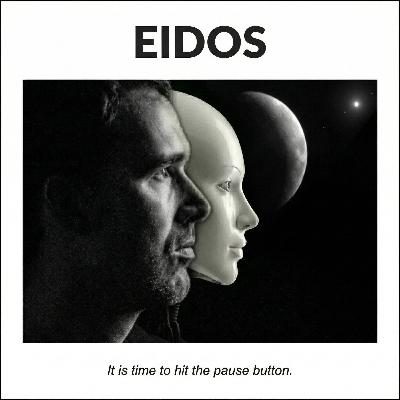
In the past machines replaced physical labor but not intellectual labor. With today's robots and AI technology there is real fear of technology displacing humans in the workforce and creating a massive crisis of identity.
In this episode, we explore the idea that every choice a photographer makes—from their lens to their editing style—is actually a form of game design. By adopting specific constraints, photographers are "sculpting" their own creative agency, essentially choosing who they want to be in the moment of creation.
In this episode we tackle the universal dread of the blank canvas through the lens of theoretical biology and the work of Stuart Kauffman. We explore how the universe builds complexity and how those same principles can serve as the ultimate antidote to creative paralysis. We look at how self imposed creative constraints can lead to artistic innovation.
In this episode of Eidos, we explore the ideas of legendary photographer Sam Abel and examine how great photographs are meticulously built like a spider web waiting for the subject to appear. We also look at the hidden secret ingredient that gives a photograph depth and originality.
We are constantly surrounded by images, but every one of them is speaking a coded language that tells our brains how to feel. This episode explores the concept of mimesis—the representation of reality—and the two primary frequencies used to build it . We investigate why a technically "flawed" photograph from the 1930s can hold more "presence" than a mathematically perfect AI image, and we provide a technical toolkit for creating work that resists the "algorithmic mirage"
For centuries, the world’s greatest artists didn’t rely on raw talent alone; they used a forgotten system of "secret geometry" to build their masterpieces. This episode challenges the modern reliance on the "Rule of Thirds"—which is often a limiting myth—and reintroduces the Harmonic Armature, a 14-line grid of the rectangle that allows for complex, harmonious design. We explore how "visual literacy" is the key to moving from passive looking to comprehensive seeing.
This episode addresses the clash between two fundamental philosophies of art: the ancient concept of techné (craft and physical struggle) versus the power of the conceptual idea.
This episode explores the "epistemic breach"—a fundamental philosophical crisis driven by generative AI that threatens our collective ability to agree on what is true. We trace the history of visual trust, from the "indexical contract" of physical film to the current era of "null information," where images refer to events that never actually occurred.
In this episode of Eidos, we host the ideas of German existentialist philosopher Martin Heidegger. We explore his seminal essay, The Age of the World Picture, and discuss how the modern era is defined by a massive transition in Western thought that has flattened the modern world into quantified resources. We also look at the role the Arts and Humanities disciplines play in resistance to the loss of mystery and sacredness in a world quickly being dominated by AI technology.
From viral social media quizzes to high-stakes corporate assessments, we are obsessed with personality tests. We are all looking for a map to navigate the "wild territory" inside our own heads. This episode dives deep into the world of psychometrics—the science of measuring mental capacities and processes—to ask a fundamental question: Do these labels liberate us with a user manual for our minds, or do they lock us into neat little boxes that prevent real growth?
For decades, the iconic vision of the American West was defined by Ansel Adams: towering mountains and untouched wilderness that served as a spiritual ideal. But while Adams captured these majestic vistas, a different reality was taking shape—one of tract homes, parking lots, and suburban sprawl. In this episode, we explore the profound transition from the "Sublime" to the "New Topographic" movement, a shift that forced us to face the land we actually live in.
Are you feeling the weight of modern burnout? That persistent, low-level stress might not be caused by your to-do list, but by your visual environment. In this episode, we explore the concept of "Epidemic Dislocation"—the biological friction between our ancient brains and our modern, hard-edged world.We dive into the science of Fractal Fluency, the neurological relief of Soft Fascination, and how the Japanese aesthetic of Yubi (gentle beauty) can act as a "visual pharmaceutical" to help us recalibrate our nervous systems.The Evolutionary Gap: Our biology evolved over millennia in nature, but we now live in a world of digital screens and "directed attention" that keeps our fight-or-flight response on high alert.The Power of Fractals: Human eyes are "active hunters" of patterns. We are naturally attuned to fractals (repeating natural patterns) with a complexity dimension of 1.3 to 1.5.Soft Fascination: Unlike the draining focus required for emails or traffic, looking at nature or specific art triggers a "mental exhale" that allows the brain to rest and recover.Art as Self-Medication: By consciously curating our visual surroundings—using works like the platinum palladium prints of Nobuyuki Kobayashi—we can literally lower our cortisol and heart rate.Key Takeaways
In the summer of 1945, as World War II drew to a close, Dr. Vannevar Bush—the man who coordinated 6,000 of America's leading scientists for the war effort—turned his attention from "destructive gadgets" to the "improvement of the human mind". This episode dives into Bush's vision for a future where machines would not just crunch numbers, but augment human memory and intuition. We explore his uncanny predictions—from wearable cameras to speech-to-text—and the philosophical rift between his "associative" vision and the "automated" systems of his colleague, Norbert Wiener.
In this archival interview from 2017, host Ira Gardner sits down with Cindy Groepper to explore the hands-on, often unpredictable world of wet plate photography. A retired nurse turned "intuitive artistic polymath," Cindy discusses her journey from a basic Christmas kit to studying with masters of the craft. The conversation delves into the unique aesthetic of tintypes, the challenges of long-exposure portraiture, and how her background in nursing and an interest in Victorian science inform her hauntingly beautiful still life compositions.
In this episode of Eidos, we invite Dr. Gregory Roth to our "modern dinner party" to discuss the art, history, and philosophy of wet plate photography. We explore the Roth family’s 55-year tradition of military service, teaching, and photography, tracing a line from the battlefields of the Pacific to the darkrooms of Spokane Falls Community College. Dr. Roth shares his technical insights into the "elemental" process of creating tintypes and ambrotypes, and he argues for the enduring relevance of these "one-off" artistic constructions in a digital age.
Episode SummaryIn this episode, Ira Gardner takes a deep dive into the evolution of our relationship with technology. He uses a personal narrative, co-authored with AI, to trace the shift from a tactile, mechanical world to an abstract, screen-mediated one. The conversation explores the concepts of "Qualia"—the felt sense of reality—and the vital role human expertise plays in collaborating with generative AI.The Mechanical Era: Memories of a childhood shaped by the physical tools of the 1970s, from Star Trek’s mechanical set designs to the intricate work of camera repair.The Technological Shift: How the introduction of the flexible printed circuit board in cameras like the Canon AE-1 marked the end of an era of tactile repair and the beginning of "remove and replace" technology.Star Trek as Metaphor: Contrasting the bridge of Kirk’s Enterprise—a "cramped submarine full of physical switches"—with the serene, screen-dominated bridge of Picard’s Enterprise-D.The AI Collaboration: A look at the "Dual-Processor Workflow," where the AI provides structural history while the human supplies visceral, lived experience ("Qualia").The Human Role as Editor-in-Chief: Why humans must act as the "fact-checking firewall" to counteract AI's tendency toward "fluency heuristics" and hallucinations.To ensure accuracy when working with AI, the episode suggests a three-step protocol:Classification: Distinguish between safe arguments (subjective/philosophical) and vulnerable data (specific names, dates, specs).Zero-Shot Verification: Never ask an AI to check its own work. Use a fresh chat or a search engine to verify facts independently.Manual Audit: Personally verify all citations to ensure the sources actually exist."The machine can describe the history of the circuit board, but only the human can convey the heartbreak of the artisan who lost his purpose because of it."Key Discussion PointsThe "Editor-in-Chief" Protocol for AI ContentFinal Thought
Eidos tackles one of the most fascinating contradictions in modern art: why are we returning to a slow, 170-year-old photographic process in an age of instant digital gratification?This episode explores the Wet Plate Collodion process, invented in 1851, which requires photographers to become chemists—pouring sticky collodion onto glass, dipping it in silver nitrate, and developing it within minutes before it dries. We unpack the "Wet Plate Paradox": how this cumbersome, chemically volatile method forces a level of intentionality and physical connection that digital photography simply cannot match.We examine how artists like Cindy Gripper use the imperfections of the process—swirls, streaks, and chemical artifacts—not as mistakes, but as "magic" that creates a tangible dialogue with the past. The episode concludes with a thought-provoking challenge from Ira Gardner: "Don't change the technology, change your mindset." Learn how applying the "Wet Plate Mentality"—slowing down, engaging fully, and waiting—can transform even your iPhone photography.Key Topics:The history of the Wet Plate Collodion process (Archer, 1851).The "Wet Plate Paradox": Why difficulty creates value.The aesthetic of imperfection: How chemical flaws create unique, one-of-a-kind art.The 30-Second Challenge: How to apply the Wet Plate mindset to digital photography.
In this inaugural deep dive, we explore the launch of Eidos, a new quarterly journal and conceptual project designed to address the modern "crisis of perception." As the gap between seeing and publishing shrinks to zero, Eidos invites us to "hit the pause button" and create a space for intentional reflection.This episode unpacks the philosophical dual meaning of the word Eidos—bridging the physical craft of photography ("that which is seen") with the synthetic power of AI ("the universal form"). Join us as we discuss how wet-plate photography and generative AI can sit at the same dinner table, helping us navigate a world saturated with images to see reality more clearly.Key Topics:The collision of Analog Photography and Artificial Intelligence.The "Crisis of Perception" and the need for a quiet gap.The philosophical roots of Eidos (The Visage vs. The Form).The "Modern Dinner Party" concept: Uniting purists, futurists, and synthesizers.
Comments

Download from Google Play

Download from App Store
 United States