


 Claim Ownership
The Optimism Show
Subscribed: 0Played: 0
Subscribe

© Optimism Show 2024
Description
Founders and builders on the Optimism Superchain. Using blockchain to build public goods, and sustainable companies that actually make a difference. Focused on the business side of SaaS and blockchain: user acquisition, product design, customer experience, funding, business growth, with a twist of spirituality and the everyday joys of life.
97 Episodes
Reverse
We’re covering Coinbase’s announcement of 14 new and upcoming listings and what that could mean for the Base ecosystem.
Background, Coinbase typically drives new liquidity and user flows when it lists tokens, and any assets that are native to or bridged onto Base would likely lift on‑chain liquidity, trading volume, on and off‑ramp activity and new user onboarding for Base. The original list was behind a paywall for us, so we’re framing impact based on likely candidates and market dynamics rather than a verified token roster.
Key points, first, tokens that are already deployed or bridged on Base and major stablecoins like USDC or USDT would have the clearest, quickest impact, boosting DEX volume and bridge throughput. Second, price and volume scenarios, if smaller, low‑market‑cap tokens get listed they could see sharp, speculative moves, for example intraday spikes ranging from 20 to 200 percent in extreme cases, while larger, well known L1, L2 or stable assets would more likely show modest moves, perhaps 5 to 25 percent, with corresponding increases in Base TVL. Third, market sentiment is cautiously optimistic, traders expect a short term boost but also elevated volatility around listings. Fourth, ecosystem actions, teams should be ready with custody, liquidity provisioning and bridge capacity, while builders and DEXs should monitor inflows and user traffic.
Bullish factor, listings bring capital, visibility and new users to Base, which can accelerate on‑chain activity. Bearish factor, rapid inflows often lead to knee‑jerk profit taking and congestion or higher gas costs, which can hurt user experience.
This is not financial advice, crypto is volatile and speculative. We’ll keep tracking announcements and on‑chain moves, so subscribe and check our other videos for rolling coverage.
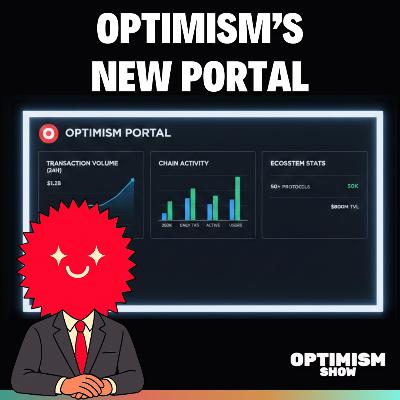
This week, the Superchain didn’t move on hype or breaking news — it moved on clarity.The Superchain now processes over 59% of all Layer 2 transactions, handles ~21 million transactions per day, and supports 800+ active applications contributing to the Optimism Collective. What’s changed isn’t just scale — it’s coordination. For the first time, the ecosystem has a shared observability layer that lets builders, operators, and governance participants reason about the Superchain as a single system, not a loose set of rollups.At the center of this shift is the Messari Optimism Portal: a unified, no-login dashboard that maps OP Mainnet, Base, and the wider Superchain across usage, fees, DEX volume, TVL, stablecoin flows, and application activity — paired with research context and AI summaries. This isn’t just analytics. It’s a coordination upgrade.We also cover the latest ecosystem pulse: Base’s new consumer-facing app, Soneium’s recurring Score Seasons, Mode’s AI trading agents, and evolving governance conversations around institutional alignment and real-world assets.The takeaway is simple: as the Superchain reaches sustained production scale, visibility and shared understanding become critical infrastructure. Coordination — not just throughput — is now the limiting factor.⚠️ Not Financial AdviceThis content is educational only. Crypto is volatile — always do your own research.🎙️ About The Optimism ShowHigh-signal coverage of the OP Stack, Base, and the Superchain — for builders, operators, and onchain teams who want clarity, not hype.🔔 Follow & SubscribeSubscribe for weekly Superchain Digest episodes, operator-focused breakdowns, and signals you can actually ship against.
A new 21Shares outlook is sounding the alarm: most Ethereum Layer 2 networks may not survive past 2026 as activity, liquidity, and developers continue to concentrate around a small group of dominant chains.After two years of rapid expansion, the L2 ecosystem is hitting a breaking point. While more than 50 Layer 2s are live today, nearly 90% of L2 transactions are already concentrated on just Base, Arbitrum, and Optimism — with Base alone processing over 60%. According to the report, usage across weaker L2s is down 61% since mid-2025, turning many into so-called “zombie chains.”Several retrenchments highlight the trend: Kinto shut down, Loopring closed its wallet, and Blast’s TVL collapsed by over 90%. Even major DeFi protocols like Aave and Synthetix have scaled back deployments on underperforming L2s due to low liquidity and weak returns.A key catalyst was Ethereum’s Dencun upgrade, which cut data costs by roughly 90%. While great for users, it triggered intense fee competition that pushed most rollups into losses. Base was the only L2 to generate positive revenue in 2025, reportedly earning around $55 million.Looking ahead, 21Shares expects a much leaner L2 landscape — dominated by exchange-backed networks like Base, ETH-aligned designs such as Linea, and a small number of high-performance rollups built for near-real-time execution.⚠️ Not Financial AdviceCrypto is volatile. Always do your own research before investing or deploying capital.🎙️ About The Optimism ShowHigh-signal coverage of Base, OP Mainnet, the OP Stack, and the Superchain — for builders, traders, and on-chain operators who want clarity, not hype.🔔 Follow & SubscribeSubscribe for ongoing coverage of L2 revenue, migrations, and adoption trends — and check our other videos for deeper dives into Ethereum scaling.
Surf just raised $15 million in a round led by Pantera, with participation from Coinbase Ventures and DCG — a strong signal that crypto needs its own AI research tools, not generic models repurposed for digital assets.Surf is a crypto-native AI research and intelligence platform trained exclusively on on-chain data, social sentiment, token behavior, and market structure. Instead of broad language models, Surf uses multi-agent systems designed to understand crypto markets and deliver structured analysis through a chat interface that feels like working with a dedicated analyst.The traction is real. Since launching in July, Surf has reached millions in annual recurring revenue, generated over one million research reports, and is already used by a large majority of top exchanges and research firms, growing roughly 50% month over month.For traders, funds, and protocol teams, this matters. As the Superchain and wider crypto ecosystem grow, risk management, governance analysis, and market monitoring will increasingly rely on AI tools that actually understand crypto-native data.The takeaway is clear: crypto-native AI is no longer experimental. With this raise, Surf is positioning itself as a core research layer for the industry.⚠️ Not Financial Advice Crypto is volatile — always do your own research before making investment or trading decisions. 🎙️ About The Optimism Show High-signal coverage of Base, OP Mainnet, the OP Stack, and the Superchain — for builders, traders, and on-chain operators who want clarity, not hype. 🔔 Follow & Subscribe Subscribe for weekly updates on Superchain infrastructure, crypto-native AI, and real adoption signals shaping the industry.
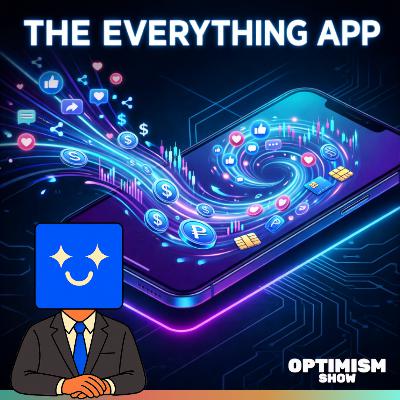
Base is accelerating into a full-stack consumer crypto platform. Coinbase has launched its tokenized “Everything App” on Base — combining social content, trading, payments, and earning into a single surface. It’s live in 140+ countries and built on open protocols like Farcaster and Zora, where every post can become a tradeable asset. Social becomes the funnel, trading becomes the engine, and tokenization becomes the glue.Meanwhile, Base’s creator narrative is colliding with on-chain reality: speculative flows dominate, liquidity is concentrated around Aerodrome, token factories like Zora, Virtuals, and Clanker fuel spam vectors, and actual creator income remains limited. Base is succeeding as a social-financial layer, not yet a creator economy.We also break down RLUSD, Ripple’s upcoming trust-regulated stablecoin launching on Base and Optimism via Wormhole NTT, and the macro signals shaping Base liquidity: ETF flows, stablecoin inflows, volatility regimes, and ETH-denominated collateral demand into 2026.The direction is clear: Base is becoming a consumer execution layer where attention converts directly into trading and payments. Builders, traders, and treasuries need to model trust assumptions, monitor liquidity concentration, and plan for regulated stablecoins entering the stack.⚠️ Not Financial AdviceCrypto is volatile — always do your own research before trading, deploying, or integrating new infrastructure.🎙️ About The Optimism ShowHigh-signal coverage of Base, OP Mainnet, the OP Stack, and the Superchain — for builders, founders, and on-chain operators who want clarity, not hype.🔔 Follow & SubscribeSubscribe for weekly BASE Weekly coverage, L2 deep dives, and protocol-level insights. Drop questions or contracts you want reviewed in the comments.
Lisk has fully reinvented itself. The chain you remember from years ago is gone — in 2025, Lisk is an Ethereum Layer-2 built on the OP Stack, plugged into the Superchain and optimized for real-world users, not hype cycles. Instead of chasing casino apps, Lisk is building for founders and communities in Africa, Southeast Asia, and Latin America — regions where Web3 solves real problems: hyperinflation, remittances, identity, access to banking, and mobile payments.Lisk’s “human layer” strategy focuses on incubators and teams on the ground in Cape Town, Nairobi, Jakarta, and Buenos Aires, supporting startups with funding, mentorship, and global scaling. On the tech side, Lisk is EVM equivalent, extremely low cost, Superchain compatible, mobile-first, and optimized for stablecoin payments, identity systems, creator tools, and real-world dApps.It already hosts real businesses solving multi-billion-dollar problems — from stablecoins for Indonesia to supply-chain tools in South Africa. With a $15M founder fund, incubator partnerships, and a three-stage pipeline from ideation to global scale, Lisk is positioning itself where the next billion users will come from.If you're a builder, user, investor, or founder looking at emerging markets, Lisk is one of the most important OP Stack ecosystems to watch right now.00:00 — What if a blockchain was built for real people? 00:16 — Lisk’s 2025 transformation into an OP Stack Layer-2 00:46 — The “human layer”: building where Web3 solves real problems 01:40 — Lisk’s tech: EVM equivalent, mobile-first, OP Stack, payments 02:49 — Real startups building on Lisk across emerging markets 03:26 — The $15M founder pipeline: incubators → funding → scaling 04:11 — Why emerging markets matter for crypto’s next billion users 04:45 — Who Lisk is for & why to watch it 05:17 — Final thoughts + subscribe⚠️ Not Financial AdviceCrypto is volatile — always do your own research before investing or building.🎙️ About The Optimism ShowHigh-signal coverage of the OP Stack, Base, and the Superchain — for founders, builders, and on-chain operators who want clarity, not hype.🔔 Follow & SubscribeSubscribe for weekly breakdowns of Superchain ecosystems, deep dives, and real-world adoption signals across L2s.
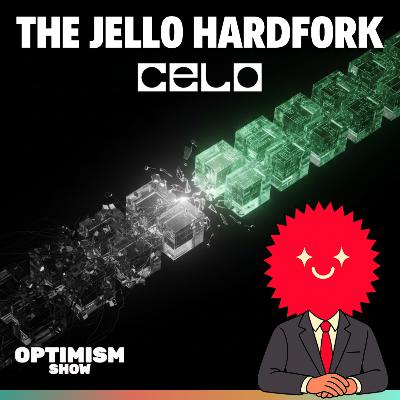
Celo just hit a major milestone: the Jello hardfork is now live, activating OP Succinct Lite on Mainnet and making Celo the first chain to run this new OP Stack upgrade in production. It also becomes the first network to launch a fully auditable EigenDA data availability bridge, marking a big leap in security and scalability. The upgrade brings ZK-powered fault proofs, a new Rust-based EVM client integrated with Succinct’s SP1 prover, and a live challenger set—independent actors monitoring proposer behavior to challenge bad state submissions. This strengthens censorship resistance, trust guarantees, and decentralization from day one. For users and builders, this means better data availability, stronger security, and low-fee performance while keeping Celo aligned with mobile-first payments. For the OP Stack and the Superchain, it's real proof that OP tech, EigenDA, and ZK systems can run together in production — moving both ecosystems closer to higher throughput and Stage 2 readiness. Celo just upgraded its core security and scalability using OP tech — a win for both Celo and the broader Superchain. ⚠️ Not Financial Advice Crypto is volatile — always do your own research before making decisions. 🎙️ About The Optimism Show High-signal coverage of Base, OP Stack, and the Superchain — for builders, founders, and on-chain explorers who prefer clarity over hype. 🔔 Follow & Subscribe Subscribe for weekly Superchain updates, deep dives, and protocol-level insights that matter.
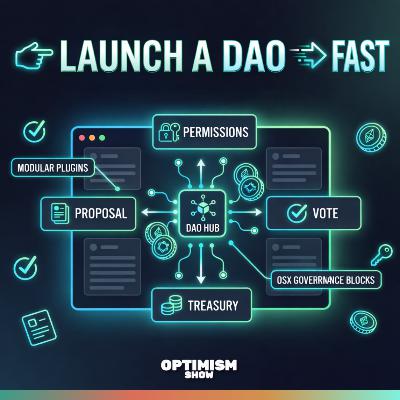
Launching a DAO used to be slow, risky, and technically painful. Aragon turns that entire process into plug-and-play governance, letting teams launch DAOs like installing apps — with audited modules, fine-grained permissions, multichain execution, and no Solidity required.Aragon’s modular stack includes token voting, multisigs, ve-lockers, encrypted proposals, optimistic governance flows, LayerZero cross-chain execution, and zkSync-based cheap voting. Plugins live in a secure, ENS-indexed repository, allowing DAOs to upgrade safely without rewriting dangerous code.With OSx, new DAO templates, privacy features via Vocdoni, and a growing plugin marketplace, Aragon is becoming the app store and security desk for DAO governance — trusted by Curve, Polygon’s Protocol Council, and major protocols securing billions.If you’re building DAOs, DeFi protocols, or multichain governance, Aragon offers auditable, modular, production-ready infrastructure that scales across the Superchain and beyond.⚠️ Not Financial AdviceCrypto is volatile — always do your own research before deploying governance or launching a DAO.🎙️ About The Optimism ShowHigh-signal coverage of Base, OP Mainnet, the OP Stack, and the Superchain — built for founders, builders, and DAO operators who want clarity over hype.🔔 Follow & SubscribeSubscribe for weekly deep dives into governance, Superchain infrastructure, and the tools shaping the next era of onchain coordination.
This week’s Superchain Digest covers the biggest signals shaping the OP Stack. The headline: OKX migrates XLayer to the OP Stack, bringing one of the world’s largest exchanges onto shared Superchain infrastructure — a major validation of OP Stack as reliable, enterprise-grade settlement rails.We also break down Etherfi and weETH becoming the liquid staking partner on OP Mainnet, strengthening OP Mainnet’s DeFi base, and the new World App, which blends verified identity, chat, payments, mini-apps, and global stablecoin accounts into a single onchain experience.Next, Celo activates OP Succinct Lite on Mainnet, shipping ZK fault proofs, EigenDA data availability, a Rust-based client, and a challenger set — proving OP Stack modularity in production. And Surf’s $15M raise highlights the rise of crypto-native AI tools for research and risk analysis.We wrap with quick Superchain ecosystem updates: more OP Chains, exchanges adopting OP Stack, Pendle and TAO on Unichain, Kyo Finance launch, Zora livestreaming, Base updates, and Celo’s tokenomics work. Together, these moves show the Superchain maturing into boring, reliable infrastructure for real builders and enterprises.⚠️ Not Financial AdviceCrypto is volatile — always do your own research.🎙️ About The Optimism ShowHigh-signal coverage of Base, OP Mainnet, and the Superchain — for builders who want clarity, not hype.🔔 Follow & SubscribeSubscribe for weekly Superchain digests and protocol-level insights you can actually build on.
Optimism has officially selected Etherfi as its liquid staking partner for OP Mainnet, positioning weETH as a core asset across the ecosystem. After a full review comparing liquidity depth, yield, risk, and long-term alignment, the Optimism Collective determined that Etherfi offered the strongest risk-adjusted profile.This upgrade means weETH is now primed for deep integration across OP Mainnet — from DEXs and lending markets to custodial platforms and institutional workflows. Builders gain a liquid staking token designed for higher security, transparency, and compatibility with the OP Stack.At the same time, Optimism is maintaining a multi-protocol approach. Etherfi isn’t the permanent winner — it’s the first anchor in a broader, diversified liquid staking landscape the Collective intends to grow over time.For DeFi teams, the signal is clear: building around weETH as collateral or a base asset will get easier, with more liquidity and tooling expected to accumulate around it.This move strengthens the financial foundation of OP Mainnet while keeping the door open for additional liquid staking partners in the future.⚠️ Not Financial AdviceCrypto is volatile — always do your own research before making staking or integration decisions.🎙️ About The Optimism ShowHigh-signal coverage of Base, OP Mainnet, and the Superchain — for builders, founders, and on-chain explorers who want clarity, not hype.🔔 Follow & SubscribeSubscribe for weekly Superchain updates, protocol deep dives, and insights that actually matter for builders.
Horizen has officially launched its EVM-native Layer-3 on Base and migrated ZEN into an ERC-20 — moving from a standalone PoW chain to a privacy-focused rollup that now benefits from Base liquidity, OP Stack tooling, and Ethereum finality. ZEN trading is live on major DEXs and exchanges, with staking set to return and potentially reshape token utility on Base.The new L3 is built with partners including Caldera, LayerZero, Stork, Den, Goldsky, and zkVerify, and comes with a 1M ZEN (~$8.8M) builder fund with Thrive Protocol. Horizen’s roadmap features privacy-first apps (private DeFi, payroll, verifiable ads) and a Confidential Compute Environment (TEE-based) planned for Q1 2026.Early sentiment points to better liquidity and accessibility, but long-term impact will depend on app adoption, staking mechanics, and competition inside the Base ecosystem.⚠️ Not Financial AdviceCrypto is volatile — always do your own research before trading or integrating new infrastructure.🎙️ About The Optimism ShowHigh-signal coverage of Base, the OP Stack, and the Superchain — for builders, traders, and on-chain explorers who want clarity, not hype.🔔 Follow & SubscribeSubscribe for weekly updates on Base, L3s, cross-chain infra, and real adoption signals across the Superchain.
CoinsPaid CryptoProcessing has added Base and Arbitrum support, letting merchants accept and settle USDC, USDT, and other crypto payments with lower fees and faster confirmations. This upgrade strengthens Base as a real-world payment rail, improves stablecoin flows, and reduces friction for wallets, dapps, and merchants integrating on-chain payments.By routing settlements over Layer 2s instead of Ethereum mainnet, businesses get cheaper transactions, quicker settlement times, and easier merchant onboarding. The impact depends on adoption: from modest increases in stablecoin activity on Base to meaningful payment-volume growth if merchants integrate at scale.🎙️ About The Optimism Show High-signal coverage of the tech, culture, and infrastructure shaping Base, the OP Stack, and the wider Superchain. 🔔 Subscribe to stay early, stay informed, and stay ahead. Not Financial Advice
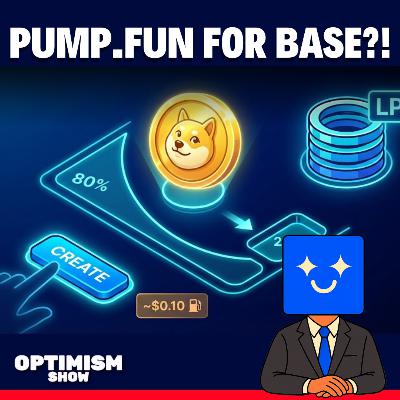
Base just introduced Base.meme, a no-code launchpad for creating memecoins on Base using bonding curves — designed to dramatically lower upfront liquidity requirements and reduce immediate rug risk. If you’re building, trading, or experimenting with token launches on Base, this is one of the most important tools to understand right now. Base.meme lets creators configure a bonding curve where roughly 80% of supply is sold through the curve, with the remaining 20% automatically migrated into a Uniswap liquidity pool. Creators can customize curve parameters, perform optional self-buys, upload assets, and push early demand through Twitter, Telegram, and Discord. With Base gas fees around $0.10 per transaction, and bridges like Base Bridge or Hop plus wallets like MetaMask and Coinbase Wallet, deploying and trading is extremely cheap and accessible. The platform recommends at least 0.01 ETH to cover deployment and initial buys. Early monitoring through Dexscreener and BaseScan is essential for tracking momentum. What this means for the ecosystem: Bullish signals include lower friction for new launches, more on-chain liquidity, and a surge of memecoin experimentation that strengthens Base’s position as the fastest-growing L2. 🎙️ About The Optimism Show High-signal coverage of the tech, culture, and infrastructure shaping Base, the OP Stack, and the wider Superchain. 🔔 Subscribe to stay early, stay informed, and stay ahead. Not Financial Advice
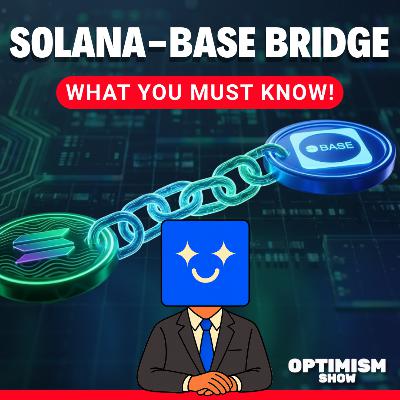
A Chainlink CCIP bridge between Solana and Base is now live — and that one line quietly rewires how assets, NFTs, and users can move between a major non-EVM chain and Coinbase’s Layer 2. If you build, trade, or run infra on Base, this isn’t just “another bridge announcement” — it’s a new liquidity corridor with very real security, UX, and routing tradeoffs.In this episode of BASE Weekly, we break down four stories you actually need to make decisions on: 1️⃣ The new Solana ↔ Base bridge using Chainlink CCIP and what to test first. 2️⃣ Base openly exploring a native token and the public spat with Solana leadership. 3️⃣ Horizen relaunching as a privacy-focused Layer-3 on Base with ZEN migrated to ERC-20. 4️⃣ CoinsPaid adding Base for merchant payments and what that means for stablecoin settlement.You’ll get concrete guidance on how to treat the CCIP bridge, what to watch around a potential Base token, how to think about L3s on Base, and why boring payment rails may end up being the stickiest source of volume.🎙️ About The Optimism Show / BASE WeeklyHigh-signal coverage of the tech, culture, and infrastructure shaping Base, the OP Stack, and the wider Superchain — focused on what actually matters for builders, wallets, traders, and infra teams, not just what’s trending on Crypto Twitter.🔔 Subscribe to stay early, stay informed, and stay ahead.Not Financial Advice — crypto is volatile, bridges and L3s carry unique risks, and you should always do your own research before deploying capital or shipping features based on any one integration.
What if every post you made online could actually pay you? If you create art, videos, writing, or even memes — this is the shift you’ve been waiting for. Zora is quietly becoming one of the most important platforms in the onchain creator economy. Instead of posting into an algorithmic void, Zora lets creators mint their work as collectible, tradable assets — with full ownership, embedded royalties, and creator-first economics. Your content becomes something people can collect, support, build on, and invest in. Zora isn’t just an NFT marketplace anymore. In 2025, it’s a full ecosystem powered by the Zora Network, Coins Protocol, and the ZORA token. It’s built for creators first — giving artists, writers, collectors, and builders the tools to build their own onchain economies with low fees, fast minting, and real upside. This is your breakdown of what Zora is, how the tech works, who it’s for, and why it might be one of the biggest shifts happening in Web3 right now.🎙️ About The Optimism Show High-signal coverage of the tech, culture, and infrastructure shaping the Superchain, the onchain creator economy, and the future of Web3 — delivered with clarity, not hype. 🔔 Subscribe to stay early, stay informed, and stay ahead. Not Financial Advice.
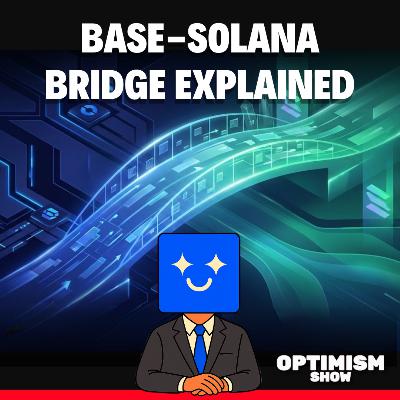
Base just launched a direct bridge to Solana — a major step toward seamless cross-chain movement between Coinbase’s Layer 2 and one of the fastest ecosystems in crypto. This upgrade lets users and builders move assets like SOL, ETH, and USDC between the two networks with far less friction, enabling deeper liquidity routing, better onboarding, and new cross-ecosystem opportunities for DEXs, wallets, and DeFi apps. The new Base ↔ Solana bridge plugs Solana’s ultra-fast, low-fee execution environment into Base’s Ethereum-aligned tooling. Multiple teams are involved — from Base and Coinbase, to Solana ecosystem projects, bridge infrastructure providers, and custody partners. As routing improves, aggregators and liquidity providers may shift flows across both chains, affecting token mobility, TVL, and trading activity. But bridges are still high-risk surfaces. Security audits, integration quality, liquidity depth, and routing performance will determine whether this bridge becomes a core part of the Base ecosystem, or just an early experiment in cross-chain interoperability. If adoption is strong, this could accelerate Base TVL growth, improve user onboarding, and activate new multi-chain DeFi strategies. If not, security risks and weak liquidity could slow its impact. This breakdown explains what the Base ↔ Solana bridge actually enables, why liquidity providers are watching closely, and what early metrics will tell us about real demand. 🎙️ About The Optimism Show High-signal coverage of the tech, culture, and infrastructure shaping Base, the OP Stack, and the Superchain — delivered with clarity, not hype. 🔔 Subscribe to stay early, stay informed, and stay ahead. Not Financial Advice — crypto is volatile and bridges carry unique risk surfaces.
The Superchain is starting to feel inevitable. Bedrock upgrades are live, the OP Stack is expanding across new rollups, Fusaka just unlocked a major data-availability leap, and OP Stack chains now drive nearly 60% of all L2 transactions. Meanwhile, Base is dominating user growth, new bridges are redefining liquidity flows, and OP’s unlock schedule still determines how much fundamentals matter. This episode breaks down how OP token economics, Base’s rise, and Metal DAO’s hard fork all connect — and what it means for builders, infra teams, and token holders ahead of the next incentive wave.🎙️ About The Optimism Show Weekly, high-signal coverage of the tech, culture, and infrastructure shaping the Superchain — delivered with clarity, not hype. 🔔 Subscribe to stay early, stay informed, and stay ahead. Not Financial Advice.
If you’ve ever wished you could “bet” on early-stage startups — or play VC on a micro-scale — this project will get your attention. ProductClank turns tiny memecoins into signals of early belief. Fans back products before they blow up, founders get their first users with zero ad spend, and everyone participates in the discovery loop.ProductClank is basically Product Hunt with on-chain incentives — a tokenized growth engine where every product gets its own automatic memecoin, and communities earn through backing, promoting, and participating.It’s a new coordination model for early traction, and a preview of how tokenized discovery could scale on L2s like Base and across the Superchain.This is your clear breakdown of what ProductClank is, how it works, why it matters, and who should actually consider using it.🎙️ About The Optimism ShowHigh-signal coverage of the tech, culture, and infrastructure shaping the Superchain — delivered with clarity, not hype.Product Clank: X: https://x.com/productclank TG: https://t.me/productclankofficial🔔 Subscribe to stay early, stay informed, and stay ahead.Not Financial Advice.
If you believed Base was mostly a playground for speculation — this week shows its infrastructure moment has arrived. Two quiet but massive shifts are happening at the same time: JPMorgan has activated a regulated bank deposit token on Base, and AI agents are suddenly some of the chain’s biggest consumers of blockspace. Add cross-architecture bridges into the mix, and the way liquidity, custody, and transaction flow works on Base is about to change dramatically. What we’re seeing is the early formation of a Base economy where banks, bots, retail traders, and cross-chain capital all compete for throughput — each signaling where money, power, and attention may shift next across the Superchain. This is your clear breakdown of how institutional settlement, autonomous agents, memecoin rotation, and new bridge infrastructure are reshaping Base right now. 00:00 — Two massive shifts hitting Base at once 00:18 — JPMorgan’s JPMD: regulated deposit tokens arrive on Base 01:08 — Why institutions prefer deposit tokens over USDC/USDT 01:40 — Base as a compliant settlement hub for global capital 02:12 — What builders + traders should expect from institutional flows 02:45 — AI agents on Base: bots become blockspace customers 03:18 — Gasless L3s, throughput pressure & MEV considerations 03:52 — Why memecoin rotation still drives user growth 04:20 — Retail flows, DEX activity & low-fee advantages 04:44 — Apex Fusion cross-arch bridges & new liquidity pathways 05:10 — The big picture: banks, bots, retail, and bridges converging on Base 05:35 — Final thoughts + weekly Superchain coverage 🎙️ About The Optimism Show Weekly, high-signal coverage of the tech, culture, and infrastructure shaping the Superchain — delivered with clarity, not hype. 🔔 Subscribe to stay early, stay informed, and stay ahead. Not Financial Advice.
If you care about bringing millions of everyday users into DeFi — or you’re building on the Superchain — this breakdown is essential. Ink is Kraken’s bold move into onchain finance. Not a meme chain, not a marketing play — a purpose-built OP Stack chain designed to make DeFi feel safe, intuitive, and human. Instead of throwing newcomers into a jungle of DEXes, gas fees, and confusing pop-ups, Ink aims to become the first chain where normal people can actually understand what’s happening. At the same time, Ink positions itself as the bridge between Centralized and Decentralized Finance — a clean, well-lit highway from Kraken’s familiar world into the Superchain ecosystem. Fast blocks, low fees, shared upgrades, and real apps already live make Ink one of the most accessible new chains in onchain finance.🎙️ About The Optimism ShowWeekly, high-signal coverage of the tech, culture, and infrastructure shaping the Superchain — delivered with clarity, not hype.🔔 Subscribe to stay early, stay informed, and stay ahead.Not Financial Advice.

Comments

Download from Google Play

Download from App Store
 United States