


 Claim Ownership
TechNexus
Subscribed: 0Played: 2
Subscribe

© TechNexus
Description
Each episode we’re going to spend a few minutes together breaking down the tech that’s shaping our world, from the giant leaps in Generative AI to the small gadgets that make your daily life just a little bit smoother. This isn't just a news show; it’s about the nexus where innovation meets reality
9 Episodes
Reverse

Are you an independent developer, writer, or solo founder paralyzed by the sheer volume of content hitting the internet right now? You cannot compete on volume against bots and generative AI, but you can compete on personal experience.In this episode, Scott Fisher breaks down the 5-Step Narrative Guide to Owning Your Niche. You will learn how to stop being a generalist, identify specific friction points, and build a "Minimum Viable Helper" that attracts a highly dedicated micro-audience.Inside this episode:Why trying to build the "ultimate do-everything app" is failing in 2026.The introduction of Business Nexus Media: How we are helping executives turn a 20-minute conversation into a month's worth of content.How the "iFixit" model proves that solving one tiny physical problem leads to industry dominance.Why documenting your messy, frustrating build process builds trust faster than polished marketing copy.The right way to drop your solution into Reddit and Discord without getting banned.Resources Mentioned:Get the full breakdown in today's newsletter: https://technexus.media/p/own-your-niche-tech-trends-2026 Want to reclaim your time and stop editing videos? Visit: https://businessnexus.mediaIf you found this strategy helpful, please leave a 5-star rating on Apple Podcasts or Spotify. It takes 2 seconds and is the best way to support the show!

Discover how simple tweaks to Gmail's settings can radically improve your email management and reclaim your time. In this episode, Scott Fisher guides you through four game-changing configurations that turn your inbox into a high-performance tool—no complex tech skills required.Key Topics:The hidden truth about Gmail's conversation view and how turning it off reveals all messages in chronological orderHow enabling the reading pane can save seconds on every email, improving your workflowThe dangers of Gmail categories and why flattening your inbox leads to better controlThe importance of setting undo send to 30 seconds to prevent career-damaging mistakesMobile tips to ensure your Gmail experience is consistent across devicesTimestamps:00:00 - Why Gmail defaults are holding you back and the benefits of customizing00:32 - The problem with conversation view and how to turn it off for clarity01:02 - Real-world example of buried emails and costly mistakes01:57 - How to disable conversation view on desktop and mobile02:27 - Benefits of a linear, chronological inbox for various professions03:26 - Step-by-step guide to turning off conversation view04:12 - Speeding up your workflow by enabling the reading pane04:42 - How the reading pane mimics desktop apps for faster email processing06:10 - Setting up the reading pane on desktop for maximum efficiency06:37 - The pitfalls of Gmail categories and how to flatten your inbox07:07 - How to uncheck all categories for a unified inbox view08:07 - Undo send: why 5 seconds isn’t enough and how to extend it to 30 seconds08:56 - Practical example of avoiding miscommunication with a longer undo window09:54 - Recap: shifting from passive to active inbox management for better control10:23 - The 5-point action checklist to implement these changes today11:11 - Mobile tips to sync your Gmail experience across devices11:24 - Final thoughts: Take one week to try these tweaks and reclaim your inboxSpecial note: Implementing these small adjustments can save hours weekly and drastically reduce email stress. Don't miss this opportunity to turn Gmail from a chaos source into your productivity powerhouse.
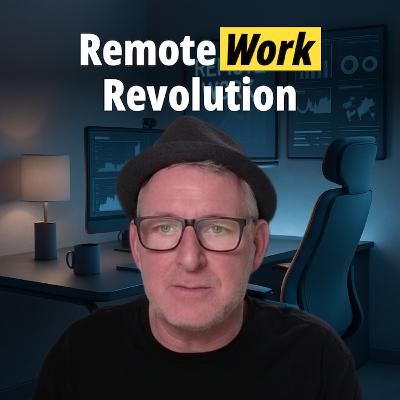
Watch on YouTube!After 15 months of working 100% remote, Scott Fisher talks about how the "Return to Office" movement isn’t about productivity, it’s about a leadership crisis and a $2 trillion commercial real estate bubble.In this episode of the TechNexus Podcast, we stop the gaslighting. I’m naming the names in the RTO "Hall of Shame," including Jamie Dimon (JPMorgan) and Elon Musk (Tesla/X), and contrasting them with the visionaries at Shopify and GitLab who are actually building the future of work.What we cover:The Performance of Presence: Why your office is an interruption factory.My 15-Month Experiment: Reclaiming the "Fortress of Focus."The Hall of Shame: Calling out Jamie Dimon, David Solomon, and Elon Musk.The Hall of Fame: Why Shopify, GitLab, and Block are winning.The Employee Playbook: 5 pillars to make your 100% remote case.The Employer Upgrade: 5 ways leaders win by ditching the cubicle.The Adult Leadership Model: Results over "Butts-in-Seats."Sign up for free to the TechNexus Newsletter at: (Get the full checklists and data-backed deep-dives delivered to your inbox.)#RemoteWork #TechNexus #Leadership #RTO #FutureOfWork #Productivity #Shopify #JPMorgan #ElonMusk #WorkFromHome

In this episode of the Tech Nexus podcast, host Scott Fisher discusses the evolution of education technology from panic and hype to a focus on utility. He highlights significant developments such as Google's integration with Khan Academy, the right to repair movement in hardware, and innovations in educational software. The conversation also touches on the competitive landscape of Management Information Systems (MIS) and concludes with a spotlight on lesser-known but impactful educational tools.Read the newsletter article .TakeawaysThe education technology landscape has shifted from panic to utility.Google's integration with Khan Academy represents a significant change in AI use in education.AI tools are now designed to enhance critical thinking rather than just provide answers.The right to repair movement is gaining traction in educational hardware.Schools are now prioritizing repairable devices to save costs.Innovative software like Magma Math is changing how students engage with math problems.The MIS market is becoming competitive, with a shift towards cloud solutions.Hidden gems in EdTech are providing valuable resources for teachers and students.Professional development for teachers is evolving to be more engaging and relevant.The focus is now on solving existing problems in education technology rather than creating new ones.

The podcast episode discusses the global policy shift towards banning smartphones in classrooms, driven by a UNESCO report. It highlights the benefits of such bans, like reduced bullying and improved grades, but also critiques it as an admission of failure by adults to enforce boundaries. Scott Fisher argues for teaching digital self-regulation instead, comparing it to learning to drive a car. The episode concludes with a call to read more on the topic and manage devices responsibly.TakeawaysBanning smartphones reduces bullying and improves grades.Smartphone bans are seen as an admission of failure by adults.Teaching digital self-regulation is crucial for students.Smartphones should be managed like learning to drive a car.The UNESCO report has influenced global smartphone policies.Adults struggle with digital self-regulation themselves.Smartphones are powerful educational tools, not just distractions.Creating a vacuum by banning phones doesn't teach self-control.Digital driver's ed is proposed as a solution for phone management.The episode encourages responsible device management.Keywords: smartphone ban, UNESCO report, digital self-regulation, classroom policy, education technology

The "Chatbot" era is officially over.In this deep dive, Scott Fisher breaks down the most significant enterprise shift of the year: Google Cloud's launch of **Gemini Enterprise for Customer Experience (CX)** at NRF 2026. This isn't just an update; it's a fundamental pivot from "Generative AI" to **"Agentic Commerce."****What's Inside:** * **Reasoning Over Retrieval:** We explain how the Gemini 3 Pro architecture replaces old-school Retrieval-Augmented Generation (RAG) with "Agentic Reasoning," allowing the AI to execute multi-step, complex tasks (like checking inventory, verifying warranties, and processing a sale—all within a single conversation). * **The Unified Journey:** See how Gemini CX unifies sales, service, and loyalty management into a single, intelligent layer, eliminating the "fragmented journey" where customers constantly repeat themselves. * **Real-World Impact:** We analyze case studies from large-scale adopters like **Papa Johns** and **Lowe’s**, showing how they are using these agents to create new revenue streams and handle high-friction tasks. * **The Operator's Guide:** A simple 5-step guide to deploying this new agentic layer in your business, including how to use the new "Agent Studio" to auto-generate workflows without needing a team of prompt engineers.The question is no longer "Will AI talk to my customers?" but "What will my AI be allowed to buy for them?" Read the full analysis in today’s TechNexus Briefing.Sign up for the free TechNexus Newsletter.#EnterpriseAI #GoogleCloud #Gemini #CX #CustomerExperience #TechNexus

In this latest edition of the TechNexus Podcast Scott Fisher explores the challenges of trust in AI, particularly in enterprise settings. He introduces Google's Notebook LM, a tool designed to bridge the trust gap by providing grounded AI solutions that cite sources and maintain data privacy. The conversation covers practical applications for various business sizes and offers a step-by-step guide for getting started with Notebook LM.TakeawaysThe trust gap is a significant barrier to AI adoption.Notebook LM offers a closed loop system for AI queries.Citations in AI responses enhance trust and reliability.Enterprise users can maintain data privacy with Notebook LM.Notebook LM can streamline processes like RFP responses and due diligence.Small businesses can use Notebook LM for efficient onboarding.Solopreneurs can repurpose content using audio overviews.Getting started with Notebook LM involves curating specific documents.The transition from black box to glass box AI is underway.Notebook LM represents a major step towards trustworthy AI solutions.

Stop wasting time on mundane tasks. Tune in to see how reasoning-based AI agents are transforming the modern workflow.

In this episode Scott Fisher announces the launch of the TechNexus podcast and Newsletter, and how in each episode will break down the tech that’s shaping our world. This isn't just a news show; it’s about the nexus where innovation meets reality.
Comments

Download from Google Play

Download from App Store
 United States