


Behind the Brilliance
Subscribed: 605Played: 11,009
Subscribe

© 2025 Emerald Media. All Rights Reserved.
Description
Behind the Brilliance is the go to podcast for the intellectually curious and relentlessly ambitious. The show features weekly long form interviews with innovative and culture-shaping leaders in art, culture, technology, business, lifestyle, and personal development along with Lisa's inspiring and funny advice on life, creativity, and entrepreneurship.
272 Episodes
Reverse
This recap episode distills the core ideas from this season of Behind the Brilliance with fresh perspective on building a meaningful life and career without burning out, numbing out, or deferring fulfillment to "someday." Lisa recaps key conversations with hospice physician and author Jordan Grumet, wellness educator and actor Tina Lifford, tech ethicist Kate O'Neill, sleep specialist Dr. Michael Breus, and executive coach Eric Nehrlich to connect the dots across purpose, identity, money, emotional resilience, technology, wellness, and stress. This episode synthesizes the big ideas, frameworks, and practical suggestions discussed throughout the season so even if you missed an episode, you'll walk away with useful insights. TOPICS COVERED A reframing of success through purpose rather than accumulation How identity quietly dictates behavior, discipline, and burnout Why many people chase money when they are actually seeking permission The role of emotional survival patterns in shaping ambition and decision-making How inner fitness creates stability in uncertain careers Why stress often signals misalignment rather than importance The difference between effort and impact in high performance How belief acts as an invisible ceiling on opportunity Why sleep functions as a domino skill for clarity, resilience, and health How judgment and nervous system regulation outperform optimization What technology choices reveal about leadership values Why AI is less about tools and more about responsibility and discernment How systems shape human behavior without our noticing Why progress without reflection leads to scale, not meaning How choosing alignment over constant urgency changes the texture of life THINGS MENTIONED IN THIS EPISODE Lisa's newsletter, Cue
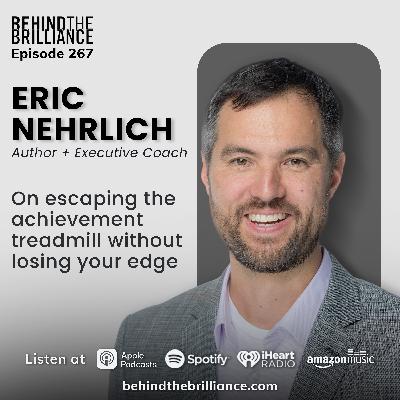
In this expansive conversation, Lisa talks with executive coach and author Eric Nehrlich. His career path reads like a masterclass in strategic pivoting: physics PhD dropout turned software engineer, product manager, Google finance analyst, and eventually Chief of Staff in Google's C suite before launching his own executive coaching practice. But his journey reveals something more profound than professional flexibility. It's a story about unlearning the toxic relationship between achievement and suffering, understanding when "working harder" becomes counterproductive, and discovering that your greatest strengths often lie at the intersection of multiple disciplines. The conversation explores the psychology of overachievement, the myth that anxiety fuels success, and how high performers can regain control by setting boundaries, embracing intentional incompetence, and redefining what "enough" looks like. The conversation weaves personal stories with practical frameworks, offering listeners specific guidance on how to productively reflect and design lives that support both ambition and well-being. This episode is a must-listen for ambitious professionals, creatives, and leaders who feel successful on paper but privately exhausted, misaligned, or constrained by expectations. Behind his Brilliance: Taking other people's perspectives TOPICS COVERED · Identity transitions and the sunk-cost fallacy of career paths · The difference between aptitude and passion · Why burnout often comes from misalignment, not workload alone · Generalists vs specialists and why range matters more than ever · Being a "translator" across disciplines (engineering, finance, leadership) · Working inside Google during the 2008 financial crisis · Minimum effective effort and deciding what to drop · Intentional incompetence as a leadership and life skill · Ambition, insecurity, and the myth that anxiety drives performance · Designing life first, career second · Self-employment, parenthood, and redefining "enough" · Why stress does not equal impact · Habit formation, motivation, and external accountability · Self-concept, stereotype threat, and invisible performance taxes · Upper limit problems and self-sabotage · Parenting, leadership, and emotional regulation · Belief, confidence, and why self-trust changes outcomes KEY FRAMEWORKS DISCUSSED The Tetris Metaphor - High achievement just means blocks fall faster until you drown Intentional Incompetence - Strategically choosing what NOT to be good at Minimum Effective Effort - Optimizing only what matters, letting rest go on autopilot The 100-Hour Reality - You have ~100 waking hours/week; allocate intentionally Waste Hours to Not Waste Years (Amos Tversky) - Take time to reflect or waste years on wrong path The Upper Limit Problem (Gay Hendricks) - We sabotage ourselves when exceeding our self-imposed success ceiling The Generalist's First 80% - Generalists love learning the first 80%; specialists grind for the last 20% One-on-One With Yourself - Treating yourself as your most important employee The Two Yardsticks - Internal versus external measures of success Problem Seeker vs. Problem Solver - Generalists diagnose; specialists execute THINGS MENTIONED IN THIS EPISODE Eric Nehrlich Eric's book, You Have a Choice Tiffany Dufu on Behind the Brilliance Tiffany's book, Drop the Ball Chris Dannen on Behind the Brilliance The Big Leap by Gay Hendricks Wheel of Life Whistling Vivaldi by Claude M. Steele (Eric's book pick) Psychocybernetics by Maxwell Maltz

Board-certified sleep specialist Dr. Michael Breus returns to Behind the Brilliance for a wide-ranging and deeply practical masterclass on the three biological essentials that keep most people from thriving: sleep, hydration, and breathing. He reveals how to improve sleep, energy, and long-term health and goes beyond basic wellness advice to help us understand the foundational mechanics that determine energy, health, and well-being. From jet lag strategies to weighted blankets to getting back to sleep in the middle of the night, Dr. Breus delivers practical solutions that work in the real world because they're tested on actual patients, not theoretical research. Dr. Breus explains why sleep quality matters more than sleep quantity, why waking up at the same time every day is the single most powerful sleep intervention most people will never try, and how "social jet lag" sabotages performance and mood. The conversation dives into the three most common types of insomnia and the best ways to get deeper sleep. We also unpack supplements, melatonin, CBT-I, and when to see a professional. Beyond sleep, Dr. Breus breaks down hydration myths and gives science-backed takes on the most popular wellness topics including breathwork, mouth taping, cold plunges, saunas, CBD, weighted blankets, and the explosion of misinformation in the wellness space. The episode closes with a candid look at Dr. Breus's own routines, his evolving relationship with meditation, and why leading by example is the real foundation of sustainable health. TOPICS COVERED Sleep Science & Diagnosis Why home sleep testing has replaced traditional sleep labs FDA-approved sleep wearables and improved diagnostic accuracy Why people avoid sleep studies — and why that excuse no longer holds Sleep apnea, CPAP myths, and emerging treatment alternatives Why untreated sleep apnea is life-threatening, not just inconvenient Sleep Quality vs Quantity The minimum sleep threshold for healthy adults Why bad 8-hour sleep can be worse than shorter high-quality sleep The single most effective sleep habit: consistent wake times How circadian rhythm actually works (melatonin as a timer, not a clock) Social jet lag and why Mondays feel so brutal Insomnia The three main types of insomnia: Difficulty falling asleep Waking in the middle of the night Waking too early and feeling unrested Why waking between 1–3am is normal biology What not to do when you wake up at night (clock-watching, peeing unnecessarily) Why you cannot trust your thoughts in the middle of the night Practical tools to lower heart rate and re-enter sleep Breathing & Nervous System Regulation 4-7-8 breathing and how it works physiologically Modified breathing for beginners Counting techniques to quiet mental chatter Breath as a tool for focus, performance, and emotional regulation Why shallow breathing exhausts the body Jet Lag & Travel Why jet lag is a math problem, not a willpower problem How light exposure shifts circadian rhythm When melatonin is appropriate (and when it isn't) Pre-travel schedule shifting Sleeping on airplanes: seat choice, noise, clothing, hydration What to avoid in-flight (alcohol + sleep aids, carbonation) Supplements & Medications Why supplementation without blood work is backwards Nutrient deficiencies that genuinely affect sleep When melatonin makes sense — and when it doesn't CBD vs CBN for sleep and anxiety Cognitive Behavioral Therapy for Insomnia (CBT-I) When sleep meds are appropriate and how tapering can work safely Hydration Why sleep itself is dehydrating Sip vs gulp: how the body actually absorbs water How much water you really need (lean mass-based guidance) Timing hydration to protect sleep Electrolyte products: when they help and when they backfire Cutting through water marketing hype Wellness Trends: Legit or Overrated Cold plunges vs saunas (genetics matter) Weighted blankets: benefits, limits, and safety Infrared saunas and timing for sleep Mouth taping and why it's dangerous The problem with unqualified "sleep experts" Daily Routines & Lifestyle Morning routines vs evening routines Meditation with biofeedback Building health without perfectionism Leading by example instead of forcing change Why sleep flexibility matters more than rigid rules THINGS MENTIONED IN THIS EPISODE Dr. Michael Breus Dr. Breus on Behind the Brilliance (first appearance, episode 143) Dr. Breus's new book: Sleep, Drink, Breathe James Clear's 321 newsletter Life Gives to the Giver by Joe Polish How to Fall Back Asleep (video) 4-7-8 Breathing Exercise Timeshifter app Seat Guru (closed), alternative: Aerolopa Wim Hoff method Muse headband
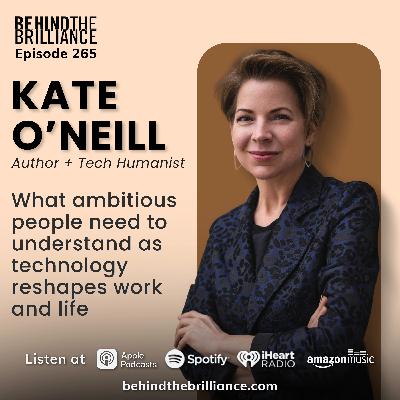
SUMMARY Kate O'Neill is a strategist, futurist, and author who helps leaders navigate the intersection of technology and humanity. After building her career in Silicon Valley—including as one of Netflix's early employees—Kate has become one of the most thoughtful voices on how we can harness technological advancement to improve life and work without losing our humanity in the process. In this conversation, we connect key ideas between technology's impact on the future of work, individual lives and careers, and innovation efforts inside companies. Kate shares her journey from linguistics major to tech veteran, which informs her powerful frameworks like the "Now Next Continuum" for strategic decision-making. She explains why digital transformation and innovation are fundamentally different (and why conflating them causes so many companies to struggle). We explore the speed of technological change, the real implications of AI adoption, and why leaders need to ask "what could go right?" as often as they ask what could go wrong. Then we get personal and Kate opens up about losing both her father and first husband within a decade, and how grief clarified her understanding of meaning and mortality—lessons that now shape everything she does. This is a conversation about building a future that serves humanity, making strategic decisions under uncertainty, and finding meaning in both our work and our lives. Behind her brilliance: Curiosity about people and the world TOPICS DISCUSSED Kate's early career at Netflix and what it was like inside during the company's pivot from DVDs to streaming Why "fake it till you make it" is the wrong framing for career ambition The art of the cold email and high-agency self-positioning (with important caveats about 1999 vs. 2025) How to tell better stories about your capabilities and make sense of your career trajectory The dangerous gap between what technology enables us to do vs. what we should do Amazon Go stores as a case study in unintended social consequences at scale Why the speed of AI isn't really about the technology—it's about decisions made by tech leaders Minimum viable skilling: why prompt engineering is the new literacy How Kate uses AI for travel planning (and what it does well vs. what humans still need to do) The Now Next Continuum framework for strategic decision-making Digital transformation vs. innovation: why these are different and why it matters Strategic optimism and why most meetings focus on what could go wrong instead of what could go right The linguistic roots of meaning: how communication works and why it matters for business Losing her father to cancer and her first husband to suicide—and what grief taught her about meaning Neil Gaiman's insight: "The difference between comedy and tragedy is where you stop telling the story" Why futurism is less about prediction and more about preparation Climate change, science fiction, and books that make the future feel urgent but not hopeless How Kate curates her information diet and digests what she reads THINGS MENTIONED Kate O'Neill What Matters Next by Kate O'Neill A Future So Bright by Kate O'Neill Surviving Death by Kate O'Neill Creativity, Inc. by Ed Catmull Minneapolis Institute of Art Readwise Cold email guide from Next Play The Ministry for the Future by Kim Stanley Robinson – Kate's book pick The Uninhabitable Earth by David Wallace-Wells – Kate's book pick
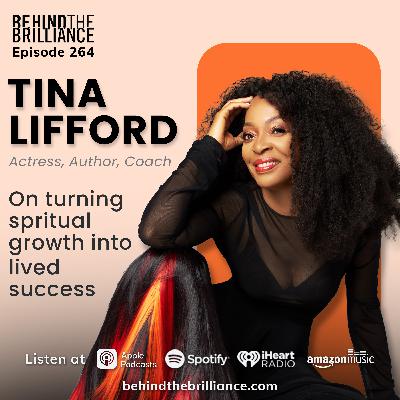
SUMMARY Actress, author, and Inner Fitness Project founder Tina Lifford returns to Behind the Brilliance for a follow up years after her crowd-pleasing interview in episode 115. Fresh off the release of her new book The Inner Fitness Revolution, Tina brings decades of wisdom about building sustainable creative careers and developing the inner work that makes external success fulfilling. This conversation goes deep on the frameworks Tina has developed through her own spiritual journey from understanding the "three selves" (surviving, thriving, infinite) to making self-empowering choices in any circumstance. We explore why so many high achievers feel empty after reaching their goals (and what to do about it), how to build resilience to navigate life's hard seasons, and why inner fitness deserves the same proactive attention we give physical fitness. If you've ever felt like something was missing despite checking all the boxes, or if you're navigating chaos while trying to stay grounded, this conversation offers an inspiring mix of philosophical foundation and practical tools. TOPICS COVERED Reframing the relationship between ambition, success, and self-worth Letting go of identity-based survival patterns Connecting spiritual growth to real world experiences Navigating hard relational dynamics Why creative longevity requires inner steadiness, not constant hustle How survival mode narrows perception and fuels anxiety Inner fitness versus "fixing yourself" Reframing success beyond external markers The role of fear, discomfort, and uncertainty in growth Why transformation is a daily practice, not a single moment Cultivating inner safety, self-trust, and emotional resilience The importance of social environments where possibility is nurtured Faith, surrender, and trusting what you cannot yet see THINGS MENTIONED IN THIS EPISODE Tina Lifford The Inner Fitness Project Tina's last BTB appearance Tina's newest book, The Inner Fitness Revolution Queen Sugar Tina's short film inspired by her dream Tina's first book, The Little Book of Big Lies Shadow self Man's Search for Meaning by Viktor Frankl
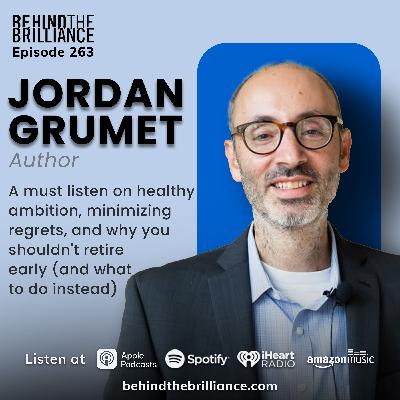
SUMMARY Physician and author Jordan Grumet joins Lisa for a wide-ranging, deeply reflective conversation about what happens when the life you worked toward no longer defines who you are. Jordan shares his personal journey through medicine, financial independence, and hospice care, including the unexpected panic that followed reaching financial freedom earlier than anticipated. What was supposed to be a moment of celebration was a terrifying realization: without work, his identity collapsed. Drawing from his work with the dying and his own experience of burnout, he explains why money and achievement fail to resolve deeper questions of meaning, and how so many of ys mistake purpose as something to be proven rather than lived. The discussion unpacks the difference between meaning and purpose, the hidden costs of trauma-driven ambition, and why subtracting what drains us often matters more than adding what impresses us. The conversation moves fluidly between philosophy and pragmatism, touching on time, mortality, creativity, legacy planning, curiosity, and the critical work of rebuilding a life that aligns with personal values. This is a conversation about modern ambition and how to reassemble identity, motivation, and direction once certainty dissolves and the old reasons stop working. Behind his brilliance: Empathy + Intuition TOPICS COVERED · What happens psychologically after financial independence · Identity loss and disorientation after achievement · Meaning vs. purpose — and why confusing them creates anxiety · Trauma-driven ambition and "purpose built from scarcity" · Why money is a tool, not an endpoint · Subtraction as a life design strategy · Purpose anxiety and the myth of "big P" purpose · Hospice work and lessons from the dying · Regrets of the dying and how they inform daily living · Mortality as a clarifying force rather than a morbid one · Curiosity as an antidote to fear and burnout · The achievement treadmill and hedonic adaptation · Creative work, writing, and process-based fulfillment · Legacy planning: emotional and practical considerations · Slowing down, seasons of life, and doing less better THINGS MENTIONED Jordan Grumet Jordan's books: Taking Stock, The Purpose Code FIRE Status Anxiety — Alain de Botton The Six Pillars of Self-Esteem — Nathaniel Branden The Simple Path to Wealth — JL Collins The White Coat Investor — Jim Dahle Jack Reacher — Lee Child I'm Dead, Now What - end of life planning book
In this special year-end episode of Behind the Brilliance, Lisa presents six evidence-based strategies for designing a year that feels good while you're living it. Moving beyond traditional goal-setting advice, this episode explores the psychological architecture behind sustainable achievement: why updating your self-concept matters more than willpower, how to engineer habits that survive bad days, and why strategic incompetence is a sophisticated choice rather than a failure. Lisa shares a liberating perspective on deciding what deserves optimization versus maintenance and makes the case for building celebration into your system. If you're tired of aspirational new year hype, this episode offers a more strategic, psychologically grounded approach to having a great year. TOPICS COVERED Identity architecture: Why self-concept determines behavior success Designing habits for bad days, not ideal conditions Addition by subtraction: The power of strategic elimination Intentional incompetence: Permission to not master everything Minimum effective effort: Maintenance vs. optimization modes Building celebration into your achievement system The relationship between identity and execution Engineering consistency by removing friction Distinguishing between habits you need vs. habits you think you should have THINGS MENTIONED IN THIS EPISODE Lisa's newsletter, CUE Psychocybernetics by Maxwell Maltz Atomic Habits by James Clear Obvious to You (video) by Derek Sivers Minimum Effective Effort (essay) by Lisa
Season 15 of Behind the Brilliance delivered a mix of leading voices in psychology, entrepreneurship, and life design. This special recap distills the most powerful insights into one place highlighting big ideas and useful tools on happiness, resilience, and building a life and business on your own terms. Guests include Tal Ben-Shahar, Ellen Hendriksen, Jodi Wellman, Rand Fishkin, Chris Guillebeau, Anne-Laure Le Cunff, Elaine Pofeldt, Rae Wynn-Grant, Ahad Khan, and Sieva Kozinsky. The episode also includes a listening guide to match your interest with the relevant episode. The recap concludes with reflections on the season's central theme: learning to work with human nature rather than against it. Essential listening for anyone who wants to understand what made Season 15 special and where to dive in next.
Chris Guillebeau, bestselling author and creator of The Art of Nonconformity, joins Lisa to explore what it really takes to build a self-directed life. He shares his unconventional path from high school dropout and aid worker in West Africa to global traveler, author of nine books, and entrepreneur. Chris unpacks the philosophy behind his work—why you don't have to live your life the way others expect—and introduces the concept of time anxiety, the tension between the fear of running out of time and the paralysis of endless choices. The conversation covers everything from the psychology of "enough" and how mortality awareness can sharpen your priorities, to practical strategies for leaving things undone, creating accountability structures, and decluttering your calendar. Chris also opens up about ADHD, therapy, and why you should ask yourself at the end of the day, "Did today matter?" Behind his brilliance: Refusing to accept "no" and always looking for another way. TOPICS COVERED · The difference between traditional anxiety and time anxiety · Why having more choices creates its own form of paralysis · The two types of time anxiety: existential panic and decision overwhelm · How ADHD diagnosis changed his relationship with productivity · Why working for yourself is actually the conservative choice · The myth that independent work is inherently risky · Moving from "you can be anything" liberation to burden · Why curiosity without follow-through is just floating ideas · The seasonality of creative work and energy cycles · How to measure success by what you control vs external outcomes · The power of asking "Did today matter?" over productivity metrics · Why leaving things undone is a radical act in completion culture · The difference between hard work and passionate engagement · How to use death as a clarity tool rather than anxiety trigger · Platform agnosticism and the creator economy evolution · The accountability structures that support independent creators · Why caring about your work trumps optimization systems · Moving from rules-based to values-based decision making · The future self trap and why motivation doesn't transfer · How to create enough-ness in a never-enough culture
THE SHOW In this episode of Behind the Brilliance, entrepreneur and investor Sieva Kozinsky joins the show to share his journey from first-generation immigrant beginnings to co-founding Enduring Ventures, a holding company that acquires and grows businesses for the long game. Sieva opens up about the fear that fueled his early ventures, the lessons learned from failed startups and pivots, and why fundraising can sometimes blind founders to what really matters. We dive deep into the psychology of selling a company, the art of negotiation with founders, and how legacy is built (or destroyed) in the years after an exit. Sieva also reflects on emotional discipline, meditation, and why surrounding yourself with the right five people may be the single most important factor in your growth. This conversation extends beyond building businesses to explore a useful philosophy for building a life you'll still be proud of twenty years from now. Behind his Brilliance: His mother and grandmother TOPICS COVERED How Sieva's immigrant upbringing shaped his resilience Pivoting from pre-med to entrepreneurship The pivotal college class that changed everything Why early failures were his best education Lessons from building and pivoting StudySoup Bootstrapping vs. raising venture capital (and why he regrets fundraising early) The psychology of fear as a driver in entrepreneurship Emotional discipline: responding instead of reacting The role of meditation in business and life The dangers of selling to universities (and what that taught him) Negotiating with founders who are selling their life's work Why most entrepreneurs misunderstand exits and valuations The holding company model and why it's different from private equity How to minimize regret when selling a business Finding the right cofounder and what to look for beyond skills The importance of discomfort in building a meaningful life Why you become the average of the five people closest to you Seeking serendipity and building networks through curiosity
THE SHOW What happens when you build the company of your dreams, only to realize the dream came with tradeoffs you didn't see coming? In this candid conversation, Rand Fishkin — cofounder of Moz and SparkToro — shares the pivotal moments that shaped his career: turning a $39 side experiment into a multimillion-dollar SaaS, raising venture capital for the wrong reasons, walking away from a $40M acquisition offer, and rebuilding his identity after leaving the company he founded. Along the way, Rand unpacks the philosophy he lives by now: designing work around the life you want, not the other way around. You'll learn why audience-first growth changes everything, how "dark social" can reshape your marketing strategy, and why the best companies aren't built on hustle, but on thoughtful design. If you've ever wrestled with status anxiety, questioned the pace you're working at, or wondered what it would look like to run a business without burning yourself out, this episode will give you fresh perspectives and actionable ideas for building something that lasts — without losing yourself in the process. BEHIND HIS BRILLIANCE: Empathy TOPICS COVERED · Status is a poor reason to raise capital – chasing external validation through VC can distort decision-making and undermine founder well-being. · Audience-first beats product-first – building trust and reach before launching a product creates built-in marketing and faster adoption. · Design trumps grind – thoughtful business and life design leads to better decisions, fewer hours, and more sustainable success than relentless hustle. · Identity can't be tied to one venture – detaching self-worth from your company enables resilience when endings or pivots come. · Opportunity cost is real – turning down an offer (even for the "right" reasons at the time) can shape the trajectory of both the business and your personal life. · Measure what matters, not what's easy – "dark social" means a lot of word-of-mouth and share-driven traffic won't show up in analytics the way you expect. · Life design is part of business design – integrating personal goals, health, and relationships into work choices leads to richer, more fulfilling outcomes. And much more! Get the Show Notes here.
Dr. Rae Wynn-Grant is a wildlife ecologist, storyteller, and nature show host whose path to success defies every traditional metric of merit. In this candid conversation, Rae shares how she went from struggling in math and science classes to earning a PhD and becoming a leading voice in wildlife conservation. We explore the pivotal role that belief, representation, and access played in shaping her journey from her first exposure to nature through television, to a transformative study abroad trip to Kenya, to an unexpected pivot from lions to black bears. Rae also opens up about hitting emotional rock bottom in her 30s, the identity crisis that followed, and how she rebuilt her life with honesty, humility, and hope. This episode is a testament to what's possible when we follow our passion, even when our performance or our path doesn't fit the mold. Behind her brilliance: Taking a non-traditional approach TOPICS COVERED: Why passion trumps performance - How to pursue your calling even when traditional metrics suggest you're "not qualified" The representation breakthrough - Why seeing yourself reflected in expertise positions transforms what feels possible Navigating productive discomfort - How to embrace stretching experiences that feel uncomfortable but lead to growth Identity crisis as catalyst - Using rock bottom moments as launching pads for authentic reinvention The marriage blueprint trap - Why relationships fail when one person brings a pre-drawn life plan instead of co-creating Accountability without excuses - The liberation that comes from owning your choices and their consequences Nontraditional paths to traditional success - How to thrive by refusing to fit conventional molds while still achieving recognized accomplishments Environmental justice reframed - Why urban communities often care more about environmental issues than rural ones (despite stereotypes) The privilege of starting over - Understanding what safety nets make radical life changes possible Choosing authenticity over expectations - The courage required to disappoint others in service of being true to yourself

THE SHOW Most of us are running on autopilot, checking boxes, chasing goals, and pushing toward some imagined finish line without stopping to ask if this is how we really want to spend our lives. In this conversation, Jodi Wellman, author of You Only Die Once and founder of the 4,000 Mondays framework, makes the case for using mortality as a tool, not a threat. She shares why contemplating the end of life can snap us out of numb routines and guide us toward choices that create more vitality, meaning, and joy right now. We talk about why achievement can feel hollow, how to spot the "dead zones" in your life, and the surprising power of small changes to make life feel bigger. Whether you have been wondering if there is more to life than your to do list or you just want to feel more alive in your everyday routines, this conversation is a reminder that your Mondays are numbered so make them count. Behind her brilliance: Love and the Grim Reaper TOPICS COVERED · Mortality as Motivation: Facing the reality of death as a way to live more fully, not morbidly. · 4,000 Mondays Concept: Using your finite number of Mondays as a framing device to clarify what matters. · Vitality + Meaning = Fulfillment: Living wider (fun, novelty, aliveness) and deeper (purpose, connection). · The Hedonic Treadmill: The idea that high achievers constantly move the goalpost and lose perspective on satisfaction. · Experimentation as a Way of Life: "You don't have to detonate, you can dabble." · Regret Minimization Framework: Inspired by Jeff Bezos and reframed here as: "What would you regret not doing?" · Role of Rituals and Values: Structuring life around recurring rituals and clearly defined personal values. · Self-Compassion and Inner Talk: The importance of being kind to yourself in the pursuit of growth. · Redefining Success and Retirement: Moving from performance-based identities to interest-based living. · Comparison and Individual Journeys: Why your life design has to be uniquely yours, and how social media distorts that.
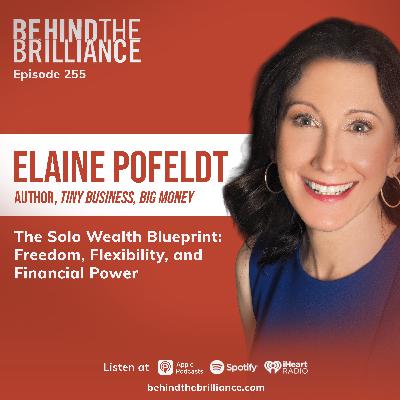
Elaine Pofeldt, former Fortune Small Business editor, uncovered a hidden economy of one-person businesses quietly earning 7 figures and spent years interviewing the entrepreneurs behind them. In this conversation, she reveals the surprising industries dominating this space, why professional services often outperform tech, and the frameworks that actually work for building sustainable solo wealth. From starting smart while keeping your day job to using AI as your secret weapon, Elaine breaks down the real strategies behind million-dollar one-person businesses. No hype, no hustle culture required. Plus: why health and boundaries aren't "extras" but essential business infrastructure, and how to design a career that serves your life instead of consuming it. Essential listening for anyone who wants financial freedom without chasing passive income or playing the venture capital game. Behind Her Brilliance: Family TOPICS COVERED Elaine's journey from fiction writing to journalism The evolution of business journalism and rise of entrepreneurship in the public imagination How AI and automation empower solo business owners The origin story of The Million Dollar, One Person Business Why peer learning and relatable case studies matter Common traits among successful solo entrepreneurs The emotional and mental stamina required to succeed independently The role of physical health, boundaries, and self-awareness in entrepreneurial success How older professionals and people with disabilities are reshaping the business landscape Flexible business models that support life design Building walk-away money and choosing clients wisely The underestimated power of tools like planners, automation apps, and AI assistants Lifestyle design, digital nomadism, and work-from-anywhere strategies
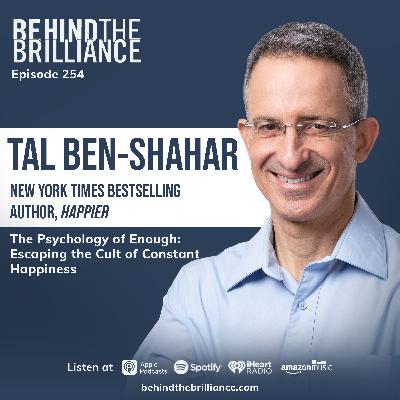
THE SHOW Dr. Tal Ben-Shahar, Harvard-trained psychologist and author of multiple bestsellers including Happier, joins Lisa to explore the psychology and habits that lead to happiness in modern times. He uncovers the myths that keep successful people miserable and why our pursuit of the next achievement isn't the answer. He shares his personal journey from academic achievement to profound unhappiness, breaks down the difference between experiencing emotions and being consumed by them, and offers a counterintuitive approach to emotional health through passive observation. The conversation covers everything from the achievement trap and social media's impact on happiness to practical parenting strategies and the future of leadership in a post-pandemic world. Behind his brilliance: Curiosity and passionate effort Visit BehindtheBrilliance.com for the show notes TOPICS COVERED Why successful people often feel secretly empty The myth of constant happiness and toxic positivity culture Passive observation: witnessing emotions without being consumed by them The psychology of "enough" and escaping achievement addiction Why fighting your feelings makes them persist The role of curiosity in emotional wellbeing and personal growth Social media's impact on perfectionism and life satisfaction How to create space between stimulus and response during overwhelming moments The difference between hard work and effort in personal development Turning emotional dissatisfaction into positive life changes Modern loneliness epidemic and the paradox of digital connection Building authentic relationships based on values rather than demographics The symbiotic relationship between leadership and management Why power and control are ineffective leadership tools Parenting strategies for raising emotionally intelligent children The importance of modeling emotional regulation for kids How to develop discipline without relying on motivation or willpower Why retirement isn't the answer to work dissatisfaction The value of experimentation and changing periods to question marks in life
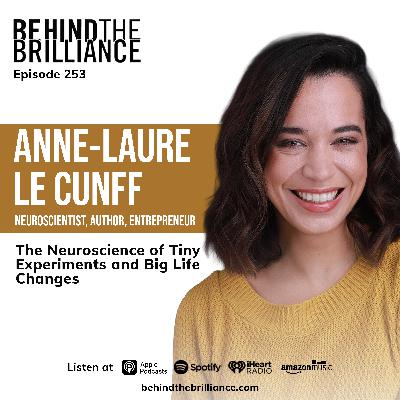
SUMMARY Anne-Laure Le Cunff, founder of Ness Labs and author of Tiny Experiments: How to Live Freely in a Goal-Obsessed World, joins Lisa to reveal her unconventional career journey from Google engineer to startup founder to neuroscience student to successful entrepreneur with Ness Labs. Growing up outside Paris with parents who prioritized financial security, she landed a dream job at Google with the status and paycheck that signaled success. But she soon realized that the ladder she was climbing was leaning against the wrong wall. This conversation explores cognitive scripts that keep us stuck, the importance of experimentation over rigid goal-setting, navigating uncertainty, and designing a life aligned with internal rather than just external metrics of success. Anne-Laure shares insights on managing different types of burnout, the psychology of major transitions, and how she uses tools like journaling and AI to support her work and decision-making. Behind her brilliance: Curiosity Say hi to Anne-Laure on X/Twitter: @neuranne TOPICS COVERED Breaking free from cognitive scripts The problem with traditional goal-setting Building an experimental mindset Why "feeling lost" is the price we pay for having freedom Career transitions and identity beyond job titles Navigating impostor syndrome Burnout (including when you love your work!) Redefining success using internal vs. external criteria Managing time and energy without a corporate structure Redefining the relationship between time, money, and personal values Building a business organically and leveraging momentum Using AI as a creative thinking partner Growing up with multicultural influences Examining default coping mechanisms like alcohol (and Anne-Laure's journey to sobriety) Letting curiosity lead personal and professional decisions And much more!
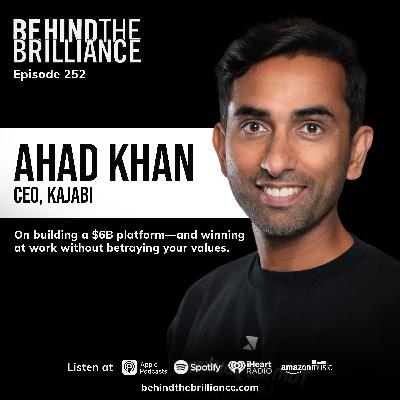
THE SHOW Ahad Khan, CEO of Kajabi, shares how his Midwestern roots shaped his approach to building software for "regular people," his experiences navigating investment banking, startup acquisitions, and the creator economy. Ahad reveals his philosophy on people-first decision making, the power of work-life integration over balance, and why choosing character over compensation has been the thread connecting every major career move. The conversation explores the evolution of the creator economy, the challenges of remote leadership, and practical strategies for staying present as both a CEO and father of three. Behind His Brilliance: Immigrant parents who modeled hard work, presence, and the courage to build a life around what matters most Get the show notes here. TOPICS COVERED · Why pivoting early (or late) is worth it · Growing up in Northeast Ohio and the "regular people" advantage in tech · Why his father said "you can be any kind of engineer you want" · Investment banking culture in Chicago vs. New York stereotypes · The power of choosing people over compensation in career decisions · Early startup lessons and the importance of founder character · MileIQ: solving real problems for people who drive for work · Navigating Microsoft's acquisition and cultural transformation under Satya Nadella · The bootstrap advantage: how 9 years without funding built Kajabi differently · Creator economy vs. entertainment: building sustainable businesses · The $6 billion paid out to Kajabi creators and the subscription vs. take-rate model · Transitioning from CFO to CEO and the weight of leadership · Work-life integration: taking kids to school as non-negotiable priority · Remote leadership strategies and building a documentation culture · Why human customer support beats automation every time · The hardest part of being CEO: communicating the "why" behind decisions · Redefining success: involved parent, good husband, teammates who like you Behind Your Brilliance: What's one decision you could make this week to better align your work life with your core values?
THE SHOW In this episode of Behind the Brilliance, Dr. Ellen Hendriksen, clinical psychologist and author of How to Be Enough, joins the show to explore the nuances of perfectionism—from its seductive productivity perks to its hidden emotional costs. She shares her own journey from high-achieving student to recovering perfectionist, breaks down the psychology of procrastination and emotional suppression, and offers practical strategies for redefining self-worth, navigating achievement hangovers, and aligning with intrinsic values. The conversation also touches on the loneliness epidemic, community building, and how shifting from "have to" to "choose to" can transform how we show up in our lives. Behind her Brilliance: Investing in what connects us to others instead of what sets us apart TOPICS COVERED Why pivoting early (or late) is worth it A new definition of perfectionism—and why it's a trap The two pillars of maladaptive perfectionism: overvaluation and rigid standards The myth of emotional perfectionism Rules vs. values (and how rules often masquerade as values) Demand sensitivity and the burden of internal expectations The achievement hangover: chasing the next milestone without fulfillment The difference between goals and values Procrastination as anxiety in disguise Visualizing your future self to beat avoidance Practical tools to embrace imperfection and act anyway Community, connection, and healing the loneliness epidemic The value of empathy in creative and professional work
Lisa summarizes Season 14, Defying the Odds, with reflections on the strategies shared and helpful recaps. 240 – Dr. Andrew Newberg 241 – Cin Fabre 242 – Tyler Denk 243 – Jim Fielding 244 – Dr. Valerie Daniels-Carter 245 – Simone Stolzoff 246 – Thomas Wedell-Wedellsborg 247 – Andrew Barnes 248 – Jamila Souffrant 249 – Kevin Kelly Subscribe to CUE at BehindtheBrilliance.com to be the first to know when the new season streams.
THE SHOW Kevin Kelly is a modern creative pioneer. He was a polymath before it was cool. His career as a writer, founder, photographer, and editor extends across industries and continents. A world traveler and lifelong learner, Kevin's ideas such as 1000 True Fans have inspired a generation of builders and artists to exercise full agency over their creative pursuits. Kevin was on a short list of dream guests I've long held for Behind the Brilliance, and our conversation did not disappoint. He was candid and thoughtful as we covered a wide range of topics including career and life design, religion, decision making, unpopular opinions, and much more. This is an excellent listen for the dreamers, doers, and builders who want to hear the embodiment of integrating passion, purpose, and profit with thoughtful optimism. Behind His Brilliance: Luck + Not caring what others think Say hi to Kevin on X (Twitter): @kevin2kelly THE GUEST KEVIN KELLY | AUTHOR + CO-FOUNDER, WIRED Kevin Kelly is Senior Maverick at Wired magazine. He co-founded Wired in 1993, and served as its Executive Editor for its first seven years. His newest book is Excellent Advice for Living, a book of 450 modern proverbs for good living. He is co-chair of The Long Now Foundation, a membership organization that champions long-term thinking and acting as a good ancestor to future generations. And he is founder of the popular Cool Tools website, which has been reviewing tools daily for 20 years. From 1984-1990 Kelly was publisher and editor of the Whole Earth Review, a subscriber-supported journal of unorthodox conceptual news. He co-founded the ongoing Hackers' Conference, and was involved with the launch of the WELL, a pioneering online service started in 1985. Other books by Kelly include 1) The Inevitable, a New York Times and Wall Street Journal bestseller, 2) Out of Control, his 1994 classic book on decentralized emergent systems, 3) The Silver Cord, a graphic novel about robots and angels, 4) What Technology Wants, a robust theory of technology, and 5) Vanishing Asia, his 50-year project to photograph the disappearing cultures of Asia. He is best known for his radical optimism about the future. TOPICS COVERED -the decision making framework Kevin developed over 5 decades of his career -the inception and growth of WIRED -why pursuing a range of interests can be more valuable than specializations (with important caveats) -Kevin's religious conversion and how it changed his life -important reflections on leveraging and time management -how a trip to Asia changed Kevin's life And much more!


Download from Google Play

Download from App Store
 United States
Wow...this episode was perfectly on time. These are GEMs! Thank you, Lisa!