


 Claim Ownership
Seafarers Way
Subscribed: 0Played: 0
Subscribe

© cyonsalinas
Description
Making Seafaring Career easier by making all the Regulations on board easy to understand.
First will be SOLAS, the Bible of Seafarers and will continue with the remaining conventions.
First will be SOLAS, the Bible of Seafarers and will continue with the remaining conventions.
32 Episodes
Reverse
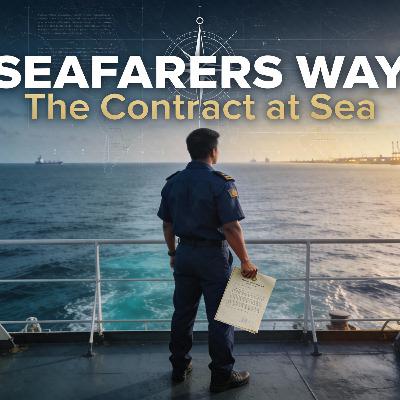
When Health, Life, and Family Are InvolvedSome parts of the contract are meant to be understood long before they are ever needed.In the final episode of SEAFARERS WAY – The Contract at Sea, Captain Rommel discusses the most serious provisions of the POEA/DMW Standard Terms and Conditions—those covering injury, illness, disability, death, and occupational diseases.This episode covers:What makes an injury or illness work-relatedMedical treatment and sickness allowanceThe importance of post-employment medical reportingDisability grading and compensationBenefits for death and dependentsOccupational diseases and long-term health risksThis episode is not meant to create fear.It is meant to create understanding—for seafarers, families, and those working ashore.Because when something serious happens,the contract becomes the seafarer’s voice.
Every seafarer signs on—but signing off is where questions often begin.In this episode of SEAFARERS WAY – The Contract at Sea, Captain Rommel explains how the POEA/DMW Standard Terms and Conditions govern termination of employment, sign-off, and repatriation, and why ending a contract is not always as simple as finishing a tour.This episode covers:When a contract normally ends and why arrival at the point of hire mattersSign-off due to medical reasonsTermination due to shipwreck, vessel sale, lay-up, or change of principalWhat wages and benefits are due when termination is not the seafarer’s faultWhy clarity at the end of a contract protects both sidesThis episode is not about disputes or blame.It is about understanding how contracts are meant to end—fairly, clearly, and with dignity.Because how a voyage ends matters just as much as how it begins.
Every seafarer signs on—but signing off is where questions often begin.In this episode of SEAFARERS WAY – The Contract at Sea, Captain Rommel explains how the POEA/DMW Standard Terms and Conditions govern termination of employment, sign-off, and repatriation, and why ending a contract is not always as simple as finishing a tour.This episode covers:When a contract normally ends and why arrival at the point of hire mattersSign-off due to medical reasonsTermination due to shipwreck, vessel sale, lay-up, or change of principalWhat wages and benefits are due when termination is not the seafarer’s faultWhy clarity at the end of a contract protects both sidesThis episode is not about disputes or blame.It is about understanding how contracts are meant to end—fairly, clearly, and with dignity.Because how a voyage ends matters just as much as how it begins.
Problems at sea are unavoidable. How they are handled makes the difference.In this episode of SEAFARERS WAY – The Contract at Sea, Captain Rommel discusses how the POEA/DMW Standard Terms and Conditions provide a clear process for grievances, discipline, and investigations onboard—and why following that process protects both the seafarer and the ship.This episode covers:Why the contract includes a grievance machineryWhere and how a seafarer should raise concerns onboardThe importance of written complaints and documentationThe role of the Master in handling unresolved issuesHow investigations and disciplinary actions are supposed to be conductedWhy fairness at sea depends on procedure, not emotionThis is not about encouraging conflict or confrontation.It is about understanding the proper way to speak up, protect yourself, and maintain professionalism in a confined shipboard environment.Because at sea, silence can make problems grow—but process keeps them contained.
Problems at sea are unavoidable. How they are handled makes the difference.In this episode of SEAFARERS WAY – The Contract at Sea, Captain Rommel discusses how the POEA/DMW Standard Terms and Conditions provide a clear process for grievances, discipline, and investigations onboard—and why following that process protects both the seafarer and the ship.This episode covers:Why the contract includes a grievance machineryWhere and how a seafarer should raise concerns onboardThe importance of written complaints and documentationThe role of the Master in handling unresolved issuesHow investigations and disciplinary actions are supposed to be conductedWhy fairness at sea depends on procedure, not emotionThis is not about encouraging conflict or confrontation.It is about understanding the proper way to speak up, protect yourself, and maintain professionalism in a confined shipboard environment.Because at sea, silence can make problems grow—but process keeps them contained.
Time at sea feels endless—but the contract measures every hour.In this episode of SEAFARERS WAY – The Contract at Sea, Captain Rommel explains how the POEA/DMW Standard Terms and Conditions define basic wage, payment timing, allotments, working hours, overtime, rest, leave pay, and shore leave—and why many misunderstandings onboard start with time and pay.This episode discusses:What “basic wage” really means—and why it mattersWhen wages are paid and until when employment continuesWhy allotments are mandatory and how they protect familiesRegular working hours versus overtimeEmergency duties, rest periods, and holidays at seaLeave pay and shore leave—what the contract allows and whyThis is not a discussion about complaints or disputes.It is a calm, seafarer-to-seafarer conversation about understanding how work and time are structured under the contract—so expectations remain clear on both ship and shore.Because your time has value.And knowing your contract does not make you difficult—it makes you prepared.
Your Time, Your Pay, Your WorkTime at sea feels endless—but the contract counts every hour.In this episode of Seafarers Way, Captain Rommel explains how the POEA/DMW contract defines basic wage, payment timing, allotments, and wage records, and why many pay-related misunderstandings happen onboard.This episode covers:What “basic wage” really means—and what it does not includeWhen wages should be paid and until whenWhy allotments are mandatory and how they protect familiesYour right to a written account of wages and service recordThis episode is not about complaints or disputes.It is about understanding how time and pay are structured under the contract—so expectations remain clear on both ship and shore.Because knowing your contract does not make you difficult.It makes you prepared.
The Contract Starts Before You BoardBefore a seafarer steps on the gangway, the contract is already at work.In this episode of Seafarers Way, Captain Rommel walks you through the foundations of the POEA/DMW Standard Terms and Conditions—starting with what many seafarers misunderstand: when employment actually begins.This episode explains:What “point of hire” really meansWhy definitions in the contract matterThe duties of both the employer and the seafarerWhy discipline, obedience, and professionalism are contractual, not personalThis is not a legal discussion and not a company critique.It is a seafarer-to-seafarer conversation about understanding the document that quietly governs life at sea.Because shipping is simple—but complex.And clarity always comes before conflict.
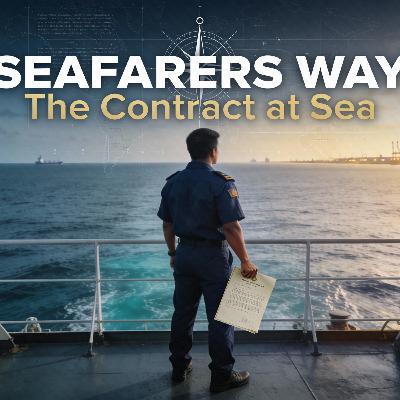
The Contract Starts Before You BoardBefore a seafarer steps on the gangway, the contract is already at work.In this episode of Seafarers Way, Captain Rommel walks you through the foundations of the POEA/DMW Standard Terms and Conditions—starting with what many seafarers misunderstand: when employment actually begins.This episode explains:What “point of hire” really meansWhy definitions in the contract matterThe duties of both the employer and the seafarerWhy discipline, obedience, and professionalism are contractual, not personalThis is not a legal discussion and not a company critique.It is a seafarer-to-seafarer conversation about understanding the document that quietly governs life at sea.Because shipping is simple—but complex.And clarity always comes before conflict.
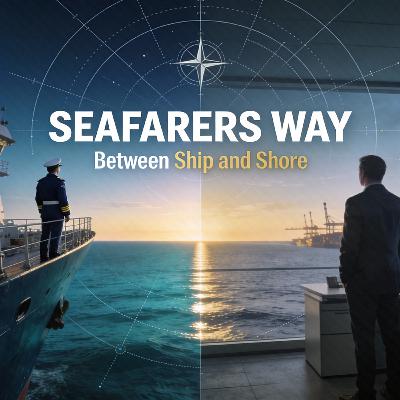
Leadership Is Felt, Not AnnouncedBetween Ship and Shore – SeriesLeadership in shipping is not defined by rank, title, or authority.It is defined by how decisions are felt—onboard and ashore.In this episode of Seafarers Way, Captain Rommel reflects on leadership as a lived experience in the maritime industry. From shipboard command to shore-based management, this conversation explores how trust, consistency, and understanding shape real leadership far more than instructions alone.This episode speaks to officers, masters, and shore leaders—especially those who have crossed from sea to shore—reminding us that influence is earned through actions, not announcements.Part of the Between Ship and Shore series, this episode closes the arc by focusing on responsibility, memory, and the human side of leadership in shipping. A reflective listen for current and future maritime leaders.
When Compliance Meets RealityBetween Ship and Shore – SeriesCompliance is essential in shipping—but it does not exist in isolation.In this episode of Seafarers Way, Captain Rommel explores what happens when written procedures meet real conditions at sea. Drawing from patterns seen in publicly available accident investigations and industry safety studies, this conversation reflects on why compliance sometimes feels difficult to apply, even when intentions are right.This episode is not about breaking rules.It is about understanding the gap between paperwork and practice, and why safety depends on more than perfect documentation.Part of the Between Ship and Shore series, this episode invites both ship and shore to reflect on how compliance can support real operations—rather than compete with them.A thoughtful episode for seafarers, superintendents, and maritime professionals.
Fatigue You Don’t See: The Cost of Always “Managing Somehow”Fatigue in shipping rarely announces itself.It builds quietly—between watches, port calls, and responsibilities—until “I can manage somehow” becomes the norm.In this episode of Seafarers Way, Captain Rommel talks about fatigue not as a regulation, but as a lived experience. From the seafarer pushing through exhaustion, to shore teams relying on reports that don’t always show the full picture, this episode explores why fatigue is so difficult to see—and so easy to ignore.This is not an episode about weakness.It is about limits, honesty, and safety culture.Part of the Between Ship and Shore series, this episode encourages reflection on how endurance is valued in shipping—and at what cost.
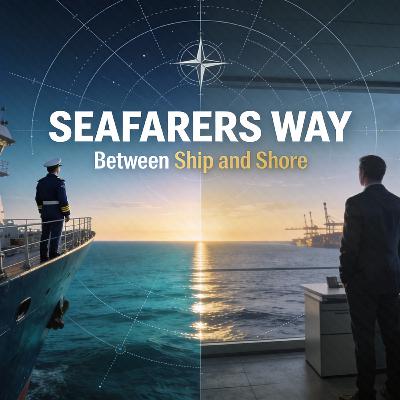
The Silent Gap: Why Ship and Shore Misunderstand Each OtherHave you ever read an email from shore and felt misunderstood?Or sent a message ashore and wondered why the ship reacted differently than expected?That space in between is what we call the silent gap.In this episode, Captain Rommel discusses why ship and shore—despite working for the same objective—often misunderstand each other, not because of bad intentions, but because of missing context, different pressures, and unseen realities.This conversation explores how communication slowly shifts from understanding to compliance, and how silence can quietly replace trust.Part of the Between Ship and Shore series, this episode invites listeners to pause, reflect, and see familiar frustrations from a wider perspective.🎧 A must-listen for anyone working at sea or supporting vessels ashore.
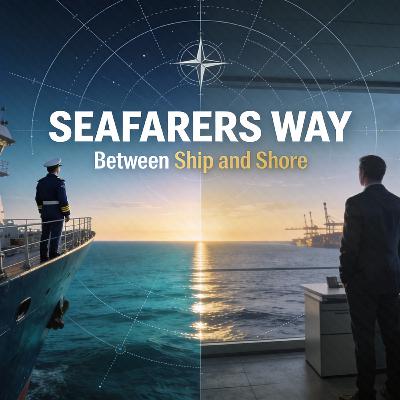
Shipping in the Eyes of the Beholder(Shipowners, Ship Managers, and Seafarers)Shipping looks simple from the outside—but inside, it is shaped by very different perspectives.In this episode of Seafarers Way, Captain Rommel explores how shipping is viewed through three lenses: the shipowner, the ship manager, and the seafarer. Each role carries its own pressures, priorities, and fears—yet all are working toward the same goal.This episode is not about blame.It is about understanding.By stepping into each perspective, we begin to see why misunderstandings happen—and why empathy is essential in a complex industry like shipping.This episode is part of the Between Ship and Shore series, where we reflect on the real space between sea and shore, and why understanding it matters.
SOLAS: Because Someone Did Not Come HomeThis is not just the final episode of Seafarer’s Way.It is a pause.In this closing episode, Captain Rommel steps away from chapters, checklists, and regulations to reveal the truth behind SOLAS — the Safety of Life at Sea Convention — and why it must never be treated as “just paperwork.”Every SOLAS requirement exists for one reason:because someone did not come home.This episode reminds listeners that SOLAS was not written in comfort or theory. It was written in response to fire that spread too fast, water that entered where it never should have, ships that capsized in minutes, radios that stayed silent, and decisions that came just a little too late. SOLAS is not proactive — it is reactive. It exists because the sea exposed failures, and humanity chose to remember instead of ignore them.Captain Rommel reflects on the moment when SOLAS becomes real — not during inspections, not during audits, but during the seconds when alarms are real, the ship is listing, the lights go out, or a decision must be made under pressure. In those moments, no one reaches for a regulation book. They rely on habits, discipline, training, and the courage to act or speak up.This episode speaks directly to every listener:to cadets about to sail for the first time,to officers balancing routine and vigilance,to Masters carrying the weight of command,and to shore-based personnel whose decisions reach ships across oceans.It delivers one clear truth:SOLAS does not exist to protect ships.Ships can be replaced.SOLAS exists to protect people.The cadet on his first contract.The AB on night watch.The engineer deep in the engine room.The cook asleep after a long day.The Master standing alone on the bridge at 0300.This episode challenges listeners to confront the greatest modern danger in maritime safety — forgetting why the rules exist. Forgetting the cost behind them. Forgetting that safety is fragile and must be believed in, not performed.SOLAS is written in sacrifice.And every time it is respected,those lives are honored.This is not an ending.It is a reminder.
Maritime Security & the ISPS Code: When the Threat Is Not an AccidentNot every danger at sea comes from weather, machinery, or human error.Some threats arrive with intention.In Episode 11 of Seafarer’s Way, Captain Rommel explores SOLAS Chapter XI-2 and the ISPS Code — Maritime Security — through the human side of vigilance, awareness, and preparedness in a world where ships are no longer just vessels, but potential targets.This episode looks beyond fences, passes, and procedures to explain why security is fundamentally about people and behavior. It asks listeners to reflect on moments they may recognize: something that didn’t feel right, a routine that became predictable, a detail that was easy to ignore. These moments, often dismissed, are where security failures begin.Captain Rommel explains how global events reshaped maritime security and why the ISPS Code was introduced to protect ships, ports, and — most importantly — the people onboard. From piracy hotspots to port access control, the episode highlights how treating ISPS as “just paperwork” has made ships vulnerable, while vigilance and training have saved lives.Listeners will learn why security levels are not administrative labels, but indicators of readiness. Why predictability is one of the greatest risks onboard. And why security is not the responsibility of one officer alone, but a shared mindset that depends on every crew member speaking up.This episode also explores an uncomfortable truth: most security breaches begin quietly. They don’t start with violence. They start with complacency and silence.SOLAS Chapter XI-2 exists to remind us that security is not about fear — it is about awareness.It is about noticing what doesn’t belong.And acting before intention becomes harm.Because when the threat is deliberate,preparation is the only protection.
The ISM Code: When the System Exists… but Safety Depends on PeopleMost maritime accidents don’t begin with broken equipment.They begin with silence.In Episode 10 of Seafarer’s Way, Captain Rommel explores SOLAS Chapter IX — the International Safety Management (ISM) Code — not as a manual or an audit requirement, but as a deeply human system built around behavior, trust, and decision-making under pressure.This episode looks beyond procedures and paperwork to ask the uncomfortable questions: Why do accidents still happen in companies that are “fully compliant”? Why do near misses go unreported? Why do people follow procedures they know don’t quite fit the situation — or stay quiet when something feels wrong?The ISM Code was created after investigations revealed a hard truth: many disasters occurred not because rules were missing, but because communication failed, concerns were ignored, and safety culture was weak. Ships had manuals. Companies had systems. But people didn’t feel safe speaking up.Captain Rommel reflects on how safety culture actually shows itself — in small, everyday moments. A junior officer deciding whether to challenge a decision. A crew member is debating whether to report a defect. A Master choosing between schedule pressure and safety. These moments, often invisible, are where ISM either lives or fails.This episode also examines one of the most misunderstood ideas in maritime safety: that ISM is not about preventing mistakes. Mistakes are inevitable. ISM exists to prevent the same mistake from happening again — by learning honestly, without blame, and without fear.Listeners will hear why near misses are some of the most valuable safety signals a company can receive — and why failing to act on them is a warning sign of deeper system failure. The episode also explores the reality of the Master’s overriding authority, and the difference between authority that is written down and authority that is truly supported.This is not an episode about audits.It is about people.Because inspectors leave.Paperwork ends.But emergencies don’t wait.SOLAS Chapter IX exists to remind us that safety is not automatic.It is intentional.And it depends on whether people feel supported enough to speak — before silence becomes an accident.
Cargo & Dangerous Goods: What the Ship Carries Can Change EverythingCargo is easy to underestimate.Most of the time, it sits quietly behind steel bulkheads or inside sealed containers. It doesn’t look dangerous. It doesn’t make noise. And it often feels like “someone else’s responsibility.”Until it shifts.Until it reacts.Until it heats up.Until it burns.In Episode 9 of Seafarer’s Way, Captain Rommel explores SOLAS Chapters VI and VII — Cargoes and Dangerous Goods — and reveals why cargo is one of the most underestimated threats at sea. Ships do not only face danger from weather and machinery; they face danger from what they carry, and from what that cargo does under pressure, motion, moisture, and heat.This episode breaks down cargo safety in plain, practical terms: stowage, securing, cargo information, weight distribution, and why “ordinary” cargo can still turn deadly when stability and stress are ignored. It also takes listeners into the darker side of cargo operations: misdeclared dangerous goods, incorrect documentation, and the reality that crews are often left to fight emergencies involving cargo they were never properly warned about.Captain Rommel touches on modern incidents where misdeclared cargo — including lithium batteries — contributed to major fires at sea, forcing crews into prolonged firefighting operations and even abandon-ship situations. These events are reminders that cargo documentation is not office paperwork; it is survival information. In an emergency, those details determine whether the crew uses the right method — or makes a decision that worsens the situation.This episode also highlights a hard truth: once the ship sails, the cargo is no longer just a commercial product. It becomes a force governed by physics. And if something goes wrong, the ship and crew pay the price first.SOLAS Chapters VI and VII exist because cargo has sunk ships, burned ships, and killed crews — often without warning.Cargo does not read the manifest.It behaves according to nature.And that is why what you carry… matters.
Surveys & Certification: When the Paper Says Safe… but the Sea DecidesCertificates feel reassuring.They’re stamped, signed, and valid — proof that a ship has been inspected, approved, and declared fit to sail.But here is the uncomfortable truth:a certificate does not guarantee safety.It only proves that, at a specific moment in time, someone believed the ship met the standard.In this reflective episode of Seafarer’s Way, Captain Rommel explores SOLAS Chapter I — Surveys and Certification — and reveals why this “quiet” chapter is one of the most important safeguards in modern shipping. Because many maritime disasters do not begin with storms or collisions. They begin slowly: corrosion ignored, defects normalized, temporary repairs extended, and hazards hidden behind clean paperwork.This episode looks into the purpose of surveys: initial, annual, intermediate, renewal, and additional surveys after damage. Not as repetitive bureaucracy, but as a cycle designed to prevent a dangerous illusion — the belief that safety is permanent once declared.Listeners will be taken into the reality of what happens between surveys: the long gaps where risk grows quietly and small defects become accepted “normal.” It is in those gaps where safety culture is tested — and where honesty matters most.Captain Rommel also touches on real tragedies that revealed the gap between documentation and reality, including cases where ships carried valid certification while structural weakness and corrosion were already threatening the vessel’s survival. The lesson is sobering: paper can look perfect while steel quietly fails.This episode challenges listeners to rethink what certification truly means. Surveys are not meant to “catch” crews — they are meant to protect them. But a safety system can only work when the crew and the company treat it with integrity.Because the sea does not care about stamps.It cares about maintenance.It cares about discipline.And it cares about the truth.
Fire at Sea (Deep Dive): What Fire Does to the MindFire at sea is not just a physical emergency.It is a psychological one.In Episode 7 of Seafarer’s Way, Captain Rommel returns to SOLAS Chapter II-2 — Fire Safety — but from a deeper, more human perspective. This episode goes beyond equipment and procedures to explore what fire does to the mind, and why fear, confusion, and loss of clarity have been at the center of so many maritime fire tragedies.Fire behaves differently at sea. Ships are enclosed steel environments where heat has nowhere to escape and smoke becomes the silent killer. This episode explains why most victims of shipboard fires do not die from burns, but from smoke — and why disorientation, loss of visibility, and panic can overwhelm even experienced crews.Through real-world tragedies such as the Scandinavian Star fire, listeners are reminded how quickly smoke-filled corridors can trap people who know the ship well, and how those losses reshaped fire boundaries, escape route markings, emergency lighting, and drill requirements across the industry.Captain Rommel also explores the psychology of panic: why people freeze, rush, forget training, or abandon roles during real fires — not because they are unprepared, but because fear hijacks decision-making. This is why SOLAS emphasizes drills, repetition, and discipline — not to test knowledge, but to condition response when the senses can no longer be trusted.The episode addresses common but dangerous behaviors, including rushing drills, leaving fire doors open for convenience, and hesitating to activate fixed firefighting systems out of fear of consequences. These moments of hesitation, often rooted in human emotion, can decide whether a fire is contained or allowed to grow.Fire does not respect rank.It does not respect experience.It respects preparation.SOLAS Chapter II-2 exists because fire has already taught the industry what happens when discipline gives way to fear.

Comments

Download from Google Play

Download from App Store
 United States