DiscoverThe Jeremy Hanson Podcast / Optimized Entrepreneur
The Jeremy Hanson Podcast / Optimized Entrepreneur
Claim Ownership

The Jeremy Hanson Podcast / Optimized Entrepreneur

Author: Jeremy Hanson | Small Business Expert & Growth Coach

Subscribed: 17Played: 686
Share

Description


The Jeremy Hanson Podcast is a top entrepreneurship and small business podcast for people who want real-world strategies—not hype.

Hosted by entrepreneur and business owner Jeremy Hanson, the show explores how life, mindset, and business intersect in the real world. Episodes cover entrepreneurship, small business ownership, leadership, financial independence, service businesses, and personal growth.

Unlike motivational fluff podcasts, The Jeremy Hanson Podcast delivers practical insights from real experience—what works, what doesn’t, and why. From building profitable service businesses to navigating anxiety, relationships, and responsibility as a business owner, this podcast is built for people who want control over their income and their life.

New episodes dive into business strategy, mindset, leadership, and the realities of entrepreneurship in today’s economy—without corporate filters or influencer nonsense.

If you are rebuilding your life, reevaluating your career, or looking for a smarter path forward, The Jeremy Hanson Podcast is designed for you. This show speaks to people who want clarity, ownership, and practical direction rather than shortcuts or hype.

New episodes are published every Tuesday morning, delivering real-world insights on entrepreneurship, business ownership, leadership, and personal responsibility to help you build a stronger business and a more intentional life.

entrepreneurship podcast, small business podcast, business mindset, entrepreneur success, business ownership, service business podcast, leadership development, financial independence, personal growth for entrepreneurs, building wealth through business, blue collar entrepreneurship, real world business advice, starting a business, growing a small business, local business strategy, business systems, business responsibility, mindset for business owners, practical entrepreneurship, life and business balance, self improvement for entrepreneurs, podcast for entrepreneurs, podcast for small business owners, business growth strategies, ownership mindset, long term wealth building


150 Episodes
Reverse
The Jeremy Hanson Podcast "The Hidden Multiplier: How Sleep and Recovery Are Secret Weapons for Entrepreneurs"Most entrepreneurs don't have a marketing problem, a hiring problem, or a systems problem.They have a sleep problem.And in this episode of The Jeremy Hanson Podcast, host Jeremy Hanson lays out the research, the real-world cost, and the practical protocol — in direct, no-fluff terms built for business owners who want to perform at the highest level.What this episode covers:Jeremy opens with the data most entrepreneurs don't know: roughly 55% of startup founders struggle with sleep disorders, and nearly half of CEOs operate on fewer than six hours of sleep per night. He explains the neurological loop — how entrepreneurial stress elevates cortisol, which suppresses melatonin, which degrades sleep quality, which increases stress — and why most business owners never realize they're caught in it.From there, Jeremy breaks down what sleep actually is. The four stages of sleep. What deep slow-wave sleep does for physical recovery and immune function. What REM sleep does for memory consolidation, creative problem-solving, and emotional regulation. And the 2013 University of Rochester discovery of the brain's glymphatic system — the waste-removal network that only activates during deep sleep and clears the same proteins associated with cognitive decline.The financial cost section is where the conversation gets concrete. The RAND Corporation estimates sleep deprivation costs the U.S. economy $411 billion per year. Workers on fewer than six hours of sleep lose 11–19% of measurable productivity. Harvard research shows sleep deprivation produces cognitive impairment equivalent to a 0.05% blood alcohol level — legally drunk. And University of Pennsylvania research demonstrates that people adapt to feeling impaired without actually recovering — which means sleep-deprived entrepreneurs are making consequential decisions with impaired judgment and no awareness of it.Jeremy also covers the hidden team tax — a 2016 Journal of Applied Psychology study confirming that leader sleep quality directly impacts team engagement, team mood, and team performance, even when team members have slept well themselves. A depleted leader doesn't just underperform; they pull the entire organization's output down with them.The episode dismantles three persistent myths — that you only need five hours, that weekend catch-up sleep restores full function, and that successful entrepreneurs don't sleep — with specific research and named examples including Jeff Bezos, Arianna Huffington, Roger Federer, and LeBron James.Recovery is addressed as its own category. Jeremy explains the difference between sleep and true nervous system recovery, the research on work-related rumination degrading sleep quality even when hours are adequate, and the concept of supercompensation — the same principle elite athletes use — applied directly to entrepreneurial performance.The episode closes with a five-point practical sleep protocol: anchoring your circadian rhythm with a consistent wake time, protecting 90 minutes before bed as a business shutdown window, cognitive offloading to reduce nighttime rumination, daily movement as a sleep quality driver, and scheduling recovery as a non-negotiable business investment.This episode is for: Entrepreneurs, small business owners, solopreneurs, service business operators, founders, and anyone building a business who wants to understand why performance, decision-making, and leadership all run through sleep quality.Find additional resources for entrepreneurs and business owners at jeremyhanson.pro.The Jeremy Hanson Podcast is produced by Fuzzy Life Entertainment.entrepreneur sleepsleep and productivitysleep deprivation businesssleep for entrepreneursrecovery for business ownersentrepreneur performancehustle culture sleepsleep science podcastbusiness decision makingentrepreneur burnoutsleep quality tipscognitive performance sleepleadership and sleepentrepreneur healthsleep productivity researchREM sleep entrepreneursbusiness owner burnoutsleep habits successful peopleentrepreneur stress sleepsleep deprivation cost why entrepreneurs don't get enough sleephow sleep deprivation affects business decisionssleep deprivation cost to small business ownerscognitive impairment from lack of sleep entrepreneurshow sleep affects leadership and team performanceREM sleep and creative problem solving for entrepreneurssleep science for business owners and foundershow to build a sleep routine as a business ownerentrepreneur burnout from chronic sleep deprivationwhat successful entrepreneurs say about sleepdoes sleep affect business performancesleep deprivation equivalent to being drunk researchhow many hours of sleep do entrepreneurs needsleep recovery routine for high performersglymphatic system sleep and brain healthsleep habits of successful CEOs and foundershustle culture and sleep deprivation damagehow to sleep better when you own a businessteam performance and leader sleep qualitywhy you can't catch up on sleep on weekendssleep as a business investment for entrepreneurspractical sleep protocol for entrepreneurshow stress from entrepreneurship causes insomniaRAND corporation sleep deprivation economic costentrepreneur performance optimization through sleep How does sleep deprivation affect an entrepreneur's decision-making? Research from Harvard Medical School shows that sleep deprivation impairs executive function to the same degree as being legally drunk. After 17–19 hours without sleep, cognitive performance is equivalent to a 0.05% blood alcohol level. University of Pennsylvania research further shows that after 14 days of six-hour sleep, subjects developed the same impairment as 24 hours of total sleep deprivation — but did not feel impaired. This means sleep-deprived entrepreneurs are making consequential business decisions with degraded judgment and no awareness of the deficit.What is the economic cost of sleep deprivation to businesses? The RAND Corporation estimates that sleep deprivation costs the U.S. economy $411 billion per year through lost productivity, errors, and poor decision-making. Studies published in the journal Sleep show that employees operating on fewer than six hours of sleep lose 11–19% of measurable productivity. For business owners and entrepreneurs, the loss is amplified because all major decisions flow through a single individual operating at reduced cognitive capacity.How does a leader's sleep quality affect their team's performance? A 2016 study published in the Journal of Applied Psychology found that leader sleep quality directly and significantly impacts team engagement, team mood, and team performance — even when team members have slept well themselves. Research from Simon Fraser University confirmed that when leaders were sleep-deprived, employees reported feeling less inspired and less committed, and produced lower performance ratings. Sleep-deprived leaders communicate with less precision, show reduced patience, and create a reactive environment that discourages early problem-reporting.What happens in the brain during deep sleep and REM sleep? During deep slow-wave sleep, the body releases human growth hormone, repairs muscle tissue, and rebuilds the immune system. During REM sleep, the brain consolidates memories, processes emotional experiences, and strengthens creative problem-solving pathways. A 2004 study in Nature found that subjects who slept after learning a complex task were three times more likely to find a hidden solution than those who stayed awake. Additionally, the brain's glymphatic system — discovered at the University of Rochester in 2013 — activates only during deep sleep to clear metabolic waste, including proteins associated with cognitive decline.Is it possible to catch up on lost sleep over the weekend? Research from the University of Colorado found that weekend recovery sleep does not fully restore cognitive performance lost during the week. Partial recovery occurs, but cumulative deficits from a week of under-sleeping are not completely reversed. Decisions made, opportunities missed, and relationships strained during sleep-deprived weekdays are not recoverable retroactively. Consistent nightly sleep is significantly more effective than attempting to compensate with extended weekend sleep.How does entrepreneurial stress cause sleep problems? A 2019 study from the Journal of Business Venturing found that entrepreneurial stress directly elevates cortisol, the body's primary stress hormone. Elevated cortisol suppresses melatonin production — the hormone required to initiate sleep — creating a feedback loop where business-related stress causes sleep deprivation, which increases cognitive and emotional stress, which further degrades sleep quality. This cycle is a primary driver of the 55% rate of sleep disorders reported among startup founders.How many hours of sleep do entrepreneurs actually need? The research consensus points to seven to nine hours for most adults. University of Pennsylvania studies show that six hours of sleep per night produces the same cognitive decline as total sleep deprivation within two weeks. Only approximately one to three percent of the population carries a genetic mutation allowing high function on six hours or fewer. The vast majority of entrepreneurs who report thriving on five to six hours have adapted to performing at a deficit without accurate self-assessment of their impairment level.What is the glymphatic system and why does it matter for entrepreneurs? The glymphatic system is the brain's internal waste-removal network, discovered by researchers at the University of Rochester in 2013. It activates primarily during deep sleep and clears metabolic byproducts from neural activity, including amyloid-beta proteins associated with cognitive decline and Alzheimer's disease. Chronic sleep deprivation prevents adequate glymphatic clearance, leading to the
Most entrepreneurs are building the second floor before they pour the foundation. They've got a logo, a website, a Google Business Profile, and a Facebook ad — and almost no customers. They've invested in tools designed for a business that already has proof of concept. And then they wonder why nothing is converting.In this episode of The Jeremy Hanson Podcast, Jeremy cuts through the noise and brings it back to the one question that matters most in the early life of any service business: do people know you exist? Not do you have a good website. Not are your ads optimized. Do people know you're there?The answer to that question, as Jeremy lays out across eight tight segments, comes from the same strategy that's been building service businesses for thirty years: knocking on doors, distributing door hangers, and showing up face-to-face in the neighborhoods and communities where your customers actually live.This isn't nostalgia. It's competitive strategy.Digital marketing works best when it amplifies an existing signal — brand recognition, word-of-mouth, proven demand. When you're brand new and nobody in your city knows your name, there's no signal to amplify. You have to create it first. And the fastest, cheapest, most direct way to create it is physical presence.Jeremy walks through exactly why each element of this strategy works: what a door knock actually teaches you that no ad can replicate (the twelve-second trust decision that happens face-to-face), why door hanger saturation creates the feeling of neighborhood dominance without a single paid impression, and how consistent participation in local business networking feeds a referral flywheel that compounds for years.He also addresses the reason most people quit — not the physical difficulty, which is minimal, but the psychological cost of rejection, silence, and slow visible progress in a world that's built around instant feedback. The people who stay in the game past the sixty-to-ninety-day wall are the ones who win. It's that simple and that hard.The episode includes a clear daily, weekly, and monthly system: two to four hours of direct outreach per day, weekly follow-up and referral asks, monthly tracking to identify what's converting and double down on it. No subscriptions, no agency fees, no complicated infrastructure. Just consistent, disciplined action aimed at the highest-leverage activities in your business.Perhaps most powerfully, Jeremy reframes what this kind of work actually produces. It's not just a customer list. It's a character. The discipline that carries you through three hundred days of showing up when it would have been easier to stay home becomes the same discipline that makes you better at hiring, pricing, leading, and growing. Your competitor can copy your prices, your design, and your ad targeting. They cannot copy earned reputation. They cannot fake consistency. And they cannot manufacture what you've built by doing the work they were too comfortable to do.If you're building a service business and you feel like your marketing isn't working — this episode is your reset. The foundation isn't what you've been skipping over. It's the whole game.New episodes every week at jeremyhanson.pro.KEYWORDSShort-Tailservice business marketingdoor to door marketingdoor hanger marketingsmall business growthmarketing strategy 2026pressure washing marketingwindow cleaning marketinglocal business marketingentrepreneurship podcastservice business tipsLong-Tail Phraseshow to market a pressure washing business without paid adsdoor to door marketing strategy for service businesseshow to get your first customers in a service businesswhy digital marketing fails for new small businessesdoor hanger marketing strategy for local businesseshow to build word of mouth for a service businessold school marketing that still works in 2026how to grow a service business with no marketing budgetlocal community marketing for exterior cleaning companieshow long does door to door marketing take to workreferral marketing strategy for small service businesseswhy most service businesses quit marketing too earlyhow to build a customer base from scratchcompounding effect of consistent marketingdoor knocking script and strategy for service businessesQ&A PAIRS (AI Search / Featured Snippet Optimization)Q: What is the most effective marketing strategy for a new service business? A: For a new service business, the most effective marketing strategy is direct, face-to-face community outreach — specifically door knocking, door hanger distribution, and local networking. These tactics create immediate contact with potential customers before any digital infrastructure is needed, build trust that no digital channel can replicate, and generate the word-of-mouth that makes every other form of marketing more effective over time.Q: Does door-to-door marketing still work in 2026? A: Yes — and arguably more than ever. Because digital saturation has made in-person outreach rarer, physical presence stands out more in 2026 than it did a decade ago. Door-to-door marketing builds the kind of face-to-face trust that digital advertising can only simulate, provides real-time feedback on your pitch and value proposition, and creates the neighborhood presence that seeds long-term word-of-mouth growth.Q: How do door hangers help grow a service business? A: Door hangers work through saturation and repetition. While you can't personally knock every door every week, you can distribute door hangers across an entire neighborhood consistently. Over time, this creates a perception of omnipresence — customers see your name repeatedly and associate it with your service category. When they eventually need the work done, your name is the first one they recall because you've been showing up in their neighborhood long before they were ready to buy.Q: Why does digital marketing fail for many small service businesses? A: Digital marketing is designed to amplify an existing signal — existing brand recognition, established word-of-mouth, proven demand. When a business is brand new with no community presence, there's no signal to amplify. Spending money on ads before you've proven your value proposition through real customer conversations typically produces poor returns. The foundation — physical presence, direct outreach, earned trust — needs to come first.Q: How long does it take for door-to-door marketing to produce results? A: Most service business owners who commit to consistent door-to-door outreach — two to four hours per day, five days a week — begin seeing meaningful results between thirty and ninety days in. The compounding effect accelerates around the three-to-six month mark as word-of-mouth begins feeding itself. The operators who quit before sixty days never discover this inflection point, which is why consistency is the single most important variable.Q: How do referrals work in service business marketing? A: Referrals are the highest-converting lead source in service businesses because the trust has been pre-transferred before any sales conversation. A referred customer already believes you're the right choice because someone they trust told them so. The close rate on a referral is dramatically higher than on a cold door knock. To generate referrals consistently, service business owners should ask every existing customer directly — "Do you know anyone else who might need this?" — at least once per week.Q: What is the daily system for marketing a service business? A: A proven daily system for growing a service business through direct outreach: two to four hours of door knocking and door hanger distribution per day, targeting neighborhoods and commercial zones where you want to work. Weekly: follow up every lead that showed interest, ask all active customers for referrals, engage at least one local business networking opportunity. Monthly: track where leads are coming from, identify what's converting best, and double down on those activities.Q: How does marketing discipline create a competitive advantage? A: The willingness to consistently do uncomfortable marketing activities — knocking doors, talking to strangers, accepting rejection — is itself a competitive advantage because most people won't sustain it. The earned reputation that results from three hundred days of consistent community presence cannot be purchased, copied, or fast-tracked by a competitor. It belongs exclusively to the operator who put in the time.EPISODE TAGSservice business marketing, door to door sales, door hanger marketing, small business growth, entrepreneurship, pressure washing business, window cleaning business, local marketing strategy, word of mouth marketing, referral marketing, community marketing, service business tips, marketing without ads, disciplined marketing, Jeremy Hanson, optimized entrepreneur, jeremyhanson.pro, marketing strategy 2026, how to get clients, service business startupSOCIAL PULL QUOTES"Marketing is not a replacement for a relationship. Technology is not a replacement for trust.""You don't need better marketing. You need more exposure.""Digital marketing works best when it amplifies an existing signal. When you're brand new, there's no signal to amplify. You have to create it first.""If you are not willing to knock on doors — and your competitor is — he is going to get the customer. Every time.""You are not building a customer list. You are building a character. And character is the only thing in business that cannot be copied.""The marketplace rewards the effort that most people are too comfortable to put in.""Most people quit somewhere in the first sixty to ninety days. They ran out of runway before the plane got airborne.""By month six, you're no longer competing on price. You're competing on reputation. That's where the real money lives."CHAPTER TIMESTAMPS (Approximate — adjust to final edit)00:00 — Cold Open: Everybody Wants a Shortcut 02:30 — Segment 1: The Lie Everyone Believes 08:00 — Segment 2: Wha
The Entrepreneur Trap: When Your Income Outpaces Your CharacterWhat happens when your income explodes before your character is ready to carry it?In this episode of The Jeremy Hanson Podcast, Jeremy shares the true story of a 24-year-old entrepreneur who went from $55,000 a year to over $750,000 in revenue in under twelve months — and watched his marriage, integrity, and discipline collapse under the weight of money he wasn't prepared to handle.This isn't a story about failure. It's a story about a gap — the dangerous gap between what you earn and who you are.Jeremy breaks down the real data on fast money and financial collapse (including what lottery winner research reveals about rapid wealth and bankruptcy), explores how money functions as a magnifier of character — for better and for worse — and delivers a five-rule practical framework for building the discipline, identity, and systems you need before the money hits.If you're building a business right now, this episode could be the most important thing you listen to this year. Because making money is not the hard part. Surviving it — with your life, your family, and your integrity intact — that's the game nobody's teaching.Tactical. Real. No guru fluff. That's The Jeremy Hanson Podcast.Visit www.jeremyhanson.pro and www.optimized1.com for more.He went from $55K to $750K in one year — and it destroyed his life. Jeremy breaks down the entrepreneur trap nobody talks about.entrepreneur podcastbusiness mindsetfast money dangersentrepreneurship failuremoney and characterbusiness growth mistakesentrepreneur trapincome and disciplinewealth mindset podcastsmall business lessonsentrepreneur successbusiness lifestyle inflationmoney management entrepreneurbuilding a businessJeremy Hanson podcastwhat happens when entrepreneurs make money too fastwhy fast money ruins entrepreneursincome without identity entrepreneurhow rapid business growth destroys personal lifeentrepreneur discipline before successlottery winners go broke statistics podcastmoney as a magnifier characterhow to handle fast business incomeentrepreneur trap nobody talks aboutwhen revenue outpaces disciplinelifestyle inflation small business ownersentrepreneur marriage and money problemsbuilding character before wealthblue collar entrepreneur success storyhow to prepare for business successrevenue vs profit mindset entrepreneurJeremy Hanson optimized entrepreneur podcastwhy entrepreneurs lose everything after successentrepreneur identity and income gapscaling a business without losing yourselfWhy do some entrepreneurs lose everything after making a lot of money? A: Many entrepreneurs lose everything after rapid income growth because their character and financial systems weren't built to handle the load. Fast money skips the slow, grinding process that builds discipline, decision-making instincts, and respect for wealth. When money arrives faster than the character development that normally accompanies it, the foundation cracks. Studies on lottery winners show this pattern clearly — larger winners are statistically more likely to go bankrupt within five years than smaller ones, because the money arrived without the framework to sustain it.What is the entrepreneur income trap? A: The entrepreneur income trap is the dangerous gap between how much money a business owner earns and who they are as a person. When income grows faster than discipline, identity, and character, the entrepreneur is carrying more weight than their foundation can support. This often results in lifestyle inflation, poor financial decisions, relationship breakdown, and ultimately, loss of both the business and the life they were trying to build.Do lottery winners really go broke? What does the research say? A: Yes — research supports the pattern of lottery winners experiencing financial collapse after winning. A study published in the Review of Economics and Statistics analyzing Florida lottery winners found that larger prize winners were actually more likely to declare bankruptcy within three to five years than smaller prize winners. The reason: sudden wealth without the discipline, systems, or identity built to sustain it leads to spending patterns and decisions that rapidly erode the windfall.How does money change a person? A: Money functions as a magnifier — it amplifies who you already are, for better or worse. Disciplined, generous, and focused people tend to become more of all three with access to wealth. Undisciplined, insecure, or reckless people tend to accelerate those tendencies when money arrives. The direction of change is determined almost entirely by who a person is before the money shows up, which is why building character before chasing income is the most important work an entrepreneur can do.What is lifestyle inflation and why is it dangerous for entrepreneurs? A: Lifestyle inflation is the tendency to increase personal spending as income rises. For entrepreneurs, it's dangerous because it creates a false picture of financial health — revenue can look impressive while profit evaporates into trucks, equipment, upgraded housing, and elevated social spending. When revenue drops (and it always does at some point), lifestyle costs don't automatically scale back, leaving the business and personal finances in crisis.What is the difference between revenue and profit for small businesses? A: Revenue is the total money a business brings in before any expenses are subtracted. Profit is what remains after all costs — materials, labor, overhead, equipment, and operating expenses — are paid. Revenue is the loudest number in business and the one most often cited in success stories, but profit is what actually determines financial health and sustainability. Many businesses with impressive revenue figures operate on thin or negative margins, which is why Jeremy Hanson emphasizes: don't celebrate revenue — celebrate profit.How do I know if I'm financially ready to scale my business? A: You're ready to scale when your systems, team, and personal capacity can support the increased load — not just when the opportunity exists. Before scaling, ask: Do I have documented processes that don't require me in every decision? Do I have a team capable of delivering quality at greater volume? Do I have the financial reserves to absorb the costs of growth before the revenue catches up? If the answer to any of these is no, the more responsible path is to build the infrastructure before taking on the volume.Why is discipline more important than opportunity for entrepreneurs? A: Opportunity without discipline produces revenue. Discipline without opportunity still builds something durable. The entrepreneurs who outlast the most talented people in their industry are almost never the most gifted — they're the most consistent. Discipline determines how you handle money when it comes in, how you treat clients when you don't need them, how you show up for your family during pressure seasons, and how you make decisions when no one is watching. Those invisible choices compound over time into either a sustainable business or an avoidable collapse.How does fast business growth affect marriages and families? A: Rapid business growth is one of the highest-risk periods for marriages and family relationships. Income spikes bring new pressures, distractions, and temptations — and the ego reinforcement that often accompanies financial success can create distance between an entrepreneur and the people closest to them. The time and emotional bandwidth required by a fast-growing business frequently comes directly out of family presence. Without intentional protection of the home — treating family as the first business — rapid growth can be the catalyst for personal destruction even when the external metrics look impressive.What does it mean that money reveals character? A: The phrase "money reveals character" refers to the way that financial resources — especially sudden or large amounts — remove the constraints that previously kept certain behaviors in check. When someone has limited money, survival priorities suppress many impulses. When money arrives in abundance, those constraints lift, and what was always underneath the surface becomes visible. Generosity, discipline, and integrity become more visible in people who already had them. Recklessness, insecurity, and poor values become more visible in people who didn't. Money doesn't create character — it exposes what was always there.What are the warning signs that a business is growing too fast? A: Warning signs of unsustainable fast growth include: cash flow that can't keep up with expenses despite high revenue, leadership making reactive decisions without clear processes, team quality declining as hiring outpaces training, lifestyle spending increasing alongside revenue rather than profit, and personal relationships deteriorating due to time and energy demands. If revenue is growing but the owner feels more chaotic and stressed rather than more in control, the business is likely scaling beyond its current operational and personal capacity.What should entrepreneurs do when their income suddenly increases significantly? A: When income spikes significantly, the most important moves are: resist lifestyle inflation immediately — live as if the income didn't change yet; intensify financial tracking to understand actual profit vs. revenue; build operational reserves rather than spending windfalls; deliberately invest in the discipline and systems that match the new income level; and protect the home — maintain intentional presence with family before it becomes a casualty of success. The goal is to let the character, systems, and habits catch up to the income before the income runs ahead of what the foundation can hold.entrepreneur podcast, fast money dangers, business mindset, income and character, entrepreneur trap, lifestyle inflation, money and discipline, wealth mindset, small business advice, entrepreneurship lessons, busi
For SEO-optimized show notes, YouTube description, website postThe game has changed.Markets are harder now than they were five years ago. Attention is fractured. Customer acquisition costs keep climbing. Employees are harder to find and harder to keep. Technology is moving faster than most humans can emotionally process.And here's what that means for you as an entrepreneur: the limiting factor in your business is no longer opportunity. It's you.Your ability to make decisions under pressure. Your ability to lead when you're exhausted. Your ability to stay consistent when results aren't showing up yet. Your ability to adapt without panicking, without abandoning everything you've built because something got harder.In this episode of The Jeremy Hanson Podcast, Jeremy Hanson — 20-year entrepreneur, founder of multiple service businesses, and host of the Optimized Entrepreneur series — breaks down the 10 traits that define the most efficient, profitable, and genuinely happy entrepreneurs.The 10 Traits:Emotional Regulation — The ability to respond rather than react. The single most important trait in any entrepreneur's toolkit, and the one most people have never deliberately trained.Decision Velocity — Making high-quality decisions fast with incomplete information. Hesitation has a cost. Most entrepreneurs pay it every day without realizing it.Disciplined Consistency — The unsexy, non-negotiable foundation. The entrepreneurs who win aren't the most creative. They're the most consistent.Adaptability Without Identity Crisis — The ability to pivot your approach without losing your foundation. Markets change. Your core shouldn't collapse when they do.Personal Accountability — Radical ownership of outcomes. Not blame, not victimhood, not excuses — just the direct line between your decisions and your results.Ruthless Prioritization — Knowing what to eliminate as clearly as you know what to pursue. The most productive entrepreneurs aren't doing more. They're doing less of the wrong things.Operational Detachment — The capacity to work on your business instead of only in it. If you can't step back, you don't own a business. The business owns you.Relationship Capital — The long-game investment most entrepreneurs chronically undervalue. The right network doesn't just open doors — it keeps them open.Adaptive Learning — Turning every outcome — success, failure, setback — into usable data. The entrepreneurs who compound over decades are learning faster than everyone else.Sustainable Intensity — The ability to go hard without burning out. Longevity is a competitive advantage. The entrepreneur still standing in year ten wins.This is not a motivational episode. There are no borrowed quotes, no manufactured urgency, no generic advice dressed up as insight. This is a practical framework built from over two decades of running service businesses — cleaning operations, pressure washing, food trucks, multiple simultaneous teams — and observing exactly what separates the people who build something durable from the people who grind hard and still end up stuck.Each trait gets a definition, a diagnosis (how to know if you're weak here), and a direct path to implementation.The work you do on yourself is the only work that compounds across every business you'll ever build.This is where it starts.The Jeremy Hanson Podcast | Fuzzy Life Entertainment jeremyhanson.pro | unleashedentrepreneur@gmail.comentrepreneur traitssuccessful entrepreneur habitsentrepreneurship mindsetemotional regulation businessentrepreneur productivitybusiness owner mindsethow to be a better entrepreneurentrepreneur personal developmentsmall business owner advicedecision making entrepreneurentrepreneur burnout preventionruthless prioritization businessoperational detachment entrepreneuradaptive learning businesssustainable intensity entrepreneurentrepreneurship podcastJeremy Hanson PodcastOptimized Entrepreneur podcastentrepreneur efficiencyprofitable business mindsetwhat traits do the most successful entrepreneurs havehow to become a more efficient entrepreneur in 2026emotional regulation tips for small business ownerswhy personal development is a competitive advantage for entrepreneurshow to make faster decisions as a business ownertraits that separate thriving entrepreneurs from struggling oneshow to stop being reactive as an entrepreneurwhat is operational detachment in businesshow to build relationship capital as an entrepreneuradaptive learning strategies for business ownershow to avoid entrepreneur burnout while staying productiveruthless prioritization methods for entrepreneursbest podcast for small business owners 2026entrepreneur mindset podcast episodeshow 20 years of running businesses changed my approachservice business owner podcast lessonswhat does personal accountability look like in businessdisciplined consistency for entrepreneurs explainedhow to build sustainable intensity without burning outinternal traits that compound over a business careerbest entrepreneur self-improvement podcasthow to develop adaptability without losing your identityJeremy Hanson entrepreneur podcastOptimized Entrepreneur series episode onewhat separates profitable entrepreneurs from struggling onesWhat traits do the most successful entrepreneurs have? A: The most successful entrepreneurs consistently demonstrate ten core internal traits: emotional regulation, decision velocity, disciplined consistency, adaptability without identity crisis, personal accountability, ruthless prioritization, operational detachment, relationship capital, adaptive learning, and sustainable intensity. These are not tactics or strategies — they are internal capacities that compound over time and control the quality of every business decision an entrepreneur makes.What is emotional regulation in business and why does it matter? A: Emotional regulation in business is the ability to respond thoughtfully rather than react impulsively to stress, setbacks, conflict, and pressure. For entrepreneurs, it is considered one of the most critical foundational traits because every downstream decision — hiring, spending, pivoting, communication — is filtered through the entrepreneur's emotional state. Business owners who have not deliberately trained emotional regulation consistently make worse decisions under pressure, damage team relationships, and misread market signals.What is operational detachment for entrepreneurs? A: Operational detachment is the ability to step back from the daily execution of a business and work on its structure, strategy, and systems rather than remaining permanently embedded in its tasks. Entrepreneurs who lack operational detachment become bottlenecks in their own companies — unable to scale because every decision flows through them. Building this trait typically requires delegating effectively, developing team capability, and creating systems that function without constant owner intervention.How do entrepreneurs avoid burnout while staying productive? A: Avoiding burnout while maintaining high output requires what some call sustainable intensity — the ability to operate at a demanding pace over a long career without depleting the physical, mental, and emotional resources that make performance possible. This includes deliberate recovery, boundaries around working hours, clarity on which activities are high-return versus draining, and the long-term mindset that longevity in business is itself a competitive advantage.Why is personal development a competitive advantage for entrepreneurs? A: In modern business environments, technology can be copied, business models can be replicated, and marketing strategies can be cloned. The one thing that cannot be duplicated is an entrepreneur's internal development — their emotional resilience, decision quality, leadership capacity, and ability to adapt. These traits compound over time in ways that external tools and tactics do not, which is why entrepreneurs who invest in personal development consistently outperform those who focus exclusively on external strategies.What is decision velocity and how does it help entrepreneurs? A: Decision velocity is the ability to make high-quality decisions quickly with incomplete information. Most entrepreneurs face decisions daily where waiting for perfect data is not an option. Slow decision-making creates compounding delays — stalled hires, missed opportunities, team paralysis — that cost far more than an occasional wrong call made quickly. Entrepreneurs who develop decision velocity rely on clear values, established frameworks, and the ability to course-correct fast rather than waiting for certainty that rarely arrives.CHAPTER TIMESTAMPS00:00 — Introduction: The game has changed 05:30 — Why the limiting factor is now you 09:00 — Trait #1: Emotional Regulation 14:30 — Trait #2: Decision Velocity 18:45 — [Midroll Ad #1] 21:00 — Trait #3: Disciplined Consistency 26:15 — Trait #4: Adaptability Without Identity Crisis 31:00 — Trait #5: Personal Accountability 35:30 — [Midroll Ad #2] 37:45 — Trait #6: Ruthless Prioritization 41:00 — Trait #7: Operational Detachment 44:30 — Trait #8: Relationship Capital 47:15 — Trait #9: Adaptive Learning 50:00 — Trait #10: Sustainable Intensity 53:30 — Integration: How to implement all 10 58:00 — Close and contact infoPrimary title: 10 Traits to Become the Most Efficient, Profitable, and Happy EntrepreneurSubtitle (160 char): After 20+ years running service businesses, Jeremy Hanson breaks down the 10 internal traits that separate thriving entrepreneurs from struggling ones.First paragraph of description must contain "entrepreneur," "emotional regulation," and "personal development" for category indexingTitle targets "entrepreneur traits" and "entrepreneur mindset podcast" discovery queriesDescription front-loads "entrepreneur," "efficient," and "profitable" within the first 100 charactersTag clusters: Entrepreneurship, Business, Self-Improvement, Mindset, Small Business, ProductivityTit
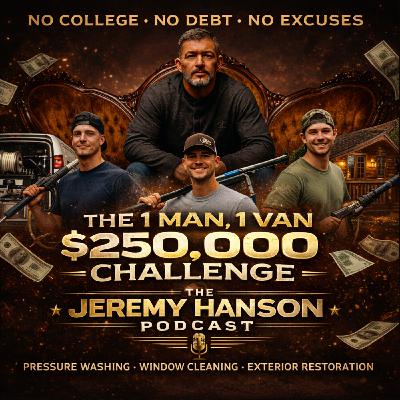
There is a path to financial freedom that nobody is talking about in schools, on career counseling websites, or in the mainstream media.It doesn't require a degree. It doesn't require connections. It doesn't require a business loan or an investor or a fancy office.It requires a reliable vehicle, a few thousand dollars of equipment, the willingness to do work most people won't touch, and a real roadmap that shows you how to build it step by step.In this episode of The Jeremy Hanson Podcast, Jeremy Hanson officially launches the 1 Man, 1 Van, $250,000 Challenge — a fully documented, camera-ready, real-world challenge that follows three young entrepreneurs building three separate service businesses from zero to $250,000 in revenue within one year.The three businesses at the center of the challenge:Pressure Washing and Soft Washing — One of the most accessible service businesses in America. With $5,000 to $10,000 in equipment, a smart marketing approach, and the right service mix including roof soft washing and full exterior cleaning packages, a solo operator can realistically generate $250,000 in annual revenue. Jeremy breaks down exactly what equipment you need, how to price jobs for maximum profit, and the marketing strategies that fill a schedule fast.Professional Window Cleaning — Possibly the most underestimated exterior service business in the country. Low startup costs, high margins, and commercial recurring accounts that pay like clockwork every month. Jeremy explains the power of water-fed pole systems, how to build a commercial route from scratch, and why window cleaning customers are the most loyal clients in the entire service industry.Deck, Cabin, and Exterior Restoration — The premium tier of the exterior services world. Deck restoration, log cabin restoration, and roof rejuvenation are high-ticket services in massive demand because they save homeowners tens of thousands of dollars compared to full replacement. Jeremy details the process, the pricing, and why a single roof rejuvenation job can deliver more profit per hour than almost any other exterior service.Beyond the business breakdowns, this episode delivers a complete 12-month roadmap — from registering your LLC in month one to scaling toward your first quarter-million-dollar year. Month by month, step by step, with no fluff and no gatekeeping.Jeremy also addresses the mindset reality: why the first ninety days are the hardest, what plateau looks like and how to push through it, and the single decision that separates a $100,000 solo operator from a $250,000 business owner.The full 1 Man, 1 Van, $250,000 Challenge — including video lessons, equipment guides, pricing calculators, marketing templates, and on-site real-world footage — lives at: www.jeremyhanson.pro www.optimized1.comWant to apply to be one of the three entrepreneurs we follow through the challenge? Email Jeremy directly at unleashedentrepreneur@gmail.com with your name, your location, and which business you want to build.Subscribe to The Jeremy Hanson Podcast on Apple Podcasts, Spotify, and YouTube. New episodes every week.pressure washing businesswindow cleaning businesshow to start a service businessexterior cleaning businesssoft washing businessdeck restoration businessroof rejuvenation serviceservice business startuphow to make $250000 a yearone man business ideasentrepreneur podcastsmall business startup guidehow to start pressure washingexterior restoration businesscabin restoration servicelog home restorationcommercial window cleaningrecurring revenue service businessyoung entrepreneur ideashow to build wealth without collegehow to start a pressure washing business with no experiencecan you make $250,000 a year pressure washingpressure washing business startup costs and equipmenthow much does a window cleaning business makehow to get commercial window cleaning contractssoft wash system setup for beginnersdeck restoration business how to startroof rejuvenation vs roof replacement costhow to build a service business from scratchbest service businesses to start with low capitalone man service business that makes six figureshow to scale a pressure washing business to $250kexterior cleaning business marketing strategieshow to get first pressure washing customerswater fed pole window cleaning system for beginnerslog cabin restoration and sealing serviceshow to price pressure washing jobs for profitrecurring revenue window cleaning commercial routebest businesses to start with a truck and trailerhow to register an LLC for a service businesspressure washing business marketing with Google Business Profileexterior restoration services for rural property owners1 man 1 van business challenge Jeremy Hansonhow to make money with a pressure washing trailerservice business roadmap to first $250,000Can you make $250,000 a year with a pressure washing business? A: Yes. A solo pressure washing operator with smart pricing and consistent marketing can realistically reach $250,000 in annual revenue. At an average job price of $600, reaching that target requires approximately eight jobs per week — a workload that is achievable for a well-organized single operator with a full schedule and some commercial work in the mix.How much does it cost to start a pressure washing business? A: Starting a professional pressure washing business typically costs between $5,000 and $10,000. Core equipment includes a commercial-grade pressure washer (4–6 GPM), a soft wash system, a surface cleaner, hoses, and cleaning chemicals. Additional startup costs include LLC registration ($50–$150 in most states), a business bank account, and general liability insurance ($400–$800 per year).What is the cheapest service business to start? A: Window cleaning is one of the cheapest professional service businesses to start, with a functional setup possible for $1,500 to $3,000. Equipment includes professional squeegees, a water-fed pole system, extension poles, and basic cleaning supplies. Despite the low entry cost, window cleaning offers high margins and strong potential for commercial recurring revenue.What is roof rejuvenation and how much does it cost? A: Roof rejuvenation is a treatment that restores the oils in asphalt shingles, extending roof life by five to ten years. It is applied using a soft wash system in two to four hours without replacing shingles. Typical pricing ranges from $1,200 to $3,000 — making it a compelling alternative to a full roof replacement that can cost $15,000 to $30,000.How much does deck restoration cost compared to deck replacement? A: Professional deck restoration — which includes cleaning, sanding, staining, and sealing — typically costs $1,500 to $6,000 depending on size and condition. Full deck replacement can cost $10,000 to $25,000. For homeowners with a structurally sound deck underneath years of weathering, restoration provides comparable visual results at a fraction of the replacement cost.How do commercial window cleaning contracts work? A: Commercial window cleaning contracts are recurring service agreements with businesses such as restaurants, retail stores, offices, and medical facilities. The service provider cleans the windows on a weekly, bi-weekly, or monthly schedule at a set price per visit — typically $30 to $150 per storefront. These contracts create predictable monthly revenue that stabilizes a window cleaning business through seasonal fluctuations.What services should a pressure washing business offer to maximize revenue? A: A pressure washing business maximizes revenue by offering full-property exterior cleaning packages (house washing, driveway, patio, fence), roof soft washing, and commercial storefront cleaning. Roof soft washing commands some of the highest prices per hour in exterior cleaning and pairs naturally with existing soft wash equipment. Adding deck washing and surface restoration services further increases average job value.What is the 1 Man 1 Van $250,000 Challenge? A: The 1 Man, 1 Van, $250,000 Challenge is a real-world entrepreneurship challenge launched by Jeremy Hanson on The Jeremy Hanson Podcast. It follows three young entrepreneurs building three separate service businesses — pressure washing, window cleaning, and exterior restoration — from scratch with the goal of reaching $250,000 in annual revenue within one year. The full challenge, including video lessons, equipment guides, pricing tools, and marketing templates, is documented at www.jeremyhanson.pro and www.optimized1.com.How do you scale a one-person service business past $100,000? A: Scaling a solo service business past $100,000 typically requires one of two strategies: adding a second high-ticket service to increase average job value, or hiring a crew member to extend daily production capacity. Adding services like roof rejuvenation to a pressure washing business or commercial route work to a window cleaning operation increases revenue per vehicle without adding headcount. Once systems are in place, adding a trained employee allows the owner to shift from technician to sales and operations.What marketing works best for a local service business? A: The most effective marketing for a local service business in exterior cleaning combines a fully optimized Google Business Profile, consistent before-and-after photo content on social media, Facebook neighborhood group participation, yard signs at job sites, and a structured customer referral program. Google reviews are particularly powerful — a business with 25 to 50 strong Google reviews typically outperforms competitors running paid ads at a fraction of the cost.What businesses can a young person start with no degree? A: Pressure washing, window cleaning, and exterior restoration are three service businesses that require no college degree, no certifications in most states, and relatively low startup capital. All three can be launched solo with a vehicle and equipment costing $2,000 to $10,000, and each has a documented path to $250,000 in an
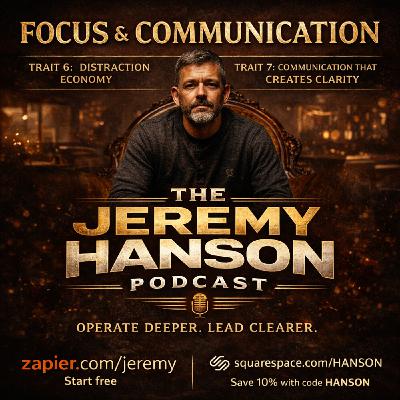
Most entrepreneurs aren't failing because of a bad business model. They're failing because they can't focus long enough to execute one — and they can't communicate clearly enough to build through other people. In this deep-dive episode of The Jeremy Hanson Podcast, serial entrepreneur and service business veteran Jeremy Hanson breaks down two of the most critical traits separating operators who grow from operators who grind themselves into the ground: Focus in a Distraction Economy (Trait 6) and Communication That Creates Clarity (Trait 7).Jeremy covers why attention has become the most valuable — and most attacked — resource in your business, including the research-backed 23-minute cognitive recovery cost of a single interruption. He reveals why the distraction problem isn't just about your phone — it's behavioral, structural, and psychological — and walks you through a five-point implementation framework to protect your deep work and reclaim your most productive hours every single day.On communication, Jeremy pulls back the curtain on the four failure patterns that quietly destroy teams and customer relationships: giving direction too fast, assuming shared context, substituting urgency for clarity, and communicating by assumption. He introduces the Complete Instruction Framework — What, When, How, Why — and five practical tools that eliminate rework, reduce interruptions, and build a culture of clarity across your entire operation.You'll also get a full 7-day action plan to implement both traits immediately — no theory, no fluff, just the operational moves that change how your business runs within weeks.This episode is built for service business owners: cleaning companies, pressure washing operations, landscaping businesses, food trucks, home service providers, and any entrepreneur who is tired of being the bottleneck in their own operation.SPONSORS: This episode is proudly supported by Zapier — the AI automation platform that connects your apps and does the work for you. Start free at zapier.com/jeremy. Also supported by Squarespace — build your professional website and own your platform. Start your free trial and save 10% with code HANSON at squarespace.com/HANSON.Visit jeremyhanson.pro for all episodes, resources, and community.entrepreneur focusentrepreneur communicationentrepreneur productivityservice business podcastentrepreneur podcast 2026business owner mindsetentrepreneur traitsdeep work entrepreneurleadership communicationsmall business productivitydistraction economybusiness communication skillsentrepreneur personal developmentfocus tips entrepreneurservice business ownerhow to stay focused as a small business ownerhow to stop being distracted when running a businesswhy entrepreneurs struggle with focus and productivityhow to protect deep work time as an entrepreneurhow to stop being the bottleneck in your own businesshow to give clear instructions to employeeswhy my employees keep misunderstanding what I ask them to dohow to communicate expectations clearly as a business ownerwhat is the complete instruction framework for managershow to reduce rework and miscommunication on your teamentrepreneur communication skills for service businesseshow to build a culture of clarity in a small businessfocus strategies for cleaning business ownershow to batch communication and protect your schedulewhat traits do successful entrepreneurs have in 2026how to stop reacting to every notification when running a businesswhy deep work matters more than hustle in 2026how to get employees to follow instructions correctlyhow to improve leadership communication in a service businesspodcast about entrepreneur traits and personal developmentJeremy Hanson podcast focus and communication episodetraits 6 and 7 entrepreneur successhow to implement deep work in a service companywhat is decision-making autonomy for teamshow to build operational protocols for your employeeswhy clarity is more efficient than speed in communicationhow to stop over-checking email when you own a businesswhat is the 23 minute interruption cost for entrepreneurshow to create a communication protocol for your customer journeybest podcast for service business owners productivity  → What is the distraction economy and how does it affect entrepreneurs?  → How long does it take to regain focus after an interruption?  → How do you protect deep work time as a business owner?  → What is decision-making autonomy and why does it help entrepreneurs focus?  → How do you stop being a bottleneck in your own business?  → What are the three levels of the distraction problem for entrepreneurs?  → How do you batch communication as a business owner?  → What is the 24-hour no rule for entrepreneurs?  → What is the Complete Instruction Framework for managers?  → What are the four communication failure patterns in small business?  → How do you eliminate rework caused by unclear instructions?  → What does "communication by assumption" mean in business leadership?  → How do you build a culture of clarity on a small business team?  → What is the difference between urgency and clarity in communication?  → How should service business owners communicate with customers?  → What is a customer communication protocol and how do you build one?  → What are the most important traits for entrepreneurs in 2026?  → How do focus and communication work together in a service business?  → What podcast covers entrepreneur personal development for service business owners?  → Who is Jeremy Hanson and what does his podcast cover?#EntrepreneurPodcast #ServiceBusiness #SmallBusinessOwner #EntrepreneurMindset#JeremyHanson #TheJeremyHansonPodcast#DeepWork #EntrepreneurFocus #DistractionEconomy #ProductivityTips#BusinessCommunication #LeadershipSkills #BusinessOwner #SmallBusiness#EntrepreneurLife #ServiceBusinessOwner #CleaningBusiness #PressureWashing#FoodTruckBusiness #BusinessGrowth #PersonalDevelopment #EntrepreneurTraits#ClearCommunication #TeamLeadership #BusinessPodcast #Podcast2026ZAPIER  Vanity URL:   zapier.com/jeremy  Full URL:     https://zapier.com/jeremy  CTA Copy:     Start free at zapier.com/jeremy — 3.4 million companies                already automating. Connect your AI tools to the apps you                use and stop doing work a computer should be doing for you.SQUARESPACE  Vanity URL:   squarespace.com/HANSON  Full URL:     https://squarespace.com/HANSON  Offer Code:   HANSON  Discount:     10% off first website or domain purchase  CTA Copy:     Start your free trial at squarespace.com/HANSON — use code                HANSON at checkout to save 10%. Build it. Launch it. Own it.🔗 LINKS FROM THIS EPISODE:📧 Email Jeremy: unleashedentrepreneur@gmail.com🌐 Website: www.jeremyhanson.pro⚡ ZAPIER — Automate your workflows with AI. Start free:   → zapier.com/jeremy🟦 SQUARESPACE — Build your professional website and own your platform.   Free trial + 10% off with code HANSON:   → squarespace.com/HANSONSee Privacy Policy at https://art19.com/privacy and California Privacy Notice at https://art19.com/privacy#do-not-sell-my-info.
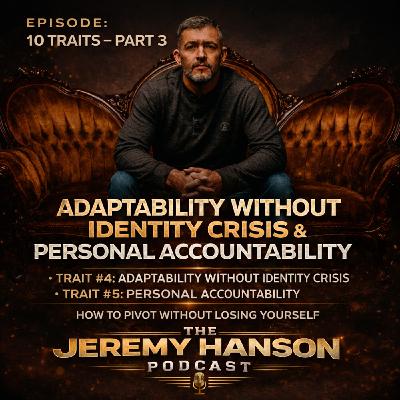
In Part 3 of the 10 Traits series, Jeremy Hanson breaks down two traits that determine whether your business grows—or collapses under the weight of the person running it: Trait #4: Adaptability Without Identity Crisis and Trait #5: Personal Accountability.You’ll learn how to pivot without turning every market shift into an identity crisis—by separating your tactics from your mission. Jeremy explains the difference between real adaptability and chaos, the three signs you’re fusing strategy with ego, and the Three-Layer Check to make evidence-based changes without burning down what you’ve built.Then the episode goes deeper into Personal Accountability—not self-punishment, but leverage. Jeremy shares the mindset shift that changes everything: the moment you take responsibility, you gain the ability to change it. You’ll get a simple, repeatable framework called the Ownership Audit (state the outcome, assess external factors, assess internal factors, choose actions) so you can stop blaming circumstances and start operating with real control.If you’re a service business owner, entrepreneur, or leader navigating algorithm changes, shifting markets, team issues, or inconsistent results—this episode gives you practical tools to adapt quickly, lead clearly, and build a culture where ownership is standard.Get more resources at www.jeremyhanson.pro.adaptability without identity crisis for entrepreneurshow to pivot in business without losing your missionseparating identity from strategy in entrepreneurshiphow to adapt when your business plan stops workingaccountability framework for business ownerspersonal accountability vs self blame in businesshow to stop blaming the market and take ownershipownership audit framework for entrepreneurshow to build an accountable culture in a small businessleadership accountability examples for service businesseshow to pivot marketing channels when they stop workinghow to respond when the algorithm changes your businesshow to take responsibility without shame spiralingbusiness mindset traits of successful entrepreneurshow to lead a team with clear standards and ownershiptactics are negotiable mission is not entrepreneurshipwhat to do when employees underperform as the ownerhow to create training standards for service business teamsevidence-based decision making for entrepreneurshow to improve business results through accountabilityentrepreneur adaptabilitybusiness pivot strategyidentity and entrepreneurshippersonal accountabilityleadership accountabilityownership mindsetaccountability culturebusiness leadership traitsentrepreneur mindsetservice business leadershipdecision frameworksbusiness growth habitsself leadershipoperational excellencescaling a businessadaptability without identity crisispersonal accountabilityentrepreneurial traitsbusiness leadershipbusiness mindsethow to pivot in businessaccountability frameworkownership auditleadership culturemission and valuesservice business operatorsmall business leadershipdecision makingdisciplined executionentrepreneurial resilienceEntrepreneur mindset, business pivot, personal accountability, leadership habits, scaling systems, service business growth, ownership mindset, adaptability, decision frameworksAdaptability trait, accountability trait, entrepreneur leadership, team standards, culture building, operational leadership, small business owner coachingWhat is “adaptability without identity crisis”?Changing tactics fast while keeping your mission and values intact—so the how changes, but the why doesn’t.What is the Ownership Audit?A 4-step accountability tool: state the outcome, list external factors, list internal factors, then choose specific actions you control.What’s the difference between fault and responsibility?Fault is cause. Responsibility is response. You may not have caused it, but you’re responsible for what you do next.Sponsor Fabric by Gerber Life Get started today at https://meetfabric.com/hansonSponsor  https://quickbooks.com/payrollSee Privacy Policy at https://art19.com/privacy and California Privacy Notice at https://art19.com/privacy#do-not-sell-my-info.
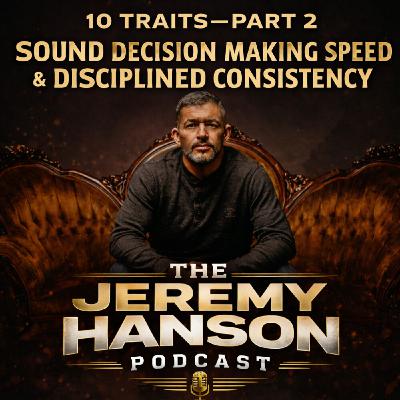
In Part 2 of the 10 Traits series, Jeremy Hanson breaks down two of the most overlooked but powerful characteristics separating struggling entrepreneurs from high-performing operators:Sound Decision Making Speed and Disciplined Consistency.If you’ve ever felt stuck overthinking a hire, delaying a pivot, second-guessing a pricing change, or starting strong only to lose momentum weeks later — this episode is your blueprint.Jeremy explains:• The 70% Decision Rule and why waiting for certainty kills growth• The difference between reversible and irreversible business decisions• How slow decision makers silently drain revenue and team morale• Why hustle culture is destroying long-term operators• The Core Three Framework for predictable weekly momentum• How inconsistency disguises itself as “strategy problems”• The real psychology behind execution breakdown• How to build compounding growth instead of chaotic spurtsThis episode is built for serious entrepreneurs, service business owners, founders, operators, and high-level performers who want to eliminate paralysis and build sustainable growth systems.If Part 1 (Emotional Regulation) was about internal control, Part 2 is about converting control into measurable business results.You don’t need more motivation.You need better decision systems.You need structured consistency.Jeremy gives you both.For deeper frameworks and implementation tools, visit:jeremyhanson.proEmail Jeremy:unleashedentrepreneur@gmail.comentrepreneur traitsbusiness decision makinghow to make better decisionsdisciplined consistencyentrepreneur mindsetbusiness leadership skillsdecision making speedsmall business growthoperator mindsetbusiness executionhow to make faster business decisions without regretwhy entrepreneurs struggle with consistencyhow to stop overthinking business decisionsdecision making framework for entrepreneurshow to build disciplined consistency in businessdifference between hustle and consistency70 percent rule for decision makinghow to grow a service business consistentlyhow to avoid business paralysishow to execute business strategy consistentlyweekly rhythm for entrepreneurscore three business frameworkhow leaders make decisions quicklyhow to stop delaying important decisionswhy inconsistency kills small business growthentrepreneurshipsmall business ownerbusiness growth strategiesdecision makingleadership developmenthigh performance habitsdiscipline in businessservice business successoperator mindsetbusiness systemsconsistent executionmental toughness for entrepreneursentrepreneur podcastbusiness strategy podcastself development for entrepreneurs How do successful entrepreneurs make decisions quickly?A: Successful entrepreneurs use structured frameworks like the 70% rule, categorize decisions by risk level, and implement time boundaries so decisions don’t stall growth. Why is consistency more important than hustle in business?A: Consistency compounds results over time, while hustle creates short-term bursts followed by burnout and instability. What are the three most important weekly business activities?A: Lead generation, customer retention, and systems/team development — known in this episode as the Core Three. How do I stop overthinking business decisions?A: Categorize decisions by stakes, set time limits, accept imperfect information, and implement recovery plans instead of waiting for certainty.EntrepreneurshipBusinessLeadershipSelf-ImprovementService BusinessesSmall Business StrategyMindset & PerformanceJeremy Hanson dives into Sound Decision Making Speed and Disciplined Consistency — two traits that determine whether entrepreneurs build momentum or stall out. Learn the 70% rule, the Core Three framework, and how to eliminate decision paralysis while building long-term compounding growth.Right Side Up powered by TempoStreamline your hiring with pre-vetted, qualified candidates who actually fit your business.Learn more: https://www.rightsideup.comSquarespaceBuild a professional website you can control without hiring a developer.Start your free trial: https://www.squarespace.comSee Privacy Policy at https://art19.com/privacy and California Privacy Notice at https://art19.com/privacy#do-not-sell-my-info.
10 Traits of Highly Successful Entrepreneurs | Efficiency, Profitability and Sustainable SuccessWhat Traits Make Entrepreneurs Successful, Profitable and Happy Long-Term?The 10 Traits Every Profitable Entrepreneur Must Develop in 2026Entrepreneur Success Blueprint: The Internal Skills That Create Real WealthHow to Become a More Efficient and Profitable Business OwnerThe Personal Development Advantage in Modern EntrepreneurshipWhy Internal Capacity Determines Business SuccessDETAILED DESCRIPTION (SEO + AEO Optimized)Markets are harder. Competition is stronger. Attention is fractured. In today’s economy, opportunity is not the limiting factor. You are.In this 52-minute episode of The Jeremy Hanson Podcast, Jeremy breaks down the ten foundational traits that separate struggling entrepreneurs from efficient, profitable and genuinely fulfilled business owners.This episode is not about hacks, trends or tactics. It is about internal capacity — the real competitive advantage in 2026 and beyond.You will learn:Why emotional regulation matters more than motivationHow decision velocity compounds long-term successThe power of systems thinking in scaling businessesWhy financial literacy determines survival and growthHow strategic patience builds lasting wealthThe importance of ruthless prioritizationWhy operational detachment separates owners from operatorsHow relationship capital outperforms transactional networkingWhy adaptive learning keeps you ahead of disruptionHow sustainable intensity prevents burnout while maximizing outputIf you run a service business, manage teams, build multiple ventures, or are scaling a podcast or brand, this episode provides the internal framework required for long-term dominance.Business does not get easier.You get stronger.And your personal development becomes your moat.Listen now and identify the two traits holding you back — then commit to building them deliberately over the next 90 days.entrepreneur traitssuccessful entrepreneur habitsbusiness success traitsentrepreneur mindsetsmall business leadershipbusiness growth skillsfinancial literacy for entrepreneursscaling a businessentrepreneur personal developmentprofitable business habitshow to become a profitable entrepreneur in 2026traits of successful small business ownershow to build emotional resilience as an entrepreneurhow to scale a service business without burnoutwhy financial literacy matters for business ownershow to make faster business decisionshow to build systems in a small businesshow to grow a profitable business long termwhat separates successful entrepreneurs from failed oneshow to run multiple businesses efficientlyWhat traits do successful entrepreneurs have?How do entrepreneurs stay profitable long term?How can I become a more efficient business owner?What mindset is required for business success?How do I avoid burnout as an entrepreneur?What skills are most important for scaling a small business?How do I build better systems in my business?Why is emotional regulation important in leadership?entrepreneurshipbusiness leadershipsmall business growthservice business ownerpersonal developmentemotional regulationdecision makingsystems thinkingfinancial literacyprofit marginscash flow managementscaling a companybusiness systemshigh performance habitsburnout preventionstrategic planningrelationship capitaladaptive learninglong-term wealth buildingEntrepreneurshipBusinessSmall BusinessLeadershipSelf-ImprovementBusiness StrategyPersonal GrowthThis episode of The Jeremy Hanson Podcast is sponsored by Intuit QuickBooks — accounting and financial management software designed for small business owners, service businesses, and entrepreneurs. Jeremy discusses how QuickBooks supports invoicing, cash flow tracking, payroll integration, and real-time financial reporting.Sponsor URL: https://quickbooks.intuit.comSee Privacy Policy at https://art19.com/privacy and California Privacy Notice at https://art19.com/privacy#do-not-sell-my-info.
If your service business isn’t where you want it to be—more profit, better crews, fewer fires, real growth—this episode forces the most important question: why, exactly, are you still stuck? Not the polished answer. Not the supply-house answer. The honest one.In Part 1 of the Expert Problem Solver series, Jeremy Hanson breaks down the excuse contagion—how “reasonable” explanations like “I can’t find good help,” “the economy is terrible,” “I don’t have the capital,” “my market is too competitive,” and “I’m waiting for the right time” become a cultural virus in the trades. These narratives often contain partial truth… and that’s why they’re so dangerous. They quietly remove your agency.You’ll learn why smart business owners rationalize failure better than anyone, how industry groupthink makes excuses feel like “common sense,” and why the question isn’t whether your explanation sounds true—but whether it’s useful. Jeremy confronts the most common contractor myths head-on, including the “good help” fallacy, the waiting-for-timing trap, and the perfectionism alibi that keeps owners planning forever while competitors pass them.This episode is the Mirror Moment: the line between owners who stay stuck and owners who get results. Not motivation. Not fluff. Ownership, diagnosis, and operational maturity—the foundations of building a business where good people stay, customers return, and growth becomes repeatable.You’ll also get a practical assignment to end the episode: identify your top three excuses, then write the three actions you’d take if those excuses were no longer allowed.Next episode (Part 2): Root Cause Diagnosis—why most fixes fail, why problems repeat, and how expert problem solvers cure systems instead of reacting to symptoms.Primary keywordsexpert problem solverservice business coachingcontractor mindsetbusiness excusesownership mindsetleadership in tradesscaling a service businessblue collar business growthoperational systems for contractorshiring and retention for service companiesSecondary keywords“no one wants to work anymore” mythtrades business leadershiphow to build a great teamtraining systems for technicianspay progression systemscheduling systems for crewsperfectionism in businesshow to stop procrastinating in businesscontractor pricing strategy (setup for later episodes)root cause analysis (teaser for Part 2)Long-tail phrases (high-intent search phrases)how to stop making excuses in my service businesswhy contractors can’t find good employees and how to fix ithow to build a company culture that retains good technicianswhat to do when “no one wants to work” in the tradesservice business leadership systems that prevent chaoscontractor onboarding and training checklist systemhow to create a pay progression ladder for technicianshow to stop waiting for the right time to grow my businessperfectionism is keeping me from launching a service business offerhow to take ownership when business results are badwhy my service business is stuck even though I work 70 hourshow to build a service business that runs without the ownerhow to turn average employees into high performers with systemswhy blaming the economy keeps contractors brokehow to audit my business like an expert problem solverShort-tail phrases (high-volume targets)contractor coachingservice business growthhiring for contractorsemployee retentionbusiness systemsleadership mindsetstop procrastinatingperfectionism in businessscaling a trades businesscontractor leadershipSponsor Links https://squarespace.com/HANSON https://meetfabric.com/hansonSee Privacy Policy at https://art19.com/privacy and California Privacy Notice at https://art19.com/privacy#do-not-sell-my-info.
Most service business owners don’t fail because they aren’t skilled enough.They fail because they never make The Shift.In this episode of The Jeremy Hanson Podcast, Jeremy breaks down the exact moment every tradesman hits—the moment when working harder stops working—and explains how staying stuck in technician mode quietly caps income, destroys time freedom, and turns a business into a high-stress job.If you’re a pressure washer, HVAC tech, electrician, plumber, roofer, cleaner, or contractor who feels constantly busy but never ahead, this episode exposes why—and shows the way out.Jeremy walks through the core mindset and operational shift required to move from being the business to owning the business, including:Why technician skill does not translate to business growthThe difference between busy work and CEO-level workHow the “Dirty Truck Trap” keeps owners stuck in constant executionThe CEO Rate vs. Tech Rate—and why most owners sabotage their earning powerHow underpricing creates volume dependency and burnoutThe Stop-Doing List that frees up time and restores leverageHow to build systems that allow your business to function without youWhy delegation feels risky—but staying indispensable is worseThe emotional identity shift from “hero” to “architect”How to build a service business that can scale, absorb pressure, and breatheThis episode is not about motivation, hustle culture, or generic business advice.It’s a tactical, field-tested breakdown of what actually separates overwhelmed operators from owners who control their time, margins, and future.If you’ve ever asked yourself:Why am I so busy but still stressed?What happens if I get sick or injured?Why does my business fall apart when I step away?This episode gives you the answer—and the path forward.PRIMARY SEO KEYWORDStechnician to ownerservice business owner mindsetworking in the business vs working on the businesstrades business growthblue collar business ownershipservice business systemsstop being busy in businesshow to scale a service businessCEO rate vs technician rateSECONDARY SEO KEYWORDSpressure washing business growthHVAC business owner adviceplumbing business scalingelectrician business systemscontractor business leadershipsmall service business operationspricing strategy for tradesmendelegation for business ownersservice business burnoutAEO / VOICE SEARCH & AI-FRIENDLY LONG-TAIL PHRASEShow do I stop being busy in my service businesswhat is the difference between a technician and a business ownerwhy service business owners burn outhow to work on your business instead of in itwhen should a tradesman stop doing the work himselfhow to build systems in a service businesswhy being busy doesn’t mean your business is growinghow to scale a blue collar business without burnoutwhat is CEO work for a small business ownerhow to delegate without losing qualityPODCAST PLATFORM TAGS / METADATA (Optional Add-On)Categories:BusinessEntrepreneurshipCareersManagementIdeal Episode Placement Tags:Service Business GrowthTrades EntrepreneurshipSmall Business SystemsLeadership for ContractorsEat real, chef-crafted meals without losing time. Tempo delivers fresh, ready-to-heat meals in just two minutes—no prep, no cleanup, no compromise.https://tempomeals.com/hansonStop doing repetitive work. Zapier connects your apps and automates the busywork so you can focus on what actually makes money.https://zapier.com/jeremySee Privacy Policy at https://art19.com/privacy and California Privacy Notice at https://art19.com/privacy#do-not-sell-my-info.
If you’re a service business owner who’s constantly busy but still broke, exhausted, and stuck in your truck, this episode is for you.In this hard-hitting episode of The Jeremy Hanson Podcast, Jeremy breaks down the “Dirty Truck Trap”—the mindset that convinces blue-collar entrepreneurs that nonstop hustle equals success, while quietly destroying margins, health, family time, and long-term business value.This isn’t hustle porn. It’s real, field-tested truth.Jeremy speaks directly to contractors, tradesmen, and service business owners who are booked out, working 60–70 hour weeks, and still wondering why the bank account feels tight. He explains the dangerous difference between being busy and being effective, why so many owners unknowingly build jobs instead of businesses, and how staying in “technician mode” keeps you trapped as the highest-paid employee in your own company.You’ll learn:Why being busy feels productive—but actually prevents growthHow the “dirty truck” becomes a prison instead of a toolThe cultural traps that keep blue-collar owners under-earningThe hidden costs of hustle on your health, marriage, and kidsWhy most service businesses collapse the moment the owner steps awayThe mindset shift required to move from technician to operatorThis episode is raw, honest, and uncomfortable in the best way—designed to challenge the beliefs that keep hard-working people stuck for decades.If you own a service business and feel like you can’t slow down without everything falling apart, this episode will help you finally understand why—and what needs to change next.dirty truck trapblue collar business ownerservice business ownertrades business growthtechnician to operatorblue collar entrepreneurshipcontractor burnoutbusy vs effectiveservice business scalingsmall business tradesself employed vs business ownertradesman burnoutservice business systemscontractor business mindsetpricing problems in tradesservice business marginsblue collar burnoutcontractor overworkedsmall service business growthworking in the business vs on the businesswhy being busy is killing my service businesshow to get out of the truck as a contractorwhy contractors work so hard and make no moneyhow to stop being the bottleneck in my businesstechnician to operator transition for tradesmenservice business owner burnout symptomshow to scale a blue collar businesswhy my service business depends on mehow to build systems in a service businesswhy hustle doesn’t work for contractorsSee Privacy Policy at https://art19.com/privacy and California Privacy Notice at https://art19.com/privacy#do-not-sell-my-info.
In this episode of The Jeremy Hanson Podcast, Jeremy Hanson delivers a raw, no-nonsense breakdown of when—and if—you should start a business in 2026.This is not motivational fluff or startup fantasy. It’s a grounded, real-world analysis of entrepreneurship in today’s economy, covering risk, timing, discipline, and the uncomfortable truth most people avoid when thinking about business ownership.Jeremy explores why so many people feel paralyzed right now, how inflation, AI, and economic uncertainty have distorted decision-making, and why 2026 is not a boom year—but a sorting year where disciplined operators quietly win while others hesitate.You’ll learn:Why most people never fail in business—they simply never startWhat the 2026 economy actually looks like beyond headlines and hypeWhy service businesses and skilled trades are outperforming digital fantasiesThe lie about confidence that keeps would-be entrepreneurs stuckWho should absolutely start a business in 2026—and who should notWhether the “juice is worth the squeeze,” and what that squeeze really costsThis episode is designed for entrepreneurs, small business owners, service professionals, and anyone questioning whether now is the right time to take control of their income and future.The Jeremy Hanson Podcast focuses on entrepreneurship, business systems, life optimization, and real execution—helping listeners move from thinking to doing with clarity and honesty.Learn more and explore additional resources at www.optimized1.com.🔑 SEO KEYWORDS & PHRASES(Use in ART19 backend, PodSEO, Podpage, and metadata)Primary Keywordsstart a business in 2026entrepreneurship podcastbusiness podcastsmall business growthservice businessbusiness ownershipSecondary Keywordsshould I start a businessbusiness risk vs rewardstarting a service businessentrepreneur mindsetbusiness systemsbuild wealthself-employmentAEO / Voice Search Queries“Is it worth starting a business in 2026?”“When should I start my own business?”“Best entrepreneurship podcast for real advice”“Should I quit my job and start a business?”This episode is sponsored by Zapier—automate your work with AI and get started for free at zapier.com/jeremySee Privacy Policy at https://art19.com/privacy and California Privacy Notice at https://art19.com/privacy#do-not-sell-my-info.
In this episode of The Jeremy Hanson Podcast, Jeremy breaks down what it really takes to build a business, brand, and life that actually works in 2026.This is not hype. This is systems, discipline, and real-world execution.Jeremy shares practical insight on entrepreneurship, service businesses, side hustles, and building scalable systems that reduce stress while increasing income. Whether you’re launching your first business, rebuilding after burnout, or trying to turn momentum into long-term growth, this episode is designed to help you make smarter decisions—faster.You’ll hear real talk about:When starting a business is actually worth the riskWhy most people fail—not from laziness, but from poor systemsHow to build an online presence that supports your business instead of distracting youThe importance of structure, consistency, and execution in modern entrepreneurshipHow tools and platforms can remove friction and free up timeThe Jeremy Hanson Podcast is focused on helping entrepreneurs, builders, and doers stop overthinking and start executing with clarity. This show blends business strategy, mindset, life optimization, and hard-earned lessons from the real world—without fluff or guru nonsense.If you’re serious about building wealth, freedom, and a business that fits your life instead of consuming it, this episode will help you reset your approach and move forward with confidence. Learn more and explore resources at www.optimized1.comSquarespaceBuild your website, brand, or business with Squarespace.Start your free trial today and save 10% off your first website or domain.https://www.squarespace.com/HANSONUse code HANSON at checkout.Tempo MealsFresh, chef-crafted, dietitian-approved meals delivered to your door—ready in just two minutes.Get SIXTY PERCENT OFF your first box. https://tempomeals.com/hansonRules and restrictions may apply.See Privacy Policy at https://art19.com/privacy and California Privacy Notice at https://art19.com/privacy#do-not-sell-my-info.
Thinking about starting a service business in 2026? The data says this is YOUR year—and waiting could cost you the market.In this episode, entrepreneur and podcaster Jeremy Hanson breaks down the hard numbers behind why 2026 represents a once-in-a-decade opportunity for service business owners. With a 94% surge in entrepreneurial intent, retiring Baby Boomer business owners creating market vacuums, and median startup costs dropping to just $12,000, the barriers to entry have never been lower.Discover why the "cheapest guy" business model is dead, how 60% of consumers now pay 15% MORE for reliability, and why response time beats price in winning customers. Learn how AI-augmented operations, subscription revenue models, and the invisible floor of delivery platforms are creating predictable cash flow for pressure washing, lawn care, HVAC, food trucks, and mobile service businesses.Whether you're running a side hustle or ready to scale to six figures, this episode delivers actionable insights on 2026 consumer buying behaviors, the trust economy, and why local service businesses are outmaneuvering corporate giants. Stop overthinking. Start building. The window is open—but it won't stay open forever.Perfect for: aspiring entrepreneurs, service business owners, food truck operators, pressure washing businesses, lawn care companies, HVAC contractors, mobile detailing, cleaning services, and anyone ready to stop planning and start doing. Listen now and discover why life rewards the doer, not the thinker.#ServiceBusiness #Entrepreneur2026 #StartABusiness #SmallBusinessTips #EntrepreneurData #BusinessStartup #SideHustle2026 #ServiceIndustry #LocalBusiness#PressureWashing #FoodTruckBusiness #LawnCare #HVACBusiness #CleaningBusiness #MobileDetailing #HomeServices #ContractorBusiness #ServiceEntrepreneur#SubscriptionBusiness #AIForBusiness #TrustEconomy #ConsumerBehavior #BusinessTrends2026 #SmallBusinessGrowth #EntrepreneurialIntent #StartupCosts #BusinessData#StopThinkingStartDoing #TakeAction #DoerNotDreamer #EntrepreneurMindset #BuildYourBusiness #BusinessOpportunity #TimeToStart #ActionTaker #EntrepreneurLife#BusinessPodcast #EntrepreneurPodcast #SmallBusinessAdvice #HowToStartABusiness #BusinessStrategy #MarketTrends #EntrepreneurialSuccess #BusinessEducation#JeremyHanson #TheJeremyHansonPodcast #OptimizedEntrepreneur #PodcastEpisode #BusinessPodcast2026See Privacy Policy at https://art19.com/privacy and California Privacy Notice at https://art19.com/privacy#do-not-sell-my-info.
Stop chasing tactics. Start building capacity.In this essential episode of The Jeremy Hanson Podcast, entrepreneur and multi-business operator Jeremy Hanson reveals the 10 personal development traits that will separate successful entrepreneurs from the rest in 2026 and beyond.After running service businesses for over 20 years—including cleaning companies, pressure washing operations, and food trucks—Jeremy has learned that business success is downstream from personal development. The entrepreneurs who win aren't just smarter; they're more disciplined, emotionally resilient, and intentional about how they show up every day. THE 10 TRAITS COVERED:Emotional Regulation - Master your internal state instead of relying on motivationDecision-Making Speed - Make fast, imperfect decisions with incomplete dataDisciplined Consistency - Execute boring fundamentals when no one's watchingAdaptability Without Identity Crisis - Change tactics while maintaining core valuesPersonal Accountability - Take radical ownership of every outcomeFocus in a Distraction Economy - Protect deep work and say no ruthlesslyCommunication That Creates Clarity - Lead through precise, purposeful communicationLong-Term Thinking - Play multi-year games in a short-term worldPhysical & Mental Self-Mastery - Treat yourself as your company's operating systemPurpose Beyond Money - Build a mission that sustains you when motivation failsWHAT YOU'LL GAIN:Why personal capacity matters more than business tactics in 2026Practical frameworks to develop each trait in 90 daysReal examples from two decades of entrepreneurial experienceThe foundation of The Optimized Entrepreneur methodologyInsight into the ecosystem launching in 2026 (interviews, workshops, courses, community)PERFECT FOR: Service business owners, operators, builders, and entrepreneurs who want to build businesses that don't break them—and who understand that sustainable success requires internal work, not just external tactics.EPISODE BREAKDOWN:[0:00] Cold Open - Why 2026 Requires Different Entrepreneurs[2:45] The Real Competitive Advantage[8:15] Traits 1-5: Foundation of the Optimized Entrepreneur[21:00] Traits 6-10: Advanced Operator Skills[34:30] The Optimized Entrepreneur Ecosystem Reveal[40:00] Your 90-Day Action PlanTAKE ACTION: Choose ONE trait from this episode and commit to developing it over the next 90 days. Focused effort on one area creates compound results across your entire business.www.jeremyhanson.pro Subscribe for weekly insights on building sustainable, profitable businesses without burnout. Join the movement of entrepreneurs who are optimizing themselves first—and watching their businesses transform as a result.#TheOptimizedEntrepreneur | #JeremyHanson | #EntrepreneurshipIn2026#Entrepreneurship #PersonalDevelopment #BusinessGrowth #LeadershipDevelopment #EntrepreneurMindset #ServiceBusiness #SmallBusinessOwner #BusinessStrategy #SelfMastery #EmotionalIntelligence #ProductivityHacks #EntrepreneurLife #BusinessPodcast #ScalingBusiness #StartupAdvice #OperationalExcellence #EntrepreneurTips #BusinessLeadership #SustainableSuccess #BusinessSystems #PurposeDrivenBusiness #Entrepreneurship2026 #TheOptimizedEntrepreneur #JeremyHansonPodcast #DecisionMaking #Consistency #Focus #Accountability #LongTermThinking #EntrepreneurialResilience #BusinessOwner #SoloPreneur #MultiBusinessOwner #CleaningBusiness #PressureWashing #FoodTruck #ServiceIndustry #SmallBusinessSuccess #BuildToLast #AntiHustleCulture #IntentionalEntrepreneurshipSee Privacy Policy at https://art19.com/privacy and California Privacy Notice at https://art19.com/privacy#do-not-sell-my-info.
Most entrepreneurs ask the wrong question.They ask, “What business should I start?”The better question is: “What service businesses will still work in 2026?”In this episode of The Jeremy Hanson Podcast – Optimized Entrepreneur Series, Jeremy Hanson breaks down the real service business trends that will define who scales, who survives, and who quietly burns out over the next two years.This isn’t hype. It isn’t theory. And it isn’t recycled internet advice.These are patterns already happening right now—driven by labor realities, pricing pressure, consumer trust, automation, and margin compression across real service businesses.In this episode, Jeremy explains:Why service businesses are splitting into two classes—and why the middle is disappearingWhy labor shortages are structural, not temporaryWhy pricing power matters more than volume going forwardHow premium, trust-based local service businesses will outperform national brandsHow AI and automation are separating true owners from burned-out operatorsWhy customers are willing to pay more for less chaos and better experiencesWhat service business owners must change now to win in 2026Jeremy draws from real operating experience—cleaning companies, pressure washing, food trucks, and service operations—showing exactly why what worked in 2022 is already outdated, and why waiting for things to “go back to normal” is a losing strategy.This episode is for:Service business owners feeling squeezed by rising costsEntrepreneurs tired of grinding for thin marginsOperators who want systems, pricing clarity, and time freedomAnyone building a service business that needs to last beyond the next cycle2026 will not reward hustle alone.It will reward structure, pricing power, automation, clarity, and discipline.If you want to build a service business that doesn’t collapse under pressure—and instead dominates its lane—this episode lays out exactly what you need to understand now.This is optimized entrepreneurship—built for reality, not nostalgia.www.jeremyhanson.pro service business trends for 2026best service businesses to start in 2026how to scale a service businessservice business pricing strategieslabor shortages in service businessesautomation for service business ownerslocal service business vs national brandshow to build a service business that runs without the ownerbZa8SoiBEQ9Kt920P7wRSee Privacy Policy at https://art19.com/privacy and California Privacy Notice at https://art19.com/privacy#do-not-sell-my-info.
THE JEREMY HANSON PODCAST — Optimized Entrepreneur SeriesEpisode: The Responsibility of Success — Leadership, Family, Faith, and CommunityRuntime: 46 MinutesSuccess isn’t the finish line — it’s the beginning of responsibility.In this powerful, emotional, and deeply honest episode, Jeremy Hanson breaks down the true weight of being a successful entrepreneur: the responsibility you carry for your family, friendships, church, and community. This is not a conversation about tactics or trends — it’s about the moral obligations that come with leadership.Jeremy reveals why success without responsibility leaves entrepreneurs empty… and why responsibility, when embraced fully, creates purpose, clarity, and long-term legacy. This episode teaches the structural backbone of leadership: how to be a strong spouse, a present parent, a reliable friend, a committed member of your church, and a pillar in your community.Whether you’re building a business, rebuilding a life, or stepping into a bigger version of yourself, this episode will challenge you, strengthen you, and remind you of the weight you were built to carry.HOST READ AD #1 — INTUIT QUICKBOOKS PAYROLLURL https://quickbooks.com/payrollManaging your business doesn’t need to be chaos. Intuit QuickBooks Payroll gives you seamless, all-in-one clarity — payroll, time tracking, and accounting connected in one platform so you can lead with strategy instead of stress. Learn more at QuickBooks.com/payrollHOST READ AD #2 — SURFSHARK VPNCustom URLhttps://surfshark.com/hansonhttps://surfshark.com/hanson  USE code HANSON at checkout for 4 extra months.Protect your digital life with Surfshark VPN — encrypt your online activity, safeguard your identity, secure every device with one account, and travel the digital world freely. Get 4 extra months free by going to Surfshark.com/hanson or by using code HANSON at checkout.www.jeremyhanson.proSee Privacy Policy at https://art19.com/privacy and California Privacy Notice at https://art19.com/privacy#do-not-sell-my-info.
The Jeremy Hanson Podcast – Optimized Entrepreneur SeriesEpisode: Integrity, Loyalty, and the Relationships That Build or Break Your LifeRuntime: 52 Minutes (with ads)Your business does not rise on talent, tactics, or timing. It rises on your integrity and the relationships you build — at home, in your inner circle, and with the clients who trust your word.In this hard-hitting, emotional, deeply honest episode, Jeremy Hanson breaks down the part of entrepreneurship that no one wants to talk about, but every entrepreneur eventually faces: the collapse or strengthening of your character.Jeremy exposes the reality that business success is inseparable from the health of your marriage, the quality of your friendships, and the depth of trust you’ve built with your clients. This is not an episode about tactics — it’s an episode about the infrastructure of your life that controls whether you rise, fall, or rebuild.Across five powerful segments, Jeremy dives into:• Why integrity is the most profitable asset you have• How entrepreneurship strains and shapes your marriage• The four types of friends every entrepreneur must identify• How relational sabotage destroys more businesses than bad strategy• The real difference between a client you keep for ten years and one you lose in ten minutes• Why your name, your word, and your loyalty determine your long-term wealthThis episode is a blueprint for entrepreneurs who want not only success, but a life that doesn’t crumble behind the scenes while the money grows. RULA Online Therapy (Ad #1 – 12:00–14:00)Get therapy through your insurance with Rula. Sessions are often as low as $15 with in-network providers.Start here: https://www.rula.com/hansonINTUIT QUICKBOOKS PAYROLL (Ad #2 – 30:30–32:00)Simplify payroll, time tracking, and accounting in one place.Learn more: https://www.quickbooks.com/payrollThis episode will push you, challenge you, and force you to look at the relationships that are shaping your entrepreneurial life — for better or worse. Because at the end of the day, the entrepreneur with integrity and strong relationships becomes unstoppable.www.jeremyhanson.proSee Privacy Policy at https://art19.com/privacy and California Privacy Notice at https://art19.com/privacy#do-not-sell-my-info.
Running a service business isn’t about working harder — it’s about working right. In this 46-minute masterclass, Jeremy Hanson breaks down the framework that has helped him build, scale, and optimize multiple service-based companies from the ground up: Proper Planning Prevents Piss Poor Performance — The 6 P’s.If you’re an owner in HVAC, plumbing, cleaning, landscaping, pressure washing, electrical, remodeling, or any home-service or field-service industry, this episode gives you a practical and repeatable blueprint to eliminate chaos and create predictable profit.Jeremy dives into:The Foundation of an Optimized EntrepreneurWhy clarity beats hustle, how to “engineer” your business instead of guessing, and why structure matters more than intensity.The 6 P’s BreakdownProper • Planning • Prevents • Piss • Poor • Performance.How this simple framework eliminates most operational disasters before they happen.System Building for Service BusinessesLead intake systems, scheduling structure, job execution checklists, instant invoicing, retention strategies, and how to create systems that scale beyond the owner.Operational EfficiencyRouting optimization, communication protocols, inventory control, delegation, and identifying the bottlenecks draining time and profit from your business.Marketing at the Right TimeSeasonal mapping, local visibility, referral triggers, upsells, memberships, and why consistent marketing beats sporadic creativity.Jeremy also highlights two tools that help entrepreneurs streamline operations and protect their digital footprint:QuickBooks Payroll (Host Read Link):https://QuickBooks.com/payrollSurfshark VPN (Host Read Link):https://surfshark.com/hansonUse code HANSON at checkout for four extra months.Whether you’re launching your first service business or scaling toward seven figures, this episode will help you operate with intention, precision, and strategy. This is the blueprint for becoming an optimized entrepreneur.www.jeremyhanson.proSee Privacy Policy at https://art19.com/privacy and California Privacy Notice at https://art19.com/privacy#do-not-sell-my-info.
loading
Comments (2)

andrew miller

Jeremy, this episode on the Omnibus bill and the ethical issues surrounding its passage is crucial listening. The allegations of global price fixing, especially concerning fuel, really underscore the financial squeeze everyone is feeling right now. It ties right back into your core message about mastering your mindset and taking control of your finances where you can. In times of instability and rising costs, the best strategy is always hyper-efficiency and diligence on the home front. We can’t control White House policies or global fuel prices, but we can absolutely control our household spending and management. For entrepreneurs and listeners focused on taking control of their own expenses, we’ve created a direct resource specifically to help manage one piece of that budget with zero hassle. Anyone who is an SNGPL customer can quickly check their bill and track usage here: https://suigasbillcheck.com.pk/sngpl-bill-online/

Nov 17th
Reply

iBenStokes10

Jeremy Hanson's recent episode on the Omnibus bill highlights the concerning inclusion of earmarks and sheds light on the ethical issues surrounding its passage. The discussion further exposes alleged corruption, including talks of global fuel price fixing by the Biden White House, making it a critical episode to tune into https://fescoonlinebillcheck.pk/sui-gas-bill/

Jan 6th
Reply
loading