


The Weight Loss Mindset
Subscribed: 821Played: 10,335
Subscribe

© The Weight Loss Mindset
Description
The diet industry sold you a lie: that willpower is the answer and failure is your fault. It's not. You've tried every program, followed every rule, and blamed yourself when they didn't work. But the problem was never your discipline.
The Weight Loss Mindset exposes why traditional weight loss advice backfires and teaches you the psychology-based approach that actually works. This is weight loss through identity transformation, not restriction. We don't do meal plans or motivation. We reset your identity so the food noise finally goes quiet.
If you're ready for something radically different, you're in the right place. The goal isn't another program to follow. The goal is freedom from the constant mental negotiation with food.
news.weightlossmindset.co
The Weight Loss Mindset exposes why traditional weight loss advice backfires and teaches you the psychology-based approach that actually works. This is weight loss through identity transformation, not restriction. We don't do meal plans or motivation. We reset your identity so the food noise finally goes quiet.
If you're ready for something radically different, you're in the right place. The goal isn't another program to follow. The goal is freedom from the constant mental negotiation with food.
news.weightlossmindset.co
123 Episodes
Reverse
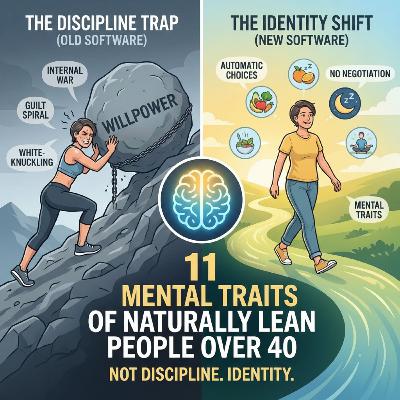
You know that person who eats half the dessert, pushes the plate away, and keeps talking, no guilt, no negotiation, no mental war?They don’t have more willpower than you. They’re running different mental software.In this episode, I break down the 11 mental traits that make up that software. These aren’t gifts people are born with. They’re patterns of thinking, not patterns of eating, that can be learned, built, and installed. Every single one of them starts with identity, not discipline.What You’ll Hear in This EpisodeThe 11 Traits:* They see food as neutral, not reward, not punishment* They eat from identity, not toward a goal* They don’t negotiate with food* They recover fast, without drama* They are scientists, not judges* They let cravings pass, they don’t fight them* They have a quiet mind around food* They trust their body’s signals* Their motivation comes from values, not guilt* They design their environment instead of testing their willpower* They believe they are “someone who...”Key ideas explored:* Why the diet industry needs you to believe the problem is your willpower.* How your Identity Thermostat creates a “set point” that no diet can override.* Why self-efficacy, not perfect adherence, is the only consistent predictor of bouncing back from a lapse.* How chronic dieting disconnects you from your body’s natural hunger and fullness signals.* Why autonomous motivation predicts change at 23+ months while guilt-driven motivation predicts nothing.* And why one sentence, “I am someone who...”, holds all 11 traits together.Key Quotes from This Episode“You’ve been trying to change the temperature by opening windows. Every diet is another window thrown open. And every time, the furnace kicks back on because the thermostat hasn’t moved.”“The binge didn’t derail you. Your reaction to the binge did.”“If guilt could make you thin, wouldn’t you be thin by now?”“The goal of everything I teach isn’t discipline. It’s silence. The quiet mind. That’s what food freedom actually sounds like.”Share This EpisodeKnow someone who’s still blaming themselves for every failed diet? Send them this episode. They need to hear that the problem was never their character, it was always the system.Thanks for reading The Weight Loss Mindset! Subscribe for free to receive new posts and support my work. This is a public episode. If you would like to discuss this with other subscribers or get access to bonus episodes, visit news.weightlossmindset.co
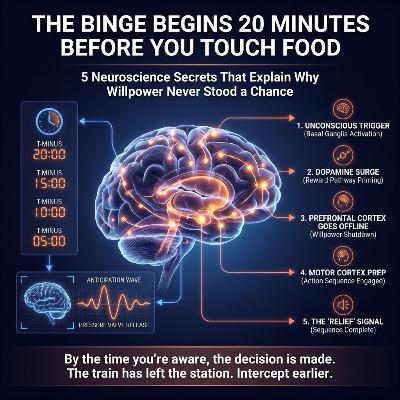
There’s a feeling most people won’t admit to. A kind of anticipation before a binge—not dread, but something closer to relief. Like a pressure valve about to release.That feeling isn’t weakness. It’s your brain celebrating that a decision has already been made. You’re just catching up to it now.In this episode, I break down the neuroscience of what’s actually happening in the 20 minutes before you’re aware a binge is coming—and why willpower was never going to save you. We’ll cover the five secrets your brain has been keeping from you, and why the solution isn’t fighting harder. It’s intercepting earlier.If you’ve ever wondered why you can’t seem to “catch yourself” in time, this one’s for you.In This Episode* Why your brain makes the decision to binge before you’re consciously aware of it* How emotional states at 2pm can trigger cravings that don’t show up until 6pm* The environmental “start buttons” that initiate the binge sequence without your permission* Why restriction doesn’t prevent binges—it schedules them* The real question that changes everything: What is the binge trying to solve?Key Quotes“The decision was already made. You’re just catching up to it now.”“Willpower is like trying to stop a train that’s already barreling down the track.”“You didn’t fail the diet. The diet loaded the weapon and handed it to your brain.”“Food is a terrible therapist. But your brain kept going back because something needed tending.”“You were never weak. You were just operating on a time delay.”Resources MentionedThe Circuit Breaker Protocol — A pattern interrupt designed to intercept the pre-binge sequence before it completes. Not a diet. Not willpower. A different approach entirely.Continue the ConversationIf this episode shifted something for you, I’d love to hear about it. Share your takeaway or tag me on social.And if you know someone who’s been fighting this battle with willpower and losing, send them this episode. Sometimes knowing why it’s not working is the first step to finding what does. This is a public episode. If you would like to discuss this with other subscribers or get access to bonus episodes, visit news.weightlossmindset.co
Let me tell you who you’re not.You’re not weak. You’re not broken. You’re not a failed dieter. You’re not the number on the scale or the size on the tag.You’re not what the diet industry told you that you are.In this final episode, I’m telling you who you actually are, and inviting you to step into it. No more needles. No more starvation. No more war. Just you. Awake. Clear-eyed. Done fighting.Welcome to the other side.In this episode:* Who you’re not, and who you actually are* You weren’t broken, you were playing a rigged game* The thermostat can be reset* What the quiet mind actually feels like* The most radical act of rebellion: reclaiming your common senseIf this resonates:This is the end of the series, but the beginning of something new. Share the whole series with someone who needs to hear it. This is a public episode. If you would like to discuss this with other subscribers or get access to bonus episodes, visit news.weightlossmindset.co
After every failed diet, every extreme measure, there’s a question running underneath everything. You’ve probably asked it a thousand times without realizing it.“What should I try next?”That question is the trap.In this episode, I’m offering you a different question. A dangerous question. The question the diet industry doesn’t want you to ask, because if you start asking it, you might find answers. And then you won’t need their products anymore.In this episode:* The question that keeps you trapped* Why “What should I try next?” is the wrong question* The real question: Who taught you that war with your body was normal?* Why your beliefs have never been examined* Permission to stop fightingIf this resonates:This episode is the turning point. Share it with someone ready to ask different questions.Thanks for reading The Weight Loss Mindset! Subscribe for free to receive new posts and support my work. This is a public episode. If you would like to discuss this with other subscribers or get access to bonus episodes, visit news.weightlossmindset.co
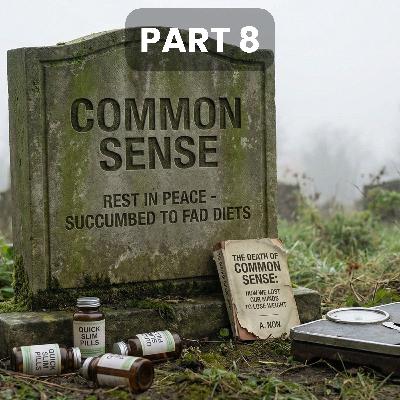
After seven episodes exposing the lies, the traps, and the industry designed to keep you failing, what’s actually left?The answer is almost disappointingly simple. And that’s exactly why it works.In this episode, I’m laying out what common sense actually looks like when you strip away the complexity. No protocols. No tracking. No punishment disguised as discipline.Just the basics that got buried under forty years of diet culture noise.Warning: this will ask something of you. Not another diet. Something harder. The willingness to trust yourself again.In this episode:* The difference between “simple” and “easy” and why it matters* Reconnecting with hunger and satisfaction signals you’ve learned to ignore* Why movement became punishment and how to reclaim it* The question the diet industry will never ask you* Ending the war with your body* Identity: the piece that makes everything else workIf this resonates:Share it with someone who’s tried everything and is ready to try less. This is a public episode. If you would like to discuss this with other subscribers or get access to bonus episodes, visit news.weightlossmindset.co
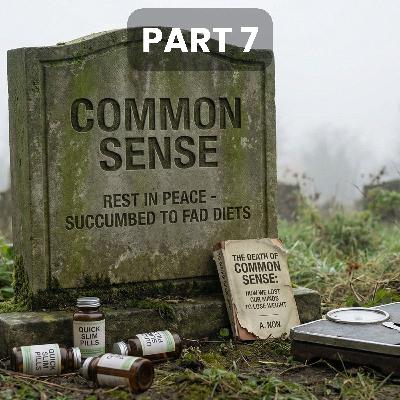
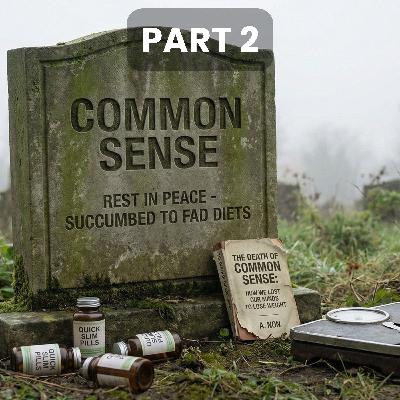
How did common sense die?It didn’t die on its own. It was murdered. Slowly. Deliberately. Profitably.The killer has a name: the diet industry. And its weapon was a single lie, repeated so often we stopped recognizing it as a lie at all. “Eat less and move more.”In this episode, I’m naming the enemy explicitly. The $250 billion machine that profits from your failure. The gaslighting disguised as advice. The system designed to keep you trapped.In this episode:* The lie that broke us: “Eat less and move more”* How a $250 billion industry profits from your failure* The escalation funnel: diets → pills → injections → surgery* Why they keep you focused on food so you never examine your mind* The Willpower Trap—and how it holds youIf this resonates:This is the episode that changes how you see everything. Share it widely. This is a public episode. If you would like to discuss this with other subscribers or get access to bonus episodes, visit news.weightlossmindset.co

We have more nutritional information than any generation in human history. More apps. More trackers. More studies, podcasts, and expert opinions.And we’re more confused, anxious, and disordered than ever.Our grandparents didn’t know what a macronutrient was. They just ate. Now we’re weighing chicken breast to the gram and scanning barcodes like our lives depend on it.In this episode, I’m talking about how information became a prison—and how tracking taught you to distrust yourself.In this episode:* How tracking became obsession* The “hostage situation” of constant calculation* Why experts can’t agree—and why that’s making you crazy* Orthorexia: disorder disguised as optimization* The truth: you already know how to eatIf this resonates:If you’ve ever felt enslaved by your food tracking app, this is your episode. Share it with someone drowning in data.Thanks for reading The Weigh Out (formerly Weight Loss Mindset)! Subscribe for free to receive new posts and support my work. This is a public episode. If you would like to discuss this with other subscribers or get access to bonus episodes, visit news.weightlossmindset.co
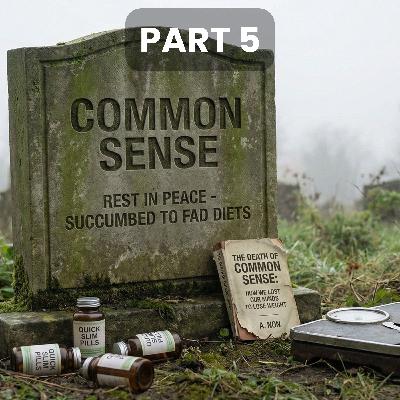
We mock the Victorians for their corsets. The fainting. The deformed ribs. The compressed organs.How barbaric, we think. Thank God we’ve evolved.And then we strap on a waist trainer and call it “shaping.”In this episode, I’m walking through the modern torture devices—the wraps, the trainers, the vibration plates, and yes, the surgeries that remove organs rather than examine thoughts. Nothing has changed. We just have better marketing.In this episode:* Waist trainers: corsets with Instagram accounts* Body wraps and the lie of “melting inches”* Vibration plates: the $500 illusion of effort* Gastric surgery: when we’d rather remove organs than examine beliefs* Why surgery doesn’t reset the thermostat eitherIf this resonates:If you’ve ever considered an extreme intervention, this episode might save you from a painful mistake. Share it with someone who needs perspective. This is a public episode. If you would like to discuss this with other subscribers or get access to bonus episodes, visit news.weightlossmindset.co
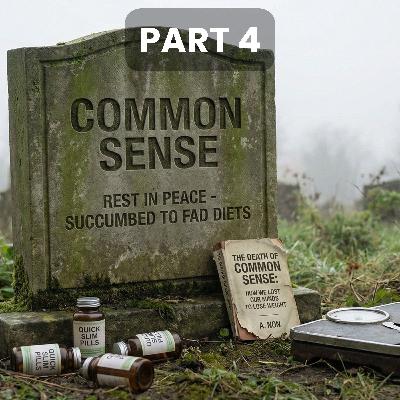
Fat burners. Detox teas. Appetite suppressants. And at the dark end of the spectrum—industrial chemicals that cook people from the inside.Welcome to the chemical casino. Everyone’s gambling. Nobody’s reading the fine print.In this episode, I’m taking you through the unregulated back alley of weight loss—the supplements, the laxatives disguised as “cleanses,” and the terrifying lengths desperate people will go to. Not to scare you. To show you the logical endpoint of the path the diet industry put you on.The casino always wins. The only winning move is to stop playing.In this episode:* What’s actually in “fat burners” (and what they do to your heart)* The truth about detox teas: laxatives with better branding* DNP: the industrial chemical people are still dying from* The escalation ladder: diets → supplements → pharmaceuticals → black market* Why the only winning move is to walk awayIf this resonates:If you’ve ever been tempted by a “quick fix” supplement, you need to hear this. Share it. This is a public episode. If you would like to discuss this with other subscribers or get access to bonus episodes, visit news.weightlossmindset.co

500-calorie diets. Extended fasts. Keto extremism. Carnivore. Juice cleanses.We’ve gotten remarkably sophisticated at starving ourselves. We just gave it scientific-sounding names.Here’s what nobody tells you: every one of these approaches pulls back a slingshot. Biological tension. Psychological tension. And eventually, always eventually, your grip slips. The snapback isn’t a character flaw. It’s physics.In this episode, I’m walking through the museum of modern restriction and showing you exactly why the binge isn’t a failure. It’s a predictable outcome of an unsustainable approach.In this episode:* The 500-calorie diet and the lie of “detox headaches”* Extended fasting: ancestral wisdom or manufactured starvation?* How keto became a religion and why people are afraid of carrots* The slingshot effect: why restriction guarantees snapback* Why the diet industry is counting on your “failure”If this resonates:If you’ve ever blamed yourself for a binge, this episode is your permission slip to stop. Share it with someone who needs to hear it.Thanks for reading The Weigh Out (formerly Weight Loss Mindset)! Subscribe for free to receive new posts and support my work. This is a public episode. If you would like to discuss this with other subscribers or get access to bonus episodes, visit news.weightlossmindset.co
Ozempic. Wegovy. Mounjaro. A few years ago, these were diabetes medications. Today, they’re the hottest weight loss trend on the planet.I understand the pull. After decades of failed diets and shame spirals, someone hands you a needle and says, “This will finally work.” Of course you’re tempted.But what happens when you stop? What message does it send about your body? And why does the weight almost always come back?In this episode, I’m breaking down the injection epidemic—not to shame anyone, but to ask the question nobody’s asking: If the thermostat never changes, what exactly did the needle fix?In this episode:* Why people are fighting for weight loss prescriptions* The side effects nobody talks about* The message the needle sends: “Your body is broken”* Why weight returns when the injections stop* The thermostat metaphor—and why chemistry can’t override identity This is a public episode. If you would like to discuss this with other subscribers or get access to bonus episodes, visit news.weightlossmindset.co
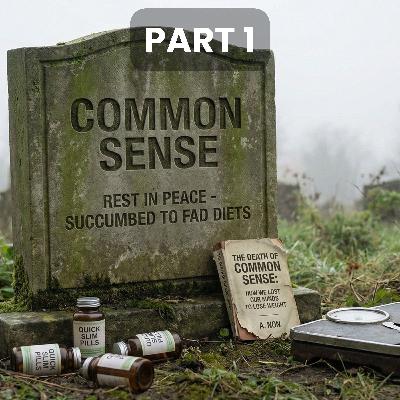
Injecting diabetes drugs to lose weight. Surviving on 800 calories. Wrapping ourselves in plastic. Fasting for days and calling it a "protocol."When did this become normal?In this episode, I'm asking the question nobody wants to ask anymore: Does any of this actually make sense?The answer is no. And that's not an accident.The diet industry didn't just fail us. It broke us. It manufactured our desperation, and then sold us increasingly extreme "solutions" that were never designed to work long-term. They were designed to keep us coming back.Today, we start at the beginning. How we got here. Why we stopped trusting ourselves. And what it's going to take to reclaim the common sense that was stolen from us.In this episode:The absurdity we've normalized in the name of "health"How desperation replaces wisdom and why the diet industry counts on itThe difference between "Does this make sense?" and "Will this finally work?"Why every failure pushed you further from your own judgmentThe rigged game and how to stop playing This is a public episode. If you would like to discuss this with other subscribers or get access to bonus episodes, visit news.weightlossmindset.co
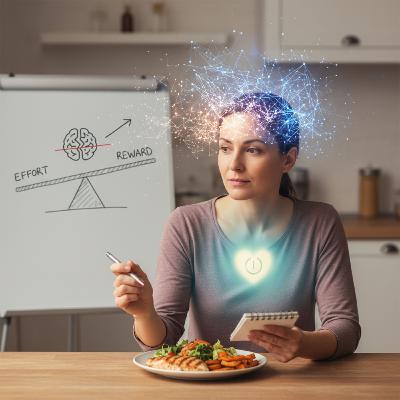
We treat dieting like a reset button. We assume we can wipe the slate clean with a new plan and fresh discipline. But the brain keeps a record. In this episode, we explore the neuroscience of the "Diet Trap" and how chronic restriction creates a "Hunger Highway" that makes food noise louder and willpower weaker. We stop blaming your character and start looking at the engine—specifically, how to shift from a "Red State" of threat to a "Blue State" of safety to finally turn down the noise.Important points discussed:The Willpower Gap: Why you are working twice as hard for half the results compared to ten years ago.The Hunger Highway: How neuroplasticity physically rewires your brain to become efficient at being hungry.Red State vs. Blue State: Understanding why your brain interprets a calorie deficit as a survival threat.The Binge Logic: Why bingeing is not a failure of discipline, but a successful biological rescue mission.Radical Maintenance: The counter-intuitive protocol required to heal the metabolic damage and shut off the alarm bells.Action Step: Stop the deficit. This week, your goal is "Radical Maintenance." Feed your body consistently to convince your brain the famine is over. You cannot rehabilitate a damaged organ while you are still attacking it. This is a public episode. If you would like to discuss this with other subscribers or get access to bonus episodes, visit news.weightlossmindset.co
In this follow-up to our deep dive on Interoception, we tackle the real-world struggles of reconnecting with your body. We discuss why you might feel "numb" when you try to scan your body, why some people feel hungry 24/7 (and what it really means), and whether you can heal your relationship with food while still tracking calories.Key Questions Answered:What if I do the body scan and feel absolutely nothing?Why does it feel like I’m hungry every waking hour?Do I have to delete MyFitnessPal to learn intuitive eating?How do I find the "stop" signal when I’m used to cleaning my plate?I know it’s anxiety, not hunger—but I still want to eat. Now what?Action Step: Try the "Halftime Pause". At your next meal, stop eating when your food is half gone. Put the fork down for two minutes. Don’t look at your phone. Just sit. Give your satiety signal time to travel from your gut to your brain. This is a public episode. If you would like to discuss this with other subscribers or get access to bonus episodes, visit news.weightlossmindset.co
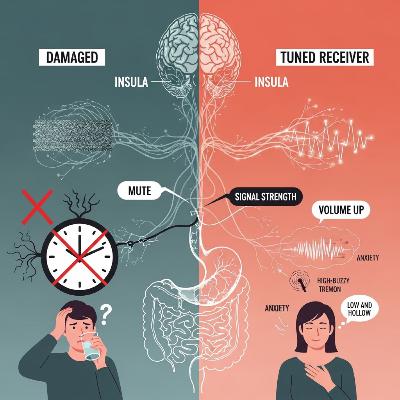
The Somatic Signature of Hunger: Why You Can't Tell When You're Actually HungryEpisode Summary: You’ve been told to "listen to your body" and "eat when you're hungry." But what if you’ve been listening for years and hear absolutely nothing until you’re starving? In this episode, we dismantle the myth of Intuitive Eating for chronic dieters. We explore the neuroscience of interoception, your body’s internal dashboard, and how years of restriction have effectively cut the wire between your gut and your brain.If you feel like you're flying blind without a calorie tracker, this episode explains why and how to turn the lights back on.Important points:The "Deafness" of Dieting: How ignoring hunger signals for years has trained your brain to treat biological cues as background noise.Interoception 101: Understanding the "8th sense" and the role of the Insula in regulating your weight.The Intuitive Eating Trap: Why standard advice to "trust your gut" backfires for dieters who have lost their somatic connection.High & Buzzy vs. Low & Hollow: A practical tool to distinguish between anxiety (nervous system activation) and true biological hunger.Rebuilding the Hardware: Why you need "physical therapy" for your interoception before you can successfully eat intuitively.Action Step: Practice the Non-Food Body Scan three times a day. Stop for 30 seconds and locate a sensation (temperature, pressure, heartbeat) that has nothing to do with food. You are retraining your brain to receive data from the body again. This is a public episode. If you would like to discuss this with other subscribers or get access to bonus episodes, visit news.weightlossmindset.co
In this Q&A, we go deeper into the concept of Identity vs. Discipline. We tackle the specific, messy roadblocks that popped up after Monday’s episode—specifically the fear that identity work is just "delusional" and the exhaustion of the evening binge.Questions Answered:The Evening Crash: Why you have zero discipline after 5:00 PM (and why it’s not your fault).Imposter Syndrome: Is "acting" like a healthy person just lying to yourself?Identity Grief: What happens when your whole personality is tied to being the "funny fat friend"?When It "Fails": I asked the identity question and still ate the cookie. Now what?Starting Small: How to shift identity when you have 100+ lbs to lose.Key Takeaway: Transformation is a grieving process. You have to be willing to "kill" the old version of yourself to give birth to the new one. This isn't just about calories; it's about who you are in the world. This is a public episode. If you would like to discuss this with other subscribers or get access to bonus episodes, visit news.weightlossmindset.co

We are taught that weight loss is a test of character. If you are overweight, society tells you it’s because you lack the willpower to say "no." You likely believe this too. You wake up every Monday promising to be "better," to white-knuckle your way through cravings, and to force your body into submission. But by Friday (or Tuesday night), you’re exhausted, and the binge feels inevitable.In this episode, I’m challenging the holy grail of diet culture: Discipline. I explain why relying on willpower is actually a symptom of a misaligned identity, not a solution. We discuss why discipline is a finite battery that will always fail you when you are tired, and how to shift into an "Identity Mindset" where making healthy choices feels as natural as brushing your teeth.Important points from episode:The Battery Problem: Discipline is a finite resource. Every time you stifle an emotion, focus on a hard task, or say "no" to a donut, you drain the battery. By 8:00 PM, you aren't weak—you are depleted.Identity vs. Acting: Most dieters are "actors" playing the role of a healthy person. It takes immense energy to stay in character. The goal is to stop acting and start being.The Rubber Band Effect: Trying to change your body without changing your identity is like running against a rubber band attached to a post. Eventually, the tension snaps you back. Identity work moves the post.Friction vs. Flow: Discipline asks, "How can I force myself to do this?" Identity asks, "Who do I believe I am?"Action Step: Next time you feel the need to use "discipline" to make a choice, pause. Ask yourself: "What would the version of me who has already succeeded do in this moment?" Borrow that identity for just ten seconds. This is a public episode. If you would like to discuss this with other subscribers or get access to bonus episodes, visit news.weightlossmindset.co

In this Q&A episode, we follow up on our deep dive into Polyvagal Theory to answer your real-life questions about nervous system regulation. We tackle the fear that self-compassion is just "making excuses," practical tips for regulating your anxiety in public, and the terrifying (but necessary) shift away from restriction to stop the binge cycle.Important Points CoveredCan You Be in Two States at Once? Yes. We discuss "mixed states" (like feeling "wired but tired") where you might experience anxiety and numbness simultaneously. The solution isn't a perfect label, but asking: "Do I need to discharge energy or do I need comfort right now?"The Fear of Losing "The Stick" (Shame) We address the common fear that without shame and strict rules, you'll eat everything in sight. We explain why shame is actually a danger signal that keeps the binge cycle going, and why safety is the only environment where true self-control can exist.When the Tools "Don't Work" If you used a somatic tool (like shaking) and still binged, you didn't fail. We reframe this as a win because you created a pause and awareness. Nervous system retraining is about repetition, not immediate perfection.Stealth Regulation for Public Spaces You can't shake your body in a meeting. We offer "Stealth Tools" for social situations, including the "Grounding Press" (feet on floor), the physiological sigh, and using cold water on your wrists to reset the vagus nerve discreetly.Safety vs. Weight Loss We tackle the hard truth: You cannot heal a body you are threatening with restriction. We discuss why prioritizing nervous system safety (stopping the famine signal) is actually the fastest path to stabilizing your weight and ending the binge urge.It is normal to feel scared when you put down the weapon of shame. But remember, you are trading the illusion of control for actual freedom. If you try one of the "Stealth Tools" this week, I'd love to hear how it went! Hit reply to my newsletter or tag me in your stories.Key Takeaway Shame is not a strategy; it is a safety threat. True change only happens when your nervous system feels safe enough to let go of the old patterns. This is a public episode. If you would like to discuss this with other subscribers or get access to bonus episodes, visit news.weightlossmindset.co

In this episode, we explore the biological reason why willpower so often fails in the face of binge eating. We dive into Polyvagal Theory to understand how your autonomic nervous system hijacks your decision-making to keep you safe, explaining why you can't simply "discipline" your way out of a survival response. You'll discover why your body is actually trying to protect you when it demands food, and how to create true safety without relying on the pantry.Important Points CoveredWhy Willpower is No Match for Biology We discuss the uncomfortable truth that binge eating is often a biological safety response, not a character flaw. When your nervous system senses a threat, it shuts down the logical part of your brain (the prefrontal cortex), making it physically impossible to access your "willpower" or long-term goals during a stress response.The Three States of Your Nervous System We break down the "traffic light" system of your body: the Green State (safe and social), the Red State (fight or flight), and the Blue State (freeze or shutdown). You'll learn how to identify which state you are in based on whether you are craving crunchy, aggressive foods (Red State) or soft, comforting foods (Blue State).Reframing the Binge as a Safety Solution Here is the part most people don't want to hear: your bingeing is actually a functional solution your body found to regulate your nervous system. We explain how the physical act of eating massages the Vagus nerve, providing immediate chemical relief from anxiety or numbness, which is why it feels so addictive.The Danger of Restriction We look at why the standard advice to "go on a diet" inevitably backfires for emotional eaters. To your primitive brain, restriction looks like starvation, which acts as a massive danger signal. This pushes you right back into the "Red State," creating a vicious cycle where trying to be "good" actually triggers the next binge.Practical Tools for Somatic Safety We move beyond theory into action with "Somatic Resourcing"—using your body to change your state instead of food. You'll learn specific physical movements to discharge anxious energy (like shaking or pushing) and gentle techniques to wake up from a shutdown (like humming or weighted blankets).Your body has never been your enemy; it has been your protector, working overtime to help you survive stress. If this episode resonated with you, I'd love to hear which "state" you find yourself in most often—Red or Blue? Reply to this week's newsletter. I'll see you Thursday for our Q&A, where we'll dive deeper into how to navigate these nervous system storms in real-time.Key Takeaway Binge eating is not a sign that you are broken or weak; it is a sign that your nervous system is desperately trying to regulate itself to keep you safe. This is a public episode. If you would like to discuss this with other subscribers or get access to bonus episodes, visit news.weightlossmindset.co

When you transform your relationship with food, you don't just change your behaviors - you change who you are. This episode reveals the uncomfortable truth about identity grief: to become someone who naturally takes care of their body, you have to grieve the loss of being "someone who struggles with food." This grief is real, necessary, and completely normal - but no one talks about it.Important Points Covered1. Identity Loss is Real Being "someone who struggles" has served you - it provided sympathy, understanding, community, and explanations for difficulties. Losing this identity, even though it was painful, involves genuine grief.2. Why No One Talks About This The wellness industry focuses on behaviors, not psychology. Grief feels negative when transformation should feel positive. It's easier to sell the destination than prepare people for the complex psychological journey.3. What the Grief Looks Like Missing the simplicity of diet rules, feeling disconnected from friends still in diet culture, losing the "someday" fantasy, and feeling scared about who you're becoming. All normal parts of deep transformation.4. This is Actually Good News Identity grief means you're changing at the deepest level possible. Surface-level changes don't involve grief - only real transformation does. If you're feeling this, the work is working.5. How to Navigate It Name the grief, be gentle with yourself, find support from people who understand identity change, and remember that grief and growth can coexist.If you're experiencing this grief, you're not broken or failing - you're growing. Real transformation involves letting go of who you used to be to become who you're meant to be. Join us Wednesday for the Q&A episode where we'll dive deeper into your questions about navigating identity grief.Key TakeawayIdentity grief during transformation is a sign that deep change is happening. You can miss your old self while still growing into your new self - both feelings can coexist and are completely normal. This is a public episode. If you would like to discuss this with other subscribers or get access to bonus episodes, visit news.weightlossmindset.co


Download from Google Play

Download from App Store
 United States
Really enjoying the insights on this podcast about weight loss mindset! For anyone looking for additional tips and products to support their journey, this site has some great resources: https://vitabella.com/weight-loss
Mindset really is a game changer when it comes to weight loss. Once your thinking shifts, healthy choices and habits become so much easier to maintain. For anyone also looking into medical support alongside mindset work, visit https://www.valleymedicalweightloss.com/ — they offer doctor-supervised programs with injections, medications, and pills to help you reach your goals.
It's great to see that such things simply exists. If you take me for example as a person who struggles with additional and redundant weight and seek to do everything like https://sema.bio to loose weight, well for me such podcasts are important in terms that i can finally have needed mindset to quickly loose my weight. So thanks