


 Claim Ownership
Indian Geopolitics & Defense
Subscribed: 1Played: 7
Subscribe

© Indian Geopolitics & Defense
Description
Indian Geopolitics & Defense is your definitive source for high-level strategic analysis of global affairs through an Indian lens. In an era of shifting global orders, trade wars, and military modernization, we decode the "Dark Side" of power politics and what it means for Bharat’s future.
In 2026, as the world navigates the complexities of a new US administration, the expansion of BRICS, and the rising tensions in the Indo-Pacific, this podcast pulls back the curtain on the hidden machinery of international relations.
What we cover:
National Security & Defense: Deep dives into India’s indigenous military tech (Atmanirbhar Bharat), the LAC standoff, and maritime strategy in the Indian Ocean.
Strategic Autonomy: Analyzing how South Block balances ties between the West and the Global East while maintaining "India First" policies.
Geopolitical History: Connecting historical flashpoints to modern-day conflicts to understand the "why" behind the news.
Global Conflict Zones: Real-time analysis of the Middle East, Ukraine, and the South China Sea from a New Delhi perspective.
Whether you are a defense aspirant, a student of international relations, or a citizen interested in India's rise as a global superpower, join us as we analyze the moves on the world’s greatest chessboard.
Subscribe to stay ahead of the curve. New episodes Daily.
Daily current affairs
The Hindu anylisis
Daily news
Geopolitics hindi
Geopolitics news daily
Defence news daily
Defence news
In 2026, as the world navigates the complexities of a new US administration, the expansion of BRICS, and the rising tensions in the Indo-Pacific, this podcast pulls back the curtain on the hidden machinery of international relations.
What we cover:
National Security & Defense: Deep dives into India’s indigenous military tech (Atmanirbhar Bharat), the LAC standoff, and maritime strategy in the Indian Ocean.
Strategic Autonomy: Analyzing how South Block balances ties between the West and the Global East while maintaining "India First" policies.
Geopolitical History: Connecting historical flashpoints to modern-day conflicts to understand the "why" behind the news.
Global Conflict Zones: Real-time analysis of the Middle East, Ukraine, and the South China Sea from a New Delhi perspective.
Whether you are a defense aspirant, a student of international relations, or a citizen interested in India's rise as a global superpower, join us as we analyze the moves on the world’s greatest chessboard.
Subscribe to stay ahead of the curve. New episodes Daily.
Daily current affairs
The Hindu anylisis
Daily news
Geopolitics hindi
Geopolitics news daily
Defence news daily
Defence news
40 Episodes
Reverse

The wall of secrecy has finally crumbled, but the debris is hitting the wrong people. On January 30, the DOJ released over 3 million additional pages, 2,000 videos, and 180,000 images. While the world looked for "the list," what they found was a shocking failure of government oversight.This episode includes AI-generated content.
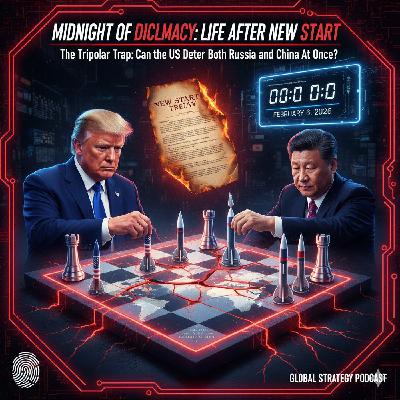
We have entered uncharted and dangerous territory. At midnight GMT on February 5, the final pillar of the global nuclear order crumbled.This episode includes AI-generated content.
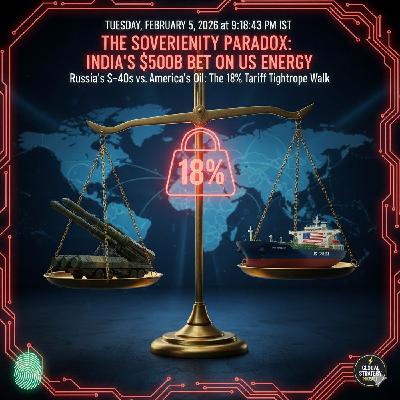
Strategic autonomy is being tested like never before. After a year of 50% "killer tariffs," India has secured an 18% reset—but at what cost to its oldest friendship?This episode includes AI-generated content.
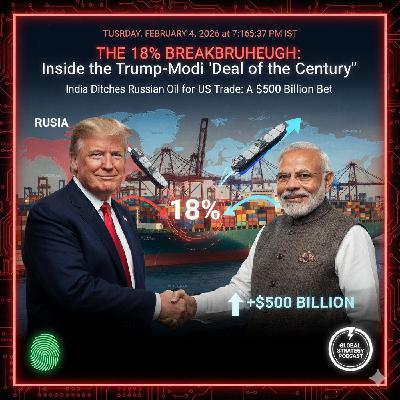
The "Mover and the Shaker" have reset the global board. On Monday, February 2, the U.S. and India effectively ended their trade war, slashing duties on "Made in India" goods to 18%. But the headline masks a massive geopolitical trade-off: Trump claims India has finally agreed to dump Russian crude.This episode includes AI-generated content.
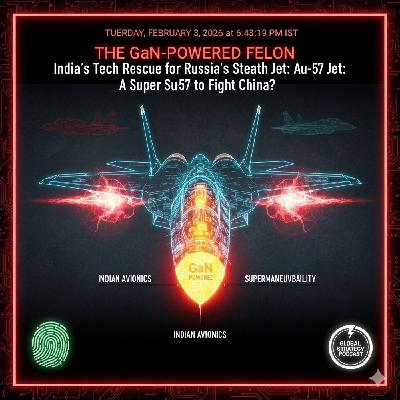
The "Great Stealth Debate" has shifted. This week, we analyze the advanced technical talks between New Delhi and Moscow for the joint production of a customized Su-57E. While critics say the Russian jet lacks true stealth, the Indian Air Force has a plan to fix its "blind spots" with indigenous innovation.This episode includes AI-generated content.
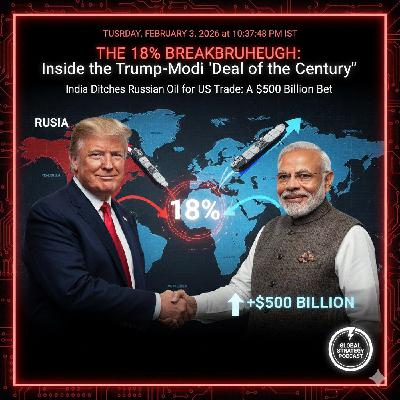
The "Mover and the Shaker" are back at the table. On Monday, February 2, the U.S. and India announced a sweeping trade deal that ends months of "Maximum Pressure" and 50% punitive tariffs. But is this a gift of friendship, or a high-stakes pivot away from Moscow?This episode includes AI-generated content.
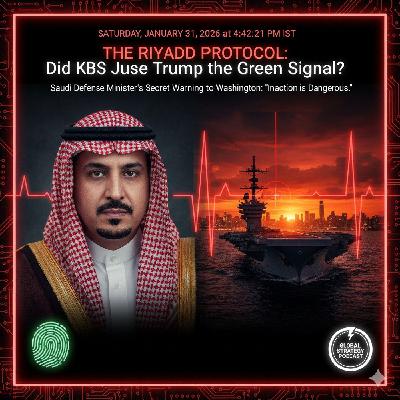
The diplomatic mask is slipping. While official statements from Riyadh emphasize sovereignty and peace, leaked reports of private briefings in Washington suggest a massive shift in the Kingdom's calculus. In this deep-dive: The "KBS" Briefings: We break down the Axios report on Saudi Defense Minister Prince Khalid bin Salman (KBS). In private meetings with the Trump administration this week, KBS reportedly warned that "inaction" would only strengthen the Iranian regime. Is this the definitive "green signal" for military strikes? The MBS Paradox: We analyze the contrast between public and private diplomacy. On Tuesday, Crown Prince Mohammed bin Salman told the Iranian President he wouldn't allow Saudi land to be used for strikes. Why is Riyadh playing both sides of the fence? The "Regime Change" Fever: We look at reports that President Trump is specifically weighing "targeted strikes" on security forces to empower protesters. Is the U.S. planning to "be the air force" for a second Iranian revolution? The Oil Chokepoint: With Brent Crude already hitting $70.71, we look at the threat of an Iranian "Total Blockade" of the Strait of Hormuz. If the U.S. strikes, will Tehran take the global economy down with it? The "Abraham Lincoln" Positioning: As the carrier strike group reaches the North Arabian Sea, we examine its "Aegis" capabilities. Is the fleet there to attack, or to protect Saudi oil fields from the inevitable Iranian drone retaliation?This episode includes AI-generated content.
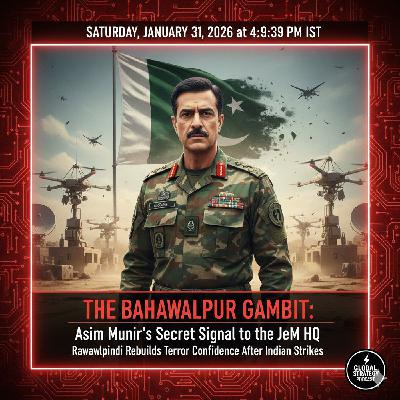
Namaste. The dust from Operation Sindoor has barely settled, but Rawalpindi is already back at the scene. This week, Field Marshal Asim Munir landed in Bahawalpur, the historic epicenter of Jaish-e-Mohammed (JeM), sending a clear signal to both his "non-state assets" and New Delhi. In this deep-dive: The Symbolic Return: We analyze why Munir chose Bahawalpur for his first post-strike visit. After the 2025 Indian missile strikes tore through the JeM’s Markaz Subhan Allah headquarters, the militant network was in tatters. Is this visit an official "reassurance tour" for the terror rank-and-file? "Steadfast Resolve" or Steadfast Terror? We look at the military exercises conducted during the visit. While the Army showcased drones and electronic warfare, experts argue the real "exercise" was proving the Pakistan Army still protects its "strategic assets" in Southern Punjab. The "Sindoor" Fallout: We revisit the May 2025 strikes that reportedly killed top JeM commanders. We discuss the leaked reports that Munir previously ordered senior officers to attend the funerals of these terrorists—a move he is now reinforcing with his physical presence. The Multi-Domain Mask: Munir spoke about "technology replacing physical maneuvers." We decode this: Is Pakistan moving toward a "Cyber-Terror" model to bypass India’s superior conventional borders? India’s Counter-Watch: We examine the reaction from New Delhi. With Indian intelligence reportedly monitoring the visit in real-time, is another "surgical" response being calibrated?This episode includes AI-generated content.
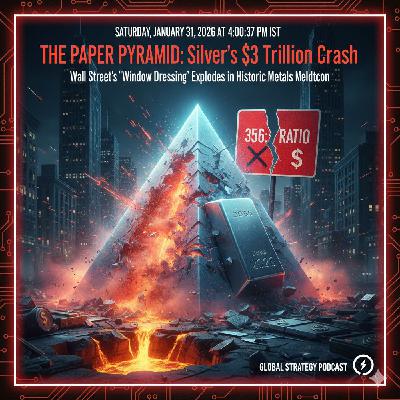
Namaste. We just witnessed the most violent 24 hours in the history of the London and New York metal exchanges. While gold hit $5,600 and silver touched $121 on Thursday, the "Paper Market" revolted on Friday, sending prices into a freefall that many are calling blatant systemic manipulation. In this deep-dive: The 356-to-1 Trap: We break down the staggering leverage. For every 1 ounce of physical silver in a vault, there are now 356 paper claims on that same ounce. We look at why banks flooded the market with "synthetic supply" to prevent a total delivery default. Month-End "Window Dressing": We expose the banking strategy. With the January 31 "liquidity audits" looming, major U.S. banks reportedly used massive short derivatives to drive down prices, allowing them to balance their books without admitting they lack physical reserves. The China Factor: On January 1, 2026, China banned all silver exports. We analyze how this "Silver Iron Curtain" has left Western exchanges like the COMEX and LBMA in a terminal supply deficit, forcing them to rely on paper "hallucinations" to set the price. The Two-Tier Market: Why is silver "crashing" to $107 on your screen while physical coins are still selling for $130+? We explain the "Great Decoupling" and why the "Spot Price" has become a fictional number for the banking elite. The Kevin Warsh Catalyst: We look at the political trigger. Did Trump’s nomination of Kevin Warsh to the Fed provide the "hawkish" cover the banks needed to trigger the mass liquidation of leveraged long positions? Is this the final desperate act of a failing banking system, or did the "Silver Squeeze" just hit a permanent wall of paper? Let’s look at the vault data.This episode includes AI-generated content.

Recent news reports describe a **dangerous escalation in tensions** between the United States and Iran following a period of intense civil unrest. After a **violent crackdown** on domestic protesters resulted in thousands of deaths, President Donald Trump deployed a **massive naval armada** to the region and issued a two-month deadline for a new nuclear agreement. While Washington weighs options ranging from **surgical strikes on leadership** to a full naval blockade, Tehran has declared a state of **maximum military readiness**, threatening to strike Tel Aviv in retaliation. International mediators and regional allies have urged restraint, citing the risk that a **preemptive US strike** could trigger a catastrophic, multi-front war. Meanwhile, the Iranian government continues to struggle with **severe economic instability** and internal dissent, even as it moves its nuclear facilities deeper underground to avoid detection. This volatile standoff reflects a shift in American policy toward **active regime change** as the deadline for diplomatic negotiations rapidly approaches.This episode includes AI-generated content.

Namaste. We are officially in the "European Decade" for India. While the U.S. Treasury claims its tariffs are a success, the rest of the world has decided it’s tired of waiting for the storm to pass and has started building a new house. In this deep-dive: The "Indignity" from Washington: We break down the scathing response from Treasury Secretary Scott Bessent, who accused Europe of "financing the war against themselves" by signing a deal with India. We analyze why the Trump administration feels "undercut" by its closest allies. The Third Pole Strategy: This isn't just about chemicals and cars. We explore how the India-EU Strategic Partnership is creating a "Third Pole" in global trade—a reliable, rules-based alternative that doesn't force nations to choose between Washington's tariffs or Beijing's influence. The Turkey Trap: A technical but critical look at Trade Diversion. Because Turkey is in a customs union with the EU, this deal could flood their markets with Indian goods they aren't ready for. Is Ankara about to become the deal's first "accidental victim"? Regulatory Imperialism? We tackle the biggest hurdle remaining: CBAM (Carbon Border Adjustment Mechanism). Even with 0% tariffs, can Indian SMEs survive the EU's strict environmental "non-tariff barriers"? The Multipolar Map: With the EU-Mercosur deal also finalized this month, we ask: Is the United States becoming a "Geopolitical Island"? Brussels and New Delhi just proved that strategic autonomy isn't just a slogan—it’s a contract. Let’s look at the fallout.This episode includes AI-generated content.
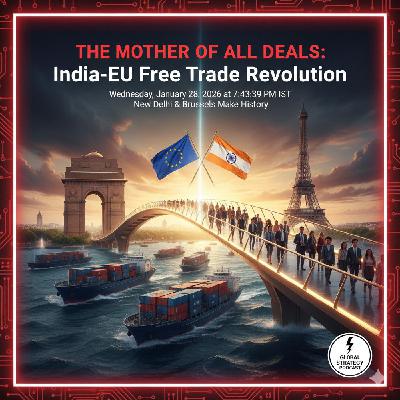
Namaste. History was made on Tuesday, January 27, in New Delhi. Prime Minister Modi and EU Commission President Ursula von der Leyen have finalized a deal that doesn't just cut tariffs—it reorders the global economic map. In this deep-dive: The Tariff Massacre: We analyze the numbers. With the EU eliminating duties on 99.5% of Indian exports, sectors like textiles, apparel, and chemicals are moving into a zero-tax regime. We look at why the "Made in India" tag is about to become the dominant force in the $263 billion European fashion market. The Mobility Game-Changer: Beyond goods, we explore the Comprehensive Framework on Mobility. With the U.S. making H1-B visas more expensive, the EU is opening a "Fast-Track Gateway" for Indian students and STEM professionals. Is Europe the new "Land of Opportunity"? Strategic Insulation: We discuss the "Trump Factor." As Washington doubles down on 50% tariffs and protectionism, India has built a massive economic shield with the world's largest trading bloc. Has the U.S. lost its leverage? Winners vs. Losers: It’s not all smooth sailing. We look at the "quota systems" for European cars and wines. How will Indian automakers survive the drop in import duties from 110% to 10%? The Green Engine: We break down the €500 million climate fund attached to the deal. This is more than trade; it’s a partnership for the next century of clean energy and digital tech.This episode includes AI-generated content.
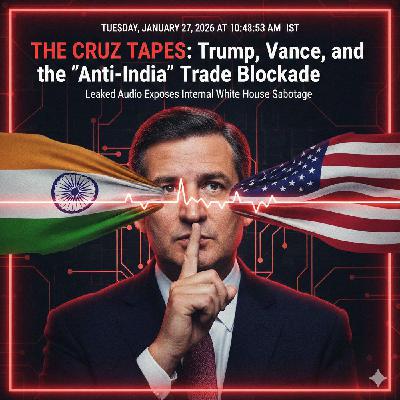
The "Special Relationship" just hit a wall of leaked audio. We’re breaking down the Axios report that captures Senator Ted Cruz telling donors he is "battling" a White House that seems increasingly hostile to India’s rise. In this deep-dive: The Leaked Audio: We analyze the recording where Ted Cruz names JD Vance, Peter Navarro, and "sometimes" President Trump as the specific figures stalling the India trade deal. Is there a genuine "anti-India bias," or is this a purely protectionist calculation? Navarro’s "Vampire" Rhetoric: We examine the resurfaced comments from White House adviser Peter Navarro, who dubbed India the "Maharaja of Tariffs" and compared BRICS trade practices to "vampires sucking our blood dry." How do these views impact real-world policy in 2026? The 2026 Midterm Warning: In the audio, Cruz warns Trump that these 50% tariffs will lead to losing the House and Senate this November. We look at the data—is the "Liberation Day" tariff strategy alienating the American middle class? India’s "Mother of All Deals": While the U.S. stalls, New Delhi is moving on. We cover the historic conclusion of the India-EU Free Trade Agreement set to be announced this week. Is Europe replacing America as India's primary Western partner? The 2028 Chessboard: We discuss the political subtext. Is Ted Cruz using this leak to position himself as the "pro-India, pro-growth" alternative for a 2028 Presidential run?This episode includes AI-generated content.
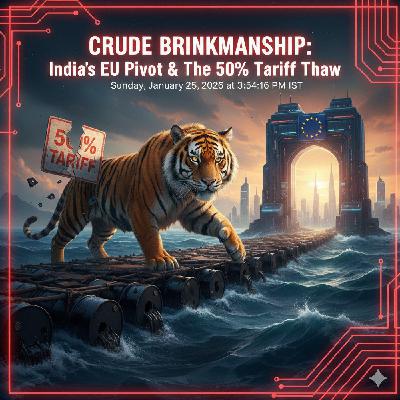
Namaste. We are witnessing a high-stakes "Realignment" in real-time. Just days after the Davos 2026 summit, the frozen diplomatic pipes between Washington and New Delhi are starting to rattle. In this deep-dive: The Tariff Pivot: U.S. Treasury Secretary Scott Bessent has signaled a "path" to removing the punitive 25% "penalty" tariff on Indian goods. We analyze why the U.S. is claiming a "major success" now that Indian refineries have significantly cut Russian oil purchases. The 50% Reality Check: While relief may be coming, Indian exports currently still face a staggering 50% total tariff (25% reciprocal + 25% Russian oil penalty). We look at the "Moradabad Crisis" where traditional Indian industries are fighting for survival. The EU Alternative: As the U.S. deal remains elusive, India is set to seal a historic Free Trade Agreement with the European Union on January 27. Could this "mother of all deals" permanently shift India’s export reliance away from North America? The COMPACT Core: Behind the trade war, the U.S.-India COMPACT remains the bedrock. We explore why both nations are still moving forward with joint production of Javelin missiles and F-35 fighter jet negotiations despite the tariff headlines. The Davos "Good Deal" Promise: We deconstruct President Trump’s recent remarks in Switzerland, where he predicted a "great" deal with India. Is this genuine optimism or a tactical move to keep India from drifting too far into the EU’s orbit? Is India’s "Strategic Autonomy" being rewarded with a de-escalation, or is the 500% tariff threat still lurking in the background? Let’s look at the data.This episode includes AI-generated content.
Namaste. The world is watching the most volatile 72 hours in U.S.-Iran relations since the 1979 Revolution. While the streets of Tehran have gone silent under the weight of a massive security presence, the waters of the Middle East are screaming with activity. In this deep-dive: The "Betrayal" Narrative: We analyze the heartbreaking shift for demonstrators. After President Trump promised to "rescue" the people, why did the White House blink on January 14? We explore the internal deliberations that prioritized "strategic submission" over "regime change." The Lincoln Goes Dark: We track the USS Abraham Lincoln Strike Group. On January 20, the carrier turned off its tracking systems and entered the Indian Ocean at a high-speed 20-knot sprint. Is this a bluff, or is the U.S. preparing for a "Operation Midnight Hammer" sequel? The Internet Blackout Massacre: Under the cover of a nationwide digital shutdown, activists report casualty figures between 4,000 and 20,000. We discuss the regime's "genocidal" campaign to end the largest uprising in 40 years. The Trade Bazooka: Forget sanctions. Trump is now threatening a 25% global tariff on any nation—ally or foe—that provides an economic lifeline to Tehran. Is this the final nail in the coffin for the 2015 Nuclear Deal? Strategic Uncertainty: As the UK triggers "snapback" sanctions and Israel prepares for a "surprise war," we ask: Has the U.S. created a "Pyrrhic victory" for the regime, or a trap for its own allies? Is the U.S. waiting for the right moment to strike, or has the "Volatile Doctrine" left Iran's protesters to stand alone? Let’s look at the movement of the fleet.This episode includes AI-generated content.
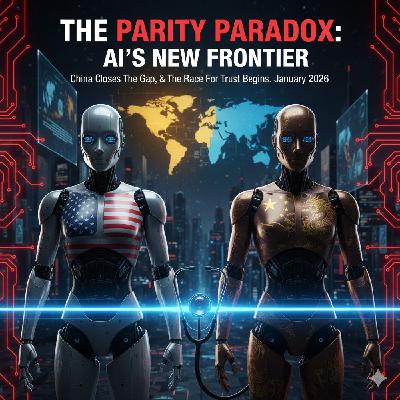
Namaste. The race for the "Artificial Frontier" has entered a new, denser chapter. The Stanford AI Index Report 2025 confirms that the era of runaway American dominance is being replaced by a state of "Performance Parity." In this episode, we break down the newest data points: The Convergence Effect: We explore why leading models are now "converging" at the frontier. When every top-tier AI scores 90%+ on benchmarks, does the winner move from the creator to the implementer? Real-World ROI: Corporate adoption didn't just grow; it matured. We look at the data showing 71% of businesses now use Generative AI daily—but why are many still struggling to see the "bottom line" impact? AI vs. MD: We dive deep into the clinical diagnostic section of the report. How did foundation models assist in 10x faster drug discovery cycles this past year, and why are standalone systems out-diagnosing human-led teams in complex cases? The Legal Lockdown: We analyze the surge in copyright lawsuits and training data restrictions. As the "human-generated" data pool shrinks, who wins the battle for the remaining high-quality tokens? A World Divided: We contrast the "Optimism Surge" in India, China, and Brazil with the "Skepticism Shield" in the U.S. and EU. How will these differing public sentiments shape national policy and regulation in 2026? Is the "Intelligence Gap" officially closed, or is the U.S. preparing a secret leap that the 2025 benchmarks simply can't measure? Let’s find out.This episode includes AI-generated content.
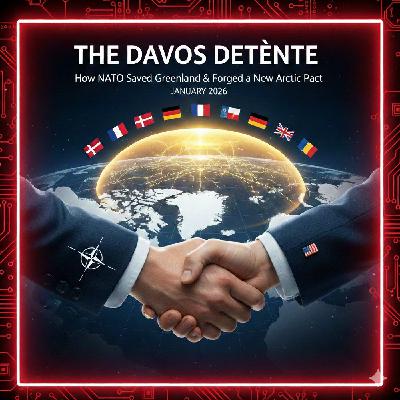
Namaste. The "Greenland Crisis" just took a massive turn in the Swiss Alps. On January 21, 2026, the world watched as President Trump stood at the World Economic Forum in Davos and backed away from the brink of a historic transatlantic rupture. In this episode, we break down the high-stakes resolution: The "Future Deal" Framework: We analyze the closed-door meeting between Trump and NATO Secretary-General Mark Rutte. How did a handshake in Davos replace a 25% tariff threat with a promise of "cooperation"? The "Golden Dome" Shield: Trump insists that U.S. "ownership" is the only way to build a continental missile defense system. We explore the strategic reality of the Pituffik Space Base and the proposal for an "Arctic Sentry" mission. The 1951 Update: Is sovereignty actually on the table? We look at the plan to modernize the 1951 Defense Agreement to block Chinese and Russian investment while keeping the Danish flag flying over Nuuk. The Retreat from Force: We examine why Trump officially ruled out military action, just days after 10,000 U.S. personnel were put on high alert. Was it the 73% disapproval rating in U.S. polls or the EU's €93 billion retaliatory list? A Broken Alliance? Even with the tariffs suspended "for now," we ask if the trust between Washington and its European allies has been irreparably damaged by the "Greenland Ultimatum." Did Trump just secure "total access" to the Arctic, or did Europe’s refusal to blink save NATO? Let’s debate the outcome.This episode includes AI-generated content.

Namaste. Something historic is happening in the vaults of the world's central banks. On January 15, 2026, the U.S. Treasury released data that confirmed our biggest fears: China has slashed its holdings to a 17-year low, and India has dumped over $50 billion in U.S. debt in a single year. In this deep-dive: The Great Diversification: Why the Reserve Bank of India (RBI) is aggressively shifting its $685 billion reserve away from "weaponized" dollars toward 880 metric tonnes of physical gold. The China Exit: We analyze Beijing’s retreat to just $682 billion in Treasuries—the lowest since the 2008 financial crisis. Is this an "Optimization" strategy or a preparation for a complete economic rupture? The $5,000 Gold Target: With gold hitting an all-time high of $4,967 this week, we examine why J.P. Morgan and other analysts are now eyeing the $6,000 mark as central banks treat bullion as "geopolitical insurance." The Counter-Holders: While the East exits, Japan ($1.2 Trillion) and the UK ($888 Billion) are doubling down. We explain the "Intermediary" trap and why these nations are now the primary pillars holding up the American bond market. Economic Resilience: Is the "Ponzi" narrative of U.S. debt sustainability finally reaching a tipping point? We look at the diverging paths of a global economy splitting into two distinct financial camps. Is the U.S. Dollar losing its "Safe Haven" status forever, or is this just a temporary rebalancing? Let’s look at the numbers.This episode includes AI-generated content.

Namaste. On January 22, 2026, the spirit of the game met the reality of geopolitics. After weeks of tension, the Bangladesh Cricket Board (BCB) officially withdrew from the T20 World Cup, refusing to step foot in India. In today’s episode, we break down: The Great Withdrawal: We explore the official exit of the Tigers. Why did the BCB reject the ICC’s security assurances, and how did Mustafizur Rahman’s IPL exit become the "Archduke Ferdinand moment" for this crisis? Scotland’s Cinderella Moment: With Bangladesh out, Scotland has been drafted from the reserves. We analyze what this means for the tournament’s competitive balance and the Tartan Terriers’ sudden path to glory. The "Pressure Index" Revolution: We step away from the politics to look at the math. We breakdown the latest research using Markov models to quantify "choke points" in T20 run chases. Can this index help a team like Pakistan—who will be playing their games in Sri Lanka—handle the mental load of neutral venues? Hybrid Hosting: Pakistan has successfully negotiated a "Hybrid Model," staying in Sri Lanka for their group stages. Is this the end of the "Single Host" era for major ICC events? The Solidarity Debate: As forum discussions heat up, we ask: Is a wider boycott coming? We look at the diplomatic pressure mounting on other boards to take a stand. Is cricket still "the gentleman’s game," or has it become a pawn in a larger geopolitical chess match? Let’s talk strategy below.This episode includes AI-generated content.
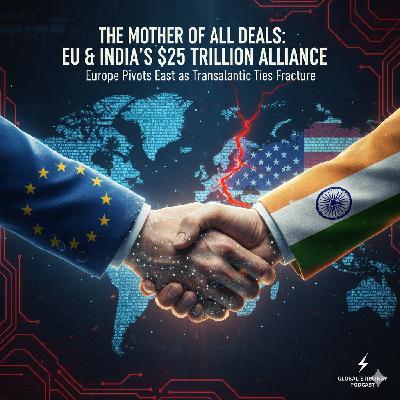
Namaste. In January 2026, the global trade map was redrawn in a single week. While Washington issued ultimatums over Greenland, Brussels did the unthinkable: it froze the U.S. trade deal and turned its gaze East. In this episode, we decode: The Turnberry Freeze: Why the EU Parliament just voted to halt all industrial tariff removals for the U.S. after Trump’s February 1 "Greenland Deadline." The €93 Billion "Big Bazooka": We look at the legal trigger of the Anti-Coercion Instrument and the retaliatory list that is already sending shockwaves through Wall Street. The India "Masterstroke": European Commission President Ursula von der Leyen just called the India-EU FTA the "Mother of All Deals." We explore why this pact—covering one-quarter of global GDP—is being fast-tracked for the January 26 Republic Day Summit. Economic Defense: How the European Central Bank is bracing for a trade war with rate cuts, and why the Euro is surprisingly holding its ground against a volatile Dollar. Strategic Autonomy: Is this Europe’s final exit from the American "Security Umbrella"? We discuss the historic shift from a "Transatlantic" to a "Eurasian" economic strategy. Is Europe finally standing on its own two feet, or is it trading one dependency for another? Let’s discuss.This episode includes AI-generated content.

Comments

Download from Google Play

Download from App Store
 United States