


 Claim Ownership
Today's Catholic Mass Readings
Subscribed: 380Played: 64,840
Subscribe

© Copyright 2026 All rights reserved.
Description
For latest Catholic News, please visit us at https://www.wiredcatholic.com
This podcast contains today's mass readings from the US Catholic Conference of Bishops. The official USCCB podcast feed contains many future podcasts which requires you to scroll through a month's worth of podcasts to today's reading only. This feed only downloads the podcast of the day so today's reading will appear on top of the list. The script is based on the user's timezone so it will work globally. Please note that the USCCB podcasts are downloaded directly from the USCCB website - this feed's only purpose is ease of use and better organization in your podcast player while minimizing bandwidth by downloading only one podcast at a time. As a bonus, the show notes display the full bio of the Saint of the Day from CNA and provides a link to the full text of the readings.
If you get the wrong day's podcast you can unsubscribe from this podcast and subscribe to one of the following based on whether you are the same day, or one day ahead or one day behind the timezone of the podcast server (based in United States):
Next Day : https://www.wiredcatholic.com/todaysmassreadings+1.xml
Same Day : https://www.wiredcatholic.com/todaysmassreadings+0.xml
Previous Day: https://www.wiredcatholic.com/todaysmassreadings-1.xml
Regular Autodetect Feed: https://www.wiredcatholic.com/todaysmassreadings.xml
**************
Change Log/Feedback to Comments and Reviews:
2025-12-31 Script broke in November requiring rewrite to python. Sorry to all the users out there! But it's back up and running now. Merry Christmas and Happy New Year!
2025-03-18 Fixed Saint of the Day chapter picture. Yes I know it's been broken way too long. This should be a more durable fix.
2023-08-11 Some refactoring. Added etag header. Add Saint Picture as episode picture, notes.
2023-07-20 Fixed Saint of the Day chapter picture.
2023-03-02 Fixed the revised date format which occurred on 3/1/23 for the Mp3 which prevented downloading the link.
2023-02-04 Fixed the revised date format to the mp3 name which occurred on Feb 1. 2023 breaking the feed and resulting in 3-4 days of lost mass podcasts. Please note that have no way of responding to the reviews other than this changelog. I use the feed daily so I will usually know when it breaks but it takes me a couple of days to find the time to fix it. Keep in mind I do this in my spare time. It takes me several hours to fix these bugs. When this happens, until it is fixed please visit the USCCB site directly to get the mass podcast online at https://bible.usccb.org/daily-bible-reading. Or if you use Podcast Addict you can click transcript button from any previously working episode and that will open your browser to the correct USCCB page. Then click the forward arrow to advance to the cuurent day. This feed will usually be fixed within a couple of days.
2022-12-10 Fixed chapter Saint of Day Pics. Fixed geo dating.
2022-12-07 Fixed broken Saint of the day url and broken feed.
2022-02-05 Improved Image Getting for chapters. Deleted CNA Code.
2022-01-30 Fixed Saint Picture of Day so fallback is whats on Franciscan page
2022-01-28 Fixed some XML validation issues
2021-11-13 Fixed some XML/itunes validation issues
2021-11-05 Added Saint of the Day Picture for Podcast 2.0 as players: podcast: chapter, added podcast:transcript linked to reading
2021-04-11 Fixed typos and Saint of Day link
2021-04-08 - Fixed timezone error catching; fixed saint of the day error, added alternative saint of the day link (Franciscan media).
9-16-20 - Fixed Dead MP3 Links Broken By USCCB Website Rewrite, Prior Episodes Restarted as of 9-16-20 ]
8-12-20 - Added prior episodes per listener request]
*******
94 Episodes
Reverse
Full Text of Readings
Wednesday of Holy Week Lectionary: 259
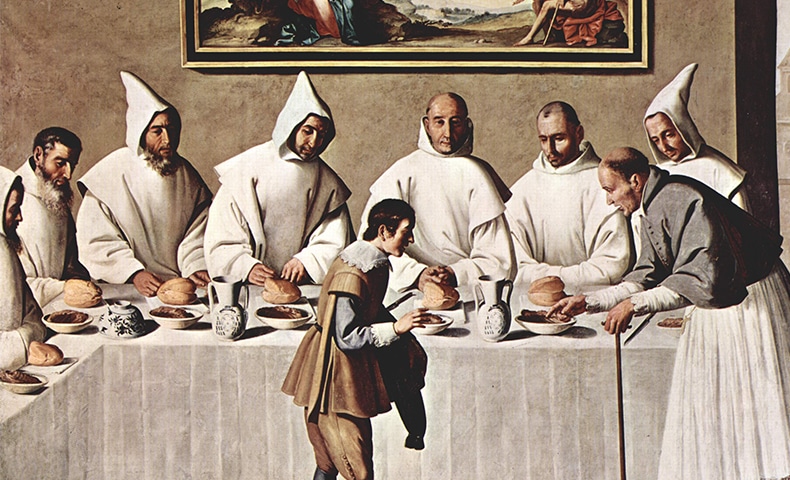
The Saint of the day is Saint Hugh of Grenoble
Saint Hugh of Grenoble’s Story
Today’s saint could be a patron for those of us who feel so overwhelmed by all the problems in the world that we don’t know where to begin.
Hugh, who served as a bishop in France for 52 years, had his work cut out for him from the start. Corruption seemed to loom in every direction: the buying and selling of Church offices, violations of clerical celibacy, lay control of Church property, religious indifference and/or ignorance. After serving as bishop for two years, he’d had his fill. He tried disappearing to a monastery, but the pope called him back to continue the work of reform.
Ironically, Hugh was reasonably effective in the role of reformer—surely because of his devotion to the Church but also because of his strong character. In conflicts between Church and state he was an unflinching defender of the Church. He fearlessly supported the papacy. He was eloquent as a preacher. He restored his own cathedral, made civic improvements in the town, and weathered a brief exile.
Hugh may be best known as patron and benefactor of Saint Bruno, founder of the Carthusian Order. He died in 1132, and was canonized only two years later.
Reflection
In the midst of our confusing life these days, let us pray for the ability to rise above the fray and to see things in the light of faith as did Saint Hugh.Saint of the Day, Copyright Franciscan Media
Full Text of Readings
Tuesday of Holy Week Lectionary: 258
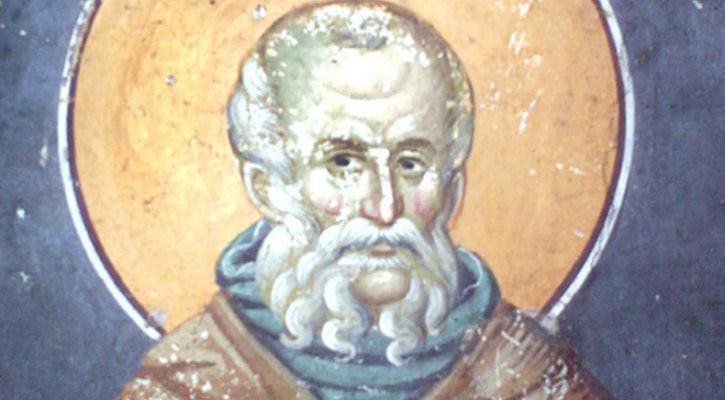
The Saint of the day is Saint Stephen of Mar Saba
Saint Stephen of Mar Saba’s Story
A “do not disturb” sign helped today’s saint find holiness and peace.
Stephen of Mar Saba was the nephew of Saint John Damascene, who introduced the young boy to monastic life beginning at age 10. When he reached 24, Stephen served the community in a variety of ways, including guest master. After some time he asked permission to live a hermit’s life. The answer from the abbot was yes and no: Stephen could follow his preferred lifestyle during the week, but on weekends he was to offer his skills as a counselor. Stephen placed a note on the door of his cell: “Forgive me, Fathers, in the name of the Lord, but please do not disturb me except on Saturdays and Sundays.”
Despite his calling to prayer and quiet, Stephen displayed uncanny skills with people and was a valued spiritual guide.
His biographer and disciple wrote about Stephen: “Whatever help, spiritual or material, he was asked to give, he gave. He received and honored all with the same kindness. He possessed nothing and lacked nothing. In total poverty he possessed all things.”
Stephen died in 794.
Reflection
Saint Stephen of Mar Saba knew the value of solitude. Even though he was generous and served whoever came to him, he relished his time alone. Maybe we can learn from him the value of solitude and seek it out a little more in our lives.Saint of the Day, Copyright Franciscan Media
Full Text of Readings
Monday of Holy Week Lectionary: 257
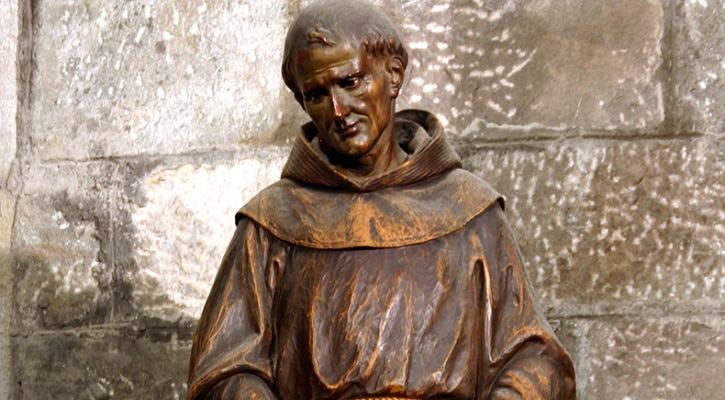
The Saint of the day is Saint Peter Regalado
Saint Peter Regalado’s Story
Saint Peter Regalado lived at a very busy time in history. The Great Western Schism (1378-1417) was settled at the Council of Constance (1414-1418). France and England were fighting the Hundred Years’ War, and in 1453, the Byzantine Empire was completely wiped out by the loss of Constantinople to the Turks. At Peter’s death, the age of printing had just begun in Germany, and Columbus’s arrival in the New World was less than 40 years away.
Saint Peter Regalado came from a wealthy and pious family in Valladolid, Spain. At the age of 13, he was allowed to enter the Conventual Franciscans. Shortly after his ordination, he was made superior of the friary in Aguilar. He became part of a group of friars who wanted to lead a life of greater poverty and penance. In 1442, he was appointed head of all the Spanish Franciscans in his reform group.
Peter led the friars by his example. A special love of the poor and the sick characterized Saint Peter Regalado. Miraculous stories are told about his charity to the poor. For example, the bread never seemed to run out as long as Peter had hungry people to feed. Throughout most of his life, Peter went hungry; he lived only on bread and water.
Immediately after his death on March 30, 1456, his grave became a place of pilgrimage. Peter was canonized in 1746.
Reflection
Peter was an effective leader of the friars because he did not become ensnared in anger over the sins of others. Peter helped sinning friars rearrange the priorities in their lives and dedicate themselves to living the gospel of Jesus Christ as they had vowed. This patient correction is an act of charity available to all Franciscans, not just to superiors.Saint of the Day, Copyright Franciscan Media
Full Text of Readings
Palm Sunday of the Lord's Passion Lectionary: 37 and 38
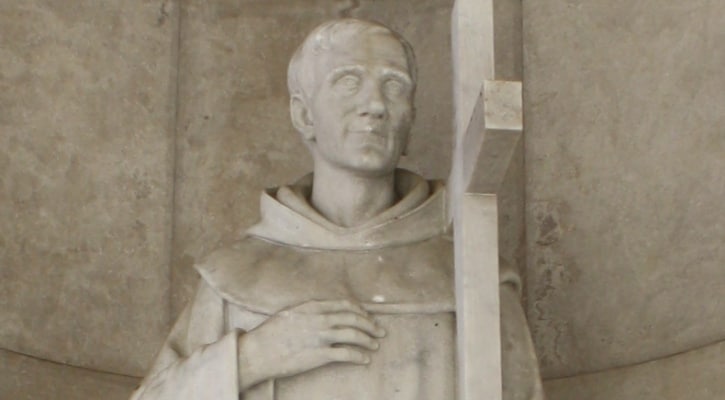
The Saint of the day is Saint Ludovico of Casoria
Saint Ludovico of Casoria’s Story
Born in Casoria, near Naples, Arcangelo Palmentieri was a cabinet-maker before entering the Friars Minor in 1832, taking the name Ludovico. After his ordination five years later, he taught chemistry, physics, and mathematics to younger members of his province for several years.
In 1847, he had a mystical experience which he later described as a cleansing. After that, he dedicated his life to the poor and the infirm, establishing a dispensary for the poor, two schools for African children, an institute for the children of nobility, as well as an institution for orphans, the deaf, and the speechless, and other institutes for the blind, elderly, and for travelers. In addition to an infirmary for friars of his province, he began charitable institutes in Naples, Florence, and Assisi. He once said, “Christ’s love has wounded my heart.” This love prompted him to great acts of charity.
To help continue these works of mercy, in 1859 he established the Gray Brothers, a religious community composed of men who formerly belonged to the Secular Franciscan Order. Three years later, he founded the Gray Sisters of St. Elizabeth for the same purpose.
Toward the beginning of his final, nine-year illness, Saint Ludovico of Casoria wrote a spiritual testament which described faith as “light in the darkness, help in sickness, blessing in tribulations, paradise in the crucifixion, and life amid death.” The local work for his beatification began within five months of Saint Ludovico of Casoria’s death. He was beatified in 1993 and canonized in 2014.
Reflection
Saintly people are not protected from suffering, but with God’s help they learn how to develop compassion from it. In the face of great suffering, we move either toward compassion or indifference. Saintly men and women show us the path toward compassion.Saint of the Day, Copyright Franciscan Media
Full Text of Readings
Saturday of the Fifth Week of Lent Lectionary: 256
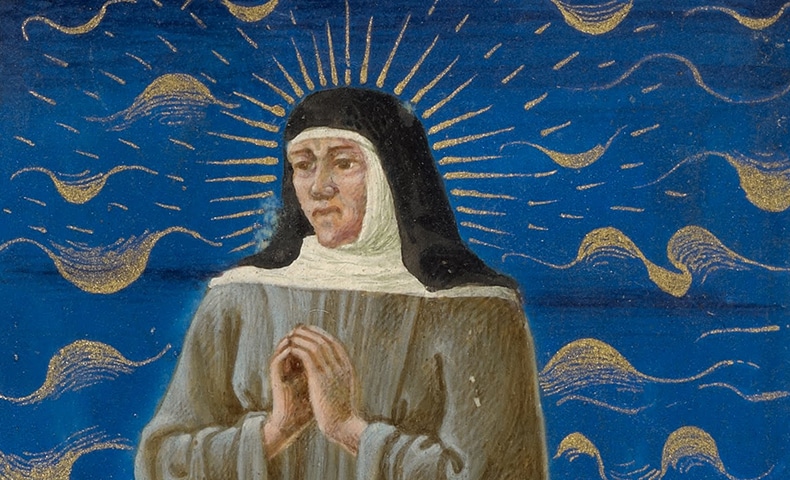
The Saint of the day is Saint Catharine of Bologna
Saint Catharine of Bologna’s Story
Some Franciscan saints led fairly public lives; Catharine represents the saints who served the Lord in obscurity.
Born in Bologna, Saint Catharine of Bologna was related to the nobility in Ferrara, and was educated at court there. She received a liberal education at the court and developed some interest and talent in painting. In later years as a Poor Clare, Catharine sometimes did manuscript illumination and also painted miniatures.
At the age of 17, she joined a group of religious women in Ferrara. Four years later, the whole group joined the Poor Clares in that city. Jobs as convent baker and portress preceded her selection as novice mistress.
In 1456, Saint Catharine of Bologna and 15 other sisters were sent to establish a Poor Clare monastery in Florence. As abbess, Catharine worked to preserve the peace of the new community. Her reputation for holiness drew many young women to the Poor Clare life. She was canonized in 1712. The liturgical feast of Saint Catharine of Bologna is celebrated on May 9.
Reflection
Appreciating Saint Catharine of Bologna’s life in a Poor Clare monastery may be hard for us. “It seems like such a waste,” we may be tempted to say. Through prayer, penance, and charity to her sisters, Catharine drew close to God. Our goal is the same as hers, even if our paths are different.Saint of the Day, Copyright Franciscan Media
Full Text of Readings
Friday of the Fifth Week of Lent Lectionary: 255
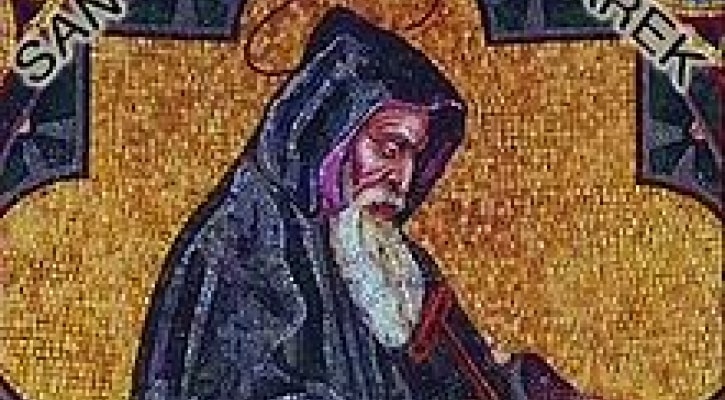
The Saint of the day is Saint Gregory of Narek
Saint Gregory of Narek’s Story
Saint Gregory of Narek was born in a village on the shores of Lake Van between 945 and 950. When his parents died, Gregor and his older brother were raised by a scholarly uncle who had them educated at the Narek monastery where he was a monk. The monastery was a prominent center of learning located in what is now Turkey. Gregor too entered the monastery and was ordained in 977.
A professor of theology, Gregor wrote a mystical interpretation of the Song of Songs, and a long mystical poem called the Book of Prayer or the Book of Lamentations. He described his poem as “an encyclopedia of prayer for all nations.” This classic of Armenian literature has been translated into 30 languages. The Russian text of the Book of Lamentations was set to music in 1985.
Little else is known about Saint Gregory of Narek’s, other than he died in the early 11th century and was buried within the walls of the Narek monastery where he had spent his life. In 2015 as the world observed the 100th anniversary of the Armenian genocide in the Ottoman Empire, Pope Francis concelebrated a Mass at the Vatican with Patriarch Nerses Bedros XIX Tarmouni and declared the monk, poet, and saint of the Armenian Apostolic Church, Gregory of Narek, a Doctor of the Church. His liturgical feast is celebrated on February 27.
Reflection
As opposed to the Armenian Catholic Church that began in the 17th century, the earlier Armenian Apostolic Church did not accept the Council of Chalcedon’s 451 teaching that Christ was fully divine and fully human. In 1996, St. John Paul II and Apostolic Catholicos Karekin I signed a declaration confirming the common faith of their two Churches. Prayer often unites groups of people who have seen themselves as very distinct—even enemies.Saint of the Day, Copyright Franciscan Media
Full Text of Readings
Thursday of the Fifth Week of Lent Lectionary: 254
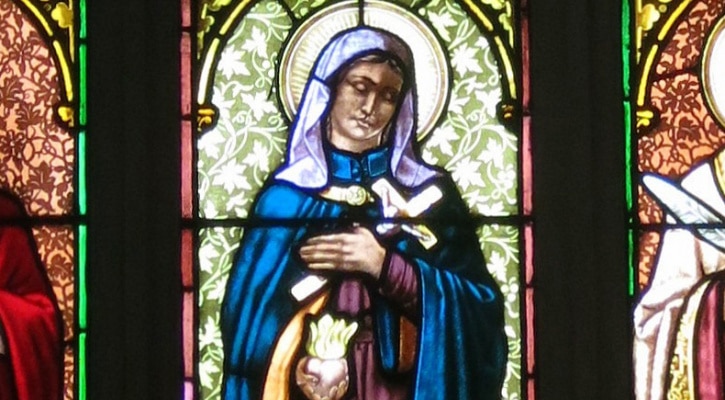
The Saint of the day is Saint Catherine of Genoa
Saint Catherine of Genoa’s Story
Going to confession one day was the turning point of Catherine’s life.
When Saint Catherine of Genoa was born, many Italian nobles were supporting Renaissance artists and writers. The needs of the poor and the sick were often overshadowed by a hunger for luxury and self-indulgence. Catherine’s parents were members of the nobility in Genoa. At 13, she attempted to become a nun but failed because of her age. At 16, she married Julian, a nobleman who turned out to be selfish and unfaithful. For a while she tried to numb her disappointment by a life of selfish pleasure.
One day in confession she had a new sense of her own sins and how much God loved her. She reformed her life and gave good example to Julian, who soon turned from his self-centered life of distraction. Julian’s spending, however, had ruined them financially. He and Catherine decided to live in the Pammatone, a large hospital in Genoa, and to dedicate themselves to works of charity there. After Julian’s death in 1497, Catherine took over management of the hospital.
Saint Catherine of Genoa wrote about purgatory which, she said, begins on earth for souls open to God. Life with God in heaven is a continuation and perfection of the life with God begun on earth.
Exhausted by her life of self-sacrifice, Catherine died September 15, 1510, and was canonized in 1737. The liturgical feast of Saint Catherine of Genoa is celebrated on September 15.
Reflection
Regular confession and frequent Communion can help us see the direction–or drift–of our life with God. People who have a realistic sense of their own sinfulness and of the greatness of God are often the ones who are most ready to meet the needs of their neighbors. Saint Catherine began her hospital work with enthusiasm and was faithful to it through difficult times because she was inspired by the love of God, a love which was renewed in her by the Scriptures and the sacraments. Saint of the Day, Copyright Franciscan Media
Full Text of Readings
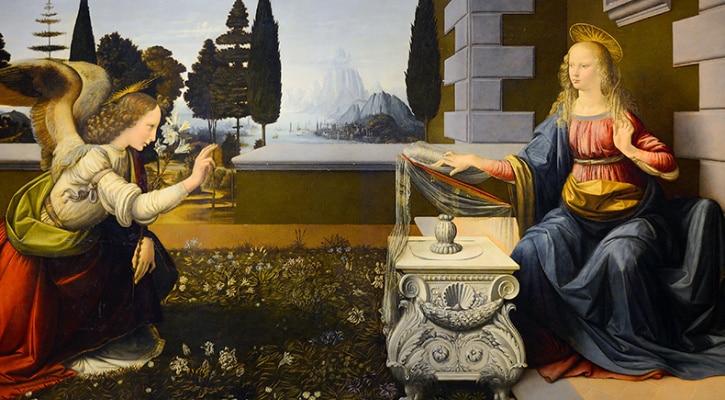
Solemnity of the Annunciation of the Lord Lectionary: 545
The Saint of the day is Annunciation of the Lord
The Story of the Annunciation of the Lord
The feast of the Annunciation of the Lord, now recognized as a solemnity, was first celebrated in the fourth or fifth century. Its central focus is the Incarnation: God has become one of us. From all eternity God had decided that the Second Person of the Blessed Trinity should become human. Now, as Luke 1:26-38 tells us, the decision is being realized.
The God-Man embraces all humanity, indeed all creation, to bring it to God in one great act of love. Because human beings have rejected God, Jesus will accept a life of suffering and an agonizing death: “No one has greater love than this, to lay down one’s life for one’s friends” (John 15:13).
Mary has an important role to play in God’s plan. From all eternity, God destined her to be the mother of Jesus and closely related to him in the creation and redemption of the world. We could say that God’s decrees of creation and redemption are joined in the decree of Incarnation. Because Mary is God’s instrument in the Incarnation, she has a role to play with Jesus in creation and redemption. It is a God-given role. It is God’s grace from beginning to end. Mary becomes the eminent figure she is only by God’s grace. She is the empty space where God could act. Everything she is she owes to the Trinity.
Mary is the virgin-mother who fulfills Isaiah 7:14 in a way that Isaiah could not have imagined. She is united with her son in carrying out the will of God (Psalm 40:8-9; Hebrews 10:7-9; Luke 1:38).
Together with Jesus, the privileged and graced Mary is the link between heaven and earth. She is the human being who best, after Jesus, exemplifies the possibilities of human existence. She received into her lowliness the infinite love of God. She shows how an ordinary human being can reflect God in the ordinary circumstances of life. She exemplifies what the Church and every member of the Church is meant to become. She is the ultimate product of the creative and redemptive power of God. She manifests what the Incarnation is meant to accomplish for all of us.
Reflection
Sometimes spiritual writers are accused of putting Mary on a pedestal and thereby, discouraging ordinary humans from imitating her. Perhaps such an observation is misguided. God did put Mary on a pedestal and has put all human beings on a pedestal. We have scarcely begun to realize the magnificence of divine grace, the wonder of God’s freely given love. The marvel of Mary—even in the midst of her very ordinary life—is God’s shout to us to wake up to the marvelous creatures that we all are by divine design. The Annunciation of the Lord provides believers hope.Saint of the Day, Copyright Franciscan Media
Full Text of Readings
Tuesday of the Fifth Week of Lent Lectionary: 252
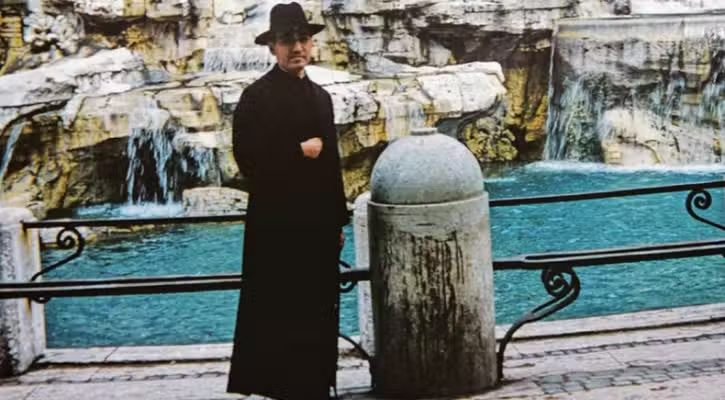
The Saint of the day is Saint Oscar Arnulfo Romero
Saint Oscar Arnulfo Romero’s Story
The night before he was murdered while celebrating Mass, Archbishop Oscar Romero of San Salvador said on the radio: “I would like to appeal in a special way to the men of the army, and in particular to the troops of the National Guard, the police, and the garrisons. Brothers, you belong to our own people. You kill your own brother peasants; and in the face of an order to kill that is given by a man, the law of God that says ‘Do not kill!’ should prevail.
“No soldier is obliged to obey an order counter to the law of God. No one has to comply with an immoral law. It is the time now that you recover your conscience and obey its dictates rather than the command of sin. . . . Therefore, in the name of God, and in the name of this long-suffering people, whose laments rise to heaven every day more tumultuous, I beseech you, I beg you, I command you! In the name of God: ‘Cease the repression!’”
Simultaneously, Saint Oscar Arnulfo Romero had eloquently upheld the gospel and effectively signed his own death warrant.
When he was appointed archbishop of San Salvador in 1977, Bishop Romero was considered a very “safe” choice. He had served as auxiliary bishop there for four years before his three years as bishop of Santiago de Maria.
Oscar’s father wanted him to be a carpenter—a trade for which he demonstrated some talent. Seminary classes in El Salvador preceded his studies at Rome’s Gregorian University and his ordination in 1942. After earning a doctorate in ascetical theology, he returned home and became a parish priest and later rector of an interdiocesan seminary.
Three weeks after his appointment as archbishop, Romero was shaken by the murder of his good friend Jesuit Father Rutilio Grande, a vigorous defender of the rights of the poor. Five more priests were assassinated in the Archdiocese of San Salvador during Romero’s years as its shepherd.
When a military junta seized control of the national government in 1979, Saint Oscar Arnulfo Romero publicly criticized the US government for backing the junta. His weekly radio sermons, broadcast throughout the country, were regarded by many as the most trustworthy source of news available.
Saint Oscar Arnulfo Romero’s funeral was celebrated in the plaza outside the cathedral and drew an estimated 250,000 mourners.
His tomb in the cathedral crypt soon drew thousands of visitors each year. On February 3, 2015, Pope Francis authorized a decree recognizing Oscar Romero as a martyr for the faith. His beatification took place in San Salvador on May 23, 2015, and he was canonized on October 14, 2018.
Reflection
Saint Oscar Arnulfo Romero and many other Latin American martyrs for the faith were falsely accused of advocating a Marxist-inspired “theology of liberation.” Following Jesus always requires choices. Romero’s fiercest critics conveniently dismissed his choices as politically inspired. An incarnational faith must be expressed publicly.Saint of the Day, Copyright Franciscan Media
Full Text of Readings
Monday of the Fifth Week of Lent Lectionary: 251
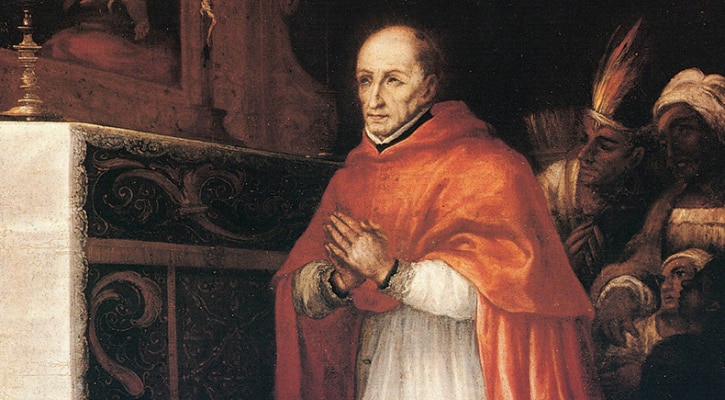
The Saint of the day is Saint Turibius of Mogrovejo
Saint Turibius of Mogrovejo’s Story
Together with Rose of Lima, Saint Turibius of Mogrovejo is the first known saint of the New World, serving the Lord in Peru, South America, for 26 years.
Born in Spain and educated for the law, he became so brilliant a scholar that he was made professor of law at the University of Salamanca and eventually became chief judge of the Inquisition at Granada. He succeeded too well. But he was not sharp enough a lawyer to prevent a surprising sequence of events.
When the archdiocese of Lima in Peru required a new leader, Turibius was chosen to fill the post: He was the one person with the strength of character and holiness of spirit to heal the scandals that had infected that area.
He cited all the canons that forbade giving laymen ecclesiastical dignities, but he was overruled. Saint Turibius of Mogrovejo was ordained priest and bishop and sent to Peru, where he found colonialism at its worst. The Spanish conquerors were guilty of every sort of oppression of the native population. Abuses among the clergy were flagrant, and he devoted his energies and suffering to this area first.
He began the long and arduous visitation of an immense archdiocese, studying the language, staying two or three days in each place, often with neither bed nor food. Saint Turibius of Mogrovejo confessed every morning to his chaplain, and celebrated Mass with intense fervor. Among those to whom he gave the Sacrament of Confirmation was the future Saint Rose of Lima, and possibly the future Saint Martin de Porres. After 1590, he had the help of another great missionary, Francis Solanus, now also a saint.
Though very poor his people were sensitive, dreading to accept public charity from others. Saint Turibius of Mogrovejo solved the problem by helping them anonymously.
Reflection
The Lord indeed writes straight with crooked lines. Against his will, and from the unlikely springboard of an Inquisition tribunal, this man became the Christlike shepherd of a poor and oppressed people. God gave him the gift of loving others as they needed it.Saint of the Day, Copyright Franciscan Media
Full Text of Readings
Fifth Sunday of Lent Lectionary: 34
The Saint of the day is Saint Nicholas Owen
Saint Nicholas Owen’s Story
Saint Nicholas Owen, familiarly known as “Little John,” was small in stature but big in the esteem of his fellow Jesuits.
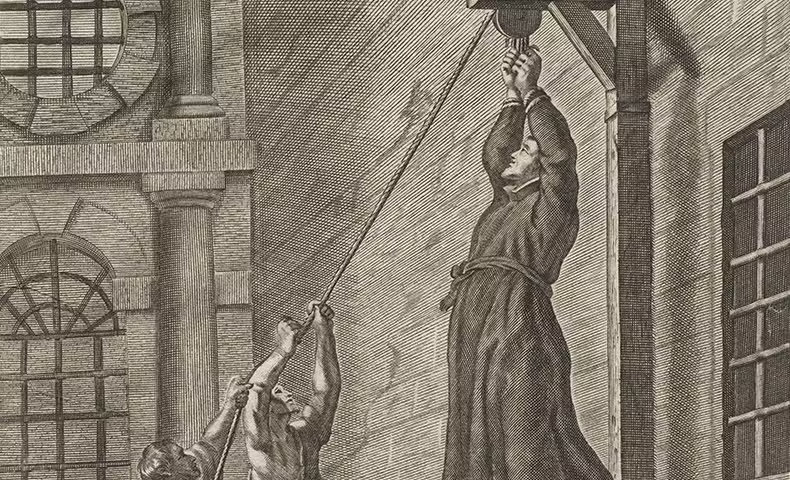
Born at Oxford, this humble artisan saved the lives of many priests and laypersons in England during the penal times (1559-1829), when a series of statutes punished Catholics for the practice of their faith. Over a period of about 20 years, Nicholas used his skills to build secret hiding places for priests throughout the country.
His work, which he did completely by himself as both architect and builder, was so good that time and time again priests in hiding were undetected by raiding parties. Nicholas was a genius at finding and creating places of safety: subterranean passages, small spaces between walls, impenetrable recesses.
At one point he was even able to mastermind the escape of two Jesuits from the Tower of London. Whenever Saint Nicholas Owen set out to design such hiding places, he began by receiving the holy Eucharist, and he would turn to God in prayer throughout the long, dangerous construction process.
After many years at his unusual task, Nicholas entered the Society of Jesus and served as a lay brother, although—for very good reasons—his connection with the Jesuits was kept secret.
After a number of narrow escapes, he himself was finally caught in 1594. Despite protracted torture, Nicholas refused to disclose the names of other Catholics. After being released following the payment of a ransom, “Little John” went back to his work. He was arrested again in 1606. This time he was subjected to horrible tortures, suffering an agonizing death. The jailers tried suggesting that he had confessed and committed suicide, but his heroism and sufferings soon were widely known.
Nicholas Owen was canonized in 1970 as one of the 40 Martyrs of England and Wales.
Reflection
Nicholas was a clever builder and architect who used his skills to protect endangered priests. Without his help, hundreds of English Catholics would have been deprived of the sacraments. His gift for spotting unlikely places to hide priests was impressive, but more impressive was his habit of seeking support for his work in prayer and the Eucharist. If we follow his example, we may also discover surprising ways to put our skills to God’s service.Saint of the Day, Copyright Franciscan Media
Full Text of Readings
Saturday of the Fourth Week of Lent Lectionary: 249
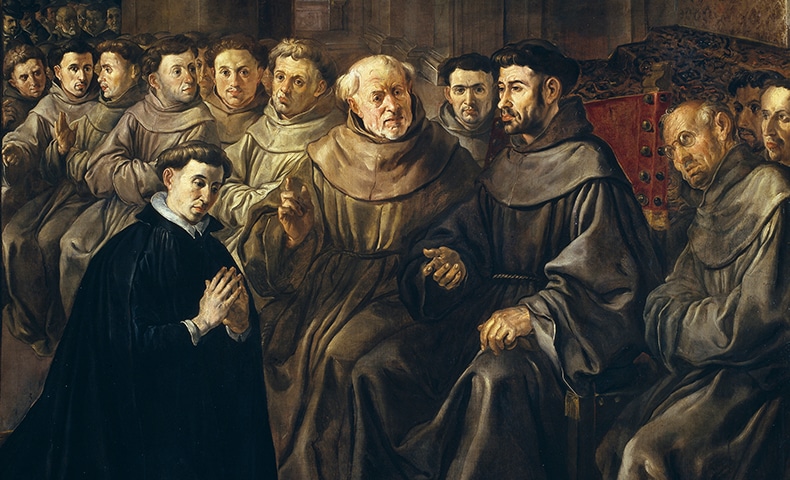
The Saint of the day is Blessed John of Parma
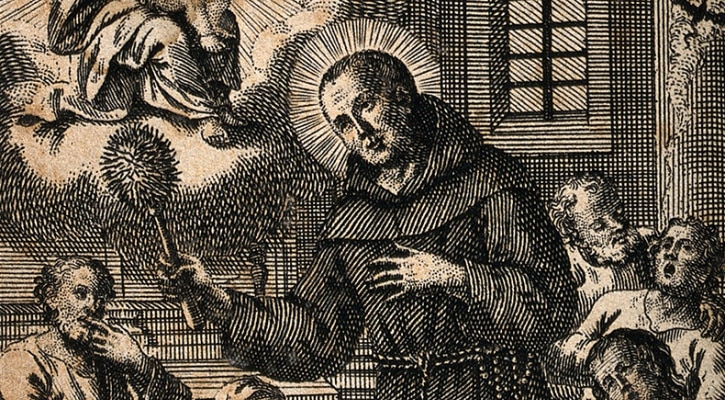
Blessed John of Parma’s Story
The seventh general minister of the Franciscan Order, Blessed John of Parma was known for his attempts to bring back the earlier spirit of the Order after the death of Saint Francis of Assisi.
He was born in Parma, Italy, in 1209. It was when he was a young philosophy professor known for his piety and learning that God called him to bid good-bye to the world he was used to and enter the new world of the Franciscan Order. After his profession, John was sent to Paris to complete his theological studies. Ordained to the priesthood, he was appointed to teach theology at Bologna, then Naples, and finally Rome.
In 1245, Pope Innocent IV called a general council in the city of Lyons, France. Crescentius, the Franciscan minister general at the time, was ailing and unable to attend. In his place he sent Friar John, who made a deep impression on the Church leaders gathered there. Two years later, when the same pope presided at the election of a minister general of the Franciscans, he remembered Friar John well and held him up as the man best qualified for the office.
And so in 1247, Saint John of Parma was elected to be minister general. The surviving disciples of St. Francis rejoiced in his election, expecting a return to the spirit of poverty and humility of the early days of the Order. And they were not disappointed. As general of the Order, John traveled on foot, accompanied by one or two companions, to practically all of the Franciscan convents in existence. Sometimes he would arrive and not be recognized, remaining there for a number of days to test the true spirit of the brothers.
The pope called on Blessed John of Parma to serve as legate to Constantinople, where he was most successful in winning back the schismatic Greeks. Upon his return, he asked that someone else take his place to govern the Order. At John’s urging, Saint Bonaventure was chosen to succeed him. John took up a life of prayer in the hermitage at Greccio.
Many years later, Blessed John of Parma learned that the Greeks who had been reconciled with the Church for a time, had relapsed into schism. Though 80 years old by then, John received permission from Pope Nicholas IV to return to the East in an effort to restore unity once again. On his way, John fell sick and died. He was beatified in 1781. The liturgical feast of Blessed John of Parma is celebrated on March 20.
Reflection
In the 13th century, people in their 30s were middle-aged; hardly anyone lived to the ripe old age of 80. Blessed John of Parma did, but he didn’t ease into retirement. Instead he was on his way to try to heal a schism in the Church when he died. Our society today boasts a lot of folks in their later decades. Like John, many of them lead active lives. But some aren’t so fortunate. Weakness or ill health keeps them confined and lonely—waiting to hear from us. Saint of the Day, Copyright Franciscan Media
Full Text of Readings
Friday of the Fourth Week of Lent Lectionary: 248
The Saint of the day is Saint Salvator of Horta
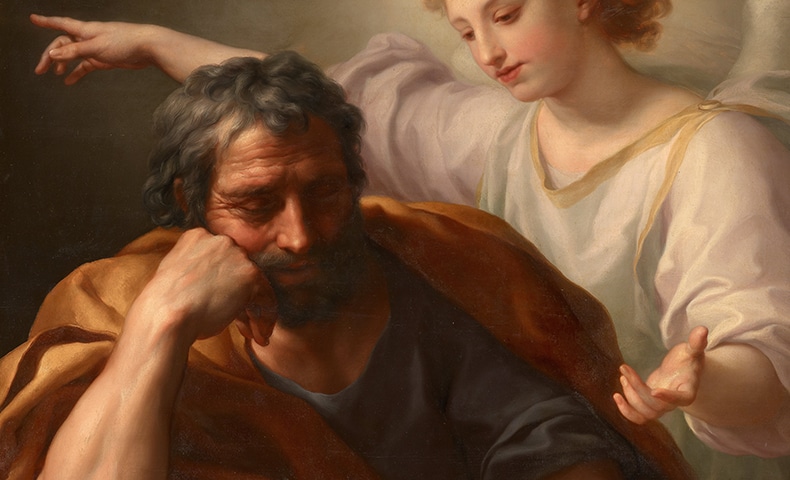
Saint Salvator of Horta’s Story
A reputation for holiness does have some drawbacks. Public recognition can be a nuisance at times—as the confreres of Salvator found out.
Saint Salvator of Horta was born during Spain’s Golden Age. Art, politics, and wealth were flourishing. So was religion. Ignatius of Loyola founded the Society of Jesus in 1540.
Saint Salvator of Horta’s parents were poor. At the age of 21, he entered the Franciscans as a brother and was soon known for his asceticism, humility, and simplicity. As cook, porter, and later the official beggar for the friars in Tortosa, he became well known for his charity. He healed the sick with the Sign of the Cross. When crowds of sick people began coming to the friary to see Salvator, the friars transferred him to Horta. Again, the sick flocked to ask his intercession; one person estimated that 2,000 people a week came to see Salvator. He told them to examine their consciences, go to confession, and to receive Holy Communion worthily. He refused to pray for those who would not receive those sacraments.
The public attention given to Salvator was relentless. The crowds would sometimes tear off pieces of his habit as relics. Two years before his death, Salvator was moved again, this time to Cagliari on the island of Sardinia. He died at Cagliari saying, “Into your hands, O Lord, I commend my spirit.” He was canonized in 1938. The liturgical feast of Saint Salvator of Horta is celebrated on March 18.
Reflection
Medical science is now seeing more clearly the relation of some diseases to one’s emotional and spiritual life. In Healing Life’s Hurts, Matthew and Dennis Linn report that sometimes people experience relief from illness only when they have decided to forgive others. Salvator prayed that people might be healed, and many were. Surely not all diseases can be treated this way; medical help should not be abandoned. But notice that Salvator urged his petitioners to reestablish their priorities in life before they asked for healing. Saint of the Day, Copyright Franciscan Media
Full Text of Readings
Solemnity of Saint Joseph, Spouse of the Blessed Virgin Mary Lectionary: 543
The Saint of the day is Saint Joseph, Husband of Mary
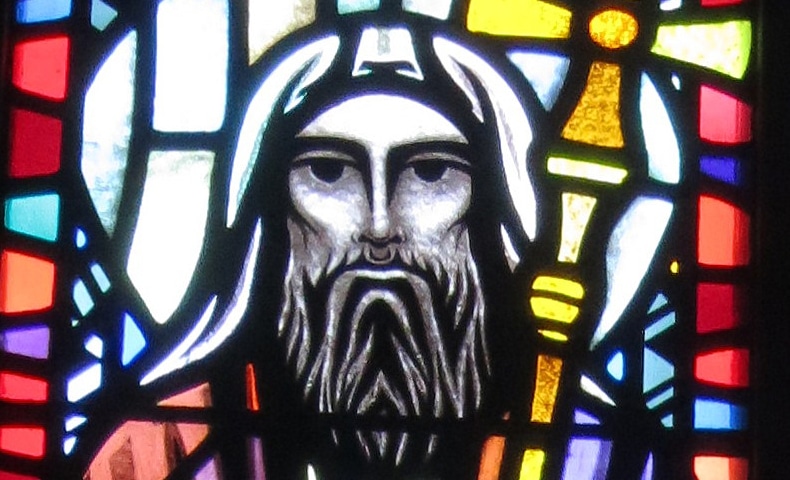
Saint Joseph’s Story
The Bible pays Saint Joseph the highest compliment: he was a “just” man. The quality meant a lot more than faithfulness in paying debts.
When the Bible speaks of God “justifying” someone, it means that God, the all-holy or “righteous” one, so transforms a person that the individual shares somehow in God’s own holiness, and hence it is really “right” for God to love him or her. In other words, God is not playing games, acting as if we were lovable when we are not.
By saying Joseph was “just,” the Bible means that he was one who was completely open to all that God wanted to do for him. He became holy by opening himself totally to God.
The rest we can easily surmise. Think of the kind of love with which he wooed and won Mary, and the depth of the love they shared during their marriage.
It is no contradiction of Joseph’s manly holiness that he decided to divorce Mary when she was found to be with child. The important words of the Bible are that he planned to do this “quietly” because he was “a righteous man, yet unwilling to expose her to shame” (Matthew 1:19).
The just man was simply, joyfully, wholeheartedly obedient to God—in marrying Mary, in naming Jesus, in shepherding the precious pair to Egypt, in bringing them to Nazareth, in the undetermined number of years of quiet faith and courage.
Reflection
The Bible tells us nothing of Joseph in the years after the return to Nazareth except the incident of finding Jesus in the Temple (Luke 2:41–51). Perhaps this can be taken to mean that God wants us to realize that the holiest family was like every other family, that the circumstances of life for the holiest family were like those of every family, so that when Jesus’ mysterious nature began to appear, people couldn’t believe that he came from such humble beginnings: “Is he not the carpenter’s son? Is not his mother named Mary…?” (Matthew 13:55a). It was almost as indignant as “Can anything good come from Nazareth?” (John 1:46b).Saint of the Day, Copyright Franciscan Media
Full Text of Readings
Wednesday of the Fourth Week of Lent Lectionary: 246
The Saint of the day is Saint Cyril of Jerusalem
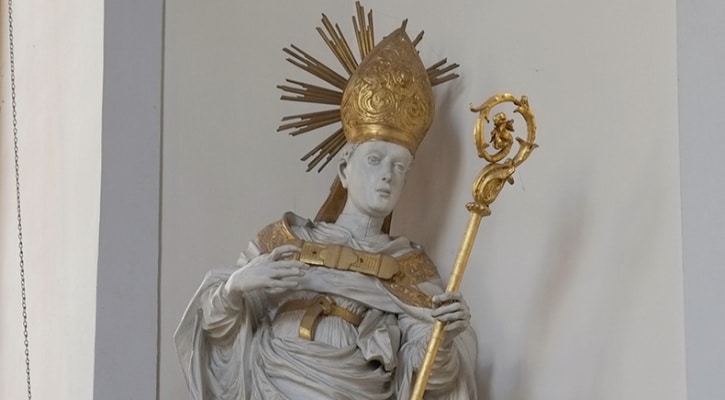
Saint Cyril of Jerusalem’s Story
The crises that the Church faces today may seem minor when compared with the threat posed by the Arian heresy, which denied the divinity of Christ and almost overcame Christianity in the fourth century. Saint Cyril of Jerusalem was to be caught up in the controversy, accused of Arianism by Saint Jerome, and ultimately vindicated both by the men of his own time and by being declared a Doctor of the Church in 1822.
Raised in Jerusalem and well-educated, especially in the Scriptures, he was ordained a priest by the bishop of Jerusalem and given the task during Lent of catechizing those preparing for Baptism and catechizing the newly baptized during the Easter season. His Catecheses remain valuable as examples of the ritual and theology of the Church in the mid-fourth century.
There are conflicting reports about the circumstances of his becoming bishop of Jerusalem. It is certain that he was validly consecrated by bishops of the province. Since one of them was an Arian, Acacius, it may have been expected that his “cooperation” would follow. Conflict soon rose between Saint Cyril of Jerusalem and Acacius, bishop of the rival nearby see of Caesarea. Saint Cyril of Jerusalem was summoned to a council, accused of insubordination and of selling Church property to relieve the poor.
Probably, however, a theological difference was also involved. He was condemned, driven from Jerusalem, and later vindicated, not without some association with and help from Semi-Arians. Half his episcopate was spent in exile; his first experience was repeated twice. He finally returned to find Jerusalem torn with heresy, schism and strife, and wracked with crime. Even Saint Gregory of Nyssa, who was sent to help, left in despair.
They both went to the Council of Constantinople, where the amended form of the Nicene Creed was promulgated in 381. Saint Cyril of Jerusalem accepted the word consubstantial—that is, Christ is of the same substance or nature as the Father. Some said it was an act of repentance, but the bishops of the Council praised him as a champion of orthodoxy against the Arians.
Though not friendly with the greatest defender of orthodoxy against the Arians, Saint Cyril of Jerusalem may be counted among those whom Athanasius called “brothers, who mean what we mean, and differ only about the word consubstantial.”
Reflection
Those who imagine that the lives of saints are simple and placid, untouched by the vulgar breath of controversy, are rudely shocked by history. Yet, it should be no surprise that saints, indeed all Christians, will experience the same difficulties as their Master. The definition of truth is an endless, complex pursuit, and good men and women have suffered the pain of both controversy and error. Intellectual, emotional, and political roadblocks may slow up people like Cyril for a time. But their lives taken as a whole are monuments to honesty and courage.Saint of the Day, Copyright Franciscan Media
Full Text of Readings
Tuesday of the Fourth Week of Lent Lectionary: 245
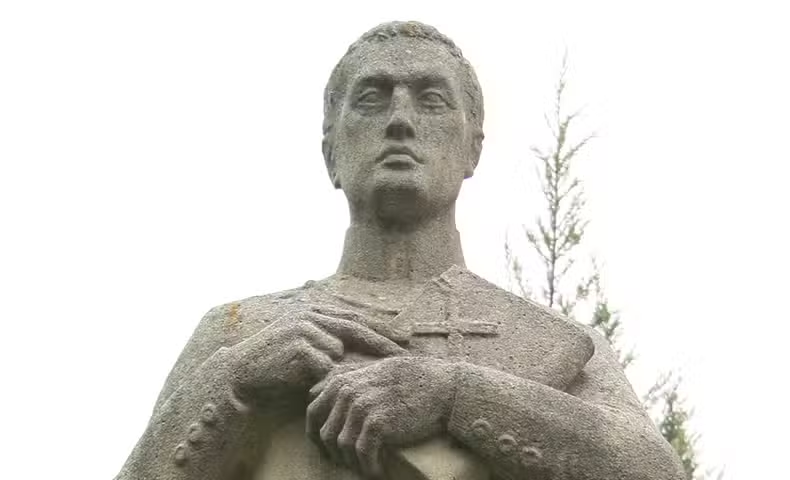
The Saint of the day is Saint Patrick
Saint Patrick’s Story
Legends about Saint Patrick abound; but truth is best served by our seeing two solid qualities in him: He was humble and he was courageous. The determination to accept suffering and success with equal indifference guided the life of God’s instrument for winning most of Ireland for Christ.
Details of his life are uncertain but his popularity has never wavered. Current research places his dates of birth and death a little later than earlier accounts. Patrick may have been born in Dunbarton, Scotland, Cumberland, England, or in northern Wales. He called himself both a Roman and a Briton. At 16, he and a large number of his father’s slaves and vassals were captured by Irish raiders and sold as slaves in Ireland. Forced to work as a shepherd, he suffered greatly from hunger and cold.
After six years Saint Patrick escaped, probably to France, and later returned to Britain at the age of 22. His captivity had meant spiritual conversion. He may have studied at Lerins, off the French coast; he spent years at Auxerre, France, and was consecrated bishop at the age of 43. His great desire was to proclaim the good news to the Irish.
In a dream vision it seemed “all the children of Ireland from their mothers’ wombs were stretching out their hands” to him. He understood the vision to be a call to do mission work in pagan Ireland. Despite opposition from those who felt his education had been defective, he was sent to carry out the task. He went to the west and north–where the faith had never been preached–obtained the protection of local kings, and made numerous converts.
Because of the island’s pagan background, Patrick was emphatic in encouraging widows to remain chaste and young women to consecrate their virginity to Christ. He ordained many priests, divided the country into dioceses, held Church councils, founded several monasteries and continually urged his people to greater holiness in Christ.
He suffered much opposition from pagan druids and was criticized in both England and Ireland for the way he conducted his mission. In a relatively short time, the island had experienced deeply the Christian spirit, and was prepared to send out missionaries whose efforts were greatly responsible for Christianizing Europe.
Patrick was a man of action, with little inclination toward learning. He had a rock-like belief in his vocation, in the cause he had espoused. He never doubted his direction because he understood that grace could guide him One of the few certainly authentic writings is his Confessio, above all an act of homage to God for having called Patrick, unworthy sinner, to the apostolate.
There is hope rather than irony in the fact that his burial place is said to be in County Down in Northern Ireland, long the scene of strife and violence.
Reflection
What distinguishes Saint Patrick is the durability of his efforts. In the face of difficulty or strife, he maintained the faith. When one considers the state of Ireland when he began his mission work, the vast extent of his labors, and how the seeds he planted continued to grow and flourish, one can only admire the kind of man Patrick must have been. One of tireless faith and incredible stamina in bringing people to God. The holiness of a person is known only by the fruits of his or her work.Saint of the Day, Copyright Franciscan Media
Full Text of Readings
Monday of the Fourth Week of Lent Lectionary: 244
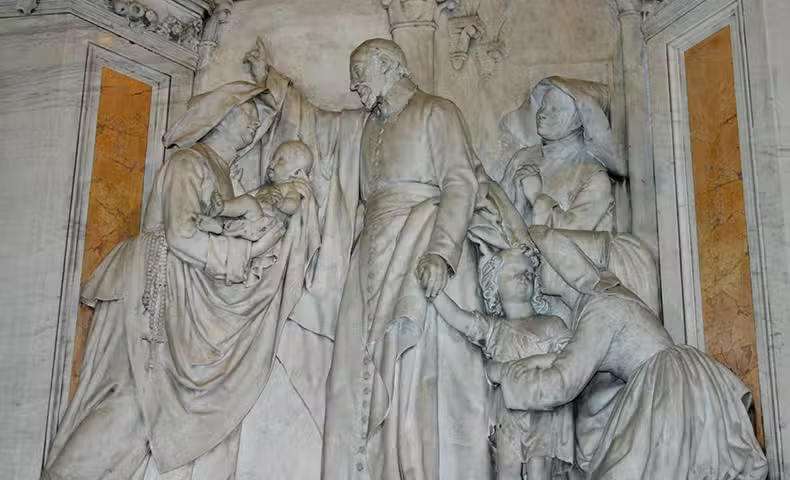
The Saint of the day is Saint Clement Mary Hofbauer
Saint Clement Mary Hofbauer’s Story
Saint Clement Mary Hofbauer might be called the second founder of the Redemptorists, as it was he who carried the congregation of Saint Alphonsus Liguori to the people north of the Alps.
John, the name given him at Baptism, was born in Moravia into a poor family, the ninth of 12 children. Although he longed to be a priest, there was no money for studies, and he was apprenticed to a baker. But God guided the young man’s fortunes. He found work in the bakery of a monastery where he was allowed to attend classes in its Latin school. After the abbot there died, John tried the life of a hermit, but when Emperor Joseph II abolished hermitages, John again returned to Vienna and to baking.
One day after serving Mass at the Cathedral of St. Stephen, he called a carriage for two ladies waiting there in the rain. In their conversation they learned that he could not pursue his priestly studies because of a lack of funds. They generously offered to support both John and his friend Thaddeus, in their seminary studies. The two went to Rome, where they were drawn to Saint Alphonsus’ vision of religious life and to the Redemptorists. The two young men were ordained together in 1785.
Newly professed at age 34, Saint Clement Mary Hofbauer, as he was now called, and Thaddeus were sent back to Vienna. But the religious difficulties there caused them to leave and continue north to Warsaw, Poland. There they encountered numerous German-speaking Catholics who had been left priestless by the suppression of the Jesuits.
At first they had to live in great poverty and preach outdoor sermons. Eventually they were given the church of St. Benno, and for the next nine years they preached five sermons a day, two in German and three in Polish, converting many to the faith. They were active in social work among the poor, founding an orphanage and then a school for boys.
Drawing candidates to the congregation, they were able to send missionaries to Poland, Germany, and Switzerland. All of these foundations eventually had to be abandoned because of the political and religious tensions of the times. After 20 years of difficult work, Saint Clement Mary Hofbauer himself was imprisoned and expelled from the country. Only after another arrest was he able to reach Vienna, where he was to live and work the final 12 years of his life.
He quickly became “the apostle of Vienna,” hearing the confessions of the rich and the poor, visiting the sick, acting as a counselor to the powerful, sharing his holiness with all in the city. His crowning work was the establishment of a Catholic college in his beloved city.
Persecution followed Saint Clement Mary Hofbauer, and there were those in authority who were able for a while to stop him from preaching. An attempt was made at the highest levels to have him banished. But his holiness and fame protected him and prompted the growth of the Redemptorists. Due to his efforts, the congregation was firmly established north of the Alps by the time of his death in 1820.
Saint Clement Mary Hofbauer was canonized in 1909. His liturgical feast is celebrated on March 15.
Reflection
Saint Clement Mary Hofbauer saw his life’s work meet with disaster. Religious and political tensions forced him and his brothers to abandon their ministries in Germany, Poland, and Switzerland. Clement Mary himself was exiled from Poland and had to start all over again. Someone once pointed out that the followers of the crucified Jesus should see only new possibilities opening up whenever they meet failure. Clement Mary encourages us to follow his example, trusting in the Lord to guide us.Saint of the Day, Copyright Franciscan Media
Full Text of Readings
Fourth Sunday of Lent Lectionary: 31
The Saint of the day is Saint Louise de Marillac
Saint Louise de Marillac’s Story
Born near Meux, France, Saint Louise de Marillac lost her mother when she was still a child, her beloved father when she was but 15. Her desire to become a nun was discouraged by her confessor, and a marriage was arranged. One son was born of this union. But Louise soon found herself nursing her beloved husband through a long illness that finally led to his death.
Saint Louise de Marillac was fortunate to have a wise and sympathetic counselor, Francis de Sales, and then his friend, the bishop of Belley, France. Both of these men were available to her only periodically. But from an interior illumination she understood that she was to undertake a great work under the guidance of another person she had not yet met. This was the holy priest Monsieur Vincent, later to be known as Saint Vincent de Paul.
At first, he was reluctant to be her confessor, busy as he was with his “Confraternities of Charity.” Members were aristocratic ladies of charity who were helping him nurse the poor and look after neglected children, a real need of the day. But the ladies were busy with many of their own concerns and duties. His work needed many more helpers, especially ones who were peasants themselves and therefore, close to the poor and able to win their hearts. He also needed someone who could teach them and organize them.
Only over a long period of time, as Vincent de Paul became more acquainted with Saint Louise de Marillac, did he come to realize that she was the answer to his prayers. She was intelligent, self-effacing, and had physical strength and endurance that belied her continuing feeble health. The missions he sent her on eventually led to four simple young women joining her. Her rented home in Paris became the training center for those accepted for the service of the sick and poor. Growth was rapid and soon there was the need for a so-called “rule of life,” which Louise herself, under the guidance of Vincent, drew up for the Daughters of Charity of St. Vincent de Paul.
Monsieur Vincent had always been slow and prudent in his dealings with Louise and the new group. He said that he had never had any idea of starting a new community, that it was God who did everything. “Your convent,” he said, “will be the house of the sick; your cell, a hired room; your chapel, the parish church; your cloister, the streets of the city or the wards of the hospital.”
Their dress was to be that of the peasant women. It was not until years later that Vincent de Paul would finally permit four of the women to take annual vows of poverty, chastity and obedience. It was still more years before the company would be formally approved by Rome and placed under the direction of Vincent’s own congregation of priests.
Many of the young women were illiterate. Still it was with reluctance that the new community undertook the care of neglected children. Louise was busy helping wherever needed despite her poor health. She traveled throughout France, establishing her community members in hospitals, orphanages and other institutions. At her death on March 15, 1660, the congregation had more than 40 houses in France. Six months later Vincent de Paul followed her in death.
Saint Louise de Marillac was canonized in 1934 and declared patroness of social workers in 1960.
Reflection
In Saint Louise de Marillac’s day, serving the needs of the poor was usually a luxury only fine ladies could afford. Her mentor, Saint Vincent de Paul, wisely realized that women of peasant stock could reach poor people more effectively, and the Daughters of Charity were born under her leadership. Today, that order—along with the Sisters of Charity—continues to nurse the sick and aging and provide refuge for orphans. Many of its members are social workers toiling under Louise’s patronage. The rest of us must share her concern for the disadvantaged.Saint of the Day, Copyright Franciscan Media
Full Text of Readings
Saturday of the Third Week of Lent Lectionary: 242
The Saint of the day is Saint Maximilian
Saint Maximilian’s Story
We have an early, almost unembellished account of the martyrdom of Saint Maximilian in modern-day Algeria. Brought before the proconsul Dion, Maximilian refused enlistment in the Roman army saying, “I cannot serve, I cannot do evil. I am a Christian.”
Dion replied: “You must serve or die.”
Maximilian: “I will never serve. You can cut off my head, but I will not be a soldier of this world, for I am a soldier of Christ. My army is the army of God, and I cannot fight for this world. I tell you I am a Christian.”
Dion: “There are Christian soldiers serving our rulers Diocletian and Maximian, Constantius and Galerius.”
Maximilian: “That is their business. I also am a Christian, and I cannot serve.”
Dion: “But what harm do soldiers do?”
Maximilian: “You know well enough.”
Dion: “If you will not do your service I shall condemn you to death for contempt of the army.”
Maximilian: “I shall not die. If I go from this earth, my soul will live with Christ my Lord.”
Maximilian was 21 years old when he gladly offered his life to God. His father went home from the execution site joyful, thanking God that he had been able to offer heaven such a gift. St. Maximilian’s liturgical feast is celebrated on March 12.
Reflection
In this celebration we find one inspirational son and one incredible father. Both men were filled with strong faith and hope. Let’s ask them to help us in our struggle to remain faithful.Saint of the Day, Copyright Franciscan Media
Full Text of Readings
Friday of the Third Week of Lent Lectionary: 241
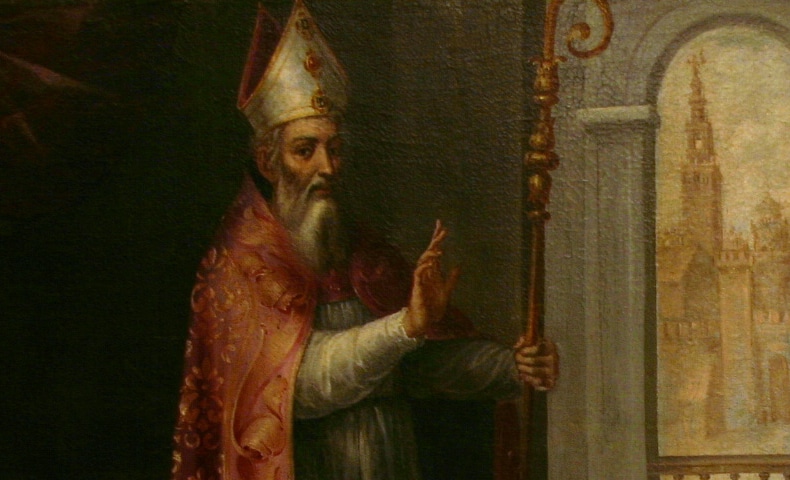
The Saint of the day is Saint Leander of Seville
Saint Leander of Seville’s Story
The next time you recite the Nicene Creed at Mass, think of today’s saint. For it was Leander of Seville who, as bishop, introduced the practice in the sixth century. He saw it as a way to help reinforce the faith of his people and as an antidote against the heresy of Arianism, which denied the divinity of Christ. By the end of his life, Leander had helped Christianity flourish in Spain at a time of political and religious upheaval.
Saint Leander of Seville’s own family were staunch Christians: his brothers Isidore and Fulgentius were named bishops, and their sister Florentina became an abbess. Leander entered a monastery as a young man and spent three years in prayer and study. At the end of that tranquil period he was made a bishop. For the rest of his life he worked strenuously to fight against heresy.
The death of the anti-Christian king in 586 helped Leander’s cause. He and the new king worked hand in hand to restore orthodoxy and a renewed sense of morality. Leander succeeded in persuading many Arian bishops to change their loyalties.
Saint Leander of Seville died around 600. In Spain, he is honored as a Doctor of the Church.
Reflection
As we pray the Nicene Creed every Sunday, we might reflect on the fact that that same prayer is not only being prayed by every Catholic throughout the world, but by many other Christians as well. Saint Leander introduced its recitation as a means of uniting the faithful. Let’s pray that the recitation may enhance that unity today.Saint of the Day, Copyright Franciscan Media


Download from Google Play

Download from App Store
 United States
What happened to the Holy Thursday readings?