


 Claim Ownership
Better Ways of Working
Subscribed: 0Played: 1
Subscribe

© 2026 Dave Borzillo
Description
Join the discussion on how to work in an organization of knowledge workers and tips on business agility. We'll help you with better ways of working.
23 Episodes
Reverse

Our guest is Dave Prior. He's the host of the podcast Drunken PM Radio.The conversation explores where Agile is going and the impact of technology on project management. We discuss the evolving skills required for the next generation of project managers. It delves into concerns about the potential loss of important skills and the changing landscape of project management in the digital age.
The conversation explores the introduction of scrum in Dutch schools (eduScrum) and the emphasis on responsible use and critical thinking in AI education.TakeawaysResponsible use of AI in educationEncouraging critical thinking

The conversation covers Joe Justice's background in inventing agile hardware, his interview at Tesla, challenges in large companies, the concept of skunk works, agile contracting, the Joe DX and Team Launch System, budgeting and contracts in Joe DX, and transparency and fairness in companies. The key takeaways include the concept of agile hardware and the importance of fast iterations in business operations.TakeawaysAgile HardwareFast IterationsChapters00:00 Transparency and Fairness in Companies
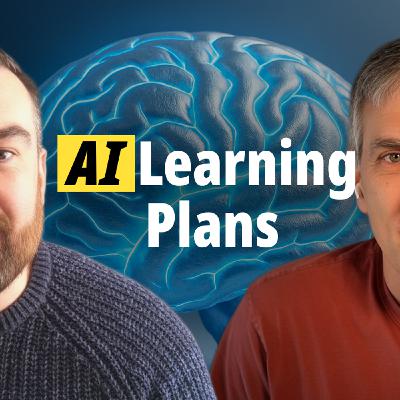
🚀 Embrace the Future of Learning! 🚀 In my latest episode, Dave Westgarth shares his incredible journey of lifelong learning, focusing on AI, data, and cloud technologies. From agile delivery to AI-driven innovation, Dave's insights are a must-hear for anyone looking to stay ahead in the tech world. 🌐 Discover how tools like Miro and Lovable are revolutionizing digital product creation, making it more accessible than ever. Whether you're a seasoned pro or just starting, there's something here for everyone.
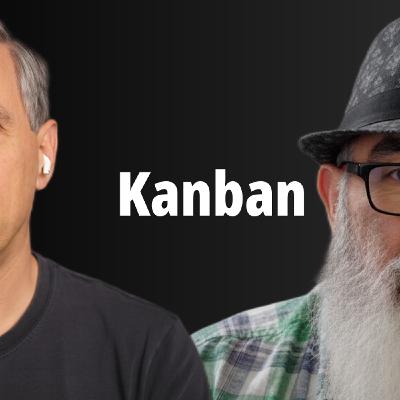
A discussion with Marcelo Lopez, Jr about kanban.The conversation emphasizes the importance of empowering people and encouraging open communication in the workplace. It explores the concept of managing the work, not the people, and highlights the need for individuals to feel empowered to speak up about issues affecting their deliverability.TakeawaysEmpower the peopleEncourage open communication
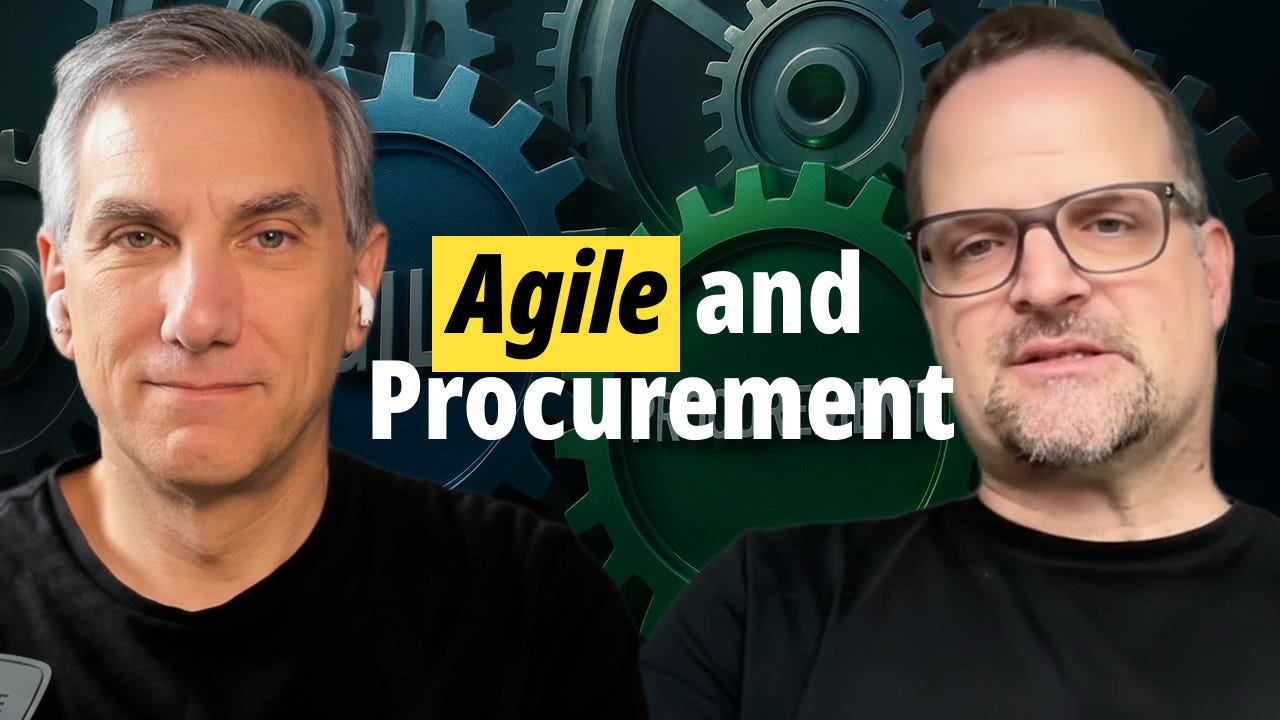
Most Agile transformations don’t fail in delivery.They fail at procurement.Teams move fast.Contracts don’t.That gap quietly kills momentum. Backlogs flow—until sourcing, legal, and vendors pull everything back into a months-long, document-driven process designed for predictability, not complexity.In my recent conversation with Mirko Kleiner, one of the pioneers of Lean Agile Procurement, I learned how his teams flipped sourcing on its head:* ERP vendor selected in 2 days* Engineers talking directly to engineers* All vendors in the same room* Solutions co-created, not specified upfront* Contracts negotiated during the workshop* World Procurement Award winnerIt all starts with one uncomfortable question:“What if we had just one day to select a supplier — and sign the contract?”That constraint forces a redesign of the system:less delegation, fewer handoffs, real ownership, and radically more transparency between buyers and suppliers.This isn’t fringe thinking anymore.Mirko and the Lean Agile Procurement community recently released a joint whitepaper with SAFe that directly addresses a problem many organizations feel but can’t name:Agile at scale breaks down when procurement and other supporting functions stay traditional.You can read it here:👉 https://www.lap-alliance.org/resources/our-blog/boost-your-safe-implementation-with-lean-agile-procurement-n2km7What’s emerging is bigger than procurement. It’s a global movement focused on cross-company collaboration and value streams that don’t stop at the company’s front door.That movement is growing quickly—and they’re actively looking for trainers to help meet demand worldwide:👉 https://www.lap-alliance.orgIf your Agile teams move fast but your vendors don’t, you’re not missing another framework.You’re missing procurement as part of agility. Get full access to Better Ways of Working at bwow.substack.com/subscribe
Scrum Isn’t a Software ThingIt never was.One of the most common objections I hear when talking about Scrum goes something like this:“Sure, Scrum works in software—but you can’t use it in construction.”That belief sounds reasonable.It’s also wrong.In my latest podcast episode, I sat down with Felipe Engineer-Manriquez, who has been quietly proving that wrong for nearly two decades—using Scrum in construction projects ranging from $10 million to multi-billion-dollar programs.Not experiments.Not theory.Not post-its for show.Real projects.Real contracts.Real consequences.What Happens When Scrum Shows Up on a Job SiteFelipe shared story after story of what happens when Scrum and Lean principles are applied to construction work:* Projects finishing months early* Zero claims, zero litigation* Every contractor making money* Leaders reclaiming nights and weekends* Teams planning better in weeks than traditional schedules do in yearsOne university project even finished early with no legal disputes—something the owner said had never happened beforein over a decade.That alone should make us pause.The Real Problem Isn’t ScrumIt’s How We’ve Framed ItScrum didn’t originate as a “software framework.”It emerged from studying complex product development—work with:* Uncertainty* Dependencies* Long lead times* Many stakeholders* Humans making decisions under pressureSound familiar?Construction has all of that.So do healthcare, manufacturing, education, nonprofits, and leadership teams.What Filipe walks through in this episode is how Scrum aligns naturally with Lean Construction practices like the Last Planner System, rolling planning horizons, visual work management, and continuous learning loops (PDCA, OODA).Different vocabulary.Same foundation.Why Traditional Project Management Keeps FailingFilipe also explains why classic waterfall schedules and Gantt charts struggle in environments like construction:They assume predictability where none exists.Critical path schedules optimize the plan, not the work.Scrum optimizes learning, coordination, and decision-making.That distinction matters when supply chains shift, conditions change, and people—not spreadsheets—do the work.Scrum Works Where Complexity LivesIf your work includes:* Cross-functional teams* Changing constraints* Long feedback loops* High cost of rework* Human judgmentThen Scrum isn’t a stretch.It’s a better fit.This conversation isn’t about “doing Agile” or rolling out another framework.It’s about rediscovering why Scrum exists in the first place.And it’s about reclaiming better ways of working—far beyond software.If this challenged your assumptions, I’d love to hear your take. Get full access to Better Ways of Working at bwow.substack.com/subscribe
If you’ve been applying to job after job and hearing nothing back, you’re not alone — and you’re not imagining it.In my newest episode with Marcelo, we unpack what job seekers are really experiencing right now, and some of the quotes from our conversation say more than any headline could.“Folks are hurting out there… applied to 1,000 jobs and only got one callback.”That wasn’t an exaggeration. People wrote this publicly online because they don’t know what else to do.Meanwhile:“Unemployment claims… nearly two million.”“It’s certainly not getting any better.”And here’s the part nobody wants to talk about:A lot of the hiring system is quietly being reshaped by AI, overwhelmed recruiting pipelines, and corporate uncertainty. The systems designed to filter candidates have become the systems that bury them.Marcelo put it bluntly:“ATS systems look for keywords — PERIOD.”So many talented people aren’t even making it past the software screening them out.And even when they do?They’re running into something else:Unpaid case studies. Endless interviews. Ghost jobs. Job postings recycled for months.At one point, Marcelo asked the question I wish more people would ask:“If the same job has been reposted for four months… is this really the company you want to work for?”It’s not that job seekers are the problem.“If you can’t choose someone in two or three interviews, the candidates aren’t the problem.”This entire system is straining — and people are feeling it in real time.So what can job seekers actually do?Here are the strategies we talk about in the episode:1. Use AI to beat AI.Yes, really.We walk through how to compare your resume to a job posting using ChatGPT and improve your ATS match rate.2. Clean, concise resumes win.The systems (and humans) are overwhelmed. Clarity is a competitive advantage.3. Networking is still the #1 differentiator.Or in Marcelo’s exact words:“There are no substitutes to knowing someone at the company.”Every data point, every recruiter I’ve spoken with, and every job seeker success story points to the same truth:Human connection still beats algorithmic filtering.4. Pay attention to red flags.If a company can’t run a sane interview process, treat it as a preview of what working there will feel like.🎙️ Watch the Full EpisodeAnd if you know someone who’s applying endlessly and getting nowhere, please share this with them. It might give them not just strategies — but relief.Let me know your thoughts in the comments:What has YOUR job search experience been like this year? Get full access to Better Ways of Working at bwow.substack.com/subscribe
In this engaging conversation, Marcelo Lopez shares his extensive experience in software development and Agile coaching, discussing the challenges faced in the job market, the evolution of Agile roles, and the importance of leadership in organizations. He highlights the discrepancies in job postings and recruitment processes, emphasizing the need for genuine leadership that transcends titles. The discussion also touches on the changing landscape of Agile coaching and the necessity for professionals to adapt and grow in their roles.Better Ways of Working is a reader-supported publication. To receive new posts and support my work, consider becoming a free or paid subscriber. Get full access to Better Ways of Working at bwow.substack.com/subscribe
When I worked for David Stagney, I learned what leadership during disruption really looks like.Dave believes that innovation doesn’t start with new technology — it starts with people who are willing to challenge assumptions.In this episode he talks about how 𝐝𝐢𝐬𝐫𝐮𝐩𝐭𝐢𝐨𝐧 𝐢𝐬𝐧’𝐭 𝐬𝐨𝐦𝐞𝐭𝐡𝐢𝐧𝐠 𝐭𝐨 𝐟𝐞𝐚𝐫 — 𝐢𝐭’𝐬 𝐚 𝐬𝐢𝐠𝐧𝐚𝐥 𝐭𝐡𝐚𝐭 𝐲𝐨𝐮’𝐫𝐞 𝐦𝐨𝐯𝐢𝐧𝐠 𝐢𝐧 𝐭𝐡𝐞 𝐫𝐢𝐠𝐡𝐭 𝐝𝐢𝐫𝐞𝐜𝐭𝐢𝐨𝐧.That perspective shaped how I lead today.Because in every transformation I’ve seen, the biggest obstacle isn’t resistance — it’s comfort.And leaders like Dave remind us: 𝘺𝘰𝘶 𝘤𝘢𝘯’𝘵 𝘪𝘯𝘯𝘰𝘷𝘢𝘵𝘦 𝘢𝘯𝘥 𝘴𝘵𝘢𝘺 𝘤𝘰𝘮𝘧𝘰𝘳𝘵𝘢𝘣𝘭𝘦 𝘢𝘵 𝘵𝘩𝘦 𝘴𝘢𝘮𝘦 𝘵𝘪𝘮𝘦.👉 Who’s a leader that taught you how to face disruption with courage instead of fear?Better Ways of Working is a reader-supported publication. To receive new posts and support my work, consider becoming a free or paid subscriber. Get full access to Better Ways of Working at bwow.substack.com/subscribe
This time I'm the one interviewed :)Chris from Badass Agile and I discuss Forge Genesis. Checkout Badass Agile.I discuss the product that I've been working on and I'm excited to share with all of you. It's a guide that will help you have better meetings.My new guide, Better Meetings, is available for free with promo code BADASSAGILE at badassagile.betterwaysofworking.com Get full access to Better Ways of Working at bwow.substack.com/subscribe
In this conversation, Dave and Hoz explore the principles of Agile, emphasizing the importance of customer focus, mindset, and leadership in successful Agile transformations. They discuss the launch of Hoz's podcast, Dead Sprint Radio and address common misconceptions about Agile practices. The dialogue highlights the need for real-world applications of Agile principles and the responsibility of Agile coaches to improve the industry. Takeaways - It's about focusing on the customer and these other principles. - Agile is really meant for people. - You have to buy in that this is the way you should move forward. - Agile is not broken, it's how we use it. - There's a lot of bad Agile out there. - Real applications are not what to do. - We need to fix the bad Agile that's out there. - If you don't implement those programs well, the customer isn't happy. - Agile is not working because it's not being used correctly. - The psychological part of Agile is crucial for change. Chapters 00:00 Introduction to Agile and Personal Journey 03:30 Weaponizing Agile: Misunderstandings and Lessons Learned 06:33 The Purpose of Dead Sprint Radio 09:31 The Role of Leadership in Agile Transformations 12:33 Addressing the Misconceptions of Agile Coaching 15:55 Understanding Agile as a Mindset 18:27 Engaging with the Agile Community Get full access to Better Ways of Working at bwow.substack.com/subscribe
In this conversation, Dave and Chris from @BadassAgile explore the concept of breaking traditional rules in the workplace, particularly within Agile practices. They emphasize the importance of following principles over strict adherence to rules, advocating for adaptability and creativity in team dynamics. The discussion highlights the need for effective meeting facilitation and the value of understanding customer needs to drive successful outcomes. Chris shares insights on how to leverage personal strengths and creativity to provide unique solutions in Agile environments, encouraging listeners to think beyond conventional frameworks. Get full access to Better Ways of Working at bwow.substack.com/subscribe
In this installment I talk about the big things that are coming. More guests and interviews. More ways to help you with better ways of working.I’m excited that this Friday April 18, 2025 I’m giving a Lightening Talk on Maven.com. It’s free, join me! Sign up using this link. I’m also hosting a cohort where we’ll learn how to visually collaborate together. Join me at Friday’s Lightening Talk to learn more.Thanks for reading Better Ways of Working! Subscribe for free to receive new posts and support my work. Get full access to Better Ways of Working at bwow.substack.com/subscribe
In this conversation, Dave and Nancy discuss effective communication strategies for teams, particularly in the context of remote and hybrid work environments. They explore various communication channels, the importance of face-to-face interactions, establishing meeting norms, and the preparation required for successful meetings. Nancy shares insights on managing dominant personalities in meetings and ensuring accountability through follow-up actions. The discussion emphasizes the need for clear communication practices to foster collaboration and trust within teams.To learn more about Nancy's service and training visit Guided Insights at: https://www.guidedinsights.com/Chapters00:00 Introduction to Effective Communication in Teams03:17 Navigating Communication Channels06:01 Asynchronous vs. Synchronous Communication08:52 Establishing Meeting Norms and Expectations11:40 Preparation for Effective Meetings14:21 Managing Dominant Personalities in Meetings17:13 Ensuring Accountability and Follow-Up19:59 Conclusion and Resources Get full access to Better Ways of Working at bwow.substack.com/subscribe
I recently connected with Chris Williams from the Badass Agile Podcast to discuss the evolving landscape of Agile jobs, the challenges faced by Agile practitioners, and the importance of demonstrating value to leadership in organizations.Thanks for reading Better Ways of Working! Subscribe for free to receive new posts and support my work. Get full access to Better Ways of Working at bwow.substack.com/subscribe
I’ve helped many agile/scrum teams over the years. In this episode I go over a few stories that stand out in my mind regarding those with Product Owner accountabilities. These are inspired by true stories :)Any of these are similar with any of you? Any other stories? Share in the comments! Get full access to Better Ways of Working at bwow.substack.com/subscribe
In 10 minutes I went from an idea for an app to having a prototype I can test. In this video I discuss how to use Perplexity for research and Bolt.new to generate the prototype.Is this process how we’ll develop apps from now on? Get full access to Better Ways of Working at bwow.substack.com/subscribe
In this conversation, Dave and Q explore the evolving landscape of Agile methodologies, the impact of AI on these practices, and the critical role of leadership in navigating these changes. They emphasize the importance of collaboration, the need to focus on delivering value to customers, and the challenges posed by outdated management practices. The discussion highlights the necessity of simplifying processes and cutting through the buzzwords that often cloud the Agile discourse. Get full access to Better Ways of Working at bwow.substack.com/subscribe

In this conversation, Dave and Q discuss the significance of the daily scrum, emphasizing its role in enhancing team collaboration and productivity. They address common misconceptions about daily standups, highlighting the importance of effective communication and the responsibilities of team members, including the Scrum Master. The discussion underscores that these meetings are not merely status updates but essential tools for planning and collaboration, ultimately contributing to a more efficient work environment.Takeaways* The daily scrum is a vital event for team collaboration.* Misconceptions about daily standups can hinder productivity.* Effective communication is key to successful daily scrums.* The role of the Scrum Master is to facilitate, not dominate.* Daily standups should focus on planning and collaboration.* Meetings should not be canceled due to the absence of one person.* Team dynamics are crucial for achieving project goals.* Learning from each other enhances team performance.* Daily scrums can be short and still effective.* The purpose of meetings is to advance work and support each other.Chapters00:00 Understanding the Daily Scrum06:13 Myths and Misconceptions about Daily Standups11:00 Maximizing Productivity in Daily MeetingsThanks for reading Better Ways of Working! Subscribe for free to receive new posts and support my work. Get full access to Better Ways of Working at bwow.substack.com/subscribe

Comments

Download from Google Play

Download from App Store
 United States