


 Claim Ownership
A Place For Us
Subscribed: 0Played: 0
Subscribe

© Brian D Smith
Description
A Place For Us
In short, personal reflections, Brian D. Smith shares thoughts on everyday living — on love, loss, presence, uncertainty, gratitude, and the quiet moments that shape us.
grief2growth.substack.com
In short, personal reflections, Brian D. Smith shares thoughts on everyday living — on love, loss, presence, uncertainty, gratitude, and the quiet moments that shape us.
grief2growth.substack.com
96 Episodes
Reverse

I used to think “passed away” was just a euphemism.A way to avoid the hard truth.I thought, “Why do they say passed away, transitioned, or went home?” Just be plain. “He died." Don’t sugarcoat it.”My first grief counselor told me, “When you can say ‘died instead of something like passed away,’ you’re on the road to healing.”But the more I learned, the more I realized we “plain speak people” had it backwards.“Died” is the lie.It means cessation. The end of life.But you cannot cease to be.You ARE life.You Are Not Your BodyHere’s what I mean.If you were your body, would you be the same person as the baby that was born with your name?Think about it.Your cells turn over constantly. Skin cells every few weeks. Red blood cells every few months. Most of your body replaces itself every seven to ten years.Virtually none of the cells in your body now are the same cells from when you were born. Certainly, none of the molecules. You eat, you assimilate, you eliminate. There’s constant turnover. Your body is made up of completely different stuff than newborn you, five-year-old you, or even you from a decade ago.The Ship of Theseus—the ancient philosophical paradox—asks: if you replace every plank of a ship, one by one, is it still the same ship? Your body is that ship. It’s been completely rebuilt dozens of times over your lifetime.Yet you’re still you.Why?Because what’s continuous isn’t your body. It’s your consciousness.Your Brain Is a Receiver, Not a Creator of ConsciousnessWe’ve been taught that the brain creates consciousness the way a generator creates electricity.But the evidence points to something different.Your brain is more like a filter. A receiver. Like a radio picking up a signal that exists whether the radio is turned on or not.When the radio breaks, the music doesn’t cease to exist. The broadcast waves are still out there. You just can’t hear it anymore through that particular device.This isn’t just philosophy. Near-death experiencers tell us this consistently.They report expanded consciousness when the brain is compromised. Enhanced awareness when the filter is damaged. They describe experiences that are often more vivid, more real than normal waking consciousness. The brain seems to reduce experience, not create it.Dr. Pim van Lommel’s research showed NDEs occurring during measurable periods of no brain activity. How do you have a lucid experience with a non-functioning creator of consciousness?Because consciousness doesn’t originate in the brain.Even the Government Knows Consciousness Isn’t LocalIf you think the idea that consciousness exists beyond the body is just wishful thinking, think about this: the U.S. government spent over 20 years and $20 million studying it.From 1972 to 1995, the CIA and Defense Intelligence Agency ran a classified program called Stargate. The mission? To see if consciousness could gather intelligence from locations thousands of miles away.Physicists Russell Targ and Harold Puthoff at Stanford Research Institute developed protocols for “remote viewing”—the ability to perceive and describe distant locations without being physically present.And it worked.Remote viewer Pat Price, a former police officer, was given only geographic coordinates for a target site in the Soviet Union. What he described was startling: a large building near water, people assembling a massive 60-foot diameter metal sphere from curved sections, workers struggling with welding because the pieces kept warping.He sketched what he “saw” in remarkable detail.Three years later, Aviation Week magazine published a story about the Soviet atomic bomb laboratory at Semipalatinsk. The sphere Price had described—which he’d drawn as about 58 feet in diameter—was real. It was designed to capture and store energy from nuclear-driven explosives.Russell Targ, a physicist, later said: “The accuracy of Price’s drawing is the sort of thing that I as a physicist would never have believed, if I had not seen it for myself.”The program achieved a reported accuracy rate of 65% or higher in later experiments. Remote viewers located a downed Soviet aircraft in Africa. They described hidden Soviet military installations. They identified the location of a kidnapped American general in Italy.For over two decades, the government used this capability because it demonstrated something they couldn’t ignore: consciousness can operate independent of the physical body. It can access information across vast distances without any known physical mechanism.Think about what this means.If your consciousness can “see” what’s happening thousands of miles away while your body sits in a room in California, then consciousness clearly isn’t created by your brain or confined to your skull.The government knows this. They studied it. They used it. They just don’t talk about it much.This isn’t fringe science. This is documented, declassified government research that ran for over 20 years because it produced results.Consciousness is non-local. It’s not bound by space. It’s not confined to the body.And if it’s not confined to the body in this life, why would it be extinguished when the body stops functioning?Immediately Outside the BodyLet’s move from a subject in a lab to the real world. One of the most common features of near-death experiences is what happens in the first instant.People don’t report confusion or darkness or a gradual fading.They report finding themselves immediately outside their bodies, watching the scene unfold.About one in ten cardiac arrest patients reports a near-death experience. Of those, roughly a quarter describe out-of-body experiences where they observe medical personnel performing resuscitation efforts.This account from a woman who experienced complications during childbirth is but one of thousands of examples.The obstetrician yelled, “Get her into the O.R. now!” and suddenly she found herself—the essence of herself—floating in the corner of the labor room, near the ceiling, looking down on the scene. She watched as they rushed her body to the operating room and tried to resuscitate both her and her baby. She felt no emotion. Just observation. Just awareness.Or the case of Pam Reynolds, perhaps the most documented near-death experience in medical literature.In 1991, Pam underwent brain surgery to remove a dangerous aneurysm. The procedure required lowering her body temperature to 60 degrees, stopping her heart, and draining the blood from her brain. Her brainwave activity flatlined. By every medical measure, she was clinically dead.During the operation, she heard the bone saw start up—a sound she described as “a natural D.” She felt it pull her out of the top of her head.Suddenly, she was floating above the operating table, watching Dr. Spetzler work. She saw the surgical saw, which she said looked “like an electric toothbrush.” She observed the interchangeable blades stored in “what looked like a socket wrench case.” She heard the surgeon say, “Her arteries and veins are too small,” followed by “Use the other side.”Her eyes were taped shut. Her ears were plugged with speakers emitting clicks to monitor her brainstem. She was under deep anesthesia with no detectable brain function.Yet every detail she reported was later confirmed as accurate.How does someone with no brain activity, eyes taped shut, and ears plugged see, hear, and remember precise details about a scene?Because they were there. Just not in their body.There Isn’t Even an InterruptionNear-death experiencers say something remarkable about the moment of transition. Some leave through the tops of their heads, some through their chest. Some just “pop” out. But, there’s no gap. No darkness. No void. No fade to black.You’re here, then you’re there.One woman told me, “It was like walking from one room into another. Completely seamless.”Another said, “I didn’t die. I woke up.”A third described it as, “I felt more aware than normal. My vision was brighter, more focused, clearer than normal vision. I was absolutely me—without the body.”Think about that. The moment we call “death”—the thing we fear most—isn’t experienced as an ending at all. It’s a continuation. A shift in location, not a cessation of being.The body stops. But you don’t.Dying Is Like Leaving Your Old Car BehindDying is like leaving your old car behind when you get a new one. My car was just totaled. The car is left behind. Broken down. No longer functional.But I moved on.I was never the car. I was the driver.The body dies. Consciousness continues.This isn’t wishful thinking or spiritual bypassing. It’s what the evidence points to. What thousands of near-death experiencers report. What the research into consciousness suggests. What the government’s own classified programs confirmed.And it changes everything about how we understand grief.What This Means for GriefWhen my daughter Shayna passed, everyone told me she “died”, including that first grief counselorThat word carried so much weight. So much finality.It meant I had to “accept” that she was gone. That she ceased to exist. That there was nothing left of the person I loved.But as I studied near-death experiences, spoke with mediums, researched consciousness, I realized the truth.She didn’t die. She couldn’t die.She passed away. She transitioned. She went home. She crossed over.Those aren’t euphemisms to soften the blow.They’re the most accurate descriptions we have for what actually happened.Her body stopped functioning. But she—the consciousness, the essence, the person I knew and loved—continues.This doesn’t eliminate grief. The loss is still profound. The absence is still painful.But it transforms the nature of what we’re grieving.We’re not grieving someone who ceased to exist.We’re grieving the loss of physical presence. The inability to hug them, hear their voice, share our days with them in the way we’re accustomed to.That’s real. That’s valid. That deserves to be felt fully.But it’s not the same as believing they’ve been annihilated. Erased. Extinguish

I hate him.I can and should hate this malevolence.All decent, loving, compassionate people should.Every person claiming to care about what Jesus cared about should hate it.Good people should unapologetically hate atrocities against humanity.Christians should be fighting it instead of cultivating it.* John PavlovitzI hear it a lot lately.A Christian I follow and greatly admire just posted about why we should hate him. Smart people. Good people. People whose wisdom I’ve trusted for years—all saying the same thing. The title of the post this quote is from, “You’re right to hate him. Good people do.”Always the contrarian, I disagree. Sorry, John.Here’s why I can’t get on board with hate, even when it feels righteous.No One Knowingly Does EvilPeople always feel justified in what they do. Always.The person you despise? They have a story they’re telling themselves. A narrative where they’re the hero, or at least where their actions make sense. They’ve constructed a worldview—however twisted—that validates every choice.This doesn’t excuse anything. But understanding it matters.Because when we reduce someone to “evil,” we stop trying to understand how we got here. We stop asking the hard questions about systems, about trauma, about the conditions that create cruelty.People Aren’t Evil—They Do EvilEvil isn’t a person. It’s the absence of good. The absence of Love.A friend introduced me to this concept many years ago. I resisted. I looked for exceptions. I fought it until it won me over.People are deluded. Living in shadow. Unskilled in compassion. Ignorant of their own wounding and how it spills onto others. But the person themselves? Not evil. Capable of evil, yes. Currently doing evil, yep. But not fundamentally, irredeemably evil.You might think I’m playing semantic games. But if you’ve read me for any time, you know how much I value precision in language.There’s a vast difference between “I hate him” and “I hate what he does.” While I agree with John’s point about hating the malevolence and fighting it. I disagree with his giving us permission to hate the person, even calling us to it.Between “He is evil” and “He does evil.”We Are All Made in the Image of the CreatorThis is where it gets uncomfortable.If we’re all One—if we’re all expressions of the same Source—then hating another person is hating a part of yourself.It’s like a cell in the body attacking another cell. The whole organism suffers.I’m not asking you to like him. I’m not asking you to excuse what he does or to “understand both sides” in some false equivalence.I detest what he does. I cannot wait until the day he can no longer do it.But I will not stoop to hating him or thinking him evil.See Clearly. Call Evil Evil.Let me be crystal clear: I’m not soft on evil.I call evil what it is. Cruelty is cruelty. Exploitation is exploitation. Harm is harm.Seeing someone as fundamentally human doesn’t mean pretending their actions aren’t causing real damage. It means looking directly at what they’re doing with steely-eyed clarity and naming it.No spiritual bypassing. No toxic positivity. No, “it’s all love and light.”Evil actions must be seen, named, and opposed.Love Always Wins (But It Might Take a While)Here’s what I hold onto: Love always wins. Always.Not in some Pollyanna way. Not because I’m naive about how dark things can get.But because Love is the fundamental nature of reality. It’s what we’re made of. It’s where we’re going.The question isn’t whether Love wins. It’s whether we’ll align ourselves with it while we’re here.And yes—it might take a while. Longer than we’d like. Longer than feels fair.But that waiting, that apparent delay? It doesn’t change the outcome.What Would Love Do?So with clear eyes that see evil for what it is, and with faith that Love ultimately prevails, I ask myself the only question that matters:What would Love do?Not “what feels good” or “what makes me look enlightened” or “what’s easiest.”What would Love do in response to this specific harm, in this specific moment?Sometimes Love opposes fiercely. Sometimes Love protects boundaries. Sometimes Love says no with absolute conviction.Love isn’t weak. Love isn’t passive. Love doesn’t tolerate abuse.But Love also doesn’t hate the person while fighting their actions.Love sees the humanity even while stopping the harm.The Real Challenge: Loving Beyond the Easy OnesSome people are easy to love. Your kids. Your partner. Your friends. The neighbor who waves every morning.But Jesus pointed out that even tax collectors and pagans love those who love them back. What’s remarkable about that?His challenge was harder: “Love your enemies. Pray for those who persecute you.”Not because your enemies deserve it. Not because what they’re doing is okay.But because that’s the only love that actually transforms anything.Loving people who are easy to love doesn’t stretch you. It doesn’t grow you. It doesn’t challenge the parts of you that want to divide the world into “us” and “them,” “good people” and “evil people.”Loving your enemy—seeing their humanity while opposing their harm—that’s the spiritual work that actually changes things.It’s also the hardest damn thing you’ll ever do.The Trap of HateHere’s what hate does: It binds you to the very thing you despise.It keeps you in reaction mode. It clouds your judgment. It makes you more like the thing you oppose because now you’re operating from the same energy—division, contempt, dehumanization.And strategically? Hate makes you less effective.You can’t dismantle what you don’t understand. You can’t protect what you’re too angry to think clearly about.I choose discernment over hate. Fierce opposition over contempt. Strategic action over reactive rage.I choose to remember that everyone—everyone—is doing the best they can with the consciousness they currently have.That doesn’t mean I roll over. It doesn’t mean I stop fighting for what’s right.It means I fight with clarity. With strategy. With an open heart that refuses to close even when closing feels safer.What about you? When you hold these three truths together—seeing evil clearly, trusting Love’s victory, and asking what Love would do—how does it change your response to harm?I’d love to hear your thoughts. This is a public episode. If you'd like to discuss this with other subscribers or get access to bonus episodes, visit grief2growth.substack.com/subscribe

TL;DRGrief ambushes you at random—at the grocery store, in the car, at work. Emotional regulation isn’t about controlling your feelings or forcing positivity. It’s about intentionally moving through them.I use a 6-mile walk with three playlist phases:* Processing grief with sad/angry music (Evanescence, Linkin Park)* Transitioning with songs that hold both pain and hope (JEM, “The Climb”)* Rising with uplifting music about reunion and growth (Stevie Wonder, Kenny Loggins)Create your own version: pick your practice (walk, drive, bath), build your playlists, make it routine. You can’t control when grief hits, but you can decide when and how to process it.The ambush happens when you least expect itYou’re at the grocery store, and a song comes on. You’re driving to work and pass the hospital where they died. You’re fine, you’re functioning, you’re holding it together, until you’re not.The anger slams into you. The longing swallows you whole. The sadness wraps around your chest until you can barely breathe.This is emotional dysregulation. When your emotions control you. When grief decides when and where it’s going to flatten you.And everyone talks about it. The breakdowns. The triggers. The moments when you lose it in public and feel like you’re losing your mind.But what we don’t talk about enough is the other side: emotional regulation.Emotional regulation is not controlling your emotions. Not forcing yourself to “stay positive.” Not spiritual bypassing with gratitude journals and toxic positivity.Real emotional regulation is something different. It’s the intentional movement through your emotions. All of them. The ugly ones, the scary ones, the ones that make you want to crawl back into bed and never come out. By giving yourself a safe, intentional space to let those emotions move through you, you reduce the risk of an ambush.Stick with me to the end. I’m going to give you a practical way to use emotional regulation and we’re going to practice this!The Feedback Loop You Can’t IgnoreYour thoughts and emotions exist in a constant feedback loop. Negative thoughts trigger negative emotions. Those emotions reinforce negative thoughts. Round and round it goes, pulling you deeper into the spiral.But here’s what makes this powerful: the same loop works in reverse. Positive emotions can shift your thoughts. Positive thoughts can shift your emotional state.The key is you can’t skip the hard part. You can’t bypass sadness and land on gratitude. You have to walk through it.Try This Right NowBefore I show you my technique, let’s prove this feedback loop is real. You need to experience it in your body, not just understand it intellectually.Find a quiet space where you can close your eyes for a few minutes. We’re going to deliberately shift your emotional state using only your thoughts.First, think of something mildly irritating from your past. Not the death of someone you love—we’re not trying to blow out your emotions here. Choose something smaller. An argument with your partner. Someone cutting you off in traffic. Getting passed over for a promotion. That frustrating interaction with customer service.Close your eyes. Bring that memory into focus. What were you wearing? What did the other person say? How did it feel in the moment?Sit with it for 30 seconds.Now check in with your body. How do you feel right now? Is there tension in your jaw? Tightness in your chest? Has your mood shifted even slightly toward irritation or frustration?Notice that. You just changed your emotional state by directing your thoughts to something negative.Now, shift to a happy memory. A birthday party with your kids. Your favorite vacation. Your wedding day. The day you got your dog. A perfect meal with friends. You choose.Close your eyes again. Really feel into it. Who was there? What were you wearing? What did it smell like? What made you laugh?Sit with this memory for 30 seconds.Now check in again. Has your mood lifted, even slightly? Do you feel a little lighter? Maybe a small smile at the corner of your mouth?That’s the feedback loop in action. Your thoughts directly influenced your emotions. And those emotions are now influencing your thoughts—pulling you toward more memories that match that emotional state.This is why grief can spiral. One sad thought leads to a sad emotion, which leads to more sad thoughts, which deepen the emotion.But here’s the powerful part: if thoughts can pull you down, thoughts can also guide you back up. Not by denying the hard emotions, but by moving through them intentionally.Let me show you how.My Deliberate Emotional JourneyEvery morning, I walk six miles. And I use those miles to regulate my emotions, intentionally.This isn’t random. It’s a deliberate arc: processing or metabolizing “negative” emotions (less desirable), transitioning, rising, or reinforcing desirable emotions. Music is the vehicle that carries me through each phase.I do this by curating a list of songs designed to trigger emotions in me. Yes, I am deliberately activating emotions like longing, anger, and sadness.This is what it means to be planted, not buried. I’m not stuffing grief down into the soil, pretending it doesn’t exist. I’m using it to grow upward. I’m moving through it with intention.Let me show you exactly how this works.Your Emotional Regulation Playlist: The Complete ArcHere’s what this looks like in practice—an actual playlist that takes you through the full emotional journey.Your songs will be different than mine. Your arc might take a different shape. But the structure—process, bridge, rise—that’s universal. This isn’t about copying my playlist. It’s about understanding how to create your own.If you want my playlist, here you go!PART 1: PROCESSING THE GRIEF (Miles 1-3)These songs give voice to what you’re feeling. They don’t fix it. They witness it.“My Heart Is Broken” - EvanescenceRaw desperation. The feeling that you can’t go on. This song doesn’t try to make you feel better—it lets you feel broken. The summer Shayna passed, I listened to Evanescence’s self-titled album almost every single day for months. This track became my anthem for those days when breathing felt impossible.“Lost in Paradise” - EvanescenceThe disorientation of grief. You’re somewhere that should be beautiful, but you can’t feel it. Everything is muted. You’re physically present but emotionally somewhere else entirely.“The Other Side” - EvanescencePure longing. Wanting to cross over to where they are. This is the ache that never quite goes away—the desperate desire to be reunited with the person you lost.“Tracks of My Tears” - Go WestThe mask we wear. The pain we hide. This song acknowledges that you’re functioning on the surface while breaking underneath. There’s something validating about hearing your hidden grief named out loud.“Numb” - Linkin ParkFeeling disconnected from everyone and everything. The exhaustion of trying to be what everyone needs you to be when you can barely hold yourself together.“In the End” - Linkin ParkThe futility. You tried so hard, did everything right, and still lost what mattered most. Sometimes you need a song that says “yeah, it’s not fair, and it hurts like hell.”“Breaking the Habit” - Linkin ParkThe cycles you can’t escape. Falling back into the same patterns of pain, the same thoughts, the same agonizing loops.“Going Under” - EvanescenceDrowning. Suffocating. This is for those days when grief feels like it’s pulling you under and you’re not sure you can come back up.“Lithium” - EvanescenceCycling between pain and numbness. Neither feels good, but at least numbness doesn’t hurt as much. This song captures that desperate negotiation with your own feelings.By this point in my walk, I’ve cried. I’ve felt the anger. I’ve acknowledged the longing. I’m not stuffing it down. I’m not pretending. I’m honoring what’s real.And here’s the thing: listening to sad music doesn’t make me sadder. It gives my sadness a container. It makes me feel less alone. Someone else took the time to write down, to perform, the words that mean so much to me. Amy Lee knows my pain. Chester Bennington knows my anger. You share this universal thing with another human being who understands.PART 2: THE BRIDGE - HOLDING BOTH TRUTHS (The Turn for Home)This is the pivot point. These songs don’t deny the pain, but they begin to shift your gaze toward hope.This is the most important part of the entire technique: you can’t go straight from “My Heart Is Broken” to “Walking on Sunshine.” Your nervous system will reject it. It’ll feel false, like you’re lying to yourself.You need songs that say “this is brutally hard AND you’re going to survive it.” Songs that hold both truths at the same time. The pain is real. Your resilience is real too.“You Will Make It” - JEM“You will make it through this.” This song sits perfectly in that liminal space between acknowledging how hard it is and believing you’ll survive it. It’s not bypassing—it’s that gentle hand on your shoulder saying “I see your pain, and I believe in your resilience.”“Hall of Fame” - The Script ft. will.i.amAspirational but grounded. It acknowledges where you are while lifting your eyes to what’s possible. “You can be a champion” even when you’re in the struggle. Especially when you’re in the struggle.“The Climb” - Miley CyrusMaybe the ultimate transition song. It’s literally about the journey being hard but that’s where the growth happens. “Keep on moving, keep climbing, keep the faith.” It doesn’t promise it gets easy. It promises it’s worth it.This is where the real emotional regulation happens. I’m not flipping a switch from sad to happy. I’m acknowledging “yes, this is brutally hard AND I’m choosing to keep moving toward life.”PART 3: RISING TOWARD LIFE (Miles 4-6)By the time I hit these songs, I’m ready to lift my head. To remember what I’m living for.“Sweet Reunion” - Kenny LogginsThis one’s about coming back together. About the promise that separation isn’t forever. It lifts me up with the reminder t
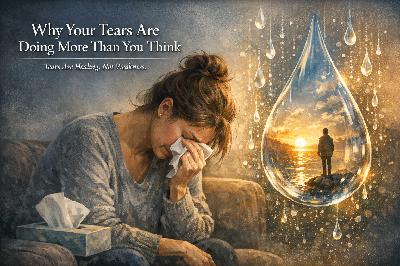
“I’m sorry,” she said, reaching for the tissue box. “I didn’t mean to cry.”I hear this in almost every session. Clients apologizing for their tears. As if grief should be neat and dry. As if showing emotion is something to be embarrassed about.But here’s what I always tell them: Please don’t apologize. This is exactly what’s supposed to happen.When I see tears in a session, I don’t see weakness or loss of control. I see processing. I see grief moving through someone instead of staying stuck inside them. Tears are one of the clearest signs that healing work is happening.Yet so many people fight them. They blink hard. Hold their breath. Push the wave back down. This is a public episode. If you'd like to discuss this with other subscribers or get access to bonus episodes, visit grief2growth.substack.com/subscribe

This morning, Tampa, Florida was colder than Juneau, Alaska.Let that sink in. The Sunshine State shivered at 27°F while the Alaskan capital sat at a balmy 33°F. Polar vortexes buckling. Weather patterns flipping upside down.And honestly? The weather is the least of it.Our leaders are being exposed as predators. Not just ripping us off economically. They’re actual sexual predators. The economy feels like a house of cards held together by hope, bubble gum, and duct tape. AI threatens to take all of our jobs. The institutions we trusted to hold things together seem to be crumbling in real time.If you’re feeling like the ground beneath your feet is shifting, you’re not imagining it. It is.So what do we do?I’ve spent nearly a decade helping people navigate the worst moments of their lives. After my daughter Shayna passed suddenly in 2015, I had to figure out how to survive when everything I thought I knew about life got ripped away. What I learned then applies now more than ever.There are three things we need to survive trying times. Not one. Not two. Three— working together.Be Realistic About Your SituationI am not a fan of spiritual bypassing.You know what I mean. That tendency to slap a “everything happens for a reason” sticker over genuine pain. To pretend things are fine when they’re clearly not. To “love and light” our way past real problems that demand real attention. Bull hockey.Sometimes things suck. And it’s not just okay to say they suck—it’s necessary.We cannot confront a problem until we realistically assess it. Denial isn’t protection. It’s just delayed reckoning.This doesn’t mean drowning in negativity, either. It means looking clearly at what’s in front of you. Acknowledging the difficulties without catastrophizing. Seeing reality as it is, not as you wish it were or fear it might become.That clear seeing? That’s where wisdom starts. That’s when we move to step two.Keep Faith That Love WinsHere’s where it gets tricky. Because after I tell you to be realistic, I’m going to tell you something that sounds like its opposite.I believe everything will turn out okay in the end.Not naive optimism. Not wishful thinking. Something deeper. Something earned through walking through the fire and coming out the other side.John Lennon said it best: “Everything will be okay in the end. If it’s not okay, it’s not the end.”This is my type of faith. Not faith that bad things won’t happen. Not faith that I’ll be spared difficulty. Faith that Love wins in the end. Always. No matter what it looks like in the middle of the storm.I’ve studied near-death experiences for years. I’ve talked to hundreds of people who’ve glimpsed what’s on the other side. And if there’s one consistent message they bring back, it’s this: Love is the only thing that’s ultimately real. And Love always wins.The arc of the universe bends toward light—even when you can’t see it. Take the Right Action at the Right TimeStep three. We don’t rest on the promise that everything’s going to turn out OK because Love isn’t passive. Love doesn’t win without us.Faith isn’t passive. It’s not sitting back and waiting for the universe to sort things out while we binge Netflix and doomscroll. Love needs hands. It needs feet. It needs us to show up and do the work.This is the third key, and it’s where it’s easy to get tripped up.Outrage moves fast, but it often moves wrong. How many times have you fired off that angry email, that heated social media post, that sharp word—only to regret it later? Reaction isn’t action. It’s reflex. And reflexes don’t solve complex problems.Despair, on the other hand, doesn’t move at all. It extinguishes the ability to act. It whispers that nothing matters, nothing will help, so why bother trying?The ground between outrage and despair—that’s where real change happens. Clarity first. Then action. Not before.Right action at the right time. Not too fast. Not too slow. Not paralyzed by fear. Not driven by rage. Discerned. Deliberate. Aligned with the deeper knowing that Love will prevail.Holding All ThreeThese three things aren’t a checklist. They’re a practice.Be realistic about your situation. Keep faith that Love wins. Take the right action at the right time.Not one of these alone. All three. Together. In dynamic tension with each other. Each one tempering and strengthening the others.Realism without faith becomes despair. Faith without realism becomes delusion. Either one without action becomes impotence.But all three together? That’s how we survive. That’s how we do more than survive. That’s how we transform.I won’t pretend these are easy times. They’re not. The polar vortex isn’t just disrupting weather patterns—it feels like everything is getting scrambled. Old certainties are melting. Trusted structures are buckling.But I’ve seen what humans are capable of when they hold these three things together. I’ve watched people walk through unimaginable loss and come out transformed. Not unchanged—transformed. Deeper. More compassionate. More alive.We’re going to get through this. Not because things will magically get easier. But because Love wins. It always has. It always will.And because people like you are willing to do the work. To see clearly. To trust deeply. To act wisely.That’s enough. It’s always been enough.What’s helping you hold it together right now? I’d genuinely like to know. Leave a comment below or reach out—these conversations matter more than ever. This is a public episode. If you'd like to discuss this with other subscribers or get access to bonus episodes, visit grief2growth.substack.com/subscribe

TL;DRI’m 51/100 of the way to Substack Bestseller status. I’m offering limited-time discount tiers ($2, $4, or $6/month for your first year) until I hit 100 paid subscribers—then they close forever. Only 49 spots left. This is my full-time work, and paid subscriptions help sustain the mission: creating space for honest wrestling with faith, questions, doubt, and hope.Scroll down to see the discount tiers.Since you’re reading this, there’s a better than 98% chance you’re a free subscriber.That’s not hyperbole—it’s math. About 1.5% of the people who subscribe to this newsletter pay for it. Which means that when I put something behind a paywall, 98% of the people who might be interested in it won’t see it.That’s why I rarely paywall anything. I want these reflections, questions, and stories to stay accessible—whether or not someone can pay.But here’s the hard truth: this work isn’t free to create. So today, I want to share why I have a paid option, why it matters, and how even one subscription can make a real difference. This is a public episode. If you'd like to discuss this with other subscribers or get access to bonus episodes, visit grief2growth.substack.com/subscribe

I don’t know how to do this.You were the first to see me in the morning and the last at night. My days began and ended because you were there to hold them.When I had a good day, you made me tell it again, so we could live it twice.When I had a bad one, you listened while I unloaded everything, never trying to fix the weight of it. Just being with me. This is a public episode. If you'd like to discuss this with other subscribers or get access to bonus episodes, visit grief2growth.substack.com/subscribe

I was so excited about coming to Earth.I had it all planned out.The people I would love.The life I thought I was going to live.I couldn’t wait.I heard Earth was this great adventure.And just before I left, as I was turning toward the door,someone gently pulled me aside.Not urgently.Not dramatically.Just enough to make me stop.And they said:One last thing.Before you go, there are a few things to remember.You will forget almost everything.Where you came from.Why you chose this life.How certain you were that love would survive even death.This forgetting is not a mistake.It’s the cost of total immersion.You are not being sent.You are volunteering.You will enter a body that feels vulnerable.A world that feels heavy.Time will move only in one direction,and answers will not arrive on schedule.That’s part of the design.You will love deeply,and you will lose.Not as punishment,but as initiation.When someone you love leaves their body,it will feel like the end of everything.It is not.It is a change in how love speaks.Love does not end.It learns a new language.You will be tempted to believe that silence means absence.It doesn’t.Some forms of communication are quieterand require stillness to hear.You will feel anger—at God,at fate,at the very idea that this was planned.Your honesty matters more than your politeness.Do not rush your grief.Grief is not something to fix.It’s something to listen to.You will try to return to who you were before.You cannot.That version of you completed its assignment.You are here to become someone who can holdboth love and loss,certainty and mystery,attachment and freedom.There will be moments when you wonderif any of this mattered.It did.It does.It will.And when the homesickness comes—the longing for something you can’t quite name—remember this:Even the most beautiful journeycreates a desire to go home.And after everything—the loving,the losing,the questioning—there is one thing I hope you remember.When you’re there,there will be voices.Oh yes, there will be many voices.Some will tell you that your body is all there is.That there was nothing before,nothing after,and that nothing really matters.Other voices will tell you that they have all the answers.That if you just follow them,believe what they say,do what they do,everything will be fine.And if you don’t listen,they will threaten you—with guilt,with fear,with punishment.Here is the key, my friend.The voice you’re listening foris not out there.It’s the one inside you.The still, small voice within.Now, you won’t be able to remembereverything I’m telling you now.The greater part of youwill be left here.But if you can remember this—if you can remember to turn within,to listen beneath the noise—you will be fine.When your time there ends,you will not be evaluatedby how productive you were,or how well you performed.You will be recognizedby how deeply you loved.The relationships you havedo not end at death.They mature.You’ve done this before.You will do it again.For now, forget.You’ll rememberwhen it matters most This is a public episode. If you'd like to discuss this with other subscribers or get access to bonus episodes, visit grief2growth.substack.com/subscribe

I’m a solar-driven person.All year long, we’re told that after December 22nd, “the light returns.”It sounds dramatic. Reassuring. Almost instant.But that’s not really how it works.The winter solstice isn’t the sudden return of light — it’s simply the end of the descent into darkness.The turnaround is real, but it’s subtle. At first, the change is measured in seconds, not minutes.Sunrise still comes painfully late. The days don’t suddenly feel brighter. You have to trust the math, not your mood.And yet… something important has shifted.By the end of January, here in Ohio, we’ll gain roughly 40 minutes of daylight. Not all at once. Not evenly. Day by day. Small, almost imperceptible changes that quietly add up.Grief works the same way.When someone we love dies, we often wait for the day the light comes back — the morning we wake up and feel like ourselves again. But healing doesn’t arrive like flipping a switch. It arrives like January sunlight: slowly, inconsistently, sometimes so subtly you doubt it’s happening at all.First, it’s a second of peace.Then a moment where you breathe without effort.Then a short walk that doesn’t feel as heavy.Then one evening where the darkness doesn’t last quite as long.You’re not failing because the light hasn’t flooded back yet.You’re adjusting — one day, one second, one small shift at a time.The light is returning.It just doesn’t announce itself.And maybe that’s the most honest kind of hope there is. This is a public episode. If you'd like to discuss this with other subscribers or get access to bonus episodes, visit grief2growth.substack.com/subscribe

Something is happening right now that feels different.It’s not just the headlines.It’s not just politics.It’s not even just fear or anger.It’s the feeling of being constantly provoked. This is a public episode. If you'd like to discuss this with other subscribers or get access to bonus episodes, visit grief2growth.substack.com/subscribe

I didn’t expect to encounter an old fear when I started watching Pluribus.I thought I was just watching a piece of science fiction.Instead, I found myself staring directly at a fear I’ve been circling for years—one that has changed shape many times over my life. It’s the fear(s) of death. It’s not a single fear, but a progression: fear of punishment. Then, fear of annihilation— nothingness. That fear was then eased by the belief that we continue without punishment. And then—unexpectedly—fear stirred again by the idea of Oneness itself. A different form of annihilation— being absorbed.Here’s where I’ve been and where I am now with this ever-changing fear of death. This is a public episode. If you'd like to discuss this with other subscribers or get access to bonus episodes, visit grief2growth.substack.com/subscribe
Fresh grief doesn’t need fixing. It needs room to breathe.There is a moment—often right after the casseroles stop coming—when people start reaching for words they hope will help. Platitudes arrive dressed as comfort. God needed another angel. You’re young—you can have more children. You’re young—you can find someone else. These phrases may be well-intended, but in fresh grief they land like stones. They ask you to move on before your nervous system has even caught up with what happened. There’s a time to look forward to brighter days.This is not that time. This is a public episode. If you'd like to discuss this with other subscribers or get access to bonus episodes, visit grief2growth.substack.com/subscribe

When my daughter Shayna passed, I was searching for anything that could help me make sense of my grief. That’s when I discovered the animated film Coco. Like many, I found comfort in its message—that our loved ones continue to “live” as long as we remember them. It was beautiful, heartwarming, and—at the time—exactly what I needed.But now, with the spiritual understanding I’ve gained over the years, I have to take a step back and say: That’s not the whole story.🎬 What Is Coco About?For those unfamiliar, Coco is a Disney/Pixar film set during Día de los Muertos—the Day of the Dead, a Mexican tradition honoring those who have passed on. It follows a young boy named Miguel who accidentally crosses into the Land of the Dead. There, he meets his ancestors and learns that spirits only continue to exist as long as someone in the living world remembers them. Once they are forgotten, they experience what the movie calls the “Final Death”—a kind of second, permanent disappearance.The film’s emotional arc hinges on the idea that remembering our loved ones keeps them “alive.” It’s a powerful message, especially for grieving hearts—but it’s also one that deserves a closer look.🧠 A Quantum Analogy—Misapplied?Coco's view echoes a popular interpretation in quantum physics: that the presence of an observer determines what becomes “real.” But in this case, it’s suggesting that we—the ones left behind—are the only observers that matter. That our remembering gives our loved ones form, and when that memory fades, so do they.But let me ask you: Is that really all there is to them?🌌 Our Loved Ones Are Not Dependent on Our MemoryThe truth I’ve come to understand is this: Our loved ones are not figments of memory. They’re not just echoes or shadows living in our stories. They continue to exist—not because we remember them, but because they are real, alive in a world just as real (if not more real) than the one we live in now.When our loved ones cross over, they don’t go into some memory-shaped dimension held together by photo frames. They go Home. A place of joy, wholeness, love, and growth. They are doing their own work, evolving, watching over us—not passively waiting in a purgatory of our minds, but thriving in a reality where they are central, just as we are here.🙏🏽 Memory Matters—But It’s For UsNow, don’t get me wrong—memory is important. Coco captures something profoundly human about the way we carry those we love. Remembering helps us heal. It helps us feel connected. It helps keep our relationships alive in our hearts.And it’s natural to worry about losing that connection. Most of my clients, at some point, share a fear that their loved one will be forgotten—especially when that person was young, or had only been known for a short time.When Shayna passed at just 15, we set up a scholarship fund in her name to help keep her memory alive. I worried she might fade from people’s lives. Her friends had only known her for a few short years. But now, a full decade later, I’m amazed by how many of them still remember her—really remember her—and keep her spirit close in their lives.At one point, I worried Shayna would become “only a memory” to me… that she might become less real as time went on. But now I know those fears were unfounded. My grandmother passed over 40 years ago, and I can still picture her face, hear her voice, feel the touch of her hands. The connection is still there. It’s in my bones.This fear—that our loved ones will be forgotten—is deeply human. But it’s not something that will happen. Whether or not we build memorials, create scholarships, or write books, their legacy lives on. Those things are beautiful and meaningful—yes—but if you never do any of them, your loved one’s essence, their impact, their love, will not be diminished.They are remembered in the very fabric of your being. And beyond memory, they exist—not as a thought, but as a soul.🏠 Earth Is Not the Center. This Is Not Home.One of the biggest misconceptions we hold is that this life, this Earth, is the center of it all. That the real action stops when someone dies. But in reality, this is school, not Home. And when our loved ones graduate, they don’t vanish—they go back to where we all come from.And yes, they’re still connected to us. They send signs. They visit in dreams. They whisper into our intuition. But they’re not floating in some half-existence, waiting to be remembered so they can stay alive. They are fully alive. And when it’s our time, we’ll see them again—not as distant memories, but as vibrant souls continuing their journey.❤️ I Still Love Coco—But I No Longer Believe Its PremiseI want to be clear: Coco helped me. It opened my heart at a time when I needed it. But now, I see its central message as limited. Comforting, yes—but incomplete. And sometimes, our grief needs more than poetry. It needs truth.The truth is, your loved one is still with you. Not because you remember them—but because you are forever connected, soul to soul. And no “Final Death” will ever change that.✍🏽 Join the ConversationIf this perspective resonates with you—or if Coco meant something to you during your grief—I’d love to hear your thoughts. You’re not alone.And neither are they.— Brian This is a public episode. If you'd like to discuss this with other subscribers or get access to bonus episodes, visit grief2growth.substack.com/subscribe

I’m a solar-driven person.All year long, we’re told that after December 22nd, “the light returns.”It sounds dramatic. Reassuring. Almost instant.But that’s not really how it works.The winter solstice isn’t the sudden return of light — it’s simply the end of the descent into darkness.The turnaround is real, but it’s subtle. At first, the change is measured in seconds, not minutes.Sunrise still comes painfully late. The days don’t suddenly feel brighter. You have to trust the math, not your mood.And yet… something important has shifted.By the end of January, here in Ohio, we’ll gain roughly 40 minutes of daylight. Not all at once. Not evenly. Day by day. Small, almost imperceptible changes that quietly add up.Grief works the same way.When someone we love dies, we often wait for the day the light comes back — the morning we wake up and feel like ourselves again. But healing doesn’t arrive like flipping a switch. It arrives like January sunlight: slowly, inconsistently, sometimes so subtly you doubt it’s happening at all.First, it’s a second of peace.Then a moment where you breathe without effort.Then a short walk that doesn’t feel as heavy.Then one evening where the darkness doesn’t last quite as long.You’re not failing because the light hasn’t flooded back yet.You’re adjusting — one day, one second, one small shift at a time.The light is returning.It just doesn’t announce itself.And maybe that’s the most honest kind of hope there is. This is a public episode. If you'd like to discuss this with other subscribers or get access to bonus episodes, visit grief2growth.substack.com/subscribe

Some conversations don’t end when the recording stops.They linger.They echo.They rearrange something inside you.This conversation with Angela Jean did that for me.I’ve spent years exploring grief—my own, and the grief of others. I’ve talked with countless people about loss, trauma, and what it means to keep living when life no longer makes sense. And yet, this episode slowed me down in a different way. It didn’t just speak to the mind. It spoke to the body.Angela didn’t offer a neat framework or a motivational soundbite. She offered something deeper, more honest, and frankly more challenging:Healing doesn’t start with your thoughts.It starts with your nervous system.And once you see that, it’s hard to unsee.When Healing Doesn’t Work the Way We’re Told It ShouldMany of us come to healing the same way.We read the books.We repeat the affirmations.We try to “think differently.”And when that doesn’t work, we assume we’re the problem.But trauma doesn’t live in the rational part of the brain. Grief doesn’t ask for permission before it floods the body. Loss doesn’t wait until the mind is ready to process it.That’s why so many people feel stuck.They’re doing everything “right,” but their body is still bracing. Still guarding. Still rehearsing danger.This is where nervous system healing after trauma becomes essential. Not as a buzzword. Not as another thing to fix. But as a compassionate explanation for why willpower alone doesn’t work.Angela articulated something I’ve seen again and again in grief work:The body often remembers long after the mind understands.Angela Jean’s Story: Survival Before LanguageAngela’s life story is not easy to hear.She experienced severe physical and sexual abuse as a child. She left home at thirteen because it was safer to sleep in bushes than to stay. Survival, not metaphorically but physically, became a daily reality.Later, she lost her father and her sister to suicide.That kind of trauma doesn’t just leave emotional scars. It shapes the nervous system. It teaches the body to stay alert, guarded, prepared for impact.Listening to Angela, I was struck by how clearly she could name this—not from theory, but from lived experience.Her healing didn’t begin when she finally “thought positive enough.”It began when she realized her body had been doing exactly what it was trained to do:keep her alive.That reframe matters.Once we stop seeing our responses as failures, we can start working with them rather than against them.“The Body Remembers Before the Mind”This may be the most important takeaway from the entire conversation.Trauma happens fast.Grief happens fast.The nervous system reacts before language can catch up.That’s why you can feel tightness in your chest with no clear thought attached.That’s why anxiety shows up “out of nowhere.”That’s why you can logically know you’re safe—and still feel like you’re not.For those of us who’ve experienced sudden loss, this makes perfect sense.Grief arrives like a shockwave. The body absorbs it before the mind can make meaning of it. And long after the funeral is over, the body may still be bracing for another blow.Understanding this changed the way I think about healing—not just personally, but professionally.It shifts the question from “What’s wrong with me?”to “What did my body learn, and how can I help it feel safe again?”Rhythm, Safety, and Why the Body Needs ProofOne of the most fascinating parts of Angela’s work is her emphasis on rhythm.Rhythm signals safety.We see this everywhere in nature. In breathing. In heartbeats. In music. In walking. In rocking a baby to sleep.Angela discovered that rhythmic thought patterns—combined with gentle movement—can interrupt the nervous system’s survival loops. Not by force. But by reassurance.Safety isn’t an idea.It’s a sensation.And for many trauma survivors, the body doesn’t believe words alone. It needs proof.This reframed something important for me. I’ve often encouraged mindfulness, meditation, and reflection. Those tools matter. But they don’t always meet people where they are.Sometimes the body needs to feel soothed before the mind can settle.Trauma Imprints: When Love and Pain Get EntangledOne of the most heartbreaking moments in the conversation was when Angela described realizing that love had been imprinted as pain.Not metaphorically. Literally.As a child, she learned—at a cellular level—that closeness came with danger. That love hurt. That safety was conditional.This isn’t uncommon. I’ve seen it repeatedly in grief and trauma work.People don’t consciously choose harmful relationships.They follow familiar patterns that feel normal to their nervous system.Angela’s insight was simple and profound:If you don’t interrupt the imprint, you’ll keep rehearsing it.That applies not only to relationships, but to how we treat ourselves. How we overextend. How we self-abandon. How we tolerate what hurts because it feels known.Healing begins when we catch the pattern in the body, not just in hindsight.Anger, Depression, and Listening Instead of SuppressingI appreciated Angela’s clarity around anger and depression—two emotions that often show up in grief.Anger is expansive.Depression is collapsing.They are different energies. And they need different responses.We’re often told to calm anger and push through sadness. But Angela suggests something more nuanced: meet the energy where it is.Sometimes anger needs movement.Sometimes depression needs expansion.Sometimes the body needs permission to release instead of being managed.This aligns deeply with what I’ve seen in grief. Suppressed emotions don’t disappear. They wait.Listening doesn’t mean indulging every impulse. It means respecting the intelligence of the body.“You Are Who You Train to Be”This line landed hard for me.Because it’s honest.We are always training something—whether we mean to or not. Our nervous system rehearses what it knows. Our thoughts follow familiar grooves. Our reactions become habits.Healing, then, isn’t a single breakthrough.It’s a practice.Angela talks about micro-resets. Small, consistent interruptions. Catching the moment of tightening. Pausing before collapse. Choosing safety again and again.This resonates deeply with my own journey.Grief doesn’t end.But our relationship with it can change.And that change happens through repetition, not revelation.From Personal Healing to Collective HealingOne of the things I admire most about Angela is her sense of responsibility.Not obligation—but stewardship.She believes that those who heal carry something forward for others. That healing isn’t just personal—it’s relational.I believe this too.Grief 2 Growth exists because I know pain doesn’t have to be wasted. When we tend to our own nervous systems, we show up differently. We listen better. We react less. We offer steadier presence.And in a world that feels increasingly dysregulated, that matters.An Invitation, Not a ConclusionIf you’re reading this and recognizing yourself—your body, your patterns, your exhaustion—I want you to hear this clearly:You’re not broken.You’re not failing at healing.Your nervous system may simply be doing what it learned to do.And that can change.Not overnight.Not perfectly.But gently. Repeatedly. Compassionately.A reflection for you:Where might your body still be rehearsing survival—and what would safety feel like instead?Continue the ConversationIf this resonated with you, I invite you to listen to the full episode with Angela Jean. Her voice, her presence, and her clarity offer something that words alone can’t capture.And if you want to go deeper, subscribe.I’d love to hear:* What stood out to you* Where you feel this in your body* What questions this stirred upComment. Share. Join the chat. Subscribe.Healing doesn’t happen alone—and none of us were meant to carry this by ourselves. This is a public episode. If you'd like to discuss this with other subscribers or get access to bonus episodes, visit grief2growth.substack.com/subscribe This is a public episode. If you'd like to discuss this with other subscribers or get access to bonus episodes, visit grief2growth.substack.com/subscribe

Grief can break us open in deep ways. Sometimes it reveals truths we never expected. Other times it shows us parts of ourselves we never knew were missing. When Rich Boerner lost his mother, he expected sadness. He expected longing. He expected the familiar ache that comes when a loved one dies.But he did not expect a discovery that would completely rewrite his identity.In this article, we explore how family secrets and identity shaped Rich’s journey. His story invites us to examine our own stories, especially the parts shaped by silence or confusion. You will also see how healing can arrive through connection, curiosity, and compassion.This article is based on my conversation with Rich on the Grief 2 Growth podcast. His insights remind us that even painful truths can become doorways to understanding.Growing Up “Different” — The Unspoken Stories We CarryRich grew up in New York during the 1970s. His mother was a single parent, and his father was never part of his life. He learned early that some families operated with quiet gaps. Those gaps shaped beliefs. They shaped identity. They shaped how he saw himself in relation to others.Children often fill in missing pieces with imagination. Sometimes they assume blame. Sometimes they assume they are not worthy of answers. Rich carried those questions for years. Yet he also carried deep love and admiration for his mother. She worked hard. She protected him. She built a world where he felt safe.But silence can create its own gravity. It can pull us toward stories that may not be true. Those unspoken stories begin shaping our adult lives long before we notice.This tension between love and silence lives at the center of many conversations about family secrets and identity. Rich’s experience shows how these forces can guide us without our awareness.The Day Everything Changed — Losing His MotherRich’s mother survived ovarian cancer. Her strength inspired him. Her resilience became a defining part of his life. When someone fights that hard, you begin to see them as unbreakable.But life can shift in a single moment.His mother fell. She suffered a head injury. Her death came quickly. Rich had no time to prepare. He moved from relief to shock in an instant.Losing a parent often feels like losing the anchor that holds your story in place. For Rich, her death created an emotional void. But it also cleared space for truths that could no longer stay hidden.Grief sometimes removes the barriers that protect secrets. When life changes that fast, we search for something steady. Rich searched for that steadiness as he cleaned out her small apartment. Instead, he found something else.He found clues.Discovering the Secret — Letters, Clues, and a New IdentityWhile sorting through drawers, boxes, and old papers, Rich discovered letters that did not make sense. He found documents that hinted at something hidden. The man he believed was his father had not been his father at all.This realization shook him. It twisted grief into confusion. It changed sadness into betrayal. Identity sits on quiet foundations. We build our lives on the stories we believe. When those stories collapse, we feel unsteady.Rich learned that his mother had loved him fiercely. But she had also held back a truth. She may have done this to protect him. She may have done it to protect herself. Secrets often arise from pain, not malice.Still, he now had to face the intersection of family secrets and identity. Who was he? Why had the truth been hidden? Was he allowed to feel angry at someone he loved so deeply?These questions marked the start of his next chapter.Anger, Betrayal, and the First Steps Toward ForgivenessAnger can feel like a shield. It can protect us when we feel hurt. Rich felt anger. He felt betrayal. He wondered what life might have looked like if he had known the truth sooner.But grief has layers. When the anger softened, he began asking new questions. What pain had his mother carried? What fear had shaped her silence? How many choices do parents make because they believe they are protecting their children?Forgiveness rarely arrives quickly. It arrives slowly, like soft rain. It changes us one drop at a time.Rich began to understand that secrets often come from fear, not deceit. They come from wounds. They come from the need to survive. This awareness opened the door to compassion. Compassion opened the door to healing.As he walked this path, something unexpected happened.He found family he never knew existed.Meeting His Half-Sister — Connection That HealsThrough research and DNA tests, Rich discovered he had a half-sister. Their first connection felt surreal. She was a stranger who shared his history. She carried stories he never knew. She carried pieces of his identity he had missed.Their meeting changed everything. Her presence softened the pain. Her life offered context. She helped him see his parents as complex people, not puzzles.Their relationship became proof that healing often happens through connection. When we feel seen, we feel grounded. When someone understands us, identity feels less fragile.This part of Rich’s story offers a powerful lesson. New relationships can heal old wounds. When we open the door to truth, we often find love waiting behind it.Redefining Identity as an AdultRebuilding identity as an adult is hard. It requires patience and honesty. It requires sitting with questions that feel uncomfortable.Rich leaned on humor. He leaned on curiosity. He leaned on the desire to grow, not collapse. He described this journey with honesty and lightness. He said one line that stayed with me:“Identity is not a fixed thing. It grows with us, just like grief grows with us.”He is right. Identity expands. It shifts with experience. It moves when truth arrives. Many listeners reached out after the episode to say they had lived similar journeys. Many had discovered their own family secrets later in life.Secrets shape identity, but they do not define it. What defines us is how we respond.Rich responded with grace.Why He Wrote The Not So Only ChildWriting the book was not an act of revenge. It was an act of love. It was a tribute to his mother. It was a way to understand her choices. It was a way to help his children understand their own story.Rich wanted to help people feel less alone. Family secrets can isolate us. They can make us wonder if anyone else has lived this confusion. His book reminds us that we are not alone. Many families carry hidden truths. Many children grow up with unanswered questions.Writing helped him heal. Sharing helped others heal. Storytelling becomes a bridge when secrets have built walls.What Rich’s Story Teaches Us About HealingRich’s journey reflects many truths about grief. It shows how love and anger can live in the same heart. It shows how silence can damage identity, even when silence feels safe. It shows how connection can repair what was broken.Here are key lessons for anyone dealing with family secrets and identity:* Secrets often hide pain, not malice.* Clarity can feel painful, but confusion lasts longer.* Forgiveness does not erase the past. It softens it.* New relationships can bring healing.* Identity is never final. It grows with us.* Grief invites transformation if we stay open.These lessons can guide anyone navigating complex family histories.Turning Grief Into GrowthRich’s story highlights a core truth. Grief is not the end of the story. It is the opening chapter of transformation. Grief pushes us inward. It forces us to examine beliefs and identity. It invites us to ask deep questions.His journey reminds us that the truth, even when painful, brings freedom. It brings clarity. It opens new paths. It reveals new family. It deepens understanding.When we face truth with courage, growth becomes possible. This is a public episode. If you'd like to discuss this with other subscribers or get access to bonus episodes, visit grief2growth.substack.com/subscribe This is a public episode. If you'd like to discuss this with other subscribers or get access to bonus episodes, visit grief2growth.substack.com/subscribe

Introduction: When Grief Takes EverythingThere is a kind of loss that breaks the world in half.If you are reading this, you may know that kind of loss—where life divides into a before and an after, and nothing in the “after” looks familiar.I know this kind of loss because I lost my daughter, Shayna. Her death shattered me, and it reshaped every belief I once held about myself, life, and God.But when I met Michael Reed, I encountered someone who had lived through a storm even larger than the one I thought would drown me.Michael lost his wife, Constance, and their daughters, Chloe and Lily, in the 2016 Gatlinburg fires. His story is one of those that makes people whisper, “I don’t know how he survived.” Yet here he is—living, speaking, writing, loving, and continuing on a path that nobody should ever have to walk.As we talked, I realized something important:Michael is a living example of what healing after unimaginable loss can look like—not perfect, not complete, but possible.And that possibility matters. It matters to me. It matters to anyone living in the after.Michael Reed’s Story: A Life Split in TwoEvery grieving parent knows the moment their world split. Michael’s moment was the night the fires swept through Gatlinburg. One instant, life was whole. The next, everything he loved most had been taken.Michael speaks of his wife and daughters with a warmth that fills the room. You can feel them when he talks—Constance’s strength, Chloe’s spark, Lily’s light. They are still present in him, woven into every sentence and every silence.He told me, “My life didn’t end that night, but the life I knew did.”I felt those words deep in my body.Loss like this doesn’t just break you. It empties you. It leaves you standing in a place you never imagined, looking at a future you never asked to face.And yet, somehow, Michael continues to walk forward.When His Loss Reflected My OwnWhen two grieving parents talk, there is no need to explain the invisible things. You don’t have to justify why a certain song ruins your day. You don’t have to explain why holidays feel like emotional landmines. You don’t have to defend why you still talk about your child.Michael and I understood each other immediately.He experienced multiple losses at once, while I lost one beloved daughter. And yet the grief connected us without comparison or hierarchy.Grief doesn’t measure itself.Pain doesn’t need a scale.What struck me most was not how much he had endured, but how much of him remains. How he still carries love. How he still held hope. How he still speaks with tenderness about what matters most.His story doesn’t make our grief smallerIt makes our possibilities larger. We can endure much more than we think we can.He showed me that even when grief swallows everything, something in us still looks for the light.Why “The Five Stages of Grief” Don’t Describe Real LifeBoth Michael and I have been told we’re grieving “wrong.”People want grief to be tidy. They want steps. They want an ending. They want a checklist that reassures them that pain can be organized and completed like a home project.But Michael said something I’ve felt for years.“There aren’t five stages. There are a million.”His book title reflects this truth.Grief doesn’t march forward in predictable lines.It spirals, pauses, surges, quiets, and blindsides.It’s messy. It’s human. It’s alive.When you’ve suffered a loss like ours—when healing after unimaginable loss becomes your daily work—you stop looking for stages. You start learning to breathe again. You start learning to feel again. You start rebuilding your relationship with yourself, one fragile moment at a time.The Moment Michael Chose LifeMichael shared the moment he almost didn’t continue. The weight became too heavy. The silence too loud. The memories too sharp. Many parents who have lost children reach a point where life itself feels impossible.I’ve stood near that same place.But something in him refused to let go.A quiet voice.A thread of connection.A sense that his story wasn’t finished.Healing after unimaginable loss doesn’t come from a single choice. It comes from choosing again and again—not to give up, not to fade away, not to surrender the parts of yourself that grief didn’t take.Michael chose life in the smallest of ways before it became noticeable in bigger ways. And that’s how healing always begins—tiny decisions that feel insignificant until, one day, you look back and realize they saved you.Men and the Silence of GriefThis is a subject that hits home for both of us.Men are taught to be strong, stoic, steady. We’re taught that tears are weakness. We’re taught that vulnerability is a burden. And when our children die, those messages become suffocating.Michael breaks that pattern.I try to break it too.He cried. He talked. He wrote. He let himself be broken.And in doing so, he created space for other men to breathe.Healing after unimaginable loss requires honesty.It requires softness.It requires courage far greater than silence.The strongest thing a grieving man can do is tell the truth about his pain.Wrestling With God After TragedyThis is where Michael’s story and mine intertwine again.Both of us still have a relationship with God.But neither of us attends church anymore.And that may confuse people who assume those two things must go together. But grief changes how you connect with the divine. After loss, some words ring hollow. Some rituals feel distant. Some communities feel too cheerful, too shallow, too eager to fix something that cannot be fixed.For many grieving parents, church becomes a place where they feel misunderstood.Michael didn’t lose his faith.He lost his place in the institution.I relate.My conversations with God got more honest.My questions got sharper.My understanding got wider.But my ability to sit in a pew and pretend everything was fine disappeared.What remains for both of us is a relationship with God that is personal, raw, and real.Not organized.Not polished.Not structured.Just true.Faith Outside of Church: The Quiet Way Back to GodSome people think that stepping away from church means stepping away from God. But what I’ve learned—and what Michael lives every day—is that faith can survive even the worst fire.It doesn’t need stained glass or sermons.It doesn’t need a building.It doesn’t need approval.It needs honesty.It needs room.It needs the freedom to question.Healing after unimaginable loss often means rebuilding your spiritual life from the ground up. Many grieving parents discover a God who walks with them through the ruins, not a God who lives at the front of a sanctuary.God became quieter for both of us—but also closer.Using Pain to Change the World One Person at a TimeMichael writes so others won’t feel alone.I podcast so others won’t feel alone.Our work is different, but our purpose is shared.Grief took what seemed like everything from us, and yet somehow it gave us something too—a mission to make sure no grieving parent walks in darkness without at least one hand reaching out to them.Michael told me that if he can help one person, it’s worth the pain of telling his story. I feel the same way every time I publish an episode or write a reflection.Pain transformed into service becomes something sacred.It becomes the quiet heartbeat of hope.What Michael Taught Me About the Human SpiritThere are conversations that stay with you long after the cameras turn off.My conversation with Michael was one of them.He taught me that the human spirit can survive even the most catastrophic loss—not by forgetting, not by moving on, but by loving so fiercely that even death can’t extinguish it.He taught me that grief can take everyone you love and still not take everything you are.Most of all, he reminded me that healing after unimaginable loss is not only possible—it is happening, right now, in ways we often don’t recognize.In every tear.In every honest conversation.In every moment we choose to keep going.In every breath we take for a child who no longer breathes.Healing doesn’t mean the end of pain.It means the continuation of love.Key Takeaways* Healing after unimaginable loss is not linear.* We don’t move on—but we can move forward.* Men grieve deeply but often silently. Speaking helps.* Faith can survive outside traditional structures.* God walks with us even when church no longer fits.* Purpose often grows from pain.* Connection with others who “get it” is essential for survival.* Grief doesn’t shrink with time. We grow around it.A Closing InvitationIf Michael’s story touched you, I invite you to share your heart in the comments.Tell us about your loved one.Tell us what helps you keep going.Tell us what you wrestle with.Your story matters here.If this resonated with you, please share it with someone who feels alone in their grief.You never know whose life you might steady with a single gesture.And if you want more reflections like this—gentle honesty, spiritual exploration, real conversations about grief—join me on Substack:👉 We heal together.We carry each other.And we survive the unimaginable by refusing to walk alone. This is a public episode. If you'd like to discuss this with other subscribers or get access to bonus episodes, visit grief2growth.substack.com/subscribe This is a public episode. If you'd like to discuss this with other subscribers or get access to bonus episodes, visit grief2growth.substack.com/subscribe

This is a public episode. If you'd like to discuss this with other subscribers or get access to bonus episodes, visit grief2growth.substack.com/subscribe This is a public episode. If you'd like to discuss this with other subscribers or get access to bonus episodes, visit grief2growth.substack.com/subscribe

When I sat down with Samina Bari, I expected a meaningful conversation. We scheduled this interview months ago. I did not expect her story to echo my present life so closely. Many of you know my friend Mike passed earlier this year. He and his wife, Lisa, are two of my closest friends. We live just a few yards apart and spent nearly one evening every weekend together.My wife and I have been walking beside her through the fog, shock, and numbness. I have tried to show up with care, even when I do not know the right words.So when Samina told me her husband Doug died suddenly in 2023, something inside me froze. This interview was not only professional. It was personal. It was timely. It was needed. And, strangely, Mike and Doug passed on the same day— April 7, one year apart.This article is about supporting a grieving spouse. It is about what helps, what hurts, and how we can love better. It is also about what Samina taught me through her courage, her honesty, and her willingness to share her heart.If you love someone who is grieving, I hope this reaches you today.If you are grieving, I hope you feel seen.The Day Everything ChangedSamina and Doug had been together for twenty-one years. They shared dreams, meals, inside jokes, twin daughters, and a life built from deep love.Then, one ordinary evening, Doug went out to see friends. He never made it home.Samina told me:“It felt like I left my body. My mind could not process what happened.”She described shaking uncontrollably. She described shock so sharp it robbed her of the ability to think. She described a silence so big it filled the room.She told me she could not recall conversations. Friends later told her she had spoken. But she has no memory of those moments. Her brain protected her by shutting down the parts that hurt the most.When someone loses a spouse suddenly, they lose more than a person. They lose the anchor. They lose safety. They lose the story they believed they were living.Supporting a grieving spouse during this time requires patience. It requires presence. It requires humility. There is no fixing. There is only sitting with the unbearable.Grief Brain Is RealOne of the most important ideas Samina explained was grief brain. She described it as:* memory loss* confusion* impaired decision-making* emotional numbness* difficulty concentrating* constant overwhelmShe said she could not drive. She could not eat. She could not track time. She could not organize her thoughts. Her brain simply stopped functioning in familiar ways.She told me:“I couldn’t remember if I had showered or eaten. Everything disappeared.”This is biology. The brain shuts down non-essential functions under trauma. And sudden spousal loss is trauma in its purest form.If you are supporting a grieving spouse, know this:* They are not lazy.* They are not distracted.* They are not “not trying.”They are wounded in a way you cannot fathom.I saw grief brain in myself after my daughter passed. I have watched it in parents I supported. It is real. It is heavy. It takes time.Solo Parenting Is Not Single ParentingSamina talked about raising twin daughters after Doug’s death. She spoke with love. She spoke with exhaustion. She spoke with a truth rarely acknowledged.She told me:“Single parenting is a choice or a circumstance. Solo parenting is being completely alone.”When a spouse dies, every decision falls to the surviving partner:* school choices* financial planning* emotional support* bedtime routines* medical decisions* grief management* safety* discipline* comfort* daily logisticsThere is no backup parent.There is no one to debate choices with.There is no one who loves the children like the one who is gone.Supporting a grieving spouse with children means offering very practical help:* drive the kids* take them to the park* give the parent space to cry* help with meals* help with paperwork* help with appointments* help with homework* help with rest* help with realityThis is not optional help. It is life support.The Word “Widow” and Its WeightI will not reveal the full reason Samina finds the word “widow” so ugly. It’s in the interview. You should watch or listen. She shares the deeper story in the episode. But I will tell you this much.When she said the word, I felt it hit my chest.It felt heavy.It felt cold.It felt wrong.A few days after Mike passed, the word widow came into my mind. It just didn’t seem right for Lisa. I instantly hated the word. It felt like a word that pushed her into another category. A lonely one. A sad one. A category with a door that locks behind you.Samina said:“It does not define me.”And I understood exactly why.Supporting a grieving spouse means honoring their identity.Not defining them by loss.Not assigning them a label they did not choose.The Loss of Past, Present, and FutureOne of the deepest moments in our conversation came when Samina explained the three layers of loss.Loss of the past:No one remains who shares those memories.No one is there to validate the moments.No one remembers the details the way Doug did.Loss of the present:Every habit changes.Every routine collapses.Every room feels different.Loss of the future:This was the hardest part for Samina.She told me she cannot picture herself older.She cannot imagine retirement.She cannot see decades ahead.Her mind stops before it reaches those images.She said:“My dreams died with him.”Supporting a grieving spouse means understanding this:They are not only mourning a person.They are mourning the past they lived.They are mourning the present they hold.They are mourning the future they expected.It is grief in three directions.What Actually Helps (and What Hurts)Every grieving spouse hears two phrases:* Call me if you need anything.* Let me know what I can do.These words feel supportive on the surface.But they create pressure.They place the burden of planning on the person who can barely think.Many grievers hate them.Samina said:“Just do something. Anything. Do not wait to be asked.”Here is what actually helps:* bring meals* portion them* label them* clean the dishes* take kids out* send a short text* sit quietly* listen* say the spouse’s name* run errands* offer rides* handle forms* schedule appointments* shovel the driveway* fold laundry* go with them to purchase a car* show up again* show up again* show up againDon’t Stop Including PeopleSamina’s friends kept including her and still do, two and a half years later. When Mike passed, we kept inviting Lisa to everything.We invited her to our Derby party only weeks after his passing.She was unsure at first.We said:“You can be sad with us. Or sad alone. But you will not be alone.”She came.She cried.We cried with her.It was one of the most healing moments for all of us.Presence matters more than perfection.Children Are Not Naturally ResilientSamina emphasized something society refuses to understand.“Children are not resilient. They are vulnerable, especially after trauma.”Children who lose a parent face increased:* anxiety* depression* fear* emotional shutdown* suicidal thoughts* sleep issues* behavioral changesThey need tenderness.They need truth.They need affection.They need professional support.They need consistency.They need reminders that life can still be safe.Supporting a grieving spouse means supporting grieving children too.Year Two: The Harder YearMany people assume the first year is the hardest.The first holidays.The first birthday.The first anniversary.The first everything.But Samina said year two was worse.The shock faded.The paperwork ended.The casseroles stopped.People returned to their routines.She was still grieving.But the world had moved on.She said:“I survived year one. Then I realized this is forever.”Supporting a grieving spouse means remembering them after the first year.Send a text.Make a call.Bring a meal.Invite them out.Name the spouse.Show you remember.Long grief needs long compassion.How We Can All Be Better at Supporting a Grieving SpouseSamina said:“Our grief is not about your discomfort.”We often stay silent because we fear saying the wrong thing.We avoid people because we fear our presence may hurt.We rush to platitudes because silence makes us uneasy.But grief asks something different.It asks us to grow.It asks us to sit with pain.It asks us to expand our ability to feel.Supporting a grieving spouse means:* choosing discomfort* offering presence* staying patient* refusing to disappear* remembering anniversaries* honoring the spouse* acknowledging the pain* avoiding comparisons* avoiding clichés* allowing tears* allowing silenceAnd most of all, it means remembering this truth:Grief is love in a new form.It deserves reverence, not avoidance.Key Takeaways* Grief brain is real and requires patience.* “Call me if you need anything” is rarely helpful.* Solo parenting is a heavy emotional and logistical load.* Children need active support through grief.* The word “widow” carries complicated weight.* Year two can feel even more painful than year one.* The future becomes hard to imagine after sudden loss.* Community support can save a grieving spouse.* Presence matters more than perfect words.* Long grief requires long-term care.Final Thoughts — An Invitation to Show UpSupporting a grieving spouse is not about fixing their pain.It is about walking beside them through it.So today, I invite you to take one simple step.Reach out to someone who is grieving.Say, “I’m thinking of you.”Say their spouse’s name.Offer presence.Offer tenderness.Offer love.We heal better when we heal together.💬 Join the Conversation* What resonated with you most?* Have you supported a grieving spouse before?* What helped?* What hurt?💬 Join the ChatLet’s continue this discussion in the Substack chat.Your story may help someone else heal.📤 Share This ArticleIf you know someone supporting a grieving spouse, please share this piece.💛 Subscribe to Grief 2 GrowthFor more conversations, reflections, and guidance on grief, love, and healing, subscribe below.Grief 2 Growth is a r

I’ve had many powerful conversations on the Grief 2 Growth podcast, but every now and then, I sit down with someone who shifts my inner landscape. My recent interview with internationally bestselling author and dream expert Theresa Cheung did exactly that.Going into this conversation, I expected to learn a few new things about dream symbolism or the psychology of sleep. What I didn’t expect was to walk away with a deeper understanding of the spiritual meaning of dreams—and a deeper understanding of myself.As many of you know, loss changed the entire trajectory of my life. When you lose a child, you begin to search for meaning in every corner of experience. Dreams often become one of those corners—sometimes a refuge, sometimes a mystery, sometimes a source of painful longing. I’ve heard from countless listeners who’ve had vivid dream visits from their loved ones, including some that brought more comfort than any waking experience could.Talking with Theresa helped me see dreams not only as messages or symbols, but as living dialogues between our subconscious, our soul, and sometimes those in spirit. I want to share with you what stood out to me most—because I believe this conversation can help you understand your own dreams with more clarity, peace, and hope.🌟 We Sleep to Dream — and Why That Idea Mattered to MeTheresa opened our conversation with a statement that stopped me in my tracks:“We sleep in order to dream.”Not “dreams are part of sleep.”Not “dreams support sleep.”But we sleep so we can dream.Hearing it phrased that way reframed everything.Most of us think dreams are random disturbances in the night. Some think they’re psychological noise, or the brain sorting out daily experiences. I left that mindset long ago.Theresa doesn’t dismiss the science—but she believes dreams have a clear spiritual purpose. They show us what we’re ready to face, what we need to heal, and who we are becoming.From a grief perspective, this is profound. If dreams are intentional, then the ones that feel like guidance might actually be guidance. The ones that feel like connection might truly be connection.And the ones that hurt… might be invitations to grow.🪞 Dreams as Mirrors of the SoulOne of Theresa’s ideas that stayed with me is that dreams reflect our current state—not who we want to be, but who we are right now.When I look back at some of my more intense dreams since losing Shayna, I see this truth. Those dreams weren’t random. They were mirrors, revealing my fears, my hopes, and my transformation in ways I couldn’t yet name during the day.Theresa says our dreams hold up a snapshot of our inner world. They don’t flatter. They don’t sugarcoat. But they also don’t shame. They meet us exactly where we are.When I think of how many grievers have told me, “My dreams are so confusing,” or “I don’t like what I see in them,” I realize Theresa’s insight is something we all need:“Your dreams aren’t showing you what’s wrong with you. They’re showing you what’s asking to be healed.”That shift alone can make someone feel less afraid of their own mind.💛 When Dreams Become VisitsWe talked about something close to my heart: afterlife dream visits.So many listeners have asked, “Was that a real visit? Or was it just wishful thinking?”Theresa explained the difference with a level of clarity that I wish everyone could hear:* Dream visits feel peaceful, calm, and real.* The loved one appears healthy or glowing.* The message is simple, often a look, hug, or phrase.* You remember it vividly, sometimes for years.* There’s no fear. No chaos. No distortion.In contrast, symbolic or psychological dreams tend to be chaotic, confusing, or emotionally charged.I’ve long believed dream visits are legitimate forms of connection. Hearing Theresa describe the consistent patterns she’s seen over decades of research only strengthened that belief.If you’ve had a dream like this, you’re not imagining things. You’re not “just grieving.”You may have experienced a true moment of connection.🌑 Nightmares: The Tough-Love TeachersI’ll be honest: this part surprised me.Theresa believes nightmares are not punishments or signs that we’re failing spiritually. Instead, they’re urgent messages—a form of tough love.She compared them to a smoke alarm: loud, jarring, impossible to ignore. Not because something is trying to hurt us, but because something inside us is calling for attention.I thought about the dreams people describe in early grief. The recurring stress dreams. The overwhelming scenarios. The feelings of running, searching, or being trapped.Theresa says these nightmares are the psyche’s way of saying:“You’re overwhelmed. You’re hurting. Something needs your care.”This view removes the shame.It removes the fear.And it invites compassion for ourselves.🌀 Feeling Lost in Dreams—Why That Might Be a Good SignSomething else Theresa said struck me deeply:When you’re lost in a dream, it’s often because you’re in transition, not because something is wrong.Being lost doesn’t mean you’re failing.It means you’re searching.In grief, being lost becomes a familiar feeling. When dreams repeat that theme, they’re not mocking our confusion—they’re mirroring a spiritual journey in progress.Imagine what it would mean to see confusion not as chaos, but as transformation.If being lost in a dream is a sign that I’m transforming, that shifts everything. Being lost is my most common dream. I’m in an unfamiliar place, trying to get somewhere. But I don’t know where I’m going or when I’m supposed to be there.🌟 Lucid Dreaming and Rehearsing Our Future SelvesTheresa spoke beautifully about lucid dreams as rehearsals for our highest potential.In a lucid dream, we can:* practice courage* feel whole* experience reunion* step into the person we’re becomingI found this empowering. Many people in grief feel stuck between who they were and who they are now. Lucid dreams offer a space where the soul can try on the future before the mind is ready.This perspective transforms lucid dreaming from a novelty into a spiritual tool.You can improve your ability to lucid dream. I have. It’s a powerful feeling when you become lucid in your dream.📚 Nightborn — When Fiction Becomes a Spiritual ClassroomTheresa’s new novel Nightborn is more than entertainment. She designed it as a hidden guide to dream meaning disguised as a thriller.Fiction bypasses the analytical mind and communicates in symbols, just like dreams. It reaches us emotionally, intuitively, and personally. I’ve learned so much from movies. I don’t read fiction though. Maybe it’s time to change that.Theresa told me she wrote the book so readers would “learn dream wisdom without realizing they’re learning.”I admire that kind of creativity and intentionality.✨ How This Conversation Changed the Way I See DreamsBy the time we wrapped up, I realized Theresa had done more than teach me about dreams. She had reminded me of something I often tell others:Our inner world is alive.It is speaking to us.And we are never as disconnected as we think.This conversation made me more attentive to my own dreams. It made me more willing to listen. And it made me want to encourage you—yes, you reading this—to pay attention to your dreams tonight.You might discover:* a message from your subconscious* a nudge toward healing* a moment of guidance* or even a visit from someone you loveDreams don’t just entertain us.They accompany us.They teach us.They connect us to what we’ve lost—and what we’re becoming.🌙 Key Takeaways* Dreams have profound spiritual meaning and reflect your internal state.* Afterlife dream visits are peaceful, vivid, and deeply healing.* Nightmares are messages, not punishments.* Feeling lost in dreams often means you’re transitioning.* Lucid dreams can help you rehearse your future self.* Your dreams may be your most honest—and most loving—inner guide.💬 Join Me in the CommentsI want to hear from you:* Have you had a dream that felt like a visit?* What dream has stayed with you over the years?* Are there symbols you see again and again?* Did Theresa’s perspective make you rethink an old dream?Share your story with me. I read every comment. I reply to most.📨 Let’s Continue This Journey TogetherIf you haven’t joined the Substack chat yet, come be part of the Grief 2 Growth community.We reflect, support each other, and talk openly about the experiences many people keep private.👉 Join us at: If this article resonated with you, please:* ❤️ Comment* 💬 Join the chat* 🔁 Share this article* 🧡 Subscribe to support the work and stay connectedYour presence here matters.Your dreams matter.And you are never alone on this path. This is a public episode. If you'd like to discuss this with other subscribers or get access to bonus episodes, visit grief2growth.substack.com/subscribe This is a public episode. If you'd like to discuss this with other subscribers or get access to bonus episodes, visit grief2growth.substack.com/subscribe

Comments

Download from Google Play

Download from App Store
 United States