


Less Stress, More Joy with Amy Leneker
Subscribed: 2Played: 13
Subscribe

© All rights reserved.
Description
Less Stress, More Joy with Amy Leneker is a career and leadership podcast for anyone feeling burned out, overwhelmed, or exhausted by work — and ready for something better.
If you’ve ever woken up on a Monday already stressed, spent Sunday night dreading the week ahead, or wondered why success doesn’t feel the way you thought it would, this podcast is for you. The problem isn’t you — it’s how work is designed. And it’s time for a change.
Each week, leadership coach and former executive Amy Leneker shares practical, science-backed tools to help you reduce workplace stress, prevent burnout, and build more joy at work and in life. Drawing from decades of experience coaching leaders in Fortune 100 companies and public sector organizations, Amy breaks down how stress actually works, why it spreads so quickly at work, and what leaders, managers, and individuals can do to interrupt it.
You’ll learn how to:
* Manage stress and burnout at work
* Lead with more clarity, calm, and confidence
* Build healthy workplace cultures without toxic positivity
* Increase resilience, engagement, and joy in your career
* Navigate leadership challenges, career transitions, and high-pressure roles
Less Stress, More Joy blends leadership development, career coaching, workplace psychology, and real-world stories — all grounded in empathy, evidence, and actionable strategies you can use immediately.
This podcast is based on Amy’s forthcoming book, 'Cheers to Monday: The Surprisingly Simple Strategy to Lead and Live with Less Stress and More Joy.'
Less stress. More joy. Better leadership. Zero toxic positivity.
That’s the joyful rebellion.
If you’ve ever woken up on a Monday already stressed, spent Sunday night dreading the week ahead, or wondered why success doesn’t feel the way you thought it would, this podcast is for you. The problem isn’t you — it’s how work is designed. And it’s time for a change.
Each week, leadership coach and former executive Amy Leneker shares practical, science-backed tools to help you reduce workplace stress, prevent burnout, and build more joy at work and in life. Drawing from decades of experience coaching leaders in Fortune 100 companies and public sector organizations, Amy breaks down how stress actually works, why it spreads so quickly at work, and what leaders, managers, and individuals can do to interrupt it.
You’ll learn how to:
* Manage stress and burnout at work
* Lead with more clarity, calm, and confidence
* Build healthy workplace cultures without toxic positivity
* Increase resilience, engagement, and joy in your career
* Navigate leadership challenges, career transitions, and high-pressure roles
Less Stress, More Joy blends leadership development, career coaching, workplace psychology, and real-world stories — all grounded in empathy, evidence, and actionable strategies you can use immediately.
This podcast is based on Amy’s forthcoming book, 'Cheers to Monday: The Surprisingly Simple Strategy to Lead and Live with Less Stress and More Joy.'
Less stress. More joy. Better leadership. Zero toxic positivity.
That’s the joyful rebellion.
13 Episodes
Reverse
Stress is not just a personal problem — and joy is not just a nice-to-have.On this episode, recorded live during the "Cheers to Monday" book launch, Amy Leneker shares the Un-Stressing Method, a simple but powerful framework for understanding stress, responding with compassion, and creating more joy at work and in life. Drawing from national research on stress and joy in the American workforce, Amy walks through the five types of work stress, the three drivers of joy, and the barriers that get in the way.She also explains how to use the Un-Stressing Matrix to move from overwhelm to action, why compassion is the highest level of connection, and how one unforgettable story from her 13th birthday shows what compassion in action really looks like.If you’ve been feeling overloaded, disconnected, or stuck, this episode offers a practical way forward.On this episode, Amy covers:The Un-Stressing MethodHow to see, sort, and solve stressThe Stress Ruler and stress matrixThe 5 types of work stress: schedule, suspense, social, sudden, and systemThe 3 drivers of joy: meaning, mattering, and momentumThe 5 barriers to joy at workThe 4-quadrant action planWhy compassion is more powerful than pity, sympathy, or empathy aloneThe big idea: stress thrives in isolation, and relief comes through connectionStress thrives in isolation, and relief is gonna come through connection.Chapters00:00 One Good Thing01:07 Stress and Joy Research02:06 Step One See Stress05:40 Step Two Sort Stress13:57 Step Three Solve It24:37 Compassion Connection Ladder26:34 Birthday Story and Wrap
The RIGHT Questions: Acting on the Next Right Thing at WorkWhat if the biggest thing we’ve been taught about success at work is wrong?This week on Less Stress, More Joy, Amy Leneker challenges the belief that stress is simply the price we pay for achievement. Instead, she argues that stress is often a signal that something in the system needs to change.Amy shares a personal leadership story she still regrets: answering a work request just 48 hours after coming home from the hospital with her newborn daughter — a moment that led her to work through most of her maternity leave.From that experience, she developed the RIGHT Questions Framework, a simple tool leaders can use when facing stressors they care about and have the power to influence.The RIGHT Questions help leaders pause and act with intention by asking:How can I Reframe this stressor from a threat to a challenge?What is my role in this moment?How can I ground my decision in my values?How do I hold myself accountable?What is the next aligned action?Amy also explores how our decisions ripple outward — shaping team trust, workplace culture, and the signals we send about what leadership actually requires.This episode is for leaders, parents, and professionals who want to break the cycle of chronic workplace stress and lead differently.Less stress. More joy. Zero toxic positivity.Order Cheers to Monday: www.amyleneker.com/bookUnstressing Method: katiecouric.com/lifestyle/workplace/how-to-stop-stress-at-work/Chapters:00:00 Welcome and Work Stress Lie01:03 The Right Questions Framework01:47 Maternity Leave Regret Story03:59 R I G H T Steps Explained09:37 Impact, Power Dynamics, and Wrap-Up
Why are younger generations experiencing more stress at work than everyone else?On this episode of Less Stress, More Joy, leadership coach Amy Leneker shares new insights from her national study on stress and joy at work — including why Generation Z is experiencing significantly more workplace stress than older generations.Amy explains the five types of work stress that affect employees, why sudden stress and schedule stress are hitting Gen Z the hardest, and what leaders can do to create healthier workplaces across generations.If you lead a team, work with younger employees, or simply want to understand how stress impacts today’s workforce, this episode offers practical ideas for creating workplaces with less stress, more joy, and zero toxic positivity.On this episode you'll learn:• Why Gen Z experiences more stress at work• The five types of workplace stress affecting teams• Why sudden stress has the biggest negative impact• How schedule stress and meetings increase workplace pressure• How leaders can reduce stress and remove barriers to joyBecause joy at work isn’t a luxury — it’s what helps people do their best work.Chapters:00:00 Gen Z Stress Preview00:51 Study Setup and Generations02:24 Two Big Takeaways05:34 Five Types of Work Stress07:56 Fix Sudden and Schedule Stress13:15 Talk About Impact Without Stereotypes17:09 Barriers to Joy and Wrap UpPre-order: Cheers to Monday, The Surprisingly Simple Strategy to Lead & Live With Less Stress & More Joy everywhere books are sold. Questions? amy@amyleneker.com.The State of Stress & Joy at Work 2026
On this episode of Less Stress, More Joy, Amy Leneker unpacks one of the most well-intentioned — and most damaging — leadership habits in modern workplaces: toxic positivity.From “good vibes only” messaging to cringe-worthy icebreakers, forced joy often increases stress, reduces trust, and disconnects teams.Drawing from her national study, The State of Stress and Joy at Work, Amy shares powerful data on what’s actually exhausting employees — and what truly creates sustainable joy.You’ll learn:Why forced positivity increases burnoutThe connection between authenticity and trustThe top 5 barriers to joy at workThe top 5 drivers of real workplace joyHow to create connection without the cringeChapters:00:00 Why Good Vibes Backfire03:01 Icebreaker Cringe Story05:13 Connection Without Weird08:09 The Data on Exhaustion10:49 Top Barriers and Drivers13:40 Stop Toxic PositivityPre-order Amy’s new book:Cheers to Monday: The Surprisingly Simple Strategy to Lead & Live With Less Stress & More Joy at amyleneker.com/bookHave a question for a future episode?Email: amy@amyleneker.comLess stress. More joy. Zero toxic positivity. That’s the joyful rebellion.
How do you lead high-stakes, no-fail work without burning out yourself or your team?On this episode of Less Stress, More Joy, Amy sits down with Shelley McDermott, President of FirstRule Group, to explore leadership, stress management, boundaries at work, and building a high-retention team culture.Shelley leads complex public sector consulting projects — from retirement systems to opioid response initiatives — where the stakes are high and failure isn’t an option. Yet her team thrives.Her secret? She calls it being a “diplomatic hostess.”In this conversation, you’ll learn:How to reduce burnout on high-performing teamsWhy psychological safety lowers workplace stressThe leadership power of “wiggle room” in conflictHow clarity (roles & responsibilities) reduces overwhelmPractical breathing techniques to reset in stressful momentsWhy comparison fuels anxiety — and how to stop itHow servant leadership builds loyalty and retentionThe importance of boundaries without sacrificing ambitionIf you’re a leader, manager, public sector professional, or high achiever navigating workplace stress, this episode offers actionable tools for stress reduction, sustainable leadership, and creating a people-first culture.Because you can build a wildly successful career without sacrificing your health, your family, or your joy.Less stress. More joy. And maybe even… cheers to Monday. Order Amy's book 'Cheers to Monday' amyleneker.com/bookChapters:00:06 Meet Shelley McDermott & the “Diplomatic Hostess” Superpower02:41 Leading High-Stakes, No-Fail Work With More Joy05:08 People-First Culture08:12 Leadership Lessons12:58 Team Stressors19:03 Service as Success + Practical Stress TipsShelley McDermott is the President of FirstRule Group — a small, woman-owned business consulting firm headquartered in Olympia, Washington. Everyone at FirstRule has a superpower and Shelley is known as the Diplomatic Hostess — a nod to her leadership style and her love of cooking. Shelley and her business partner Stacy Steck started the firm in 2019 because they wanted to create a different kind of company where they could "hire great people and then love and care for them" knowing that if the consultants felt supported, they would provide great service for clients. You can read more about FirstRule Group at firstrulegroup.com. Shelley and Stacy would love to connect, you can reach them at ShelleyMcDermott@firstrulegroup.com or StacySteck@firstrulegroup.com. Shelley lives in Olympia with her husband, eats at local restaurants, and deeply values being of service.
On this episode of Less Stress, More Joy, leadership coach Amy Leneker explores why feedback conversations so often go wrong — not because of bad intent, but because they activate deep psychological triggers tied to trust, identity, and belonging.If you care about building high-trust teams, creating psychological safety at work, and leading with both clarity and compassion, this episode will resonate.Amy breaks down three powerful feedback triggers outlined in the book 'Thanks for the Feedback' by Douglas Stone and Sheila Heen that derail even strong leaders:• The Truth Trigger — when someone’s story about themselves collides with the story you’re telling• The Relationship Trigger — how trust (or lack of it) shapes how feedback is received• The Identity Trigger — when feedback feels like a threat to who we believe we areDrawing on research and real workplace examples, Amy shares practical tools to help leaders give honest feedback without creating shame, defensiveness, or disconnection.You’ll learn how to:• Lead difficult conversations with courage and emotional intelligence• Strengthen trust before you need it• Separate performance from identity• Build cultures rooted in accountability and psychological safety• Reduce workplace stress by normalizing clear, compassionate feedbackThis episode is for leaders, managers, founders, and professionals who believe that trust is the foundation of performance — and that better conversations create better cultures.Chapters00:00 Introduction to Feedback Challenges01:18 Understanding the Truth Trigger03:46 Navigating Relationship Triggers07:13 Managing Identity Triggers🔔 Subscribe for weekly leadership tools to reduce burnout, lower workplace stress, and build healthier teams.📘 Based on Amy’s upcoming book Cheers to Monday: The Surprisingly Simple Strategy to Lead and Live with Less Stress and More Joy.
Feedback is one of the most stressful parts of work — and one of the most misunderstood.
On this episode of the Less Stress, More Joy podcast, Amy Leneker breaks down why feedback conversations so often go wrong and what actually helps feedback stick without increasing stress, defensiveness, or burnout.
Drawing on her experience as a certified mediator and workplace conflict specialist, Amy explains the three types of feedback every workplace needs — appreciative, coaching, and evaluative — and why mixing them together (hello, feedback sandwich) creates confusion and erodes trust. She shares research-backed insights and practical tools leaders and employees can use to make feedback clearer, calmer, and more effective.
If you want feedback conversations that build trust, strengthen connection, and improve performance — without the anticipatory stress — this episode gives you tools you can use right away. Have thoughts or questions? Reach out at amy@amyleneker.com.
Topics covered on the episode:
Why feedback creates so much stress at work
The three types of feedback and when to use each one
Why the feedback sandwich doesn’t work
How to make feedback actionable and specific
How to reduce cognitive overload during tough conversations
How to build feedback into regular one-on-ones
Follow the podcast, share this episode with a colleague, or leave a quick review to help others find Less Stress, More Joy.
Chapters:
00:00 Introduction: Why Feedback Increases Stress at Work
00:39 Why Feedback Conversations Go Wrong
02:56 The Three Types of Feedback
03:53 Appreciative Feedback: What It Is — and Why It Matters
04:47 Coaching Feedback: Helping People Get Better
05:45 Evaluative Feedback: Expectations, Gaps, and Performance
06:52 Why “No News Is Good News” Doesn’t Work
09:18 When Appreciative Feedback Backfires
11:10 Common Feedback Mistakes (Including the Feedback Sandwich)
13:30 How to Use Gratitude Without Creating Confusion
15:23 Avoiding Cognitive Overload During Feedback
18:42 Building Feedback Into Regular One-on-Ones
19:46 Final Thoughts: Reducing Stress Through Better Feedback
Stress spreads faster than we realize — and not just in person. On this short episode of the Less Stress, More Joy podcast, Amy Leneker breaks down why stress is contagious in workplaces, how it travels through emotional pathways, and what leaders and teammates can do to stop the ripple before it impacts an entire organization.If you’ve ever walked into a meeting and felt the tension — or noticed stress spreading through emails, texts, or Slack — this episode will help you understand why that happens and how to respond differently.Amy shares research-backed insights on emotional contagion, explains why stress itself isn’t an emotion (but still spreads), and introduces one simple, practical tool you can use today — at work or at home — to reduce stress contagion and increase calm.On this episode, you’ll learn:* Why stress spreads through teams like a virus* How stress travels emotionally, even in virtual workplaces* Why “fake calm” doesn’t work — and what does* How leaders and peers influence stress levels in the room* One simple way to surface and manage stress before it escalatesChapters:00:00 – Introduction & What You’ll LearnAmy introduces the idea of stress contagion and promises one practical tool listeners can use today—at work and outside of work.00:45 – Why Stress Feels Contagious (Even Though It’s Not an Emotion)Amy explains why stress spreads through teams by traveling along emotional pathways tied to frustration, overwhelm, and anxiety.01:55 – Anxiety as “The Emotion of Community”How stress and anxiety ripple through workplaces, teams, and organizations—and why humans instinctively pick up on each other’s stress.03:05 – Stress Spreads Digitally, TooWhy stress doesn’t just spread in offices, but also through emails, texts, emojis, and virtual communication.04:05 – The Stress Ripple Effect at WorkHow unmanaged stress moves through teams like a virus—and why awareness is the first step to stopping it.05:05 – Calm Is the Antidote (and It Has to Be Real)What research shows about leaders who demonstrate genuine calm, and how it reduces stress and increases engagement.06:05 – One Tool to Stop Stress Contagion: The Stress RulerHow to use a simple 0–10 check-in to surface stress early and prevent it from spreading.06:35 – Wrap-Up, Book Mention & Call to ActionAmy closes with encouragement, invites listeners to follow and share the show, and mentions Cheers to Monday.📚 Resources & Next StepsExplore the Stress Ruler in a previous episode of Less Stress, More JoyLearn more in Amy’s upcoming book, Cheers to Monday (available March 24)💬 Stay Connected* If this episode resonated with you:* Follow the podcast* Share it with a colleague or friend* Leave a quick review — it’s the best way to help others find the show📩 Questions or thoughts? Reach out at amy@amyleneker.com
In this deeply human and hopeful conversation, Amy Leneker welcomes her very first podcast guests to Less Stress, More Joy: Dr. Lizzy Perez and Joni Goodman—both leadership coaches, certified Dare to Lead facilitators, and champions of emotional intelligence and nervous system regulation.Together, they explore the real cost of hustle culture, the hidden stress messages many leaders inherit, and why managing stress isn’t just a wellness strategy—it’s a joy strategy. From personal stress stories and nervous system tools to hobbies, play, and the courage to slow down, this episode is an invitation to lead—and live—with less stress and more joy.Chapters: 00:00 — Meet the GuestsDr. Lizzy Perez & Joni Goodman join Amy Leneker04:30 — One Good ThingSlowing down, nervous system trust & living with intention09:00 — Our Stress StoriesAnxiety, hustle culture & inherited stress messages14:00 — Stress Lives in the BodyPerfectionism, burnout & nervous system regulation18:00 — Joy Is a StrategyVulnerability, play & emotional safety22:00 — Tools to Reset StressGrounding, cold exposure, movement & pauses26:00 — Hobbies & FunReclaiming joy, where to find the guests & closing🌟 What You’ll Learn in This EpisodeWhy stress is a full-body experience, not just a mindset issueHow inherited messages about hard work and productivity fuel burnoutThe surprising link between vulnerability and joyWhat nervous system regulation really looks like in everyday lifeSimple, science-backed tools to reduce cortisol and reset your stress responseWhy play accelerates habit change and builds joy fasterThe powerful question that changed Amy’s life:“What are your hobbies? What do you do for fun?”How joy can exist alongside ambition, leadership, and meaningful work🧠 Memorable Moments & InsightsDr. Lizzy Perez shares how slowing down helped her trust her nervous system—and why talking out loud about your feelings can reduce cortisol.Joni Goodman opens up about anxiety, people-pleasing, and the cost of being “the one who always gets it done.”Amy reflects on the legacy of hustle culture and the invisible timelines we place on ourselves.The group discusses why many adults struggle to name joyful moments—and how vulnerability is required to experience joy.A powerful reframing: Managing stress isn’t just about survival—it’s about creating space for joy.🛠️ Practical Stress-to-Joy Strategies SharedThe 5-4-3-2-1 grounding exercise (using the five senses)Speaking your emotions out loud to activate the internal unloading effectPlay as a shortcut to habit formation and joyCold exposure for nervous system regulationWalking without electronics to avoid doom-scrollingIntentional pauses and breaks during facilitation and workdaysZumba, gardening, dancing, writing, thrifting, photography, travel, and more💬 Call to ActionIf you’ve ever answered “I don’t know” to the question “What do you do for fun?” let this episode be your invitation to rediscover joy, play, and rest—without guilt.👥 About the GuestsDr. Lizzy PerezLeadership coach, facilitator, and researcher with a PhD in Leadership Studies.Her work sits at the intersection of emotional intelligence, courage, perfectionism, and nervous system regulation.Website: lizzy-perez.comInstagram: @lizzyperezllcLinkedIn: Lizzy Perez (Elizabeth “Lizzy” Perez)Facebook: Lizzy PerezJoni GoodmanChief Breakthrough Officer of JDG Advisors, certified Dare to Lead facilitator, leadership catalyst, and author of Rappel.Specializes in women’s leadership, emotional intelligence, and transformative facilitation.Website: jdgadvisors.comBook: Rappel (Available on Amazon and via her website)LinkedIn / Facebook / Instagram: Joni D. Goodman📢 Stay ConnectedLove this episode?✔️ Follow the show✔️ Share it with a friend✔️ Leave a quick review✔️ Pre-order Amy’s book everywhere books are soldReach out with thoughts or feedback—you just might hear them on the show.Less Stress. More Joy. Zero Toxic Positivity.
What if the questions keeping you up at night as a leader are the same ones everyone else is quietly asking?On this Q&A episode of Less Stress, More Joy, Amy Leneker answers six real questions submitted by leaders across the country — all centered on stress, burnout, relationships, and how to lead with more clarity and humanity at work.From debunking the myth of work-life balance to navigating toxic positivity, overwhelming workloads, difficult bosses, and the fear of asking for help, Amy offers grounded, research-backed guidance leaders can actually use.If you’re feeling stretched thin, questioning whether your job is sustainable, or trying to lead well without burning out — this episode is for you.What You’ll Learn Why work-life balance isn’t real — and what to aim for insteadHow relationship tension outside your team can quietly damage trust inside your teamWhy high performers are 70% more likely to burn out when workloads aren’t managed well (according to Gallup)How to think clearly about a dream job with a toxic bossWhy asking for help feels so hard — and how to do it in a way that builds trust and credibilityThe real danger of toxic positivity and why it erodes trust and engagementHow the Stockdale Paradox can help leaders stay grounded during tough timesKey Research & Ideas ReferencedPsychological safety research by Amy EdmondsonStudies on asking for help from the London School of EconomicsLeadership trust insights from Brené BrownThe Jim Stockdale Paradox: holding reality and hope at the same timeCall to ActionIf something in this episode sparked a question for you, Amy wants to hear it.📩 Email: amy@amyleneker.com📘 Pre-order Cheers to Monday — available wherever books are sold⭐ If you enjoyed this episode, follow the show, share it with a colleague, and leave a quick review — it helps more leaders find their way to less stress and more joy.Chapters:00:00 Introduction to Less Stress Q&A01:04 Debunking Work-Life Balance04:36 Navigating Workplace Relationships06:57 Managing High Workload11:13 Dealing with a Difficult Boss16:31 The Challenge of Asking for Help23:15 Understanding Toxic Positivity
Stress doesn’t stay neatly at work or at home—and neither do we. On this episode of Less Stress, More Joy, Amy introduces The Stress Ruler, a simple, powerful tool you can use anywhere in your life: before a tough meeting, during a one-on-one, or even at the dinner table.The Stress Ruler asks just one question:How challenging has your stress been on a scale of 0–10?And what makes it effective is what it doesn’t include:No definition of what “challenging” means—you decideNo separation between work stress and life stressNo time frame that masks what really mattersAmy shares real-world stories from leadership teams where stress scores revealed hidden disconnects, unspoken assumptions, and opportunities for trust, delegation, and better conversations. She also explains how leaders can use this tool without becoming therapists—and why simplicity matters more than ever in today’s workplace.On this episode, you’ll learn:Why stress shows up before we doHow the Stress Ruler creates safer, more honest conversationsHow to use it on your own, with your team, or in one-on-onesWhat to listen for when stress numbers don’t match perceptionHow curiosity—not fixing—is the real leadership skill🎯 Download the Stress Ruler and try it this week.If this episode sparked a question, email Amy at amy@amyleneker.com.And if you found it helpful, follow the show, share it with a friend, and leave a quick review—it helps others find their way to less stress and more joy.📘 Pre-order Amy’s new book, Cheers to Monday, wherever books are sold.Our mission: Less stress. More joy. Zero toxic positivity.That’s the joyful rebellion—and you’re part of it.Chapters:00:00 – Workplace Stress & Life Stress Are ConnectedHow stress at work affects stress at home (and vice versa)00:33 – A Stress Management Tool for Work and LifeOne simple framework you can use anywhere00:54 – What Is the Stress Ruler?A simple stress assessment tool for leaders and teams01:29 – How to Measure Stress Without JudgmentWhy “challenging” works better than “bothersome”01:58 – Why You Shouldn’t Separate Work Stress and Life StressUnderstanding whole-person stress02:21 – Why Most Stress Check-Ins Don’t WorkHow time-based stress questions miss the real issue03:00 – Leadership Mistakes That Increase Team StressA mediator’s perspective on missed signals03:45 – How Leaders Should Use Stress ScoresA better way to talk about stress at work04:08 – How to Check Your Stress Before Hard ConversationsEmotional awareness and self-regulation at work04:56 – How Teams Can Track Stress Over TimeUsing stress levels to prevent burnout05:20 – Using Stress in One-on-One MeetingsSupporting employees without becoming their therapist06:00 – When Leaders Underestimate Their Stress ImpactHow leader stress affects team performance06:55 – When Leaders Hide Stress From Their TeamWhy over-functioning creates mistrust08:21 – Why Talking About Stress Is Easier With NumbersPsychological safety and stress conversations08:43 – How to Spot Burnout Warning SignsRecognizing stress spikes and outliers09:02 – Teaching Kids Emotional Awareness With Stress ToolsUsing the Stress Ruler at home09:29 – Stress, Leadership, and the Joyful RebellionLess stress. More joy. Zero toxic positivity.
If you’ve ever woken up on a Monday already exhausted, this episode is for you. In the premiere of Less Stress, More Joy with Amy Leneker, Amy breaks down the lie we’ve been sold—that stress is the price of success—and explains why work isn’t working. You’ll learn the difference between eustress vs. distress, acute vs. chronic stress, why toxic positivity makes things worse, and the three practical steps you can take today to create less stress and more joy—at work and beyond.
📩 Send Amy your questions (or a voice memo/video): amy@amyleneker.com
📚 Pre-order Cheers to Monday wherever books are sold, or here: amyleneker.com/book
Chapters
00:00 Welcome to Less Stress, More Joy
00:52 Work Isn’t Working: Why We Have to Talk About Stress
03:21 Eustress vs. Distress: Not All Stress Is the Same
04:31 Acute Stress: The Kind We’re Wired For
05:09 Chronic Stress: When Fight-or-Flight Never Turns Off
07:40 What Chronic Stress Feels Like in the Body
08:00 The Workplace Cost of Chronic Stress
11:20 Naming It: What Are We Going to Do About Stress?
12:49 What We’re NOT Doing: Toxic Positivity
13:35 The Stockdale Paradox: Reality + Hope
15:55 Why Toxic Positivity Spreads Stress
16:49 Emotional Contagion: How Stress Spreads Through Teams
18:41 Authenticity Builds Trust
20:00 Choose Your Awkward: Have the Conversation
22:00 Connection Is the Antidote
23:55 Three Things You Can Do Today
26:00 When Work Stress Follows You Home
27:00 Follow, Share, Review + Pre-Order + Send Questions
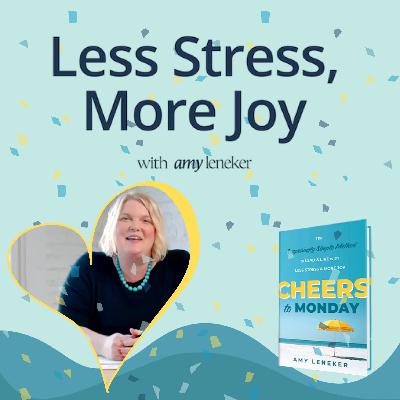
Hi friend — I’m Amy Leneker, and welcome to the Less Stress, More Joy podcast. I created this podcast because I made every burnout mistake in the book… truly, all of them. If I can help even one person avoid the absolute hell I went through, this show will be a wild success.Here’s what I know: you were meant for a joy-filled life. We spend a third of our lives at work, and you deserve to lead — and live — with less stress and more joy. In this podcast, I’ll teach you the simple three-step method that changed everything for me. We’ll talk about how to see stress differently, how to sort it so you know what to do with it, and how to solve it in a way that actually frees your time, your energy, and your life.If you’ve ever woken up on a Monday already exhausted, you’re in the right place. Tune in every Monday, and let’s break the cycle together. You can also pre-order my book Cheers to Monday everywhere books are sold.
Comments


Download from Google Play

Download from App Store
 United States