


 Claim Ownership
The Chief Customer Officer Podcast
Subscribed: 3Played: 22
Subscribe

© Copyright 2024 All rights reserved.
Description
For Chief Customer Officers and those aspiring to the role, The Chief Customer Officer Podcast delivers candid conversations with top B2B technology executives. Hosted by veteran SaaS leaders, Jay Nathan and Jeff Breunsbach, this podcast explores the state of B2B SaaS, strategy, people leadership, and real-world practices.
This isn’t “thought leadership.” You’ll gain actionable insights from CEOs, CFOs, CROs, CMOs, and CCOs that you can apply to elevate your career and leadership approach.
This isn’t “thought leadership.” You’ll gain actionable insights from CEOs, CFOs, CROs, CMOs, and CCOs that you can apply to elevate your career and leadership approach.
15 Episodes
Reverse
Summary
In this episode, Jeff and Jay discuss the evolving landscape of customer success, the integration of AI tools, and the importance of gross revenue retention. They explore the metrics that define customer success roles, the challenges faced by early-stage companies, and the need for clear compensation structures. The conversation highlights the significance of creating effective customer success plans and the necessity of aligning customer success efforts with overall business goals.
Takeaways
AI tools are transforming how we approach customer success. Customer success metrics are often poorly defined across organizations. Gross revenue retention is becoming a critical focus for investors. The structure of customer success teams can impact their effectiveness. Compensation for customer success roles needs to reflect their contributions to revenue. Early-stage companies must prioritize customer success to drive growth. Separation of roles within customer success can lead to better outcomes. Customer success should be a company-wide initiative, not just a team effort. Creating autonomy for customer success teams can enhance performance. Defining clear success plans is essential for customer retention.
Chapters
00:00 Website Redesign and AI Integration
02:50 The Evolution of AI Tools
05:28 Customer Success Metrics and Reporting
08:18 The Role of Customer Success in Revenue Generation
11:09 Compensation Structures in Customer Success
14:06 Strategic Decisions in Customer Success
16:51 Navigating Growth in Early-Stage Companies
26:40 Sales Strategy and Market Share Growth
28:21 Customer Success and Implementation Challenges
30:06 Specialization in Customer Success Roles
32:14 Creating Autonomy and Predictability in Sales
34:51 Understanding Private Equity and Its Impact
37:37 The Importance of Gross Revenue Retention
40:16 The Role of Customer Success in Retention
43:07 Innovative Approaches to Customer Success Plans
Summary
In this episode of The Chief Customer Officer Podcast, Jeff Breunsbach and Jay Nathan delve into the evolving role of AI in branding and customer experience. Jay shares his recent experiences using AI tools like Claude and ChatGPT to refine branding strategies for his companies, Balboa and Greenshoot Innovation. They discuss the importance of context in enterprise AI applications, emphasizing that the effectiveness of AI agents hinges on their understanding of user preferences and business nuances. The conversation transitions into a broader discussion about the future of enterprise software, highlighting the need for reliable systems that can integrate AI capabilities while maintaining deterministic workflows.
The hosts also explore the implications of AI on job security and enterprise software, countering the prevailing narrative of doom and gloom. They argue that rather than replacing jobs, AI can enhance productivity by automating mundane tasks, allowing teams to focus on customer interactions. The episode wraps up with recommendations for AI-related resources and discussions on the potential for AI to personalize customer experiences, ultimately leading to more tailored and effective service delivery.
Chapters
00:00 Introduction and Weekend AI Experiments
02:37 The Importance of Context in AI
04:51 AI's Impact on Enterprise Software
08:57 Balancing Deterministic Workflows with AI
11:15 Personalization and Customer Experience
16:38 AI in Developer Tools and Integration
21:32 Recommended Resources and Closing Thoughts
The death of the coverage model...
In this episode of the Chief Customer Officer Podcast, Jay Nathan and Jeff Breunsbach peel back the layers on the practical application of AI in Customer Success. They start with a reality check: before you can build sophisticated AI agents, you often have to do the manual "grunt work" first — like physically reviewing contracts to clean up renewal data. The conversation shifts to a critical debate on organizational structure, specifically the move away from the traditional "Coverage Model" (assigning accounts based on ARR) toward a "Predictive Model" that relies on real-time data signals rather than arbitrary check-ins. Finally, Jay and Jeff geek out on the concept of "Vibe Coding" — using AI to build internal tools and websites without writing a line of code — and discuss why leaders need to get their hands dirty with these tools to truly understand them.
Chapters
00:00 Introduction & Dropping the ".io" 01:07 The Reality of Renewals: Manual Work Before AI 04:49 Why You Should Hire Ops Before Your Next CSM 09:49 The Death of the Coverage Model 13:49 Erroneous Signals vs. Predictive Data 17:44 The Evangelism Role & Fixing QBRs 25:36 The "Stay Conversation": 3 Questions to Retain Your Team 27:42 "Vibe Coding" & Building Software with AI 33:25 How Jeff Built the New Website (Without Code) 42:34 Preview: Sierra AI & Next Week
And we're back...
In this episode of the Chief Customer Officer Podcast, Jay Nathan and Jeff Breunsbach discuss the evolving landscape of customer success, particularly focusing on the impact of AI. They explore the importance of building a robust renewal function, identifying key information for renewals, and the necessity of mapping out processes. The conversation delves into the development of granular AI agents to enhance customer interactions and the balance between workflow and AI capabilities. They also emphasize the significance of understanding customer business contexts and choosing the right tools for effective AI implementation. The episode concludes with thoughts on standardizing AI use across teams and the future directions of AI in customer success.
Chapters
00:00 Introduction to the Chief Customer Officer Podcast
02:58 The Role of AI in Customer Success
05:58 Building a Renewal Function with AI
08:49 Identifying Key Information for Renewals
12:08 Mapping Out the Renewal Process
15:09 Creating Operational Agents for Efficiency
18:10 The Future of AI in Customer Engagement
22:09 Optimizing Workflow with AI Agents
24:18 Personalization in Customer Interactions
26:11 The Importance of Real-Time Data
28:00 Exploring Tools for AI Integration
30:04 Categories of Agentic Tools
35:50 Empowering Business Users with Agent Development
39:04 Real-World Applications of AI in Business
Keywords: renewals, customer success, AI, SaaS, customer experience, chief customer officer, renewal process, agentic tools, customer engagement, technology in business, customer retention

In this conversation, Jay Nathan and Nikki Bishop discuss the critical role of customer success in the life sciences industry, particularly in the context of delivering life-saving therapies. Nikki explains how Emerson's technology and customer success strategies are designed to enhance the efficiency of pharmaceutical manufacturing.
They delve into the complexities of regulatory compliance, the importance of industry expertise in customer success roles, and the evolving definition of customer success at Emerson, emphasizing the need for measurable outcomes and effective communication with customers.
Nikki shares insights on the challenges of scaling customer success, balancing legacy with innovation, and the importance of aligning with future strategies.
Meet Joann Campbell, Head of Customer Experience Strategy at The Home Depot for over 25 years. If you think CX is fluffy and not connected to the business outcomes, this episode is for you.
Learn how the Customers First Initiative drove revenue outcomes and organizational alignment in this massive, distributed organization.
You can connect with Joann on LinkedIn: https://www.linkedin.com/in/jhc03/
Would be honored to have you like and subscribe to Land and Expand wherever you get your podcast.
Rachel Orston and Jay break down the concept of Smart Brevity. This is a practical guide that was a good refresher for us and hopefully a good primer for if you haven't read it.
Let us know what you think.

Jay Nathan and CJ Gustafson delve into the intricacies of SaaS valuation multiples, the importance of revenue metrics, and the dynamics of company ownership in both public and private markets. CJ shares insights from his experience as a CFO, emphasizing the significance of understanding financial reports and the implications of valuation on employee equity.
The discussion also touches on current trends in private markets, highlighting how companies are navigating their growth strategies amidst changing economic conditions, and delve into the intricacies of public offerings, cash flow challenges for public companies, and the importance of understanding metrics like the Rule of 40.
They discuss the balance between growth and profitability, the role of customer success in revenue generation, and the dynamics of sales teams in varying market conditions. The conversation also highlights the significance of churn analysis and cohort analysis in understanding customer retention, while looking ahead to market trends and potential IPOs.
Summary
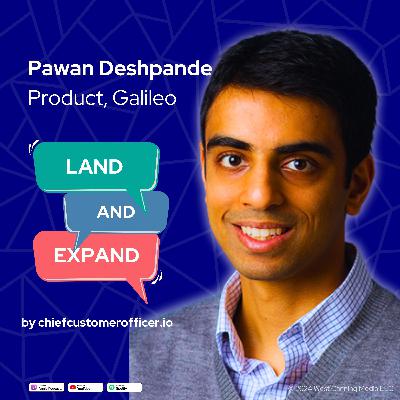
In this conversation, Jay and Pawan Deshpande, discuss the SaaS Critical Customer Care framework that Pawan developed to address customer churn and improve renewal rates. Pawan shares insights from his experience at Curata, where he faced significant churn and implemented a structured approach to customer success.
The discussion covers the importance of understanding renewal rates, the four buckets of customer success, the significance of business reviews, and how AI can enhance customer engagement. Pawan emphasizes the need for a proactive approach to customer success, including identifying triggers for intervention and the role of segmentation in addressing customer needs effectively.
Follow Pawan on his website and read his full post on the Critical Customer Care framework:
https://pawandeshpande.com/
https://blog.pawandeshpande.com/2023/08/01/saas-critical-care-how-to-2x-renewal-rates/
Takeaways
Pawan Deshpande is the CPO of Galileo, focusing on AI applications.
The SaaS Critical Care framework helps improve renewal rates.
Understanding churn is crucial for SaaS businesses.
Customer success can be divided into four key activities.
Business reviews are essential for maintaining customer health.
Segmentation of customers allows for tailored approaches.
Inbound and outbound strategies are both necessary in customer success.
Triggers for critical care can be based on customer satisfaction and product usage.
AI can automate aspects of customer success and improve efficiency.
Proactive engagement is key to preventing churn.
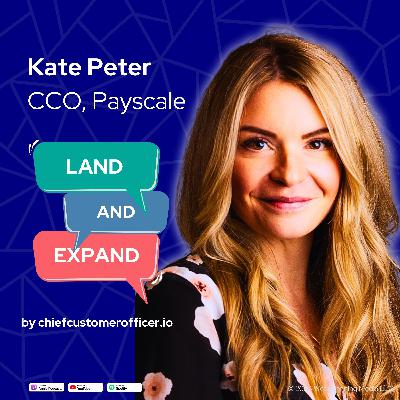
Kate Peter, Chief Customer Officer at PayScale, sits down with host, Jay Nathan, to explore the evolution of customer success and why the CSM role is one of the "most quit" jobs in 2024 per Payscale's data. Kate and Jay exchange insights on preventing burnout in CSM teams by unbundling roles, improving cross-functional alignment, and using automation to eliminate inefficiencies.
The pair also dive into the importance of gross revenue retention (GRR) as a foundation for customer success and its connection to product and go-to-market strategies. Kate offered a behind-the-scenes look at her early leadership at PayScale, emphasizing the need for specialization in post-sales teams and actionable strategies for 2025 planning. If you’re rethinking your customer success strategy, this episode is packed with practical takeaways.
In this conversation, Jay Nathan and Pete Harris discuss the interplay between physical health, work-life balance, and career progression. Pete shares his journey from audit to becoming the Chief Operating Officer at Pipedrive, emphasizing the importance of curiosity and execution in leadership roles.
They also delve into the complexities of customer success in a product-led growth model, highlighting the need for effective onboarding and implementation strategies to cater to diverse customer needs. They discuss the challenges of onboarding and the need for tailored approaches to customer success, particularly in relation to sales and account management.
The conversation also explores the innovative use of AI in customer success, aiming to enhance customer interactions and proactively address issues.
In this solo episode of Land and Expand, host Jay Nathan dives into the foundational SaaS metrics every leader should know cold: ARR (Annual Recurring Revenue), Gross Retention, Net Retention, and Renewal Rates. Drawing on a pivotal moment early in his career, Jay unpacks how these metrics work, why they matter, and how they influence the health and growth of a SaaS business.
You’ll learn:
- The difference between ARR and MRR, and how ARR reflects your business’s run rate.
- How Gross Retention and Net Retention are calculated, their unique roles, and why only net retention can exceed 100%.
- Why Renewal rate is a leading indicator for retention
- How multi-year contracts impact retention rates
- The importance of segmenting retention metrics
If you’re a SaaS executive or aspiring leader, this episode is a must-listen refresher to sharpen your financial acumen.
Cover Your SaaS - Financial Literacy for Non-financial Leaders: https://buy.stripe.com/bIY9EEbuKeX72M88ww
Subscribe to the ChiefCustomerOfficer.io newsletter for weekly insights.


Summary
In this conversation, Rachel Orston and Jay Nathan explore the differences between private equity (PE) and venture capital (VC), focusing on liquidity, board dynamics, and the evolving landscape of innovation in software development. They discuss the implications of PE on public companies, the role of operating partners, and the future of venture capital in a market saturated with options. The conversation highlights the need for companies to leverage available resources and expertise to drive growth and innovation.
Key Takeaways
Don't get too caught up in whether you work for a pre IPO company.
Going public and going private is just another transaction to different owners.
The NASDAQ has risen by something like 30% this year.
The Rule of 40 is about balancing growth and efficiency.
Investors are looking for long-term value, not just short-term gains.
Private equity firms are not just about efficiency; they also focus on growth.
The perception of a company can significantly impact its stock price.
Companies need to invest in long-term innovations despite short-term pressures.
The average take-private valuation was around seven and a half times.
Understanding private equity is crucial for go-to-market leaders. Liquidity is a significant factor in choosing between PE and public companies.
Venture capital is often perceived as growth-focused, while PE is seen as efficiency-driven.
Board dynamics can greatly affect company strategy and direction.
Operating partners can provide valuable expertise in both PE and VC-backed companies.
The venture capital landscape is shifting towards funding market share grabs rather than true innovations.
Verticalization in software development is becoming increasingly important.
Internal development and no-code platforms are emerging as key trends in enterprise innovation.
The current market has too many dollars chasing too few true innovations.
Private equity can provide a longer time horizon for growth strategies.
The impact of PE on customer experience is a critical topic for future discussions.
Chapters
00:00 Navigating the Landscape of Public and Private Companies
05:08 The Dynamics of Take-Private Transactions
09:53 Understanding the Rule of 40 and Its Implications
15:01 The Shift from Public to Private: Insights and Experiences
19:00 Private Equity: Strategies for Value Creation
19:56 Understanding Liquidity in Private Equity vs. Public Companies
22:03 Venture Capital vs. Private Equity: Key Differences
25:08 The Dynamics of Board Management in VC and PE
27:02 Leveraging Operating Partners for Growth
28:58 The Evolution of Venture Capital: From Moonshots to Market Share
31:56 The Future of Innovation in Software Development
36:02 Verticalization and Internal Development in Enterprises
38:46 The Impact of Private Equity on Public Companies
42:04 Future Conversations: Customer Impact and Beyond
Join the Chief Customer Officer newsletter
Welcome to Land and Expand, the podcast for customer success leaders.
Comments

Download from Google Play

Download from App Store
 United States