


 Claim Ownership
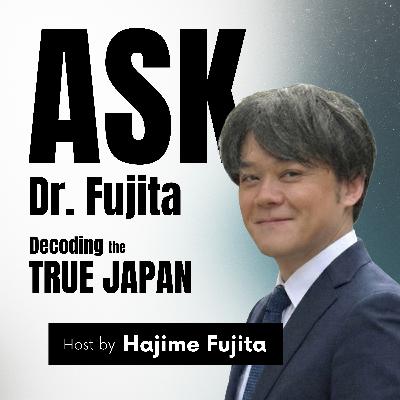
Ask Dr. Fujita - Decoding the True JAPAN!
Subscribed: 0Played: 0
Subscribe

© Hajime Fujita, Ph.D.
Description
Stop Sightseeing. Start Reverse-Engineering.
Tired of clichés? Welcome to "Decoding Japan with Dr. Fujita."
Hosted by Dr. Hajime Fujita, a Tokyo-based AI Consultant with a Ph.D. in Machine Learning, this podcast treats Japanese society as a highly optimized operating system. For the intellectually ambitious, Japan is an encrypted black box. Dr. Fujita applies systems architecture to decode its "True Japan" logic—from the Omakase algorithm to invisible business protocols.
New episodes every Tue & Fri. Subscribe to upgrade your mental model of the G7’s most enigmatic nation.
Tired of clichés? Welcome to "Decoding Japan with Dr. Fujita."
Hosted by Dr. Hajime Fujita, a Tokyo-based AI Consultant with a Ph.D. in Machine Learning, this podcast treats Japanese society as a highly optimized operating system. For the intellectually ambitious, Japan is an encrypted black box. Dr. Fujita applies systems architecture to decode its "True Japan" logic—from the Omakase algorithm to invisible business protocols.
New episodes every Tue & Fri. Subscribe to upgrade your mental model of the G7’s most enigmatic nation.
11 Episodes
Reverse
[Introduction] If you only learn one word before visiting Japan, make it "Sumimasen." It translates to "I'm sorry," but Japanese people use it to order food, ask for help, and even to say "Thank you." Why do Japanese people apologize when receiving a gift? In this episode, Dr. Fujita decodes this "Master Password" to Japanese society. Discover why this single word acts as a "Swiss Army Knife" for communication and how it functions as a social lubricant to prevent friction in a high-context culture.[What You'll Learn]The Swiss Army Knife: How "Sumimasen" functions as Apology, Attention, and Gratitude simultaneously.The Logic of Debt: Why Japanese people focus on the "cost" you incurred for them rather than the benefit they received.Etymology Revealed: The literal meaning of "It is not finished" and how it expresses deep respect.The "Ping" Command: Using "Sumimasen" to signal non-aggression and avoid "Meiwaku" (nuisance).A Critical Warning: Why saying "Sumimasen" during an accident is a social ritual, not an admission of legal liability.[About the Podcast] Dr. Fujita, an AI Consultant based in Tokyo, analyzes the logic behind Japanese business and culture. This isn't a sightseeing guide—it's an intellectual journey to decode the "True Japan."[Topics] Sumimasen, Japanese Language, Japan Travel, Etiquette, Apology, Gratitude, Meiwaku, Japanese Culture, Communication, Linguistics, Social Psychology
[Introduction] The Shinkansen is famous for being the world's fastest train, but did you know its most impressive performance happens when it's stopped? At Tokyo Station, the cleaning team known as "TESSEI" has only 7 minutes to perfectly reset an entire train. Dr. Fujita decodes this "7-Minute Miracle," analyzing how an F1 pit-stop mentality, hidden technology, and a "cast member" mindset turned a cleaning job into a world-class hospitality show.[What You'll Learn]The "F1 Pit Stop" Method: How "Motion Economy" allows staff to clean 100 seats in seconds.The "Magic Wand": The hidden sensor technology used to detect invisible moisture on seats.Zen Design: Why aligning window blinds to the millimeter eliminates "visual noise" for passengers.From Cleaners to Cast: How rebranding the job definition ignited a culture of "Kaizen" (improvement) and pride.The Final Bow: The ritual of respect that earns applause from international travelers.[About the Podcast] Dr. Fujita, an AI Consultant based in Tokyo, analyzes the logic behind Japanese business and culture. This isn't a sightseeing guide—it's an intellectual journey to decode the "True Japan."[Topics] Shinkansen, Bullet Train, TESSEI, 7-Minute Miracle, Kaizen, Omotenashi, Japanese Culture, Efficiency, Tokyo Station, Humanware, Motion Economy
[Introduction] In most countries, vending machines are locked in cages to prevent theft. In Japan, over 4 million of them sit unguarded on street corners, functioning as "safes" filled with cash and products. Why aren't they vandalized? Dr. Fujita decodes the "Vending Machine Empire," revealing how these glowing boxes serve as monuments to public safety, eco-friendly engineering marvels, and critical disaster infrastructure that saves lives during earthquakes.[What You'll Learn]Monuments of Peace: Why the existence of unguarded machines acts as a visible index of Japan's public safety.Hot & Cold Magic: The "Heat Pump" technology that allows hot corn soup and cold cola to exist side-by-side.The Frozen Revolution: How you can now buy restaurant-quality ramen, dumplings, and even sashimi 24/7.The "Atari" System: The gamification of shopping where you can win a free drink via a digital roulette.Guardians of the Street: How machines automatically unlock to provide free food and water during natural disasters.[About the Podcast] Dr. Fujita, an AI Consultant based in Tokyo, analyzes the logic behind Japanese business and culture. This isn't a sightseeing guide—it's an intellectual journey to decode the "True Japan."[Topics] Vending Machines, Jidohanbaiki, Japan Travel, Public Safety, Technology, Heat Pump, Cashless Payment, Disaster Infrastructure, Corn Soup, Ramen, Japanese Culture
[Introduction] Have you seen the viral videos of 6-year-old Japanese children wearing white coats and serving heavy pots of soup? It looks like child labor, but it’s actually a sophisticated educational system called "Kyushoku." Unlike Western cafeterias with endless choices of pizza or nuggets, Japanese students eat the exact same menu, serve it themselves, and even clean the classroom afterward. Dr. Fujita decodes this 9-year "social experiment," revealing how a simple lunch hour trains children in project management, nutrition, and public spirit.[What You'll Learn]The "Lunch Duty" Logic: How serving food teaches 6-year-olds project management and fairness.The Paradox of No Choice: Why a "socialistic" one-menu system results in the world's lowest obesity rates.$2 Gourmet: The secret behind "scratch cooking" that provides delicious, restaurant-quality meals for just two dollars.Moral Education: Why rich and poor eat the same meal and why students must clean their own classrooms.A Lesson for Life: How Kyushoku builds the foundation for Japanese teamwork and health consciousness.[About the Podcast] Dr. Fujita, an AI Consultant based in Tokyo, analyzes the logic behind Japanese business and culture. This isn't a sightseeing guide—it's an intellectual journey to decode the "True Japan."[Topics] Kyushoku, School Lunch, Japanese Education, Nutrition, Obesity Rate, Lunch Duty, Cleaning, Japanese Culture, Parenting, Food Education, Teamwork, Social Systems
[Introduction] Japan has entered a new era under Sanae Takaichi, the country's first female Prime Minister. With skyrocketing approval ratings among young voters, she seems unstoppable. But behind the headlines, her administration is walking a dangerous tightrope. Dr. Fujita analyzes the fragile political landscape of 2026, revealing why the "Triple Economic Struggle" and a twisted voter psychology could turn her high popularity into a sudden crisis.[What You'll Learn]The Takaichi Phenomenon: Why Japan's first female PM—a self-made conservative—is capturing the hearts of the youth.The Economic Time Bomb: How the "triple struggle" of a weak yen, inflation, and rising interest rates threatens the administration.The "Ishin" Risk: The unstable nature of the cooperation with the Japan Innovation Party and the constant threat of betrayal.Twisted Voter Psychology: The strange paradox where voters love the leader but distrust her party (LDP).2026 Outlook: Will Takaichi build a long-term legacy, or is this the calm before the political storm?[About the Podcast] Dr. Fujita, an AI Consultant based in Tokyo, analyzes the logic behind Japanese business and culture. This isn't a sightseeing guide—it's an intellectual journey to decode the "True Japan."[Topics] Sanae Takaichi, Japan Politics, Prime Minister, Liberal Democratic Party, LDP, Japan Innovation Party, Japanese Economy, Inflation, Interest Rates, 2026, Women in Politics
[Introduction] Are you suffering from "tipping fatigue"? In the US, calculating 20% at every coffee shop is a headache. But in Japan, the tip is always zero. Why does the world's best service exist without monetary incentives? In this episode, Dr. Fujita decodes the "Operating System" of Japanese hospitality. Discover why calculating a tip is considered a "bug" in the user experience and how the Japanese service industry functions like a stress-free subscription model.[What You'll Learn]Tipping as a "Bug": How Japanese pricing minimizes cognitive load like a Netflix subscription.The Ramen Machine Logic: Why removing cash handling increases speed and hygiene."The Customer is God": It's not about entitlement; it's about the staff's ritualistic pride.The "Otoshi" Trap: Why that unordered appetizer isn't a scam, but a "login bonus" to Izakaya culture.How to say "Thank You": Why leaving cash causes "system errors" and the one phrase you should use instead ("Gochisosama deshita").[About the Podcast] Dr. Fujita, an AI Consultant based in Tokyo, analyzes the logic behind Japanese business and culture. This isn't a sightseeing guide—it's an intellectual journey to decode the "True Japan."[Topics] Japan Travel, Tipping Culture, Japanese Service, Omotenashi, Otoshi, Izakaya, Ramen, Japanese Culture, Economics, UX Design, Gochisosama deshita
[Introduction] Leave a MacBook on a Starbucks table and go to the bathroom. In most countries, it vanishes in seconds. In Tokyo, it stays right there. Why? Is it honesty, or something else? From six-year-olds riding subways alone (like in Netflix's "Old Enough!") to orderly queues during disasters, Dr. Fujita decodes the invisible "OS" that controls Japanese behavior. Discover why Japan's safety is actually a calculated survival strategy based on Game Theory.[What You'll Learn]The Starbucks Anomaly: Why a laptop acts as a "reservation token" rather than an expensive device.Distributed Security: How society functions as a massive incubator for children commuting alone."Guilt" vs. "Shame": The difference between Western conscience and the Japanese concept of "Seken" (The Public Eye).Game Theory of Disasters: Why looting is mathematically a "losing strategy" in Japan.The Social Contract: The hidden trade-off between absolute safety and individual freedom.[About the Podcast] Dr. Fujita, an AI Consultant based in Tokyo, analyzes the logic behind Japanese business and culture. This isn't a sightseeing guide—it's an intellectual journey to decode the "True Japan."[Topics] Japan Safety, Crime Rate, Seken, Shame Culture, Game Theory, Old Enough, Disaster Response, Looting, Social Psychology, Tokyo Life, Murahachibu
[Introduction] Is Japan living in the future or the past? Travelers are often baffled by the "Japan Paradox." You encounter spaceship-like toilets with heated seats and washlets, yet walk into a corporate office to find fax machines buzzing and people stamping documents with red ink (Hanko). Why does a nation famous for robotics and efficiency cling to 1980s technology? Dr. Fujita decodes this mystery from an engineering perspective, explaining why excellent analog systems became a trap and how a new crisis is finally forcing a system reboot.[What You'll Learn]The "Over-optimization" Trap: Why Japan's analog systems (trains, mail) were too perfect to justify a digital upgrade.Galapagos Syndrome: Why Japan excels at isolated hardware evolution (like toilets and flip phones) but struggles with global software platforms.The Hanko Logic: Viewing the personal seal not as a relic, but as a "physical authentication token" for responsibility.The Fatal Bug: How the severe labor shortage and population decline are making manual analog systems impossible to maintain.The Forced Update: Why the death of the fax machine is a survival strategy, not just a trend.[About the Podcast] Dr. Fujita, an AI Consultant based in Tokyo, analyzes the logic behind Japanese business and culture. This isn't a sightseeing guide—it's an intellectual journey to decode the "True Japan."[Topics] Japan Technology, High-Tech Paradox, Digital Transformation, DX, Fax Machine, Hanko, Galapagos Syndrome, Population Decline, Japanese Business Culture, Innovation, Robotics
[Introduction] Have you seen the viral videos claiming you can buy a house in Japan for $500, or even get one for free? It sounds too good to be true, but in rural Japan, the "Akiya" (abandoned house) phenomenon is real. Meanwhile, in central Tokyo, apartment prices are breaking historical records. Why does this extreme contrast exist? Dr. Fujita decodes the unique "algorithms" of Japanese real estate, explaining why a home in Japan is often treated not as an asset, but as a depreciating consumable like a car.[What You'll Learn]The "22-Year Rule": How Japanese tax laws calculate the lifespan of wooden houses and drive values to zero.Disposable Homes: Why earthquakes and a culture of "newness" make Japanese people prefer rebuilding over renovating.The "Negative Price" Phenomenon: Why some owners will pay you to take their house.The Tokyo Exception: Why the capital's real estate is booming despite the national population decline (Weak Yen & Concentration).Two Operating Systems: Understanding the split between the "Depreciation OS" in the countryside and the "Financial Asset OS" in the city.[About the Podcast] Dr. Fujita, an AI Consultant based in Tokyo, analyzes the logic behind Japanese business and culture. This isn't a sightseeing guide—it's an intellectual journey to decode the "True Japan."[Topics] Akiya, Japan Real Estate, Tokyo Housing Market, Abandoned Houses, Japanese Economy, Depreciation, Weak Yen, Property Investment, Rural Japan, DIY Renovation
[Introduction] Are you struggling to learn Japanese? You are not alone. According to the US government, Japanese is classified as a "Category 4" language—the most difficult for English speakers to master, requiring over 2,200 hours of study. But why is it so hard? In this episode, Dr. Fujita breaks down the four massive walls that learners face: the chaotic writing system, the backward word order, the social minefield of Honorifics (Keigo), and the high-context culture where "No" is rarely said out loud.[What You'll Learn]The "Egyptian" Code: Why Japan uses three mixed writing systems (Kanji, Hiragana, Katakana) and how Kanji acts as a high-speed visual scanner.The Suspense of Grammar: Why the verb comes at the very end and how this structure demands patience and prevents interruptions.Keigo (Honorifics): Understanding the complex rituals where words change completely to measure social distance and status.Reading the Air: How to decode silence and vague answers like "I'll think about it" (which usually means "No").[About the Podcast] Dr. Fujita, an AI Consultant based in Tokyo, analyzes the logic behind Japanese business and culture. This isn't a sightseeing guide—it's an intellectual journey to decode the "True Japan."[Topics] Japanese Language, Learning Japanese, Kanji, Keigo, Honorifics, High Context Culture, Reading the Air, Linguistics, Japanese Culture, Category 4 Language
Hello everyone, I’m Fujita. Nice to meet you!Why would a Ph.D. in Machine Learning start a podcast about Japanese culture? Because I believe there is a "True Japan" that is often misunderstood or overlooked by standard guidebooks.In this debut episode, I share my personal story - from my hometown of Nishinomiya (a hidden gem for Sake lovers) to my career in Tokyo as an AI Consultant.This podcast is designed for those who have intellectual curiosity and want to understand the "Why" and "How" of Japan. I may have a strong Japanese accent, but I promise to deliver valuable insights that you won't find elsewhere.Topics:Self-Introduction: Hajime Fujita (Ph.D.)About Nishinomiya: The quiet city between Osaka and Kobe.My Professional Background: From Data Science to AI Consulting.What to expect from this channel.
Comments

Download from Google Play

Download from App Store
 United States