


 Claim Ownership
Attention Deficit Hyper Desi
Subscribed: 0Played: 0
Subscribe

© Ankita Jagtiani
Description
Attention Deficit Hyper Desi is India’s first podcast that explores ADHD through a Desi lens. It breaks down what living with ADHD actually looks like in Indian households, without medical jargon, but with real stories, relatable chaos, and the quirks of daily life many Desis experience.
The podcast embraces interruptions, overthinking, hyperfocus on the wrong things, and the dopamine that sometimes saves the day.
For anyone looking to understand, normalize, and navigate ADHD in a Desi context, Attention Deficit Hyper Desi is the space to listen, learn, and relate.
The podcast embraces interruptions, overthinking, hyperfocus on the wrong things, and the dopamine that sometimes saves the day.
For anyone looking to understand, normalize, and navigate ADHD in a Desi context, Attention Deficit Hyper Desi is the space to listen, learn, and relate.
6 Episodes
Reverse
In this episode of Attention Deficit Hyper Desi, Coach Ankita Jagtiani Dadachanji is joined by certified speech-language pathologist and couples counsellor Marzia Masckati to explore how ADHD shows up in romantic relationships and family life.In many Desi households, ADHD traits are often mistaken for laziness, carelessness, or “naughtiness.” While this may seem harmless in childhood, these misunderstandings can grow into conflict, hurt, and emotional distance in adult relationships. This episode looks at how ADHD affects communication, trust, emotional reactions, and everyday responsibilities between partners.The conversation explores why ADHD is often masked in adulthood, how executive dysfunction shows up when couples start living together, and why patterns like forgetfulness, indecision, impulsivity, and emotional overwhelm can be mistaken for not caring. It also looks at joint family dynamics, late diagnoses, parenting stress, and why communication can feel especially difficult in the Indian context.Honest, empathetic, and culturally grounded, this episode reframes ADHD not as a relationship problem, but as an opportunity to build deeper understanding, empathy, and connection.
In this episode of Attention Deficit Hyper Desi, Coach Ankita Jagtiani Dadachanji continues her conversation with Mumbai-based consultant nutritionist Ishita Bhatia Mehta to explore the deeper links between ADHD, food habits, and eating patterns.This part of the conversation looks at protein, supplements, hydration, meal planning, and why structure around food can be especially helpful for ADHD brains. It breaks down common conversations around omega-3, vitamin D, protein shakes, and whether these actually improve focus and emotional regulation, or if correcting deficiencies and building consistent eating rhythms matter more.The episode also highlights practical challenges like forgetting to drink water, struggling with grocery planning, difficulty cooking daily, and how small systems can make nutrition more accessible without overwhelm or shame.Importantly, this conversation addresses the strong overlap between ADHD and eating disorders, why nearly 1 in 5 individuals with ADHD may struggle with disordered eating, and how impulsivity, sensory sensitivities, emotional dysregulation, and dopamine-seeking behaviours can all show up through food.Grounded, practical, and stigma-free, this episode helps Desi adults with ADHD rethink not just what they eat, but how they relate to food, hydration, and self-care in everyday life.
In this episode of Attention Deficit Hyper Desi, Coach Ankita Jagtiani Dadachanji is joined by Mumbai-based consultant nutritionist Ishita Bhatia Mehta to talk about ADHD and our relationship with food in the Desi context.From “finish everything on your plate” to “eat fresh only” and “don’t waste food,” this conversation unpacks how well-meaning cultural narratives quietly shape how children and adults learn to listen or stop listening to their hunger and fullness cues. For ADHD brains, where interoceptive awareness, sensory sensitivities, and executive dysfunction already play a role, these narratives can make food feel even more confusing.The episode explores texture sensitivities, hyperfixation on foods, overeating, restrictive eating, coffee, sugar, blood sugar crashes, and why structure around meals can often help more than willpower. It also looks at how families and partners can support without judgment, and why practical, stigma-free nutrition is especially important for neurodivergent individuals.Grounded, relatable, and culturally aware, this episode helps reframe how Desi adults with ADHD can build a healthier, kinder relationship with food.
In this episode of Attention Deficit Hyper Desi, Coach Ankita Jagtiani Dadachanji is in conversation with mental health counsellor Kareena Mehta to talk about how people with ADHD are increasingly using AI for focus, organisation, emotional support, and even connection.From productivity tools and reminders to late-night conversations with chatbots, this episode explores why AI can feel especially helpful for ADHD brains that seek stimulation, novelty, and quick feedback. In a Desi context, it also looks at how stigma around therapy and emotional expression can quietly push people toward private, judgement-free digital spaces.Kareena Mehta brings a culturally inclusive perspective shaped by her experience across the US, Belgium, the UK, and India. She works with individuals navigating identity, emotions, and relationships, helping them build resilience while staying grounded in their cultural context.This honest conversation looks at ADHD in the age of AI, where focus, structure, and support are increasingly digital.
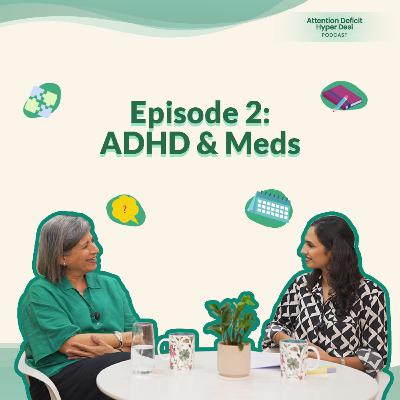
In this episode of Attention Deficit Hyper Desi, Coach Ankita Jagtiani Dadachanji is joined by clinical psychologist Siddika Panjwani to talk about ADHD and diagnosis in the Indian context.Across Desi households, ADHD is often minimised or misunderstood. Struggles are brushed off as stress, laziness, or lack of discipline, with familiar refrains like “sabko hota hai” or “bas focus kar lo.” This episode looks at how cultural expectations cause ADHD to be overlooked, and why many adults grow up blaming themselves instead of understanding their brains.This conversation centres on ADHD and diagnosis as to why a formal diagnosis matters, how myths and mislabels form, and why online self-tests or social media content cannot replace a proper clinical evaluation. It also explores how ADHD is frequently mistaken for anxiety or depression, and why missed diagnoses are far more common than overdiagnosis in India.Our guest, Siddika Panjwani, is a clinical psychologist who works with children and adults on psychological assessments — especially ADHD. Siddika has been practising as a neuropsychologist since the past 20 years and specialises in Diagnostic assessments for neurological disorders… She is associated with hospitals like Lilavati and Globus here in Mumbai.Cutting through stigma and cultural silence, this episode offers clarity around ADHD diagnosis for Desi adults who were never given the full picture growing up.
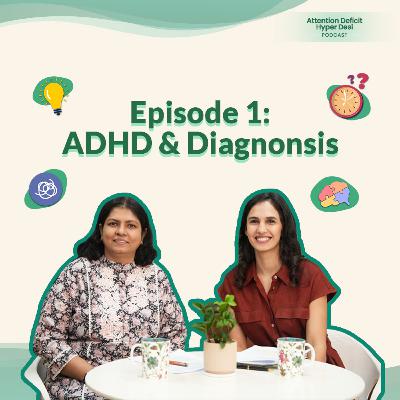
In this episode of Attention Deficit Hyper Desi, Coach Ankita Jagtiani Dadachanji is joined in conversation by psychiatrist Dr Pervin Dadachanji to talk about ADHD, co-morbidities, and medication in the Indian context. Despite growing awareness, ADHD in Desi households is still widely misunderstood, often dismissed as laziness, carelessness, or “you’re doing fine na?” This conversation looks at why so many adults remain undiagnosed, how culture and stigma shape treatment decisions, and where real clinical evaluation differs from social media narratives. The episode explores how ADHD is diagnosed, what medication actually helps with, common fears around dependency and side effects, and what people should realistically expect from treatment. It also touches on why ADHD rarely exists alone, how co-morbidities like anxiety or depression show up, and why treatment is rarely a straight line. Honest, grounded, and judgment-free, this episode is for anyone trying to make sense of ADHD medication beyond myths, reels, and half-truths.#AttentionDeficitHyperactivityDisorder #Neurodivergent #MentalHealth #SouthAsian #DesiADHD #Podcast
Comments


Download from Google Play

Download from App Store
 United States