


 Claim Ownership
Grey Matter Pathways
Subscribed: 0Played: 0
Subscribe

© Dr Nishen Gokal
Description
We take a deep dive into study technique and answering technique. This channel is designed for candidates preparing for postgraduate fellowship exams. The principles are easily extrapolated to any exam. Paving pathways between the finite short term memory and the infinite long term memory.
16 Episodes
Reverse
This episode provides a comprehensive educational overview of chemical and physiological buffer systems, specifically focusing on their role in maintaining pH stability. Through a series of questions and professional feedback, the episode explains that an ideal buffer operates most effectively when its pKa matches the surrounding pH, a relationship mathematically defined by the Henderson-Hasselbalch equation. The sources highlight the importance of haemoglobin and the bicarbonate system, noting how the body uses respiratory and renal mechanisms to compensate for acidity. Additionally, the episode evaluates student performance, emphasizing the need for precise mechanistic explanations and a deep understanding of how oxygenation affects the buffering capacity of blood. Overall, episode serves as both a technical guide and a performance assessment for FCA candidates studying acid-base physiology.
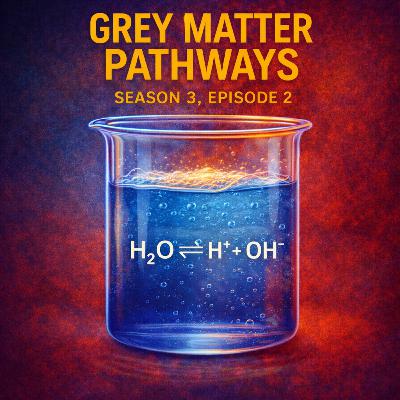
These sources provide a pedagogical guide for medical students on how to master the strong ion difference (SID) as part of Stewart’s physicochemical model of acid-base balance. The author introduces the "Framing Statement" as a strategic communication tool to help examinees demonstrate a comprehensive understanding of how specific variables influence extracellular fluid pH. Key technical requirements for a successful explanation include defining strong ions, presenting the water dissociation equation, and accurately calculating the difference between cations and anions. Through a review of common errors, the text emphasizes that electroneutrality is the fundamental driver behind the shifts in hydrogen ion concentration. Ultimately, the material serves as both a scientific overview of metabolic acidosis and alkalosis and a practical rubric for academic excellence in medical examinations.
Dr Nishen Gokal outlines effective techniques for students to improve their performance on multiple-choice examinations. The primary focus is on active comprehension, such as rephrasing confusing prompts and mastering "direction words" like "analyze" or "infer" to ensure instructions are followed precisely. Students are encouraged to formulate independent answers before viewing the provided options to avoid being misled by deceptive choices. Furthermore, the text emphasizes strategic time management and the use of deductive reasoning to eliminate improbable answers when guessing is necessary. By implementing these systematic approaches, learners can build the confidence and skills required to navigate complex testing formats successfully.
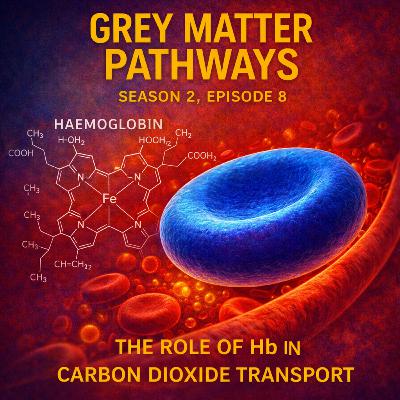
In this episode we explain the multifaceted role of haemoglobin in the physiological movement of carbon dioxide through the bloodstream. We highlight how this protein facilitates the formation of bicarbonate by acting as a buffer for hydrogen ions and enables the creation of carbamino compounds by binding directly to the gas. Central to the discussion is the Haldane effect, which describes how the oxygenation state of blood influences its total carbon dioxide capacity. By contrasting gas exchange at the tissues and the lungs, the sources demonstrate how changes in chemical affinity ensure efficient respiratory waste removal. Furthermore, we provide evaluative feedback on common academic errors, emphasizing the need for quantitative precision and clear biochemical equations in medical examinations. This comprehensive overview serves as both a scientific guide and a pedagogical tool for understanding respiratory acid-base balance.
This educational material focuses on the application of Henry’s Law to human physiology, specifically regarding how oxygen is transported in the blood. The text explains that while gas solubility is proportional to partial pressure at a stable temperature, the amount of oxygen dissolved in plasma is insufficient to meet the body's metabolic demands. Through step-by-step mathematical calculations, the source demonstrates that dissolved oxygen only provides about 15 ml/min, which falls far short of the required 200 ml/min at rest. Consequently, the documents emphasize that haemoglobin is vital because it significantly increases the blood's oxygen-carrying capacity. Student feedback within the text highlights the necessity of using the oxygen content equation and quantitative data to fully explain these biological concepts in an exam setting.
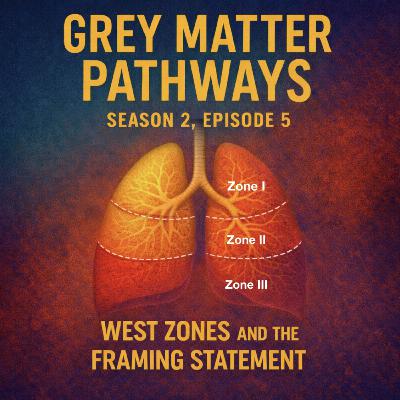
This document provides a guide for students on mastering the "framing statement" technique to improve performance on high-stakes examinations. The episode emphasizes using a single introductory sentence to contextualize complex physiological topics, such as West’s zones of the lung and pulmonary blood flow, within the broader scope of respiratory physiology. Detailed clinical explanations are provided for Zones 1 through 4, outlining how gravity and pressure variations between the alveoli, arteries, and veins affect ventilation and perfusion. Furthermore, the resource offers practical feedback on common student errors, recommending the use of labeled diagrams and mechanistic analogies like the Starling resistor. By applying these methods to various concepts like surfactant and the alveolar gas equation, candidates can demonstrate a sophisticated grasp of how posture and lung volume impact human physiology.
This educational resource focuses on physiological respiratory monitoring, specifically highlighting the Bohr equation for calculating dead space. It details how to mathematically derive the formula by measuring carbon dioxide balance and using clinical surrogates like end-tidal and arterial CO2. Beyond specific formulas, the text advocates for a long-term study strategy that prioritizes understanding physical principles over simple rote memorization. By using annotated diagrams and "trigger phrases" for definitions, the source aims to help medical students internalize complex concepts like compliance and the alveolar gas equation. Ultimately, the material serves as both a specialized medical tutorial and a guide for mastering professional examination techniques.

I use the chapter in respiratory physiology on the mechanics of pulmonary ventilation to demonstrate a study technique I call “the stream of concepts”. A powerful tool used by candidates who have been successful in the recent CMSA FCA Part 1 exam.The provided text is an academic resource that focuses on the mechanics of pulmonary ventilation, particularly through the analysis of the pressure-volume (PV) curve of the lung. The source includes an examination of student performance on related questions, highlighting common errors such as insufficient precision when identifying dependent and independent variables, and omissions regarding the role of surfactant at high lung volumes. The material then introduces a study technique called the "stream of concepts," which emphasizes understanding individual concepts like lung compliance and elastance, and the logical connections between them. Various diagrams, equations for static and dynamic compliance, and a detailed graphical analysis approach are presented to aid in the comprehension of complex physiological principles, such as hysteresis and the passive nature of normal expiration.
The provided materials outline a specific study technique known as the "hidden narrative," which is designed to improve long-term memory by arranging dry facts into a cohesive, memorable story structure. This pedagogical concept is immediately applied to an example concerning respiratory physiology, specifically the structural features of the lung that facilitate effective gaseous exchange. The scientific explanation is framed around Fick's law of diffusion, demonstrating how the lung optimizes variables like surface area, membrane thickness, and pressure gradient to maximize gas transfer efficiency. Specific anatomical details, such as the expansive alveolar surface area (up to 100 m2) and the extremely thin blood-gas barrier (0.3 micrometers) are provided as evidence of these adaptations. The diagram further illustrates how narrow alveolar capillaries force red blood cells into single-file passage, ensuring full oxygen saturation before leaving the exchange interface. Comprehensive feedback emphasizes that successful answers require both an understanding of Fick's law and the accurate recall of precise physiological data points.

The source material provides a comprehensive guide on effective study habits and neurological factors that enhance learning, particularly aimed at medical professionals. It strongly advocates for active engagement, alertness, and consistent self-monitoring during study sessions, suggesting hourly checks to ensure productivity. Furthermore, the text presents evidence-based strategies like daily meditation, citing Dr. Wendy Suzuki's research, which is shown to significantly improve memory and attention spans over eight weeks. The document also includes an in-depth biochemistry lesson detailing the specifics of glycolysis, the Krebs cycle, and oxidative phosphorylation, including ATP yield and the role of oxygen, often framing these concepts as practice questions for medical exams. Finally, it reinforces the importance of sleep, intrinsic motivation (self-gratification), goal-setting, and peer teaching as common traits among high-achieving medical students, referencing studies by Bin Abdulrahman et al.

The source material, an excerpt from a study group document by Dr. Nishen Gokal, primarily focuses on the superiority of retrieval practice over passive re-reading for effective learning and memory retention. It presents a thought experiment demonstrating that students who study once and then test themselves three times (STTT) retain information significantly better than those who only study four times (SSSS), even though the latter felt more confident. Furthermore, the document differentiates between two types of assessments: low-stakes retrieval practice (the learner's tool) and high-stakes formal exams (the institution's tool), advocating for the early and frequent use of the former. Finally, a significant portion of the text addresses a clinical question regarding ketogenesis and ketoacidosis, providing a detailed physiological explanation and feedback on common errors made by candidates, linking the acidosis mechanism to the effect of negatively charged ketone bodies on hydrogen ion concentration.

Knowledge isn't stored in isolation. In long-term memory, it's arranged in series, each concept linked to what came before and what follows. But to truly crystallize new information, we need more than just linear connections. We need lateral ones, parallel pathways that interweave ideas across domains, contexts, and experiences. In this episode of Grey Matter Pathways, we demystify these lateral connections and explore how they fix newly acquired knowledge in place, making it not just memorable, but meaningful.
You clearly remember every detail of a great holiday you took 5 years ago but can't remember what you read last night in preparation for an exam. In this episode we learn the difference between short-term memory and long-term memory, and we provide you with useful tools to transition information from the finite short-term memory to the near infinite long term memory.
Describe, compare and contrast, critically evaluate, define, each of these words serve as an instruction as to what is required from the candidate. In this episode, we learn to identify action words in the exam questions. Those words that direct the question. Failure to identify these words and follow the instruction could be the difference between success and failure.
This educational resource provides a comprehensive guide to respiratory physiology and the interpretation of medical graphs for clinical examinations. The material focuses heavily on the mechanics of gas exchange, explaining how the movement of molecules is either diffusion-limited, as seen with carbon monoxide, or perfusion-limited, like nitrous oxide. Through the application of Fick’s Law, the text details how factors such as exercise, alveolar hypoxia, and physical abnormalities can disrupt the pressure gradients and transit times necessary for proper oxygenation. Beyond physiological concepts, the sources offer a structured framework for graphical analysis, teaching students to identify dependent and independent variables while assessing the significance of slopes and curves. To reinforce these lessons, the document includes candidate feedback and specific examples involving ventilatory responses to changing carbon dioxide and oxygen levels. This holistic approach ensures that students can both memorize key biological facts and apply critical thinking to unfamiliar data sets in an exam setting.

The source, an excerpt from a study group session led by Dr. Nishen Gokal, focuses on two key aspects of learning: effective memory retention and complex biochemical understanding. Dr. Gokal promotes a concept called "the practice of forgetting," explaining that forgetting is a natural part of the learning process that creates an opportunity for retrieval practice, which strengthens long-term memory. He employs rapid revision as a form of retrieval practice, likening the process to a potter carefully shaping and strengthening clay. The text then transitions to a "Question of the week" that scrutinizes the chemical structures and metabolic roles of intermediaries related to pyruvic acid, such as acetyl CoA and lactate. Dr. Gokal argues that while students may not be tested on drawing these structures, understanding the chemical differences facilitates a deeper, less rote-dependent comprehension of intermediary metabolism.
Comments


Download from Google Play

Download from App Store
 United States