DiscoverMonumental Movement Podcast
Monumental Movement Podcast
Claim Ownership

Monumental Movement Podcast

Author: monumentalmovement

Subscribed: 0Played: 2
Share

Description

“Where sound becomes culture, and culture becomes a living archive of the unheard.”


This podcast explores music not as entertainment alone, but as a cultural force, a historical thread, and an ever-shifting field of experimental possibilities.
Each episode dives into the worlds of avant-garde composition, underground movements, contemporary sound practices, and the hidden connections that shape the way we listen today.


From experimental electronica, post-industrial textures, and ambient minimalism, to folk mutations, noise-based practices, and hybrid global sound cultures, the show examines how artists expand—sometimes even break—the boundaries of what music can be.
Rather than simply reviewing releases, we trace the historical context, aesthetic frameworks, and technological shifts that give these works meaning.


Whether you are a producer, a sound artist, a researcher, or simply a curious listener, this podcast offers a deep, accessible, and globally-minded journey through the edges of music culture.
Expect thoughtful commentary, references to influential scenes and movements, and occasional dives into the philosophy of listening itself.


Join us as we build an international archive of sound—one episode at a time.

83 Episodes
Reverse
What happens when toys become instruments—and instruments become toys?This episode explores the strange and fascinating history of musical toys, tracing how objects designed for play evolved into serious tools for sonic experimentation. From early mechanical novelties and miniature pianos to circuit-bent keyboards, DIY noise devices, and boutique experimental gadgets, “toy” instruments have repeatedly challenged our assumptions about what counts as music.We examine how artists and composers embraced the fragility, unpredictability, and lo-fi character of toy sound. Rather than technical precision, these objects offer texture, distortion, and spontaneity—qualities that often feel more human than polished studio perfection.The episode also explores the philosophy of play. Toys encourage curiosity over mastery, discovery over discipline. In avant-garde composition, noise music, and experimental pop, the toy becomes a symbol of resistance against rigid technique and institutional definitions of musicianship.By following the lineage of strange musical toys, we uncover a deeper truth: sound experimentation often begins in play. Innovation frequently emerges not from virtuosity, but from curiosity—and the willingness to treat sound as something to explore rather than control.▼【Related Column】Strange Musical Toys — Toys with strange sounds from around the worldhttps://monumental-movement.jp/en/Column-Strange-Musical-Toys/
Why do we turn to music when we feel sad?This episode explores the psychology and cultural meaning behind our instinct to seek music in moments of emotional heaviness. Rather than avoiding sorrow, many listeners actively choose melancholic songs—slow tempos, minor harmonies, intimate vocals—finding comfort in sounds that mirror their internal state.We examine theories from affective neuroscience and music psychology that explain this paradox. Sad music can trigger emotional regulation, safe catharsis, and a sense of companionship. It creates distance from pain while allowing us to process it. In this way, sorrow becomes structured—held within rhythm, harmony, and repetition.The episode also considers cultural dimensions: how different societies frame melancholy, why certain genres become associated with introspection, and how shared sadness can create collective identity. From blues and folk traditions to ambient and lo-fi playlists, sadness in music often transforms isolation into connection.At its core, this discussion reframes sadness not as something to escape, but as something to resonate with. Music becomes a mirror that softens the edges of emotion—reminding us that vulnerability can be communal, and that even in grief, rhythm persists.▼【Related Column】Why do people listen to music when they are sad? Sound as empathy, memory, and neural tuninghttps://monumental-movement.jp/en/column-why-we-listen-to-music-when-sad/
Chicago House was not just a genre—it was a response.This episode explores the birth of house music in 1980s Chicago, tracing how marginalized communities transformed drum machines, disco fragments, and club spaces into a revolutionary sound. In a city marked by economic decline and racial segregation, house emerged as both refuge and resistance—music built for dancers who needed space to exist freely.We examine the foundational environments: The Warehouse, underground clubs, and radio shows that carried the sound beyond city limits. Early producers turned affordable machines—the Roland TR-808, TR-909, TB-303, and samplers—into instruments of liberation, crafting repetitive grooves designed not for radio, but for collective movement.The episode follows house music’s evolution from raw, loop-based tracks pressed on independent labels to its global diffusion—across Europe, into acid house, deep house, techno, and beyond. As the sound traveled, it mutated, but its core remained: four-on-the-floor rhythm as a unifying pulse.Chicago House is framed here as more than musical innovation. It is a cultural architecture built from community, technology, and the radical act of dancing together.▼【Related Column】From Chicago to the world: The birth and evolution of house musichttps://monumental-movement.jp/en/Colum-Chicago-House/
Charlotte de Witte represents a defining force in contemporary techno—where precision, intensity, and large-scale festival culture converge.This episode explores how Charlotte de Witte rose from the Belgian underground to become one of the most globally influential figures in modern techno. Rather than focusing solely on popularity, we examine the structural shifts her career embodies: the resurgence of stripped-down, acid-driven minimalism; the return of darker warehouse aesthetics; and the transformation of techno into a mainstage phenomenon.We trace her sonic language—relentless kick drums, hypnotic loops, restrained builds, and a deliberate avoidance of melodic excess. Her sets operate through tension rather than spectacle, maintaining pressure through subtle modulation rather than dramatic drops. In doing so, she bridges classic warehouse discipline with contemporary scale.The episode also considers her role in reshaping industry dynamics. As the founder of the KNTXT label and event brand, she represents a new model of artist-led infrastructure—where curation, branding, and global touring form a unified ecosystem.Charlotte de Witte’s presence signals a shift in techno’s center of gravity: from localized underground scenes to globally networked arenas—without fully abandoning the genre’s austere roots.▼【Related Column】Charlotte de Witte: Queen of the techno worldhttps://monumental-movement.jp/en/column-charlotte-de-witte/
Brazilian psychedelia is not an imitation of Western counterculture.It is an experiment born from contradiction.Often framed through the lens of 1960s Anglo-American psychedelic rock, Brazilian psychedelics emerge from a very different set of conditions. Rather than escapism or spiritual retreat, these sounds were shaped by political pressure, cultural hybridity, and a constant negotiation between tradition and modernity. Psychedelia in Brazil was never about leaving reality — it was about bending it.During the late 1960s and 1970s, Brazil existed under military dictatorship, where censorship and repression structured everyday life. In this environment, musicians turned to abstraction, metaphor, and sonic distortion not as indulgence, but as strategy. Psychedelic textures, fragmented lyrics, and surreal imagery became tools for encoding dissent and imagining alternative realities within constrained public space.Musically, Brazilian psychedelia fused global influences with local systems. Electric guitars and studio effects collided with Afro-Brazilian rhythms, regional folk traditions, and tropicalist sensibilities. The result was neither purely “rock” nor purely “traditional,” but a fluid, unstable form that resisted easy classification. Sound functioned as camouflage — familiar enough to circulate, strange enough to disrupt.Technology played a crucial role in shaping these illusions. Limited access to equipment encouraged experimentation with tape manipulation, studio layering, and unconventional arrangements. Rather than pursuing technical perfection, Brazilian psychedelics embraced imperfection, saturation, and excess — creating dense soundscapes that mirrored the social and sensory overload of urban Brazil.Aesthetically, illusion became central. Brightness masked tension. Joy coexisted with unease. Psychedelia operated not as a fantasy of freedom, but as a parallel reality — one where cultural identity could be stretched, hybridized, and temporarily liberated from official narratives.The influence of this movement extends far beyond its historical moment. Contemporary Brazilian experimental music, global psychedelic revivals, and genre-defying pop continue to draw from this legacy. What persists is not a specific sound, but an approach: the use of sensory intensity to question power, identity, and cultural hierarchy.In this episode, we explore Brazilian psychedelia as a world of illusions — not deceptive, but generative. These tropical hallucinations reveal how psychedelia functions differently outside the Western canon: not as withdrawal, but as engagement; not as escape, but as survival through imagination.▼【Related Column】Tropical illusions — the world of Brazilian psychedelicshttps://monumental-movement.jp/en/Colum-Brazilian-Psychedelic-Music/
Alternative rock is not a genre that replaced something.It is a position — a way of standing slightly to the side of dominant systems.Emerging in the late 1970s and early 1980s, alternative rock formed in the shadow of punk’s rupture and post-punk’s fragmentation. It was less a unified sound than a network of local scenes, independent labels, college radio stations, and small venues. What connected these disparate movements was not style, but intent: a refusal to fully integrate into the commercial logic of mainstream rock.In the 1980s, alternative rock functioned as an infrastructure. Bands, zines, cassette culture, and DIY touring circuits created parallel systems of production and circulation. Sound aesthetics varied widely — from jangle and noise to austerity and repetition — but all were shaped by constraints. Limited budgets, modest equipment, and regional isolation produced music that emphasized texture, mood, and emotional ambiguity over spectacle.The 1990s marked a critical transformation. As alternative rock crossed into mainstream visibility, especially through grunge and related movements, its original oppositional stance became unstable. What had once existed outside the system was now absorbed by it. This was not simply commercialization; it was a structural inversion. “Alternative” became a market category.In response, the meaning of alternative rock began to shift again. By the late 1990s and 2000s, the locus of resistance moved from genre to process. Bedroom recording, digital distribution, and later online platforms dissolved the old boundaries between independent and major production. Alternative rock no longer described a sound, but a mode of self-definition within an increasingly networked culture.Technological change accelerated this transformation. The decline of physical media, the rise of streaming, and algorithmic recommendation systems reshaped how music was discovered and valued. In this environment, alternative rock’s emphasis on identity, introspection, and personal narrative found new forms — sometimes quieter, sometimes more fragmented, often detached from traditional band structures.By the 2010s, alternative rock existed less as a coherent movement and more as a dispersed sensibility. Its legacy could be felt across indie, pop, electronic, and hybrid genres. The question was no longer how to oppose the mainstream, but how to remain legible within systems that constantly absorb difference.This episode traces alternative rock from 1980 to 2020 not as a linear evolution, but as a series of adaptations. Alternative rock reveals how cultural opposition changes shape over time — moving from sound, to infrastructure, to attitude. It shows that being “alternative” is never a permanent position, but an ongoing negotiation with the structures that surround it.▼【Related Column】History and transformation of alternative rock: 1980–2020https://monumental-movement.jp/en/column-alternative-rock/
Speed is not only something we experience in the present.It is something we remember.Eurobeat, often reduced to a soundtrack for drifting cars and animated races, operates as a far more complex cultural mechanism. It is not merely music for movement, but music that stores speed — compressing acceleration, risk, and anticipation into repeatable emotional memory.Originally produced in Europe and recontextualized in Japan during the 1990s, Eurobeat found its most enduring afterlife not on dance floors, but within mediated speed environments. Anime, arcade racing games, and later online video culture transformed Eurobeat into a sonic interface for velocity. The listener did not need to drive fast. The music remembered speed on their behalf.This transformation coincided with a broader shift in how speed was culturally processed. As real-world acceleration — in transportation, labor, and information — became increasingly regulated and abstracted, Eurobeat preserved a version of speed that was emotional rather than physical. High BPMs, rapid chord changes, and exaggerated melodic structures created a sensation of perpetual forward motion without arrival.Technology intensified this effect. Loop-based production, digital synthesis, and later algorithmic recommendation systems allowed Eurobeat to circulate as fragments of adrenaline memory. In this sense, Eurobeat anticipates contemporary EDM and high-energy digital genres, where intensity is no longer tied to a specific place or event, but to repeatable, on-demand stimulation.Japanese culture provided a unique framework for this evolution. As seen previously in Happy Hardcore and kawaii aesthetics, Japan has long maintained a comfort with high-speed emotional mediation — from rhythm games to hyper-compressed media formats. Eurobeat fit seamlessly into this system, becoming less about rebellion or escape and more about internalized motion.Drift culture, then, is not the origin of Eurobeat’s meaning, but one of its narrative skins. What persists beyond drift is the music’s function as a mnemonic device: a way to recall speed in a world where speed is increasingly simulated, archived, and optimized away.Looking forward, the legacy of Eurobeat can be felt in contemporary EDM, hyperpop, and AI-generated high-energy tracks. These forms no longer chase speed itself, but the memory of speed — the feeling of acceleration detached from physical consequence. The future of high-BPM music may not be faster, but more efficient at triggering stored sensations.In this episode, we move beyond drift to examine how Eurobeat reveals a shift in our relationship with velocity. From embodied motion to mediated recall, Eurobeat shows that speed does not disappear when it slows down. It becomes memory — and memory, endlessly replayable, becomes a new kind of velocity.▼【Related Column】Beyond Drift: Eurobeat/EDM and the future form of "memory of speed"https://monumental-movement.jp/en/Column-InitialD-Eurobeat3/
Happy Hardcore is not simply cheerful dance music.It is a collision between extreme speed and emotional transparency.Born in the early 1990s UK rave continuum, Happy Hardcore emerged as a radical response to the darkening tones of hardcore techno and jungle. Where others turned toward aggression and weight, Happy Hardcore embraced brightness, melody, and an almost exaggerated sense of positivity — pushed to tempos that bordered on the inhuman. This was not naïveté. It was a deliberate aesthetic choice.When this sound reached Japan in the mid-to-late 1990s, it encountered a cultural landscape already fluent in the coexistence of intensity and cuteness. Japanese popular culture had long cultivated modes of expression where high energy, emotional immediacy, and stylized innocence could coexist — from idol music and anime themes to video game soundtracks and otaku subcultures.In this context, Happy Hardcore did not arrive as a foreign novelty. It found resonance.Technologically, the genre aligned perfectly with Japan’s media environment. CD culture, home studios, rhythm games, and later internet-based circulation accelerated its adoption and transformation. High-speed BPMs mirrored the sensory density of Japanese urban life, while pitched-up vocals and melodic hooks echoed the aesthetics of “kawaii” — not as childishness, but as a carefully constructed emotional interface.“Kawaii” here functions less as decoration and more as a system. It softens intensity without neutralizing it. In Happy Hardcore, relentless kick drums coexist with fragile, almost hyper-emotional melodies. The result is a paradoxical space where overload becomes comfort, and speed becomes intimacy.Dance floors, arcades, and headphone listening environments all became sites where this hybrid culture lived. The music did not demand toughness or cool detachment. Instead, it allowed vulnerability at full velocity — a rare permission within high-BPM dance culture.The influence of this encounter can be traced through Japanese rave scenes, doujin music, rhythm games, and contemporary hyperpop-adjacent aesthetics. Even today, the combination of maximal tempo and emotional directness continues to shape how speed is felt rather than merely measured.In this episode, we examine Happy Hardcore not as a nostalgic offshoot of rave culture, but as a lens through which to understand Japan’s unique relationship with speed, emotion, and mediated joy. Happy Hardcore reveals that intensity does not always harden expression — sometimes, it makes softness possible.▼【Related Column】Happy Hardcore and Japanese Culture: The Encounter of High-Speed ​​Beat and "Kawaii"https://monumental-movement.jp/en/Column-Happy-Hardcore/
High-energy dance music is not just fast, loud, or euphoric.It is a cultural technology designed for survival, visibility, and collective release.Emerging in the late 1970s and early 1980s, Hi-NRG developed within LGBTQ communities at a moment when dance floors functioned as both sanctuary and battleground. As disco faced a violent backlash in the United States — epitomized by events like Disco Demolition Night — queer bodies, sounds, and spaces were increasingly pushed to the margins. Hi-NRG did not retreat. It accelerated.Rooted in urban nightlife scenes across San Francisco, New York, and later London, Hi-NRG transformed disco’s groove into something more urgent and relentless. Faster tempos, machine-driven basslines, and tightly sequenced rhythms reflected not excess, but necessity. These were sounds engineered for endurance — for dancing through social pressure, political hostility, and later, the devastating years of the AIDS crisis.Technology played a crucial role. Drum machines, early synthesizers, and sequencers allowed producers to construct music that was precise, repeatable, and anonymous. In this sense, Hi-NRG was not merely electronic dance music; it was a system where bodies synchronized with machines, and identity was negotiated through repetition. The club became an architecture of motion — a space where gender, sexuality, and social hierarchy could be temporarily rewritten through rhythm.Aesthetically, Hi-NRG rejected subtlety. Its intensity was declarative. The music insisted on presence: on being seen, heard, and felt. For LGBTQ dancers, this was not escapism but affirmation — a ritualized assertion of existence within a society that often denied it.The legacy of Hi-NRG extends far beyond its original moment. Its DNA can be traced through house, techno, eurodance, and contemporary queer club movements. Even today, high-BPM dance floors continue to operate as sites where identity is performed, dissolved, and reassembled.In this episode, we explore Hi-NRG not as a retro genre, but as a cultural mechanism — one that reveals how speed, repetition, and collective movement become tools of liberation. Hi-NRG reminds us that dance music is not only something we listen to. It is something we inhabit, together.▼【Related Column】High energy and LGBTQ: dance music that symbolizes liberation and identityhttps://monumental-movement.jp/en/Column-Hi-NRG/
Speed is not only movement—it is memory, rhythm, and emotion.This episode explores the unique intersection between Initial D and music, focusing on how sound became inseparable from the experience of speed. Through Eurobeat, J-Pop, and electronic rhythms, Initial D transformed driving scenes into kinetic memories—where tempo, repetition, and acceleration shaped emotional impact as much as visuals.Drawing from the accompanying audio material, we examine how Eurobeat’s high-BPM structure, synthetic energy, and relentless forward motion synchronized perfectly with drifting, night roads, and mountain passes. Music did not simply accompany the animation—it encoded speed into the listener’s body, turning fictional races into lived sensory experiences.The episode also traces the cultural feedback loop: how Initial D recontextualized Eurobeat for a new generation, especially in Japan and abroad, and how car culture, anime fandom, and club music merged into a shared archive of motion and nostalgia. Speed becomes a medium through which memory is preserved—looped, replayed, and intensified through sound.Rather than focusing only on anime or genre, this episode frames Initial D as a case study in how music can translate physical velocity into cultural permanence.▼【Related Column】Memories of speed where Initial D and music intersecthttps://monumental-movement.jp/en/Column-InitialD-Eurobeat2/
Andy Goldsworthy’s work exists at the intersection of nature, time, and quiet human intervention.This episode explores the art and philosophy of Andy Goldsworthy, a central figure in land art whose practice redefines sculpture as a temporary dialogue with the natural world. Using materials found on site—stone, ice, leaves, branches, mud—Goldsworthy creates forms that are shaped as much by weather, gravity, and decay as by human intention.Drawing from the accompanying audio material, we examine how Goldsworthy understands time not as an enemy of art, but as its collaborator. Melting ice, collapsing walls, and disappearing traces are not failures, but completions. The process, the moment, and the eventual disappearance are all part of the work.The episode also considers Goldsworthy’s approach to labor, repetition, and attention—how walking, gathering, and physical engagement become artistic methods. His work challenges the permanence-focused logic of museums and markets, offering instead an art rooted in place, patience, and acceptance of impermanence.Through sound, reflection, and observation, this episode frames Andy Goldsworthy not simply as a land artist, but as a thinker—one who reveals how humans can participate in nature without attempting to dominate it.▼【Related Column】Andy Goldsworthy and music - artistic resonance surrounding time and naturehttps://monumental-movement.jp/en/Column-Andy-Goldsworthy/
Music often comes from the margins of society—not from the mainstream center.This episode explores the evolving interplay between music culture and the concept of the “outlaw” from the 1950s to the present, revealing how deviation from norms shaped sound, scenes, and social imagination.Rather than celebrating lawlessness, the “outlaw” in music reflects creativity at the edges of social order: urgency, anti-normativity, and community forged outside institutional structures. We trace this dynamic decade by decade—starting with bebop and rockabilly’s transgressive nightlife in the 1950s, and moving through mods vs. rockers, psychedelia, and garage in the 1960s. Each era reveals how peripheral musical forms clashed with moral panics, media exaggeration, and regulatory pressures, often strengthening internal cohesion in the process.In the 1970s, punk, reggae, and disco redefined rebellion: DIY infrastructures, migrant sound systems, and queer dancefloors emerged as sites where the boundaries of legality and belonging were negotiated. The 1980s saw hardcore punk’s intensification, the birth of hip-hop as a voice for marginalized urban realities, and metal’s demonization in culture wars. In the 1990s, rave and acid house parties challenged public space regulation, while grunge critiqued commercial consumption and gangsta rap brought street conflict into mainstream discourse.The 2000s and 2010s expanded the notion of musical “outlaws” into networks of DIY production, file sharing, trap’s aesthetic of peripheral realities, and SoundCloud rap’s blend of vulnerability and pop sensibility. Even into the 2020s, underground rave movements and guerrilla DJ culture reoccupied public spaces in hybrid forms that fuse social activism and collective care.Throughout these shifts, “outlaw” is less a label of criminality and more a lens onto who gets to define deviance, and how marginalized creative energy reshapes culture. Music at the edges has repeatedly loosened social rigidity and helped shape what becomes mainstream next.▼【Related Column】Interaction history of music culture and "outlaws" by generationhttps://monumental-movement.jp/en/Column-Outlaw/
The return of vinyl is not about nostalgia alone—it is about how we experience music with our minds and bodies.This episode explores the psychology behind the vinyl revival, examining why physical records continue to thrive in a digital, infinite-streaming era. From tactile interaction and visual scale to listening rituals and perceived sound warmth, vinyl activates forms of attention and memory that modern platforms often bypass.We discuss how cognitive bias, sensory engagement, and ritualized behavior shape the way listeners connect with music. The act of selecting a record, placing the needle, and committing to an album side transforms listening from passive consumption into intentional experience.The episode also considers cultural and technological factors: the reaction against algorithmic listening, the desire for ownership, and the symbolic value of analog imperfection. Vinyl becomes a medium where sound, object, and identity intersect—offering listeners a sense of agency and presence.Rather than a retro trend, the vinyl revival reveals a deeper human need: to slow down, focus, and inhabit music as a physical and emotional space.▼【Related Column】Why do we buy records when we are tired of digital: Psychology of returning to recordshttps://monumental-movement.jp/en/column-why-we-buy-vinyl/
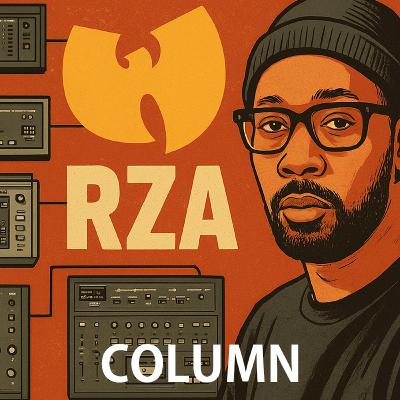
Wu-Tang Clan reshaped hip-hop by turning philosophy, mythology, and street reality into a single language.This episode explores how Wu-Tang Clan forged a global poetic system—blending Staten Island street narratives with kung fu cinema, Five Percent Nation teachings, and the spiritual discipline of the samurai archetype. More than references or aesthetics, these elements became structural foundations for a new form of hip-hop storytelling.We examine how fragmented beats, raw sampling, and minimalist production created space for dense lyricism and collective identity. Martial arts films provided moral frameworks, character archetypes, and concepts of mastery, while Eastern philosophy offered a language for discipline, isolation, and transcendence beyond the street.The episode also traces Wu-Tang’s global impact: how their myth-making approach influenced hip-hop worldwide, from underground scenes to mainstream artists, and how their DIY economics, clan-based identity, and narrative universe rewrote the rules of artistic independence.Wu-Tang Clan emerges here not just as a rap group, but as a cultural system—where music becomes training, language becomes combat, and survival becomes art.▼【Related Column】Wu-Tang Clan and Japanese anime culture: Resonance between oriental thought and the streethttps://monumental-movement.jp/en/column-wu-tang-clan-anime/
Bossa nova was a quiet revolution—one that changed popular music forever without raising its voice.This episode offers a guided journey through the history of bossa nova, tracing its emergence in late-1950s Brazil and its global resonance in jazz and popular music. Born from the meeting of samba rhythms, jazz harmony, and modernist sensibility, bossa nova introduced a new language of intimacy, restraint, and sophistication.We explore the artists who shaped the movement, examining how understated vocals, syncopated guitar patterns, and complex harmonic structures redefined ideas of groove and emotion. The episode also highlights essential recordings and discographies, mapping how bossa nova traveled from Rio de Janeiro to international stages and recording studios.Attention is given to the technical and aesthetic choices behind the sound: microphone intimacy, small ensemble arrangements, studio experimentation, and the influence of jazz recording practices. These elements helped create music that felt both personal and cosmopolitan—rooted in place, yet globally fluent.Rather than nostalgia, bossa nova emerges here as an enduring framework—one that continues to influence jazz, pop, and contemporary electronic music with its subtle balance of rhythm and silence.▼【Related Column】Bossa Nova charm and masterpiece guide: Recommended albums by artist and erahttps://monumental-movement.jp/en/Column-Bossa-Nova/
Trip-hop was never just a genre—it was the sound of a city breathing in slow motion.This episode traces the evolution of Bristol’s trip-hop movement, exploring how a small port city in the UK became the birthplace of one of the most influential and emotionally resonant sounds of the 1990s. Drawing from hip-hop, dub, soul, post-punk, and electronic experimentation, Bristol’s artists created music defined by weight, space, and introspection.We examine the social and cultural conditions that shaped the scene: sound system culture, multicultural neighborhoods, pirate radio, and the legacy of dub production techniques. The discussion highlights how producers used samplers, turntables, analog synths, and early digital tools to build slow, heavy atmospheres—where bass carried memory and rhythm moved like fog.Rather than chasing dancefloor energy, trip-hop focused on mood and texture, reshaping ideas of groove, tempo, and emotional depth. Its influence spread far beyond Bristol, leaving a lasting imprint on electronic music, alternative hip-hop, film scores, and modern downtempo aesthetics.This episode maps trip-hop not as a moment in time, but as an enduring approach to sound—urban, nocturnal, and deeply human.▼【Related Column】Deep dive into trip hop: Massive Attack / Portishead / DJ Shadow / DJ Krushhttps://monumental-movement.jp/en/Column-Triphop/
Experimental hip hop instrumentals are not just beats—they are architectural spaces.This episode explores how instrumental hip hop evolved beyond traditional song structures into a field of rhythm-based construction. From early loop culture and sampler-driven minimalism to abstract beat science and genre-defying production, we trace how producers began treating time, texture, and silence as compositional materials.The discussion moves through key moments and approaches: fragmented drum programming, off-grid swing, negative space, and the collapse of verse-chorus logic. We examine how machines such as classic samplers, drum machines, and modern DAW environments shaped these sounds, enabling new forms of rhythmic architecture.Attention is given to the influence of jazz, noise, ambient, electronic minimalism, and sound collage, as well as the rise of instrumental-focused scenes that prioritized listening over lyric delivery. Rather than background tracks for vocals, these instrumentals function as complete environments—designed for immersion, contemplation, and physical response.At its core, experimental hip hop instrumentals reveal how beat-making became a form of spatial design: building worlds from drums, bass, and texture.▼【Related Column】Experimental Hip Hop Instrumentalshttps://monumental-movement.jp/en/column-experimental-hiphop-instrumentals/
New Age music is often misunderstood as background sound—but its history tells a much deeper story.This episode traces the evolution of New Age music from its roots in 1960s counterculture, Eastern philosophy, and experimental electronics to its role in wellness culture, ambient music, and contemporary sound design. From early synthesizer explorations and acoustic meditation records to digital studios and algorithmic soundscapes, New Age has continually adapted to changing ideas of consciousness and technology.We explore key figures, labels, and movements that shaped the genre, including the influence of minimalism, ambient music, world traditions, and psychoacoustics. The episode also examines how New Age aesthetics migrated into film scores, yoga spaces, healing practices, and streaming-era playlists—transforming both listening habits and the meaning of “spiritual sound.”Attention is given to the tools behind the music: early analog synths, tape loops, digital reverbs, MIDI systems, and modern DAWs—revealing how production techniques shaped the genre’s immersive and calming qualities.Rather than a fixed style, New Age music emerges here as an evolving philosophy—where sound becomes a medium for inner exploration, environmental awareness, and altered perception.▼【Related Column】New Age Music - The intersection of meditation and soundscapehttps://monumental-movement.jp/en/Column-New-Age/
P-Funk was not just a sound—it was a universe.This episode explores the revolutionary legacy of Parliament-Funkadelic, tracing how George Clinton and his ever-expanding collective reshaped funk into a cosmic, political, and radically imaginative force. Emerging from soul and R&B roots, P-Funk fused distorted guitars, deep basslines, analog synthesizers, and Afrofuturist mythology into something entirely new.We examine how albums like Mothership Connection, Maggot Brain, and One Nation Under a Groove redefined groove as both physical and philosophical. The conversation moves beyond records to the full P-Funk ecosystem: stage theatrics, characters, alter egos, and the famous Mothership—where funk became liberation through spectacle.This episode also looks closely at the gear and studio practices behind the sound: Minimoogs, Clavinets, tape saturation, collective improvisation, and the blurred line between chaos and precision. P-Funk’s influence echoes through hip-hop, techno, house, G-funk, and modern electronic production—where sampling turned its grooves into DNA for future generations.At its core, P-Funk proposed a radical idea: that rhythm could rewrite reality, that funk was a weapon, and that freedom could be danced into existence.▼【Related Column】Parliament / Funkadelic: The whole story of the P-Funk revolution - deciphering space myths, groove techniques, and cultural heritagehttps://monumental-movement.jp/en/column-parliament-funkadelic/
Psy-Trance is more than a genre—it is a moving system of sound, technology, and altered perception.This episode traces the full arc of psychedelic trance, from its Goa origins in the late 1980s to its global festival dominance and contemporary digital evolution. We explore how early DJs, travelers, and sound engineers transformed beachside parties into a new electronic ritual—one driven by repetition, acceleration, and transcendence.The discussion dives deep into the machines behind the movement: analog synthesizers, early digital workstations, samplers, sequencers, and later DAW-based production environments. From TB-303 mutations and hypnotic arpeggiators to modern modular rigs and software ecosystems, psy-trance has always been inseparable from its tools.We also examine key records and stylistic shifts—Goa trance, full-on, dark psy, progressive, and forest—mapping how tempo, sound design, and spatial effects evolved alongside dancefloor expectations. Rather than linear progress, psy-trance reveals a spiral: constant innovation anchored to a core pulse.At its heart, psy-trance is collective architecture—a shared rhythmic hallucination built from circuits, sweat, and sound systems. This episode documents how music, gear, and community combined to create one of electronic music’s most immersive cultures.▼【Related Column】Psy-Trance history, masterpieces, and 10 recommended trackshttps://monumental-movement.jp/en/Column-Psy-Trance/
loading
Comments 
loading