


 Claim Ownership
The LOWDOWN
Subscribed: 10Played: 189
Subscribe

© Joshua Patten
Description
The LOWDOWN is an independent open-source intelligence (OSINT situational awareness report) covering competition, conflict, and coercive activity involving Russia, China, Iran, North Korea, and the Western Hemisphere.
lowdownosint.substack.com
lowdownosint.substack.com
80 Episodes
Reverse

Diplomatic: The dominant diplomatic trend was simultaneous coercion and deconfliction. Iranian President Masoud Pezeshkian publicly said Iran would halt strikes on neighboring states unless attacks on Iran originated from their territory despite new waves of attacks targeting Gulf states after the statement, apologized to Gulf states, and rejected US demands for unconditional surrender, while Iranian messaging still warned that US and Israeli bases and interests would remain legitimate targets if hostilities continued. Trump, by contrast, signaled a maximalist line: Axios reported three public pledges—to shape Iran’s postwar leadership outcome, offer immunity to Iranian security personnel who defect, and stabilize oil prices—while BBC, AP, and Al Jazeera reported he threatened to hit Iran “very hard,” considered broader target sets, and continued pressing unconditional surrender. Pakistan emerged as a key diplomatic swing state: Al Jazeera reported Deputy Prime Minister Ishaq Dar conducted shuttle communication between Tehran and Riyadh after 28 February, reminded Abbas Araghchi of Pakistan’s September 2025 mutual defense pact with Saudi Arabia, and sought assurances that Saudi territory would not be used to attack Iran, while Pakistani and Saudi defense officials met again on 6 March after Saudi missile interceptions. Regional and international diplomacy also widened: CENTCOM, Bahrain, and the UK discussed coordination; Macron spoke with Lebanon’s President Aoun; Erdogan urged Starmer to create conditions for dialogue; Germany, Ghana, the UN, and Lebanon condemned the strike on UNIFIL personnel; Reuters-cited reporting in the CSIS commentary said Iran and China were discussing possible safe passage for tankers; and Bloomberg reporting indicated Beijing’s military posture around Taiwan shifted abruptly just before the Iran war, with PLA air activity near Taiwan dropping to zero around 0000Z on 28 February ahead of a planned Trump-Xi meeting and shortly before strikes on Iran.Information: Information operations intensified around war aims, regime legitimacy, and control of public perception. BBC, Al Jazeera, and Axios reporting showed Trump framing Iranian apologies to neighbors as proof US-Israeli pressure was working, while simultaneously encouraging regime defections and signaling a role in Iran’s postwar political outcome. Inside Iran, the state moved quickly to harden the information space: Al Jazeera and BBC reported intensified internal warnings against a “fifth column,” live-fire authorities for security forces, Basij patrols, heavily armed checkpoints, prosecution threats against anyone sharing strike imagery, and continued internet throttling or disconnection intended to suppress protest coordination and external visibility. Iranian public sentiment appeared mixed and fluid; BBC interviews described some initial private satisfaction at Khamenei’s killing among regime opponents, followed by growing fear, exhaustion, uncertainty, and anger as strikes expanded and civilian costs mounted, with one resident describing daily life reduced to survival. Robert Ford’s analysis argued that despite visible brittleness, no coherent national opposition has yet emerged inside Iran and no major urban center has fallen outside regime control, making immediate collapse indicators absent so far. Narrative contestation also extended into legal framing: Hesham Alghannam argued Iran’s Article 51 justification for striking Gulf states failed because the presence of US bases does not itself constitute an armed attack, especially given reported attacks on civilian airports, hotels, apartment buildings, and other non-military infrastructure.Military: On 7 March, the conflict entered a broader regional combat phase centered on sustained US-Israeli strike operations against Iranian military, internal security, naval, and proxy infrastructure and continued Iranian missile, drone, and maritime retaliation across Israel, the Gulf, Iraq, Lebanon, and the Strait of Hormuz. Financial Times reporting detailed that the 28 February strike killing Ayatollah Ali Khamenei was enabled by a years-long Israeli-US targeting architecture that fused hacked Tehran traffic cameras, signals intelligence, cyber disruption of local communications, and a CIA human source before Trump authorized Operation Epic Fury at 20:38Z and Israeli aircraft delivered roughly 30 precision munitions on Khamenei’s compound. On 7 March, Al Jazeera, AP, BBC, and ISW/CTP reporting described more than 80 Israeli fighter jets striking Iranian targets overnight with roughly 230 munitions; Israeli claims of destroying 16 IRGC Quds Force aircraft at Mehrabad; continued strikes in Tehran, Isfahan, and across Lebanon’s Bekaa Valley; and an Israeli ground-linked raid near Nabi Chit that Lebanese authorities said killed 41 and wounded 40, while Hezbollah claimed counterattacks and The Economist assessed Israel may be using the current war to attempt a decisive blow against Hizbullah. Iranian retaliation remained extensive but under pressure: ISW/CTP said ballistic missile waves declined from eight in one 24-hour period to five in the next while the Pentagon assessed Iran had launched more than 500 ballistic missiles and 2,000 drones since 28 February; AP, BBC, and Al Jazeera reported Gulf defenses intercepting most incoming threats, including UAE intercepts against 16 ballistic missiles and 121 drones, Bahrain’s cumulative totals of 86 missiles and 148 drones, Jordan’s report of 119 missile and drone attacks since the war began, Saudi intercepts defending Prince Sultan Air Base, Shaybah, and Riyadh approaches, and Qatari interceptions amid limited airspace reopening. IRGC-linked maritime attacks also persisted, including reported strikes on tankers Louise P and Prima near Hormuz, while Houthis remained publicly supportive but had not yet entered the war directly, preserving a latent escalation option in the Red Sea and missile domain.Economic: The war produced an acute regional and global energy shock centered on damage, precautionary shutdowns, and the effective closure of Hormuz. AP reported American crude settled at $90.90 and Brent at $92.69 on 6 March, with US gasoline at $3.41 per gallon and diesel at $4.51 by 7 March; roughly 20 million barrels per day of oil-carrying shipping were stranded in the Gulf; around 9 million barrels per day were reportedly off the market; and a strike on a Qatari LNG facility took about 20 percent of global LNG supply offline, driving even sharper diesel and jet fuel spikes in Europe and Asia. Kuwait cut oil production as a precaution, Pakistan raised fuel prices by about 20 percent, and Trump announced an insurance plan of up to $20 billion for Gulf-region losses, though cited experts said insurance would not overcome the physical threat posed by drones, mines, speedboats, and continued attacks. The CSIS commentary showed the Hormuz closure was affecting China as well as Gulf producers: average daily vessel transits fell from more than 153 before the war to about 13 after 1 March, Chinese and Hong Kong-flagged traffic nearly stopped, 55 Chinese-flagged ships remained trapped inside the Persian Gulf, and Beijing halted fuel exports on 5 March. China’s exposure is substantial, with as much as 40 percent of its oil and 30 percent of its LNG moving through Hormuz, underscoring that the conflict is now generating strategic second-order effects across Asia as well as the Middle East.Law Enforcement: Internal security and coercive state control tightened markedly inside Iran and, to a lesser degree, in affected partner states. Al Jazeera reported that Iranian police chief Ahmad-Reza Radan and IRGC commander and parliament member Salar Velayatmadar signaled security forces had authority to use live fire against individuals deemed threats to state security, while Basij units patrolled and checkpoints proliferated nationwide. Iranian authorities warned citizens against acting as collaborators by photographing strike sites or transmitting images to foreign media, and BBC Monitoring said the Intelligence Ministry promised severe punishment for such activity while urging the public to report violators. Robert Ford identified the willingness of police and local security units to repress protests as one of the core indicators of regime durability, noting that no significant defections or local collapses had yet emerged. Outside Iran, security and public-order effects were visible in Pakistan, where the aftermath of Khamenei’s assassination reportedly contributed to deadly unrest, army deployment, and a three-day curfew in Gilgit-Baltistan, and in London where police managed large anti-war demonstrations marching toward the US embassy.Intelligence: Intelligence drove both the opening decapitation strike and the continuing campaign. FT reporting provided the clearest picture of the prewar intelligence architecture: Israel reportedly hacked nearly all Tehran traffic cameras for years, built “pattern of life” files on Khamenei’s security teams, penetrated mobile networks, used social network analysis on massive data sets, and combined those streams with a CIA human source to confirm Khamenei’s presence before the 28 February strike. That same reporting described selective disruption of mobile towers near Pasteur Street to block warnings to Khamenei’s detail, while General Dan Caine said US cyber operations degraded Iran’s ability to see, communicate, and respond. Ford’s regime-collapse analysis highlighted the exceptional level of hostile intelligence penetration into Iranian elite circles and suggested that continued command-and-control survivability would be central to regime endurance. ISW/CTP added that Russia was reportedly providing Iran intelligence on US military assets and that US intelligence indicated China may be preparing financial aid and missile components for Iran, indicating the conflict is now drawing in broader great-power intelligence compet

Iran and Middle EastDiplomaticU.S. political leadership publicly ruled out negotiations with Iran as President Donald Trump stated on 6 March that the United States would accept only Iran’s “unconditional surrender,” while Iranian officials including President Masoud Pezeshkian and Foreign Minister Abbas Araghchi rejected negotiations under current conditions and pledged resistance. Iran’s internal governance shifted to a wartime collective leadership structure centered on Supreme National Security Council Secretary Ali Larijani following the 28 February assassination of Supreme Leader Ayatollah Ali Khamenei, while IRGC leadership transitioned to Brigadier General Ahmad Vahidi after successive commanders were killed in early strikes. International diplomatic positioning expanded as France authorized U.S. support aircraft access to Istres Air Base for non-combat missions while deploying Rafale fighters to the UAE, Qatar warned the conflict could halt Gulf energy exports within weeks, and Russia publicly called for an end to U.S. operations during a 6 March call between Vladimir Putin and Masoud Pezeshkian.InformationThe information environment surrounding the war has become highly contested, combining state messaging, cyber operations, media reporting, and synthetic information campaigns. U.S. and Israeli cyber and information operations reportedly disrupted Iranian communications networks during the first hours of Operation Epic Fury and enabled intelligence collection and targeting support while Iranian authorities imposed a nationwide internet shutdown approximately four hours after the strikes began to limit further cyber exploitation and information operations. Parallel information activity included cyber intrusion into Iranian digital platforms such as the BadeSaba prayer application distributing surrender messages and widespread circulation of AI-generated war videos and fabricated satellite imagery across social media platforms, generating hundreds of millions of views and complicating public verification of battlefield events.MilitaryThe military campaign under Operation Epic Fury has expanded rapidly since 28 February 2026, with U.S. and Israeli forces striking thousands of targets across Iran including missile bases, defense-industrial facilities, internal security infrastructure, Basij positions, and leadership sites while achieving reported degradation of Iranian air defense systems and missile infrastructure. U.S. Central Command reported more than 3,000 targets struck and over 40 Iranian naval vessels damaged or destroyed while Israeli operations included a 50-aircraft strike against a leadership bunker complex associated with the late Ayatollah Khamenei and multiple strike waves against Tehran and Iranian military facilities. Iran continues regional retaliation through ballistic missiles, drones, and proxy operations targeting Israel, Gulf states, and U.S. assets, including attacks on energy infrastructure in Iraq, missile launches toward U.S. bases and regional partners, Hezbollah rocket and drone attacks from Lebanon, and maritime disruption around the Strait of Hormuz.EconomicThe war has produced immediate disruption to global energy markets and maritime commerce centered on the Strait of Hormuz, where Iranian attacks on shipping and declarations of closure reduced tanker traffic by more than 90 percent in the first week of fighting. Global oil prices rose above $90 per barrel while Qatar halted liquefied natural gas production after missile and drone attacks targeted Gulf states and warned that sustained conflict could halt regional energy exports and trigger force majeure declarations across producers. Additional economic disruption includes damage to energy infrastructure in Iraq’s Kurdistan region, suspension of shipping routes and energy transport through the Gulf, and potential long-term impacts to global LNG supply chains responsible for roughly one-fifth of global shipments.Law EnforcementDomestic security structures within Iran have been directly targeted during the campaign, with U.S.–Israeli strikes reportedly hitting police stations in Kurdistan and West Azerbaijan provinces and Basij facilities in Tehran province while Iranian authorities imposed internal security controls including nationwide internet shutdowns. Regional law-enforcement and security services are also responding to spillover violence, including missile and drone strikes affecting civilian areas in Bahrain, Kuwait, and Saudi Arabia and attacks against foreign personnel and energy facilities in Iraq. Investigations are also underway regarding a suspected coalition friendly-fire incident in which a Kuwaiti F/A-18 shot down multiple U.S. F-15E aircraft during early coalition operations, with analysts examining airspace coordination failures and identification issues.IntelligenceCyber and intelligence operations played a central role in enabling the opening phase of Operation Epic Fury, with coordinated U.S. and Israeli cyber actions reportedly disabling Iranian communications and sensor networks and supporting targeting during the initial strike wave that killed senior Iranian leadership including Ayatollah Ali Khamenei. Intelligence assessments indicate Iranian retaliation involved more than 500 ballistic missiles and over 2,000 drones during the first 100 hours of the war while ISR platforms continue hunting missile launchers across Iran. Additional intelligence reporting states Russia may be providing Iran with targeting information regarding U.S. military positions and assets in the region while monitoring organizations such as Airwars report historically high strike tempo levels exceeding previous major air campaigns.FinanceFinancial effects of the war are emerging primarily through defense-industrial mobilization and global energy price volatility. U.S. officials stated that munition inventories remain sufficient to sustain the campaign while defense manufacturers are increasing production to support extended combat operations and missile defense requirements. Meanwhile global commodity markets have reacted to energy supply disruptions, with oil price spikes and potential LNG shortages creating broader financial risk for international energy markets and regional economies dependent on Gulf exports.China, The Korean Peninsula, and AsiaRegional developments across Asia indicate a parallel strategic competition environment shaped by Chinese political influence campaigns, military modernization, and cyber activity while avoiding direct military involvement in the Iran conflict. China has reduced PLA flight activity near Taiwan since 28 February 2026 while continuing maritime patrols and political messaging ahead of a potential Trump-Xi meeting, even as Beijing expands ideological initiatives such as its “Asian values” campaign to increase regional influence and prepares for the 2026 APEC summit. At the same time China is tightening domestic and international digital control through new cybercrime legislation and security frameworks affecting Hong Kong and global technology ecosystems, while North Korea reaffirmed expansion of its nuclear arsenal during the Workers’ Party’s 9th Party Congress and U.S. investigators reported suspected Chinese state-linked hackers breached an FBI network containing surveillance metadata.Russia and EuropeEuropean and Russian developments related to the conflict show growing geopolitical involvement and force posture adjustments tied to Operation Epic Fury. The United Kingdom has authorized U.S. use of RAF Fairford and Diego Garcia for defensive strike operations against Iranian missile sites while deploying additional aircraft and maritime assets to protect regional partners. Simultaneously intelligence reporting indicates Russian services are sharing targeting information with Iran regarding U.S. military assets while President Vladimir Putin publicly called for the United States to halt operations during a 6 March conversation with Iranian President Masoud Pezeshkian, highlighting Russia’s dual approach of diplomatic messaging and covert operational support to Tehran.All Other ReportingThe global information environment surrounding the Iran war is increasingly shaped by synthetic media and digital misinformation campaigns that complicate situational awareness and public understanding of battlefield developments. Researchers report large volumes of AI-generated videos and manipulated satellite imagery depicting fabricated attacks on locations such as Tel Aviv and Dubai spreading across social media platforms and receiving hundreds of millions of views. Financial incentives tied to engagement-based monetization systems, including revenue sharing on platforms such as X, are accelerating the production and dissemination of synthetic war content while verification tools struggle to reliably distinguish fabricated material from authentic battlefield footage.Iran and Middle East* Who is Ahmad Vahidi, the IRGC’s new commander? — Faisal Ali (Al Jazeera) — https://www.aljazeera.com/news/2026/3/6/who-is-ahmad-vahidi-the-irgcs-new-commander — Brigadier General Ahmad Vahidi has assumed command of Iran’s Islamic Revolutionary Guard Corps during the ongoing U.S.–Israeli campaign against Iran following the deaths of senior Iranian leaders in early strikes. The report states that Israeli–U.S. strikes beginning on 28 February 2026 killed Supreme Leader Ali Khamenei and IRGC commander Hossein Salami, while Salami’s replacement Mohammad Pakpour was also killed shortly afterward. Vahidi, previously appointed IRGC deputy chief in December 2025 and a former Quds Force commander, now leads the force as Iran attempts to maintain military cohesion during sustained attacks that have reportedly killed more than 1,000 people across the country.* Unverified Video Showing Kuwaiti F/A-18 Engaging U.S. F-15E Raises New Questions About Friendly Fire Incident — David Cenciotti (The Aviationist) — https://theaviationi

Military: Operation Epic Fury entered its seventh day with sustained U.S.–Israeli air operations across Iran, Lebanon, and Iranian proxy networks while Iranian missile and drone attacks continued across Israel and Gulf states. Israeli forces have conducted roughly 2,500 strike sorties delivering more than 6,000 munitions against targets including Basij headquarters, Iranian internal security command centers, missile infrastructure, and underground “missile city” complexes, with approximately 300 Iranian ballistic missile launchers assessed destroyed or disabled. Coalition forces appear to have achieved localized air superiority over key Iranian airspace while Iranian retaliatory attacks targeted Israel and U.S.-aligned Gulf states including Kuwait, Qatar, Bahrain, the United Arab Emirates, and Saudi Arabia. Regional air defenses reported extensive intercept activity, including Bahrain intercepting 78 missiles and 143 drones, while Saudi Arabia and Qatar engaged cruise missiles and drones targeting areas near Riyadh and Al Udeid Air Base. Iranian missiles also struck infrastructure associated with Bahrain’s main refinery complex, causing fires but no reported casualties. Israeli operations expanded into Lebanon with continued airstrikes in Beirut, the Dahiyeh district, Sidon, and southern Lebanon while Israeli ground forces advanced into southern Lebanese territory amid continued Hezbollah rocket and drone attacks. The campaign has caused more than 1,200 reported deaths inside Iran and at least 77 fatalities in Lebanon while U.S. officials estimate the cost of combat operations at roughly $1 billion per day.Intelligence: Battle damage assessments derived from satellite imagery indicate significant degradation of Iranian missile forces after strikes destroyed launchers and damaged entrances to underground tunnel networks at missile bases near Shiraz, Isfahan, Kermanshah, and Tabriz. U.S. officials assess Iranian missile launches have declined by approximately 86 percent over a four-day period as launchers and support infrastructure were targeted. Intelligence reporting also indicates Iranian-aligned forces likely conducted drone reconnaissance of U.S. troop movements near Shuaiba Port in Kuwait prior to the March 1 drone strike that destroyed a tactical operations center and killed six U.S. service members. Separate reporting from U.S. officials indicates Russia has been providing Iran with satellite and electronic intelligence to assist in targeting U.S. forces and regional facilities.Diplomatic: Regional tensions expanded after Azerbaijan accused Iran of conducting a drone strike on its Nakhchivan exclave that damaged airport infrastructure and injured civilians, prompting Baku to place forces on heightened readiness and withdraw diplomatic staff from Iran. Iran’s political leadership structure remains uncertain following the death of Supreme Leader Ayatollah Ali Khamenei, with reports indicating an interim council is working to select a successor. U.S. President Donald Trump stated that the United States would accept no settlement short of Iran’s unconditional surrender while Lebanese officials warned that Israeli strikes and mass evacuation orders in Beirut could trigger a large-scale humanitarian crisis.Information: The conflict is occurring amid a near-total communications blackout inside Iran, where internet connectivity has reportedly dropped to roughly one percent of normal capacity following strikes and government network restrictions. Civilian impact reporting has increased, including claims of strikes on residential areas and schools such as the reported Minab school incident, prompting calls from international organizations for investigations. Iranian leadership messaging has emphasized national resilience and preparedness for a prolonged conflict.Economic: The war has begun affecting regional energy infrastructure and global markets as Iranian missile strikes damaged facilities associated with Bahrain’s refinery complex and conflict-related disruptions affected shipping and liquefied natural gas flows in the Persian Gulf. In response to rising energy market volatility, the United States granted India a temporary 30-day waiver allowing the purchase of Russian oil to stabilize global supply conditions.Law Enforcement: Governments across the Middle East and partner nations have increased domestic security measures, evacuations, and protective actions for citizens and diplomatic personnel in response to missile attacks, drone activity, and expanding regional instability.Finance: U.S. military operations in support of Operation Epic Fury are estimated to be costing approximately $1 billion per day, with Pentagon planners preparing a potential supplemental funding request approaching $50 billion to replenish munitions and sustain combat operations.Iranian Ballistic Missile Forces: Iran maintains one of the largest ballistic missile arsenals in the Middle East composed of short- and medium-range systems designed to strike regional military bases, ports, airfields, and energy infrastructure. Key systems include the Shahab series with ranges around 1,300 kilometers, the Ghadr and Emad medium-range missiles reaching roughly 1,600 to 2,000 kilometers, the solid-fuel Sejjil missile with a similar range and faster launch readiness, and the Fateh-series short-range missiles such as Fateh-110, Fateh-313, and Zolfaghar with ranges between roughly 300 and 700 kilometers. Iran has also introduced newer solid-fuel systems such as the Kheibar Shekan missile designed for improved maneuverability and reduced launch preparation time. These weapons are typically deployed on mobile transporter-erector-launchers and supported by extensive underground tunnel networks commonly referred to as “missile cities,” enabling concealment, survivability, and rapid dispersal. Increasing use of precision guidance systems and maneuverable reentry vehicles reflects Iran’s emphasis on improving strike accuracy against military and economic targets across the region.China, the Korean Peninsula, and Asia: Video imagery circulating on March 4 indicates the People’s Liberation Army Ground Force has fielded Type-96A main battle tanks equipped with the GL-6 active protection system, suggesting that active protection technology is being integrated into operational armored units rather than remaining limited to testing programs.Western Hemisphere: The United States and Venezuela announced plans to restore diplomatic relations following the January 2026 U.S. operation that resulted in the capture of Venezuelan leader Nicolás Maduro, with plans to reopen the U.S. embassy in Caracas and begin negotiations with Venezuela’s interim government. Separately, NORAD detected and intercepted two Russian Tu-142 maritime patrol aircraft operating in the Alaskan and Canadian Air Defense Identification Zones, prompting a joint U.S.–Canadian fighter response that included F-22, F-35A, and CF-18 aircraft supported by airborne warning and tanker assets.All Other Reporting: Cybersecurity researchers reported that an iOS exploitation toolkit known as “Coruna,” believed to have originated from U.S. government development, has spread into global cybercriminal and state-linked operations and is now being used by Russian espionage actors and Chinese cybercrime groups. The toolkit has reportedly compromised more than 42,000 iPhones through multiple exploit chains targeting iOS versions 13 through 17.2.1, demonstrating how sophisticated government-grade cyber capabilities can proliferate into broader criminal and intelligence ecosystems.Spotify: Apple: Iran and Middle East* Iranian Missile Strikes Bahrain’s Largest Oil Refinery — Editor Staff (SOFX) — https://www.sofx.com/iranian-missile-strikes-bahrains-largest-oil-refinery/ — Iranian missiles struck infrastructure associated with the Bahrain Petroleum Company refinery complex in the Ma’ameer industrial zone on March 5, 2026, causing a large fire but no reported casualties during Iran’s retaliatory operations linked to Operation Epic Fury. The Bahrain Ministry of Interior stated the missile impact triggered fires at a facility within the refinery complex on Sitra Island near Manama and that emergency services brought the blaze under control with limited material damage. The ministry also reported that Iranian missiles struck two hotels and a residential building in Manama during the same attack sequence, causing property damage without reported fatalities or injuries.* U.S., Qatar Move to Secure Ukraine’s Drones to Counter Iranian UAVs — Editor Staff (SOFX) — https://www.sofx.com/u-s-qatar-move-to-secure-ukraines-drones-to-counter-iranian-uavs/ — The United States and Qatar are in discussions with Ukraine to obtain Ukrainian-developed interceptor drone technology designed to counter Iranian Shahed-class unmanned aerial vehicles during the ongoing conflict linked to Operation Epic Fury. Reuters reporting cited in the article states the discussions involve systems capable of detecting incoming drones and disrupting their communications, reflecting interest in Ukraine’s counter-UAV capabilities developed during Russia’s extensive use of Iranian Shahed drones. Ukrainian President Volodymyr Zelenskyy confirmed on March 5, 2026 that the United States requested assistance defending against Iranian drones and stated Ukraine would provide specialists while ensuring its own defense capabilities were not degraded.* Azerbaijan Orders Retaliatory Strikes After Drones Hit Airport, School in Nakhchivan Exclave — Editor Staff (SOFX) — https://www.sofx.com/azerbaijan-orders-retaliatory-strikes-after-drones-hit-airport-school-in-nakhc… — Azerbaijan accused Iran of conducting a drone strike against its Nakhchivan exclave on March 5, 2026, prompting President Ilham Aliyev to order retaliatory strike preparations and place Azerbaijani forces on their highest mobilization level. Azerbaijani officials stated that four unmanned aerial vehicles

Diplomatic:Diplomatic activity around the Iran war has intensified as regional and global actors respond to expanding hostilities and leadership changes in Tehran. The United States is seeking support from Kurdish groups in Iraq and Iran while signaling potential influence over Iran’s leadership transition following the death of Supreme Leader Ayatollah Ali Khamenei, and the U.S. Congress rejected measures intended to halt the war on March 5. International reactions include China calling for a ceasefire and diplomatic engagement due to energy security concerns, Gulf states coordinating missile defense and security measures, EU-GCC diplomatic messaging condemning Iranian attacks, and the United Kingdom deploying military assets while organizing evacuations of British citizens.Information:Information operations and public messaging have focused on shaping perceptions of battlefield progress and strategic intent during Operation Epic Fury. U.S. and Israeli officials stated that air superiority had been achieved in operational areas and that Iranian missile infrastructure had been suppressed, while Iranian leadership messaging emphasized endurance, deterrence, and continued retaliation through missile and drone attacks. Russian officials linked the war to broader geopolitical tensions with the West, and domestic messaging in the United States has highlighted the campaign’s progress, potential leadership change in Iran, and risks of retaliatory terrorism.Military:The military campaign continues to expand geographically and operationally across the Middle East with sustained strike activity, retaliatory attacks, and widening combat zones. U.S. and Israeli forces struck hundreds of targets across Iran including missile launchers, naval assets, and command infrastructure while sinking more than 30 Iranian ships and employing systems such as B-2 bombers, bunker-penetrating munitions, and low-cost LUCAS attack drones. Iran has launched hundreds of ballistic missiles and thousands of drones targeting Israel and Gulf states, Hezbollah has resumed direct engagements with Israeli forces, and regional air defense systems in Saudi Arabia, Qatar, the UAE, and Kuwait have intercepted large numbers of incoming projectiles.Economic:Economic effects of the conflict are already significant across energy markets, maritime trade, and defense expenditures. Maritime traffic through the Strait of Hormuz has dropped sharply with roughly 1,000 vessels delayed and overall shipping reduced to about 20 percent of normal levels due to security risks and insurance withdrawals. The first 100 hours of Operation Epic Fury cost an estimated $3.7 billion and consumed thousands of munitions, while fuel prices, aviation disruptions, and global market volatility have emerged as immediate economic impacts.Financial:Financial implications include both the direct cost of combat operations and longer-term defense procurement trends shaped by the conflict. Analysts estimate the United States expended more than 2,000 munitions and interceptor systems during early operations while Iran launched roughly 500 ballistic missiles and 2,000 drones by March 4. Cost asymmetry is also evident in the use of inexpensive drone systems such as Shahed-type platforms and LUCAS loitering munitions compared with high-cost interceptor missiles, while the Pentagon is preparing major procurement of tens of thousands of one-way attack drones.Intelligence:Intelligence reporting highlights evolving battlefield conditions, infrastructure damage assessments, and potential escalation risks. Satellite imagery has confirmed damage to Iranian military facilities including the Konarak drone base, Khorramabad missile base, and naval assets, while analysis indicates Iranian command structures rely on decentralized control to sustain missile and drone attacks despite leadership losses. Additional intelligence concerns include potential Iranian retaliation through terrorism or cyber operations, uncertainty about the survivability of Iran’s nuclear infrastructure after strikes on Natanz and other facilities, and ongoing monitoring of missile and drone activity across the Gulf.Law Enforcement:Law enforcement activity related to the conflict has focused primarily on domestic security and investigative monitoring. U.S. federal authorities are investigating a March 1 mass shooting in Austin, Texas as a potential terrorism incident amid heightened concern about Iranian retaliatory operations against U.S. targets. Homeland security agencies and intelligence services are also monitoring possible activation of covert networks or lone-actor threats linked to the expanding war.Other Global Reporting:Outside the Middle East theater, global security developments reflect broader strategic implications of the conflict. China is increasing defense spending by 7 percent while assessing risks to energy imports and maritime trade, and Finland is considering lifting its ban on hosting nuclear weapons as part of NATO deterrence planning. In South Asia, fighting between Pakistan and Afghanistan’s Taliban government has escalated into what Pakistan described as an “open war,” while Russia continues operations in Ukraine and is integrating occupied territories administratively as the Iran war begins influencing negotiations and military cooperation involving Ukrainian drone defense expertise.Iran and Middle East* BBC Live Coverage on Iran War: Tehran Civilian Sentiment, Israeli Operational Shift, Gulf Threats, and Regional Military Posture — BBC News live staff; Joshua Cheetham, Barbara Metzler, Daniel Bush, Jessica Parker, Sadaf Maruf, Kris Bramwell, Ghoncheh Habibiazad, Emma Pengelly, Richard Irvine-Brown, Kayleen Devlin, Sameer Hashmi, Bernd Debusmann Jr (BBC News / BBC Persian / BBC Verify) — https://www.bbc.com/news/live/c62gg44d53xt?page=4 — Israel said it was moving to the next phase of operations against Iran while Gulf states continued intercepting Iranian missiles and drones and maritime traffic through the Strait of Hormuz fell sharply. IDF Chief of Staff Lt Gen Eyal Zamir said Israel and the United States had established air superiority and suppressed Iran’s ballistic missile array during six days of continuous strikes and would now dismantle regime and military capabilities. BBC reporting also described Iranian civilian reactions to ongoing strikes, UK deployments of Typhoon fighters and HMS Dragon for regional defense, UAE and Kuwaiti air-defense engagements, and approximately 1,000 vessels held up near the Strait of Hormuz.* US says ‘firepower over Iran to surge dramatically’ as Israel bombards Beirut — James Chater and Toby Mann with Yolande Knell, Barbara Plett Usher, Alice Cuddy, Orla Guerin, Bernd Debusmann Jr, Nick Beake, Will Grant, and Faisal Islam (BBC News) — https://www.bbc.com/news/live/c62gg44d53xt?page=4 — U.S. officials said airpower and strike activity over Iran would increase sharply while Israel expanded military operations against Hezbollah in Lebanon. Defense Secretary Pete Hegseth said the U.S. mission was advancing decisively and CENTCOM commander Adm. Brad Cooper said U.S. bombers had struck nearly 200 targets in Iran in 72 hours and more than 30 Iranian ships had been sunk. BBC reporting also described evacuations from Beirut’s southern suburbs, missile and drone interceptions in Gulf states, and economic effects including rising fuel prices and disruption to shipping and aviation.* BBC live updates on Gulf air defense activity, Beirut displacement, Azerbaijani escalation, healthcare damage in Iran, and UK posture — Alex Murray and BBC News live reporting team (BBC News) — https://www.bbc.com/news/live/c62gg44d53xt?page=4 — Regional air-defense activity and displacement expanded across the Middle East as Gulf states intercepted Iranian missiles and drones while Israel ordered evacuations in Beirut. The UAE said it intercepted six Iranian missiles and 131 drones, Azerbaijan closed part of its southern airspace after alleged Iranian drone incursions, and WHO said it verified 13 attacks on healthcare in Iran and one in Lebanon since the war began. Satellite imagery reviewed by BBC Verify showed damage to Iranian naval vessels at Konarak naval base and suggested U.S. strikes had heavily degraded Iranian naval assets.* UK Government Response and British Citizen Evacuation During Iran War (Live Updates) — Henry Zeffman, Chris Mason, Sadaf Maruf, Raffi Berg and BBC Verify team (BBC News) — https://www.bbc.com/news/live/c62gg44d53xt?page=2 — The United Kingdom said it did not participate in the initial U.S.–Israeli strikes on Iran but deployed military assets and evacuation flights to protect British citizens and forces in the region. Prime Minister Keir Starmer said RAF Typhoon aircraft intercepted drones targeting bases housing UK personnel and announced deployments including additional Typhoons to Qatar, Wildcat helicopters to Cyprus, and HMS Dragon to the Mediterranean. Officials reported about 4,000 British nationals had already returned to the UK while approximately 140,000 were registered as present in the Middle East.* U.S. Central Command X Posts on Operation Epic Fury — U.S. Central Command and Department of War (X / U.S. Central Command) — https://x.com/CENTCOM — U.S. Central Command said U.S. forces struck an Iranian drone carrier and were pursuing the mission to sink the entire Iranian Navy during Operation Epic Fury. CENTCOM also said B-52 bombers struck Iranian ballistic missile and command-and-control sites during the first 100 hours of the campaign and denied rumors that a U.S. fighter jet had been shot down over Basra. The posts also promoted a press conference by Defense Secretary Pete Hegseth and CENTCOM commander Adm. Brad Cooper and praised the performance of thousands of U.S. service members in early combat operations.* War Sec. Pete Hegseth and CENTCOM Commander Admiral Brad Cooper hold a press briefing at Central Command Headquarters in Tampa, Florida — Pete H

Military: U.S. and Israeli forces continued Operation Epic Fury strike operations across Iran targeting IRGC command infrastructure, missile and drone production, cyber/electronic warfare headquarters, internal security facilities, and air-defense systems while Iranian forces sustained missile and drone retaliation against Israel, U.S. bases, and Gulf states. Regional spillover expanded with interceptions and impacts reported in the UAE, Qatar, Bahrain, Iraq, Saudi Arabia, and Azerbaijan while Israeli strikes against Hezbollah positions in Lebanon displaced roughly 300,000 civilians. Maritime combat continued as a U.S. submarine torpedoed and sank the Iranian frigate IRIS Dena near Sri Lanka while CENTCOM reported more than 20 Iranian naval vessels destroyed since the conflict began on February 28.Diplomatic: International diplomatic reactions expanded as Canada stated it could not rule out potential military participation while organizing evacuations for citizens in the region. Azerbaijan summoned Iran’s ambassador after drones struck the Nakhchivan Autonomous Republic while Qatar publicly attributed espionage and sabotage plots to IRGC-linked networks following arrests of suspected operatives. Russia and China condemned the U.S.–Israeli strikes and requested a United Nations Security Council meeting but signaled no intention to provide military support to Iran.Information: Information operations intensified as Iranian religious authorities issued a fatwa calling for jihad against U.S. leadership and Israel while competing narratives emerged regarding aircraft shootdowns, drone interceptions, and civilian targeting claims. Israeli officials reported destruction of an IRGC cyber warfare headquarters while cybersecurity firms observed Iranian-linked cyber activity targeting infrastructure and surveillance systems used for strike assessment. Civilian reporting from inside Iran described internet shutdowns, increased security checkpoints, and information restrictions complicating verification of battlefield claims.Economic: The conflict is producing growing economic effects as maritime traffic through the Strait of Hormuz declined sharply amid missile and drone threats to shipping and reports of tanker incidents in Gulf waters. Inside Iran, civilians reported shortages, price increases, and disrupted supply chains as strikes and security restrictions affected daily economic activity. Regional aviation and shipping disruptions continued as governments imposed airspace restrictions and maritime warnings.Law Enforcement: Security and counterintelligence actions expanded regionally as Qatari authorities arrested 10 individuals accused of operating IRGC-linked espionage and sabotage cells, reportedly seizing communications equipment and coordinates of sensitive infrastructure sites. The arrests followed broader regional concerns about covert Iranian networks operating during the conflict.Intelligence: Intelligence activity around the conflict includes reporting that Iranian cyber actors attempted to compromise security cameras and infrastructure systems to assess strike damage and conduct reconnaissance. Reporting also indicates Iranian Kurdish militant factions near the Iran–Iraq border are discussing potential cross-border operations amid the ongoing air campaign, though U.S. officials stated Washington is not supporting such activity.Finance: The high operational tempo of the campaign is placing pressure on U.S. weapons inventories as strike operations and air-defense interceptions consume large numbers of precision munitions including Tomahawk cruise missiles and Patriot and THAAD interceptors. U.S. lawmakers are considering supplemental defense funding while the Pentagon moves to expand production capacity for interceptors and long-range strike weapons.Remaining AOR Reporting: Outside the Middle East, regional developments included the U.S. submarine sinking of the Iranian frigate IRIS Dena near Sri Lanka increasing diplomatic pressure on India due to the ship’s recent port visit there, while U.S. Forces Korea reaffirmed a strong force posture on the Korean Peninsula amid reports of possible capability redeployments linked to Middle East operations and North Korea conducted cruise-missile training under Kim Jong Un’s supervision. In China, authorities removed three retired PLA generals from a national advisory body as part of an ongoing anti-corruption campaign before the annual political meetings. In Europe, analysis assessed Ukraine continues to hold Russian forces despite sustained attacks and currently limits Russian control to roughly 19.4 percent of Ukrainian territory. In the Western Hemisphere, analysis reported intensifying U.S. pressure on Cuba amid severe economic deterioration and energy shortages as Washington considers further measures against governments supplying oil to the island.Iran and Middle East* Iran Update Evening Special Report, March 4, 2026 — Institute for the Study of War (ISW) and the Critical Threats Project (CTP) — https://understandingwar.org/research/middle-east/iran-update-evening-special-report-march-4-2026/ — ISW-CTP reports that as of its 2100Z March 4, 2026 cutoff, U.S.–Israeli strikes under Operation Epic Fury continued targeting Iranian command infrastructure, missile and drone production, internal security forces, and naval assets while Iran sustained reduced ballistic missile launches and expanded drone and regional/maritime attacks. The report cites IDF reporting that Israeli strikes hit a major IRGC complex in southeastern Tehran that included headquarters elements for the IRGC, Basij, Quds Force, and electronic warfare/cyber defense, and notes additional strikes on internal security sites and missile infrastructure across multiple provinces. ISW-CTP also reports Iranian attacks damaged U.S. facilities and regional infrastructure, maritime traffic through the Strait of Hormuz fell sharply, and U.S. Central Command said more than 20 Iranian ships were destroyed or sunk since the conflict began on February 28, 2026.* Israel says it knocked out Iran’s cyber warfare headquarters — Maggie Miller (Politico) — https://www.politico.com/news/2026/03/04/israel-iran-cyber-headquarters-00813364 — Politico reports that on March 4, 2026, the IDF said it carried out a “wide-scale strike” on a Tehran-area compound it described as housing IRGC cyber and electronic warfare headquarters and the IRGC Intelligence Directorate. The report says verification of damage is limited by Iran’s internet disruption while cybersecurity firms reported Iranian-linked actors conducting cyber activity across Israel and parts of the region, including camera compromises used to assess missile-strike effects. The article also cites regional reporting of attempted or claimed attacks affecting government systems and infrastructure, including Jordanian authorities saying they thwarted an attempted cyberattack on wheat-silo management systems.* Canada PM Carney says unable to rule out military role in Iran war — Al Jazeera Staff, AP and Reuters (Al Jazeera) — https://www.aljazeera.com/news/2026/3/5/canada-pm-carney-says-unable-to-rule-out-military-role-in-iran-war — Al Jazeera reports that on March 5, 2026, Canadian Prime Minister Mark Carney said Canada cannot “categorically rule out” military participation related to the Iran war while speaking alongside Australia’s prime minister in Canberra. The report says Carney stated Canada was not informed in advance of the February 28, 2026 U.S.–Israeli strikes and described the attacks as “prima facie” inconsistent with international law while also saying Canada would stand by allies and defend Canadians. The article reports Canadian Foreign Affairs Minister Anita Anand said on March 4, 2026 more than 2,000 Canadians in the region requested help to depart and that Canada was planning charter flights from the UAE pending airspace approvals.* Kurds backed by Mossad, CIA could lead next phase of war in Iran — Barak Ravid and Marc Caputo (Axios) — https://www.axios.com/2026/03/05/iran-war-us-israel-kurds-cia-mossad — Axios reports that Iranian Kurdish dissident groups along the Iran–Iraq border have discussed a possible ground operation into northwestern Iran in coordination with the ongoing U.S.–Israeli air campaign, citing U.S., Israeli, and Kurdish-faction sources. The report says Kurdish factions claimed they have not begun a ground offensive and that U.S. officials said President Donald Trump had not approved supporting such an operation, while Axios also reports senior U.S. officials said the United States is not arming the factions. The article reports Iranian officials raised concerns with Iraq about potential cross-border activity and notes Iranian and Israeli reporting of strikes and bombing in areas near the border during the conflict.* A notable fatwa in Iran: A call to jihad has been issued — Author not provided (Source not provided) — https://en.haberler.com/a-notable-fatwa-in-iran-a-call-to-jihad-has-been-19624845/ — The report states that on March 4, 2026 Grand Ayatollah Abdollah Javadi Amoli issued what it describes as a “fatwa for jihad” against U.S. President Donald Trump and Israel and said it is “obligatory to shed the blood” of “Trump and the Zionists.” The article says the statement circulated via a video spreading on social media and frames it as occurring during continuing mutual airstrikes between the United States/Israel and Iran. The report also provides brief background describing Amoli as a leading Iranian religious authority and links the timing to heightened tensions referenced in the article.* 🚫 Rumors circulating on social media of a U.S. F-15E crash in Iran early Wednesday are baseless and NOT TRUE. — U.S. Central Command (CENTCOM) (X) — https://x.com/CENTCOM/status/2029525215374348672 — CENTCOM stated in a post that rumors of a U.S. F-15E crash in Iran early Wednesday are “baseless and NOT TRUE.” The statement is presented as an offici

EXECUTIVE SUMMARY (DIMEFIL)MILITARYU.S. and Israeli forces continued sustained strike operations across Iran targeting ballistic missile infrastructure, IRGC internal security networks, naval assets, and defense-industrial facilities, with more than 2,000 targets struck since 28 February and Israeli aircraft reportedly dropping over 5,000 munitions. Iranian retaliatory activity continued with missile and drone attacks against Israel and U.S. and partner facilities across the Gulf, including strikes affecting Al Udeid Air Base and reported damage to infrastructure at nine U.S. installations across Iraq, Kuwait, Bahrain, Qatar, the UAE, and Saudi Arabia. The Pentagon confirmed six U.S. servicemembers killed in an Iranian missile strike on a U.S. operations center at Shuaiba Port, Kuwait, while naval combat operations reportedly destroyed more than 20 Iranian vessels, including the frigate IRIS Dena, torpedoed by a U.S. submarine in the Indian Ocean. Regional air defense engagements continued as NATO and Gulf states intercepted missiles and drones, including a Qatari F-15 shootdown of two Iranian Su-24 bombers, while RAF F-35B aircraft shot down hostile drones over Jordan. Maritime security incidents and attacks on commercial vessels near the Strait of Hormuz have disrupted shipping traffic, while U.S. officials reported Iranian missile launches have declined 86 percent and drone launches 73 percent following sustained strikes on launch infrastructure.DIPLOMATICThe U.S. Senate voted 47–53 against a war powers resolution that would have limited presidential authority to continue military operations against Iran. The White House stated the campaign’s objectives include destroying Iran’s ballistic missile capabilities, degrading its naval forces, dismantling proxy networks, and preventing nuclear weapons development. European leaders called for de-escalation, with France urging Hezbollah to halt attacks and Israel to avoid a ground offensive in Lebanon. Spain publicly denied U.S. claims that it had agreed to support military operations related to the conflict, while Russia condemned the killing of Iran’s Supreme Leader but avoided directly blaming the United States. Regionally, Iraqi Kurdistan leadership stated it would not participate in the conflict, and Qatar rejected Iranian claims that missile strikes in the country targeted only U.S. facilities.INFORMATIONU.S. strategic messaging continues to frame Operation Epic Fury as a campaign to eliminate Iran’s missile and nuclear capabilities without committing large U.S. ground forces. President Donald Trump publicly encouraged Iranian citizens to challenge their government after the campaign concludes. U.S. Central Command messaging states coalition forces have achieved operational dominance in Iranian airspace and rejected Iranian claims of successful shootdowns of U.S. aircraft. Information operations and OSINT monitoring also addressed false reports circulating online, including claims that Iraqi Kurdish forces had launched a ground offensive into Iran.ECONOMICThe conflict has triggered significant disruption to global energy markets and maritime trade routes. Commercial shipping through the Strait of Hormuz has sharply declined as insurers withdrew war-risk coverage and shipping companies suspended transits. Regional aviation disruptions, infrastructure damage, and supply interruptions have affected trade flows across the Gulf states. U.S. officials also began consultations with defense industry leaders to accelerate weapons production in anticipation of sustained military operations.FINANCEFinancial markets reacted to the conflict with significant volatility driven by energy supply concerns. Asian markets declined sharply, including a reported 12 percent drop in South Korea’s Kospi and approximately 8 percent weekly losses in Japan’s Nikkei, while oil prices fluctuated amid uncertainty surrounding shipping and energy infrastructure in the Gulf. U.S. officials have discussed measures such as political risk insurance and naval escort operations to stabilize commercial shipping and tanker movements.INTELLIGENCEBattle damage assessments and satellite imagery indicate significant degradation of Iranian ballistic missile launch infrastructure and naval capabilities following sustained coalition strikes. Israeli operations have targeted Iranian internal security structures, including IRGC, Basij, and police command facilities linked to domestic repression operations. Reporting also highlighted emerging cyber and infrastructure vulnerabilities after Iranian drones reportedly struck facilities linked to Amazon Web Services infrastructure in Bahrain and the UAE. Iran’s leadership structure remains uncertain following the reported death of Ayatollah Ali Khamenei, with authority temporarily transferred to a three-member leadership council while succession deliberations continue.LAW ENFORCEMENT / INTERNAL SECURITYCivilian impacts across the region continue to grow. Lebanese authorities reported over 83,000 displaced civilians, along with 74 fatalities and more than 400 injuries resulting from Israeli strikes. United Nations estimates indicate approximately 100,000 civilians fled Tehran during the opening days of the bombing campaign. The United States has conducted evacuation operations returning approximately 17,500 American citizens from the region and issued guidance advising Americans to depart Iraq when safe to do so.OTHER GLOBAL REPORTINGRussia and EuropeThe conflict in Ukraine continues concurrently with a major Ukrainian drone strike involving roughly 200 drones targeting Russia’s Novorossiysk Black Sea Fleet base, reportedly damaging vessels including the frigate Admiral Essen. Russian forces simultaneously conducted missile and drone strikes across Ukraine while Moscow’s leadership balanced condemnation of the Iran strikes with maintaining diplomatic relations with Washington.China and Indo-PacificU.S. Navy intelligence officials reported that China is shifting toward a predominantly nuclear-powered submarine fleet, expanding construction of attack, guided-missile, and ballistic missile submarines. Estimates suggest China’s submarine force could grow to approximately 80 boats by 2035, including Type 095 attack submarines and Type 096 ballistic missile submarines equipped with JL-4 missiles.Iran and Middle East* Israel launches new strikes in Tehran and Beirut as conflict widens in Middle East — Tori B. Powell, Haley Britzky, Laura Sharman, Lauren Izso, Jennifer Hansler, Michael Rios, Rae Wang, Paula Newton, Nina Giraldo, Catherine Nicholls, and others (CNN) — https://www.cnn.com/world/live-news/iran-war-us-israel-trump-03-04-26 — The United States and Israel launched strikes against Iran on 28 Feb 2026 under Operation Epic Fury, triggering Iranian missile and drone retaliation across the Middle East. On 02 Mar 2026 an Iranian projectile struck a U.S. operations center at Shuaiba Port in Kuwait killing six U.S. service members, and on 04 Mar 2026 the Pentagon identified Maj. Jeffrey R. O’Brien and CWO3 Robert M. Marzan among the casualties. On 04 Mar 2026 Israeli forces launched additional strikes across Tehran and Hezbollah infrastructure in Beirut while Saudi Arabia reported intercepting three drones over Al-Kharj province and the U.S. State Department coordinated evacuation flights for citizens in the region.* CNN Live Updates — Regional conflict developments (selected posts: displacement in Lebanon; Kurdish-Iran calls; U.S. war powers vote; conditions inside Iran; regional casualty tallies; stranded travelers) — Sana Noor Haq, Max Saltman, Adam Pourahmadi, Morgan Rimmer, Tori B. Powell, Catherine Nicholls, and CNN staff (CNN) — https://www.cnn.com/world/live-news/iran-war-us-israel-trump-03-04-26 — Israeli strikes in Lebanon during the week of 02–08 Mar 2026 displaced at least 83,847 people and killed at least 77 individuals according to Lebanon’s Health Ministry. On 04 Mar 2026 Iraqi Kurdistan President Nechirvan Barzani and Iranian Foreign Minister Abbas Araghchi held a call pledging cooperation and stating Iraqi Kurdistan would not participate in the conflict. On 04 Mar 2026 the U.S. Senate voted 47–53 to block a resolution requiring congressional authorization for additional military action against Iran.* Oil Leak, Beirut Strikes, and IRGC Drone Attacks on Cloud Infrastructure Reported Amid Expanding Regional Conflict — Michael Rios and Lauren Izso (CNN Live Reporting) — https://www.cnn.com/world/live-news/iran-war-us-israel-trump-03-04-26 — Israeli forces conducted strikes against Hezbollah infrastructure in Beirut on 05 Mar 2026 as explosions and smoke were reported in the southern suburb of Dahiyeh. Iranian state-affiliated media reported IRGC drones struck Amazon Web Services infrastructure in Bahrain and the United Arab Emirates and AWS confirmed a drone strike near one facility causing damage. On 05 Mar 2026 the crew of an oil tanker anchored off Kuwait reported a large explosion and a small craft leaving the area while UK Maritime Trade Operations stated the vessel was leaking oil and taking on water.* White House Briefing, Regional Strikes, Casualties in Kuwait, and Expanding Middle East Spillover During Operation Epic Fury — Nina Giraldo, Taylor Galgano, Sana Noor Haq, Samantha Waldenberg, Tamar Michaelis, Michael Rios, Anna Chernova, Max Saltman, and CNN staff (CNN Live Reporting) — https://www.cnn.com/world/live-news/iran-war-us-israel-trump-03-04-26 — White House Press Secretary Karoline Leavitt stated on 05 Mar 2026 that U.S. objectives in the conflict include destroying Iran’s ballistic missile program, eliminating its naval presence, dismantling proxy networks, and preventing nuclear weapons development. Israeli forces conducted additional strikes across Tehran and against Hezbollah infrastructure in Lebanon while Iran previously conducted missile attacks that killed six U.S. service members at Shuaiba Port in Kuwait. Ukraine’s President Volo

Diplomatic: On 4 March 2026, diplomatic activity reflected widening international friction and crisis management tied to Operation Epic Fury, with Russia and China publicly condemning the U.S.–Israeli campaign and urging de-escalation while requesting protection of nationals and warning of uncontrolled regional spillover. European governments remained divided: some governments pursued defensive deployments to protect forces and airspace in the region (including France deploying Rafale patrols over French bases in the UAE and broader allied defensive activity around Cyprus), while Spain refused U.S. use of Rota and Morón for strikes and faced threats of U.S. economic retaliation. U.S. diplomatic posture tightened through embassy/mission security measures and evacuation-related actions across the region as commercial air travel was disrupted and governments coordinated citizen departures, while Iran reportedly explored indirect contact through intelligence channels to discuss conflict termination even as U.S. leadership publicly signaled reduced openness to near-term negotiations.Information: The information environment on day five featured a mix of official messaging, live conflict reporting, and cyber/information-control indicators, including high-volume public statements from U.S. and Israeli officials describing campaign scope, objectives, and claimed strike effects, and Iranian state-linked messaging describing continued retaliation and domestic governance arrangements under wartime conditions. NetBlocks and multiple media outlets reported Iran’s nationwide internet connectivity effectively “flatlining” near ~1% of normal for roughly 100 hours following the 28 February start of strikes, consistent with a regime-imposed blackout that restricts outward information flow and complicates independent verification of conditions inside Iran. Reporting also highlighted information warfare and cyber activity associated with the opening phase of the campaign, including disruptions to Iranian communications and the compromise of widely used Iranian applications to broadcast anti-regime messaging, alongside OSINT-anchored imagery and geolocation used by major outlets to corroborate strike effects near key areas such as Esfahan.Military: Kinetic operations continued to intensify and broaden geographically as the conflict entered its fifth day, with sustained U.S.–Israeli strike waves against Iranian regime, missile, air defense, naval, and internal security targets while Iran continued missile and drone salvos across Israel and Gulf states. Reporting cited campaign scale totals including U.S. strikes on more than 1,700 targets, Israeli execution of ~1,600 sorties delivering 4,000+ munitions, and claimed degradation of Iranian launch capacity, reinforced by OSINT estimates indicating declining Iranian ballistic missile launch volumes across the first four days. Notable tactical developments reported for 3–4 March included an Israeli F-35I shootdown of an Iranian Yak-130 over Tehran, expanded Israeli strikes in Tehran against Basij/internal security command centers, continued Israeli strikes in Lebanon amid Hezbollah involvement, and maritime escalation marked by U.S. submarine torpedoing and sinking of the Iranian frigate IRIS Dena in the Indian Ocean with follow-on search-and-rescue activity near Sri Lanka. Regional air and missile defense engagements continued across multiple states (Israel, Qatar, Saudi Arabia, Kuwait, Turkey/NATO, and the UAE), with reported impacts including a ballistic missile striking Al Udeid Air Base without casualties and multiple intercepts of drones and missiles, alongside maritime incident reporting of a vessel struck off Fujairah.Economic: Economic effects accelerated on day five as the Strait of Hormuz disruption deepened, with reporting that shipping through the chokepoint nearly halted following Iranian threats against transiting vessels, increasing supply-chain risk for energy and broader trade flows. Gulf vulnerability was highlighted not only for oil and LNG but for critical imports (including food), while Qatar reportedly halted LNG production at major facilities after attacks on Ras Laffan and Mesaieed, amplifying downstream energy-market uncertainty. Across global markets, reporting described sharp declines in Asian equities and broad risk-off behavior driven by fears of sustained Middle East escalation, while commercial aviation disruptions and airspace closures compounded logistical strain and forced governments into evacuation planning and routing workarounds.Finance: Financial reporting emphasized volatility and risk pricing tied to energy disruption, including rising oil prices and record or sharply increased tanker/shipping costs as insurers and carriers responded to the effective closure risk around Hormuz and the growing frequency of maritime incidents. Market updates described pronounced equity declines in parts of Asia alongside broader concerns about inflation and growth impacts if the conflict persists, while corporate logistics decisions—such as shipping booking suspensions and rerouting—reflected rapidly changing risk assessments. China’s exposure was repeatedly framed through energy dependence dynamics, with reporting noting that prolonged disruption could impose price and supply stress on Asian economies even as some analysts argued U.S. escort/insurance measures might indirectly protect flows to major importers.Intelligence: Intelligence-related reporting centered on leadership targeting effects, internal succession disruption, and covert/irregular warfare lines, including multiple accounts that the opening 28 February strike killed Supreme Leader Ali Khamenei and contributed to a leadership crisis managed by interim arrangements while the Assembly of Experts deliberated under wartime security constraints. Israel’s reported strike on a compound associated with the Assembly of Experts in Qom was framed as affecting the mechanics of succession deliberations, and Israeli statements indicated a continuing willingness to target future leadership figures. Additional intelligence-focused reporting claimed Iran’s Ministry of Intelligence conducted indirect outreach to the CIA via a third-country service to explore conflict-ending terms, while separate reporting asserted CIA efforts to arm or coordinate with Kurdish forces to catalyze internal pressure on Tehran, and analytic products mapped strike geography against sentiment and protest indicators to assess where unrest could emerge or consolidate.Law Enforcement: Law-enforcement and internal security elements appeared both in domestic force protection measures and in regional stability reporting, including U.S. Northern Command ordering additional baseline security measures at military installations across the United States in response to “world events” and the expanding threat environment. In the region, reporting described protests, clashes, and security incidents tied to the conflict and leadership death narrative, including civil unrest dynamics in Pakistan linked to protests and attacks on diplomatic facilities, while within Iran, Israeli targeting of Basij and internal security command centers was framed as directly degrading the regime’s coercive apparatus used to suppress protests. Operationally adjacent law-enforcement-type activity also appeared in evacuation posture changes and mission security decisions as governments adjusted staffing and movement rules under heightened risk.Separate from Epic Fury, reporting described the United States and Ecuador launching joint operations inside Ecuador against designated terrorist organizations and drug trafficking infrastructure, with U.S. Special Forces advising Ecuadorian units and SOUTHCOM publicly acknowledging the start of operations under the hashtag #OpSouthernSpear. Reporting also described Pakistan–Afghanistan cross-border clashes entering a fifth day, with disputed casualty claims and competing accounts of attacks and post destruction along border provinces, indicating a parallel regional security deterioration unrelated to the Iran campaign but unfolding during the same reporting window. Additionally, a separate viral social media incident involving a U.S. Air Force member in uniform drew public attention and prompted review statements.Iran and Middle East* What we know on day five of US-Israeli attacks on Iran — Elizabeth Melimopoulos, AP and Reuters (Al Jazeera) — https://www.aljazeera.com/news/2026/3/4/what-we-know-on-day-five-of-us-israeli-attacks-on-iran — The conflict between the United States, Israel, and Iran continued into its fifth day on 4 March 2026 with ongoing U.S.–Israeli strikes against Iranian government, military, and nuclear infrastructure and large-scale Iranian retaliatory missile and drone attacks across Israel and Gulf states. U.S. Admiral Brad Cooper reported Iran launched more than 500 ballistic missiles and approximately 2,000 drones since the conflict began while Israeli operations simultaneously targeted Hezbollah positions in Lebanon and Iranian strikes hit the U.S. Embassy in Riyadh and areas near the U.S. Consulate in Dubai. Casualty reporting cited roughly 800 deaths inside Iran, at least 50 fatalities in Lebanon, and four U.S. soldiers killed in an Iranian retaliatory strike on a U.S. military installation in Kuwait.* CIA Working to Arm Kurdish Forces to Incite Uprising in Iran, Report Says — Editor Staff (SOFX) — https://www.sofx.com/cia-working-to-arm-kurdish-forces-to-incite-uprising-in-iran-report-says/ — Reporting on 4 March 2026 stated the U.S. Central Intelligence Agency is working with Kurdish forces positioned along the Iran–Iraq border to potentially initiate an uprising against the Iranian government during the ongoing conflict between the United States, Israel, and Iran. Kurdish officials stated that President Donald Trump spoke with Kurdistan Democratic Party leader Masoud Barzani and Patriotic Union of Kurdistan l
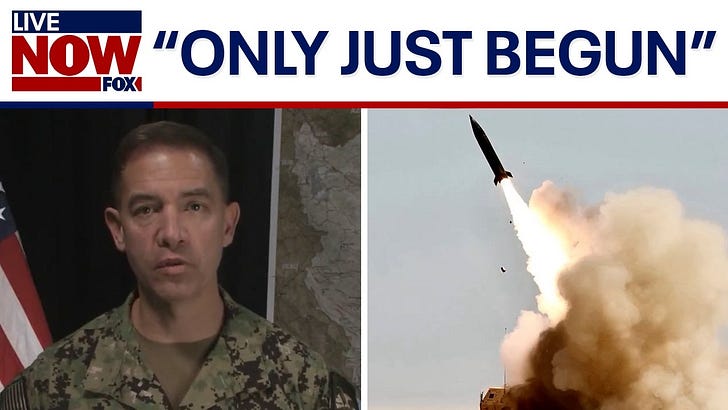
Operation Epic Fury entered its fourth day with a large-scale U.S.–Israeli air campaign continuing across Iran while Tehran expanded retaliatory missile and drone strikes across the Gulf region. U.S. Central Command reported roughly 2,000 strikes within the first ~100 hours of operations against more than 1,700 targets using over 2,000 munitions, supported by approximately 50,000 U.S. personnel, about 200 fighter aircraft, strategic bombers, and carrier strike groups, while Iran has launched more than 500 ballistic missiles and over 2,000 drones in response. Combat activity and defensive engagements were reported across multiple regional states, including attacks or interceptions affecting bases, diplomatic facilities, and airports, while a suspected friendly-fire incident involving a Kuwaiti F-18 reportedly shot down three USAF F-15Es during drone engagements.Regional spillover effects are expanding beyond direct combat operations. Iranian attacks and intercept debris incidents have affected infrastructure and aviation hubs across the Gulf, prompting widespread airspace closures and major airline cancellations. Energy infrastructure and maritime traffic are also under pressure, with strikes or threats affecting oil and LNG facilities and war-risk insurance restrictions effectively slowing commercial shipping through the Strait of Hormuz. In response, the United States is considering naval escort operations for commercial tankers and has directed government-backed insurance guarantees to stabilize maritime trade.Diplomatically, allied states are strengthening regional defense posture while preparing for possible escalation. The United Kingdom, France, and Greece have deployed additional defensive forces and air-defense assets while multiple countries are conducting embassy closures and evacuation planning. In Washington, congressional scrutiny is intensifying, with a Senate War Powers vote scheduled as lawmakers debate the legal scope and duration of the operation.Information operations and strategic messaging are also shaping the operational environment. CENTCOM and senior U.S. officials are emphasizing the scale and tempo of the campaign, comparing the opening strike volume to major historical air campaigns, while open-source verification imagery continues to document damage to Iranian government and IRGC facilities. Chinese state-linked messaging has framed the conflict as a strategic lesson on military power and internal stability.Outside the Middle East theater, other regions are responding cautiously to the evolving conflict environment. China has condemned the strikes rhetorically while avoiding direct involvement and focusing on protecting energy imports and evacuating citizens from the region. In Europe’s adjacent conflict zone, Russia is reportedly deploying a newly identified long-range cruise missile in Ukraine, while assessments indicate Moscow’s recent winter strike campaign has not achieved its intended objectives and the Kremlin is preparing for a prolonged war timeline extending through at least the September 2026 elections.Iran and Middle East* Operational Update on Operation Epic Fury — Admiral Brad Cooper (U.S. Central Command (USCENTCOM)) — * — On March 3, 2026, Admiral Brad Cooper said Operation Epic Fury had entered its fourth day and that U.S. and Israeli forces conducted roughly 2,000 strikes against Iranian military targets within the first ~100 hours using more than 2,000 munitions. He said more than 50,000 U.S. personnel, about 200 fighter aircraft, two carrier strike groups, and strategic bombers were participating, and described the first-24-hour strike wave as nearly twice the scale of the opening phase of the 2003 Iraq War air campaign. He said Iran had launched more than 500 ballistic missiles and more than 2,000 drones in retaliation, while U.S. forces destroyed 17 Iranian naval vessels including what he described as Iran’s most operational submarine and continued dynamic targeting of mobile missile launchers.* Iran live news: US embassy in Dubai hit; Israel pounds Tehran, Beirut — Brian Osgood (with field reporting by Tohid Asadi and Patty Culhane) (Al Jazeera) — https://www.aljazeera.com/news/liveblog/2026/3/4/iran-live-news-us-embassy-in-dubai-hit-israel-pounds-tehran-beirut — On March 4, 2026, Al Jazeera reported continued escalation as Israel announced “a wave of extensive strikes” and Tasnim reported explosions in Tehran, with reporting describing strikes across multiple Iranian cities and wider regional spillover. The live updates reported regional defensive actions and incidents including Saudi interceptions of drones, Kuwaiti interceptions with debris-related casualties, and a UKMTO report of a commercial vessel struck by an unidentified projectile near Fujairah, UAE. The page also reported U.S. political developments including a scheduled Senate debate and vote on a War Powers Resolution and Reuters-cited reporting that the White House planned a meeting with defense contractors to accelerate weapons production.* US-Israel attacks on Iran: Death toll and injuries live tracker — AJLabs (Al Jazeera / AJLabs) — https://www.aljazeera.com/news/2026/3/1/us-israel-attacks-on-iran-death-toll-and-injuries-live-tracker — On March 1, 2026 (updated March 3, 2026), AJLabs published a live tracker reporting confirmed casualties across multiple countries following U.S.–Israeli strikes on Iran and Iranian retaliatory attacks. As of 1400Z March 3, 2026, the tracker reported at least 787 killed in Iran, at least 11 killed in Israel, and 6 U.S. military personnel killed with 18 wounded, alongside additional casualties in Lebanon, Iraq, Jordan, Kuwait, Bahrain, Qatar, the UAE, and Oman. The tracker also reported Iranian strikes and debris effects impacting regional bases and infrastructure including Al Udeid Air Base, Ali al-Salem Air Base, and the U.S. Navy Fifth Fleet headquarters, with many incoming missiles and drones reported intercepted.* Iran updates: US bases, embassies attacked as Tehran steps up Gulf strikes — Brian Osgood, Zaid Sabah, Ted Regencia, Tim Hume, Umut Uras, Elis Gjevori, Alma Milisic, Virginia Pietromarchi and Mariamne Everett (Al Jazeera (Live Updates)) — https://www.aljazeera.com/news/liveblog/2026/3/3/iran-live-news-israel-bombs-tehran-beirut-trump-says-war-to-last-4-weeks — On March 3, 2026, Al Jazeera live updates reported Iran expanding missile and drone strikes across the Gulf for a fourth consecutive night while the U.S. and Israel continued coordinated strikes inside Iran. The updates reported strikes and alerts involving U.S. diplomatic facilities and regional partners, alongside official statements and humanitarian warnings, and referenced disruption tied to the IRGC-declared closure of the Strait of Hormuz and reported Iraqi oil production slowdowns. The page reported ongoing strike activity in Iran, Lebanon, Israel, Saudi Arabia, the UAE, and Qatar alongside diplomatic reactions and evacuation/repatriation planning.* Israel launches new strikes on Iran as US identifies first American soldiers killed in conflict — Live Reporting edited by Jake Lapham and Toby Mann, with Alice Cuddy in Beirut; reporting by BBC Persian’s Ghoncheh Habibiazad and BBC Verify (BBC News (Live Reporting)) — https://www.bbc.com/news/live/cy0dp1l57nxt — BBC live reporting on March 3, 2026 described additional Israeli strikes in Iran, CENTCOM claims of large-scale U.S. strike volume and Iranian retaliation totals, and widening regional impacts including Lebanon strikes and maritime incidents off the UAE. The live feed reported political and legal developments including a scheduled U.S. Senate War Powers vote and multiple evacuation/force-protection measures by partner nations including the UK and France. The page also reported casualty figures attributed to Iranian Red Crescent and HRANA and included BBC Verify assessments of strike aftermath imagery.* Israel launches new strikes on Iran as US identifies first American soldiers killed in conflict — Edited by Jake Lapham and Toby Mann with Alice Cuddy in Beirut; reporting by BBC Persian, BBC Verify, and BBC correspondents (BBC News (Live Reporting)) — https://www.bbc.com/news/live/cy0dp1l57nxt?page=2 — BBC live reporting (page 2) described strikes in Iran, a drone-related incident near the U.S. consulate in Dubai with official statements that personnel were accounted for, and continued Israel–Hezbollah exchanges. The page reported U.S. identification of four U.S. Army Reserve soldiers from the 103rd Sustainment Command as among the first American fatalities, and said two additional U.S. personnel were killed in the same strike but not yet identified. It also reported UK political reactions, U.S. congressional briefing reactions, and BBC Verify geolocation/verification of strike-impact footage in Tehran.* Israel launches new strikes on Iran as US identifies first American soldiers killed in conflict — Live Reporting edited by Jake Lapham and Toby Mann with Alice Cuddy in Beirut; additional bylined items in excerpt (BBC News (Live Reporting / BBC Verify / BBC Persian referenced)) — https://www.bbc.com/news/live/cy0dp1l57nxt?page=3 — BBC live reporting (page 3) described an IDF-reported large-scale strike wave in Tehran and Isfahan focused on ballistic-missile-related infrastructure and continued regional spillover. The page reported embassy closures and force-protection steps, including UK defensive measures at RAF Akrotiri and expanded U.S. embassy closures and shelter/evacuation actions. It also reported BBC Verify geolocation of drone strike imagery at Duqm, Oman and included public statements by U.S. and UK leaders regarding objectives and basing decisions.* Israel launches new strikes on Iran as US identifies first American soldiers killed in conflict — Edited by Jake Lapham and Toby Mann with Alice Cuddy in Beirut; reporting by BBC Persian, BBC Monitoring, BBC Verify, and BBC correspondents (BBC News (Live Reporting)) — https

As of 3 March 2026, Day 4 of Operation Epic Fury reflects sustained US-Israeli offensive momentum alongside widening Iranian retaliation and regional spillover. ISW/CTP reported at 2100Z 2 March that combined operations continue degrading Iranian air defenses, missile forces, naval assets, nuclear infrastructure, and internal security networks, with US Joint Chiefs Chairman Gen. Dan Caine stating local air superiority has been established and the IDF targeting more than 200 Iranian air defense systems since 28 February; CENTCOM confirmed B-1 strikes on 1 March against ballistic missile targets, while six US servicemembers were killed in an Iranian strike on Camp Arifjan. Israeli forces conducted simultaneous strikes in Tehran and Beirut on 3 March, targeting missile production sites, launchers, and Hezbollah positions as ground operations expanded in southern Lebanon, while Iran continued multi-theater missile and drone attacks across Israel and Gulf states, including strikes on the US Embassy in Riyadh and claimed attacks on US-linked facilities in Bahrain; Gulf states reported large-scale interceptions, including 186 missiles launched toward the UAE, 101 ballistic missiles detected by Qatar, and significant volumes intercepted by Kuwait and Bahrain. The IAEA confirmed damage to entrance buildings at Natanz without radiological impact, while Iranian state media cited 787 fatalities nationwide since 28 February; leadership uncertainty persists following the 28 February strike that killed Ayatollah Ali Khamenei, though Mojtaba Khamenei was reported alive.Regionally, Iran threatened closure of the Strait of Hormuz and expanded strikes to energy and civilian-adjacent infrastructure, with QatarEnergy halting LNG production, Saudi Arabia suspending operations at Ras Tanura after drone debris caused a fire, and Fujairah responding to a fire following a drone intercept; maritime traffic through Hormuz effectively stalled, tanker day rates exceeded $400,000 per day, Brent crude briefly rose above $85 per barrel, and UK natural gas futures surged more than 46 percent before easing. The US closed embassies in Riyadh, Kuwait, and Beirut and ordered shelter-in-place guidance, while President Trump stated that Iran’s air defense, air force, navy, and leadership had been “knocked out,” warned of a forthcoming “big wave” of strikes, and said talks with Tehran were “too late,” even as some US lawmakers questioned the evidentiary basis for claims of an imminent Iranian threat. Internationally, the Shanghai Cooperation Organization condemned the attacks and called for dialogue, European leaders pledged to defend allied interests, Asian markets declined sharply in response to escalation risk, and India assessed crude supply vulnerabilities tied to Hormuz disruption. Separately, on 3 March, Kim Jong Un signaled willingness to consider talks only if the United States recognizes North Korea’s nuclear status and abandons what Pyongyang calls hostile policies, while emphasizing expansion of ICBM, SSBN, AI-enabled, and anti-satellite capabilities, and US officials reiterated that denuclearization remains unchanged policy.Iran and Middle East* Iran Update (Morning/Evening War Update Format) — The Institute for the Study of War (ISW) and the Critical Threats Project (CTP) at the American Enterprise Institute — https://understandingwar.org/research/middle-east/iran-update-evening-special-report-march-2-2026/ — As of 2100Z March 2, 2026, combined US-Israeli operations under Operation Epic Fury continued degrading Iranian air defenses, missile forces, naval assets, nuclear sites, and internal security infrastructure while Iran expanded retaliatory missile, drone, and maritime attacks across Israel and the Gulf. US Joint Chiefs Chairman General Dan Caine stated on March 2 that local air superiority had been established over Iran, the IDF reported targeting more than 200 Iranian air defense systems since February 28, and CENTCOM confirmed B-1 bomber strikes on March 1 against ballistic missile targets enabled by degraded Iranian air defenses. Iran conducted multiple ballistic missile barrages against Israel on March 1–2, struck Gulf states including the UAE and Saudi Arabia, threatened closure of the Strait of Hormuz, and CENTCOM confirmed six US servicemembers were killed in an Iranian attack on Camp Arifjan on March 1.* Iran live news: US embassy in Riyadh hit; Israel seizes land in Lebanon — Tim Hume; Elis Gjevori; Virginia Pietromarchi; Mariamne Everett (Al Jazeera) — https://www.aljazeera.com/news/liveblog/2026/3/3/iran-live-news-israel-bombs-tehran-beirut-trump-says-war-to-last-4-weeks — As of 3 March 2026, Al Jazeera reported continued US-Israeli strikes in Tehran and Beirut, Iranian missile and drone attacks across Israel and the Gulf, and widening diplomatic and airspace disruptions linked to Operation Epic Fury. Reporting included Iranian missile interceptions over Jordan and near Jerusalem, Israeli strikes targeting ballistic missile production sites in Iran and positions in southern Lebanon, Hezbollah missile launches into Israel, damage to Natanz nuclear facility entrance structures confirmed by the IAEA, and UAE reporting 186 Iranian missiles launched toward its territory with casualties. Regional fallout included US Embassy closures and shelter-in-place orders in Saudi Arabia and Kuwait, Qatar halting LNG production after facility targeting, oil price increases tied to Strait of Hormuz disruption threats, Lebanon reporting at least 30,000 displaced, and Iranian state media citing 787 fatalities nationwide from US-Israeli strikes.* Is Iran expanding attacks to target energy and civilian sites in the Gulf? — Sarah Shamim (Al Jazeera) — https://www.aljazeera.com/news/2026/3/3/is-iran-expanding-attacks-to-target-energy-and-civilian-sites-in-the-gulf — On 1–3 Mar 2026, Gulf states accused Iran of expanding strikes from US military targets to civilian infrastructure including embassies, airports, hotels, and energy facilities across Bahrain, Saudi Arabia, Qatar, the UAE, Kuwait, and Iraq. Bahrain reported destroying 73 missiles and 91 drones since 28 Feb, the UAE reported 186 missiles launched with 172 intercepted and 812 drones tracked with 755 intercepted, and Qatar reported intercepting 98 of 101 ballistic missiles and downing two Iranian Su-24 aircraft. QatarEnergy halted LNG production at Ras Laffan and Mesaieed, Saudi Arabia shut operations at Ras Tanura refinery after drone debris caused a fire, and Iran denied targeting certain facilities while alleging Israeli “false flag” actions.* Inside the US-Israel plan to assassinate Iran’s Khamenei — Shola Lawal (Al Jazeera) — https://www.aljazeera.com/news/2026/3/3/inside-the-us-israel-plan-to-assassinate-irans-khamenei — On 28 Feb 2026 at approximately 0610Z, joint US-Israeli air strikes killed Iran’s Supreme Leader Ayatollah Ali Khamenei at a central Tehran compound following US media reporting that CIA-provided intelligence identified a leadership meeting. Israeli jets reportedly launched around 0400Z and struck the compound after a two-hour transit, while US Cyber Command and US Space Command applied non-kinetic effects to degrade Iranian communications and sensing. Iran announced a three-member interim leadership council on 1 Mar 2026 pending selection of a new supreme leader, and the Iranian Red Crescent reported 787 nationwide fatalities by 2 Mar 2026.* Trump admin offers scant evidence on Iranian threat in ‘America First’ war — Joseph Stepansky (Al Jazeera) — https://www.aljazeera.com/news/2026/3/3/trump-admin-offers-scant-evidence-on-iranian-threat-in-america-first-war — On 3 Mar 2026, the Trump administration defended Operation Epic Fury as necessary to counter an “imminent threat,” while lawmakers said classified briefings did not show evidence of a planned Iranian attack on the United States. Secretary of State Marco Rubio stated the US acted preemptively anticipating Iranian retaliation following planned Israeli action, and Democratic senators including Tim Kaine and Mark Warner said no imminent threat was presented in briefings. Analysts cited in the report said Iran lacked near-term capability to produce an intercontinental ballistic missile before 2035 and questioned the evidentiary basis for the strike rationale.* Gas and oil prices soar and shares tumble on fears conflict could escalate — Osmond Chia and Natalie Sherman (BBC News) — https://www.bbc.com/news/articles/cr5lz0vgy52o — On 3 Mar 2026, global energy prices surged and stock markets fell as shipping through the Strait of Hormuz effectively halted following US-Israeli strikes on Iran and Iranian retaliation. UK natural gas futures rose more than 46% above 165p per therm before easing to 146p, Brent crude briefly exceeded $85 per barrel, and major indices including the Dow, FTSE 100, DAX, and Nikkei declined sharply. QatarEnergy halted LNG production after reported military attacks on its facilities, and tanker day rates on Middle East–China routes rose above $400,000 per day amid maritime risk concerns.* Trump says ‘everything’s been knocked out in Iran’ as he criticises UK and Starmer — Jack Burgess and Tinshui Yeung, with Alice Cuddy and BBC Verify (BBC News Live) — https://www.bbc.com/news/live/cy0dp1l57nxt — On 3 Mar 2026, President Donald Trump said “just about everything’s been knocked out” in Iran and confirmed additional strikes targeting leadership and ballistic missile production sites in Tehran and Isfahan. The IDF announced completion of a large-scale strike wave, the Iranian Red Crescent reported 787 fatalities since 28 Feb 2026, and the UAE reported intercepting 172 missiles and 755 drones since Saturday. The US closed embassies in Beirut, Kuwait, and Riyadh, while the UK reinforced RAF Akrotiri in Cyprus with air defense assets including HMS Dragon after drone strikes.* US embassy in Saudi Arabia closed after attack on facility — Jessie Yeung (CNN) — URL not provided in source excerpt — The U

Executive SummaryOperation Epic Fury has entered its third day with sustained U.S.-Israeli air and maritime dominance over Iran, expanding regional spillover, confirmed senior Iranian leadership decapitation, escalating maritime disruption in the Strait of Hormuz, and widening diplomatic, energy, and proxy implications across the Middle East and Europe between February 28 and March 3, 2026.Campaign Overview and Operational TimelineKinetic operations began at 0515Z February 28, 2026 following a 2038Z February 27 execute order, according to Gen. Dan Caine (Pentagon reporting via The War Zone). Cyber and space effects preceded synchronized air and maritime strike waves involving more than 100 aircraft. Within the first 24 hours, the Pentagon confirmed more than 1,000 targets struck.By 1100Z March 2, reporting from The Hill (Max Rego) indicated over 500 Iranian fatalities, including Supreme Leader Ayatollah Ali Khamenei, IRGC Commander Mohammad Pakpour, Defense Minister Aziz Nasirzadeh, and Armed Forces Chief of Staff Sayyid Mousavi. The White House and CENTCOM stated 49 senior Iranian leaders were killed in the opening strike phase. Israeli reporting via The Jerusalem Post assessed 1,000–1,500 IRGC and Iranian security officials killed since launch, with more than 40 senior figures eliminated within 40 seconds in the initial strike wave.As of 1300Z March 2, CTP-ISW reported U.S. and Israeli forces maintained air superiority over Tehran. Satellite imagery confirmed damage to missile infrastructure near Najafabad, Yazd, and Khorgu. Iranian command-and-control, IRGC-Quds Force facilities, missile launchers, and Ministry of Intelligence sites were targeted. Israeli forces struck more than 10 intelligence headquarters in Tehran between 1950Z–2100Z March 2 (Al Jazeera live reporting).Maritime and Naval DomainNaval strikes have significantly degraded Iranian surface capability. Satellite imagery (The War Zone) from overnight March 1–2 showed extensive fires at Bandar Abbas naval base, including IRINS Makran ablaze, at least one frigate-class vessel struck, and pier infrastructure damaged. President Trump stated 10 Iranian ships were destroyed; CENTCOM later stated 11 Iranian vessels in the Gulf of Oman were eliminated within 48 hours, reducing Iranian presence in that area to zero.Iran responded asymmetrically in the maritime domain. On March 1, the IRGC conducted the first confirmed uncrewed surface vessel (USV) strike of the war, hitting the Marshall Islands-flagged tanker MKD VYOM approximately 50 nautical miles north of Muscat, killing one crew member (Howard Altman, The War Zone). UK Maritime Trade Operations reported at least four shipping incidents between March 1–2. The tanker ATHE NOVA and fuel infrastructure in Abu Dhabi were later struck (Al Jazeera live reporting). The Joint Maritime Information Center raised the maritime threat level to “critical.”IRGC Brig. Gen. Ebrahim Jabbari declared the Strait of Hormuz “closed” on March 2 and threatened to set ships “on fire.” U.S. monitoring reportedly did not confirm effective closure. Nevertheless, tanker traffic slowed sharply; major shipping firms suspended transit; maritime insurers revoked war coverage.Energy markets reacted immediately. Brent crude rose between 7%–13%, briefly exceeding $82 per barrel before trading near $77–$80 (Foreign Policy; CNN; Al-Monitor). European natural gas prices rose nearly 33%. Qatar suspended LNG production at Ras Laffan after Iranian drone strikes, affecting approximately 20% of global LNG supply.Air Domain and Regional Defensive EngagementsIran launched missile salvos of 9–30 per wave and conducted drone strikes targeting Israel, Gulf states, and energy infrastructure. Reporting indicates more than 1,200 Iranian missiles and drones launched in the first 48 hours (Foreign Policy). Bahrain reported intercepting 70 missiles and 59 drones between 1500Z–1555Z March 2. The UAE reported intercepting 161 ballistic missiles and 645 drones since hostilities began, with three fatalities and 68 injured.Qatar announced on March 2 it shot down two Iranian Su-24 aircraft and intercepted seven ballistic missiles and five drones. This marks the first confirmed Iranian fixed-wing aircraft losses in flight during the conflict.U.S. heavy bomber participation expanded. Three B-1B Lancers conducted deep strike missions from Ellsworth AFB overnight March 1–2 (The Aviationist). CENTCOM also confirmed B-2 and B-1 participation and sustained F/A-18 operations.Casualties and Friendly FireAs of 2100Z March 2, CENTCOM confirmed six U.S. service members killed in action. Three were killed in an Iranian strike on a base in Kuwait on March 1; one wounded service member died March 2; remains of two previously unaccounted personnel were recovered from a struck facility. Additionally, 18 U.S. service members were seriously wounded (CNN reporting).At 0403Z March 2, three USAF F-15E Strike Eagles were shot down over Kuwait due to apparent friendly fire from Kuwaiti air defenses during active missile defense operations. All six aircrew ejected and were recovered. Kuwait acknowledged the incident at 0800Z and announced a joint investigation. This represents the first confirmed coalition aircraft losses of Operation Epic Fury.Spillover and Civilian ImpactThe Washington Post reports the conflict expanded across more than a dozen countries within 72 hours, with at least 555 killed in Iran, 10 in Israel, 31 in Lebanon, additional fatalities in the UAE, Iraq, Bahrain, Kuwait, and Oman, and six confirmed U.S. service members killed.Lebanon reported 52 killed and 154 wounded from Israeli strikes (BBC; Al Jazeera). Israel closed all Gaza crossings “until further notice.” Drone strikes hit RAF Akrotiri in Cyprus and a French naval base hangar in Abu Dhabi. Drones struck the U.S. Embassy in Riyadh causing minor damage (Saudi MOD via X).Diplomatic and Strategic ObjectivesPresident Trump publicly defined four objectives:* Destroy Iran’s missile capability and production.* Annihilate Iran’s navy.* Prevent Iran from acquiring nuclear weapons.* Stop Iran from arming proxy forces.Trump stated the campaign is “substantially ahead” of projected four-to-five-week timelines and did not rule out ground forces.UN Secretary-General António Guterres warned February 28 that the conflict risks wider regional war and called for immediate ceasefire. NATO Secretary General Mark Rutte stated the alliance will not participate in offensive strikes. Turkey urged diplomacy. France increased defense posture while assisting approximately 400,000 French nationals in the region. Putin conducted calls with Saudi, UAE, Qatar, and Bahrain leaders, positioning Russia as mediator and warning of regional escalation.Strategic and Resource ConsiderationsForeign Policy reporting (Amos Fox; Franz-Stefan Gady) assesses the campaign is structured as a rapid-degradation model intended to destroy air defenses, C2 nodes, and missile launchers before interceptor stockpiles (Arrow, SM-series) are depleted. Precision-guided munition inventories are finite, and attrition dynamics may shape operational tempo.Energy market disruption could benefit Russia. CNN and ISW reporting indicate rising oil prices may improve Russia’s federal revenue outlook, as oil and gas account for approximately 23% of Russia’s federal budget.Iranian ProxiesAnchal Vohra (Foreign Policy) reports Hezbollah, Iraqi PMF factions, and Houthis have so far exercised relative restraint despite rhetorical commitments. Hezbollah conducted limited rocket fire; Iraqi militias signaled readiness; Houthis threatened maritime attacks but may avoid jeopardizing prior agreements. Domestic political constraints in Lebanon and Iraq are limiting escalation.Overall AssessmentBetween February 28 and March 3, 2026, Operation Epic Fury achieved rapid air superiority, significant naval attrition of Iranian assets, decapitation of senior Iranian leadership, and widespread degradation of missile infrastructure. Iran responded with high-volume missile and drone attacks across Israel and Gulf states, maritime disruption efforts in the Strait of Hormuz, and limited proxy activation. Regional spillover now includes Cyprus, Lebanon, Gulf energy facilities, and European defensive posture adjustments. Energy markets remain volatile but not yet catastrophic. Strategic trajectory will depend on interceptor sustainability, maritime security restoration, proxy activation thresholds, and potential expansion to ground operations.Iran and Middle East* Iran Update Morning Special Report, March 2, 2026 — Critical Threats Project (CTP) and Institute for the Study of War (ISW) — https://understandingwar.org/research/middle-east/iran-update-morning-special-report-march-2-2026/ — U.S. and Israeli forces maintained air superiority over Tehran as of 1300Z March 2, 2026, while conducting sustained strikes on Iranian missile bases, naval assets, and senior leadership targets. Satellite imagery confirmed damage to missile infrastructure near Najafabad, Yazd, and Khorgu, and naval strikes hit IRIS Kurdistan and other vessels at Bandar Abbas, while President Trump stated 49 senior Iranian leaders were killed in the initial February 28 strike wave. Iran responded with missile salvos of 9–30 missiles per attack and drone strikes targeting Gulf energy infrastructure, while the IAEA reported no observed damage to declared nuclear facilities.* Iran’s Key Naval Base On Strait Of Hormuz Set Ablaze From Strikes — Joseph Trevithick and Tyler Rogoway (The War Zone) — https://www.twz.com/news-features/irans-key-naval-base-on-strait-of-hormuz-set-ablaze-from-strikes — Satellite imagery captured overnight March 1–2, 2026, shows extensive fire and strike damage at Iran’s main naval base at Bandar Abbas during Operation Epic Fury. The imagery indicates IRINS Makran ablaze at its berth, at least one frigate-sized vessel struck, and damage to pier infrastructure, while President Trump stated 10 Iranian ships had been

Information cutoff: 1330Z, 02 March 2026.Operation Epic Fury reporting through 1330Z on 02 March 2026 indicates continued high-tempo regional combat operations, with confirmed U.S. casualties, significant air-defense friction inside partner airspace, and expanding spillover effects on Gulf energy infrastructure, aviation, and maritime security. U.S. Central Command reported that four U.S. service members have been killed in action during Operation Epic Fury, with the fourth death occurring after a previously seriously wounded service member later succumbed to injuries; identities remain withheld pending next-of-kin notification, and CENTCOM stated major combat operations continue. A major operational incident occurred at 0403Z on 02 March 2026 when three U.S. Air Force F-15E Strike Eagles supporting Epic Fury went down over Kuwait in an apparent friendly fire event; CENTCOM said Kuwaiti air defenses mistakenly engaged the aircraft during active combat conditions involving Iranian aircraft, ballistic missiles, and drones, and all six aircrew ejected, were recovered, and are in stable condition as the incident remains under investigation.Across the Gulf, reporting indicates Iranian drone and missile activity extending to critical energy nodes and contributing to market shock and transit disruption. QatarEnergy announced it halted LNG production after Iranian drone attacks on operating facilities at Ras Laffan Industrial City and Mesaieed Industrial City, with Qatar’s Ministry of Defence stating two drones launched from Iran struck/targeted those sites and no casualties were reported; European natural gas prices were reported to have surged sharply following the halt. Saudi Arabia reported two drones attempted to attack the Ras Tanura refinery and were intercepted, with falling debris causing a contained fire and limited damage and no casualties reported, while maritime reporting described congestion and disruption around the Strait of Hormuz alongside additional incident logs in live coverage (including vessel-strike advisories and reduced traffic). Parallel political reporting described Gulf-state pressure created by strikes on cities and infrastructure, including reported injury counts across several states and visible impacts to airports and high-rise structures, alongside competing calls for restraint and collective action and a reported UAE diplomatic signal of recalling its ambassador to Israel.The operating environment also includes persistent air-defense engagements and force-protection escalations beyond the Gulf, plus a parallel information discipline challenge. In Cyprus, reporting stated RAF Akrotiri was struck by an Iranian-made drone that impacted the runway with no casualties, followed by intercepts of additional UAVs and heightened U.K. force-protection measures; the U.K. also reported a review of the domestic terror threat level and described steps allowing U.S. use of British bases for limited “defensive” strikes. On Israel’s northern front, Haaretz reported the IDF began preparations for potential airstrikes and a possible ground operation in Lebanon intended to create a defensive buffer zone for northern border communities, with reporting citing large-scale reservist mobilization and warnings about resource strain if campaigns expand simultaneously against Iran and Hezbollah. Separately, DefenseScoop reported multiple defense officials denied that a viral message about USCYBERCOM directing troops to disable location services or asserting specific apps were compromised originated from Cyber Command; a Department of War official said USCYBERCOM did not issue such messages, a CENTCOM spokesperson called the message false, and at least one company publicly rejected the allegation as an unsubstantiated rumor.* Three U.S. F-15s Involved in Friendly Fire Incident in Kuwait; Pilots Safe — U.S. Central Command (USCENTCOM) — https://www.centcom.mil/MEDIA/PRESS-RELEASES/Press-Release-View/Article/4418568/three-us-f-15s-involved-in-friendly-fire-incident-in-kuwait-pilots-safe/ — USCENTCOM reported three U.S. Air Force F-15E Strike Eagles supporting Operation Epic Fury went down over Kuwait at 0403Z 2 March 2026 due to an apparent friendly fire incident. CENTCOM stated Kuwaiti air defenses mistakenly engaged the aircraft during active combat that included Iranian aircraft, ballistic missiles, and drones. CENTCOM said all six aircrew ejected safely, were recovered, are in stable condition, and the incident remains under investigation.* Cybercom didn’t tell troops to disable location services or uninstall apps, military officials say, after viral message spread amid Iran operation — Drew F. Lawrence (DefenseScoop) — https://defensescoop.com/2026/03/01/cyber-command-message-iran-location-services-apps-operation-epic-fury/ — DefenseScoop reported multiple defense officials said a viral message claiming USCYBERCOM told troops to disable location services and that Uber/Snapchat/Talabat were compromised did not originate from Cyber Command. A Department of War official said USCYBERCOM “did not issue messages” directing personnel to disable location services, and CENTCOM spokesperson Capt. Tim Hawkins called the message “false.” Uber denied the claim as an “unsubstantiated rumor,” while Snapchat and Talabat did not respond at the time of publication.* 4 U.S. service members killed in military operation against Iran, CENTCOM says — Caroline Linton (CBS News) — https://www.cbsnews.com/news/iran-military-operation-american-service-members-killed-centcom/ — CBS News reported CENTCOM confirmed four U.S. service members have been killed in action during Operation Epic Fury and four others were seriously wounded, with the fourth death occurring after a previously seriously wounded service member succumbed to injuries. The report states CENTCOM said identities are being withheld until 24 hours after next-of-kin notification and that major combat operations continue. The report also states Iranian retaliatory strikes occurred across the region following U.S.-Israeli strikes that began early 29 February 2026, including missile attacks on Israel and impacts on U.S. forces in Kuwait.* CENTCOM Update — U.S. Central Command (@CENTCOM) — https://x.com/CENTCOM/status/2028446849078530280 — CENTCOM stated that as of 1230Z 2 March 2026, four U.S. service members have been killed in action during Operation Epic Fury. CENTCOM said the fourth service member was seriously wounded during Iran’s initial attacks and later succumbed to injuries. CENTCOM said major combat operations continue, the response effort is ongoing, and identities are being withheld until 24 hours after next-of-kin notification.* 3 F-15s shot down by Kuwait in friendly fire incident, pilots safe, US says — J.D. Simkins (Military Times) — https://www.militarytimes.com/news/your-military/2026/03/02/3-f-15s-shot-down-by-kuwait-in-friendly-fire-incident-pilots-safe-us-says/ — Military Times reported CENTCOM said three U.S. Air Force F-15E Strike Eagles were mistakenly shot down by Kuwaiti air defenses in an apparent friendly fire incident while supporting Operation Epic Fury. The report states all six aircrew ejected safely, were recovered, and are in stable condition, and CENTCOM said the cause is under investigation. The report also states Operation Epic Fury began 29 February 2026 and that Iranian retaliatory attacks have targeted regional bases and infrastructure while U.S. and partner strikes continue inside Iran.* Three USAF F-15E Strike Eagles Shot Down By Friendly Fire (Updated) — Tyler Rogoway, Howard Altman, Thomas Newdick (The War Zone) — https://www.twz.com/air/f-15-spins-into-the-ground-while-on-fire-in-middle-east — The War Zone reported CENTCOM confirmed three USAF F-15E Strike Eagles were shot down over Kuwait due to an apparent friendly fire incident during Operation Epic Fury. CENTCOM said Kuwaiti air defenses mistakenly engaged the jets amid active combat conditions involving Iranian aircraft, ballistic missiles, and drones. The War Zone reported all six aircrew ejected safely, were recovered, are in stable condition, and the incident is under investigation, with open-source video and geolocation reporting cited around the crashes.* Iran live news: US jets crash; Iran says no Trump talks, hits energy sites — Virginia Pietromarchi, Alma Milisic, Usaid Siddiqui (Al Jazeera Live) — https://www.aljazeera.com/news/liveblog/2026/3/2/us-israel-attack-iran-live — Al Jazeera’s live coverage reported continued multi-front escalation tied to Operation Epic Fury, including Iranian drone and maritime attacks affecting Gulf infrastructure and shipping, Israeli strikes inside Iran and Lebanon, and updated U.S. casualty and aircraft-loss reporting. The live feed reported QatarEnergy halted LNG production after attacks on facilities at Ras Laffan and Mesaieed, and it also cited maritime advisories about vessels struck in Bahrain’s port and an attack off Oman. The live feed also reported ongoing air-defense engagements and airspace disruptions, plus statements from actors including Israel, Iran, and the IAEA about strikes and nuclear-site status as reported in the live updates.* Gas prices soar as QatarEnergy halts LNG production after Iran attacks — Al Jazeera Staff (Al Jazeera) — https://www.aljazeera.com/news/2026/3/2/gas-prices-soar-as-qatarenergy-halts-lng-production-after-iran-attacks — Al Jazeera reported QatarEnergy said it ceased LNG production after attacks on its operating facilities at Ras Laffan and Mesaieed, following Qatar’s Defense Ministry statement that two Iranian drones targeted those sites with no reported casualties. The report states European natural gas prices surged by nearly 50% after the announcement and describes Saudi Arabia reporting two drones attempted to attack Ras Tanura, with a small fire breaking out after interception and limited damage reported. The report states the incidents occurred amid maritime disruption around the Strait of

Operation Epic Fury enters a new and escalatory phase.In this episode of The LOW DOWN, we deliver a structured, open-source intelligence briefing covering confirmed U.S. casualties, large-scale strike activity inside Iran, regional retaliation, and widening second-order effects across the Middle East and beyond.U.S. Central Command confirmed three American service members killed in action and five seriously wounded as major combat operations continue. Reporting details more than 1,000 Iranian targets struck, including command-and-control nodes, IRGC headquarters elements, integrated air defenses, ballistic missile sites, and naval assets. We cover the reported CIA-enabled leadership strike in Tehran that killed senior Iranian officials, B-2 Spirit employment against underground missile complexes, and the reported first combat use of the Army’s Precision Strike Missile.Regionally, Iranian retaliation has extended across at least nine countries within 36 hours, with verified impacts to airports, ports, and residential areas. Hezbollah has entered the conflict with missile and drone attacks toward northern Israel, prompting Israeli strikes across Lebanon, including Beirut’s southern suburbs. Force protection incidents, including a suspected drone impact at RAF Akrotiri in Cyprus, are also addressed.Diplomatically, Canada, the United Kingdom, France, Germany, and Russia have issued statements reflecting divergent positions as Gulf defense postures increase. Economically, Brent crude spiked more than 13 percent, tanker traffic through the Strait of Hormuz declined sharply, and analysts assess downstream fuel price sensitivity. Domestically, the FBI elevated counterterrorism posture across major U.S. cities amid rising security concerns.This episode follows a disciplined DIMEFIL framework—Diplomatic, Information, Military, Economic, Finance, Intelligence, and Law Enforcement—providing decision-quality situational awareness grounded strictly in reported sources.Low-Down Complete.Iran and Middle East* At least three US service members killed during Iran operation: CENTCOM — Al Jazeera Staff (Al Jazeera) — https://www.aljazeera.com/news/2026/3/1/at-least-three-us-service-members-killed-during-iran-operation-centcom — US Central Command announced on 01 March 2026 that three US service members were killed in action and five were seriously wounded during ongoing operations against Iran under Operation Epic Fury. CENTCOM stated additional personnel sustained minor shrapnel and concussion injuries, that major combat operations remain underway, and that identities would be withheld for at least 24 hours pending next-of-kin notification. The command also reported more than 1,000 Iranian targets struck since operations began, while the IRGC claimed firing four ballistic missiles at the USS Abraham Lincoln, which a US official said caused no damage.* Trump says combat operations in Iran will continue until all objectives achieved — Reuters Staff (Reuters) — https://www.reuters.com/world/middle-east/trump-says-combat-operations-iran-will-continue-until-all-objectives-achieved-2026-03-01/ — President Donald Trump said on 01 March 2026 that US combat operations in Iran will continue until all stated objectives are achieved. The statement followed the second day of joint US-Israeli strikes and Iranian retaliatory missile launches across the region. Reuters reported Trump emphasized continued military action amid ongoing exchanges and heightened regional escalation.* The C.I.A. Helped Pinpoint a Gathering of Iranian Leaders. Then Israel Struck — Julian E. Barnes, Ronen Bergman, Eric Schmitt and Tyler Pager (The New York Times) — https://www.nytimes.com/2026/03/01/us/politics/cia-israel-ayatollah-compound.html — The New York Times reported on 01 March 2026 that CIA-provided “high fidelity” intelligence identified a Saturday morning leadership gathering in Tehran attended by Supreme Leader Ali Khamenei and senior Iranian officials prior to Israeli strikes. According to officials cited in the report, Israeli fighter jets launched at approximately 0600 Israel time and precision munitions struck the compound at roughly 0940 Tehran time, targeting multiple buildings housing senior leadership. Iranian state media confirmed the deaths of Ali Shamkhani and Mohammad Pakpour, and the article stated that US intelligence tracking improvements following prior conflict contributed to the operation’s timing and execution.* Canada backs United States actions in Iran — Sue Allan (Politico) — https://www.politico.com/news/2026/02/28/mark-carney-canada-iran-strikes-00805631 — Canadian Prime Minister Mark Carney said on 28 February 2026 that Canada supports US actions aimed at preventing Iran from obtaining a nuclear weapon. Speaking in Mumbai, Carney stated Canada was not involved in the military buildup or planning and does not envision participating in operations, while urging Canadians in Iran to shelter in place. Foreign Minister Anita Anand advised Canadians in Israel, Palestine and Lebanon to consider departing while commercial travel options remain and noted Canada’s limited ability to provide assistance inside Iran.* Trump Made History. Now the Iranian People Can, Too — Matthew Kroenig (Foreign Policy) — https://foreignpolicy.com/2026/03/01/trump-iran-airstrikes-democracy-security-middle-east-russia-china/ — In an opinion column published 01 March 2026, Matthew Kroenig argued that the US-Israeli air campaign that killed Ayatollah Ali Khamenei and struck hundreds of Iranian targets has degraded Iran’s military capabilities and reshaped regional security dynamics. The column stated that Iranian retaliation has included missile attacks across the region and described potential escalation scenarios including Strait of Hormuz disruption and expanded missile strikes. Kroenig wrote that the campaign presents a possible inflection point for Iran’s domestic political future while noting regime collapse is not guaranteed.* At least three US service members killed during Iran operation: CENTCOM — Al Jazeera Staff (Al Jazeera) — https://www.aljazeera.com/news/2026/3/1/at-least-three-us-service-members-killed-during-iran-operation-centcom — CENTCOM said on 01 March 2026 that three US service members were killed in action and five were seriously wounded during Operation Epic Fury. CENTCOM reported additional minor shrapnel and concussion injuries, said major combat operations were continuing, and said identities would be withheld for at least 24 hours pending next-of-kin notification. Al Jazeera also reported the IRGC claimed firing four ballistic missiles at the USS Abraham Lincoln, a US official said there was no damage, and CENTCOM posted that the carrier continued flight operations.* The C.I.A. Helped Pinpoint a Gathering of Iranian Leaders. Then Israel Struck — Julian E. Barnes, Ronen Bergman, Eric Schmitt and Tyler Pager (The New York Times) — https://www.nytimes.com/2026/03/01/us/politics/cia-israel-ayatollah-compound.html — The New York Times reported that CIA-provided location intelligence identified a Saturday morning leadership gathering in Tehran involving Ayatollah Ali Khamenei and other senior officials before Israeli strikes. Officials cited by the Times said Israeli fighter jets launched at about 0600 Israel time and long-range precision munitions struck the compound at roughly 0940 Tehran time, hitting multiple locations within the site. The Times reported IRNA confirmed the deaths of Ali Shamkhani and Mohammad Pakpour and said follow-on strikes targeted Iranian intelligence leadership locations.* Canada backs United States actions in Iran — Sue Allan (Politico) — https://www.politico.com/news/2026/02/28/mark-carney-canada-iran-strikes-00805631 — Canadian Prime Minister Mark Carney said on 28 February 2026 that Canada supports US actions aimed at preventing Iran from obtaining a nuclear weapon. Carney said Canada was not involved in the military buildup or planning and does not envision participating in military operations, and he urged Canadians in Iran to shelter in place. The report said Foreign Minister Anita Anand advised Canadians in Israel, Palestine and Lebanon to consider departing while commercial options remain and warned assistance in Iran is extremely limited due to no Canadian diplomatic presence.* BRIT BASE ATTACK Explosions rock Cyprus RAF base in suspected Iranian attack with Brits told ‘take cover’ hours after UK joined US blitz — Jerome Starkey, Joe Mannion, and Will Miller (The Sun) — https://www.thesun.co.uk/news/38376350/raf-cyprus-explosions-brits-take-cover/ — The Sun reported explosions at RAF Akrotiri in Cyprus around midnight local time on 01 March 2026 in what the UK Ministry of Defence described as a suspected drone strike. The report said sirens sounded, personnel received shelter-in-place directions, and Typhoon and F-35B aircraft were scrambled with air-to-air refueling tankers while a base source claimed a drone struck a runway and additional inbound threats were intercepted. The article said Defence Secretary John Healey earlier stated two Iranian missiles were fired in the direction of Cyprus but were not believed to be targeting the island, while Cypriot leaders publicly denied Cyprus was under direct threat.* UK, France, and Germany jump into the fray in Iran, vowing to defend Gulf allies — Zach LaChance (Washington Examiner) — https://www.washingtonexaminer.com/news/world/4476338/uk-france-germany-vow-defend-gulf-allies/ — The Washington Examiner reported that the UK, France, and Germany issued a joint statement on 01 March 2026 saying they were increasing their defensive posture to protect Gulf allies amid Iranian missile and drone attacks. The report said the statement called on Iran to cease hostilities and pledged “necessary and proportionate defensive action” to destroy Iran’s missile and drone launch capabilities at source. It also said Keir Starmer authorized US use of British bases for limited d

Operation Epic Fury remains in active major combat operations, with CENTCOM confirming three U.S. service members killed in action, five seriously wounded, and additional minor injuries, while coordinated U.S.-Israeli strikes continue against Iranian leadership, missile infrastructure, air defenses, and naval assets. Iranian forces are conducting sustained ballistic missile and drone retaliation against Israel and U.S. bases across the Middle East, with reported civilian casualties in Israel and Gulf states, maritime incidents near the Strait of Hormuz, and continued regional air defense activity. Diplomatic condemnations, internet blackouts inside Iran, shipping congestion at Hormuz, airline suspensions, and energy production adjustments indicate the conflict is producing simultaneous military, informational, and economic effects across multiple theaters.DIMEFIL SummaryDiplomatic* U.S. Central Command publicly acknowledged the first 24 hours of Operation Epic Fury and confirmed presidential authorization of offensive military action.* Saudi Arabia summoned the Iranian ambassador following reported missile activity affecting Saudi territory.* UAE, Kuwait, and Bahrain issued condemnations of Iranian missile and drone attacks on their territory.* EU foreign policy chief Kaja Kallas described the killing of Ali Khamenei as a “defining moment” and called for de-escalation.* Russian President Vladimir Putin described Khamenei’s killing as a “cynical murder” and conveyed condolences to Iranian President Masoud Pezeshkian.* North Korea condemned U.S.-Israeli strikes as “illegal aggression.”* GCC Secretary-General Jasem al-Budaiwi condemned reported Iranian attacks on Duqm port and an oil tanker near Oman.* Oman reported drone attacks at Duqm port.* Cyprus publicly denied that missiles were fired toward its territory.* UK Foreign Office issued shelter-in-place guidance for British nationals in Bahrain, Kuwait, Qatar, and the UAE.* U.S. Embassy Bahrain instructed U.S. citizens to leave hotels in Manama following reported strikes.Information* CENTCOM messaging emphasized joint force participation across all services.* Iranian state media (IRNA, Tasnim, Fars) confirmed the death of Supreme Leader Ali Khamenei and other senior officials.* Iranian leadership described Khamenei’s death as “martyrdom.”* Iran implemented a near-total internet blackout (NetBlocks reporting ~1% connectivity).* Iran’s Supreme National Security Council warned against sharing targeting information.* IRGC publicly announced multiple waves of missile and drone attacks.* Public reporting included rising casualty counts in Israel and Gulf states.* OPEC+ publicly framed its production increase as tied to “steady global economic outlook and healthy market fundamentals.”* Shipping firms (CMA CGM, Hapag-Lloyd) announced route adjustments due to Gulf instability.* Airlines including Lufthansa suspended flights to multiple regional destinations.* Public protests occurred in Pakistan, Greece, and Indian-administered Kashmir linked to developments.MilitaryU.S. / Israeli Offensive Operations* Operation Epic Fury confirmed active under presidential order.* ISW-CTP reported nearly 900 strikes in first 12 hours (per cited U.S. official).* IDF stated 500 Iranian targets struck.* Strikes reported across 17 Iranian provinces.* Decapitation campaign targeted senior Iranian leadership.* Reported killed: Ali Khamenei, Ali Shamkhani, Mohammad Pakpour, Aziz Nasirzadeh, Abdul Rahim Mousavi, and others.* Strikes on Khamenei’s compound in Tehran.* Strikes on missile bases including Amand, Khomein, Haji Abad, Jam, and Mehrabad-associated facilities.* Suppression of Iranian air defenses including systems in western Iran and Kermanshah.* Israeli strike on Iranian F-5 and F-4 aircraft at Tabriz airport.* Naval disruption: reported strikes on IRGCN frigate Jamaran, Minab base, and Imam Ali base (Chabahar).* Israeli Air Force reported dropping over 1,200 munitions in a 24-hour period.Iranian Retaliation* Approximately 20 separate ballistic missile barrages at Israel.* Missile strike on Beit Shemesh causing fatalities and injuries.* Missile impacts reported in Tel Aviv and Bnei Brak.* IRGC claimed targeting of 27 U.S. bases.* Missile and drone attacks reported against:* Bahrain (Fifth Fleet HQ area)* Qatar (al Udeid AB)* Kuwait (Ali al Salem AB)* Jordan (Muwaffaq al Salti AB)* UAE (Abu Dhabi, Dubai)* Drone intercepted near Erbil military base.* Reported strikes on Duqm port (Oman).* Crowne Plaza hotel in Manama struck (material damage reported).* Maritime incident near Strait of Hormuz involving projectile strike on vessel.* Tanker Skylight attacked near Khasab (injuries reported).* Strait of Hormuz shipping disruptions with 150+ vessels anchored.Casualties (As Reported)* Three U.S. service members killed in action. Five U.S. service members seriously wounded. Additional personnel sustained minor shrapnel injuries and concussions; some returning to duty. CENTCOM states the situation remains fluid.* Israel: rising fatalities in Beit Shemesh (reported up to nine in live updates).* UAE: reported fatalities and dozens injured.* Kuwait: one fatality, multiple injured.* Pakistan: fatalities reported during unrest near U.S. consulate.* Iranian leadership casualties reported by Iranian state media and international outlets.Economic* OPEC+ Voluntary Eight increased production quota by 206,000 barrels per day effective April.* MarineTraffic data reported ≥150 crude and LNG tankers anchored outside Strait of Hormuz.* Commercial shipping traffic through Hormuz reported down ~70%.* Strait of Hormuz handles approximately 20% of global oil supply (per reporting).* Airlines suspended regional flights.* Shipping firms rerouted vessels due to maritime risk.* Reported damage to infrastructure including ports, hotels, and airbases.* Energy analysts warned of potential oil price volatility if Hormuz is targeted.Law Enforcement* Curfews imposed in parts of Gilgit-Baltistan following unrest.* Pakistani police used crowd control measures during protests.* Bahraini authorities secured hotel strike site.* Security tightened at Souda naval base in Greece.* Increased embassy security posture in multiple countries.Intelligence* Strike visibility limited by Iranian internet blackout.* Satellite imagery used to confirm destruction at Tehran compound and naval facilities.* UK Maritime Trade Operations issued warnings of “significant military activity.”* CENTCOM assessed no meaningful operational degradation at U.S. bases despite missile/drone attacks.* ISR indications included reported U.S. Reaper presence over Iranian territory.* Conflicting reporting noted regarding some damage mechanisms (e.g., runway damage at Ali al Salem AB).* High fog-of-war environment acknowledged in analytic reporting.Finance* Oil market volatility concerns linked to Strait of Hormuz instability.* OPEC+ output increase may influence global energy pricing.* Shipping rerouting and aviation suspensions imply cost impacts to trade and logistics.* No direct financial sanctions or currency measures reported within provided sources.Overall Operational Condition* Active U.S.-Israeli strike campaign inside Iran.* Confirmed leadership decapitation.* Sustained Iranian missile and drone retaliation across Israel and Gulf states.* Maritime and energy chokepoint disruption in Strait of Hormuz.* Expanded diplomatic fallout across Europe, Asia, and the Middle East.* No confirmed U.S. personnel casualties per CENTCOM reporting.* Regional instability expanding beyond purely military domain into economic, maritime, and internal security spheres.* Israel renews attacks on Tehran as Iran vows to avenge supreme leader’s death — Sophie Tanno; Mostafa Salem; Tim Lister; Abbas Al Lawati; David Goldman; Tal Shalev; Catherine Nicholls; Billy Stockwell; Adam Pourahmadi; Teele Rebane; Kareem El Damanhoury; Lauren Kent (CNN) — https://www.cnn.com/world/live-news/us-israel-iran-attack-03-01-26-intl — Israel continued strikes on Tehran on 01 March 2026 after Iran launched retaliatory missile and drone attacks across Israel and Gulf states following the killing of Iran’s Supreme Leader. Iranian missiles struck Beit Shemesh killing eight people, Kuwait reported one dead and 32 injured, and explosions were reported in Dubai as air defenses engaged incoming threats. Maritime traffic through the Strait of Hormuz was disrupted, OPEC+ increased oil output by 206,000 barrels per day, and Iran formed a provisional leadership council while vowing continued military action.* Iran fires missiles at Israel and Gulf states after US-Israeli strike kills Khamenei — Jon Gambrell; Melanie Lidman; Josh Boak; Eric Tucker (Associated Press via Stars and Stripes) — https://www.stripes.com/theaters/middle_east/2026-03-01/iran-missile-strikes-us-military-20912612.html — Iran launched missiles and drones at Israel and U.S. bases in Bahrain, Kuwait, and Qatar on 01 March 2026 in retaliation for a 29 February U.S.–Israeli strike that killed Ayatollah Ali Khamenei in Tehran. Two missiles reportedly reached Al Udeid Air Base without casualties, one Israeli woman was killed near Tel Aviv, Gulf states intercepted multiple threats, and a tanker was attacked in the Strait of Hormuz wounding four crew members. The United States reported no casualties, Iran declared national mourning and threatened intensified retaliation, and regional air defenses remained active across Saudi Arabia, Jordan, and the UAE.* B-2A “Spirit” bombers flew non-stop from the United States to Iran to attack targets belonging to the regime — @DefenceGeek (X) —https://x.com/DefenceGeek/status/2028100259226829277?s=20 — On 01 March 2026 at 13:29Z, the X account @DefenceGeek claimed that four U.S. Air Force B-2A Spirit bombers conducted a non-stop strike mission from the United States to Iran overnight under Operation Epic Fury. The post stated the aircraft had exited Iranian airspace and were over the Atlantic returning home at

Information Cutoff: 0230Z | 01 March 2026This episode provides a structured, staff-level operational summary of Operation Epic Fury from initiation through 0230Z on 01 March 2026. It covers the launch of coordinated U.S. and Israeli air operations against Iranian military infrastructure and senior leadership targets, followed by large-scale Iranian ballistic missile and drone retaliation against Israel and U.S. positions across the Gulf region.On 28 February 2026, U.S. and Israeli forces initiated a joint aerial campaign targeting Iranian ballistic missile launchers, air defense systems, leadership facilities in Tehran, and elements associated with Iran’s missile production and naval capabilities. Israeli reporting cited approximately 200 fighter aircraft participating in coordinated strikes against roughly 500 military targets in western and central Iran. U.S. leadership publicly framed the operation as a decisive effort to eliminate Iranian missile threats, degrade production capacity, neutralize naval forces, and prevent Iran from obtaining a nuclear weapon.Iranian state media later confirmed the death of Supreme Leader Ayatollah Ali Khamenei following strike activity in Tehran, while Israeli officials separately asserted that senior Iranian security leaders—including Ali Shamkhani and the commander of the Islamic Revolutionary Guard Corps—were killed in opening strikes. Iranian authorities initially disputed Khamenei’s death before state confirmation. Iranian leadership declared public mourning while vowing retaliation.Iran responded with coordinated ballistic missile and drone attacks against Israel and U.S. military installations in the region. Israeli defense forces reported approximately 170 ballistic missiles launched since the morning of 28 February, with impacts in central Israel including Tel Aviv. Civil defense systems activated nationwide, with sirens sounding across northern, central, and southern regions. Magen David Adom reported multiple casualties following a missile impact in Tel Aviv, including critical and serious injuries. The IDF Home Front Command deployed search-and-rescue units to impact sites.Beyond Israel, Iranian retaliation extended to U.S.-hosted facilities in Bahrain, Qatar, Kuwait, and the United Arab Emirates. Video and reporting indicated missile and drone activity in the vicinity of the U.S. Navy Fifth Fleet headquarters in Bahrain. Regional airspace closures were implemented, and maritime traffic through the Strait of Hormuz showed measurable disruption. U.S. Central Command released footage of strike activity and confirmed engagement of Iranian drones.Force posture changes included Israeli closure of Gaza crossings, sustained air defense operations, and expanded Israeli air superiority claims over portions of Iranian airspace following suppression of air defense systems. U.S. officials described overnight operations as historically large-scale precision aerial activity and stated that U.S. forces were fully engaged to achieve declared objectives.The episode also documents leadership messaging from President Trump and Prime Minister Netanyahu signaling regime-change objectives, while Iranian officials and state media framed operations as aggression requiring retaliatory response. Regional governments implemented protective measures amid missile threats, and emergency diplomatic engagement began at the United Nations Security Council.This briefing captures confirmed strike activity, leadership targeting, missile and drone operations, base impacts, casualty reporting, air defense engagements, airspace closures, force posture adjustments, and official statements tied directly to operational developments through 0230Z on 01 March 2026.Iran and Middle East* Hezbollah’s Limited Options for Supporting Iran — Critical Threats Project (CTP) and Institute for the Study of War (ISW) (Critical Threats Project / ISW) — https://understandingwar.org/research/middle-east/hezbollahs-limited-options-for-supporting-iran/ — Hezbollah is likely to intervene in support of Iran if it assesses regime collapse is imminent following US or Israeli strikes, but its military and political capacity is severely degraded after Israel’s 2024 campaign in Lebanon. Between October 8, 2023 and late November 2024, Hezbollah conducted near-daily attacks on Israel before suffering heavy losses in Israeli air and ground operations that killed senior commanders and roughly 45 percent of its fighters and led to significant weapons destruction. As of February 28, 2026, the group has partially reconstituted, relocated forces north of the Litani River, and may adopt longer-range missile, drone, or external terror operations if US-Israeli strikes threaten Iran’s regime survival.* Iran Update Special Report: US and Israeli Strikes, February 28, 2026 — Institute for the Study of War (ISW) and Critical Threats Project (CTP), American Enterprise Institute (ISW / CTP) — https://understandingwar.org/research/middle-east/iran-update-special-report-us-and-israeli-strikes-february-28-2026/ — On February 28, 2026, the United States and Israel launched coordinated strikes into Iran targeting senior leadership, missile infrastructure, naval assets, and nuclear-related facilities, with President Donald Trump publicly framing the operation as intended to topple the regime and prevent nuclear acquisition. Israeli officials assessed that multiple senior Iranian figures were killed, including Defense Council Secretary Ali Shamkhani, IRGC Commander Major General Mohammad Pakpour, Defense Minister Brigadier General Aziz Nasir Zadeh, and others, while the status of Supreme Leader Ali Khamenei remained disputed. Iran retaliated by launching approximately 35 missiles at Israel as of 5:42 AM ET and conducting missile attacks against US bases in Bahrain, Qatar, the UAE, Kuwait, Jordan, and Saudi Arabia, with IRGC leadership signaling sustained operations.* Iranian Supreme Leader Khamenei Killed In Strikes, Trump Declares — Joseph Trevithick (The War Zone) — https://www.twz.com/news-features/iranian-supreme-leader-khamenei-killed-in-strikes-trump-declares — On February 28, 2026, President Donald Trump declared that Iranian Supreme Leader Ayatollah Ali Khamenei was killed during coordinated US-Israeli strikes earlier that day. Trump announced via Truth Social that US intelligence and tracking systems enabled the strike and that the United States worked closely with Israel to target Khamenei and other senior leaders. Israeli Prime Minister Benjamin Netanyahu stated Khamenei’s compound in Tehran was destroyed in a surprise strike and said there were signs he was no longer alive, though full confirmation of status remained pending at time of reporting.* U.S. Military Has Used Long-Range Kamikaze Drones In Combat For The First Time — Howard Altman (The War Zone) — https://www.twz.com/news-features/u-s-military-has-used-long-range-kamikaze-drones-in-combat-for-the-first-time — On February 28, 2026, US Central Command confirmed the first combat use of the Low-cost Unmanned Combat Attack System (LUCAS) during Operation Epic Fury against targets in Iran. Task Force Scorpion Strike ground-launched the Shahed-136-derived drones as part of coordinated US-Israeli strikes, marking the first wartime US use of long-range one-way attack drones. Officials stated LUCAS provides low-cost, autonomous, long-range strike capability and was reverse-engineered from an Iranian Shahed-136 platform.* U.S. And Israel At War With Iran (Updated) — Tyler Rogoway and Howard Altman (The War Zone) — https://www.twz.com/news-features/iran-is-under-attack — On February 28, 2026, the United States and Israel initiated a large-scale coordinated strike campaign against Iran, with the US portion designated Operation Epic Fury and Israel framing its action as a preemptive operation. Israeli officials reported 200 fighters struck approximately 500 targets near-simultaneously in the initial wave, while US officials cited nearly 900 strikes in the first 12 hours and stated Iran fired roughly 300 missiles in retaliation. Iranian missile and drone attacks targeted Israel and US-aligned sites in Bahrain, Qatar, the UAE, Kuwait, and Jordan, causing regional airspace closures, reported impacts in Tel Aviv and the Gulf, and sustained air defense engagements.* Black Tomahawk Cruise Missile Seen For The First Time In Strikes On Iran (Updated) — Tyler Rogoway (The War Zone) — https://www.twz.com/sea/black-tomahawk-cruise-missile-seen-for-the-first-time-in-strikes-on-iran — On February 28, 2026, US Navy imagery from Operation Epic Fury showed a previously unseen glossy black RGM-109 Tomahawk Land-Attack Missile launched from an Arleigh Burke-class destroyer. The missile is assessed to potentially represent the Maritime Strike Tomahawk (Block Va), incorporating low-observable coatings and enhanced guidance features. The imagery suggests new Tomahawk variants may now be operationally deployed in combat during the Iran strike campaign.* IRGC Public Relations Statement on Imminent Offensive Operation — IRGC Public Relations (via Fars News Agency) (Fars News Agency) — https://x.com/farsnews_agency/status/2027930682513580338?s=46 — At 8:15 PM on February 28, 2026, Fars News Agency published a translated statement from IRGC Public Relations declaring that “the most devastating offensive operation in the history of the Islamic Republic of Iran’s armed forces” would begin “in just moments” against “occupied territories and American terrorist bases.” The statement constituted an explicit warning of imminent large-scale action targeting Israel and US military installations. No operational specifics were provided regarding systems, timing, or targets.* Open Source Intel rolling updates: Khamenei death confirmation, Iranian retaliation signaling, and continued strike/counterstrike reporting during Operation Epic Fury — Open Source Intel (@Osint613) (X) — https://x.com/Osint613 — As of 01 March 2026 (0230Z ref
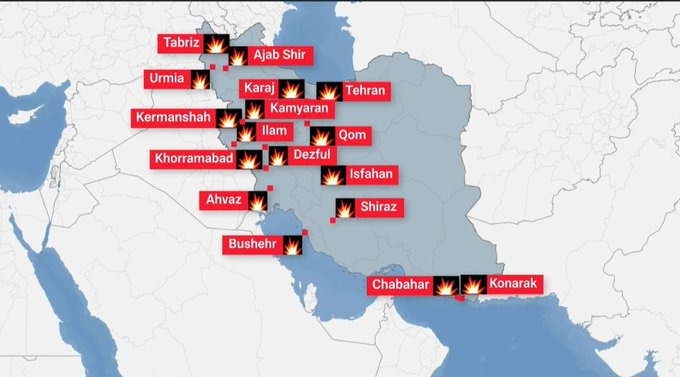
This episode of The LOW DOWN provides the initial open-source operational report on Operation Epic Fury, the ongoing conflict between the United States and Israel and the Islamic Republic of Iran. Information in this briefing is current as of 0730Z, 28 February 2026.This report delivers a structured, chronological account of confirmed developments based on open-source reporting and official statements. Coverage includes the initiation of hostilities, publicly acknowledged strike activity inside Iran, verified Iranian retaliatory missile and drone launches, regional air defense engagements across Israel and Gulf partner nations, impacts to U.S. military installations, force posture adjustments, airspace closures, and officially reported casualty and damage assessments.All information is attributed to recognized reporting outlets and official government sources. This briefing is intended for U.S. servicemembers, defense civilians, intelligence analysts, and operational planners requiring a concise, neutral, and fact-based operational picture at the outset of open conflict.Next update scheduled for information cutoff 0130Z 01 March 2026.https://x.com/nsentinelmapper/status/2027742121273528485?s=20* Iran Update, February 27, 2026 — Critical Threats Project (CTP) and Institute for the Study of War (ISW) (CTP-ISW) — https://understandingwar.org/research/middle-east/iran-update-february-27-2026/ — A confidential IAEA report said it cannot verify that Iran has suspended all enrichment-related activity or determine the location, size, or composition of Iran’s enriched uranium stockpile. The IAEA observed regular vehicular activity at the Esfahan Nuclear Technology Center, noted activity at Natanz and Fordow with unclear purpose, and reported Iran covered ENTC tunnel entrances with soil and covered the Natanz PFEP anti-drone cage with panels. The update also reported anti-regime protests during mourning ceremonies, partial Syria government–SDF integration steps and disputes, ISIS activity in Syria, and Israeli airstrikes on eight Hezbollah Radwan Force camps in Lebanon on February 26.* US begins ‘major combat operations’ in Iran; Trump urges regime change — Filip Timotija and Colin Meyn (The Hill) — https://thehill.com/policy/defense/5760058-us-israel-launch-strikes-on-iran/ — The United States and Israel began coordinated strikes on Iran on February 28, 2026, which President Trump described as the start of “major combat operations” under Operation Epic Fury. Trump said the objective was eliminating what he described as imminent threats from Iran, acknowledged potential U.S. casualties, and publicly urged Iranian military personnel to lay down arms and called for regime change. The report said Israel declared a nationwide emergency, the Israeli Air Force reported missiles launched from Iran toward Israel, smoke was seen near major government buildings in Tehran, and U.S. embassies in Israel and Qatar issued shelter-in-place orders.* Trump talks of ‘annihilation’, ‘elimination’ as US, Israel attack Iran — Al Jazeera Staff (Al Jazeera) — https://www.aljazeera.com/news/2026/2/28/trump-talks-of-annihilation-elimination-as-us-israel-attack-iran — President Trump said on February 28, 2026 that joint U.S.-Israeli operations against Iran had begun and described objectives including destroying Iran’s missile forces and industry, eliminating Iran’s navy, and neutralizing Iran-aligned regional proxy groups. The report stated Iran maintains its nuclear program is civilian and noted that U.S. intelligence agencies and the IAEA have not publicly confirmed evidence that Iran is actively developing a nuclear weapon, while Iranian state media said Tehran was preparing a “crushing” retaliatory response. The article cited unnamed sources suggesting U.S. involvement may have included decapitation efforts focused near where Supreme Leader Ali Khamenei was believed to be sheltering and reported that Reuters said Khamenei was moved to a secure location.* Israel launches preemptive strike on Iran, declares nationwide emergency — Ynet Correspondents (Ynet News) — https://www.ynetnews.com/article/byijjwlf11l — Israel said it launched a preemptive strike on Iran on February 28, 2026 and declared a special nationwide state of emergency with air raid sirens and nationwide civil-defense instructions. The report said strikes targeted Iranian missile launchers positioned for an initial barrage and elements of Iran’s air defense systems, and Iranian media reported explosions across multiple cities with reported targets in Tehran including ministries, sites associated with the Supreme Leader, the Atomic Energy Organization of Iran, and the Parchin complex. The report also said Israel struck Hezbollah launch positions in southern Lebanon, cited a U.S. official describing U.S. strike involvement, and stated Iranian officials warned retaliation would be “crushing.”* Social media post regarding cyberattacks on Iranian media outlets — Nicole Grajewski (X / formerly Twitter) —https://x.com/nicolegrajewski/status/2027651588689482188 — A social media post on February 28, 2026 said cyberattacks were conducted against Iranian media outlets IRNA, ISNA, and Tabnak. The post said these cyberattacks explain why Mehr News and Nour News were among the primary outlets still functioning at the time. The post provided no technical details on the origin, scope, or effects beyond the named outlets.* Social media posts alleging Iranian strikes on U.S. and regional targets — OSINTdefender (@sentdefender) (X / formerly Twitter) — https://x.com/clashreport/status/2027659623688196480 — Social media posts on February 28, 2026 claimed Iran targeted the U.S. Navy’s 5th Fleet support center in Bahrain and that additional explosions were reported in Kuwait, Jordan, and the United Arab Emirates. The posts also claimed Iranian missile launches were reported toward Israel, Qatar, and the UAE as part of retaliation following U.S.-Israeli strikes on Iran. The posts did not cite official confirmation or provide verified casualty or damage assessments.* Departure flights for military families in Bahrain paused following attacks on US naval base — Lara Korte (Stars and Stripes) — https://www.stripes.com/theaters/middle_east/2026-02-28/bahrain-base-departures-20902165.html — The Department of Defense authorized voluntary departure of military dependents from Bahrain on February 28, 2026 after missile attacks targeted the headquarters of the U.S. Navy’s 5th Fleet in Manama. The report said an emergency alert offered departure flights on a first-come basis but flights were paused by 2 p.m. Manama time while personnel were directed to shelter in place and CENTCOM declined comment. The report also said U.S. embassies in Bahrain, Qatar, and Israel issued emergency shelter-in-place notices and referenced Trump’s statement that major combat operations in Iran had begun.* Live updates on US-Israel attacks on Iran and Iranian retaliation across the region (173 updates excerpt provided) — Multiple contributors; specific bylines included where shown (e.g., Zein Basravi, Zeina Khodr, Alan Fisher, Mohammed Vall, Nour Odeh, Maziar Motamedi) (Al Jazeera (Live updates feed)) — https://www.aljazeera.com/news/liveblog/2026/2/28/live-israel-launches-attacks-on-iran-multiple-explosions-heard-in-tehran — The live feed reported on February 28, 2026 that U.S. and Israeli strikes continued in multiple waves across Iran while Iran launched missiles and drones toward Israel and also targeted U.S-linked and partner-state locations across the Gulf. It reported strikes and explosions across multiple Iranian cities, airspace closures and widespread airline disruptions, near-total internet connectivity reduction reported by NetBlocks, and casualty reporting including reported school strikes with evolving figures attributed to Iranian media. It also reported Iranian strikes and interceptions involving Qatar, Kuwait, the UAE, Bahrain, and Jordan alongside extensive diplomatic reactions and public statements from U.S., Israeli, Iranian, Gulf, and international officials and organizations.* Social media post reporting Iranian missile impact near Muwaffaq Salti Air Base — OSINTtechnical (@Osinttechnical) (X / formerly Twitter) — https://x.com/osinttechnical/status/2027712784276848864?s=12 — A social media post on February 28, 2026 said an Iranian ballistic missile impacted in or near Muwaffaq Salti Air Base in Jordan. The post said the air base has been hosting dozens of U.S. Air Force fighter aircraft surged to the region in recent weeks. The post provided no official confirmation, casualty information, or damage assessment.* Kuwait successfully intercepts ballistic missiles targeting Ali Al-Salem Air Base — Official spokesperson statement attributed to Colonel Saud Al-Atwan, Ministry of Defense (Kuwait News Agency (KUNA)) — https://www.kuna.net.kw/ArticleDetails.aspx?id=3277725&language=en# — Kuwait’s Ministry of Defense said on February 28, 2026 that Ali Al-Salem Air Base was targeted by ballistic missiles that were intercepted by Kuwait Air Defense systems. The statement said debris from the interceptions fell in areas surrounding the base and reported no casualties or structural damage. The spokesperson urged the public to avoid approaching debris, report remnants to authorities, and rely on official sources rather than rumors.* Multiple ballistic missiles targeting Ali Al-Salem Air Base, intercepted by Kuwaiti defenses — Not specified (Al-Rai daily (as cited in report)) — https://timeskuwait.com/multiple-ballistic-missiles-targeting-ali-al-salem-air-base-intercepted-by-kuwaiti-defenses/ — The report said on February 28, 2026 that multiple ballistic missiles targeted Ali Al-Salem Air Base and that Kuwaiti air defense forces intercepted the missiles. It said shrapnel and debris fell near the base with no reported casualties or structural damage and said authorities urged residents to avoid debris and rely on official sourc

On February 27, multiple explosions were reported across Iran, including near the Parchin military complex and Isfahan, as the IAEA warned it cannot verify roughly 440 kilograms of uranium enriched up to 60 percent and demanded renewed inspection access. President Trump stated he is “not happy” with negotiations and that military force remains an option, while the U.S. authorized diplomatic departures, urged citizens to leave Israel, designated Iran a State Sponsor of Wrongful Detention, and assembled the largest U.S. force posture in the Middle East in decades—two carrier strike groups, more than 250 attack aircraft in theater, over 125 tankers, F-22s in Israel, F-35s and F-15s in Jordan and the UK, 38 additional fighters staged through RAF Lakenheath, and six of nine E-11A BACN aircraft concentrated in theater. Commercial satellite imagery published by a Chinese firm confirmed U.S. F-22 deployments in Israel, while Oman signaled a potential diplomatic off-ramp involving down-blending enriched material.Regionally, Pakistan and Afghanistan exchanged cross-border strikes described by Pakistan’s defense minister as “open war,” marking the most serious escalation since the October ceasefire. In the Indo-Pacific, analysis assessed China benefits from U.S. unpredictability as Xi Jinping explicitly advanced renminbi reserve currency ambitions; PLA drones were observed broadcasting false transponder codes; Chinese researchers published methods to counter or destroy Starlink; and U.S. Marines conducted a large-scale amphibious assault during Cobra Gold in Thailand.In Europe, the UK announced an April summit to address Russian naval activity in the Arctic and North Atlantic, while Hungary deployed troops to guard energy infrastructure amid tensions with Ukraine. In the Western Hemisphere, a U.S. Army LOCUST laser shot down a U.S. Customs and Border Protection drone over Texas in the second laser-related incident in two weeks, raising interagency coordination concerns. Additional reporting covers the designation of Anthropic as a U.S. supply-chain risk over AI access disputes, discovery of the “AirSnitch” Wi-Fi vulnerability enabling machine-in-the-middle attacks, and U.S. Navy approval of the StormBreaker smart weapon for the F/A-18E/F Super Hornet fleet.Iran and Middle East* Multiple explosions reported across Iran, primarily around Tehran including near Parchin military complex — Multiple accounts (Aggregated social media posts on X) — https://x.com/i/trending/2027510660406583576 — Multiple social media accounts reported at least five nearly simultaneous explosions across Iran on February 27, 2026, with most centered around the capital, Tehran. Eyewitness posts described smoke plumes and blast sounds near several areas, including the Parchin military complex, which is associated with Iran’s defense and missile programs, and near the city of Qom. As of the time of reporting, there has been no official confirmation or statement from Iranian authorities or any other government regarding the cause, damage, or casualties.* Trump ‘not happy’ with Iran situation and says military force is still an option — Patrick Wintour and Andrew Roth (The Guardian) — https://www.theguardian.com/world/2026/feb/27/us-urges-citizens-leave-israel-threat-strike-iran — On February 27, President Donald Trump stated he has not made a final decision on military action but is “not happy” with the state of nuclear negotiations, accusing Iran of not negotiating in good faith. The remarks followed inconclusive talks in Geneva and came as the U.S. authorized the departure of non-essential personnel from Israel and the UK temporarily withdrew its embassy staff from Tehran. An IAEA report noted it lacks access to verify the status of Iran’s enriched uranium stockpile, including at a newly declared site in Isfahan, ahead of further technical talks scheduled for next week in Vienna.* Tankers Vacate Al Udeid Air Base As U.S. Citizens Are Urged To Leave Israel Immediately — Thomas Newdick (The War Zone (TWZ)) — https://www.twz.com/news-features/tankers-vacate-al-udeid-air-base-as-u-s-citizens-are-urged-to-leave-israel-immediately — As of February 27, U.S. Air Force KC-135 tankers have vacated Al Udeid Air Base in Qatar amid a massive regional force buildup and a State Department advisory for U.S. citizens to leave Israel immediately. Dozens of U.S. tankers have been repositioned across the Middle East and Europe, including at Israel’s Ben Gurion Airport, a move consistent with force protection measures seen before prior strikes on Iran. The buildup includes two carrier strike groups and numerous fighter squadrons, with F-22s in Israel, and F-35s and F-15s in Jordan and the UK, as diplomatic talks in Geneva ended without a resolution on Iran’s nuclear program.* IAEA report says Iran must allow inspections, points at Isfahan — Francois Murphy (Reuters) — https://www.reuters.com/world/middle-east/iran-stored-highly-enriched-uranium-underground-site-iaea-report-says-2026-02-27/ — An International Atomic Energy Agency (IAEA) report on February 27 urged Iran to grant immediate access to its nuclear sites, expressing particular concern over uninspected facilities at Isfahan. The confidential report, circulated to the Board of Governors, notes that inspectors have not visited the most sensitive sites since they were bombed in June 2025 and cannot account for Iran’s stockpile of an estimated 440.9 kilograms of uranium enriched up to 60 percent. The IAEA confirmed for the first time that highly enriched material was stored in a tunnel complex at Isfahan that is believed to have survived the strikes and noted it has never been granted access to a fourth enrichment facility declared at the site.* US military assembles largest force of warships, aircraft in Middle East in decades — Konstantin Toropin and Ben Finley (The Associated Press) — https://www.militarytimes.com/news/your-military/2026/02/26/us-military-assembles-largest-force-of-warships-aircraft-in-middle-east-in-decades/ — On February 26, the Pentagon was reported to have assembled the largest U.S. military force in the Middle East in decades, including two aircraft carrier strike groups and over 100 fighter jets, as President Trump warns of potential action against Iran. The USS Gerald R. Ford carrier group is joining the USS Abraham Lincoln in the region, bringing total naval presence to at least 16 ships, while air assets including F-22s, F-35s, and F-15s have been moved to bases in Israel and Jordan. Analysts note the force is structured for a high-intensity air campaign and defense against retaliation, not a ground invasion, as the buildup exceeds regional levels seen since 2003.* Additional F-15s, F-22s and F-35s are Arriving to Reinforce U.S. Buildup in Middle East — Stefano D’Urso (The Aviationist) — https://theaviationist.com/2026/02/26/additional-fighters-reinforce-us-buildup/ — Between February 24 and 26, 38 U.S. Air Force fighters, including F-22s, F-15Es, and F-35As, arrived at RAF Lakenheath in the UK for onward staging to the Middle East amid tensions with Iran. The first 11 F-22s have already arrived at Ovda Air Base in Israel, while additional assets including F-16s, CV-22s, and AWACS aircraft have been deployed to locations including Diego Garcia and other regional bases. The buildup, which includes the USS Gerald R. Ford and USS Abraham Lincoln carrier strike groups, represents one of the largest U.S. force postures since the Gulf War and mirrors the deployments seen before military strikes in June 2025.* Afghanistan and Pakistan exchange cross-border strikes in escalating retaliatory attacks — Sophia Saifi, Saleem Mehsud, Hira Humayun (CNN) — https://edition.cnn.com/2026/02/26/asia/afghanistan-pakistan-border-attack-intl-latam — On February 27, Pakistan and Afghanistan engaged in escalating cross-border military strikes in multiple provinces, including Kabul, following an Afghan attack on Pakistani border posts the previous day. Pakistan claimed its strikes killed 133 Afghan Taliban fighters in response to an unprovoked assault, while Afghanistan reported eight soldiers killed and accused Pakistan of hitting a refugee camp. The violence, which Pakistan’s defense minister called “open war,” marks the most serious breakdown of a ceasefire in place since October and follows weeks of deadly attacks inside Pakistan that Islamabad attributes to militants operating from Afghanistan.* Tehran Has Discovered Moscow Is a Fair-Weather Friend — Alex Vatanka (Foreign Policy) — https://foreignpolicy.com/2026/02/27/iran-russia-threats-strategic-alignment/ — An analysis argues that recent U.S.-Iran escalation has revealed the limits of Tehran’s strategic alignment with Russia, which offers diplomatic support but not security guarantees. This became clear in April 2025 when Russia clarified its strategic treaty with Iran was not a mutual defense pact, a stance reinforced when Moscow offered only rhetoric after U.S.-Israeli strikes on Iranian nuclear sites in June 2025. Russia has maintained its multi-vector Middle East strategy, engaging with all sides while withholding advanced weapon systems like the Su-35 and S-400 from Iran, prompting internal debate in Tehran about its strategic dependencies.* Why No One Is Pushing Back on Trump’s Iran Threats — Michael Hirsh (Foreign Policy) — https://foreignpolicy.com/2026/02/27/why-no-one-is-pushing-back-on-trumps-iran-threats/ — An analysis argues the muted response from Democrats and European allies to President Trump’s threats against Iran reflects a normalization of unilateral military action, a departure from the extensive domestic and international engagement that preceded the 2003 Iraq War. President Trump has assembled a major military force without significant Congressional consultation or U.N. engagement, meeting little resistance from Democrats or European officials who have urged diplomacy but not condemned a potential strike. The author contends this i
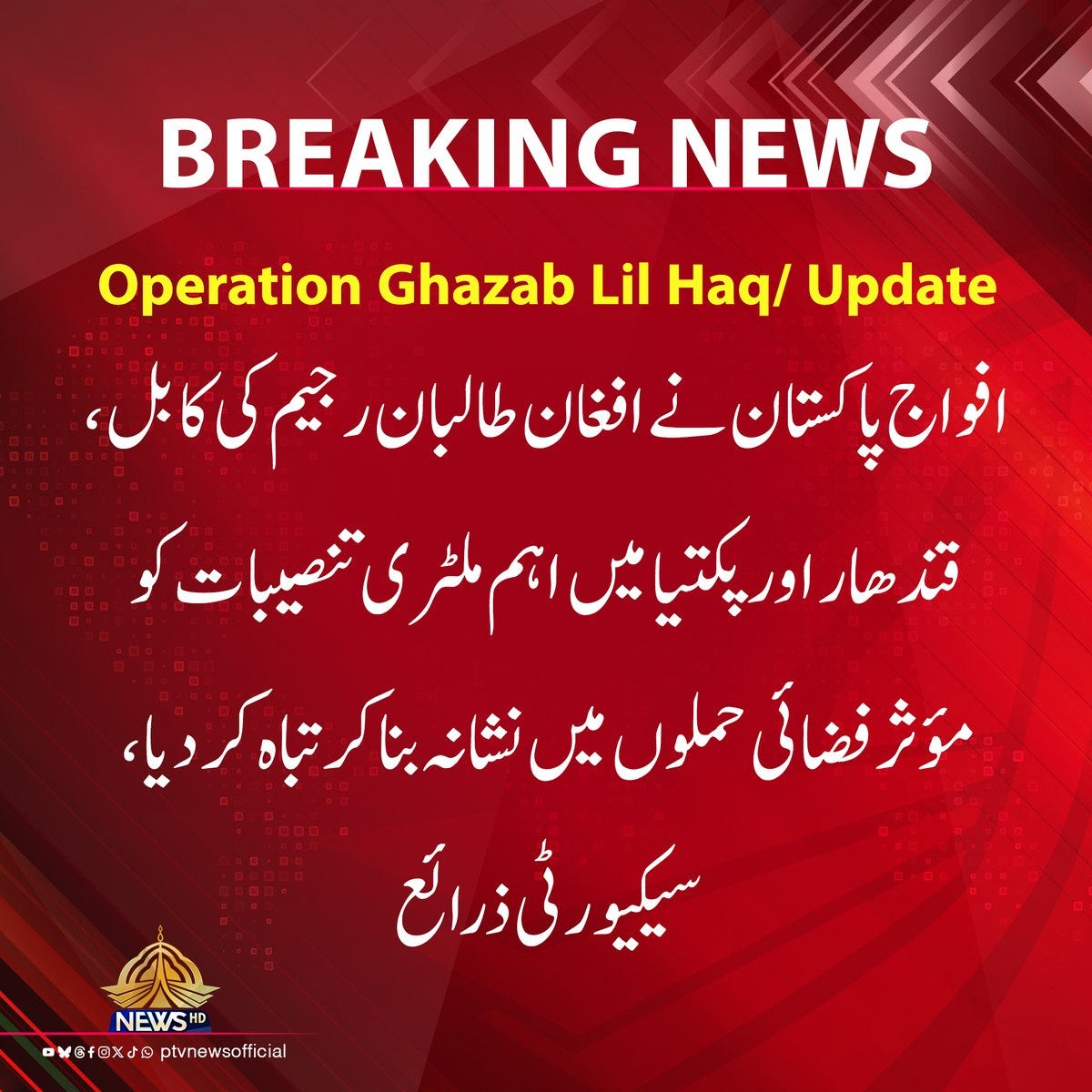
This episode delivers a comprehensive global security briefing covering the stalled U.S.–Iran nuclear negotiations in Geneva, expanding American military deployments including dual carrier strike groups and forward air assets, and mounting Iranian missile and militia threats across the Middle East. We examine the rapid escalation between Pakistan and Afghanistan following cross-border strikes and Operation Ghazab Lil Haq, alongside Syria’s confirmed mass escape from the al-Hol ISIS-linked camp and continued Houthi missile and drone threats in Yemen.In Asia, we analyze sweeping PLA leadership purges impacting multiple services and the Central Military Commission, satellite evidence suggesting China’s Type 004 aircraft carrier will be nuclear-powered, reported Starlink jamming near Scarborough Shoal, masked Chinese drone operations in the South China Sea, and the arrest of a former U.S. F-35 instructor accused of training Chinese military pilots. We also assess China’s expanding ISR satellite network and growing counter-space competition.From Europe, we cover Russia’s massive 420-drone and missile assault on Ukraine’s energy infrastructure, battlefield updates near Pokrovsk, Ukrainian long-range strikes and drone-centric force restructuring, Polish and Belgian air defense posture adjustments, and continued Russian occupation consolidation in seized territories.In the Western Hemisphere, we detail the fatal Cuban maritime incident involving a Florida-registered vessel, FAA airspace restrictions following a reported U.S. counter-drone laser incident in Texas, and geopolitical implications of Nicolás Maduro’s arrest for Belarus.Additional reporting includes Apple device approval for NATO Restricted information handling, Pentagon–Anthropic AI policy tensions, and operational capabilities of the EA-37B Compass Call electronic attack aircraft.A region-by-region breakdown of the most consequential military, geopolitical, and strategic developments shaping the global security environment.Iran and Middle East* Iran Update, February 25, 2026 — CTP-ISW (Critical Threats Project / Institute for the Study of War) (Institute for the Study of War) — https://understandingwar.org/research/middle-east/iran-update-february-25-2026/ — CTP-ISW reports mounting internal unrest, continued nuclear negotiation friction, and ongoing Iranian military preparations in the Persian Gulf. Iran reportedly floated reducing enrichment from 60 percent toward JCPOA-adjacent levels while resisting U.S. demands for zero enrichment and transfer of highly enriched uranium abroad, as President Trump reiterated nuclear and missile concerns in his February 24 State of the Union. Concurrently, the IRGC conducted exercises near the Strait of Hormuz featuring Shahed-136 drones and Fath-series short-range ballistic missiles amid sustained university protests and economic deterioration.* U.S. Brings Tough Demands to Iran Nuclear Talks — Benoit Faucon and Alexander Ward (The Wall Street Journal) — https://www.wsj.com/world/middle-east/u-s-brings-tough-demands-to-iran-nuclear-talks-8aab06ad — U.S. envoys entered nuclear negotiations in Geneva demanding Iran dismantle Fordow, Natanz, and Isfahan, transfer all enriched uranium to U.S. custody, and accept zero enrichment under a permanent agreement. President Trump warned of military action if diplomacy fails and positioned two aircraft carriers, advanced warplanes, destroyers, and missile defense assets near Iran, while Tehran warned of an all-out response to any attack. Iran proposed reducing enrichment to 1.5 percent or forming a regional consortium but continues to seek broader sanctions relief.* “People are getting poorer”: How Iran’s struggling economy is changing how families live — Behrang Tajdin and Ghoncheh Habibiazad (BBC News) — https://www.bbc.com/news/articles/cn5geplde0wo — BBC Persian reports that inflation, sanctions, and currency collapse have sharply degraded Iranian household living standards. Food prices doubled over the past 12 months, basic necessities rose about 60 percent year-on-year, and the rial has lost over 95 percent of its value against the U.S. dollar since May 2018. Real household expenditure has declined significantly over two decades, while internet shutdowns and post-conflict uncertainty have further disrupted incomes and investment.* Statement from Dario Amodei on our discussions with the Department of War — Dario Amodei (Anthropic) — https://www.anthropic.com/news/statement-department-of-war — Anthropic stated it will not remove contractual safeguards prohibiting mass domestic surveillance or fully autonomous weapons without oversight in its work with the Department of War. The company confirmed its Claude AI models are deployed across classified U.S. government networks for intelligence analysis, modeling, planning, and cyber operations. Anthropic said the department has threatened to remove it from defense systems or invoke the Defense Production Act if safeguards are not lifted.* Operation Ghazab Lil Haq / Update 0244 hr 27 Feb 2026 — PTV News (PTV News) — * — Pakistan state media reported that the Pakistan Air Force conducted airstrikes under Operation Ghazab Lil Haq against Afghan Taliban military installations in Kabul, Kandahar, and Paktia. The report claims destruction of brigade and corps headquarters, ammunition depots, and logistics bases. No independent verification or casualty figures were provided.* Afghanistan launches attacks against Pakistan, draws ‘immediate response’ — Al Jazeera Staff, Reuters, and The Associated Press (Al Jazeera) — https://www.aljazeera.com/news/2026/2/26/afghanistan-says-it-launches-attacks-against-pakistan — Taliban authorities announced large-scale offensive operations against Pakistani military positions along the Durand Line following Pakistani airstrikes on February 23, 2026. Afghan sources claimed Pakistani casualties and captured outposts, while Pakistan reported retaliatory strikes across multiple Khyber Pakhtunkhwa sectors and denied territorial losses. Both sides reported significant casualties and infrastructure damage amid escalating cross-border clashes.* Statement by Zabiullah Mujahid on retaliatory operations — TOLOnews Plus (TOLOnews Plus) — https://t.me/Tolo_news/143365 — Taliban spokesperson Zabiullah Mujahid announced the start of large-scale retaliatory operations against Pakistani military centers along the Durand Line. The statement framed the attacks as a response to repeated aggressions by Pakistani forces. No operational details or independent confirmation were provided.* Report of Pakistan Air Force strike on Taliban headquarters in Kabul — War Radar (War Radar) — * — A social media report claims the Pakistan Air Force struck Taliban headquarters in Kabul, alleging approximately 200 militants and senior leaders were killed. The post does not cite official sources or provide independent verification. Casualty figures remain unconfirmed.* BREAKING: Pakistan’s Defense Minister states “open war” underway between Pakistan and Afghanistan — Global Military Info (Global Military Info) — * — A social media post reports that Pakistan’s Defense Minister declared “open war” between Pakistan and Afghanistan. The post states extensive airstrikes are underway in Kabul, Kandahar, and Paktia targeting military infrastructure. No additional operational details or official Afghan responses were included.* Pakistan Air Force Conducts Strikes Under Operation Ghazab Lil Haq — OSINTdefender (OSINTdefender) — * — A social media aggregation citing Pakistan state media reports multiple Pakistani airstrikes against Taliban military sites in Kabul, Kandahar, and Paktia. Reported targets include corps and brigade headquarters, ammunition depots, and logistics bases. The information is attributed to Pakistani state media without independent confirmation.* Pakistan, Afghanistan ‘war’ LIVE: Afghan forces kill 55 Pak soldiers, Islamabad launches Operation Ghazab lil-Haq — Akriti Anand (LiveMint) — https://www.livemint.com/news/world/pakistan-afghanistan-war-live-updates-islamabad-operation-ghazab-lil-haq-soldiers-killed-death-toll-latest-news-11772156375420.html — Afghan forces launched retaliatory cross-border operations along the Durand Line on February 26, 2026, claiming 55 Pakistani soldiers killed and multiple posts captured, prompting Pakistan to initiate Operation Ghazab lil-Haq. Afghan officials said operations began around 8:00 PM and targeted Pakistani positions in Paktika, Paktia, Khost, Nangarhar, Kunar, and Nuristan in response to earlier Pakistani airstrikes. Pakistani officials reported airstrikes on Kabul, Kandahar, and Paktia on February 27, declared “open war,” and disputed Afghan casualty and capture claims amid the collapse of a Qatar-mediated ceasefire.* Explosions and sounds of aircraft heard in Kabul, hours after Afghanistan attacks Pakistan — Abdul Qahar Afghan and Munir Ahmed (Associated Press) — https://www.washingtonpost.com/world/2026/02/26/afghanistan-pakistan-airstrikes/b4d410ac-1331-11f1-8e8d-fe91db44677b_story.html — Explosions and aircraft activity were reported in Kabul early February 27, 2026, after Afghanistan launched cross-border attacks against Pakistan following Pakistani strikes on February 23. Afghan officials said they targeted Pakistani bases along the Durand Line, claimed over a dozen posts captured, and reported up to 55 Pakistani soldiers killed, while Pakistan reported two soldiers killed and 36 Afghan fighters killed. Fighting also occurred near the Torkham crossing with evacuations on both sides as each government rejected the other’s casualty claims.* Syria confirms ‘mass escape’ from ISIS-linked camp — The Associated Press (NBC News) — https://www.nbcnews.com/world/syria/syria-confirms-mass-escape-linked-camp-rcna260641 — Syrian authorities confirmed a “mass escape” from the al-Hol camp after government forces took control on January 21, 2026, identifying at least 133 perimeter breaches.

In this episode of The LOWDOWN, we deliver a structured, staff-level OSINT briefing covering escalating U.S.–Iran tensions ahead of Geneva nuclear talks, including U.S. carrier strike group deployments, F-22 and F-16 movements, Iranian internal unrest, and Israel’s warning to Lebanon over Hezbollah involvement.In the Indo-Pacific, we examine China’s large-scale Red Sword air combat exercise, rapid PLAAF industrial expansion, and leadership signaling within the PLA Navy as Vice Admiral Cui Yuzhong emerges as a potential successor amid anti-corruption investigations. We also assess North Korea’s 9th Workers’ Party Congress reshuffle, 600mm MLRS display with SRBM-class range claims, and Japan’s expanding regional defense posture, including Pacific Island engagement and planned missile deployments near Taiwan.In Europe, we cover Russia’s criminal case against Telegram’s founder under its sovereign internet policy, nuclear rhetoric directed at the UK and France, Hungary’s anti-Ukraine election positioning, Ukraine’s four-year war anniversary, and growing debate over European strategic autonomy and defense spending.Western Hemisphere reporting includes cartel-driven disinformation campaigns in Mexico following the killing of a major drug lord, U.S. diplomatic messaging on Venezuela after Maduro’s removal, and cross-border organized crime trends in the United States.Additional coverage includes B-2 communications modernization under CJADC2, the Air Force’s new “Ringleader” battle network exercise series, MQ-9B long-range strike integration, AI missile-evasion testing, PRC-linked GRIDTIDE cyber espionage disruption, GPS IIIF anti-jamming upgrades, and 2025 global defense spending growth.This episode integrates Musashi’s “Book of the Void” as an analytic lens for understanding clarity, perception, and disciplined readiness in contested information and operational environments.The LOWDOWN provides calm, professional situational awareness for military servicemembers, defense professionals, and strategic planners tracking global competition and conflict.Thanks for reading The LOWDOWN OSINT Report! Subscribe for free to receive new posts and support my work.China, The Korean Peninsula, and Asia* Flying Higher and Higher: VADM Cui Yuzhong Moving Up in Complex Times — Jordan Shaw; Dr. Andrew S. Erickson; CAPT Christopher H. Sharman (ret.) (China Maritime Studies Institute, U.S. Naval War College) — https://digital-commons.usnwc.edu/cmsi-notes/20/ — This CMSI note assesses that Vice Admiral Cui Yuzhong is a leading candidate to succeed Admiral Hu Zhongming as PLAN Commander, highlighted by Cui’s prominent role alongside Xi Jinping at the November 5, 2025 commissioning of the aircraft carrier Fujian while Hu was absent. Cui’s career includes naval aviation leadership, fleet and theater-level command experience, promotion to PLAN Deputy Commander in July 2021, and elevation as an Alternate Member of the CCP 20th Central Committee in October 2022, signaling political trust. The authors judge Cui’s aviation background, joint experience, and CCP credentials position him as an apparent heir amid anti-corruption investigations announced in January 2026 that could complicate senior PLA leadership dynamics.* Revealed from Space: China’s Biggest Red Sword Exercise and a Rapid Industrial Buildup — Greg Hadley (Air & Space Forces Magazine) — https://www.airandspaceforces.com/china-red-sword-exercise-satellite-images/ — Commercial satellite imagery analysis briefed February 25, 2026 indicates the PLAAF conducted a major late-2025 Red Sword exercise across eight western bases over roughly five weeks involving at least 194 observed aircraft, with total participation potentially exceeding 200–250 airframes. Imagery showed mixed fourth- and fifth-generation fighters, bombers, transports, and airborne early warning aircraft concentrated at bases including Dingxin, suggesting expanded integration and large-scale air combat training. The analysis also identified rapid expansion of PLAAF test infrastructure and approximately 8 million square feet of added AVIC manufacturing space since 2021, supporting projections of increased modern fighter production capacity.* Korean Peninsula Update, February 25, 2026 — Not specified (Institute for the Study of War and Critical Threats Project) — https://understandingwar.org/research/china-taiwan/korean-peninsula-update-february-25-2026/ — The February 19–22 Workers’ Party of Korea Congress consolidated Kim Jong Un’s authority, replaced 23 executive board members, and elected a new Central Committee with a reported 51.6% turnover rate, reflecting generational transition and leadership restructuring. Concurrently, North Korea displayed 50 wheeled 600mm MLRS platforms capable of SRBM-class munitions, with Kim claiming AI-enabled targeting and nuclear capability following a January 27 test reaching 340–350 km. The update assesses the system’s mobility and low apogee trajectory could complicate South Korea’s integrated air and missile defense while political messaging reinforced a hostile two-state framework toward Seoul.* China’s Fragile Future: How Secure Is the CCP? — Andrew J. Nathan (Foreign Affairs) — https://www.foreignaffairs.com/reviews/chinas-fragile-future-nathan — Andrew J. Nathan reviews two books arguing that apparent CCP stability masks underlying fragility tied to overstated public trust and rigid authoritarian institutional structures. Lianjiang Li contends survey data exaggerate regime legitimacy by conflating embedded trust with voluntary endorsement, while Chenggang Xu argues that China’s Leninist party-state replicates centralized “institutional genes” that constrain reform and risk long-term stagnation. Nathan concludes that while collapse is not imminent, erosion of legitimacy amid economic stress could create instability without institutional foundations for stable democratic transition.* Japan Seeks to Counter China’s Expanding Influence in Pacific by Strengthening Ties with Island Nations — The Yomiuri Shimbun (The Yomiuri Shimbun) — https://japannews.yomiuri.co.jp/politics/defense-security/20260225-313287/ — Japan announced expanded defense engagement with 14 Pacific Island nations at the third Japan Pacific Islands Defense Dialogue in Tokyo on 25 February 2026 to counter China’s growing economic and security influence. Defense Minister Shinjiro Koizumi outlined personnel exchanges and multilayered cooperation while seven ASEAN members, including the Philippines and Indonesia, attended as observers to link Pacific and Southeast Asian maritime security concerns. The initiative follows China’s 2022 security pact with the Solomon Islands and ongoing infrastructure investment in the region, which Japan characterizes as creating potential “debt trap” risks and strategic leverage.* Quick Take: Initial Assessment of Key Personnel Changes in North Korea’s 9th Party Congress — Michael Madden (38 North) — https://www.38north.org/2026/02/quick-take-initial-assessment-of-key-personnel-changes-in-north-koreas-9th-party-congress/ — North Korea’s Ninth Workers’ Party Congress expanded the party Secretariat and reshuffled senior posts, reinforcing party-centric governance under Kim Jong Un. The Secretariat grew from roughly seven to eleven members, Kim Song Nam retained foreign affairs oversight within the Secretariat, and Kim Jae Ryong was reportedly appointed to lead the powerful Organization Guidance Department, while military leadership changes were limited to Jong Kyong Thaek replacing Pak Jong Chon in the Military Political Leadership Department. The adjustments appear calibrated rather than sweeping, suggesting continuity in strategic direction while consolidating administrative and financial control within party structures.* Kim Jong Un’s sister promoted in rare North Korea party congress — France 24 Staff (France 24) — https://www.france24.com/en/asia-pacific/20260224-kim-jon-un-sister-promoted-north-korea-party-congress — Kim Yo Jong was promoted to full department director within the Workers’ Party of Korea during the Ninth Party Congress convened in Pyongyang in February 2026. The congress, held roughly every five years, sets national policy across military, diplomatic, and domestic domains and is expected to outline the next phase of North Korea’s nuclear weapons program. The promotion formalizes Kim Yo Jong’s senior role as a key regime spokesperson on U.S. and inter-Korean affairs amid continued tensions and uncertainty over renewed summit diplomacy with Washington.* Japan moves to bolster air defenses on island near Taiwan — Brian McElhiney and Keishi Koja (Stars and Stripes) — https://www.stripes.com/theaters/asia_pacific/2026-02-24/japan-missiles-yonaguni-taiwan-china-20858588.html — Japan will deploy upgraded Type-03 medium-range surface-to-air missile systems to Camp Yonaguni near Taiwan during fiscal year 2030 to strengthen air defenses along its southwestern island chain. Defense Minister Shinjiro Koizumi said the move aims to reduce the possibility of armed attack amid rising China-related tensions, following large-scale Chinese exercises near Taiwan in December 2025. The deployment expands on earlier missile placements on Ishigaki Island and includes potential infrastructure development and additional personnel to enhance deterrence.* Japan at risk of political, economic deep freeze with China — Yuri Momoi (Nikkei Asia) — https://asia.nikkei.com/spotlight/comment/japan-at-risk-of-political-economic-deep-freeze-with-china — China banned dual-use exports to 20 Japanese entities and increased scrutiny on 20 more, escalating political and economic pressure following Japanese Prime Minister Sanae Takaichi’s late-2025 remarks about a Taiwan contingency. The measures threaten Japanese firms’ operations in China and coincide with December 2025 Chinese military exercises near Okinawa involving the aircraft carrier Liaoning. The deterioration reflects broader structural shifts in bilater

This episode of The LOWDOWN examines escalating U.S.–Iran tensions, NATO surveillance shifts, and Iran’s pursuit of Chinese anti-ship missiles; China’s sweeping PLA purges, Taiwan semiconductor dependency risks, and record South China Sea militia activity; Russia’s integration of cyber operations with missile targeting in Ukraine; and major U.S. defense modernization milestones including B-21 production acceleration, F-35 AI combat identification testing, and collaborative combat aircraft weapons integration. Structured regional analysis with doctrinal integration from Musashi’s Wind Book to frame initiative, perception, and strategic posture.China, The Korean Peninsula, and Asia* The Looming Taiwan Chip Disaster That Silicon Valley Has Long Ignored — Tripp Mickle (The New York Times) — https://www.nytimes.com/2026/02/24/technology/taiwan-china-chips-silicon-valley-tsmc.html — U.S. officials have warned since 2021 that a Chinese blockade or invasion of Taiwan, which produces about 90 percent of advanced semiconductors, would trigger a severe economic shock, yet major tech firms have been slow to diversify supply chains. Classified briefings under the Biden and Trump administrations cited intelligence that China aims to be capable of taking Taiwan by 2027, while a 2022 Semiconductor Industry Association report projected an 11 percent U.S. GDP contraction if Taiwan’s chip output were cut off. Despite the 2022 CHIPS and Science Act and expanded U.S. investments by TSMC and others, U.S. production remains costlier and technologically behind, leaving structural dependence in place.* America’s narrative on Taiwan needs an update — Ryan Hass (Brookings Institution) — https://www.brookings.edu/articles/americas-narrative-on-taiwan-needs-an-update/ — Ryan Hass argues that although U.S.-Taiwan economic and security ties are deepening, Washington’s discourse is shifting toward portraying Taiwan as a strategic liability, which could weaken deterrence. He cites growing emphasis on semiconductor independence and reports of President Donald Trump consulting with Xi Jinping on arms sales ahead of an April 2026 trip, alongside an October 2025 Trump-Xi meeting in Busan where Taiwan was not raised. Hass contends U.S. policy should emphasize that conflict is not inevitable, that economic interdependence will persist for at least a decade, and that the goal is preserving conditions for peaceful dialogue.* What to Watch at China’s Two Sessions in 2026 — Neil Thomas and Lobsang Tsering (ASPI Center for China Analysis) — https://asiasociety.org/policy-institute/what-watch-chinas-two-sessions-2026 — China’s March 4–11, 2026 “Two Sessions” will unveil the 15th Five-Year Plan (2026–2030) and set moderated economic targets amid structural slowdown. Expected targets include 4.5–5 percent GDP growth, a roughly 4 percent fiscal deficit, and a 5.5 percent urban unemployment ceiling, while prioritizing semiconductor self-reliance and other technology chokepoints. The meetings follow January 24, 2026 disciplinary investigations into senior Central Military Commission figures and reflect tightened central control under Xi Jinping.* All Together Now: China’s Militia in 2025 — Asia Maritime Transparency Initiative (AMTI) — https://amti.csis.org/all-together-now-chinas-militia-in-2025/ — Satellite imagery analysis found China’s maritime militia averaged 241 vessels daily across the South China Sea in 2025, the highest level recorded. Activity concentrated at Mischief Reef and Whitsun Reef, with peaks exceeding 200 vessels at Mischief Reef and redistribution from Fiery Cross Reef. AMTI assesses China is relying more on professional militia and coast guard forces at highly contested features while Backbone fleet vessels loiter in the eastern Spratlys.* Xi’s Purges of China’s Military Run Deep, New Study Shows — Chris Buckley (The New York Times) — https://www.nytimes.com/2026/02/24/world/asia/china-military-purges-xi.html — A CSIS study found that since 2022 roughly 100 PLA generals and lieutenant generals have been dismissed or disappeared, representing about half of China’s top military leadership. Removals accelerated in 2025 and culminated in January 2026 with the reported removal of CMC Vice Chairman Zhang Youxia. Analysts assess the leadership turbulence could complicate near-term large-scale operations, including Taiwan contingencies.* The Danger in the Middle: Will Xi’s Purges Increase the Risk of War? — Joel Wuthnow (War on the Rocks) — https://warontherocks.com/2026/02/the-danger-in-the-middle-will-xis-purges-increase-the-risk-of-war/ — Joel Wuthnow assesses Xi Jinping’s purge of 43 generals and admirals since July 2023 reduces near-term war risk but may increase medium-term conflict probability as new loyal commanders consolidate power. January 2026 removals of senior CMC leaders hollowed out operational leadership and may delay China’s 2027 readiness objective for Taiwan. Over time, however, younger joint-experienced replacements and centralized authority could lower internal constraints on risky decisions.* US, Japanese troops begin island-defense drills to prevent ‘war before it happens’ — Brian McElhiney and Keishi Koja (Stars and Stripes) — https://www.stripes.com/branches/marine_corps/2026-02-23/iron-fist-island-defense-exercise-japan-20849446.html — On February 23, 2026, U.S. Marines and Japanese forces began Exercise Iron Fist across 19 sites in Japan’s Nansei island chain to enhance amphibious and island defense capabilities. Approximately 800 Marines, 2,100 U.S. sailors, and 2,000 Japanese personnel are participating through March 9. Japanese leaders cited China’s December Taiwan encirclement drills and sustained coast guard patrols near the Senkakus as part of the severe regional security environment.* Japan’s National Security Reckoning: How Tokyo Is Adjusting to a More Dangerous World — Masataka Okano (Foreign Affairs) — https://www.foreignaffairs.com/japan/japans-national-security-reckoning — Masataka Okano argues Japan is revising its National Security Strategy in response to Chinese coercion, Russia’s February 2022 invasion of Ukraine, and evolving U.S. “America first” policies. Tokyo has expanded defense spending, introduced counterstrike capabilities, diversified supply chains, and deepened ties with Indo-Pacific and European partners. The reassessment aims to balance deterrence, economic resilience, and diplomacy amid heightened regional instability.* US accuses China of ‘massively’ expanding nuclear arsenal amid fears of new arms race — Agence France-Presse (The Guardian) — https://www.theguardian.com/world/2026/feb/24/us-accuses-china-of-massively-expanding-nuclear-arsenal-amid-fears-of-new-arms-race — On February 23, 2026, U.S. Assistant Secretary Christopher Yeaw accused China at the Geneva Conference on Disarmament of expanding its nuclear arsenal and potentially holding fissile material for over 1,000 warheads by 2030. He cited a June 22, 2020 seismic event as a possible low-yield nuclear test and noted New START expired on February 5, 2026. China denied the allegations and rejected trilateral arms control talks, as U.S. and Chinese delegations prepared further discussions.* Chinese state company helps Russian ally build ammunition plant — Takayuki Tanaka and Natsuki Kaneko (Nikkei Asia) — https://asia.nikkei.com/politics/ukraine-war/chinese-state-company-helps-russian-ally-build-ammunition-plant — A December 20, 2023 contract shows China’s CEIEC agreed to help Belarus build a production line for 122mm rocket warheads compatible with Russia’s BM-21 Grad system. The $26.8 million project is scheduled for installation March–July 2026 with projected annual output of 120,000 rounds. Documentation suggests intended export to Russia amid tightened Western sanctions.Russia and Europe* Strategic Snapshot: Four Years Since the Start of Russia’s Full-Scale Invasion of Ukraine — Eurasia Daily Monitor (Jamestown Foundation) — https://jamestown.org/strategic-snapshot-four-years-since-the-start-of-russias-full-scale-invasion-of-ukraine/ — On February 24, 2026, four years after Russia’s invasion, Moscow occupies nearly 20 percent of Ukraine, with at least 55,000 Ukrainian soldiers and over 15,000 civilians killed. Russian deaths are estimated at 177,433 confirmed, with broader casualty figures reaching into the hundreds of thousands. February 17–18 Geneva talks among Ukraine, Russia, and the United States produced no breakthrough, as maximalist territorial demands persist.* Putin’s Internet Crackdown Is Rooted in Weakness and a Need to Demand Greater War Sacrifices — Institute for the Study of War (ISW) — https://understandingwar.org/research/cognitive-warfare/putins-internet-crackdown-is-rooted-in-weakness-and-a-need-to-demand-greater-war-sacrifices/ — ISW assesses the Kremlin intensified internet restrictions in 2025–2026 to suppress anti-war mobilization and prepare for prolonged conflict. Measures include throttling Telegram and WhatsApp, restricting VPNs, and promoting a state-linked “Max” messaging platform integrated with government services. ISW argues the campaign aims to enable unpopular policies such as reserve callups and increased taxation while limiting organized dissent.* Defending Europe if Russia Steps Out of the Gray Zone — Liana Fix and Benjamin Harris (Council on Foreign Relations) — https://www.cfr.org/articles/defending-europe-if-russia-steps-out-of-the-gray-zone — The authors warn Russia may escalate from gray-zone tactics to limited conventional strikes on NATO territory to test alliance resolve. September 2025 incidents included Russian drones entering Poland and a fighter violating Estonian airspace. They recommend Europe prepare independent defensive and coordinated response options amid uncertainty about U.S. backing.Iran and Middle East* Israel’s Strategic Consensus on Iran — and Its Risks — Danny Citrinowicz (Middle East Perspectives Project) — https://www.stimson.org/2026/israels-strategic-consens

Welcome to The Lowdown.Today’s open-source intelligence briefing covers escalating military posture and operational developments across multiple theaters.In the Middle East, reporting details the largest U.S. force buildup in the region since 2003, including carrier strike group deployments and expanded air and missile defense assets, as senior Pentagon leadership warns of munitions constraints and operational risks tied to potential strikes on Iran. Concurrently, Iranian officials signal possible flexibility in nuclear negotiations while domestic protests continue across multiple provinces and university campuses.In Europe, the Institute for the Study of War assesses that Russia has intensified its theater-wide air interdiction campaign targeting Ukrainian logistics infrastructure ahead of projected operations in 2026. Frontline NATO states continue fortification and rearmament efforts, while Moscow signals nuclear escalation rhetoric tied to potential alliance basing decisions in the Baltics.In the Indo-Pacific, the United States and the Philippines commit to expanded missile and unmanned system deployments across the first island chain. U.S. and Chinese aircraft briefly faced off near the Korean Peninsula, and reporting highlights ongoing Taiwan arms deliberations and suspected maritime AIS spoofing activity near Taiwan.Additional coverage includes U.S. counter-narcotics strikes in the Eastern Pacific, the reported killing of a senior Mexican cartel leader, acceleration of the Army’s 1,000-kilometer anti-ship Precision Strike Missile program, and assessments of electronic warfare vulnerabilities observed during National Training Center rotations.China, The Korean Peninsula, and Asia* As Ukraine War Enters Fifth Year, Europe Faces Hard Truth On China — Zoriana Stepanenko and Reid Standish (RFE/RL) — https://www.rferl.org/a/china-ukraine-russia-sanctions-peace-deal-putin-xi-zelenskyy/33682608.html — China has deepened economic and dual-use support to Russia as the Ukraine war enters its fifth year, according to European officials cited by RFE/RL. The report says Beijing expanded energy purchases, supplied dual-use goods such as microelectronics and critical minerals, and increased diplomatic engagement while avoiding direct military aid. It adds that China now accounts for over 40% of Russia’s oil exports and that EU officials face constraints due to a roughly $785 billion EU–China trade relationship in 2024.* U.S. Army to Accelerate Fielding of 1000 km Anti-Ship PrSM — Aaron-Matthew Lariosa (Naval News) — https://www.navalnews.com/naval-news/2026/02/u-s-army-to-accelerate-fielding-of-1000-km-anti-ship-prsm/ — The U.S. Army plans to accelerate development of the Precision Strike Missile (PrSM) Increment 4 anti-ship variant designed for HIMARS and MLRS and intended to exceed 1,000 km in range. Naval News reports the weapon is intended to be GPS-independent and capable of striking stationary, moved, and moving targets in maritime and land domains within contested A2/AD environments. The article says the Army plans a competitive fly-off by Q4 2028, with earlier documentation pointing to a potential initial operational capability by late 2029.* Elbridge Colby and the Reordering of the Indo-Pacific — Alejandro Reyes (Foreign Policy) — https://foreignpolicy.com/2026/02/23/elbridge-colby-indopacific-trump-china/ — The 2026 U.S. National Defense Strategy formalizes a denial-based framework prioritizing China as the primary pacing threat and structuring U.S. defense planning around homeland defense, Indo-Pacific denial, allied burden-sharing, and industrial revitalization. Authored under the oversight of Elbridge Colby as undersecretary of defense for policy, the strategy narrows allied flexibility by anchoring deterrence along the first island chain, emphasizing Taiwan Strait resilience, and elevating enforceable burden-sharing requirements. It differentiates alliance roles by geography and contribution, strengthens integration through mechanisms such as AUKUS, and expects partners including the Philippines, South Korea, and Taiwan to assume greater operational responsibilities.* China & Taiwan Update, February 23, 2026 — Not specified (Institute for the Study of War – China Defense and Technology Observatory) — https://understandingwar.org/research/china-taiwan/china-taiwan-update-february-23-2026/ — ISW-CDOT reports that the United States is weighing a reported $20 billion Taiwan arms package amid Xi Jinping’s February 16 warning to President Donald Trump that proceeding could disrupt a planned Beijing visit. The package reportedly includes IBCS, PAC-3 MSE, NASAMS, and LTAMDS systems to support Taiwan’s proposed T-dome integrated air and missile defense network, while Taiwan’s legislature debates a special defense budget of roughly $39.5–$40 billion proposed in November 2025. The update also documents suspected PRC AIS spoofing near the Tamsui River, PRC land reclamation at Antelope Reef beginning December 2025, expanded U.S.-Philippines missile deployments, and PRC denial of U.S. allegations of a 2020 clandestine nuclear test.* U.S., Philippines Commit to Increased Missile, Drone Deployments in First Island Chain — Aaron-Matthew Lariosa (USNI News) — https://news.usni.org/2026/02/20/u-s-philippines-commit-to-increased-missile-drone-deployments-in-first-island-chain — U.S. and Philippine officials agreed in Manila to expand missile and unmanned system deployments across Philippine territory to reinforce first island chain deterrence against China. Recent deployments include U.S. Army Typhon launchers capable of firing Tomahawk and SM-6 missiles, U.S. Marine Corps NMESIS anti-ship systems, MQ-9A Reaper drones, and expanded use of EDCA sites, particularly on Luzon and islands near the Luzon Strait. Philippine officials cited contingency planning for a Taiwan crisis and evacuation of up to 250,000 nationals, while analysts assessed pre-staged U.S. systems could threaten PLA operations near southern Taiwan.* Close Trump Ally Speaks Out On Chinese ‘Coercion’ — Micah McCartney (Newsweek) — https://www.newsweek.com/close-trump-ally-speaks-out-on-chinese-coercion-11552838 — Japanese Prime Minister Sanae Takaichi warned on February 20, 2026 against increasing Chinese coercion and pledged to review Japan’s defense posture and arms export constraints following a decisive electoral mandate. Japan’s defense spending is set to reach 2 percent of GDP next month, doubling 2022 levels, and Tokyo is considering revisions to core security documents and expanded naval exports, including prior Mogami-class frigate sales to Australia. China criticized Takaichi’s remarks regarding potential Taiwan intervention, and Tokyo is restructuring supply chains to reduce dependence on Chinese rare earth exports.* US, Chinese jets briefly faced off near Korea: report — Bloomberg (via Yonhap News Agency) (Taipei Times) — https://www.taipeitimes.com/News/front/archives/2026/02/21/2003852634 — Approximately 10 U.S. fighter jets departed Pyeongtaek Air Base for training over international waters off South Korea’s western coast, prompting China to scramble aircraft as the formation approached but did not enter China’s ADIZ. The PLA organized naval and air forces to monitor the activity, while South Korea’s defense ministry stated it was not involved and did not have prior details of the drill. The incident occurred amid heightened regional tensions involving Taiwan and broader Indo-Pacific security dynamics.* Australia urged to prepare Malacca leverage to deter Taiwan Strait war — Tim Rinaldi (Taiwan News) — https://www.taiwannews.com.tw/news/6306014 — Retired Royal Australian Navy officer Sean Andrews proposed “Plan Grey” in a February 11 analysis urging Australia to prepare leverage over China-bound shipping through the Strait of Malacca to deter conflict over Taiwan. He recommended calibrated maritime and economic measures, including selective interdictions and coordinated sea-denial operations beyond the first island chain, to raise costs without immediate escalation. The proposal frames the strait as a strategic pressure point in a potential U.S.–China confrontation.* White House official reaffirms Taiwan policy after Trump comment — Not specified (Taiwan News) — https://www.taiwannews.com.tw/news/6305911 — A White House official reaffirmed on February 20, 2026 that U.S. Taiwan policy remains unchanged following President Trump’s comments about discussing arms sales with Xi Jinping. The official emphasized continued adherence to the Taiwan Relations Act and the Six Assurances, including that the United States does not consult Beijing on Taiwan arms sales. Lawmakers and experts renewed calls to codify the Six Assurances into law.Russia and Europe* Putin Signs New Measure Tightening FSB Control Over Russian Internet — Not specified (RFE/RL) — https://www.rferl.org/a/russia-internet-law-restriction-tech-censorship/33684027.html — Russian President Vladimir Putin signed legislation expanding FSB authority to order nationwide or regional internet restrictions at the president’s direction. RFE/RL reports the law allows the FSB to compel service providers to disable or limit connectivity under conditions set by presidential regulatory acts and grants providers legal immunity for compliance. The report ties the move to Russia’s broader effort to build a state-controlled “sovereign Internet” and notes parallel pressure on platforms like Telegram and WhatsApp alongside promotion of a state-backed messaging app.* Russia’s Quest to Intensify The Theater-Wide Battlefield Air Interdiction Campaign Against Ukraine’s Logistics — Not specified (Institute for the Study of War) — https://understandingwar.org/research/russia-ukraine/russias-quest-to-intensify-the-theater-wide-battlefield-air-interdiction-campaign-against-ukraines-logistics/ — ISW assesses that since late 2025 Russia has intensified a theater-wide battlefield air interdiction campaign targeting Ukrain

Comments

Download from Google Play

Download from App Store
 United States