


 Claim Ownership
Unqualified Advice
Subscribed: 1Played: 0
Subscribe

© 2024
Description
Hello and welcome to Unqualified Advice, an entertaining show for entertainment purposes.
Join us as we talk about running our small businesses, what we've been learning, and how we're applying lessons from academia and real life as entrepreneurs and investors.
Join us as we talk about running our small businesses, what we've been learning, and how we're applying lessons from academia and real life as entrepreneurs and investors.
40 Episodes
Reverse
Hello dear show notes readers! This week on Unqualified Advice, we opened with a deceptively simple question: how's the oil market? Turns out, the Strait of Hormuz isn't flowing oil, and that particular "simple" problem unravels into one of the most complex cascades of consequence we've talked about in months. We're talking supply chains, geopolitics, chip manufacturing, and yes — the helium problem nobody's talking about yet. I spent two years working in a chem plant. When Dan asked if priming a pump was a good analogy for what happens when you shut down energy infrastructure, I had to say yes. It's exactly what happens. You can't just turn these things back on like a light switch. The math is brutal. The timing is slow. The dominoes fall fast. We went deep on oil flows, LNG for Taiwan, the geopolitical chokepoint that is the Strait, and then — and this is where it gets interesting — we stumbled onto the real quiet bomb: helium. From there, we pivoted to Iran, leadership structure, and why our military planning didn't account for the enemy actually punching back. (Spoiler: "everyone's got a plan until they get punched in the face.") Dan brought some really compelling nuance here, balancing legitimate concerns about military escalation with optimism about what comes next for the Persian people. It's complicated, but worth sitting with. Then we took a walk through 1929. Radio stocks, aeronautics, RCA going to the moon on speculation, margin lending extending to regular Americans who had no business being in the market, and then — the crash. The scary part? Some of those dynamics rhyme today with AI and tech. But we also noted the system has matured; we have guardrails now that didn't exist then. That doesn't mean we're safe, just safer. It was a grab bag of a conversation — geopolitics, markets, history, philosophy, and frustration. The kind of episode that leaves you thinking about cascades, second-order effects, and whether we're actually planning for any of this or just stepping on toys in the dark. Cheers, Sean Books Discussed Dune by Frank Herbert — Cited as an allegory for current geopolitical supply chain crises ("the spice and Arrakis") 1929 by Andrew Ross Sorkin — Sean is reading this account of the market crash and the Glass-Steagall era The Sympathizer by Viet Thanh Nguyen — Dan is currently reading this Tools & Platforms Mentioned Riverside — Transcript editing platform (referenced by Sean in production context) Twitter / Substack — Mentioned for various ideas and analysis encountered Chamath Palihapitiya's ventures — Discussed as example of pump-and-dump schemes in modern era Companies Discussed RCA — Radio stock bubble of 1920s SpaceX — Innovation in helium-free rocket engines TSMC (Taiwan Semiconductor Manufacturing Company) — Helium supply constraints, chip production Jabal Ali Free Zone (Dubai) — Manufacturing hub disrupted by Strait closure Silicon Valley Bank — Contrast with 1930s bank failures (one vs. hundreds) JP Morgan Chase — Struggled through 1930s financial crisis Citi Bank — Struggled through 1930s financial crisis Links & References 2026 Strait of Hormuz Crisis — Wikipedia Helium Production Worldwide — U.S. Geological Survey Taiwan Energy Mix 2026 — Taiwan Power Company Bank Failures During the Great Depression — Federal Reserve History Adam Grant on Givers, Matchers, and Takers — Referenced framework for understanding human motivation in organizational contexts Unqualified Fact-Check 🔍 We said some things. Here's how we did. 🟢 = Nailed it | 🟡 = Close enough | 🔴 = Whiffed it 🟢 Strait of Hormuz oil disruption scale Sean said "20 to 30 million barrels of product a day" flows through the Strait. The Strait of Hormuz actually handles about 20–21% of the world's daily oil supply, which translates to roughly 20–30 million barrels per day depending on demand. Sean nailed the scale. The disruption has been described as the largest since the 1970s energy crisis and the largest in the history of the global oil market, with Brent crude hitting $126 per barrel at peak. 🟡 Taiwan's LNG electricity dependency Sean said "40% of Taiwan's electricity from LNG." As of January 2026, Taiwan Power Company's generation mix actually shows natural gas (which includes LNG) at 50.2%. Taiwan is targeting a power generation mix of 50% natural gas, 27% coal, and 20% renewables by end of 2026. Sean was in the ballpark but slightly underestimated; it's closer to 50% now, not 40%. Close enough for riffing, but not quite right on the specific number. 🟢 Helium supply concentration Dan cited "30-40% of the world's helium supply" sourced from the Persian Gulf region. Global helium production data shows the United States produces about 42% of reported world total (81 million cubic meters in 2025), with Qatar the second-largest producer. The point about geographic concentration and strategic vulnerability is solid—Qatar and the US dominate, and disruption to either affects global supply severely. Dan's framing is essentially correct about the concentration risk. 🟢 Lindbergh's flight timing Sean referenced "Lindbergh had just kind of happened right around that time" in the context of the late-1920s speculation frenzy leading to the 1929 crash. Lindbergh's solo transatlantic flight occurred on May 20–21, 1927 — which is exactly "right around that time." The aeronautics boom it fueled was a real driver of 1920s stock speculation. Sean nailed this one. 🟡 1930s bank failures scale Sean said "five or 600 banks closing during the time," and I can see why the number felt uncertain. The actual figure: more than 9,000 banks failed between 1930 and 1933, with 4,000 suspended in 1933 alone. An average of about 600 per year during the 1920s, but the Depression was catastrophic. Sean was citing the pre-Depression baseline, not the Depression peak, which is a bit of a communication fumble but understandable given the casual context. The broader point (system was vulnerable, collapse was massive) is spot-on. 🟡 Iran protest casualties (January 2026) Dan said Iran "just murdered 30,000 protesters effectively" in January. The actual figures vary: state media reported 3,117 deaths, but multiple human rights organizations estimate between 6,000–36,500 depending on the source and counting methodology. Iran International reported over 36,500 killed; HRANA as of early February confirmed 7,015 deaths. Dan's number of 30,000 is within the range of credible estimates from independent sources (Reuters, The Guardian, Iran International reported 30,000-36,500), but it's on the higher end of the confirmed figures. We'll give him credit for citing credible estimates, but note that verification remains difficult due to Iran's internet shutdown. 🟢 Refinery shutdown cascade logic Sean's explanation of how shutting down a refinery creates a cascading problem—pumps emptying out, needing repriming in sequence, catalysts getting damaged if the wrong substance flows through, taking weeks to restart—is textbook correct. He backed this up with his personal experience working in a refinery for two years. This is solid technical knowledge. No notes. Final Score: 4 green, 2 yellow, 0 red Pretty strong week for two guys riffing on a complex week in geopolitics, energy, and history. We got the core dynamics right — supply chain vulnerability, strategic concentration, cascading effects — and even our historical references landed. That's how this works. Chapters 00:00 — Cold Open: Market Check-In 01:11 — The Strait of Hormuz Crisis 03:19 — Oil Supply, Refinery Shutdowns, and the Pump Analogy 05:02 — Global Oil and Energy Systems 07:00 — Manufacturing & Dubai Disruption 09:22 — Helium: The Silent Supply Chokepoint 10:38 — Helium & Chip Manufacturing (The Chain Reaction) 12:45 — SpaceX's Helium-Free Innovation 14:50 — Lack of Planning: The Toy in the Dark 16:02 — Venezuelan, Iranian, and Compute Dependencies 17:00 — Data Center Strikes & Kinetic Warfare 19:02 — Dune as Allegory 31:05 — The 1929 Bubble: Radio, Aeronautics, and RCA 34:18 — Margin Trading and Mass Speculation (Then vs. Now) 36:29 — Bank Failures in the Great Depression 37:03 — Why 2008 Might Be the Template 38:45 — Psychology of Generations (WWI, 1918 Flu, Prohibition) 40:14 — Financial Nihilism and the Housing Crisis 42:00 — The Housing Deregulation Fight (Schatz vs. Warren) 44:32 — Both Sides, Asset Prices, and the Boomer Problem 46:35 — Trump's Deregulation Executive Order 49:45 — California's Property Tax Lock-In (Prop 13) 53:00 — Estate Taxes, Inheritance, and Forced Liquidation 54:00 — Housing Supply vs. Political Solutions 56:59 — Adam Grant's Givers, Matchers, and Takers 58:00 — The Economics of Power 59:00 — Logical Thinking and Predictable Outcomes 1:02:37 — Iran's Path Forward (Dan's Optimism) 1:04:00 — Closing: Wrapping the Conversation
Hello dear show notes readers! This week Dan and I tackle a question that's been bugging both of us since Christmas: what if hallucinations—those supposedly broken outputs that make AI unreliable—are actually just creativity in disguise? It's the kind of reframe that changes how you work with these systems entirely. I open with my custom scheduling system that beats a $4 billion ERP, and from there we tumble into the deep end of practical AI deployment, architectural thinking, and the future of work itself. We dig into what Dan calls the "recursive loop"—the idea that you don't have to trust AI's first output. Instead, you throw it back at the system five times with different lenses: "Check this section. Now verify this assumption. Now fact-check the whole thing." By the time you've cycled through, the hallucinations have been wrung out and you've got something real. This is less about building perfect AI and more about building a partnership with a system that wants to help you. Then we dig into OpenClaw and Dan's autonomous agent running on a spare machine that's basically become his personal coach, business analyst, and productivity engine. It manages his daily revenue reports, trades ideas, emails, nutrition tracking, and evening reflections. And here's the thing: it's not magic. It's just someone asking good questions and building the right file structure (claude.md, memory.md, context.md) to help the agent remember what matters. We also touch on the 100X engineer (who's also product, marketing, and engineering), Google's antitrust handcuffs, why three machines is becoming normal again, and Sean's philosophy that you should want your employees to automate themselves into better work. There's real anxiety about displacement here, but also genuine excitement about what opens up when you're freed from the paper cuts of your day. This episode is technical and it gets into the weeds, but it's also about how a slight shift in thinking can make you exponentially more capable. If you've been curious about using AI beyond "ask it a question," this one's for you. Cheers, Sean Books Discussed The Giver by Lois Lowry Surely You're Joking, Mr. Feynman! by Richard Feynman Shows/Films Discussed Pluribus — Vince Gilligan's hive-mind science fiction series on Apple TV Fallout — Amazon Prime video game adaptation, Season 2 Tools & Platforms Mentioned Claude (Anthropic) — AI assistant and reasoning engine Claude Code — Anthropic's code-oriented interface with file system access OpenClaw (formerly Cloudbot, then Moltbot) — Open-source autonomous agent framework Lanes — Dan's custom OpenClaw agent instance Playwright — Browser automation tool for AI-driven web interaction Telegram — Messaging platform for agent communication iMessage — Apple's messaging system for agent integration Brave Search API — Search API accessed by agents Obsidian — Markdown editor and knowledge management Zed — IDE with AI agent integration One Password / Dashlane — Password managers (discussed for potential AI integration) Whole Foods — Mentioned as automation target for grocery ordering Companies Discussed Anthropic OpenAI Google Twitter/X Apple Meta Whole Foods Links & References Anthropic — Claude's maker OpenAI — ChatGPT, GPT models Claude Code CLI — Anthropic's command-line interface for extended file operations Brave Search API — Search integration for autonomous agents Playwright — Browser automation framework Unqualified Fact-Check 🔍 Per Sean's in-episode request at 13:14 — this week's fact-check is written in the style of Charles Bukowski. You asked for it. look, they said some things. most people do. the difference is these two actually meant some of it. 🟢 = nailed it | 🟡 = close enough | 🔴 = whiffed it 🟢 Twitter laid off about 90% of staff Dan said Twitter got rid of 90% of all staff and they did fine. and he's right, more or less. Musk walked in and fired somewhere between 80 and 90 percent of the building. the tweets kept tweeting. the servers kept serving. whether "fine" is the right word depends on how you feel about the place now, but the lights stayed on. that part's true. sometimes the bar stays open even after you fire the bartender. 🟢 Google's 20% Time Sean said Google had 20% time on Fridays for a long time. they did. one day a week, go build whatever you want. Gmail came out of that. Google News too. it was the kind of policy that made you think maybe corporations had souls. they quietly killed it, of course. but for a while there, Fridays meant something. 🟢 Temperature controls randomness/creativity in LLMs Dan said you crank the temperature up for stories and down for code. he's right. temperature is the knob between chaos and precision. turn it up and the machine starts to dream. turn it down and it becomes an accountant. most of us live somewhere in the middle, but nobody writes poems about the middle. 🟡 The Giver plot summary Dan described a society where knowledge was compartmentalized, one old man carrying the weight of every memory so nobody else had to feel anything. that's Lois Lowry's book, more or less. Dan said he wasn't close enough to it anymore to remember the whole structure. fair enough. most of us aren't close enough to anything anymore. the analogy landed. the details were soft around the edges. partial credit, which is what life mostly is. 🟢 ERP limitations on custom scheduling Dan said their $4 billion ERP couldn't handle their scheduling because the process had nuances that sat just outside what the system could do. anyone who's ever worked inside a corporation just nodded. you spend the GDP of a small country on software and it still can't do the one thing you actually need it to do. that's not a claim that needs verification. that's just Tuesday. 🟢 Google's antitrust exposure constrained their AI moves Sean said Google had to wait for OpenAI to enter AI search before Google could go there, because moving first would look like leveraging their search monopoly into an adjacent market. he was working it out on the fly and even said "I'm gonna scrub this from the record." but the instinct was right. the legal concept is called monopoly leveraging— using dominance in one market to foreclose competition in another. Section 2 of the Sherman Act. the FTC's tying doctrine. real stuff. there's no specific ruling that says "Google must wait for a competitor to go first," but in August 2024 a federal court found Google maintained an illegal monopoly in search, and the September 2025 remedies banned their exclusive distribution deals for Search, Chrome, and Gemini. so yeah—Google's legal team absolutely would have known that charging into AI search unprovoked was handing the DOJ another exhibit. sometimes the smartest move a monopolist can make is to let somebody else walk through the door first. Sean got there. he just didn't trust himself enough to leave it in. Final Score: 5 green, 1 yellow, 0 red not bad for two guys talking into microphones about machines that dream. the facts held up. the stories were better. that's usually how it goes with the good ones. Chapters 00:00 - Good Morning: Preshow Chat and Super Bowl Logistics 03:00 - TV Talk: Pluribus and Fallout (A Collective Consciousness Thought Experiment) 10:00 - The AI Show Notes Pipeline: Integrating Claude into Workflow 12:00 - From Chat to System: Claude, Codex, and Skeleton Architecture 15:00 - Recursive Loops: The Path to AI Reliability 17:00 - Hallucinations as Creativity: The Core Reframe 20:00 - File-Based Prompting: Building Sustainable Agent Collaboration 23:00 - Building in Public: Dan's Custom Scheduling System 25:00 - The Paradigm Shift: Why People Avoid AI (and Why They Shouldn't) 27:00 - The Tool vs. The Black Box: Understanding LLM Temperature and Trade-offs 30:00 - Machines with Eighteen Levers: Literacy and Enablement 32:00 - The Teaching Gap: Feynman's Principle and Deep Knowledge 34:00 - OpenClaw (Lanes): A Practical Autonomous Agent 40:00 - Building Agents: APIs, File Systems, and Interfaces 44:00 - Messaging Platforms and Integration: Telegram vs. iMessage 46:00 - A Day in the Life of Lanes: Business Reporting, Trading, Nutrition, Reflection 50:00 - Email Automation and Google's Market Strategy 52:00 - Antitrust Constraints on AI Innovation 53:00 - The 100X Engineer and Workforce Transformation 56:00 - Downtime, Automation, and Intentional Inefficiency 58:00 - Hiring for the AI Era: Agents, Iteration, and Multiplication 59:00 - Creativity Unleashed: The Human Upside 01:00:00 - From One Computer to Three: The New Reality 01:02:00 - Practical Setup: Using Old Macs, Voice Commands, and Persistence 01:04:00 - Questions as Your Guiding Light
Hello dear show notes readers! This week on Unqualified Advice, the energy was all over the place — and we kind of loved it. Dan opens with a Jeremy Piven mantra about getting the f*** after it, and it turns out that's basically the thesis for the whole hour. We start in the Fourth Turning framework — Dan's been refining his theory that the turn itself has happened, and now we're watching the energies release into velocities that'll shape the new order. Heavy stuff, but it clicked for both of us this time around. From there we land on ICE enforcement, and Dan delivers what might be the sharpest framing we've had: you've hired ideological agents rather than rule-of-law agents. That sent us into Stasi territory, Ceaușescu's Romania, and a real question about whether a preference cascade is finally building. We take a breather with book talk (Dan's halfway through The Sympathizer and I'm looking for my next read), TV talk (Pluribus on Apple TV is a wild hive-mind premise from Vince Gilligan), and adventure talk (Alex Honnold free-climbed Taipei 101 and Dan once ran up it via stairs in 18 minutes). Dan tells a great Annapurna Base Camp story and we both agree that nothing makes you as hungry as altitude. Then it gets philosophical. We dig into AI and the next generation — Dan's fish-and-water analogy for kids growing up with these tools is going to stick with me. We talk about the failure to teach civics, the need to choose processes over outcomes, and why "mind coughing" (not mind comping) your ideas onto others is how change actually spreads. Mimetics, baby. The back half is a deep dive on generational power: Boomers hold 60 Senate seats despite being 24% of the population, three presidents were born in 1946, and a viral tweet about the $6K senior tax bonus captures the frustration perfectly. Sean calls nostalgia the most toxic of emotions; Dan says it's not even dirty fuel you can burn. We wrap with a conversation about AI deepfakes eroding trust, the printing press as a turning catalyst, and a close we're pretty proud of: go build something this week. Thanks for listening. If any of this made you think, argue, or text someone a screenshot — that's what we're here for. Cheers, Sean Unqualified Fact-Check 🔍 We said some things. Here's how we did. 🟢 = Nailed it | 🟡 = Close enough | 🔴 = Whiffed it 🟡 Greenland is ours via a 1951 treaty Dan said "Greenland is ours via a 1951 treaty." The 1951 agreement is a US-Denmark defense agreement that gave the US basing rights in Greenland (Thule Air Base). It is not a transfer of sovereignty. Greenland remains a Danish autonomous territory. The defense logic Dan cited is real — Greenland is strategically critical for US missile defense — but "ours" is a significant overstatement of what the treaty actually says. 🟢 Three presidents born in 1946: Clinton, Bush, Trump Sean said three presidents were all born in 1946. Confirmed. Bill Clinton (Aug 19, 1946), George W. Bush (July 6, 1946), and Donald Trump (June 14, 1946) were all born the same year — the first year of the Baby Boom. 🟡 Boomers hold 60 Senate seats / ~24% of population Sean looked this up live using AI during the show and cited 60 seats and 20–24% of the population. Baby Boomers (born 1946–1964) make up roughly 21–23% of the US population as of 2025. The 60-seat Senate figure is plausible for the 119th Congress but would benefit from verification against the latest roster, as retirements and special elections shift the count. The 3X overrepresentation point stands either way. 🟡 Taipei 101 climb took an hour and a half Dan said it took Honnold "an hour and a half to scale the outside." This should be verified against reporting. Dan's own stair run took 18 minutes, which he contrasts with the free-climb time. The broad point about it being a long, grueling ascent is reasonable. 🟡 Mt. Elbert is the tallest 14-er in Colorado Dan called it "Mount Albert" but clearly means Mt. Elbert (14,440 ft), which is indeed the highest peak in Colorado and the tallest 14-er in the Rockies. Sean catches the name in the transcript. The substance is correct; the name is garbled. 🟡 20–30% of New England heat from garbage and wood Sean attributed this stat to Javier Blas on Bloomberg. The general claim that New England has an unusually high reliance on heating oil, wood, and waste-to-energy relative to the rest of the US is well-documented. The specific 20–30% figure for garbage and wood during a cold snap should be verified against the actual Bloomberg data. Sean did note it was from a credible source and flagged his own uncertainty on details. Final Score: 1 green, 5 yellow, 0 red Not bad for two guys riffing without Google open. We'll take it.

Welcome to Flow City Hello dear show notes readers! This week on Unqualified Advice, Dan's been writing again. His latest Prometheus Dispatch essay on pseudo events — manufactured moments designed to create energy rather than report on it — kicks us off and leads to a conversation neither of us expected. We start with Kennedy-Nixon, swing through Greenland headlines, and land squarely on California's proposed billionaire tax, which turns out to be a far more interesting topic than the name suggests. We break it down: who it actually targets (~200 people), why the name "billionaire tax" is doing a lot of political heavy lifting, how it could trigger down rounds across Silicon Valley, and what happens when capital decides it's had enough. Venezuela and North Korea show up as cautionary tales. As they do. The big question we kept circling back to: are we entering a decade of flow or a decade of friction? We landed on a framework we're pretty proud of — expect the world to run more like Sun Tzu, but navigate it personally with Lao Tzu and Wu Wei. Dan calls it realpolitik meets riding the wave, which honestly might be the whole show in six words. Along the way, we get into why Texas quietly builds more green energy than anyone (narrative violation alert), why EVs got politicized instead of just adopted, when BYD might change everything, and why the best answer Dan ever learned at Columbia Business School was "it depends." Thanks for listening. If any of this made you think, argue, or text someone a screenshot — that's what we're here for. Cheers, Sean Books Discussed: The Image by Daniel Boorstin Private Truths, Public Lies by Timur Kuran What's Our Problem? by Tim Urban The Art of War by Sun Tzu Tao Te Ching by Lao Tzu The Art of the Deal by Donald Trump The Prince by Machiavelli "Flack" Substack by Lulu Cheng Meservey Companies Discussed: Tesla BYD Huawei Ford Cargill Polymarket Kalshi Links & References: Dan's Prometheus Dispatch: prometheusdispatch.com Lulu Cheng Meservey's "Flack" Substack: getflack.com Unqualified Fact-Check 🔍 We said some things. Here's how we did. 🟢 = Nailed it | 🟡 = Close enough | 🔴 = Whiffed it 🟢 90% healthcare / 10% education split on the California billionaire tax Sean said 90% goes to healthcare and 10% to education and food assistance. That's essentially correct. The actual text allocates 90% to healthcare and 10% to K-12 education, with some language around food assistance as well. Score one for Sean. 🟢 ~200 people affected Sean said the tax would impact about 200–300 people. Multiple sources (CalMatters, CBS News, SF Standard) consistently cite approximately 200–255 California billionaires. Right in the zone. 🟡 Prediction market odds: ~65% on ballot, ~40% to pass Sean cited roughly 65% odds of making the ballot and 40% of passing. Current Polymarket has the "on ballot" market at about 59–60%, and the "passes" market at 37–40% (Kalshi 38%, Polymarket ~30–40% range). His "pass" number was spot on. The "on ballot" number was a touch high but in the ballpark. We'll give him a yellow. 🟡 Trump's 2016 odds were "in the 30s" Dan said Trump's prediction market odds in 2016 were "in the 30s." PredictIt had Clinton at 80–82% on election night, meaning Trump was at 18–20%. FiveThirtyEight's model had Trump at about 29%. So depending on which source you pick, Trump was somewhere between 18–29% — more like the teens-to-high-twenties than the thirties. Close-ish. We'll give it a yellow for the 538 number being 29%. 🟡 8 million Venezuelans have fled Sean said "8 million people, I believe, from Venezuela that have fled the country" and then wondered if that was just in the US. The real number: approximately 7.9 million Venezuelan refugees and migrants worldwide (per UNHCR). Only about 770,000 are in the United States. The 8 million worldwide number is right; attributing it to the US would be way off. Sean did flag his uncertainty, so partial credit. 🟢 Texas leads the nation in green/renewable energy Sean stated Texas is the leader in green energy nationwide. This is confirmed and then some. Texas generated 169,442 GWh from wind and solar in 2024 — nearly double California's 92,316 GWh. Texas leads in wind, is #1 or #2 in solar depending on the metric, and has been the national renewable energy leader for over a decade. Narrative violation confirmed. 🟡 EV sales peaked in 2023 and are "down about 10% from peak" Sean said EV sales kind of peaked in 2023 and are down roughly 10%. Tesla sales specifically peaked in 2023 and have declined since. But total US EV sales actually grew 7%+ in 2024 to a record ~1.3 million units, then dipped about 2% in 2025 to ~1.275 million. So total EVs haven't really dropped 10% from peak — it's more like 2%. Tesla's decline is steeper. The direction is right but the magnitude is overstated. 🟡 Dan's home state Colorado has "60% coal" for electricity Dan said "we have 60% coal" for his electricity in Colorado. Here's the thing — he was right about a decade ago. Colorado's coal-fired generation was indeed at 60% in 2014. But it's dropped fast: down to 33% in 2023 and just 27–28% in 2024. Wind now provides 30% of Colorado's electricity, and renewables overall hit 43% in 2024. Dan's number is outdated by about 10 years, but he wasn't making it up — at least the number existed in recent memory. 🔴 James Garfield: "1864ish, 1863" Sean dated James Garfield to the 1860s. Garfield was nominated in 1880, inaugurated in 1881, and assassinated in 1881. Off by almost two decades. However, Sean's story about how Garfield became president is largely accurate and actually undersells it: Garfield went to the convention as a congressman to nominate someone else (John Sherman), gave a nominating speech so powerful that after 36 ballots of deadlock, the delegates chose him instead. He was then shot by a deranged office-seeker four months into his presidency. Great story, wrong decade. 🟢 Garfield was a congressman who gave a great speech and became president Despite the date being off, the substance of Sean's Garfield story checks out. Garfield was indeed a congressman (actually an 8-term congressman), he delivered a speech at a contested convention that turned the crowd in his favor, and after 36 ballots he was nominated as a dark horse. Then assassinated. All accurate. BONUS ID: Dan couldn't remember the name of "The Flack" Substack author — said "Treverney something" with a hyphenated last name. The person he's describing is Lulu Cheng Meservey, who writes the Substack called "Flack" (at getflack.com) and coined the "go direct" communications movement. Final Score: 4 green, 5 yellow, 1 red Not bad for two guys riffing without Google open. We'll take it. Chapters 00:00 – Intro 01:22 – Dan's Prometheus Dispatch & the Art of Not Assuming 03:38 – Pseudo Events: From Kennedy-Nixon to Today 05:26 – Greenland, Geopolitics & the Art of the Deal 06:31 – California's Billionaire Tax: What's Really at Stake 11:20 – The Naming Battle: Why "Billionaire Tax" Is Dangerous Framing 12:40 – Down Rounds, Capital Flight & Unintended Consequences 17:11 – Venezuela & North Korea: The Long Game of Systems 22:02 – Stated vs. Revealed Preferences: Texas Builds More Green Energy 23:55 – A Decade of Flow or a Decade of Friction? 26:53 – BYD, Huawei & the Future of EVs in North America 33:19 – The Kano Model & EV Adoption S-Curves 36:29 – Realpolitik and the Preference Cascade Goes Global 41:31 – Ride the Wave: Sun Tzu Meets Lao Tzu 44:50 – "It Depends" — The Most Defeating Answer 49:14 – Fed Independence Tease & Closing
Dan and Sean kick off 2026 with a look back at their 2025 predictions—what hit, what missed, and what's carrying over into the new year. From government shutdowns to Big Tech dominance to the DEI pendulum swing, they grade their calls before diving into what's ahead. The big theme for 2026? Geopolitics. With power shifting in Venezuela, potential regime change in Iran, and Trump making noise about Cuba, the hosts break down their "cold Fourth Turning" thesis—consequential global realignment without World War-scale conflict. On AI, they push back on the "hype bubble bursting" narrative with real examples of transformative use (including Dan having Claude work on projects while he slept). They also dig into economic policy critique, the resilience of the American economy despite central planning missteps, and why they're cautiously bullish on 2026. Key Topics: 2025 predictions scorecard Geopolitics as the defining story of 2026 Taiwan's slow-motion transition (the Hong Kong playbook) AI: public perception vs. actual capability Aggregation theory and ecosystem opportunities Economic outlook: muddling through despite bad policy Links & References: Ben Thompson's Aggregation Theory: stratechery.com The Road to Serfdom by Friedrich Hayek (and the 1940s cartoon adaptation) The Fourth Turning by Strauss & Howe JOLTS Data: Bureau of Labor Statistic

What starts as a travel recap turns into a wide-ranging conversation about manufacturing, geopolitics, surveillance, and the quiet signals of national confidence. Sean is back stateside after several weeks in China and Japan, where he was auditing suppliers and rethinking what tariffs, supply chains, and "reshoring" actually look like on the ground. From panda diplomacy and traffic that "flows like water," to EV adoption, special economic zones, and cashless surveillance states, the conversation moves quickly from observation to implication. Along the way, Dan and Sean explore why China's manufacturing base keeps getting stronger even as the U.S. talks about bringing jobs home, how switching costs quietly drive de-industrialization, and why blocking progress at every turn may be the most expensive policy choice of all. The discussion expands outward—touching on AI, misinformation, drone warfare, Taiwan, chips, and why history often feels utopian only in retrospect. If Rome, Athens, or Florence were messy while they were happening, maybe that's the real lesson: we're living in history right now. Pandas, it turns out, make excellent diplomats. They're calm, patient, and impossible to rush. Maybe there's something in that. Topics covered What supply chain audits in China actually look like Tariffs, switching costs, and why April changed everything EV adoption, license plate incentives, and urban policy Special economic zones as policy experiments Cashless convenience vs centralized surveillance AI translation, misinformation, and "the only way out is through" Drone warfare, Taiwan, and fragile chip supply chains Civic pride, cleanliness, and the tragedy of the commons Why America struggles to build—and what that costs Rome wasn't utopian either
After an unintended "summer break" that didn't feel much like one, Dan and Sean are back at the mics. This episode ranges from the personal to the global: burnout, survivor's guilt, therapy culture, and the constant tug-of-war between staying informed and staying sane. On the business and economics front, they dive into tariffs, reshoring, and whether Intel should be nationalized. From semiconductor foundries to data center booms, robots that work for $5 an hour, and the inevitability of bubbles, the conversation traces how global systems reconfigure under pressure. Books and ideas also surface: Abigail Shrier's Bad Therapy, Lanny Bassham's With Winning in Mind, Robert Anton Wilson's Prometheus Rising, and Hans Rosling's Factfulness. The through-line? How to balance inner chatter, community, and coping strategies in a time when, as Dan puts it, "we are moving from an age of thinking into an age of feeling." Along the way: Why over-therapy might be counterproductive Gen Z and the "lost rites of passage" (driving, dating, drinking) Corn subsidies, Eli Lilly, and the high-fructose dilemma What Clarkson's Farm gets right (and wrong) about farming How cultural norms shape family, community, and loneliness It's part catch-up, part forecast, and part reckoning — a reminder that sometimes the best strategy is just to "keep your head above water and ride the wave."
This week, Dan and Sean dive into the deep end of economic uncertainty—from the philosophical origins of "the economy" to the lived reality of layoffs, inflation, and shifting trade routes. Why do oil rigs in North Dakota matter to the price of cheese? Are we witnessing demand destruction or just another panic? And what does "creative destruction" really look like when the grenades are turning into landmines? Along the way: internal combustion nerdery, fourth turning fatigue, and a fair bit of macroeconomic exasperation. If you're feeling off-balance in today's economy, you're not alone. We're all just trying to stay afloat in choppy waters—and sometimes the best you can do is keep your head up and wait for the next swell. Books Discussed: In This Economy? – Kyla Scanlon A Splendid Exchange – William J. Bernstein Amusing Ourselves to Death – Neil Postman The Fourth Turning – William Strauss and Neil Howe The Siege – Ben Macintyre The Fifth Risk (and a new companion) – Michael Lewis Podcasts Referenced: Odd Lots Hidden Forces (Grant Williams + Demetri Kofinas – The Hundred Year Pivot) The Fed Guy (Joseph Wang) Quote of the Week: "They're not grenades anymore—they're landmines we've set for ourselves." Chapters: 00:00 – Weekend work and the managerial grind 01:00 – Oilfield layoffs and sour vs. sweet crude 04:00 – Why internal combustion is still the apex of engineering 06:00 – What does "economy" actually mean? (spoiler: it's Greek) 10:00 – Sheep barons, trade routes, and the roots of specialization 14:00 – Consumer sentiment vs. reality: is the mismatch getting worse? 18:00 – Tariffs, inflation, and the risk of stagflation 24:00 – Layoffs, rate cuts, and the Fed's boxed-in dilemma 30:00 – Budget gaps, fake fixes, and the math that doesn't math 34:00 – The future of global trade (with or without us) 39:00 – Will the Fed move fast enough—or too late again? 45:00 – NIH cuts and the role of scientific "waste" 51:00 – A fresh read from Michael Lewis + other book recs 56:00 – The fourth turning isn't over: the ecpyrosis continues 59:00 – Swimming, surfing, or just floating through it all 1:04:00 – Walmart's margins and the myth of "just eating" tariffs 1:10:00 – Median income, optionality, and the meaning of wealth 1:13:00 – Outro: shifting sands and the promise (or threat) of change
Dan and Sean return to the mic with a message for the wanderers, the misfits, and the intellectually restless. This episode explores what it means to seek challenge instead of comfort, to embrace unfinished thoughts, and to carve out space for messy, real-time reflection. If you've ever felt like a mental nomad—curious but unrooted—this one's for you. Topics Covered: Why we sometimes feel allergic to routines The surprising difficulty of "simple" goals Building the room when you don't fit the ones you find Podcasting as an act of unscripted exploration The value of talking through your thoughts before they're fully baked
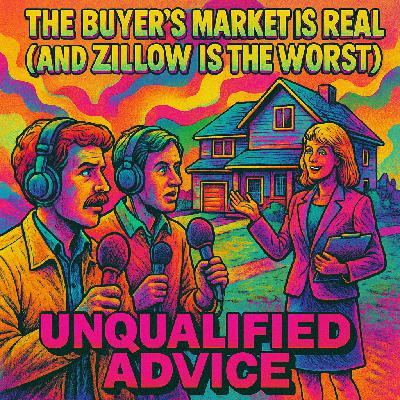
Hello show notes readers! This week, we're trying something new in our mission to bring you insights from the world of entrepenuership. We're bringing in an outside expert to exlpore an area of entrepeneurship that some of you may have thought about - real estate! This week, we're joined by Lindsay Howard, broker and entrepreneur, for a deep dive into the real world of real estate — starting a family brokerage, surviving the NAR commission shakeup, why Zillow is the villain nobody asked for, and how the 6% mortgage panic is mostly a memory issue. We also talk through the hidden challenges of working with builders, why every new agent needs a second income stream, and what's really driving the current buyer's market. Plus: the forgotten days of Rolodex MLS listings and 15% mortgage rates. Whether you are thinking about diving into real estate, or just wondering why every third house on your street has a "For Sale" sign, we hope this episode will help give you some new insights. Thanks for listening to Unqualified Advice. If you're looking for a Houston-area agent — or just want to learn more about Lindsay — visit HowardHomeRealty.com.
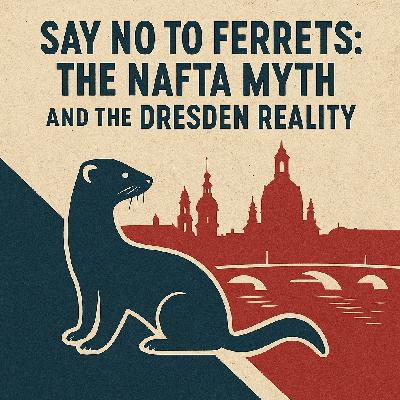
🧵 Episode Summary In this episode, Dan and Sean delve into the complexities of tariffs, the decline of U.S. manufacturing, and the philosophical underpinnings of leadership. They challenge conventional narratives around NAFTA, explore the historical impact of events like the bombing of Dresden, and discuss the strategic philosophies of Sun Tzu, Lao Tzu, and Donald Trump. The conversation also touches on the challenges of reshoring manufacturing, the intricacies of global supply chains, and the disparities faced by U.S. sellers on platforms like Amazon. 📚 References & Mentions Books: The Maniac (historical fiction on John von Neumann) A Splendid Exchange by William J. Bernstein The Tao Te Ching – Lao Tzu The Art of War – Sun Tzu The Art of the Deal – Donald Trump Substacks: Market Memo: Seeing the Stag from Citrini Research - Companies: Amazon Apple Craftsman Chevron Exxon Unusual Whales 🕰️ Chapter Breakdown 00:00 – Mustelid Mischief: A Ferret Allegory for Tariffs 01:18 – Who We Are: Sean and Dan Reintroduce Themselves 03:03 – Liberation Day and Tariff Mayhem 06:56 – Options, Whiplash, and Quiet Billionaires 09:21 – From Bretton Woods to Financialized Fragility 13:05 – The Myth of NAFTA and Manufacturing Decline 16:23 – America, Socks, and the Imaginary Labor Army 19:02 – Merchant Marines and Military Logistics 24:33 – Deep Supply Chains, Shallow Solutions 29:19 – Nukes and the Trigger Points of War 34:03 – The Compound Effects of Complexity 36:25 – The Tao of Strategy: Sun Tzu, Trump, and Lao Tzu 44:48 – Governance by Table: Three Philosophies Compared 48:20 – Amazon's Tilted Playing Field and Ecom Frustrations 52:48 – Bezos vs. Jassy: Vision, Risk, and Systems Thinking 59:40 – An Economic NATO? Supply Chain Strategy for the Future 1:02:07 – Why We Can't Make a Wrench 1:10:02 – Corporate Whiplash, Lead Times, and Stainless Steel 1:14:14 – The Stock Market Is Not the Economy 1:17:21 – Book Recs and Trading as Human Nature

In this episode, Dan and Sean navigate through numbness, nuance, and the uncomfortable edges of modern life. From tariffs and fentanyl policy to the messy mechanics of entrepreneurship, they discuss the complicated reality of staying engaged in a world that often feels overwhelming. Also on deck: what it really means to be an entrepreneur, thoughts on Prometheus Rising, unfair competition on Amazon, and a shoutout to 23andMe's vanishing business model. Oh, and if you see a quarter, pick it up. Topics include: – Volatility and numbness in 2025 – Dan's new startup idea (inspired by Skype's shutdown) – Surviving tariffs, uncertainty, and unfair Amazon practices – Fentanyl and the difference between drug policy and public safety – Thoughts on Prometheus Rising and reality tunnels – Survivorship bias, investing parlor games, and the danger of hindsight – Trying not to get drafted Books discussed: – Prometheus Rising by Robert Anton Wilson – Abduction: Human Encounters with Aliens by John E. Mack – The Comfort Crisis by Michael Easter – References to ideas by Jim O'Shaughnessy and Ben Hunt
Hello show notes readers, What is writing? What is art? Did I create this or did a robot and how would you be able to tell the difference? This week we coin the term "adverbious", hoping to prove we aren't robots and also to give you a tool to figure out who the robots are. We can't define it but we know it when we see it, if you know what I mean? Later, we delve into Dan's masterful schedule management as an entrepreneur. Dan explains what it took to get there, what it takes to maintain, and why it is one of the biggest benefits of entrepreneurship. Finally, we get a little woo and explore the work of Robert Anton Wilson. I share some early thoughts from Prometheus Rising and Dan provides some context from other authors. As always, thanks for listening! We welcome your feedback! Find Dan at www.twitter.com/danielhatke or Sean at www.twitter.com/slowvsm. 📚 Books Discussed Prometheus Rising by Robert Anton Wilson The Expectation Effect by David Robson Antifragile by Nassim Nicholas Taleb Fooled by Randomness by Nassim Nicholas Taleb The Black Swan by Nassim Nicholas Taleb
Hello show notes readers! This week, Sean and Dan look into the rhythms of the oil and gas world — how things speed up, slow down, and sometimes just stop. They talk about layoffs making headlines, how organizations expand and contract like they're breathing, and what it feels like to be on the inside when that happens. Sean explains why fewer rigs don't always mean less oil, and why the people most affected aren't always the ones you'd think. They get into how managers try (sometimes awkwardly) to protect and coach people, what it's like to get blindsided, and why being chased by a metaphorical predator might not be all bad — at least for keeping you sharp. The converstion takes a detour into parenting, classrooms, and whether pulling your kid out of tough situations helps or hurts in the long run. Plus: what homeschooling has in common with org charts, why messy code and stuck loops are part of building anything, and a few thoughts on agency, grace, and figuring out when to hold on or let go. Books Discussed Prometheus Rising – Robert Anton Wilson; explores consciousness, reality tunnels, and mindset shifts. Factfulness – Hans Rosling; emphasizes how the world is improving despite negative perceptions. The Fifth Risk – Michael Lewis; highlights essential but overlooked government jobs and inefficiencies. Lectures Referenced Neville Goddard: https://youtu.be/zXsZnDakDVA Chapters 00:00 - Weather and Cyclicality 01:07 - Oil Layoffs & Market Trends 02:55 - Why the U.S. Exports Oil 06:38 - Fracking & Efficiency Gains 07:34 - The Workplace "Breathes" 12:47 - The Role of Fear & Agency 16:52 - Education & Homeschooling Trends 28:38 - AI, Coding, and Debugging Frustrations 40:57 - AI Slack Bots for Work Productivity 50:43 - Prometheus Rising & Reality Tunnels 55:15 - Telepathy Tapes & The Tower of Babel 1:02:00 - Manifestation & The Power of Thought 1:06:02 - Government Jobs & Bureaucracy Debates 1:17:05 - Wrapping Up: Big Topics & Future Thoughts

Hello dear show notes reader, We're 25 episodes in! Woo hoo! (Imagine Leslie Knope. Now read the italicized bit again.) As the author of these show notes, I feel like 25 should be a significant number, but I also don't have any valid reason why. Nonetheless, I felt inspired to make these show notes really shine! What's good about this episode? While editing, I had two realizations: Dan is a better podcast host than I am. (I'll deal with that emotionally later.) This episode's format unintentionally gave me a meta-analysis moment—right here, in these show notes. Here's what I mean: we both read long quotes from books we've been chewing on. When one of us shares a quote, we know a follow-up question is coming—something like "What do you think?" Since we expect it, we listen more actively, playing with the idea in real time instead of waiting for our turn to speak. By the time the sharer is done, the listener is already mentally off to the races, turning the quote over, looking for angles. That made for some damn good back-and-forths. What's bad about this episode? The prep work. As you will hear, we listened to the auidobook version of The Sovereign Individual, by Jame Dale Davidson and William Rees-Mogg, and neither of us enjoyed it. But we hope you enjoy our discussion about this slog of a book. Books Discussed The Sovereign Individual by James Dale Davidson and William Rees-Mogg The Fourth Turning by William Strauss and Neil Howe Prometheus Rising by Robert Anton Wilson The Tao Te Ching by Laotzi Three-Body Problem by Liu Xicin Chapter Titles with Timestamps [00:00] "Should We Just Move to a Tax Haven?" [02:11] "Books That Should Have Been Shorter" [04:33] "Did They Predict the Future?" [06:48] "The Doomers Strike Again" [10:16] "Technology Changes Power, but Does It Decentralize It?" [17:59] "The Cyber Economy That Wasn't" [24:39] "Populism, Power, and the Small Guy's Revenge" [32:40] "Why Build a Few Big Things When You Can Build a Million Small Ones?" [41:52] "Has the Outrage Faded?" [45:31] "Should Governments Pay for Performance?" [54:11] "The Future of Democracy and Its Critics" [58:39] "Loneliness, Power, and the Failure of Community"
Hello dear show notes readers! In this episode of Unqualified Advice we discuss our recent experiences writing code for building websites and apps with Cursor. In short, we're having a blast working with these new tools and have a few tips for those just getting started. We've recommended it before, but it's worth repeating Nat Eliason's Course Build Your Own Life Coach is a great course for beginners wanting to get started. And here is a demo of GumLoop from Greg Isenberg's channel on YouTube that impressed us both. In the back-half of the episode, Dan stumbles across Nietzsche's Modern Vices and we try to determine our views on overwork, curiosity, and sympathy. Books & Influences Mentioned The Machiavellians, defenders of freedom by James Burnham: Recommended as a read on political freedom and preference falsification. Boom by Bern Hobart: Suggested for its fresh perspective on economic and innovation booms. Amusing Ourselves to Death by Neil Postman: Referenced when discussing modern media, communication, and information overload. Abduction by John E. Mack: Mentioned in the context of case studies on alien abductions, altered states of consciousness, and The Telepathy Tapes. Nietzsche's Ideas: The discussion on modern vices is heavily inspired by Nietzsche's critique of overwork, vague curiosity, and universal sympathy Chapters 00:00 Introduction and Current Events 02:56 Navigating Bureaucracy and Organizational Dynamics 05:37 Leadership Styles: Wartime vs. Peacetime CEOs 08:29 Embracing Change and Future Planning 11:17 Exploring New Skills and Content Creation 14:00 Technical Challenges and Innovations in Development 21:37 Exploring Competitors and AI Tools 26:31 Building in Public: Branding and Messaging 30:57 Modern Vices: Overwork, Curiosity, and Sympathy 39:58 Navigating Organizational Changes with Compassion 45:24 Exploring the Concept of Booms in Society 50:13 AI and Contextual Understanding
Hello dear show notes readers! Welcome to another episode of Unqualified Advice. We recorded this one on Inauguration Day, so a few viewpoints have already been proven wildly-off or dead-on. We hit a lot of topics this week, as we catch up on our recent podcast addiction (The Telepathy Tapes) and what *it all means, man!* If you're a fan of sci-fi or an opponent of generational bashing, this one is for you! Themes Discussed Generational Differences: Millennials vs. Zoomers, attitudes toward work, alcohol, risk-taking, and mental health. Weather & Climate Resilience: Houston's rare snow event, infrastructure issues, and the impact of extreme cold. Telepathy & Consciousness: Discussion of The Telepathy Tapes podcast, skepticism vs. belief, scientific and philosophical questions about consciousness, metaphysics, and the nature of reality. Science Fiction & AI: Blade Runner 2049, The Matrix, Star Trek, and their influence on how we think about AI, consciousness, and society. News & Media Consumption: The role of cable news, Twitter, and TikTok in shaping public perception, information density, and generational media habits. Entrepreneurial Opportunities Under Trump 2.0: Speculative investment ideas based on anticipated policy shifts. Personal Growth & Mentorship: Volunteering, teaching, and giving back to the community, including discussions about Minds Matter and mentorship programs. Books Discussed The Master and His Emissary by Iain McGilchrist Amusing Ourselves to Death by Neil Postman The Coddling of the American Mind by Jonathan Haidt Of Boys and Men by Richard Reeves The Martian and Project Hail Mary by Andy Weir Galápagos by Kurt Vonnegut Annihilation (Southern Reach Trilogy) by Jeff VanderMeer Companies Discussed Manplow: Endorsement of a large snow shovel for efficient driveway clearing. TikTok: Discussion about its potential ban and its impact on younger generations. Diageo: Mentioned in the context of alcohol consumption declines and industry challenges. Jensen Huang/NVIDIA: Brief reference in relation to AI and robotics. Trump Coin: Mentioned in the context of speculation and financial opportunities. Chapter Titles with Timestamps "Happy Inauguration Day" (00:00) – Opening banter and Houston's weather chaos. "The Manplow Revolution" (02:47) – Discussion about the oversized snow shovel. "The Telepathy Tapes: Mind-Blowing or Pseudoscience?" (04:06) – Deep dive into the podcast and consciousness theories. "Sci-Fi, AI, and The Matrix" (12:48) – Exploring how science fiction shapes views on AI and the future. "Millennials vs. Zoomers: Who's Got It Right?" (40:04) – A generational comparison on risk, alcohol, and mental health. "Mentorship, Minds Matter, and Giving Back" (1:09:19) – The role of volunteering and its personal impact. "Making Money Off the Grift Economy" (1:05:57) – Investment speculation under the new administration.

Hello my dear show notes readers, Welcome back for another episode advice. This one starts of personal for me as I explain how I've been getting into lifting weights. In the process, life reminded me of the old adage "experience is what you get, when you don't get what you want." In short, I try to be as honest with myself and you as I can about hitting the bit 4-0 and making some important life decisions. Later, we devolve into our usual banter with a heavy dose of AI talk. Dan and I are both having a blast with Nat Eliason's Course Build Your Own Life Coach. If our convo piqued your interest, you should check it out. Later, Dan decides to match my energy - if you don't know what I mean, check out the Adam Grant and Charles Duhigg books below - and gets personal on recent challenges facing one of his ecomm businesses. Y'all, it's simultaneously hard and exciting out there and we get REAL this week. Cheers, Sean Books Discussed: The Sovereign Individual by James Dale Davidson and William Rees-Mogg Works of Carl Jung Companies Discussed: Bloomberg Amazon Google Apple Walmart Peloton Academy Sports + Outdoors Chapters 00:00 Embracing the Big 4-0 03:53 Winding Down Fig: A Tough Decision 09:55 Lessons Learned from Business Ventures 12:48 Setting New Goals and Exploring AI 25:36 The Evolution of AI and Data Privacy 33:31 Personal Updates and AI Coding Adventures 40:28 Challenges of E-commerce and Tariff Enforcement 48:13 Navigating Tariff Codes and Compliance 54:08 Exploring Global Living Options 59:18 Insights from Carl Jung 01:04:16 The Power of Consciousness and Fate 01:08:11 Reflections on Planning and Control
Hello, Show Notes Readers We find ourselves neck-deep in a discussion about stated versus revealed preferences for the half of the show, as I take us on a trip down memory lane after doing my Christmas shopping. Nostalgia alert! Dan explains his theory on capital flight and we come to the realization that 80s dystopic downtowns were symptoms and not causes of previous preference shifts. After that, we look into the future as Dan tells us about his experience learning to write code with AI tools. The discussion gets a bit technical, but if you're thinking about how to apply AI in your day-to-day, be sure to listen in for Dan's tips on where to get started. Thanks for tuning in and we hope you enjoy! Cheers, Sean Highlights include: Why the retail landscape continues to evolve and what that means for the future of malls and city centers. A discussion on downtown revitalization and population density: can we break the boom-and-bust cycle of urban centers? Dan's hands-on experience with AI-powered coding tools and how they're changing the game for developers and non-developers alike. Practical tips for getting started with AI tools like Cursor, Bolt, and more. Companies Discussed Sharper Image Amazon Brookstone SLB (formerly Schlumberger) Microsoft Google Tesla Simon Property Group Chapters 00:00 Holiday Reflections and the Evolution of Gift Shopping 06:44 The Changing Landscape of Malls 10:39 Capital Flight and Urban Revitalization 20:10 The Future of City Centers and Density 26:49 Economic Dynamics in Urban Development 31:48 Shifts in Urban Living Preferences 34:41 The Future of Software Development with AI 41:31 Building Software Solutions for Industry Challenges 47:07 Strategic Opportunities in the Oil and Gas Sector 51:46 Identifying Use Cases in Industries 54:24 Automation and Error Reduction in Business Processes 57:59 The Future of AI and Automation 01:00:37 Comparing AI Tools: ChatGPT vs. Claude 01:04:12 Exploring New Ideas and Recommendations

Hello my dear show notes readers! I've missed you so. We took a little longer than expected break this time, because someone recently turned 40 and hit it a little too hard in the fine city of New Orleans. Have you ever been? If not, you really must go. One night is not enough. Two nights are divine. Three nights are for 30-somethings. But back to the crux of the matter! This week, we take a look back at some dumb stuff we said about 2024 last January, have a hearty chuckle, and proceed to say some dumb stuff about the coming year. We had a blast and hope you enjoy listening in as we stare down at our big shiny crystal balls. Hugs and kisses, Old Man Sean Chapters 00:00 Reflections on Predictions for 2024 09:28 Lessons Learned from Past Predictions 12:19 Bold Predictions for 2025 -15:22 The Future of Advertising and Market Behavior -17:56 Labor Market Predictions and Economic Corrections -21:03 Jay Powell Buys Bitcoin? -28:29 Anticipating Scandals in Private Equity -31:50 The DEI Pendulum Continues to Change Direction -34:06 Labor Strikes: Frequency vs. Success -37:28 The Future of SEO and AI Integration -41:05 Revamping Old Apps with AI Technology 48:27 Personal Growth and Life Reflections

Comments

Download from Google Play

Download from App Store
 United States