



 Claim Ownership
Vamos a Jeju!
Subscribed: 0Played: 0
Subscribe

© 2026 The Vamos a Jeju Podcast!
Description
Vamos a Jeju is your hub to help DIY travelers discover the rich culture, serene peace, and natural beauty of Korea's Jeju Island.
It's all the magnificent vistas that Hawaii has to offer, but set in an entirely different and exciting culture, all at a fraction of the price.
Come join us and unlock:
- the intrepid sea women who dive for seafood sans breathing aids;
- the ancient stories still spun by the island's shamanistic practices;
- the majestic landscape of fire and stone carved by magma;
- the breathtaking majesty of the island's hidden places.
Welcome to our island home!
6 Episodes
Reverse
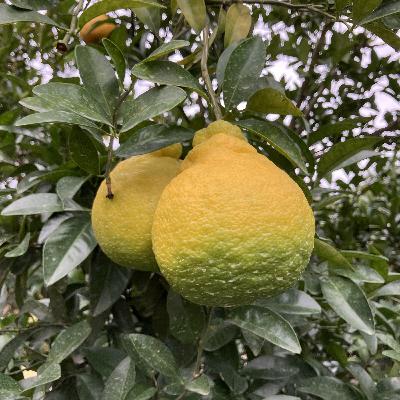
SummaryTangerines are so iconic to Jeju that they made it into the podcast's logo—so this episode is overdue. Ed and Soraya cover the history (tangerines were once so precious that Joseon kings gave them as rewards to scholars), the scale (over 50 varieties grown on the island), and the best way to experience them: tangerine picking at a U-pick farm. For about 5,000 won (~$3-4 USD), you get one hour of unlimited eating plus a bag to take home. The hosts explain when to go (November is peak season), how to find farms (search 감귤체험 on Naver or Kakao Map), and why farm-fresh tangerines taste noticeably better than supermarket ones. They also share tips on the sweetest varieties, where to buy tangerines (farms > roadside stands > markets > supermarkets), and what to do with any extras—including shipping boxes home via Taegbae delivery. Takeaways• Jeju has over 50 varieties of tangerines; the Hallabong (with the distinctive bump on top) is the most famous• Best season: Late October through February/March, with November being the peak time to see orange-laden trees• U-pick farms cost about 5,000 won (~$3-4 USD) for one hour of unlimited eating plus ~1kg to take home• To find farms: Search 감귤체험 (gamgyul cheheom) on Naver Map or Kakao Map; no booking usually required• Price/quality ranking: Farm (best, cheapest) > Roadside stands > Markets (tourist prices) > Supermarkets• For the sweetest tangerines, look for Tyvek (타이벡 감귤)—grown with reduced water to concentrate sugars• "University tree" (대학나무): Tangerine trees were once so valuable that one tree could pay for a child's university tuition• Pro tip: Do tangerine picking early in your trip so you have time to enjoy what you harvest• Tangerine Museum near Seogwipo is a decent rainy-day activity but not worth a special trip Handy Korean with Sora Ssaem (쌤)하나 둘 셋 (hana dul set) — "One, two, three" (Korean numbers)• Korean has two number systems: native Korean (하나, 둘, 셋) and Sino-Korean (일, 이, 삼)• Use Korean numbers for counting things: 하나 (one), 둘 (two), 셋 (three)• Use Sino-Korean numbers for larger amounts, prices, phone numbers Tangerine vocabulary:• 귤 (gyul) = tangerine• 귤 하나 주세요 (gyul hana juseyo) = "One tangerine, please" (but they'll probably give it to you for free!)• 감귤체험 (gamgyul cheheom) = tangerine picking experience (search term for maps) Next Steps1. Sign up for the 14-part email series at vamosajeju.com/start2. Follow vamosajeju on Instagram, TikTok, and Facebook3. Share the episode with friends to help the podcast grow4. Visit vamosajeju.com for articles, videos, and resources5. Sign up for dispatches at vamosajeju.com/update
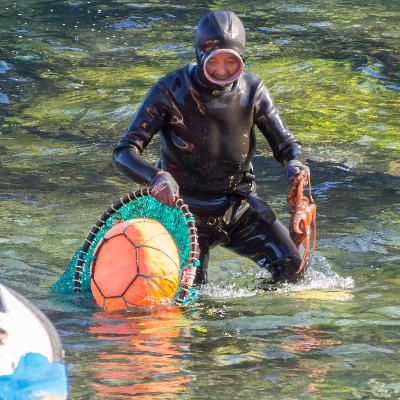
SummaryWant to understand one of Jeju's most iconic cultural traditions before it fades? This episode dives deep into the world of the haenyeo (해녀)—the women divers who harvest seafood without oxygen tanks, sometimes to depths of 20 meters. Ed and Soraya discuss the Haenyeo Museum in Hado, why it's located at the site of anti-Japanese protests, and what you'll learn inside: the evolution of diving outfits (they once dove naked before Confucian officials made them cover up), the bulteok gathering shelters, and the democratic cooperative system that still supports these women. You'll also hear about the harsh realities of haenyeo life, the three skill levels, why modern women aren't signing up, and Soraya's plans to attend Haenyeo School herself. With only about 3,000 haenyeo left—90% over age 60—this may be the last generation. Takeaways• Haenyeo (해녀) means "sea woman"—they dive without oxygen tanks, harvesting seafood like abalone and conch• The Haenyeo Museum in Hado is built where haenyeo gathered to protest Japanese occupation; it's one of the best places to learn about this culture• Three skill levels exist: beginners work shallow waters; the most advanced (sanggun) dive to 20 meters for up to 2 minutes—deeper than many scuba divers go• The bulteok (불턱) is the stone shelter where haenyeo gather before/after diving, process their catch, nurse babies, and learn from senior divers• Haenyeo cooperatives operate democratically—members vote on decisions and support each other financially when someone is sick or unable to work• Jeju saying: "It's better to be born a cow than a woman in Jeju"—haenyeo did housework, childcare, AND diving while (stereotypically) men drank and gambled• Only ~3,000 haenyeo remain today (down from 15,000-20,000 in the 1960s-70s); 90% are over 60 years old• Two government-run Haenyeo Schools exist; Soraya plans to attend the beginner course this year• Annual shamanic rituals honor the Dragon King (for safe diving) and the Wind Goddess (for seafood reproduction) Handy Korean with Sora Ssaem (쌤)Getting attention: 저기요 (jeogiyo) — "Excuse me"• Use to get a server's attention or call out to someone• 저기요, 이거 얼마예요? — "Excuse me, how much is this?"• 저기요, 티켓 얼마예요? — "Excuse me, how much is a ticket?" Passing through: 잠시만요 / 잠깐만요 (jamsimanyo / jamkkanmanyo) — "Just a moment"• Use when you need to pass someone on a crowded bus or train• Literally means "just a moment"—implies "let me pass, please"• Different from 저기요: use 저기요 to get attention, 잠시만요 to move past someone Next Steps1. Sign up for the 14-part email series at vamosajeju.com/start2. Follow Vamos a Jeju on Instagram, TikTok, and Facebook3. Visit vamosajeju.com for articles, videos, and resourcesSign up for dispatches at vamosajeju.com/update
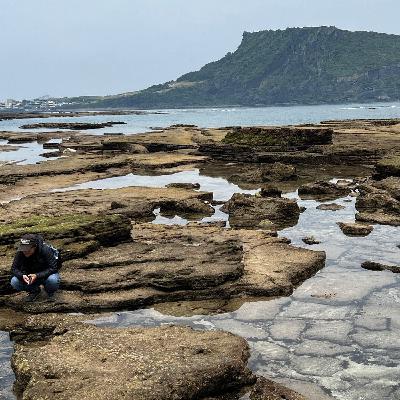
Seongsan Ilchulbong is Jeju's second most iconic landmark after Hallasan—and for many visitors, the most accessible and memorable natural experience on the island. This episode gives you everything you need to plan your visit: what the peak actually is (a 5,000-year-old hydrovolcano with a massive crater), how long the climb takes (about 30 minutes up, 15-20 down), how to avoid crowds (early morning, late afternoon, or weekdays outside of school field trip season), and what you can do for free versus the 5,000 won paid entrance. Ed and Soraya also discuss the daily haenyeo diving demonstration at 2pm—including Ed's candid take on its authenticity—and explain why the peak earned its place among the New Seven Wonders of Nature. Takeaways• Seongsan Ilchulbong (성산일출봉) means "Castle Mountain Sunrise Peak"—named for its castle-like shape and famous sunrise views• The climb takes about 30 minutes up, 15-20 minutes down; it's paved with stairs and railings, manageable for most fitness levels• Entrance fee: 5,000 won (~$3 USD) to climb to the peak; the coastal trail and haenyeo show are free• Avoid crowds by going early morning (for sunrise), late afternoon, or on weekdays—especially outside May and October when school field trips flood the site• The free haenyeo demonstration happens daily at 2pm near the beach; you can also eat fresh seafood at the haenyeo restaurant there• Jeju Island (including Seongsan Ilchulbong) is one of the New Seven Wonders of Nature, alongside places like the Amazon, Ha Long Bay, and Iguazu Falls• At the top: a green crater (no water—volcanic rock is too porous), panoramic views of Hallasan, dozens of oreums, and Udo island; no shelter, so bring sun protection Handy Korean with Sora Ssaem (쌤)얼마예요 (eolmayeyo) — "How much is it?"• Structure: [thing] + 얼마예요?• 아메리카노 얼마예요? (amerikano eolmayeyo?) — "How much is an Americano?"• 오렌지 얼마예요? (orenji eolmayeyo?) — "How much is an orange?"• 티켓 얼마예요? (ticket eolmayeyo?) — "How much is a ticket?" 이거 얼마예요? (igeo eolmayeyo?) — "How much is this?"• 이거 (igeo) means "this thing"—use it when you don't know the Korean word for something• Pro tip: Have a calculator app ready on your phone; shopkeepers will punch in the price if you can't understand the number Next Steps1. Sign up for the 14-part email series at vamosajeju.com/start2. Follow Vamos a Jeju on Instagram, TikTok, and Facebook3. Share the episode with friends to help the podcast grow4. Visit vamosajeju.com for articles, videos, and resources5. Sign up for dispatches at vamosajeju.com/update
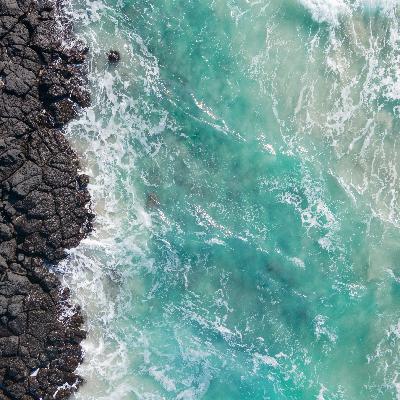
SummaryPlanning a trip to Jeju but not sure what makes it different from mainland Korea? This episode gives you the essential context you need before you go. You'll learn why Jeju has its own dialect, culture, and identity—rooted in its history as the independent Tamna Kingdom before being absorbed into Korea. Ed and Soraya explain how Hallasan, the tallest mountain in South Korea, shapes everything from road networks to weather patterns (pro tip: if it's raining on one side of the island, drive to the other). They also cover the best seasons to visit, why cherry blossom chasers should start in Jeju and head north, and what visitors remember most: the calming natural beauty, the resilience of the haenyeo divers, and yes, the tangerines. Takeaways• Jeju was once an independent kingdom called Tamna (탐라)—that's why its dialect, culture, and traditions differ significantly from mainland Korea• Hallasan (1,947m) dominates the island: it affects road routes, creates different weather on the north vs. south sides, and holds deep cultural significance• Best seasons: Spring (late March–May) for cherry blossoms and mild weather; Autumn (late September–November) for fall foliage; Winter (November–February) for tangerine season• Cherry blossoms bloom in Jeju about a week before Seoul—if you're chasing blossoms, start south and move north• The island is about the size of Maui (73km east-west, 31km north-south) with 368 small volcanic cones scattered across it• What visitors remember most: the healing quality of Jeju's natural scenery, the haenyeo's resilience, and the tangerines Handy Korean with Sora Ssaem (쌤)주세요 (juseyo) — "Please give me..."• The most useful phrase for travelers in Korea• Structure: [thing you want] + 주세요• 아메리카노 주세요 (amerikano juseyo) — "Americano, please"• 라떼 주세요 (latte juseyo) — "Latte, please"• 아이스크림 주세요 (ice cream juseyo) — "Ice cream, please"• Note: 주 (ju) means "give," so this literally means "please give me" Next Steps1. Sign up for the 14-part email series at vamosajeju.com/start2. Follow Vamos a Jeju on Instagram, TikTok, and Facebook3. Share the episode with friends to help the podcast grow4. Visit vamosajeju.com for articles, videos, and resources5. Sign up for dispatches at vamosajeju.com/update
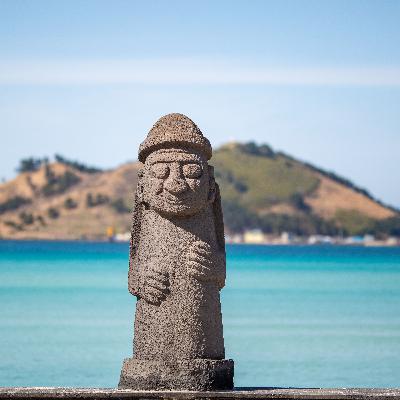
New to Jeju or thinking about visiting? This episode introduces your hosts and what the podcast will help you do: travel Jeju independently, beyond the typical tourist itineraries. You'll meet Ed, who completed the entire 437-kilometer Jeju Olleh Trail, and Soraya, a professional tour guide based in Jeju with a master's degree in Korean language teaching. They share how they connected over a shared love of languages during a palace tour in Seoul, why Soraya left corporate Korea for the tourism industry, and what motivated them to create resources for DIY travelers. You'll also get a preview of upcoming topics—the Olleh Trail, haenyeo sea women, the April 3rd Massacre, and shamanism—plus a quick Korean lesson to get you started. Takeaways• The podcast is designed for independent travelers who want to experience Jeju beyond fixed tour itineraries• Ed's completion of all 437 km of the Olleh Trail means you'll get firsthand, trail-tested advice (even most Jeju locals haven't finished it)• Soraya's background—corporate Korea refugee, multilingual tour guide, Korean language instructor—gives her a unique perspective on what foreign visitors actually need• Jeju shamanism is still actively practiced today, tied to haenyeo culture and the risks of sea work; you can witness annual rituals like the Yeongdeung Halmang ceremony• The 14-part email series at vamosajeju.com/start compiles everything the hosts know about DIY Jeju travel Handy Korean with Sora Ssaem (쌤)Hello: 안녕하세요 (annyeonghaseyo)• Memory trick: "onion" + "Han Solo" → say it fast and mumble• Koreans speak quickly, so don't over-enunciate Goodbye: Two versions• 안녕히 가세요 (annyeonghi gaseyo) — "go well" (said to someone leaving)• 안녕히 계세요 (annyeonghi gyeseyo) — "stay well" (said when you're the one leaving)• Memory trick: If you can't remember which is which, just mumble "ㄱ세요" and let context do the work Casual: 안녕 (annyeong)• Use only with friends or people you know well• Foreigners can get away with it (Koreans will find it endearing), but stick to the formal versions in shops and restaurants Next Steps:1. Sign up for the 14-part email series at vamosajeju.com/start2. Follow Vamos a Jeju on Instagram, TikTok, and Facebook3. Share the episode with friends to help the podcast grow4. Visit vamosajeju.com for articles, videos, and resources5. Sign up for dispatches at vamosajeju.com/update

안녕하세요!We're getting ready to launch, but in the meantime, welcome to Vamos a Jeju, your hub to unlocking the rich culture, serene peace, and natural beauty of Korea's Jeju Island.It's all the magnificent vistas that Hawaii has to offer, but set in an entirely different and exciting culture, all at a fraction of the price.Come join us and discover:the intrepid sea women who dive for seafood sans breathing aids;the ancient stories still spun by the island's shamanistic practices;the majestic landscape of fire and stone carved by magma;the breathtaking majesty of the island's hidden places.Welcome to our island home!
Comments

Download from Google Play

Download from App Store
 United States