


 Claim Ownership
Network for Financial Crime Prevention
Subscribed: 0Played: 0
Subscribe

© Network for Financial Crime Prevention
Description
A community for risk/compliance and anti financial crime officers to learn and grow together. You will find content with various topics to help fulfill this ambition.
34 Episodes
Reverse
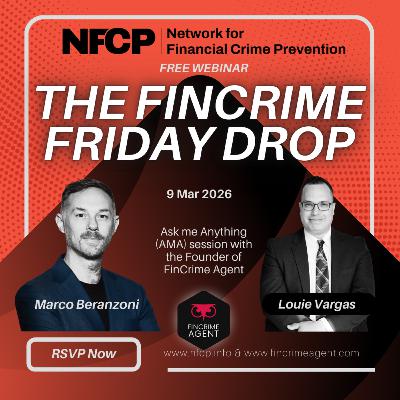
Marco Beranzoni (FinCrime Agent) and Louie Vargas (NFCP)opened the series the right way — no slides, no scripts, just an honestconversation about how two FinCrime professionals built their careers from theground up.A few things that came up worth sharing:→ AI is coming for entry-level roles. Marco made itclear: if you're thinking about breaking into financial crime prevention, thewindow is now. In 3–5 years, those first-line, high-volume roles will look verydifferent.→ Certifications alone won't get you there. Louie putit plainly — the cert without the practical experience is just a lamp without agenie. Both matter.
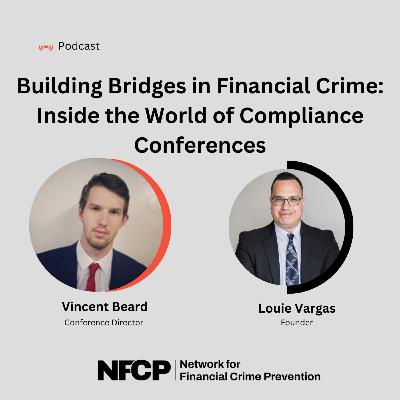
In today’s episode, we dive deep into the evolving world of compliance conferences with Vincent Beard from Informa Connect. He shares his journey from studying English to becoming a conference director, emphasizing the importance of staying close to industry developments.Vincent explains that the key to impactful conferences lies in balancing technical depth with accessibility. It’s crucial to cater to both seasoned professionals and those new to the field. This means starting with high-level discussions before delving into the details.Communication is vital in this fast-paced environment. As issues evolve, so should our focus. By constantly engaging with industry experts, we can ensure that our events provide real value and insight.
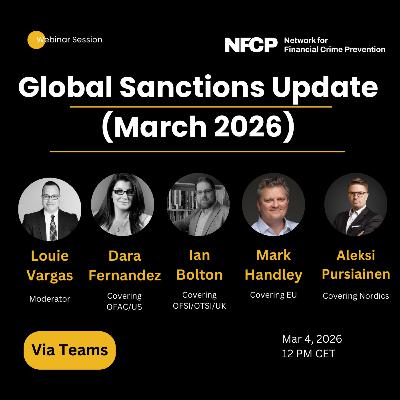
Our first sanctions update of the year that will catch us up on all things sanctions from the beginning of 2026 until 4 March.Joining us on this edition:✅ Ian Bolton of Sanctions SOS broke down UK/OFSI updates✅ Mark Handley of Duane Morris LLP covered EU sanctions + global enforcement actions ✅ Aleksi Pursiainen of Solid Plan Consulting brought the Nordic perspective ✅ Dara Fernandez of Cina Fernandez revealed US/OFAC developments
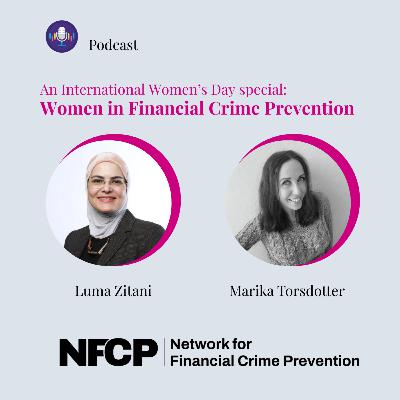
In this episode, host Marika Torsdotter sits down with Luma Zitani, a financial crime practitioner with 20 years of experience across small banks, large banks, and consultancy. Originally from Syria, Luma brings a perspective to this work that goes far beyond regulation — for her, financial crime prevention is deeply personal, and the stakes have never been abstract.Luma opens up about what keeps her in the field two decades on: the intellectual challenge, the geopolitical pulse of it all, and the genuine conviction that her day job makes the world a little more just. She unpacks why economists make surprisingly great financial crime specialists — because understanding macro cause-and-effect and thinking like a criminal are more connected than most people realize.The episode's standout moment is Luma's account of a quiet, unsung win: how she and her team war-gamed a major sanctions scenario before it happened, modeled every resource and volume implication, and when the sanctions finally hit, they were operational and screening within a day — a full 10 days ahead of every other bank. Nobody outside the room ever knew.Luma also sounds a clear warning about a worrying trend: after years of progress on financial inclusion, the pendulum is swinging back. Debanking whole countries and communities is becoming fashionable again — and she's fighting hard to make sure it doesn't go all the way.Topics covered:Why financial crime prevention needs to feel vocational, not just like a jobThe personal stakes: growing up in Syria and why fighting financial crime mattersWhat economists bring to financial crime that law enforcement backgrounds don'tWhat women uniquely bring to the field — reading people, minimizing harm, the pastoral dimensionThe aging technology problem: legacy systems vs. rapidly evolving criminal toolsWhy the future belongs to "super geeks" who embrace new technologyThe financial exclusion pendulum: from debanking charities to a worrying swing backThe untold war room story: being 10 days ahead of every other bank when major sanctions hitCatastrophizing as a compliance superpower — why stress-testing scenarios saves lives
In this episode, host Marika Torsdotter reconnects with Hera U. Smith, a financial crime and third-party risk specialist at Moody's, with over a decade of experience spanning sanctions, export controls, and AML — across both the United States and Europe.Hera's path into the field is one few would have predicted: she started in litigation law at a firm in Los Angeles, passed the bar, and stumbled into banking compliance just as Russia's invasion of Crimea was triggering a wave of new sanctions that needed someone to interpret, apply, and operationalize them fast. That turning point shaped everything.The conversation covers a lot of ground — from a fascinating Federal Reserve study showing AI-powered LLMs can cut false positives in sanctions screening by over 90%, to the surprisingly old-school ways sanctions evaders are still getting away with it (think: painting over ship IMO numbers). Hera also shares an unexpected transferable skill she never saw coming: tutoring kids.And in a candid moment, Hera speaks to something the series is all about — the gender shift that happens as women climb the compliance ladder. Equal or majority at entry level, but increasingly outnumbered at the top. It's a dynamic she's seen firsthand, and it's exactly why conversations like this one matter.Topics covered:What the compliance industry gets wrong — and why reaching out to tech companies is the fixHow AI and LLMs are transforming sanctions screening (with real data from a Federal Reserve study)Why compliance professionals should stop being afraid to experiment with technologyHera's unexpected career path: from LA litigation law to sanctions specialist in EuropeThe transferable skill nobody talks about: teaching kids how to simplify complex materialMentorship and why loyalty shouldn't hold you back from growingSanctions evasion tactics: the old-school methods still in use todayThe gender gap in senior compliance roles — and why it needs to change
In this episode, host Marika Torsdotter sits down with Aneta Klosek, founder of Aithea — a startup connecting compliance professionals with the right tools and preparing them for the technology of tomorrow. With over 16 years of experience in financial crime prevention, Aneta brings a rare combination of deep regulatory knowledge, sales intuition, and a genuine passion for making compliance less "dry and dusty."Aneta's journey started in traditional banking before moving to London to join a sanctions screening startup — and from there, she was hooked. She shares what it feels like to work in a field where you're quite literally fighting criminals, why storytelling is one of the most underrated compliance skills, and what two stubborn problems have still not been solved after 15+ years: data quality and the knowledge gap.But the conversation's standout moment? Aneta's eye-opening account of fully AI-generated investment firms — fake companies, fake employees, fake LinkedIn profiles — targeting vulnerable startup founders. A chilling reminder that while the compliance world debates AI strategy, criminals are already deploying it.Whether you're in fintech, compliance, or just AI-curious, this episode will leave you thinking differently about trust, technology, and why "Tinder for the tech space" might just be the best elevator pitch in compliance.Topics covered:How Aneta fell into financial crime prevention — and never looked backWhy FCP professionals are "superheroes" with real-world impactThe power of network-building and personal branding for women entering the fieldWhat women uniquely bring to risk and compliance: reading nuance and unspoken tensionThe two biggest unsolved problems in compliance: data quality and the knowledge gapHow criminals are using AI interdisciplinarily — and outpacing preventionAI-generated fake companies targeting startup founders: a real and growing threatStorytelling as a compliance superpowerHow to explain your job at a dinner party (hint: think Tinder for tech)
In this episode, host Marika Torsdotter sits down with Amber Vitale, an attorney, compliance executive, and senior advisor with over two decades of experience in sanctions and anti-money laundering (AML). Amber's career began at the U.S. Department of the Treasury's Office of Foreign Assets Control (OFAC), where she specialized in civil penalties and enforcement — a foundation that has shaped everything she's done since.Amber shares how she "fell into" financial crime prevention, why the field has held her attention for 20+ years, and what makes it one of the most intellectually engaging careers you can have. From geopolitics and Russian oligarch asset tracking to the explosion of digital assets and fraud, Amber explains how the compliance landscape has evolved — and why it shows no signs of slowing down.She also gets candid about the two things she wishes the industry would fix: targeted training and cross-functional collaboration. Too often, AML, sanctions, and fraud operate in silos — and that's a costly mistake.Whether you're considering entering the FCP field, looking to grow within it, or just trying to explain your job at a dinner party, this conversation is packed with real-world wisdom from someone who's seen it all.Topics covered:How Amber's career started at OFAC and evolved over 20+ yearsWhat makes financial crime prevention such a compelling (and secure) careerThe rise of export controls and how it's merging with the sanctions worldWhy targeted training — not generic compliance training — is a game-changerThe case for breaking down silos between AML, sanctions, and fraud teamsManaging stress and work-life balance in a high-stakes fieldAdvice for women looking to enter the FCP spaceHow to explain sanctions compliance at a dinner party
In this episode, host Marika Torsdotter sits down with Alexandra Malakan, Governance & Control Specialist at Handelsbanken, for an insightful conversation on the evolving world of financial crime prevention (FCP).Alexandra shares her perspective on how AI is reshaping the compliance landscape — not as a replacement for human expertise, but as a powerful tool to streamline time-consuming tasks and enable more reactive, risk-based approaches. She also tackles one of the industry's most overlooked issues: the critical role of the board and the importance of bringing every employee along on the compliance journey.Beyond the regulatory landscape, Alexandra opens up about the mentors who shaped her career, why asking "stupid questions" is actually a superpower, and why street smarts can be just as valuable as academic credentials in financial crime work.Whether you're new to the FCP field or a seasoned professional, this episode is packed with actionable advice — for individuals who want to grow, and for companies that want to retain great talent by letting their people shine.Topics covered:AI in compliance: opportunity vs. hypeWhy financial crime prevention is everyone's responsibility, not just compliance'sThe board's underestimated role in FCPMentorship: a two-way streetAdvice for women entering financial crime preventionHow companies can retain talent by fostering genuine interest areas
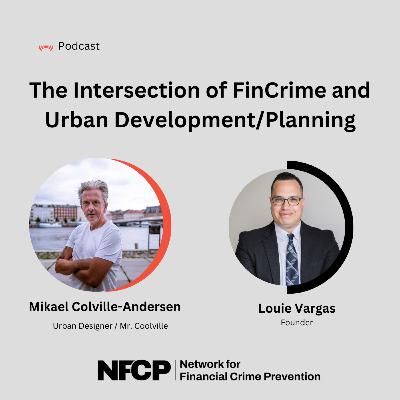
In this episode of the Network for Financial Crime Prevention podcast, host Louie Vargas dives into a surprising connection between urban design and financial crime. Joined by renowned urban design expert Mikael Colville-Andersen, they explore how the shaping of our cities can mask money laundering, corruption, and economic injustices.
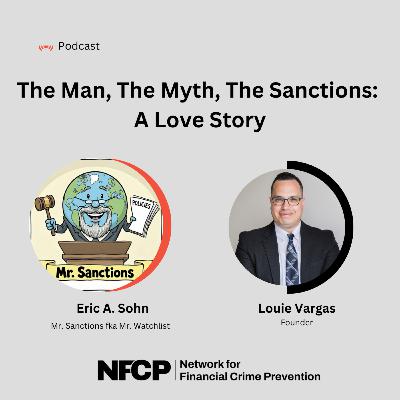
We had a fascinating conversation with Eric Sohn (aka Mr. Sanctions) on the NFCP podcast about the evolving world of sanctions compliance.Here's what struck me most: 99% of sanctions complexity is irrelevant to day-to-day operations. Yet enforcement actions keep moving the goalposts—what seemed like "goldplating" yesterday becomes table stakes tomorrow.Key takeaways:• The OFAC framework isn't just guidance—it's your best defense against penalties• Documentation matters more than you think (your future self will thank you)• AI isn't a silver bullet, but it can help—IF you have guardrails and explainability• Traditional tools like whitelisting still deliver massive value (approximately 98% reduction with just 70 entries!)
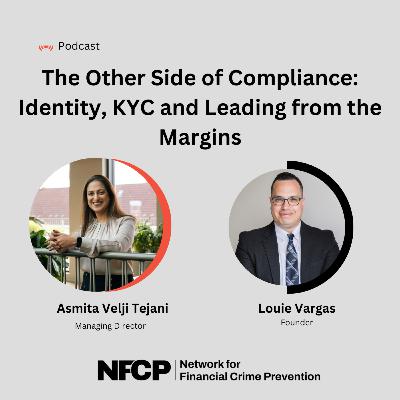
We're thrilled to share our latest conversation with Asmita Velji Tejani, Managing Director at Visma Creditro, who brings a powerful perspective on leadership, belonging, and the evolution of financial crime prevention.Key Insights from this Episode:The Evolution of KYC: Asmita highlights thefundamental shift from one-time identity checks to continuous monitoring, a transformation many outside our industry don't fully grasp. The complexity ofproactive control demands robust system partners and a move away from manual processes.AI as Decision Support, Not Replacement: Acritical framework emerges: AI should recommend, but humans must own the outcomes. Where consequences are significant: high-risk cases, exceptions, finalapprovals - human judgment remains irreplaceable. The goal? Empower decision-making, not replace decision-makers.The Compliance Paradox: New regulationsarrive at breakneck speed, often without adequate guidelines. Organizations are expected to do more with less knowledge, risking both mistakes and burnout. YetAsmita remains optimistic—the right talent and technology can make compliance scalable, user-friendly, and a building block of good business rather than aburden.Leadership Through "The Other" Lens: Asa woman of color navigating professional environments in both the Netherlands and Denmark, Asmita shares how being seen as "the other" shaped her leadership philosophy. Her strategy? "Credibility and clarity"—being prepared, consistent, and leading with empathy and decisiveness. Her advice: "You don't need to be hard to be taken seriously. You need to be clear,direct, and grounded."Education as Core Responsibility: It's not justabout providing tools—it's about helping clients understand the "why" behind compliance actions. Proactive communication about regulatory changes,expert workshops, and participation in governmental conversations ensure teams feel empowered rather than overwhelmed.Looking Ahead: The vision for the next five years? Smarter, more continuous, less manual, yet still fundamentally human compliance. Toolsthat protect access to financial services rather than restrict it unfairly.This conversation reminds us that financial crime prevention isn't just about technology and regulation—it's about people, culture, and building systems that serve societywhile respecting human dignity.
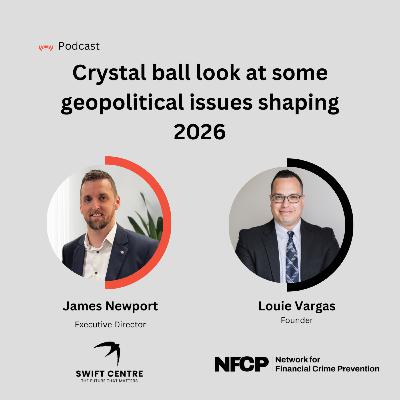
Just wrapped an eye-opening conversation with James Newport, Executive Director of the Swift Centre, on what's shaping up to be one of the most turbulent years in recent history.We're seeing a complete reshaping of the global order—from unprecedented interventions in Latin America to Iran teetering on the edge of collapse. The rules-based international system? It's being rewritten in real-time.Here's what we unpacked:→ Why fentanyl's WMD designation changes everything for financial institutions and Latin American policy→ How AI is becoming the next major geopolitical battleground—and why Europe needs to act fast→ The real story behind Greenland tensions and what it means for EU-US relations→ Iran's economic freefall and the capital flight that's accelerating regime instability→ Why countries dependent on outsourced work face an automation reckoningThe compliance landscape is shifting under our feet. If you're in financial crime prevention, risk management, or trying to make sense of where global politics meets economics, this conversation will give you the clarity you need.
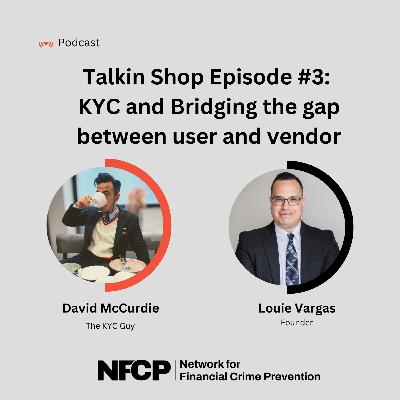
The Evolution of KYC with David McCurdieWe had an amazing conversation with David McCurdie (aka The KYC Guy)What we unpacked:📊 KYC isn't just compliance, it's about truly understanding your customers and managing relationships, not checking boxes⚡ The transformation: From 'contract administration' to today's continuous due diligence approach🤖 Tech is the game-changer: David's goal? "Make myself redundant" through automation and smarter workflows🤝 Relationships vs. Transactions: His approach to networking is brilliant—treating connections like building a community, not collecting business cards💡 The collector mindset: David shared how he "collects people like Pokemon cards" (his words!), creating a collaborative ecosystem/network where knowledge sharing and mentorship thriveDavid's passion for innovation and his focus on putting people together is exactly what our industry needs. This conversation reminded me why I love bringing experts together to share their insights.
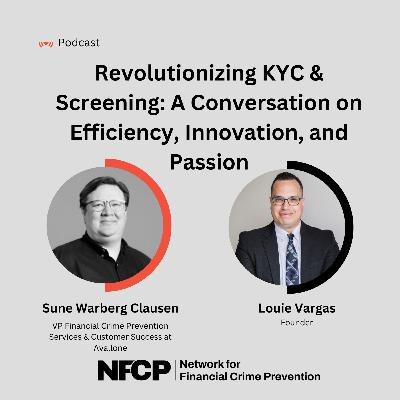
I'm thrilled to have with us today Sune Warberg Clausen, VP Financial Crime Prevention Services & Customer Success at Avallone, a company that's transforming how financial institutions approach Know Your Customer processes and screening. With deep expertise in financial crime prevention and a vision for more efficient, intelligent compliance systems, Sune is at the forefront of revolutionizing an industry that's critical to the integrity of our global financial system.In today's conversation, we'll dive into the challenges facing traditional KYC and screening methods, explore how technology is reshaping compliance workflows, and discuss what the future holds for financial crime prevention. Whether you're a compliance professional, a fintech innovator, or simply curious about how the financial world protects itself from illicit activity, this episode offers invaluable insights
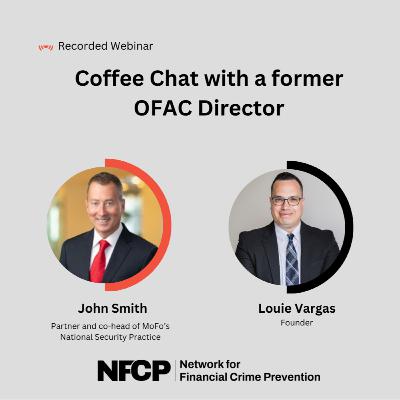
Dive into the inspiring journey of John Smith, Partner at Morrison & Foerster (MoFo), in our inaugural NFCP Coffee Chat!Join us as we explore John's path into this impactful line of work. He also shares invaluable pearls of wisdom gleaned from his experience as a U.S. Civil Servant and now in private practice. This insightful video offers a unique opportunity to learn from a leader in the field on a personal level.
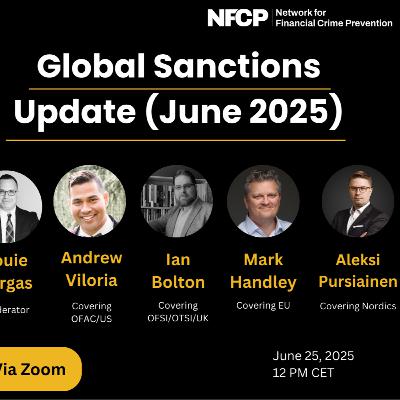
June 2025 monthly updates on sanctions compliance around the world.
NFCP had a follow up conversation with Dimitris Ampatzidis from kpler as he responds to some questions received after our previous recorded session.
A presentation covering high level sanctions compliance, the shadow fleet, and their application on the energy industry.
In today's digital age, the intersection of financial crime compliance and cybersecurity is more critical than ever. As cyber threats continue to evolve, it's essential to stay ahead with the latest strategies and best practices to protect your institution. You will hear from NFCP collaborator and founder of Aithea GmbH - Aneta Klosek, head of AI and Growth of Bitline: Cybersecurity, Simplified - Ruxandra Prodan and founder of NFCP - Louie Vargas.
The summer is coming to an end but sanctions and trade compliance/export controls are still burning up. We'll cover from July until the time we meet in mid Sept. We are joined by our resident experts: covering the EU is Mark Handley, covering the UK is Ian Bolton, covering the US is Andrew Viloria, covering the Nordics is Aleksi Pursiainen, and this session will be moderated by Louie Vargas.Special guest Luma Zitani, FICA, MCSI will join us to provide an update on Syria.

Comments

Download from Google Play

Download from App Store
 United States