


 Claim Ownership
Daily Chinese - Learn Mandarin Naturally
Subscribed: 34Played: 159
Subscribe

© Daily Chinese
Description
Welcome to Daily Chinese!
Unlock the beauty of Mandarin naturally through our immersive Podcasts. We believe language learning shouldn't be a chore—it should be a lifestyle.
Whether you're commuting, relaxing, or working, our content is designed to help you:
🎧 Absorb vocabulary effortlessly through real-life conversations.
🎶 Master pronunciation with curated Chinese music and lyrics.
🏮 Dive deep into culture with engaging stories behind Hanzi characters.
Simple. Effective. Available anytime, anywhere.
Subscribe now to start your journey to fluency today!
Unlock the beauty of Mandarin naturally through our immersive Podcasts. We believe language learning shouldn't be a chore—it should be a lifestyle.
Whether you're commuting, relaxing, or working, our content is designed to help you:
🎧 Absorb vocabulary effortlessly through real-life conversations.
🎶 Master pronunciation with curated Chinese music and lyrics.
🏮 Dive deep into culture with engaging stories behind Hanzi characters.
Simple. Effective. Available anytime, anywhere.
Subscribe now to start your journey to fluency today!
23 Episodes
Reverse

Do you suffer from "Mute Chinese"? You can read, you can listen, but when you try to order a simple milk tea, your brain freezes. In this episode, we diagnose the five main causes of this common language learning roadblock. We explore how the heavy cognitive load of Chinese characters and tones leads to "reverse translation," making real-time conversation impossible. We also dive into the cultural concept of "Mianzi" (Face) and how the fear of embarrassment keeps you silent.But don't worry, we also provide the cure! You will learn 5 practical techniques to get your mouth moving:1. Prioritize fluency over accuracy.2. Memorize "Chunks" (语块) instead of words.3. Use the Shadowing technique (影子练习).4. Talk to yourself (Self-talk).5. Embrace the "Shameless" (不要脸) mindset! Listen now and take the first step toward confident Chinese communication.Connect with Daily Chinese:YouTube: https://youtu.be/dbhORTS6Hz4
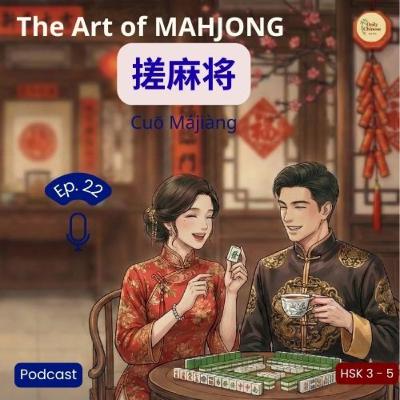
In China, the Mahjong table is a miniature society. This episode dives into the cultural DNA of China's favorite pastime. We start with the surprising folk legends behind the game—like how the tiles might represent ancient soldiers hunting sparrows to protect grain. But more importantly, we discuss why Mahjong is essential for survival during the Spring Festival. Discover how the physical act of shuffling tiles provides the perfect excuse to ignore awkward questions about your salary and love life! We also explore the high-stakes etiquette of playing with elders or bosses, where losing on purpose (故意点炮) might actually be winning.Key Vocabulary & Concepts:- Zhuo Shang Yun Dong (桌上运动): Table Sport.- She Jiao Dun Pai (社交盾牌): Social Shield.- Gu Yi Dian Pao (故意点炮): Deliberately discarding a winning tile for someone else.- He (和): Harmony/Winning a hand.Connect with Daily Chinese:YouTube: https://youtu.be/2fPTHsMJZbA📄 DOWNLOAD FREE SCRIPT & VOCAB LIST: https://bit.ly/dailychinesescript
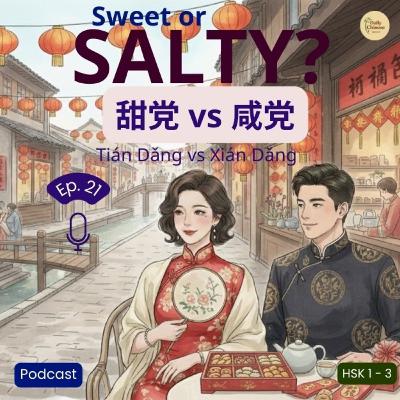
In China, nothing divides people quite like food. Ask a person from Beijing and a person from Canton about how to eat Tofu Pudding, and you might start a fight!In this episode, we explore the "Great North-South Flavor Showdown." We discuss the cultural geography that makes Northerners love salty, savory flavors and Southerners crave sweet dishes. We analyze the linguistic battle between the "Sweet Party" (Tian Dang) and the "Salty Party" (Xian Dang).Key Cultural Concepts:- Nan Tian Bei Xian (南甜北咸): South is Sweet, North is Salty.- Douhua (豆花): The controversial dish (Tofu Pudding).- Kouwei (口味): Personal taste/flavor preference.Don't let a flavor surprise ruin your meal—listen to this guide on Chinese regional tastes!Connect with Daily Chinese:YouTube: https://youtu.be/WPeYiciIkUA📄 DOWNLOAD FREE SCRIPT & VOCAB LIST: https://bit.ly/dailychinesescript
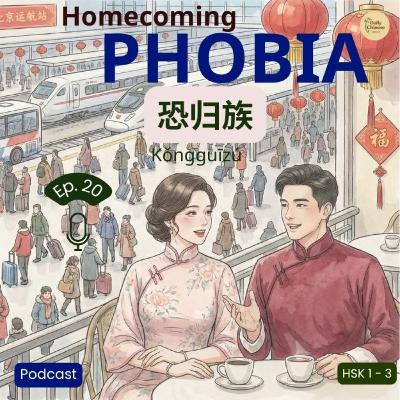
"When are you getting married?""How much money do you make?""Why don't you have a house yet?"If these questions sound terrifying, you might understand why many Chinese millennials suffer from "Spring Festival Homecoming Phobia" (恐归族).In this episode, we look beneath the happy red decorations to explore the real stress young Chinese people face during the holidays. We discuss the generational gap, the intense pressure to succeed, and the high cost of maintaining "Face" (Mianzi) in front of relatives.Key Vocabulary & Concepts:- Kong Gui Zu (恐归族): People afraid to go home.- Cui Hun (催婚): Pressuring someone to marry.- Qi Ge Gu Ba Da Yi (七姑八大姨): A term for "nosy relatives" (literally: 7 aunts and 8 great-aunts).Join us for a deep dive into the sociology of modern China through language.Connect with Daily Chinese:YouTube: https://youtu.be/r6JiSBuS1AU📄 DOWNLOAD FREE SCRIPT & VOCAB LIST: https://bit.ly/dailychinesescript
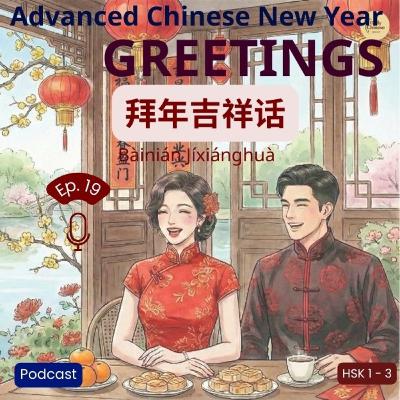
In this episode, we dive into the art of "Bai Nian" (New Year Greetings). We explore why Chinese people value specific wishes for wealth, health, and status, and how to tailor your words for different listeners.We cover:- Zui Tian (嘴甜): Why having a "sweet mouth" is a social superpower.- Gong Xi Fa Cai (恭喜发财): The money wish.- Wan Shi Ru Yi (万事如意): The "everything goes your way" wish.- Advanced idioms to impress native speakers.Listen now to build your collection of golden phrases for the Spring Festival!Connect with Daily Chinese:YouTube: https://youtu.be/ZQI5k1S2Qbg📄 DOWNLOAD FREE SCRIPT & VOCAB LIST: https://bit.ly/dailychinesescript

What actually happens during Chinese New Year? It is a busy time filled with specific "Rituals" (习俗 - Xísú) that bring families together.In this episode, we provide a comprehensive guide to the 8 essential activities of the Spring Festival. We go beyond the surface to explain the "Why" and the "How" of each tradition.You will learn the Mandarin terms for:- Pasting Couplets (Tie Chunlian)- Staying up late on New Year's Eve (Shou Sui)- Paying New Year calls (Bai Nian)Whether you are an advanced learner or a beginner, this episode will give you the cultural context to appreciate the holiday on a deeper level.Connect with Daily Chinese:YouTube: https://youtu.be/SoixUr-lRC8📄 DOWNLOAD FREE SCRIPT & VOCAB LIST: https://bit.ly/dailychinesescript
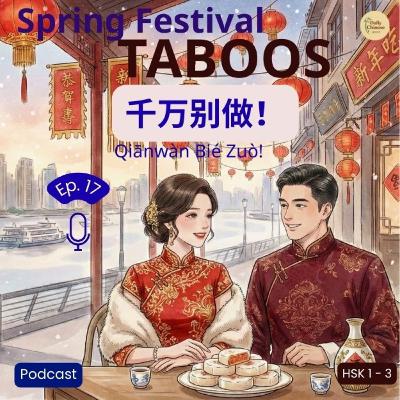
In China, the Spring Festival is not just about what you SHOULD do (eat dumplings, give red envelopes); it is mostly about what you SHOULD NOT do.In this episode, we dive into the fascinating list of Chinese New Year Taboos (Jinji). We explain the linguistic puns and ancient beliefs behind these rules. For example, why is washing your hair considered bad for your wallet? And why are medicines hidden away during the holiday?Key cultural concepts covered:- Jinji (禁忌): Taboo / Forbidden action.- Tao Kou Cai (讨口彩): Fishing for lucky words.- Sui Sui Ping An (岁岁平安): Peace through the years (said when breaking items).Learn how to navigate the minefield of superstitions and keep your luck intact for the Year of the Snake!Connect with Daily Chinese:YouTube: https://youtu.be/tTKdCdSG_SI📄 DOWNLOAD FREE SCRIPT & VOCAB LIST: https://bit.ly/dailychinesescript
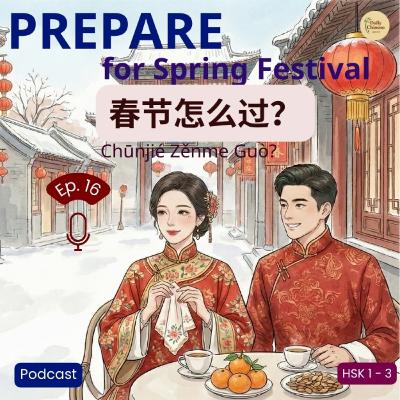
As the Lunar New Year approaches, China transforms. Streets turn red, markets overflow with goods, and everyone talks about "Nian Wei" (年味). But what does "Nian Wei" actually mean?In this episode, we explore the "Flavor of the New Year." We go beyond the basic greetings to discuss the deep cultural rituals of preparation. From the strategic shopping of "Ban Nian Huo" to the symbolic cleaning of bad luck, we cover the essential customs that define the Chinese Spring Festival.Key cultural concepts covered:- Nian Wei (年味): The festive atmosphere/nostalgia.- Ban Nian Huo (办年货): Stocking up for the holiday.- Sao Chen (扫尘): Sweeping away the dust (and bad luck).- Tuan Yuan (团圆): The importance of reunion.Join us to feel the excitement of the coming year through the Chinese language.Connect with Daily Chinese:YouTube: https://youtu.be/VNAMi7xg5GY📄 DOWNLOAD FREE SCRIPT & VOCAB LIST: https://bit.ly/dailychinesescript
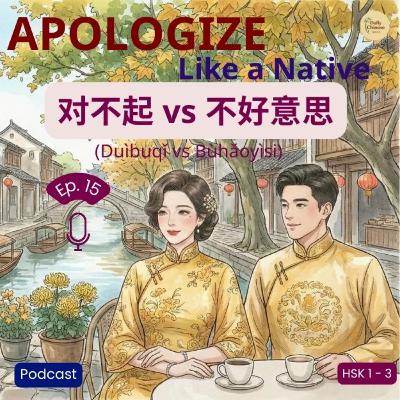
Did you know that saying "Duibuqi" (I'm sorry) when you just want to get past someone on the subway is actually weird in Chinese?In this episode, we fix one of the most common mistakes foreigners make: Using the wrong apology. Chinese has specific words for specific types of regret, and mixing them up can send the wrong signal.We cover:- Buhaoyisi (不好意思): The most useful phrase for manners and mild embarrassment.- Duibuqi (对不起): The serious apology for real mistakes.- Baoqian (抱歉): The formal way to express regret without losing face.Stop apologizing like a foreigner and start apologizing like a local. Tune in to learn the nuances of saying sorry in Mandarin.Connect with Daily Chinese:YouTube: https://youtu.be/izK4o20GXUY📄 DOWNLOAD FREE SCRIPT & VOCAB LIST: https://bit.ly/dailychinesescript

Are you planning a trip to China, or just starting your language journey? Sometimes, you don't need perfect grammar—you just need to be understood.In this episode, we equip you with the "Survival Chinese" toolkit. We focus on high-frequency, high-utility phrases that every foreigner needs in their pocket. From ordering food without reading the menu to telling people you don't understand, these are the phrases that save the day.Key phrases covered:- Expressing lack of understanding (Ting bu dong).- Asking for prices and payments.- Finding locations (Restrooms, Stations).- getting attention and help.Listen to this on your commute or before your flight, and feel confident handling basic situations in Mandarin.Connect with Daily Chinese:YouTube: https://youtu.be/aAm276UK88c📄 DOWNLOAD FREE SCRIPT & VOCAB LIST: https://bit.ly/dailychinesescript

In English, we are taught to say "please" for everything. But did you know that in China, saying "please" (请 - Qǐng) to your close friends or family can actually be considered rude or distant?In this episode, we explore the nuances of Chinese politeness. We discuss the cultural concept of "outsiders" vs. "insiders" and why overuse of polite words can hurt your relationships in China.We also cover:- Why "Qing" is mostly used for business or strangers.- How to soften your requests using sentence particles like "ba" (吧).- The difference between Western and Eastern etiquette.If you want to sound more authentic and less like a foreigner reading from a script, this cultural deep dive is for you.Connect with Daily Chinese:YouTube: https://youtu.be/KONoJVBFucw📄 DOWNLOAD FREE SCRIPT & VOCAB LIST: https://bit.ly/dailychinesescript

Are you waiting until you "know enough words" to start speaking Chinese? You might be waiting forever.In this episode of Daily Chinese, we challenge the conventional wisdom that you need 3000+ words to be conversational.If you are feeling stuck or overwhelmed by HSK vocabulary lists, this episode is the motivation you need to start speaking right now.Connect with Daily Chinese:📺 YouTube Channel: https://youtu.be/TbfE2qtSRW0

"Xièxiè" is great, but have you heard of "Xīnkǔ le"?In Episode 11, we move beyond the textbook basics. We teach you the perfect phrase to use when:- A delivery driver brings your food. 🥡- Your colleague finishes a task. 💼- Someone does you a big favor. 🎁🔗 LINKS:📺 Watch the video examples on YouTube: https://youtu.be/wqYdCpbgrSE📄 Get the Vocabulary PDF: https://bit.ly/dailychinesescriptExpand your vocabulary today!

Are you ready to speak to a real person? 🗣️In Episode 10, we discuss the art of "Language Exchange" (Yǔyán Jiāohuàn). We share tips on how to find a partner who is patient, helpful, and fun.🔗 LINKS:📺 Watch the app tutorial on YouTube: https://youtu.be/KQ1WvZOliIE📄 Get the Free Full Script & Vocab: https://bit.ly/dailychinesescript

Do you feel nervous when speaking Chinese? Are you afraid of saying the wrong tones? 😰In Daily Chinese Episode 9, we talk about the fear of making mistakes (Hàipà fàncuò).The truth is: If you are not making mistakes, you are not learning. 🔗 LINKS:📺 Watch the visual guide on YouTube: 📄 Get the Full Script & Vocab: https://bit.ly/dailychinesescriptDon't give up!

"Wǒ shuō Zhōngwén, dànshì tāmen tīng bù dǒng!" (I speak Chinese, but they don't understand!)Does this sound like you? In Episode 8, we debug your Mandarin. 🔗 LINKS:📺 Watch the visual guide on YouTube: https://youtu.be/RWTMtEFiy8U📄 Get the Full Script & Vocab: https://bit.ly/dailychinesescriptDon't give up! Keep practicing your tones! 🗣️

When things get tough, remember why you started. 💪In Episode 7, we practice answering the most common question you will hear: "Why are you learning Chinese?" (Nǐ wèishéme xué Zhōngwén?).🎧 Listening Practice:- Explaining your goals (Work, Travel, Interest).- Using the grammar structure "Wèile..." (In order to...).- Vocabulary for jobs and hobbies.🔗 LINKS:📺 Watch the video version: 📄 Get the Vocabulary PDF: What is YOUR reason? Let us know!

Feeling lost in your Mandarin journey? 🧭In Episode 6, we stop and look at the "Big Picture". 🔗 LINKS:📺 Watch the full guide on YouTube: https://youtu.be/aDlMXk92gLI📄 Get the Free Roadmap: Let's build a strong foundation together!

Is Chinese the hardest language in the world? Mostly because of the writing system! ✍️In Episode 5, we explore the fascinating world of Chinese CharactersIf you are struggling with reading, this episode is for you!🔗 **LINKS:**📺 See the characters on YouTube: https://youtu.be/zJ7Kw-Zn3CI📄 DOWNLOAD FREE SCRIPT & VOCAB LIST: https://drive.google.com/file/d/11HyOL9JPla0-e6rpwJ_9fIVBhal_-SkT/view?usp=sharingDon't give up! 汉字不太难

Do you know why Chinese people eat Dumplings? Or eat Zongzi? 🤔In Episode 4, we take a cultural journey through the biggest holidays in China. Understanding these festivals is key to connecting with native speakers.🏮 **Festivals Covered:**1. Spring Festival (Chūnjié) - The most important day.2. Lantern Festival (Yuánxiāo Jié).3. Dragon Boat Festival (Duānwǔ Jié).4. Mid-Autumn Festival (Zhōngqiū Jié).🗣️ **Key Phrase:** "Zhù nǐ jiérì kuàilè!" (Wish you a happy holiday!)🔗 **LINKS:**📺 Watch the video with cultural images: https://youtu.be/FvweNJUYrmg📄 Get the Vocabulary PDF: https://drive.google.com/file/d/1kYur4JLcgwRTZ-y7ZvJKbxYsMWdiXjfj/view?usp=sharingIf you enjoy learning about culture, please follow our show!

Comments

Download from Google Play

Download from App Store
 United States