


 Claim Ownership
 Strong Principles
Strong PrinciplesSubscribed: 1Played: 1
Subscribe

Description
Strong Principles is a no-nonsense fitness podcast created for everyday people—whether you're from the local gym or halfway across the world. Each episode breaks down key weightlifting movements, explores smart and sustainable training strategies, and helps you avoid the common pitfalls of bad fitness programming. Whether you're just getting started or refining your approach, Strong Principles gives you the tools, mindset, and knowledge to train with purpose and stay on track.
27 Episodes
Reverse

Strength is the Base: While the show focuses on "Strong Principles," conditioning is the necessary partner to strength for true longevity and health.Cardio vs. Conditioning: "Cardio" is general movement (walking, hiking, pickleball); "Conditioning" is programmed training with specific intent, heart rate monitoring, and progression.The Power of Intent: Training with specific intervals (like the 30/30 air bike method) builds mental toughness and physiological adaptations that mindless jogging cannot.Energy Systems 101: A breakdown of Aerobic (long-duration) vs. Anaerobic (short-burst/power) systems and how they physically change the structure of the heart.Work Capacity: Why you need to train the ability to move through multiple different physical stressors (strength, speed, and struggle) without "gassing out."

Episode Highlights:The "Bang for Your Buck" Ratio: Why one focused strength session can overshadow a week of supplement-style workouts.The Science of Osteoblasts: How mechanical stress and gravity force your bones to get harder and denser.The Durability Gap: Why many women are "chronically over-exercised and under-nourished," and how to fix the signal.The Three Pillars of Recovery: Why no program can outwork poor sleep, low protein, or dehydration.Case Study: The 72-year-old "Hero" who reversed osteoporosis through twice-a-week strength training.Key Movement Patterns Discussed:The Compound Big Three: Squatting, Deadlifting, and Pressing.Unilateral Loading: Using single-side movements to fix discrepancies found in bone density scans.Real-World Carryover: Training for the ability to pick up heavy objects and stand up with confidence.Resources Mentioned:DEXA Scan: The gold standard for measuring bone density and visceral fat.The "Strong Principles" Pillars: Referencing the foundational framework from previous episodes.

Biohacking and interventions are great, but they are "force multipliers," not foundations. If your foundation is weak, there is nothing for those tools to multiply. This episode focuses on returning to the basics to ensure your "health bank account" stays in the black.What You’ll LearnThe 80/20 Rule of Health: Why Nutrition, Sleep, and Exercise account for the vast majority of your results.The Supplement Trap: How Pete tried to fix low iron and magnesium with beet root juice and why blood work is a non-negotiable step.
The Foundation of Nutrition: Why you should prioritize whole foods and protein-oriented meals before worrying about complex macro-counting.
The Problem with Sleep Narcotics: Why "tranquilizing" yourself with sleep aids prevents the lymphatic flushing your brain needs.Recovery vs. Programming: If you need a cold plunge just to survive your workout, your volume might be the problem.Key Timestamps[00:00:45] – The trap of biohacking vs. the pillars.[00:02:01] – Pete’s story: Why you can’t "out-beet" a bad lifestyle.[00:04:40] – The simplicity of whole foods and protein.[00:06:59] – The dangers of using narcotics/tranquilizers for sleep.[00:09:18] – Thinking of health as a "bank account" (Investments vs. Small Exchanges).
[00:15:15] – Using recovery modalities to mask bad programming.[00:17:51] – Final rituals: Sleep hygiene and strength training.Key Takeaways
Nutrition: Aim for 80% whole foods and protein close to your body weight.
Sleep: Create a ritual and stay off screens to allow for natural recovery.
Exercise: A balanced strength training program with some conditioning is better than high-intensity "sugar-chasing" every day.

Building a home gym can be overwhelming and expensive. The Strong Principles crew debates the best way to spend a $1,000 budget, focusing on versatility and "bang for your buck." They also dive into how to evaluate a commercial gym and which pieces of equipment actually move the needle for your health and performance.The $1,000 Home Gym "Starter Pack"The guys shared their top picks for a minimal, effective home setup:Adjustable Dumbbells: The ultimate space-saver (Rob recommends sets going up to 80 lbs).The Custom Sandbag: A versatile tool for squats, carries, and throws.Pro Tip: Fill a 150 lb bag with rubber mulch and sand to keep it firm and easy to grip.Adjustable Bench: Vital for incline and decline work.Kettlebells: Great for high-intensity, functional movement.Evaluating a Professional GymDon't just join a gym because it has 50 treadmills. Look for these high-value tools:The Sled: Unmatched for conditioning and knee health.Landmine Attachment: Versatile for rotational moves, rows, and presses.Suspension Trainers (TRX): Excellent for bodyweight accessory work.Air Bikes: The "gold standard" for low-impact, high-intensity intervals.Key TakeawaysPrioritize Versatility: If you're on a budget, buy tools that allow for hundreds of movements (like dumbbells) rather than one (like a leg extension machine).Buy Used: Facebook Marketplace is a gold mine for iron plates and racks—they don't "go bad."Conditioning Efficiency: If you can only buy one cardio machine, make it an Air Bike. It’s safer for joints and elicits a better anaerobic response than a treadmill.Coaching > Chrome: A gym’s value is found in its programming and community, not the shine on its machines.Timestamped Outline[00:00:13] The $1,000 Home Gym Challenge starts.[00:01:27] Why adjustable dumbbells are worth the investment.[00:01:55] The versatility of the sandbag (and how to fill it properly).[00:03:39] Hunting for deals on Facebook Marketplace.[00:04:25] The Landmine: The most underrated tool in the rack.[00:06:19] How to actually choose a new gym (Programming vs. Equipment).[00:06:55] Why every gym needs a sled for "knee health" and conditioning.[00:08:52] Traditional sleds vs. Magnetic resistance (Torque) sleds.[00:10:21] The Air Bike: Why it’s the king of conditioning tools.[00:12:02] Thoughts on "The Mirror" and Tonal home systems.[00:13:44] Treadmills vs. Running outside.[00:15:20] The Lat Pull-Down: Why it’s the best machine for building pull-up strength.[00:18:05] Final Takeaway: Start with dumbbells.
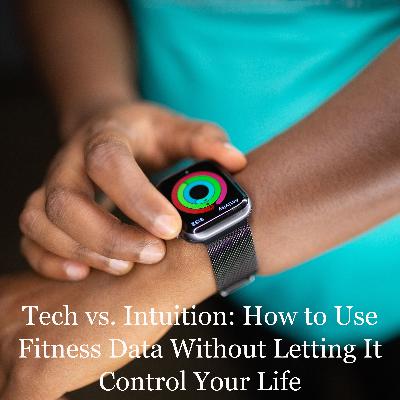
The crew discusses the pros and cons of fitness wearables and recovery technology. While these tools are excellent for tracking trends in sleep and heart rate variability (HRV), they often fail when it comes to calorie tracking and can lead to a "mental block" if an athlete relies too heavily on a device's recovery score. The episode highlights the best ways to use tech as a guide rather than a master.Key TakeawaysThe Calorie Myth: Wearables are notoriously inaccurate at tracking calories because they cannot account for individual metabolic adaptation. As you get fitter, you burn fewer calories doing the same work—something most trackers fail to recognize.The Psychology of Recovery: Letting a "3% recovery" score stop you from training can be a mistake. Zach explains how performance is often more about mindset and preparation than what an app says.The Alcohol Awakening: One of the greatest benefits of wearables has been showing users the objective data on how alcohol destroys sleep quality and recovery.Accuracy Hierarchy: For heart rate tracking, chest straps (like the Morpheus) remain superior to wrist-based sensors.Maintenance Tools: The guys weigh in on "low-tech" high-value tools like massage guns (Theraguns) for self-maintenance and improving blood flow.Timestamp Chapters00:00 – Introduction to Fitness Tech 01:14 – Why your watch is wrong about calories burned 02:30 – The "3% Recovery" Trap: Don't let your phone coach you 04:21 – The "Double-Edged Sword" of sharing fitness data 05:38 – How wearables changed the alcohol industry 06:44 – The Morpheus & Heart Rate Variability (HRV) 08:00 – Sleep tracking: Apple Watch vs. Whoop vs. Aura Ring 08:37 – Rob’s "Eight Sleep" mattress setup and the importance of cooling 09:50 – The practical use of Theraguns and massage tools 11:20 – Final Verdict: Use tools, don't be used by them
The crew dives deep into the "nerdy" side of programming to debunk popular fitness myths. They discuss the history of muscle confusion, the pitfalls of high-intensity randomness, and the physiological principles that actually drive growth—like the SAID principle and the Repeated Bout Effect. The goal of today’s talk is to help listeners distinguish between what sounds "fun" and what actually creates long-term, injury-free progress.Key TakeawaysThe Myth of Muscle Confusion: Constantly changing exercises prevents you from mastering the "skill" of the movement, which is required for actual muscle growth.Planned Variation > Randomness: You don't need a new workout every day. You need a consistent movement pattern (like a squat) with smart, planned variations to avoid plateaus.The SAID Principle: (Specific Adaptation to Imposed Demands). Your body gets better at exactly what you tell it to do. If you want a better back squat, you have to back squat.Movement Economy: Conditioning isn't just about "cardio." The more efficiently you move, the less energy you waste, allowing you to go longer and harder without extra fatigue.The Danger of Failure: Training to failure, especially on complex lifts like deadlifts or squats, can crush your nervous system and lead to injury. Consistency beats intensity 90% of the time.
Entering a group class for the first time or transitioning from one-on-one personal training to a group environment can feel like learning a foreign language. In this episode, Wendy, Rob, Larry, and Zach break down why 'turning your brain off' is the biggest mistake you can make in a group class. They share actionable tips on how to build self-sufficiency, communicate with your coaches, and move past the intimidation factor to become a true 'student of the game.' Beyond the movements, you’ll learn how to immerse yourself in the community and shift your mindset to train for life, rather than just a one-off event like a 5k or a wedding. Join the team to discover how to turn the gym into a lifelong practice rather than a temporary chore.
Is your ego standing in the way of your progress? Today on Strong Principles, Wendy, Rob, and Larry explore the "Sweet Spot" of training. We tackle the two biggest mistakes seen in the gym: not pushing hard enough and pushing too hard with terrible form. Whether you’re someone who sticks to the same light weights out of habit or someone who loads the bar for "ego reps," this episode is a wake-up call to the importance of movement quality.
We discuss why "Pristine Reps" (PRs) are the only metric that truly matters and why treating lifting as a skill—rather than just a workout—is the secret to longevity. Plus, we pull back the curtain on the "boring" habits of elite athletes, including Rob's 3:00 AM mobility routine, and explain why you might need to "regress to progress."
Stop chasing numbers and start chasing quality. Tune in to learn how to find your intensity without losing your form.
Are you constantly waiting for a wedding, a race, or a reunion to motivate your fitness? Stop training for a finish line and start training for a lifestyle.
On this episode of Strong Principles, Wendy, Rob, and Larry dive into the counterintuitive trap of using competition or aesthetic deadlines to kickstart your health journey. While a goal event can be fun, relying on it as your sole driver often results in burnout, injury, and a crash back to inconsistency when the deadline passes (we're looking at you, 75 Hard graduates!).
Discover how to switch your focus from an "all or nothing" mentality to a mindset of sustainable consistency. The team explores the power of making exercise part of your core identity, embracing small "un-sexy" wins, and prioritizing longevity over short-term performance peaks. Learn why high-level athleticism is often the opposite of long-term health and how you can build a healthy, non-negotiable routine that fuels your life, not just your next event.
Why January 1st is Not Magical
It's a week before Thanksgiving, and the holiday rush is on. Every year, people hit pause on their fitness goals, promising to start fresh on January 1st. But on this episode of Strong Principles, Rob, Wendy, and Larry argue that waiting is the biggest mistake you can make.
If you’re waiting for the New Year, you're missing a critical opportunity to get a head start. Use December to learn how to move, work through your initial assessments, and build a foundation so you can hit the ground running in January, instead of starting from square one. The hosts also discuss the inevitable flow of life and how starting when you're busy makes consistency a breeze when things slow down. Plus, hear their practical advice for current members on sustaining progress through the holidays with strategies like prioritizing protein, getting quality sleep, and giving yourself grace.
Stop regretting the things you didn't do. The best time to start feeling better is now.
Do you shy away from lifting heavy because you're afraid of getting "too bulky"?
Inspired by the famous YouTuber Anatoly (the seemingly slight janitor who out-lifts massive bodybuilders), Rob, Larry, and Zach dive into the fascinating science behind body composition. They explain why strength is largely neurological and how specific programming allows athletes to lift massive weights without significant bulk.
The hosts break down the two main training styles—Hypertrophy (size) vs. Strength (skill/density)—and explain why, for the general population, the fear of getting "too big" is usually unfounded. They emphasize that nutrition and body fat percentage are the biggest factors influencing a "bulky" look, not just the weights you lift.
Tune in to learn why strength training is the most powerful tool for changing your body's shape, why the "long and lean" muscle myth persists, and why true, dense muscle is hard-earned.
Do you train exclusively with forward and backward movements like squats and presses? If so, you're missing a critical piece of the longevity puzzle.
On this episode of Strong Principles, Zach, Rob, and Larry break down why dynamic and rotational training isn't just for athletes—it's essential for the general population. From picking up a child sideways to catching yourself during a fall, everyday life requires speed, power, and movement in all planes of motion.
The hosts explain the fundamental difference between training for power (moving fast) and training for strength, and why putting dynamic exercises (like box jumps) into a timed, high-fatigue workout essentially negates their benefit.
Learn the specific protocols for developing these skills: low reps, long rest periods, and high focus on intent. Plus, they detail how rotational exercises—including anti-rotation work like the Pallof Press—improve joint health, make tissue more pliable, and even help fix foundational movement patterns like the squat and deadlift.
Tune in to understand how to train your nervous system to move quickly and ensure your body is ready for anything life throws at you
Are you constantly motivated by the next race, the max lift, or beating yesterday's time? What happens when the competition ends?
On this episode of Strong Principles, Rob, Larry, and Zach dive into the crucial difference between building a gym culture around competition and exhaustion versus one centered on strength and movement quality. The hosts discuss the "dark side" of constantly chasing numbers, including why competition-driven fitness leads to inconsistency, rushed form, injury, and a reliance on fleeting motivation.
They explore the mental shift required to embrace a long-game approach, emphasizing that while competition has its place, it should be the least important part of your weekly training hierarchy.
Tune in to understand why tying your self-worth to a workout time is detrimental, and learn how shifting your focus to quality movement and the "why" of your training is the ultimate principle for a lifetime of fitness.
Are you constantly pushing your intensity and still not seeing the results you want?
On this episode of Strong Principles, Rob, Larry, and Zach dive into the crucial benefits of low-intensity training, specifically using the Cardiac Output Method and Zone 2 work. Many gym-goers avoid lower effort because they feel it's a "waste of time," but the hosts explain why this type of training is essential for building a massive aerobic base, boosting fat-burning, and speeding up recovery.
Find out how to identify your proper Zone 2 effort (hint: you should be able to talk!), how low-intensity work acts as a restorative force for your nervous system, and why confusing this effort with an "active rest day" is a major programming mistake. Plus, they share tips on making these longer, sustained efforts less boring!
If you want to get more from your high-intensity days, tune in to learn the power of slowing down.
Are you trying to decide between a large group fitness class and one-on-one personal training? In this episode of Strong Principles, Zach, Rob, and Larry break down the two main training models at VeroStrength.
They reveal the truth behind group class programming: while it's fantastic for community and general strength, it's designed for the majority. You'll hear candid stories about the type of personality that gets discouraged in a large class setting, and why the coaches believe your mindset is more critical than your physical ability when it comes to long-term success.
Discover why an individual assessment is vital, how a strong foundation and comfort are non-negotiable, and how many people eventually find their sweet spot with a hybrid approach. If you're nervous about starting your fitness journey or just not seeing results in your current setting, this episode will help you choose the path that will keep you motivated and progressing!
You love that sweaty, worn-out feeling after a workout, but is all that intensity actually making you stronger?
In this episode of Strong Principles, Larry, Rob, and Zach dive deep into intensification phases—the high-rep circuits, Metcons, and cluster sets that feel like you're getting an amazing workout. They break down the critical difference between accumulation (foundation building) and intensification (expressing the foundation). Learn why getting "tricked" by short-term stimulus is common, how living in an intense phase can lead to injury and plateaus, and what true long-term strength and movement quality really require.
If you’ve fallen in love with extreme workouts, this is the reality check you need to build a truly strong, resilient body.
Can an algorithm write a better workout than a seasoned coach? In this eye-opening episode of Strong Principles, Rob, Larry, and Zach dive deep into the world of AI programming and its surprising role in modern fitness. Rob reveals how he fed two years of his gym's training data into an AI model, and the stunning results of its ability to identify the programming styles of different coaches.
But while AI is a game-changing tool, they argue it's nowhere near ready to replace the human element. Discover why the most academically correct workout is often the most boring one, and why great programming must be "written in pencil." Whether you're a coach worried about AI taking your job or a client looking for the most effective results, this discussion on intuition, motivation, and the limits of data is essential listening.
Tune in to understand:
How top-tier coaches are using AI as a validation tool and a "super-reference."
The critical difference between an academically proper workout and an intuitive, effective one.
The "human element"—why things like sleep, stress, and motivation can change a program in the moment.
Why embracing new tools, from AI to peptides, is the only way to stay relevant and enhance your coaching.
Stop chasing a new max lift until you master the basics. On this episode of Strong Principles, Larry, Wendy, and Rob break down why movement quality—not just moving weight—is the absolute foundation of long-term strength, muscle building, and injury prevention.
The hosts discuss the common frustration of new gym-goers who are told to 'back up' on the weight and focus on form. They explain the critical three-month principle (learn, use, then build strength) and how improving fundamental movement patterns like the squat, hinge, and lunge is a gradual process.
If you've been discouraged by feeling "weak" when transitioning to full range of motion, or you're wondering how to safely progress your training, this episode offers a clear, structured roadmap for building strength that lasts. Plus, the team reveals how their weekly gym programming reinforces good movement before any high-fatigue "test."
Tune in to understand why being patient with your form is the strongest principle of all.
Ditching the Cardio Craze: Why Your Treadmill Strategy Is Sabotaging Your Fat Loss
When you need to drop weight, your first instinct is probably to hit the treadmill—hard. But on this episode of Strong Principles, Wendy, Rob, and Larry reveal why adding more cardio is a short-sighted trap that can ultimately slow your metabolism and sabotage your long-term goals.
It's time to shift your focus from burning calories in the gym to being a better calorie burner all day long. The team breaks down the non-negotiable principles for lasting body composition change: strength training, high-protein nutrition, maximizing NEAT (daily movement), and the "powerful pill" of quality sleep.
Learn why building muscle makes your body "more expensive to operate," how sleep dictates your food choices, and the simple steps you can take outside the gym to get results. If you feel like you're running harder but getting nowhere, this episode is your metabolic reset.
In this candid episode of Strong Principles, hosts Rob Dela Cruz and Larry Medina are joined by Wendy Shafranski to tackle the most common reasons (or, as they call them, excuses) people stop going to the gym.
Drawing on years of industry experience and personal coaching, the team breaks down the Top 5 pain points—from not having enough time to dealing with "gym-timidation."
They explore the critical difference between lifespan and healthspan, discussing why prioritizing fitness now is essential preventative healthcare for the future. You'll hear practical advice on conducting a "time audit," shifting from aesthetic goals to performance goals, and overcoming the biggest mental barrier of all: negative self-talk.
If you're struggling with consistency, motivation, or feeling out of place, this episode offers the perspective and tough love you need to push past the plateaus and commit to your long-term strength.

Comments

Download from Google Play

Download from App Store
 United States