


 Claim Ownership
Exterminating the Exam
Subscribed: 0Played: 0
Subscribe

© Chris Jones 2026
Description
Your definitive audio guide to mastering the Alabama State Pest Control License. We break down the complex regulations of the ADAI, simplify the science of entomology, and provide the exact study points you need to go from 'applicant' to 'certified professional.
20 Episodes
Reverse

This public health document details the biological characteristics of various insects and the toxicological standards used to control them. It categorizes common pests like mosquitoes and chiggers by their feeding mechanisms, life cycles, and preferred environments, specifically noting that chiggers are parasitic mite larvae that do not burrow into skin. The text also explains the concept of Lethal Dose 50 (LD50), which measures a chemical's toxicity based on the amount required to kill half of a test group. Additionally, the source provides guidance on pesticide safety, emphasizing the prevention of water contamination through anti-siphon devices. Finally, it outlines specific mosquito behaviors, such as their respiration methods and the necessity of blood meals for reproduction.
This document outlines essential concepts for pesticide safety and regulation, specifically focusing on terminology used in toxicity testing and state-level legal requirements. It differentiates between LD50, which measures solid or liquid doses, and LC50, which determines the lethal concentration of a substance within air or water. A critical takeaway for professionals is that lower numerical values for these metrics indicate higher levels of toxicity. Beyond scientific measurements, the text details civil penalties in Alabama for pesticide misuse, which is defined as any action that contradicts official label instructions. Violators may face significant monetary fines up to $10,000 or the loss of their operating license for failing to follow these strict safety protocols. Furthermore, the source provides exam preparation tips, such as the minimum age for licensure and the specific requirements for maintaining records of restricted-use chemicals.
This document outlines the distinctive characteristics and public health impacts of various common fly species. It categorizes these insects based on their physical appearance, breeding environments, and whether they bite humans to consume blood. While types like the house fly and blow fly primarily spread illness by contaminating food and surfaces, others such as the stable fly and horse fly are noted for their painful bites. The text highlights unique biological traits, such as the flesh fly’s ability to produce live larvae rather than laying eggs. Ultimately, these excerpts serve as a study guide for identifying the most significant mechanical disease spreaders and nuisance pests found in various habitats.
This document provides a comprehensive overview of various fly species and their impact on public health, specifically focusing on how they spread diseases and contaminate food. It details the biological life cycles and unique physical identifiers of insects like the house fly, blow fly, and black fly to assist in accurate identification. The text emphasizes that while some flies cause painful bites or parasitic infestations like myiasis, others act as mechanical vectors by transporting pathogens on their bodies. Additionally, it outlines pest management strategies, such as eliminating breeding sites and using larvicides in specific aquatic environments. The material also includes brief information on rodent control through the use of toxic dust applied to animal pathways. Overall, these resources serve as a study guide for understanding the medical importance and mitigation methods for common sanitary pests.
This educational resource serves as a study guide for a public health exam, focusing primarily on the identification and control of common pests. It includes a detailed comparison of cockroach species, highlighting their physical traits, preferred habitats, and the specific health risks they pose through food contamination. The text also clarifies technical terminology regarding pest control, distinguishing between chemical substances and specific application methods. A significant portion of the material explains how anticoagulant rodenticides function by inhibiting vitamin K to cause internal hemorrhaging in rodents. Ultimately, these documents provide essential knowledge for managing urban infestations and understanding the mechanics of chemical extermination.
This text serves as a technical manual for calibrating pesticide sprayers and granular applicators to ensure accurate chemical delivery. It outlines practical techniques for adjusting flow rates, such as changing nozzle tips or modifying travel speeds, while providing specific mathematical formulas to calculate application volume. Users are guided through step-by-step methods to determine gallons per acre and the precise amount of pesticide formulation needed for various tank sizes. Additionally, the guide explains how to manage granular distribution by accounting for equipment settings and environmental factors like humidity. Detailed conversion charts and example problems are included to assist operators in achieving professional application standards across different field sizes and crop rows.
This text serves as a technical guide for selecting, maintaining, and calibrating pesticide application equipment. It details various nozzle types, such as flat fan and hollow cone, while explaining how different materials like stainless steel or plastic affect durability and chemical resistance. The document emphasizes rigorous maintenance and safety, providing specific instructions for cleaning clogged tips and decontaminating tanks to prevent crop damage or personal injury. Furthermore, it outlines precise calibration methods, including the 1/128-acre technique, to ensure accurate chemical delivery based on speed and pressure. By following these protocols, operators can achieve effective pest control while minimizing environmental drift and equipment wear.
This text serves as a technical manual for selecting, maintaining, and operating pesticide application equipment. It highlights that effective pest control relies on calibration to ensure uniform chemical delivery across a target area. The guide details various machinery types, such as high-pressure, low-pressure, and hand sprayers, while weighing their specific advantages and logistical limitations. Furthermore, it examines essential internal components, including tanks, pumps, strainers, and nozzles, emphasizing the importance of material durability and regular cleaning. By understanding these mechanical elements, operators can improve application accuracy and extend the lifespan of their equipment.

This guide provides comprehensive protocols for the safe management, storage, and disposal of pesticides and their containers. It emphasizes that minimizing surplus inventory through careful planning is the most effective way to prevent environmental contamination and health hazards. Detailed procedures for decontaminating rinsable containers—such as triple-rinsing and pressure-rinsing—are outlined to ensure waste meets legal standards for disposal or recycling. The text also specifies strict requirements for secure storage facilities, including fire-resistant construction, proper ventilation, and the physical separation of toxic chemicals from food or seeds. Furthermore, it offers clear instructions for responding to spills, ranging from immediate containment using absorbent materials to contacting emergency authorities for major accidents. Following these federal and state regulations is presented as essential for protecting the environment, wildlife, and human safety.
The provided text outlines the regulatory framework governing pesticide use, focusing primarily on the Federal Insecticide, Fungicide, and Rodenticide Act (FIFRA) and specific Alabama state laws. It details the Environmental Protection Agency’s role in registering products, classifying them for general or restricted use, and setting residue tolerances for food safety. The sources also describe the legal responsibilities of certified applicators, including strict standards for transportation, worker protection, and environmental safety regarding endangered species. Furthermore, the document defines various registration types, such as emergency exemptions and special local needs, while emphasizing that any use inconsistent with labeling is a federal offense. Finally, it enumerates the civil and criminal penalties, including fines and imprisonment, that practitioners face for violating these comprehensive chemical management protocols.
This text serves as a comprehensive safety manual detailing how to prevent and respond to pesticide exposure. It emphasises the critical role of protective clothing, such as chemical-resistant gloves, boots, and specialised respirators, tailored to the specific toxicity of the chemicals used. Beyond prevention, the guide outlines the clinical signs of poisoning for various chemical families, ranging from mild fatigue to severe respiratory distress. Detailed first aid procedures are provided for skin, eye, and internal contact, highlighting the importance of immediate decontamination. Finally, the source offers essential resources like emergency contact information for poison control centres and advice for medical consultations. This document acts as a vital protocol for ensuring the health and safety of individuals working with hazardous agricultural chemicals.
This text serves as a comprehensive safety guide for individuals who handle toxic chemicals used in pest control. It distinguishes between toxicity, the inherent capacity of a substance to cause harm, and hazard, which factors in the level of human exposure. The material details how these substances enter the body through the skin, mouth, or lungs and explains the LD50 and LC50 metrics used to measure lethal doses. Readers are instructed on best practices for transporting, mixing, and applying pesticides while wearing mandatory protective equipment. The document emphasizes that preventing accidental poisoning, especially among children, requires strict adherence to product labels and thorough cleanup procedures. Ultimately, the source provides a framework for managing high-risk chemicals to protect human health and the surrounding environment.
This text examines the ecological impact of pesticides and guides in minimizing their environmental risks. It highlights how chemicals can move through the air, soil, and water, potentially harming nontarget organisms, including fish, pollinators, and endangered species. The source categorizes pesticides by their persistence and accumulation levels while outlining the legal liabilities associated with their misuse. Readers are instructed on practical ways to prevent spray drift, protect groundwater from contamination, and safeguard beneficial insects, such as honeybees. Ultimately, the material serves as a comprehensive guide for responsible application, balancing agricultural needs with environmental preservation.
This chapter reviews labels and warning signs.
This is chapter 2 of the Alabama pest license study guide.
Plant disease identification.

In-depth review of metamorphosis types and insect identification,

80-10-9-.02 Definitions from the Alabama Department of Ag & Industries Administrative Code.
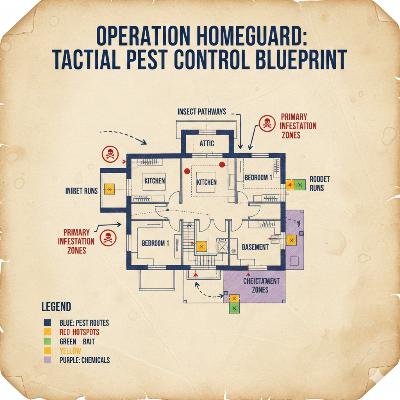
A brief overview of the topics typically covered on a pest control licensing exam.

Your definitive audio guide to mastering the Alabama State Pest Control License. We break down the complex regulations of the ADAI, simplify the science of entomology, and provide the exact study points you need to go from 'applicant' to 'certified professional.
Comments


Download from Google Play

Download from App Store
 United States