


 Claim Ownership
African Tech Roundup Podcast
Subscribed: 2,224Played: 5,496
Subscribe

© All rights reserved
Description
The essential guide to Africa's technology, entrepreneurship, and innovation ecosystems. Since 2015, co-founders Andile Masuku and Musa Kalenga have convened the continent's most influential voices — from startup founders and investors to policymakers and tech leaders — delivering bold, pan-African insights with a global perspective. Whether you're building, investing, or leading in African tech, this is where the conversation happens.
368 Episodes
Reverse

Episode overview:Seyi Ebenezer didn't come to fintech from a hackathon or an accelerator. He came from KPMG's audit desks and Access Bank's corporate finance floors. These are environments where the numbers had to add up before anyone was allowed to dream out loud. That training shows in everything about how he has built Payaza, from claims of launching profitably with a single gas station client to rejecting six or seven VC approaches in favour of bootstrapping a business he could defend on paper.In conversation with Andile Masuku, Ebenezer — who co-founded Payaza in 2020 and launched in March 2022 — lays out a philosophy that cuts against the grain of Africa's startup narrative. Where the dominant playbook says raise fast, grow faster, and worry about unit economics later, Ebenezer argues that African founders face a structural reality that makes that approach uniquely dangerous: a "natural prejudice rating" on the continent that means even Aliko Dangote isn't immune to credit downgrades. His conclusion: if the system is stacked against you, your books had better be immaculate.The conversation covers Payaza's origins solving payment reconciliation for Nigerian fuel stations, why Ebenezer treats every product that isn't profitable within six months as a candidate for shutdown, and how securing investment-grade credit ratings from Augusto & Co, DataPro, and GCR (with a Moody's rating to boot) has transformed the company from price taker to price giver in investor conversations. Along the way, Ebenezer draws a direct line from the 2008 financial crisis to the recent VC funding winter in African tech, and argues that the founders who built structure survived both.But the conversation's most striking moment comes near the end with Ebenezer's call for the creation of a pan-African credit rating agency; one that uses community-based risk models suited to how African business actually works, rather than importing Western frameworks wholesale. Key insights:On why debt creates discipline: Ebenezer's central thesis is that debt financing forces founders to confront profitability from day one. Unlike equity, where capital can mask weak fundamentals, debt has interest that "does not sleep on Saturday, does not sleep on Sunday." He argues this constraint is a feature, not a bug, particularly for African founders who face structural disadvantages in how the market perceives their businesses.On building from the books outward: At Payaza, corporate governance came before scale. Ebenezer engaged Deloitte as an auditor from the company's earliest days. It's a decision he says he initially regretted when the first audit surfaced over sixty exceptions. But those painful early investments in structure are what enabled Payaza to access capital markets, raise commercial paper without collateral, and achieve investment-grade credit ratings — outcomes virtually unheard of for a Nigerian fintech.On the "prejudice rating" African businesses carry: Ebenezer points to World Bank data showing that Africa's default rate on infrastructure funding is just 1.9 per cent (second only to the Middle East at 0.9 per cent) while Western Europe sits at 9.1 per cent. Yet a business headquartered in Western Europe would still receive a higher credit rating. His response: African founders must over-prepare, building the kind of documentation and governance that neutralises bias before they walk into any room.On rejecting the VC playbook — without rejecting VC: Ebenezer is careful not to demonise venture capital. His argument is about sequencing: build structure first, demonstrate profitability, then engage equity investors from a position of strength. He turned down six or seven approaches during the VC boom, telling his team to trust the longer game. The result: when he now sits across from potential investors, he sets the terms. "Evidence dominates argument," he says.On why African businesses can't emulate Amazon's playbook: When pressed on whether his conservative approach stifles ambition, Ebenezer invokes the Dangote example. If Fitch can withdraw the credit rating of Africa's wealthiest industrialist, and downgrade Afrexim Bank, then no African founder can afford to assume the market will extend them the patience it gave Jeff Bezos. "If they could touch Dangote," he asks, "who are we?"On Payaza's efficiency-first growth model: Rather than competing on price — a "race to the bottom" — Payaza competed on settlement speed, offering same-day payouts to merchants using its own capital while competitors operated on T+1 or T+2 cycles. This earned trust and referrals, creating organic growth with thin but real margins. Every merchant is evaluated against an activity-based costing model: if onboarding them isn't profitable, the relationship doesn't proceed.Notable moments:1. The Petrocam origin story: Payaza's first client was Petrocam, a Nigerian fuel retailer with 57 filling stations. The problem: reconciliation chaos and shrinkage across distributed locations. Payaza built "Branches," a product that gave the group CFO a centralised, real-time view of collections across every station — eliminating accounting discrepancies, reducing theft, and cutting the finance headcount needed at each site. The product was profitable from day one. "We are solving a problem for them and then we're charging them fairly," Ebenezer recalls. That first deal set the template for everything that followed.2. The credit rating upgrade that broke the rules: After raising commercial paper on the Nigerian capital market and making an early repayment, Payaza received a credit rating upgrade from BBB- to BBB+ in a matter of months. The norm is a 24-month cycle between upgrades. The rating agency told them they had "a very good case" — a vindication, Ebenezer argues, of prioritising fundamentals over flash.3. The SME Tribe experiment yielding zero bad debt: When Instagram went down for several days, Payaza saw an opportunity. It built SME Tribe, a web-based marketplace that mirrored what small traders were selling on Instagram, then layered on "Payaza Boost": uncollateralised working capital advances of 25 per cent of a merchant's three-month average collections. The result: zero non-performing loans. Ebenezer uses this as evidence that African credit risk models need to account for community-based accountability, not Western-style board structures.4. The pan-African credit rating pitch: In the episode's most charged exchange, Ebenezer pivots from discussing his own business to issuing a direct challenge: Africa needs its own credit rating infrastructure, potentially housed under Afrexim Bank or the African Union's APRM framework. He argues that the global rating oligopoly (agencies built "200 or 400 years ago" that keep acquiring regional competitors) cannot adequately assess African risk because Africa is "community-based." His proposed model would incorporate social accountability mechanisms alongside financial metrics. And then, live on the podcast, he nominates Andile Masuku to lead the convening.Connect and engage:Connect and engage:African Tech Roundup: LinkedIn and

Episode overview:Natasha Blycha's path into emerging technology law started in an unlikely place. As a gap-year volunteer teaching English and economics at a school outside Gweru, Zimbabwe, circa 2000, she was simultaneously working for a small rural law firm on constitutional questions — an experience she credits with shaping the questions that have driven her career since.In conversation with Andile Masuku, Blycha — who co-authored the Oxford Smart Legal Contracts textbook and was named the Financial Times' Most Innovative Lawyer — traces a line from those early days to advising global banks on whether their crypto experiments were even legal, to building LexChip: technology that embeds enforceable contracts directly into AI-powered devices.The conversation spans smart contracts (the technical kind and the legally binding kind — they're different), why crypto adoption in Nigeria and Ghana has less to do with speculation and more to do with broken banking infrastructure, and what Jensen Huang's "five-layer AI cake" means for nations trying to build sovereign AI stacks without the energy, chips, or legal infrastructure to hold them together.Blycha's central argument: if we can't put code in jail, and AI systems are becoming economic stakeholders that can book a million flights or displace entire workforces, then the law as currently designed has a problem. Her proposed contribution — smart legal contracts that act as referees inside AI systems, capable of stopping a device when it breaches its own rules — sits at the intersection of contract law and responsible AI.Key insights:On why this isn't Y2K: "This is so much more complicated, so much more geopolitically complicated. And if we said that Y2K didn't happen, it was one day we got to find out. What we're seeing already with AI systems is we're already getting the proof in the pudding that they are working." Blycha argues Y2K was a manageable vector of complexity compared to AI. The difference: AI systems are actively delivering on their promise, and big tech's mandate to reach AGI means we can't simply wait for one day to find out.On why Africa's slower adoption might be an advantage, not a liability: "If I cannot keep the power on, am I really talking about agentic AI?" But Blycha points to a counterintuitive upside: countries without legacy infrastructure can leapfrog, just as India and parts of Africa bypassed landlines for mobile. Crypto adoption in Nigeria and Ghana demonstrates this — populations using blockchain not as a speculative instrument but as functional money in economies where traditional banking fails them.On the difference between smart contracts and smart legal contracts: A smart contract is code that executes on a blockchain — "if this happens, do this." It's a technical term, not a legal one. A smart legal contract, by contrast, is a real, enforceable agreement where specific clauses are automated. Blycha uses the example of a lease where rent adjusts automatically based on CPI. The distinction matters because conflating the two obscures where legal accountability actually sits.On the fundamental legal problem AI creates: "The law needs a person to ascribe responsibility to." Bitcoin was invented by someone who may not exist. Decentralised autonomous organisations insist the code is responsible, not them. But you can't put code in jail. As AI agents proliferate — booking flights, managing finances, making hiring decisions — the gap between what the technology does and who the law can hold accountable is widening faster than regulators can respond.On smart legal contracts as AI's conscience: Through LexChip, Blycha's team is embedding contracts directly into AI edge devices — robotics, autonomous vehicles, hardware with embodied AI. These contracts can monitor behaviour in real time and, critically, act as a referee: stopping a device safely when it breaches its rules. "You've taken an analog thing, you've turned it into a performance-based contract and it can speak to an AI system."On Ubuntu as an AI governance framework — with a warning: Blycha was moved by the Ubuntu principle of interconnectedness during a family visit to South Africa. She sees it as a potentially powerful ethical framework for AI policy — but cautions against using it as "window dressing for someone to write a wishy-washy policy that then doesn't deal with the hard stuff." The hard stuff: GPU clusters, cloud compute, sovereign data infrastructure. Values without investment are just declarations.On who opposes all of this — and why: Peter Thiel and a portion of Silicon Valley divide the world into accelerators and decelerators. In their framing, lawyers like Blycha are slowing down progress toward a post-human, transhumanist future of brain-computer interfaces and infinite lifespan. Blycha's response: "This is not a lawyers versus the tech bros conversation because there is an extremely large majority of the tech bros who are also saying there is a big problem here."Notable moments:1. The first text message: At the Bata Club in Gweru, Zimbabwe, circa 2000 — a social venue attached to a Canadian shoe factory — Blycha saw her first SMS travel between England and Zimbabwe on a feature phone. "It wasn't a smartphone, it was a dead phone." She'd bought her flight to Zimbabwe on the day of the Y2K bug because tickets were cheap. That moment — witnessing a communication revolution in a country experiencing currency crisis and fuel shortages — frames the conversation's central question about technology adoption in constrained environments.2. The Mennonite test: Visiting Amish communities in Ohio, Blycha learned their approach to technology adoption. "They don't prohibit technology at all. They ask two questions: does this technology bring me closer to my family and does this technology bring me closer to God?" Asked how everyday people should think about adopting AI tools, Blycha offered this as her "heart answer" — a striking conclusion from someone who has spent her career at technology's legal frontier.3. The McKinsey displacement reality: Blycha points to McKinsey's replacement of significant portions of its workforce with AI agents as evidence that displacement is not theoretical. The legal question this raises: how do you write an employment contract with an AI agent? And when that agent — operating at a scale no human can oversee — breaches the law, the "human in the loop" principle that underpins every AI governance framework starts to break down.Resources referenced in this episode:Natasha Blycha on Shirtloads of Science podcast — Natasha's previous long-form conversation on AI law and the "responsible machine problem": Listen here "Can AI be trusted? with Jania Okwechime & Wessel Oosthuizen" (African Tech Roundup Podcast) — Kate Byrne engages two senior AI specialists at Deloitte on the myths surrounding AI while reflecting on its impact in Africa: Listen her...

Episode overview: Prince Nwadeyi spent years providing market research that unlocked South Africa's R600 billion (~USD 34.4 billion) informal economy for blue-chip clients. The likes of Swiss Re, Liberty, NASPERS all wanted the insights. Few wanted the execution risk. In conversation with Andile Masuku, Nwadeyi explains why his holding company SAG Ventures stopped selling insights and started building businesses. From Mustard Finance Group (formerly Setana Capital) providing working capital to township spaza shops (micro convenience stores), to Purchase Pal embedding funeral cover into everyday groceries, Nwadeyi's ventures share a common thread: aligning incentives across entire value chains whilst playing a longer game than quarterly-focused corporates can stomach. His journey from UCT postgrad researcher to operator deploying millions in credit with a claimed 99.9% repayment rate offers a masterclass in strategic patience and the power of granular consumer understanding. Key insights: - On why insights alone don't create impact: "We realised that some of the executives were not willing to take the risk, not for any risk of their own, but really just how the incentive structure set up within corporate." Nwadeyi discovered that knowing differently doesn't translate to acting differently when bonuses hang in the balance. The solution? Stop asking permission and build the innovation yourself. - On aligning incentives to unlock impossible markets: Working capital finance to informal retailers seemed impossible until Nwadeyi mapped the ecosystem. Wholesalers wanted more sales but couldn't offer credit. They did have transaction data. "Can we build a technology solution that interprets that data at scale to enable unique insight that traditional finance institutions don't have access to?" The result: finance the stock purchase to the wholesaler, the SME repays over 14 days, everyone wins. One of their spaza shop clients recently scaled from one store to three and bought her first house for R1 million (~USD 57,400) cash. - On thinking in decades whilst executing in months: "You don't have to think in days. You have to think in decades." Purchase Pal (what Nwadeyi claims to be "the world's first FMCG-embedded funeral insurance") represents one piece of a five-year strategy spanning multiple financial services verticals. The long game enables patient execution whilst maintaining corporate relevance. "What's my exit point? What's my entry point? Am I wanting to build this alongside?" - On why research beats assumptions every time: A tearful interview during his MPhil research - a woman describing the humiliation of borrowing money to bury her mother whilst neighbours gossiped about her poverty - sparked the Purchase Pal concept. "What if we could unlock quote unquote, what I call, no cost insurance?" Years of ethnographic research revealed the margin structure in FMCG goods, the cost burden of traditional insurance intermediation, and the customer stickiness problem facing consumer goods manufacturers. Research made the impossible obvious. Notable moment: The pivot from consultant to operator: Walking through a Cape Flats township, Nwadeyi's co-founder encountered a spaza shop owner struggling for financing. "All I ever wanted to do is to feed myself, feed my family or feed my business." That human story, repeated across thousands of township retailers, shifted SAG from insight provider to solution builder. Traditional finance wouldn't touch these operators. Nwadeyi's team reportedly deployed over R100 million (~USD 5.7 million) and achieved 99.9% repayment rates. Image credit: SAG Ventures
Episode overview: April Long spent two years fighting reality. The co-founder and CEO of "Afro-Asia Cross-border payment infrastructure" startup Pyxis was so determined to serve Africa's small merchants - the "bottom of the pyramid" she'd read about in Harvard Business Review - that she nearly bankrupted her fintech ignoring the bulk traders actually driving Africa-China trade. In conversation with Andile Masuku, Long delivers uncomfortable truths about impact theatre versus impact reality. Her journey from receiving President Xi Jinping in Tanzania at 23 to finally accepting who actually moves goods between Africa and China at 35 offers a masterclass in entrepreneurial humility. Key insights: -On impact delusions: "I used to defend, I was like, 'No, no, no, no, no. It's that you don't get to this market.'" Long admits she lived in a bubble, desperately wanting to believe SMEs were ready for direct China trade. The truth? "90% of African trade is still happening in a more traditional way" - through the aggregators she'd dismissed as insufficiently mission-driven. - On the cost of stubbornness: Despite zero demand after six months embedded in Nairobi's wholesale markets, Long refused to pivot. "I was quite stubborn. I was like, no, we have to work with SMEs." The result: burning 90% of her time on unprofitable small traders whilst the 10% spent on bulk traders kept her company alive. - On acceptance as strategy: "The future is not here yet. And we need to build the future by serving who is there currently." Long's breakthrough came from accepting that Chinese trading companies scaling from $0 to IPO in a decade were the real infrastructure of Africa-China trade - not the romantic vision of empowered individual merchants. - On being un-fundable forcing clarity: Without millions to burn on market education, Long had to face reality faster than her funded competitors. "I'm grateful I didn't have money to burn, or else I could have burned myself." Notable moments: 1. The marketplace wake-up call: Walking through Nairobi's famous Gikomba market as a Chinese woman, traders shouted "China, China, what are you selling?" They wanted products, not payment rails. Long built the wrong solution for the right market. 2. The Eric Simanis paradox: The same Harvard Business Review article that inspired her Africa move warned against oversimplifying "bottom of pyramid" markets. Long spent years learning what she'd initially misread. 3. The three Aprils: Long describes fragmenting into Chinese April, Western April, and African April - "these narratives are so vastly different" that keeping them separate became exhausting. Building Pyxis became about reconciling these selves. The aggregator revelation: Long's former Standard Chartered clients - the Chinese trading companies she'd tried to convince to take loans in 2015 - transformed from traders to manufacturers to near-IPO giants in under a decade. They were the real story of Africa-China trade, moving containers whilst she chased individual merchants moving parcels. "These Chinese trading companies making impacts in Africa, making products super affordable... because of the storytelling, they are not recognised." Her role shifted from trying to bypass them to helping them operate more efficiently. The present tense: Long's current focus on settlement infrastructure for bulk traders isn't the sexy SME empowerment story she'd imagined. But with a 12-person team across four countries and actual revenue, she's building what the market needs today whilst preparing for the SME future she still believes will come. Image credit: Pxyis

Episode overview: Andrew Hall faces a unique challenge: building profitable telecommunications infrastructure across one of Africa's largest countries with one of its smallest populations. As managing director of Paratus Namibia, Hall oversees operations spanning vast distances where traditional business models struggle to pencil out. Andile Masuku invites Hall to share on the realities of building networks where "you'll see three fibres running next to the road" instead of shared infrastructure, why COVID accelerated their consumer business, and how recent oil discoveries are reshaping Namibia's economic landscape. Key insights: - On geographic challenges: Namibia's vast distances and sparse population create unique infrastructure economics where covering remote areas requires careful return-on-investment calculations across extended payback periods. - On competitive landscape: Operating alongside two state-owned enterprises creates complex market dynamics where regulatory considerations and different organisational mandates influence infrastructure deployment strategies. - On infrastructure sharing: Despite logical benefits, competitive dynamics often result in duplicated infrastructure: "three towers standing next to each other" rather than collaborative deployment approaches. - On consumer versus enterprise: Traditional enterprise focus (75% of business) provided stability, but consumer growth since 2016 now drives expansion, particularly accelerated during COVID-19 periods. - On technology transitions: Moving from WiMAX limitations (4-10 Mbps) to fibre required strategic timing; balancing asset sweating against customer retention as bandwidth demands increased around 2018. Notable moments: 1. Hall's description of infrastructure redundancy: "If you drive down the road, you'll see three fibres running next to the road. If you're driving from one town to the other, you'll see two or three towers standing next to each other" 2. The COVID-19 catalyst: Consumer business performed "very, very well" as people became "100% reliant, work-wise, education-wise, entertainment-wise on connectivity" 3. Recent oil discoveries creating positive economic outlook with increased foreign investment interest and improved business confidence The development question: Hall addresses the expectation that telecoms should "unlock growth economically for an entire nation" by emphasising education as the foundation. Paratus's corporate social responsibility focuses on educational sector connectivity because "for children to have access to the internet, it makes the world a lot smaller." His perspective reflects broader African infrastructure challenges: balancing commercial sustainability with development impact, managing investor expectations whilst serving diverse stakeholder needs, and building institutional capacity in environments with limited technical specialisation. "I think access to the internet plays a crucial role. And I think it starts at grass root level in the form of education... for children to have access to the internet, it makes the world a lot smaller." Image credit: Paratus Namibia

Episode overview: Bernard Laurendeau has a mission: to stop African business leaders from asking for "patient capital." The Ethiopian-French management consultant, now operating from Tokyo, believes this standard pitch fundamentally misunderstands how global investment works and fails African markets. It's a contrarian stance from someone who's spent 15 years advising Fortune 50 clients and building institutions across three continents. After co-founding Arifpay, Ethiopia's first licensed Payment System Operator, and serving as senior advisor to Ethiopia's jobs creation commission, Laurendeau has repositioned himself in Japan's corporate heartland with Laurendeau & Associates and Enkopa Lab. From his Tokyo base, Laurendeau delivers what he calls "execution horsepower" to both African governments and Japanese corporations seeking African market entry. His client portfolio spans Google and Cisco to UAE's Ministry of Finance, applying strategic frameworks honed at BNP Paribas to emerging market challenges. Key insights: - On financial sovereignty: Despite supporting fintech innovation, Laurendeau advocates fiercely for African countries maintaining control over their financial services infrastructure. - On Japanese business culture: Japanese organisations bring uncompromising quality standards to everything—"there's no such thing as downgrading." Whilst this limits their market share compared to Chinese competitors offering multiple price points, it creates superior knowledge transfer opportunities for African partners. - On data-driven decisions: Investors don't want to "think long-term"—they want confidence in their decisions. Laurendeau's experience with big data analytics in Silicon Valley informs his approach to providing real-time, actionable intelligence rather than outdated World Bank reports. - On innovation vs infrastructure: African entrepreneurs risk becoming "lazy" by chasing trendy technologies whilst neglecting "boring" fundamentals - On institutional building: African countries need people willing to do "Gov-preneurship": embedding with governments to build policies, institutions, and strategic frameworks. Most leaders are "lonely" and welcome diaspora expertise, contrary to corruption narratives. - On execution over ideology: Management consulting in emerging markets requires output orientation, not retainer relationships. Clients want expert advice immediately, not consultant armies producing fancy acronyms and quadrant analyses. Notable moments: 1. Why Laurendeau switched from mechanical and aerospace engineering (ENSTA France, Georgia Tech) to management consulting after realising security clearance barriers would limit his US career prospects 2. His observation that at Africa-focused investment conferences in Japan, "people were talking about Africa...with no Africans in the room" 3. Reflections on Arifpay achieving profitability and dividend distribution, proving African fintech could build sustainable, high-performing teams rapidly 4. His frank assessment that young Africans show more "thirst" for knowledge and change than their counterparts in developed economies, despite having fewer resources The contrarian take: Laurendeau's most provocative insight challenges the "patient capital" narrative that dominates African investment discourse. Rather than asking investors to adopt longer time horizons, he argues African markets should provide the confidence and data quality that enables rapid decision-making. Image credit: Enkopa Lab

Episode overview: Guidione Machava has a confession: he's tired of being called an "African designer." The Mozambican product designer, now based in France and fresh from stints at Shopify and Paris-based 23point5, reckons that geographic qualifiers automatically strip away a third of your professional value before you've even started. It's a provocative stance from someone who's built his career bridging African markets and global tech giants. Since launching- MozDevz - Mozambique's largest developer community - over a decade ago, Machava has been methodically executing what he calls his "Maria Sharapova strategy": a systematic approach to becoming world-class that he lifted from a Tim Ferriss podcast. The strategy worked. From building communities across six African countries to creating a business directory that attracted 300,000 SMEs, to founding Kabum Digital (Mozambique's leading tech publication), Machava has consistently punched above his weight class. His secret? "Piggybacking" on successful people and refusing to let his environment dictate his ambitions. Andile Masuku probes Machava on the realities of designing for African versus Western markets, why physical product development taught him to appreciate software's forgiving nature, and his mission to prove that world-class design talent can emerge from anywhere, provided you're strategic about how you position it. Key insights: - On strategic positioning: Despite building African communities and solving African problems, Machava deliberately brands himself as a "world-class designer" rather than a "world-class African designer." His reasoning? International clients and collaborators unconsciously devalue geography-qualified talent, even when they won't admit it. - On market realities: Designing for Western markets versus African markets isn't just about different user needs, it's about fundamentally different quality bars. "In Africa, designing a product that works well is a plus. In France, it's the bare minimum," he observes. - On the intersection economy: His time at 23.5—building design tools for made-to-order, sustainable fashion—taught him that the intersection of digital and physical economies is where the hardest, most rewarding innovation happens. Unlike software, physical products offer no "rollback to previous version" option. - On manufactured serendipity: Rather than waiting for opportunities, Machava systematically identified people in positions he wanted to occupy, then found ways to provide value to them. The approach landed him interviews with executives from IDEO, Google, and Facebook for his World Class Designer podcast. Notable moments: 1. How a Tim Ferriss interview with tennis champion Maria Sharapova became Machava's career template for achieving world-class performance in design 2. Why Shopify's hierarchy of priorities—solve merchants' problems first, make money second, never reverse that order—fundamentally changed how he approaches product design 3. The brutal economics lesson he learned at 23point5: physical product margins are tiny, error tolerance is minimal, and mistakes literally end up in landfills 4. His unconventional path from economics degree to postgraduate design studies, convincing Open Window Institute for Creative Arts & Technologies to let him skip three years of undergraduate work The contrarian take: Machava's most provocative insight centres on geographic positioning. Whilst celebrating African innovation has become fashionable, he argues that leading with continental identity in global markets is a strategic error. "If you say just 'world-class designer,' it's a completely different perspective," he notes, drawing from conversations with international colleagues who've confirmed his suspicions about unconscious bias.
Episode overview: In this conversation, South African strategist Wabo Majavu, executive strategy and business operations leader at Africa Data Centres, unpacks how technical expertise at organisations like MTN and Intelsat laid the foundation for her distinctive approach to strategic leadership and digital activism. From building radar applications at the CSIR to optimising cellular networks through late-night, township-sourced sheep's head dinners with seasoned veteran technicians, Majavu's journey illustrates how hands-on technical experience and savvy adaptation becomes the bedrock of strategic thinking. She discusses navigating workplace discrimination, helping transform organisational culture at state-owned Sentech, and her prescient work in AI before it became a global phenomenon. Andile Masuku explores with Majavu how strategists shape a company's future direction, the delicate balance between commercial viability and digital inclusion, and her current mission to democratise coding through native African languages. Key topics: - From radar systems at CSIR to RF optimisation at MTN: building the technical foundation for strategic leadership - How experiences at Intelsat shaped her understanding of managed services and market transformation - The Sentech years: leading digital transformation while learning that culture can eat even the best strategy for breakfast - Studying AI and signal processing before the global AI boom, and formative educational experiences in Malaysia that shaped future vision - Strategic stakeholder management: converting union leaders into product managers and building collaborative ecosystems - Balancing commercial imperatives with digital inclusion through long-term strategic thinking - Where to start learning AI: practical advice for breaking into the field Notable points: 1. Majavu's radar applications work at CSIR and cellular network optimisation at MTN provided the technical depth that informs her strategic decision-making today 2. At MTN, she overcame racial barriers by building relationships with Network Operations Centre (NOC) technicians through after-hours learning sessions, bringing sheep's head delicacies from Mamelodi township to earn their trust and knowledge 3. At Sentech, she learned firsthand that "culture can eat strategy for breakfast," successfully converting a well-respected, highly influential union leader into a turnkey product manager spearheading the roll-out of new digital services 4. Majavu studied signal processing and then AI before it became mainstream, building web crawlers and predictive systems 5. Her approach to change management involves understanding each stakeholder's agenda and finding areas of alignment, demonstrated through her successful transformation of adversaries into collaborators Listen for Majavu's insights on how strategists inform a company's trajectory, why patient capital and technical depth are essential for Africa's digital transformation, and how past experiences become the lens through which strategic leaders view future possibilities. Image credit: Konecta

Episode overview: In this conversation, Verto co-founder and CEO Ola Oyetayo shares the journey of building a cross-border payments platform that tackles the unique challenges African businesses face when making international transactions. Since graduating from Y Combinator in 2019, Verto has established itself as what Oyetayo describes as a profitable and cashflow positive fintech serving multiple African markets. Incidentally, the company recently made headlines after winning the prestigious $1 million Milken-Motsepe Prize in FinTech. He discusses his team's pragmatic approach to addressing payment barriers in emerging markets, why traditional financial institutions have failed to serve these regions effectively, and how technology can disrupt traditional banking networks that have historically excluded certain markets. Andile Masuku engages Oyetayo on the evolution of fintech in Africa, the role of privilege and networks in business success, and the future potential of stablecoins to revolutionise cross-border payments in ways that might prove more transformative for emerging markets than developed ones. Key topics: - Verto's position in the cross-border payments landscape - The strategic decision to focus on B2B rather than consumer payments - The untapped $286 billion trade flow between Africa and China - Why 96-97% of business cross-border payments still go through traditional banks - The innovator's dilemma Verto faces with the rise of stablecoins Notable points: 1. In 2018, Oyetayo launched Verto's business model alongside his co-founder Anthony Oduu after spotting a solutions gap for African businesses making international payments outside of traditional banks 2. Verto has been profitable and cash flow positive for approximately 18 months 3. How a chance meeting with legendary VC Vinod Khosla at YC in 2019 first turned him on to the stablecoin investment opportunity—years before they became mainstream 4. The company operates in Nigeria, South Africa, Kenya, Tanzania and the Francophone region 5. Despite previous experience in institutional finance, Oyetayo admits "ignorance is bliss" helped him tackle a problem others saw as too risky 6. The potential of stablecoins to solve liquidity, volatility and capital control challenges in emerging markets Listen out for Oyetayo's take on Paystack's B2C play Zap, the fintech ecosystem implications of Moniepoint's "unicornification," and his contrarian insight that stablecoins will revolutionise emerging markets while having minimal impact in developed economies: "This is not a popular opinion... There's just no case for stablecoins in developed markets. People talk about, oh, it's going to disrupt Visa and MasterCard... I don't see that coming anytime soon." Image credit: Verto
Episode overview: In this conversation, David Ogundeko shares the journey of Funema, an impact-focused alternative investment firm operating for nine years across Nigeria, South Africa, and the US. He discusses his approach to venture building for early-stage founders, why Africa needs a unique investment approach, and how his firm addresses the "chicken and egg" challenge that idea-stage founders face: needing traction to raise funds while needing the right talent to gain that traction. Andile Masuku engages Ogundeko on the evolution of venture building in Africa, from being "mocked" five to six years ago to now becoming an essential element in the ecosystem. Throughout the conversation, Ogundeko makes a compelling case for why Africa's tech ecosystem requires patient capital with 15-25 year horizons rather than traditional 10-year VC fund lifecycles. Key topics: - The evolution of Funema's venture building model over nine years - Why service-based businesses can evolve into stronger tech companies - Misalignment between traditional VC timelines and African market realities - The importance of founder emotional connection to problems they're solving - How AI is democratising education and knowledge across the continent - Funema's ambitious plans to scale venture building across Africa Notable points: 1. Ogundeko developed his venture building thesis after working at Seedstars in 2016, flipping their model to focus on founders with their own ideas 2. Funema has a portfolio of 20+ companies built over nine years of operation The firm prefers working with founders who start with service models to develop deeper market understanding before scaling with technology 3. Traditional 10-year VC timelines are insufficient for African tech development, with Ogundeko advocating for 15-25 year investment horizons 4. Funema is planning to reach 1,000 founders over the next two years and train 100,000 venture builders over five years What makes Funema's approach distinctive is his patience and belief in deep market understanding: "We didn't exactly start out with a very sexy business model. But the learnings that we've been able to get from the market, which we've automated into a platform, is becoming a product that you can call a pure tech business."

Meet Marie Lora-Mungai, expert advisor in African creative industries and sports business and founder of Restless Global - whose 20-year journey from CNN journalist to production company founder to industry advisor gives her a unique vantage point on Africa's creative economy. In thought-provoking conversation with Andile Masuku, Lora-Mungai makes a compelling case for African filmmakers to stop seeking funding for traditional productions and instead leverage AI tools to create content independently. Episode overview: The discussion stems from Lora-Mungai's viral Linkedin post warning African filmmakers about AI disruption. She points to a jarring disconnect: while some creators are still trying to raise millions for conventional productions, others are creating professional-quality content using AI tools on a laptop. The conversation explores how this technological shift is redefining what it means to be a filmmaker in 2025 and beyond. Key topics: - The widening gap between traditional film projects and AI-enabled production - How AI tools are eliminating conventional barriers to content creation - The shift from specialised roles to comprehensive creative vision - Why traditional fundraising may be obsolete for many productions - The changing landscape for talent, especially voice actors and performers - Emerging regulatory needs for protecting creative identity in an AI world Notable points: 1. Many Nollywood filmmakers are not yet leveraging AI, though the first AI-themed movie releases this month in Nigeria 2. Independent filmmakers Hussain Sambal are creating professional-quality content using AI with minimal resources 3. Lora-Mungai advises creators to "build in public" rather than spending time seeking traditional funding 4. AI tools are making traditional film specialisations like editing and visual effects increasingly obsolete 5. Blockchain and Web3 technologies may become essential for tracking and monetising creative assets in an AI-dominated landscape Be sure to listen out for a particularly candid moment when Masuku reveals he recently turned down offers from companies wanting to replicate his voice using AI, and Lora-Mungai's forthright response about the inevitability of this transformation. Here's a link to Marie Lora-Mungai's inciting Linkedin post: https://www.linkedin.com/posts/marieloramungai_african-filmmakers-we-need-to-talk-about-activity-7312399340570918912-uVie?utm_source=share&utm_medium=member_desktop&rcm=ACoAAAGwgRYBG52bgfG6IE0hzny7wKy24y4L_74) Image credit: Restless Global

Episode overview: In this conversation, Fatu Ogwuche shares insights into her transition from working at Meta and consulting for Nigeria's Electoral Commission to launching her own media platform, Big Tech This Week. She discusses her entrepreneurial spirit, creative approach to storytelling, and the unique position independent creators hold in today's media landscape. Andile Masuku describes Ogwuche as "low-key the industry's head of intelligence" - a title earned through her knack for asking the right questions, journalistic research methods, and ability to get people comfortable enough to share meaningful insights about the African tech ecosystem. Key topics: - Transitioning from corporate roles to independent media ownership - The power of personality-driven content creation - Building authentic connections with interview subjects - Research as a foundation for compelling storytelling - The growth and evolution of Africa's tech media landscape - The balance between reporting ecosystem challenges and celebrating wins Notable points: 1. Ogwuche started Big Tech This Week as a hobby while working at Meta during the pandemic, seeking creative expression outside her corporate role 2. Her experience representing Nigeria's Electoral Commission on television at age 24-25 shaped her understanding of effective communication 3. The African tech and media ecosystems are both relatively young—many major startups and publications are only 10-16 years old 4. Independent creators are increasingly collaborating across borders to tell stories in fresh, compelling ways 5. Thorough research and genuine curiosity are central to Fatu's interview approach, allowing for deeper conversations with tech leaders Projects mentioned: - The Crossover Show 2024 - Ogwuche's year-end review featuring conversations with ecosystem leaders about significant trends and looking ahead to 2024 | Link: https://youtu.be/s31x58-EnJU?si=dvGqM9PDDnHFkSJP - "If Weekend Go Sweet" - A collaborative op-ed between Ogwuche and Masuku examining African tech's 2024 "Wednesday signals" | Link: https://www.africantechroundup.com/op-ed-if-weekend-go-sweet-fatu-ogwuches-reading-of-african-techs-2024-wednesday-signs-2/ - Backstories with Fatu - Ogwuche's interview series featuring tech entrepreneurs who don't typically do many interviews | Link: https://youtube.com/playlist?list=PLFFlwhyjoaXiZl0M34txzp8ACjqAQt8wC&si=v3XWNApO8Hik1rWo Fatu approaches her work with an authenticity that makes interview subjects comfortable sharing insights they might not reveal elsewhere. As both she and Andile note, what sets her apart is her combination of strategic intelligence, legal background, natural curiosity, and creative spark—along with a commitment to presenting information in ways that engage and inform. As the African tech ecosystem continues to develop alongside its media landscape, voices like Fatu's provide not just reporting but vital context and nuance, helping audiences understand both challenges and opportunities in a balanced way.

This episode features an engaging conversation with Rob Bergman, Chief Investment Officer at Unicorn Factory, exploring the nuanced intersection of digital infrastructure investment and internet connectivity ecosystem development across Africa. Episode overview: Andile Masuku engages with Bergman to unpack his 12-year journey in African investment, examining how Unicorn Factory's distinctive two-pillar approach combines operational expertise with strategic advisory and deal brokering services to accelerate digital infrastructure development across the continent. Bergman reflects on his transition from traditional M&A in Europe to impact-driven infrastructure investment in Africa through Unicorn Factory, a family office and permanent capital vehicle focused on long-term investments across four main business segments, including digital infrastructure and communication technologies. He advocates passionately for his firm's vision for a highly-collaborative and mutually-beneficial carrier neutral setting for digital transformation in African markets. Key topics: - Carrier-neutral infrastructure development - Ecosystem-driven investment strategies - Digital infrastructure value chain dynamics - Market liberalisation and regulatory frameworks - Infrastructure financing models - Sustainable profitability versus charitable approaches Notable points: 1. The strategic importance of carrier-neutral infrastructure in African markets 2. Unicorn Factory's two-pillar business model combining operations and advisory 3. The catalytic role of WorkOnline as an IP transit provider 4. Current advisory mandates approaching $900 million for continental infrastructure 5. South Africa as a case study for successful market liberalisation Image credit: Unicorn Factory

Episode Overview: This episode features a relaxed, peer-to-peer conversation between two media entrepreneurs—African Tech Roundup co-founder and executive producer Andile Masuku, and Money & Moves founder and writer Tinashe Mukogo. They explore how Mukogo draws on his background in consulting (Deloitte), corporate venture capital (Next47), and organisational finance (Siemens), along with his CA and INSEAD MBA credentials, to deliver sophisticated yet accessible analysis of African businesses. What starts as an origin story and a look into his approach to business journalism expands into a deep dive on turning media assets into sustainable businesses. Mukogo and Masuku explore strategic considerations, revenue model challenges, and innovation opportunities in building independent media ventures that balance public interest with commercial viability. Key topics: - Leveraging corporate experience for credible financial analysis - Strategic approaches to finding and maintaining "blue ocean" market positions - The geography advantage: How distance can aid editorial independence - Business model innovation in African media markets - Building personal brands alongside institutional credibility - The role of independent media in developing investment ecosystems Notable points: 1. How geographic distance from Zimbabwe enables more objective coverage of major corporations 2. The limitations of traditional advertising models when covering potential advertisers 3. The strategic value of building long-term credibility before monetisation 4. Why individual voices often carry more trust than institutional media 5. The "billionaire model" and its implications for editorial independence Listen in for an unfiltered discussion between two media entrepreneurs on the practical challenges and strategic opportunities in building independent financial media properties in African markets.

Episode Overview: This episode features a deep conversation with Joshua Bicknell, co-founder of Balloon Ventures, exploring how the organisation evolved from a non-profit connecting young people with informal entrepreneurs to becoming a financial institution that's deployed over $14 million in loans to SMEs across Kenya and Uganda, while openly sharing portfolio data to prove the viability of SME lending as an asset class. Key topics: - The false gospel of universal entrepreneurship - Defining and creating "good jobs" - Blended finance and return expectations - The power of boring businesses - Data transparency in impact investing - Cash-based economies and digitalisation Notable points: 1. Their portfolio businesses represent 8% of Eastern Uganda's GDP—approximately 0.5% of the country's total GDP 2. The institution provides loans of $10,000-$200,000 bundled with 6 months of business support 3. They're helping validate that SME lending can be viable with the right approach to data and risk 4. Their model challenges the "have your cake and eat it" narrative in impact investing 5. They're open-sourcing portfolio data to encourage other institutions to enter the space Listen in for practical insights into how traditional brick-and-mortar businesses can drive meaningful economic development and job creation in East Africa's emerging markets. Image credit: Balloon Ventures

This episode features a brief check-in with Ochuko Ogra, Chief Transformation and Strategy Officer at Backbone Connectivity Network (BCN), sketching Nigeria's digital infrastructure landscape. Episode overview: BCN has over 1,000 km of wholly-owned fibre infrastructure, primarily in the North-Central and North Eastern parts of Nigeria. Citing its stronghold in Northern Nigeria to its expanding national footprint, Ogra shares how BCN is leveraging its two decades of experience in Nigerian telecommunications to drive the country's digital transformation agenda. Key insights: - Nigeria currently has 8 subsea cables landing in the country - The country's 200+ million population presents significant opportunities across retail and enterprise segments in country and to its West African neighbours - A young, digitally-native population is driving content creation and digital service adoption - BCN's approach emphasises customer value creation across both enterprise and end-user segments - The company's strong presence in Northern Nigeria positions it well for national expansion - Strategic focus encompasses education, healthcare and public sector digitalisation - Government commitment to digital transformation includes a 92,000km fibre network initiative - Emphasis on business collaboration over competition in emerging technology integration Editorial Note: This podcast conversation was recorded at the fringes of NOVACOM Africa 1-to-1 Telco Summit 2024 in Franschhoek, South Africa, where African Tech Roundup's executive producer Andile Masuku attended as an independent media guest. African Tech Roundup maintains complete editorial oversight and is not affiliated with the event organisers. Image credit: Nova Summits Limited

Listen in as Alan Knott-Craig Jr, son of Alan Sr, the pioneering co-founder and first CEO of Vodacom, one of South Africa's leading mobile network operators, and later the feisty CEO of challenger telco Cell C—takes us through a transformative career moment that set the stage for his future ventures. Episode overview This early 2016 conversation finds Alan Knott-Craig Jr in a moment of trademark forthrightness. Fresh from his tenure as CEO of Mxit, once Africa's largest social network with over 50 million registered users, he was already building Project Isizwe, a non-profit bringing free public Wi-Fi to South African townships, while laying the groundwork for HeroTel—reportedly the country's largest fixed wireless internet service providers. His journey would later lead to founding FiberTime, his current venture bringing pay-as-you-go fibre internet to townships through an innovative voucher-based model—an offering in a growing field of players serving underserved communities. Critical points - The fascinating disconnect between Knott-Craig Jr's prominent surname and admittedly privileged middle-class roots—his father never held Vodacom shares and put him through government schools - His journey from dutiful son following paternal direction until 25 to forging his own entrepreneurial path - The honest characterisation of Project Isizwe's non-profit work as "sincerely selfish" What we know now Viewed from 2025, this conversation foreshadowed key developments in Knott-Craig Jr's trajectory: - The evolution from running Africa's largest social network to pioneering township internet connectivity models - His transition through various ventures: from Project Isizwe's free township Wi-Fi network to HeroTel's rural broadband expansion, and now FiberTime's pay-as-you-go township fibre model - The emergence of his distinctive voice on entrepreneurship, particularly evident in his strongly-opinionated social posts and entrepreneurship books. Questions we're pondering - Could Mxit, with over 50 million registered users at its peak, have dominated African mobile social networking if it had doubled down on being a dating platform instead of taking WhatsApp head-on? - After writing several books about entrepreneurship over the last decade, has Knott-Craig Jr fully embraced vulnerability in "Life Lessons: How to fail and win" (June 2024)? - Will FiberTime's pay-as-you-go model or some derivative—no contracts, just vouchers for 24 hours of uncapped 100Mbps—prove to be the key that unlocks true digital inclusion in South African townships? Image credit: Stokoekeagan

Episode overview This unfiltered 2017 archive dialogue captures Maya Horgan Famodu (Founder and Partner, Ingressive Capital) before she became known for straight-talking LinkedIn posts about founder insights and personal growth. Fresh from investment banking, she was forging new pathways between Silicon Valley capital and African startup innovation via carefully-curated investor tours—laying the groundwork for the launch of Ingressive Capital's investment months later. Listening back, you can hear how the same independence and non-traditional EQ that helped a "small girl from a trailer park" believe she could launch a VC fund was already shaping her vision. Critical points - The early signs of the independent thinking that would later become her trademark - How her unconventional background shaped her approach to investment - Why bridging Silicon Valley and African tech required a translator's insight - The unexpected ways growing up between worlds prepared her for building cross-cultural understanding What we know now Looking back from 2024, this conversation reveals both professional and personal threads that would define Horgan Famodu's impact: - The shift from understated confidence to singular public voice - How her own story of independent creativity would later resonate with investors and founders - The evolution from curating entrees to the African tech startup opportunity to foreign investors to leading investments Questions we're pondering - How has Horgan Famodu's public sharing of her personal journey influenced African tech discourse? - What role does authentic leadership play in venture capital today? - How has the relationship between personal story and professional impact evolved in African tech?
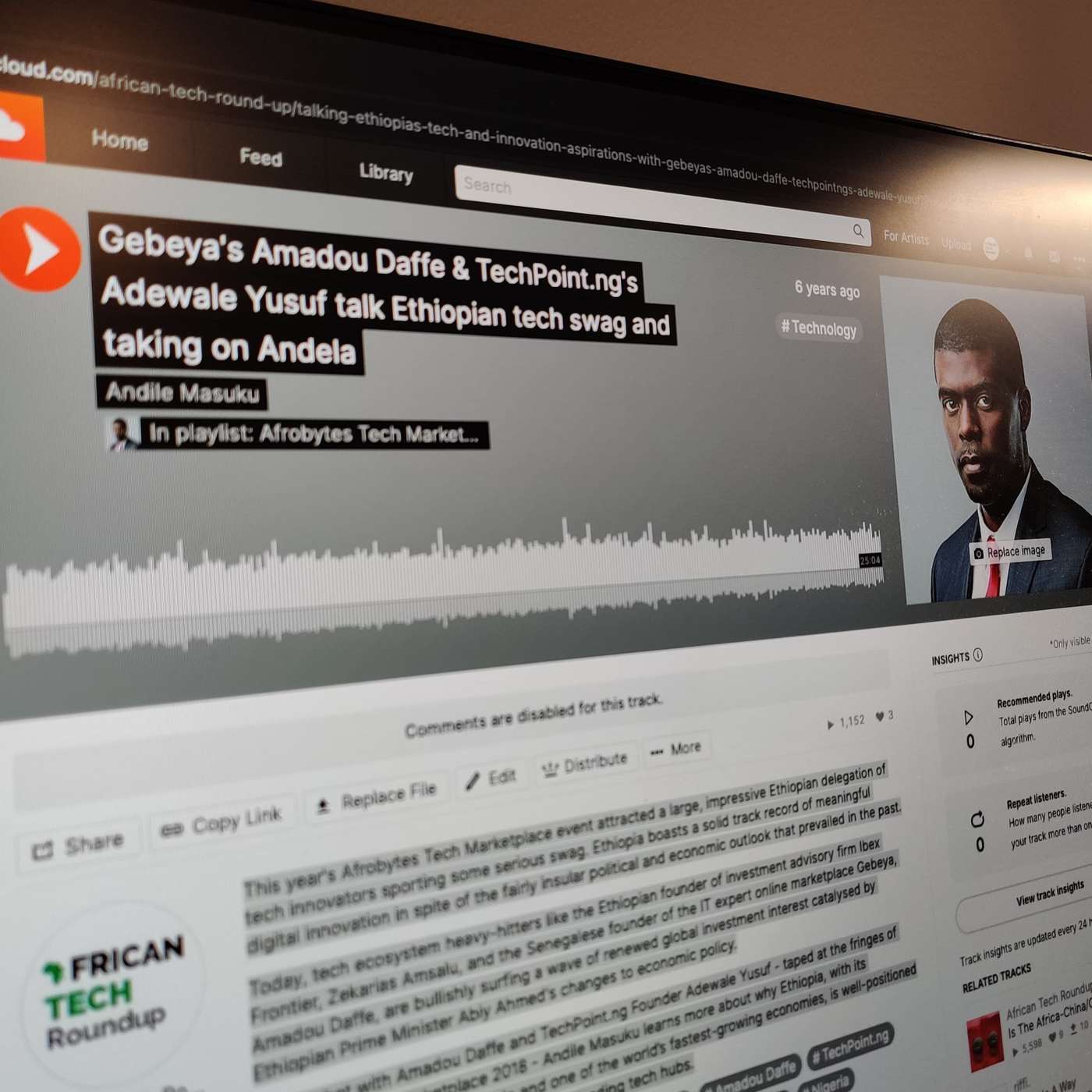
As we wind down 2024, we're diving into our archives to serve up some memorable throwback conversations. Whether you're a long-time listener revisiting these gems or discovering them for the first time, these conversations capture pivotal moments in Africa's tech journey. In today's episode, we're rewinding to 2018... Episode overview: Join us as we eavesdrop on a fascinating corridor conversation from Afrobytes Tech Marketplace in Paris featuring Amadou Daffe, who has since transformed Gebeya from an Ethiopian tech talent marketplace into a pan-African hybrid organisation connecting African developers with global opportunities, and Adewale Yusuf, who went from leading the tech media platform Techpoint to founding AltSchool Africa, which is now expanding online tech education from Africa into Europe. What makes this chat particularly relevant today is how it foreshadowed Ethiopia's emergence as a tech talent powerhouse and Nigeria's developer compensation dynamics. Critical insights: 1. The "Andela Effect" on developer salaries in Nigeria and its impact on local startups 2. Ethiopia's unique developer culture characterised by quiet confidence and humility 3. The stark contrast between Ethiopian and Nigerian developer mindsets 4. An unexpected revelation about Paga's Ethiopian development roots Standout moments: - Daffe reveals why he chose Ethiopia over Nigeria and Kenya for his tech venture - A surprising disclosure about Ethiopian developers' role in programming Sophia the robot - The parallel drawn between Nigeria's music industry success and its tech ecosystem Market intelligence (circa 2018): - Ethiopia: 43 universities offering computer science degrees Nigeria: Developer salaries reaching $50,000, pricing out local startups - Ethiopian developers' competitive advantage: Similar quality at $10,000/year Looking back, looking forward: As we revisit this conversation in 2024, it's fascinating to see how many of these observations played out. Has Ethiopia realised its potential as a tech hub? Have Nigeria's developer salary dynamics stabilised? We're curious... - Did this episode resonate with your current experience in either market? - Should we get Daffe and Yusuf back on the show to discuss how things have evolved for them as founders? - Are you a developer from either country? We'd love to hear your perspective!
Meet Chijioke Dozie, the co-founder steering Carbon through Nigeria's increasingly noisy neobank scene. In this candid chat with Andile Masuku, Dozie makes a case for zigging while others zag—specifically, charging for value while competitors burn cash on free services. It's a stance that might raise eyebrows in Nigeria's price-sensitive market, but as you'll hear, it's backed by 12 years of hard knocks and savvy iteration. Episode Overview: Carbon spotted a massive gap in Nigeria circa 2012 - imagine a market of 180 million people where barely 200,000 had credit cards. It's the kind of statistical disparity that makes you do a double-take. The conversation reveals how this reality shaped Carbon's contrarian approach to building a licensed digital bank in Africa's largest economy. Key topics: - The distinction between neobanks across different markets - Trust-building in digital banking through institutional frameworks - The evolution from free services to value-based pricing - The impact of founder experience on investor confidence - Market size challenges in African banking Notable points: 1) Carbon achieved profitability in 2018 and 2019, having raised only $12 million in equity 2) The company has processed loans for over 5 million Nigerians across three economic cycles 3) Nigeria's credit-to-GDP ratio was only 6% compared to South Africa's 70% when Carbon started 4) The company is shifting away from digital-only to include offline touchpoints Be sure to listen out for a particularly candid moment when Dozie reflects on two key decisions made during pivotal moments in Carbon's history—choices he admits he would reconsider if given the chance.


Download from Google Play

Download from App Store
 United States
Just want to say that you are a delicacy, a wonderful, incredible, brilliant delicacy. Thank you for enchanting my ears.