


 Claim Ownership
Alternative Exit
Subscribed: 0Played: 0
Subscribe

© 2026 Andy
Description
Alternative Exit is a dedicated to educating small business owners about the possibilities, benefits, and challenges of transitioning to an employee ownership model.
There are over 200m SMEs with an owner who will be retiring in the next 10 years, many of which will never find a buyer for their business, forcing them to close their doors.
There is an alternative. This show will explore various the different forms of employee ownership and best practices for successful transitions.
Each episode features interviews with experts in employee ownership, business owners who have made the transition, and consultants who facilitate these changes.
61 Episodes
Reverse
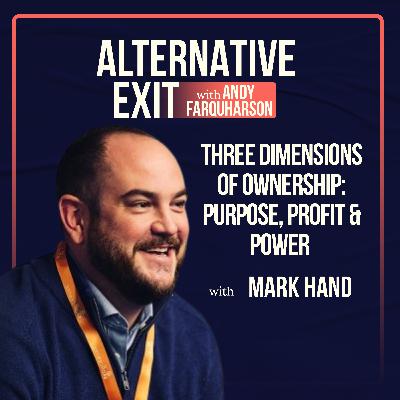
What if every business owner played a different game? Mark Hand has spent his career asking that question, first in community development in Latin America, then as an impact investor, and now as a scholar mapping the ownership economy. His weekly newsletter, The Stakehold, tracks everything from ESOPs to worker co-ops to purpose trusts, revealing an ecosystem most people don't realise exists. In this conversation, Mark breaks down the three dimensions of alternative ownership (purpose, profit distribution, and power), explains why 'fat wallets and broken hearts' is the real cost of traditional exits, and challenges us to help business owners surface what actually matters to them beyond maximising financial returns.Key Takeaways:💡 Three dimensions of ownership transformation — companies are experimenting with purpose (why we exist), profit distribution (who benefits), and power (who decides), and these dimensions can be approached independently or together✅ Structure makes purpose real — benefit corporations, purpose trusts, and employee ownership lock in commitments that signal to stakeholders this isn't lip service, it's irrevocable🌟 As many employee owners as union members — in the US, employee ownership already touches as many workers as labour unions, but most employee owners don't see themselves as part of a movement🎧 Owners are playing multiple games — business owners aren't just profit-maximisers, they're parents, community members, congregation members with different identities that get triggered by how you approach the conversation📈 Fat wallets and broken hearts — many owners who sell to private equity leave wealthy but regretful, watching their companies dismantled and their employees laid off💼 Democracy works in complex systems — if countries can operate democratically without dictators, companies (which are simpler than nations) can tooNotable Quotes:"I saw friends of his sell to private equity companies and they left with fat wallets and broken hearts. Humans have wallets and we also have hearts.""Our commitment to shareholder value maximisation has actually blinded us to the ways that humans interact with each other and what is possible.""If you can figure out how to run a country democratically, why wouldn't we be able to do that in a company, which is actually a much simpler structure?"Links & Resources:🔗 Guest: Mark Hand — https://www.linkedin.com/in/markchand🔗 The Stakehold (weekly newsletter): https://www.thestakehold.com🔗 PTON (Purpose Trust Ownership Network): https://trustownership.org/🔗 Mark's website: https://markclaytonhand.com/📖 Recommended: Rutgers CLEO website (compilation of academic learning on employee ownership)🔗 Host: Andy Farquharson — https://www.linkedin.com/in/andyfarquharson/🔗 a better monday: https://abettermonday.me
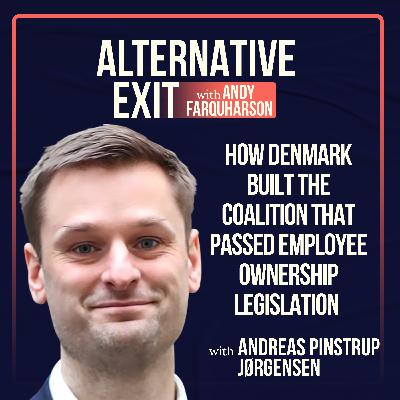
On 1st January 2026, Denmark made history. For the first time, the country passed dedicated legislation creating a vehicle for employee ownership — the EOC, or Employee Ownership Company. This is the story of how it happened. Andreas Pinstrup Jørgensen spent seven years cold-calling politicians, uniting seven parties across the political divide, building coalitions with unions and universities, and publishing a book that sparked a national conversation. What started as a bottom-up grassroots initiative became landmark legislation. In this episode, Andreas walks through the blueprint for making employee ownership law — and what Denmark does next to make the revolution real.Key Takeaways:🌟 Denmark's EOC law creates a level playing field for the first time — previously it was always easier to sell to family or an external buyer than to employees✅ Cross-party unity was the secret weapon — seven parties from across the political divide agreed because employee ownership solved four shared problems: succession, productivity, worker welfare, and community resilience💡 Three implementation lessons from the UK — create early champions, build the advisor ecosystem, and rigorously document everything so the law can be refined🎧 Lower barriers accelerate uptake — Denmark only requires a 33% minimum sale to employees (vs 50% in the UK's EOT), making it easier for cautious owners to take the first step📈 Capital infrastructure is next — five financial institutions are already in discussions on loan guarantees and strategic employee ownership lending🔗 The employees are genuinely in control — unlike some models, Denmark's EOC gives employees 100% ownership of the holding vehicle and seats on the boardNotable Quotes:"I have never been in a room where we could agree so much across the radical left and radical right. I've not seen anything like it since the climate movement in Denmark.""You have an opportunity to make history. This is a way to preserve your legacy — by turning your company over to the employees. That will make your company more stable in the future.""We are in great debt to the UK, the EOA, Graham Nuttall, Campbell. We've got all these people that have helped us — and that's the only reason I have quite a bit of optimism that this might create, within a few years, an ownership revolution."Links & Resources:🔗 Guest: Andreas Pinstrup Jørgensen — https://www.linkedin.com/in/andreas-pinstrup-j%C3%B8rgensen-021ba3a8/🔗 Think Tank for Democratic Businesses: https://demokratiskerhverv.dk/📖 Book: Medejer (Co-Ownership — the art of overtaking competitors through democratic ownership), 2020📖 Recommended reading: Making One Dragon (White & White) | The Citizen's Share (Blasi, Freeman & Kruse, 2013)🔗 Host: Andy Farquharson — https://www.linkedin.com/in/andyfarquharson/🔗 a better monday: https://abettermonday.me
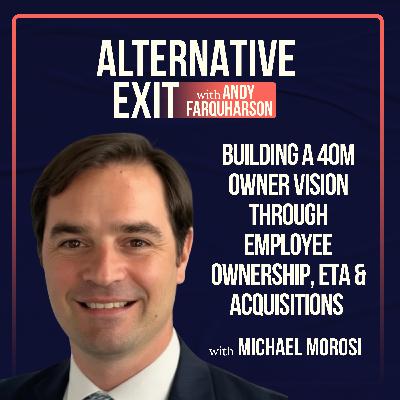
What if the most powerful way to create employee owners wasn't one company at a time - but through strategic acquisitions?Michael Morosi is proving that existing employee-owned companies can become acquisition engines that transform entire industries. As Co-Founder of 40 Million Owners and Managing Partner at Southeast Acquisition Capital, he's pioneered a model where ESOPs use M&A to grow, create value, and expand employee ownership at scale.About the episode:This conversation dives deep into the mechanics and mindset of ESOP acquisitions. Michael shares his journey from managing $100M in equity funds in Madrid to building Southeast Acquisition Capital from zero to $25M in revenue through strategic ESOP acquisitions. We explore why ESOPs have structural advantages as acquirers, how to build culture across a portfolio of employee-owned companies, and why the upcoming wave of Baby Boomer exits could create 40 million new employee owners. Whether you're running an ESOP considering growth through acquisition or a business owner exploring succession options, this episode reveals a playbook for building sustainable, employee-owned enterprises.Guest Information:🔗 Michael Morosi - Co-Founder, 40 Million Owners & Managing Partner, Southeast Acquisition Capital LinkedIn: https://www.linkedin.com/in/michael-morosi/🔗 40 Million Owners: https://40millionowners.com🔗 Southeast Acquisition Capital: https://www.southeastacquisition.comChapters/Timestamps:00:00 - Introduction to Michael Morosi04:32 - From Global Equity Management to Employee Ownership12:15 - The Birth of 40 Million Owners18:45 - Why ESOPs Make Excellent Acquirers27:30 - Southeast Acquisition Capital's Model35:20 - From Zero to $25M in Revenue Through Acquisitions42:15 - The Mechanics of ESOP M&A51:00 - Building Culture Across Multiple Companies58:30 - The 3LS Acquisition Story01:04:20 - Vision for 40 Million Employee OwnersAbout The Alternative Exit:A podcast exploring employee ownership as a succession planning strategy, hosted by Andy Farquharson of a better monday.🔗 Host: Andy Farquharson - https://www.linkedin.com/in/andyfarquharson/🔗 Learn more: https://abettermonday.meLinks & Resources:40 Million Owners website: https://40millionowners.comSoutheast Acquisition Capital: https://www.southeastacquisition.comMichael's article "The Force Multiplier": https://40millionowners.com/2025/03/12/the-force-multiplier/#EmployeeOwnership #ESOP #MergersAndAcquisitions #SuccessionPlanning #ImpactInvesting #PrivateEquity #BusinessGrowth #EmployeeOwned #CorporateDevelopment #AlternativeExit
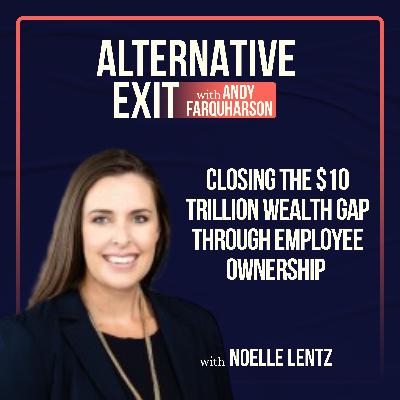
Episode Summary:What if the solution to America's wealth inequality crisis was hiding in plain sight?Noelle Lentz is mobilising millions in capital specifically designed for employee ownership transitions. As CEO of Allivate Impact Capital, she's launched one of only two ESOP-focused funds in the US, providing the subordinated debt that makes employee ownership financially viable for selling owners. With over 50% of business owners aged 55+, Noelle explains why employee ownership isn't just good for workers it's the smartest succession strategy for preserving legacy, stabilising supply chains, and creating economic equity at scale.Chapters:00:00 - Introduction01:42 - From International Development to Community Finance04:54 - Founding Allivate Impact Capital08:56 - The Silver Tsunami and Employee Ownership12:45 - How the Elevate Employee Ownership Fund Works18:30 - Target Companies and Investment Criteria22:15 - The Capital Gap in ESOP Transitions27:09 - Scaling from $10M to $150M Through SBIC Licensing30:08 - Finding Deal Flow and Partnerships31:04 - Quick Fire RoundKey Takeaways:✅ Over 50% of US business owners are 55+ and facing succession decisions in the next decade💡 Employee-owned companies show higher productivity, retention, and morale than traditional structures🎯 Most ESOP transitions require 70-80% seller financing because banks won't subordinate debt💰 Allivate provides $1-2M in subordinated debt (15% of deal value) to make transitions financially viable📈 The fund is targeting $150M through SBIC licensing to create thousands of employee owners🌟 Employee ownership receives rare bipartisan political support due to economic stabilisation benefitsNotable Quotes:"This is not just a payday, this is your legacy. And if there's a way to preserve that legacy, empower your employees, and still get the financial return you've worked so hard for, it's really worth considering.""When you're not just coming to work to check your time card and clock out, you're really thinking like an owner and contributing to not just the company's bottom line, but your own bottom line."Links & Resources:🔗 Noelle Lentz on LinkedIn: https://www.linkedin.com/in/noellestclair🔗 Allivate Impact Capital: https://allivate.com
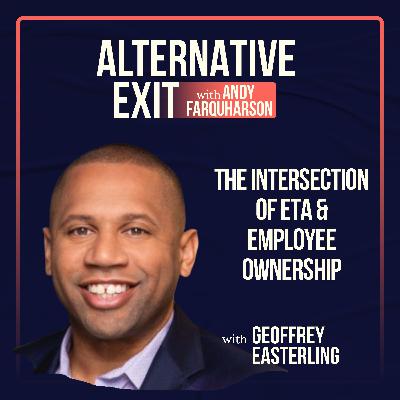
KeywordsEmployee Ownership, ETA, ESOP, Acquisition, Leadership, Business Strategy, Employee Engagement, Company Culture, Value Creation, Business TransitionSummaryIn this episode of the Alternative Exit, host Andy Farquharson interviews Jeff Easterling, CEO of ART and Associates, who shares his unique perspective on employee ownership through the lens of entrepreneurship through acquisition (ETA). Jeff discusses the moral imperative behind his leadership style, the challenges and strategies involved in transitioning to an employee-owned company, and the cultural shifts necessary for success. He emphasizes the importance of collaboration, transparency, and the long-term benefits of employee ownership for both employees and business owners. The conversation also touches on the barriers to employee ownership in the ETA space and offers advice for business owners and ETA searchers considering this path.TakeawaysGeoff Easterling emphasizes the moral imperative behind employee ownership.The transition to employee ownership requires cultural shifts within the company.Collaboration and transparency are key to successful leadership in employee-owned businesses.Employee ownership can create a legacy that benefits both employees and owners.The acquisition process can be structured to minimize personal risk for the buyer.Long-term strategies are more beneficial than short-term profit maximization.There are significant barriers to understanding and implementing ESOPs in the ETA space.Business owners should consider employee ownership as part of their exit strategy.ETA searchers can find creative financing options through ESOP funds.Building a strong network is crucial for success in the acquisition process.Chapters00:00 Introduction to Employee Ownership and ETA02:48 The Unique Perspective of Employee Ownership05:48 Navigating the Acquisition Process08:51 Moral Imperative in Business Leadership12:12 Cultural Shifts in Employee-Owned Companies14:47 Value Creation Strategies Post-Acquisition17:50 Challenges of Transitioning to Employee Ownership20:58 The Knowledge Gap in Employee Ownership24:03 Advice for Business Owners and ETA Searchers
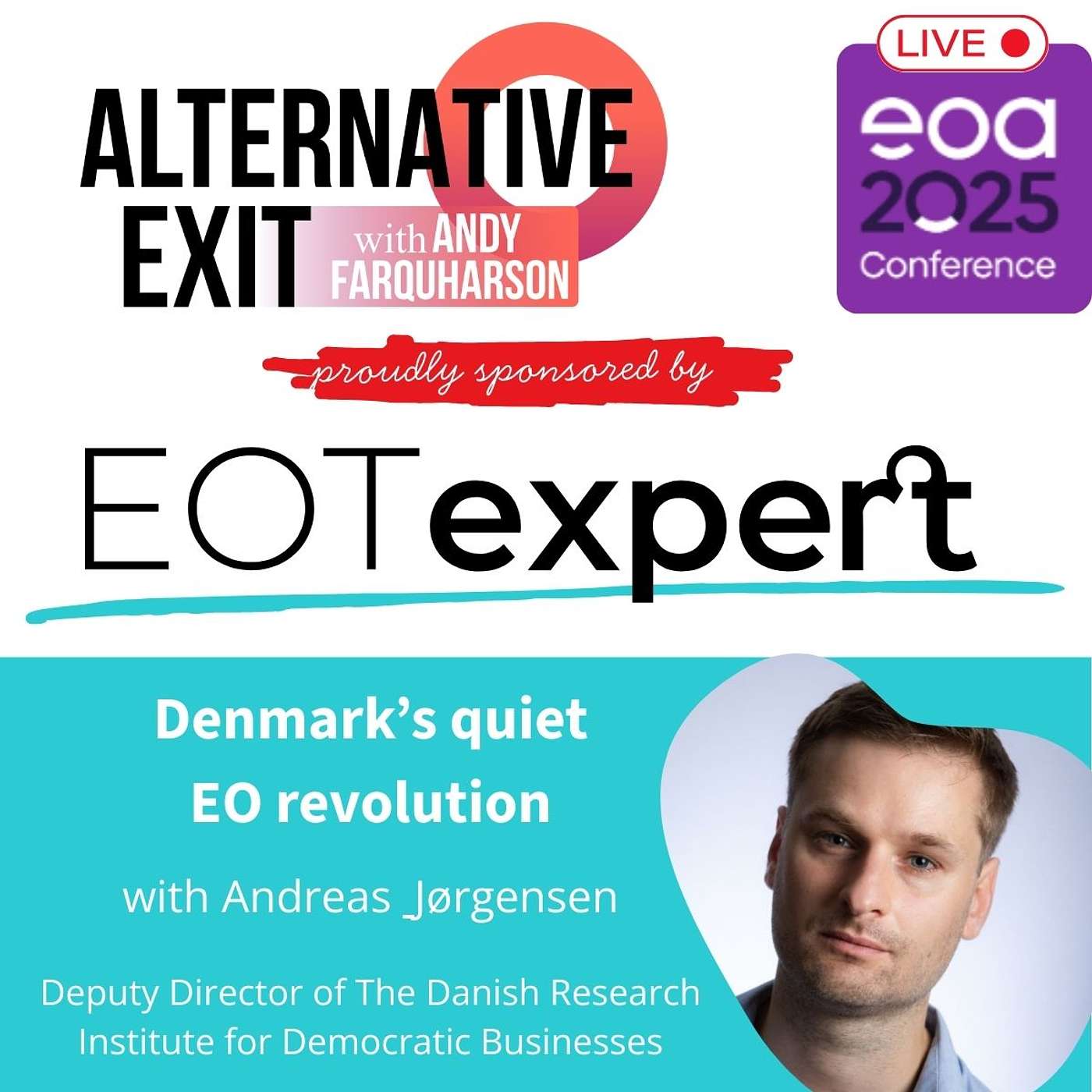
In this live episode from the EOA Conference in Telford, Andy sits down withIn this live episode from the Employee Ownership Association Conference in Telford, with Andreas Jørgensen, one of the architects behind Denmark’s renewed push for democratic ownership.Andreas shares how a cold winter classroom at Yale, a pregnant French professor, and exposure to extreme inequality in the US set him on a path to dedicate his career to employee ownership and cooperatives. That journey ultimately led to the creation of Denmark’s first national think tank focused on democratic business models.The conversation covers why Scandinavia forgot its own cooperative roots, how Denmark quietly rebuilt the infrastructure for democratic ownership, and why new legislation coming into force marks a genuine inflection point for employee ownership across Europe.Key themes discussedWhy employee ownership barely featured in Danish academic or policy circles for 30 yearsHow exposure to US-style inequality changed Andreas’ worldviewPre-distribution vs redistribution and why ownership matters more than tax after the factThe scale of cooperatives in Denmark and why most employees don’t feel like ownersThe limits of “EO light” models in consumer cooperativesBuilding a movement and a knowledge base at the same timeDenmark’s new Employee Ownership Company model and how it compares to the UK EOTIndivisible reserves, long-term stewardship, and preventing extractive behaviourWhy democratic ownership is politically acceptable across party linesWhat other countries can learn from Denmark’s approachWhy this mattersDenmark went from almost zero employee-owned transitions to passing national legislation in under a decade. Not because of ideology, but because ownership structures solve real economic problems: succession, inequality, engagement, and long-term resilience.This episode is a reminder that employee ownership doesn’t need reinvention. It needs infrastructure, patience, and people stubborn enough to stick with it.LinksAndreas Jørgensen and his work: https://demokratiskerhverv.dk/Learn more about employee ownership at abettermonday.meSponsor: This episode is brought to you by EOT Expert by Christian Wilson – providing technical expertise and compliance support for EOT transitions and ongoing governance. Learn more at eotexpert.co.uk
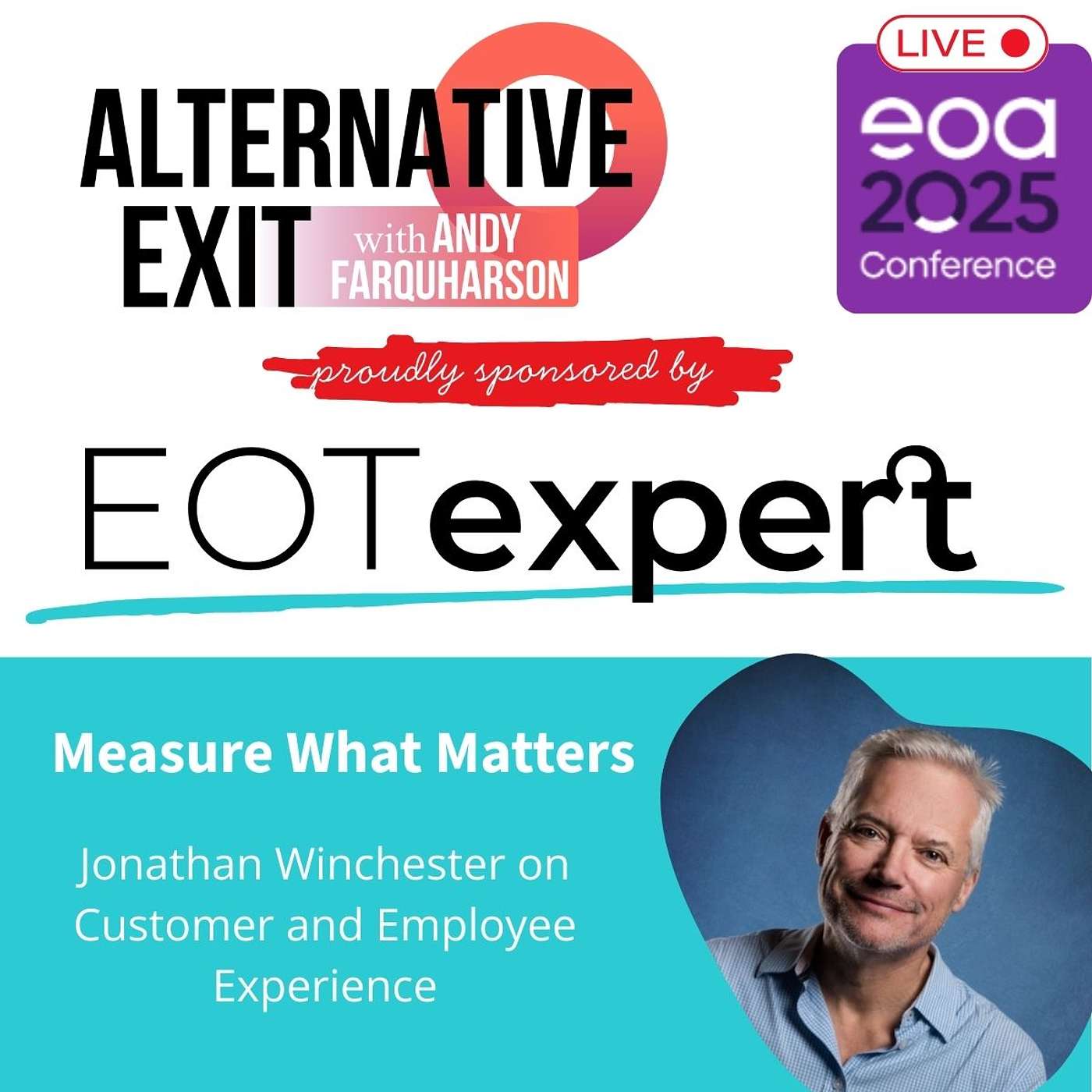
Episode: Measuring What Matters - Jonathan Winchester on Customer and Employee ExperienceIn this live episode from the EOA Conference in Telford, Andy sits down with Jonathan Winchester, CEO of Insight6, a customer experience specialist who keynoted at last year's conference with a memorable twist: he mystery shopped the audience.Key Takeaways:Jonathan brings a unique outside perspective to employee ownership. Insight6 helps businesses transform customer experience through six methods: mystery shopping, inquiry handling, employee and client listening platforms, online feedback analysis, focus groups, customer journey mapping, and mentoring/coaching/training.The conversation reveals a critical gap in how most organisations listen to their teams. Annual surveys with 30-40 questions that 50% of staff fill out begrudgingly, followed by months of board review and often no action. Jonathan shares the story of an optician where deep listening revealed the problem wasn't massive - it was the tea room. Old sofa, broken coffee machine, no milk. Basic stuff. But the CEO ripped it out over a weekend and satisfaction went up.The key insight: CX is all about making people feel special through human connection. And that requires asking the right questions at the right cadence. Not annual surveys - regular net promoter scores every two months. Not questions written by "Mary" who doesn't understand what you're trying to achieve. And critically, taking visible action so people feel listened to.Memorable Moments:"You bugger" - how attendees greeted Jonathan after last year's mystery shopping exerciseEO businesses handle inquiries three times better than accountants (and twice as good as most sectors)The tea room transformation story and why deep listening matters"If you were me, what would you do?" - the simple question that unlocks real feedbackWhy asking the wrong questions is worse than not asking at all"No knobs" - the rule of business Jonathan loved hearing at the conferenceGuest: Jonathan Winchester, CEO at Insight6LinkedIn: https://www.linkedin.com/in/jonathanwinchester/overlay/photo/Company: https://www.insight6.comEmail: jonathan@insight6.comSponsor: This episode is brought to you by EOT Expert by Christian Wilson – providing technical expertise and compliance support for EOT transitions and ongoing governance. Learn more at eotexpert.co.uk
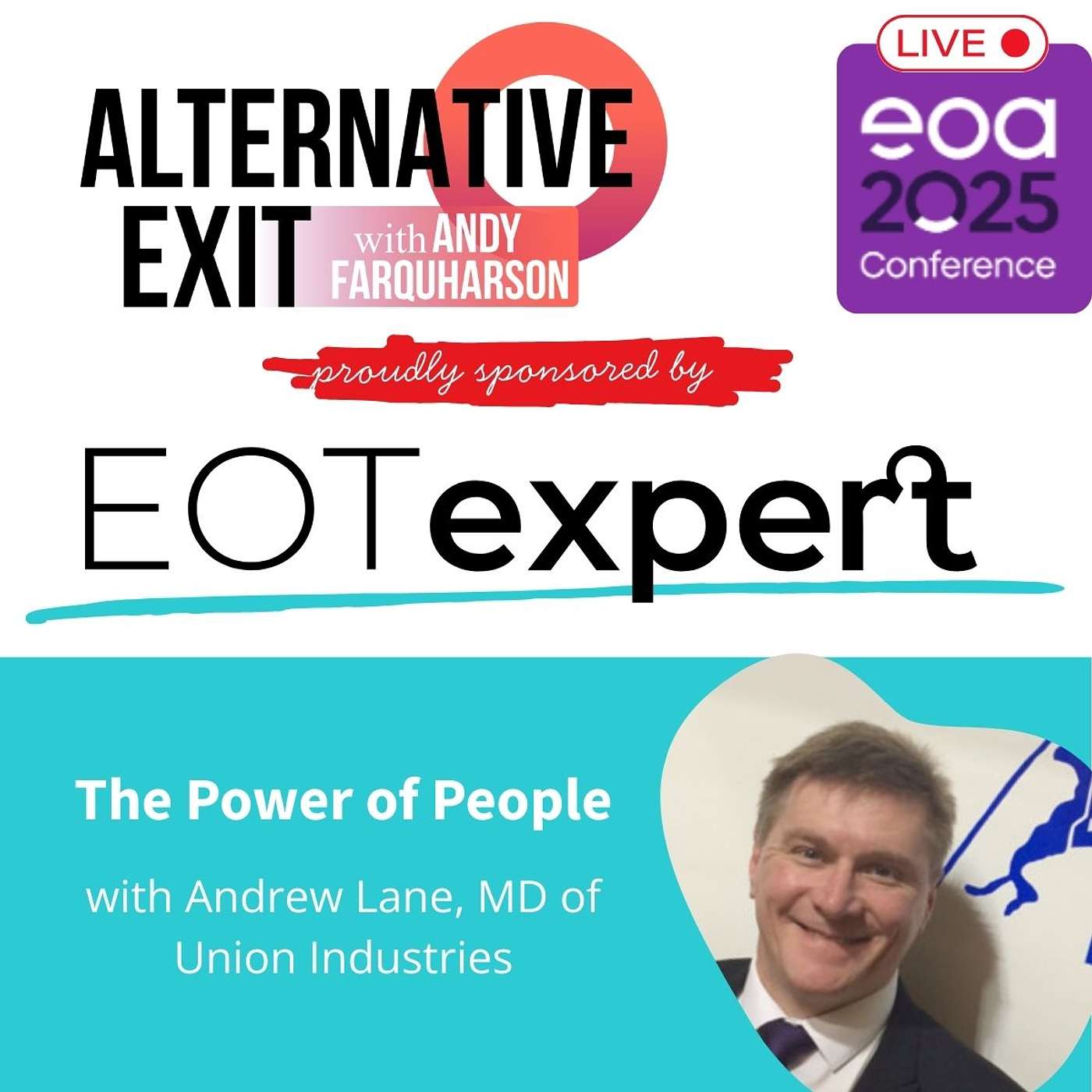
Episode: The Power of People - Andrew Lane on Building Real Employee Ownership at Union IndustriesIn this high-energy live episode from the EOA Conference in Telford, Andy sits down with Andrew Lane, Managing Director of Union Industries, a Yorkshire-based manufacturer of high-speed industrial doors. If you've bought food from a supermarket, it's been through one of their doors somewhere in its life.Key Takeaways:Andrew brings a unique perspective: he led a failed employee ownership transition in 2008, learned from every mistake, and then joined Union Industries in 2014 specifically to spearhead their transition into employee ownership. His biggest lesson? Start from the right place. If an owner's primary motivation is "tax-free money," it's probably not the right decision.Union Industries' former owners wanted their money over 14 years. The owner was 78. That's when Andrew knew they were in it for the right reasons. The business paid them off years early "because they'd done a benevolent transaction that empowered their employees."The conversation dives deep into Union's distinctive approach: equal bonuses regardless of tenure or salary ("You can't be in it together, but I get more money than you do"), weekly financial updates with numbers-graphs-traffic lights for every learning style, and a managing director who walks the floor weekly to keep ownership real for every fabricator and welder.Memorable Moments:The forklift truck driver who's been the biggest bonus recipient for five years straightWhy Andrew spent his energy on the 20% who didn't care (spoiler: you can't convert them)The service division employee who created a marketing campaign that sold £30,000 in three weeks"Don't come with a problem that doesn't have a matching solution"Why the business took a step change when the detail-grinding bottleneck was removedAndrew's closing challenge: "Tell me the reason not to"Guest: Andrew Lane, Managing Director at Union IndustriesLinkedIn: https://www.linkedin.com/in/andrew-lane-1b2b9815/Company: https://www.unionindustries.co.uk/Sponsor: This episode is brought to you by EOT Expert by Christian Wilson – providing technical expertise and compliance support for EOT transitions and ongoing governance. Learn more at eotexpert.co.uk
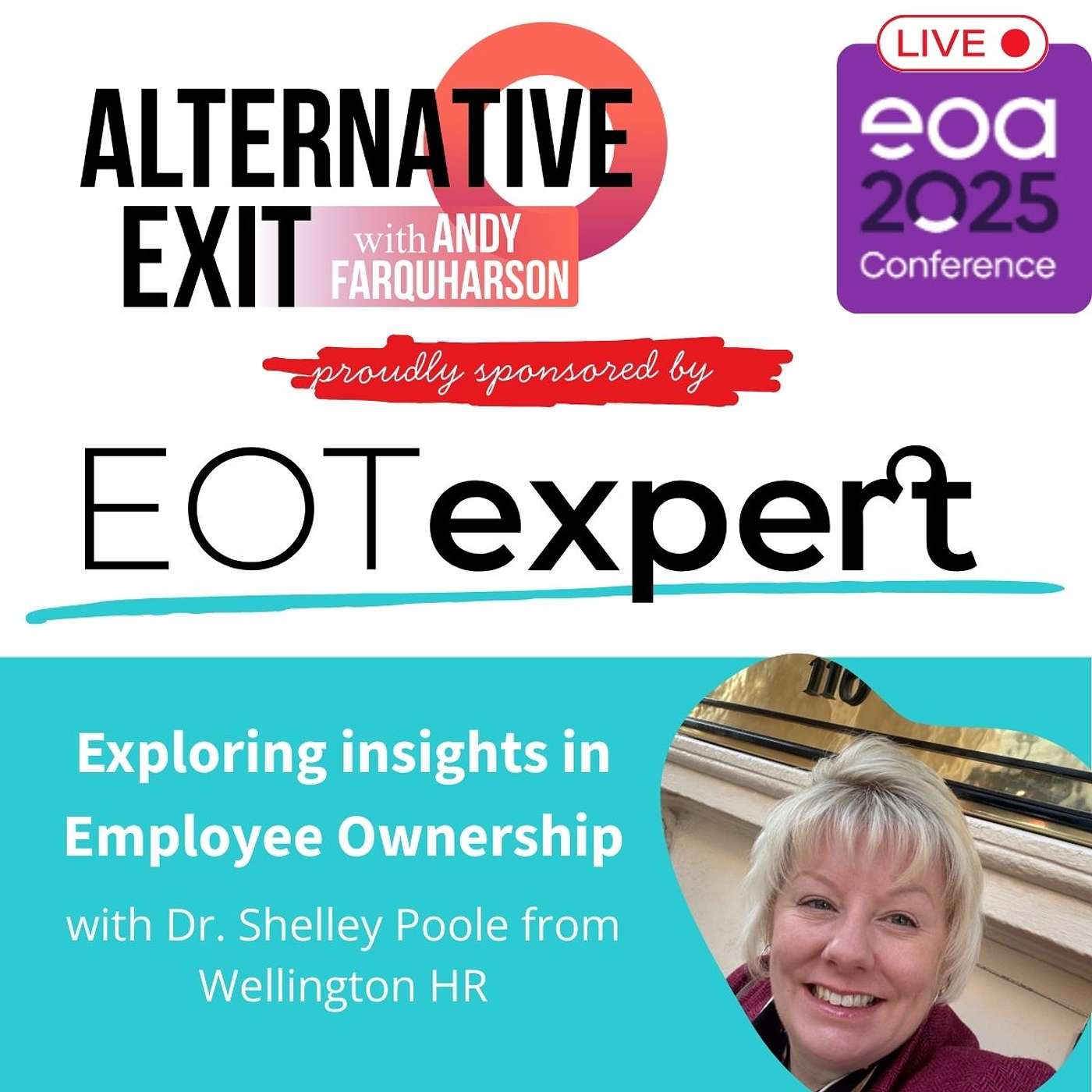
Episode: Building Ownership Culture from Day One - Shelley Poole on HR in Employee-Owned BusinessesIn this live episode from the EOA Conference in Telford, Andy talks with Shelley Poole, founder of Wellington HR, who started her business in 2019 with the intention from day one to grow it into an employee-owned business. She also conducted doctoral research on employee voice in EO organizations, making her uniquely positioned to bridge academic research and practical implementation.Key Takeaways:Wellington HR proves that employee ownership can work at micro scale - they're a team of six (soon to be seven). Shelley waited until the business was financially sound before transitioning, not because of a magic number of employees, but because she wanted to demonstrate that EO "isn't all scary" when you have money in the bank and stable operations.The conversation reveals a powerful insight from Shelley's doctoral research: people need information, but they also need to understand that information to have intelligent contributions to make. Otherwise, employee voice stays superficial - "where should we go for the Christmas party?" - rather than meaningful strategic input.At Wellington HR, they practice radical transparency: everyone knows everyone's salaries, the team looks at P&L statements, and they spent significant time educating the team on how to read financials. Shelley's research identified that barriers to voice often come from how information is shared and made available, not just whether it's shared at all.Memorable Moments:Starting a business in 2019: "Great year to be starting a business just as we go into a pandemic"The horror story: "When did you find out you were becoming employee owned?" "On the day we transitioned"Why salary transparency and financial education matter before expecting meaningful voiceHow HR can lead by example: consulting employees on maternity policy rather than just announcing itThe succession gap: new leaders thrown in the deep end when founders exit without preparationRobert Oakeshott's legacy of dividing not just profit but power and voiceGuest: Shelley Poole, Founder at Wellington HRLinkedIn: [Shelley's LinkedIn Profile - you'll need to add this]Company: [Wellington HR website - you'll need to add this]Resource: Shelley's doctoral thesis summary available via Wellington HRSponsor: This episode is brought to you by EOT Expert by Christian Welsom – providing technical expertise and compliance support for EOT transitions and ongoing governance. Learn more at eotexpert.co.uk
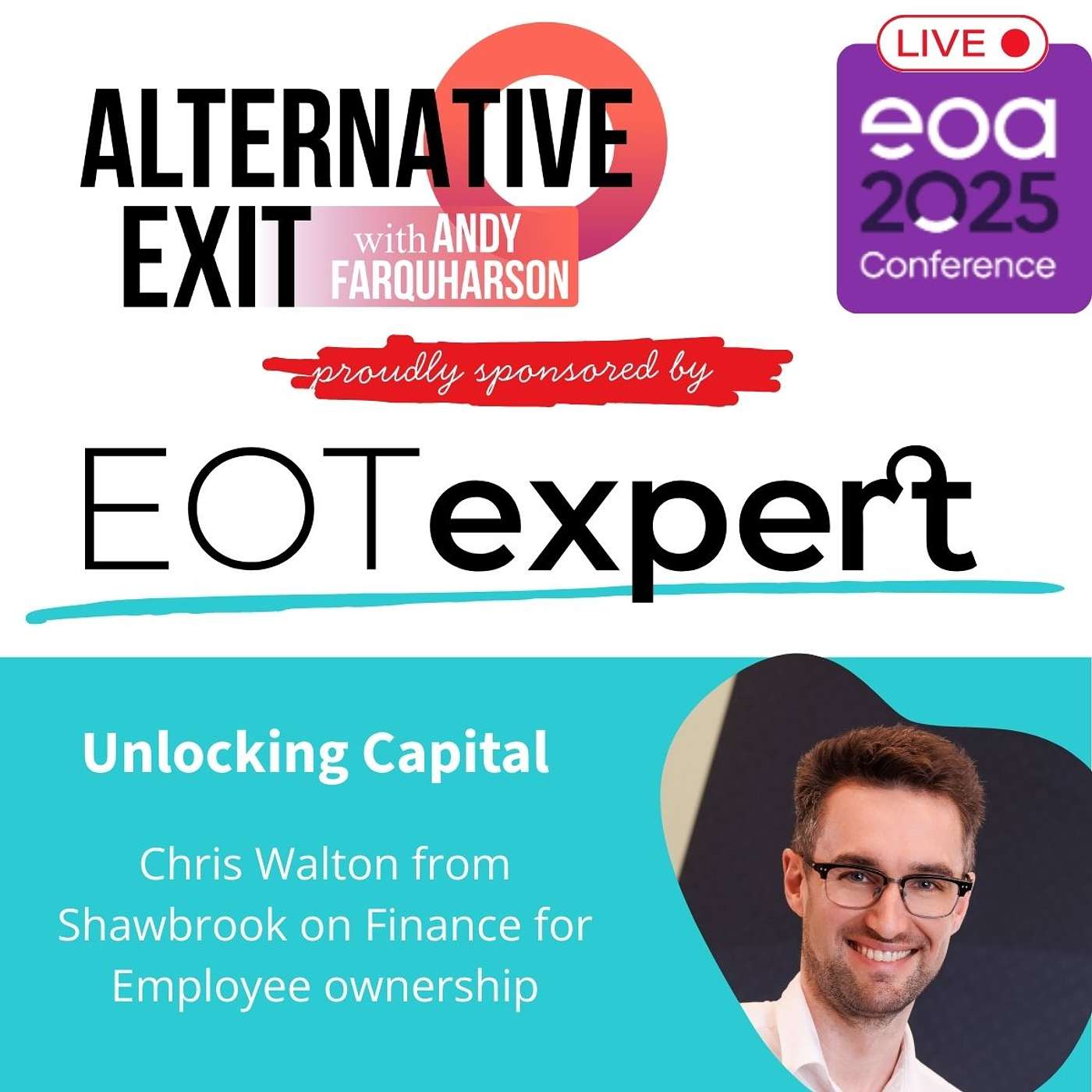
In this live episode from the EOA Conference in Telford, Andy explores the critical but often overlooked piece of the employee ownership puzzle: access to capital. Chris Walton from Shawbrook, a specialist SME lender, explains why the UK's EO ecosystem has historically been underserved by finance and how that's changing.Key Takeaways:While the tax-free incentive has driven amazing growth in UK employee ownership, it's also created a significant barrier: many transitions rely entirely on deferred consideration, with sellers waiting years to receive their money. This lack of accessible finance has held back countless transitions that could otherwise happen.Chris explains why mainstream lenders have retreated from anything "out of the ordinary" and how Shawbrook was founded specifically to serve these underserved niches. There's nothing fundamentally different about lending to employee-owned businesses - but you do need to understand the nuances around governance, management transitions, and how businesses prepare to bring employee owners on the journey.The conversation reveals a fascinating insight: if tax advantage is the only reason someone's going through the transition, they're probably not well-prepared for it, making it more challenging for lenders to provide finance. Chris's team looks beyond the numbers and management CVs to assess how thoughtfully businesses have considered what employee ownership actually means.Memorable Moments:Why the US has both strong service providers AND strong finance, while the UK has lagged on the latterThe importance of not being afraid of "prodding and poking" - it's part of growing up as a businessHow roughly half of Shawbrook's clients come directly through relationships and referralsChris's unique answer about Victorian-era cooperative movements providing inspiration for todayWhy talking to businesses that have already made the transition is the best research you can doGuest: Chris Walton, ShawbrookLinkedIn: https://www.linkedin.com/in/cjwalton/Company: https://www.shawbrook.co.ukSponsor: This episode is brought to you by EOT Expert by Christian Wilson – providing technical expertise and compliance support for EOT transitions and ongoing governance. Learn more at eotexpert.co.uk
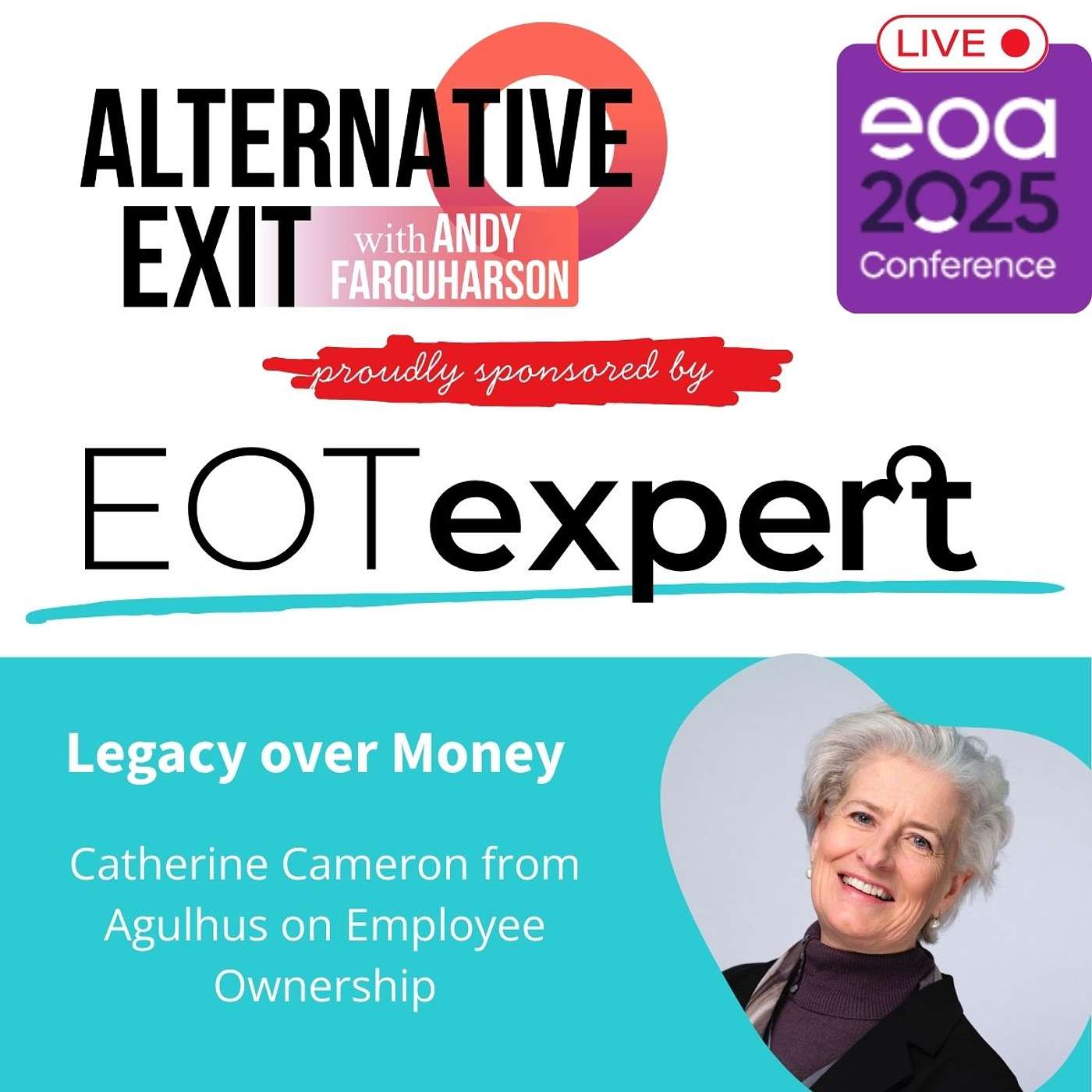
In this live episode from the EOA Conference in Telford, Andy sits down with Catherine Cameron, founder of Agulhas (nobody can spell it, nobody can say it), a research and consulting firm specialising in climate change and conflict/fragility for international development. Five years into their employee ownership journey, Catherine shares why they chose legacy over a lucrative trade sale.Key Takeaways:Agulhas works with the World Bank, African Development Bank, Green Climate Fund, UK government, and foundations like the Gates Foundation. When Catherine and the other two founders (now in their 50s and 60s) started succession planning, they had trade sale offers on paper that looked "really tempting." But research revealed the inside story wasn't as glowy - trade sales often affect values and lead to redundancies.The financial outcome? A trade sale would have been better. But the decision wasn't about money.Catherine describes their thoughtful transition process: 12-18 months of founder discussions, involving the four-person leadership team, keeping staff informed without overwhelming them. The key message wasn't about bonuses - it was about opportunity, responsibility, governance changes, and empowerment.Five years later, the results speak for themselves: two of their main partner companies have since transitioned to EO, and one member of their supply chain too. Staff are having conversations about what EO means with their own agency and authority. And the founders are gradually exiting - Catherine leaves as a paid employee at the end of this year.Memorable Moments:Why they named the company after Cape Agulhas (the southernmost tip of Africa where ocean currents meet)The "strange people coming in and out of the office" during transition planningStaff feedback: Agulhas focused on opportunity and empowerment, other companies went straight to "when do we get our bonus?"The employee trustee's quarterly anonymous pulse surveys to check how everyone's feelingTransitioning in December 2020: "We were playing Hokey Cokey with COVID"Achieving B Corp certification in summer 2023 as a reinforcement of EO valuesCatherine's immediate answer to who she most admires: "Ann Tyler" - no hesitationGuest: Catherine Cameron, Founder at AgulhasLinkedIn: https://www.linkedin.com/in/catherine-cameron (simple!)Company: https://agulhas.co.ukSponsor: This episode is brought to you by EOT Expert by Christian Wilson – providing technical expertise and compliance support for EOT transitions and ongoing governance. Learn more at eotexpert.co.uk
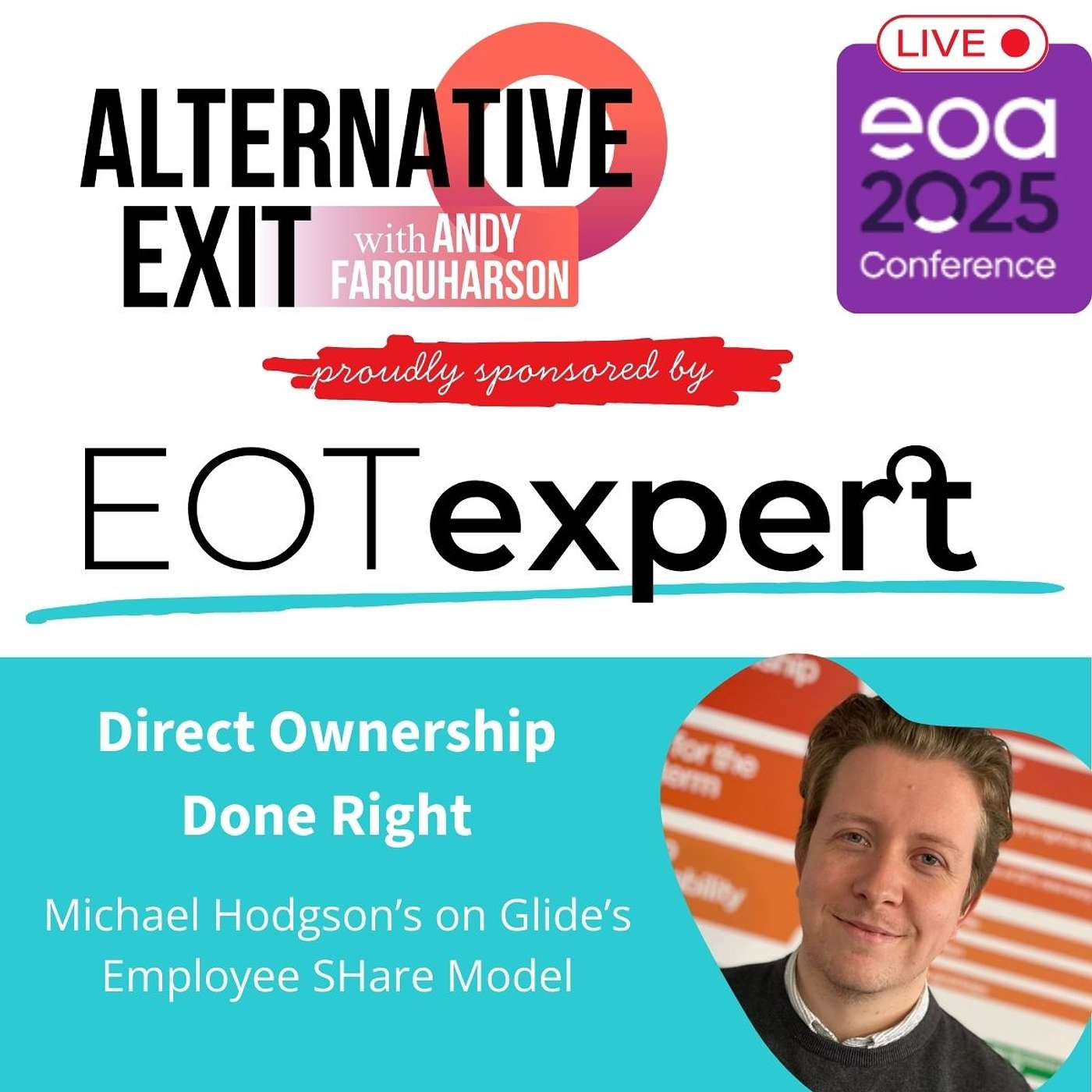
In this live episode from the EOA Conference in Telford, Andy sits down with Michael Hodgson, elected chair of Glide, an employee-owned membership organization that holds shares across three manufacturing businesses: Gripple (wire joiners, £130M turnover), LoadHog (returnable transit packaging, £45M turnover), and GoTools (tooling manufacturer).Key Takeaways:Glide operates a direct ownership model that's different from most EOTs discussed at the conference. Every employee is required after one year to buy shares in their parent company from Glide, which holds about 20% of gifted non-tradable shares donated by founder Hugh Facey. The model is set up like a sports club: one member, one vote, no hierarchy, with elected representatives.The power of this approach? When people have skin in the game and see personal financial growth linked to business performance, "you see the cogs turn." The connection between discretionary effort and individual dividend payments creates powerful alignment. Michael describes how sharing forecast dividends and share price impacts generates tangible engagement with business performance.The conversation explores sophisticated governance: Glide operates with clear accountability around growing businesses, new product innovation as a percentage of turnover, charity contributions, and sector support. Michael serves on company boards, participatory frameworks include 200 members in budget discussions, and the model has proven sustainable for decades - the founder gifted shares in the early 1990s.Memorable Moments:Hugh Facey's view: "It's not proper employee ownership" without direct ownershipThe coffee shop conversation: understanding dividends through the lens of personal spendingHow 11.5% annual share price growth demonstrates the model's successThe delicate balance: Glide challenges and holds businesses to account, but doesn't manage themWhy every key person in the business is a shareholder (succession risk mitigation)The "largest shareholder" insight: 20% gifted shares plus all individual shareholders who are Glide membersMichael's admiration for Andrew Lane at Union Industries: "Very authentic Yorkshire business"Guest: Michael Hodgson, Elected Chair at GlideLinkedIn: https://www.linkedin.com/in/michael-hodgson-a79ab625/overlay/photo/Companies: Gripple, Load Hog, GoTools (find via their websites)Sponsor: This episode is brought to you by EOT Expert by Christian Wilson – providing technical expertise and compliance support for EOT transitions and ongoing governance. Learn more at eotexpert.co.uk

Sponsor: This episode is brought to you by EOT Expert by Christian Wilson – providing technical expertise and compliance support for EOT transitions and ongoing governance. Learn more at eotexpert.co.ukIn this live episode from the EOA Conference in Telford, Andy talks with Liam Toms, Communications and Engagement Manager at Grapevine, a managed service provider for IT and telecom services. Nearly three years into their employee ownership journey, Liam shares candid insights about being somewhere "in the middle" - past the early surprises but still navigating challenges.Key Takeaways:Liam represents a common experience: he found out Grapevine was transitioning to EO through individual meetings, not a broad announcement. He'd heard whispers the week before and "did a very good job of pretending to be totally surprised." While conventional wisdom suggests consulting staff beforehand, Liam acknowledges the tradeoff: "If you're going to work for a company rather than starting your own business, you're doing it because you want the features of being employed. Suddenly you're saying people have these heightened responsibilities they didn't ask for."The business set up an EO forum with their longest-serving employee (33 years), Liam, and a very new recruit. What started as employee representation became a "task squad" - lifting rocks that hadn't been moved in years, dealing with organizational "life laundry" accumulated over 30 years. This gave Liam and his senior colleague confidence to move into management roles.The conversation explores the challenge of profit share volatility: year one had healthy profit share, year two didn't. Logically, averaging across two years is still good. But people don't think that way. "It's like we did really well and then we're not doing well." The business is still learning how to help people see the bigger picture.Memorable Moments:Finding out individually and pretending to be surprisedThe EO forum becoming an organizational "task squad""Do things different so people see that something has changed" - Bella's key adviceThe challenge: "People don't really get it yet, like what they can and can't do"Year one profit share vs year two: "Business is like a piece of trucks"Hosting their first annual conference (after the venue cancelled a week before)Liam's advice: "Give it a go. What's the alternative? You sell to a bigger organization. I think we've had enough of that."Guest: Liam Toms, Communications and Engagement Manager at GrapevineLinkedIn: https://www.linkedin.com/in/liamtoms/Company: https://grapevine.uk.comSponsor: This episode is brought to you by EOT Expert by Christian Wilson – providing technical expertise and compliance support for EOT transitions and ongoing governance. Learn more at eotexpert.co.uk
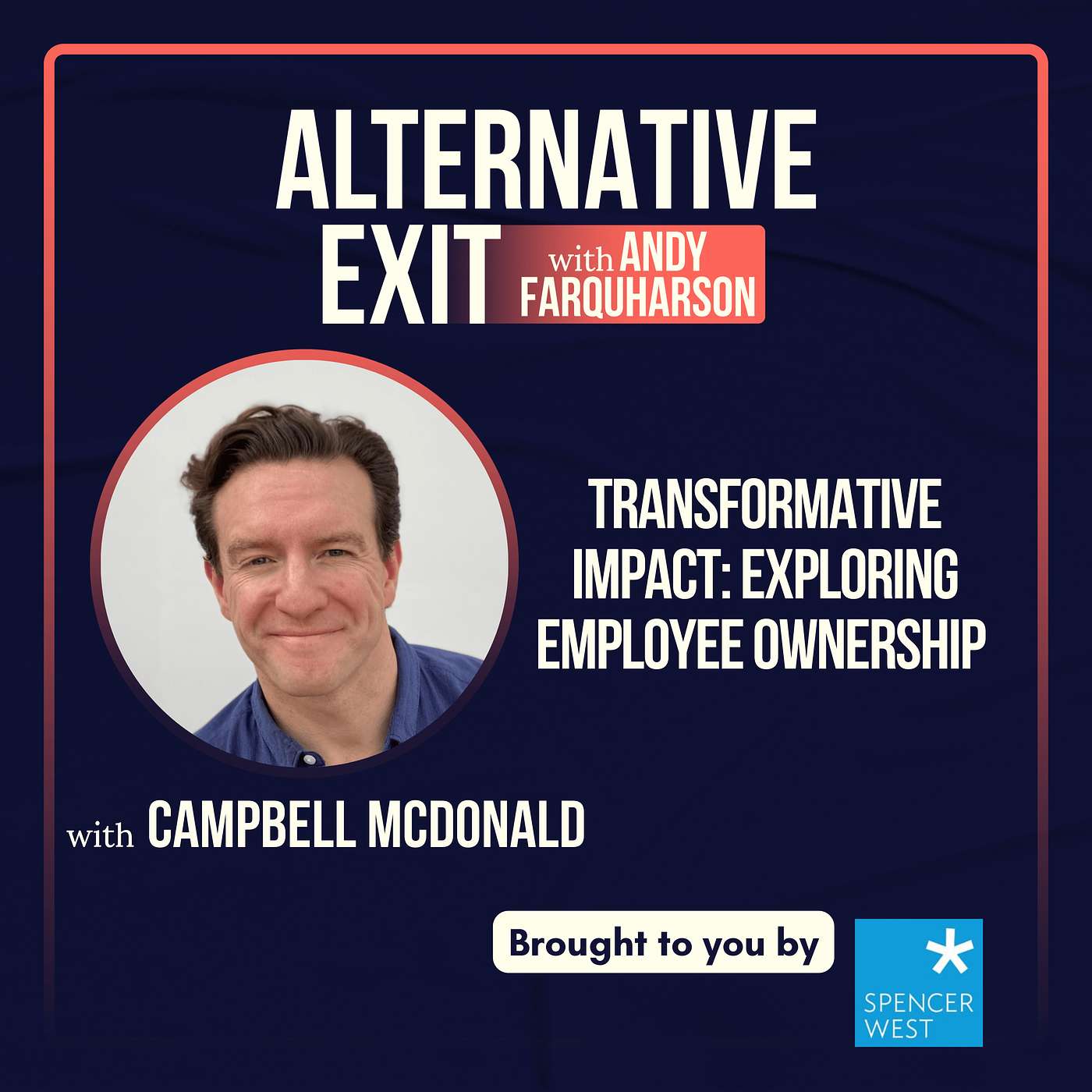
What does it really take to make employee ownership work? In this episode, I talk with Campbell McDonald, one of the UK’s leading experts on employee ownership and managing director of the Eternal Business Consultancy. With 14 years in the EO space—from his early days at the John Lewis Partnership to leading the landmark 2023 EO Knowledge Programme—Campbell brings unmatched insight into what truly drives successful EO businesses.We break down what the data shows about EO’s transformative impact and uncover what really happens between the deal and a healthy ownership culture. Campbell shares the two essential questions every employee-owned company must answer, why education matters more than instructions, and how trust between boards and trustees shapes outcomes. We also touch on what employees value most and why setting honest expectations from day one is crucial.Whether you’re a founder exploring EO or already past the transaction stage, Campbell offers a clear, practical roadmap for turning employee ownership into real, lasting impact.Timestamps:00:00 Introduction and Guest Overview 01:30 Campbell's Journey into Employee Ownership 05:45 The Power of John Lewis Partnership's Legacy 09:20 The Transformative Impact of Employee Ownership 14:15 The 2023 EO Knowledge Programme: Proof of Impact 22:40 What Happens Inside the Black Box? 28:50 The Two Critical Questions Every EO Business Must Answer 35:10 Education vs. Instruction: Building Ownership Behaviors 42:30 Setting Honest Expectations from Day One 48:15 The Role of Independent Trustees in Building Trust 55:20 Challenges and Opportunities Ahead for UK Employee OwnershipKey Takeaways:⚫ Campbell’s Dublin “prove it” moment sparked his mission to gather hard data on EO impact.⚫ The 2023 EO Knowledge Programme showed an 8–12% productivity boost and strong individual outcomes in EO businesses.⚫ Leaders must answer two questions: What are your 2–3 ownership differences? What owner behaviors do you expect?⚫ The “good company penalty”: strong pre-EO businesses must work harder to show clear ownership benefits.⚫ Materiality surveys uncover surprising differences in what employees value across locations and roles.About Campbell McDonald:Campbell McDonald is the Managing Director of the Eternal Business Consultancy, Chief Executive of Ownership at Work, and an Executive Fellow at Rutgers University’s Institute for the Study of Employee Ownership. With 14 years in the EO movement, he has supported dozens of businesses through transitions and serves as an independent trustee for several employee-owned companies. He led the 2023 EO Knowledge Programme—the UK’s largest research study on the impact of employee ownership. Campbell previously consulted for the John Lewis Partnership and founded Baxendale Advisory, an EOT-owned management consultancy. He champions evidence-based approaches to unlocking the transformative power of EO.Connect with Campbell McDonald:Website: https://www.theeternalbusiness.com LinkedIn: https://www.linkedin.com/in/campbell-mcdonald-628378 Ownership at Work: https://ownershipatwork.org Connect with Andy Farquharson:LinkedIn - https://linkedin.com/in/andyfarquharson/ Instagram - https://instagram.com/andyfarq Website - https://abettermonday.me/ Email - andy@bettermonday.me
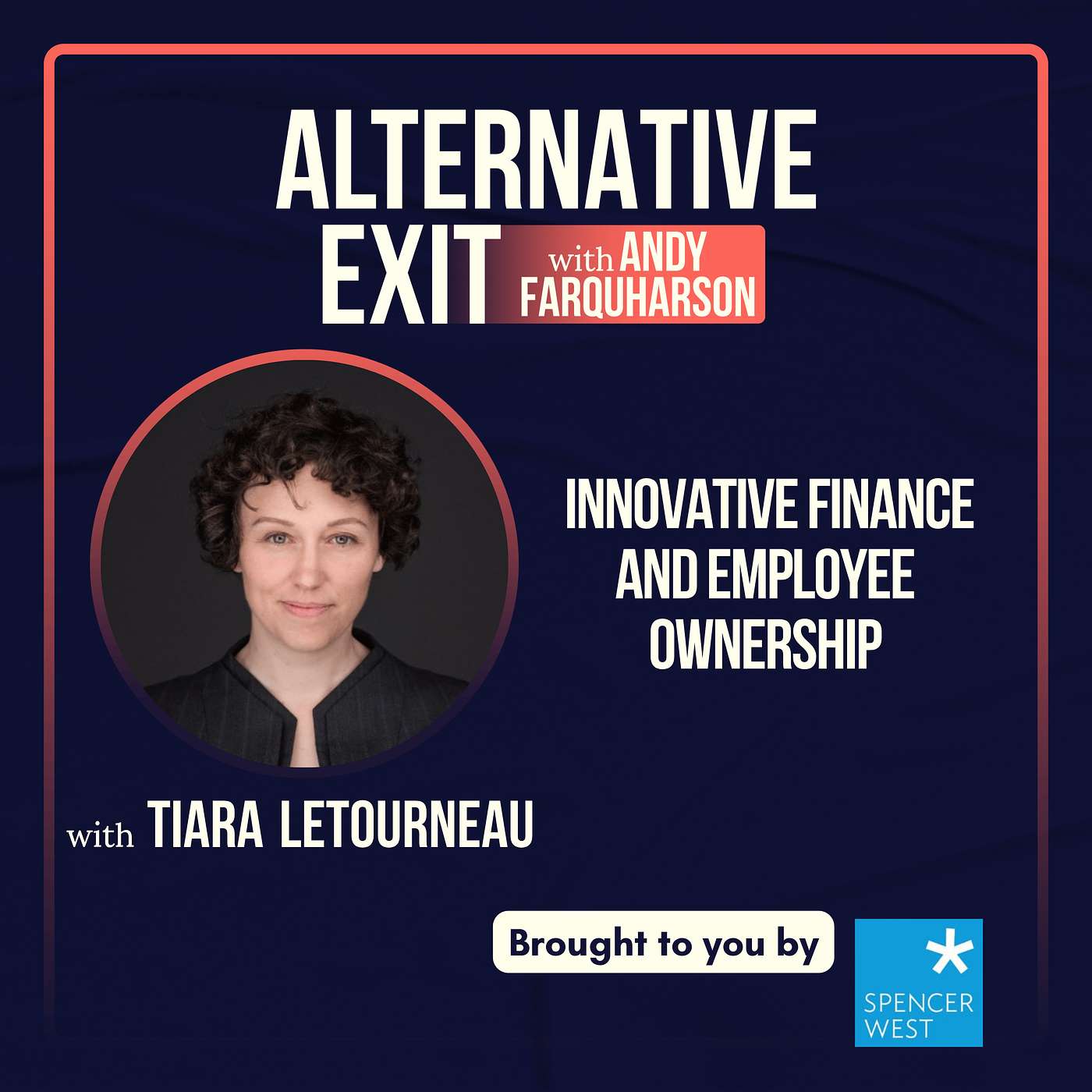
What does it take to build an entirely new employee ownership ecosystem from the ground up? In this episode, I sit down with Tiara Letourneau, co-founder and CEO of Rewrite Capital and board chair of Employee Ownership Canada, to explore how she's architecting Canada's emerging EOT market. With a Master's in Finance from Cambridge and a background in climate finance and impact investing, Tiara brings a unique lens to employee ownership—one focused on creating excellent companies, not just executing transactions.We dive into the fascinating journey from lobbying for new legislation to building a specialized advisory firm that combines M&A expertise with industrial psychology. Tiara shares why change management is just as critical as financial structuring, how Canadian EOTs offer unprecedented flexibility, and what it takes to help business owners reimagine succession beyond the traditional sale. This conversation is packed with insights on trustee roles, governance transitions, securing bank financing without personal guarantees, and why Canada's three-year window demands a quality-first approach to every transaction.Timestamps:00:00 Introduction and Tiara's Journey to Employee Ownership 08:00 Lobbying for Canada's EOT Legislation and Building a Coalition 14:00 Why Design and Implementation Matter as Much as M&A 22:00 Training the ABCs: Trustees, Boards, and Management 32:00 Helping Owners Reimagine Control and Legacy 37:00 Financing EOTs: Securing Bank Partnerships Without Personal Guarantees 46:00 The Three-Step Process: Feasibility, Roadmapping, and Transaction 54:00 Quickfire Round: Leaders, Resources, and Advice for OwnersKey Takeaways:Combining M&A expertise with industrial psychology and change management prevents years of post-transaction governance friction and creates stronger employee ownership transitionsCanada secured 14 financial partners willing to lend for EOTs without personal guarantees by focusing on conservative leverage (40-50%) and speaking the language of bankersThe critical question for business owners isn't about maximizing price—it's "What do you wish to preserve about your company?" and designing the transaction around that visionAbout Tiara Letourneau:Tiara Letourneau is co-founder and CEO of Rewrite Capital, Canada's premier M&A advisory firm dedicated exclusively to Employee Ownership Trusts, and board chair of Employee Ownership Canada. With a Master's in Finance from Cambridge and extensive experience in climate finance, Islamic finance, and impact investing, she has designed and optimized multi-billion dollar funds before turning her focus to employee ownership. Tiara was instrumental in advocating for Canada's EOT legislation and is recognized as a thought leader in innovative finance solutionsConnect with Tiara Letourneau:LinkedIn: https://linkedin.com/in/tiaraletourneau/ Website: www.rewritecapital.com Connect with Andy Farquharson:LinkedIn - https://linkedin.com/in/andyfarquharson/ Instagram - https://instagram.com/andyfarq Website - https://abettermonday.me/ Email - andy@bettermonday.me
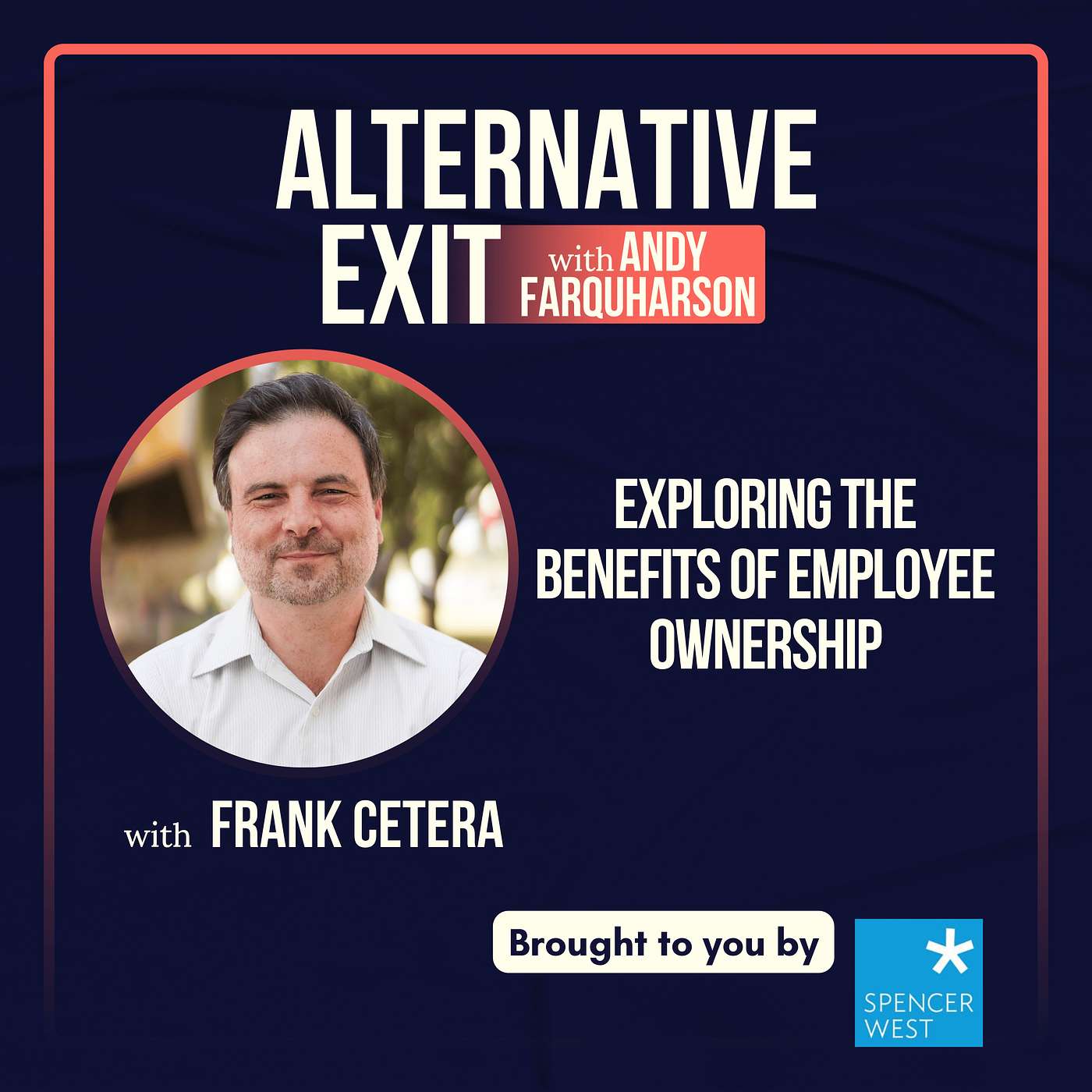
What does it mean to truly live the values of shared ownership? In this episode, I sit down with Frank Cetera, Director of the Business Transfers Program at the Democracy at Work Institute, to explore his journey from a union household to becoming a national leader in employee ownership transitions. Frank shares how early experiences with workers' rights shaped his career helping businesses transition to worker cooperatives, ESOPs, and other employee ownership models.We dive into the practical challenges workers face when stepping into ownership—from understanding financial statements to building confidence in decision-making. Frank breaks down open book management, effective facilitation techniques, and how cities are creating entire ecosystems to support transitions. Plus, he shares his remarkable story of converting his own Syracuse home into a housing cooperative, truly walking the talk of shared ownership.Timestamps:00:00 Introduction and Frank's Journey to Employee Ownership05:00 Understanding the Democracy at Work Institute's Mission09:00 Core Benefits of Employee Ownership for Workers16:00 Overcoming Financial Literacy Challenges Through Open Book Management 22:00 Building Confidence and Creating Effective Governance Structures 29:00 Values-Driven Transitions and Working with Business Owners 33:00 Building City-Scale Ecosystems for the Silver Tsunami 37:00 Quickfire Round: Leaders, Resources, and Final AdviceKey Takeaways:➔ Employee ownership delivers stability, increased wages through profit-sharing, and confidence growth—with the confidence factor being the most underappreciated benefit➔ Financial literacy is the biggest challenge for new worker-owners; open book management should start years before transition with clear, jargon-free statements that connect numbers to daily work➔ Strong facilitation and ongoing education are essential for effective participatory meetings and decision-making, helping workers build confidence to contribute strategically➔ Successful transitions come from values-driven owners who prioritize legacy and community impact over maximizing sale price, though awareness gaps among accountants and advisors remain a major barrier➔ City-level ecosystem building—with municipal funding for technical assistance, marketing, and referral networks—is proving to be the most effective strategy for scaling employee ownership during the silver tsunamiAbout Frank Cetera:Frank Cetera is the Director of the Business Transfers Program at the Democracy at Work Institute, where he leads national efforts to support business transitions toward employee ownership. With roots in a union household and experience spanning environmental nonprofits to business development, Frank serves as the backbone coordinator for the Workers to Owners Collaborative—a network of 50+ organizations supporting employee ownership transitions across the United States. He also serves on the board of Syracuse Cooperative Federal Credit Union and is actively converting his own collective house into a housing cooperative, embodying the cooperative values he advocates professionally.Connect with Frank Cetera:Website: www.institute.coopWebsite (Resources): www.becomingemployeeowned.orghttps://www.linkedin.com/in/frankraymondcetera/ Connect with Andy Farquharson:LinkedIn - https://linkedin.com/in/andyfarquharson/ Instagram - https://instagram.com/andyfarq Website - https://abettermonday.me/ Email - andy@bettermonday.me
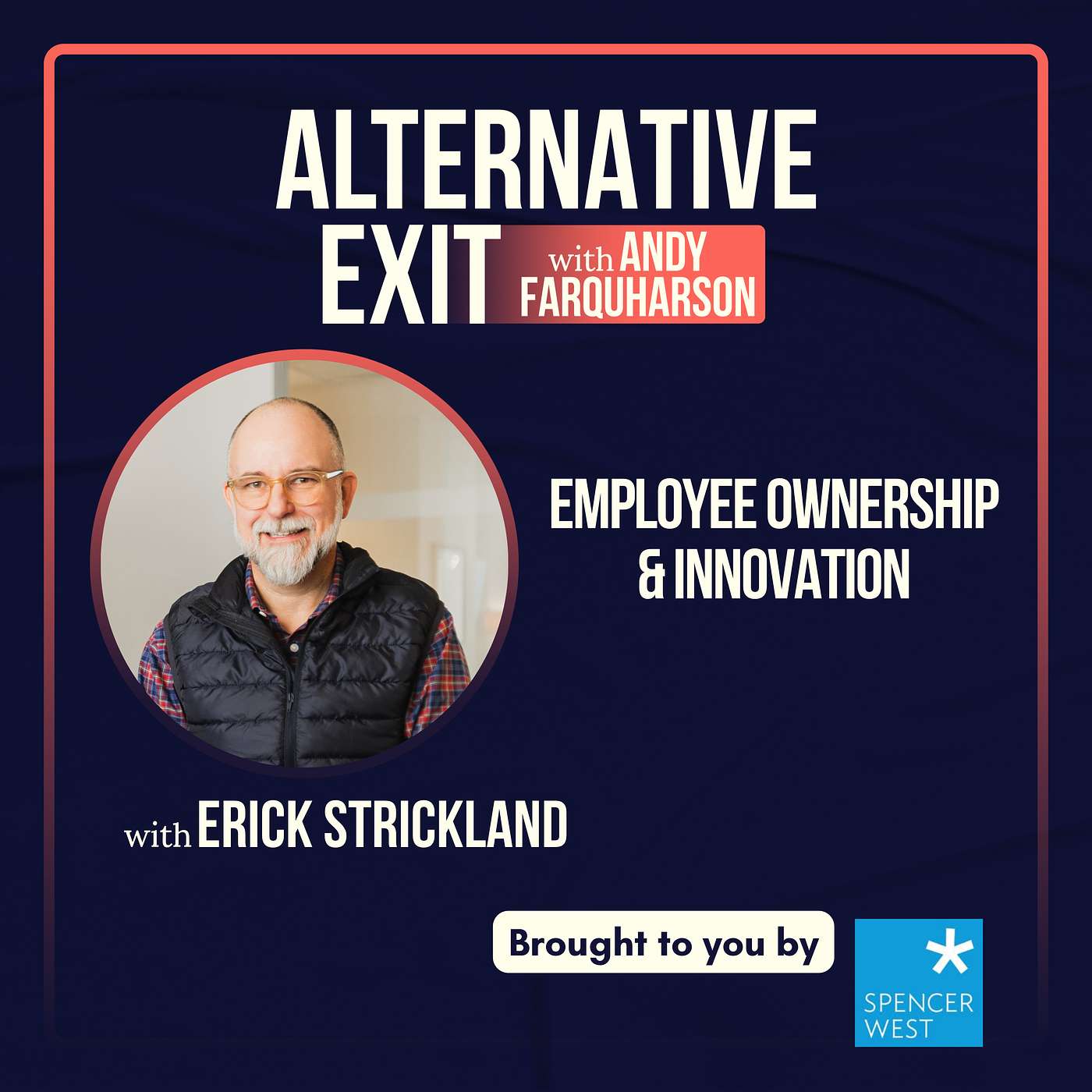
What happens when you combine employee ownership with human services? In this episode, I sit down with Eric Strickland, CEO of 3TLs—a purpose-driven group of 18 employee-owned companies with nearly 700 employee owners across five states. Eric shares his 20-year journey from CFO to CEO, including the rare "ESOP-to-ESOP" transaction that launched 3Ls and his innovative approach to building employee wealth through vertical integration.We explore how Eric thinks about employee ownership as an asset allocation problem, why culture requires intentional investment, and how to drive innovation in purpose-driven organizations. From quarterly town halls to investing in early-stage healthcare tech, Eric reveals what it takes to make employee ownership work in mission-focused businesses where workers care more about impact than retirement accounts.Timestamps:00:00 Introduction and Eric's Background03:00 The First ESOP and Why It Closed to New Participants07:00 The Rare ESOP-to-ESOP Leveraged Buyout12:00 Three Ls and the Vertical Integration Strategy20:00 Investing in Culture and Building Trust30:00 Driving Innovation Through Frontline Creativity36:00 Innovation as Asset Allocation39:00 Common Myths About ESOPs45:00 Quickfire Questions and Final AdviceKey Takeaways:Why OmniVisions needed a second ESOP after the first closed to new participantsHow to think about employee ownership as a retirement asset allocation problemThe vertical integration playbook: turning operating expenses into employee-owned businessesWhy quarterly town halls with open Q&A build the trust necessary for strong EO cultureThe biggest ESOP myths: complexity and cost compared to traditional exitsWhy it takes 24+ months for young workers to see meaningful value in their ESOP accountsAbout Eric Strickland:Eric Strickland is the CEO of 3Ls, a purpose-driven organization of 18 employee-owned companies serving human and health services across five states. With a 20-year tenure that began as CFO of OmniVisions in 2005, Eric has become a leading voice in the employee ownership movement, bringing a systems-minded, numbers-focused approach to social entrepreneurship.Connect with Eric Strickland:LinkedIn:https://linkedin.com/in/eric-strickland-3ls/ Website: https://3ls.com Connect with Andy Farquharson:LinkedIn - https://linkedin.com/in/andyfarquharson/ Instagram - https://instagram.com/andyfarq Website - https://abettermonday.me/ Email - andy@bettermonday.me
In this episode of Alternative Exit, Andy Farquharson sits down with legal industry veteran David Owen (formerly CEO of Oliver & Co Solicitors) to unpack the real-world exit journeys from law practice, the shift to employee ownership, and why the toughest deals often happen internally. We dive into leadership, succession strategy, emotional and financial components of exiting a professional services business, and how to position yourself well ahead of the sell or transition day.David shares his path from rising partner to CEO of Oliver & Co, his decision-making as the firm moved to 100% employee ownership, the deal structure (and mindset) behind the transition, and how he navigated the emotional side of stepping away. We explore: How do you know when it’s time to exit? How do you craft an exit that preserves culture? How much is “enough”? And, maybe most importantly, how do you prepare your successor (or successor culture) so the business survives — and thrives — after you depart?Timestamps:00:00 Introduction: Why Podcast Sustainability Matters03:15 Environmental Impact - Digital Carbon Footprint 08:45 Green Hosting and Production Practices 12:30 Social Sustainability - Diversity and Inclusion Goals 18:20 Making Content Accessible to All 22:40 Economic Sustainability - Revenue Diversification 27:15 Team Wellbeing and Fair Compensation 31:50 Content Strategy for Long-term Impact 36:25 Measurement, Metrics, and Accountability 41:10 Quick Wins You Can Implement TodayKey Takeaways:Exiting a professional-services business is not just about money — culture, client continuity and legacy matter significantly.Start planning the exit years before you actually want to depart: mindset, systems, leadership, client relationships.Converting to an employee ownership model (like Oliver & Co did) can align incentives and preserve continuity for clients and staff.Value creation happens in the business long before a board says “we’re ready to exit” — leadership matters.The emotional aspect of “letting go” is often underestimated — even when financials are strong.After exit, staying involved in a non-executive/trustee role can help with transition and personal identity.David OwensDavid Owens is the former CEO of Oliver & Co Solicitors, a firm based in Chester, UK. Under his leadership, the firm became 100% employee-owned and has consistently championed a high-performance but client-first culture. His expertise spans professional-services leadership, exit strategy, succession planning and governance in owner-led firms.Oliver & Co Solicitors is a full‐service law firm based in the North-West of England. It provides services in personal and business law, including conveyancing, wills & probate, family law, commercial property and more. The firm emphasises “we are accountable to our clients and to each other” as part of its employee-ownership culture. Connect with David Owen:LinkedIn - https://www.linkedin.com/in/david-owen-eot/ Website - https://www.oliverandco.co.uk/ Connect with Andy Farquharson:LinkedIn - https://linkedin.com/in/andyfarquharson/ Instagram - https://instagram.com/andyfarq Website - https://abettermonday.me/ Email - andy@bettermonday.me
What drives a founder to sell their company to employees instead of outside investors? In this episode, I sit down with Dr. Adria Scharf, Project Director of the Curriculum Library for Employee Ownership (CLEO) at Rutgers University, to explore her groundbreaking research on what motivates business owners to choose employee ownership as their exit path. Adria shares insights from her ongoing study of ESOP sellers, unpacks the emotional and economic logic behind these decisions, and reflects on why ownership transitions are never just financial—they’re deeply human.We dive into the emerging evidence shaping the future of employee ownership in the U.S., from macroeconomic trends to personal stories of founders who prioritise legacy over liquidation. Adria discusses why awareness and education remain the biggest barriers to broader adoption, and how a high-trust culture can make or break a successful transition. Packed with data, heart, and hope, this episode offers a rare window into the psychology of selling—and the possibility of exits that build both wealth and community.Timestamps:00:00 Introduction and Guest Overview 01:13 Exploring the Rutgers Institute’s Research Legacy 04:17 The Rising Awareness of Employee Ownership in the U.S. 08:20 What Motivates Founders to Choose Employee Ownership 11:55 The “Benevolence” Factor and Cultural Transitions 15:17 How Awareness and Advisor Education Affect Adoption 17:33 The Synergy Between High-Trust Culture and Employee Ownership 23:28 The True Cost—and Payoff—of Investing in Culture 28:34 ESOPs and the Wealth-Building Impact for Workers 32:20 Barriers to Scaling Employee Ownership 34:12 Fast Round: Leaders, Resources, and Final Words of AdviceKey Takeaways:Why wealth inequality and wage stagnation are driving renewed interest in employee ownershipThe mixed motivations of sellers—balancing liquidity, values, and workforce legacyHow some owners find ESOPs a financially rational exit, not just a benevolent oneThe hidden effort required to build high-trust, high-performance cultures post-transitionWhy awareness and advisor education are the biggest barriers to EO adoptionThe proven wealth impact of ESOPs: average $165,000 per employee in retirement valueWhy ESOP regulation makes it a uniquely inclusive and equitable ownership modelAdria’s call for simpler, off-the-shelf EO models to reach smaller businessesAbout Dr. Adria Scharf:Dr. Adria Scharf is the Project Director of the Curriculum Library for Employee Ownership (CLEO) at Rutgers University, the world’s largest university-based institute dedicated to advancing research and education on shared capitalism. Her work explores how employee ownership influences job quality, economic security, and business succession. A respected researcher and advocate, Adria has co-authored multiple reports and is shaping the academic foundation for the next generation of equitable business models.Connect with Dr. Adria Scharf:Website: https://cleo.rutgers.edu LinkedIn: https://www.linkedin.com/in/adria-scharf-621b442/Connect with Andy Farquharson:LinkedIn - https://linkedin.com/in/andyfarquharson/ Instagram - https://instagram.com/andyfarq Website - https://abettermonday.me/
What does it really take to transition a business to employee ownership—and what happens after you sign on the dotted line? In this episode, I sit down with Christian Wilson, a specialist solicitor with over 25 years of experience in business law and employee ownership. Christian has helped more than 62 companies transition to Employee Ownership Trusts (EOTs), creating 3,500 employee owners across businesses valued at over £450 million. He shares the legal, emotional, and practical realities of making employee ownership work.Timestamps:00:01:12 Christian's Journey into Employee Ownership Law 00:04:36 What Makes a Company Right for an EOT 00:08:12 The Three Parts of an EOT Transition 00:12:29 Valuation, Affordability, and the Retirement Conversation 00:19:13 Life After Completion: The Real Work Begins 00:23:23 Why Open Book Management Matters 00:27:07 Giving Employees a Voice and Influence 00:34:23 Success Stories: Real Examples from EOT Companies 00:38:58 Quickfire Round: Leaders, Resources, and AdviceKey Takeaways:Employee ownership transitions involve three journeys: legal structure, personal succession for the owner, and cultural evolution for the teamValuation and affordability are different—the company funds the purchase through future profits over 6-10 years typicallyThe day you complete the EOT is day one of being employee owned, not the finish lineOpen book management unlocks entrepreneurial thinking and helps employees understand business trade-offsEmployee voice must be matched with responsive leadership—ask for feedback, then show how you've considered itWell-structured EOTs include flexibility for market changes and unexpected challengesAbout Christian Wilson:Christian Wilson is a Partner Solicitor at Spencer West LLP, specializing in Employee Ownership Trusts and business succession. With over 25 years of experience, he has guided more than 62 companies through successful transitions to employee ownership, creating 3,500 employee owners with a combined business value exceeding £450 million. Christian is ranked as a Leading Individual in Legal 500 and a Notable Practitioner in Chambers Guide to the Legal Profession. He is also a member of the Employee Ownership Association, an independent trustee for several EOTs, and was previously a non-executive director of the Eden Project. Christian is known for his genuine passion for employee ownership and his ability to make complex legal processes accessible and seamless.Connect with Christian Wilson:Website: https://employee-ownership-trusts.co.uk Spencer West Profile: https://www.spencer-west.com/team/christian-wilson/ LinkedIn: https://www.linkedin.com/in/christian-wilson-a3597017/ Email: christian.wilson@spencer-west.com Connect with Andy Farquharson:LinkedIn - https://linkedin.com/in/andyfarquharson/ Instagram - https://instagram.com/andyfarq Website - https://abettermonday.me/ Email - andy@bettermonday.me

Comments

Download from Google Play

Download from App Store
 United States