


 Claim Ownership
Woodbine Podcast
Subscribed: 1Played: 12
Subscribe

Description
Woodbine's RSS Feed
31 Episodes
Reverse
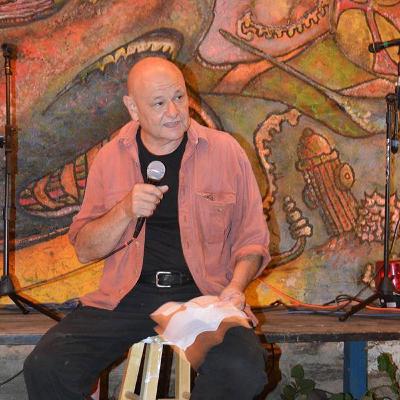
The Woodbine Podcast returns with a new episode featuring John Clark, author of The Impossible Community: Realizing Communitarian Anarchism (2013) and Between Earth and Empire: From the Necrocene to the Beloved Community (2019).We discuss why anarchist movements have trailed religious communities, or have relied on disasters, to build deep communal forms of life. We talk about some neglected thinkers and histories, from Élisée Reclus (1830-1905) and Gustav Landauer (1870-1919) to the Sarvodaya movement. We hear about John's long-term research project on a "dialectical social ecology", as well as his experiences as a teacher in both university and autonomous settings. John P. Clark is a philosopher, activist, writer, and educator. He lives in New Orleans, where his family has been for thirteen generations. He is Director of La Terre Institute for Community and Ecology, and Professor Emeritus of Philosophy at Loyola University, where he taught for 44 years. His books include Max Stirner’s Egoism (1976), The Philosophical Anarchism of William Godwin (1977), The Anarchist Moment (1984), The Tragedy of Common Sense (2016), and he is at work on Awakening Earth Community, a dialectical social ecology. In recent years he has worked with such activist groups as No Bayou Bridge, No New Leases, 350 NOLA, and Earth First. He does educational and organizational work with La Terre Institute, both in New Orleans and at Bayou La Terre Woodland Center, an 88-acre site on Bayou La Terre, near Dedeaux, MS in the coastal forest on the Gulf of Mexico. For many years he was active in the alternative education and cooperative movements, and he is a member of the Education and Research Workers’ Industrial Union 620 of the Industrial Workers of the World.LINKS:John Clark's Writings: https://loyno.academia.edu/JohnClarkDialectical Social Ecology: https://www.facebook.com/groups/1298373847207629/La Terre Institute for Community and Ecology: https://www.laterreinstitute.org/READINGS:--"Élisée Reclus: The Making of a Communard" - John P. Clark, 2021: https://web.archive.org/web/20220222160826/https://roarmag.org/essays/elisee-reclus-paris-commune/--"Living Our Lives: The Communal Basis of Social Transformation" - John Clark, 2020: https://www.academia.edu/50699717/Living_Our_Lives_The_Communal_Basis_of_Social_Transformation--"What is eco-anarchism?" - John Clark, 2020: https://www.ecologicalcitizen.net/pdfs/v03sc-02.pdf

For this week's episode we're joined by Phil Neel and Kang Kang to discuss Phil's recent book Hellworld: The Human Species and the Planetary Factory. We talk about optimism and partisanship, literacy and revolutionary subjectivity, and whether to fear or embrace the apocalyptic nihilism of our time.SUGGESTED READINGS:--"Theory of the Party" - Phil A. Neel, 2025: https://illwill.com/theory-of-the-party--"Forest and Factory" Phil A. Neel & Nick Chavez, 2023: https://www.endnotes.org.uk/palabre/forest-and-factory--"Garbage time of history" - Alexander Boyd, 2024: https://u.osu.edu/mclc/2024/08/06/garbage-time-of-history/--"Heart" - Shuang Xuetao, 2023: https://www.newyorker.com/magazine/2023/10/09/heart-fiction-shuang-xuetaoPhil A. Neel is a communist geographer and the author of Hinterland and Hellworld. His most recent work can be found in his blog, The Planetary Factory.Kang Kang is a writer, translator, and artist working on a dissertation about revolutionary pessimism in ethnic Chinese literature.LINKS:https://philneel.substack.com/https://kangkang.fyi/https://www.rosachicago.com/
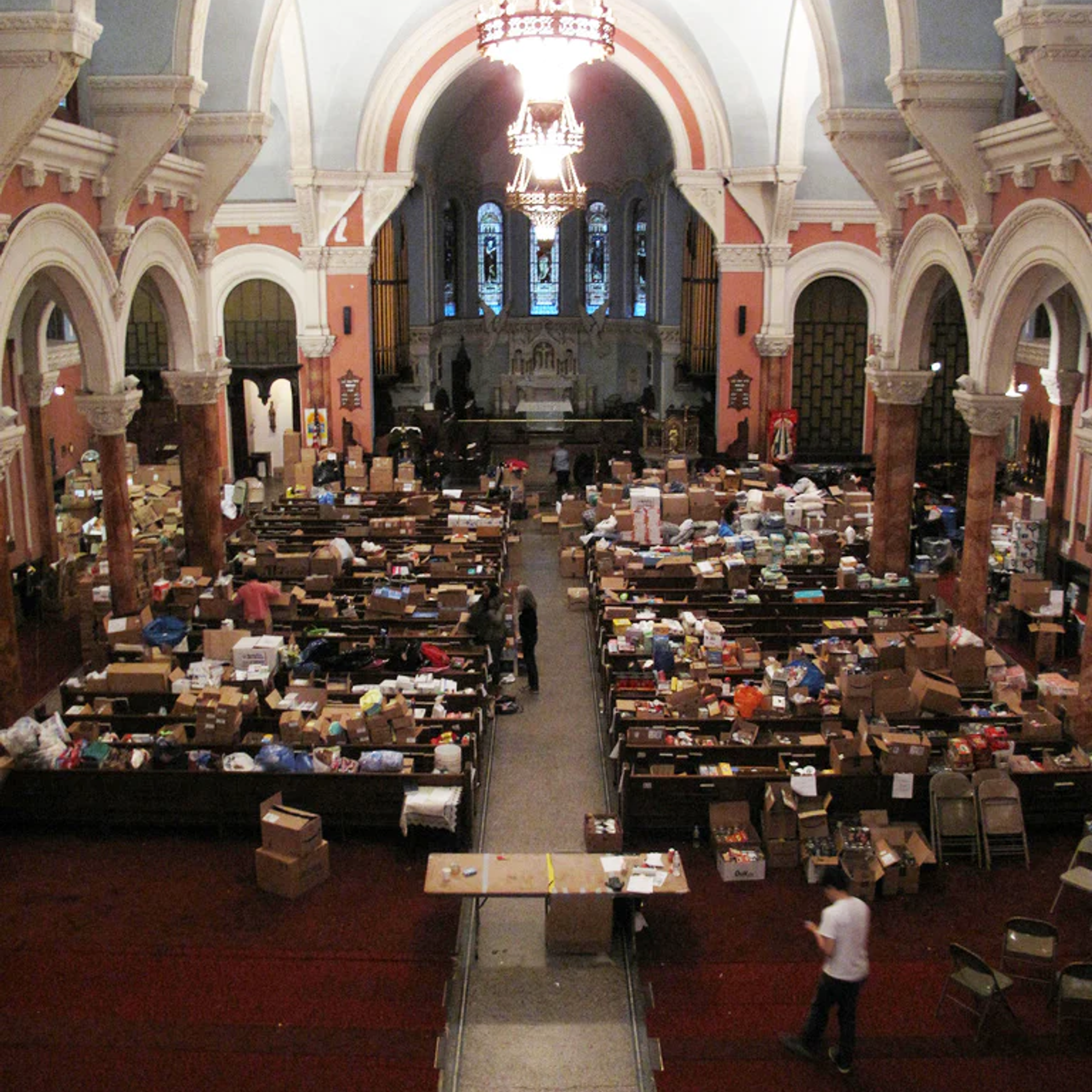
For this week's episode we're joined by Adam Greenfield and Maria Herron in advance of the gathering Woodbine will host this May May, "Lifehouses, Resilience Hubs, and Dual Power". We discuss our evolving understandings and relationships to radical spaces, the meaning and importance of in-person encounters and relationship-building, and our expectations around crisis and emergency management. We end with a pitch for why you should join us in NYC this May.LINKS:Lifehouses, Resilience Hubs, and Dual Power: https://www.woodbine.nyc/lifehousesLifepod: https://lifepod.transistor.fm/Mil Mundos Books: https://www.milmundosbooks.com/Mil Mundos En Común: https://milmundosencomun.org/Bushwick Ayuda Mutua: https://bushwickayudamutua.com/Adam Greenfield is a London-based writer and urbanist, who’s been involved with autonomous, self-organized movements from ACT UP to Occupy Sandy. He is the author of Lifehouse: Taking Care of Ourselves in a World On Fire (2024), as well as Radical Technologies: The Design of Everyday Life (2017), and is currently Visiting Professor at the Sociology department of the London School of Economics. He’s the host of Lifepod, a podcast based on the book. Maria Herron is the founder & co-director of Mil Mundos Books, a bilingual bookstore that curates to celebrate Black, Latinx, and Indigenous heritage. In 2021 Maria co-founded Mil Mundos en Común, a nonprofit working to provide essential goods, digital connectivity, and literacy access to neighbors in Bushwick and beyond. Preceding en Común, Maria worked with other organizers in April 2020 to form Bushwick Ayuda Mutua, a mutual aid coalition providing framework for our community to access food, essential goods, and social services via individual & organization partner participation. Maria has been with Woodbine since 2017, using it as a coworking hub to launch many of her projects, and currently support with Operations at the new location. For her day job, Maria works as a camera technician.READINGS:--Beyond Hope - Adam Greenfield, 2024: https://illwill.com/beyond-hope--This Spanglish Bookstore In New York Is Reclaiming Bushwick’s Sense Of Latinidad - Victoria Mortimer, 2025: https://nacla.org/spanglish-bookstore-new-york-reclaiming-bushwicks-sense-latinidad/--The Tetrad: Value in a More-than-Human World [excerpt] - Adam Greenfield, 2026: https://www.patreon.com/posts/dispatch-for-14-153024519--From Churches to Lifehouses - Adam Greenfield, 2023: https://www.versobooks.com/blogs/news/from-churches-to-lifehouses
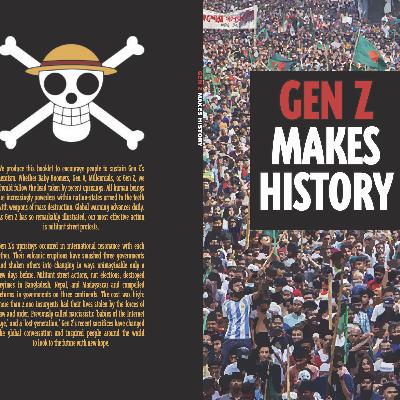
For this week's podcast we're joined by George Katsiaficas, author of the classic texts The Imagination of the New Left: A Global Analysis of 1968 (1987) and The Subversion of Politics: European Autonomous Social Movements and the Decolonization of Everyday Life (1997), as well as the more recent collections Gen Z Makes History (2025) and Eros and Revolution (2024). We discuss his idea of the eros effect and what we can learn from following global waves of uprisings. We think together about where both radical consciousness and self-organization comes from, as well as the danger of a Thanatos effect, where we see a contagion of confusion, depression, and nihilism. LINKS:--Gen Z Makes History: https://www.eroseffect.com/gen-z-makes-history--George Katsiaficas's Website: https://www.eroseffect.com/George Katsiaficas is a social theorist who is known for his many writings on social movements, 1968, and Asian uprisings. A longtime activist for peace and justice, he was a student of Herbert Marcuse. Together with Kathleen Cleaver, he coedited Liberation, Imagination and the Black Panther Party. He was a professor of humanities and sociology at the Wentworth Institute of Technology in Boston for more than three decades. Katsiaficas is a militant researcher, who lives amongst and collaborates with the people he writes about and sees his research as advancing global activism, not simply describing or analyzing it.
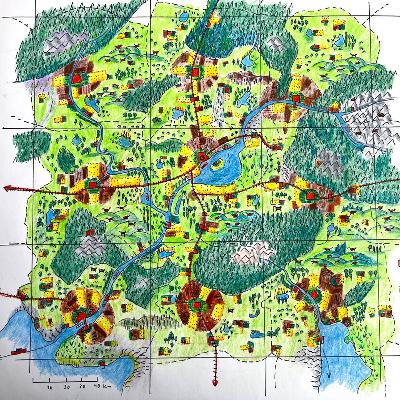
For this week's podcast we're joined by Swiss writer Hans Widmer, author of the 1983 anarchist classic bolo'bolo, to discuss his new book Cities for a Single Planet: A Model for the Ecological Transformation of the Earth, which was recently published in English by Autonomedia.Andreas, Eric, and Matt speak with Hans about the utopian tradition, social reproduction, and revolutionary planning. We cover many of his hot takes on family abolition and individualism, what Disneyland and Las Vegas get right, and whether we will really need bikes and green space.LINKS:--Cities For a Single Planet: https://autonomedia.org/product/cities-for-a-single-planet-a-model-for-the-ecological-transformation-of-the-earth-by-hans-widmer-with-p-antoniadis-m-baumgartner-and-d-spuhler/--New Alliance: https://newalliance.earth/--o500: https://o500.org/--New Start Switzerland: https://www.neustartschweiz.ch/Hans Widmer is a philologist, novelist, and urban activist, and author of bolo'bolo (pseudonym P.M.), and "The Power of Neighborhood" and the Commons (2014).
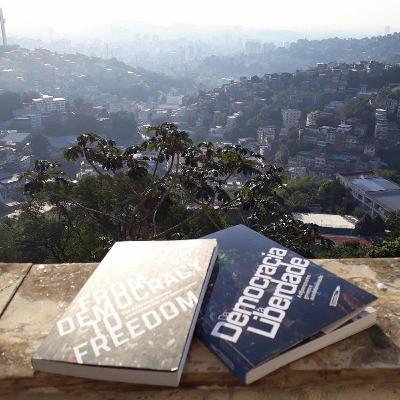
For this week's podcast we're joined by one of the participants in the CrimethInc. project for a wide-ranging conversation. We discuss CrimethInc's longevity across the last 30 years, and the unique historical perspective that affords the project. We talk about its roots in the punk and DIY countercultures, and its gradual evolution into an anarchist think tank. We reflect on CrimethInc's various approaches to public outreach, from publishing to speaking tours to convergences, as well as its recent experiences with deplatforming. We end by discussing the growing popularity of both democratic and authoritarian forms of socialism as competing responses to the current political crisis. READINGS:--To Change Everything - 2015: https://crimethinc.com/tce--Resisting ICE in Chicago - 2025: https://crimethinc.com/2025/11/20/reflections-on-resisting-ice-in-chicago-the-view-from-broadview--Anarchists at the No Kings Rallies - 2025: https://crimethinc.com/2025/10/20/anarchists-at-the-no-kings-rallies-reports-from-around-the-countryCrimethInc. is a rebel alliance — a secret society pledged to the propagation of crimethink. It is a think tank producing ideas and action, a sphinx posing questions fatal to the superstitions of our age. CrimethInc. is a banner for anonymous collective action. It is not a membership organization, but a mouthpiece for longings that extend throughout the population at large. CrimethInc. is an international network of aspiring revolutionaries extending from Kansas to Kuala Lumpur. We strive to reinvent our lives and our world according to the principles of self-determination and mutual aid.

For this week's podcast we look at Bernie Sanders' recently published book Fight Oligarchy, discussed alongside the mayoral victory of Zohran Mamdani. Sam Law joins Anton, Kristina, and Matt to reflect on Bernie's legacy as a politician, communicator, educator, tactician, and democratic socialist. We talk about his commitment to holding office as an independent, and his use of the "oligarchy" framework to evade both identity politics and partisanship. We discuss the generation gaps in the history of socialism in the United States, as well as our movement's capacity to produce convincing, charismatic leadership. We end by comparing the political trajectories of Bernie and Zohran, and analyze what a successful Mamdani mayorship might look like.Sam Law is an Austin-based organizer and anthropologist studying urban autonomy and grassroots organizing in Mexico City. They have published work on Latin American social movements in Political And Legal Anthropology Review, South Atlantic Quarterly, and NACLA.READINGS:--"White House weighs stepped up domestic travel and speeches to improve Trump’s standing on the economy" - Alayna Treene, 2025: https://www.cnn.com/2025/11/12/politics/trump-economy-white-house-strategy--"The ‘Sewer Socialism’ of Zohran Mamdani" - E. J. Dionne Jr., 2025: https://archive.is/IBWOs--"Germany’s Social Democrats Failed Miserably" - Loren Balhorn, 2024: https://jacobin.com/2024/12/germany-spd-scholz-left-elections--"Municipal Socialism in the United States, 1900–1940" - James Siodla and Tate Twinam, 2023: https://ssha2023.ssha.org/uploads/230741
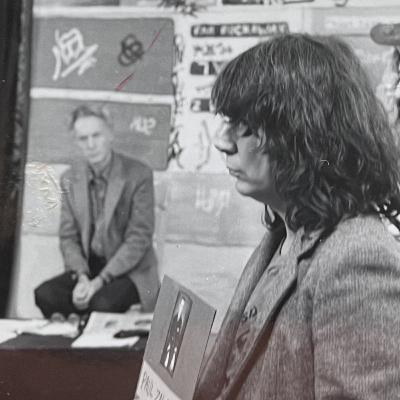
For this week's podcast we're joined by DeeDee Halleck. We start with the 1988 conference she helped organize, "The History and Consequences of Anticommunism", which took place at Harvard University. We hear about her experiments within community media -- from super 8 and 16mm film, to video, to public access television, to satellite, to early internet video. She talks about going from college dropout to tenured professor, and reflects on the evolution of the education system in the US since the 50s. We discuss how she balanced the demands of being a media advocate, an artist, and a mother. We hear about her time living in rural artist communities, as well as her collaborations with artists ranging from Shirley Clarke, Richard Serra, Nancy Holt, and Robert Frank.READINGS:--"The Experience of Citizens' Television In the United States: Public Access/Public Sphere" - DeeDee Halleck, 1992: http://documentaryisneverneutral.com/words/ddhcittv.html--"The Censoring of Burn!" - DeeDee Halleck, 2003: https://electronicbookreview.com/publications/the-censoring-of-burn/--"Video Activism as a Way of Life. An Interview with DeeDee Halleck" - Lora Taub-Pervizpour, 2011: https://ebrary.net/82041/sociology/video_activism_life_interview_with_deedee_halleckDeeDee Halleck is a media activist and filmmaker. She has been a leading figure in the media democracy movement for more than four decades, working to promote alternative and independent film and media production and distribution as a means of promoting social change. In collaboration with a number of known artists, including Joan Jonas, Jean DuPuy, David Tudor, Liza Bear, Richard Serra, Nancy Holt, David Behrman, Roberta Nieman, the Videofreex, Mary Frank, Reverend Billy, Morag Benepe, Ed Sanders, and Tuli Kupferberg among others, Halleck has produced and directed numerous documentary films that explore the intersection of media, power, and social justice. Apart from her work as a filmmaker, Halleck has been an educator and mentor to countless aspiring media makers, sharing her knowledge and experience through workshops, lectures, and other educational programs. In 1981, Halleck co-founded and organized Paper Tiger Television, a collective producing a weekly cable series. This project changed the way communities utilized the resource of public access. By contrast to network television, Paper Tiger inspired artists, local filmmakers, and activists to invent quick and easy, down and dirty content specifically designed for low budget local channels. Paper Tiger has created over 400 half-hour programs, which have been shown locally and at film festivals, media conferences, and art venues around the world. Halleck is Professor Emerita in the Department of Communication at the University of California at San Diego.
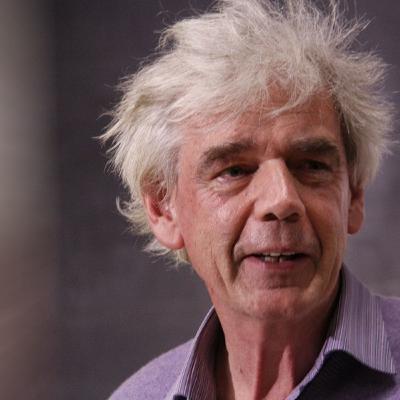
For this week's podcast we're joined by John Holloway to talk about his most recent book Hope in Hopeless Times, which concludes a trilogy began with Change the World Without Taking Power (2002), and followed by Crack Capitalism (2010).Kristina and Matt speak with John about the role that revolutionary hope has to play in pushing back against the self-destructiveness of the capitalist hydra. We discuss richness vs. wealth, and overflowing vs. containment in trying to manage people's righteous rage at the system's injustices. We think about identitarianism and struggle, and look at the Zapatista and Kurdish freedom movement's lived attempts at reclaiming the world.READINGS:--"Hope in hopeless times: an interview with John Holloway" - Cihad Hammy, 2022: https://roarmag.org/essays/hope-hopeless-times-holloway-interview/--"A Note on Hope and Crisis" (2014): https://sci-hub.se/https://doi.org/10.1177/0038038514544491--"Hope Depends On Our Capacity to Create a Different Way of Living" - John Holloway - 2012: https://files.libcom.org/files/OT15.pdfJohn Holloway has published widely on Marxist theory, on the Zapatista movement and on the new forms of anti-capitalist struggle. His book Change the World without Taking Power has been translated into eleven languages and has stirred an international debate, and Crack Capitalism took the argument further, suggesting that the only way in which we can think of revolution today is as the creation, expansion, multiplication, and confluence of cracks in capitalist domination. He is currently Professor of Sociology in the Instituto de Ciencias Sociales y Humanidades of the Benemérita Universidad Autónoma de Puebla in Mexico.Kristina is an anthropology PhD student who researches mutual aid networks in Brooklyn. She works as a coordinator and community engagement director in housing and immigration.
![[PREVIEW] #12: The Institute for Social Ecology with Chaia Heller & Mason Herson-Hord](https://s3.castbox.fm/81/a4/31/3c9f7f92ff23aa468746cc0b94fb52ab89_scaled_v1_400.jpg "[PREVIEW] #12: The Institute for Social Ecology with Chaia Heller & Mason Herson-Hord")
Chaia Heller & Mason Herson-Hord join Andrew and Matt to discuss their work with the Institute for Social Ecology, co-founded by communalist philosopher Murray Bookchin in Vermont in 1974. We reflect on the ideas and legacy of both Bookchin (1921-2006) and Occupy Wall Street; the need for joy and the celebration of life; the limitations within both Marxism and anarchism for facing our present ecological crisis; the task of counter-hegemony and keeping a set of ideas alive across generations; and the role of feminism and creating new forms of socialization together.--"Ecology, Desire and Revolution: An Interview with Chaia Heller" - Rebecca DeWitt, 1999: http://www.cwmorse.org/archives/perspectives.on.anarchist.theory.vol3.no.2-fall1999.pdf--"Notes on an Ecology of Everyday Life" - Chaia Heller, 1999: http://new-compass.net/articles/notes-ecology-everyday-life--"Biotechnology, Democracy, and Revolution" - Chaia Heller, 2005: https://social-ecology.org/wp/2005/01/biotechnology-democracy-and-revolution/--"A Government From Below" - Mason Herson-Hord, 2018: https://socialistforum.dsausa.org/issues/fall-2018/a-government-from-below/--"Assembled in Detroit" - Mason Herson-Hord, 2020: https://assemblymag.org/assembled-in-detroit/Chaia Heller is a writer, activist, anthropologist, and artist who has been teaching political and feminist theory at the Institute for Social Ecology for nearly four decades. Chaia has been active in movements ranging from ecofeminism and the Left Greens, to the global justice movement, and Occupy. Chaia is the author of The Ecology of Everyday Life (Black Rose Books) and Food Farms and Solidarity (Duke University Press).Mason Herson-Hord is an organizer and writer in Detroit, Michigan, where he is an active participant in the development of neighborhood assemblies and the solidarity economy. He is a founding member of Symbiosis, a North American federation of dual power organizations, and a board member of the Institute for Social Ecology. His work has been published by outlets like the Next System Project, ROAR Magazine, The Ecologist, and Perspectives on Anarchist Theory.Andrew volunteers at Woodbine and is currently working toward finishing a master’s degree in Political Ecology, Degrowth, and Environmental Justice at the Universitat Autónoma de Barcelona.
![[PREVIEW] #11: Anarchist Cinema and the Counterculture w/ Sherry Millner & Ernie Larsen](https://s3.castbox.fm/6c/74/b2/9658c88539c0507d00df89f480040793c5_scaled_v1_400.jpg "[PREVIEW] #11: Anarchist Cinema and the Counterculture w/ Sherry Millner & Ernie Larsen")
Sherry Millner and Ernie Larsen join Giulia and Matt to discuss their shared nomadic journey as artists, anarchists, parents, curators, teachers, partners, writers, thinkers, friends, and so much more. In 70 minutes, we discuss their last 50 years of collaboration. Meeting amidst the utopian movements of the 60s, they were influenced by their encounter and friendship with anarchist groups such as Anarchos, the Judson Dance Theater, and Situationism in America. Believing in the power of collectivity and the potentials of oppositional culture, their work has dealt equally with the spectacle of disaster and the invisibility of daily life. With a practice simultaneously reflecting on authorship and ownership, audience and autonomy, independence and institutions, they have been editors of the radical film journal Jump Cut, and curators and archivists of forgotten revolutionary cinema.--"Escape Routes" - Ernie Larsen, 2021: https://herri.org.za/5/ernie-larsen/--"Flying under the radar: notes on a decade of media agitation" - Ernest Larsen, 2014: https://www.ejumpcut.org/archive/jc56.2014-2015/LarsenAnarchistActivists/index.html--"The Dialectics of Making Movies: Sherry Millner and Ernest Larsen interviewed by Lia Yoka" - 2009: http://womenfilmeditors.princeton.edu/assets/pdfs/MILLNER_Dialectics_of_Making_Movies_Yoka.pdf--"The Last Word: To unite filmmakers and film critics" - Ernest Larsen and Sherry Millner, 1979: http://www.ejumpcut.org/archive/onlinessays/JC20folder/LarsenMillnerEdl.htmlSherry Millner & Ernie Larsen collaborate on film, video, photo-text, book, curatorial and other research projects. Together they have produced more than a dozen films exhibited in festivals, museums, cultural centers, squats, windows, and storefronts. Millner creates installations such as The Domestic Boobytrap, which detournes U.S. army manuals to manifest the vulnerability of domestic space, with blueprints and models of boobytraps placed in everyday life situations within the nuclear family. Larsen's feminist detective novel Not a Through Street was nominated for an Edgar Award. His nonfiction novel The Trial Before The Trial, describing his “disruptive” service on a grand jury in New York, was published by Autonomedia. He is currently writing a novel about the French anarchist Ravachol.As co-creators of the collaborative video project State of Emergency, they involved 15 artists in protesting U.S. invasions of the Middle East. In 2008 at the Oberhausen Film Festival they co-curated “Border-Crossers and Trouble-Makers,” 10 programs that aimed to rewrite the conventional history of experimental political media. They co-curated the Fall Flaherty Foundation series in 2013 at Anthology Film Archives, under the title “Global Revolt: Cinematic Ammunition.” They are co-curators of Disruptive Film, a two volume DVD set of experimental short-form non-fiction films and videos, for Facets Media. They organized and contributed to the collaborative book Capital’s Greek Cage (Autonomedia), an exploration of Greece’s near-collapse in the aftermath of the debt crisis. Their most recent video How Do Animals and Plants Live? is an inquiry into the forcible eviction and immediate demolition of the self-organized anarchist-supported migrant squat Orfanotrofeio in Thessaloniki on July 27, 2016.Video Data Bank: https://www.vdb.org/artists/sherry-millnerAutonomedia: https://autonomedia.org/?s=larsenFacets DVD: https://www.facetsdvd.com/searchresults.asp?Search=millner&Submit=
![[PREVIEW] #10: Urgent Pedagogies and Autonomous Infrastructure with Sandi Hilal and Pelin Tan](https://s3.castbox.fm/ea/2c/8a/64c3b2245d68fabda9688d9d907a1c059f_scaled_v1_400.jpg "[PREVIEW] #10: Urgent Pedagogies and Autonomous Infrastructure with Sandi Hilal and Pelin Tan")
Sandi Hilal and Pelin Tan join Malek and Matt to discuss alternative pedagogies of unlearning in Palestine, Lebanon, Turkey, and within refugee spaces in Europe and the Middle East. Together we talk about questioning our social coexistences, decolonization, conflict, and care. How and where do we learn new ethical and artistic practices amidst collapse, as our relationships to infrastructure and institutions change within moments of rupture? We speak about the contested meanings of public and private space in a colonial context; the need for designing self-organized autonomous infrastructures to cultivate free thought; and the intifada as both a pedagogical practice and a producer of new forms of knowledge. What does it mean to have a collective creative praxis, “one that is not grounded in practices of empathy, but rather in the knitting of the commons”? How does our work intervene in built environments, and create new spaces from which to speak?Urgent Pedagogies: https://urgentpedagogies.iaspis.se/Campus in Camps: http://www.campusincamps.ps/Decolonizing Architecture Art Research: https://www.decolonizing.ps/Arazi Assembly: http://araziassembly.org/Sandi Hilal is an architect, artist and educator. She is currently the Co-Director of DAAR, Decolonizing Architecture Art Research, an architectural and art collective that she co-founded in 2007 with Alessandro Petti and Eyal Weizman, in Beit Sahour, Palestine. Sandi is the initiator of the living room project, a series of spaces of hospitality that have the potential to subvert the role of guest and host, and to activate the rights of temporary people to host and not to eternally be a guest. She co-founded Campus in Camps in 2012, an experimental educational program hosted in Dheisheh Refugee Camp in Bethlehem with the aim to overcome conventional educational structures by creating a space for critical and grounded knowledge production connected to greater transformations and the democratization of society. Her latest publication Permanent Temporariness (Art and Theory, Stockholm 2019), co-authored with Alessandro Petti, is a book, a catalog, and an archive that accounts for 15 years of research and experimentation, and creation that are marked by an inner tension and a visionary drive that re-thinks itself through collective engagement. Hilal co-authored with Alessandro Petti and Eyal Weizman the book Architecture after Revolution (Sternberg, Berlin 2014) an invitation to rethink today’s struggles for justice and equality not only from the historical perspective of revolution, but also from that of a continued struggle for decolonization.Pelin Tan is a sociologist and art historian based in Turkey. Tan is a curator of Urgent Pedagogies in design&art by IASPIS (Stockholm), and collaborates with artist Anton Vidokle on essay films about the future society. She is a member of the Arazi Assembly based in Mardin.--“Camps as Trans-Local Commons” - Pelin Tan, 2017: https://conversations.e-flux.com/t/refugee-heritage-conversations-pelin-tan-camps-as-trans-local-commons/6760--“The Question of Collectivity: Dispossession, Surplus, Commons” - Pelin Tan, 2019: http://collectioncollective.art/text/the-question-of-collectivity-dispossession-surplus-commons--“A Conversation with Pelin Tan: Field as entanglement and transversal methodology” - Ishita Sharma, 2020: https://topologicalatlas.net/blog/a-conversation-with-pelin-tan-on-studying-place-as-a-constellation--“Planetary Migration under Anthropocene: Crisis and Solidarity “- Pelin Tan, 2020: http://migrazine.at/artikel/planetary-migration-under-anthropocene-crisis-and-solidarity
![[PREVIEW] #9: The Commune and Destituent Power: Roundtable on Marcello Tarì](https://s3.castbox.fm/e7/3d/87/e3e71ad794851c4b9fd7fdda55e06f1d9b_scaled_v1_400.jpg "[PREVIEW] #9: The Commune and Destituent Power: Roundtable on Marcello Tarì")
We’re joined by Jose Rosales, Carla Bottiglieri, Luhuna Carvalho, and Giulia Gabrielli for a roundtable on Marcello Tari’s book, There is No Unhappy Revolution: The Communism of Destitution, published in English this spring by Common Notions.We discuss a genealogy of the concept “destituent power”, alongside the historical movements it’s been a response to: Italy in the 70s, Argentina in 2001, and the aftermaths of both the Arab Spring and Occupy movement. We think with Tarì alongside Benjamin, Foucault, Deleuze & Guattari, Tronti, and Agamben on the existential and methodological questions of use and inoperativity, strike and gesture, de/subjectivation and conversion, territory and exodus, civil war and political theology, and infrastructures of reproduction.-- “Xeniteia: Contemplation and Combat” - Mario Tronti & Marcello Tarì, 2020: https://www.versobooks.com/blogs/4757-xeniteia-contemplation-and-combat-- “Destituent Power: An Incomplete Timeline” - Hostis, 2020: https://destituencies.com/2020/destituent-power-an-incomplete-timeline/--“How Does One Shoot a Frozen Clock?” - Luhuna Carvalho, 2020: https://illwill.com/how-does-one-shoot-a-frozen-clock-- “Spirituality and Combat: A Conversation with Marcello Tarì” - Matt Peterson, 2021: https://www.e-flux.com/journal/118/391829/there-is-no-unhappy-love-the-communism-of-destitution/Carla Bottiglieri studied Classics and Aesthetics at the University of Salerno, Italy and Performing Arts/Dance at the University of Paris 8, France, while working in the field of contemporary dance and theatre. An independent researcher, she deals with an unidentified territory on the margins of aesthetics, clinics and politics. She has been studying different methods in the field called somatics, which she understands as practices related to the “use of bodies”.Luhuna Carvalho has just finished writing a thesis on Operaismo and Autonomia, and is a part of the RDA69 social center in Lisbon.Giulia Gabrielli is an artist and researcher interrogating, in solitude and company, the question of how to live.Jose Rosales is a researcher based in Queens, currently co-editing a series of conversations entitled 'Diversity of Aesthetics' alongside Andreas Petrossiants and Vicky Osterweil.
![[PREVIEW] #8: Autonomous Education and the Brecht Forum](https://s3.castbox.fm/15/98/56/b7f6e55fa4dd4ec23c05008d93f7eff8ce_scaled_v1_400.jpg "[PREVIEW] #8: Autonomous Education and the Brecht Forum")
Mary Boger, Michael Lardner, and Kazembe Balagun join Amogh and Matt to discuss the New York Marxist School, the Brecht Forum, and the Marxist Education Project--experiments in both radical pedagogy and autonomous space in NYC dating back to 1975.We trace together the how and why of our political histories, as well as the Brecht Forum’s organizational evolution from collective, to committee, to board of directors, to staff--and finally back again to collective. We’re warned of the challenges and contradictions in running such a program through the forms of the non-profit industrial complex, and the need to insist upon self-conscious, voluntary participation in a strategic project aimed at building community rather than audience. Such a space is a place to think out loud together, process and analyze current events, and develop a revolutionizing curriculum. We’re reminded of the Brecht Forum’s core organizing principle of being both non-dogmatic and non-sectarian--to emphasize culture, art, poetry, and music as being essential to the process of both movement building and becoming a better person. How and where do we organize ourselves to undo the individualization, fragmentation, demoralization, commodification, and brutality we experience--to work toward an intergenerational re-socialization and self-education based on compassion and care?--“The Brecht Forum/New York Marxist School: To the Next Generation” - Mary Boger, 2013: https://dev.sd.brechtforum.net/issue/62/remembering-arthur-felberbaum--“Reflections on the Brecht Forum / New York Marxist School” - Liz Mestres, 2013: https://dev.sd.brechtforum.net/issue/62/reflections-brecht-forum-new-york-marxist-school--“Our Legacy” - Marxist Education Project, 2014: https://marxedproject.org/our-legacy/--“Brecht Forum Promo Video” - Kazembe Balagun, 2008: https://www.youtube.com/watch?v=DQbziBfDEg4Mary Boger, a founding member of the New York Marxist School/Brecht Forum in 1975, is a long-time Capital teacher for movement activists, and has been involved in solidarity and human rights struggles for many years. Her CUNY Ph.D. dissertation in Sociology is entitled "A Ghetto State of Ghettos: Palestinians under Israeli Citizenship."Michael Lardner has worked in truck stops and road construction, and as a typographer and designer, with decades of coordinating complex printing processes. In 1977 he began his engagement with The School for Marxist Education, which eventually became The Brecht Forum, and since 2014 he has done coordination and programming for The Marxist Education Project. He has helped organize the Revolutions Study Group, the Capital Studies Group, and the Literature Studies Group.
![[PREVIEW] #7 Natasha Lennard & Matthew Whitley on Non-Fascist Life](https://s3.castbox.fm/9a/c8/01/1c586f304f45b08f7ec72c40cc427a5cbf_scaled_v1_400.jpg "[PREVIEW] #7 Natasha Lennard & Matthew Whitley on Non-Fascist Life")
Natasha Lennard and Matthew Whitley discuss some themes and questions from the updated paperback edition of Natasha’s book, Being Numerous: Essays on Non-Fascist Life, published last month by Verso.We talk about acting and thinking in the absence of Trump’s dominance of the mediasphere, and how we relate to debates around the “crisis of liberalism” and “collapse of the center” in a now-Democratic Party controlled government. We reflect on 10 years after Occupy, with indigenous and abolitionist movements now centered in any imagination of liberation, and the many crises that won’t be solved legislatively. We ask how to not let emphasis on prefigurative mutual aid practices--which create interdependency and care, intimacy and community--cede the ground of “policy”, which reimagines the structural conditions within which we live. And how do we find and use alternative, authentic, strategic voices in our present media ecology to articulate and build legibility for utopian horizons of flourishing and autonomy?Natasha Lennard is a columnist for The Intercept. Her work has appeared in The Nation, Bookforum and the New York Times, among others. She teaches critical journalism at the New School for Social Research and is the author of “Being Numerous: Essays on Non-Fascist Life" (Verso).Matthew Whitley is a writer and organizer affiliated with the Metropolitan Anarchist Coordinating Council - MACC NYC. He is currently a PhD student in Cultural Anthropology at the CUNY Graduate Center, with a research focus on alternative economies in Catholic social teaching. He also serves on the steering committee of the Emergency Committee for Rojava and co-edits the radical artists' imprint Cicada Press. His poetry chapbook, "Do You Like the Word Crisis?", was published by Commune Editions in 2019.--"Anti-fascist Practice and Impossible Non-Violence" - Natasha Lennard, 2018: https://evergreenreview.com/read/anti-fascist-practice-and-impossible-non-violence/--“Why 'Mutual Aid'? – social solidarity, not charity” - Matthew Whitley, 2020: https://www.opendemocracy.net/en/can-europe-make-it/why-mutual-aid-social-solidarity-not-charity/
![[PREVIEW] #6 The Communism of Love w/ Richard Gilman-Opalsky & Jennifer Scuro](https://s3.castbox.fm/3c/4f/f1/d09d8baf8860a3076230be2bde9536712a_scaled_v1_400.jpg "[PREVIEW] #6 The Communism of Love w/ Richard Gilman-Opalsky & Jennifer Scuro")
Richard Gilman-Opalsky and Jennifer Scuro discuss Richard’s recent book The Communism of Love: An Inquiry into the Poverty of Exchange Value, published by AK Press in December.We discuss communism and love as an experience and a practice, of both commitment and devotion, towards new valuations beyond exchange. We think about forms-of-life versus forms-of-governance, and the role of the “precarious commune” and Gemeinwesen in our conceptualization of a communism of love beyond capitalism. We talk about contemporary revolts, and the need for revolutionary alternatives to “revolution”. And we use the framework of critical disability studies to talk about attention, care, and labor, and how our relationships of love are currently valued.--"Love: a counterpower to capital worthy of its name" - Richard Gilman-Opalsky, 2021: https://roarmag.org/essays/communism-of-love-gilman-opalsky/--"The Communist Secret of Love" - Richard Gilman-Opalsky, 2021: https://illwill.com/the-communist-secret-of-love--"The Eternal Return of Revolt: A Conversation with Richard Gilman-Opalsky - 2020: https://illwill.com/the-eternal-return-of-revoltRichard Gilman-Opalsky is Professor of Political Theory and Philosophy at the University of Illinois at Springfield. He is the author of six books, including Specters of Revolt, Precarious Communism and Spectacular Capitalism. Dr. Gilman-Opalsky’s work explores the powers of everyday people, particularly those typically regarded as powerless. He challenges the idea that politics is solely the business of the professional political class, and highlights how impoverished and marginalized people participate in changing the world in the most important ways.Jennifer Scuro, Ph.D. (she/her) is author of The Pregnancy ≠ Childbearing Project: A Phenomenology of Miscarriage (Rowman & Littlefield International, 2017) and Addressing Ableism: Philosophical Questions via Disability Studies (Lexington Books, 2017). She recently was interviewed for Shelley Tremain’s Dialogues on Disability, and is working on a series of video interviews with Monica Vilhauer, Rogue Philosophers, discussing practical philosophy, philosophical counseling, and public philosophy.
![[PREVIEW] #5: Kazembe Balagun on Raoul Peck’s Exterminate All the Brutes](https://s3.castbox.fm/40/ec/f2/06b2763a20e59b5dbf8e2fce3740a9b90c_scaled_v1_400.jpg "[PREVIEW] #5: Kazembe Balagun on Raoul Peck’s Exterminate All the Brutes")
Kazembe Balagun joins Malek and Matt to discuss Raoul Peck’s new 4-part film on HBO, Exterminate All the Brutes. We discuss recent Hollywood dramatization and the visualization of abstract political concepts, as well as decolonial thought, media, and art in the 21st century. How do we confront the ghosts of the past, and where do we find hope and meaning when politics has failed us? How can we face the unimaginable and unspeakable horrors of European violence of the last 500 years without mystifying this reality? How do we divorce the archaeology of humanism from techniques of dehumanization, and how are we to understand the global adoption of these techniques in the 21st century? Where do we locate our own hearts of darkness, and what excavations are we called to do while living within the everydayness of American capitalism? How do you contribute a revolutionary analysis when there’s not a revolutionary organizational form to make sense of it? How can we decenter whiteness as we reconstitute what it means to be a human being, looking to friendship and solidarity for the development of a new common language?--"Set It Off: The Current Uprising is a Chance to Reset American History" - Kazembe Balagun, 2020: https://rosalux.nyc/the-current-uprising/--"What We Learned in the Trump Era" - Kazembe Balagun, 2020: https://indypendent.org/2020/12/what-we-learned-in-the-trump-era/--“Towards a Syrian ‘Politics of Life’” - Malek Rasamny, 2020:https://www.aljumhuriya.net/en/content/towards-syrian-“politics-life”--"The Revolution Post-Explosion" - Malek Rasamny, 2020: https://thenewinquiry.com/blog/the-revolution-post-explosion/--Essential Reading & Viewing - Raoul Peck, 2021: https://www.hbo.com/exterminate-all-the-brutes/raoul-peck-essential-reading-films--“Exterminate All the Brutes” Syllabus: https://www.hbo.com/content/dam/hbodata/documentaries/exterminate-all-brutes/resources/eatb-syllabus-210412.pdfKazembe Balagun is a writer/cultural historian/activist, and former program director of the Brecht Forum and member of the Red Channels Collective.
![[PREVIEW] #4 Amin Husain & Georgia Sagri: Occupy and the Epistemology of Freedom](https://s3.castbox.fm/72/59/17/93cbb1f8b5cb4cfb885618b7c6166e188f_scaled_v1_400.jpg "[PREVIEW] #4 Amin Husain & Georgia Sagri: Occupy and the Epistemology of Freedom")
We’re joined by friends Amin and Georgia as we approach the 10-year anniversary of Occupy Wall Street. Together we discuss the general assembly as a module, cultivating spaces of freedom and experimentation, the performance of knowing, not knowing, and unknowing, the experience of threatening power, the accident and rupture, practicing the politics of life, and we remember David Graeber and the many we've lost.--"The genuine does not exist: Interview with Georgia Sagri" - Apostolos Vasilopoulos, South as a State of Mind, 2012: https://southasastateofmind.com/article/genuine-not-exist/--"Interview: Nitasha Dhillon and Amin Husain - MTL Collective" - Annabelle Boissier, Arts Cabinet, 2017: https://www.artscabinet.org/repository/interview-nitasha-dhillon-and-amin-husain-mtl-collectiveAmin Husain is a New York-based artist and organizer who has taught courses on art, activism, and strategic use of media. With Nitasha Dhillon, Amin is a co-founder of Tidal: Occupy Theory, Occupy Strategy movement-generated theory magazine; MTL, a collective that combines theory, research, aesthetics, and organizing in its art practice; Direct Action Front for Palestine; and, most recently, Decolonize This Place. He is directing and producing an experimental documentary film about land, life and liberation in occupied Palestine titled, On This Land.Georgia Sagri’s practice is influenced by her ongoing engagement in political movements and struggles on issues of autonomy, empowerment and self-organisation. From 1997 to 2001 she was a member of Void Network, a cultural, political and philosophical collective operating in Athens. In 2011 she was one of the main organisers of the Occupy Wall Street movement in New York. Since 2013 she has been a member of the assembly of the Embros Theatre Occupation, and in 2014 she initiated Ύλη[matter]HYLE, a semi-public cultural space in the heart of Athens. She is professor of performance at the Athens School of Fine Arts. Her book Ίαση: Stage of Recovery will be published by Divided Publishing.
![[PREVIEW] Adam Curtis: What If the People Are Stupid?](https://s3.castbox.fm/32/07/c9/a4bb1f59678a54f38898208bc4cf025d48_scaled_v1_400.jpg "[PREVIEW] Adam Curtis: What If the People Are Stupid?")
For the third episode in our series of podcasts on Adam Curtis's Can't Get You Out of My Head: An Emotional History of the Modern World, Amogh and Matt joined The Antifada's Andy, Jamie, and Sean.We continued discussing historical storytelling and the contemporary development of a worldview. How can Curtis's diagnostic fragments transform into political overcoming? How do we situate ourselves while caught between liberalism and fascism, the human and AI, objective conditions and subjective formation, postmodernism and anti-communism, charisma and belief?The Antifada: https://www.patreon.com/theantifada--"'You could be a cult leader': Diane Morgan and Adam Curtis on Brexit, Trump and his new series" - Simon Usborne: https://www.theguardian.com/culture/2021/feb/06/you-could-be-a-cult-leader-diane-morgan-and-adam-curtis-on-brexit-trump-and-his-new-series--"Adam Curtis on Our Troubled Times, TikTok and Taking Back the Internet" - Thomas Gorton: https://www.anothermag.com/design-living/13105/adam-curtis-cant-get-you-out-of-my-head-new-documentary-series-2021--"What Does The Future Hold? An Interview With Adam Curtis" - Michael J. Brooks: https://thequietus.com/articles/29558-film-adam-curtis-cant-get-you-out-of-my-head-interview--"A Conversation with Filmmaker Adam Curtis on Power, Technology and How Ideas Get Into People's Heads" - Billy Perrigo: https://time.com/5941744/adam-curtis-cant-get-you-out-of-my-head/
![[PREVIEW] Damaged Life: Adam Curtis’s Emotional History](https://s3.castbox.fm/2d/2b/c2/13484c06d20da8444369e2ec4fa6fadeba_scaled_v1_400.jpg "[PREVIEW] Damaged Life: Adam Curtis’s Emotional History")
Last week Adam Curtis released a new 6-part film series, Can't Get You Out Of My Head: An Emotional History of the Modern World. In this discussion, Amogh, Malek, and Matt begin to unpack and respond to the series, asking what Curtis means in aiming to provide an “emotional” history? What are the subterranean forces that animate ideological/social/political movements and their figure-heads? What does it mean to rid ourselves of the past, and is that even possible? How does Curtis’s novelistic approach serve or confuse our understanding of the ambitious historical and political claims of his work, and what if any are the lessons to be taken away? Does Curtis think that all revolutionary movements are doomed to fail? Are these failures written into the movements from the start, or are they the result of the machinations of external powers? What is the idea of ‘power’ that he constantly invokes and where does it lie?--“Can't Get You Out Of My Head: An Emotional History of the Modern World”: https://www.youtube.com/watch?v=thd5bBUNEw8 (trailer) / https://thoughtmaybe.com/cant-get-you-out-of-my-head/ (series)--“Charlie Brooker in Conversation with Adam Curtis” (2021): https://www.vice.com/en/article/4ad8db/adam-curtis-charlie-brooker-cant-get-you-out-of-my-head--“Adam Curtis: Social media is a scam” - Tom Hodgkinson (2018): https://www.idler.co.uk/article/adam-curtis-social-media-is-a-scam/It's the final day of our fundraiser! Thanks again for everyone's contributions, we appreciate any and all donations to keep our volunteer-run space and project going, now in year 8. https://www.gofundme.com/f/woodbine-moving-fundraiser

Comments

Download from Google Play

Download from App Store
 United States