


 Claim Ownership
History of the Caribbeans | Exploring Resilience and Culture
Subscribed: 25Played: 785
Subscribe

© 10X Pod Group
Description
Join Caribbean history experts Joe & Kevin as they uncover the #1 Caribbean History & Culture Podcast powerful stories, cultural legacies, and untold truths that shaped the region in History of the Caribbeans: Tales of Resilience and Culture — a podcast for listeners passionate about Caribbean history, heritage, and the enduring spirit of a people who’ve shaped the world.
499 Episodes
Reverse
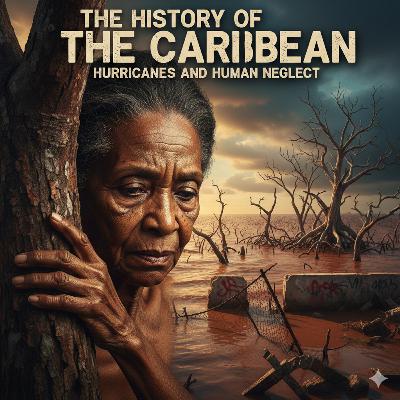
The Caribbean is often defined by its beauty, but behind the postcard views lies a century-long record of systemic abandonment. In this episode of The History of the Caribbean, we examine "Hurricanes and Human Neglect," a deep dive into how a hundred years of environmental mismanagement turned natural seasonal cycles into a recurring tragedy of survival. We trace the timeline from the early nineteen hundreds, when colonial logging stripped the islands of their ancient mahogany and cedar shields, to the modern era of concrete tourism that dismantled our coastal defenses. This isn't just a story of weather; it is a clinical look at how the extraction of natural resources for short-term profit left our islands vulnerable to the catastrophic force of the Atlantic storm belt.
We explore the devastating loss of endemic wildlife, from the near-extinction of the Imperial Parrot in Dominica to the silent death of our coral reef nurseries. As we move through the nineteen eighties and into the present day, we witness the strategic error of replacing life-sustaining mangroves with rigid sea walls that crumble under pressure. This documentary narrative challenges the "Act of God" narrative, placing the responsibility back on human systems that prioritized development over ecology. We discuss the aftermath of Category Five giants like Hurricane Maria and the long silence that follows when conservation is abandoned in the name of recovery. Join us as we uncover the true cost of neglect and the fragile state of our island homes in an era of rising seas and intensifying storms.
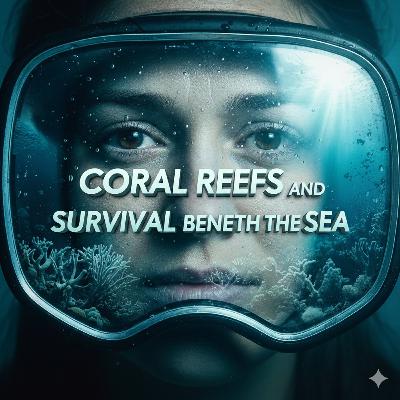
Coral Reefs and Survival Beneath the Sea explores the vulnerability of the Caribbean’s natural shield and its impact on our history. For over a century, the coral reefs of the Bahamas, Belize, and Jamaica have served as a vital living barrier against the Atlantic, but today that foundation is under unprecedented pressure. In this documentary episode, we examine how the transition from local artisanal fishing to global industrial demand began the slow erosion of our underwater ecosystems. We dive deep into the nineteen eighties Diadema die-off and the first mass bleaching events that signaled a shift from a resilient pantry to a fragile graveyard.
As part of our ongoing series on Caribbean history and environment, we highlight the consequences of climate change on coastal infrastructure and the communities that rely on the sea for survival. From the crumbling elkhorn forests of Jamaica to the successful conservation efforts on the Belize Barrier Reef, this story tracks the cost of environmental exploitation and the desperate race for recovery. We look at modern biorock technology and coral gardening as essential tools in our fight for sovereignty and land preservation. Understanding the history of our reefs is key to understanding the future of the islands, as we confront the reality of warming oceans and the essential need to protect our living shield.
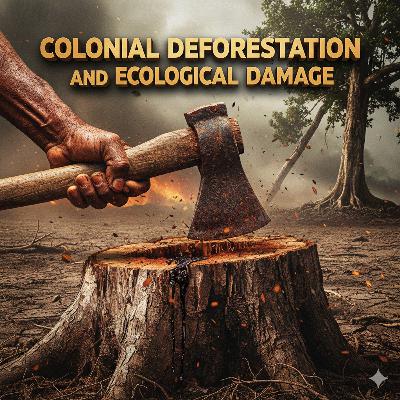
Explore the hidden environmental history of the Caribbean in this deep-dive documentary into colonial deforestation and the ecological damage that reshaped Jamaica, Haiti, and Barbados. While we often discuss the Caribbean through the lens of politics and revolution, the most permanent scars were left on the land itself. Between the 1600s and 1900s, the "Pearl of the Antilles" was systematically dismantled as ancient hardwood forests were cleared to fuel the global sugar and coffee trades. This episode of our Caribbean history series uncovers how Barbados was stripped of its legendary bearded fig trees in just thirty years, creating the world’s first man-made tropical droughts, and how Jamaica’s Blue Mountains were carved out for British naval timber, leading to massive soil erosion that continues to affect the island today.
We examine the grim reality of ecological liquidation and the "destruction" theme that defined the colonial era. Discover how the French mahogany trade in Saint-Domingue—the land we now call Haiti—created a legacy of environmental vulnerability that persists as a permanent scar on the landscape. This is not just a story of lost trees; it is a case study in how systemic exploitation broke the natural infrastructure of the islands. From the introduction of invasive species like the mongoose to the shift from a primary forest to a charcoal economy, we analyze how the pursuit of profit transformed self-sustaining ecosystems into fragile, dependent territories. Join us as we preserve the truth of our history, centering the environmental cost of empire and the resilience of the land that still carries the trauma of the axe.
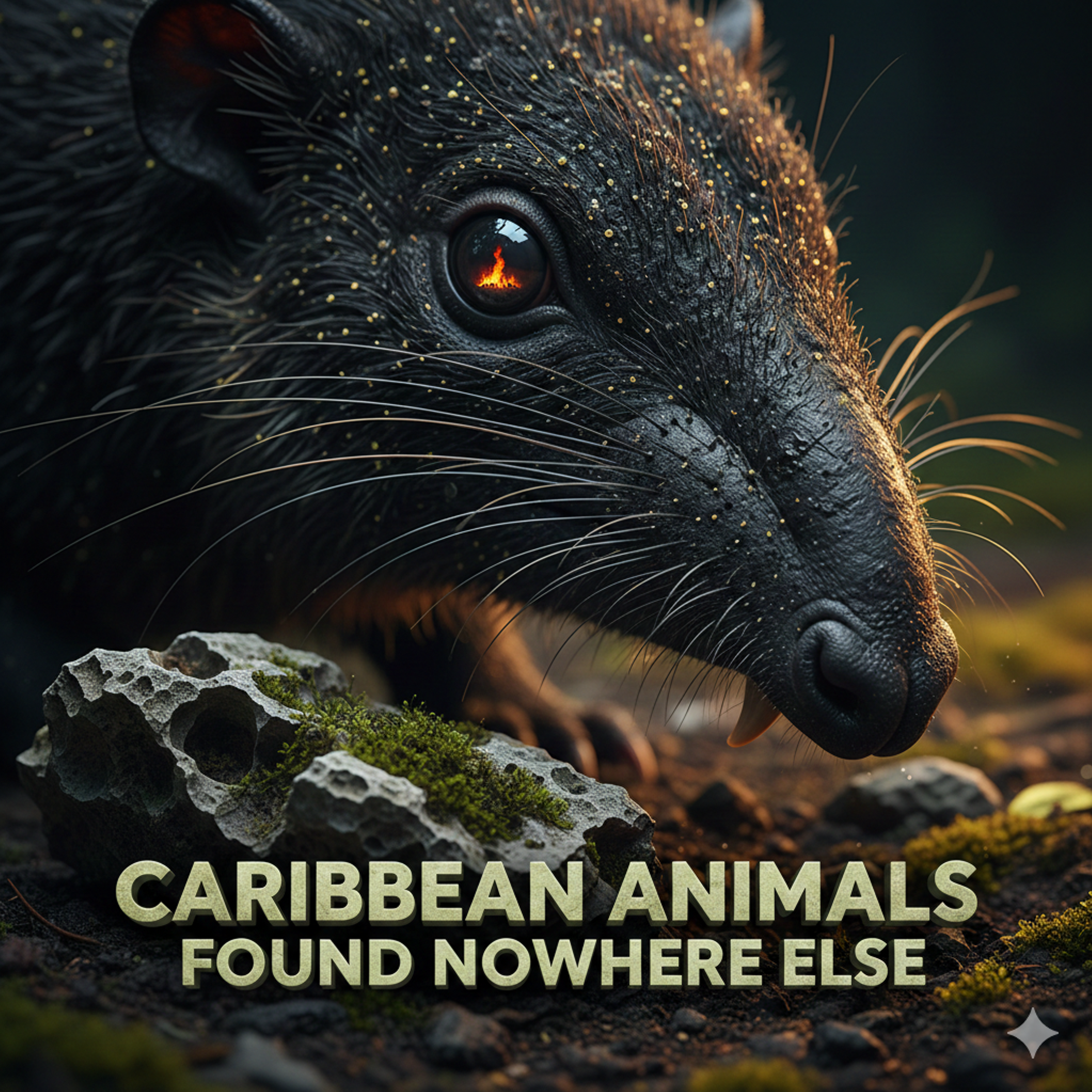
Caribbean Animals Found Nowhere Else is a deep dive into the hidden biological history of the West Indies, exploring the rare wildlife and endemic species that define our islands. From the ancient, venomous lineage of the Hispaniolan Solenodon to the high-altitude refuge of the Dominican Imperial Parrot, this episode of The History of the Caribbean podcast reveals why these "island laboratories" produced life found nowhere else on Earth. We go beyond the tourist brochures to examine the gritty reality of survival in the Antilles, tracking the prehistoric reign of giant owls and ground sloths before the devastating arrival of invasive species like the Indian mongoose and the black rat.
This documentary-style journey tackles the emotional theme of fragility, centering the community impact and the high stakes of modern conservation. We investigate the "Great Thinning" of Caribbean biodiversity—from the tragic extinction of the Caribbean Monk Seal to the 2026 climate shifts threatening our coral reefs today. Discover how isolation created these unique creatures and why their survival is a form of cultural and environmental resistance. This is not just a nature documentary; it is a record of our living symbols and the ongoing fight to protect the natural legacy of the Caribbean archipelago.
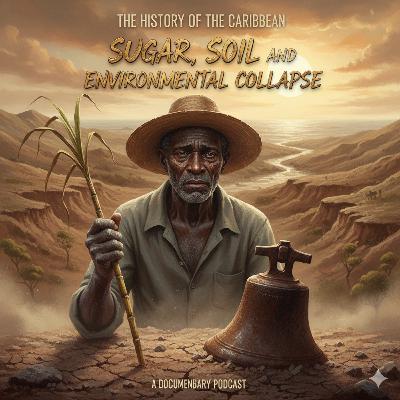
Explore the hidden environmental history of the Caribbean in this deep-dive documentary into the ecological collapse triggered by the colonial sugar industry. From the seventeen hundreds to the present day, we examine how the "Great Stripping" transformed lush tropical rainforests into exhausted monoculture deserts, forever altering the region's biodiversity. This episode uncovers the heavy cost of the plantation system, detailing the loss of endemic species like Caribbean mahogany and the disastrous introduction of invasive species like the mongoose. We analyze the direct link between eighteenth-century deforestation, soil exhaustion, and modern-day climate vulnerability, including mangrove destruction and coastal erosion. Learn how centuries of land exploitation created a cycle of environmental exhaustion that impacts Caribbean food security and hurricane resilience today. This is not just a story of the past; it is an investigation into the biological inheritance of the islands and the haunting legacy of the sugar machine. Join us as we trace the shift from primary forests to concrete tourism developments, exposing the structural roots of the Caribbean’s modern environmental crisis.
Migration is often framed as a beginning, but for the Caribbean community in the nineteen seventies and eighties, it was a collision. This episode explores the gritty reality of life in the concrete enclaves of London and New York, where the dream of a better life met the hard edge of systemic rejection. From the smoke-filled streets of the Brixton riots to the high-stakes "Barrel culture" of Brooklyn, we trace the friction between generations and the struggle to maintain an island identity in a hostile geography.
We examine the "Identity Tax"—the psychological and physical cost of living in a state of permanent "elsewhere." We document the rise of the sound system as a defensive perimeter, the complex weight of the remittance economy, and the modern betrayal of the Windrush Scandal. This is not a story of easy assimilation. It is a history of survival, the reclamation of space, and the enduring tension of a people who built the foundations of the modern West while the world tried to erase their paperwork.
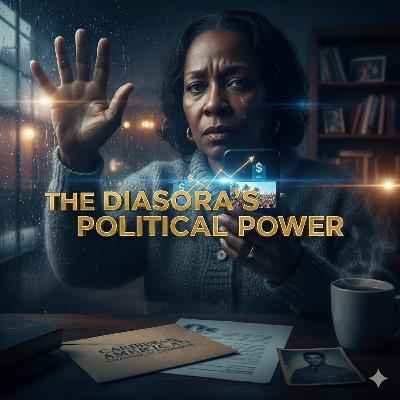
The Foreground (The North): On the left, a cold, rainy New York or London street scene. A diverse group of Caribbean people—ranging from nurses in uniform to young activists in heavy coats—stand in a long, determined line outside a polling station. The architecture is brutalist and gray, but the people are sharp and vibrant. In the windows of the buildings, we see silhouettes of people working on computers and speaking into telephones, representing the "central nervous system" of political funding.
The Background (The Islands): On the right, the scene shifts seamlessly into a sun-drenched Caribbean landscape. The colors are saturated but not postcard-pretty; it shows the reality of a working town. A political rally is in progress. A candidate stands on the back of a truck, but prominently displayed next to him is a large screen showing a video call from a community leader in the North.
The Connection: Connecting these two worlds is a symbolic "river" of light that flows from the hands of the voters in the North to the infrastructure of the islands. This river is composed of abstract elements: ballot papers, currency symbols, and digital communication waves.
The Centerpiece: In the middle of the frame, where the two worlds meet, is a scale. On one side are heavy industrial tools (representing the labor of the first generation), and on the other is a single, heavy ballot box (representing the political power of the current generation). The ballot box is tipping the scale.
They were invited to rebuild a broken empire. They stayed to face a second war.
In the 1950s, thousands of Caribbean men and women boarded ships like the Empire Windrush, answering the call of "the mother country." They expected a home; they found a cold, gray reality defined by "No Blacks, No Irish, No Dogs" signs. This episode of THE HISTORY OF THE CARIBBEAN explores the harrowing journey of the diaspora across Europe and North America—a journey marked by institutional betrayal and the fire of resistance.
From the street-level battles of the 1981 Brixton Uprisings and the tragedy of the New Cross Fire to the modern-day betrayal of the Windrush Scandal, we deconstruct the "Double Exclusion." This is the story of a people caught between two worlds: viewed as "foreigners" in the lands they built, and "strangers" in the islands they left behind.
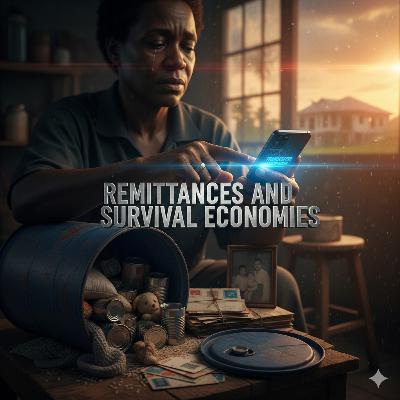
At its core, this is a story about The Departure Contract. It posits that migration in the Caribbean is rarely an individual act of ambition, but rather a collective family investment. When one person leaves, they carry the survival of the entire bloodline in their suitcase. The narrative follows the physical evolution of this help: starting with the heavy, blue plastic shipping barrels packed with flour and soap in the seventies, moving to the predatory wire-transfer booths of the nineties, and ending with the cold, instant pings of digital wallets today.
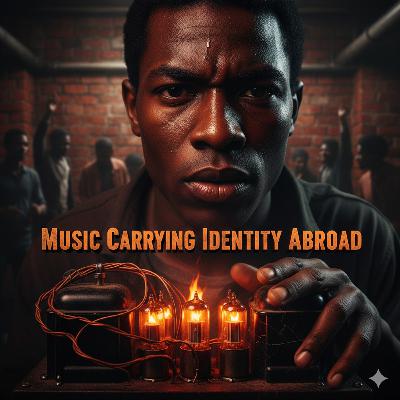
They arrived in the "Mother Country" with cardboard suitcases and the weight of an Empire on their backs. Met with "No Blacks" signs and a freezing London fog, the Caribbean diaspora didn't retreat—they went underground. From the sweat-soaked "Blues" parties of Brixton to the scorched-out parks of the South Bronx, this episode tracks how the sound system became a portable border, a financial lifeline, and a weapon of cultural survival. This isn't a story about entertainment; it’s a story about building a home out of bass and wire when the world refused to give us a room.
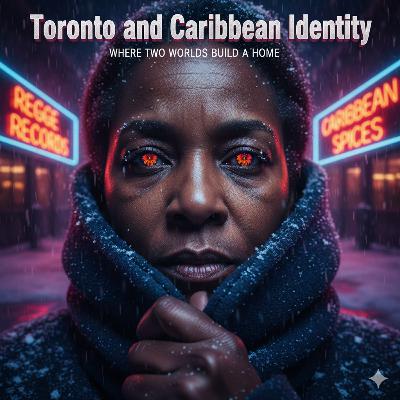
Toronto is the largest Caribbean city in the North—but the road to belonging was paved with grit, cold, and resistance.
In this episode of THE HISTORY OF THE CARIBBEAN, we go beyond the postcard image of Canada to explore the real story of the Caribbean Diaspora in Toronto. From the Domestic Scheme of the 1960s to the modern-day gentrification of Little Jamaica on Eglinton West, we look at how immigrants from Jamaica, Trinidad, and Barbados transformed a frozen city into a global cultural powerhouse.
Discover the untold stories of:
The struggle of the first West Indian domestic workers.
The Sir George Williams Affair and the birth of Black consciousness in Canada.
How Caribana evolved from a centennial gift into a massive act of cultural reclamation.
The battle against police "carding" and the rise of the Black Action Defense Committee.
This is a story of survival, the "Toronto Sound," and the high price of making a home in a country that wanted your labor but not your face.
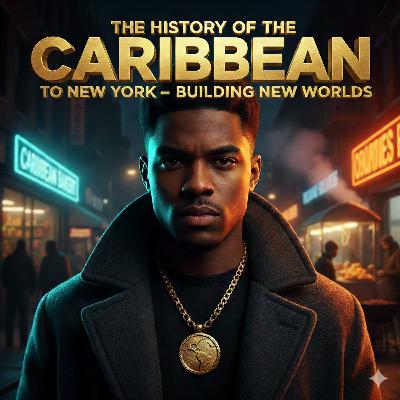
In the shadows of the nineteen fifties, a quiet revolution began on the cold, grey streets of New York. Caribbean Migration to New York – Building New Worlds is a gritty, long-form documentary that tracks the transformation of a diaspora from temporary labor to the architects of a new urban empire.
This isn't a story of easy assimilation. It is a chronicle of survival in the face of "benign neglect," where families traded the open horizons of the islands for the cramped, coal-dusted tenements of Harlem and Brooklyn. Through the lens of the "barrel economy" and the rise of the transnational family, we witness how a community maintained its soul through the senses—smuggling the scent of home into basement parties and neighborhood bodegas.
From the first shock of winter at Idlewild Airport to the defiant reclamation of the city during the fiscal crises of the seventies, this episode explores the cost of the "New York Dream." It is a narrative of reinvention, where the children of the diaspora stopped asking for permission and started building a world where the Caribbean flag flies as high as the skyscrapers.
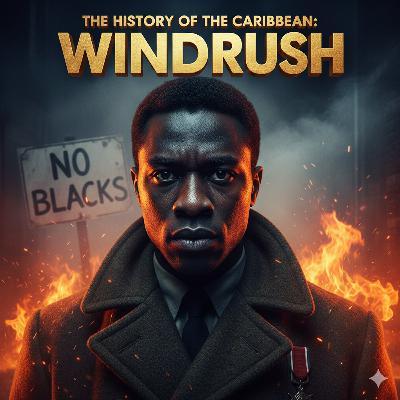
The Windrush Generation – Promise and Betrayal, explores the transition of Caribbean people from colonial subjects to the architects of modern British culture. It is a story told through the lens of displacement, grit, and the eventual reclamation of identity.
Chapter One: The Call of the Mother Country (1948)
The story begins with the Empire Windrush docking at Tilbury in June 1948. This chapter focuses on the legal invitation versus the political panic. While the British Nationality Act of 1948 granted full citizenship to those in the colonies, the arriving veterans and workers were met with cold skepticism from the state.
Key Themes: The myth of the "Mother Country," the recruitment for the NHS and London Transport, and the initial housing of migrants in deep air-raid shelters (Clapham Common).
The Vibe: Grey, industrial, and heavy with the weight of expectation.
Chapter Two: The Concrete Cold (1950s)
As the 1950s progress, the "invitation" reveals itself as a social trap. This chapter highlights the Color Bar—systemic discrimination in housing and labor.
The Friction: The infamous "No Blacks, No Irish, No Dogs" signs and the "Pardner" system used by the community to buy their own homes when banks refused them.
The Breaking Point: The 1958 Notting Hill Riots, where white "Teddy Boy" gangs hunted Caribbean residents, leading to a pivotal moment of self-defense and the formation of the West Indian Gazette by Claudia Jones.
The Vibe: Tense, nocturnal, lit by the orange glow of petrol bombs against damp London brick.
Chapter Three: The Roots in the Rubble (1960s–1970s)
The final chapter deals with the institutional betrayal. As the community began to establish deep roots through the birth of Notting Hill Carnival, the British government moved to strip away their rights.
The Legislative Trap: The 1962 Commonwealth Immigrants Act and the 1971 Immigration Act, which turned citizens into "immigrants" and set the stage for future legal disenfranchisement.
The Political Rhetoric: The impact of Enoch Powell’s "Rivers of Blood" speech and the rise of the "sus" laws used to target the first generation of black British youth.
The Legacy: A community that moved from the docks to the heart of British culture, creating a new, defiant identity that transformed the nation's music, food, and social consciousness.
The Vibe: Resilient and vibrant, transitioning from the grey of the 1940s to the saturated, rhythmic energy of the early Caribbean-British soul.
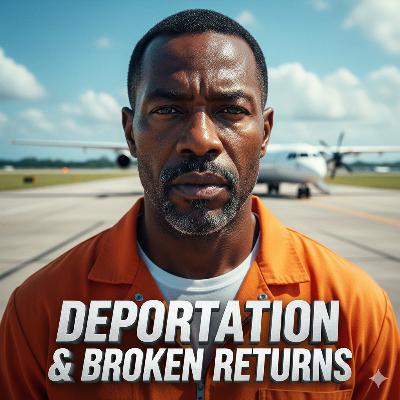
THE HISTORY OF THE CARIBBEAN | Episode: Deportation and Broken Returns
In this episode of our History of the Caribbean series, we examine the brutal reality of the "broken return." Since the nineteen-nineties, the legal landscape of the United States has transformed, turning neighbors into "removals" and forcing thousands into permanent exile.
We trace the impact of the nineteen ninety six Illegal Immigration Reform and Immigrant Responsibility Act (IIRIRA) and how it stripped judicial discretion, destabilizing the Caribbean diaspora from Brooklyn to Little Haiti. This is not just a story of policy; it is the story of families fractured by ICE Air flights and the stigma of the "deportee" in cities like Kingston and Port-au-Prince.
Inside this episode:
Chapter One: The Paperwork of Exile. How the "aggravated felony" became a tool for mass removal.
Chapter Two: The Flight to Nowhere. The physical and psychological shock of arrival in a "home" that feels foreign.
Chapter Three: The Shadow of the Returnee. The struggle for reintegration and the rise of resistance movements like Chans Altenativ in Haiti.
This is our history—unfiltered and grounded in the grit of survival. We explore the consequences of a system that chooses the machine over the man, leaving the Caribbean to absorb the human cost of foreign policy.
Keywords & Topics covered: Caribbean Diaspora History, Jamaica Deportation, Haiti Migration, IIRIRA 1996, Criminal Alien Narrative, Transnational Families, Caribbean Social Issues, Immigration Reform History.
#CaribbeanHistory #Diaspora #Documentary #SocialJustice #Podcast

Brain Drain: The Silent Depletion of the Caribbean
[00:00–02:30] Why the Caribbean is losing its future. Explore the economic impact of the brain drain and why our best minds are leaving for the North.
The Caribbean is a factory for the world, producing elite doctors, nurses, and engineers—only to watch them walk away. In this episode of THE HISTORY OF THE CARIBBEAN, we go beyond the turquoise water to examine the "Care Drain" and the silent extraction of our intellectual wealth.
In this episode, you will discover:
The Post-Colonial Void: Why independence in the 1960s triggered a massive exodus of the professional class.
The Harvest of Experts: How the UK and USA actively recruit our nurses and teachers, leaving local systems in crisis.
The Remittance Trap: Why the billions of dollars sent back home might be standing in the way of real economic growth.
Episode Chapters:
0:00 - The Invisible Tide: Introduction to Caribbean Depletion 2:45 - 1960s Independence and the First Great Exit 15:20 - The "Push-Pull" Theory: Why our architects are leaving 28:10 - The Care Drain: Foreign recruitment of nurses and teachers 42:35 - The Barrel Children: The emotional toll on Caribbean families 55:50 - Remittance Economy: Is the money worth the loss? 1:10:15 - The Future: Can we stop the brain drain?
Join the Conversation
Is the diaspora a strength or a weakness for our islands? Have you seen the effects of this depletion in your own community? Let us know in the comments.
Subscribe for more long-form Caribbean history: [Your Subscribe Link Here]
#CaribbeanHistory #BrainDrain #CaribbeanDiaspora #EconomicHistory #DocumentarySeries
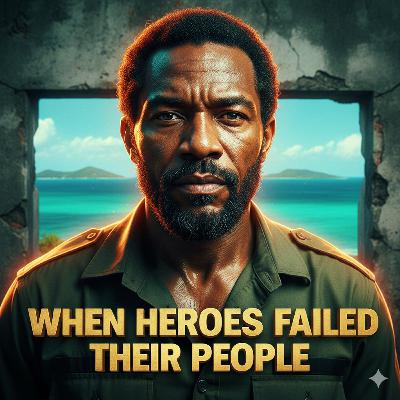
The Story: In this hard-hitting episode of THE HISTORY OF THE CARIBBEAN, we strip away the myth of the "political messiah." From the labor riots of 1938 to the modern-day halls of power, we track the rise and moral decay of the region's most iconic leaders.
We journey through the streets of Jamaica, the volcanic tension of Grenada, and the shadow-filled offices of Guyana to ask the uncomfortable question: Did our independence heroes build nations, or just new plantations? This is a story of disillusionment, the "strongman" legacy, and the heavy price paid by the people when liberation stops at the palace doors.
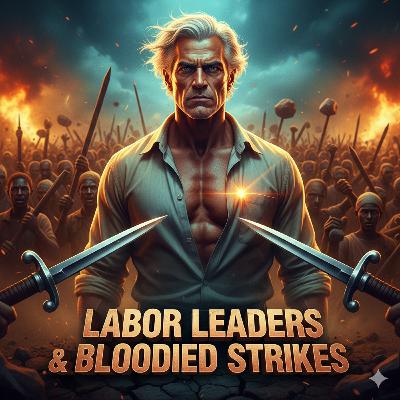
The untold story of the 1930s Caribbean Labor Rebellions. Witness the blood, sacrifice, and gritty history of the men and women who stood against an empire.
From the sugar estates of St. Kitts to the oilfields of Trinidad and the docks of Kingston, the 1930s marked a point of no return for the Caribbean. In this episode of THE HISTORY OF THE CARIBBEAN, we expose the brutal reality of the labor strikes that birthed modern Caribbean politics. This isn't just a history of laws; it is a history of sacrifice.
We dive deep into the lives of leaders like Uriah "Buzz" Butler and Alexander Bustamante, documenting the moment ordinary workers turned the tide against colonial exploitation. Discover how the "barefoot" protesters faced down bayonets to secure the rights we hold today.
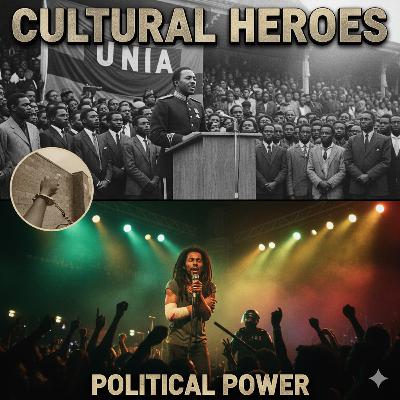
Discover how Caribbean cultural icons fought back against state control. We explore the gritty history of resistance, from Marcus Garvey’s UNIA to the banned sounds of Reggae and Calypso.
In this episode of THE HISTORY OF THE CARIBBEAN, we break down the high-stakes conflict between grassroots heroes and political power. From the nineteen hundreds to the present, see how the state attempted to silence the voices of the people through prison, censorship, and institutionalization—and why they ultimately failed.
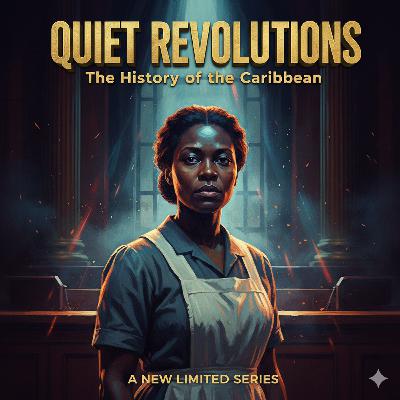
Title Suggestion: Caribbean Women Who Led Quiet Revolutions (1900s History)
Description: Discover the untold history of Caribbean women who led quiet revolutions in the early 1900s. From Nita Barrow to Elma Francois, we reveal the hidden figures who built the foundation for Caribbean resistance and independence.
About This Episode: In this episode of THE HISTORY OF THE CARIBBEAN, we explore the "Heroes and Resistance" that history books often ignore. We dive into the nineteen thirties labor rebellions, the role of market women in Trinidad, and the nursing reforms that changed Barbados. This is a gritty, documentary-style look at the erasure of female leadership in the Caribbean and why their stories are essential to understanding our history today.
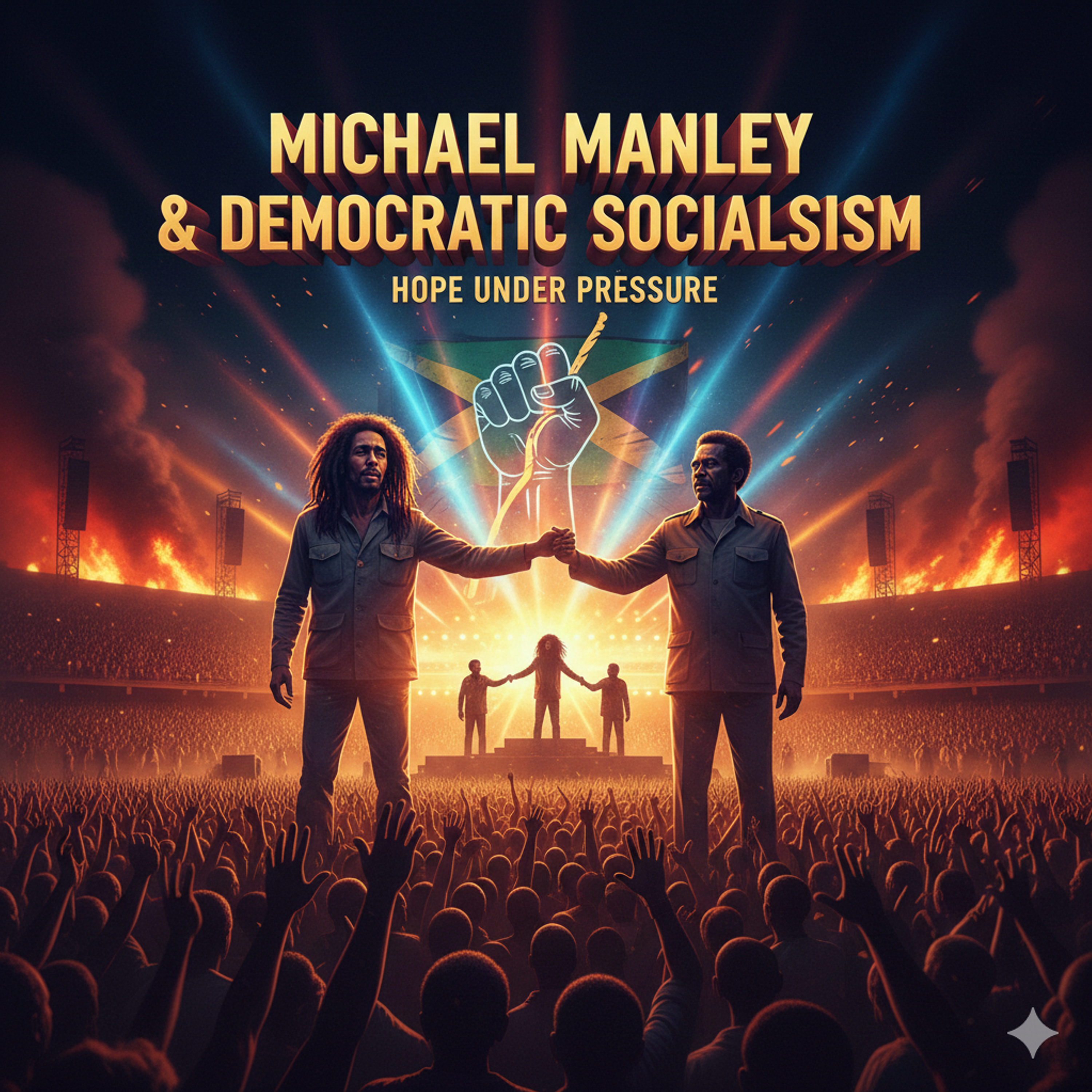
Can a post-colonial nation truly survive outside the global financial system? In this episode of THE HISTORY OF THE CARIBBEAN, we dive into the gritty reality of Jamaica in the 1970s under the leadership of Michael Manley. Known to many as "Joshua," Manley rose to power with a bold vision of Democratic Socialism, promising free education, land reform, and a fair share of the island’s bauxite wealth.
However, the dream of a new Jamaica quickly met the cold reality of the Cold War, bauxite levy struggles, and devastating economic destabilization. From the landslide victory of 1972 to the bloodiest election in our history in 1980, we explore the rise and fall of a movement that changed the Caribbean forever.
In this documentary, you will discover:
The impact of the Bauxite Levy on global corporations.
How Michael Manley and Fidel Castro’s friendship triggered a Cold War response.
The truth behind the 1980 election violence and the birth of political garrisons.
The lasting legacy of social justice and democratic socialism in Jamaica today.
CHAPTERS
0:00 - The Promise of Joshua: 1972 Victory
15:42 - The Bauxite Levy and Economic War
32:15 - The Cold Front: Manley and Castro
48:50 - Heavy Manners: The 1976 State of Emergency
01:05:12 - The 1980 Election and the Cost of a Dream
01:22:30 - Michael Manley’s Final Legacy
Support Our History: If you value deep-dive Caribbean History and cultural preservation, please Subscribe and hit the bell icon. We are a diaspora-focused series dedicated to telling the untold stories of our islands with grit and truth.
#CaribbeanHistory #Jamaica #MichaelManley #DemocraticSocialism #Documentary #OurHistory #Kingston70s

Comments

Download from Google Play

Download from App Store
 United States