


 Claim Ownership
Longview Conversations x Mads Jensen: Is AI a Bubble? Is There Any Hope for Europe?
Subscribed: 0Played: 2
Subscribe

© 2026
Description
In this fourteenth instalment of our 'Longview Conversations With' podcast, CEO Chris Watling deep dives into AI themes, but instead of following the traditional Silicon Valley route (for this type of conversation), on this show we get a different perspective, that of a European venture capital specialist - Mads Jensen.
Mads is a tech and VC expert, having spent the last 25 years in the industry. He started at IBM in 2001, before leaving to begin his own SaaS company, Sefaira, the first real time simulation for energy efficiency in building design. Over the 6 years scaling before selling, he observed a glaring difference in the venture capital ecosystems between Europe and the US - with Europe late to the game, slowed down by regulation, and therefore far behind. His next move began with investing in other companies with the purpose of bringing the entrepreneurial DNA of the US into the EU space. That led to the creation, with his business partner Dan Bowyer, of their VC fund, SuperSeed. SuperSeed currently backs 35 companies (with two funds and a third opening soon) in seed and pre-seed stages in providing investment, expertise and networks to help develop a repeatable, scalable and profitable business model and accelerate the journey to Series A and beyond.
In discussion with Mads, we dive into how AI is actually and practically being applied in various industries around the world, delivering real and meaningful productivity gains. We also discuss the US vs. European Venture Capital model and pre IPO financing ecosystem, and consider the question: Is there any hope for Europe? Is it destined to be an expert in regulation and rules and not much else (as some would suggest)? Or is the European VC industry starting to come of age? And finally, is AI, more broadly, a bubble and if so, what does that mean for investing?
Mads is a tech and VC expert, having spent the last 25 years in the industry. He started at IBM in 2001, before leaving to begin his own SaaS company, Sefaira, the first real time simulation for energy efficiency in building design. Over the 6 years scaling before selling, he observed a glaring difference in the venture capital ecosystems between Europe and the US - with Europe late to the game, slowed down by regulation, and therefore far behind. His next move began with investing in other companies with the purpose of bringing the entrepreneurial DNA of the US into the EU space. That led to the creation, with his business partner Dan Bowyer, of their VC fund, SuperSeed. SuperSeed currently backs 35 companies (with two funds and a third opening soon) in seed and pre-seed stages in providing investment, expertise and networks to help develop a repeatable, scalable and profitable business model and accelerate the journey to Series A and beyond.
In discussion with Mads, we dive into how AI is actually and practically being applied in various industries around the world, delivering real and meaningful productivity gains. We also discuss the US vs. European Venture Capital model and pre IPO financing ecosystem, and consider the question: Is there any hope for Europe? Is it destined to be an expert in regulation and rules and not much else (as some would suggest)? Or is the European VC industry starting to come of age? And finally, is AI, more broadly, a bubble and if so, what does that mean for investing?
2 Episodes
Reverse
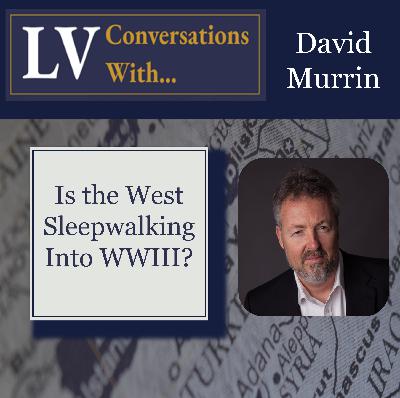
In this fifteenth instalment of our 'Longview Conversations With' podcast, CEO Chris Watling sits down with David Murrin — geopolitical strategist, financial market forecaster, and founder of Global Forecaster — for one of the most wide-ranging and provocative conversations in the series to date covering the patterns of war and what we can infer from current geopolitical tensions. David is a genuine polymath. His career began as a geophysicist working in Papua New Guinea, where his early observations of collective human behaviour first sparked a lifelong obsession with decoding the patterns that drive civilisations, markets, and conflict. He went on to join JP Morgan, before co-founding Emergent Asset Management in 1997. Out of that experience grew Global Forecaster — a research and advisory firm whose clients include governments, armed forces, major financial institutions, and asset managers. His landmark book, Breaking the Code of History (2009), introduced his Five Stages of Empire model and the '108–112' Year Hegemonic War Cycle Theory — integrated frameworks combining macroeconomic, military, and behavioural insights that have underpinned a track record of non-consensus calls going back to 2001. With David, we explore the deep architecture of his hegemonic war cycle theory — and where, by his reckoning, the world currently sits within it. We discuss his quantum-inspired and fractal thinking on the patterns of markets during periods of war and civilisational stress: How price action and collective human behaviour encode the very same dynamics that drive imperial expansion and decline. We turn to Iran, the closing of the Strait of Hormuz, and why — contrary to much of the current commentary — this conflict may not resolve as fast as some markets reflect and will likely, in David's view, see oil not only move but remain at higher levels. We also examine the West's chronic failure to respond with the strategic and military sharpness that this moment demands — the hollowing out of defence capabilities that leaves it dangerously exposed at precisely the wrong point in the cycle. And finally, we look, with unflinching clarity, at what China is actually doing: How Beijing is systematically building the military, economic, and geopolitical infrastructure of a successor hegemonic power — and how, while the West remains distracted by the fires of the Middle East and Eastern Europe, China may be quietly seizing the strategic window it has long been preparing for. It is a rare conversation - one that fuses the long arc of history with the immediacy of today's markets. We hope you enjoy it.
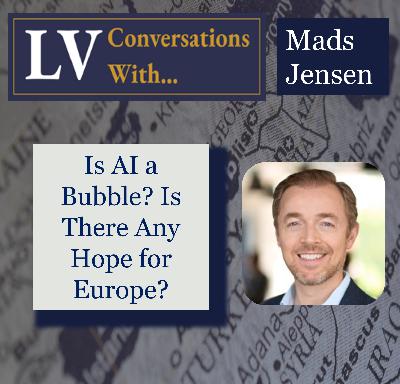
In this fourteenth instalment of our 'Longview Conversations With' podcast, CEO Chris Watling deep dives into AI themes, but instead of following the traditional Silicon Valley route (for this type of conversation), on this show we get a different perspective, that of a European venture capital specialist - Mads Jensen. Mads is a tech and VC expert, having spent the last 25 years in the industry. He started at IBM in 2001, before leaving to begin his own SaaS company, Sefaira, the first real time simulation for energy efficiency in building design. Over the 6 years scaling before selling, he observed a glaring difference in the venture capital ecosystems between Europe and the US - with Europe late to the game, slowed down by regulation, and therefore far behind. His next move began with investing in other companies with the purpose of bringing the entrepreneurial DNA of the US into the EU space. That led to the creation, with his business partner Dan Bowyer, of their VC fund, SuperSeed. SuperSeed currently backs 35 companies (with two funds and a third opening soon) in seed and pre-seed stages in providing investment, expertise and networks to help develop a repeatable, scalable and profitable business model and accelerate the journey to Series A and beyond. In discussion with Mads, we dive into how AI is actually and practically being applied in various industries around the world, delivering real and meaningful productivity gains. We also discuss the US vs. European Venture Capital model and pre IPO financing ecosystem, and consider the question: Is there any hope for Europe? Is it destined to be an expert in regulation and rules and not much else (as some would suggest)? Or is the European VC industry starting to come of age? And finally, is AI, more broadly, a bubble and if so, what does that mean for investing? We hope you enjoy the conversation.
Comments


Download from Google Play

Download from App Store
 United States