


 Claim Ownership
Oral Arguments - The Supreme Court of the United States
Subscribed: 3Played: 38
Subscribe

© Unprotected Under 17 U.S. Code § 105
Description
This podcast is about the oral arguments of cases at the United States Supreme Court.
My desire is to bring closer to you Supreme Court arguments that eventually lead to landmark decisions. Enjoy!
41 Episodes
Reverse
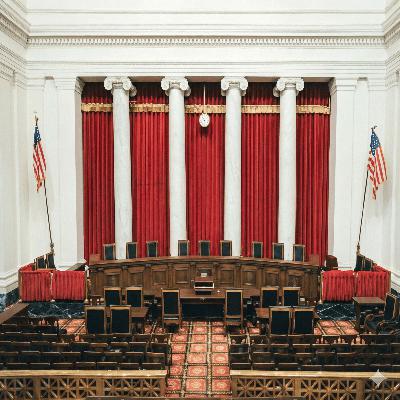
Case Summary:On March 4, 2026, the Supreme Court heard oral arguments in Montgomery v. Caribe Transport II, LLC, a high-stakes case for the logistics industry that examines whether federal law protects freight brokers from state-law negligence lawsuits.The case arose after Shawn Montgomery was severely injured when a tractor-trailer struck his vehicle on the shoulder of an Illinois highway. Montgomery sued the broker, C.H. Robinson, alleging it was "negligent" for hiring a motor carrier with a known history of safety issues. The lower courts dismissed the claim, ruling that the Federal Aviation Administration Authorization Act (FAAAA)—a 1994 law designed to deregulate the trucking industry—preempts such state-law claims.Core Legal IssuesThe justices are tasked with resolving a "circuit split" regarding two specific provisions of the FAAAA:The Preemption Rule: Does a state-law "negligent hiring" claim "relate to a service" of a broker in a way that Congress intended to prohibit to ensure a uniform national market?The Safety Exception: Even if the claim is generally prohibited, does it fall under the "safety regulatory authority of a State with respect to motor vehicles," which Congress explicitly carved out and preserved for the states?Highlights from Oral ArgumentDefining "Safety Regulation": Paul Clement, representing Montgomery, argued that personal injury lawsuits have historically been the primary way states regulate safety. However, several conservative justices, including Justice Clarence Thomas, questioned whether a lawsuit against a middleman who never touches a truck truly counts as regulation "with respect to motor vehicles."The "Patchwork" Concern: Counsel for the broker, Theodore Boutrous, argued that allowing these suits would create a "patchwork" of 50 different state standards for how brokers must screen carriers, "bollixing up" interstate commerce and driving up insurance costs for the entire supply chain.Practicality and Common Sense: Justice Brett Kavanaugh focused on the practical burden on small brokers, asking how they are supposed to verify complex safety data or driver English proficiency without being forced to only hire large, expensive carriers, potentially crushing small business competition.The Intrastate Anomaly: Justices Samuel Alito and Brett Kavanaugh pointed out a potential "logical flip" in the statute: the law clearly bars these suits for intrastate (in-state) travel. They questioned why Congress would prohibit states from regulating safety within their own borders but allow them to do so for interstate (cross-border) trips.The Solicitor General's View: The Department of Justice participated in the argument, siding largely with the brokers. The government argued that while states can regulate trucks and drivers directly, extending that authority to the "matchmaking" service of a broker stretches the safety exception too far.
Case Summary:On March 3, 2026, the Supreme Court heard oral arguments in Hunter v. United States, a case that examines the limits of plea agreements and whether a defendant can truly waive their right to appeal a sentence that may be unconstitutional.The case involves Munson P. Hunter III, who pleaded guilty to wire fraud. As part of his plea, he signed a standard "appellate waiver," giving up his right to challenge his sentence. However, at sentencing, the judge imposed a condition requiring Hunter to take any mental health medications prescribed by his doctors—a requirement Hunter argues violates his Fifth Amendment liberty interests. Crucially, after imposing the sentence, the judge explicitly told Hunter, "You have a right to appeal," and the government prosecutor did not object to that statement.Core Legal IssuesThe justices are deciding two major points that affect nearly 95% of federal criminal cases settled by pleas:The Scope of Waivers: Are the only exceptions to an appeal waiver claims of "ineffective assistance of counsel" or a "sentence exceeding the statutory maximum," or are there broader exceptions for "miscarriages of justice" or unconstitutional sentencing conditions?The "Waiver of the Waiver": Does a judge’s oral statement at sentencing—telling a defendant they have a right to appeal—override a previously signed written waiver, especially if the government remains silent?Highlights from Oral ArgumentSkepticism Toward the Government: Several justices, including Justice Elena Kagan and Justice Ketanji Brown Jackson, appeared troubled by the government’s "hard line" position. They questioned whether a waiver should really block a defendant from appealing a sentence if, for example, a judge was explicitly racist or imposed a "shocking" and unconstitutional condition.The Contract Law Debate: Hunter’s counsel, Lisa Blatt, argued that plea deals are essentially contracts and should be subject to traditional contract defenses like "unconscionability" or "public policy." However, Justice Samuel Alito and others expressed concern that importing complex contract doctrines into criminal law might make plea deals too unpredictable.Coercion and Power Imbalance: Justice Jackson highlighted the inherent power imbalance in plea negotiations, questioning whether a defendant can "voluntarily" waive a right to challenge a sentence that hasn't even been determined yet.The "Silent Prosecutor" Problem: Much of the bench focused on the fact that the prosecutor did not correct the judge when Hunter was told he could appeal. Chief Justice John Roberts and Justice Brett Kavanaugh explored whether the government "forfeited" its right to enforce the waiver by failing to speak up in the courtroom.
Case Summary:On March 2, 2026, the Supreme Court heard oral arguments in United States v. Hemani, a pivotal Second Amendment case determining whether the government can permanently disarm "unlawful users" of controlled substances, specifically marijuana.The case involves Ali Danial Hemani, a Texas man who was indicted under 18 U.S.C. § 922(g)(3) after FBI agents found a Glock pistol and marijuana in his home. Hemani, who admitted to using marijuana roughly every other day but was not intoxicated at the time of the search, challenged the law as an unconstitutional violation of his right to bear arms.Core Legal IssuesThe justices are grappling with whether a categorical ban on gun ownership for drug users is consistent with the "history and tradition" of American firearm regulation. Under the standard set in Bruen, the government must prove that this modern restriction is analogous to historical laws from the founding era.The United States argues that the ban is similar to historical "habitual drunkard" laws, which allowed for the disarmament of individuals deemed a danger to themselves or others. Hemani’s defense, however, contends that those historical laws only regulated the use or carry of firearms while actually intoxicated, rather than stripping away the fundamental right to possess a weapon in the home for self-defense based on occasional or regular drug use.Highlights from Oral ArgumentJustice Gorsuch’s Breakfast Hypo: Justice Neil Gorsuch expressed skepticism toward the government’s "habitual user" standard, pointing out that many of the Founding Fathers, including John Adams, consumed alcohol daily (such as hard cider with breakfast) without being considered "dangerous" or subject to disarmament.The Ambien Problem: Justice Amy Coney Barrett pressed the government on the breadth of the statute, noting that under the current law, someone who takes a spouse’s Ambien or a single unprescribed Adderall could technically be labeled an "unlawful user" and face a 15-year felony sentence for owning a gun.Vagueness Concerns: Several justices questioned the lack of a clear definition for "unlawful user." They noted that the statute does not specify how frequently one must use a substance or how recently the use must have occurred to trigger the loss of a constitutional right.Individualized Dangerousness: Justice Sonia Sotomayor and Justice Brett Kavanaugh explored whether the Second Amendment requires an "individualized determination" of danger—similar to the domestic violence restrictions upheld in Rahimi—rather than a blanket ban based on the mere status of being a drug user.
Case Summary:On February 25, 2026, the Supreme Court heard oral arguments in Pung v. Isabella County, a case that examines the constitutional limits of "home equity theft" and could fundamentally change how local governments handle tax foreclosures.The dispute began over a relatively minor tax bill of approximately $2,242 on a Michigan property. Despite a tax tribunal previously ruling that the owner was entitled to an exemption, Isabella County foreclosed on the home, sold it at auction for $76,000, and initially attempted to keep the entire amount. While lower courts ordered the county to return the "surplus" (the auction price minus the debt), the family argued they were still cheated because the home’s fair market value was roughly $194,400.Core Legal IssuesThe justices are considering two primary constitutional questions:The Fifth Amendment (Takings Clause): Does "just compensation" mean the government only owes the former owner the surplus cash from a forced auction, or must it pay the full fair market value of the property?The Eighth Amendment (Excessive Fines Clause): Is the loss of over $100,000 in home equity to satisfy a $2,200 debt—an amount 50 times the original bill—a "grossly disproportionate" fine that is unconstitutional?Highlights from Oral ArgumentFocus on Fairness: Several justices expressed significant discomfort with the facts of the case, with Justice Amy Coney Barrett likening the relentless tax assessor to Inspector Javert from Les Misérables, noting it was "even worse" because the family likely didn't even owe the tax.The Auction vs. Market Value: Justice Sonia Sotomayor and Chief Justice John Roberts pushed back on the idea of a "fair market value" requirement. They questioned whether an auction, by its very nature as a forced sale, shouldn't be the standard measure of value, asking if a "fairly conducted" auction is all the Constitution requires.The "Infinite Windfall" Problem: Counsel for the county warned that requiring fair market value would "effectively eliminate" foreclosure as a tool for debt collection, as governments would be forced to pay out hundreds of millions of dollars in equity they didn't actually collect at auction.Property as a "Bundle of Sticks": Justice Neil Gorsuch emphasized that when the state takes a house, it takes the entire "bundle of property rights." He suggested that the state should be responsible for the full value of what it takes, not just what it manages to sell it for under pressure.What Happens NextA decision is expected by June 2026. This ruling will clarify whether the 2023 landmark case Tyler v. Hennepin County (which stopped states from keeping all auction profits) goes a step further to require that states ensure homeowners receive the full, un-depressed value of their life's savings.
Case Summary:On February 24, 2026, the Supreme Court heard oral arguments in Enbridge Energy, LP v. Nessel, a case that could determine the fate of the controversial Line 5 pipeline through a technical dispute over court deadlines.The litigation began in 2019 when Michigan Attorney General Dana Nessel sued in state court to shut down a segment of the Enbridge pipeline running beneath the Straits of Mackinac, citing environmental risks. Nearly 30 months into the state court proceedings, Enbridge attempted to "remove" the case to federal court—far beyond the standard 30-day statutory deadline for such moves.Core Legal IssuesThe central question before the Court is whether the 30-day deadline for removing a case from state to federal court (28 U.S.C. § 1446(b)) is a rigid, mandatory rule or if district courts have the "equitable" authority to extend it in exceptional circumstances.Enbridge argues that the deadline functions like a statute of limitations and should be subject to "equitable tolling," allowing a judge to excuse a late filing if the federal interests are significant enough. Michigan contends that the deadline is a firm procedural requirement designed to prevent "forum shopping" and that allowing exceptions would cause unpredictable delays in state-level litigation.Highlights from Oral ArgumentThe Forum Stakes: Several justices noted that the choice of court is pivotal; federal courts are generally viewed as more sympathetic to Enbridge’s arguments regarding federal safety preemption, while state courts are seen as more likely to favor Michigan's environmental protection claims.Justice Sotomayor’s Skepticism: Justice Sonia Sotomayor pointed out that unlike a statute of limitations where a late filing might end a case entirely, a late removal just means the case stays in state court. She questioned if Enbridge was truly "losing" any rights, or simply losing its preferred venue.International Implications: Justice Samuel Alito expressed concern over the potential for "severe" diplomatic fallout with Canada if a state court were to order the pipeline shut down, suggesting this broader context might justify federal court oversight.The "Clear Command" Debate: The argument heavily featured the "clear statement rule." Michigan’s Solicitor General argued that Congress’s inclusion of specific, narrow exceptions in the statute proves that it did not intend for judges to create their own "equitable" loopholes.What Happens NextThe Supreme Court is expected to rule by June 2026. If Enbridge wins, the case will likely move back to federal court, where the pipeline is more likely to remain operational. If Michigan wins, the case will proceed in state court, bringing the Attorney General one step closer to her goal of decommissioning the Line 5 segment.
Case Summary: Gemini saidOn February 23, 2026, the Supreme Court heard oral arguments in Exxon Mobil Corp. v. Corporación CIMEX, S.A., a landmark case determining whether Cuban state-owned entities can be sued in American courts for "trafficking" in property seized during the 1960 revolution.The case stems from the confiscation of an oil refinery and over 100 service stations belonging to Exxon’s predecessor, Standard Oil. Exxon is seeking tens of millions of dollars in damages under Title III of the Helms-Burton Act, which targets anyone who economically exploits property stolen by the Castro regime.Core Legal IssuesThe central question for the justices is whether the Helms-Burton Act automatically strips foreign state-owned companies of their sovereign immunity, or if plaintiffs must still prove a specific exception under the Foreign Sovereign Immunities Act (FSIA).Exxon argues that by creating a private right of action against "any person" (including foreign agencies), Congress clearly intended to abrogate their immunity. Conversely, the Cuban conglomerate CIMEX contends that because Congress did not explicitly amend the FSIA when passing the Helms-Burton Act, the standard baseline of sovereign immunity must still apply unless a specific "commercial activity" or "expropriation" exception is met.Highlights from Oral ArgumentSkepticism Toward Exxon: Several justices expressed doubt that the Helms-Burton Act was intended to bypass the FSIA entirely. Justice Ketanji Brown Jackson and Justice Brett Kavanaugh raised concerns that allowing such lawsuits to proceed without a clear FSIA exception would empower private companies to "punish" foreign governments in ways usually reserved for the Executive Branch.The "Clear Statement" Rule: Much of the debate focused on whether the language in the Helms-Burton Act is specific enough to meet the "clear-statement rule" required for Congress to waive sovereign immunity.Presidential Deference: Justice Neil Gorsuch pointed to the fact that the law allows the President to suspend these lawsuits for national security reasons. He questioned whether this executive "veto" power suggests that Congress anticipated sovereign immunity conflicts and provided the President—rather than the courts—with the final say on which cases should proceed.Fairness and Reciprocity: Counsel for Exxon argued that if Cuban state companies are granted immunity, it would create an "implausible" scenario where a foreign government-owned business is better protected from liability than a private company or even a domestic tribal government.What Happens NextThe Court’s decision, expected by June 2026, will clarify the jurisdictional rules for suing foreign state-owned enterprises. If the Court rules in favor of Exxon, it could open the floodgates for billions of dollars in claims against Cuban, and potentially other foreign, state instrumentalities.
Case Summary:On February 23, 2026, the Supreme Court of the United States heard oral arguments in Havana Docks Corp. v. Royal Caribbean Cruises, Ltd., a case that centers on the interpretation of the Helms-Burton Act and the liability of U.S. companies for using property confiscated by the Cuban government.The legal battle began when Havana Docks Corporation, which held a 99-year lease (a usufructuary concession) to operate the Havana cruise pier until 2004, sued several cruise lines for "trafficking" in their stolen property by using those same docks between 2016 and 2019.Core Legal IssuesThe primary question before the Court is whether a plaintiff can maintain a claim under Title III of the LIBERTAD Act if their original legal interest in the property would have expired naturally before the alleged "trafficking" occurred. Royal Caribbean argues that because Havana Docks' concession was set to end in 2004, the cruise line's activities a decade later did not technically interfere with any existing property rights.In contrast, Havana Docks contends that the statute was designed to punish any economic exploitation of property that was once wrongfully seized from U.S. nationals, regardless of the original lease's expiration date.Highlights from Oral ArgumentJudicial Skepticism: Several justices expressed concern over the "infinite" nature of liability if Havana Docks' interpretation were adopted, questioning whether a temporary lease should grant a permanent right to sue for damages decades later.The "But-For" Argument: Counsel for the cruise lines emphasized that even without the Cuban Revolution, Havana Docks would have had no right to the piers in 2016, making the current claim for hundreds of millions of dollars appear disproportionate.Statutory Purpose: Some discussion focused on whether Congress intended the Act to be a remedial measure for lost property or a punitive tool meant to deter all foreign investment in Cuba.Executive Branch Input: The Solicitor General argued that while the Act is broad, it must be anchored in traditional property law principles to avoid creating "extravagant" liability for U.S. businesses.What Happens NextThe Supreme Court is expected to issue a formal written opinion by the end of its term in June 2026. This ruling will serve as a massive precedent for dozens of other pending "certified claim" lawsuits involving confiscated Cuban hotels, refineries, and agricultural land.
Case Summary:Trump, President of the U.S. v. Cook arises from President Donald Trump’s attempt in August 2025 to remove Lisa Cook, a Senate-confirmed member of the Federal Reserve Board of Governors serving a 14‑year term, on the ground that she allegedly committed mortgage fraud before joining the Board by designating two different properties as her primary residence on separate loan applications. After the removal letter issued, Cook challenged the action in the U.S. District Court for the District of Columbia, arguing that the Federal Reserve Act’s “for cause” removal protection limits the President to removing a governor only for misconduct or failures in office and that alleged, disputed pre‑appointment mortgage irregularities do not qualify as valid cause. She also contended that, because her statutory, fixed‑term position created a protected property interest, the President violated the Fifth Amendment’s Due Process Clause by removing her without adequate advance notice of the charges and a meaningful opportunity to respond. The district court, treating her request for a temporary restraining order as a motion for a preliminary injunction, enjoined the President from removing Cook, finding that she was substantially likely to succeed on her statutory “for cause” and due process claims and that the equitable factors favored interim relief. The D.C. Circuit, by a 2–1 vote, declined to stay that injunction, leaving Cook in her position while the litigation proceeded and setting the stage for the President’s emergency application and subsequent review in the Supreme Court. The issue before the Supreme Court is whether the Court should stay (pause) the lower court’s preliminary injunction that currently prevents President Donald Trump from removing Federal Reserve Governor Lisa Cook while her challenge to the legality of that removal proceeds. In deciding whether to grant that stay, the Court must assess both the president’s statutory and constitutional authority to remove a for‑cause‑protected Fed governor on the basis of alleged pre‑appointment misconduct and the scope of judicial power to review and temporarily block such a presidential removal.
Case Summary:M & K Employee Solutions v. Trustees of the IAM Pension Fund is a case about whether an employer is obligated to contribute to a multiemployer pension fund under a collective bargaining agreement and related plan documents, and whether the fund’s trustees correctly interpreted those documents when claiming contributions were owed, but a precise sentence‑format rule or holding cannot be given here because the necessary case details cannot be accessed at the moment.
Case Summary:Wolford v. Lopez is a Second Amendment challenge to Hawaii’s law that makes it a crime for licensed handgun carriers to bring a firearm onto private property open to the public without the owner’s express permission, with the plaintiffs arguing this default ban unconstitutionally burdens public carry while the State defends it as consistent with historical regulations and property owners’ right to exclude, and the Supreme Court has not yet issued a decision in the case.
Case Summary:Galette v. New Jersey Transit Corp. arises from an August 9, 2018 collision in Philadelphia, where Cedric Galette, riding as a passenger in a stopped vehicle driven by Julie McCrey, was injured when a New Jersey Transit bus struck their car. Galette sued McCrey and New Jersey Transit in Pennsylvania state court for negligence, and New Jersey Transit moved to dismiss, arguing it is an “arm of the State of New Jersey” entitled to interstate sovereign immunity from being sued in Pennsylvania; after the trial court and intermediate appellate court rejected that immunity claim, the Pennsylvania Supreme Court reversed and held that New Jersey Transit is an instrumentality of New Jersey and thus immune from Galette’s suit. The issue before the U.S. Supreme Court is whether New Jersey Transit qualifies as an “arm of the State of New Jersey” entitled to sovereign immunity that bars it from being sued for damages in another state’s courts (here, Pennsylvania), and more broadly what test courts should use to decide when a bi‑state or cross‑border transit agency is treated as a state for sovereign‑immunity purposes.
Case Summary: West Virginia v. B. P. J. arises from a challenge by Becky Pepper‑Jackson, a transgender girl in West Virginia, to the state’s “Save Women’s Sports Act,” which bars transgender girls and women from competing on girls’ and women’s school sports teams. As an 11‑ to 15‑year‑old middle‑ and high‑school runner who has taken puberty blockers and publicly lived as a girl for years, she sued the state education authorities and West Virginia after the law threatened to exclude her from her school’s girls’ cross‑country and track‑and‑field teams, alleging that enforcing the statute against her violates Title IX and the Equal Protection Clause by denying her any meaningful opportunity to participate in girls’ sports on the same terms as other girls. The issue before the Supreme Court is whether West Virginia’s “Save Women’s Sports Act,” which categorically bars transgender girls from playing on girls’ school sports teams, violates Title IX and the Equal Protection Clause as applied to a transgender girl who has been treated consistent with her gender identity and seeks to compete on her school’s girls’ cross‑country and track teams.
Case Summary; Little v. Hecox arises from Idaho’s 2020 “Fairness in Women’s Sports Act” (HB 500), which bars transgender girls and women, and any student designated male at birth, from competing on female sports teams at public schools and public colleges, and includes a sex‑verification process that can require invasive exams if an athlete’s sex is disputed. Lindsay Hecox, a transgender woman and student at Boise State University who wanted to compete on the women’s cross‑country team, together with a cisgender high‑school girl concerned about being subjected to sex verification, sued Idaho officials including Governor Brad Little, alleging that the law violates the Equal Protection Clause and Title IX by excluding her from women’s sports based solely on her sex assigned at birth and transgender status; a district court enjoined the law, the Ninth Circuit upheld that injunction, and Idaho then sought Supreme Court review. The issue before the Supreme Court is whether a state law that limits participation in girls’ and women’s sports to “biological females” (as defined by the statute) violates the Equal Protection Clause of the Fourteenth Amendment. In the background of that merits question, the Court is also being asked whether the case has become moot because Lindsay Hecox has left competition and sought to dismiss her claims, and, if so, what should happen to the Ninth Circuit’s decision that upheld the injunction against Idaho’s law.
Case Summary:Chevron USA Inc. v. Plaquemines Parish grows out of a set of Louisiana coastal‑damage suits in which Plaquemines Parish and other local governments allege that Chevron and other oil and gas companies’ decades of exploration and production activities in the coastal zone, such as dredging canals, drilling, and failing to comply with Louisiana’s State and Local Coastal Resources Management Act permitting scheme, eroded wetlands and harmed waterways, and seek money damages and restoration costs. Chevron, a vertically integrated company that both produced crude oil in Louisiana and refined aviation gasoline for the federal government during World War II under federal contracts, removed the parish suits from state court to federal court under the federal‑officer removal statute, 28 U.S.C. § 1442(a)(1), arguing that its challenged production activities were “connected or associated with” its federally directed wartime refining work, but the district courts and the Fifth Circuit held that the complaints targeted only crude‑oil production and related permitting practices not directed by federal contracts and therefore ordered the cases remanded to state court. The issue before the Supreme Court is whether Chevron can rely on the federal‑officer removal statute, 28 U.S.C. § 1442(a)(1), to remove these Louisiana coastal‑damage suits to federal court based on its World War II–era federal refining contracts, even though the parish complaints on their face challenge only state‑law coastal‑zone production activities and permitting noncompliance, not the federally directed refining work.
Case Summary: Cox Communications v. Sony Music Entertainment arises from a suit by Sony and other record labels alleging that Cox’s internet customers used its service to download and share pirated music, after Cox received millions of infringement notices identifying specific subscriber accounts. In the Eastern District of Virginia, Sony proceeded on theories of contributory and vicarious copyright infringement, presenting evidence that Cox knew particular subscribers were repeatedly infringing yet chose not to terminate their service and operated an intentionally lax “repeat infringer” policy that disqualified it from the DMCA safe harbor. A jury found Cox liable for willful contributory and vicarious infringement of 10,017 works and awarded $1 billion in statutory damages, and the Fourth Circuit later upheld contributory liability while rejecting vicarious liability and vacating the damages award. The issue before the Supreme Court is whether a defendant can be held liable for contributory copyright infringement based on a jury instruction that allowed liability if Cox “knew or should have known” of its subscribers’ infringing activity, or whether contributory infringement instead requires proof that the defendant actually knew of specific acts of infringement (or was willfully blind to them)
Case Summary:Urias-Orellana v. Bondi involves Douglas Humberto Urias‑Orellana, his wife, and their child, Salvadoran nationals who entered the United States without authorization in 2021 and conceded removability but applied for asylum and Convention Against Torture protection based on escalating threats and one physical assault tied to gang extortion in El Salvador. An immigration judge found Urias‑Orellana credible but concluded that the threats and single non‑hospitalizing assault, combined with his ability to relocate within El Salvador for periods without incident, did not amount to “past persecution” or a well‑founded fear of future persecution. The Board of Immigration Appeals affirmed, and the First Circuit, treating the persecution determination as a factual question subject to deferential substantial‑evidence review, upheld the BIA’s decision. The issue before the Supreme Court is whether a federal court of appeals must defer to the Board of Immigration Appeals’ judgment that a given set of undisputed facts does not amount to “persecution,” treating that determination as a factual finding reviewable only for substantial evidence, or instead must review that ultimate persecution determination de novo as a legal or mixed question of law and fact.
Case Summary:First Choice Women’s Resource Centers v. Platkin arises from a 2023 administrative subpoena issued by New Jersey Attorney General Matthew Platkin to First Choice, a Christian, pro‑life nonprofit that operates pregnancy centers and provides counseling, information about abortion, and abortion‑pill‑reversal services. The subpoena, issued under New Jersey consumer‑protection and charitable‑solicitation laws, demands the names of nearly 5,000 donors along with more than a decade of internal records, including solicitation materials, advertising, personnel information, complaint files, and documents substantiating medical and cost claims on First Choice’s websites, all based on alleged deceptive practices but without citing specific complaints; First Choice responded by suing in federal court under 42 U.S.C. § 1983, claiming that the subpoena and the threat of enforcement chill its and its donors’ First Amendment rights, while the State has pursued enforcement in New Jersey courts. The issue before the Supreme Court was whether a state attorney general’s broad administrative subpoena to a nonprofit advocacy organization seeking years of internal documents and thousands of donor identities based on alleged deceptive practices violates the First Amendment by impermissibly burdening and chilling the organization’s and its supporters’ rights to free speech and expressive association, and if so, what constitutional standard governs such subpoenas
Case Summary:Olivier v. City of Brandon arises from Gabriel Olivier’s street‑preaching near a concert at the Brandon, Mississippi amphitheater, where he used signs and a loudspeaker to evangelize on sidewalks and grassy areas just outside the venue. After the city adopted an ordinance confining all “protests” to a remote designated zone in the park, the police chief ordered Olivier to move there; when he returned to the higher‑traffic area so concertgoers could actually hear him, officers arrested and charged him under the ordinance, he pled no contest and paid a fine, and he later filed a § 1983 suit seeking damages and an injunction on the ground that the ordinance and its enforcement violated his First and Fourteenth Amendment rights. The issue before the Supreme Court was whether a person who has been convicted under a local ordinance may still bring a federal civil‑rights suit under 42 U.S.C. § 1983 for prospective declaratory and injunctive relief against that ordinance, or whether such a suit is barred by the Court’s precedent in Heck v. Humphrey because success would necessarily imply that the prior conviction is invalid.
Case Summary:Trump, President of the United States v. Slaughter arises from President Donald Trump’s March 2025 decision to fire Federal Trade Commission Commissioner Rebecca Kelly Slaughter before the end of her fixed term, even though the FTC Act provides that commissioners may be removed only for “inefficiency, neglect of duty, or malfeasance in office.” Trump notified Slaughter by email that keeping her on the Commission would be inconsistent with his Administration’s priorities and did not claim any statutory “for cause” ground, prompting Slaughter to sue in the U.S. District Court for the District of Columbia on the theory that her removal violated both the FTC Act and the Supreme Court’s 1935 decision in Humphrey’s Executor v. United States, after which the district court ordered her reinstatement and the government sought emergency stays in the D.C. Circuit and then the Supreme Court. The issue before the Supreme Court was whether the President may remove a sitting Federal Trade Commission commissioner at will based solely on policy disagreement or whether the FTC Act’s “for cause” removal protection, as interpreted in Humphrey’s Executor, constitutionally limits the President to removing commissioners only for inefficiency, neglect of duty, or malfeasance in office.
Case Summary:Case Summary: NRSC v. FEC (National Republican Senatorial Committee v. Federal Election Commission) arises from a 2022 lawsuit in which the National Republican Senatorial Committee, the National Republican Congressional Committee, then‑Senator J.D. Vance, and then‑Representative Steve Chabot challenged federal limits on how much national party committees can spend in coordinated expenditures with their own candidates under 52 U.S.C. § 30116(d). They filed in the Southern District of Ohio under FECA’s special review provision, which required the district court to certify the constitutional questions directly to the Sixth Circuit sitting en banc; that court upheld the coordinated‑expenditure limits against facial and as‑applied First Amendment challenges, after which the plaintiffs petitioned for certiorari and the Supreme Court agreed to review whether those coordinated party‑expenditure caps violate the free‑speech and association rights of political parties and candidates. The issue before the Supreme Court was whether the Federal Election Campaign Act’s coordinated‑expenditure limits for national political party committees—52 U.S.C. § 30116(d)’s caps on how much a national party can spend in coordination with its own candidates violate the First Amendment rights to free speech and association of parties and candidates, either on their face or as applied to the plaintiffs

Comments

Download from Google Play

Download from App Store
 United States