


 Claim Ownership
EC2
Subscribed: 0Played: 0
Subscribe

© Ella Choi
Description
Welcome to EC2, a student-led, independent podcast hosted by Ella Choi. Join her on an intellectual journey as she delves into the rich tapestry of music through in-depth interviews with a vast variety of professionals in the musical field. Through insightful conversations, we explore the historical, cultural, and societal significance of music, unraveling its intricate layers and diverse influences. Prepare to expand your knowledge, broaden your perspective, and deepen your appreciation for the impact of music on our world.
89 Episodes
Reverse
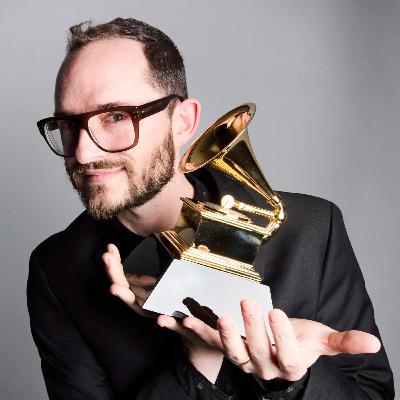
In this episode, I chat with Professor Pascal Le Boeuf. Professor Le Boeuf is a GRAMMY-winning composer, jazz pianist, and producer whose music blends improvised performance with chamber writing and technology-driven production. Praised by the New York Times for his sleek, hyper-fluent style, he has been commissioned by ensembles and organizations including Akropolis Reed Quintet, Alarm Will Sound, Orchestra of St. Luke’s, and New World Symphony. He is an Assistant Professor of Music at MIT and holds a Ph.D. in composition from Princeton University.
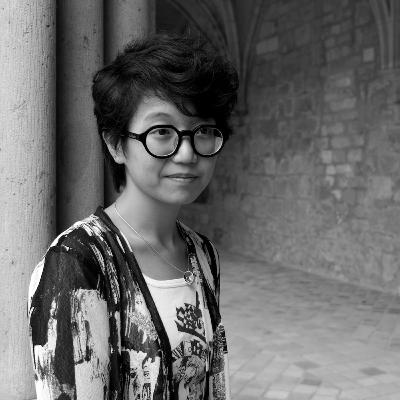
In this episode, I chat with Dr. Annie Hsieh. Annie Hui-Hsin Hsieh is a Taiwanese-Australian composer working in acoustic and electroacoustic music, known for creating vivid sonic experiences shaped by space, gesture, and social interaction. Her works have been presented internationally at major festivals and venues including MATA, ISCM World Music Days, Adelaide Festival, Huddersfield Festival of Contemporary Music, and the Seoul International Computer Music Festival, and she has received commissions from ensembles and institutions such as the Melbourne Symphony Orchestra, Sydney Symphony Orchestra, Lucerne Festival, and ELISION Ensemble. She is the recipient of awards including the APRA Art Music Fund and the Belegura Composer Award, and is currently Associate Professor of electronic music and composition at Carnegie Mellon University.
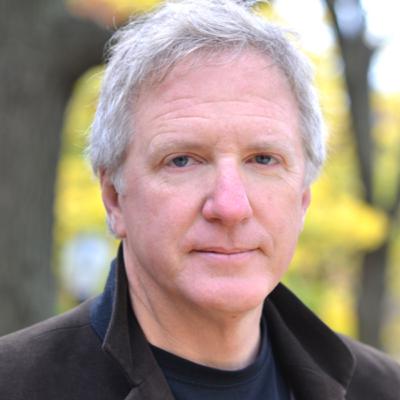
In this episode, I chat with Professor Andrew Waggoner. Professor Waggoner is a composer whose vivid, dramatic style has earned praise from The New Yorker as "the gifted practitioner of a complex but dramatic and vividly colored style." His music has been commissioned and performed by major ensembles including the Los Angeles Philharmonic, Academy of St. Martin’s-in-the-Fields, JACK Quartet, Corigliano Quartet, and international groups such as Ensemble Accroche Note and the Rudersdal Kammersolister. A recipient of the American Academy of Arts and Letters Academy Award, Guggenheim Fellowship, and Fromm Foundation commission, his recordings include Quantum Memoir on Bridge Records and Terror and Memory on Albany Records. He currently teaches composition and improvisation at Duke University and serves as Co-Artistic Director of the Weekend of Chamber Music.
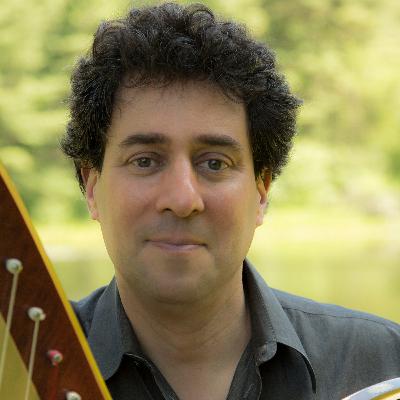
In this episode, I chat with Professor David S. Lefkowitz. Professor Lefkowitz is a composer, theorist, and professor at UCLA whose music has been performed widely across the United States, Europe, and Asia. His more than 150 works range from solo and chamber pieces to large-scale music for choir, orchestra, and wind ensemble, and his compositions have appeared on over twenty commercial recordings. He has taught composition, orchestration, and music theory at UCLA for more than three decades, where he has also served in departmental leadership roles. His training includes degrees from Cornell University, the University of Pennsylvania, and the Eastman School of Music.
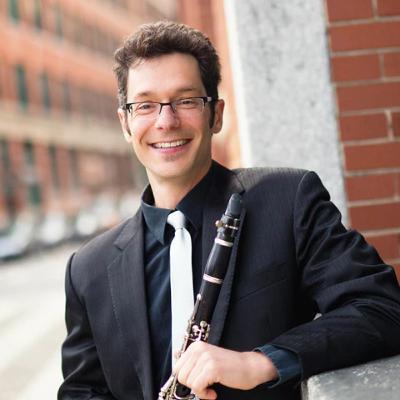
In this episode, I chat with Professor Eran Egozy. Professor Egozy is Professor of the Practice in Music Technology at MIT, an entrepreneur, clarinetist, and technologist best known as co-founder and chief technical officer of Harmonix Music Systems, the company behind Guitar Hero and Rock Band, which sold over 35 million units worldwide and generated over $1 billion in annual sales. Named in Time Magazine's Time 100 and Fortune's Top 40 Under 40, he now leads MIT's Music Technology and Computation Graduate Program, with research focused on interactive music systems, music information retrieval, and multimodal musical engagement. His recent projects include the audience-participation works 12 and Tutti, and ConcertCue, a program-note streaming app featured in concerts of the Boston Symphony Orchestra and awarded a Knight Foundation grant. As a clarinetist, he performs with Radius Ensemble and has appeared with Emmanuel Music and A Far Cry.
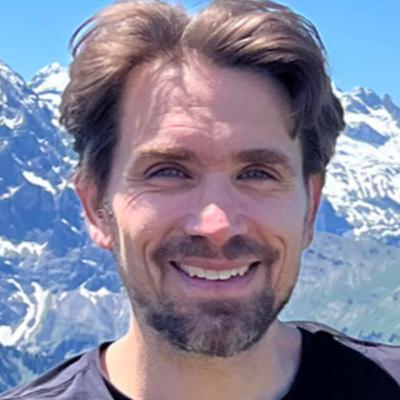
In this episode, I chat with Professor Jason Yust. Professor Yust is a music theorist and professor at Boston University whose research spans mathematical theories of rhythm and harmonic spaces, Schenkerian analysis, eighteenth-century form, music perception, and scale theory. His 2018 book Organized Time: Rhythm, Tonality, and Form received the Society for Music Theory's Wallace Berry Award in 2019, and his articles have appeared in the Journal of Music Theory, Music Theory Spectrum, Music Analysis, and the Journal of Mathematics and Music, among other journals. He is co-Editor-in-Chief of the Journal of Mathematics and Music and has served the Society for Music Theory in multiple capacities, including as founder and former chair of its Mathematics of Music Analysis interest group. He holds a Ph.D. in Music Theory from the University of Washington and a B.A. from Brown University.
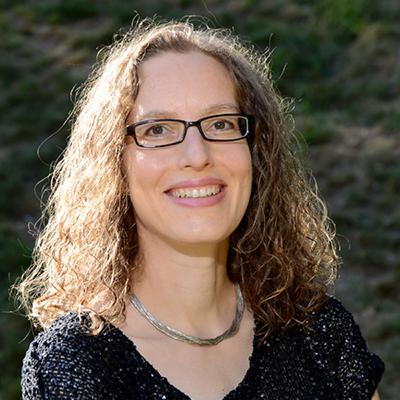
In this episode, I chat with Professor Gundula Kreuzer. Professor Kreuzer is a musicologist and Professor at Yale University whose research spans the history and theory of opera, staging technologies, media archaeology, music in the Third Reich, and contemporary experimental opera. Her first book, Verdi and the Germans: From Unification to the Third Reich (Cambridge University Press, 2010), won the Lewis Lockwood Award from the American Musicological Society and the Gaddis Smith International Book Prize, and her second, Curtain, Gong, Steam: Wagnerian Technologies of Nineteenth-Century Opera (University of California Press, 2018), explores how composers shaped staged opera through specific theatrical technologies. She is a member of the Academia Europaea and recipient of the Royal Musical Association's Dent Medal, the Alfred Einstein Award, and multiple other honors. At Yale, she founded the YOST: Y | Opera | Studies Today conference series and leads the Opera Studies Today Working Group, fostering dialogue between artists, scholars, and administrators in the field.
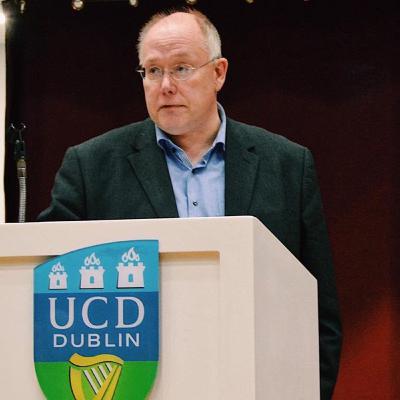
In this episode, I chat with Professor Wolfgang Marx. Professor Marx is Professor of Historical Musicology at University College Dublin and a member of the UCD Humanities Institute, whose research centers on the representation of death in music, György Ligeti, post-truth and music, and the theory of musical genres. He has served multiple terms as Head of the UCD School of Music and has held editorial roles such as the Journal of the Society for Musicology in Ireland. An inaugural UCD Innovation Fellow, he is currently President of the Society for Musicology in Ireland and a general editor of Brill's series "Death in History, Culture, and Society." Before entering academia, he worked for a decade as a freelance author and product manager for major labels including Sony, Teldec, and BMG.
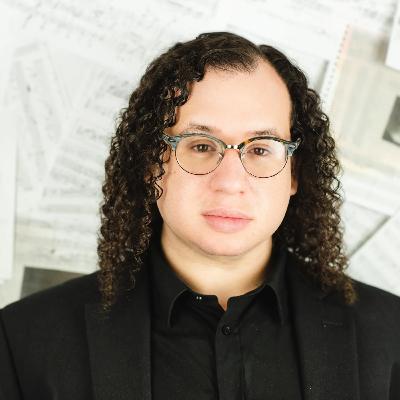
In this episode, I chat with Mr. Derek David. Mr. David is a composer, conductor, and educator based in Boston whose work spans dramatic chamber, vocal, and orchestral music as well as a deep commitment to Yiddish musical culture. He is currently Lecturer in Music at MIT and serves as musical director and conductor of "A Besere Velt," the largest chorus dedicated to the performance and preservation of Yiddish repertoire. His music has been commissioned by ensembles including the Juventas Ensemble, Verona Quartet, and Del Sol String Quartet, and featured at the LA Philharmonic's Noon to Midnight Festival and the Boston Festival for New Jewish Music. His honors include the American Prize in Composition (Chamber Music, 2015), the EAMA Nadia Boulanger Institute Prize, and a Morton Gould ASCAP Award, and he holds doctoral and master's degrees from the New England Conservatory of Music.
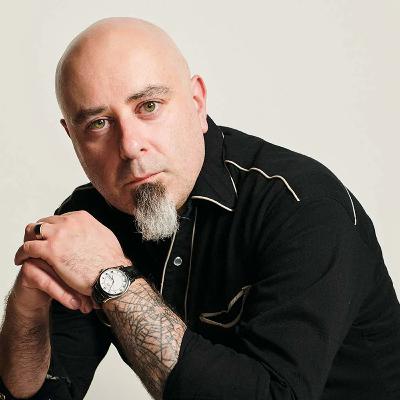
In this episode, I chat with Professor Oscar Bettison. Professor Bettison is a British-American composer and faculty member in the Composition Department at the Peabody Institute of the Johns Hopkins University, where he has taught since 2009. Described as possessing "an unconventional lyricism and a menacing beauty," his music bridges the worlds of concert music and beyond, and has been featured in the Los Angeles Times, The New York Times, and broadcast on radio and television across the U.S., Britain, Australia, the Netherlands, and Brazil. He has received commissions from the Los Angeles Philharmonic, New York Philharmonic, Alarm Will Sound, MusikFabrik, Bang on a Can All-Stars, and So Percussion, among others, and his honors include a Guggenheim Fellowship, the Royal Philharmonic Society Prize, and the inaugural BBC Young Composer of the Year Prize. He holds a Ph.D. from Princeton University and studied previously at the Royal College of Music in London and the Royal Conservatorium of The Hague.
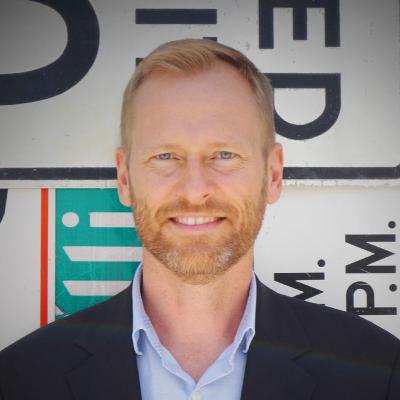
In this episode, I chat with Professor Forrest Pierce. Professor Pierce is a composer and Associate Professor of Composition at the University of Kansas whose music blends religious mysticism, contemporary virtuosity, and a deep affinity for the human voice. Sincere, often triadic, and blatantly tuneful, his work draws on non-western traditions, rock-era influences, and common-practice harmony to evoke a world of sacred unity and natural beauty. His catalog of over 50 vocal works has been performed internationally by ensembles including the BBC Singers, the Latvian Radio Choir, Volti, the Indianapolis Symphony, and the Boston Choral Ensemble, and he is the winner of the 2012 Barlow Prize in Composition, among other honors. Professor Pierce holds a doctorate from Indiana University and studied opera composition with Dominick Argento at the University of Minnesota, and he also serves on the faculty of the Cortona Sessions for New Music in Tuscany.
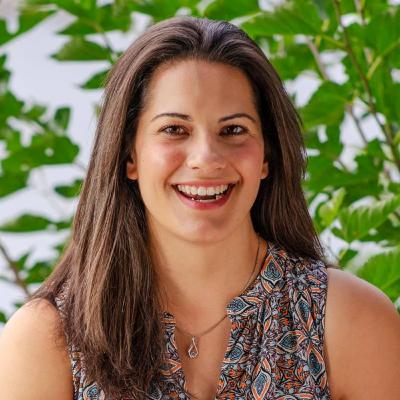
In this episode, I chat with Professor Kelly Bylica. Professor Bylica is a music education scholar and faculty member at Boston University whose research focuses on curriculum and policy, critical pedagogy, middle school music, and issues of diversity, access, and leadership in music education. Grounded in her experience as a middle school and K-8 general music and choir teacher in Chicago, her work encourages music educators to challenge assumptions and develop critically artistic dispositions through musical experience. She has published in journals including Music Education Research, British Journal of Music Education, Arts Education Policy Review, and the Journal for Popular Music Education, and contributed chapters to the Oxford Handbook of Music Composition and Oxford Handbook of Care in Music Education, among other volumes. She serves on the editorial committees of Music Educators Journal and Journal of Popular Music Education, chairs the Council for Research and Teacher Education for the Massachusetts Music Educators Association, and holds a Ph.D. in Music Education from the University of Western Ontario, where she was a Trillium Scholar.
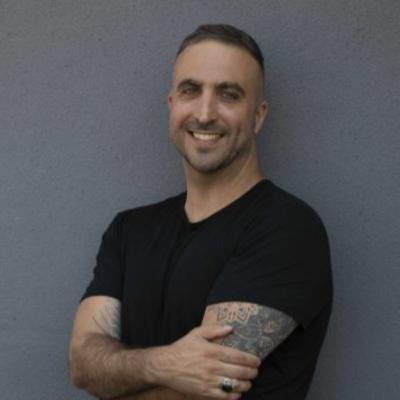
In this episode, I chat with Professor Felipe Lara. Professor Lara is a Brazilian-American composer and Associate Professor of Composition at the Peabody Institute of the Johns Hopkins University, praised by the New York Times as "a gifted Brazilian-American modernist" whose music possesses "voluptuous, elemental lyricism." A 2024 Pulitzer Prize finalist for his Double Concerto for esperanza spalding, Claire Chase, and orchestra, his works have been commissioned and performed by leading ensembles and orchestras including the Los Angeles Philharmonic, New York Philharmonic, Ensemble InterContemporain, Ensemble Modern, JACK Quartet, and the International Contemporary Ensemble, at venues ranging from Carnegie Hall to Walt Disney Concert Hall and the Philharmonie de Paris. His honors include a Radcliffe Institute Fellowship from Harvard University, the Ernst von Siemens Musikstiftung commission, and the Koussevitzky Music Foundation commission, and three portrait albums of his music were released on Kairos (Vienna) in 2024 and 2025. He holds a Ph.D. from New York University and has previously taught at Harvard, the University of Chicago, Boston Conservatory at Berklee, and NYU.
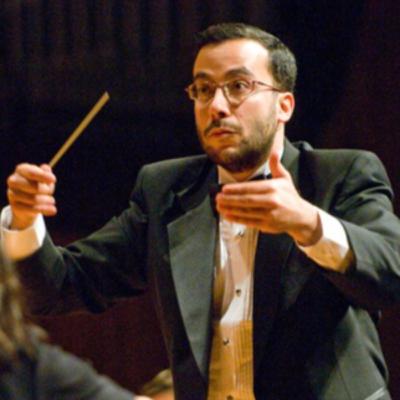
In this episode, I chat with Mr. Adam Boyles. Mr. Boyles is a conductor and vocalist who has been a prominent figure in New England's musical life for nearly two decades. He serves as Assistant Conductor of the Hartford Symphony Orchestra and Director of Orchestras at MIT, and is Music Director Emeritus of the Brookline Symphony Orchestra. A versatile presence on the podium, Mr. Boyles made his Boston Pops debut in June 2024 stepping in for Keith Lockhart, and has guest conducted ensembles including the Springfield Symphony Orchestra, Long Beach Symphony Orchestra, and Tucson Symphony Orchestra. He holds a Doctor of Music in Orchestral Conducting from the University of Texas at Austin and brings additional depth to his musical life as an accomplished singer, having performed in opera, professional choral ensembles, and musical theatre.
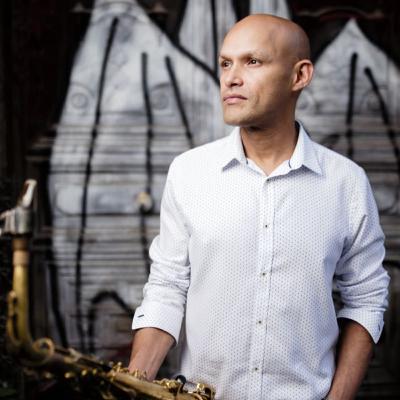
In this episode, I chat with Professor Miguel Zenón. Professor Zenón is a Grammy-winning alto saxophonist, composer, and Associate Professor in Music and Theater Arts at MIT, widely regarded as one of the most groundbreaking and influential musicians of his generation. Born and raised in San Juan, Puerto Rico, he has released eighteen recordings as a leader, including the Grammy-winning El Arte Del Bolero Vol. 2 (2023) and the Grammy-nominated Golden City (2024), and his latest Vanguardia Subterránea: Live at The Village Vanguard (2025). A recipient of the MacArthur Fellowship, Guggenheim Fellowship, and Doris Duke Artist Award, Professor Zenón has been recognized as Alto Saxophonist of the Year multiple times by the Jazz Journalists Association and as Composer of the Year in 2023. His music, rooted in jazz and deeply informed by Puerto Rican musical traditions, has been commissioned by SFJAZZ, Chamber Music America, the MIT, and the Spektral Quartet, among many others.
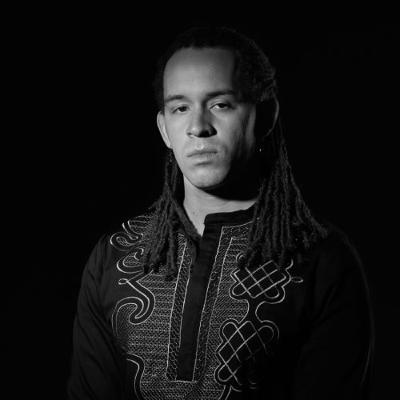
In this episode, I chat with Mr. Elijah Smith. Mr. Smith is an American composer and electronic musician whose work spans orchestral, chamber, and multimedia genres, marked by dense textures, rhythmic ambiguity, and rich gravitational harmonies. His music has been described as "gnashing and relentless" by the Chicago Tribune, "seductive" by Gramophone, and "an ingenious study in clarity and distortion" by San Francisco Classical Voice, and has been performed by ensembles including the Chicago Symphony Orchestra, JACK Quartet, Alarm Will Sound, Sō Percussion, and Yarn/Wire. He is Instructional Faculty and Manager of New Music Activities at the Curtis Institute of Music and Visiting Faculty at the Peabody Institute of the Johns Hopkins University. Mr. Smith holds a Ph.D. from Princeton University and his music is published by Project Schott New York.
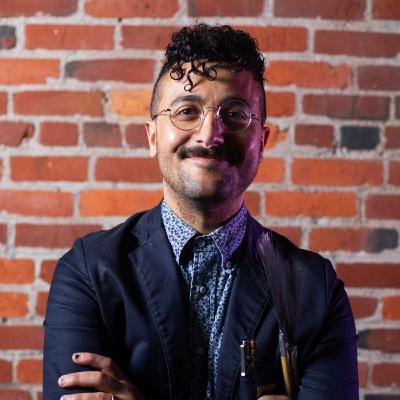
In this episode, I chat with Professor Dan DiPiero. Professor DiPiero is a musician, writer, and Assistant Professor of Music at Boston University whose research explores affective connections between aesthetics and politics in U.S. improvised and popular music. He is the author of Contingent Encounters: Improvisation in Music and Everyday Life (University of Michigan Press, 2022), a finalist for the International Association for the Study of Popular Music Book Prize, and Big Feelings: Queer and Feminist Indie Rock After Riot Grrrl, forthcoming with University of Michigan Press. His writing has appeared in Jazz and Culture, Journal of Popular Music Studies, Los Angeles Review of Books, and other venues. A fierce advocate for popular music studies, Professor DiPiero serves as secretary of the International Association for the Study of Popular Music (US) and co-founded the Music and Sound Studies Working Group at the Cultural Studies Association.n dipiero
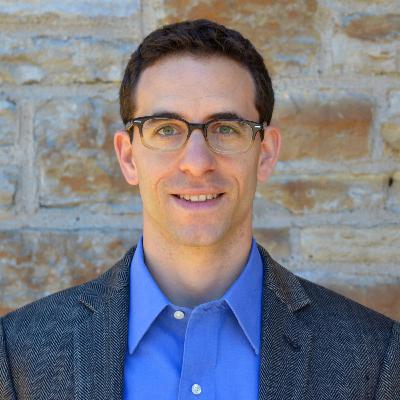
In this episode, I chat with Professor Louis Epstein. Professor Epstein is a historical musicologist specializing in early twentieth-century French music, digital mapping, and the science of teaching and learning. His book The Creative Labor of Music Patronage in Interwar France examines collaborations between patrons and composers that shaped French classical music between the world wars. A recipient of fellowships from the Fulbright Program, the Whiting Foundation, and the Mellon Foundation, he has published in journals including Music & Politics, Journal of Musicology, and Journal of Music History Pedagogy. Professor Epstein co-founded Open Access Musicology and leads The Musical Geography Project, an interactive digital mapping initiative that earned him the 2016 American Musicological Society Teaching Award. At St. Olaf College, he previously served as Co-Director of the Center for Innovation in the Liberal Arts.
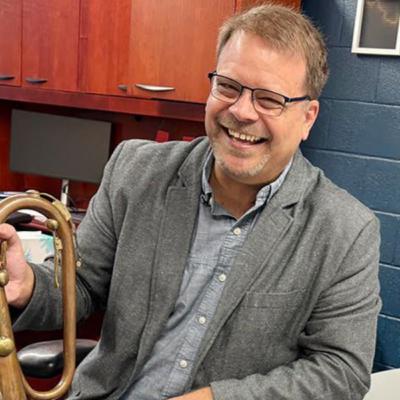
In this episode, I chat with Professor Colin Roust. Professor Roust is a musicologist and professor at the University of Kansas whose research focuses on twentieth-century music, film music, band music, and the intersections of music, politics, and other arts such as film, opera, and ballet. He holds a Ph.D. from the University of Michigan and has been a leading advocate for music history pedagogy, serving as Chair of the AMS Pedagogy Study Group and on the editorial boards of the Journal of Music History Pedagogy and Engaging Students: Essays in Music Pedagogy. He is the author of Georges Auric: A Life in Music and Politics and co-editor of The Routledge Film Music Sourcebook, and he has presented his work at major national and international conferences. His current projects include critical editions of Early Music of Francis Johnson from the Phoebe Rush Manuscript and The Diary of Thomas Clarke Key, 357th Infantry Regiment Band, American Expeditionary Force.
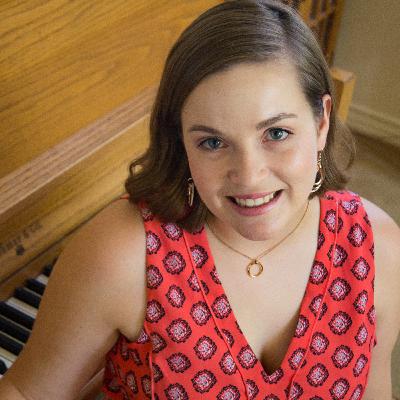
In this episode, I chat with Dr. Sarah Iker. Dr. Iker is a music theorist and lecturer in the Music & Theater Arts section at MIT, where she teaches music theory, music history, aural skills, and seminars on topics such as dance, opera, and musical theater. She holds a Ph.D. in Music History and Theory from the University of Chicago and dual B.A. degrees in Piano Performance and Mathematics from Scripps College. Her research focuses on the historical reception and perception of Igor Stravinsky’s neoclassical music, using digital humanities methods to connect early twentieth-century listeners’ descriptions with contemporary analytical approaches. Beyond Stravinsky, her interests include musical theater, music perception and cognition, twentieth-century neoclassicism, and the digital humanities, and she presents her work at regional, national, and international conferences

Comments

Download from Google Play

Download from App Store
 United States